Episode Transcript
[00:00:02] Speaker A: Time for the Pro Wrestling Time Tunnel podcast.
[00:00:05] Speaker B: We've got lots and lots of things to talk about and to do today,
[00:00:08] Speaker A: covering the territories from the 1940s to the 1990s.
[00:00:13] Speaker C: It's the best thing going today,
[00:00:18] Speaker A: interviewing wrestlers, referees, authors and other media personalities that have made the sport of professional wrestling great.
[00:00:27] Speaker C: The cream, yeah, the cream of the crop.
[00:00:30] Speaker A: And now, here's your host, Tony Richards.
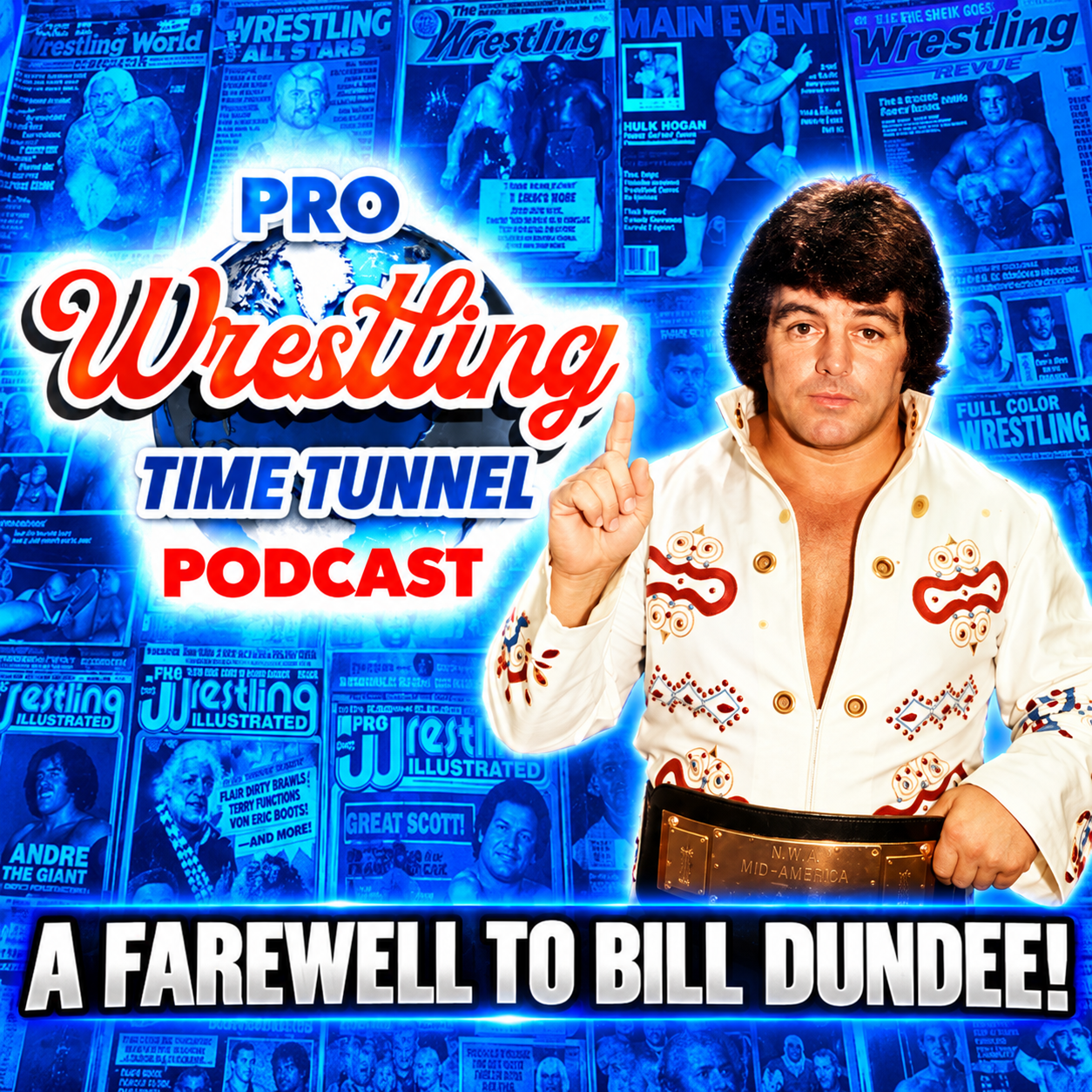
[00:00:33] Speaker D: Well, hello, everybody. This is Tony Richards coming to you live from the Richards Ranch in Western Kentucky. Welcome back to another episode. This is episode number 81 of the Pro Wrestling Time Tunnel History Show. So glad you decided to join us this week because we've got a really special show just for you. And it's under very sad circumstances, but special nonetheless.
Every week we fire up the Time Tunnel. We go back to the territory era, back to the personalities, back to the towns, back to the loops and the buildings and the booking offices that built this business one circuit at a time. And the circuit that I grew up with was the Tennessee Territory. And we recently lost one of our amazing legends from the Tennessee territory, the superstar Bill Dundee. And we've got some guests coming on with me here in just a couple of minutes that are going to help me with some very special memories and some thoughts and feelings of the celebration of life that was recently held in Jackson, Tennessee for Bill Dundee. And before we get to that, though, I got one quick ask from the ranch for you. And if this work matters to you, that I do, which is the territory wrestling history work, come on over to the Daily Chronicle and to the Pro Wrestling time tunnel. Pro wrestlingtimetunnel.com and you can subscribe to the Daily Chronicle for absolutely free. It hits your inbox every single morning at 5am Central Time. And it's the only daily newsletter that I know of that lives strictly in territory era history.
Now, if you'd like to, and you want to support the work that I do and keep this research going, a paid subscription is the way to do that. It's just $5 a month. If you want to save $10 a year, you can go with the annual subscription, which is $50.
And so that will help us out here quite a bit here at the Pro Wrestling Time Tunnel, we will continue whether or not we do that or whether we don't. But it's an option for you who want to invest in this territory era research and keep it documented and keep it out there for fans in the eras in the decades to come. And that's the support that keeps us going here at the Pro Wrestling Time tunnel Again, pro wrestlingtimetunnel.com Pro wrestlingtimetunnel.com you'll find all the information there, plus a way to subscribe to the Daily Chronicle and all the other stuff that we do there. All my series are there, the Welch family legacy, also the Jim Barnett series. We also have the current series. We're doing the history of Texas wrestling with the stories with Briscoe and Bradshaw show. I'm over there with my friends Jerry Briscoe and jbl and we do a lot of this history work over there on their show as well. And I share it all with you at the Pro Wrestling Time Tunnel.com website. So come on over and check that out. Also, I'm mentioning to you as well, if you just so happen to be a voter in the Wrestling observer hall of Fame.
That season is kicking up here again and just got the ballot this past Sunday morning here in my inbox. And we're going to have a Wrestling observer newsletter show coming up to talk about the hall of Fame this year and all of the candidates.
And this year it's going to be an expanded show. We're going to be talking about the European candidates with one of our European friends who's an expert on that. We're going to be talking about the Japanese candidates with a Japanese historian. And we're going to be talking about the Mexico part of the ballot with Roy Lucier, who was on our show just not long ago doing Mexican Wrestling in 1976. And we're going to have our regular panel here, Steve Genarelli and Greg Klein and Brian Solomon. And we're going to talk about the historical performers and the non wrestler category as well. And that's where I come in because you know me, I'm very vocal about the Welch family and very vocal about Roy Welch being elected into the Wrestling observer hall of Fame. And I want to direct you over to my website, prowrestlingtimetunnel.com, where I just mentioned it a few minutes ago. I'll mention it one more time, The Welch family legacy, where I did 11 episodes with Jerry Briscoe and JBL and some of our special guests, where we documented the whole history of the Welch family going back to the turn of the 1800s into the 1900s. And Big Ed Welch, who was Roy Welch's father and then Roy had three brothers, Lester, Jack and Herb. And those brothers built wrestling throughout the southeastern part of the United States. And you know, oftentimes when I would bring the Welch family up to a lot of younger voters especially, they'd say, well, we don't really know much about that's a long time ago, Tony. We're talking about the 20s and the 30s and the 40s and the 50s and the 60s, and that's a long time ago. So what I thought I would do and we did was record an entire docu series on the Welch family on the Stories with Briscoe and Bradshaw Show. And we just elected the Welch family into the Waterloo Tragos thes Hall of Fame this past summer. So I'm hoping that my educational efforts and my social media efforts will help convince enough of the voters this year to vote for Roy Welch for the Wrestling Observer Newsletter hall of fame here in 2026.
Okay, we're ready to go to the panel that I've assembled for today.
They all attended the Celebration of Life for Bill Dundee this past Thursday in Jackson, Tennessee. And they're all longtime friends, friends of Bill and fans of Bill and worked in the business with Bill. Randy Hales, who hosts the excellent Talking Memphis Wrestling show, where I am a semi regular participant there on that panel, is going to be here. He also spoke at the Celebration of Life for Bill.
Dr. Tom Prichard is joining us for the first time here on the Pro Wrestling Time Tunnel History show. And it's great to have Dr. Tom here and hopefully we can convince him to come back sometime and talk more pro wrestling and pro wrestling history with us. And of course, Tom had the training school forever there in Knoxville, Tennessee, and we'd love to visit and talk with Tom about the psychology of the wrestling business. And also Pat Trammell, who was a friend of Jerry Jarrett's before he passed away and also had been around Bill Dundee some, but he also was a tremendous fan of of Bill Dundee. He's also part of the Talking Memphis Wrestling Show. And so these three guys are excellent individuals who represent a broad spectrum of Bill's career. You know, Randy Hales and I, along with Pat, go back to when Bill and George Barnes first came here in 1975 as a tag team, because we all grew up Pat grew up in the Birmingham part of the territory. I grew up here on the western end of the Nashville kind of part of the territory. Randy grew up in Jonesboro, Arkansas, near the Memphis part of the territory. So we've got this Neapolitan viewpoint of the superstar Bill dundee. And Tom, Dr. Tom, of course, grew up in Texas, and so he didn't really see Bill.
I think he said he came up here in 1983 to work in the territory.
So he's got a good perspective of Bill's career in the 80s and the 90s and the rest of us older guys, we understand and have a perspective from the 70s and the 80s and the 90s and so on. So I'm excited about doing this because I think this is a fitting discussion and a fitting tribute to the superstar Bill Dundee. Let's go to that panel discussion right now with my friends Randy, Dr. Tom and Pat Trammel. Welcome everybody. Pro Wrestling Time tunnel here at the Richards Ranch in Western Kentucky. I'm your host, Tony Richards and we have a full house at the ranch house. Tonight we're going to be talking about the recent passing of the superstar Bill Dundee, who was a star in the Memphis. Well, he was a star in the Tennessee territory for Goules Welch. He was a star for Jerry Jarrett's Memphis territory. He booked the best year of mid south in 84 and most of 85 and was just a phenomenal mind in the pro wrestling business. And I've got plenty of help here tonight to help me give tribute and honor to him. Randy Hales, pat Trammell and Dr. Tom Pritchard are in the house tonight and it's very nice to have them. Welcome Randy to the show, buddy.
[00:09:55] Speaker C: Thank you, Tony. Always love it when you join my show and I have guested on your show one time. Thrilled to be I I get Pat Trammell every Tuesday night. Certainly Tom Pritchard is somebody I can tell a lot of stories on and the reason I'm not going to tell a lot of stories on Tom Prichard is because he can tell a lot of stories on me.
[00:10:19] Speaker E: Yeah, that's true. Yes, it is.
[00:10:21] Speaker D: It's like a US and Russia. No one wants to fire first.
[00:10:25] Speaker E: Yeah, that's true.
[00:10:27] Speaker D: Also from talking Memphis wrestling show, we got Pat Trammell on here tonight, a good friend of mine. Pat, how are you, man?
[00:10:33] Speaker B: Well, I'm doing great.
I appreciate the opportunity to be with with all three of you. I wish we had different circumstances, but it's certainly always good to remember, you know, a good friend and a legend and I look forward to look forward to our conversation tonight.
[00:10:50] Speaker D: Well, you're quite a pro wrestling history enthusiast and I know you have plenty of things to add because you were a fan of Bill Dundee pretty much his whole career.
And Dr. Tom Pritchard, who knew Bill from inside the wrestling business and also was friends with him and also worked with him quite a bit. Tom, thank you for coming tonight and
[00:11:08] Speaker E: giving us yeah, well, thanks. Thanks for having me, man. Again, like Pat said, I wish it was under different circumstances, but I'm glad to at least join and be able to share some of the, some of the feelings I had about Bill Dundee over the years.
[00:11:21] Speaker D: That'd be fantastic. We had, we had the celebration of life here just a few days ago in Jackson, Tennessee on Thursday, a week or so ago. And Randy, I know you were there and all of you guys were there. Randy, you had the opportunity to speak at the celebration. How'd that come off for Bill? Do you get a good send off?
[00:11:42] Speaker C: Yeah, it was unbelievable. And I don't know if you can see this or not. This is. You walked into the church, you could, you could pick up the program and it was very nicely done. Every, Everything certainly just wonderful. Every. The, the church was just sensational.
It was a beautiful church and a lot of people there, a lot of the boys there. It was just amazing. So I think the superstar would have been very happy. I had the, the task because Terry golden, who's the power of attorney and he said all this together and I can't tell you what, such a great job. So I was glad he had me get in touch with a lot of the boys and people that love Bill Dundee and get them to be honorary Paul Bears. And about probably less than 10 minutes before Terry came to me and asked me to speak. So I, I went to real quick, went to Jerry Lawler and, and Jerry, here's the thing. Jerry's just not real comfortable speaking in public very much lately. So I went to him and I told him, I said, hey, Terry asked me to speak. He misunderstood me. Lawler misunderstood me. What I was asking Lawler, I said, get you. I hadn't asked you this in a long time. Give me an interview. I hadn't put any thought in this. He, he said, randy T, I just can't do it. I said, no, you misunderstood me. I'm asking you to give me a interview. And this is Lawler's advice.
He said, tell stories, keep it real and don't ramble. So I want to ask Doc, who heard my talk. Do you think I did all three? Did I keep it real? Did I tell stories? And did I, did I do a good job not rambling?
[00:13:41] Speaker E: Doc, you did a hell of a job. You fulfilled the need. That night you were sharing the stage with. Or that afternoon you were sharing the stage with Reggie B.
Who's gonna back you up anyway, man. But yeah, everybody did a great job up there, even, you know, Doug and And Shane Russell. Yeah, it was, it was a great.
I, I thought Bill would have been proud of the presentation and, and the, uh, the way everybody handled themselves there. Yeah, you did a great job speaking, man. You kept it to the point and you let Reggie speak and nothing drug during that.
[00:14:14] Speaker C: Hey, I was prepared to get to, to Google Reggie because sometimes he gets off the path a little bit. Yeah. Go off the rail.
[00:14:26] Speaker E: Yeah, yeah. Well, yeah, he goes off the rails a couple times. Yeah. But, but no, he did a great job. Did a great job.
[00:14:32] Speaker C: Yeah, everybody did, did great. Were you, was anybody there that surprised you? And, and I'm, I think me and you will both say the same name.
[00:14:41] Speaker E: Yeah, I think, I think it was the same name. I mean, I, I, I saw a lot of people I haven't seen in years, which is great, but again, which was, circumstances were different. But every time I go to these funerals lately, I mean, I've been to a couple lesson in, in the last few years.
It's, it's surprising sometimes who shows up and who doesn't. But yeah, there, there were a couple people that I saw that surprised me being there.
[00:15:12] Speaker D: Well, Tom, you mentioned before we went on tonight that you went to Jerry Oates funeral on Saturday too.
What was that like? I know Bobby Simmons officiated the ceremony.
[00:15:23] Speaker E: How was, no, that, that was, that was a very nice funeral too. They, they did a great presentation and then Jerry would have been proud for that. His son Bo made sure that everything was, was right and, and people were coming in and, and it was a very nice, respectful service. And one of the guys I saw there, Ranger Ross, hadn't seen him in a few years, but Eric Watts, you know, I thought some of the other Georgia guys would have been in there, but yeah, it was, it, it, it was sad, but it was, it was also a very nice service.
[00:16:03] Speaker D: So many of them have passed on. You know, Pat, I have been asked several times to do eulogies as they were asking Randy to do. And I tell you it, invariably I'll be sitting on the front row waiting to go up there and do my little talk about my friend or the person that I knew real well. And right before I go up there, invariably somebody will sing some song right before I'm getting ready to go up there, and I will have been fine and ready to go up there. And boy, when they're singing that song, I get, my throat gets all lumpy and my face starts breaking out and I know the tears are about to come. I'm like, why did you have to sing that song right before I was getting ready to go up there. How'd you think. How did it affect you going to the service the other day?
[00:16:48] Speaker B: Well, I understand and for whatever reason, Tony, I'm. I'm as you are. I'm asked to do. I guess I've done half a dozen or more, you know, high school classmates and friends and that. That sort of thing.
[00:17:00] Speaker D: But.
[00:17:00] Speaker B: But, you know, as. As I sat there, I felt like the. I felt like that funeral reflected how Bill Dundee was.
I thought it was, you know, it had some fun to it.
You know, everybody obviously talked a lot about. About the wrestling business and about Bill in it. But. But, you know, Bill was. The times I was with Bill over the past several years.
You know, he was always engaging. He was always interested in what you were doing. He was always wanted to talk about, you know, whatever you wanted to talk about. I mean, he was just a.
You know, Bill Dundee to me was just one of those guys that when you met him, you thought you'd met a friend and he never did anything to. To shake it, you know. And, and you know, there's a lot of people in every industry which aren't that way. And Tom, Tony and Randy all know those that aren't. But. But always felt like it was a sunny day when I was with Bill Dundee and I felt like, you know, I think as. As Tom said, Shane did a great job. Dave Brown did a great job. Randy did a great job.
You know, everybody that spoke touched on a part of Bill Dundee that everybody wanted to remember. And I really, really appreciated that. That.
[00:18:29] Speaker D: Randy, I heard yours on my phone. I followed the link and I listened to it while I was doing something else. I saw Dave and Shane and Doug on YouTube last night. I saw theirs.
What stories did you tell?
[00:18:46] Speaker C: I don't.
I probably could have. I know I could have told a lot of stories, but we were in a church, so I wasn't going to do that. You know, I just kind of. Kind of.
You know, I live with Bill for a year and traveled with him a million miles and that sort of thing again. We had five minutes of me and Reggie both together. Had five minutes and, and.
And I wanted to. To have him the most and I. I didn't want to get up there and cry or anything like. Like that. And I did hold it to together so. So short and sweet and the tribute to the superstar and I thought it. It was good.
I'm probably getting you out of. You had a little format. I'm gonna get this out I'm gonna get this out of whack because I, I wanna for time to listen to this too because Tom certainly, I think it's such a cool, cool, cool deal that Tom debuted at the Mid South Coliseum in Memphis, Tennessee on June 6, 1983.
It was a packed house, a sellout, $11,300.
The main event was the best match I've ever seen live in my life. It was Jerry Lawler defeating Bill Dundee in 21 minutes and 56 seconds to win the Southern heavyweight championship in a loser Le town match. Now it was a seven match guard. The third match was cousin Carl Fergie, Jerry Lawler's cousin, against a debut of a wrestler making his first appearance. And they had showed a interview from Texas from this guy on the June 4 Memphis TV show, but Tom Prichard, what a heck of a time. And I know Tom, it's his debut match. How many people do you think Tom called back in Texas and said, hey, I sold out the Mid South Coliseum.
[00:21:11] Speaker B: Yeah, right.
[00:21:12] Speaker C: First Monday night.
[00:21:15] Speaker B: Did you get done the overtime?
[00:21:17] Speaker E: No, yeah, right, right. No, that. I remember we were talking earlier before we came on. I remember that night because it was packed. You had the heels on one side and the baby face on the other side, front row ringside, and, and the atmosphere was incredible. And I thought, oh my God, this is how it's going to be. You know, you had the fabulous ones. You had Steve Kern, Stan Lane, Rock and roll was there. I think I met Danny Davis the first time there too. So.
And I remember when I saw the t. The, the interview I sent in, it cut back to Dundee. He was at the interview stand with Lance and he said, look at that goof coming in here. And I thought, oh yeah, who the hell is this? But, but yeah, I do remember that. And they, they sold out. Louisville, Evansville, Nashville, Nashville, the, the whole loop. Man, I thought this Lexington.
[00:22:11] Speaker C: That's back when we were running Lexington Room.
[00:22:13] Speaker E: Yeah, yeah, so I do remember that.
[00:22:16] Speaker D: Yeah, I get confused about that, Bill. Or I get confused about that, Randy. That was in June. So that wasn't the match where he left for Watts, was it? Hit that.
[00:22:26] Speaker C: No, that's when he went to the satellite territory for Georgia.
[00:22:31] Speaker D: Yeah, that's when they went to Chad.
[00:22:32] Speaker C: Chattanooga.
[00:22:33] Speaker E: Yeah, okay. Yeah, I knew there was something in there that didn't, you know. It was later on when he went with Watts because I. Yeah, yeah, they
[00:22:40] Speaker D: were going down to Chattanooga to partner with Oli. Yeah, yeah, that's right.
What, Tom, what did you think going around the Loop there that, I mean that was quite a week, man.
[00:22:52] Speaker E: Well, it was quite a week. I rode home I think that night with or Dutch Mantel rode home with me that night back to Nashville and I, I just was in awe. I was amazed that the Mid South Coliseum was such an iconic building.
Kind of like the Sam Houston Coliseum for me in Texas or the Olympic Auditorium in California. It was just one of those mythical buildings you hear about and you hear about guys like Lawler and Dundee doing this great business and, and the Memphis territory was always set apart I think from, from the rest because they would do all the crazy stuff and it was kind of like Texas.
They do the same kind of angles and same kind of reality based promos and stuff where, where people really believed what the guys were saying.
[00:23:43] Speaker D: Yeah.
[00:23:43] Speaker E: And I thought, my gosh man, it's it, it's it. This has always been a click business and I've always been kind of a loner, but I saw the way everybody was interacting and the promos and, and, and the matches. I rode with Steve Kern and Stan Lane for the first time, then Bobby Eaton and it just was so cool. Everybody was so cool when I first got there. So I thought it was awesome, man.
[00:24:11] Speaker D: All four of those buildings to us in the territory were special buildings. You know, the Gardens in Louisville, the Coliseum in Evansville, the, the Fairgrounds arena in Nashville and of course Rupp Arena. I mean that's a cathedral here in Kentucky. So I mean all of those buildings were special to us. And then when you had a hot match coming out of the Mid South Coliseum like that, that was going to be hitting all those buildings the next week.
That was, those were big weeks back in the day. Every time there was a hot match in Memphis.
[00:24:43] Speaker E: Yeah, they were big weeks, man. And you're right, all those buildings, especially when you got to perform in them because back then, you know, everybody want to know what, what was it like backstage, what was it like, you know, downstairs, what was it really like?
[00:24:58] Speaker D: And not what you think.
[00:25:01] Speaker E: Yeah, it's not what you think. But, but it was really cool. It was a cool vibe and business was, was pretty darn good back then.
[00:25:09] Speaker D: It really was. Partition off half of Rump arena for. Yeah, for the matches there.
Randy, what else about the Thursday what I saw you with the picture of Dundee's car. That was kind of cool.
[00:25:22] Speaker C: Yeah. You know the, I call it the Superstar mobile. He. It's Tom. Do you remember? I think it was a Crown Victoria. Am I correct on that?
[00:25:33] Speaker D: Look like a state trooper car. Yeah.
[00:25:36] Speaker E: Yeah, I think it was a Crown Victoria.
[00:25:37] Speaker D: Yeah.
[00:25:40] Speaker C: Yeah.
It had been in Terry Golden's place of business and he had captain for Bill and I thought it was a very nice touch. Did you see it out in front of the church, Doc?
[00:25:53] Speaker E: Yeah, sure did. Couldn't miss it. Couldn't miss it, man.
[00:25:58] Speaker D: What's your favorite Bill Dundee memory, Pat?
[00:26:04] Speaker B: You know, I, I was, I was going back through kind of my, my record in my notes.
My favorite Bill Dundee angle ever was with, was with Buddy.
I, I, I love that. I love Bill and Buddy show and, you know, unfortunately, Buddy left us too soon and, you know, could have leaned into the good stuff more or not.
You know, I remember seeing bill in 77 at Boutwell Auditorium.
And he was on Birmingham, right? That's right, in Birmingham.
And he was on a match.
I think he wrestled Tojo and I think Tojo was a heel at the time.
But I remember, I remember being watching at 10:30 sterling brewers, you know, and they brought this guy up and I could not understand him to save my life.
[00:27:05] Speaker C: Scottish accent.
[00:27:07] Speaker B: Yeah, because at that point in time, you know, nobody had traveled. You weren't on these shows with people with different accents. And if somebody didn't talk like, you know, redneck cracker, Northeast Alabama, I couldn't follow. Yeah, but he got over because he was so different. Yeah, it's almost like Johnny Eagles did.
You know, in the day that, that, that angle was, you know, it was kind of like somebody came to the Clampett's house from another country.
[00:27:36] Speaker D: Right.
Talking to some guys earlier about him and all. And I said, he had that y' all ain't from around here accent.
No matter, no matter where anybody's from, if they got the y' all ain't around here you can get over as a heel, you know.
[00:27:53] Speaker B: Exactly.
[00:27:54] Speaker D: But I remember as a 12 year old kid, Barnes and Dundee coming out on television and just whacking the heck out of each other. You know, they come out there and just whack each other and say, y' all think you're tough. You're not tough. This is tough. And they'd whack one another and whack one another and go to the ring and they didn't do the Royal kangaroo. You remember how they used to do the thing before they would have a match? They.
[00:28:18] Speaker B: Oh, yeah, yeah.
[00:28:19] Speaker D: They didn't do that. It was almost like they were going to fight each other and then they went into the match. You know, that, that really got them over in the territory and, you know,
[00:28:29] Speaker B: I don't remember particularly notice, I mean I, I knew, I knew he was a shorter stature, but he was wide open in the ring. I mean he, he, he, he laid it on as thick and heavy as anybody. I mean his work, Bill Dundee's working punch was as what, good as anybody's I've ever seen.
[00:28:49] Speaker E: Well, well, I, I used to, I used to beg to ask him, hit me with a shooting punch because his working punch was killing me. My God.
[00:28:56] Speaker D: Yeah, actually, you know, Barnes was a lot better interview than Bill when they first got here. Bill didn't talk as much. And then when he got with super or Big Bad John, I saw you all talking about it the other night on your show.
Big Bad John just kind of brought Bill out of his shell, you know, and he, he got a lot better
[00:29:16] Speaker E: on his interviews, I think, you know, if I can.
[00:29:20] Speaker C: And I'd like everybody's, you know, me, Tony, the creative users in me. Fire, fire up.
[00:29:28] Speaker E: Let's have it for sure.
[00:29:30] Speaker C: And I think just we're talking memories of buildundee and I want to make clear on this. Bill Dundee was born in Scotland. He went thousands of miles not knowing where he was going and he ended up in Australia.
Didn't know where he was going. That's where he went into training, became a professional wrestler, worked for Jim Barnett and then he went around the world again. He packed up and by this point he had two small children and a wife. And he packed up and came to Tennessee.
That's the second time he did that then where he really, at least he had his mate, he had his buddy, he had George Barnes with him. George got homesick and so he says, I'm going, you coming with me? And Bill, who was the guy that was undersized, couldn't really talk and was a hill and his partner was leaving, a partner that they had sold out every building in this territory.
But he had the option to leave. But he bet on my bet on himself. And as we're talking in certainly October or in September of 2026 and we look at from 75 to 2026, all the great memories and, and I like to start by asking Tom, first of all, Tom, is that not having balls or not, you leave and go to halfway around the world twice, other countries twice. Then when your mate leaves and goes back to Australia, you stay and you be came one of the Mount Rushmores of Memphis wrestling him betting on himself. Tom, is that Bill Dundee written all over it?
[00:31:35] Speaker E: Oh, yeah, yeah. I mean, and I think I heard it. Well, I did hear It Thursday, you know, when, when George was the best, better talker. But Bill did become a great promo and, and he, I think because he was a smaller guy, he knew he had to lay it in and he had charisma and he believed in, in calling himself a superstar. Yeah, it, it does take balls to do that, and it does take believing in yourself. And I also believe that Dundee saw the chemistry that he had with, with the guys he was working with early on and, and I believe Jerry Jarrett and he got along great.
And, and that was a big thing too. You know, the relationships he made in this business say a lot about his personality, a lot about his character. But yeah, man, it, it has to be ter.
Scary to do that.
[00:32:27] Speaker D: Well, that's one thing I was gonna say. He and Nick did not, you know, they did not get along. And Nick and Jerry were still together in 75 for two more years and they, and he and Nick had had a fallen out just a couple of months before Barnes left.
And, you know, I mean, half the, the guy that you think owns the company doesn't like you or you've got a tiff with him or you don't get along with him or whatever, that's going to be a guy you're going to have to deal with if you stay.
I think Jerry kind of got him off to the side and said, you know, you'll, you'll deal mostly with me and, you know, we'll figure it out and all that. I don't know what I would have done, fellas.
I might have gone back to Australia.
[00:33:10] Speaker B: Well, well, Jerry told me that that the way he got Barnes and Dundee was through Bobby.
[00:33:23] Speaker C: Bobby Shane.
[00:33:25] Speaker B: Yeah, yeah. And he said also, yeah, yeah, Mark.
Yeah. And he. Jerry told me one time about that when he got sideways with Nick, he said, but, you know, everybody gets got sideways with Nick. He said the problem was Bill wouldn't shut up about it.
So, you know, he said, he told me Nick was, was ready to run him off. And he said, well, just let him work over here. And he said, Bill, you just, you just work here. And, you know, it's probably the best thing that ever happened to it because he wasn't bouncing all over the territory. And he and Law just decided they would sell that into the state out for the next eight or nine years, right?
[00:34:04] Speaker D: Yeah, he did jobs for Barnett for like 10 years.
I think he broke in, in like 64 or something like that. And, and he didn't come over here till 75. So he and Barnes, they were jobbers in Australia.
And Bobby Shane told Jerry Jarrett, hey, these two guys are guys I think would fit your territory because they're smaller and they are active and they do a lot of high spots and I think they'd really, really fit in with what you want to do in Tennessee. And boy, did they.
[00:34:33] Speaker B: Yeah, I've often won.
[00:34:36] Speaker D: Just so happened. Fortunately, Lawler was gone, who was the main heel in the territory and gave them an opportunity to come in. Go ahead, Matt.
[00:34:44] Speaker B: Sorry, I, I'm just, I just often wonder, you know, when you talk about legendary feuds and matches, you know, Lawler and Dundee just come up. I've often wondered what Jerry's career path would have been without Bill Dundee. And I think, I think, I think Lawler owes Bill Dundee an awful lot.
[00:35:06] Speaker D: I think.
[00:35:06] Speaker E: Yeah.
[00:35:07] Speaker B: And I think he knows that we
[00:35:09] Speaker D: can ask Tom about his thoughts about it, but I think everybody needs a dance partner, don't they, Tom?
[00:35:14] Speaker E: Most definitely. And, and you're right when you mentioned Lawler, you can't help but mention build unde right alongside each other. And they, and when they were both putting in the Memphis hall of Fame a couple years ago, I mean, you could, you just knew it, it meant something. And the, the, the crowds in Memphis, I mean, Lawler, Lawler will knock your head off too, but he also, he knows how to throw a hell of a punch. But, but Lawler was a solid worker. Bill was a solid worker. And, and it was just that chemistry that I don't think you could have found for each other. I mean, they were just meant for each other.
[00:35:50] Speaker D: Randy, you talked about spending time with them. You lived with him for a year. You rode millions of miles with him.
What's the one or two or three most important things that you learned from Bill?
[00:36:04] Speaker C: I think first of all, that you had to have a passion for this business.
Let's say, number one, those car trips, it was talking wrestling and people. Everybody's different.
The last thing Jerry Lawler wanted to talk about in a car was the wrestling business, period. I mean, he wouldn't talk about.
Want to talk about this or that. And, and they were just two different people. And I think that's one of the magic of the program and drawing money because the people know they were different. But I, I learned about just that he never quit thinking about the wrestling business. And it was, he, he was just a hard worker because certainly Lawler was creative and, and he did. He was the best I've ever seen. The coming up with stuff at the.
Off the top of his head and One of the reasons they had to do it is because he, he didn't start thinking about it to, till it was time for the person to go through the corner. I mean they were just so different. I learned both, a lot from both and of course a ton from Jerry Jarrett, Bill, just the work ethic because Bill would get up every, every morning and he would go to the gym for a couple hours. I'm sure Tom had seen that. And he probably told Tom said, doc, I gotta go, I gotta be at the office at 11 o'. Clock. And then he would get up, go to the gym, go to the office, and soon as he left that office, he, he'd go meet his ride to go to either Memphis, Louisville, Evansville, Collection, whatever. Just the work ethic to this. I'm, you know, one of my strong suits I think I got from Bill as a work ethic, but it was nothing compared. I mean he never stopped thinking, he never stopped moving, he never stopped talking. He just, I think Doc will agree.
His, I've never seen anybody with that much energy and, and, and, and he wasn't even on anything.
He was just naturally a hyper, hyper, hyper guy.
Would you agree with that, Tom, with all of those points?
[00:38:33] Speaker E: I, I definitely would agree with it, especially the passion part because it was a different business back then and you really had to love what you were doing. If you're going to travel that much, you're traveling six, seven days a week and, and when you got there, it was fun to go in and create. It was fun to go in the ring. It was fun to, to, to work in front of a crowd that appreciated and, and believed at times, I mean, not, I'm sure there were other times when they, they thought, oh, what is this stuff? But when you got two guys in there, and I go back to Lawler and Dundee, those two guys in there, they both, I think, had that passion and that's what made it work. You know, Lawler wanted to talk about baseball and Bill want to talk about wrestling.
They, that was the magic and it was so different back then because you were not playing a part. You were the part. Bill believed he was a superstar and you know, because I mean, he would just, he, he never turned it off and to an extent, Lawler never turned it off.
But yeah, I, I certainly believe in all those points because that's what it took back then, especially if you're going to book a place like Tennessee, if you're going to be the booker in any place. I think Lawler being the exception, you had to have your mind on wrestling, you had to have your mind on business. You had to have it 247 and, and most of the guys lived it back then.
[00:39:58] Speaker D: You know, you're talking Memphis wrestling show to the side. I'm not talking about you, but over the last week I've heard a lot of people talking about the superstar, and mostly what they talk about is Lawler versus Dundee. But what I haven't heard, not you show because you all cover the Memphis topics in depth, but I have not heard a lot of people talking about the Lawler Dundee tag team, which was also one of the best tag teams of all time.
What are you guys thoughts about the Lawler Dundee tag team?
[00:40:32] Speaker C: I would say that one of, if you did a Mount Rushmore of moments in Memphis, I think one of those moments would have to be because it spawned other wrestling promotions and a hardcore style. Waller and Dundee as a tag team against Wayne Ferris and Larry Latham. Larry ended up as the Moondog and Wayne Ferris ended up as a hockey dog. Man, the Tupelo concession stand brawl, certainly one of the most memorable. And it was copied. Heck, we copied it here. Yeah, 10, 12 different times, I think, I think, no doubt. Then Lawler and Dundee won the AWA World Tag Team Champions Championship titles. So, and, and had to run there. And certainly in the right situation, the right angle, the right story, whatever you want to say, the right feud, however you want to say it, you put Lawler and Dundee against those right heels. I mean, it couldn't help a draw, no doubt about it.
[00:41:56] Speaker E: Well, I think it was usually when you had two hot baby faces like that, you had Lawler was the heel then Dundee was the heel, and, and you had him turn so many times where finally they were forced to team again with each other because they had to get the Moondogs or they had to get whoever the, the heel team was. And it's not so much that they might have been pro Dundee or pro Lawlers, they were anti Moondogs and everybody knew that. And they were always wondering with that combustible element, what's going to happen with Dundee and Lawler as they teamed up. I mean, they had fought so many times, could they actually coexist? And, and that's what was, I think was the intriguing part of Memphis. I really do. And their team.
[00:42:37] Speaker B: I'll, I'll, I'll defer to Tom on this, but, but you know, I was always fascinated by watching Lawler and Dundee work together.
And you know, my theory is, is they were so good as A tag team, because they knew each other so well across the ring from each other.
But I probably have watched them, you know, tape of them as a tag team more than I've watched them have a singles match with each other because their timing with each other was just so well. And, you know, they're both, you know, they're not huge guys, so they're, you know, they're, they're quick in the ring. And I've always felt like that had a lot to do with it because they were so familiar with each other from wrestling with each. Wrestling with each other.
[00:43:25] Speaker E: Yeah, most definitely. And I think they're selling and putting things over in the ring. Added to that, because they knew exactly what to do and when to do it, and they knew when it was
[00:43:35] Speaker D: time to get the.
[00:43:36] Speaker E: The heat. They knew it was time for a comeback, they knew it was time to be stopped. And, and that, that is an innate feeling. You have to have that inside you. I don't know if you can teach that, you can feel that, but that just comes with two pros understanding what it takes to make that match work.
[00:43:53] Speaker D: I, I will never forget. I remember seeing it on television. I remember the day I saw it on television.
Jerry Lawler and Bill Dundee standing in the ring, and I think it must have been like 78 or 79. It was the day that the Freebirds debuted on television.
And Lawler and Dundee are in the ring laughing.
They're looking at Hayes and Gordy and Gordy's gonna pull this sheet. Gordy's gonna pull this sheet off Michael Hayes head and reveal him. And Lawlor and Dundee are just laughing. I'm like, I don't think it's the way to get those guys over to see Lawler and Dundee laughing at him. Lawler's got a perm in his hair that. That day. And I just will always remember that, that day. Because I had seen the Free Birds work for Nick before, after the split, when they were in Nashville, and then they came over to work for Jerry, and they weren't over for Jerry for very long. But that day they came out on television and Jerry and Bill were laughing. I'll never forget that.
[00:44:53] Speaker B: And this was pretty Buddy Roberts.
[00:44:55] Speaker D: Yes. Yeah, it was just the two of them. It was right before they went to Mississippi, I think.
But they, you know, I just think people who are outside the territory, various wrestling journalists and people who comment on things like this when it happens, or they're not familiar with the territory, they just don't know the, the tag team as well as they know the feud and so a lot of people have talked about the feud but very little has been said about the tag team. So I wanted to bring that up with you guys tonight because I knew you would have a lot of thoughts on it because we know they were one of the best tag teams of all time during professional wrestling.
[00:45:32] Speaker C: I wanted to throw in if I could and I won't get time involved in this kind of actually I'm certainly not a in ring talent and Tom is and I wanted to ask Tom how I'm going to read some names and how, how hard this, this is. Buildundee as a tag team wrestler held the Southern Tag Team Championship and I might have left some off but I wanted to, I just jotted this down while you, you guys were talking. George Barnes, Eddie Marlin, Big Bad John, Rocky Johnson, Tojo Yamamoto, Tommy Rich, Steve Kern and Jerry Lawler. And there is a lot more to be champions and be more important than that main event wrestlers with so many different partners, George, Eddie, Bad John, Rocky, Tommy Lawler, Tojo, Steve Kern and and more and have success with so many different types, with so many different types of, of styles. How as a wrestler speak as a wrestler, Tom, how hard is that if
[00:46:52] Speaker E: you're a pro and you have that feeling and that that innate I go I talk again about that innate ability to feel and listen to the crowd. You understood when it was time to sell when it's time to get get it hot tag and, and I think with all those guys, as you mentioned, they were all pros and, and Bill understood his role in the, in the match and Bill never took a step back from anybody. He would come in and when he hit you, he would hit you man. And, and you believe Bill would fight you. He wouldn't wait for somebody, excuse me, he wouldn't wait for somebody to call it. If he felt it was there, he was going to take it. And with all those guys you mentioned, top guys teaming together, I think they all understood they were working for the match and, and they, they all knew how to do it together. So I think out of all the guys you mentioned they were all top notch professionals and understood what it took to get the match over.
[00:47:51] Speaker D: I know like with Tommy Rich, you know, one of the things I was thinking at the time they gave Tommy to Tojo at first, then they gave him to Bill 2nd and I, I just thought Jerry was given Tommy over to guys that were teaching him, you know.
[00:48:06] Speaker E: Yes.
[00:48:07] Speaker D: Helping him in that very first year that he was a, a singles Wrestler, you know, he put him in those tag teams with those guys, really helped him get a lot of experience.
[00:48:16] Speaker E: Well, that's, that's what you did back then with young guys as you put him in with the veterans and see if they could catch on, see if they could learn and follow and listen and. Yeah, they definitely did that.
[00:48:28] Speaker D: But Bill definitely made a lot of that work. Randy, for sure.
[00:48:32] Speaker C: Absolutely. I mean, he was just, just fan fantastic. And there's more Bill Dundee memories than just buildundy against Jerry Lawler or teaming all there. And you weren't here yet. Doc in 82. And Pat, we just recently showed the match.
In the last couple of weeks on Talking Memphis Wrestling, Dundee and Coco Ware had the darndest scaffold match I've ever seen in my life. I mean, just unbelievable. And I think that was a year before you came in, Tom. But Dundee had no fear. How important is that as a wrestler to have no fear?
[00:49:22] Speaker E: Huge. Huge. Because you've got to take risk. And, you know, I've heard of. Guys, I just read something with Santino not too long ago when they asked him if he could speak Italian. They were going over to Italy and Santino made his debut out of the crowd in Italy and they asked if he could speak Italian. He said yes. He didn't know one word. And he said he, he got the tapes and listened to him going over, flying over to Italy and. And that's just. That's an example of somebody having no fear, just believing he can pull it off. But to climb that high and, and worry about falling off,
[00:49:59] Speaker B: you know, and
[00:50:00] Speaker E: just saying, yeah, I can do it. Whether he could or couldn't. I mean, when the time comes that that's what really matters. And, and to have no fear and have that confidence, one thing you have to do definitely in, in this business and any business, you have to have confidence. You have to believe in yourself and know you can do it. And that's one thing Bill was definitely not shorted on at all.
[00:50:20] Speaker D: You know, I was, I was watching that the other night when you all were doing that on your show, Randy. And I just kept thinking, because it. It hadn't been maybe three weeks before that that you'd shown the Coco and Ric Flair match.
And I just kept thinking, I bet Bill got a whole different. Working with Coco in a program gave Bill a whole new feeling about Coco. And I feel like that's probably why he booked him in the Ric Flair match, because he knew what Coco could do.
And, you know, Flair was not happy about it, because he didn't know what Coco could do. But after he got in the ring with him, after about two or three minutes, you can see Flair loosen up and have a match with him then, you know. But Bill knew Coco and he knew what his abilities were after they had that program together.
[00:51:07] Speaker C: Now that you mentioned Coco, and I wanted to say this to you, Tony, and, and also to Pat and to Tom on my way home, you know, I'm.
I, I already knew because I called Coco to ask him to be honorary pallbearer and he was in the hospital. Had been in the hospital for a week, and on the way home from Jackson, he called me and he had watched the streaming. You know, it's so great. The technology can be a pain in the rear, but that we deal with these days, but to be able to be in your hospital room and be able to watch the streaming. So.
So Coco was very happy that he was able to see it. He felt bad that he. That he couldn't be there. And he was asking me who all was there and I mentioned the wrestlers that were. Were there and, and just so even these days with people, you know, Tony, you.
Of course I was there and Pat was there, but you were in Kentucky and you were able to see it. Just.
I never watched. I've never watched a funeral on stream before. I. I've never in my life. And so that's just a great thing. And for some reason I could have made the trip. It makes me or feel good that, that, you know, I could have watched it on the stream. So I think, yeah, I've.
[00:52:48] Speaker D: I've watched a few of them that I couldn't attend and, you know, it's nice to be able to do that if you can't make it down there. I mean, just tonight, you know, we've got Tennessee, we've got Arkansas, we've got Kentucky, we've got Alabama, all on this program tonight. So it's, it's a nice thing, you know, I mean, I don't want to go back to where we were. I mean, I enjoy reliving the memories when we only had three channels. But I don't want to go back there. You know, I don't want to go
[00:53:15] Speaker B: back to handwritten letters either.
[00:53:17] Speaker E: No. Or land.
[00:53:18] Speaker D: Or landline phones.
[00:53:20] Speaker B: Right.
[00:53:21] Speaker D: Or CB radios. But go ahead.
[00:53:23] Speaker B: You know, one of, one of the things you were talking sickly about that, about the, about the scaffold match with Coco and.
[00:53:31] Speaker D: Yeah.
[00:53:31] Speaker B: Dundee, when Bill, Randy, what did he do? And was he a trapeze artist? In the circus.
[00:53:39] Speaker C: He was a. He had two jobs throughout his circus deal. He was a trapeze artist. And he was also. It's from one extreme to another. He was a elephant trainer.
[00:53:50] Speaker D: Yes.
[00:53:51] Speaker B: Okay.
The trapeze parts probably takes away a little of. A little of the fear on the scaffold match, for sure.
[00:54:02] Speaker D: He didn't have any trouble with being high? No.
Being up there on the heights did not bother him at all.
Yeah, no, I read that in his book.
I just reread his book the other night. I was just feeling a little Bill Dundee nostalgic. And I also wanted to. I'm still finishing up my piece on him to release, and I wanted to review his life quite a bit. So I went back and reread his book again. And he's very. He also talked about. You know, we were talking earlier about him going to Australia and then also going to Tennessee. He said his parents left Scotland and took the family. And he often thought about the bravery of his parents doing that and him being a child and that that inspired him to do that with his family. So Bill was. Bill was a family man, wasn't he?
[00:54:56] Speaker E: Yeah, definitely.
[00:54:58] Speaker C: Yeah.
Go ahead, Tom.
[00:55:01] Speaker E: No, I, I was just gonna say, you know, he, he, he. I. I think he did some things with Jamie early on when he was a child. He was a kid. You know, Jamie talks about getting his ear pierced to 6 years old or 7 years old whenever it was.
And.
And everything I've known about Bill, he's. He's always been family man.
[00:55:20] Speaker D: I mean, he is a daughter. Married Bobby Eaton. And yeah, was not up for his daughter to be dating wrestlers, but when he found out it was Bobby, he became okay with it. He said, well, if there was one guy be okay with it, be Bobby Eaton. So, yeah, that was.
And he took. I guess he took them all down to Louisiana, didn't he?
[00:55:42] Speaker C: Yeah, down there. Absolutely. And now Donna and Bobby was married by that time, but Jamie was definitely, definitely there for. For sure.
[00:55:56] Speaker D: And I know Bobby and Donna moved to.
To Crockett and moved to Charlotte. And that's why Bill went over there, I think, is because Beverly wanted to be over there with the grandkids and be around Bobby and Donna. So he did a lot of things for his family that we may not recognize or that regular fans may not know that he was very family oriented.
[00:56:20] Speaker C: Hey, there was a scoop. And again, Pat, you were sitting by me, so I don't know if you knew this, because I didn't know it. I talked to Doug Gilbert on the Telephone. And also heard via text with Brandon Baxter. There was a guy that I would. You mentioned Bobby.
I wanted to ask Tom this question because I had no clue and I would have loved to seen this guy. Bobby Eaton's son, Dylan Eaton was at the funeral and I didn't see him. Did you, Doc?
[00:56:54] Speaker E: I did see him. He was wearing a bandana. Right. That was Dylan standing down by, by the coffin. Standing down there by Bill.
[00:57:04] Speaker C: I had no idea.
[00:57:06] Speaker E: Yeah.
Yeah.
[00:57:09] Speaker D: How old's daily?
[00:57:10] Speaker E: Yeah, they grow up fast, randy.
[00:57:12] Speaker C: What is he, 25 now?
[00:57:14] Speaker E: Maybe older than that. Older than that.
[00:57:17] Speaker D: Wow.
[00:57:18] Speaker E: Yeah, he's got to be close to 30, I think. Maybe, maybe. You know, I, I, when he was born, I went to go visit him.
[00:57:25] Speaker A: When.
[00:57:26] Speaker E: The day he was born.
[00:57:27] Speaker C: Really?
[00:57:28] Speaker E: Yeah. And it was in, I want to say Nashville. Had to been Nashville, but I could be wrong because it could have been somewhere else, but I know I, I went to go see him when he was born.
[00:57:39] Speaker B: Yeah.
[00:57:39] Speaker E: When we're not around 30 years.
[00:57:41] Speaker D: When we're not around stuff very close or whatever, it's amazing how things change and time flies. And I wouldn't even thought about Bobby's kid being 30, you know, but gosh, I guess, you know, time is what it is, you know.
[00:57:55] Speaker B: Yeah, well, we're all, we're all, we're all 32.
[00:57:59] Speaker D: Yeah. Yeah, exactly. I keep thinking that I had, I had an accident pad out here on the ranch the other day. I wrestled with a stump and the stump pinned me and, and, and I had to go to chiropractor and I had to go get some steroid shots this, that and the other. And somebody said, well, Tony, you've just got to understand that your mind is going to have to, have to catch up with where you really are when your age. And as I said, the way my body's moving, it won't take my mind like long to catch it, you know, because my body's moving slow. What are you going to say, Pat?
[00:58:30] Speaker B: Well, I, you know, we all feel like we're, you know, 10ft tall, 30, and bulletproof. I was, I was conned into going to a high school reunion meeting. And I came back and Suzanne said, how was it? I said, I couldn't stand it. Said, everybody there's old.
[00:58:46] Speaker E: Yeah, yeah.
[00:58:48] Speaker B: She said, hell, you're old.
[00:58:51] Speaker D: I. My dad went to his, my dad's past now, but he went to his 1961 class reunion a few years back, and he goes, who in the hell are all these old people here?
[00:59:04] Speaker B: Right?
That's right.
[00:59:06] Speaker D: All Right, well, let's, let's close up here. What are some of your final thoughts, last takes on the superstar Bill Dundee. I know you all thought a lot of him. You were very close to him, and for some of us, he was one of our heroes. We grew up watching. So, Pat, we'll start with you. What, what's your last thoughts about Bill?
[00:59:25] Speaker B: Well, I guess, I guess the first time I met Bill was at Randy's book signing about five, six years ago.
And, and, you know, we, we had, we kind of hit it off.
[00:59:36] Speaker D: Living the dream, the Randy Hale story, for those of you who'd like to buy that fine piece of material.
[00:59:43] Speaker B: Absolutely.
And, and, you know, and I probably saw him half another time since.
And, you know, we had had a, you know, we, he's from Scotland and I've got some Scottish background, and we, we had some, you know, kind of talks about that, and we were, whether our clans were rival and all that kind of stuff. And we always, he always liked to joke with me about that. But, but, you know, I mean, every time I was with him and, and I, you know, I never was with, with him for a day or anything like that, but every time I was with him, it was like he had seen you three days before.
I mean, you just fell right back into conversation. And he loved to talk about wrestling and, and, you know, you know, you know, fans like me try to, try to be respectful of Tom, Tom and other people's wrestlers time and not jump in and be overly fan about it. But Bill loved to talk about it and, you know, he would show me holes, and I loved that.
So he, he was one of, you know, out of the ring to the last day of his life. I assume he was just a, he was a one of a kind.
[01:00:57] Speaker C: He really was.
[01:00:58] Speaker B: And I'm, I am, I am the better for knowing him.
[01:01:02] Speaker D: Dr. Tom, I really appreciate you coming tonight and joining us and accepting my invitation. I hope you'll come back sometime. But what are your final thoughts about superstar Bill Dundee?
[01:01:14] Speaker C: Well, I come home.
[01:01:15] Speaker E: I was in Portland, I believe, in 84, 85, whenever it was, was around that time. And while the Rock and Roll Express and Midnight Express were doing record business in Louisiana, I came home for Christmas and Bill was, I went to go see the guys in Houston and Bill was there and I told him, I said, man, I've been in Portland for about a year. If there's any way I can get away and come back down here, I'd sure appreciate it. Yes, yes. So I went back to Portland and, and a month later he found a place for me and I came down, you know, business was winding down, rock and roll. And those guys were getting ready to go to Crockett and he needed guys, but, but thank God it was just, it was a place place to go.
And I'll never forget that he found a place and I said, you know, where there were no opportunities. Bill found an opportunity for me. So I, that, that's one of my favorite memories of Bill.
[01:02:07] Speaker D: You know, Randy and Tom can probably attest to this too. But I heard, I think it was Jim. Jimmy was talking about it the other day. Jimmy Cornett was talking about it. And it did my heart good because I always heard this about Buddy Fuller and I always heard this about Eddie Graham and I always heard this about Doc Sarpolos and Dory Funk Senior. That when Bill gave you a finish, he sort of acted it out and he sort of, you know, gave you the, the moves and he was all over the place telling you what he wanted to do and this, that and the other.
That's a great memory of him. What's your best friend thoughts and last thoughts about Bill Dundee?
[01:02:53] Speaker C: Just saying last thoughts. I can tell you this right now, this ain't my last thought on Bill. Superstar Dundee.
[01:03:00] Speaker D: Yeah.
[01:03:01] Speaker C: And I am going to, to steal some of the stuff I, I said when I spoke at, at the funeral. And the first thing that I'm going to say that it was first said about Jackie Fargo and it doesn't apply to very many wrestlers or very many people, but it applies to Bill Dundee. He was often imitated and he's certainly never will be duplicated. He's certainly one of a kind and it's a lifetime of memories.
And on a personal note, I do say in one of the, the cool thing about, about my life is, is that I started as a fan when I was 10 years old and was blessed being able to, to hook up and being mentored by Eddie Marlin and later Jerry and Eddie and, and, and Dundee and, and Lawler and so many people.
But here's the thing.
It's a blessing when your heroes ends up being your friends.
All of us can. Doesn't have to be in the wrestling business, Tony, I'm sure in the broadcasting business, Pat in the banking business. Tom is a professional wrestler.
It is absolutely cool a tale when your heroes in life become your friend. And I can tell you right now, Bill Dundee was my friend up and down the road so many, probably a million miles together, stayed in motel rooms together.
He got me A job when, when my my chosen way to make money. After the wrestling business went away, he got me a three year gig at Co Brothers Circus because he had had done it. And then when that went away and had no income at all, I stayed at his house for, for about a a year.
So that is a true friend. So what I remember about building d more than a loser leave town match or a hair match or a tupelo concession stand match, what I mentioned, what I meant, what I wouldn't give anything for is that personal one on one moments. And I'm proud to say that Bill Dundee and I were and this is a country boy from Jonesboro, Arkansas.
He's Scottish slash Australian boy and we were maids.
I'll love Bill Dundee. I will always love Bill Dundee and I can tell you I'll see him down the road.
[01:06:10] Speaker D: That's right.
Well boys, thank you so much for joining tonight and it's been a great pleasure to have you on here. I appreciate you investing the time to look at the booker, the brawler and the superstar, the one and only Bill Dundee. And like Randy said, he'll always be in our hearts and in our minds and really appreciate y' all tonight sharing your perspectives and your memories with us.
[01:06:34] Speaker B: Thank you very much, Tony.
[01:06:36] Speaker D: Well, all right. I hope you enjoyed that visit with three great, great guys. Randy Hales, Dr. Tom Prichard and of course Pat Trammell from the Talking Memphis Wrestling Show. And last night they would have done their third talking Memphis Wrestling. They did a three week salute, three different shows in succession about the career of Bill and they show a lot of Bill's videos and a lot of his interviews and stuff and they do a lot of great work there. Talking Memphis Wrestling Tuesday nights on YouTube and on Randy's Facebook, Facebook and X feed.
You can watch that show every Tuesday night at 7pm Central Time. Talking Memphis Wrestling and so glad that those guys came over and helped me with a proper salute and tribute to the life and the career of superstar Bill Dundee. There's been so many, a little bit shorter show today than normal. There's been so many things going on. I mean just coming off the passing of Dori Funk Jr. And it's been been a busy summer and then I put a lot of time and effort into the the Jerry Oates written tribute that went out to the Pro wrestling Time Tunnel subscribers earlier this week. You will probably agree it was a long and in depth piece. I have a super involved in depth piece on Bill Dundee coming out.
More than likely I'm hoping on Thursday of this week.
We've got a lot going on in the Time tunnel. I mentioned the Wrestling Observer Newsletter hall of Fame show is coming up. We're going to have a special show dedicated just to Roy Welch where I'm going to do Roy Welch's career. I'm going to have some special guests that I think you'll enjoy on to talk about why Roy should be in the Wrestling observer hall of Fame. We've got what else we got coming up. We got my mailbag coming up where you've sent in questions and we've got those that are sitting waiting for me to answer with Steve Giannarelli. We've got our new what if segment that's coming up. And Steve and Jamie Ward and I did a great segment on a what if scenario I think you're going to enjoy. We've got to get back to west Texas in 1966. I know it's been several weeks and we talked about Albuquerque and we talked about Abilene and there's just been so many things that have happened.
We got to get back there, hopefully maybe next week and revisit West Texas in January of 1966.
A lot of stuff. We still got Amarillo in 1976 coming up. We've got Bruiser Brody's debut in the WWW F in 1970. 1976 that we're going to cover. We've got Portland Wrestling in 1976. We're also going to talk a little bit about Hawaii.
We've got New Japan, 1976. We've got Detroit 1976. We got still several 1976 episodes coming in before we hit the holiday season this year. Hey, speaking of things before the holiday season, there's some new soap that just hit the den at the Grizzly Up Soap Company in downtown Hopkinsville, Kentucky. And they are not playing around with these brand new soap flavors and scents. First up and I got, I got a brand new bag of soap here with the Grizzly up logo here for those of you watching on video.
But we got champagne pomegranate.
See where we got champagne pomegranate. So those of you watching can see it's a pink kind of mixture color.
Now this is the I still smell expensive after a Tuesday shower bar. Man bright. It's a little bit fancy, but it does not fade in eight seconds like the grocery store stuff. I mean this stuff keeps you smelling good all day long. Champagne pomegranate. There's Jolly Roger. Johnny Jolly Roger is this cool mixture. It's gray sort of looking right. It's a. If a pirate washed up in western Kentucky, which I don't know that that's going to happen anytime soon. But let's say a pirate washed up on the shore of Lake Barkley or the shores of the Cumberland river or the Tennessee river or maybe Kentucky Lake and decided to smell good, this would be the bar that they would use. Bold, a little trouble, completely legal. Jolly Roger. There's barefoot and that's B E A R. Bare. Barefoot on the beach. Exactly what it sounds like. Last vacation of the summer. Energy, sand in your soul. Nothing like it in the drain, man. A bear on vacation. But bare nevertheless. It is. Barefoot on the beach, right?
Check it out. And there's a quiet veteran in the soap family that we haven't talked about before. And look at that. It looks kind of like a countertop, doesn't it? It's pretty. It's called coffee. We haven't ever talked about coffee on the show, but it's been around. We just haven't gotten. We haven't given it its moment yet. Until now.
Morning brew in goat milk form. If your shower needs to clock in in the morning before you get to it, you want to have some coffee in there. And this is it. Coffee soap from the Grizzly Up Soap Company. All of them handcrafted, all of them small batch, all of them goat milk made by Travis Chastity and the whole Grizzly gang.
And if you're going to be a bear, be a grizzly and smell good while you do it. You can shop 24. 7 at Grizzly Up Soap Co.com you can walk into their physical location at 200 East 9th street in Hopkinsville, Kentucky. They're open Wednesday through Saturday.
Champagne Pirates Beach Coffee. Grizzly up man. We got the Grizzly Up Soap Company right here. Proud sponsor of the Pro Wrestling Time Tunnel History Show. Thank you everybody that's going to do it for this week. Like I say, we've got so many great things coming up for you. We're working on it very, very diligently here at the Time Tunnel. That's going to do it for this week's show though. Thanks for riding along here at the Richards Ranch this week. If you enjoyed the show, pass it on to someone who still cares about this wrestling business and how it was built and the history of it. You can share it. You can leave us a five star review and come on back next week. Cause we'll have the Time Tunnel fired up and ready to go. And remember, if you want better neighbors, be a better neighbor. I'm your host, Tony Richards from the Richards Ranch here saying so long everybody from the Bluegrass State.
[01:13:41] Speaker A: Thanks for tuning in to the Pro Wrestling Time Tunnel podcast. Tune in for another great episode next week. It interviewing wrestlers, referees and media personalities that have made the sport of professional wrestling great. We'll release a new episode soon. Don't you dare miss it.