Episode Transcript
[00:00:02] Speaker A: Time for the Pro Wrestling Time Tunnel podcast. We've got lots and lots of things to talk about and to do today, covering the territories from the 1940s to the 1990s.
[00:00:13] Speaker B: It's the best thing going today.
[00:00:18] Speaker A: Interviewing wrestlers, referees, authors and other media
[00:00:22] Speaker B: personalities that have made the sport of professional wrestling great. The cream.
[00:00:27] Speaker A: Yeah, the cream of the crop. And now, here's your host, Tony Richards.
[00:00:36] Speaker B: Hello, everybody. Welcome again to the Pro Wrestling Time Tunnel history show. And we're up to episode number 82, and I'm your host, Tony Richards, coming to you live from the Richards ranch in beautiful bluegrass state of western Kentucky. And I'm so glad to be with you again today and I really appreciate you joining me for today's show. We have got a fantastic show coming up. How's the weather in your area? I don't know about you, but. But here in the bluegrass in horse country, we have had a break in the weather. It has been absolutely wonderful.
It's my kind of time of the year here at the end of September, first part of October, when the fall is. Is coming in. We've been in the low 80s during the day, 81, 82 and low humidity, thank goodness. And then at night, it's dipping down into the 50s.
It's getting down in there where you wear a sweatshirt and some shorts during the evening and you can sit outside.
In my case, I sit outside and enjoy a nice glass of bourbon and maybe a nice choice cigar and just think about how fortunate and wonderful things are in our lives. But it is, it has turned out to be wonderful weather here lately. We went through the hot, hot summer there. And I think I mentioned this before, but, you know, there toward the end of June, I opened my big mouth and said that we were having a nice moderate spring and summer so far. And it was so nice. And then bam, somebody turned on the heat and it was hot, hot through July and through August.
We didn't even have our family get together on the 4th of July like we normally do. We usually have a picnic and a little cook out here at the Richards ranch, but it was too hot to do that. We didn't even get together. We just said, everybody stay home and stay in the air conditioning. I think my mom and her friend went out to eat that day instead of us having our usual thing. Now, Labor Day, it was still pretty warm, but we ended up having our family get together on Labor Day and we all gathered at mom's house. We still didn't cook out. It's just, it's been too hot. But now, now is the perfect time. About the time you're cleaning up your grill and getting ready to put it away for the winter is the greatest time to be outside in the evenings and cook out, watch the sun go down, enjoy a nice Kentucky bourbon and a nice wonderful cigar. And it's just a great, a great life. But even though things are great and wonderful around here, there still is terrible, terrible news. We just had it just a few days ago right after the and I, you know, I don't talk about current events very often, but when it comes to people who put their bodies on the line and they sacrifice so much for this sport and business that we love, I don't, I don't worry about it. I am going to pay tribute and salute to them modern performer or you know, as we talk about here, a lot of territory stars.
But Benjamin Satterley, also known as he was Neville in WWE and then he was PAC in aew and Tony Khan got really emotional in the press conference. I have a story pulled up here, I think on the New York Post. It says that an emotional Tony Khan addressed the untimely death of Benjamin Satterley, better known as Pac, ahead of Monday's taping of Ring of Honor in Jacksonville, Florida. Khan became choked up at times while speaking about the 40 year old who just appeared at AEW's All out on Saturday in Chicago, calling him someone who epitomized the very best of wrestling and the very best of humanity and describing him as one of the best people he ever knew. Ben was absolutely a fantastic wrestler and an absolutely fantastic human being, a great person to work with and a great person to spend time with, khan said before Ring of honor held a 10 bell salute in his memory. Ring of Honor is a separate promotion from aew, but Khan owns both outfits with some wrestlers crossing between the two brands. Satterley had wrestled in AEW since its inception in 2019 and has previously performed in WWE as Neville from 2012 to 2018 and Rest in Peace PAC Benjamin Satterley, the AEW wrestler on X also known as Twitter, formerly known as Twitter.
I saw that's where I first saw it. I saw it would have been Sunday night, Tony Khan tweeted out. Benjamin Satterley defined excellence as a beloved husband and friend to many loved ones in his wrestling knowledge, skill, unprecedented athleticism, professionalism, consistency and dedication to the sport that he loved and traveled the world to pursue. May Ben rest in peace. And we echo those sentiments and we say a prayer for the peace and comfort of Benjamin Satterley's family and friends, close friends. We had a lot of friends in the wrestling business. He had a lot of friends in life.
My understanding is, and we don't have all the details on what happened, we may by now, the time this comes out on, this comes out Wednesday morning, September 30, we may know more about it. But my understanding is that it happened at a restaurant in nearby Des Plains in Chicago.
So probably went out to have something to eat or something after the show. Maybe, I don't know. Again, the details are sketchy and we don't have all the details and we shouldn't speculate, so we should just wait for the official word to come down about. But, you know, unfortunately he has passed on and we have lost another great performer in our sport that we love of professional wrestling. And like I said, condolences and best wishes. We have, we have hung so many wreaths here on the, on the fence at the Richards Ranch lately. Dorie Funk Jr. Jerry Oates.
We've lost Bill Dundee and we also lost beautiful Bruce Swayze, which I'm going to talk about in our next segment coming up. But it's, it's been sad here lately. We've lost a lot of great performers in the wrestling business.
And speaking of great performers and great people in the wrestling business, I want to bring up my campaign for Roy Welch to be elected into the Wrestling observer hall of Fame.
And he's in the non wrestler category and he's down there. I mean, there are several people in that category. We've got a Hall of Fame show coming up and I am working hard to make this the we had our first observer hall of Fame last year. This will be our second annual observer hall of Fame show that's coming up and I'm working hard to make it happen. And I want a global perspective because the wrestling history enthusiasts that watch and listen to this show, and I'm talking about you, I value you so highly because you respect and care about the history of this professional wrestling business and specifically the territory wrestling history, which is what this show is all about.
And so I cannot fathom territory wrestling for two reasons. I cannot fathom territory wrestling without Roy Welch.
One, because of the amazing impact that he had on the business and on professional wrestling. And two, because this is what I grew up with here. From the first time I even knew what wrestling was, it was Nick Goulis and Roy Welch wrestling in Nashville, Tennessee, coming to your hometown. And for, you know, I remember the, you know, the first fundraiser it would have been a spot show they did, but it was a fundraiser for the.
I can't remember who it was, the vfw, maybe Veterans of Foreign wars or something like that. They did a little spot show here to help raise money for them.
And you know, they were doing that all the time. And they were sending wrestlers all over half the United States from that little office and Nashville.
And Roy, of course, started in the late 20s and was trained by the original Dutch Mantel in Amarillo, Texas. And he learned to be a shooter from Dutch. And he came to work in the early 30s in Al Haft's office in Ohio. And he learned that the wrestling business could be centralized and run out of a booking office. So he saw what Al Haft was doing and worked in Ohio, he worked in Indiana, worked in Illinois, and he worked his way south. And when he got to Kentucky, when he crossed the Ohio river into Kentucky and started working in Paducah, he saw that that was not an Al Haft situation.
That the boundary of the Alhaft territory and whoever was running Indiana in that particular area, which might have been Owl at that time, I don't know. But that was the boundary where there wasn't a.
A formalized circuit being run. It was a lot of little independent promoters running in individual shows.
And by the early to mid-30s, 1934, 1935, something like that, he established the first booking office down in this part of the country in Dyersburg, Tennessee. And it became Mid South Booking and he became the booker in Nashville in 1938. He became the promoter in Nashville in 1940, and that was the first big town he had. Before that, he promoted in Charleston, Missouri, promoted in Hayti, Missouri. He promoted here in Paducah and in Owensboro, and he promoted in Tennessee and Union City and Dyersburg and Ripley and all those little towns until he finally got Nashville in 1940, which was his biggest town to date.
And they did tremendous business in Nashville in nineteen four, in the nineteen forties, with Pat Malone as the Green Shadow. And they booked out the match with Pat to the Knoxville territory or the Knoxville town. It wasn't a territory, it was the town.
And did great business over there as well for many, many months. It's all in Jim Cornett's book Heroes and Friends. And it's also in one of the episodes of our Roy Welch Family Legacy series from Stories with Briscoe and Bradshaw.
But I did that 10, that 11 part series. It was a 10 part series. Then we did one more extra show with George Goulis on it.
And I did that 11 part series to educate the voters.
One of the reasons I did it was I wanted to educate the young voters, younger voters.
In the Wrestling observer hall of Fame panel. There's a whole bunch of us that are journalists and historians and former wrestlers that are in this group that vote on the hall of Fame for the Observer.
And I have no idea if any of those people watch or listen to this show, but in case they do, I'm getting in another pitch, an election speech for Roy Welch. I cannot believe that there is anyone who is not voting for Roy Welch. And that brings me to the point I want to make before we get on with the show.
Because I'm going to be talking about this all through the month of October. I think the ballots have to be in October 26th or 28th. Somewhere around in there might be the 26th.
So with about the next four weeks, I'm going to be talking about Roy Welch because I want to get him in the Wrestling observer hall of Fame.
And the thing is, is that you can't fall into the trap of being idealistic, you know, And I have this experience of being an executive coach of coaching executives at the top of companies for over 20 years and being an expert in psychology and an expert in executive thinking. And I have given thousands and thousands of executives an assessment that I have that measures their perception of the outside world.
Hang with me here. Right? I'm getting to a point about this.
And there are people that are on a spectrum of the perception of the outside world.
Some people are heavily on one side. That's an idealistic viewpoint of the outside world. And they view the world through the lens of the way it should be, the way it ought to be.
The perfect world scenario. In a perfect world, these things would be true and would exist.
On the other end of the spectrum, you have people who view the outside world in the realistic time frame and lens and they see everything exactly the way it is.
And I am, you know, on the. And I'm a unique case because I have worked with all of these people and I have to figure out using the data I have and in the sessions that we conduct with one another, with a high degree of confidentiality and trust, I might add, because a lot of people don't want to reveal these things about themselves.
Other people are fine, they're an open book. They don't care. They just want to be the best at what they do.
And being the best at what you do means you're going to have to look at things in a way that's to your advantage and apply your skill sets appropriately. Sometimes it's good to be idealistic because you can see what the world needs and you can see what's missing from the perfect world scenario. And then you can go advocate for it or be a part of it and invent it or, or put it in the market or whatever. Steve Jobs was very idealistic. He saw a world that needed a thousand songs in your pocket.
And so through his idealistic viewpoint and lens, he created the ipod so it can work in a very productive and positive way.
What I run into a lot of times in this case for Roy Welch in the Wrestling observer hall of Fame is that people fall into that category and they're looking at the hall of Fame as if it were perfect.
In a perfect world, Roy would be in.
Yeah, absolutely right, Absolutely. When Dave and whoever he talked to and got together with and discussed it with in 1996, they had an oversight with Roy Welch and Morris Siegel, Both of those guys, they should have put them in. I agree with you 100%. That's the way it should be. And that's a very idealistic way of looking at it, but it's not the realistic way of looking at it. The realistic way of looking at it is that he's not in.
And I can be here and continue to bemoan that and continue to talk about that and talk about that in an idealistic, perfect world way and keep talking about how big a crime it is that Roy's not in the observer hall of Fame. I choose not to do that.
I choose to say here's reasons why he should be in there and here's why you should vote for him. That's what I feel like I can do in the realistic world where he's not in there and he's got a only way he's going to get in there is if the voters vote him in.
So I'm trying to create a compelling case for his election with the voters for him to go into the hall of Fame, because realistically, he ain't in.
And the only way he's going to get in is if we vote for him. I'm talking to you voters who have a ballot and I've converted probably 10 people. I've had 10 people, maybe a little bit more than that, who have told me that since they watched the 10, 11 part series, since they've learned more about the Welch family, since they saw the Waterloo event, we put them into the Tregos thes Hall of Fame this past summer and honored them with the award and put them in the hall of Fame. People are like, yes, they belong in every hall of Fame.
So I've converted some people and I want to convert you. If you're a voter in the Wrestling observer hall of Fame, I want to convert you and I want you to put Roy Welch down as a as you get the vote for seven in that category and the category is huge and it's loaded and packed with people and you get to pick out seven people you want to vote for. That's the maximum amount of votes. So cast a vote for Roy and put him one of your main votes for that.
So I would appreciate it. And I'm going to continue to post the 50 reasons why Roy Welch should be in the Wrestling observer hall of Fame on my Facebook community and my Facebook personal Facebook page and on my Twitter page and on my substack. And I'm going to come out with a, with a daily chronicle that has listed all the 50 reasons of why he should be in the hall of Fame. And I have some voters that are subscribers, not all of them, I'm sure.
I've gone to the Wrestling Classics message board and posted a message and asked people in there who a lot of them are voters to, to vote for Roy.
And I'm hoping that hashtag catches on.
Vote for Roy.
All right, today on the show, man, we got a great show lined up for you and last week you got a lot shorter show and we had a tribute to Bill Dundee and I wanted to honor Bill by making him the only thing on the show. Well, today we got a bunch of stuff on the show and it's a longer show, bigger show. It's a spectacular big time show today.
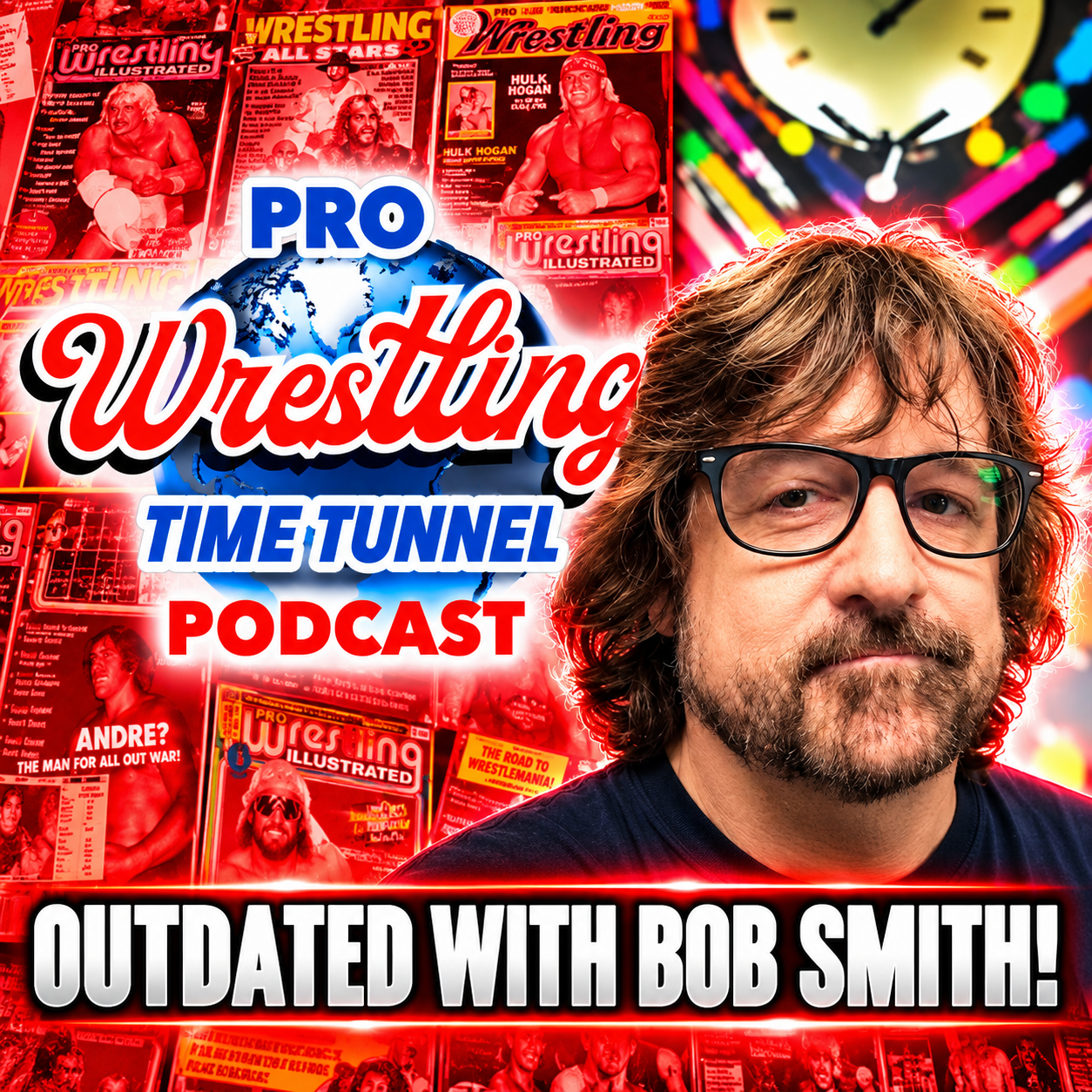
And my first guest is going to be the host of the Outdated Wrestling Hour.
Got some podcast people on today. Our regular Steve Giannarelli is on and we're going to do a mailbag segment. You have sent in some great questions and we're going to read those and answer those in our segment. And I'm going to be going back to 1966, West Texas because we haven't been able to do that lately. And I'm overdue in going back to the 66.
And we're going back to the Tuesday night town of Odessa in our second segment. So Bob Smith is coming up and then we're going back to 1966, Odessa, Texas and the Time Tunnel. And then we're going to the Mailbag with Steve Giannarelli. And then we'll Close out this fantastic show for you today. Thanks for joining us. Now let me welcome into the Richard's Ranch here my good friend Bob Smith.
My next guest is someone who I have really grown to be good, really good friends with and he's had me on his podcast a couple of times and we've done some really interesting conversations and I've had him on here too with other people, but I've never had him on just me and him. So I just. He had some stuff going on this summer that maybe we'll talk about, maybe we won't. But I'm so happy to welcome to the Richards Ranch my really good friend Bob Smith from the Outdated Wrestling Hour. How you doing, Bob?
[00:21:05] Speaker A: Why did you have to mention what happened this summer? I almost got away with that bank robbery dog on it.
How you doing, Tony?
[00:21:12] Speaker B: Suddenly last summer we could be playing that underneath.
[00:21:15] Speaker A: Yeah, no, I had a little bit. My, my listeners know I had a little health snafu right around the middle of the summer. And, and that for one podcast or another, that was a chore because I am firmly of the opinion that if you miss a podcast date, people are going to go listen to something else and may not come back to your show. People like the consistency. If you're going to come out Friday, come out on Friday, whatever it is. So thanks to Steve Giannarelli and a bunch of other people, I recorded like 13 shows in like two and a half weeks.
[00:21:45] Speaker B: And they are really. And by the way, I'm not just saying this because you're here. I would say it regardless. They were all fantastic. I mean, I listened every Friday, that's my Friday morning coffee to listen to you and all those shows that you did. I sat there and thought, you know, if I didn't know, I wouldn't have known. He recorded this several weeks ago. This sounds like a current show, you know.
[00:22:09] Speaker A: Well, I just have. I just put one out a couple weeks ago that was so old, I think we did it in late March, early April that it was right after a blizzard here or a snowstorm. So I didn't want to chop it out, I didn't want to hack it. So I just put it disclaimer at the beginning. Just ran the thing.
[00:22:24] Speaker B: Yeah, yeah, no, it's fantastic. I mean, you guys.
And what's cool is you guys had some great subjects. Go ahead. What you're going to say.
[00:22:32] Speaker A: Well, you bet you mentioned that. You know, you wouldn't have known they were any different. I have never gotten more criticism than I got during a couple of these shows, one, I did my first solo show completely by myself since my first year. Right. My first solo podcast. And it was just 50 trivia nuggets that I think maybe people didn't know. Like, there was. There was an Ilio de Paulo restaurant up in new upstate New York. People may not know that's a thing, you know, So I talked about things like that, and I got a letter.
I got a letter from somebody going, the music in the background was so distracting because I did it on musical bands for each subject.
[00:23:07] Speaker B: Yeah.
[00:23:07] Speaker A: And that's the only response. It was so distracting to take the music off your show. And I'm like, oh, thanks a lot, buddy.
[00:23:16] Speaker B: So I paid for the license to that music, and I'm going to use it, so.
[00:23:21] Speaker A: You damn skippy. Right? Yes.
[00:23:24] Speaker B: Yeah. And I am another thing that people don't realize is any extras kind of stuff like that that we have on our shows, we. We pay for that stuff.
[00:23:33] Speaker A: Yes, it's true. If you. You are. If you have integrity, we'll put it that way.
I refuse. I refuse to use anybody's stuff without even the photos that I use to promote the show on social media if they're not public domain or if I don't get access to them some other way, I will not use them on this foot of generic platform.
[00:23:51] Speaker B: Well, our show so connected with YouTube and all, and they just. I mean, they're so strict about that stuff, and sometimes they'll even put you on pause for something that they think because the WWE files copyright on everything out there, even if they don't own it, you know.
[00:24:09] Speaker A: Did you get the notice that I got that? They're going to be even more restrictive now, YouTube, in terms of even your bumper music and stuff. They're going to check that.
[00:24:17] Speaker B: Yes.
[00:24:18] Speaker A: And I was lucky enough to have the people that I buy my music from send me a note, go do this on our website, and we'll take care of it for you. I said, really? Yeah. So. So the people that I buy my music from literally took care of the copyrights for me, which is a wonderful thing.
[00:24:33] Speaker B: That's fantastic. You know, besides your, you know, I mean, you're very notable now because of the two podcasts that you do. Well, let's talk about those for a second. So you do one that we'll talk about first called the Outdated Entertainment Hour.
And in the side conversations that we've had, you and I, we just had 10 minutes here, we talked. We didn't talk about wrestling at all.
So you. I mean, you've got so much knowledge and such a broad base of history. And you're a musician and you played, you know, with the BB King and all this different stuff. I mean, so what was the genesis of the idea to do the outdated Entertainment Hour?
[00:25:16] Speaker A: It was something that Brian Solomon, Brian R. Solomon said to me one time. I'm talking, I'm thinking, I'm, I'm thinking about starting an entertainment podcast because I'm having so much fun with my first one.
[00:25:27] Speaker B: Yeah.
[00:25:27] Speaker A: But all we can talk about is wrestling. And I have all this entertainment background. I wrote for an entertainment magazine in New York, New York State for 17 years. So I have a little bit of cred with that stuff too. And he said, man, I don't blame you. He goes, man does not live by wrestling alone.
[00:25:42] Speaker B: Right.
[00:25:42] Speaker A: And that, that set me. I said, you know what? I'm gonna do it. You know, I do it on a more limited basis. Like it's every two weeks with the Entertainment hour instead of every week with the wrestling Hour. But I, I just love digging up factoids. Steve Giannarelli and I did a podcast about the independent New York City TV stations has got the highest numbers we've ever done.
[00:26:00] Speaker B: So I know, I heard that show and we just. And even though I. Bob, I wouldn't have had any idea of any of those television stations and you guys, of course they were television stations that you grew up with or whatever. I didn't grow up with them, but I still thought the show was interesting. I mean, I, I love. And being a former broadcaster, anything about broadcasting is going to get my attention. But I thought that was a great show.
[00:26:24] Speaker A: And we just did a show about the movie, It's a Madman, Madman World. I was able to contact the author of a new book about it. And I had Brian on the tag end of that show. And before you know it, we probably mentioned about 50 movies from the 1960s. And it, to me, the beauty part is a lot of stuff I don't even have to look up. I just have kind of old school knowledge about some of these things. And it's so much fun just to veer off. I'm gonna do a show about polkas, man, I am.
The American polka television show is still on in rural communities in Pennsylvania and other areas of the country. And the records are still being played on the air. I want to know more about it. So I'm going to try to find somebody in the industry to talk about to see how the pocus scene is doing today as opposed to before your
[00:27:10] Speaker B: numbers are automatically going to go up in North Dakota, South Dakota, Minnesota and Wisconsin.
[00:27:15] Speaker A: They're all Pennsylvania too.
[00:27:17] Speaker B: Oh my gosh, those people love Pennsylvania. Their poker music.
[00:27:21] Speaker A: Twenty years ago, I'm traveling with my band and back in that day, we were doing so well that we checked into our hotel room. Not our individual, but we were all like, we had to like blow up mattresses and Stu and, and we're, we're, we're getting ready to go to this venue and we turn the TV on and, and they go, what's this? And they had a live poker show on with people dancing and a poker band. It was on the middle of the afternoon and from what I understand was on every day from Monday through Friday, about 4 o' clock or something like that. And I looked at it and we're looking at it. And as musicians, we all said, this is the greatest thing we've ever seen.
These people are into it. The definition of soul in music is feeling it and loving it. To me, that's soul. And these people were dancing to these pokers and there's no place in the world they'd rather been than doing that. That's what fascinates me about it.
[00:28:11] Speaker B: Yeah, it's fantastic. You know, you mentioned Brian Solomon.
It's probably been maybe a year and a half ago I was still living in Missouri. I remember that because I remember where I was when this happened because it was so funny.
Brian Solomon and I were having a Twitter, well, X or whatever you want to call it now. We were having an exchange back and forth because we were watching the same movie on Turner Classic Movies and we were, and we were making comments about it and I don't even remember what the movie was now, but it was some film noir or something. And somebody chimed in and go, I can't believe you two guys are talking about this. Like they're so used to our wrestling comments or whatever. It's almost like they think we're one dimensional people.
But a lot of, a lot of the same guys that you and I are both friends with, and I think we're probably friends with them because they're not one dimensional, they're multi dimensional and they have so much pop culture knowledge and wisdom and likes and dislikes and things like that.
[00:29:14] Speaker A: The Arcadian Vanguard guys, Steve generally and Brian R. Solomon. I actually have social media, you know, I socialize with them. It's been a nice thing. Not only am I rekindling friendships with Bill Apton, Craig Peters, who I now see quite often.
Craig and his girlfriend and Me and my wife, we go to Broadway shows together and I had, at one point, I hadn't seen Craig in the flesh for like 32 years.
[00:29:38] Speaker B: Yeah.
[00:29:38] Speaker A: So now we're kind of regulars together again. It feels great. So if there's anything that's been a nice bonus to doing these podcasts, it's rekindling my old friendships from the old, old school.
[00:29:48] Speaker B: You know, I've only met Craig one time and we were on a. There were like six people on the podcast. It was like the Hollywood Squares and he was on there and I was on there and.
And I only had a brief exchange with him or whatever. But he seems like a really cool guy. I mean, really nice fella.
[00:30:06] Speaker A: He was great to work with. He was the managing editor before I was.
We were putting out more product. He was, he was really the head of.
We did the first WCW magazine there.
Then after the contract ran out, Colin Bowman got rights to the title, which is kind of kismet because I ended up working for Colin after that too. So it's all, you know, crazy that way. But Craig was just a meticulous editor around. He, he was.
Knew the English language backwards of forwards. We, we couldn't even use slang terms. He would correct us as we're writing, no, don't write it this way, write it that way. And he knew all the stuff like the back of.
So, yeah, of all the wrestling magazines, say what you want about the London books, they were the most literate. At least that's all I'll say because we had editors there who had worked for Newsday and in college things. And they were real grammar sticklers.
Sticklers.
[00:31:05] Speaker B: After I've met several times or have been around to the point now where we know each other. But he. I met him first in St. Louis at the St. Louis hall of Fame deal a couple years back. And he said, oh, you're the guy writing the Dory Funk Senior book. And I said, yeah. He goes, oh, I got a great Dory Funk story for you. And so later on in the bar, we got a chance to talk and he told me his Dory Funk. He said, I only got one, but it's a great one. And it was, it was great. And Bill came out that night at the St. Louis hall of Fame. He came out singing.
He came out with his microphone and he had a mask on. He was Mr. Wrestling Number 3 and he was singing, I think it was My Way by Sinatra or something. But a multi faceted fella, Bill.
[00:31:56] Speaker A: Bill sang at the Albany International Pro Wrestling hall of Fame ceremony last year. And I think he just sang it at the Cauliflower Alley Club too. So that's Bill.
[00:32:05] Speaker B: Yeah, yeah. And it was good. I mean, he did a good job. It was pretty fun.
[00:32:09] Speaker A: He loves to entertain.
It amazes me at his age, he is still probably as active in the wrestling business as he was when we worked together back in the day. He just, I, I asked him one time, I was at his house in Pennsylvania about 15 years ago. I said, well, when you retire, you can do this and you can do that. He goes, bob, I'm never going to retire. Yeah, that's the way he feels about it.
[00:32:29] Speaker B: Yeah, I feel that way too. Never fully retire. Anyway, he.
I can't really remember what I was a part of, but I was a part of some group where he was playing some of his old interviews from way, way back in wrestling. And like in the early 70s, he'd say, here's my interview with so and so. And it was just him talking to the person backstage or something. And it was just, he was just some amazing artifacts that he has, I'm sure in his collection.
[00:33:03] Speaker A: Someday you'll have to go to Aptor's Alley in his basement.
[00:33:06] Speaker B: Oh, really?
[00:33:06] Speaker A: Which is, which is like. It's a mini historical museum all by itself. It's got so much stuff in there, it's crazy. He has a Baron McKell secluded pen. Don't ask me where that came from. You know, he got a Bill, mascaras, masks, posters, all kinds of things. All the wrestling belts he's collected over the years. And by that I mean like fake wrestling belts. Like we used to wrestle for the inner office championship. This card board belt, which I believe he still has.
You know, everything from our old office memorabilia to stuff that nobody else could possibly have in the wrestling world.
[00:33:41] Speaker B: Well, I was going to ask you at PWI what a, what a typical day was like, but it sounds like you're telling me now.
[00:33:49] Speaker A: No, it was nothing like that, to be honest with you. It was more regimented and workplace like than it sounds like. If you think, oh, you work for Wrestling magazine, you sat around watching wrestling tapes all day and going to wrestling matches. Part of that is true, true. But we put out a lot of product to GC London Publishing in the years when I was there. I started in 88.
[00:34:12] Speaker B: How many magazines were being published then?
[00:34:14] Speaker A: Oh, God, I can't even remember them all. We had Pro Wrestling Illustrator was the anchor. And remember we had a boxing department in the same. We all sat cafeteria style in the same Office. Yeah, you know, I sat Destin. That's what Steve Farhood, who today is a great boxing commentator.
But so we were all kind of mishmashed around the office and they did KO magazine and one other title, I don't remember. And then later they bought the Ring magazine and the boxing department did that stuff.
Then you had our wrestling guys, complete with the photographers in that office and we did Pwi the Wrestler, Inside Wrestling Sports Review. Wrestling Wrestling USA Wrestling 89 or fill in the Year or whatever it was.
Gosh. Wrestling Annual Wrestling Superstar. I just go on and on and on. And then at one point they added a, a newsletter because newsletters got hot in the late 80s. So they added one that we called Peter Boy Weekly. Yeah, I remember that, you know, folded out like the New York Times, stuff like that.
[00:35:19] Speaker B: I remember that.
[00:35:20] Speaker A: Well, I worked, I worked so hard on that thing. And you know, I'll be honest with that thing was a big.
All of Monday was wasted. Not wasted, but used just to put that thing out. And you know, we would mail it like right away. They printed it instantly, mailed it quick because you know, we wanted more immediacy in our coverage. And that was one way to get it in those pre Internet days, you know.
[00:35:40] Speaker B: Oh yeah, I remember I was. I had a couple of television stations in the group that I was running at the time. And on one of those stations I did.
I'd seen Joe Pettocino's block in Atlanta where he was running six hours of wrestling back in to back on Saturday night. And I duplicated that and hosted the wraparounds and did. I think we had eight hours. I think we started like 4 o' clock on Saturday afternoon and ran till midnight. And I had all these wrestling promotion tapes were coming in. I was talking to Gordon solely every week because Dusty started up the Florida promotion again when he left it was in between WCW and the Polka Dots.
[00:36:20] Speaker A: Right, right, right, right, right.
[00:36:21] Speaker B: And Gordon was sending out the television show and I was talking to Lance Russell in Memphis because I was getting the Jarrett show and all of that. And I was getting Dave's newsletter, I was getting Steve Beverly's mat watch and I was getting your newsletter out of New York and there was just so much stuff coming in at that time. I mean it was a. Interesting time in the business because the business was changing so fast. The territories were dying and the national companies were on the rise and everybody was going through a lot of change
[00:36:54] Speaker A: back then, tons of change. And I'm, I'm happy you mentioned the dusty promotion. Around 89, 90. Because I, you know, I really liked it.
And I picked Fred Ottman out of a group. I said, that guy's going places. He was the big steel man back then.
[00:37:10] Speaker B: Steel man, yeah.
[00:37:11] Speaker A: And I went, boy, is he strong. He did some feats of strength on the show that were not works. Right. There were real feats. I said, this guy's gonna be big coin.
Unfortunately, they turned him into a series of characters. We don't even have to go down the list. But I still thought he. In his youth, when he was starting out his career, he was really impressive. I thought he was amazing.
[00:37:29] Speaker B: Yeah. Howard Baum and Bruce Owens were just on with me and Howard's on with me all the time talking about Florida and we were talking about Dusty in 1976. But we got off on talking about that couple of months that he came back. And they, they said it was so sad because the first time they went through all the towns there had some decent crowd because people were curious, you know. But the second and third time they went through, it just didn't. It just didn't draw. And Dusty had to go take the job in New York.
Polka dots.
[00:38:02] Speaker A: I remember the interviews they had with him and Terry Funk. They had a feud started up.
[00:38:07] Speaker B: They brought Funk back, you know.
[00:38:09] Speaker A: Yeah. And I thought, wow, this, this, this has got a great feel to it. And then one day the tape stopped coming in.
[00:38:14] Speaker B: And that was right before he went WCW to Pile Drive Flair in Nashville, which I was at that show and Terry Funk was there. And I thought, gosh, this is great. I'm going to see Terry Funk now on wcw. But I hate it because the deal with Dusty was so classic. He brought Terry Funk back, which is probably his biggest feud in Florida.
And, you know, if that's not going to work, it's probably not going to work.
[00:38:46] Speaker A: I was thinking the same thing at the time. And when Funk did go to nwa, whatever it was at that point, I could. I always blur it now with wcw. But they ran the Clash of the Champions, the I Quit match from RPI Field House, Detroit, which is near my hometown. And I think Gary Jester, whoever was, gave me a block of tickets and I went to the local radio station up there and gave them away. So I was helping paper that, paper the house a little bit. You know, that's great. But, boy, did that turn out into a classic match.
[00:39:16] Speaker B: I know I've heard you talk about this on your show before, but did, didn't you. Weren't you the first guy to do the PWI 500.
[00:39:25] Speaker A: Yes. The first two years.
Yeah. Now, memories are vague, you know, even Bill and I don't know Craig or Sue Sachs, who remembers?
They say that they chose. We all chose the first 100 as a group. I thought it was just the first ten, to be honest with you. The whole rest of that list was up to me. And I put it together. I was, I was literally going back to my newspaper. Wasn't working. Nine in the morning until nine, ten o' clock at night, sometimes past midnight over the course of about 10 days. And I put the whole thing together.
And can you imagine this was without Internet looking things up? You had to rely on what you knew.
And our list of names and hometowns and all of it was organic. Everything was on paper. And I'll tell you, it was a backbreaker. But I am proud to this day. The thing still comes out every year. The pre rifle. And to have that kind of a.
I don't know, Pinky and wrestling history. I'll take it. Because you know what? And what I was shocked about more than anything else when year two, I did year two, I'm in Memphis. I got wrestlers coming up to me and going, how come? I went down 10 spots.
[00:40:33] Speaker B: Oh, wow.
[00:40:34] Speaker A: And I never dreamed they would take
[00:40:36] Speaker B: it, that they're watching it. Yeah, they were watching.
[00:40:38] Speaker A: Yeah.
[00:40:39] Speaker B: Oh, man. Yeah.
[00:40:40] Speaker A: I won't mention the name of anybody but one guy. I went down 65 spots. Man. What did I do to deserve that? I went.
I had no answer for him.
[00:40:48] Speaker B: Yeah, sure, I. I did the top 100 wrestlers of 1975 over the new year holiday. And it's something I'm going to do every year. I'll. I'll do the top 100 of 76. And just doing the top 100 wrestlers, I thought that, I mean, that was a job. And I thought about you and I'm like, geez, Bob did 500 Jamie Christmas.
[00:41:09] Speaker A: You know what I really like about it? There's a guy named Bo James who still wrestles. And I put him in. I put him in both of those. And he thanks me to this day going, you got me. You got me jobs, man. They read my name in PWI and they thought I was somebody and then helped me get gigs, helped me get matches. I went, that's great. He's still working. Somehow it's that, that just amazes me.
[00:41:31] Speaker B: I, Yeah, I see him every year in Waterloo.
This year he was there. He had his wife with him and just a couple of lovebirds.
You mentioned something. I was going to ask you as well. I've heard you mention it before, but I don't know that I've ever heard the whole story. But, you know, I grew up down here in the Tennessee territory. And you mentioned going to Memphis.
When was that, Bob, that you were in Memphis office?
[00:42:00] Speaker A: 1991.
And I was burnout. I was burnt to a crisp at the office we had. I don't know if it's post 100, you know, or 500.
I remember being crispy.
And I called Jerry Lawler. I said, you know what? I want to take a little wrestling vacation. Can I get a press pass to come down and cover? You know, I'll make it a work vacation.
[00:42:25] Speaker B: Yeah.
[00:42:26] Speaker A: And he goes to me president, because I knew him a little bit from doing indies in Pennsylvania and stuff like that in New Jersey. And he said, no, come on a show. I said, what? He says, come on the show. We'll find something for you to do, and we'll come up with a little angle with Leather Face, and you could come and be on the show. And then I want you my Sunday morning show, the Jerry Lawler show, that ran there, too.
So how could I turn that down? So I. I get there and I still consider it greatest thing that ever happened to me in my wrestling career. In terms of. Just as a. As a side thing, it was. I had no. Really.
Although I ended up on TV a lot. But I. I just. It was just standing in right where Lance Restell used to stand on Channel 5 and talking to Dave Brown and Lawler and stuff like that. It was just. It was overwhelming. I really, really enjoyed it. I enjoyed the feel of the Memphis wrestling. I got to take the little tour with them, and it was like three different cards we went to, including the usual Monday night show.
[00:43:25] Speaker C: Yeah.
[00:43:26] Speaker A: Memories I'll never forget. There was just. And they were all great. They were all fantastic.
[00:43:30] Speaker B: I feel sad for wrestling fans today who will never, ever get to go to a card at the Mid South Coliseum.
It was just. It was a special place, and a lot of really, really great things happened there. I feel bad that no one will ever get to go to the Nashville Sports arena at the fairgrounds.
So many great things happened there. The Fargos and Lawler and just.
We had a fantastic territory here, Bob, as you well know, and a lot of rich wrestling history. So I'm glad you got to experience that.
[00:44:06] Speaker A: Well, not only that, and this is. This is kind of apples and oranges, but I got to do TV interviews for IWCCW when they were working Hamp, Pennsylvania which is where the WWW F used to. They even had Joe McHugh doing ring announcing.
[00:44:19] Speaker C: Yeah.
[00:44:20] Speaker A: And to stand in the same spot in front of the same ring interviewing wrestlers where McMahon and those guys used to do it. It, I, it, it hit me while I was doing it. And I, I talked to Brian Webster earlier this year who was the announcer at that point. He goes, he says it used to hit me too. Just the history in those buildings.
[00:44:36] Speaker B: Oh, of course.
[00:44:37] Speaker A: And what they lacked in panache and fancy accoutrement they made up for with fan enthusiasm and great stuff to watch. I don't know what to say.
It's what we all grew up on and it always feel like home to us.
[00:44:51] Speaker B: There was something special and unique and intimate about studio wrestling.
And to be in some of those old television stations, studios where the wrestling was, was done is just, just great, you know. And I just think there's an aura about studio wrestling that. And it wasn't, you know, there was wrestling on television before it and there's now wrestling after it. But there was something special about that studio wrestling era, I think.
[00:45:23] Speaker A: Absolutely. Like I always talk far too much about my first introduction to wrestling. Where I was, could understand at the age of 12 was the National Wrestling Federation. It was Pedro Martinez and Johnny Powers.
That was the first show that I watched and understood and fell in love with. And again that was the studio show. Very small.
Felt major league to me. I did. I didn't think it looked podunk or too small or you know. But now if you don't shoot off. Now if you don't shoot off like 50 fireworks and every announcement it looks minor league, you know what I'm saying? Fans are conditioned out of something entirely different.
[00:45:57] Speaker B: You miss anything about the old magazine days.
[00:46:01] Speaker A: I miss all of it. I never left Unwillingly.
I've talked about this a million times. They moved away in the pre Internet area and I had just brought property right near the office. I could walk to work and you know, when you're. I was still youngish at that point and we. It was our first mortgage and all that stuff. I couldn't walk away from that. I couldn't pack up all this stuff and go to rural Pennsylvania, which is where they moved to.
[00:46:26] Speaker C: Yeah.
[00:46:27] Speaker A: So I just swallowed hard, considered it a cosmic screwing and found the first job I could take in publishing after that. And I only lasted at that for like six months and then moved on a bunch of other stuff. But it was like they didn't farm me. I didn't quit. I had to go it was one of those weird things where again, there was no cell phones, there's no Internet. You had to be in an office to write and edit and lay up pages and all that stuff, right? It was heartbreaking at the time, but I put my big boy pants on and said, okay, this is what I have to do. And I just, I literally ran out of there. I was the second employee to leave. Roy London got a job with the WWF with their magazine first. And I was the second one out the door. And I ran, I ran out of there. I just said I got to get over this wrestling stuff, go do something else, right.
But they kept me around doing freelancing for another couple of years so I didn't have to go to the office as often. I would literally have keys to the office and come in after hours and write stuff for them.
But then other magazines came calling. WCW with Colin Bowman. Wrestling's main event with Cindy Krebs. Bill Apter when he left pwi, he always had work for me. Everywhere Bill's ever gone, he gets me work. He's crazy. He's crazy and great. But yeah, it was the job.
I'd still be there. I'm telling you, they like me and I like them. But I think I would have still been there if things had worked out differently in terms of selling the company.
[00:47:52] Speaker B: That's cool. Some people never ever get a job like that.
[00:47:55] Speaker A: No, no, I was lucky, man.
[00:47:58] Speaker B: I mean that you just enjoy and you love and that you would still be doing it today if it was possible. I mean, so many people never get a chance like that.
[00:48:07] Speaker A: Well, Mike Tyson made my career. I am telling you right now. I told you I did an award winning article about Mike Tyson for my, for my newspaper was working at. And put that in a resume folder with other clips. When you're going to a place that publishes boxing magazines. And he was just about to become the world heavyweight champion at that point. You're in, pal. It was, it was really that easy. Plus I wrote a great.
They said the interview process. They sat me down in a circle with all the editors and we just talked. And then Stu Sachs, the publisher said, we want you to write a wrestling article. Write it about Sergeant Slaughter. Here's the parameters.
I sat down, I wrote the thing in about 12 minutes. And I wanted to. I'll show them. I know all this stuff and I own Wally Carball. Bang bang bang.
Stanley Blackburn. Bang bang bang. But you know, I threw in all the obscure names that I knew. Yeah. And it was good. And I Got the job. And again, it sounds like it was a lot of fun and it was, but it was also very challenging.
It could be tedious because it was the same thing over and over. But I got to do stuff I loved. Yeah, I got to do the ratings. I was the ratings in Maven. I was in charge of the ratings. I was also in charge of the news thing. We worked with Bill after putting that together.
And he did all the introducing features in the wrestler magazine. Yeah, which is. I introduced Rob Van Dam, Rob Stakowski at that point, and a few other wrestlers who went on a really great things. I remember it was Johnny Hawk, who is now jbl. I gave him their first Dustin Rhodes. That was easy enough to do.
[00:49:39] Speaker B: So which one of those of your introducing features, which one are you most proud of?
[00:49:46] Speaker A: I'll tell you easily it was Rob Van Dam.
And the reason why is. And I say this, and I am swearing to you on a stack of Bibles, I'm talking to him. I'm interviewing him on the phone. I had seen him in Memphis, met him, got his phone number and I called him. I said, I want to do an introducing. You're a great wrestler. I want to do you.
And I go, I got one question for you though. What's that move you do where you kind of jump up on the top rope, flip backwards with your leg spread and then do the, you know, the moonsault type of thing? He goes, I don't have a name for it. I went, you know, I'm just going to call it a split legged moonsault.
He said, that sounds good. That's fine. I named the Split Legged moodsaw.
[00:50:25] Speaker B: Wow.
[00:50:26] Speaker A: Because. Because later on, years later, I'm hearing Jim Ross on TV calling it split legged moonsault. I said, oh, I know where that came from.
[00:50:33] Speaker B: There you go, man.
[00:50:34] Speaker A: Now I'll bet Rob doesn't remember that to this day. That's the last time I ever talked to him.
I haven't run into him since then. But I did name the split legged mood salt. So that's got to be my favorite introducing.
[00:50:45] Speaker B: There's another thing. How many people in the world get to name a move?
Yeah, that's awesome.
[00:50:50] Speaker A: Yeah. He didn't have it. He didn't. He said, I never really thought about giving it a name. Not every move, not every maneuver had a name back then. It was kind of the infancy, that period.
[00:51:00] Speaker B: Some of the ones now I can't even pronounce sometimes.
[00:51:05] Speaker A: Oh yeah, well, Japanese, the Japanese influence and stuff like that.
[00:51:08] Speaker B: So he outdated Entertainment Hour what's your favorite show you've done so far?
[00:51:18] Speaker A: The guess who interviewed.
I didn't interview. I interviewed one of the members of the band that's in it now. They have some younger members backing up Burton Cummings and Ready back when they just completed their US tour that was in Canada tour which was a massive success. And I got to go and talk.
[00:51:35] Speaker B: I just watched one of their shows on. On YouTube the other day.
[00:51:38] Speaker A: Really?
[00:51:38] Speaker B: My goodness. Can Burton Cummings still like sing?
[00:51:42] Speaker A: Is it an amazing. He's 78 or 79. Backman is 82.
They had to fight to get the trademark to their name back and I think that was last year and I think there was so much interest in the band at that point. I think they parlayed it into this tour and the tour was fantastic.
[00:51:59] Speaker B: I love to just putting it on YouTube and just doing something else and just watching every now and then. But I could listen. And poor Randy never sang. He just yelled. But. But Burton, my gosh, what a singer.
[00:52:12] Speaker A: Wow. Great influence on me, I'll tell you. And I got to. I got to say a few words to him backstage after the show. Met Joe Augello who was the guitar player with the hat and because he had been on my entertainment hour twice so far.
And to me, you know why it amazes me that the band became my favorite band at the age of 12. Was still on the road at my age. Can you believe it? It's crazy.
[00:52:37] Speaker B: Good for them.
[00:52:38] Speaker A: So just from a personal standpoint, I gotta go with that one.
[00:52:41] Speaker B: How'd you. What's your. How'd your relationship with Joe Puccio start?
[00:52:46] Speaker A: Completely. Is a fluke, an Internet thing.
[00:52:49] Speaker B: He's really an interesting fella also.
[00:52:51] Speaker A: Yes, he is.
[00:52:53] Speaker B: I enjoy.
I enjoy you two together.
[00:52:57] Speaker A: It was on Facebook, I think he wrote to say something about one of
[00:53:02] Speaker B: the shows which by the way, Joe Puccio comes on with Bob in the outdated wrestling hour. They do the first 15 or 20 minutes together and I just love you guys interaction.
You fit well together.
[00:53:18] Speaker A: I think he asked me a question about something and we started talking in a private message or a direct message on Facebook.
And then he mentioned that he. He wrote for a lot of the newsletter. He did some work with Meltzer and a couple of the of the bigger wrestling newsletters. So I said, why don't you come on a show? He said, really? I said, yeah.
So Joe impressed the pants off me by writing back and go. I went out and bought a mic. I bought a blue yeti microphone.
I said why? He said, well, you're going to be on your show. I want to sound good. I went, dude, that's above and beyond. Yeah. That is above and beyond. Anything I've ever expected a guest to do is go out and buy a microphone just to do one lousy show.
[00:54:01] Speaker B: I love it.
I love it when you bring up something, A name from the past or something. And I know it's out of Joe's depth, and he's just. He wants to talk with you about it, but he. He's like, bob, you'll have to tell me more about that.
And I'm sitting there going, I understand it. I get. I get all your references. I get all Cornet's references because I'm old like you guys. But it's funny when you get. You throw out something that Joe's not. Not really familiar with, and you educate him on some things, that's great.
[00:54:32] Speaker A: It's got to be that way because, you know, if I'm on a rant about Joe Turco or something from the 70s or the black Demon or something, I got to cover these things because that's. The 70s is my jam. I still consider the 70s to be my favorite. I don't know how you feel about it.
[00:54:49] Speaker B: That's why I do the 70s on my show. You know, we're doing 1976 all this year.
But I love. I love the 70s. I love the pre video era.
[00:54:59] Speaker A: Yes, exactly. And that's the shame, because we can't see a lot of things from the pre video, but.
[00:55:05] Speaker B: But I learned all about it, and all my memories are from the magazines, you know, because that was what we had.
You know, we didn't get all the television shows like we do now. We just got the Tennessee territory and magazines. That's one. How I fell in love with the Funk family was through magazines.
[00:55:24] Speaker A: Oh, yeah. Learned about the dad, too, and all that other stuff. Yeah, well, I had Joe on once, then I had it twice, and then I realized I had him on two different things about two different topics. And so one day, out of the blue, I call him up and I go, I really want to have a co host because it's good to have good conversation that people can pick up on. And to me, the good podcast, when you do have people on your show, it sounds like two guys in a bar. You're just overhearing what they're talking about.
[00:55:53] Speaker B: Yeah, that's right.
[00:55:54] Speaker A: That kind of thing. So, you know, Mark Marin and people like that. I listen to regular podcasts, too, and that's what I kind of get my inspirations from not the wrestling podcast, but regular podcast, regular general interest podcast.
So I go, would you like to be the co host? He said, oh, yeah, sure.
So we, we've, we've gone to a couple cards together in the interim. And I did not know he lived from where I worked at that point. He only lived about 10 miles away. We could have gotten together far more often in person, but he's still close to where I live in.
I think he adds a lot to the show. He's got his own unique perspective. We don't agree all the time, but that wouldn't be interesting either.
[00:56:35] Speaker B: I love that.
I love the fact that you guys come from two different places, like two different generations. I, I just, I like that. It's, it's a nice thing. You guys do really do well together.
[00:56:48] Speaker A: Wow. Here's a lesson I learned early on during the Pocket. I had a very bright young lady named Kimmy Sokolon who does, she helps coordinate wrestling conventions and stuff like that, or has up to this point.
And I, I said I wanted you on the show because she's barely out of her teens and I wanted to get her. Her. Why you like wrestling and what, what I knew about my old wrestling. And anytime I asked her about something that I found to be unrealistic about the current product, she goes, I don't understand what you're talking about. What do you mean?
Like, she, she, she couldn't fathom my point of view from when you and I were fans to what she watches and enjoys now.
[00:57:25] Speaker B: Yeah.
[00:57:25] Speaker A: So that taught me a lot. It's, it's like you can't expect the younger fans to even care about stuff that was on 30, 40 years ago. They're just not going to embrace it. It's going to look, it's going to look boring to them because it was much more simple. They are conditioned to today's product.
I can't blame them for that. I can't. You know, I've, I don't want to watch it a lot, but, but it's theirs and that is what brought them to the dance. So I let them have that and say, have at it. Enjoy it.
[00:57:55] Speaker B: And like all of us, the wrestling from their childhood and their teen years, that'll be their favorite wrestling forever.
[00:58:01] Speaker A: Yes. It's whoever brought you to the dance. The guess who. Right? My favorite band.
[00:58:05] Speaker B: Right.
[00:58:06] Speaker A: I could still call them my favorite band because they brought back all the memories of growing up. I mean, it's just, it's just the way it works sometimes.
[00:58:12] Speaker B: So what's your favorite show that you've done on the outdated wrestling hours so far?
[00:58:16] Speaker A: My favorite show.
[00:58:17] Speaker B: Yeah.
[00:58:18] Speaker A: Yeah. I don't want to offend anybody else because I've had so many people on that I've been.
[00:58:23] Speaker B: But I mean, just you've got the ones that you're very proud of, so.
[00:58:26] Speaker A: But here's what I'm proud about.
To have two legends of Detroit wrestling, Terry Sullivan and Dave Brzezinski on at the same time.
I was watching there, you have a YouTube show where they look at old Detroit wrestling and they just sit there and talk about it. And I'm riveted with every show. I mean, it's just, it's fantastic. These guys were there, they were part of it in an era where there's not a lot of tape from. So you need these people to verbally tell you what was going on back then. And to me, it's. It's probably my favorite show because I admire them both so greatly. They're very good at what they did. They're very good at what they do now. And I just think, to me, that was like a big birthday cake and then somebody giving you a second cake. It was that good, you know, it was just.
[00:59:10] Speaker B: No, Terry is a fabulous guy. I mean, he's, he's on with us here too. And I contacted him about doing 1975 Detroit and I said, you know, why don't you come on the show and talk to me about. He goes, well, you probably want to talk a lot about the chic. And I said, well, probably if we're going to talk about Detroit. He goes, well, actually I went to work for the outlaw group and I was, I was on the other side of the fence. I'm like, perfect, I want to talk about that. I want to talk. I said, because who in the world is going to talk about the little known outlaw group that started in 1975 except us? So he did a great job and he's going to be on again with us here this year. But good guy.
[00:59:52] Speaker A: That always fascinates me too, because if you were as young as I was and I was buying the magazines in 1975, you thought everything even into about 1980-81, the chic was dominating the magazines in them all the time. Yeah, you couldn't have a clue that the organization was waning at that point. It looked the same, you know, the same bloody photos and lurid headlines.
But the thing was to have a guy like Dave Brzezinski and Terry and all those Others walk out of that means they were being woefully underpaid. There's no question about it. They just weren't happy with their lot.
[01:00:26] Speaker B: Right.
[01:00:27] Speaker A: And to have that many people that obviously knew what they were doing say, let's try something else. He's not paying any attention to us at far.
That's a big story. I never knew that much about it. And thanks to people like you and people like, you know, Brian Solomon's book, I learned a lot more about that era. And I'm. I fell on the floor. I had no inkling. I really didn't. That's something I didn't learn until like two years ago, to be honest with you.
[01:00:50] Speaker B: Well, I didn't know about the Terry and the outlaw group. You know, when we were talking, he said, yeah, Jack Kane talked me into it. I said, Jack Kane? He said, yeah. I said, the same Jack Kane from Amarillo. He goes, yes. And so Jack Kane was Billy Bob Thornton's stepfather and he was also Dorie Funk Sr's brother in law.
And he went up there to work with the Sheik and ended up organizing a group to walk out and start up outlaw promotion. And Terry was one of those people. And I'm like, man, this is perfect. Yes. I want you to come on my show and talk about all that, because people aren't going to hear about that anywhere else.
But I love Terry Sullivan. This is a wonderful, wonderful fellow.
[01:01:33] Speaker A: And they eventually came back. I think, at least Dave and Terry did. I don't know how. And I think a lot of the talent that kind of filtered off came back too. But, you know, it's kind of sad to think that they were that hot. If you go back to the early to mid-70s, and then by the late 70s, early 80s, they were barely staying alive.
It just goes to show you, you can't book yourself as champion too long. Good thing Vern ganya retired in 81, right?
[01:01:57] Speaker B: Yeah. And it was just the fact that he booked the way the finishes all landed, you know, he never wanted to phase himself down and phase himself out. And everyone has a shelf life, you know, I mean, yeah, he could come. I remember the Sheik coming down to Tennessee. I saw him in Nashville against Jackie Fargo and they did a seven minute match and, you know, fire was thrown and all that. But I had seen the Sheik. That's what I came for. You know, I got to see the seven minutes and it was. It was fantastic. I would have gone not to see any other match, just to see the Sheik. And Jackie Fargo. But if I was living in Detroit and I saw it every single month, after a while, I'd probably want to see something else, you know? And I think fans did say what
[01:02:47] Speaker A: you want about the Detroit promotion and probably Toronto, too, but they were into the good guy, bad guy thing. They hated the Chicago.
[01:02:55] Speaker B: Yeah.
[01:02:56] Speaker A: So when you're sitting there for your fourth consecutive year and you're seeing the same finish that you've seen probably a dozen times before, I don't know how much I can vouch for this, but I think there's a match where Andre got counted out or something. People are going, if he can't beat Andre, this is never going to change. And then he started to stay home.
[01:03:15] Speaker B: Yeah, that was the turning point. That was in Maple Leaf Gardens. And, you know, and I've heard you say this. I know you like this guy, too, but I love. Lord I. Ethel Layton.
[01:03:24] Speaker A: Oh, yeah, yeah, yeah.
[01:03:26] Speaker B: I love his commentary. I mean, just. Just fantastic. I wish I. I wish I could see more of it, and I wish I could see more of him in the ring. There's just a limited amount of things out there, you know.
[01:03:39] Speaker A: Ladies and gentlemen, we're going to present the favorites of yours and mine. Just that brim and proper.
[01:03:44] Speaker B: I love it.
[01:03:45] Speaker A: Oh, my gosh. So good, so good. And again, you. You believed it. And. And then the ringside interviews where he just haul off and smacks the screen. She break that hoard. Bang. He'd slap him in the face.
[01:03:56] Speaker B: Well, like you said, it was the whole good guy, bad guy dynamic. And Lord AEL Layton was Lance Russell with an attitude and would get physical, you know.
[01:04:05] Speaker C: Right.
[01:04:06] Speaker B: And as a former wrestler, people bought it, you know, because he was a tough guy who had been in the ring, so, you know, he could do those kinds of things. I just think it's fantastic.
[01:04:17] Speaker A: I absolutely treasure any bit of videotape I can get from that particular era. Right. There's nothing else like it.
[01:04:24] Speaker B: A whole bunch of new stuff has just been found from a couple of. Joe Dombrowski and others have come out with a whole new bunch of Detroit stuff. So.
And I know you subscribe to some of that kind of thing, and so you'll probably be seeing some new stuff come out here pretty soon.
[01:04:42] Speaker C: Yeah.
[01:04:43] Speaker A: I think that it's a cooperative with Mary Savolde. I think so. Yeah. You know, I'm. I'm a big fan of Mario, and Mario put me on television. I always love him. I saw him in person a couple years ago. He gave me a big hug you know, it's like.
And being able to work. And we had Brian Webster in the show where I work with, too, and it's very. I can't find a person, wrestler or fan who has bad things to say about Marius Evolving.
[01:05:07] Speaker B: No, no, his fellow. I can't remember. I apologize. I can't remember his name. And off top of my head, but he. His fellow just kind of contacted me not long ago because they had come in with. Come into. Somehow they. They've got some Amarillo stuff, and they. They contacted me about that because there's not very much out there. There's like.
[01:05:29] Speaker A: No, there's not five.
[01:05:30] Speaker B: Five pieces of tape.
[01:05:31] Speaker A: Was it Daniel Archambeau made that? Contacted.
[01:05:34] Speaker B: Yeah, I think that's his name.
[01:05:35] Speaker C: Yeah.
[01:05:35] Speaker A: Yeah. He. It's. It's hard to remember. Yeah, but he runs the tape library there.
[01:05:39] Speaker B: Yeah, yeah, that's. That's him. Yeah. Nice fella. Nice.
[01:05:42] Speaker A: Great guy. Oh, great. Great guy.
[01:05:44] Speaker B: What kinds.
[01:05:45] Speaker A: We had him on the show. We had him on the show one time.
[01:05:47] Speaker B: Good. What kinds of things do you like doing on your show?
[01:05:51] Speaker A: What kinds of things do I like doing on the show?
The Wrestling Hour.
[01:05:55] Speaker B: Yeah.
[01:05:59] Speaker A: The fun of it is coming up with another concept with every single episode, whether it's just two of us discussing some period from the past, we really enjoy. When you have. We had you on Steve, doing the list of the top 100 or whatever, or the top 50.
[01:06:14] Speaker B: Whatever.
[01:06:15] Speaker A: Yeah, 60. I really enjoy those shows, and judging from my numbers, so do the. So do the people that listen. I think they really enjoy them. But you. You can vouch for this. It's not as easy putting those things together as it sounds.
When you get your top 25, you feel good, and then you look at the. The ones down through 50 or 100, and you're like, gosh, is this right? You know, it's a very, very hard thing to quantify, particularly in a sport that's a work. You know, it's like, who do you give credit to? Who do you not give credit to? So how much of this is promotion and how much of it is the wrestler himself? You know how that works?
[01:06:51] Speaker B: Of course. So you've done all these great things in your life and in a multifaceted career. What.
What was the impetus for you to say, you know what I'm going to do? I'm going to do a podcast.
What started that?
[01:07:07] Speaker A: I don't like talking about this, but I'll talk about it out of the blue.
I guess it's going to be six years ago. Soon John Arizzi calls me.
John and I had kept in contact over the years, a little bit friendly.
And I had been on his radio show often around 91, 92 or something like 89, whenever it was.
And he goes, I just parted ways with Brian last.
I'm not on Arcadian Vaguard anymore, but I want to keep my podcast going about the pro Wrestling Spotlight radio show. Yeah, would you be my co host?
And I went, what the perfect choice. You were great on my show in the old days, blah, blah, blah. So we get together and I do the shows and at first I was kind of helping produce the show. Then he took me off that thing. Then he brought in more elements of the show, like one of the old writers that he used to have on his show came on and we had, we went through a couple different producers and I did the show for a year and I thought things were going along fine.
But around Christmas time, at the end of the first year, we were literally rated at number eight in wrestling podcast the week the show came out, by November.
But you got to remember too, you know the podcast industry. Yeah. When you have a new show and you get an unexpected amount of first time listeners, it's weighed heavier than the existing shows are. I don't know why that is, but it's the truth, right?
[01:08:33] Speaker B: Yeah, it's true.
[01:08:33] Speaker A: Yeah. It's like, oh my gosh, what a debut. We're going to weigh this a little heavier. Especially the Apple podcast.
[01:08:39] Speaker C: Yes.
[01:08:40] Speaker A: So we get off the river and start with the show. Everything's going great. And then by the end, then by November or so, we're in the 40s, 50s, 60s, and I still don't think that's so bad.
But John, John writes me a letter, he didn't even call me, writes me a letter and says, I'm, I'm dropping you from the show.
And I went, So I call, I go, what the heck did I do wrong other than work all the time and help out as best I could? He's going, no, I'm just not feeling it. It's, it's not working, blah, blah, blah.
So I said, okay, that's fine.
And I asked him to do one thing. I said, just don't mention me anymore. I don't want to go through the bit that I got fired and all this stuff. I don't want people writing to me.
He goes, fine, okay, fine. So I'm not on the show for one week, Right. I'm not on the show for one week.
My email box is filling up. My Facebook feed is filling up. Where are you? What happened? What's going on? Why aren't you on the show?
And I said, if this many people are really interested in this, do one yourself.
So it was six or seven days after I got the Bums Rush out that I had my own podcast on air.
[01:10:02] Speaker B: Wow.
[01:10:02] Speaker A: For everything I learned from working with John, to give him credit, I learned a lot working on that thing. I had the thing ready to go. And if you go back and listen to the first show, it's got a lot of hair on it. It's little growing pains of me doing it all by myself.
[01:10:15] Speaker B: Oh, sure.
[01:10:16] Speaker A: But I will say that I forget your initial question at this point, but that's how I ended up. That's how I ended up starting the show. That's how I ended up doing it. Yeah. I enjoyed the process. I enjoyed. And I am one of those people who enjoys every aspect of it.
Checking out new microphone releases and working with audio. And I edit my whole thing.
You probably do, too. I edit my whole thing totally by myself. The old school way by ear.
[01:10:45] Speaker B: Yeah.
[01:10:45] Speaker A: If I have a one hour show, it will take me four hours to do an edit on it.
[01:10:49] Speaker B: Oh, wow.
[01:10:50] Speaker A: You know, I edit out every.
You don't hear those on my show.
[01:10:54] Speaker C: Right.
[01:10:55] Speaker A: And people go, boy, it sounds. And Oliver Bateman, who's a frequent guest on my show, said, I love your show. It sounds like npr. I said what he said, between the audio quality and the editing, he says, it sounds like a radio show, not a podcast.
[01:11:08] Speaker B: That's a nice compliment.
[01:11:09] Speaker A: That is the best compliment I could ever hope to get. So, no, I. That's. That's my story with that.
[01:11:14] Speaker B: And from a guy who's an editor himself, you know.
[01:11:17] Speaker A: Yes. Yeah. Yeah. Oh, God, is he brilliant. Holy smokes.
[01:11:21] Speaker B: Yeah. Oliver Bateman does the work.
[01:11:23] Speaker A: Oliver doesn't work. That's right. Yeah.
[01:11:26] Speaker B: Yeah.
[01:11:26] Speaker A: Those ringer guy and Ian Douglas, too.
I am wearing. They talk about my wrestling writing career. I am wearing short pants compared to those guys. Seriously, they're. They're the cream of the crop. Them and Brian Solomon and the other guys that are out there these days. We are reaching a great era for wrestling books. We really are.
[01:11:44] Speaker B: He doesn't. He doesn't like for me to talk about it, so he wouldn't want me to do it when he's on the show. But. But since he's not here, I'm going to give him credit again. But he. He sponsored my hall of fame ring.
[01:11:57] Speaker A: Ian Douglas did that sounds like Ian.
[01:12:00] Speaker B: Yeah. Yeah, he.
[01:12:01] Speaker A: Sure, that sounds like Ian.
[01:12:02] Speaker B: I mean, because we had, we had rings, you know, this year, first year they've done the hall of Fame, but we got a nice plaque and all. But they gave us a ring as well. But they, you know, wanted sponsors for him or whatever. Well, Ian stepped up and sponsored my ring because he's a hell of a historian and a hell of a writer and just an overall great guy.
[01:12:22] Speaker A: Yeah, he really is a great guy.
[01:12:24] Speaker B: And I'll always remember that, you know, that he did that for me.
[01:12:27] Speaker A: How could you forget that?
And he helped get a wrestler into the.
I forget the wrestler's name. Forgive me for that. But he was an old time black wrestler and he got him into the Albany hall of Fame as well. Jack Claiborne. That's right. Thank you. And he was behind that too.
Ian Douglas could write about anything in the world, but he chose to wrote a.
He chose to write about professional wrestling. What can I say?
[01:12:55] Speaker B: I mean, and specific subjects that I can't think of anybody else who would write about them.
You know, about the history of the Irish and about the history of, you know, the blacks in the wrestling business and just so many great things that I just can't think of anybody else who would write about it. Just, just great stuff.
[01:13:17] Speaker A: I mean, the new book about Turkish invasion of American wrestling, I mean, it's like he. Only he's thinking of it, only he's researching it. And the way he describes it to me is I'm putting, I'm putting out the books I'd want to read. He says, yeah, and hopefully somebody out there will do it. He's like a great jazz musician. He doesn't care how many records he sells. He cares about the quality of the work. Yeah, and it says a lot.
[01:13:38] Speaker B: Sounds very familiar about another couple of guys that I know. But yeah, and he got, he got the biggest Turkish wrestling fan in the world to write the Forward jbl who, you know, loved that book and loves Yusuf Ismail, the first Turkish heel and all that kind of stuff. So Ian does great work. Well, Bob, it's been great. I thank you so much for spending some time with me today. I'm glad. And we'll need to do it again sometimes. Sometime. I've got some questions that I ask guests that come on the show and so I want to run these by you. That'd be all right. All right, sure. First, first question is, what is your best memory that comes to mind for you
[01:14:22] Speaker A: regarding wrestling?
[01:14:23] Speaker B: Just regarding anything about the life, the life of Bob Smith?
[01:14:27] Speaker A: My Favorite memory about anything. Like my biggest moment, kind of.
Oh, that's a good one. Because I've been blessed in about nine different ways, you know, between the music career and the wrestling.
[01:14:39] Speaker B: And I couldn't wait to ask you this question.
[01:14:42] Speaker A: And working with Mike Tyson and so many great things.
Then I met Helena.
[01:14:50] Speaker B: Yeah.
[01:14:50] Speaker A: My wife.
[01:14:51] Speaker B: Where did that take place?
[01:14:53] Speaker A: Oh, gosh, this is a great story too. We were both on the rebound. Right. Both married before.
[01:14:59] Speaker B: Okay.
[01:14:59] Speaker A: And I answered an ad, a personals ad in New state newspaper from Long island.
And it was one of the things where when you wanted to find somebody, you could hit a code and you could call them.
And we called each other and we talked for five hours.
[01:15:15] Speaker B: Wow.
[01:15:16] Speaker A: And we've been talking since 1994.
[01:15:20] Speaker B: That's awesome.
[01:15:21] Speaker A: Yeah. And it was just. Yeah, it's.
She's done so much for me and I hopefully I've done a lot for her too, and it's been a blessing. And I just don't know what else to say other than I got a rare one with her. She. And she worked for BB King too, which was hilarious because I'm trying to court her on the phone. Right. And it's like she goes, what do you do? Well, I'm in publishing, but you know, I also have a band. It's floating around Long Island. We. I'm a blues singer. And she goes, blue singer. I work for bbk.
How am I supposed to impress her after that?
[01:15:53] Speaker B: Right.
[01:15:55] Speaker A: Right. So. But that's how we met. And I will just say personal ads do work.
[01:16:00] Speaker B: Yeah. Who's the number one hero in your life?
[01:16:04] Speaker A: Hero in my life.
[01:16:06] Speaker B: Who's the person you look up to that's a hero to you?
[01:16:16] Speaker A: My father was an imperfect person, but he was the hardest working son of a gun I've ever met. And steady's rock. If he said he's going to be somewhere at 5 o', clock, he was there 10 minutes before every single time. He never missed an appointment.
Just. Just consistent hard working. And I think I got my work ethic from him.
[01:16:39] Speaker B: What was his name?
[01:16:40] Speaker A: I've always, you can say what you want about me, but I'll outwork any three guys standing next to me and like it and enjoy it. There's a difference. I don't think that work is drudgery. I think work is something that makes you healthy. If you. If you do a fine job at something and it turns out to be good, you can put your head on the pillow at night and sleep soundly knowing you did the right Thing every single day, not only through your work, but by other people as well. That was my dad in terms of his interpersonal relationship. So I have to say I admire him.
[01:17:12] Speaker C: He.
[01:17:13] Speaker A: He was just a rock solid, steady person, and I probably unwittingly picked up a lot of his characteristics in my own life.
[01:17:25] Speaker B: I. I agree. Work is a gift. I mean, it really, really is. I mean, it really brings out the best in you. It gives you a chance to apply yourself. Yeah. And what was his name?
[01:17:36] Speaker A: Bob Charles Smith.
[01:17:38] Speaker B: Charles smith.
[01:17:39] Speaker A: Yeah. Catskill, New York.
World War II veteran.
I'm very proud that somebody in the town, I think my brother was behind this. Put up one of those banners that they put on, like, phone poles. Of course, the town salutes. You can see them in every town in America right now. And I'm proud to say there's one of him in my hometown right now.
[01:17:58] Speaker B: What's the top value you subscribe to?
[01:18:02] Speaker A: Value?
[01:18:03] Speaker B: Yeah, I mean, obviously, your dad probably installed a lot of values into you. It sounds like he was a hard worker. And what's your top value?
[01:18:17] Speaker A: Integrity.
Say what you mean, mean what you say.
Don't BS people.
Don't be anything.
Don't do anything for show. I don't think I'm a particularly exciting personality, but I think that what you see is what you get. I'm not. I don't put myself over like a lot of people do. We're living in an era now where everybody's loud and braggadocious and there's no sportsmanship anymore. I prefer the reserve guys like Sandy Koufax and, you know, the guys who did their job and kept quiet about it. And I don't need to be the center of attention all the time. You know, in fact, I feel kind of uncomfortable sometimes being the center of attention.
But personal integrity, I think, is a big deal, because it's like, I hate to be the guy that walks in the room, goes, this guy ripped me off, or this guy lied to me, or this guy is, you know, full of beans. Just. Just. Just to have to be good to other people, I guess. I guess that's basically it.
[01:19:20] Speaker B: There's a lot of.
There's a lot of really good things about social media, but it does give everybody a megaphone.
[01:19:29] Speaker A: Yes, it does.
[01:19:31] Speaker B: You know, some people use it well, and other people, it's.
Well, it is what it is.
What's your favorite thing?
[01:19:41] Speaker A: My favorite thing?
Oh, that's hard.
What do you mean, my thing? I have to narrow that down a little bit. Anything.
[01:19:52] Speaker B: Your favorite thing in the whole world.
[01:19:54] Speaker A: First thing that popped into my mind was a chocolate sundae. But that's not that. That's kind of.
[01:20:01] Speaker B: We don't have them around here. But I hear you and Puccio talking about that one.
[01:20:05] Speaker A: Yes, we talk about ice cream. And. And the one nice thing about my recent surgery, my oral surgery, is that I could have all the soft ice cream I wanted. So I actually up. Increased my uptake of that because I could have it.
[01:20:15] Speaker B: You know, what's the brand you guys talk about?
[01:20:18] Speaker A: We talk about Carvel here in the East Coast.
[01:20:20] Speaker B: Yeah, yeah.
[01:20:20] Speaker A: And also Mr. Softy. All right, now we're having.
[01:20:24] Speaker B: That might be your answer when I. I looked at the question.
[01:20:26] Speaker A: No, no, my favorite thing.
Music, to be honest with you.
[01:20:33] Speaker B: Yeah.
[01:20:34] Speaker A: Well, by miles. Even more than wrestling or anything like that, you know, music has always been, you know, the food of my life. It. It's.
I can't imagine a life without music. Life without music wouldn't be worth living. I love music.
[01:20:46] Speaker B: Oh, me too. Me too. What's your favorite food?
[01:20:55] Speaker A: Right now as you're talking to you, I was introduced by a pro wrestling personality in Atlanta. For my first time, I had chicken fried steak.
[01:21:03] Speaker B: Ah.
[01:21:04] Speaker A: But it's got to be real Southern chicken, not Denny's chicken fried steak. Right. It's got to be real Southern. And I took one bite and I was.
[01:21:14] Speaker B: Real sausage gravy.
[01:21:16] Speaker A: Right, Exactly. It's. There's nothing else like it.
Listen, I have a bunch of favorite foods and I never eat that because it's not good for you. But.
[01:21:22] Speaker B: Right, of course.
[01:21:23] Speaker A: And I just lost, by the way. I just lost like £40. So I'm. I'm like, really?
[01:21:27] Speaker B: Here in the South?
[01:21:27] Speaker A: Yeah. But I did it the hard way by having a liquid diet.
[01:21:30] Speaker B: You know, here in the south, cornmeal is its own food group. I mean, we.
We put it on it. We fry everything with cornmeal. Everything.
[01:21:40] Speaker A: But it's so good, though.
[01:21:41] Speaker B: It is. What's the most beautiful place you've ever visited?
[01:21:45] Speaker A: Bermuda.
My wife and I, when we first met, had took a little mini vacation in Bermuda. And I was just looking at that clear water, standing in that perfectly clean water. It was blue as you stood in it, and I was like, wow, I could look at this for a long, long time.
[01:22:01] Speaker B: How long have you been married?
[01:22:03] Speaker A: Oh, Gosh, we met 94.
So it's since.
I think we got married in 97.
[01:22:12] Speaker B: Okay, so next is going to be your 30th wedding anniversary.
[01:22:16] Speaker A: Yeah. Yeah.
[01:22:17] Speaker B: Well, you need to go back.
[01:22:19] Speaker A: No, Actually, you know What? It was 96. Forgive me, because this was 30 this year.
[01:22:22] Speaker B: Oh, okay. Well, you need to go back to Bermuda.
[01:22:25] Speaker A: Sounds good. Okay, we'll go. We'll get the tickets.
[01:22:27] Speaker B: Yep. If you could describe success in one word, what would that word be?
[01:22:43] Speaker A: Boy, it's coming to me, and it's. It's hard to say it in one word.
Peace.
Peace in your heart, peace in your mind.
The lack of worries, you know, I mean, real peace. It's like there's nothing wrong, and I'm grateful to be here. Yeah.
[01:23:03] Speaker B: Calmness.
[01:23:04] Speaker A: Yeah. All of that mixed into the word peace.
[01:23:06] Speaker B: Yeah.
[01:23:07] Speaker A: Like. Like personal peace. Personal peace that you don't have any regrets, you don't have any. Any grudges. That, like I said, every night when you put your head on the pillow, you go to sleep peacefully. And I think that's. That's the key to me.
[01:23:21] Speaker B: How do you want Bob Smith to
[01:23:22] Speaker A: be remembered as not being a pain in the ass?
It's like, when I walk in a room, I hope that people are glad I'm there.
[01:23:31] Speaker B: I, you know, I. In my shoot career or whatever, you know, I'm executive coach, and I talk about your brand, personal brand all the time. And I tell people, I'm like, you know, what it really boils down to is when you walk down the hall, people are either going to say, oh, geez, here comes blank, or they're going to go, oh, yeah, here comes blank. You know, I'd rather be the second guy, you know?
[01:23:55] Speaker A: Yeah.
[01:23:56] Speaker B: Oh, my gosh, here comes so and so. You know, I haven't talked to them in two days or whatever.
[01:24:01] Speaker A: I would rather have a small circle of friends who are glad I'm there than be loud and braggadocious and annoying to the whole world. I would rather have. You know. Does that make any sense?
[01:24:12] Speaker B: Oh, yeah. I mean, you know, how many times, you know, you're sitting at a table and then they're like, oh, here comes so and so, you know, I don't want to be that guy.
[01:24:20] Speaker A: Yeah. Yeah, exactly. Right? You. You nailed it.
[01:24:23] Speaker B: Yeah. If you could go back and talk to young Bob Smith, what would be the advice for him?
[01:24:31] Speaker A: She wasn't the one.
Don't. Don't go crazy over somebody in your high school and college years. It's not worth it.
Right?
[01:24:41] Speaker C: It's.
[01:24:42] Speaker A: It's like, don't. And don't get infatuated. Don't. Don't play the fool. Don't be the love. Lauren Sapphire. You know what I'm saying? Keep your Intake. Keep your integrity about you. No matter how fine you are of somebody and somebody's in, if somebody's playing you, realize it and just walk away. Swallow hard, move on to the next thing.
[01:25:00] Speaker B: I can't tell you how many decisions I wish I would not have made until after I was 30.
[01:25:06] Speaker A: Oh, yeah, a lot of them. Yeah.
[01:25:10] Speaker B: So I know this is going to be a good question for you, but. And I only got two more, but the next one is. What's your favorite sound?
[01:25:22] Speaker A: Silence.
[01:25:23] Speaker B: Really?
[01:25:24] Speaker A: Yeah.
[01:25:25] Speaker B: Simon and Garfunkel.
[01:25:28] Speaker A: It's, I believe, one of the most cathartic things I did. I'm retired now, but I used to work really hard and I would come home and I think one of the best things you could do for your mental and physical well being is to stare at the wall for 15 minutes every day.
[01:25:43] Speaker B: Yeah.
[01:25:43] Speaker A: No, no.
[01:25:44] Speaker B: I kind of got that personal rule for myself before I go to bed. No screens, no audio, no video. Just a little bit of time before I go to sleep that's uninterrupted with nothing.
[01:25:59] Speaker A: And if I could be kind of on my soapbox a little bit, I think that young children are. I can't stand when I see it. If I'm in, like shopping out there somewhere and they've got a little, little baby in a stroller and they hand it a tablet. No.
[01:26:18] Speaker B: Right.
[01:26:18] Speaker A: Their little minds cannot process these things. And it's well known now that if you do have a young child, do not let them watch television. Go directly to bed. Give them an hour between. You can let them watch tv, but give their minds a chance to slow down. It will help their development later in life.
And I'm. I'm a big proponent of all that.
[01:26:37] Speaker B: I just said I don't fly as much as I used to, but gosh, I used to be on planes all the time. And it was like you say. I mean, they would hand them a tablet like you would hand a kid a toy. Yeah, it's like the new 21th century toy that I hand to kids. And I agree with you. I don't think they're quite ready for stuff like that.
[01:26:58] Speaker A: It's not good for their cognitive development. It just, just isn't. All the psychologists are saying this and, you know, we're, we're constantly bombarded by sound and lights and flashing stuff. It's. And it's bad enough when you're a full grown adult, but when you're a child, it's impossible.
[01:27:15] Speaker B: So much so that amazing to me that so many television shows or Whatever you turn on, there's a warning.
Like there's flashing lights and there's this. That in the show. So you better, you know, if you're that. That person, you know, you might not want to watch this kind of. I mean, that's how prevalent it is. There are now warnings on television. You know that their stuff.
[01:27:37] Speaker A: There's warnings at the ball game now? Yes, because like, if a guy hits a home run, a lot of STs, they flash the lights on and off now. So they put the warning up. Yes, but it's too late. Once a person came into a ballpark, you dummies. Right, right, right. They're already there. You've got a captive audience. Don't, don't. I don't think it's.
You know what I mean? Everything is changing, even ball games.
You go to a major league baseball game, it's like being locked inside a PlayStation 5. Lights and sound and noise. You can't even talk to the person next to you.
[01:28:06] Speaker B: To me, that's not really a legitimate warning because I've seen the same thing. And to me it's a cya. You know, it's like in case someone goes and says the ball game did something to them or whatever, you know, it's a legal cover your butt thing.
[01:28:21] Speaker A: Exactly Right.
[01:28:22] Speaker B: All right, last question. What's the best lesson you've learned? And you know what? That sound thing, I was a little so looking forward because I thought, man, Bob is a sound guy. I can't wait to hear his answer. And it is an impressive answer. Your silence. That's pretty cool. What's the best lesson you've learned?
[01:28:43] Speaker A: Don't beat yourself up.
Don't beat yourself. Everybody has. Look, look at perspectives when you're having troubles or let's say you lost your job or something else is going on in your life. I just say, just keep an even keel. Don't. Don't blame yourself for everything that happens in your life. Don't make yourself your own worst enemy.
I just.
I hate it when people are depressed or they get really upset with themselves. And I can't win and shoot. I've known people that had a job for 30 years and one day they walked in and closed the factory, that kind of thing. And they beat themselves up for it. No, never do that. It's never your fault in that regard. And people, people internalize things that they can't control.
[01:29:25] Speaker B: I was just talking to a close friend the other day and they had had something happen and, and they were talking, I said, let me ask you a question like, how are you going to feel about this in five years?
[01:29:36] Speaker A: Yeah.
[01:29:37] Speaker B: How are you going to feel about this in 10 years?
And if it's like, I'm probably going to look back and laugh and I'm like, well, why don't we just do that now?
[01:29:46] Speaker A: Yeah.
[01:29:47] Speaker B: You know, let's skip all the, you know. And then I know that people are legitimately hurt at times and they're legitimately disappointed and all that, but you know what? I had this personal philosophy that every now and then I'll give myself a pity party, but when the sun goes down that day, the party's over.
Like, I give myself that time, but then I'm moving on, you know.
[01:30:12] Speaker A: Yeah, I hear you. I hear that. I can't tell you the number of times where I've been depressed and then eventually drift off to sleep. And you, and you wake up the next morning and it's like you don't feel nearly as bad, even though you realize what had happened.
[01:30:26] Speaker B: Yes.
[01:30:27] Speaker A: That little passage of time added to another passage of time is a healing thing, no matter what you're going through, other than, let's say, a physical malady or something like that. But you know what I'm saying, if you've got a mental difficulty or you're really concerned about something, time is your best, best friend in that regard. I don't know if you agree with that.
[01:30:44] Speaker B: Yeah, 100. 100. And I asked myself that question all the time. Like, how am I going to feel about this next week? You know, how am I going to feel about this in a month? Chances are I'm probably not going to feel as intense about it as I do right now. So. So let's, let's get on with it, you know?
[01:31:02] Speaker A: Yeah. And all that. And the only other advice similarly is no grudges ever.
[01:31:07] Speaker B: Yeah.
[01:31:08] Speaker A: The passage of time gets rid of. Yeah.
The time passes after bad things and you will feel better and you'll look at it as part of history instead of something to bemoan and make you feel bad at that point.
[01:31:22] Speaker B: The Outdated Wrestling hour comes out every Friday morning. How often does the Outdated Interview Entertainment Hour come out?
[01:31:28] Speaker A: Every two weeks. And usually I have had them coming out on Wednesdays lately.
[01:31:32] Speaker B: Okay.
[01:31:33] Speaker A: Because just to separate it from the other stuff that comes out on Friday, so.
[01:31:37] Speaker B: Well, I invite. If you haven't checked those two shows out, you should. Bob does them. And as you have listened to us talk today, a lot of wide variety of subjects, a wide variety of guests, a wide variety of. Of topics.
Just Some good stuff. Mom, thank you so much for coming by the ranch tonight.
[01:31:57] Speaker A: Well, what the. Only. Give. Let me give you a compliment before I go. You are a true historian.
And there are other people I can name who are true wrestling historians.
People call me that. And I go, get out of here. Because you know what? I am a glorified fan. I'm a super fan. Always was. I remember a lot of stuff from my era, but if you ask me to name a bunch of facts and figures, I can't do it.
You know, I can vaguely remember things, but you guys, the guys that stick your necks out and document history, and that's important to all of us. So I just want to say thanks, because without people like you and a bunch of other people I can think of right now, we need this history. We need wrestling history. We need old school. I. I am insisted. Someday somebody's gonna look at your work and go, let's try it the old way again. Let's calm it down.
So my fingers are crossed and my heart is set. We'll see if that ever happens. But I just want to say thanks. You're doing a great job keeping wrestling history alive.
[01:32:57] Speaker B: That's. That's a. That's wonderful. Thank you for that. I. I think wrestling, just like everything else that you can think of, is cyclical.
And I'm with you. I think it may not ever go back to the way it was, but there is a.
You do go to a certain point with almost everything where you go, you know what? We need to get back to the basics. You know, we need to get back to foundational type things. And I think wrestling will do that. I really do.
[01:33:29] Speaker A: I do, too. But, you know, it always happens for the wrong reasons. I think it's going to happen for financial reasons before it has anything to do with the artistic part of it.
[01:33:37] Speaker B: Everything's, you know, everything's the marketplace. You know, everything's based on economics. But, you know, like, music we talked about, and you love music. I love music. But, you know, it just like anything else, music is cyclical. I remember, like, I remember when, like, the 1970s was this glorious decade where you had all this different kinds of music.
And you'd turn on the radio and you might hear, you know, England, Dan and John Ford Coley right next to the electric, like, orchestra, right next to the Guess who, right next to the Rolling Stones.
And they're all of different textures and all of different influences and all that. And then, like, around 1978, it was all disco.
Yeah, we discoed There for about three years, and then all of a sudden, boom, we went back into another cycle. And I think wrestling does that as well. I don't know. It's hard to predict what it's going to look like. But I do think you do go back in cycles, in time.
[01:34:40] Speaker A: You had to bring that up because it's like, I remember 70s AM radio. You would hear a whole lot of Love by Led Zeppelin, followed by Ann Murray.
[01:34:48] Speaker B: Oh, yes.
[01:34:49] Speaker A: There's nothing else I could. I can equate it to. And I loved it back then. I didn't feel like I was missing anything. Listening to the radio, too. No, it entertained me every time I turned it on.
[01:34:58] Speaker B: No. You hear Jumping Jack Flash, and then you'd hear Operator by Jim Croce.
[01:35:05] Speaker A: Yeah, you know, Exactly. Right.
[01:35:08] Speaker B: Later on, you know, decades, a decade later or whatever, you'd have a special station for each one of those types of songs.
[01:35:15] Speaker C: Right.
[01:35:16] Speaker B: But back then, it was all on one radio station. It was wonderful.
[01:35:20] Speaker A: And you know what was different then? One guy would play it. There was a disc jockey in South Dakota that could. That could be a hit maker by flipping a record over and playing the B side back in the day.
[01:35:30] Speaker B: Right.
[01:35:31] Speaker A: And then the B side starts to take off with it. The next thing you know, an artist is in the top 10 strictly because the song sounded good.
No, no. Marketing. No. You know what I'm saying? None of these research firms. It's just a bunch of people like that. I wish it would kind of get back to that, but it never will. We both know.
[01:35:48] Speaker B: Yeah, no, no, probably not. But we. At least we got to live during it and we got to experience it and it's recorded, so we can listen to it anytime we want. So. Bob, Bob, thanks a lot, man. I appreciate it.
[01:36:01] Speaker A: My pleasure. Thousand, thousand fold. It's been. It's been fun. Thank you so much.
[01:36:10] Speaker B: Well, that was a great visit.
Bob Smith is one of those guys who I'm just glad that I've met. You know, he's just a guy that I'm glad I have a relationship with him.
And as I told him, and as I'll remind you again, that's my Friday morning coffee.
You know, I usually check our show on Wednesday morning when it comes out and make sure that it's like it's supposed to be or whatever and listen through it. I've already done that a time or two before. It's all been set and ready to go. But I want to hear it the way you guys hear it.
And then around lunchtime, If I eat lunch that day, I usually listen to Brian Solomon. Thursday morning I listen to our stories with Briscoe and Bradshaw show.
And then Friday morning I listen to Bob in the Outdated Wrestling hour. He is on my speakers and with me in my coffee cup on Friday morning. And if you get a chance, check out Bob's show. It really, really is something we recently lost.
Beautiful Bruce Swayze and probably about three years ago maybe or two years ago, I can't remember exactly when his book came out. The Beautiful one, Bruce Swayze Lessons in the Ring of Life, along with the author Lou Spencer is available where you get your books. And you know, I like the feel of a book in my hand and I've got books all over the place here at the Richards Ranch. But this, I went back and reread this this weekend because I was going to write for the Pro Wrestling Time Tunnel. I was going to write an RIP dedication feature for Bruce and it I had to do Jerry Oates and Jerry Oates and Bill Dundees both were very. And then before that Dori Funk Jr. I mean just so meticulous. There was just so many things I wanted to say and so many things I wanted to cover. It took me a while to get those finished and then when I got them finished, I thought about Bruce Swayze. Now one of the reasons Bruce is special to me besides the fact that he went through the, as I mentioned earlier in the show, anybody that gets through the ropes and gets in there or is it ringside and take some bumps or in the ring taking bumps and, and entertaining us, hey man, I respect you. I don't care who you are. Thank you for taking the bumps. Thank you for abusing your body. Thank you for the entertainment, everything you've done.
And so back when I started researching, 1974 is my favorite year in wrestling. And so I've done a lot of research on 1974 in particular and I was coming across his name quite a bit, especially in Florida. Beautiful Bruce. And so that got me curious. I'm like, well this guy lives in Kentucky, you know, he lives in Franklin, Kentucky. As a matter of fact, the Historical society for the county there has a beautiful Bruce Swayze display that has a lot of his ring worn gear and his boots and some things like that. And I put a photo of that in the, in the feature that'll probably be coming out Thursday.
Well, I guess that'd be October 1st, wouldn't it?
So that's when I'm planning on releasing the feature on Beautiful Bruce and rest in peace, man. And thank you. He was a Canadian born, born Canadian.
And Greg Oliver had done some research on him. Of course he writes about all the Canadian wrestlers.
But he was interesting to me and I, I wish I would have reached out to him and talked to him because Franklin, Kentucky, that, that's not too, I mean, Kentucky is a long state. It's not a tall state. So you can get anywhere in four or five hours in the state of Kentucky. And so I wish I would have gotten know him and reached out to him. He was a businessman. After his wrestling career was over, he was involved with the rubber company and some other things. And so that's a regret I have that I didn't reach out and meet and talk with the beautiful Bruce. But we have his book and I did a comprehensive feature on him that'll be coming out, like I said, on Wednesday or Thursday. Sorry, this show comes out on Wednesday, Comes out on Thursday. All right, we're going to go back to West Texas, 1966. And I've been saying, and we got the mailbag coming up too on today's show.
So we had a nice visit from Bob.
We wanted to, I wanted to say something about Bruce Swayze and tell you I've got that coming out. And then we got the mailbag coming up. You have given us some amazing questions for the mailbag and Steve Gennarelli will be along here in a few minutes and we will go through the mailbag. But before we do that, I want to get back to west Texas in 1966 and talk about Odessa.
So already in the series that we're doing about West Texas, it seems like forever ago the last time we did one, but we did one about Abilene. So we did Sunday night and Monday night shows were Albuquerque and we talked about Mike London and Monday night shows were in Abilene and we talked about the lawman, Don Slatin and his acquisition of the town and his, his talks with City hall and being able to get in the city owned buildings there at the time.
And we covered all that in a previous podcast. So now we're the Tuesday night town in 1966 is Odessa and its sister city Midland, big oil base there. And if you're a fan of Landman, the show Landman, they live just outside of Odessa. That's where the show is set up.
And so Billy Bob Thornton and all the cafe and all of those things are supposed to be in Odessa. And one season, I don't know if it was season one or season two, but they went to a vendor show for the oil business. Some of the the Roughnecks did. And it was held in the Ector County Coliseum. And the Actor County Coliseum is where wrestling has been held in Odessa since the beginning of time.
I'm looking into the television. It looks like television first came on in Odessa in 1953.
KVKM Television, which was Channel 9, carried a Saturday wrestling program at 5:30 in the afternoon in 1965, 1966.
And it is licensed to Monahan's and Odessa. Monahan's is the hometown of a very famous songwriter in country music. Do you know who's from Monahan's, Texas?
Guy Clark is from Monahan's, Texas. And that's where KVKM Television Channel nine was. And I'm sure that's where the Amarillo television show ran. And Saturday afternoon Channel nine wrestling.
And I want to talk a lot about the promoter. We get into these town promoters and I'm going to talk more about 1966 as we go. But this first group of segments that we do about it I've been highlighting. We talked about Mike London and his past and his career in the wrestling business. We talked about the lawman, Don Slatin. Pat o' Doughty was an interesting fella. He is more interesting than just being the Odessa promoter. As a matter of fact, George Euclid O', Dowdy, he was born in 1908 in Duke, Oklahoma.
He died the day before my birthday, March 27, 1992, right there in Odessa, Texas at the age of 83.
And he had basically four different phases of his life in the wrestling business in the 1930s and the 1940s he was a wrestler.
From the 1940s to the 1950s he was a West Texas territory operator.
And then the 1950s through the 1970s, right up until Terry and Dory sold the promotion. He was the Odessa town promoter and occasional referee. And he was the elder statesman even after the Funk promotion and the Murdoch and Mulligan Eminem promotions went out of business and even when the Dallas office was running some in Amarillo. He was the elder statement statesman of any wrestling in the Permian Basin for the rest of his life.
Let's talk about his wrestling career a little bit.
I love this stuff. I hope you do too.
But he's an Oklahoman. He's an Okie. He got into professional wrestling during the pre television era. He was not a major national star.
That actually makes his career more representative of how the business really worked back then. He was a journeyman wrestler who traveled. He worked numerous Territories and promoters and developed the kind of reputation that really mattered back in Those early stage 1 and 2 and 3 of the territory era decades. He was tough, he was dependable, he was willing to work.
I found several anecdotes from different people who talked about him. He has recorded career included a lot of appearances in places like Milwaukee, Waterloo, Rockford, Chicago.
He really got into that wrestling in that Midwestern scene back in those years, the mid-40s. In 1949, he was involved in the NWA. That would have been the alliance at that point in 49, the 1949 world junior heavyweight Championship.
You know, they were big into that in those early days of the National Wrestling alliance, the world Junior champion with Leroy McGurk and then passing that on to other wrestlers. Pat O' Doughty was involved in that. That. That tells us a lot about him, because that's the reason Dorie Funk Senior even went to West Texas, was because of the junior heavyweights were really promoted.
And just like the Tennessee territory back in the 40s and the 50s and the 60s, the junior heavyweight title was the main regional title in the territory.
Now his real importance starts when his wrestling career intersects with the guy who brought wrestling back to Amarillo in 1946, Dory Denton.
You know, wrestling was dark in Amarillo for five years from 1941 to 1946, for when the original Dutch Mantel passed away and there was no more wrestling being promoted in Amarillo. But he became part of that wrestling community during the time that Dory Denton was trying to put the territory back into operation and restore Amarillo's booking office.
And so he's in West Texas wrestling as a wrestler. He's in it as a.
Let's just call it a trusted wrestling man, because he did territory business and it depended a lot on people who could be trusted around the business and around the ring. And o' Dowdy was one of those people you might even call o'. Dowdy. You've probably heard this term before, a policeman.
His reputation as a tough guy and as a shooter and as a locker room policeman was well known in West Texas.
And he was physically tough. He was experienced. He was a legitimate wrestler. He was familiar with being a shooter. He was respected by the older wrestlers who were in the business, which meant that he was more and more trusted by the promoters that he worked for in the late 40s and the early 50s. He was no longer just passing through. He decided to make West Texas his home. And he was part of the promotional infrastructure for Dorie Denton. The newspaper, the Midland Reporter Telegram was already identifying him as a wrestling promoter in connection with Midland, Texas, which is the sister city to Odessa, as early as 1950.
And looking at the wrestling data website, it records him as wrestling and promoting in Odessa as early as January 23, 1950, when he worked a tag team match at the roller rink. And so the reason this is significant is because it pushes his Odessa involvement back somewhat. He wasn't somebody who just became the Odessa promoter in the 1960s. He'd been associated with the market for years.
The Ector County Coliseum, which I mentioned earlier about being featured in Landman, if, if it's only for a few seconds, but the sign out front, the Ector County Coliseum is on screen in that episode where they're walking through and looking at the various oil vendors. But it opened in 1954.
And that building provided Odessa with the kind of large modern facility that could support a regular wrestling business. In 1959, Pat O' Doughty was firmly established as the Odessa promoter. And the cards are kind of revealing too. On January 27, 1959, the Ector County Coliseum featured Dorie Funk Sr. Versus the Masked Panther. And Dorie Funk Sr. And Bob Geigel in a tag team match versus the Fabulous Kangaroos. That amazing tag team of Al Costello and Roy Heffernan. And they drew about 800 people.
Two weeks later, February 17, O' Dowdy promoted Lou Thes versus Bob Geigel. With the booking originally involving Dory Funk. And attendance then went almost doubled to 1500. So that's kind of an interesting snapshot. He wasn't just running bargain basement wrestling. He was bringing Lou Thes, Dory Funk Senior, Bob Geigel. He also those cards around that time. He had Gory Garage.
He had Sonny Myers and other top territory talent that he was bringing into the Permian basement basin. He knew how to build a card.
Also in 1959, you can see in this booking he's building continuing programs. The February 17th Fez and Funk situation is a good example. Funk Senior was scheduled to wrestle Thes. Iron Mike Dibiase interfered. Their long term term feud became part of the story and interfered with Funk. Funk got injured and thus then said he'd wrestle anybody that Pat o' Doughty wanted him to wrestle. And o' Dowdy selected Texas Bob Geigel.
So that's a promoter working with the angle rather than just simply accepting whatever the boys worked out or whatever the Amarillo office wanted to do. And as I said, he drew about 1500 for that. And that's the kind of local promotional intelligence that a guy like Pat o' Doughty had as a promoter in the town. The other thing he did was he promoted boxing.
And he had a very important boxing connection that we'll talk about. But on March 9, 1959, he promoted a boxing card at the Ector County Coliseum with Archie Moore and a guy that we've talked about a whole lot in the Texas wrestling wars, Dizzy Davis.
He got the attendance up to 1700 then for the boxing card. And the best we can tell, it was the very first boxing card ever promoted by o' Dowdy and Odessa.
So he was more not just wrestling. He was about the entertainment business. Wrestling, boxing, major attractions. He had a big building, he had a local market that was enthusiastic. He had a crowd that needed to be entertained in West Texas.
And so he stayed connected to the business in that way.
He had spent decades inside the wrestling business, learning the psychology of the business. He knew the wrestlers, he knew what the local audience wanted, and he was really trying to give it to them.
His connection with Dorie Funk Sr.
Was as a colleague because they had wrestled in the same rings. And Odowdy's career was winding down about the time Dory Funk senior got into west Texas in 1948, and O' Dowdy was transitioning into being more of a promoter. But in this time period we're talking about, Odessa basically becomes o' Dowdy's Kingdom.
And I think it's interesting for fans and wrestling history enthusiasts to distinguish between booking offices and promoters, because even booking offices can be located in a town and it still have a separate promoter, because sometimes the booking office was owned by a wrestler and sometimes it was a dual license problem. Sometimes it was just protection of the business.
Sometimes there were just different.
Back in these days in the territory era, if you had a town that you promoted wrestling in, that means you got your talent from a booking office. And it was almost like you owned your own little franchise business.
And Western State Sports was the regional booking office when Doc Sarpolos bought it from Dory Denton in 1955.
So Western State Sports controlled the talent and who's got sent to Odessa. But o' Dowdy controlled everything about promoting Odessa. Just like Mike London, just like the lawman Don Slantin in Abilene. It was o' Dowdy's weekly wrestling business, his weekly wrestling property. And the Ector County Coliseum was his home base.
1960s, which is what we're talking about.
By the 1960s, the local Odessa promotion had become a mature operation with o' Dowdy he was the trusted West Texas wrestling man. And if you lived in Odessa, you didn't think of Amarillo as being your wrestling guys. You thought of o' Dowdy being your wrestling man because he lived there and he worked there and he's part of civic organizations. His wife hosted various things for the ladies in the community and those kinds of things. So he understood PR.
So in the 1960s he was operating inside the very mature Doc Sarpolos and Judge Bartlett Western States Sports System. Which makes the Odessa Cards really interesting that we're going to look at here in just a minute. In January of 1966.
By the 1970s, this is where you can tell that O' Dowdy is the experienced promoter. Because cards in the 1970s were up and down. O' Dowdy's Odessa cards were pretty stable.
He promoted also in Big spring.
And in 1975 there was a newspaper article that was a retrospective that stated that o' Dowdy had paid more rent to the Ector County Coliseum directors than any other tenant of the building.
So the wrestling in Odessa was a big time income and revenue generator for that building that the city owned. So obviously they're going to treat o' Dowdy like royalty because he is the man who's bringing in the majority of the cash.
O' Dowdy continued to be associated with the wrestling well into the last part of the territory era. He lived there through all the transformations from carnival wrestling to arena wrestling to television wrestling to large territory booking offices and finally national expansion. So it's very, very interesting. I mean, he was not a Gene Kiniski, he wasn't a Lou Thes, he wasn't a Dory Funk Sr. He wasn't a Doc Sarpolos. But without guys like o', Dowdy, Sarpolos could not have had the circuit that he had. He would not have had the booking fees that he would generated by having the town to send the talent to.
O' Dowdy had the building, he had the promotion, he had the advertising, he had the local audience. He's the one that would have gone to the television station and worked out the television for that, for that to run there. That was his main television, was his main advertising.
Back in the territory days, usually the television show ran on Saturday or Sunday and then there would be a newspaper ad. Since Odessa was a Tuesday night town, they would have either run in the Sunday paper, an ad telling people what the card that week was going to be. Well, let me back up. The television show would have run Saturday afternoon at 5:30. There would have been local interviews that were done on Fridays in Amarillo that would have been inserted into the show that they did in amarillo at Channel 10 on Saturday.
And so they would have had specific Odessa interviews that would have gone into one of those tapes. Then that tape would have been sent to Odessa. They would have run it on the Saturday, next Saturday with the local interviews. And that would have been advertising for the Tuesday night card. And then o' Dowdy would have had a newspaper ad in Sunday's newspaper or perhaps sometimes Mondays and sometimes Tuesdays, depending on the. The size of the card, definitely on Sunday and sometimes on Tuesday saying tonight right in Odessa. So he. He was. Been the guy that would have handled all that. He would have negotiated the newspaper with the newspaper for the advertising, but negotiated the television show being run.
I think he would have, you know, negotiated the contract. We talked about that with Don Slatin and Abilene, the building contract and for how many years it was going to be and the length of it and the terms and the conditions and all of those kinds of things. Now, I think one of the things that would have been interesting here would have been how Sarpolos moved him from Big Spring into Odessa.
So he was the Big Spring promoter, and he moved Pat o' Dowdy into Odessa there after he bought the territory or the booking office in 1955. So he really, really. Sarpolis had a huge amount of confidence in o' Dowdy to run Odessa and be the local promoter.
And so that, that, that, I mean, that says so much for Pat o'. Doudy. And there's not. I wish there was so much more. I mean, I really tried to include a lot about the town promoters in the Dorie Funk senior book.
So I was really, really interested. You know, I think in July and August. Let's just talk about this for a second and then we'll get to the wrestling.
In July and August of 1955, Doc Sarpolis takes control of Western State Sports from Dory Denton.
And the Wrestling Globe newspaper says Sarpolis arrives in August of 1955.
I think August 1st was the beginning of this Sarpolis ownership period. Sarpolis and Judge Bartlett, they were the partners who bought into the office.
August 31st was the big Spring Daily Herald newspaper that I found that described o' Dowdy as the former Big Spring promoter who is now promoting in Odessa.
So within that first month of Sarpolos owning the booking office, he decided, hey, I've got to have a stronger man in Odessa that I need to run the Tuesday night cards. And I'M going to move o' Dowdy there and let him continue to run Big Spring as a spot show town or as a monthly town. But I need somebody to run every Tuesday night who's really, really strong. So he moved old Dowdy there.
And he was. I mean, he wasn't just experimenting with wrestling. I mean, he's doing substantial business using the actor County Coliseum.
And Pat O' Dowdy was the Odessa promoter then from 1955 on.
And I don't know, I'd have to go look. I didn't look at this because I wasn't researching the timeframe. I don't know if the Dallas office continued to use him when they tried to run West Texas. I'm sure they did.
But Sarpolis is just a really, really smart businessman.
You know, he already knew how to manage talent. He already knew how to get talent. He already knew how to book compelling storylines. He already knew how to book compelling matches. He booked towns. He didn't book circuits.
So Odessa was going to get its own storylines and its own feuds. As you can see. That's why we're going through each one of these individually. Albuquerque had its own storyline towns.
Abilene was a Dutch Savage. They were really building him there. We're going to find out here on Tuesday nights in Odessa. Wahoo McDaniel is going to be the story here because he played high school football in Midland.
So I think Sarpolos first major personnel move when he bought the territory in 1955. Within a month, he, you know, his strategic move was to move Pat o' Dowdy from Big Spring to Odessa. And he wanted his experience and his proven local promotion in one of the most important growth markets. And Odessa was strategically different than Big Spring as well, because Odessa had a major modern arena, the Ector County Coliseum, to deal with.
And that's probably one of the reasons why o' Dowdy was so successful there, because he had a great, great building. It was almost like, what would Memphis be if it didn't have the Mid South Coliseum? What would Dallas be without the Supportatorium? What would Houston be without the Sam Houston Coliseum?
Well, in Odessa, it was the Hector County Coliseum. And Sarpolis was optimizing its operation by moving o' Dowdy there.
All right, let's look at the Tuesday night cards in 1966, in January at the Exeter County Coliseum in Odessa.
So let's see. There's no card that I can find for January 4th, which was the first Tuesday in 66. So let's go to Tuesday, January 11th, at the Exeter County Coliseum.
And let's look at newspaper ad here for January 9, 1966.
And there's a picture of Wahoo McDaniel. I am working on changing the platform that I do my podcast on, and it's going to be so cool because I'm going to be able to show you guys the things that I'm looking at, the photos, the newspaper ads and all that stuff. So. So bear with me. I have new, exciting improvements, especially those of you who watch on video. I'm very cognizant of you and your fandom of our show. And so for those of you who I mean, the audio.
The audio is the audio, right? We try to put out the best audio product possible, but our YouTube channel is growing by leaps and bounds. People love our video stuff. They like to watch our show on video. They like to see our guests, they like to see what we're doing when we're doing the show. And so I love the fact that we do video. And I want to show you more and more of the stuff that we're working with here. So soon we'll be able to do that. Wahoo McDaniel, an outstanding linebacker for the New York jets of the American Football League, makes his first appearance of 1966 Tuesday night at the Ector County Coliseum.
McDaniel takes on Iron Mike Dibiase in the main event of Big Time Wrestling. That, by the way, was the name of the Amarillo promotion. Western State Sports was the name of the official company where they paid their taxes, did their business, paid their wrestlers and those kinds of things. But the marketing name of the company at the time and the television show was called Big Time Wrestling, exactly the same thing that Dallas was using at this time.
The match is scheduled for two out of three falls with a one hour time limit. In the semifinal bout, also slated for two out of three falls with a with a one hour time limit, the popular Ricky Romero tangles with Dutch Savage. So Savage here is the underneath heel under Dibiase. And so they're sort of doing a little bit of the same thing they're doing in Abilene, in building. I mean, Dibiase is the number one heel in the territory for decades.
Ricky Romero is the underneath babyface under Dorie Funk Senior. And the underneath heel at this time is Dutch Savage, who's only been in the business a short amount of time. And as we mentioned earlier in the episode where we did Abilene, he goes on to Portland and becomes one of their mainstay wrestlers as he oh, Babyface. Heel Babyface. Back and forth for years and is closely identified with Portland wrestling. Dorie Funk and Terry Funk, Dory's youngest son who has just joined the wrestling circuit. He debuted the month before in December of 1965 after winning many honors as a football player at West Texas State.
Team up against Tretch Phillips and Dandy Jack Donovan. So Tretch Phillips and Dandy Jack Donovan are also the mid card underneath heels that they're using. So the four basic heels are Dibiase, Dutch Savage, Tretch Phillips, Jack Donovan and they also use Tokyo Tom, who has been in the territory for years as a heel. The match is slated for one fall with the 30 minute time limit in the evening's pacesetter match scheduled to start at 8:30. Doug Gilbert. This is the professional Doug Lindsay. He wrestled as the masked wrestler the professional, not the Eddie Gilbert brother, Doug. Memphis Gilbert. Doug Gilbert meets Tokyo Tom in the opener. Reserve tickets are available from promoter Pat O. Doughty.
All right, so the 11th we have anything else. For the 11th we do not. So it's Doug Gilbert, Tokyo Tom in the opening match, Dory and Terry Funk versus Tretch Phillips and Jack Donovan, Dutch Savage versus Ricky Romero and Iron Mike DiBiase versus Wahoo McDaniel. Let's go to Tuesday night, the 18th at the Ector County Coliseum in Odessa, Texas.
On the 18th they are escalating the feud between Wahoo McDaniel and Iron Mike DiBiase. Because on the 18th we have in the main event Iron Mike DIBiase and Wahoo McDaniel in a Texas death match. It highlights tonight's wrestling card at Ector County Coliseum. It will be a return bout between professional football player Wahoo McDaniel and Iron Mike DiBiase.
The two met last week in a bloody bout that was stopped and called a no decision. Okay, so we got a result. It was a no decision in a. And no decision bloody referee calls. The match type of finishes were very common back in the 1960s and into the 70s. There will be a decision tonight. However, the bout will not be halted until one of the wrestlers is able to continue.
Also the year before was the year that in July that the Texas Death match became famous because that was the three hour and ten minute Texas death match in Amarillo between Dory Funk Sr. And Iron Mike DiBiase.
The bout will not be halted until one of the wrestlers is. And you know they played that up on television, right? You know those interviews were out of this world. I'd give anything if we had 1966 television to watch for this, to hear Wahoo McDaniel when he's only been in the business a couple of years, he's still a football player. And Iron Mike DiBiase who was just a rugged, tough son of a gun.
The bout will not be halted till one of the wrestlers is unable to continue. Also, Jack Kane, who was Iron Mike's manager will be handcuffed to Terry Funk. So neither will be able to interfere in the match.
I think I mentioned this to you last time, but again Jack Kane. We talk about it in our Detroit episode that's coming up here.
Jack Kane. Terry Sullivan was very close friends with Jack Kane. As a matter of fact, Jack Kane is the one that convinced Terry Sullivan to leave the Sheiks promotion and go out on this outlaw deal that Jack Kane was doing. But he was the stepfather of Billy Bob Thornton who we mentioned earlier in Landman. Isn't that interesting?
But he was also Dorie Funk Sr's brother in law. He was married to the sister of Dory Funk Sr's wife, Dorothy.
Jack will be Iron Mike's manager. He is. And handcuffed to Terry Funk. In the semifinal, Dutch Savage meets Bob Hart. I'm not sure who Bob. Oh, that's Bobby Hart. They left the Y off. Bobby Hart would become very, very.
He was a big deal in the southern territories wrestling under a hood. He wrestled under a mask as all kinds of different kinds of wrestlers and as himself. But he's very early on in his career here. Bobby Hart. The count is scheduled for two out of three falls with a one hour time limit. Pat o' Dowdy is the promoter and he is arranged for a six man tag team match.
Dorie Funk, Terry Funk and Ricky Romero will tangle with the vicious threesome of Tretch Phillips, Dandy Jack Donovan and Tokyo Tom. That's the heel faction, right. One other match will be announced later. The first bout is slated to get underway at 8:30.
And I think that other match was.
Well, we don't have.
We don't have anything on that.
So it's a Texas Death match.
Do I have any other?
I do not have any.
All right, let's go to the 25th.
And on January 25.
There is a double main event.
A double main event is scheduled Tuesday night at Ector County Coliseum on the big time wrestling card. Iron Mike Dibiase who has become virtually unbeatable in recent appearances.
They're pushing him and will tangle with. And this is going to bring over the feud from Abilene now Sailor Art Thomas.
Thomas is A newcomer to the West Texas New Mexico wrestling circuit. The match is scheduled for two out of three falls with a one hour time limit. The second half of the double main event is a tag team championship bout.
Wahoo McDaniel and Terry Funk, the youngest of the wrestling Funk family, tangle with Dutch Savage and Jack Donovan. This bout is also slated for two out of three falls with a one hour time limit. Doug Gilbert goes against Ricky Romero in the semifinal and Tretch Phillip meets Bobby Hart. Also on the card is a 12 man Wrestle Royal. This will be the final event on the Tuesday night card. The first mat. The first match gets underway at 8:30. Reserve seat tickets are available from promoter Pat O'. Doughty. Okay, so man, this was all so simple back then.
I mean you had four or five heels, you had four or five baby faces and they were constantly being mixed in and out. You had three to four matches on the card. It was easy to follow.
You didn't have, you know, 12 matches on a card. And I'm not knocking that, but I'm just saying, I mean this was the formula on up until 1980 when I was going to see ICW in Western Kentucky. I mean you'd have like. So here we got Bobby Hart and Tretch Phillips in the opener, Doug Gilbert, Ricky Romero, Dutch Savage and Dandy Jack against Terry Funk and Wahoo McDaniel for the Western States tag titles. And Iron Mike DiBiase versus Sailor Thomas on top.
In Paducah, Kentucky I saw Ronnie Garvin and Randy Savage on Top, Bob Orton Jr. Vs. Bob Root for the TV title, the Devil's Duo vs. George Weingroth and Lanny Poffo and an opening match, that's it.
Easy to watch coming back week after week, easy to follow the story on television.
I mean I get lost today with stuff and I can't remember I was listening to somebody the other day and they were trying to figure out who the interconnected continental title champion is and it's Chad Gable. But they couldn't think of it because there's so much stuff to keep up with and so many different stories coming at you and you got the guys and you got the ladies and you got the, you know, the AAA and you got the, you know, the nxt and they're mixing them in and out and that's all great. I'm for everybody being able to work and to do those things, that's great. But, but it is a little difficult to follow sometimes.
I think that's all we have for January.
So a lot of Great matches here in 1966. You can tell Dori Funk senior is scaling himself down. He's only in one card on Tuesday night in Odessa and he's in a six man. No, he's in two. He's in a tag team match. Okay, so on the 11th, Dorie Funk Senior and Terry Funk versus Tretch Phillips and Daddy Jack. So there must have been some screw job finish there because they came back the next week on the 18th and the sixth man, Dory Funk Senior, Terry Funk and Ricky Romero. And they added Tokyo Tom in which Dory Funk had been wrestling Tokyo Tom and Abilene. So they add him into that and then he's not on the card on the 25th. So he's scaling himself down.
We're going to get into this the next time we do 1966 West Texas segment because Dorie Funk Jr. Is on his way out of the territory and there's going to be an interesting match coming up that I can't wait to talk to you about. So I'm going to try to get some more of these in so we can move a little faster on this. I'm sorry that, you know, there's been so much time in between, but there's so much stuff has happened and you know, Dorie Jr. Passed. We had Jerry Oates pass, we had Bill Dundee pass. And you know, you want to give those things a salute and a coverage and all that. They so richly deserve to be honored. So that's odessa Tuesday nights, 1966 in January.
I hope you think this is as interesting as I do. We'll, we'll do Wednesday night next time, which will be Lubbock, Texas was the Wednesday night town in 66 on up until, Gosh, 74, 75, till they moved it to be the Friday night town for some reason. But Lubbock, we're going to talk about Lubbock and we're going to talk about. Nick Roberts is in about his fifth year of promoting in Lubbock and we're going to talk about Nick Roberts and his background and how he got to be the Lubbock promoter and the great promoter before him, Sled Allen. We did some of this in the Briscoe and Bradshaw series, the history of Texas wrestling. But I'll go here on our show we get a chance. We have so much to cover because we're covering the whole state of Texas. But here on my show, we're just talking about West Texas in a specific time so we can go more and more in depth. Okay. You have sent in a lot of mail, listener and viewer mail to our show. And so Steve Giannarelli is coming in here, and we're going to do this latest edition. We like to do these about every, you know, 10 weeks or so.
We've shortened up the time frame on the mailbag as well, because you guys keep sending us interesting questions that we want to discuss and talk about. So we got the latest edition coming on right now as I welcome in Steve Giannarelli. And we do the mailbag episode on this edition of the Pro Wrestling Time Tunnel podcast.
And here we go with our mailbag segment. Steve Giannarelli is here with me now. Hello, sir. How are you?
[02:18:55] Speaker C: It's good to be here with you, Tony. This is one of my favorite days of the month, whenever we do a mailbag episode. We have some goodies today for our viewers.
[02:19:05] Speaker B: Yeah, we got a bunch of. I don't know if a viewer, fan, listener. We got a bunch of mail from everybody. So it's almost like Christmas opening up the envelopes with these questions and them. So that's kind of cool.
[02:19:21] Speaker C: Absolutely. It's always interesting. Do you want me to take a plunge on in here?
[02:19:25] Speaker B: Yeah, sure. I'm ready to go, man.
[02:19:27] Speaker C: All right, let's do this.
[02:19:28] Speaker B: We got a few to get through today, so.
[02:19:31] Speaker C: Absolutely.
So our first. First question is from a very nice gentleman. Keith Okey asks, if Bob Backlin had left Florida for New York, do you think he'd have it an NWA title reign?
[02:19:47] Speaker B: This is a popular question that people like to ask, especially because we've been covering 1976. So we've kind of brought it back to the forefront that Macklin was the Missouri champion in St. Louis, and that usually led to the NWA title. You know, most of the time that was the number two title in the entire National Wrestling Alliance. And if Sam Mushnick up picked you from. From 1972 on. Before 1972, it was the Texas title, but after 72, when they established the Missouri title in St. Louis, that was kind of the stepping stone. And so I don't think so, actually.
And the reason is because Eddie Graham had really recommended Kern.
So even though Backlin had the Missouri title, I don't think the power brokers like Eddie Graham, who was president by that time in late 76, he was elected in September of 76 to be the president.
So if he's not recommending Backlin to Muchnik and he's recommending Kern, I can't really see him putting Backlin's. They might have discussed it in the committee.
But, you know, Dusty and Flair and they still owed Harley a title reign, which he got in 77 that he didn't get in 76 from the 73 deal where he was the mailman.
So I.
I just don't see it.
I think he would have done well in the National Wrestling alliance, possibly could have, you know, been the Georgia champion, which turned out to be the national champion after they went on the satellite and could have had some more regional title runs and had a great career. But, you know, I really would hate to cheat Bob out of the great run he had in the wwwf. I mean, you know, being the champion there for a long period of time was. Was.
Was great. So, I don't know. What do you think, Steve?
[02:21:56] Speaker C: The way I look at it is. I mean, to be an. An NWA champion, at least the way I figure it out, is I think you have to have the backing of a promoter like.
Like the Von Erich boys had Fritz and. And Dusty and Briscoe had Eddie Graham and. And the different promoters, like Dory Senior had Dory Jr.
And was there a promoter that was really in Backlin's corner to say, hey, this is the guy we want to get behind? This is the guy. He's. He's my boy. Let's give him a chance.
You know, for him, he was lucky in the sense that New New York had always been just the opposite. All the champions were ethnic champions. Let's have a WASP champion.
And he was the perfect choice because he was the All American boy, which is an idea that I guess Vince Senior fell in love with and they went with that. But I kind of think he was just too bland or too unengaging to be the NWA champion. I mean. I mean, yeah, you wanted a tweener, a guy that can go to any town and wrestle any way. And he could have done that, I'm sure.
But I don't think he was colorful enough to be an NWA champion. That's my opinion.
[02:23:17] Speaker B: Yeah, and you're right about the promoter getting behind him, too, because I remember David Crockett telling the story about Eddie Graham, brought Jack Briscoe to the Carolinas to meet Jim Crockett Senior and introduce and introduce him. And I know Dorie Senior took Junior around to different people to say, here's my boy. It's almost like a political race, you know, where you're campaigning. Right. And so I. Yeah, you're right. I can't think of.
Because, again, I think Eddie Graham would have gone for Kern or he would have Gone more to straight to Harley or like I say, you know, I think everybody by 77 knew that flair was going to get the title.
[02:24:03] Speaker C: Sure.
[02:24:04] Speaker B: So I don't know. I don't think there's room in there for Bob.
[02:24:07] Speaker C: Yeah, yeah. He was lucky to find his niche and he came along at the perfect time in New York and really fulfilled the need.
I mean, Vince Sr. Didn't want any headaches dealing with any pre Madonnas and Bob Backlin, it was exactly what he needed. He solved every problem.
[02:24:26] Speaker B: Yep. All right, I think we're, we're good on that one.
[02:24:30] Speaker C: Okay, so this question is kind of similar in a way.
Why was Bob Backlin or why was sergeant Slaughter or Bob Backlin not AWA world champions after they came from the wwf? I feel like either would have been a better fit or more Verne style instead of Stan Hansen. And Also why wasn't Sergeant Slaughter push more as they took one of the WWF's major stars? And this is from Jeff Doss.
[02:25:00] Speaker B: I was going to email this to George Shire and ask him his thoughts, but I never got around to it and I didn't get to. But you know, just when I think about, when I think about Vern's AWA in the mid to late 80s, they weren't really looking for another long term babyface world champion.
You know, they went to Nick Bockwinkle, then Stan Hansen, Larry Zabisco. That was their idea of a real world title holder. You know, somebody who was credible, who was a veteran, who was controllable.
I think after the stay in hands and belt incident, it that shied Vern away from doing some, some stuff with some people that maybe he didn't trust or didn't know.
You know, Macklin got there. It was after his first run. Right. And, and I just don't think Vern wanted like, okay, well this guy was champion in the wwf.
We want to, we don't want to look like we're taking their leftovers or whatever.
[02:26:03] Speaker C: Right, right.
[02:26:04] Speaker B: You know, he, he already had Rick Martel, who I think was very underrated as a AWA champion and he had him as a young baby face. And if he was going to do anything, I think he would have given Martell a little bit longer run with the world title. Slaughter was a huge name, a real huge name, had his own toy.
But I think didn't Vern create a title specifically for him?
Didn't they create the America's title or something like that so he could be in the main event without being the world Champion. I mean he, he did that and slaughtered. Drew some money. He feuded with Colonel De Beers, I think, and Adrian Adonis maybe, and Kamala. Kamala, yeah. And he got some world champion matches on espn. But Vern didn't put a title on a guy who had just come out of the wwf. I mean, I just don't think he would have done that.
I do think he stayed with Nick way too long.
Nick's. I think he's an amazing champion. I think he's awesome, but a little bit like Flair in the nwa. I just think they rode that horse a little bit too long.
I think they needed somebody else. I just don't know if it was either of those two guys.
[02:27:30] Speaker C: True, true.
I have a theory about this question.
My theory is that Vern wasn't too keen on really pushing the guys that either came from his area. Like Backlin came from that part of the world, came from Minnesota, and he was also a prelim guy in the AWA at one point.
And Sergeant Slaughter was a guy that came up through the AWA as well when he was Super Destroyer Mark 2 or 3 in the late 70s. Yeah, the thing I've noticed is that a lot of the guys that graduated from Verne's school or training academy, they became huge stars in other territories, but not the AWA. I mean, yeah, eventually Ken Patera did have an AWA run and he did well in the early 80s. But when you think about him, he was. He really became a huge star in the, in the wwwf and he was a huge star in the Carolinas even before that.
So to me, it just seems like Vern really wasn't going to reward one of those guys that came from the camp or came up through Eddie Sharkey in that area.
I don't know, maybe. Maybe it was just.
He was just too didn't. Maybe he just didn't want to reward them for some reason. I don't know.
[02:28:55] Speaker B: But yeah, I don't know. It's hard to explain Vern's logic sometimes, but I think creating the title for Slaughter was a good idea.
[02:29:09] Speaker C: Oh yeah.
[02:29:10] Speaker B: I don't know whose idea that was, but I thought that was pretty good.
[02:29:14] Speaker C: I mean, with him, they did try to give him a big push initially. I mean, when they did those big shows at the Meadowlands, he was featured heavily and I think he had like a big.
He wanted to be guarantee when he showed up on these shows. And he really put on a lot of weight after the WWF run. I don't know if he was Depressed or what. But he was getting bigger and more out of shape and the quality of the matches just weren't as good after a while. But I'm sure all those factors featured into his lack of a push after a while.
[02:29:50] Speaker B: And he still had the Iranian run or Iraqi run or whatever to do.
[02:29:55] Speaker C: That's right.
[02:29:56] Speaker B: WWF where he was the sympathizer and then just all of a sudden turned up one day and he wasn't, you
[02:30:02] Speaker C: know, and I hated that gimmick, but I will say that. But he really, he really did get back into great shape. I mean when he showed up in the WWF to do that awful gimmick, he was, you know, looked terrible, he was way overweight and.
But in that few with Hogan, he actually got back to the fighting, his fighting shape again. And yeah, really actually had some good matches with Hogan. I have to admit man, in the
[02:30:29] Speaker B: 70s, he was a fantastic worker.
[02:30:32] Speaker C: He sure was in early 80s too.
[02:30:34] Speaker B: Yeah, you bet.
[02:30:36] Speaker C: Well, another gentleman who I have gotten to talk with, Rick Whitmore, a great guy, he is asking, I know Harley did a lot of driving as NWA champ. Did Rick do more flying than driving.
Also mid 1980s, did Rick really hit Mid Atlantic, Georgia Continental and World class in a two week period?
[02:30:59] Speaker B: I love this question and it really made me think a little bit about this.
I think Harley Race was the last great driving champion.
[02:31:09] Speaker C: Okay.
[02:31:10] Speaker B: He, he, I mean he treated the title like a rock star road job, man. I mean 400 to 600 mile trips in a station wagon or in that LTD or whatever it was that he drove 100 miles an hour down the highway with a bottle of Southern Comfort. I mean he, he was the driving champion. So I think, I think he did. But he did so much, so much driving. I think especially since Crockett had the plane, Flair flew more.
[02:31:44] Speaker C: Yeah,
[02:31:47] Speaker B: on one hand the, on one hand the NWA World title schedule kind of got more. Got. It got a little more complicated after Starcade 83, after Flair got the title back. But really it was always, always a tough schedule. But by 84 and 86 he was using commuter flights and chartered flights and Greensboro. One night Atlanta, then one night Birmingham, Dallas, Fort Worth. And so that two week swing that he's asking about, I did, I did look it up. And yes he did. Four territories in two weeks.
February 18th of 1985 he was in Birmingham where he did a match with Bob Armstrong. February 24th he did Charlotte, North Carolina versus Wahoo McDaniel. Then he did East Rutherford, New Jersey. The next day he did Atlanta television on March 2nd and Greensboro the same day. March 4th, he did Fort Worth, Texas, which would have been world class.
And he had a draw with Chris Adams. March 8th, he did Dallas again. He went back the next week World Class vs. Kevin Von Erich. He went back to Charlotte on March 9, and then he went back to Birmingham on March 11 with a cage match with Bob Armstrong. So he did Continental, Mid Atlantic Georgia, World Class and Mid Atlantic. So he actually did five territories in two weeks.
[02:33:19] Speaker C: That's amazing.
[02:33:21] Speaker B: Pretty, pretty crazy.
But, but after Crockett, after he kind of became the Crockett champion versus the NWA champion, I mean, he pretty much flew almost everywhere, unless it was a short driving trip for a TV out of Charlotte or something like that.
I think those, those guys were. And I, and I think the routing of the scheduling and that was one of the big problems at Jackson Crockett Promotions had, was they didn't have a good guy coordinating the schedules and the bookings of the buildings of these guys. And they'd be in, they'd be in Los Angeles one night and New Jersey the next night and then back to Boise, Idaho or some crazy. You know, it was just, it was just kind of nuts.
[02:34:07] Speaker C: Well, we have another great question, and this is from our friend Mark Mansuo, the king of the Wrestling man magazines who likes to post the best pictures.
And he asks, and this is an interesting one, who are some managers you wish there was more of or any footage of?
[02:34:25] Speaker B: Oh, man, just so many of my Southern masked teams, JC Dykes and the Infernos, Dr. Ken Ramey and the Interns. I, the other day I posted the match where Bill Dundee turned babyface. Well, he actually turned babyface on television that Saturday. And then that Monday night in Memphis, he teamed with Eddie Marlin against Dr. Ken Ramey and the interns. And we do have some of that match. And I was watching that match and I was watching the interns and Dr. Ken Ramey at ringside and I'm like, oh my gosh, I wish we had a whole bunch more footage on these dudes.
They're just humongous guys that can work like crazy. And I really loved it because Bill Dundee threw one of the. They were so huge. They had those white body suits and they had the white mask. And he threw him, threw him into the corner and he came out of the corner and Dundee is going to give him a backdrop and the intern went kind of off to the side of the backdrop. It kind of like took like a semi hip toss or something. And I thought, that is perfect. Like Bill Dundee ain't big enough to backdrop the intern. Like he took that bump. Perfect. It looks like this is a real contest. You know, I love that stuff. I hate it when everything's 100% perfect all the time.
[02:35:49] Speaker C: Yeah, Yeah.
[02:35:50] Speaker B: I would. I'd watch some Sir Oliver Humperdink when he was in Mid Atlantic. Not just later on, but, but early on in Florida.
[02:36:02] Speaker C: I.
[02:36:03] Speaker B: This may surprise you, but I'd like to see some Captain Lou before the national expansion.
Maybe Buddy Rogers as a manager.
[02:36:15] Speaker C: Yeah.
[02:36:16] Speaker B: He asked about what managers do. I wish. I mean, I wish there was a bunch of Bobby Davis.
There was only a little bit of him.
And maybe you're the guy that you advocate for, for the hall of Fame, you know, Grant grand wizard house show work.
[02:36:33] Speaker C: Right.
[02:36:35] Speaker B: All of that stuff from, like, the, the seventies that wasn't on one of the, you know, major house shows like Philadelphia or New York. I would have loved to have seen him in different situations, in different matches.
[02:36:47] Speaker C: Yeah. I mean, when you think about Abdullah Farouk with the chic, like in la, and Abdullah's up in the. The cage, like a little cage above the ring where Chic and Blassie are fighting to the death. And, and you know, the WWF ended up stealing gimmicks like that, and they had Jimmy Hart in a cage above the ring, but it just wasn't the same. I mean, those early, early days were so exciting. I mean, one. One guy I've always heard about from the magazines, and he may have been terrible, but I still was always kind of intrigued by him in the WWA terror territory, Reverend Tiny Hampton. I would have been interested to see what he had to offer.
[02:37:26] Speaker B: Yeah, I've got Dave Dynasty coming up here pretty soon to talk about WWE in 1976, and we talk about Johnny Starr. And I don't know that I've seen Johnny Starr that, that many times, maybe only briefly before. And I don't even remember, but I'm sure I have. But I would like to see more of. Of just guys like that that are a little obscure, like you. Yeah, you know. Yeah, that's what I would, I would like.
[02:37:53] Speaker C: And I, I mentioned Rock Hunter before. I mean, he's another guy that, that you've heard about him, but you just don't know.
You know, maybe we saw him at the end of his career in Georgia and he was kind of past his prime, but I'm sure the earlier work and, and Gary Hart is another guy that we know. He's was one of the greatest managers, but there's just so little footage of him from those peak periods like Detroit and other promotions.
[02:38:17] Speaker B: Yeah. Before the plane crash when he was a little more mobile.
Rock Hunter, you know, was a wrestler first and then became a manager. And it would been cool, you know, we only saw him like from 79 on because TBS wasn't on the satellite until 76. So it, like you say, it would have been cool to see some of his early stuff.
[02:38:40] Speaker C: Oh, sure.
Here's a question that's near and dear to your heart. This is also from Mark Matsuo. Other than the obvious ones like Morris Siegel, JYD Enrique Torres, in his opinion, who should be in the observer hall of Fame?
[02:38:57] Speaker B: Well, obvious cases, Mark, would include Roy Welch, which I am currently posting 50 reasons why Roy Welch should be in the observer hall of Fame.
So, and I talked about that earlier in this episode.
I think Sputnikman Rowe should be in June Byers for the historical category.
I mean, she's got a real claim on being one of the most, the most awesome. It's either her or Mildred Burke as the most awesome female performer of that era.
Dick Murdoch. I mean, work rate, drawing power, multiple decades, Marriott, various championships. I don't, I mean, Dick Murdoch, I could, I could get on board for.
I'm going to post my ballot here pretty soon.
I just off the top of my head, I mean, those are the ones, I think.
What do you think?
[02:40:01] Speaker C: You know, I, I mentioned some names before, like grand wizard and Jesse Ventura, but I, I really am behind what you're saying, Tony. I, I know it would mean a lot to you if Mr. Walsh gets in the hall of Fame. And, and I did suggest on one of the, of our threads on the Facebook group that in George Shire concurred.
I really wish they had something akin to the veterans committee in baseball.
And you could be on that committee with George.
And either Dave, if Dave offers something like that, or if Dave himself, just as the commissioner of the hall of Fame, if he just said, okay, well, I created this in 1996, but there should have been, there should have been other people who should have been in the initial class but just weren't. And I'm gonna, I'm gonna add them in without a vote. They'll just be added in.
I mean, I think, I think he's entitled to do that since he, he is the creator of the hall of Fame. And, and if it was done via veterans committee, I think we would all enjoy that because that would be a fair way to do it.
[02:41:09] Speaker B: I just don't see how. And I Don't, I don't. I'm not going to be the guy that argues online with anybody. You know, I just walk away. But I, I don't see how you can say that Dave's hall of Fame doesn't mean anything.
Like, I just, I mean, I know Dave's been a controversial. I guess he's been controversial. He's not controversial to me. But I know there are a lot of people that, you know, have bad things to say about him or whatever. But as you have said before, and I totally agree, we wouldn't be sitting here talking about these things, you know, if it weren't for Dave Meltzer. So I, you know, I, I can live in a world where I can be friendly and coexist with Jim Cornett and Dave Meltzer at the same time. I can be that guy. So.
[02:41:57] Speaker C: Right.
[02:41:58] Speaker B: I, I'm for everybody's hall of Fame, so.
[02:42:02] Speaker C: Right.
[02:42:03] Speaker B: I would like to see all of these people. I don't anybody that we've talked about either on. We've got a show coming up dedicated to the hall of Fame. But I don't think we've talked about anybody that isn't deserving. I think everybody that we talked about. Deserving.
Yeah, but, but I think, you know, and I know people get caught up in, well, Roy should have been in the original and Roy should be there. And I'm like, I can't help what didn't happen, right? I mean, I can't help what should be or could be or want to be. All I could do is try to advocate for it now and hopefully.
[02:42:40] Speaker C: Right.
[02:42:40] Speaker B: And I do agree it's a wrong, but I hope it gets corrected and I hope we can get him voted in. Or maybe Dave can be convinced to give special dispensation, I don't know. But as long as he gets in, that's all I care about.
[02:42:57] Speaker C: Yeah, and I appreciate that you're lobbying for him so wholeheartedly. Somebody has to be in his corner.
[02:43:04] Speaker B: Well, I don't have to. There's some people I don't have to advocate for because people are already advocating for them, you know, So I also believe Morris Seagull should be in. You know, I think Junkyard Dog should be in. I think Gorilla Monsoon should. I think all the, all our friends, you know, that have people, I think they were all deserving.
[02:43:26] Speaker C: Absolutely.
Jens Gerke asks, I like, how would you book WCW shortly after Dusty was fired, let's say January of 89 on for the first year. Please give us your thoughts on what you had would have done with the talent in the company and which talent you would try to get not only from the wwf, but maybe on an international basis.
[02:43:51] Speaker B: Well, this has the potential to be an essay question that would take up the whole episode. But I.
But as I think back, this is where I was starting to get really frustrated with wrestling. I was starting to get frustrated with it in mid-88 because I thought Crockett was getting wacky.
And then in 89, I was really getting frustrated. And people will say, well, 1989 was the greatest year. It had five, six great matches.
It wasn't a great year. It was a terrible year. It was an awful year. It had six great matches in it. You know, it had the Flare Steamboat and the Flare Funk matches.
[02:44:32] Speaker C: That.
[02:44:33] Speaker B: That was what was great about it.
I mean, when I think about Dusty being gone, I think about Dusty refusing to bring in an assistant or take a hiatus or allow somebody else to come in and help him for fear of losing his job. I just get frustrated because he's so smart and he's so creative. If he would have just had a succession plan, you know, he could have done so much better for the company and been a lot more responsible.
The George Scott briefly in. I mean, he brought Steamboat back. That's the one good thing you can say that he did. Turner having the no blood policy, kind of, you went from Crockett, which was very southern wrestling, and catered to the Southern fan, which is a blood fan, to actually not having anything. So I wouldn't have done that. But you could be selective on when you do those things, right? And even though Turner had a no blood policy, Terry Funk still tried to suffocate Ric Flair with a plastic bag.
You know, Tully and Arn leaving was a killer.
Yes, I would have, you know, I would have done whatever I needed to do to keep those guys. Guys.
I would not have allowed that to happen. I think at that point, Jim Crockett knew the die was cast and he wasn't going to be able to pay those guys. And so he, he let them go. But I would never have done that, you know, in 1989, I think one of the biggest injustices that I would have fixed was the Midnight Express had no program.
They weren't, they weren't facing anybody in 89, I would have figured out a way to get them. You know, they had the Midnights vs Midnight original Midnight Express program.
And Jim Crockett Senior screwed it up because he didn't like Randy Rose.
I would have kept that man that Would have been a great. That could have gone on for nine months.
[02:46:34] Speaker C: Yeah, yeah, they didn't, they didn't milk that one, that's for sure.
[02:46:37] Speaker B: I would have made. I would have made Flair Steamboat the centerpiece.
But George Scott, bless his heart, and I still think he belongs in the hall of Fame. And I think we got another George Scott question coming up. And I can, I can give all my accolades to George on that question, but on this one I, I can't argue with anybody about how bad he was.
He, he did make Flair Steamboat the centerpiece, but he didn't do it on television. And wrestling was becoming a TV product and he put it on the Clash of the Champions in New Orleans. And that was a really.
I like the way that two out of three fall match was booked and everything. But what took away from it was they were. They were stuck in the middle. They. They weren't committing fully to television as a product for wrestling and they're owned by a television company and they didn't fully commit to house shows. They didn't commit either way. They were just stuck in this crazy place in the middle. So that New Orleans clash match, the thing that's wrong with it is there's nobody there.
It should have been a hot crowd for that. That match with the Steamboat retaining on that one guy gets his shoulder up finish.
I would have put the US title on Stinger Luger as the next generation and start building the younger guy. I think Dusty started doing that at 88 with the clash where he pretty much made Sting with the flare match, the 45 minute draw and they had to vote on who won the match. I don't know. I have no idea why.
He just sort of disappeared, you know, and into 89. I wouldn't have allowed that to happen. I would have kept him hot and warm somehow.
I would have.
I would have done more with Muda. Ain't no doubt about that.
I would have also tried to get Fujinami and some of the other Japan wrestlers to come in.
Maybe I already had Dr. Death and Terry Gorder. Maybe I would have tried to get Hanson and Brody.
[02:48:47] Speaker C: Oh, yeah.
[02:48:48] Speaker B: And put that in as a tag program maybe for the world titles.
Tag titles or something. I love Jimmy Garvin. He's become one of my better friends. I mean, we, we talk now every other week or so and he's going to be on the show here more. But I just don't know that the Freebird push in 1989 was. I like Jimmy better as a single, so I would Have. I would have booked Michael and Jimmy both. I like the Michael Hayes and Lex Luger program for the US Title.
[02:49:21] Speaker C: That was good.
[02:49:22] Speaker B: I, so I would have done something else in the tag team besides Free Birds. I'd have killed the Bunkhouse stampede. I wouldn't have kept that going into 89. I would have probably stopped running. They were still running weak towns in the middle of the week. Everybody's on contract. You don't, you're not paying people based on the house anymore. I think I would have cut the tours back.
I would have focused the Road warriors more and tried to do something. Maybe mixed in the Road warriors with Hanson and Brody and Gordy and Williams and made that a three person program somehow.
I don't know.
Some of those kinds of things. I don't know. I mean, I'd probably have to think about it some more. But just off top, off my head.
But again, I was getting really disenfranchised with wrestling, you know, by this point. And I was getting, you know, I was looking forward to reading Jeff Bowdrin's column every week in the observer because he was doing a better job of booking it than what I was seeing on television. Do you remember that?
[02:50:27] Speaker C: Oh, I do remember that. I do.
Well, let me, let me hit you with another question. Now. This, this question is very, very interesting.
[02:50:36] Speaker B: And this, you don't have any 89 comments.
[02:50:44] Speaker C: I mean, the only, my only thought on that, and it's, it's not, this isn't a great revelation, but if they had promoted Steamboat better, and I'm sure he was trying to placate his wife, who may be, maybe, maybe Bonnie saw herself as the next Elizabeth or something like that, but that if they had gotten rid of her and the kid and just, just made Ricky Steamboat like an NWA legend, you know, is this remarkably great performer, which he was, and just, you know, you know, introduced him as this great, unbelievable guy who's done all this amazing work since the 70s, maybe that would have got him over better than his like, hey, I'm married to this, this lady who's coming down this prom dress and with a kid. And I mean, the people just booed him out of the building.
[02:51:37] Speaker B: That's how your average normal American family was dressing in those days.
[02:51:42] Speaker C: That's right. What was I thinking of?
[02:51:45] Speaker B: Yeah. Oh my gosh. Every Southern family in America was looking at that, going, oh, I need to get my dress out and get my kids karate outfit on, you know.
[02:51:54] Speaker C: That's right, that's right. It just made him look like the biggest douche in the world. But. But anyhow, let me give you another.
[02:52:00] Speaker B: I'm going to circle back on this when we get to the George Scott question because it's. It's really bad. It's really baffling. And so listeners and viewers, hold the thought here on 89. We'll. We'll circle back here on George Scott in a second. So go ahead.
[02:52:15] Speaker C: But I really like this question from Alan Blackstock.
[02:52:18] Speaker B: What a great historian.
Alan Blackstock is a. Yeah, this is a great.
[02:52:23] Speaker C: This is a great.
This is a great question. He has. Tony and Steve, if you could change just one decision made by a territory promoter between 1975 and 1985, excluding anything Vince McMahon did, which decision would you change if the goal was to give the territory system its best chance of survival? And do you think that change could genuinely have altered the course of wrestling history or would have simply delayed the inevitable?
[02:52:54] Speaker B: I was, I was with him until he got to the end there.
Because I don't know if.
I think.
I think it would have delayed the inevitable. I think. I think eventually Vince is going to be a national product. And Crockett could have. And some of these others that I'll talk about, they could have survived longer if they would have cooperated and worked together, but they still would have had vents to deal with. You know, I just wrote this past week in the Daily Chronicle. I wrote my 1986 for September of 86, and I noticed that the WWF ran the Mid South Coliseum in September of 1986, and they drew 6,000 people in Memphis.
[02:53:41] Speaker C: Right, right.
[02:53:42] Speaker B: That's.
That's an average Memphis card.
Now, Memphis, they happened to draw 9,500 that week because they had a good angle and a good program, but they weren't drawing 9,500 every week.
So he was already drawn as early as 86. He was already drawn in Memphis, you know, so I think you gotta. You're gonna put up with him. He's gonna. They're gonna be two wrestling shows in town.
So I think it's inevitably gonna be him and maybe the territories for a while now. The single decision, man, it all comes down to. And I know we've talked about this a lot, and maybe the viewers and listeners are not tired of me talking about this. This all comes down to one guy, Jim Crockett Jr.
One guy.
If he is not making these stupid decisions of over expansion and talent management and expensive contracts, if he would have just hired some talented people to come in and be on his staff, he had an amazing I remember thinking.
I'll tell you this, I remember thinking, Steve, in 1987.
I remember thinking. Because I was an executive in the broadcasting business in 1987, and I remember thinking, I should go to work for that guy because I could work for Jim Crockett Promotions and help them a great, great deal. Because there was just so many things that just didn't make sense. And I just thought, man, I wonder if they're hiring. Like they need to hire some talented people even back then. I thought that because they're working out of the old renovated convenience store. And yes, he just kept running it, like Mr. Crockett, out of his shirt pocket. And it caught up with him. So, I mean, if. If. If Crockett stays, let's say not.
I don't want to say regional, because that sounds too small, but if he stays somewhat regional, but he can. If he's a better leader and he can convince Watts to be involved and the two of them can work together, this would all be different now, I don't know. By 1987. 86. 87. I don't know if Fritz can ever be brought back from the.
You know, I just think Fritz got to the point where he got desperate because the sum of the stuff that he was doing, the fake heart attack and all of that kind of stuff, that's not a guy who's thinking straight.
So I don't know if he could ever be brought in and convinced that it could be cooperative like it was at one time. I think Jerry Jarrett is smart enough.
And Jerry Jarrett, actually, when they did the Pro Wrestling usa, they let him. He let them tape a show in Memphis and he had. He let them beat all of his guys, right?
[02:56:50] Speaker C: That's right.
[02:56:51] Speaker B: So I know he was cooperative.
You know, he would have been willing to work, I think so if Jim Crockett Jr. Would have.
And it's not an all or nothing thing. Like, I know a lot of people would be like, well, he should just put his thumb on Dusty. You can't do that to creative people. You know, you can't just squash them and silence them and tell them you're going to do it this way. They got to have some freedom. But you also can't let them run crazy. You know, there's a balance involved that I just.
Jim just. Jimmy Jr. Just didn't have the savvy to be a CEO. I mean, he just. He just didn't have.
And I'm not knocking him. I'm just. Some people have it and some people don't. And Jimmy didn't have it. You know, he tried to run for office one time. His first job in Crockett Promotions was the television. You know, cutting and editing interviews and things like that.
When Johnny Ringley was given the job in 73. Whenever Mr. Crockett died. 73. I guess Jimmy was putting together the interviews for syndicated television. Some of those old interviews that you see from the real 16 millimeter reel. Even the ones where David Crockett are interviewing somebody. Well, Jimmy's the editor on some of those.
He was a guy who needed to be directed. He was not a guy who could direct, if put it that way.
So if he would have been stronger. If he would have brought in a better team. I think that's the one single decision that could have made this all different.
If he would have cooperated with Jarrett. If he could have convinced Bill Watts that he had another run in him. Which obviously he did. He came back to run WCW in 92. So he wasn't completely done.
If he could have gotten Bill Watts back in the game. And got Bill Watts his head on straight. And he could have got Dusty focused.
And he would have hired some talented people. I think that's the one single thing that would have made all this different.
Not that Vince would have failed. I don't think Vince would have failed. I think Vince would have succeeded. But we would have had more than one company.
Because, you know, the TBS sale killed the. Killed the wrestling business. Because TBS was not interested in running the wrestling company. They were interested in having programming for their television.
So they never put anybody in charge of it that, you know, that was actually going to run it. You know, like it should be run.
So if Crockett could have stayed in business and cooperated and hired a team. I think it would have.
It would have been better than having the Fire sale.
Does any of that make sense or.
[02:59:41] Speaker C: It all makes sense. And then had you. Had Jim Crockett hired you. I'm sure they'd still be running today.
[02:59:48] Speaker B: I don't know about that, But I did sincerely think about it. And I think somewhere around here I have a letter that I wrote to Herd when that was going bad. And I wrote him a letter and asked him if he was looking for anybody. Because I wanted to be in the wrestling business. And I wanted to be in management.
[03:00:11] Speaker C: Well, I'm going to try to answer that question in a completely different way.
Okay? One decision made by a territory promoter between 1975 to 1985. That would somehow save the territory system.
All I can think of is that if, if Anne Gunkel went to Ted Turner maybe in the late 70s and said, Honey, you know, is there something I can do to make you take wrestling off the channel 17 airwaves? And can you, can you replace it full time with Beverly Hillbillies reruns or Andy Griffith reruns and never bring the wrestling back? If somebody had made that deal with Ted Turner, that perhaps could have kept the territories going as they did. But who knows, maybe another USA network or another outfit would have picked up wrestling in and brought it to the national mainstream. Who knows?
[03:01:06] Speaker B: Well, I think they would have and here's why.
Back in those days, I remember those days and back in those days, that was the reason you wanted cable.
The whole reason you wanted cable was to see wrestling. Wrestling.
[03:01:20] Speaker C: Right.
[03:01:22] Speaker B: So that's right. The whole reason I bought a VCR was to trade tapes.
[03:01:26] Speaker C: Yeah.
[03:01:27] Speaker B: So I could get other wrestling.
[03:01:30] Speaker C: But when you think about it, those superstitions that we talk about, like the Channel nine from New York and Charlie Levin from New York, I mean, a lot of it was sports in general. I mean, you know, we had the Yankees and the Mets and I know you had the Braves on the super superstition and. Right. And, and so sports as a whole, wrestling is considered a sport.
Those things made the superstation run. And of course the Annie Griffith reruns and, and the, and other shows helped too.
But yeah, I mean, I mean, I think, I think you've said it yourself many, many times. It's like the tidal wave which was cable TV wasn't going to stop. I mean, it just, it arrived in what, 1979 or 1980 and just kept coming. And there's nothing that we could have done or nothing the promoters could have done to change it.
[03:02:21] Speaker B: Now I have answered that question before with a different way. I had, I have said Sam Mushnick had a better succession plan.
[03:02:30] Speaker C: Yeah.
[03:02:31] Speaker B: But when I say that, honestly, I can't think of who the successor should be.
[03:02:36] Speaker C: Right.
[03:02:37] Speaker B: I mean, I think he should have had a better successor, but of the ones available, I can't think of who that should be.
I mean, Eddie Graham was, you know, the heir apparent, but he wasn't on his game.
So.
[03:02:48] Speaker C: Yeah, yeah, yeah. He lost his way along the way.
Okay, now we have a question from Craig Brinkley. He asks on Dusty Road second world title reign, did he ever go outside his home base to defend reckon why it didn't have, why it didn't last longer?
[03:03:07] Speaker B: Well, there's two answers to that.
And I looked up Dusty's reign.
And so on June 21, he won the title. He defeated Harley Race in the Omni in Atlanta.
He immediately went to Crockett and defended it in Greenville, Columbia, Richmond, Huntington, West Virginia.
Well, that was for Georgia. Huntington, West Virginia was Georgia Championship Wrestling. And then he was in Macon in July.
He defended it.
Waiting for my computer to respond. He defended it in Crockett territory again.
Then he went back to Florida and defended it. Then he went to Kansas City and defended it in the Kansas City Central States territory. Then he went back to Florida.
And if you're listening to this, you'll detect a pattern.
Then he went very briefly for one show in Texas, and then he came back to Florida. Then he went back to Crockett, and then he went back to Kansas City.
So he kept bouncing around. And what was the last part of his question? Why didn't it last longer?
[03:04:27] Speaker C: Yes.
[03:04:28] Speaker B: Yeah. Because.
Because promoters didn't want to book him.
[03:04:32] Speaker C: Right.
[03:04:32] Speaker B: Jerry Briscoe was booking the champion in the Florida booking office, which is where Dusty was based out of. And Eddie Graham was heavily involved in the National Wrestling Alliance. I think Jim Crockett Jr. Was the president in 81.
Dusty worked Crockett, he worked Georgia and he worked Florida. That was where he defended the title. And he defended it almost every night for. From July till September. But it was in those four territories because everybody west did not want to book him as champion. They did not see him as champion. And I hate that. I'm the biggest Dusty Rhodes fan in the world, but Jerry told me that that was true. And when you look at the way that he. You look at his schedule as champion, he was booked with the promoters that would book him. He didn't wrestle in Toronto, he didn't wrestle in. He worked in Japan twice in 1981 for New Japan, but he didn't defend the title there. It was when he wasn't champion.
So he did. He wrestled.
And I'm surprised about this. Sam must have not come to the matches on this night, but he wrestled at the keel. He defended it against Richard ric Flair on August 7th of 1981 in a two out of three fall match because Sam Mushnick didn't book him there very much.
But he pretty much wrestled in Florida, Mid Atlantic, Georgia and Kansas City. Those were the places he defended the title.
[03:06:06] Speaker C: But when Craig is asking why, why didn't it last longer? Would the answer be that again, the NWA had the old theory of, you know, the.
The money is in the chase and you're chasing the heel champion rather than a good guy champion.
[03:06:22] Speaker B: Yeah, I guess so. I mean, that might have been a reason why.
I take that back. He did wrestle in Toronto. He defended the title at Maple Leaf Gardens against Big John Stud.
Okay, nine, nine minute match.
But you're probably on to something there. That could have been a reason they didn't see him as a champion.
Sure. I think Dusty's physique had something to do with it.
It's really.
And I like Dusty Rhodes. I mean, I would have been the guy that would have liked to have hang out with Dusty Rhodes. You know, it's just a fun, fun fella. And Jerry told me that one of Dusty's biggest goals was to be able to go 60 minutes in a match.
That he worked really, really hard on it and he really lost weight and he trimmed down some and he really wanted, because he knew to defend the NWA title, you were going to do some Broadways. And so it was a goal of his to do that. And then after he did all that and he won the title, well, then, you know, he just didn't, they didn't want to book him. So, you know, he booked, he got booked in the areas where people were comfortable with him and he drew money. But, but he didn't get booked in Texas, he didn't get booked in Portland. Most of the people west of St. Louis did not book him.
So they put the, they put the title on flair quicker than they really originally intended. I guess is the story Jerry told me that, that, that, you know, once the Western promoters didn't want to book Dusty, they didn't think they could have a world champion who didn't travel outside of those few territories. So they went ahead and went to flair earlier than they originally planned to.
So that shortened up Dusty's run.
[03:08:12] Speaker C: Do you think that Dusty's run was affected by the fact that maybe those promoters looked at him as an attraction rather than as a champion? Do you think that that played a role?
[03:08:23] Speaker B: Yeah, I think so. I think you're onto something. I mean, I think your, your points about the fact that he was a better chaser than champions because that was how he was always booked. You know, he would, you know, walk two miles barefoot on a barbed wire fence with his hair on fire to win the title. And then he'd lose it in two weeks and the chase would start over again. Right. And that was where, you know, the money was. And I think, I don't know, I mean, Dusty's the ultimate baby face.
And I think, I don't know, the NWA got To a point where they were a little more comfortable with the heel champion, I think.
[03:09:06] Speaker C: Yeah, yeah. And I think in retrospect that may have hurt them. I mean, if, if Dusty had been a long term champion, say the way Hogan was in the wwf, I don't think fans would have gotten tired of Dusty because he, he was always entertaining. And I think, I think it was charismatic enough to carry the promotion.
[03:09:27] Speaker B: Well, that being said, I mean, Crockett was ready to go to Magnum. So, you know, I think, I think with the. I think with the way the business got changed with the national expansion, as suspect as his management abilities were, you know, having, having the intention to put the title on Magnum was, I thought was a great idea.
Now, I have no idea how he planned on managing Flair because it got to the point where Flair basically had no identity if he wasn't champion. So it was going to be kind of an interesting way that. And I got Magnum, Ta and Jimmy Garvin coming up here pretty soon on the show and we talk about some of that. So.
[03:10:09] Speaker C: Very good.
So here's a question that you alluded to earlier.
Jeff Doss is asking, I believe George Scott is one of the most underrated minds in wrestling. If you could put together a list, what are the top. What are the. His top five contributions or angles that he had.
[03:10:26] Speaker B: Okay, here's what's weird.
He turned, he turned Crockett into a singles territory from a tag team territory. And one of the ways he did it was he built the young generation.
He went to Flair Steep Boat and Jay Youngblood and why in the world he wouldn't. And I mean, he tried to redo the same thing he did before. In 89, he went back to Flair Steamboat. But that's not what he did to build Crockett. He went to Flair Steamboat when they were youngsters and he went to Jay Youngblood when he was a youngster. And why he didn't go directly into building Sting and Luger and Muda and those guys, that's what I don't understand is he already knew how to do it, but he just didn't do it. I don't know why. So anyway, I think that was one of the things that he did that was great in Crockett was he built the youngsters. The Flair Steamboat thing was genius. That whole thing lasted from 1976 until.
Well, until Steamboat left, I guess in 1984. And then they brought it back in 89. Right. So that was pretty ingenious. I think the thing about turning it from a Tag team territory to the singles main event territory. Bringing in Johnny Valentine, bringing in Wahoo McDaniel, bringing in Don Jardine, the Super Destroyer, pushing a young Flair. Those are all things that he did. I think booking WrestleMania is one of the most overlooked things. WrestleMania 1 and 2 and the early Saturday night's main event cards, I think,
[03:12:00] Speaker C: and I'll add to that since I'm more of a WWF guy, him bringing Steamboat in gave us the greatest wrestler we'd ever seen as far as pure wrestling.
And him bringing Piper in was, was the biggest move because Hogan wouldn't have been nearly as good if he didn't have his greatest heel opponent in Piper.
[03:12:19] Speaker B: Well, now that you mentioned that, maybe that was part of his problem in 89 is that going to the WWF. He did repeat a lot of the things that he did before and they worked.
So maybe he was thinking that, maybe he's thinking, well, I'll just repeat some of the things I've done before and it'll work. But it didn't work.
So he should have just gone back and built the young guys like he did in Crockett. I think the Johnny Valentine heel run that made, I mean that made Mid Atlantic TV must see television in the 70s, that, that's got to be on the list. I think insisting on talking to the wrestlers about finishes instead of handing down the script and telling them exactly what to do and giving them the freedom to do some stuff.
I think the way the old bookers used to do it, that kept the talent invested in their programs, that kept them invested in their matches they knew they were going to. It's like Bill Watts and I think George Scott did this too. Do not come to work without a way to win and a way to lose.
[03:13:19] Speaker C: Right.
[03:13:20] Speaker B: Like, you need, you need a couple ideas for each and keep yourself over. I think that keeps the talent involved and I think that was mastery. Wonderful as Scott as a booker and,
[03:13:31] Speaker C: and I'm, I, I really believe in what Todd Gossa said. You had Todd on your show?
[03:13:36] Speaker B: Yep.
[03:13:37] Speaker C: He, he, he did tell me that the peak period of Mid Atlantic wrestling was that peak period of Johnny Valentine against Wahoo McDaniel. And nothing ever surpassed that. Even Flair at his peak never surpassed that. And I, I agree, I agree with, from what he told me, I mean it just.
Johnny Valentine was second to none in what he did. And Wahoo was the ultimate baby face and ultimate tough guy in what he did. And so George Scott, if he's to give credit to that, he was one of the greatest wrestling Minds of all time.
[03:14:08] Speaker B: This week on stories with Briscoe and Bradshaw we're going to get into 1970s Texas. And that was the feud Johnny Valentine and Wahoo McDaniel in Houston in the Sam Houston Coliseum. Him and George Scott had been a huge star in Texas, had big connections down there and he brought them from down there where they were selling out and doing big business to the Carolinas. And Todd is right, nothing ever got over that.
[03:14:34] Speaker C: I look forward to hearing that show. I can't begin. I'm sitting under the learning tree, learning a lot. So I enjoy that.
[03:14:41] Speaker B: Jerry's having the best time except Jerry's. Briscoe is saying like why didn't I go in more places and meet more of these people? Like they're so interesting. Some of these people that we're talking about in Texas right now.
[03:14:54] Speaker C: Yeah.
So here's another question for you. This is from Paul Norton. Good. He asks when did Vernon promoters learn that Andre would no longer be available to them? According to Cage Match, Andre's final non WWF appearance besides NWA Hawaii was for world class in April of 84. Was this booking allowed because Vince McMahon Jr. Was still pursuing a deal for the von Erichs in 84? The discontinuance of lending Andre seems to coincide with the passing of Vince Senior in May of 84. Was Vince Jr. Just waiting until the time his father wouldn't be alive to see it? Cold as it may sound. Finally we do know how Andre felt about these changes.
Or do we know how Andre felt about these changes to his US bookings?
[03:15:44] Speaker B: That's a complicated question. Here's what I know is Vince Jr. Locked Andre down to an exclusive deal in 84.
Now the dates of that, exactly when that happened, I don't know.
I know there were some Florida dates, there were some Pacific Northwest Portland dates, World Class in April as you mentioned there was a Hawaii date.
I know that exclusive deal did not include Japan because Andre kept working there.
I don't think the, the, the businessman that I have come to know by Vince McMahon I don't think he would have missed on locking Andre up in an exclusive deal in the hope he was going to make another deal. Like I think a bird in the hand is worth two into bush to Benson McGregor Jr. So I don't think he was like well I might get the Von Erics, I might not. So that didn't have. He just locked Andre down because he was, he was an, an amazing thing that you want. I mean the, the, the schedule that Vince had in mind for the WWF across the country. He needed what I call a circus. Right. And Andre was one of the biggest attractions in the Circle Circus, so he wasn't gonna not have him at his shows while he was in one of the territories. So I think Vince Senior died, if I'm not mistaken, he died in May of 84. And I don't know, I think it's a little more co. I think it's more coincidental than calculated.
I think it just sort of happened that way. I don't think he waited for him to pass away. I think the time just worked out that way, to be honest with you.
I think promoters, by the time that mid-1984 rolled around, I, I think they knew the old. Called Vince Senior and get Andre for a weekend deal was over.
[03:17:41] Speaker C: Right.
[03:17:42] Speaker B: You know, I think Andre liked the big paydays in the WWF and I think he liked Japan and he was going to get to keep that.
You know, I think he liked the freedom of the territory circuit. But at this time of his life and at his age, getting an exclusive deal to just work WWF probably was good for Andre.
[03:18:04] Speaker C: And I think he, he, like most of us, he was a creature of habit. I think after a while, probably those, those evening cribbage games with Arnold Scholin and Tim Wyatt or whoever was there, that probably meant a lot to him.
And is that famous story goes with when JJ Dillon came on board in 88 or 89 and Vince. And Andre said to Vince, like, why did you hire him? Or he's an outsider and. And so he was very pro WWF, very loyal to the business that Vince McMahon Sr. Had built. And you've probably seen Tony, there's these recent, fairly recent, old pictures that have come out where there's pictures of Andre's ranch in the Carolinas and you see Eddie Graham there, you see Vince Sr. There, they're having like a barbecue or a cookout and you know, Andre's there with his friends, the people that helped run his ranch in Ellerby. And he just. The fact that Vince Sr. Would, you know, leave New York or leave Florida to go to the Carolinas to this ranch, it just shows you the relationship that the closeness that he had with Andre and, And also for Andre to have him there, it just shows the really tight relationship they had.
[03:19:22] Speaker B: Yeah, I agree.
Yeah.
You know, being friends with Chris Owens, which I want to have him on the show at some point. He's like this huge. Andre the giant collector.
[03:19:32] Speaker C: Yes.
[03:19:34] Speaker B: You know, I've seen all kinds of Andre stuff, but he definitely, I Think.
I think the WWF meant a lot more to Andre than we give credit for.
[03:19:44] Speaker C: Yeah, absolutely. And we have one final question. This is from Clark Hogue, and Clark asks, if JYD had gone to jcp, would he have been as successful as he was in the wwf?
[03:19:58] Speaker B: I think different kind of successful short term. Probably bigger in the south, smaller nationally.
In Mid south, he was the guy.
Chain thump, crowd boom, palm of his hand.
In 84 through 86, you know, JCP could have used a black baby face who could main event the Omni in Greensboro.
But he wasn't. I mean, he wasn't having great matches.
Flair would have had Doug launch himself off of him, you know, at the time. You know, I mean, I'm not making fun of him. It's just kind of the way it was back then, I think. I think Crockett style demanded more ring work than JYD's could do at that time.
Watts booked him and all the different guys that booked for Watts booked him in a way that was very, very smart.
They hid his weaknesses and accentuated his strengths.
And I don't know. I think the, the work rate in Crockett was.
Was not something that JYD could have possibly pulled off at that time when he was. And I think the WWF was just right for him.
So I. I think he made the right decision. I think everything worked out like it was supposed to.
I think he could have drawn some money in the south, but I think it would have been short term and I think he could have helped Crockett somewhat. But again, I think it would have been short term and I don't think he would have been at the top of the cards for long. And then he would have slowly but surely been pushed down the card peak. JYD is a mid Carter in the wwf with merch is kind of what he ended up with. The Mid south version was the better wrestler. The WF version was the bigger pop culture deal.
[03:22:01] Speaker C: Right, right.
[03:22:02] Speaker B: And I don't think, I mean, Crockett wasn't marketing anybody, you know, they weren't doing. They didn't have anybody to do marketing. So I think he would have missed out on cartoons and the other things that he got in the wwf. So he wouldn't have been as big of a national star.
He might have been able to sell some tickets.
[03:22:22] Speaker C: I agree with that.
Any final thoughts, Tony?
[03:22:26] Speaker B: I was gonna talk about our magazine collection.
[03:22:32] Speaker C: Oh, yes, somebody skipped over that. This is from Dusty Hansen, our good friend. And he's. He's a terrific guy. And he actually sent me Something really nice, a Wrestling observer yearbook, which my name was in there. So it was very thoughtful of him to send that to me.
[03:22:47] Speaker B: Well and nice.
[03:22:49] Speaker C: He said, do you still have your wrestling magazine collections from childhood? And if so, are they properly bagged and boarded to keep them safe and protected?
[03:22:58] Speaker B: Steve's got a climate control closet in his house with acid free bags.
Mine are in a box labeled do not open unless the house is on fire.
Half of them smell like 1978 popcorn.
I've got, I've got the, I've got, I think I've got all the Observers. I don't know if you put that in with the magazine question or whatever, but I've got all the Observers through the 90s Yearbooks and individual issues and they're all filed away in my filing cabinet.
They will eventually all come out in these nice bound books, I suppose, but, but I just, I'm very emotional and connected to my printed Wrestling observer newsletters. They just take me back to a time that I really, really enjoyed.
But I know we're not going to sell the Bruno vs. Hanson Shea Stadium program. That's at Steve's house in the climbing closet.
I don't really have that many of my old magazines. I've got maybe 10 and they are in plastic bags. But I, I don't, I don't, I don't know what happened to all mine. They just sort of disappeared over the years. But I do have nine or ten.
[03:24:22] Speaker C: I, I, when I moved from New York, where I grew up and moved to Florida in 98, I still had my collection at that time.
And I really didn't bring much with me when I moved down here. I drove, drove down in a car. I had suitcases, I had a TV set. I didn't have much. I didn't bring any wrestling magazines with me. Actually. My brother, who is a huge sports memorabilia guy and absolutely hates pro wrestling, he has a friend that liked pro wrestling but was more into sports as well.
And this friend came over and took what he wanted from my collection. And I'm assuming maybe he took all the wrestling magazines, maybe some of them got tossed. I had a couple of nice posters, cardboard posters from WWF shows in the 80s, and his friend took those, I think, and either, you know, put them up in a nice frame or hung them on his wall or sold them. But yeah, I have very little. I'm kind of like Tony in the sense of I have, have a lot of the Observers in a big storage bin in my closet.
I have some nice wrestling reference books. That I have on my bookshelf that I really enjoy reading, but the magazines are really all gone, to be honest with you.
[03:25:42] Speaker B: Well, I, I appreciate the question, Dusty and I couldn't wait for everybody to find out about Steve's climate control closet. So.
[03:25:49] Speaker C: Right.
[03:25:50] Speaker B: I've been waiting for that, the whole question, so I could spring that on everybody. But man, we, we got some great listeners and I love the fact they addressed them to both of us on some of the questions.
[03:26:04] Speaker C: Yeah, yeah, I like that too. And, and the thought, the questions are so thoughtful and I really hope to see more. And because they've been so fruitful, that's turned this segment into kind of a regular segment on your show, Tony, which is really cool.
[03:26:20] Speaker B: Yeah, yeah, I love that. So keep submitting your questions either on the Facebook group or in any of my social media channels or you can email them to me direct@tony richards4gmail.com Alan Blackstock, that was a great question. He is actually going to be coming on for our hall of Fame show and he's going to be going over the European observer hall of Fame category. So.
[03:26:42] Speaker C: Excellent.
[03:26:43] Speaker B: He's a, he's a great historian and a good friend from Jolly, O England. Thank you, Alan.
[03:26:49] Speaker C: I've enjoyed him on some other programs. I've heard him on the past. He's very, very knowledgeable.
[03:26:54] Speaker B: Yeah. All right, Steve, well, thank you, man. I appreciate you coming in and doing the mailbag segment with me and I'll let you get back to monitoring your climate control closet and, and we, I will see you coming up on our hall of Fame show coming up soon.
[03:27:10] Speaker C: Thank you, Tony. Good see you.
[03:27:11] Speaker B: All right, man.
All right, everybody. Big show today. Thank you so much for watching. Thank you so much for listening. I want you to know how much I appreciate you supporting this show and I really appreciate the fact that you are a pro wrestling territory history enthusiast.
You gotta be to listen to this show because that's a majority of what we talk about. And if you're the, if you're a listener and a viewer that will watch our show and we go back to 1966 West Texas, you are my kind of person. Right. So thank you for joining the great Mailbag segment today with Steve as always, and my great friend Bob Smith, who I'm just happy is, is my buddy and glad to have him from the Outdated Wrestling hour. It's been a great show today. Thank you so much for watching. Thank you so much for listening.
I'll check into what Grizzly up is pushing this week.
So we can tell you about it because fall just showed up here. I just told you earlier in the show that the fall is here in western Kentucky and so is the good smelling soap. Because this week's word from Grizzly Oak Soap Company in downtown Hopkinsville is the limited edition Fall collection is in the bear den now and every bar is still that creamy goat milk soap. Travis and Chastity pour out by hand.
And man, we've got fall mode. Fall mode is maple sugar, pumpkin spice, apple butter, cedar. That's a flannel shirt in bar soap form right there. Pumpkin spice and everything nice has cinnamon roll energy without the bakery line. Flannel flesh Flannel fresh. Not flesh fresh. Flannel fresh.
Chastity names these soaps to just intentionally trip up my enunciation. Flannel Fresh. It's the first cool Saturday of the year and you would smell great using flannel fresh from Grizzly Up Soap company. Orange and clove. It's bright citrus with a little spice. And finally, apple of my eye, orchard apple and farmhouse cider. And if the territory pile is starting to look like a territory circuit, you can grab Cabin Escape laundry soap.
That's right, you can get Cabin Escape laundry soap. Cozy, clean, no grocery store after smell or taste. Small batch, Kentucky made. Built for mama bears, daddy grizzlies and every cub in the den. If you're going to be a bear, be a grizzly and smell good while you do it. Shop 247 at grizzly up soap soapcode.com or you can visit the crew at 200 East 9th street in Hopkinsville, Kentucky. There are some fantastic things.
They are growing like crazy. I just got a message and I'll have to look up who that was from. I'm sorry I don't have it off top of my head, but so many people are letting me know that they're ordering this soap and using it and they love it and they're ordering it for their family members and sending it to to them as a fall gift. And that's awesome because fall is now here officially and it's time to grizzly up with the Grizzly Up Soap company. All right. Thank you for Grizzly up sponsoring our show and thank you so much for watching and thank you so much for listening. If you're not a subscriber of my daily Territory era newsletter, the Daily Chronicle, I would urge you to go to prowrestlingtimetunnel.com that's also where you'll find the Roy Welch legacy series. That's also where you'll find the history of Texas wrestling. That's also where you'll find the Jim Barnett series, my 31 great announcers of the Territory Era series, and so much more. Plus the Daily Chronicle that gets published every single day at 5:00am Central, 6:00am Eastern Time. And if you want to contribute to what I do and I'm going to do a show coming up, I got so many things I want to do and I don't want the show to be 10 hours long, right? But so many people contribute by sending me historical artifacts and so I want to show some of the things that have come in the mailbox here at the Ranch lately. But if you want to financially contribute to what I do, you can make your subscription to the Daily Chronicle a financial commitment of $5 a month or you can $50 and that takes care of the whole year. You don't have to worry about the monthly thing on your bank account or credit card or whatever. You just pay $50 up front. And the Daily Chronicle extras from the Pro Wrestling Time Tunnel are going to be coming your way, including tracking the world champion family tradition, the history of the families of pro wrestling, and my big series that launched the whole premium level subscriber deal, the Evolution of Pro Wrestling Wrestling. All those things come out monthly and they only go to the paid premium subscribers. $5 a month, $50 a year. And you can support the Pro Wrestling Time Tunnel and you can support me. Thank you so much everybody. That is episode number 82. We'll be back with another great show, episode number 83 next week and I can't wait to see you and talk with you and be with you as we explore the history of territory wrestling right here at the Richards Ranch in Western Kentucky. Don't forget, if you want better neighbors, be a better neighbor. This is Tony Richards saying so long everybody from the Bluegrass State.
[03:32:46] Speaker A: Thanks for tuning in to the Pro Wrestling Time Tunnel podcast. Tune in for another great episode next week, interviewing wrestlers, referees and media personalities that have made the sport of professional wrestling great. We'll release a new episode soon. Don't you dare miss it.