Episode Transcript
[00:00:02] Speaker A: Time for the Pro Wrestling Time Tunnel podcast. We've got lots and lots of things to talk about and to do today covering the territories from the 1940s to the 1990s. It's the best thing going today.
Interviewing wrestlers, referees, authors and other media personalities that have made the sport of professional wrestling great. The cream, yeah, the cream of the crop. And now here's your host, Tony Richards.
[00:00:33] Speaker B: Well, hey there, everybody. Welcome to another edition of the Pro Wrestling Time Tunnel Territory History Show. I'm your host, Tony Richards, coming to you live from the Richards ranch in Western Kentucky. I am ecstatic that you decided to join us for another episode this week. And today we're going to be doing episode number 65 of the history show and it's going to be a special one because I've got a special guest today that's a longtime friend of mine and I certainly want to tell you about that in just a second. Also, I want you to know that we are sponsored by the Grizzly Up Soap Company from right here in Western Kentucky. Travis and Chasity will be set up at the downtown farmers market in Murray, Kentucky this coming weekend. So they're going to have all their stuff out there. Plus, you know, they also have fresh baked bread at the Grizzly Up Soap company and they'll have plenty of that. They sell out every weekend. Every time they go to one of these farmers markets or arts and crafts shows, people line up to get their bread and they always sell out. So you want to check it out and try it out. If you're going to be around Murray this weekend, go down to the farmer's market and see Travis and Chastity. Tell them Tony Richards sent you this week.
I've got another wild, wonderful flavor and scent to tell you about.
This is frankincense and hemp and you can see it's like totally, totally ivory looking and it's surrounded by this brand band. Here, let me take that off so you can see what the bar looks like. If you're watching on video, that's what the bar looks like. Man, this stuff is fantastically smelling stuff. I mean, this is going to be, this is better than a, than a Roma disc or something, you know, that you put in your shower when you have this stuff in there. And I am going to do the frankincense and myrrh this week because I, I used up all my Kentucky bourbon and then I used up my deadly weapon and now I'm on frankincense and myrrh and or frankincense and hemp. Sorry, I went down the Christmas road there. Travis told me he's bringing me a new one tomorrow that they just are rolling out. So I can't wait to check that out. It's the Grizzly Up Soap Company. Check them out online. Grizzly Up Soap Co.com for all details and all locations and all the wonderful places that you can either order their soap online or drop by and see Travis and Chastity and get them. And you can support a wonderful small business, two young kids here in Western Kentucky that are trying to break through and producing a wonderful, fantastic product and a growing, developing brand. That is great. All right. I got an email from one of our listeners last week. We reviewed the AWA in 1976. My wonderful friend George Shire, who, I mean George, highly respected, wonderful historian, been doing this for a long time and he wrote this, this, I don't know what to call it. He wrote this wonderful post on Facebook just the yesterday or the day before about my award in, in Waterloo that I'm getting, I'm getting in the the hall of Fame for Tregos Tez this year winning the James C. Melby Award. And George goes back to the very beginning of that hall of Fame and the very beginning of that award at the Tregostez hall of Fame in Waterloo.
And he wrote this amazing, wonderful piece about me getting this award. It brought tears to my eyes. He's just a great friend.
And so we had a conversation about the year of 1976 in AWA. Check that out. It's episode 64 in the archives.
And I got an email from David Taub. David is one of our big time listeners for a long time, going back to when we first started the show.
And he sent me an email and he writes, hey Tony, I'm just answering your question about when the AWA debuted in San Francisco. It was January 1981. They started on television about six weeks earlier on Channel 20, the third independent station in the market.
They were, by the way, a distant third in the market. And Shire ran his last show in the same month.
No. So AWA and Shire overlapped by one show.
AWA ran the Oakland Coliseum arena and didn't move to the Cow palace until about a year later. Both Shire and AWA ran a battle royal in January 1981, which was the traditional month for Shire's annual premier event, the annual Battle Royal in January. It's how he kicked off his wrestling year every year. And that's why the Royal Rumble used to be in January for the wwf. Now wwe, the winner of both battle royals for shire and the AWA back then in 1981.
Anybody know the answer?
Pat Patterson, who also brought the innovation of the Royal rumble to the WWF. Shire was leaking oil for the last 18 months of his existence.
About 1978, 1979, he had a falling out with all his local town promoters who attempted a coup against him. Which is why you hear the stories about Bob Roop trying to steal. And he's got steal in quotation mark, steal the territory. It never panned out. At the same time, Shire alienated a second television station that banned him from his studio. It was KTVU in Oakland, San Francisco, forcing him to move the taping of his show at Channel 40 in Sacramento. Now Shire pissed off another station and lost his ability to tape his own show. Shire then imported other television shows for his remaining years. Portland, Kansas City and Florida, and also imported most of the talent. The only arena Shire had left was the Cow Palace. And with the expense of flying in talent, Shire wasn't long for the world.
Ganya sensed this and swept in to take the market.
A bitter Shire exposed the business on several television stories and newspaper story stories in major California papers in the 1980s. Meanwhile, the AWA's exclusivity in the Bay Area ended in 1984. The WWF came in and infamously bought out the TV time slot on channel 20. And the next AWA card in April 1984 was a disaster.
They eventually recovered on channel 26, a fourth rate independent station. The WWF had its first series of cards in Oakland before moving to the Cow palace and essentially alienating or alternating, sorry, essentially alternating its cards between Oakland and San Francisco. Wow, thank you, David. That's pretty interesting how the market transitioned from Roy Shire, the longtime who actually Roy Shire took San Francisco from the incumbent NWA promoter in the mid-60s.
And he came in there, the Shire brothers, Roy and Ray Shire, who's Ray Stevens, and they, they took the market. That's one of the few times that an NWA booking office had a market and someone else came in as an outlaw and took the market. Most of the time the NWA office would be victorious in those little short flare up wars. But Shire actually won and took over the market and then kept it from the mid-60s all the way through 1981. It sounds like when Verne came in and I guess in my mind I just thought Vern was there longer, but he's only there for three years, from the middle part of 81 to the middle part of 1984. So fantastic. David thank you for sharing that.
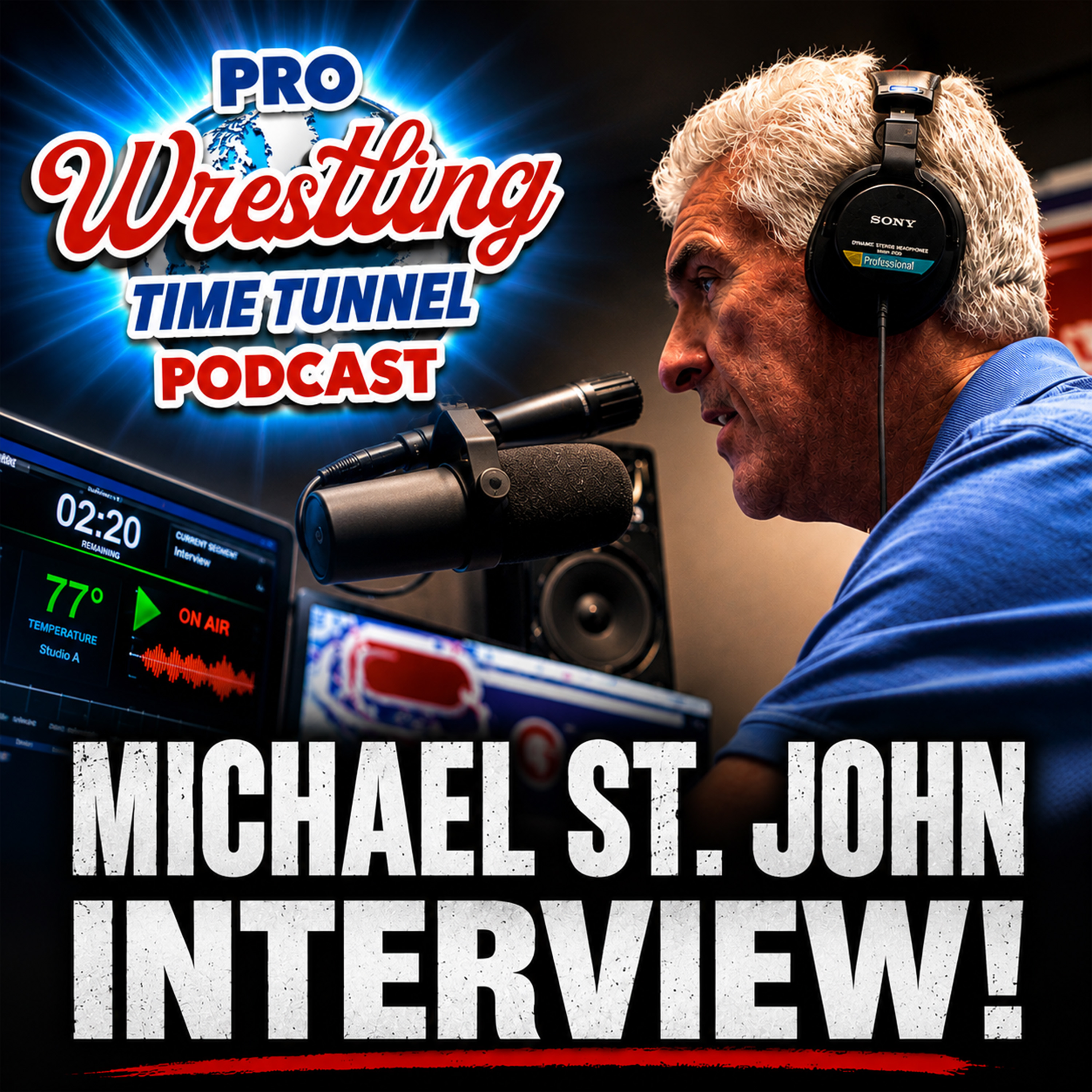
So the pro wrestling time tunnel here today and we got a guest. My friend is Michael St. John that's going to be with us today.
I go back with Michael St. John.
I first had my first experience working in radio in 1978 and I was 15 years old and the station was 15 miles from this town I live in now here in Western Kentucky.
I worked the Sunday morning shift.
My mom and dad used to drop me off at 5:30am on Sunday morning where I would sign on the transmitter and I would run the controls for the preachers who would come in on Sunday morning. And they would come in with their families a lot of times and they would play and sing. We had this huge studio with a large piano.
And I remember this one particular preacher would come in with his daughter, she would play the piano and they would sing together. And then he'd preach his sermon and that would be their show.
And preachers would just. Almost every preacher in town was on on this Sunday morning. And we had maybe a 30 minute little stretch between preaching shows where I would get to play records and we had two large turntables and the studio was full of record albums.
And I would go and pick out some record albums, enough to fill 30 minutes.
And I would get that 30 minutes to talk and play these gospel songs.
And then at 10 o' clock we would join a church service there in town live. I had to get into that church service, but playing records right up until the, the beginning and then turn on the feed from the church there in town. We had a telephone line stretched and installed between the studio to the church and they would start and then from 10 to 1130 or 12 that church service would be on live. Anyway. I don't know why I felt like I explained all that to you, but that, that was my first radio job when I was 15 and I remember having getting the signal from Kicks 104 in Nashville, KWKX. And the program director for that station was Michael St. John. And it was the most fantastic, awesome top 40 station I'd ever heard in my life. And I, I had spent my younger years laying in bed at night listening to WLS, the Big 89 out of Chicago and John Records. Landecker Records truly is my middle name.
And Boogie Check and he was fantastic and. But then kicks 104 came along and I used to listen to them and I found out the name of the program director because I was going to apply for a job in Nashville as soon as I got out of school.
And so that was the first time I'd learned about. And then I saw Michael St. John on television doing wrestling. And I'm like, this dude is like a man after my own heart.
Then later on, after I got into the business and had developed quite a reputation in the radio business, and I was the vice president of programming for the Zimmer Radio Group. And we had purchased some stations in St. Louis, Missouri. And our program director for our top 40 station in St. Louis, who. This guy who reported to me and talked to me about the programming and the music and the personalities and all those things was Michael St. John.
And I. It was a weird twist of fate where all of a sudden this person I idolized and looked up to and was a hero to me was all, all of a sudden one of the people that was on my team.
And so we had a great run there and Michael was great. I enjoyed working with him quite a bit. We've kept in touch over the years, got out of touch there for a few years, but have. Have reconnected. And I've had him on before. I had him on when Dennis Condrey passed away. And so today I wanted to have him on. And we'll talk about Phil Hickerson's passing a little bit, but I just wanted to talk to Michael about his career.
And as old broadcasting guys will do, we tend to go over and talk about broadcasting a little bit. And there are some interesting parallels between the broadcasting business and the wrestling business. And we talk about some of those. We talk about Michael's time as an announcer for Nick Gulas. We talk about his time for Jerry Jarrett, announcing in the Memphis studio at wmc. And I went around. One of the things we did was I went around the territory back in the 70s and named the announcers that were on the different Goulas Welch shows, in addition to Lance Russell and Dave Brown, and got Michael's first take. And so that was an interesting, fun little deal that we played there. So. Well, let's get to that right now. So at the Richard's ranch, let's go to my conversation with the wonderful and exceptional great friend Michael St. John, sitting around talking here at the ranch with, of course, one of my good friends, longtime friends, who we had on after the passing of Dennis Condrey.
And I thought it was only fitting to invite him back on the show, which I was going to have him back anyway. But we keep having these folks pass away.
And Phil Hickerson just passed away on May 20th. And I didn't realize this until I saw you on the talking Memphis wrestling show, Michael. It was exactly two months to the day.
[00:14:52] Speaker A: To the day, yeah.
How ironic, you know, this. The, the world in which we live is sometimes nature and the, the cosmos has its own way. And I think it is very ironic that, that two months after the passing of Dennis is Phil Hickerson. And I've, I've said this, and it's, it's no secret. I, I personally feel one of the best tag teams, one of the best heel tag teams, not only in the south, in the mid south, but perhaps in the United States.
[00:15:23] Speaker B: Oh, I don't disagree with that at all.
[00:15:25] Speaker A: They look the part, they worked the part. And one of the things I'll always remember about Dennison and Phil, when they would come out of. They would not even have come out of the locker room, would not have even yanked the curtain if you would. And the crowd would be destroying them. Oh, yeah, you know, with cat calls and booze and, you know, and all that. And then, and then you add the fact that, you know, they were going up against some, some surly characters on their own back in the day of people like Tojo Yamamoto and Jackie Fargo. And I, I'll forget. And it wasn't me that it was, that was doing the interview, but I remember Tojo Yamamoto on an interview. And I want to say it was with.
I want to say it was with Sterling Brewer in Birmingham, but it may have been somewhere else. And he called him, he called him, he said, they look like tanks Sherman and Septic. And to me, that's one of the classic put downs that, you know, Tojo could come up with. But what a team. I mean, you know, and they just, they had the chemistry, they had the psychology, they had the look, they had great promos and one would pick up the other one. And it's just, it's sad to see so many of these great, great stars pass. But we lost. Within the last three months, we lost one heck of a tag team.
[00:16:42] Speaker B: Well, Phil, Phil grew up in Jackson, which I'm very familiar with. One of my ex wives was from right around that same area in Bol.
We used to go down there quite a bit. So I got really familiar with Jackson and Henderson. And I think he was in that. Born in that little town off of the Jackson where the radio station was.
You remember where he was? Oh, he was born in Humboldt. Humboldt, okay, yeah, Humboldt Q104, I think.
102 maybe.
[00:17:19] Speaker A: I remember the 107 frequency down there.
The. My cat just stepped on my board. And started my station playing in my ear.
Yeah, I remember there was a hundred thousand watt at 1077 in the license to McKenzie that the former sales manager at ERC that I worked with, Don Benefield, bought. And I was familiar with that was. Wasn't always familiar with a bunch of stations around Jackson because I think Jackson was one of the first towns in the south where a lot of outside signals penetrated the main town.
[00:17:52] Speaker B: Of course. Yeah, it's Nashville and Memphis, which I know you're very familiar with because you used to make that triple life.
[00:17:59] Speaker A: Yeah. And programmed in both cities.
[00:18:02] Speaker B: And I used to go down there because that was where I had in law family down there. But I was thinking about it and I. It was after I'd written the. The little piece that I'd done on Phil after he passed away. But I got.
[00:18:17] Speaker A: And by the way, you did a fabulous job on that. I read it. It brought tears to my eyes.
[00:18:22] Speaker B: Thank you.
I was so.
You know, you. When you do these things, you get so excited. It's almost like going digging for gold, you know. And when I found that photo of Phil's football team, I was so pleased to be able to put that into the piece. There was another guy in the photo. I think that's Charlie Fulton in the foot, you know, who was under a mask a lot in the Tennessee territory.
But anyway, you know, growing up in Jackson, I got to thinking about this later. Jackson was a regular Thursday night town for Nick and Roy.
And one of the unique things about Jackson was that when their regular building for wrestling burned down, they actually built like a replica of the Mid South Coliseum in Jackson, a much smaller version.
[00:19:16] Speaker A: I remember the building. Yes, yes.
[00:19:18] Speaker B: And it was kind of sort of
[00:19:20] Speaker A: like a spaceship look.
[00:19:21] Speaker B: Yeah, same. Same exact design. I mean they just went to Memphis and saw the building and went back to Jackson and designed the. The same building with a smaller capacity.
But I was thinking about Phil growing up in the late 50s and the early 60s and who he might have seen because he was a huge wrestling fan. He and his friend that worked at Owens Corning, they built a ring in their backyard and. And basically tried to train themselves to get into the wrestling business.
But I got to thinking who the heel teams were. So it would have been the Fargos, it would have been the Corsica Brothers.
But I think the two teams that probably influenced him and looking at his work later on were probably the Gallaghers and the Greens.
[00:20:06] Speaker A: Yeah, I was going to say Don and Al Green for sure.
[00:20:08] Speaker B: Yeah. Because then he got.
Yeah, I got to team with Al.
Which I was thinking, man, what a thrill that must have been for Phil, who'd been in the business for maybe two years working, you know, probably worked over in West Memphis and some of the other outlaw places before he got in with Nick's group.
But to be put right away with Al Green probably would have been a thrill of a lifetime for Phil Hickerson.
[00:20:36] Speaker A: I can remember the stories going around. There was some tremendous Al Green stories, and there still are out there about. Apparently Al had.
Al had a drinking problem.
[00:20:47] Speaker B: Yeah.
[00:20:48] Speaker A: And the funny stories of the great stories came when he would fall off the wagon, that he would, you know, be. Everything would be fine. And then all of a sudden, boom. And then the stories came.
[00:20:58] Speaker B: Sure.
[00:20:58] Speaker A: But I know that part of the story with. With teaming Phil with Al Green is that Al was sort of getting his second or third or fourth or fifth chance.
And Nick said, keep him in Memphis. Keep him in Memphis. And so that.
[00:21:12] Speaker B: Well, I know Jerry was a champion for him getting another chance.
[00:21:16] Speaker A: Yes, that's where it came from.
[00:21:18] Speaker B: And not only that, but then they put Sam Bass with them. And so, I mean, Phil, who, you know is greener than grass, and he's got this hero that he watched on television and in the arenas as a young boy and as a high schooler, and now he's teamed with them, and then they got Sam Bass with them. I mean, he just basically had to. As the guys used to say in the business, shut up and listen.
[00:21:48] Speaker A: Well, you know that. And it's funny because. And that's a great way to learn when you think about. Shut up and listen is a great way to learn, period. But when you think about it, you're. You're with your. Your childhood hero. You're with the meanest, baddest, most hated manager at the time. He'd even surpassed Saul Weingroff on the Memphis Inn.
And, you know, and you're with those guys, and it's no surprise that right away, all of a sudden, you find yourself in main events because you're drawing money, you're drawing heat, you're getting great heat, and you're building a storyline, and you're drawing money.
And that. That was. That was a great way for Phil to take off, as I got to. And I didn't know Phil until the Dallas thing happened. And, you know, we were on the bus and coming back to Memphis, and then the py2 high thing came along after that, and, you know, sort of got to know him a little bit better about that. But he had really at that time I think he'd calmed down from being a bar room brawler to being a professional wrestler and, and studying more of the psychology of the game and, and you know, it's hard to pick out flaws on. I've watched probably four or five hours of Phil Hickerson matches over the past week and a half now or a week and or so now. And it's hard to pick out flaws with him. I mean they're very, very. You didn't see him, you didn't see him miss things. You didn't see him not connect or not work with his partners. Well, I saw him shoot it quite a bit. I mean he would shoot in a heartbeat. If somebody potatoed him, he'd come back at him.
[00:23:27] Speaker B: Well, I got to know him, I got to know him in Jackson because he was running the bar there and my ex wife and well, her sister, my sister in law at the time was dating one of the bouncers in the bar.
And so the Tremors was the bar. We used to go there in the weekend and you know, talk to Phil, who was a hoot by the way. I mean just, just a great. And I never noticed it until, gosh, not long ago that all of these wrestlers who had practiced their craft for so long and Dusty comes to mind because at the time when McMahon put Dusty in the polka dots, it just pissed me off.
But thinking about it, Dusty was a master of his craft by then and feels much the same way with the Py Chu High thing. He was so good at getting stuff over. You could give him the most ridiculous thing and he actually made it work.
[00:24:24] Speaker A: Exactly, exactly. And that's a sign of not only a great professional, but a sign of somebody that has an understanding of what you have to do to draw money. And back in those days it wasn't just about being an appearance on tv, it was about drawing money. Yeah, I mean, and he, he was, he was a master at it.
[00:24:43] Speaker B: Well, I've talked about it before I, the Greens were before my time, but the first big angle and match and everything that I remember as a 9 year old kid because I got both the Nashville show and the Memphis show that ran in Evansville, Indiana. I got both of them coming into my living room and Al Green and Jackie Fargo on the Memphis show and then Al Green and Phil showed up on my Nashville television not long after that.
And I got a huge respect for Al Green over that Jackie Fargo whole deal that they did in Memphis.
[00:25:27] Speaker A: The first wrestling match my Uncle John ever took me to. He Was a big wrestling fan. He worked at the Huntsville Times. He was my godfather was at the Patton street army in Huntsville was the Friday night town before the Madison County Coliseum.
And my. My grandfather's house was a half a block from that on Walker street. So it was right around the corner. But when the Huntsville boom started, they bought a house, a two story house right behind, right beside the armory and built eight efficiency apartments behind it because there needed people for people were coming down, they had no place to live and they rented them and they were efficiencies. So you can imagine how small they were. But they had a little step area where the steps came up in a little sitting area. And we had a stool up there and Uncle John sat me on the stool for a year before we took me to the matches. And I understood why after I went to the matches because I almost smoked or stroked on the smell of cigarette and cigar smoke once you walked into the National Guard Army. But the first match I ever saw, the main event, I'll remember till the day I die, was Don and Al Green against Don and Luke Fields.
[00:26:36] Speaker B: Oh, man.
[00:26:37] Speaker A: And you talk about, you know, and it ended up. There was a big brawl at the end and. And you know, I can remember that the baby faces chase the heels. Don and Al Green came right past us, running back to the dressing room and all. But it amazed me back then how big Al Green wagon. And I was a kid then, but you can imagine what that man looked
[00:26:56] Speaker B: like to a kid, you know, when you think about. And of course, because of the preponderance of video that we have, you know, and not taking anything away from the Midnight Express and Rock and Roll Express stuff, which is fantastic.
But a lot of things that the Midnight Express did came from Dennis's time with Phil in the Bicentennial Kings. And a lot of things that the Bicentennial Kings did came from Don and Al Green from the time that Phil was with Al Green.
[00:27:28] Speaker A: You are absolutely right.
[00:27:30] Speaker B: So all a lot of that old Southern tag team tricks and things that were heels doing, pulling out of their bag of tricks and stuff, a lot of that stuff was just, you know, repackaged and dressed up and maybe turned up to speed, you know, a couple little bit.
[00:27:47] Speaker A: I can remember early on, the first manager I saw in the first match I just described, he wasn't there. But a couple of weeks ago after that we went back and Sir Clements had joined Don and Al Green as the manager and on that same car they had a double main event. I'll never forget this, and it was Carl and Kurt Von Brauner with Saul Weingroff against Lynn Rossi and Bearcat Brown.
[00:28:10] Speaker B: Oh, my God.
[00:28:11] Speaker A: And then. Then it was Don and Al Green against Jackie and Sonny Fargo, and of course, later became Roughhouse. And I mean, to be a kid and.
And see it in color, because back then when I watched it on tv, it was a round screen and it was in black and white, so you actually got to see it in color.
[00:28:31] Speaker B: Got in on the end of the Von Brauners and Bearcat and Lynn, of course, that team ended when Lynn had the bad car accident in 72. But, gosh, such a. You know, and that's another thing. I'm glad you bring all this up because, you know, the Crockett territory gets such a halo on it for being a tag team territory. But there was not a better tag team territory than the Tennessee territory.
[00:28:58] Speaker A: I'll argue that point every day. I will argue that point every day. And all of the heel. And the amazing thing, there were some great babyface teams back then. Before Lynn Rossi was with Bearcat, he was with Tex Riley. That was a great babyface team. But think of it. You had the interns, you had the Blue Infernos, you had Mephisto and Donnie, you had the Mighty Yankees, you had, I mean, go on and on and on.
[00:29:19] Speaker B: Roy and Herb basically invented it, you know, Roy and Herb Welch, I mean, in 1945, they basically were the first Southern tag team champions. And everything came from that as far as Tennessee was. Most of the south, too, actually.
[00:29:34] Speaker A: Now, if I'm not mistaken, the original tag team wrestling, did it originally start in Australia? Because I know there's some history with tag teams in Australia, according to Bill Dundee.
[00:29:49] Speaker B: Well, yeah, it depends, though. An Australian tag team match has rounds.
Okay, so we don't do that over here, right? We don't do the rounds. We do falls.
[00:29:59] Speaker A: Right?
[00:30:00] Speaker B: So there is a little bit of difference between. The original first tag team match was 1935 in Houston, and it was a Texas Tornado match where all four guys were in the ring at the same time and was booked by Doc Sarpolis, who later mentored Dory Funk Senior, and just about everybody that came out of the Amarillo territory. But, you know, it's hard to really pinpoint exactly how it evolved, but, boy, in Tennessee and in the south, the Welches, as baby faces, would get their tails kicked until you thought they were just done for. And then the Comeback started.
All the dastardly heel teams. And you named a bunch of classic ones, for sure.
[00:30:42] Speaker A: Of course, the Interns in Ken Ramey. I mean that, that was incredible. The, you know, and a story about Birmingham I've told before. But the other, the, on the, on the baby face side, you had a lot of brother teams. You know, we had Bad Boy and Billy Hines for a while in this territory. We had Don and now, well, we had, I'm sorry, Don and Luke Fields, Jackie and Sonny Fargo, uh, the Welch brothers, Herb and Lester Welch and Rob. Robert Fuller and uh, not Robert Fuller, Buddy Fuller and Doug or Gilbert. Tommy Gilbert was it. Buddy Fuller, Tommy Gilbert, Tommy Gilbert and Eddie Marlin. Eddie Marlin, that's it. And then Buddy Fuller was with a tag, I'm trying to remember who was it? Mario Milano.
[00:31:29] Speaker B: He had a bunch of different team partners in Tennessee. Now his big tag team partner in Georgia was with Ray Gunkel.
They, they were world tag team champions for most of the 60s. And of course they'd get upset every now and then by the heel team to always come back and eventually win. Now when was, when did you first, when did. Was your first wrestling broadcasting experience? When did you first start doing that?
[00:31:55] Speaker A: 1970. 77. In March of that year I was programming WMPS in Memphis 680, the last bastion of top 40 after they had fired Drake D's. They hired a 25 year old kid from Birmingham to come in and program Mr. Disco Duck.
Yep. And he got fired for playing the number one song on Billboard's top 40 on his show, which was the number one show in Memphis, Tennessee. Because there was a. In the Plow broadcast manual which was about this thick and as full of. As you would ever want to read.
[00:32:29] Speaker B: Wow.
[00:32:29] Speaker A: It said that you could not promote your own record.
And that's. They, they got him for that.
[00:32:35] Speaker B: So he got fired for playing Disco Duck.
[00:32:37] Speaker A: He got fired for playing his own song which was number one in Billboard. On his own show, which was number one in Memphis.
[00:32:44] Speaker B: Oh, man.
[00:32:45] Speaker A: By Plow Broadcasting. Who plowed them under? Who later got plowed under themselves. They were a great pharmaceutical company. St. Joseph, aspirin and Corus, Eaton and, and Coppertone Maybelline. That, that was a great company. But when it came to wrestling, they didn't know Shinola about it.
[00:33:04] Speaker B: Yeah, sure, yeah.
[00:33:06] Speaker A: It was, came. I said, I said wrestling with and came to radio. They didn't know Shinobi.
[00:33:11] Speaker B: Yeah, I mean there, there were some great companies. And then as you and I both know, there were people who bought those things as just, they just had more money and they knew what to do with. So they decided to get in the Radio business. You know, radio parallel parallels wrestling in so many ways.
[00:33:30] Speaker A: It does.
[00:33:31] Speaker B: I mean, there have been some really big idiots and fools in the radio business, and there have been some in, in wrestling too, right. I mean, that didn't really know anything about the business. And, and you could tell.
[00:33:43] Speaker A: And Tony, you've been around and, you know, in the dressing room, so many of these guys that are tremendous talents in the ring are very quiet and, you know, laid back individuals that, you know, get people that had the person like Phil, and that's one thing about Phil and Dennis. You were going to get a, you were going to get a floor show every time you walked in the dressing room. No doubt about it. But there were guys that would come in the territory that you would expect to be just, you know, what you saw on TV would be just explosive in personality in the dressing room. It would be nice seeing you, how you doing? You know, and that would be about all they would say.
[00:34:17] Speaker B: Well, in the radio business, we had the, we had the jocks, you know, who were the out, extroverted, outgoing. Then you had the news department and you had these two groups of people mixing together, which. And then you had the sales people.
[00:34:33] Speaker A: Sales department.
[00:34:35] Speaker B: So we had a, in the engineering department, you know, so we had a lot of. It was a melting pot of different types of wirings that.
[00:34:43] Speaker A: You know, one thing about being in the broadcast business, I, I have a degree in psychology from Vanderbilt.
[00:34:49] Speaker B: I have, I have a secondary degree in it with that, without knowing how much I was going to use it.
[00:34:54] Speaker A: Use it. Exactly. That's a point I was going to make. I mean, it came in handy. And you got to realize. And I know you worked with some characters too, but I had Steven D.C. i had Coyote McLeod, I had Glenn Beck, I had Ron Jordan, I mean, Tom Dooley. I mean, my God, there's, you got to, you got to use that psychology, man.
[00:35:15] Speaker B: Did you work with both the coyotes or just McLeod?
[00:35:18] Speaker A: I, I, I'd only worked with Coyote McLeod, but I got to be really good friends with Coyote Calhoun because my friendship with Johnny Randolph.
[00:35:25] Speaker B: Yeah.
[00:35:26] Speaker A: And he was at, he was at Wacky doing nights at the time that I was going up and sitting in the office with Johnny Randolph on a Friday afternoon when he talked to the record guys.
[00:35:35] Speaker B: Well, you texted me that story. Do you remember if that was true? Is that where Phil broke his leg in Louisville?
[00:35:43] Speaker A: I haven't been able to confirm that. And the guy that I could confirm, I think would know would be Jimmy Cornette, because. But I think I'm if. If my memory has not gone completely out of my mind, which I don't think it has. I remember Randolph telling me the story that Phil Hickerson broke his leg and he had to take him to the hospital and that Phil stepped away from wrestling and they didn't want it out that he had had a catastrophic injury that happened in the ring in Louisville. So that again, that goes back and I can't. God rest his soul. I wish I could call Johnny Randolph,
[00:36:18] Speaker B: but when I was thinking about it and you know, after Jerry and Jared and Nick split, Phil and Dennis came over to Jerry Jarrett.
[00:36:28] Speaker A: Right.
[00:36:29] Speaker B: That. That would have. That would have kind of lined up timeline wise because of course Louisville was one of Jarrett's towns.
Of course it was a Tennessee town. But then Jarrett took it when he split with Nick and so that could have. Could have been it. I'm really curious now and I've scoured trying to find that since you texted me that story. And I.
It's. It's not definitive out there.
[00:36:51] Speaker A: Well, I wish I could prove it right now.
[00:36:53] Speaker B: And when Jimmy told a story the other day, he wasn't. He did it was doing it from memory and he, you know, wasn't absolutely sure. But that's interesting.
[00:37:04] Speaker A: I'm. I'm. I am 90.
I won't go. Not above mining. But I'm 90% sure that that is, is, you know, what happened with that. And again, that came from Johnny Randolph, who was their ring announcer who took Phil to the hospital and Nickerson were
[00:37:20] Speaker B: friends and a major guy in Louisville radio.
[00:37:23] Speaker A: Oh yeah. Oh yeah. And in fact, I think that's where Phil Hickerson first got his interest in broadcast was through Johnny Randolph.
[00:37:31] Speaker B: Oh, wow. I hadn't even connected that either.
[00:37:33] Speaker A: Yeah, I think that's where you first started. Because when I, when I started working with him, he was already familiar with radio. And of course I was a programmer and program director and general manager later. And so he always, we always would talk a little bit about how, you know, he'd always ask out of the business. Business was. And you know, and he liked doing. I know that. And I remember him saying, he said, if you ever want me on one of your radio shows, let me know. You know, he always had that. He always was willing. And it didn't surprise me when he went behind the mic.
[00:38:00] Speaker B: So when you started working in television with wrestling in 1977, was that, was that pre split or after the split?
[00:38:09] Speaker A: It was at the split, at the time of the split.
Because at the time they were still on 13.
But Lance had retired. Retired or retired? Resigned as the program director of tv.
[00:38:22] Speaker B: Yes.
[00:38:23] Speaker A: And they were in the. And he was in a non compete and they were in that little.
They were in that little period of time where they had split and they were not even running the Coliseum. They were running the Cook Convention center downtown on the, on the river.
And I was at WNB's, which was at Union and the Riverwalk and river driving. And I just walked down to the convention center and do. But I did three shows and I'll never forget the first show Bob or Cowboy Bob Orton was in there and we had the table against the ring and I was, I was green. Trust me, I was green. But I knew that I knew holes and I could do play by play, so.
[00:39:06] Speaker B: And you know, you'd been a fan
[00:39:08] Speaker A: and always been a fan.
[00:39:09] Speaker B: Yeah.
[00:39:10] Speaker A: And so they, they. And I forget who he was he was against, but they took Orton, he slung him between the top and the middle ropes and he came flying out on the table and ended up on my lap. And I'll never forget he looked at me and he goes like this on the microphone. He says, we do this sometime, kid. He whispers that in the air and he rolls back in the ring.
[00:39:32] Speaker B: Oh, wow.
[00:39:34] Speaker A: That. That was, that was my first introduction to it. But yeah, and then after the third week, and I knew it was. I knew it was temporary, but after the third week, Jerry said, you know, that they were bringing Lance in. And then I went.
I went to Connecticut for a year and then when I came back, I started working for Nick because I got to know George. George was coming to our, our kicks 104 events and at Flanagan's in Nashville on.
After the matches on Wednesday night. And I was, you know, hosting that and got to know George and speak me down to the match.
[00:40:09] Speaker B: Speaking of George Gulas, did you get to see the interview with. That we did on Briscoe and Bradshaw with George?
[00:40:15] Speaker A: It was fabulous. And George is over the moon about it. You guys did a fabulous job. And, and I thought, I thought both Jerry Briscoe and Layfield just, they, they were extremely kind.
[00:40:29] Speaker B: Yeah.
[00:40:30] Speaker A: And George appreciated their. Appreciated their respect.
[00:40:34] Speaker B: You bet.
[00:40:34] Speaker A: And it, it came back to you guys as well.
[00:40:37] Speaker B: Well, we, we make a lot of jokes and we have a lot of fun and everything, but those guys are really genuine, wonderful human beings. And when we talked about doing it, which we wanted to do it several weeks before we actually got to do it, but George wanted to finish out his season as a umpire and there was just this little window between the time that he was doing ball games and that he was going to have a hip replacement, Right? And so we got it in there, and before we did it, I'm like, okay, look, here's our game plan. We are. We're going to treat this guy with the utmost respect, and we're going to. We're going to let him bring up things like, we're not really going to pick at him, you know, for answers on stuff. And we did ask him a question or two, but most of the time, you know, it just was natural the way it flowed. He was a great guy. And I. I've gotten so many.
And I know you know George very well. That's why I'm bringing all this up. But I've gotten so many comments from people who. Saying, you know, I have been making fun of him, and I am almost want to, like, go on the Internet and make an apology, because the guy is a real human being. And I think that's what happened to George is that. It's almost like when I did the Jim Barnett series on Briscoe and Bradshaw. I said, so many people have done the Jim Barnett voice who never heard Jim Barnett talk. They've just heard other people do it, and they think that's how he really talked, which is very exaggerated from the way he actually talked, but same way with George. I mean, I think people have just heard the stories and the jokes for so long, they're actually gotten way out there, and they actually thought that that was him. And then after seeing that interview, they're like, wow, he's a real nice fella.
[00:42:28] Speaker A: You know, I. I think a lot of times George got shortchanged, even back then.
And. And because. And like you said, because people hear the stories and then they create their own opinions without getting to know what the person is all about. George's a very bright guy. I mean, he. He was. He was an A student in high school and. And went to college and played basketball and no sports. My God, he's a. He's better on statistics and stuff with sports than I am. Big Houston Astros fan. He always picks at me because I'm a Reds fan. And, you know.
[00:43:01] Speaker B: Well, I know. I know you were on the group text today where he got what, 46 years of.
[00:43:07] Speaker A: Did you see that? Yes. That was incredible.
[00:43:10] Speaker B: Being an umpire or a basketball referee. I'm not sure which one it was, but I don't know if anybody has ever tried to umpire a college or, you know, when you get up in the upper teens and early 20s, and you're doing either softball, baseball, or basketball. That ain't an easy job, man. And he's one of the best in the South.
[00:43:32] Speaker A: Oh, yeah. Oh, yeah.
[00:43:34] Speaker B: And so you, You. You got to have some. Some timing and some brains and some. A little bit. And I'm so happy he got his hip replaced because now he can do it without pain.
[00:43:45] Speaker A: Exactly.
[00:43:46] Speaker B: But I mean, you know, I'm just have so much respect for the guy.
[00:43:50] Speaker A: Well, and, and again, and I appreciate what you guys did, and I know George appreciates it. I'm. I'm not trying to talk for him, but I do know for a fact that he appreciates the.
And, and he. He was very. I know he was very.
He was. He wasn't timid about doing it, but he was. He. He was prepared for the worst, I think. And then he got.
[00:44:11] Speaker B: Who wouldn't. Who wouldn't be, you know, And I told the person I went through to kind of get it. Contact with them and his wife, I told him. I'm like, listen, you. You have him go look at some of my shows and look at some of the other shows and stuff, and we're not a National Enquirer gotcha type program, so.
[00:44:32] Speaker A: Well, he asked about you, and I just give you a shoot. And I told him. Exactly. I said, this guy is. Of all of them, you do, this will be the guy that will be the fairest. You will enjoy this.
[00:44:43] Speaker B: Yeah.
[00:44:43] Speaker A: And, you know, there's nothing to worry about. And then after it was over with, I talked to him, and sure enough, I mean, he was very, very,
[00:44:53] Speaker B: very
[00:44:53] Speaker A: true to form with you guys.
[00:44:54] Speaker B: Very true. I appreciate that. And I know your recommendation was part of the reason we. We got to do it, and that's great. Now, when you came back from Connecticut, is that when you came to kicks104 in Nashville?
[00:45:05] Speaker A: I did and came to. And that's when I, you know, start doing stuff for Nick and.
[00:45:10] Speaker B: And you were. You were there a good long time, weren't you?
[00:45:14] Speaker A: I was there, you know, right through the, you know, right through his demise, if you would. And had a lot of.
Had a lot of opportunity with him.
I got to call Matches with Andre the Giant, with Harley Race, with Dory Funk Jr.
I, I mean, I, I was very honored to, you know, got to work with the chic and a lot of people, you know, that's another individual and God rest his soul, that a lot of people didn't understand and didn't get to know.
[00:45:49] Speaker B: Yeah. And he and Nick went back a
[00:45:52] Speaker A: Long way they did. And, and Nick was close with Vince McMahon Sr. Too. I don't think a lot of people realized the relationship that they had and, and was close with, with, with, with the, the head of the NWA with Sam much Nick until the split. And then there was some animosity that occurred after that. But Sam used to lean on Nick for ideas and thoughts and Nick was a pretty important character at the Las Vegas conventions each and every year.
[00:46:21] Speaker B: I always thought it was funny. I talked about this on the the Welt series with Briscoe and Bradshaw, but is always funny to me that I'm not sure that you are going to be able to find any other promotion owners who were members of the NWA who were going to back out of a meeting with Sam Mushnick because they were going to the gubernatorial inauguration. Inauguration and they went to the Tennessee one and they went to the Alabama one instead of going to the NWA convention. And it was okay.
Yeah. Oh, yeah.
Which, which is pretty impressive for a lot of reasons.
[00:47:01] Speaker A: Absolutely. Well, and, and you know, the thing about when he. And when the she came in, I mean, they both were in parallel universes. The Sheik was having a difficult time holding on to Ohio and, and even in Detroit, his numbers were.
His crowds were down. The Kobo was falling apart and there was a lot of things going on. And then Nick needed some, some energy. And I'll never forget the first words I think I ever heard Cheek say was red makes green. And that was his deal.
And Nick, it was funny when he brought him in because he was, we were taking him, he was booked in the other towns and for TVs. On Saturday he was bringing him to Chattanooga. And at that time, Harry Thornton was out with the heart, with his heart attack. And I was actually doing the. The 12 show in Jada, the Channel 12 show in Chattanooga. And, and I was riding with Nick and his in his big Lincoln and we'd go down I24 at 100 miles an hour and him driving the center lane, passing the state troopers and waving at him and then blowing their horns and waving back. And he, I. He came to me and he said, hey, he said, can you drive Zeb to, to, to TV Saturday? And I said, well, sure.
He said, I don't want him to. I can't have him ride with me because I don't want people to have, you know, to see us on the way or see us in the same vehicle. He said, but he'll be safe with you. And I said, okay, fine. So we, they ended up Doing the first wrestling show at the Von Braun center and the. She crowed back with me and my ex wife and my, my two month old daughter at the time. And he's sitting in the backseat of an Oldsmobile Cutlass and, and he sent back there and, and he, he asked if he could hold the baby and my son was on in the car seat between us and, and my ex looked at me and yeah, sure. So she passed Jamie back to him and he's back there singing to her and he's rocking in the back of the seat and here's, here's the chic.
[00:49:06] Speaker B: Yeah.
[00:49:07] Speaker A: And she's, you know, she's fearful that he's gonna cut her or bite her head off and he's back there singing to her and singing to her in, in Lebanese.
[00:49:15] Speaker B: Oh.
[00:49:15] Speaker A: You know, and he's singing to her and, and he gives her back and he starts talking about his kids and the whole trip was, you know, it was family time. But he was amazing memory and he was a brilliant man. My God. You know, I could see why he and, and Nick got along because the Sheik was, you know, he was as creative as. And, and I love the fact where I could shut up and because he knew I was gonna be on TVs, I saved my voice. I talk a lot, as you well know, but listening to him and just stories and talking about psychology and what was going on and even back then, and this was 1979, 80 maybe that they, they sort of saw the handwriting on the wall because of what was happening at Channel 17 in Atlanta and KTVT in Dallas and this is a super chess station in, on the West Coast. In San Francisco they sort of saw that the, the territory thing was going to be diluted to a point where people are going to want to go see the big boys if you would off the big stations and the small town heroes would start diminishing. So.
[00:50:23] Speaker B: Yeah.
Do you, when do you remember the first time you met Phil Hickerson?
[00:50:30] Speaker A: Yeah, it was at the Fairgrounds arena in Nashville. He came in with Dennis for Nick and they were young, I mean and, and you know, the other thing about it is not said the heat thing. They were a great chemistry of a tag team. I mean they had. And they were both, they could both move, you know, and, and Phil was big and Dennis was a little more lanky but was quick and they could you know, do the double teams and the switch outs and all the heel stuff and it. Excuse me.
[00:51:00] Speaker B: And it was just time for the Kentucky Derby.
[00:51:04] Speaker A: Hey, hey, Matt, I'm on a podcast right now. Let me call you back. One of the best engineers in the country, by the way.
[00:51:11] Speaker B: Thought we were at Churchill Downs there for sure.
[00:51:13] Speaker A: That's my ringer. That. That's why it gets my attention.
But by the way, you.
[00:51:18] Speaker B: You embarrassed me as a Kentuckian with the amount of times you've been into the Kentucky Derby. My little. Eleven times. I've been very proud of it over the years until I talked with you. So I.
[00:51:30] Speaker A: That's. That's my thing is my wife. Every year she says, well, we do it the same. We do the same thing every year. I'm not going back next year. And then the next year comes around.
[00:51:37] Speaker B: Of course, you can't break the streak.
[00:51:39] Speaker A: No, no.
[00:51:39] Speaker B: Yeah, they were a great team. Dennis was a little more technical and had a little better work, but Phil was the brawler and the, you know, the bigger body, wise guy, you know, of the two. But they, they balanced each other so well. They were just kind of like opposites a little bit, but. But they blended so well together. And, you know, I. I have to say it's only on tape that I remember Al Costello being with them. But, but, but I remember the bicen. But I remember the Bicentennial Kings very well because I was 13 in 1976 and that was when their big run was. Although most of that run took place on the Chattanooga end of the territory.
[00:52:22] Speaker A: Right.
[00:52:23] Speaker B: Because on this end it was Jerry Lawler and Tommy Rich. But over there in Chattanooga, it was the Bicentennial Kings against the Fargo's. And they bring Roughhouse in and then they introduced Randy Fargo into the team and they just had some bloody. You probably saw some of the photos I posted. Oh, yeah, they had some bloody, bloody matches in Chattanooga. I mean, just in Birmingham as well.
The only time I got to see them then was, you know, Nashville would be the show where you'd get everybody. You know, everybody in the territory at one point would be on the Nashville show.
[00:52:58] Speaker A: Right, right.
[00:53:00] Speaker B: But, man, I really. And I. They probably were the ones that caused me to want to like the Heels.
[00:53:10] Speaker A: Well, another sidebar to that is another team that were a tremendous tag team.
I think we're in the same. They were young kids, if you would too, while that was happening was Terry Gordy and Michael Hayes, and it was right there in Chattanooga. And when you think. When you watch some of the stuff that Terry and Michael did, especially before the Buddy Rogers, Buddy Roberts thing came about, a lot of it looked like Hickerson and Congress.
[00:53:36] Speaker B: Yeah, it sure did. I hadn't thought of that, man. Great insight.
Hey, one thing I want to do with you, because you have this announcer background, and you got this history of being a television announcer with both Nick and with Jerry, and you grew up in the territory like I did, so you've got to see a lot of, you know, one of the things that only people from our generation remember, the generations after ours, only remember Lance and Dave, but, man, did we have some fantastic announcers in the Tennessee territory. And I just want to mention them, and I want to hear the first thought that comes to your mind when I mention them. And I'm going to save Lance and Dave for last.
[00:54:19] Speaker A: Okay, that's. That's good.
[00:54:21] Speaker B: Let's. All right, here's the first one. The first one is Harry Thornton in Chattanooga.
[00:54:27] Speaker A: You know, Harry Thornton and Grady Reeves in Huntsville were the same person in different bodies.
And.
[00:54:34] Speaker B: Because I was going to mention Grady as well, so.
[00:54:36] Speaker A: Well, the, the thing. Of course I knew Grady. My. My mother sold Grady Reeves his first wedding wedding band for his first wife. So that's how far Grady goes back. But.
[00:54:48] Speaker B: And by the way, they both had morning television shows, right?
[00:54:52] Speaker A: That's exactly what I was going to do. Morning, folks here. And of course, Harry had the, the caught. What was it?
Wow. I can't. Can't think of the name of it in Chattanooga and channel. They both were number one on TV in the mornings, by the way.
[00:55:04] Speaker B: Yeah.
[00:55:05] Speaker A: But they were also the same ego.
And I can remember Nick saying this about both of them. And what he would say, what he said was that he had had to always stay on Harry and on. On. On Grady about arguing with the boys, that the boys were selling, selling, selling on the promos. And then they were coming back at the guys. And the whole thing is you got to let the guys sell and you've got to take a diminutive position for that cell to come across on tv,
[00:55:36] Speaker B: which, by the way, Lance would do that as well. But Lance wouldn't do it. In a way, you thought Harry and Grady did it. In a way, you thought they were going to be aggressive toward the boys, right? You thought a brawl was going to happen.
You never thought Lance was going to get physically involved, right?
[00:55:54] Speaker A: No, no. And that's. And that. That's a.
Because they were a lot more con. Confrontational, both Grady and Harry, than. Than Lance ever would think about being.
[00:56:08] Speaker B: And some of that, I think, probably comes from the fact that they were very powerful men in their communities.
I mean, they were in powerful positions. They. They you know, were big time media guys and involved in every local thing that happened in both the Chattanooga and Huntsville. So they were used to, for lack of a better word, they were used to pushing their weight around a little
[00:56:30] Speaker A: bit, you know, and actually even behind in the, in the locker room, there were a couple of times when I heard Harry go after Nick, you know, and then they would get into a shouting match about minuscule kind of things. But there were a couple of times I witnessed that. So Harry, I think was more like you say, the big man on campus kind of guy. But I always thought that I, I didn't think Harry was a great play by guy. I always thought he was a great commentator, but not a play by play guy. And there's a difference. And so that's sort of where that comes from. Grady was just. Grady. Grady was just, you know, jovial until you pissed him off and ate a lot of that broasted chicken. And he talked about.
[00:57:16] Speaker B: The other thing about those two that were commonality as well is they both owned part of the town.
[00:57:21] Speaker A: True.
[00:57:22] Speaker B: Harry was owned part of the Chattanooga town. He was the promoter of record in Chattanooga and so was Grady in Huntsville. So they had a vested interest in getting things over.
[00:57:34] Speaker A: Absolutely, absolutely. And of course that was the connection with the. Grady was the sports director at channel 19 and. And Harry was the Morning Joe at channel 12. So.
[00:57:45] Speaker B: All right, let's go to Birmingham.
[00:57:46] Speaker A: Sterling Brewer, underrated.
I always, I always thought that Sterling really, Sterling got what the job was all about. He got what his role was and he stayed his role.
[00:58:00] Speaker B: I so much wish there was more Sterling Brewer available out there. I mean he, when he would do, they would take a match from Birmingham and put it on the Nashville show. And so we got to hear Sterling call matches. Those were my favorites. I mean I really, as a play by play guy, I still think Sterling Brewer's the best we had.
[00:58:19] Speaker A: And Tennessee territory as a play by play. You know, when you're looking at it from that aspect. Absolutely true. But he again didn't get the credit. I mean he, he was the, he was the wrestling announcer, but he sort of was in the background if you would. He never, never once would you hear Sterling Brewer's name and Jackie Fargo's name in the same breath, right. In Chattanooga. You might hear Harry Thornton and Jackie Fargo in the same breath or even in Huntsville, but you never got that in Birmingham.
[00:58:47] Speaker B: Sterling also was, you know, very notable in Birmingham. Very civic oriented, very community. I mean all the.
[00:58:54] Speaker A: Had his own advertising agency, Sterling Advertising.
[00:58:57] Speaker B: And, and I Don't know if he was this way his whole life, but I know in the last portion of his life he was a very spiritual man and was very involved in the community that way.
I just thought he had a great voice and just for calling a match, he was pure play by play. I just thought he was fantastic. He. They actually used him on Georgia Championship Wrestling for a while. I remember that before they brought Gordon in, because Jerry Jarrett was booking. Jerry Jarrett was booking in Atlanta and Ed Capitol walked out with the wrestlers and went to Ann Gunko's group. So they didn't even have an announcer.
And they got Sterling to drive down from Birmingham. You've told me a couple stories about that. And I can only imagine what would have happened to Sterling's career if that job would have stuck.
He would have, he would have been the voice of tbs, you know.
[00:59:56] Speaker A: Well, and of course, when they got Gordon solely, that was like. And I think just to parallel this, I think Sterling understood he was temporary. Just like I understood when Jerry Jarrett and Jerry Lawler used me for those three weeks in Memphis. It was temporary and that, that's fine. And, and it all worked out.
[01:00:13] Speaker B: But what's amazing about that, Eddie Graham and Jim Barnett almost fired Gordon like three times.
And again, you know, what were they thinking? But I don't know. Strange things in the wrestling business. Do you remember Mike Duncan?
[01:00:29] Speaker A: I do. Good guy 100.
[01:00:31] Speaker B: What'd you think about him as an announcer? I liked him as well.
[01:00:35] Speaker A: I, I liked him again, more of a background kind of announcer.
[01:00:40] Speaker B: He was just steady, steady guy.
[01:00:42] Speaker A: Steady guy vocabulary wise, maybe not to the caliber of Lance and, and Sterling and, and Harry, but did his job. Did his job and did it well. Good Guy.
[01:00:55] Speaker B: You know, of course he was on the Nashville show a lot.
[01:00:58] Speaker A: Right.
[01:00:58] Speaker B: And is it related to Jerry Jarrett?
[01:01:01] Speaker A: I think a cousin maybe. Yeah, something like that.
[01:01:05] Speaker B: Worked in a clothing store in Nashville, I think. Right.
[01:01:08] Speaker A: Yeah.
[01:01:08] Speaker B: Okay, let's do Dave Brown.
[01:01:12] Speaker A: Radio Guy like us, you know, was on WHBQ and Night Yacht. Great voice, great talent, newest role. I mean, you know, he and Lance, it's. Sometimes it's hard to do a two man show when one's a. One type of personality A and the other one's personality B, if you get my drift.
Never, never a problem between Lance and Dave. They were always.
[01:01:41] Speaker B: Well, I was thinking about this the other day for, for 10 years. So I think Dave came along, I think around 66, maybe.
Lance came along in 61 and I think he started using Dave on with him in 66.
So for about 10 years there, at least till 76 or 77, they're the only two man wrestling team I remember in anywhere, in any territory.
[01:02:09] Speaker A: It's a good point. It's a good point.
[01:02:10] Speaker B: I mean, there weren't color commentators on wrestling shows back then. That was very, very, very innovative, you
[01:02:19] Speaker A: know, and working as the third man and being on some shows, being there to do something specific or something, you know, a ring announcer or whatever, I would always be able to.
Dave and Lance would talk for about five minutes before the show and they would map out, well, you do this, you know, you, you do the play by play on this match and we got an interview afterwards. I'll do that interview. That's a stand up, I'll do that. Or he's coming to the death, whatever. And they go over it. And never once did I ever hear Dave or Lance argue about anything. I mean, it just happens.
[01:02:55] Speaker B: What made what. I mean, I got my own thoughts, but I'm really interested in yours. What made Lance so good?
[01:03:02] Speaker A: Wow.
I, I think his ability to, I think Lance was a program director and as you know, as a program director, you've got to deal with management and you've got to deal with talent.
[01:03:18] Speaker B: It's like the booker in broadcasting.
[01:03:20] Speaker A: Exactly. And I think Lance was the consummate professional that he could relate to the boys and they get their respect, but also could do what the program or the, the booker or the promoter wanted done and find a happy medium to get it across to the audience. That was the beauty of Lance.
[01:03:43] Speaker B: Yeah, he, his, his ability to sound like your next door neighbor telling you about wrestling was just phenomenal, phenomenal.
It was just like you're, no matter where you lived, if you lived in Missouri, Kentucky, Indiana, Tennessee, Alabama, if you lived next door to anybody, they sounded a little bit like Lance Russell telling you about wrestling. I mean, Lance, of course, had a broadcast delivery, but he did it in a way where it just was, I don't know, it was Southern, if that makes sense. I mean, he was very, his, his vernacular and his delivery was just consummate Southern.
[01:04:21] Speaker A: Well, I also think his emotions, he could control his emotions and knew when to act like he was mad or he, he was a mastermind of a surprise. Because when you saw the, the surprise of somebody turning on TV or whatever the case may be, you react with shock. Lance's react with shock.
And so I think he, he had that little actor part of him in him that, you know, made him, made him as great as he is now.
[01:04:51] Speaker B: I didn't see. I didn't see enough of Sterling or Harry or Grady to know this, but two things that I really noticed about Gordon Solely and Lance Russell that made them really, really good was that you had a certain amount of time.
And of course you, of course, being a broadcaster, know all about filling time.
You have these time slots that, you know, the, the interview needs to be two and a half minutes. I mean, that's the allotted time for it. So. But if the baby face or the heel came up a little short, Lance and Gordon were both so good at extending the interview.
They were so good at throwing in something that would create a spark in that baby face of that heel so that they could go another 30 seconds or another four. I mean, do you see that at all?
[01:05:42] Speaker A: Oh, absolutely, absolutely. They were masters at it.
[01:05:45] Speaker B: They're very good at that. Now, after Nick. Oh, sorry, did you have another thought?
[01:05:50] Speaker A: No. One of the announcers, and I guess it predates some of these.
Oh, really about the same time was when I first started watching wrestling. We were getting it on Channel 8 out in Nashville on the Community Channel on the community cable system in Huntsville. And it would be Saturday night and it was Jack Simpson and Gil Green.
[01:06:11] Speaker B: Oh, absolutely.
[01:06:12] Speaker A: And Gil was the ring announcer and the timekeeper. And of course, Smiling Jack Simpson never smiled, but he was. And, and he was more laid back and, and you know, that was his style. But he would be, you know, he would really be good at bringing a, you know, especially if, if you got a new, new player, you got a new shooter in the game and he's coming, he's doing his first interview on tv.
I always felt that Jack Smiling Jack Simp or smiling or Smiling Jack Simpson would be able to bring out what needed to be brought out about him. Well, I can remember Joe Scarpa's first Interview on Channel 8 and then, you know, him, him bringing that out. I can remember the first time I ever saw Rocket and Sputnik Monroe as a tag team. And in his interview. I can still remember that interview.
[01:07:04] Speaker B: Go ahead.
No, well, I was just going to say about Gil Green, you and I both have worked with and managed and had on our teams a lot of Gil Greens.
Gil was a young, good looking, I mean, was a made for television type. Facials were wonderful, very talented.
He did many, many things that you do in broadcasting where you go out and you're the host for a lot of the events. And he did those in Nashville all the time. He hosted the Miss Tennessee pageant or the, the Easter Seals telethon or all of those things.
But he was incredibly insecure and that turned out to be his undoing.
[01:07:53] Speaker A: He.
[01:07:53] Speaker B: He committed suicide. But I wish he was going to
[01:07:57] Speaker A: get fired the next morning, the Monday when he went back to TV and he was actually going to get promoted. George Gulas did a great job telling that story.
[01:08:05] Speaker B: He did. And I didn't know that reason and I was so glad that George shared that.
How many guys have you known, I mean, very few that actually committed suicide, but how many guys have you known like that, that we've worked with that have that where you want to talk to them on Monday and all weekend long they're sweating bullets, think they're getting fired and you just want to talk to them about a promo.
[01:08:30] Speaker A: Exactly. Well, I learned a long time ago you better read the room of who your talents were. Because there are some guys you could say, hey, when you get off on Monday, let's get together, we got something to talk about. And there's others. You just didn't say that. And then when they got off the air, they, hey, come here for a second.
[01:08:43] Speaker B: Yeah. Let's just visit for a while. Yeah. So then after Nick went out of business around 80, I guess you, you ended up doing some work for Jerry Jarrett then, right?
[01:08:54] Speaker A: I did. I was sort of.
I, you know, between that time, I did some work for the Pafos.
I did some indie work for. For Anne Gunkle. In fact, a couple of shows down there.
There was one announcer and one person that. There's not a lot of people I don't like. I mean, I'm a pretty easy going guy. But one person that I never got along with was Freddie, was Freddie Miller. And I think when, when Jerry Jarrett had me go down and do those shows with Ang, Freddie thought I was there to take his job and I wasn't. I'm a program director in Nashville. I'm not going to leave Nashville. I've got a good job. I turned down.
[01:09:31] Speaker B: Well, I think Freddie would probably fit the description that we were just talking about.
[01:09:34] Speaker A: Exactly, exactly. But, but yeah, I did some. You did some independent work and then.
And Jerry had told me, you know, he said, I will use you. And a lot of it was voiceover work with, you know, the voiceovers for Kamala or Hulk Hogan or whatever wrestler was coming into town and just do some audio stuff and then do some. Did quite a bit of interview Stu, either at Randy west house or at Jerry's house. When, you know, they'd have a song, you know, they'd have a, they'd Be working a program. And all of a sudden this guy would up and leave and go to Houston. And then they gotta, you know, we gotta fix the promos. So they'd call me up and I'd go down to Randy's house or go over to Jerry's and whoever the. And we'd cut eight or nine or 10 promos for eight or nine or 10 different towns and fix the situation.
[01:10:23] Speaker B: Now, I think if I remember right now, Jerry and I used to. We got to know each other pretty well before he passed.
And we would talk on the phone. Most of the time we just email each other back and forth. I was doing a business podcast and I just thought it would be so interesting to have him on my business podcast not talking about wrestling.
So I had him on my show and we didn't talk about wrestling. We talked about business and we talked about family. And he loved it. I mean, he loved it. I didn't ask him one wrestling question.
And for whatever reason that was endearing to him. And we struck up a friendship. And I believe we were talking on the phone one time and I think if I remember right, he mentioned to me once we figured out that we both knew you, there were probably. Tommy Watson was a guy that we both knew from Redman.
You were somebody we both knew. And we started talking about people we both knew. But anyway, when we were talking about you, did you ride with him to Memphis on Saturday mornings when you did the show? Because I swear he told me that.
[01:11:29] Speaker A: Yes, I did. We met at the Exxon station. I lived on Bonita Parkway, which was an extension of Cumberland Hills Drive down the peninsula in Hendersonville.
[01:11:40] Speaker B: I know exactly where it is.
[01:11:41] Speaker A: Okay. So I lived on Bonita Parkway. And he said when you top the hill, it became Cumberland Hills Drive.
[01:11:46] Speaker B: Right.
[01:11:47] Speaker A: And his house, of course, on top. And that's where Randy's house was, was right there as well. Well, if you go over the hill and get down to Gallatin Road, there was an Exxon station right there on the corner. And that's where we met at 5:30 every Saturday morning. And either. Either Jerry would drive or Eddie would drive.
[01:12:06] Speaker B: And now when you first started doing that, that were you a little nervous?
[01:12:12] Speaker A: I'd already sort of knew them, so not one really nervous. I sort of just was quiet.
[01:12:16] Speaker B: Not nervous about being around Jerry, but nervous about going on WMC and doing the show. Because by then the show was big time. Right?
[01:12:23] Speaker A: I mean, it shows big. Yes.
And I was nervous the first time I had to do it by myself. I'm not gonna lie to you about that.
[01:12:30] Speaker B: Well, who wouldn't be? Who wouldn't be? You know, but if you got Dave
[01:12:35] Speaker A: or Lance beside you, there's nothing to be nervous about.
[01:12:37] Speaker B: Sure, yeah.
But, but so you did some of that. So what was. What was one of your favorite memories?
I noticed the. The other night on the Talking Memphis Wrestling, y' all played a lot of clips, and one of them was a big brawl that you recall and in the studio there. Is that your favorite memory or is there another one?
[01:12:55] Speaker A: Oh, there are a bunch of them. I mean, I don't know if I could have a favorite, but I remember this specifically one. There was a Southern heavyweight championship match between Eddie Gilbert and Lawler. I think it was. I'm pretty sure it was. And I can remember driving down and Jerry said, you know, we're probably going to send this on a national. This is probably going to be seen nationally. And so just be aware. And I. He said, keep it clean. Which, of course, that means you're not promoting any of the towns within the play by play.
[01:13:28] Speaker B: Right.
[01:13:29] Speaker A: And I can remember being really jacked up about that. And it was a hell of a match.
And one of my favorite memories, believe it or not, beyond getting attacked by Tommy Dreamer and. And being slapped by a brother, Love, but was Christopher Love, I should say. But one of my favorite was down was downtown Bruno coming over the desk, going after the guy that was sent out there to do the comment. This was very late. This was right before they took it off.
And all of a sudden, here comes Bruno flying towards me, and I'm like thinking, okay, I'm supposed to interview this guy, and I go to get up and Bruno comes over the desk and he's beating the dog out of the guy next to me.
And so that was a surprise. So that's one of my favorites.
[01:14:16] Speaker B: That's cool.
Well, you've been generous with your time. Thanks for coming over tonight. Before I let you go, though, I got. I got 11 or 12 real quick, quick take questions. I want to ask you that. That are my favorites to ask my friends and people that. Come on. So what's the best memory that comes to mind for you? And you're just. Your entire wonderful, distinguished life, the birth
[01:14:40] Speaker A: of my first son.
[01:14:41] Speaker B: And what's your son's name?
[01:14:43] Speaker A: Chris.
We unfortunately don't have a good relationship now, but he's a football coach. College coach.
[01:14:49] Speaker B: Okay.
[01:14:50] Speaker A: And.
But that was a very special moment. Very special moment to me.
[01:14:54] Speaker B: Yeah. Who's the number one hero in your life? Michael Muhammad Ali, he's one of my all time sports heroes too. Of course, growing up in Kentucky, when I was a kid, my Secretariat, Dan Issel and Muhammad Ali were my three big favorite sports heroes. And I'll never forget when Secretariat won the Derby, they took Secretariat on a tour of all these little towns and put them, put the Secretariat in parade.
And I will never forget that my entire life seeing Secretariat come down our little street there.
[01:15:26] Speaker A: He's another, he's definitely another hero, I can assure you.
[01:15:28] Speaker B: Oh my gosh, yes. What's the top value you subscribe to?
[01:15:33] Speaker A: Oh, value in life.
[01:15:34] Speaker B: Yeah.
[01:15:36] Speaker A: Be yourself.
[01:15:38] Speaker B: Who's the most important person in your life now?
[01:15:42] Speaker A: My wife.
[01:15:43] Speaker B: And your wife's name? Melanie, who likes to go to Kentucky Derby even though she says she doesn't ever go on back and in even
[01:15:50] Speaker A: better is that she's the general manager of our radio stations. And if it weren't for her, I probably wouldn't be talking to you right now. And she probably dream that's something she marrying me worked into and hopefully I
[01:16:03] Speaker B: get to meet Melanie sometime and I'm, and I'm going to tell her that she, without even trying. She probably makes my top five general manager list of all time.
[01:16:13] Speaker A: She's good. She's really good.
[01:16:15] Speaker B: The programming people and the general manager did not always have a wonderful relationship.
[01:16:20] Speaker A: That's true. I was lucky though. I had several good ones, including one that you know and Bill Vines.
[01:16:24] Speaker B: Oh my gosh.
[01:16:25] Speaker A: Yes, I was able. I had Perry Urie in, in Hartford, Connecticut. And Perry had been the president of RKO General before then. I pulled a lot, learned a lot from him. Learned a lot from Bill Vines.
[01:16:35] Speaker B: Pulled a lot of interesting ribs on Bill Vines.
And Melanie, of course is wonderful because she also allows you to collect bourbon. So.
[01:16:44] Speaker A: Absolutely.
[01:16:45] Speaker B: I like Melanie.
[01:16:46] Speaker A: Let me tell you what else she did. We, we redid the media room, the den. I got five TVs in the den in the room next to me because I like to watch a lot of college football on the weekends, but it's my escape during the fall. But she was down here with her first cousin who's more like a sister.
And we put laminate flooring down. We pull the carpet up the laminate floor. Now, she and Tony, her cousin, went through 74 bottles of, of bourbon and, and got the dust off of them, made sure the labels were all. And then put them back where they wanted them. So I haven't touched them. Okay. They look fine.
[01:17:23] Speaker B: She might be the best woman ever. She will allow her. She will allow her husband to have five TVs. That's. That first of all is amazing. And second of all, they clean over 70 bottles of bourbon and put them back and make them look wonderful. Gosh, man, you lucked out.
[01:17:39] Speaker A: My favorite channel right now too on DirecTV is the LP, the MLB Mix channel. I can watch six games at one time.
[01:17:48] Speaker B: Cool. What's your favorite thing in the whole world?
[01:17:51] Speaker A: My favorite thing in the whole world?
[01:17:53] Speaker B: Yeah.
[01:17:55] Speaker A: Wow, that's a, that. No, I've never been asked that question before.
I, I, and I'm going to sound like an egotist saying this, but it's life, it's life itself.
[01:18:04] Speaker B: I love that.
[01:18:05] Speaker A: I love living life as you know, because I know, I've told you, I know.
Probably the audience doesn't know that. I nearly died during COVID Was in the hospital for 17 days.
Was my wife got a call at 6:30 on a Tuesday night after Christmas. I was in, in the hospital at Christmas time, which is at terrible, terrible thing. Probably one of the worst things I ever went through.
And because I wasn't with family and the doctor told her I would die before the next morning, be prepared.
And they had one last gasp and they shot me full of 13 injections into an IV between 9 o' clock and midnight. And at 12:30 took me down for a brain scan.
I was comatose for them for the duration. And I woke up in my room, in my hospital room in the middle of the, the night, I don't know at what time.
And I had my grandfather standing at my bed and at the end of my bed and he was there with my grandson Joshua, of course. My grandfather died in 1979. Joshua was three years old.
And my grandfather spoke to me and told me that I had, that I had a job to do. I had to get out of the bed. I had a job to do because I had to, I had to teach him. And he pointed to Joshua like I teach you.
And I looked at him, the only words I said to him, I said, paw Paul, how do you know Joshua?
And he said, I knew Joshua before you knew Joshua.
[01:19:45] Speaker B: Oh man.
[01:19:46] Speaker A: And then I knew, then I wasn't, I wasn't talking to Papa.
[01:19:49] Speaker B: Yeah, amazing story, man.
[01:19:51] Speaker A: And then he looked at me and he said, you've been throwing the milk away in the morning. Drink your milk.
And I, I blacked out. I went back out, they were gone.
And the story on the milk is I've had three kidney operations for kidney stones and I had not had a drop of milk since July of 1991 when I had my last.
Right before I had my last surgery.
And the next morning I got aroused. And I woke up at about 6:30 or so and the girl was bringing the tray in and I reached over and that. You know how those purity milks are in yellow curtains?
[01:20:29] Speaker B: Yeah.
[01:20:29] Speaker A: I grabbed that bottle of purity milk and I popped it and I chugged. I have no idea what I drank. I have no idea what it tasted like.
She looked at me and she said, you drank your own? I said, yeah. And then that was all I remember. And then at 8:30 I remember noise. And I woke up and the head nurse was in a hazmat at FIT and he's taking the IV out and he's pulling the oxygen and putting the little thing under your nose and stuff. And I said, well, what's. What's going on? He said, well, we're just taking all this off of you. Well, I knew then, okay, this is it. They're going to let me. And about that time, the doctor came in and he's in a scrub and he's got a. Got my chart in his hand. And from the doorway I see him come in and he pushes the door open, he throws his hands in the air like it's a touchdown and he yells, michael, you've done beat this.
[01:21:19] Speaker B: Oh, wow.
[01:21:21] Speaker A: And then 72 hours later, I got New Year's Eve in the middle of an Alabama football game. I got to come home on. On a oxygen, one of this big tank and a 25 foot tether and this cat that's with me right now, with me every moment of the time.
And I spent 26 days for home. In. In home health and PT and all that. And, and I beat covet and man,
[01:21:46] Speaker B: I knew you went through that, but I didn't know all that. That. That's amazing. Thank you so much for that.
[01:21:52] Speaker A: Well, I'm. I'm a.
[01:21:54] Speaker B: No wonder life's your favorite thing.
[01:21:56] Speaker A: Absolutely. And I'm a recipient of a. Of a gift from God. And I have a. I have a. And I think. I think about it every morning when I go to wake up. And the last thing I think about at night is what my mission is. And my grandfather said, you have to teach him like I teach you.
[01:22:12] Speaker B: Well, switching to a much more common subject. What's your favorite food?
[01:22:18] Speaker A: Ah, ask my wife. That pasta. I'll eat pasta 24 hours a day. Love it. In every.
I don't care what you put in it, just serve it.
[01:22:30] Speaker B: Yeah, I was checking out the grocery store the other day and the checker was asking me about, what's your favorite?
What's your favorite? How'd she say it? But anyway, my answer was pasta. It was a question about noodles. But there is not a pasta noodle I don't love. I mean, penne linguine, any of it. Monster choli. I take it all. I love it all.
[01:22:55] Speaker A: That's the thing I love most about working in St. Louis was a the Hill and baby, the Cardinals. Because Cardinal baseball is talked about 365 days a year in St. Louis, Missouri. Just like the Alabama Crimson Tide has talked about 365 here.
[01:23:10] Speaker B: Oh my gosh. For 26 years, living in Columbia and just being able to zip over to the Hill on a Saturday to. For Friday or Saturday for dinner was just. It was. Now that I'm three and a half hours away, I missed that because.
[01:23:24] Speaker A: Favorite restaurant on the Hill.
[01:23:29] Speaker B: Foreign.
I'm trying to think Charlie Guito's and my friend Tony owns it, but it's not called Tony's.
Gosh, I can't think of it right now. Michael. Nouns are the first to go.
But, but, but. I mean, you can't. But you can't do wrong. It doesn't matter which one it is.
[01:23:51] Speaker A: I loved a place called Giovanni's.
[01:23:53] Speaker B: Giovanni. I believe that's it.
[01:23:56] Speaker A: Is it?
[01:23:56] Speaker B: I believe it is. Yeah.
[01:23:58] Speaker A: His brother owns a restaurant in Louisville in an old bank building downtown. And it's. It's Giovanni's brother and God, I can't think of the place in Louisville.
Oh, I can see it. I can't tell you.
[01:24:12] Speaker B: Well, no, it wouldn't be Giovanni's, but I know Giovanni.
They're all.
I mean, it's hard to describe how good it is.
[01:24:19] Speaker A: Look at. What amazes me is how much they have.
They have sent it down generation to generation to generation. And it's just as good with generation four as it was with generation.
[01:24:28] Speaker B: And you're sitting and eating in these restaurants and neighborhood. You're in the middle of neighborhoods. I mean, the, the row houses are all around and then there's a restaurant and then there's a bunch of row houses, then there's a restaurant. It's. You are in a neighborhood. When you're there, there's the most beautiful place you've ever been to.
[01:24:48] Speaker A: Sedona, Arizona.
Just something special, something magical about just
[01:24:53] Speaker B: talking about that the other day to somebody. Yeah.
[01:24:56] Speaker A: Love San Diego. I mean, the favorite city that I've never programmed in is San Diego. And after that, Cincinnati. Love Cincinnati. I love the towns again. Cincinnati very much like St. Louis River Town with a lot of. Of immigrant neighborhoods that are diminishing somewhat but are still, still have that core to them.
[01:25:17] Speaker B: I in my business advisory business, it's been 10 years ago or whatever, but I had a client in San Diego who was in the yacht business and so he lived on a boat and I'd go there to visit him and he'd go out in San Diego harbor where the military and all Navy is all stationed there and he'd tour me around in the month of February, no less, which was beautiful in San Diego.
If you could describe. Go ahead.
[01:25:47] Speaker A: My wife's favorite place, by the way, is the Del Coronado. You can ask her.
[01:25:52] Speaker B: Her favorite place is just across the little canal there from San Diego. Is great restaurants there too, by the way.
[01:26:00] Speaker A: True.
[01:26:00] Speaker B: If you could describe success in one word, what would it be?
[01:26:04] Speaker A: Happiness.
[01:26:06] Speaker B: How do you want to be remembered?
[01:26:09] Speaker A: Fair as being a good guy. A good guy.
[01:26:14] Speaker B: We both talked a lot about our memories and growing up and all that. But if you could go back and give advice to a young Michael, what advice would you give him?
[01:26:22] Speaker A: Save your money.
[01:26:24] Speaker B: This is going to be an interesting. For a broadcasting fellow. But what's your favorite sound?
[01:26:34] Speaker A: My favorite sound is. Is. Is my wife coming in the door and knowing that we are. We've got some personal time together away from the station, although we work together. It's coming home and, and right now she's in her easy chair upstairs and she's. She's probably reading. Reading articles on her phone and watching the Man Hating channel.
[01:26:54] Speaker B: Oh boy.
[01:26:54] Speaker A: Which is a lifetime or whatever.
[01:26:57] Speaker B: Last question. What's the best lesson you've learned?
[01:27:01] Speaker A: Oh, wow. The best lesson I've learned is never go to bed mad.
It doesn't do anybody any good. I mean, and I'm not talking about having an argument with your spouse or it could be just something you're mad about, the transmitter blew up or whatever. But don't go to bed, man. Just do you go to bed because tomorrow, God willing, the sun's going to come out and you're gonna. Your feet are going to hit the floor and we're going to do it again.
[01:27:30] Speaker B: Gosh, man, thanks so much for spending the time with me tonight.
[01:27:33] Speaker A: Thank you for the opportunity.
[01:27:35] Speaker B: I know you guys went out to dinner and then I've kept you here late into the evening and I just really wanted to get your memories of Phil and I wanted to talk about you. All these other things we've talked about too. I mean, we just got so much History together. We got so much in common through both the broadcasting business and the wrestling business. I could talk to you for hours.
So I have to have you come back. I'll have a whole nother bunch of stuff to talk to you about.
[01:28:01] Speaker A: Hey, Tony, anytime. I love you as a man. You're you, you. I love what you do and, and we need. That's one thing I love about what you're doing to the wrestling business is you're a historian. That is not only creating in the minds of people new memories of old things, but you're keeping older things alive and. Well, you know, I run an oldies radio station for gosh sake. So. Yeah, you know, and, and you want to. It doesn't sound like old radio. It sounds like today's radio, but with older songs. And I think what you're doing is fabulous. I love, I love what Jimmy Cornett's doing. I mean, I know he can be controversial to a lot of people, but Jimmy's one of the brightest, brightest lights in the box.
[01:28:43] Speaker B: He's in our age group. You know, he grew up in the territory and has a lot of the similar type memories from a different perspective.
[01:28:51] Speaker A: And he's a radio geek.
[01:28:52] Speaker B: Yeah. Oh, yeah, yeah. That's the one thing I wish for him would have been if he could have been involved a little bit more in the business than.
Than he was. But I mean, every time he got a chance to go on and be a guest or something like that, he just. That was one thing he really loved about being in the wrestling business was being able to work with the.
The air talents and going in on the shows. And he tells that story all the time about co hosting the morning show for a week in Charlotte, which was his favorite thing ever.
Thank you for the kind words. I really appreciate it. I've doing this series on towns of the Tennessee territory and I definitely want to have you come back when I do Huntsville because you got so much memory of wrestling in Huntsville. And that would be great to have you back for that episode. So can I give you a quick
[01:29:49] Speaker A: go ahead preview of that? Is that for 54 straight weeks, the main event in Huntsville, Alabama in the early 70s was centered around a feud between Jackie Fargo and Tojo Yamamoto. Every week for 54 weeks in different and sundry 54 straight weeks, they drew big money in Huntsville, Alabama.
[01:30:13] Speaker B: I mean, that's just so amazing that the way the. And not that it's right, wrong, good or bad or whatever, but the way the business is today.
I mean, in a month it's completely different.
I mean, they run through 54 minutes.
[01:30:28] Speaker A: It's completely different.
[01:30:29] Speaker B: I mean, they run through things so fast.
And back in our day, where you went to your local arena every single week on a particular night and these programs lasted for that long and you loved them and no Match was the same.
[01:30:48] Speaker A: That's right.
[01:30:49] Speaker B: And it was a progressive story that the guys were making up as they went along, but we didn't know. We didn't know that.
[01:30:56] Speaker A: Great entertainment for the masses.
[01:30:58] Speaker B: You bet. All right, Michael. Thank you, man.
[01:31:00] Speaker A: Buddy. Thank you. Foreign
[01:31:05] Speaker B: hey everybody. Well, I hope you enjoyed that conversation between myself and my longtime friend Michael St. John. I had a blast today and really enjoyed our talk, and I hope you did as well. This has been episode 65 of the Pro Wrestling Time Tunnel. Hey, come on over and subscribe to my substack I write a wrestling history history newsletter about the territories every single day. Email it out at 5am Central Time, 6am Eastern Time, 4am or actually 3am Pacific Time. And so we I write about a lot of different things this week in my seven Stages of the Territory era, which I write about every Monday. I'm in June of 1946 and the debut of wrestling on television as the promoter Fred Kohler is putting wrestling on television for the first time in the city of Chicago, which is pretty interesting. And also in 1946, the battle for St. Louis between the longtime promoter Tom Pax and this new young upstart kid who thinks he can take over the town, Sam Muchnick. And I think you'll enjoy looking at that. I also put in some Tennessee territory notes from 1946 and some Dory Funk senior notes from 1946 as well.
Want to mention to you also. Oh, by the way, the newsletter is free if you want to support my work as a pro wrestling historian and you want to get some of my special features.
We just published the Evolution of Wrestling series again a few days ago and I had a feature about the evolution of women's tag team wrestling all the way back to the beginning, all the way through, featuring several of the NWA World Tag Team Champions, the first WWF World Tag Team Champions and more, all in that feature in the Evolution of Wrestling and in the latest Family Tradition series, which is also sent out to our paid subscribers.
I've been doing the Orton Family and I just published a very in depth article and feature on the life and career Bob Orton Jr. And so that's that's worth checking out as well. It's just $5 a month or $50 a year. If you want to save $10 to become a premium subscriber and support my work as a pro wrestling historian and get lots of cool extras from the Time Tunnel. And I just came up with a new idea on how to add value to our paid subscribers and I'll be telling you about that coming up soon. But I'm really excited about it. Also, we have our mailbag second mailbag issue of the podcast coming up here on June 24, the last Wednesday of this month here in June 2026. And if you've got a question for me or you've got a you know about anything, it doesn't have to be about wrestling. If you want to ask me music questions or about my career or about my philosophies on things or how I do certain things, or it's about territories or wrestling, all you have to do is post it in our Facebook group. There's a post there for the Mailbag issue. There is a post also in my ex feed formerly known as Twitter and you can do it there or you just email me directly Tony Richards 4 the number 4 Tony Richards 4 mail.com and that email will come directly to my inbox and I will check it out and put it on the Mailbag show. Steve Giannarelli will be here to host it and ask me the questions that you submit. And I can't wait for that because I always enjoy the Mailbag show because I always enjoy hearing from our listeners and checking out the wonderful and excellent questions that you have about the history of pro wrestling. That's coming up on June 24th.
All right, so that wraps up another episode of the Pro Wrestling Time Tunnel. A huge thank you to Michael St. John for coming by the ranch and sharing all his great memories with us this week.
Also, thank you so much for listening. If you enjoyed today's show, please take a moment to subscribe on your favorite audio platform and hit the like subscribe or Follow button.
That helps more people find our show. The more likes and subscribes and 5 star reviews. Give us a 5 star review. Hit that. That's very, very helpful. Or if you watch the video version that's available on the Substack Pro Wrestling Time Tunnel Substack Hub.
If you're a subscriber there or if you go to our YouTube channel, Tony Richards Pro Wrestling Time Tunnel YouTube. You can subscribe there so you'll know every time we share a video with you. We'll join you back here again next week as we step back into the Time Tunnel to head back to the Territory era once again. And don't forget, if you want better neighbors, be a better neighbor. Till then, this is Tony Richards saying so long from the Richards Ranch and goodbye, everybody from the Bluegrass State.
[01:36:20] Speaker A: Thanks for tuning in to the Pro Wrestling Time Tunnel podcast.
Tune in for another great episode next week, interviewing wrestlers, referees and media personalities that have made the sport of professional wrestling great. We'll release a new episode soon. Don't you dare miss it.