Episode Transcript
[00:00:02] Speaker A: Time for the Pro Wrestling Time Tunnel podcast. We've got lots and lots of things to talk about and to do today covering the territories from the 1940s to the 1990s.
[00:00:13] Speaker B: It's the best thing going today.
[00:00:18] Speaker A: Interviewing wrestlers, referees, authors and other media personalities that have made the sport of professional wrestling great. The cream, yeah, the cream of the crop. And now here's your host, Tony Richards.
[00:00:34] Speaker B: Hello again everybody. Welcome to another Pro Wrestling Time Tunnel podcast. I'm your host, Tony Richards and guide through the Time Tunnel as we explore the history of territory wrestling in the professional wrestling business. And I'm so glad that you decided to join me again today because I have another in a long line of fantastic guests who are going to be on the show over the next several weeks. I wanted to tell you about a few things I'm working on. I'm about to publish an article in the Substack that is going to be for our premium subscribers.
You know, as you work on these books and as you know, I'm working on a biography of Dorie Funk senior from the Amarillo territory. I'm also working on a book about Jim Barnett who was in every major catalyst and change in professional wrestling over a 40 or 45 year period. Jim Barnett was somehow associated with it. But as you're going through and you're doing research for these books, there comes a time where you have to decide what goes in and what you don't have room for or else you're going to end up with this huge compendium which really isn't a book, it's more like a poster guide or something. And so I ended up going in a pretty deep dive on the Albuquerque, New Mexico promoter for the Funks, Mike London. And so I decided to just take a lot of that research and just work on a long bio piece for the Substack channel and for the Substack subscribers. So I've got that coming out really, really soon.
Mike London was a very interesting character as there were a lot of interesting characters in professional wrestling. But I've got that article on Mike London coming out. I've got a very in depth look in our evolution of pro wrestling series.
Jim Crockett Promotions. In July of 1985 they were on fire. They had acquired the TBS time slot in April of that year.
Dusty was almost eight to nine months into his job as booker for Jim Crockett and they held the very first Great American Bash in the month of July 1985. And I've got a very in depth analysis of the entire month of July 85 and Jim Crockett Promotions that will be coming to our premium subscribers and for our regular subscribers. Doesn't cost you anything to sign up. You'll get my every single day pro wrestling history newsletter called the Daily Chronicle. So if you go to Substack and you search for either Tony Richards for the Number four and Pro Wrestling Time Tunnel, you can search for that. You'll find my Substack page with all my Daily Chronicles and all my research publication all the way back to our beginnings. And so I urge you to do that. Okay, let's talk about today's show. I mean, this guy started promoting wrestling as an associate of Sam Mushnick in St. Louis in 1974.
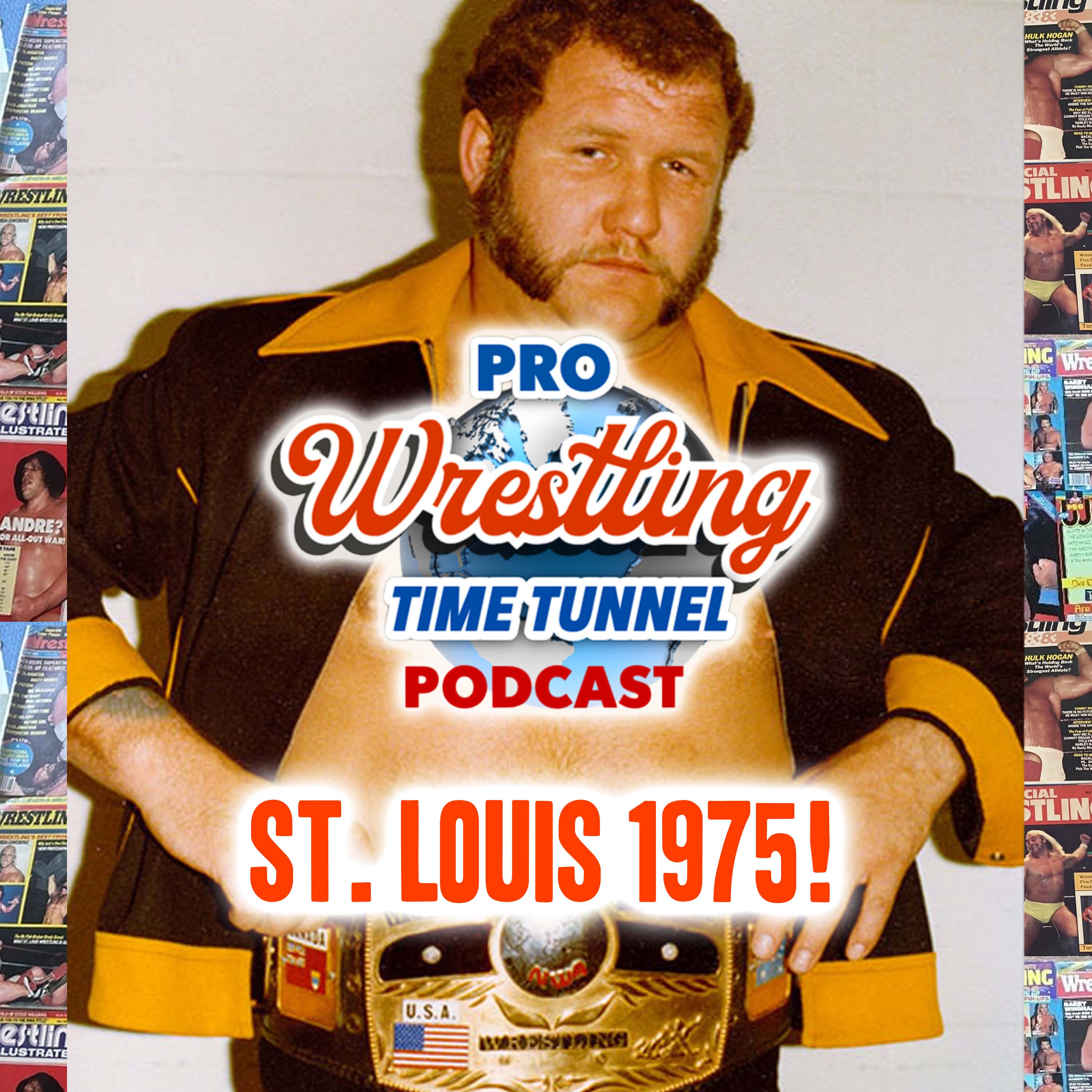
And so the the next year that we're really going in depth here on the podcast show is 1975. He was already firmly entrenched in with Sam Mushnick and Larry Mattis Zak. And the other thing is the television show Wrestling at the Chase had been on the air about 12 or 13 years at that point in 75. And so I walked through the year of 1975 in St. Louis with some of the significant events that happened and get Herb's perspective, because he was there right along Sam as these matches and these angles and these television shows were being shot and produced. And so hearing from him, he was also just recently honored at the Cauliflower Alley reunion. And so I want to get his thoughts about taking center stage and being honored for his long support of Cauliflower Alley and the sport of pro wrestling. Well, we talk a little bit about my experience in the St. Louis hall of Fame and Fan Fest event that he held a little bit about Waterloo, the Trago thes hall of Fame. And so it's a really interesting conversation and a nice visit here at the Richards Ranch with my friend Herb Simmons. So let's go to that conversation right now.
Hello again, everybody. Welcome to another edition of the Pro Wrestling Time Tunnel. I'm your host, Tony Richards, and I'm joined today by my dear friend Herb Simmons, CI or SICW promoter in St. Louis and Southern Illinois. And we have gotten to be good friends this year and we like to touch base with each other. We see each other at all these wrestling events and everything. And I wanted Herb to come back on the show and talk to us about several things.
Herb, welcome back to the program.
[00:05:51] Speaker A: Well, Tony, thanks for asking me back. It's always a pleasure to be on and talk the business with somebody who has shares the same passion that I hope I do. And you're right there. You're at that top of the list. I follow your programs, your episodes in the time tunnel, and I mean, it takes you back into a time tunnel.
[00:06:14] Speaker B: Yeah. And we're fortunate to have people like you to come on and help us go back there that actually live through it. And I want to talk about some St. Louis cards from 1975. But first, let's go back to our hall of Fame ceremony this year and your big fan fest that you had. I had a great time there.
That. That was. That event was a success, huh?
[00:06:37] Speaker A: Yeah. You know, and it was unfortunate. You know, we had the tornado come through there.
[00:06:40] Speaker B: Yes.
[00:06:41] Speaker A: Which I think put a little damper on it. Which, you know, our heart went out to those victims. I mean, they're still trying to clean up. It'll be a several years before the St. Louis overcomes that. So, you know, our heart still goes out to all those that.
That were affected by that, the loss of life. But, you know, the show went on.
You know, we had great fans from all over, like we did for the first two fan fest.
You know, this one here was special because it was the third one. You know, they say usually the first and the second one is the toughest. And then from then on, you see how you get everything coordinated and you hope you have worked out all the bugs, but. But I don't think you do. I think.
I think every.
Every event like that is going to have bugs in it. I just got that feeling. Yeah.
[00:07:37] Speaker B: Yeah, of course.
[00:07:38] Speaker A: Like a wrestler match. You know, everybody says, well, how do you feel? I said, you know, I feel the same until the match is over, and then I can take a breath. Because you never know what's going to happen.
[00:07:48] Speaker B: Absolutely. Well, it was a. I just wanted you to know for me, and I've told you this before, but I thought it was a great event. I got to spend a lot of time with a lot of people there that I wanted to talk to and tell them how much I appreciated their careers and everything they'd given to the business and. And so you had a great lineup of stars there. And I hope. I don't know if you got plans for next year, but I hope we do it again.
[00:08:15] Speaker A: Yeah. You know, that's a $64,000 question that I get asked every day.
Yeah. When I was out in Vegas. Cause there was quite a few fans it was in Vegas that had come in. And again, you know, it's. It's a lot of logistical nightmare when you're bringing in that much talent and, you know, then trying to find a place, I kind of thought the hotel right there at the airport was the savior, because the year before I had it away, and then I had to arrange transportation from the airports to the hotel and back. And, you know, and I did a lot of that myself. And I got a couple of guys that pitch in and help, like on Sunday when everybody's going back out of town. But, you know, when I bring my guests in, I like to greet them and like to roll out the red carpet for them, because I think that's what has built some relationships over the 52 years I've been doing this.
[00:09:11] Speaker B: You bet.
[00:09:13] Speaker A: But we'll see. The possibility of A Fan Fest 4 is still up in the air, but you'll be one of the first to know if that happens.
[00:09:22] Speaker B: All right, good. Yeah. Because I'll be shouting it from the mountaintop. So let me know. Let me know.
Then you were in Waterloo this year. You're in Waterloo almost every year, but this year you were the promoter of the wrestling card there on Saturday night at the Tregos. There's hall of Fame, and that was a great event too. I, I sat with Tim Hornbaker, who got the award there at Tregos Des, and we sat and talked and enjoyed the wrestling. So that was a, that was a great night.
[00:09:52] Speaker A: Well, and as you said, I go to Waterloo, that's another, Another great organization and a great event they have up there. Jerry Briscoe and JBL now is really active in that. And you know, my good friend Troy Peterson from Impact Wrestling, who'd been doing the show there for 14 years. And basically how I got to do the show this year was, is Troy wants to take a break after 14 years. You know, you. You gotta, you gotta take, take a breather and plus all those other shows. So they asked me if I would be interested. And of course, you know, Jerry and I go way, way back. And it was the least dude, because every time I call him to come in for something, he drops what he's doing and comes and. Yeah, so. But the fans in Waterloo, you know, Thunderbolt Patterson, who I'm bringing in here early next month, I sit there and get to talk with him about the old days. And, you know, it's just a.
I want to say it's. It's a slower pace than Vegas, of course, and I like that sometimes, you know, you get over in your little corners and you get to talk and. But yeah, I love Waterloo. And then putting the show on and then I gotta Say that the feedback that I got from fans in Waterloo, Iowa, was just overwhelming the way it was laid out.
You know, we had the Central States title on the line for the main event, and James Jeffries just takes the. Takes the crowd by storm on any part he's on. And of course, you know, he was against my champion, Glenn Williams, Big, nasty and young man that graduated from the Cowboy, Bob Orton's training academy here for me. And that was a great matchup, and I think it was a great match. But then when you got people like Bill DeMotte there, JBL, the boogeyman, they all played a part, you know, and I had fans coming up to me before I left that evening saying, you know, please come back, please come back. And I'm the type of guy that if Troy wants to come back in there next year, I'm going to help him, whatever he needs, because that's his venue. I don't step on other promotions, venues unless I get invited. Yeah.
Now, if somebody invades my.
My footprint, then that's a different story. I want to take my kindness as my weakness.
[00:12:21] Speaker B: Yeah, well, it was a great event. We got to see the Central States title, they're being defended in the main event, and we got to see Jerry Briscoe's son in a match there.
[00:12:33] Speaker A: And I mean, what a. What a great guy. And I mean, why he is not on the bigger stage, I'm just not sure. I. I don't know, because, I mean, he can get in there and he can go. He can give you 150% or whatever you want. And he's a big favorite there in Waterloo, Iowa.
[00:12:53] Speaker B: Well, of course, I'm a supporter of your St. Louis hall of Fame. And I'm a supporter of that hall of Fame. And we're looking forward to hopefully both of those again next year. And then you were honored at the Cauliflower Alley reunion. And so tell everybody about the award you got there.
[00:13:13] Speaker A: Well, you know, the Cauliflower Alley Club is really dear to my heart. Has been for many years. I've really helped promote it. I'm the quote, quote, ambassador, talent. I mean, fan ambassador. I try to recruit as many of the boys that I can. And because I tell them that it's such a great organization and they've helped so many people that's been in the business and. And you have no idea how much that helps until you really need them. Absolutely. I refer to them as a supplemental insurance policy, like the Aflacs of the world, for a small fee. You know, I think if you figure it out on an annual basis, about $3 a month.
But you know, if something happens, you get sick, you get injured, you just fall on hard times, they can help you and that's what they are there for. And they've helped so many people that it's, it's, it actually gives me chills when I hear some of the stories from the recipients that will call me and say, hey, thank you. You know, they helped me. Darla Stags, my dear friend, is the benevolent coordinator. She vets everything, anybody that needs it and you know, make sure that everything is legit up front and. But then if I refer people to her, I get calls back or I get a note from them or a text message and say, hey, you know, they really helped me through some hard times.
But I, they started to.
Two years ago, the Carl Lauer Independent Promoters Award.
Last year, David McLean, the first one they gave was to David McLean. And this year they, they chose me.
And when they, when Brian Blair called me and told me, I said, you know, it was like four or five years ago when I got the Red Bastine Friendship Award. I said, you know, I haven't been doing this for the awards. I do it because of the passion I have for it and I want to hopefully leave something that's my son or whoever takes over when I'm out of it that they can build, continue to build because that's all I've done is built on the foundation that was provided for me.
But I told Brian, I said, yeah, I don't do it for that one. This was for the Friendship Award. And well, finally he called me back and said, hey, come on, you can do it. I said, okay. So when I made my acceptance speech that night, I, I'm sitting there and I'm picking out all the boys, you know, Sergeant Slaughter, everybody that was out there and, and I'm telling stories and thanking them, what they done. And I'll never forget, as I got ready to get off the stage, Brian come up to me and said, hey, you S.O.B. he said, this was about you and you're sitting here giving us all the data boys and credit. I said, but that's, that's how you, that's how you do it.
[00:16:09] Speaker B: Yeah.
[00:16:09] Speaker A: You know, it's not about one individual. And, and so this year the. Carl, Carl was a good friend of my dear friend. He used to come to my shows. He turned out ran shows in California. Em and Harley Race teamed up together and had their promotion for several years.
But Carl and I were friends and then he was the.
One of the Missouri State Athletic commissioners. And I would go to shows from other promotions, ACW or New Breed Wrestling down in Southern Missouri, and he'd be there, and I would sit with him and we'd chew the fat and talk about the old days of St. Louis. And. Yeah, so when Carl passed away, I went to his funeral, and that's how good of a friend we were. And so to get told I was getting the Carl Lauer Award this year was really special.
But again, I think I.
I think I thanked everybody that I could because, again, that's what it's all about.
I can't do it by myself.
And of course, my guys in my locker room, I got the greatest locker room. I got guys that was trained by Harley Race in there. I got some great generals. And the night of a show, I go in there at the beginning, I thank them, and I got a booker that runs everything.
And it's kind of standard. If I come back in the locker room any other time throughout that night, something's went wrong, and I'm not happy. But that very seldom happens. But because I let my booker and my generals, I don't want to undermine them.
So. But. But, yeah, Las Vegas, special, special time. In fact, my boss, who, for my day job actually flew out there for just the.
My award ceremony, and when he got back, I don't know if you can see it, it's a. It's actually a poker chip.
[00:18:10] Speaker B: Look at that.
[00:18:12] Speaker A: And then on the other side, it's got the picture of me standing up there getting that. So, you know, it's things like that. My. My boss is my best friend, and he, like I said, he took time out of his busy schedule to fly out there to be there. And, you know, we had three or four tables of SICW people there. I try to take out as many people as we can to support that organization because, you know, they don't have funding other than through their membership, or they get a corporate person every now and then to kick in. Mick Foley is really helping out now. He just raised them about $25,000 this year.
I was honored to be there because my name's on the same championship belt that all those other award winners were that night right there with Mick Foley, you know, so. So there's two of those belts out there now that somebody's got. That's got the name Herb Simmons on them. So I don't know if that means anything to them, but I just. I was happy to be a part of something that the Cauliflower I like because it's so close to me, you know.
[00:19:15] Speaker B: Yeah, sure. Well, I enjoyed your videos. We, we followed you all the way out there in the RV and we shared, we shared it in the time tunnel group and all your video updates and all. It was great.
[00:19:28] Speaker A: Yeah, my family came up with that brilliant idea. Usually I fly out and my wife said, no, I'm gonna go this year. And my sister and my son Jason and daughter in law Christy and my good friend from work, my assistant director, I said, look, I'm not, you know, that's a 30 hour trip.
[00:19:51] Speaker B: Well, I thought if you ever want to get into another business besides wrestling and have another add on, you could make a new vacation movie. I was thinking.
[00:20:00] Speaker A: But I'm telling you, take your whole.
[00:20:02] Speaker B: Family out west on a vacation in rv.
[00:20:05] Speaker A: Yeah. I said, look, you know, I said this is crazy. I'm telling you. Oh, we'll handle it. You won't have to drive, you know, because I've been driving all my life, you know, from sure, I love police cars to I had a towing business. I had an ambulance company for 35 years.
So I've been driving and I'm drove out basically.
[00:20:24] Speaker B: I don't know if I will next year or not. It's a little bit farther than it was when I lived in Colombia. But I, I drove up to Waterloo. I just like driving, you know.
[00:20:33] Speaker A: Yeah, my wife and I always drive to Waterloo. It's a nice trip for us. You know, it's about five hours for us.
But the, the RV was nice. I mean you could get up if you wanted to and move around. Of course I got bad knees, but we'd stop and have to get fueled. Especially going through the Rockies. You only got about five miles to a gallon. You know, gas stations really around in a lot of places. But it was just fun to. And that's why I said I'm going to do some live updates and let somebody wants to see them. Fine. If not, they can delete them or whatever they want to do. But I had a lot of people tell me they follow this and we did.
[00:21:10] Speaker B: Yeah, we did.
[00:21:11] Speaker A: Yeah.
[00:21:13] Speaker B: Another thing lately that I've noticed was you promoted a series of cards where you had Tommy Rich in and.
Yeah, in southern Illinois and down in the southern part of the state not long ago. How'd those cards go for you? Good.
[00:21:30] Speaker A: Tommy's a great friend and you know, anytime I can get Tommy on a card, he sells tickets and that's what we try to do when these non profit organizations that's 95% of what I do.
I mean, I got to show this, I got to show tomorrow and then Saturday.
And so. And they're both for non profit organizations. They do their annual fundraisers. And when they say, hey, you know, we'd like to bring in a legend.
And so depending on where they're at, like Tommy, I know he's really popular in that Southern Illinois area because of across right there at the border, you know where him and Lawler and Bill Dundee and.
[00:22:14] Speaker B: Yeah, close to Evansville.
[00:22:16] Speaker A: Yeah, Tojo Evansville.
[00:22:17] Speaker B: Yeah.
[00:22:18] Speaker A: Because those guys all work for me. Tojo Yamamoto, Gypsy Joe, Frank Morrell. Back before you became a referee, you know, of course they all came up here and worked for us. And so I know that that area is where he. He's really hot at.
Like tomorrow night, I don't know when this airs, but this weekend I'm taking Bob Orton down to Southern Illinois to a place called Ridgeway, Illinois. And.
But Tommy, is he. He's a hoot. I'm telling you. When you somebody says, let's get fired up, you can bet Tommy Rich is in the house.
[00:22:51] Speaker B: Yeah, I know where Ridgeway is. That's not far from Metropolis.
Bob Orton, he. Bob Orton Jr. You mean he, he does a lot of training for you, doesn't he?
[00:23:02] Speaker A: Yeah, Bob and I have been good friends for many years now, and his whole family. And of course, you know, Fan Fest 2 is when I had him inducted into St. Louis hall of Fame. And Randy actually came in and did the induction for us. So that's a, that's a topic that people are still. Promoters have called me from around the country saying, man, how did you get Randy? You think we could get him to come in here? And I said, well, if you, maybe if you induct his dad into the hall of Fame. No, but. And then they don't understand. They don't realize or they don't know. But you know, I was part of Randy's first match before he went down to ovw. We gave him his first shot at South Broadway Athletic Club. I'll never forget when Bob called and said, hey, the boy don't think I can teach him anymore. He said, you got anybody can show him some more of the ropes. And I got a young man who's still with me now, the Night Train. Gary Jackson got his nickname, the Night Train from Bruiser Brody and another guy named Ron Powers.
Danny Boy, who was my first champion. They were at South Broadway with me then, and.
But that's where Randy got his first match at, outside of dad whooping him a little bit, you know.
[00:24:17] Speaker B: Yeah. And I was glad I got the chance to talk to Bob Jr. At the, your hall of Fame event and got to tell him how much I appreciated him and what his career meant to me because I was a young fan going around to the ICW shows when he was working for the Pafos, and I wanted to tell him how much I enjoyed his work and, and how much his career meant to me back then.
[00:24:41] Speaker A: Back when him and Bob, grouping them guys were all running around together and Ronnie Garbin and, But it's ironic, you know, his dad, Bob Sr. Was on the first wrestling show in 1959 in St. Louis.
[00:24:55] Speaker B: Yes.
[00:24:55] Speaker A: And of course now here's, you know, here's Bob Jr. And then Randy and I told Randy, in fact, I talked to him periodically and you know, when he gets ready to retire, you know, I'm going to induct him in that St. Louis wrestling hall of Fame because then I'll have all three of them in there, you know.
[00:25:12] Speaker B: That's great.
[00:25:13] Speaker A: Yeah.
[00:25:14] Speaker B: So, you know, go ahead.
[00:25:16] Speaker A: Maybe he'll sell me some tickets. I told him I raz him all the time. I said, man, you owe me a fan fest or something when you retire.
After all, I helped get you your first match.
[00:25:26] Speaker B: Hey, I want to, while I got you here, I want to go back to 1975 and you and I talked about this. You like to pull out your, your books from time to time and, and look at them. And you, you pulled out your book the other day when you knew we were going to talk about this today. What, what kind of year was 1975, Herb, to the best of your memory?
[00:25:50] Speaker A: Oh, it was, you know, it's a hot wrestling. I mean, Sam Muchnick always told me you could predict wrestling over a period of several years. It's like a roller coaster.
And, and I, I, I'm afraid to say it, but I think we're at the top of that roller coaster again because wrestling is hot right now.
[00:26:09] Speaker B: It is.
[00:26:10] Speaker A: I mean, it is hot for several years, but he always said, you got to be careful because what goes up must come down. And, and I just hope it if we are at the top.
I mean, I saw people talking the other night about one of the bigger stages, that there's no stories, there's nothing. It's just Wrestler A against Wrestler B. No rhyme, no reason.
And, but 75 was, you know, you had people like Kowalski and, and I bring his name up because he was one of my favorite heels you know, he was known as that punch, kick, heel. And you know, when you had him in the ring against Yukon Eric or somebody like that sort, you know, you had the Funks, people like that coming to St. Louis. In fact, that first card in January of 75 I think it was, I told you, you know, you had uh, Kowalski, uh, uh, Faces Funk. Yeah, and so, and what I liked about that Tony was is that people didn't just show up to the Keel Auditorium not knowing what, what they were going to see.
They were, they were brought into it by that program Wrestling at the Chase.
[00:27:35] Speaker B: Right.
[00:27:36] Speaker A: Those story lines were built on television that made you want to get that two or three dollar ticket back then, or a dollar 75, believe it or not, and, and made you want to go down there and stand in line at the back door hoping that you get a glimpse of one of your favorite wrestlers before you had to go in and get your seat. But, and I think that's what a lot of it misses nowadays. There's no story and there are fans that don't care.
My fans like to be brought into it. They like to like that, want to sit and watch like Our Days of Our Life or as the World Turns, you know, they want to, they want to be a part of it.
[00:28:20] Speaker B: And yeah, they like the story, you know.
[00:28:23] Speaker A: Well, in Vegas, when I, I told the story in Vegas, you know, I think I talked for 40 minutes. I, you know, normally say, oh, you got three, four minutes. And I, I made a joke. I got up there and took my coat off and, and said, I told Rich England, turn that stopwatch off because. And this is what I told him. I said, look, it took me 30 hours to drive out here.
It took me two or three minutes to walk up here on the stage.
I've been doing it for 52 years. When I leave here tomorrow, I got to drive 30 hours back home.
[00:28:52] Speaker B: That's right.
[00:28:53] Speaker A: So how do I put 60 hours of travel plus 52 years in the business and narrow it down to 3 or 4 minutes? Ain't gonna happen.
[00:29:01] Speaker B: Right.
[00:29:02] Speaker A: So everybody laughed and, but, but I told the story of a nine month storyline that we had done and I don't know if you saw it, we, we played it on one of our Sunday night shows.
You know, it involved Haku the Barbarian, a telecon and some of my former champions and Devastation Incorporated.
[00:29:24] Speaker B: That's when you almost lost the promotion, right?
[00:29:26] Speaker A: Yeah, they were gonna, they were gonna take me out and you know, they tried buying my wife and senator bracelets and Stephen E And, and so they were there in the audience. You know, even Stephen E. Showed up and I pointed him out. Stand up or here's this almost 7 foot guy himself with a big gray and white beard. And so I, I think I did a pretty good job of recognizing all those guys. Haku couldn't make it this year. I was hoping he'd be there because I even made the joke that he didn't show up this year because the year before I out drank he was. And I said, but don't tell him that because it's my story, I get to tell him. But I wouldn't say it if he was here, you know. Yeah, so, but that was a nine month storyline that we told and people bought it. You know, they stood at the door and just loved it. And, and that's true wrestling fans, you know.
[00:30:15] Speaker B: Well, I, you know, I think sometimes we get the, we get the wrong end of the stick going when we talk about the business because people say the business has change.
The business hasn't changed and neither has the way people process the psychology.
You know, people still love stories and they still love action. And that's what wrestling is. It's, well and it's, and it's best when it's live, local and real.
[00:30:46] Speaker A: I'm so happy you just said that. That was part of my second acceptance speech out in Vegas and I'm looking at Cactus Jack or Mick Foley and Bob Orton was sitting at the first table right in front of me and I told him, I said, you know, I have guys tell me, period, all the time. Really? Oh, wrestling has changed so much. I said, wait, whoa, whoa, wait a minute.
If I put a headlock on you today, it's the same way I put a headlock on you back in the 30s, 40s, 50s. If I do an arm drag, if I do a whatever or whatever type of hold, it may be adjusted a little bit differently, but it's still the same. What has changed in our business, especially on the lower levels, is ego. That three letter word called ego. And I said if these young talent would learn to leave your egos outside the door or even leave it at home, because I don't, I have a drama free locker room. If you've got a problem at work or you got a problem at home, you better call me before showtime. And we're going to. Because I don't want it in my locker room because it's a cancer and it affects people. And anybody who works in my locker room, I tell you that, I mean that's one of the things when I have new talent calling me and I'm interviewing them, you know, and I explained to them, I don't want to hear about your love life. I don't want to hear about the Sorrows, especially now. I got a good ear and I'll listen, but don't bring it into the locker room because it will affect your ability to go out there and do what you need to do.
[00:32:13] Speaker B: Absolutely.
[00:32:14] Speaker A: And it works. But yeah, I was glad to hear you say that because I talked about that and I'm looking right at Mick Foley and he's shaking his head. I mean, he's, he's agreeing with me, you know, because even on the bigger scale, you hear about it all the time. Guys come in and oh, I want to be the champion, you know, I want that belt. How long am I going to be here for you to have a title?
Well, you know, first of all, you gotta, you gotta pay your dues, you gotta learn where the ropes. I want to see if you know the basics, you know, but, well, and.
[00:32:43] Speaker B: We used to, we used to take longer to sell the stars to the audience and we used to take longer in selling the story. Like you said, you ran a nine month storyline. Yeah, that's, that's old school. I mean, that's how we did it in the territory days. Yeah, at the beginning.
[00:33:01] Speaker A: Let me real quick, just real quick, that card we were talking about, 1975, Dory Funk against Kowalski Lord Alfred Hayes versus the Freight Train. Rufus R. Jones.
[00:33:12] Speaker B: Yes.
[00:33:14] Speaker A: You know, Big Bill Miller versus Bobo Brazil.
Wilbur Snyder versus Moose Sherlock. Remember Moose? Oh, yeah, great guy.
And then the opening bout, Jim Johnson and Ted Oates against Gary Fulton and Bobby Jaggers. I mean that's, that's a lineup.
[00:33:32] Speaker B: Yeah, you know that. Then that card drew over 10,000 people.
Yeah. Now, I was going to tell you, I don't know if I've ever told you the story before or not, but I used to have two ladies who would come in and clean my condo every two weeks. And I had all my wrestling stuff up on the wall. I don't have it up yet. Work in progress. Unboxing all my boxes, getting all my books out and everything. But anyway, this lady would come in and I had a Harley race poster from a Harley race card at the Keel. And she goes, oh my gosh, she goes, do you have anything with Rufus R. Jones on it?
Now, you know, Rufus has been gone for quite some time, but there's still people that remember those guys. And I sat in the bar at your event in St. Louis at the hall of Fame. And there was a guy there and we were talking and he goes, hey. He goes, we got. He asked me what I was doing there and I said, I was there for your wrestling event and your hall of Fame and all that. He goes, do you remember a guy named Butch Reed? I said, yes. And I said, and that's his son sitting right over there. And he goes, you're kidding me. And that guy was so thrilled to meet one of Butch Reed's family.
[00:34:44] Speaker A: Oh, yeah. And Butch, you know, he had his last wrestling match with us here in the village of East Grandelet where we used to run shows. That was his last show. I had him and Bob Orton on it. And, you know, I'd bring Butch in and take him to a little barbecue place that we had here because he loved barbecue. And of course we'd have to talk about wrestling, we have to talk about rodeoing, because that was his two loves of his life, you know, and. Great guy. I loved him.
[00:35:12] Speaker B: But next, next, three cards in 75. The first card in February, Jack Briscoe with the NWA world title against Dory Funk Jr. Who's the Missouri champion in a two out of three fall match. And the special referee is Joe Higuchi, the.
If you've ever watched minute Japanese tapes, he's the bald headed guy when the orange jumpsuit, who's the referee.
And then Harley Racing Lord Alfred Hayes against Bobo Brazil and Pat o' Connor on the undercard.
I mean, my gosh, what I mean, that was the match of the 70s. Jack Briscoe and Dory Funk Jr. Man.
[00:35:49] Speaker A: Oh, everybody wanted to see, see that? I mean that anytime you had those guys on a card, you. You knew you were going to have a great one. But you know, even the undercard, like I said, you know, Bobby Jaggers, I think was probably one of the underrated guys in the business, you know, you know, they called them jobbers, I call them enhancement workers because I, I still believe that without a good enhancement worker, you don't make the stars. You don't make, you know, the Bob Browns of the world, the Mike George's, Roger Kirby, you know, Roger Kirby, another underrated individual.
[00:36:28] Speaker B: One of Harley's favorite guys.
[00:36:30] Speaker A: One of us. Yeah, I'm telling you. But, you know, and then you look, you know, Gene antone and Kathy McCoy, Betty Nikolai.
[00:36:38] Speaker B: Oh, my gosh.
I mean, I wish I had a dollar for every time Betty Nicolai and Jean Antone work to get against each other.
[00:36:45] Speaker A: Yeah, you'd be rich.
[00:36:46] Speaker B: They were Fantastic. I mean I just had a chance to talk to Gene Antone's daughter not long ago. Oh, and man, they were, they were fantastic.
[00:36:56] Speaker A: But you know that card, it had giant baba on it, you know, people wanted to be there to see the giant, you know, so that's one thing I gotta give Sam credit for. And I mean that's what I learned a lot from him and Larry both is build it up to give the fans what they want.
If the fans don't buy into it, then you might as well stay home.
[00:37:21] Speaker B: Yeah.
[00:37:22] Speaker A: Because if you can't put the butts in the seats, you can't pay the bills. And, and I mean I loved it when they said oh, so and so sold out the Madison Square Gardens and so and so sold out this Garden and this Sam Muchnick was selling out Keel Auditorium way, way before that was going on. 12,800 people he put in there. And then when he'd go to the Checker Dome or the arena they called later on, you know, it held 22,000 people. And a couple of times a year he'd go there and you know, he'd put a darn good crowd in there.
[00:37:58] Speaker B: Also in the spring there's a big feud program for last. Oh, three, four cards between Harley Race, who becomes the Missouri champion by beating Dorie Funk Jr. Harley race and Johnny Valentine and they end up in a Texas death match in the March card. It's the best drawing card of the year. In 1975 he draws 11,250 people to the Keel and it's Johnny Valentine and Harley Race in a Texas death match with special referee Pat o'. Connor. And Andre the Giants on the card too with big Bill Miller.
[00:38:37] Speaker A: So now you tell me that that wasn't a put together stack card.
I know you remember Joe Garry, Jola.
[00:38:44] Speaker B: Oh, very well. Yeah.
[00:38:45] Speaker A: First play by play announcer of wrestling at the chase. And I'll never forget the first time he called Johnny Valentine's when he used the elbow, the arm and hammer.
And I'm thinking, what's he talking about? But how unique. You know, there's a guy that went on for bigger, bigger and better things. And of course then his brother comes in as the ring announcer, you know.
[00:39:06] Speaker B: Yeah, it was just a week or so ago. We honored him in our RIP Salute. He, it was the day he passed away about a week ago. And you know, I had a tear in my eye a couple times during the hall of Fame ceremony when you were there and everybody was getting inducted and it was Greg Valentine got inducted into the hall of Fame this spring. And when the plaque got handed to him, he looked up to the ceiling and put one finger in the air and he goes, thank you, Pop. This is for you, Pop. Yeah. And I'm just like, oh, my.
[00:39:38] Speaker A: Another guy. Yeah, he was out in Vegas and. Because that's where he lives. And he had. With him and I had been talking like the month before off and on, and he wasn't going to be able to make it. And then I told him, I said, I wish you'd be there. I'm getting on. And he said, oh, well, I'm going to be there. And so where I'm walking through the casino and he. I'm coming to one way, he's coming the other. And he sees me, man, he comes up and puts them big arms around me. And of course, you know, Greg likes to indulge, which is no problem, but. But just. Just for him to. Wasn't going to come. But then when I told him I was getting the car Lauer award, he. He made Rangers to be there. That's just a special thing for me, you know. I like that.
[00:40:18] Speaker B: Well, and of course, 1975 was the year that Johnny's career ended in October in that terrible plane crash. And boy, we lost a great at that time.
[00:40:30] Speaker A: Oh, could you imagine if that hadn't happened? I mean, that's. The sky was the limit. I mean, with him, I tell you, it just unreal. But yeah, 75. And that was the error, you know, And I'll be honest with you, if I could go back, I'm not so sure that wouldn't be that time period that I wouldn't want to go to just to relive all that again, you know, Andre and the times that Sam would bring him over to Jack English's little bar in Belleville, Illinois, because it was a secluded place.
Sit there and watch him eat and drink all evening and, you know, ring that I could put my fingers in back then. But just to. Just to go back and live those times, I think would be. That would be my era. I'd want to go back to, I.
[00:41:19] Speaker B: Think followed by after the race and Valentine program. Then in May, it's Harley race defending the title against Terry Funk. I mean, it just keeps on coming, you know, and these are like. People are like, man, those are stacked cards. I'm like, no, those aren't stacked cards. Those are St. Louis cards, man.
He just. He just did that every single month.
[00:41:40] Speaker A: Yeah, yeah, he just. And again, he. The boys loved him.
And one reason Was. Is that Sam was honest, and he was a good payoff promoter.
And I remember he told me, you know, you treat the boys right, and they'll treat you right.
And so for 52 years, I have lived by that, and I have, knock on wood. I've not had an issue with anybody except one, and that was cowboy Bob Orton, Jr. And, of course, it was a mistake that my wife had made.
And when I. And I didn't know about it for probably three months, and I'm building another story, and I wanted him to be involved. And Larry says, I don't think Bob's going to work for you anymore. And I like, what are you talking about? He said, well, there was an issue with the pay. And I said. And I thought he was ribbing me.
[00:42:41] Speaker B: Yeah, right.
[00:42:42] Speaker A: I said, bob, no, no. He said, yeah, so, man, I'm at Larry's house, and we're trying to put the show together. And I called. My wife said, hey, pull out the records for this card three months ago and tell me what the pay was, man. She told me. And of course, I had a few choice words for her.
I hung the phone up and I left Larry's house and drove straight to his house in Florissant, Missouri, and knocked on his door. He come to the door, had a pair of cutoff shorts on and his flip flops with a Heineken in his hand. And he said, hey, what's going on? And I just stuck my hand out to shake his hand, and I put the balance of what was owed to him in his hand, and he looked at it, took a swig of that Heineken, and said, come on in, have a drink.
One time in 52 years. And it had to be him.
[00:43:32] Speaker B: Wow. And just. And you guys are so close today, still friends.
[00:43:36] Speaker A: Oh, yeah. I'm taking him down to Ramsey, Illinois.
[00:43:38] Speaker B: For a show because you. You made it right. You know, you made it right.
[00:43:42] Speaker A: Well, we're human, and my wife's human. And, you know, she's trying to help with the books and trying to keep all this record straight, and then she's got to put up with me because I'm a. I'm a beast. About a week out before any show because I. I wanted. I want it done right. I tell my booker, you know, put it together, and him and I will spend hours on the phone throughout the week because, you know, Guy. Well, I. I woke up and I got a headache, or I had that happen. You know, the last two years, I've tied up with nascar, and we just Did a NASCAR weekend and great, you know, between 70, 80,000 fans there. And we're doing the NHRA the end of the month farm.
So I tell them, I told the owner of the track, I said, man, I wish I'd met you guys 20 years ago.
So to get out there and have a crowd that you're performing in front of that for the guys of my level of the business. And it's pretty awesome, I think. And so, I mean, we're trying to do everything, but. So I get. I get kind of on edge about a week out and.
But it all turns out good and. Because I just sit back and think, you know, like Sam and Larry say, it's wrestling, you know, in June.
[00:44:52] Speaker B: Dick the Bruiser is featured in the first card in June, it's Dick the Bruiser and Ox Baker in the Texas Death Match. And the second card in June, it's Jack Briscoe versus Dick the Bruiser in a double count out at one fall each. That's a good finish. That used to be done in the 70s. All the time.
[00:45:11] Speaker A: All the time.
[00:45:12] Speaker B: One, one. One guy each has a fall, and then you have a double count out at the end for the champion to retain the title.
What was.
I never got to see Dick the bruiser in St. Louis.
What did Dick the bruiser mean in St. Louis?
[00:45:30] Speaker A: Dick was St. Louis.
Today, if I take you to St. Louis and we drive downtown anywhere and walk down Washington Avenue anywhere, and you just pick any random person you want and say, are you a wrestling fan? And they'll say, oh, yeah.
You know, most of them will. And they'll say two things. They'll say, we grew up. My parents grew up. My grandparents grew up on wrestling at the Chase, and they loved Dick the Bruiser.
I mean, religiously. I mean, he was St. Louis. And Sam knew that. And that's why Sam knew when to use him. He knew how to put him in there.
Between you and I, Dick wasn't that good of a worker.
[00:46:10] Speaker B: Right, right.
[00:46:11] Speaker A: He didn't have to be.
[00:46:12] Speaker B: Yeah, he was a brawler for sure.
[00:46:13] Speaker A: He was a brawler. Yeah. You know, at the. At the Coruscant Room at the Chase Park Plaza Hotel, at Wrestling at the Chase. You know, he'd get out there, and after he'd tear the place up, he'd grab somebody's beer and pour it on his head. And he always, always on his way back to the dressing room, he'd tell the people at the beer stand, he's, take him a beer, you know. But that was Dick Yeah, and I.
[00:46:38] Speaker B: Always thought that was an interesting mix because Sam was not really that kind of promoter. He didn't go for a lot of outside the ring stuff. But somehow or another he and Dick the Bruiser made it work.
[00:46:50] Speaker A: You know, stop and think. The guys that did get to do that, not many, right? Dick was one, Brody was another.
[00:46:58] Speaker B: You know, I know Terry Funk got in big trouble for it.
[00:47:02] Speaker A: Oh, yeah?
[00:47:02] Speaker B: Yeah.
[00:47:03] Speaker A: Terry said. Terry and, and he used to tell the story. He said, I didn't think I'd ever go back to St. Louis. He said, I love. Because they'll tell you if you made it to St. Louis, you made it to the big days.
[00:47:14] Speaker B: That's right.
[00:47:15] Speaker A: Because Chase Park Plaza was the place to be. And then even when they moved it over into the studio, it was still a hotbed because they knew Sam was knowing how to promote the business.
[00:47:26] Speaker B: And he had such, I mean, he had such high standards for the, the matches and the promotion. And there was only, I think, one or two times in his whole history where the card he advertised, there wasn't a guy on it that he, he said only two times in that whole time.
And, and he did things to make those two times right.
[00:47:48] Speaker A: You know, guys wanted to want work to St. Louis because one, like I said, they knew, you know, if your payoff come down to $0.87 at the end of that money, when you counted the bills, you had 87 cents in your envelope.
You didn't have to go. It was none of this a. I'll catch you next time or, you know, it's. It's a bad house tonight. Never happened. It's never happened with me. Yes, because he told me, you'll only do that once to the boy. And then you, you get a bad reputation. And if you lose your reputation in this business, you better go somewhere else because it will follow you forever. But I'm glad you brought up Dick, because I'm starting to put some. I got Dick's library. It's still on the tv tape reels, as I told you.
[00:48:32] Speaker B: Yeah, yeah.
[00:48:34] Speaker A: So I, I put one on.
There was one on our show, I think a week ago I had Harley race against Mobo Brazil. And I've got one coming up this coming Sunday, I think is going to have the crusher on it and the bruiser against Chuck, Chuck Connor. And I can't remember who he's with, but. So I'm starting to get those because they're still on the 1 inch tape and it's hard to find. I found a place in St. Louis. That will do it because they're still in the old metal. Some of them's in the old cardboard boxes that used to transport back and forth to the TV stations.
[00:49:09] Speaker B: Oh, man.
[00:49:10] Speaker A: You know, that's what happened in St. Louis.
That's the one. The one fault that if Sam was still with us, I holler at him because he used to tape over those tapes. Yeah.
[00:49:21] Speaker B: All the. A lot of the promoters did because.
[00:49:23] Speaker A: It was so expensive. And like I said, I've got Dick's library, and I know there's some of it out there on the Internet now people can Google it because his wife. It sold rights to different people. But I. I like the nostalgia because, like I said, it's still in the tv.
It's got the dates that it was delivered to the TV station on it. And so, I mean, I got a bunch of that. So I. I joke all the time and say, when I leave this great Earth, my wife is going to have the biggest bonfire ever. And. Because she ain't gonna know what to do with all of it, you know.
[00:49:57] Speaker B: Yeah, sure. Well, there's a lot of us out here that want to make sure that we go through all that then and make sure that gets preserved. So let's don't have the bonfire that. That Sam not having cards in July. That goes back all the way to the beginning, doesn't it? I mean.
[00:50:15] Speaker A: Oh, yeah, yeah. He always would take off and, you know, they would bring shows in from around the. The country. You know, he. Again, that's the other thing that I don't do. I. I run all year round because I want to. I want. I. I don't lose the fan. I want to. You know, because I don't have a syndicated TV show.
[00:50:38] Speaker B: Sure.
[00:50:38] Speaker A: You know, I'm on a YouTube channel. I'm on a little TV out of St. Louis called Paranormal Intrigue Town Television, Roku. So it's different than being on what he. He was on kplr. Yeah. Which was one of, if not the largest independent TV stations back in the day. And. And he had a captive audience with that.
But he would take off those summer months, and then they. And that's why I get in discussions with people, they say, man, I. You. I remember seeing Andre the Giant at wrestling at the G. Chase. And I'd say a couple times, no, Andre was never at wrestling at the Chase. Oh, yeah, I saw him wrestling at Chase. And then now I just get to the point where I don't even argue. But Andre was too big. He could not get in the studio of wrestling at the Chase. They would see him when they would send tapes in from around the globe of him coming to the Keel Auditorium. Sure, he never wrestled at the Chase.
[00:51:37] Speaker B: They saw him on the show, but they didn't show.
[00:51:39] Speaker A: Yeah, they didn't see him at the Coruscant Room or at the TV studio.
And so now I just say, oh, yeah, you know, he was a great guy. But.
[00:51:48] Speaker B: Well, when Sam was running back in the 40s and 50s, when the, the original Sportsman's park with the St. Louis Cardinals, I mean, if he were, if he were drawing 10 or 11,000 people, that really put, that really put a hurting on people to decide if I gonna go to the Cardinals game or am I gonna go to wrestling. And he didn't want them not to go to the Cardinals game is what I heard, is that he wanted the Cardinals to do well and he wanted to do well. And so he took off a lot of the July baseball season.
[00:52:22] Speaker A: Well, you know, because, you know, Sam, he was a sports writer and that's where he made a lot of connections in the sports industry.
And he took care of a lot of the sports players and wrote good articles on them and he was well respected.
You know, of course, in St. Louis he was, he was next to godliness as far as I'm concerned. But then globally, I mean, look at the respect he had from around the.
The world in the nwa.
[00:52:53] Speaker B: Oh, of course. Yeah.
[00:52:54] Speaker A: I always referred to him as the peacekeeper.
I mean, I can tell you on different occasions when I would go to the office with Larry.
Matt, because Larry started working for him when he was 16 years old. Sweeping the floor, emptying the waist. Can I walk in one day and there's Big Thunder sitting there early in the morning. Big Gene, oh, my gosh. And I'm, I'm going. You talk about a kid at a candy shop. I'm thinking, wow, another day, Bill Longston is sitting in there.
[00:53:25] Speaker B: Oh, man.
[00:53:26] Speaker A: And, and Sam told Larry and I, you know, what you hear in this office stays in this office.
And all the cabinets he had in their file cabinets. He said, you can go through them. Nothing leaves the office.
And like I said, mom's the word. And now I have everything that was in those file cabinets, the three by five index cards that everybody who's ever wrestled in St. Louis, I can tell you their win loss record, the dates, their weights.
They were on those little recipe cards like grandma used to make her recipes on.
[00:54:00] Speaker B: And that's the way the, that's the way promoters kept up with Their network back.
[00:54:05] Speaker A: It was all with the typewriter. They typed it all on there and if they had anything special notes, they'd type it on the back of them.
[00:54:10] Speaker B: You know, that was their computer.
[00:54:12] Speaker A: It even got down to the point where on a lot of them it had the announcer had checkered jacket on or he had this type of tie on. They would tag that on there, you know. Yeah. So I'm glad because to me that's, that's historical knowledge. Oh, man, I told you before we went on the air, when I do get some time, I, I just get out those books and I just start going through them or I get out some of the tapes and you know, put in a, a tape of Dick the Bruiser against somebody or Ric Flair against somebody, or Bruiser Brody, of course. He was my all time great friend and he, I can sit and watch him hours on ours, you know.
[00:54:57] Speaker B: Well, I'm glad you brought up the NWA because 75 is the year that Sam retired as the President.
And no show in July, but in August, right after the NWA convention in 75, where he retired and Fritz Von Erich was elected the President, Jack Briscoe had a match with Giant Baba. 2 out of 3 falls, match. Luthez is a special referee and Jack had no showed the NWA convention because he was tired of being the champion. He had asked out of the title for quite some time. He felt like he was being ignored and so he decided just not to go to the convention. And they tried to hunt him down, called all over the place trying to find him. He was at Lake Lanier in Atlanta in his house, and they kept thinking he was going to show up and he never did. But then he comes to St. Louis here and has this match with Giant Baba for Sam.
Was there any heat with Sam and Jack after that in the locker room just a few days after the convention?
[00:56:02] Speaker A: Yeah. The only thing I heard is what Larry told me. There was a little heat. But again, that was what Sam was known for, of defusing situations.
And I saw him do it a couple different times. But, you know, back then I was young and I mean, I am, I'm. That.
I'm the biggest sponge you could see. I'm soaking as much as that up as I can because I knew what I wanted to do when I got older.
And I don't want to sound clayish here, but I wanted to be that Sam Muchnick.
[00:56:34] Speaker B: Yeah.
[00:56:35] Speaker A: But then I realized as I got older, you can't do that. There's, you know, you can't duplicate somebody like that.
[00:56:41] Speaker B: No, but you were looking at him as a model, you know.
[00:56:44] Speaker A: Yeah, he was my. I look at it. He was my mentor. Him and Larry both. And then when Frank Goodish came into the picture.
And that's why I give credit to those three men, because they introduced me to Luth says Jerry Blackwell, Greg Valentine, Dick Murdoch. He did a lot of work for me. If it wasn't for those guys introducing me to people like that, Herb Simmons is just another name.
John Doe working, raising his family. But because of them, introducing me to them, got that foundation that I said I built on, and. And they taught me how to negotiate with the boys when you're bringing them in. One of the toughest ones I ever had to do that with was Abdullah, and. But I had the pre. Warning from them guys on how to handle it. Yeah. And now Abby and I are.
I mean, we're. We talk all the time.
He was inducted in Vegas. While I'm on the belt with him.
[00:57:47] Speaker B: As I study Sam Muchnick and I study his life, I just feel like he was a master at psychology. I mean, he. He got along with promoters, he got along with bookers, he got along with champions, he got along with wrestlers. I mean, he. He was.
[00:58:04] Speaker A: I would.
[00:58:05] Speaker B: I wouldn't call him. I would. I think politician is too negative of a word, but he was a master at human relations, I guess I'd say.
[00:58:15] Speaker A: Well. And one of his best friends back in the day was Congressman Melvin Price.
Congressman Price used to be at quite a few of the shows. He had his permanent seat right there at Keel Auditorium. In fact, he was at Sam's retirement party.
And so if you look through the antitrust lawsuit, I'm sure you've read through that. I've got all the copies of that.
Where there was always thoughts that politically there was a political involvement in that through Sam.
But Sam, as I said, was that peacekeeper.
But what I saw him do was, is what was best for the business, not necessarily what was just best for Sam.
I mean, I. I've told people that the, The.
The way I described it is, Sam, he had a pie, and he would cut that pie up equally between the other promotions.
And if there was a sliver of pie left, he still slivered that up. He didn't take that little sliver and put it in his pocket.
[00:59:34] Speaker B: Right.
[00:59:35] Speaker A: And I think that's why he may have not liked some of the promoters, but he respected them for the business, and they respected him.
I mean, you know, that was the one thing people I. I haven't saw the Von Erich movie that came out.
Neither has Kevin. But I've heard had people tell me different things under that. Oh, they tried to portray Fritz. Didn't get along with Sam. Well, yeah. I mean, were they in bed together?
[01:00:06] Speaker B: No.
[01:00:06] Speaker A: But they respected each other. Yeah, they. Fritz pulled Sam out of the heat a couple different times on some shows and, and, and then when Larry was starting his little promotion for those several months he had it, Fritz was helping him behind the scenes because Sam always said, anytime that you can offer that olive branch, you better at least examine it because you're never going to know when you're going to need it.
[01:00:32] Speaker B: That's right.
[01:00:33] Speaker A: And that's what Fritz was doing with Larry. I mean, if you go back and look, Larry, we had Terry Gordy up here, we had Brody, we had Nikolai Volkov, Tanaka.
They were getting ready to bring that Freeburg feud to St. Louis. Larry and him were. And of course, you know, everything went sour from there with the TV for Larry and it never did materialize. But that would have been. That whole Freeburg Von Erich feud was gonna come to St. Louis.
[01:01:03] Speaker B: Yeah. Wow. Yeah.
[01:01:05] Speaker A: Been great.
[01:01:06] Speaker B: Fantastic.
Later in the year, Rocky Johnson makes a St. Louis appearance and he, he's in St. Louis for a couple months, October and November. Also a guy who's always on my show here quite a bit is Jack Jerry Oates, who's over in Kansas City at this time, and he's, he's against Ox Baker. And also in November, I want to ask you about this because in November it's one of the, well, actually the last. There were two cards a month. So there was a card on the 17th of October, and then November 7th, and both of those cards had Bruno Sammartino.
And those are the worst drawing shows of the year.
Is that because of the time of year? It is. Is that because.
[01:01:58] Speaker A: Well, that's what we, that's what it got blamed on. I, I don't, I mean, it was shell shocked.
The word, the, the word was is that, that those were going to be major events.
And when those people didn't show up, the only thing that Sam would blame it on was the time of the year.
Because, you know, if you look at the co card, I mean, was with Bruno on it. I mean, why wouldn't you be drawing more than that?
[01:02:27] Speaker B: Right.
[01:02:28] Speaker A: So when I, I've got to ask about that before and I, I, I report what, what I was told and I blame it on just the time of the year because I can't. Nobody back then could figure out what.
[01:02:39] Speaker B: It was, because he certainly was the huge drawing card in the Northeast. Yeah.
And the other thing was too, that the other side of that evidence for that is the card is not just Bruno.
No. I mean, you've got Pat o' Connor and Rocky Johnson, Big Bill Miller, Stan Stasiak, Harley Race, Red Bastine, and the match on top is Bruno and Dick Murdoch. I mean, so I don't think it's just. Just Bruno that's not drawing. There just must have been a crazy, crazy equinox or something, you know?
[01:03:16] Speaker A: Well, and that's what. And that's what I said. I. I think that with the card that was there, why would you not want to go and see that?
So we always just said, ah, was that time of the year, you know, you live and learn, you know. Yep. So.
[01:03:33] Speaker B: So the, the card right before Thanksgiving, we got Dorie Funk Jr. Pat O', Connor and Nick Bockwinkle and Von Raschke, which is another kind of thing. Sam didn't let the Baron be the Baron in St. Louis. Right. Just right.
Because he didn't like the Nazi thing. And I respect Sam for that.
Jack Briscoe and Rocky Johnson, one hour draw, one fall each for the NWA World Title. And that's Jack Briscoe's last time in St. Louis as the NWA World Champion. I mean, was Jack.
Where do you put Jack as far as NWA champion? So you got. Says, you got Dory Funk Jr. You got Jack, you got Harley. Where do you put Jack in all that?
[01:04:20] Speaker A: Jackson, my top five. I mean, and you know, when you, when you and Tony. This is so tough. And I know you probably feel the same thing as a promoter. When I get asked those questions like that, and I've worked with these guys, or it's like Luther is. Lou never wrestled for me, but he did a lot, like special guest refereeing for me after he retired.
[01:04:44] Speaker B: And of course, when I'm asking you that, I'm just asking you as your preference, you know.
[01:04:49] Speaker A: Oh, yeah, that's what I'm saying. And. And so it's hard. I mean, I love Jack. I loved Dory Harley, Harley, you know, one of the greatest of all times.
So when people say Harley race was my favorite, then they say, but, you know, Jack Briscoe was great too. You know, it's hard to pick. It's like the Mount Rushmore, you know? How many times have you heard people say what their Mount Rushmore was?
[01:05:15] Speaker B: Oh, I don't ask that question. I don't.
[01:05:17] Speaker A: I don't.
[01:05:17] Speaker B: I don't think you can do four of anything.
[01:05:20] Speaker A: There ain't a big. There ain't a big enough Mount Rushmore for me.
[01:05:23] Speaker B: Right.
[01:05:24] Speaker A: Because, I mean, like I told you, you know, at the beginning, Kowalski was my. I loved him as a heel.
Back in the day, there was a guy in St. Louis, one by the name of Farmer Marlin. I mean, I love Farmer Marlin. Him and his mule kick that he used to use as his finishing move.
The Crimson Knight, who someday, to this day, people really probably don't know who the Crimson Knight was.
[01:05:45] Speaker B: I know who it was. I know who.
[01:05:47] Speaker A: I know.
[01:05:47] Speaker B: You do?
[01:05:48] Speaker A: Yeah.
[01:05:49] Speaker B: It was a big cowboy from Oklahoma, I think.
[01:05:53] Speaker A: But. So I, I y.
But Ox Baker. You know, I remember when Ox first come in, another guy that did a lot of work for me. And Bruiser. Bruiser is the one.
Brody is the one who brought Ox Baker to him. He brought Jerry Blackwell to me. Yeah, I mean, Ox.
I was one of the last matches that Ox had before he passed away.
Appearances. It wasn't a match, but he was still making the personal appearances. But when he wrestled for me, he was another guy that didn't do a lot of wrestling, but he was hot on the mic, you know, he could get things over.
[01:06:31] Speaker B: And I like to take those things almost like, by decades. Like, if I had to pick a top five, it's like, okay, I give you my top five from the 50s. I give you my top five from your 60s and the 70s.
[01:06:42] Speaker A: Yeah, I think that'd be a lot easier that way.
[01:06:44] Speaker B: I think it's more fair.
[01:06:45] Speaker A: But, you know, to answer your question, Jack, especially in St. Louis, Jack was hot, you know, and, you know, but O', Connor, that was strong in St. Louis. He was strong almost anywhere he went to.
Yeah. But. But again, I. I think there was a time where Pat was just underrated also.
I think he could have been a little bit higher up that chain sometimes. But.
But he, but, you know, Harley, Jack, Lou, people like that. Buddy Rogers, one of the biggest feuds that I. And I get to ask question. What was my biggest feud that I can. That I loved? And I always said, Buddy Rogers against Cowboy Bob Ellis.
[01:07:33] Speaker B: Yeah.
[01:07:34] Speaker A: For some reason that sticks out of my mind. They did the. Nobody can break the figure four, you know, and they built that up on television. Joe, Gary, Jola, for four, five, six weeks. You know, Rogers is putting it on people, and nobody can break it. And of course, Bob Ellis comes out, I can break it. And they next week, right here. And they don't do. In the ring, they do it right on the floor right in front of the announcer's table.
[01:08:00] Speaker B: Right.
[01:08:01] Speaker A: And. And it just turns into a braille. They end up having a big card at the Steel Auditorium to blow it off. That always stuck in my mind.
And what did I do here? Just about 10 years ago, I ran that same storyline.
[01:08:16] Speaker B: Oh, man.
[01:08:16] Speaker A: For three months.
And people come up and say, oh, this is great. Yeah. And all I'm doing is repeating history.
[01:08:23] Speaker B: Yeah. You know, well, so I mean, that stories are stories, you know, and people love them, and different people and different situations and a little slight modification, but stuff still works. I mean, people's psychology hasn't changed. I keep.
[01:08:38] Speaker A: No, no. You know, the only thing. I didn't have the nature boy, and I didn't have Cowboy Bob Ellis. I had two local guys were great. They worked that angle. And that's.
[01:08:51] Speaker B: That's your fan base liked and was into.
[01:08:53] Speaker A: Oh, yeah. Otherwise it wouldn't have done it, you know. And, like, all I had to do is give them. I. I gave them the. The framework and they filled in the pieces to it, and. And it worked, you know, and, uh, you know, it's just like we got a guy that does the. The claw. You know, the claw's been around for how long? You know, Alonzo used it, Mulligan used it, Fritz. Well, yeah, Fritz, you know, it's one. I had this discussion at the NASCAR race. We did. We're out there, this huge crowd, and a guy at ringside hollering, put the claw on him. Put the claw on him. And I'm at ringside, and I said, well, which claw do you want him to put on? Oh, there's only one. I said, no, Fritz called his the iron claw. And the Baron called his the brain claw.
[01:09:40] Speaker B: That's right.
[01:09:41] Speaker A: If you want to ever see a classic promo done by Baron Von Rashki, check out it. I think it's on volume nine of the wrestling that the Chase tapes that we put out. Hillary's interviewing him. He's talking about why his claw is superior to the iron Claw. Because of how it. Pressure runs down and gets all the way down into. It's a great. And he's foaming at the mouth. And one of the best promos you've ever seen.
[01:10:07] Speaker B: What a great guy. What a great guy.
[01:10:09] Speaker A: And to think, yeah, he. He was in Waterloo.
[01:10:13] Speaker B: Yes, absolutely. Yeah. Even got involved in the match there.
[01:10:16] Speaker A: Yeah, I got the picture out there. He's sitting next to me, and he puts that claw right on a guy between my legs. Not once, but, you guys, he put it On.
[01:10:23] Speaker B: Yeah, I was sitting there with Hornbaker. I said, I. I think the Baron is about to put the claw on somebody.
[01:10:28] Speaker A: You know, it was coming.
[01:10:29] Speaker B: Yeah, There, there.
[01:10:30] Speaker A: Well, and Tony, the. The highlight of that night was is he leaned over to me and he said, thanks for making an old man feel young again.
[01:10:43] Speaker B: Yeah, he got the Impact Award there at the Waterloo. So, listen, Herb, I appreciate you spending some time with us today and walking down this cards in 75. And I'm looking forward to coming to some of your shows over the fall and winter this year.
[01:10:59] Speaker A: And anytime, come be my guest.
[01:11:02] Speaker B: I want you to. I want you to let me know just as soon as you know what's going on with next spring. So.
[01:11:08] Speaker A: Yeah, I sure will. And like I said, I really, truly appreciate what you do. And the Time Tunnel, I mean, and I know there's fans out there that just love it, and it's a way to take them back in time and rejuvenate those memories.
[01:11:22] Speaker B: You bet. Herb Simmons, everybody, from SICW Wrestling.
And stand by. We'll have more on the Time Tunnel coming up right after this. Well, I hope you enjoyed that conversation with Herb Simmons, who's gotten to be a very good friend of mine. I support live local wrestling. It's one of the things I really miss about the territory era is being able to go to wrestling every single week in a few miles away and the intimate setting of just a few hundred people, or in some cases, a few thousand people at the event. And Herb is still carrying on that same tradition today, promoting in and around St. Louis and Southern Illinois. And his event in Waterloo, which we talked about in the conversation, was really fantastic. And so he's still a link to the territory era of pro wrestling, and he's a treasure.
And so I love having him here on the show and talking about those days and also talking about what still works in pro wrestling today. If we apply it correctly, fans still want to see some of the things that used to happen in the good old days, we call it. And so I hope you got some of that from my conversation with Herb Simmons coming up here on the show.
In the next few weeks, Howard Baum is going to be making his debut, and we're going to be talking about Florida 1975, which was right at the beginning of Howard's fandom in professional wrestling. And as we go forward from 75 through 76 and the subsequent years, Howard is going to have a tremendous amount of stories to tell and experiences in the Florida territory. We're going to kick it all off with Howard Baum coming up here on the Pro Wrestling Time Tunnel. Also, my really good friend and historian colleague Brian R. Solomon, who he told me he was being a lot more picky about the shows that he was going to do this year in promoting his book Irresistible Force, which is a biography of Gorilla Monsoon. And I was so happy to hear that our show was one of the shows that he had already penciled in as one that he wanted to be on. So we're going to have Brian R. Solomon here to talk about his book, which comes out here at the end of September.
I have my copy here. ECW Press was nice enough to send me a review copy and I've started it and it is magnificent. It's a fantastic work by Brian and he's going to be here on the show in the next couple of weeks to talk about it. And another thing, I just want to let you know, it's going to be a few weeks from now, but George Shire, another one of my historian buddies, will be here to talk about his close personal friend, Red Bastine. And we're going to do a career retrospective on the life and career of Red Bastine, who was president of the Cauliflower Alley Club. He worked in most of the major territories during the Territory era, held most of the major singles championships and a few tag team championships, and was just an overall spectacular human being. And we're going to get that perspective from someone who knew him very well. So we'll be doing a Red Bastine tribute show coming up here in the next few weeks on the Pro Wrestling Time Tunnel Podcast with George Shire. I hope you enjoy as we talk about the various personalities, the various territories, the various buildings and towns that used to be involved in the pro wrestling business during the Territory Era. Don't forget the Pro Wrestling Time Tunnel is your home for history of the Territory era of pro wrestling and also that we are the fastest growing podcast on the Internet. I appreciate your support making us grow so fast and we really appreciate every single week that you tune in and select and download and listen to our show. Thanks very much for the people who've given me so much feedback. It's helping us develop the show, make changes and make it better every week we go along. So I appreciate you for that. I thank you for that and come back again next week here on the Pro Wrestling Time Tunnel podcast.
[01:15:54] Speaker A: Thanks for tuning in to the Pro Wrestling Time Tunnel podcast podcast. Tune in for another great episode next week, interviewing wrestlers, referees and media personalities that have made the sport of professional wrestling. Great. We'll release a new episode soon. Don't you dare miss it.