Episode Transcript
[00:00:02] Speaker A: Time for the Pro Wrestling Time Tunnel Podcast.
[00:00:05] Speaker B: We've got lots and lots of things to talk about and to do today,
[00:00:08] Speaker A: covering the territories from the 1940s to the 1990s. It's the best thing going today.
Interviewing wrestlers, referees, authors, and other media personalities that have made the sport of professional wrestling great. The cream. Yeah, the cream of the crop. And now, here's your host, Tony Richards.
[00:00:34] Speaker B: Well, hello, everybody. Welcome back to another edition of the Pro Wrestling Time Tunnel Podcast. We are the podcast that covers the Territory era of professional wrestling. We get in the Time Tunnel and we go back and we relive all the fabulous memories that you have of the Territory era and perhaps create some new knowledge and education for you on things that maybe you haven't known in the past.
A large part of our audience, of course, has grown up in the what. What I call the video era.
And the video era ran from around 1978 or 9, from the time that people were able to get VCRs and to think consciously enough to push record on those VCRs to record television shows from the territory era all the way through its disintegration in the mid-90s, where taping was, VCRs were plentiful. Tapes were plentiful. The private hobby of tape trading started in the early 80s. I was a part of that. I was a big tape trader back in the 80s. I used to buy tapes for compilations from a guy in New York named Steve Friedlander, who had an enormous catalog.
And I've lost touch with Steve over the years. I. I wish I were back in touch with him and see how he's doing and how things are going. And I hope he's still around. And I don't know what he's managed to do with a large collection.
I mean, this guy had an amazing collection of wrestling.
And for a while, I got Japan tapes from him in the early 90s when all Japan was really hot. And I was kind of not too keen on the US product after 1990. I talked about that in the past, but I was watching a lot of Japan at that time. And I was also trading for Smoky Mountain Wrestling when Jim Cornett started that in 92.
I was never an ECW guy, but I like Smoky Mountain and I like Japan. And I traded for the Smoky Mountain tapes with another guy over in East Tennessee and bought Japan tapes from Steve Friedlander, bought a few tapes from John McAdam back in the day, tape, traded with other guys from, like, 1983 all the way through most of the 80s. And so that's the video era.
And that stuff has been talked about and analyzed and discussed and cussed almost to death.
At least that was my observation, which is why I started this show, the Pro Wrestling Time Tunnel, to go back in time before we had a lot of video.
And we are wrapping up Right now our 1985 Territory Analysis Series, which we have a lot of video on.
But then pretty soon, starting in late March, we will start our 1976 Territory series. And we will go through as many of the territories as we possibly can this year and sprinkle in a couple of special shows. We always have a big Fourth of July episode. We always have a big Thanksgiving show, We always have a big Christmas show. And we've also started the tradition of having a New Year's Eve and New Year's Day countdown of the top wrestlers. So that'll be of 1976 when we get there.
And because I wanted that history recorded and talk about the things that were going on in the territories before the video era. And that's a little more difficult because you have to do a whole lot more research because you can't just pull a tape out and watch it. And you can't just pull out an old observer, because that didn't exist until around 1984 or 5.
There were some. Dave wrote some observers that came out sporadically, but he didn't become a weekly publication until 1984 or 5.
And so you don't have access to those kinds of things. And so people who were alive back then, I've gathered a great team of people who were alive back then and they were watching and they remember certain things that happened. And so talking to them, also bringing on former wrestlers and having them give their memories of what was going on in the territories and towns and buildings that they worked. That's what the Time Tunnel is all about.
I wanted to. Before we get to our conversation today and our feature in our show, I wanted to thank everybody who's been listening to the Time Tunnel. I got a phone call this past Monday from William Murdoch, Bill Murdoch, who wrote the Jack Briscoe biography. And he was so nice, he called up and said he had watched the bonus episode on the life and career of Frankie Kane, the Great Mephisto. And he wanted to tell me how much he enjoyed that. And we had a nice hour long conversation about our wrestling memories. And he told me some great things that I'd not heard before. And so I really appreciate that when people reach out, I've had a lot of people reach out to me on Facebook and on X and the various social media channels and tell me they like the show and they make suggestions and some really good ideas for some future shows coming up. So I really appreciate the support that we're getting and I wanted to tell you a little bit about that. We are now in every state in the United States. Every state we have someone who is listening to us and we have a large audience in New York, we have here are the top five cities that listen to our show. New York is number one, Atlanta is number two, Charlotte, North Carolina is three. Atlanta or Columbus, Georgia is number four, and Huntsville, Alabama is number five.
And also I wanted to give a special shout out to the town of Flat Lick, Kentucky. We've got a lot of people who listen to us in the town of Flat Lick and I'm going to have to get out my Kentucky map. And I thought I knew every little town in these surrounding seven or eight states because I've done so much driving in my career around this area. I don't know that I've ever been to Flatlick, but I sure appreciate you in Flat Lick, Kentucky for listening to us here at the Time Tunnel. Not only do we have a large audience in all 50 states in the U.S. we've got an audience in Brazil, we got an audience in Russia and in Finland, we have in the United Kingdom there and Great Britain and surrounding entities. We have a large following there in France, Italy, Germany, Poland, China. And we have a very nice sized audience that listens to us in Australia.
I'm sure that that's from a lot of the Jim Barnett stuff I've done and a lot of the Australian history things. And I want to make sure that this year we have an episode on the Australia territory in 1976. And I have to talk to my good friend over there, Libden Ayub, about coming back on the show he was on last year to talk about his belt and the AWA belt book that he did. And I'd like for him to come back and let's do some Australia stuff this year because we've got a nice audience there who listens to us in Australia. But no matter where you are now, let's see, I was going to tell you the top states.
The top states.
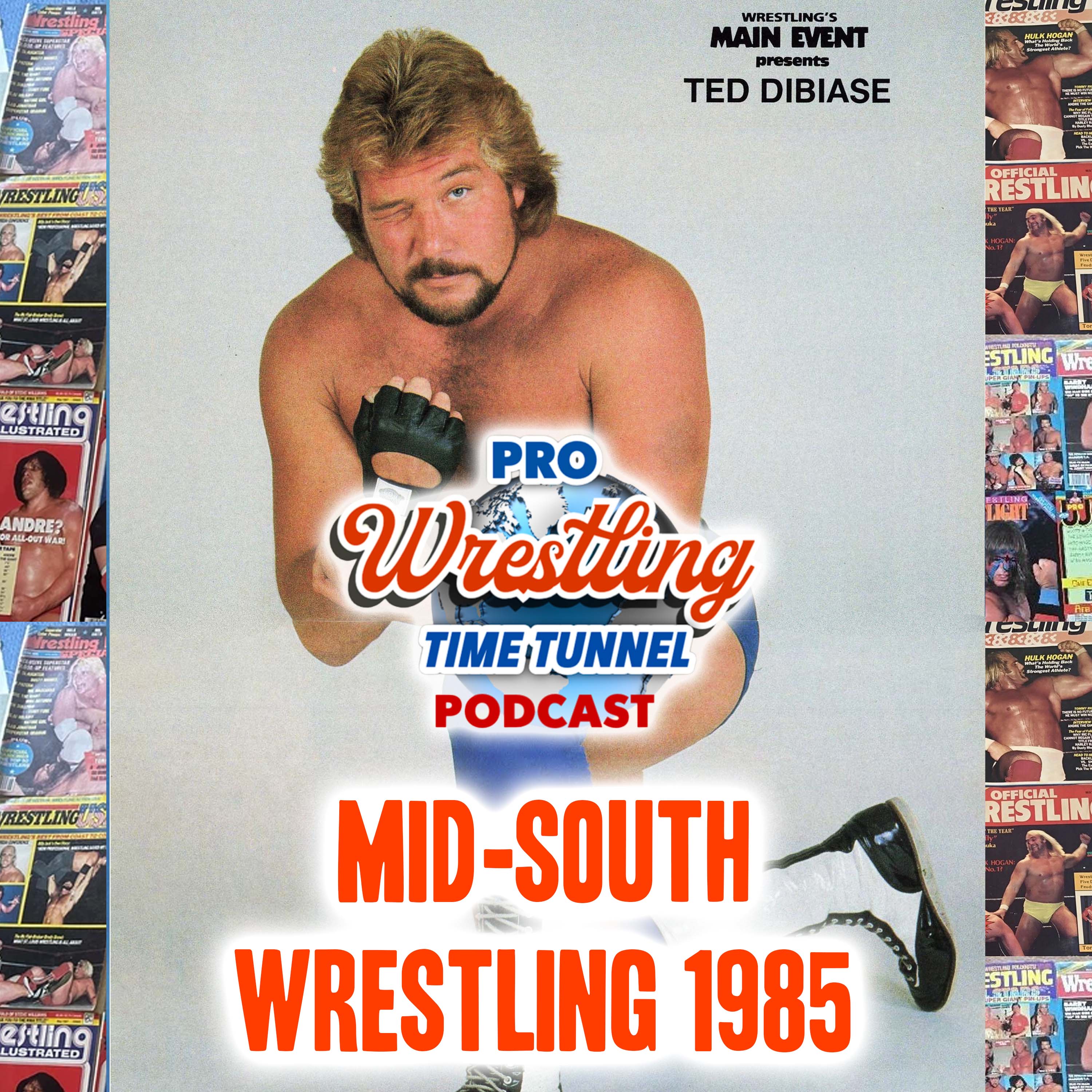
All right. The number one state that listens to our show and this is probably from a lot of the West Texas and Texas history stuff that we do. We do a podcast about those territories a couple of those a year. So Texas is the number one state, New York is the number two state. So Texas, New York, California is the number three state, Illinois is number four and Georgia is number five. So those are the top five states that listen or watch our show every single week. Thank you, Texas, New York, California, Illinois and Georgia. Thanks to all 50 states. And I want to urge on my fellow brethren in Kentucky, where are you? You should be in the top five here with your native Kentuckian host here. But I appreciate everyone who listens in all the states in the US and all the countries that we name there. You are very much appreciated and all our guest co hosts that I have on the show, they are very appreciative of you listening as they come on and we review the history of the territory era each week here on the Pro Wrestling Time Tunnel History Show. Okay, today I'm going to welcome to the Richards Ranch the guy who typically comes on and does 1970s Texas wrestling with me, Greg Klein, who has the Greg Klein's Old School Wrestling Talk podcast where he talks a lot about Houston wrestling. He talks a lot about Mid south wrestling in the 1980s. He's going show by show in his review and he does a lot of interesting stories on there. And he is my guest co host for the Dallas territory. And today he's going to be talking about Mid south wrestling as we continue our 1985 Territory Review of all the territories that were still in existence in 1985. And Greg is going to come on and we're going to talk about Mid south in 1985. So hang on to your hats everybody. It's going to be a wild ride here at the Richards Ranch as we review Mid South Wrestling 1985.
Hello again, everybody. Welcome to another Pro Wrestling Time Tunnel History show live from the Richards Ranch in Western Kentucky. This is Tony Richards, your host. We're doing a 1985 analysis of all the territories that are still in existence while the McMahons and the Crocketts are making their national expansions across the country in 1985. And here to help me with a lot of people's favorite territory that's still in existence in 1985, the Mid south territory run by the famous cowboy Bill Watts. And he is a guy who's helped me with the Our Texas Wrestling shows and he does a lot of the episode recaps on his old School Wrestling Talk. Greg Klein is here today. Greg, welcome back to the show, man.
[00:12:20] Speaker A: Hey, Tony. Greetings from the foothills of the northern Catskill Mountains.
[00:12:24] Speaker B: All right.
I'm glad that you're back here because I know how much you enjoy and love the Mid south territory and you already kind of do some of this on your show. So I thought this would be, you know, a walk in the park for you to walk through 1985 with us.
[00:12:41] Speaker A: Yeah, I appreciate it. I think I've gone through, I've tried to figure out the exact verbiage for it on my show. I think what I've decided is that after discovering, you know, growing up living in a WWF land, I. My first love was actually Southwest Championship Wrestling. Discovering something other than WWF and how crazy it was and how wonderful it was. But my true love was Mid south slash Houston wrestling in this era in the 1980s. And I was fortunate enough that my dad took me to the Sam Houston Coliseum when I was visiting him in the summer of 1985. In the summer of 1986.
So, yeah, this is right in my wheelhouse.
[00:13:21] Speaker B: I.
I saw it for several episodes when it was on TBS in 1985.
But then.
And we'll get to this in the show, I'm sure when it was dropped, I think it was about 1987 before I finally saw 1985, because I was tape trading and it took me a little bit to find somebody I could tape trade with for the Mid south tapes. But I remember distinctly the apartment I was living in and when I was watching these shows from late 84 and 1985 and it was still.
84 was probably their most successful year, but they were still pretty hot in 85.
[00:14:05] Speaker A: Yeah. So I was looking at some of the stuff in Houston wrestling. They say almost the exact same thing in the program at the end of 1984 as they do in 1985, which is this has been the best year in the history of Houston wrestling. Now, I take that with a grain of salt because at this point they're only running half the shows. They're not running weekly anymore. So, you know, now in retrospect, in Peter Burkle's book, he says that it's generally acknowledged that 1978 was the best year in Paul Bosch's Houston wrestling history.
And you know, there's a couple of different years that people point to in Morris Siegels.
That's not really Mid South. We're getting in the weeds already. But you know, 1964, when the Coliseum is open and pops because of Fritz von Erich or 1965, I guess, because it's late 64, that they run the big angle. So, yeah, 1985 is an underrated year, I think, because everybody focuses on how great 1984 is.
But a, we've got Bill Dundee as booker all the way through September, and then B, it's almost a tale of two bookers because Dick Slater comes in.
And as much as I kind of bag on Dick Slater as a booker, two or three of the biggest things we remember in Mid south history happen at the end of 1985 with Dick Slater as the booker.
So you can't just say that he was awful.
He had a short shelf life, he had some faults, he liked to push himself. And luckily in this run, he didn't push himself as a baby face, as the lead babyface, as he liked to do.
But 1985 is a great year for Houston wrestling. It really is. And, you know, maybe we'll go month by month and I'm jumping the gun. But one of the things, it may be the best fall that Mid south and Houston wrestling ever have, whereas other years they suffered the football seasonal blues.
Even the Superdome does better at the end of the year in 1985 than most years in Mid south wrestling history.
[00:16:24] Speaker B: A couple of questions for you. One is, when did Houston stop Running Weekly
[00:16:31] Speaker A: in 1982, when they switched both a as when they joined with Mid South.
But also earlier in that year, right before, essentially, Bill Watts buys into the promotion.
They have a run of not being able to get the Coliseum. It's the spring, it's booked for a lot of graduations. Paul Bosch's first wife is sick and dying. At that point in time, he's losing interest.
And he literally kind of challenged Pete Berkles to reinvent the promotion. This is according to Pete Berkles. I'm sure that, you know, Bruce Pritchard would debate this or whatever, but that's where they come up with that May 14, 1982 show that's almost like a reboot. They reconfigure it to be 12,000 plus seats, and they decide that they're no longer going to be a weekly town. And then, you know, by August, Bill Watts has sort of forced his way in and made Houston a Mid south town. So that fits perfectly with his alignment of, you know, sort of running a loop every two weeks.
[00:17:36] Speaker B: I know that to your point earlier about the bookers, I know that in 83, Watts had gone to Jarrett in Tennessee looking for ideas about how to revitalize his territory. Brings Dundee in as the booker, and Dundee brings, basically brings all the. The stuff that comes with Tennessee wrestling in there for 84 and for a lot of 85 when he goes to Dick Slater. You know, just thinking about it, I mean, Watts was the booker for Eddie Graham in 74 when Dick Slater broke in.
So I'm sure Watts is probably thinking that Slater has spent a lot of time under Eddie as Well in this 10 year time frame and that that would be a safe choice for him. And at the beginning it's probably a pretty good decision for him to bring him in.
[00:18:26] Speaker A: It's definitely a change in philosophy. It's definitely a disruptive change.
Some people have said it, it kind of Watts going back to the big bruisers and certainly we'll go that way as we go into the UWF era as well, you know, and I think the other half of that is it is going away a little bit from the pretty baby faces, you know, not to say that Dick Slater could feature a pretty baby face. He often booked Tommy Rich. He, you know, was responsible for some of Ricky Morton and Ken Lucas in Southwest, you know, but he definitely abruptly changes everything when he comes in and, you know, we'll get to it. But, but there's a lot of stuff that goes on at the end of the year that's very different than what we're seeing at the beginning of the year. And you know, as you said, they do bring in the Tennessee style, but again, they also, you know, the biggest thing is they didn't have at the end of 1983, other than Magnum TA, you know, the good looking baby face that was going to draw the girls. And, and I'm in 1984, in my watching re watching of the show on my podcast for my podcast.
And one of the things that's overwhelming is how different the crowd looks in the spring of 1984. You know, in the last Stampede era, it's not teenage, you know, black kids necessarily, it's teenage girls. And you still have the same 60, 70, 80 year old, you know, grandma, grandpa. But now they're sitting next to like 15 girls who are screaming for Ricky Morton or Terry Taylor or Magnum TA and you know, that again carries into 1985.
[00:20:14] Speaker B: And the big baby face on the, on that side is Hacksaw Jim Duggan, and he's in a feud with Dibiase, who's the big heel. And then in the tag teams, they still have the Rock and Roll Express and they brought in the Guerreros.
Yeah, so we, we lose a lot
[00:20:34] Speaker A: of talent at the, at the end of 1984.
You know, the Midnight Express go to Dallas. They wanted to go to world to Crockett, as we know, but they end up going to world class first. We also lose Hercules. At the end of the year, we lose Ernie Ladd, who goes into kind of retirement, semi retirement, ends up in the WWF for a little while and we lose Magnum Ta as well as he goes out of town losing to Ernie Ladd. And then, you know, they make what I think is kind of a curious choice to put the North American title on Brad Armstrong for a couple of weeks, actually six weeks.
And you know, they literally, at the same TV taping, Ernie Ladd wrestles Butch Reed.
And instead of giving Butch Reed the title there, they lay him out with Kamala and transition to a Butch Reed, Kamala feud.
So we start the year with Butch Reed and Kamala dibiase has just gotten back from Georgia, you know, in the fall, he immediately wins and loses the tag team titles from the Rock and Roll Express with Hercules.
And then, you know, six weeks after Armstrong wins the title, Dibiase loads the glove and lo and behold, Ted DiBiase is back at the top of Mid south wrestling. And so then that, you know, this is what Bill Watts always did really well, right?
We've had a feud between DiBiase and Duggan since 1983, since the spring of 1983, when, when Butch Reed and Hacksaw Duggan, you know, wave to each other in passing as one goes bad and one goes good, right?
They've done this several times. There's been several rounds of loser leave town matches and. And yet we're going to come back to it, but this time Dibiase has just won the North American title.
So now it's not just that they're restarting their feud, it's that they're restarting their feud for DiBiase's North American title. And, you know, you might think of it as the beginning of the chase for Hacksaw Duggan.
Like, he's never been the North American champion. And now we're going to kind of build him up.
He's been the lead Babyface. You might even argue he was surpassing Dog at the end of the, you know, since 1983, he's been at least number two, especially as Mr. Wrestling to himself fades and becomes a bad guy.
So now you're finally giving him a serious chase at the title.
And, you know, much of the next year will be about these sort of things. Who gets the shot at Ric Flair, which we'll, I'm sure we'll talk about.
As Ric Flair gets back involved with Mid south or gets involved with Mid south. The NWA gets involved with Mid south for the first time and gets back Involved with Houston for the first time in a long time, you know, since Harley race no showing.
So it's a very interesting spring as we're doing stuff in transition, and it does lead to a big dome show at the end of March.
But interestingly enough, this is the one with all the stipulations, right? Duggan and Dibiase, coal miner's glove on a pole in a steel cage.
Tuxedo death match loser leave town.
As Jim Cornette would say, a hat on a hat.
[00:23:55] Speaker B: So you made a comment about Brad Armstrong being a curious choice for the North American title. Why do you say that?
[00:24:03] Speaker A: Well, only because of, well, I guess, two things. One, what happens afterwards, which is he becomes a mid card baby face for the next six months.
And two, because you could have gone with Butch Reed at that moment as you're finally turning Butch Reed baby face and giving him a push to the moon. And they really don't do that. You know, I'm on record as saying that they should have turned Reed the second that dog left in July of 1984.
Other people disagree. You know, famously, John McAdam disagrees with me. Doesn't believe that that would have worked.
Even if you don't do that, when you turn him In November of 1984, I feel like you've got to give him more of a push.
And instead, you know, immediately he's getting waylaid by people Hacksaw. Duggan's coming to save him. You know, the thing with Ernie Ladd, he doesn't win the title with for Ernie Ladd, Kamala lays him out. They put him in a feud with Kamala, and actually, by the time Reid leaves in the spring, he's kind of losing to Kamala, he's losing to the Barbarian. And then he goes to the.
And it just seems like a wasted turn, a wasted push. It's not until he comes back that he spends, you know, really six months as one of the biggest baby faces in the promotion, you know, getting a lot of shots at Ric Flair beating Ric Flair on tv.
Brad Armstrong had the cred from being on the Superstation. And I get that, you know, him beating Ernie Ladd.
There's a little symmetry to it. Ernie Ladd choked out Magnum TA with a chain. Brad Armstrong gets the chain and out thinks Ernie Ladd and chokes him out. I get the booking. It just. It felt like a reach. And, you know, when they do with Terry Taylor later on in the year, I felt like you'd been building up for that the entire time. You've Had Terry Taylor in the Federation, whereas Brad Armstrong just comes in off the Superstation and bam, he's the champion.
Okay, what are you going to do with him? Well, six weeks later, he loses to Dibiase. He's really just a transition champion. And by the end of the summer, he's teaming with Brickhouse Brown and fans are cheering for them to get DDT by Jake Roberts.
So it either it didn't work at the beginning or it didn't work at the end, but I don't think anybody would think it worked.
[00:26:34] Speaker B: Well, he is. Brad Armstrong is just a name that comes up pretty consistently among fans when they're talking about guys who never really got much of a chance to get a big run or to have a major championship run. And I, I kind of thought maybe they, they maybe regretted it after they, after they had done it.
[00:26:57] Speaker A: Well, you know, again, the Superstation was hot. Everybody knew the stars of the Superstation.
You see this a lot. I mean, this is a little late for this 1985, but you see it in 83 a lot, 82, where they're bringing in Tommy Rich everywhere and you can promote on that.
I don't know if Brad Armstrong was the same level star, but I love him as a worker. I feel bad, I mean, you know, I, again, I broke into the business in Alabama. I feel bad. I feel like I'm slandering the Armstrong name. Bob Armstrong was the best wrestler that I've ever seen, in my opinion, at the very least up close, not on tape.
[00:27:36] Speaker B: And I always thought it had more to do with that than tbs. I mean, Watts goes back years with Bob Armstrong to Georgia, maybe him, Florida,
[00:27:46] Speaker A: bringing his son in at a time that Georgia's falling apart. Yeah, I can see that for sure. Listen, you know, again, I mean, in today's modern wrestling, you'd probably look at Brad Armstrong's matches in Mid south and go, wow, he was great because he had five star matches. Right.
I'm talking about like, did he work as a main event baby face?
I think he missed the mark and. But again, maybe that he was just a transition for them to get the title from Ernie Ladd to Ted Dibiase. And if you knew that going in, why would you put Butcher Reid in that position?
[00:28:21] Speaker B: Right.
[00:28:23] Speaker A: So, you know, bookers sometimes know things we don't know.
[00:28:26] Speaker B: Right, right. So going into the spring, coming out of the big steel cage match, coal miners, glove on a pole, street fight rules, tuxedos and all this kind of stuff.
Then where do we go?
[00:28:40] Speaker A: Well, first of all, I. Let me. Let's. Let's stop there for just one minute, Tony, because, you know, when in my advocacy for the Junkyard Dog being in the Wrestling Observer Newsletter hall of Fame, one of the things that I've done is, is map out all the Superdome shows in the McGurk, Watts, Crockett era, right? There were 32 of them.
And it, you know, evenly splits, nicely splits into the top half and the lower half right now, as you know. But I don't know if all your fans know, none of the cards after Junkyard Dog leaves are in the top half of the Superdome shows. And the only exception is the show right after he left in August of 1984, in which junkyard Dog is advertised on the show in one of the main event positions. So you kind of have to throw that out.
But here's the clincher. This, this great Stips match that we've been talking about, you know, loser leave town, coal miners, glove on a pole, steel cage, tuxedo death match was the lowest drawing Superdome show of 1985. They actually do better in the fall, which is almost unheard of, than they do in the spring.
And this dibiase Duggan match is the main event on the card that doesn't do well. And it's, you know, it's a little bit of a head scratcher, except that maybe they, you know, New Orleans hasn't recovered from the loss of Junkyard Dog. The way that some of the other, you know, markets that are popping for this feud go. I think it did well in other places.
We certainly. It's one of those things in. In Mid south slash UWF history that we remember fondly.
But, you know, in New Orleans at least, it did not draw.
[00:30:41] Speaker B: It doesn't seem consistent with the philosophy of Watts or Dundee, either one.
[00:30:48] Speaker A: Well, Dibiase was going to Japan, so we had to, you know, he does lose essentially this match around the horn so that he can leave the territory for 30 days.
Yeah, I don't know. I don't know. Now, you asked about what else is going on in the spring. We get Ric Flair back in the spring. That. That's one of the things. And not even back. I mean, really, you know, Bill Watts has never been affiliated with the nwa, and we've talked about that before.
And, you know, Paul Bosch in Houston has been affiliated mostly with the AWA for the last. For the better part of the last six years, or at least on and off for the last six years.
But 1985 is really, you Know, some would say, you might say that this is the last year of the territories, the territory champion. I mean, if you look at Ric Flair schedule in, in 86 versus 85 versus 84 even, you know, it's very different, right? It becomes. He becomes a Crockett guy by 86. But the interesting thing is the Great American Bash. I think I heard you say this, how they were selling it as so novel. Flair is going to fight a different guy every night all summer. Well, that's what he did in 1985. It was just in six or seven or eight different territories. That's what the, that's what he does in Mid South.
I mean, you want to hear the list of who he wrestled in Mid south in 1985?
[00:32:16] Speaker B: Sure.
[00:32:18] Speaker A: So he starts with Carrie Von Erich, then he transitions to Terry Taylor after Terry Taylor wins the North American title. They have at least a dozen matches that I've seen documented in the spring of 1985.
Then in Houston, Magnum TA comes in and they have a one match reprise of that. I think there's a couple other shows along the way where he wrestles Magnum as well.
That leads to him wrestling Wahoo twice, including a match I saw in the summer of 85 in the SAM Houston Coliseum. Then he starts to wrestle Butch Reed when Reed comes back from the AWA. Then obviously, famously, he wrestles a match against Ted DiBiase. I'm sure we're going to talk about that a lot. He wrestles a TV match against Wendell Cooley in the spring in which he makes Cooley submit to the figure four leg lock.
He wrestles, as I said, Magnum TA he wrestles Jake Roberts towards the end of the year, wrestles Dick Murdoch towards the end of the year, and he wrestles Hacksaw Duggan towards the end of the year. So, I mean, that's a pretty good roster of title defenses and matches in a territory. And you know, I guess the other thing we need to talk about at some point, Tony, is this doesn't happen in a vacuum, right? The WWF is coming to town in this era.
This is 1985 is like the year that they, you know, it might be the year that they won, but at the very least it's the year that they start to win, right? I mean, WrestleMania, Saturday night's main event.
And they come to Oklahoma City a bunch of times that year. They come to Houston a bunch of times. They try the Summit twice in 1985 and I wish I had attendance figures to see if they're just, you know, a thousand people in the 22,000 seat summit, they go to Beaumont, Texas, of all places in 1985. And obviously they're trying in Dallas, they're trying in Tennessee, they're trying in Florida. They're. They even try and like Mobile, I believe, or Pensacola. I mean, this is the year they really start coming for the south after, you know, 84, going across the Midwest and, you know, into St. Louis and LA and Detroit and places like that.
[00:34:32] Speaker B: Well, and in 84 they pick up Jerry Briscoe, who is basically the guy who knows the building managers in the south.
And he is on the exec team with Jim Barnett, who's involved with the television placement. And so they're doing it in a very strategic way. One thing I would mention too is that Watts was not affiliated with the NWA from about 1979 to 1990 or to 1985. But Leroy McGurk and Tulsa and Oklahoma City, those are traditional long term NWA towns that the wrestling audience is very accustomed to the champion.
So there, there, there is some connection there still in 1985 and bringing flair in.
[00:35:19] Speaker A: But yeah, say it that way then. This is the return of the NWA champion to the territory after, after about
[00:35:26] Speaker B: six years, they did have their, they did have national distribution on their television show until April.
They lost that when Crockett bought the contract from McMahon. Because one of the things that Jim Crockett Jr. Negotiated in the contract with Turner was that Crockett was to be the exclusive wrestling on wtbs.
So it knocked the Mid south show off.
So they did have that to deal with as well. Because I think their attendance figures were, I think, better when they were on tbs, I would think, than they would be after.
[00:36:03] Speaker A: Well, you know, they again, I mean, they do well all year and they do get better. Like the Dome gets better after they lose the attendance. I mean, after they lose tbs. I do think, you know, just hearing you say this, I've never thought about it before, but I feel like the UWF would have been better served had they been on TBS all year. The fact that they have to stop being a national promotion for a while and then come back a year later and try again.
You know, famously TV promoters or wrestling promoters, you know, say you have to have your TV show on for three months in a market right before you try to run a show there so that people get used to it.
You know, if Bill Watts had had TBS all year long, I feel like his launch of the UWF would have gone a little smoother in the outside markets because they would have had exposure for a year to this product and this type of wrestling. So when you look at little things that end up making the big difference, that might have been one of the biggest.
[00:37:09] Speaker B: Do you think, do you, do you believe that the product would have taken hold outside of the traditional territory?
Well, when you think about, I mean, and this even comes up today, I mean, I get asked this question all the time. People are always asking. It just doesn't seem the same. And the answer is, it's not the same because Bill Watts and his bookers booked for Oklahoma, Louisiana and Texas. That's who they booked for. That's who their angles were designed for.
That's who they were marketing to.
One of the things that Vince did was he homogenized his booking and flattened it out for it to be palatable to the whole country.
And that's one of the reasons it's not as compelling today is because the booking isn't as intricate or as logical or as detail oriented. Because you're reaching such a wider audience with all different kinds of cultural backgrounds and everything. You have to make it more bland for it to be attractive to the whole country. Whereas if you're booking a territory, you're booking for that territory. And they, what they, what they did with the 84 booking was so unique because they took these Tennessee angles, but they, they made them fit in the mid south territory.
They didn't do them exactly the same way that they were done in Tennessee. They did them that they would be attractive to the mid south audience. They tweaked them somewhat, I guess you would say. So. I just don't know, as we're watching all of this great, what we consider to be great booking in this territory. I'm not sure Los Angeles would have flocked to see it.
[00:39:04] Speaker A: Well, you know, again, I feel like with a year's worth of training, you'd have a better, a better shot now. I mean, clearly, like now we're getting into 86. But you know, they sign, they bring in Chava Guerrero to be that guy, and then they never really use him as that guy. You know, they, they are so busy trying to make the next junkyard dog that they don't notice how popular Coco Beware is a couple of times, couple of different times, and they miss an opportunity to make him an elevated guy. So, you know, some of what they were doing in, in. And then, you know, is do they have the best Booker in 1986?
I, I would argue that Dusty Rhodes is a better booker than Ken Mantel. I would argue that everything the WWF is doing in 86, it probably stems from people who have better booking skills than Ken Mandel.
But you know, we're jumping to 1986.
[00:40:04] Speaker B: But there, but there again, I don't know that Dusty's booking plays in Portland.
You know, I don't know that Bucky Dusty's booking necessarily long term would play in Michigan or in Ohio.
Sure. Short term it was new and different.
But you're talking about a ten year plan.
Once you go national, you can't go back.
[00:40:29] Speaker A: No, but I also think that you know what, like you can't.
Once people went national, like McMahon could always change who he's listening to or listen to himself. It Crockett had a really hard time getting rid of Dusty, you know, and I feel like Dusty, like if we had limited Dusty shelf life and then switched up in 87, maybe they would had a better shot.
[00:40:55] Speaker B: Right.
[00:40:56] Speaker A: You know, I mean, I mean he was great for a year.
[00:40:59] Speaker B: I hate to say it, I really hate to say it because it leaves a bad taste in my mouth. But we saw Bill try to do it in TBS in 92 and he was highly criticized for what he was trying to do with the booking. I think old habits are just so hard to break when you've been used to doing something a certain way. And it has worked for you, for you to now have to change it and appeal to an entirely different audience, an entirely different culture and entirely different technolog technology times. I just think it would have been very difficult for anybody to have done it well.
[00:41:38] Speaker A: And again, you know, these were people very set in their ways.
[00:41:43] Speaker B: Right.
[00:41:43] Speaker A: Trying to run very specific territories and then, and now they're playing catch up. You know, this is, this is the thing why part of me thinks the gig was up with WrestleMania 1 and Saturday night's main event because at that point the competition is already the nationally known, nationally broadcast names above the marquee bold face name games, big stars and.
[00:42:15] Speaker B: And the WWF is already somewhat of a cosmopolitan product from the get go, right?
[00:42:23] Speaker A: Yeah. I mean compared to Tulsa wrestling or you know, I mean Dallas or wrestling or you know, even Charlotte wrestling, if you really want to be honest about it in this era or you know, Memphis, Nashville wrestling, it's just different. It's just very, very different. And you and I can say all day long we prefer Southern wrestling.
But as you said, you know, the homogenized cleaned up better production values. You know, I mean that's the crazy thing about all of this.
The studio wrestling that we love was done For a reason in a certain era to. Because of, you know, the way that TV changed the business, right?
But when cable comes in and somebody has, you know, TBS or NBC production values and you're still in a studio and it's dark and there's only fans on one side or maybe two sides, and there's only about 50 of them total because you can count them and see them all or, you know, I mean, all of a sudden you just don't look like the major leagues.
And meanwhile, you know, Hulk Hogan and Junkyard Dog are on a cartoon and they're on Saturday Night Live's slot on Saturday nights in something that looks larger than life, right? So, you know, maybe 97, I mean, 87, you know, WrestleMania 3 is the final nail. But I feel like. And the irony is that a lot of these territories are still doing well in 84 and 85, right? Y They're still running big shows, they're still making money. They have some of the best feuds that we remember, some of the best wrestling we remember.
And it's almost up and it's. It's a strange thing to look back on now.
[00:44:09] Speaker B: The super show is taking over Starrcade in 83 and 84.
Crockett does the bash in 85. Portland does their big Extravagan anniversary extravaganza. Texas is doing their Star Wars. And so Watts decides he needs a super show here in the summer.
[00:44:30] Speaker A: Yeah, well, first before we do that, you said one thing that I don't want to skip over, which was the tag teams. So. So let's talk for just a couple of minutes about the spring, which was filled with Rock and Roll Express versus the Guerreros, Rock and Roll Express versus the Dirty White Boys. And both of those feuds were main event, top of the card, number one matches. And then in between those two feuds, Tony, you know what they did?
They had like these Easter week shows that were four way tag team matches. And they brought in the Free Birds, they brought in the Midnight Express for a few.
And I see why Jim Cornette got angry because the Midnight Express were like on a couple of small town four way shows, maybe even in Houston. But in the Superdome they were replaced by the Road Warriors.
So they didn't get to make the March Superdome show. But you know, finally the Rock and Roll Express for the last time lose the tag team titles to DiBiase and Dr. Death in May.
But wow, the spring of matches that they have with the Guerreros, with Tony Anthony and Len Denton, these four way matches that Include the Free Birds or the Road warriors that, you know, by and large they're coming out on top of, or if they're not, it's, you know, leading them into the feud with the Dirty White Boys.
It's a, it's a pretty good era of, of quality of matches in the spring of 1985.
[00:46:03] Speaker B: So Wrestle Fest, so that leads us
[00:46:07] Speaker A: to the summer now. You know, it's funny, I, I was doing some research on something.
As I've always told you, most of my great finds come when I'm doing research on something else.
So I happened to be looking for some stuff and I found some Tulsa Wrestle Fest things.
And it is exactly what you're, you know, implying that it's meant to be. This is not just a big stadium show type card.
They have plans to market this as a videotape. I have an article where Jim Ross is telling the reporter, you know, this is us taking the next step.
And unfortunately, I don't recall that videotape.
[00:46:54] Speaker B: Well, and on one hand, I see why you would bring in Ric Flair for your, but you don't put him against one of your guys. You put him against Dusty in the main event. I didn't understand that exactly. The thought process there.
[00:47:12] Speaker A: I think, you know, you have to think about a couple of things. Crockett now has TV across the south, either through the cable or in a lot of cases, he just has his own show. You know, we're about a year away from the wrestling TV saturation point where people are doing the syndicated wrestling every night of the week at 6pm, right. That's like 86 into 87, maybe, as you know, WrestleMania 3 takes off and such.
So I think people are aware of who Ric Flair is. They're aware of who Dusty Rhodes is. But the other thing is, we talked about this on episode 70. I reviewed this with Sean Sparks. Who else are you putting in these situations? You know, Dibiase is not a face yet.
He's in a match with Jake Roberts, Bill Watts and Hacksaw. Tuggin and Dick Murdoch are in a feud settler for Akbar's army.
[00:48:08] Speaker B: Forced into a corner. I would have put Murdoch in it.
[00:48:12] Speaker A: Yeah, well, Murdoch does get some title shots in this era, but the Kona main event is the six man matches. And, you know, that's something else that we can talk about, Tony, is the Stampede is alive in 1985 and, and there are conflicting reports as to when the Stampede goes awry.
Is it in 1985 or is it in 1986?
You know, Paul Bosch Famously promoted a stampede like show in 85 that didn't go well. And you know, then got on the phone with Dave Meltzer and gave him all the excuses in the world sarcastically and said, those are what people will tell you. But the truth is I just put on a card that people didn't want to see, didn't want to pay for.
So, you know, Sean and I talked about this. You have Wahoo McDaniel coming back into the territory in his mid-40s wrestling, the North American champion, the Nightmare, aka the Champion. You've Bill Watts coming back for the second summer in a row after, you know, really staying out for four or five years. Right, Four years.
So how effective is it?
And is it effective? You just said this. Would this be effective on a videotape out of market? And what if you have to take the Ric Flair Dusty Rhodes match off because you don't have the rights to Crockett's guys on a videotape? Maybe that's why the videotape didn't work right in the market in its element. I think this show did well. It's very popular with the audience in the crowd. I mean they're very into it. You know, we've been trying to figure out how many people are there.
The estimate is maybe 10,000, but I don't know. And there's no way to know.
Like it's not a configuration they've ever used for anything before or since.
Right. I mean it's the one time we know if they ran wrestling there.
I guess for those of you that, that don't know, it's at the, you know, the, basically the fairgrounds in what would be an auto or a horse racing park.
And so they're using the bleachers and then they're using several rows of seats around the ring. But how many seats are in those bleachers and how many seats are around the ring, I don't know how to figure out.
[00:50:39] Speaker B: And it looks like a wrestling card at a state fair is what it looks like when you watch.
[00:50:43] Speaker A: That's what it is. Because that's exactly what it is because,
[00:50:46] Speaker B: because you see the, the bleachers and the overhang and all of that in the background. And bleachers.
[00:50:54] Speaker A: It's a mid afternoon card and the main event is Jerry Reed playing a concert.
And he goes on about 8 o' clock, if I remember correctly from what they advertise.
So you know, the main events are Bill Watts, Hacksaw Duggan and Dick Murdoch against Akbar's army, which is Kamala and Kareem Muhammad and Skandar Akbar. Although Akbar tries to get out of it, they run this angle where the nightmare tries to come out and it's still a schmaz. I mean, they're still going through the last Stampede for another month essentially. So, you know, but. And then Wahoo versus the Nightmare, Butch Reed versus Dutch Mantel. But really the match that steals the show is Jake Roberts versus Ted DiBiase.
And you know, this is the beginning.
Basically the summer is Jake as a tweener, but he and the Barbarian are fighting Dibiase and Dr. Death.
As soon as they dispatch of the Rock and Roll Express.
Then Jake and the Barbarian demand their title shot and that kind of powers the rest of the year.
Turning Jake face is really the big story of the second half of the year. And I said this before, you know, when Jake is a good guy or when Jake is a bad guy, still at the end of this run, the fans are turning him even before the promotion is turning him. When he wrestles Brickhouse Brown or he wrestles Mark Reagan or he wrestles Brad Armstrong, the fans are chanting ddt.
And the match with Dibiase and Tulsa, you know, it's a great match, scientifically. It's not scientifically, psychology wise, because, you know, it's all about is Jake gonna DDT Dibiase or not? And they're both playing into it. And of course at the end of the match, Jake gets the DDT and the, you know, it's. It's not only probably the best match on the card, other than maybe the fantastics against Jerry Gray and Eddie Gilbert, but I think it's the one that the fans connect the most with because they get what they want at the end of the match, which is Dibiase getting ddt.
[00:53:13] Speaker B: Are we ready for the Dibiase turn?
[00:53:17] Speaker A: Well, let's see what else is in. I will say this. Before we get to the DBSI turn, let's mention that there is a loser leave town match where. Well, you know what we skipped is Hacksaw. Duggan got burned in, in at the beginning of the summer to start the last Stampede is Alive and in 7 in 85, Akbar throws fire at Duggan. The other thing that I think we should note, Tony, is a lot of big stuff happens in Mississippi in 1985.
So that leads me to believe that they're really trying to push Jackson and Biloxi.
And you know, things can happen anywhere.
So they're kind of going outside the norm in what they're doing. And Duggan has burned May 4th in Jackson.
So, you know, that's not normal. But they just happened to be there with the cameras that night, if I remember correctly.
And then at the end of the summer, actually Duggan and Watts lose, loser leave town matches.
And it feels like we're going to get the Midnight Rider, but I don't think we actually get to the Midnight Rider.
It really felt like he was coming.
[00:54:31] Speaker B: I just was going to say about the Dibiase turn. Are you ready for that?
[00:54:37] Speaker A: Well, I guess the first thing to say then to set that up is in September, on the same TV taping, we get the last appearance by Bill Dundee. He and Dutch Mantel lose to the Fantastics. And then that entire TV taping is filled up with Dick Slater and Buzz Sawyer.
So there is a literal passing of the torch. They're on the same TV taping at the end of September.
So, as I said to you, a lot of what we like about 1985 Mid south, does happen under Dick Slater's helm and not under Bill Dundee's helm. The other thing, Tony, that I will just mention. You've heard me say this many times.
I always think of the golden age of Mid south as starting the day that Jim Cornette and the Midnight Express arrive in November of 1983, and it ends in August of 1985 when Bob Sweetan arrives. So I think that we should note that Bob Sweetan arrives and teams up with Steve Williams because Ted Dibiase is in Japan and they lose the tag team titles to something called Town and Country.
In this case, I think the town is. I forget this is how bad the gimmick was. I don't know which one was Town and which one was Country.
One was Al Perez and one was Wendell Cooley. I think the country was Fort Worth somehow.
Like Al Perez was from the city of El Paso and Wendell Cooley was from the stockyards of Fort Worth.
So somehow that became the babyface tag team for a season.
But then came Dick Slater to shake things up. And shake things up he does.
[00:56:22] Speaker B: I just remember that in the circle of tape traders that I was trading tapes with at the time, Meltzer was part of that.
And the tape that I got was not from him, but it was from a guy who got a tape from him. Because the guy that I got the tape from always had numerical designations on all of his tapes.
If it was Japan, it was Japan 27. Or if it was Awa, it was something else. But if it was from Meltzer, it had a DM and A number on it. And I just remember that this angle with Murdoch and Flair and DiBiase was on DM33.
And I, I traded that DM33.
I don't know how many people were wanting to get that match in that angle. And it was hot. And I traded that DM33 for a lot of really good stuff back then.
[00:57:27] Speaker A: So, you know, setting this up, we've already, as soon as Dick Slater comes in and one of the first things he does is he puts Butch Reed over Ric Flair on TV in a non title match. So Reed has already gotten a series. The funny thing about it is Reed has had as many title shots at Ric Flair already as he will have after this angle.
But he does get a run around the horn. But it's kind of a tease in that at Dick Slater in storyline becomes the bounty hunter to get the North American title off of Butch Reed and to distract Butch Reed from Ric Flair. But then that leads to more competition about who will get a title shot at Ric Flair. And Dick Murdoch has been a little bit of a tweener since he won the North American title. You know, he comes in for the first time in years and he returns as a baby face. He returns to help Packsaw Duggan and Bill Watts in their stampedes alive in 85 feud.
He quickly wins the North American title from the Nightmare.
But almost immediately he starts to show a little bit of heel tendencies.
And so at this point we kind of have this competition, he actually loses the North American title. To read, I think without fully turning because, you know, we'll get a double turn essentially with Dibiase.
But to throw one more person into the mix. As Reed and Murdoch are competing to see who gets the shot at Ric Flair, Dibiase steps up and gives a very classic Ted DiBiase, you know, villain interview about how he should get the title shot at Ric Flair. And ultimately finally he does on tv, get a title shot at Ric Flair. And at the beginning of the hour we think that Dick Murdoch is still a good guy and Ted DiBiase is still a bad guy. And boy, are our minds going to be blown.
[00:59:30] Speaker B: Yeah, because we get a double turn.
[00:59:33] Speaker A: The best double turns in, in probably the history of double turns. Right?
[00:59:38] Speaker B: I mean, and then Davey does the famous, the way the boys call it, the 70, 17, 76 gimmick.
[00:59:47] Speaker A: Oh yes. Where he's all bandaged up and waving the flag essentially because he's got the headgear and stuff. Y. Yeah, it is fantastic. It's, you know, what is Better. The angle, the match, I mean, it's all so good.
And it's. It's classic Dibiase. It's classic flair. It's. It's, you know, very good. Dick Murdoch, obviously.
You know, there were two guys in wrestling that I couldn't square their good guy Personas with their bad guy Personas, and that was Murdoch and Wahoo McDaniel. They were so fiercely mean as bad guys and so jolly good as good guys. And it was like, I just didn't know what to make of it. And Murdoch as a bad guy here.
You know, the funny thing, Tony, is right after they shoot the angle, you know what happens?
Murdoch and DiBiase go to Japan together.
[01:00:43] Speaker B: Yep.
[01:00:45] Speaker A: They might have very well been on the plane together for all we know.
[01:00:49] Speaker B: But.
[01:00:49] Speaker A: But, you know, to get back to the angle itself, Murdoch demands that he gets the shot. He ends up giving Dibiase the Brain Buster on the concrete. There's all this backstory about Murdoch being DiBiase's mentor, and it's already played out once, because when DiBiase becomes a bad guy in 1982, one of the first guys to get title shots against him is Dick Murdoch. And that's, you know, we haven't seen Dick Murdoch since then, essentially. So, you know, even the fact that he is teasing, being a heel in the late summer and early fall doesn't prepare us for this.
You know, giving his protege the Brain Buster on the concrete because he won't step aside and give up his title shot against Ric Flair.
And yet somehow it all makes sense because that's how valuable it is to have a title shot against Ric Flair for the world title.
[01:01:44] Speaker B: Right?
[01:01:45] Speaker A: Like, that's kind of what we've gotten this year in Mid South. I mean, think about, again, Carrie Von Erich, Terry Taylor, Magnum, TA Wahoo McDaniel, Hacksaw Duggan, Dick Murdoch, Butch Reed and Dick. You know, and now we've seen Ted Dibiase.
I mean, that is Everybody really, in 1985 in Mid South. And a few extras, right? A few from other promotions and other years.
[01:02:11] Speaker B: I think it's so. I think it's one of the great things that fans of the Territory era got cheated out of is how many matches should we have gotten between 1977 and 1987 between Ric Flair and Ted DiBiase? How many matches should we have gotten?
[01:02:30] Speaker A: Yeah, we'll blame Robert Fuller and Dusty Rhodes, right?
[01:02:33] Speaker B: And we pretty much got this.
I mean, this.
[01:02:37] Speaker A: And it was fantastic. And that's the other part of it is as good as the angle is, the match itself is fantastic. Dibiase with the hope spots, Flair cutting him off.
The blood, I mean, the gushing, gushing, gushing blood, you know, it's almost too much. And yet. And again, the beauty of the white bandage, right? I mean, it's just, it's the equivalent of Tommy Rich in his blonde hair or Ricky Morton in his blonde hair, or Ric Flair and his blonde hair, it just, it amplifies the blood and, you know, to the point where the towel becomes covered in blood and, you know, finally Dibiase loses. But we've not only have we completely flipped the switch on what we think Mid south wrestling is now, because the most hated villain of the last, you know, three years is now a good guy like his tag team partner turns with him without doing a thing. Steve Williams comes down to check on Dibiase, and within a week or two, Steve Williams is a good guy just because he's Ted DiBiase's tag team partner. You know, I mean, it's crazy.
[01:03:48] Speaker B: I mean, even the, the time that DiBiase spent in Georgia there in 1984, we should have gotten some of those matches, I mean, from 81, when Watts wasn't affiliated with the NWA until 1985 when he did start bringing in the champion, we weren't going to get the match. But Dibiase, he was in Georgia for that 84 with the whole Mr. R
[01:04:13] Speaker A: and Tommy Rich, there may have been one or two in that era, but yeah, mostly it's, it's Tommy Rich and Brad Armstrong and Bob Armstrong and Jack Briscoe that are getting those title shots. Dibiase's feuding with Ronnie Garvin or.
[01:04:26] Speaker B: Yeah, I mean, after seeing them work together in the wwf, I just felt cheated that we didn't get those matches when they were 10 years younger.
[01:04:34] Speaker A: Yeah.
[01:04:35] Speaker B: Yeah.
[01:04:35] Speaker A: Now, at the same time, Tony, again, as I said, the second half of 85 is the baby face turn of Jake Roberts, Right? I mean, first he and the Barbarian become sort of de facto good guys trying to get the tag team titles from Dr. Death and DiBiase.
And then Sir Oliver Humperdinck comes in and the Barbarian turns on Jake Roberts. And that cements Jake Roberts as really the biggest baby face of the next six months in Mid south, maybe even surpassing Duggan and, you know, riding it all the way to accidentally getting the North American title. Right as he's about to leave for the wwf.
[01:05:18] Speaker B: Yeah, so Duggan, he gets, he loses a loser, leaves town right at the end of 85,
[01:05:27] Speaker A: Duggan is leaves for
[01:05:30] Speaker B: a little while to set up the come back in 86.
[01:05:34] Speaker A: Yeah, he does, he does. I'd have to check to see who he loses that to. But no, he's feuding you knowing with, with Sawyer at this at in the last couple of months and then that it's supposed to be him and Slater and then they pull the switcheroo. That's where you get a little kind of tired of the Dick Slater booking where Duggan beats Sawyer for the North American title instead of Slater for the North American title.
Which I felt kind of cheapened the chase a little bit.
Do you remember, you know, do you
[01:06:07] Speaker B: remember when they brought in the Power Pro Show?
[01:06:11] Speaker A: It is in this era, but I don't know exactly when I feel like it's what they do when they don't have TBS anymore. So it is the summer of 85 or the fall of 85, which I
[01:06:25] Speaker B: almost preferred it because they were showing arena matches a lot on the Power Pro Show.
Well, you know, I remember trying to trade for that.
[01:06:33] Speaker A: You know, you can see them.
I mean it's not like they're not trying maybe the double negative they're trying here, Tony. Like, you know, they're reacting to the wwf. I mean we can look at the cards when they're running up loaded up cards, when they're bringing in Ric Flair, when they're bringing in Dusty Rhodes, when the WWF is in okc, when the WWF is in Houston, when they're going head to head, when they're going, you know, just a couple of nights apart, they're definitely trying to upgrade. And obviously pretty soon we're going to move the shows from Shreveport to Tulsa.
And you know, we're going to change the look of everything, we're going to change the backdrops of everything. And then ultimately we're going to change the name of everything.
And you can see it coming, I guess. You know, the other thing that we should talk about is the announcing in 1985.
This is the era of the two announcing teams.
You know, one week it will be Boyd and Bill and the next week it will be Junior and Joel Watts or Joel Armstrong Watts. And, and I don't dislike him personally. I mean I've never met him. He seems like a interesting young man in this era.
You know, his, his stepdad is Bill Watts. He takes to the family business.
But it has to be mentioned that Joel Watts is absolutely awful on color commentary. He's often giving away things that are going to happen before they happen.
He, he, he makes David Crockett look calm and professional, if you can believe that. And this is still the era where Jim Ross is not what I would call good old Junior perfect.
He's still making a lot of mistakes.
You know, he's forever butchering Bruce or calling Hercules Hernandez, Ray Fernandez or things like that.
I actually, as you know, Boyd and Bill are not perfect either. I mean, there's no way, objectively you can say that Boyd Pierce is a great announcer. But for me, when I think of Mid South, I think of Boyd and Bill or Boyd and Jim or Boyd and, you know, that guy from Baton Rouge or Alexandria.
[01:08:49] Speaker B: Well, was it Oral Link, the kayfabe name for Joel Watts when he was the technical director for the show?
[01:08:56] Speaker A: Oh, I didn't know that. You see, today I learned.
[01:08:59] Speaker B: Yeah, I think so. I think Joel was the technical guy putting the shows together, the director, and I think Oral Link was the kayfabe name for him.
Interesting.
[01:09:11] Speaker A: That's so interesting. Listen, some of the videos they do are good. I mean, much like some of the videos that the solely guys, you know, the solely brothers do are good.
You know, some of them, they import, obviously from Memphis that are good. I just, you know, I just think that, like, the announcing teams, it's. It's very stark week to week, and there's sometimes that I roll my eyes, you know, much like when I'm watching Southwest and I have to decide do I want to watch Old school Southwest with a worse announcer, or do I want to watch the same 1982, 1983 stuff that I've already seen, but it has Steve Stack, who is, you know, underrated. One of the best announcers in wrestling, possibly ever.
You know, if I get a Joel and Jim Ross episode, I know I'm gonna groan sometime in the episode that they mess something up or that Joel just misses a call or just gets over enthusiastic about something or says something that just has me scratching my head about, you know, what in the world is he trying to say?
[01:10:20] Speaker B: I probably should.
[01:10:21] Speaker A: So that is, you know, I probably
[01:10:22] Speaker B: shouldn't share this, but I'm going to.
I don't watch the modern product a whole lot, but I did watch it not long ago.
And I have.
Oh, I have different choices of channels to watch the product on, and I accidentally hit the Spanish one instead of the English one. And I think I enjoyed the match more with the Spanish commentary that I had no idea what they were saying.
Because sometimes, to your point, sometimes the announcing can be bad. To the point it distracts you from the match. It makes it Hard to enjoy it if you've got a commentator that's not very good.
[01:11:03] Speaker A: Yeah. I would much rather have Bill Watts in the World according to Bill Watts and Boyd Pierce and his corny sayings than, than Jim. And I don't mind Jim Ross when he's with Boyd. I just hated when they went to the split announcing teams in this era because they're giving Joel more responsibility.
And you know, I just want to note that.
[01:11:25] Speaker B: But on most sports broadcasts, I wish they'd give you a commentary mute button so that you could still get the crowd mike but not the announcer mike. Like I still want to hear the crowd and all, but I just want to watch the college basketball game without the announcing.
[01:11:43] Speaker A: Yeah.
[01:11:43] Speaker B: Because it distracts me from enjoying the sport.
[01:11:47] Speaker A: Oh my God. Yeah, I know. I did. The, the. The catchphrase of the fall in this year's disappointment disappointing football seasons was either shut up Tony Romo or shut up Iron Eagle. That's. Those are the two things we yelled at the screen the most this season.
Other than questioning why you would run a bubble screen on fourth and on third and long.
[01:12:14] Speaker B: I, I just think that they would do themselves a favor by providing the mute commentator button.
Yeah. Yeah.
[01:12:23] Speaker A: So, Tony, you know, one thing that we didn't talk about my summer of Houston wrestling.
I want to point out that for four weeks in the summer in Houston, they ran with a co main event of the guerreros against Ted DiBiase and Steve Williams. And I happened to see the Bandolero match, which was the third of those matches. The fourth is pretty famous because it's on that sergeant Slaughter distributed videotape and it's in the giant cage and Almadrille turns on Chavo Guerrero. So that actually leads to the fifth one, which is Madrill and Guerrero as a grudge match. And that week is Jake and the Barbarian against Dibiase and Williams. And previous to that they'd had Doc and Dibiase against the Rock and Roll Express as they're leaving town. Now that brings up one other thing I wanted to mention.
Think about me as a 14 year old watching in the summer of 1985 in Houston, I have seen Ted DiBiase and Steve Williams beat the Rock and Roll Express at least twice. Once for the title, once in defense of the title, I think three times, because I, I think they wrestled in Houston and they showed that match as well. And then the last match that the Rock and Roll Express have in Houston, they lose to Jake and the Barbarian with the ddt and then they lose again. On TV and around the horn to Doc and dbc.
And I get home and I turn on the TV and the Rock and Roll Express are there. And they win in their quote unquote, first match in the territory. I think it's like their second or third. But they win the NWA World tag team titles from the Russians.
[01:14:17] Speaker B: The first night. The first night.
[01:14:19] Speaker A: How do you explain that?
Like, how do you explain that to your friends who now think they've seen the greatest tag team in the world and you've just watched them get beat all summer long? Crazy, right?
[01:14:31] Speaker B: Yeah. Yeah. Well, it's wrestling.
[01:14:34] Speaker A: Yeah, that's wrestling. So, you know, Jake does feud with the Barbarian, but then the Barbarian leaves for the awa and I'm a little sketchy on what happens and why he leaves, but it seems like he's always one foot out the door while he's in Mid south and never really lives up to his full potential.
But to replace him, they bring in Humongous.
And this is a really hot feud, Tony, to the point where the best, and I said this earlier, the best Superdome show that year are the Butch Reed Ric Flair show in August and the Jake Roberts Humongous show in November, which is paired with the closed circuit Starcade 85.
And to me, it's not Starcade that draws that crowd, it's Jake and Humongous because we've seen Jake with the DDT become almost unstoppable. So it's great booking. And again, this is Dick Slater. It's not Bill Dundee.
What do they do? They bring in a guy with a hockey mask on his head and Jake's, you know, big move, quote, unquote, doesn't work on the guy with the hockey mask on his head. You know, we end up with the Jake wearing a hockey mask. So they're, you know, hockey mask versus hockey mask. And ultimately we do get Humongous dropped on his head as well, if I remember correctly. And then we end the year with Jake, you know, chasing the TV title, chasing the North American title.
Well, actually, we end the year with Butch Reed, or we start the next year with Butch Reed finally losing and leaving town.
But we also end the year with Dick Slater and Dark Journey and what you might call a race baiting angle with Butch Reed where Dick Slater has used his valet to gain an advantage on Butch Reed.
[01:16:28] Speaker B: Well, Dick had been in Crockett before in 85, and Dusty was using him to book the Georgia Loop.
So they were running the regular Crockett Loop after they got TBs and then they started running the old Georgia loop of the Georgia towns and the Ohio towns. And he was using Dick to book that loop.
So he was warmed up as a booker and still had some ties to Crockett when he came to work for Watts. So the tie in with the Starcade was probably a good one. Like he probably knew how to do that better than most having spent time with Dusty and spent time in the Crockett organization. So he probably knew how to set that up where it would mesh, mesh well. But booking the good local match and local angle definitely would have been the way to go there. Not just rely on the closed circuit to draw the crowd.
[01:17:25] Speaker A: So interesting thing, Tony, during the stampedes live in 85 tour, there is a very strange match in Atlanta, Georgia in the OMNI on the 4th of July.
And it's the Russians and they beat Pez Watley, Dick Slater and Cowboy Bill Watts.
I have no idea why they had that match. I don't remember them setting it up. But to be fair, I wasn't watching, you know, Crockett Atlanta Promotions. I don't think I got TBS at that point in time. And that would have been right when they're switching over anyway. You know, I don't know if Bill Watts was on their TV or how they programmed him into that match.
[01:18:08] Speaker B: No, but Bill, Bill was, he was an often called upon partner of Dusty.
He also, he came into the Omni quite a bit.
Yeah, that 15 year period. So it wasn't that he was a stranger to the Omni. Now what's stranger than that is Pez being the partner.
Pez was over in the Georgia territory. But that seems to be an odd pairing.
[01:18:35] Speaker A: Well, that's, you know, this is when they're sort of killing off the Georgia territory and they're, they're stripping it for parts and some of the parts stay and some of the parts go. But very interesting because, you know, that means that we know that Bill Watts and Dick Slater were together two months before Slater comes in as the booker.
[01:18:51] Speaker B: Yeah.
[01:18:52] Speaker A: And obviously he does change a lot of things. I thought Slater's booking was very disruptive.
You know, before we get out of here, I want to put out in the world, why did Dick Slater hate Tommy Rogers? And I have no proof of this except for what Dick Slater does to the Fantasticks in October of 1985.
Where I think it's a miracle that the Fantastics came back as hot as they did in 1986.
Now our good friend Lance Peterson talks about how they really became stars in Dallas.
You Know, and didn't become stars in Mid south until their second run when they come back off that exposure from the Dallas TV where one, the girls have turned them into superstars and two, being the team that finally vanquishes Jim Cornette and the Midnight Express as they do on the Cotton bowl show. And you know, they repeated that on, on the syndicated tv. So you know, I also don't think,
[01:19:55] Speaker B: I also don't think it's good for a team that's really similar to the previous hot team.
[01:20:01] Speaker A: Well, that was the problem. They people didn't buy that express.
[01:20:06] Speaker B: Yeah, the rock and roll have been there for 18 months and now all of a sudden you have. It's the same as the junkyard dog thing, right?
[01:20:13] Speaker A: But Dallas didn't have a Rock and Roll Express. The Fantastics were there. Rock and Roll Express. They reacted accordingly. And then people in Houston and Louisiana and Oklahoma saw how popular they were in Dallas and reconsidered. But you know, my point is in October though, they do jobs around the horn for Sawyer and Slater.
They do jobs on TV for Sawyer and Slater.
And then very specifically Tommy Rogers does jobs for Dick Slater both on TV and in the arenas that seem to be Slater winning clean with the sleeper hold.
So again I ask, did Dick Slater hate Tommy Rogers? Did. Was, was there a thing over a girl or was this just, you know, I mean they do something similar to Al Perez. He's putting people over after six months of being pushed up the cards.
So I get it, you know, they're taking the stars of last season and using them to make the stars of next season. That's what you do in booking, right? It's what you do when people leave a federation much. You know, it didn't surprise me when the Rock and Roll Express leave town doing jobs. But for some reason the Fantastics, you know, just so blatantly being beat on TV cleanly I thought was really surprising. And you know, I mean it's not like we've seen them as champions yet in Mid south. We never do. I mean they win a UWF title, but I just thought it was really surprising.
[01:21:45] Speaker B: Well, and it's Amazing what a 6 month break will do for you in the wrestling business.
You know, getting away from the time the rock and roll were there, having the same booker that booked you in Texas coming to book in the new territory. I mean, you know, a lot of things can, can equal a bad run and a good run.
[01:22:06] Speaker A: It's true, it's true. You know, we also didn't talk about the Snowman, Tony, and maybe we should just acknowledge him and move on.
[01:22:13] Speaker B: Yeah, that's okay with me if we don't.
[01:22:15] Speaker A: Well, you know, I mean, it should be noted that. That, you know, that Superdome show didn't do great either.
As I said, very unusual. The spring shows did worse than the fall shows, and that almost never happens.
As we talk about on my show a lot. Very hard to promote wrestling in September, October and the first half of November when you're drawing 50, 60, 70, 80 now, some places, a hundred thousand fans to a college football game on a Saturday morning or a Saturday afternoon or evening. And, you know, as I always talk about with Southern fans, you have to understand that they plan their tailgating and their college football viewing months in advance. Like, if the schedule comes out tomorrow, people are buying their tickets and planning what they're going to do in the fall to follow their team around.
And, you know, playoff baseball in Atlanta or wrestling in Louisiana is not as important as where the dogs are or where the Tigers are or where. Or where the tide is.
It just isn't. And. And so the idea that Jake and humongous DiBiase and Murdoch, Slater and Reed, Sawyer and Duggan, they actually made business better at the end of the year in some places than it was when it was Snowman and Jake Roberts with Muhammad Ali in his corner.
[01:23:47] Speaker B: I know you got to make new stars and all that, but the list of people that you just named off, why do I need Snowman?
[01:23:57] Speaker A: You know?
[01:23:58] Speaker B: You know, I mean, I just don't. I mean. And same. Same thing with the Crocodile Jack or whoever that was that they tried to bring in after that Savannah Jack.
[01:24:08] Speaker A: Yeah. You know, it's funny, neither one of them is as bad as I remember them, which is not to say that they were good.
The thing is. And, you know, these fans are not smart.
And yet I will swear to you that part of what elevates Jake Roberts is that somehow the fans know that he's better than this guy that he's putting over.
[01:24:28] Speaker B: Well, yeah. I mean, I wasn't totally smart in 1980 either, but I knew Hoot Gibson wasn't gonna. You know. Not talking about Robert Gibson. I'm talking about.
[01:24:38] Speaker A: No, no, I know.
[01:24:38] Speaker B: I'm talking about Hoot Gibson. I knew Hoot Gibson wasn't going to win the world title. You know what I mean?
I mean, you just, you know when certain gimmicks are going to work and when they're not going to work. And, you know, it just.
I don't know. I wouldn't.
[01:24:54] Speaker A: Which brings us back to Al Perez and Wendell Cooley as town and country. Which one was town and which one was country, Tony?
[01:25:00] Speaker B: I couldn't tell you. I couldn't tell you if I even thought about it since you brought it up while ago.
[01:25:06] Speaker A: The stockyards of Fort Worth were the country.
[01:25:09] Speaker B: Oh boy.
[01:25:09] Speaker A: Back then.
[01:25:11] Speaker B: Well, it's been a fascinating look at 1985 in Mid south wrestling as the entire national expansion story unfolds. And even though we know how it's going to turn out, I still think going back and doing this year by year analysis reminds us that as soon as Vince came out with WrestleMania, the whole wrestling world didn't die.
It was actually still very, very healthy for a couple of years and probably could have sustained itself longer. But there were just some decisions that now we just. Well, I actually was shaking my head at the time. I'm like, I don't understand why you're doing that.
[01:25:51] Speaker A: This was such a weekly business in most of the country.
You weren't thinking about a long term plan for a year from now or two years from now.
[01:26:02] Speaker B: Well, I also think at this time, I mean, Bill has said several times his head was not in the game.
You know, his head was not in wrestling. He was not in enchanted with the business any longer. He wasn't really paying that much of attention to it. It didn't excite him the way it had in years past. He had moved on to other things. He had reawakened his spiritual life. He had gotten involved with some other sales oriented things that he was involved in. He had, he had gotten the jet fuel distributorship in Tulsa. There were several other things that were more exciting to him than the wrestling business. And you could tell that his hand wasn't really on it.
[01:26:48] Speaker A: So you think that the UWF is almost a half hearted attempt to go national then. And that is part of the problem, I think.
[01:26:58] Speaker B: I think it was a way to dress it up, to sell it.
I don't think, I don't think they were even thinking about going national. I think, I think in the back of Bill Watts, my. Now Jim Ross might say different, but I don't think Bill probably told. I wouldn't have told my right hand guy what my plans were. I mean if my plans were to. And I've been around enough of these companies selling to recognize the things that they do in order to dress them up, to put them on the auction block.
You know, you cut your expenses to the bone so it makes it look like you're making more money than you actually are.
And you do some things that look like you're taking forward steps into the future. But there's no substance behind it. I mean, essentially what Crockett bought was the television network.
Because there weren't really any other valuable assets to the company. Now, there were some things that Bill could have done to help them that would have been beneficial had his relationship with Jimmy Jr. Been stronger. But they had no relationship. They. They freaking hated each other, you know.
[01:28:02] Speaker A: Well, that's in the spring of 87.
You know, my question is, do they spend a year spinning their wheels?
[01:28:09] Speaker B: Yeah. I mean, Bill, he says he's losing 40 grand a month, Right?
[01:28:15] Speaker A: And I mean, I guess their hand was, you know. You know, and you said this, Tony, and I. You know, it's worth noting at the very end, too, they are not number one.
They're not number two.
Because you would think that's Crockett. They're not traditional number three, which is the AWA and has ESPN at this time.
They're like the fourth guy into the fray to be a national promotion. And they have all these disadvantages. Their biggest markets are not glamour markets. They're not media markets.
[01:28:51] Speaker B: The fourth guy ripped off the fifth guy.
[01:28:55] Speaker A: The fourth guy ripped off the 5th
[01:28:56] Speaker B: guy took all of his. Took all of his talent and his booker.
[01:28:59] Speaker A: Well, I mean, the third. The two guy took all the talent from the fourth guy as well. You know, Dusty. Dusty got over with Magnum and the Rock and Roll Express and Buddy Landell.
[01:29:09] Speaker B: And I've said that a million times, too. I mean, Vince gets all the rap for taking talent. Or Crockett did the same thing.
[01:29:15] Speaker A: Yeah, for sure. But. But here's the other thing, Tony. And you said this with Tulsa Wrestle Festival. And then Starcade, your main event is Jake and Humongous, which I think drew the crowd. But you're also close circuit Starcade 85, which makes Crockett look bigger than you. Right?
Then in the spring, you come in with Crockett Cup. And Crockett cup is dominated by Crockett guys.
Like your best tag team isn't even there.
[01:29:44] Speaker B: Now Bill knows. Now Bill knows at this time. Here's another thing to go with what I was saying. And I know you got to go, but Bill knows New Orleans is not drawn because of the oil thing. But yet he co promotes a show with Crockett in New Orleans.
So why would he tell Jimmy to come into New Orleans and run a show that he knows is not going to draw? Because there's not any Money in New Orleans because everybody's out of work. But yet you don't think he's thinking about selling to him at that time?
[01:30:17] Speaker A: Well, maybe he is. And that's what he's doing or starting. He's doing that, you know, putting over his guys.
[01:30:21] Speaker B: But it is, Bill is hoping it draws just well enough for Jimmy to say, you know, we'd be, it'd be better off if we just ran here.
[01:30:31] Speaker A: Well, I mean, and maybe that's what happened. But you know, obviously it's not a, not a well received show necessarily.
[01:30:38] Speaker B: I mean, I would guarantee you there's some kind of talk goes on backstage where Bill says, you know, Jimmy, this, this has been a great town for us and probably could be again. I don't know that I could. But I bet you could get it going.
[01:30:53] Speaker A: Well, you know, Tony, they only drew the Crockett cup.
What Jake and Humongous Drew. And I know, yeah, what Butch Reed and Ric Flair drew.
[01:31:02] Speaker B: So you don't sell somebody, you don't sell somebody something based on what it is. You sell it based on what it can be. Right?
[01:31:10] Speaker A: But I'm saying you come out of that in your, one of your major markets with the Road warriors going over with Ric Flair and Dusty Rhodes being the main event.
You know, it's, it's, it really is positioning yourself in the wrong place.
[01:31:26] Speaker B: He's inviting Jimmy to come on in the trap.
[01:31:30] Speaker A: I guess so. I guess it worked.
[01:31:32] Speaker B: That's what history would say.
I mean, but now the joke really was on Bill because he never really got his money.
[01:31:39] Speaker A: He didn't get all his money. But I mean, the joke was on Crockett because they ruined that asset in record time. And all they got out of it was offices in Dallas, which they didn't need.
[01:31:50] Speaker B: And they got plane contract, they got 40 TV stations.
And that put them over the 100 mark, which was the big thing you wanted in television at the time. You needed 100 syndicated stations in order to get the ad money.
And they got the ad money, but they didn't count on the ad money coming in 90 to 120 days after you sent the bill to the ad agency. And they ran into a cash flow problem and it put them under.
[01:32:20] Speaker A: Well, and then they spent 1987 killing all of their assets, killing their biggest cities, running that stupid Dusty angle, killing the uwf, killing the UWF champion, killing Terry Taylor, you know, making, putting all your enhancement guys or mid level guys in the UWF and immediately making them champions. Yeah, it felt Like a real ego thing. But, you know, as. I think it was about 1987, I
[01:32:49] Speaker B: think it was just a. Dusty was lost.
[01:32:51] Speaker A: Yeah.
[01:32:52] Speaker B: You know, Dusty was lost the minute Magnum wrapped his car around that pole.
[01:32:57] Speaker A: Yeah.
Changed everything.
[01:32:59] Speaker B: He lost his vision, he lost the track he was going on and he couldn't back up and create a new road.
And we got, and we got the 90, we got the 1987. We got.
And instead of reaching out with some of the talent that he had, he could have kept Dundee, he could have worked with Slater, he could have sent Jimmy Cornette, he could have done a lot of things he didn't do. But it was because his brain was all. I mean, I often wonder how long it took him just emotionally to recover from Magnum's accident.
Yeah, I mean, they were close.
I mean, they were close friends. He was going to the hospital to see the guy every day. I'm surprised he came up with the Nikita thing.
[01:33:45] Speaker A: Yeah.
[01:33:45] Speaker B: But I mean that was about the only thing. And it wasn't a long term thing, it was a short term thing. I remember when Nikita turned, I thought, well, that's the end of him. I mean, that's the end of his career because nobody's going to come to see a baby face. Russian nightmare.
[01:34:00] Speaker A: Yeah. You know, that was the era of everybody turning and everybody getting unhappy, people starting to jump.
[01:34:07] Speaker B: We're way off size. Size was the thing. I mean that was, you know, having the big muscle guy. The 45 million copies of the Road warriors, you know.
[01:34:17] Speaker A: Well, that's why I say like if, if, if 85 is the year that it, the handwriting starts to be on the wall.
87 is the year that it all ends in a sense. And, and really the territories have died,
[01:34:32] Speaker B: but 1985 things are still happy.
[01:34:35] Speaker A: So it's really exciting in 1985. That's as we said. That's the crazy thing about it is, you know, people are. And in a way, I think that's what lured them to their doom. They're still have. There's, they're still able to say, look, we're still drawing crowds. He can't come into our markets. Our crowds don't like his stuff.
Meanwhile, he's on in the Saturday night main event. You know, he's on Saturday morning cartoons, he's on mtv, he's on, you know,
[01:35:09] Speaker B: tell everybody, tell everybody where to find your show.
[01:35:13] Speaker A: So Greg Klein's Old school Wrestling talk is everywhere that you find your podcast and wrestling talk also Greg Klein's Old school Wrestling talk on Facebook. I'M Jyd book on the X and Blue sky as well, my books, the King of New Orleans, the biography of the junkyard dog and the Paper Tigers. My first novel, the Untold True Story about how eight guys from the streets of Philadelphia became professional baseball players for one day. They are both available on Amazon.com, barnes and Noble.com and Tony, you will be happy to hear my new book, the Texas Wrestling wars of the 1950s, will be out soon.
[01:35:52] Speaker B: Okay, wonderful. That sounds great. Well, I will meet you back here in 1976 in Texas.
[01:35:58] Speaker A: I am looking forward to it.
[01:36:00] Speaker B: All right, thank you, Greg.
[01:36:01] Speaker A: Yeah, thanks for having me, Tony.
[01:36:03] Speaker B: Well, I hope you enjoyed that conversation with Greg Klein here at the Richards Ranch. As we reviewed Mid South Wrestling in 1984, we have one more territory we're going to review in our series of the territories in 1985, and that's coming up next week here on the Time Tunnel. I'm going to have Mike Rogers and Frank Culbertson here. They are the Portland wrestling experts. If you have done any research at all or been interested at all in Portland wrestling, I know you've come across their books and their materials. They do a couple of podcasts every single week.
I've got an entire shelf almost of their books here at the Richards Ranch and my research library. And they are going to be coming on and talking about Portland wrestling in the year of 1985. And I think when you listen to that conversation, you're going to be amazed and I'm hoping that you're amazed. As we break apart these years of the 80s, I think a lot of people think over time the narrative is that the WWF went national in 1984 and everybody else just kind of gave in and that's not really the way it happened. And as you have listened to these shows that we've done about the AWA and about championship wrestling from Florida and about Memphis in about today, we did Mid south, we're going to do Portland and the different territories that they were still drawing in 1985, these really strong crowds.
That's why the disintegration era or the stage of the territory era that I have in my model starts in 1985 because 1985 was still strong.
But as we progressed through that 10 year disintegration period, you will see the breaking down of the relationships and the breaking down of the old model because of the proliferation of cable television and people being able to see more product besides just the home territory that they were limited to pre 1980. Let's say so next week, Greg Klein or Frank and Michael be here. We had Greg today and we'll be talking about Portland wrestling. Let me tell you about just a few of the places in our pro Wrestling Time Tunnel community that you can get involved. If you like our podcast here, you might want to come over and join our Facebook group. I know there's a lot of Facebook groups out there.
I work very hard and so do the people that support me there. We work very hard to make sure that our Facebook group is of a high standard and a high quality. It's a serious look at wrestling history. There's a lot of history stuff posted in there and artifacts and we got some great people that do a lot of posting there. That's the Facebook group Pro Wrestling Time Tunnel. If you're into video, you can go to our YouTube channel. We have full episodes of our podcast library there and past shows. We post every week's new show there. Plus we post clips of some of the shows that I'm on. Not just the Time Tunnel shows, but we also post the Briscoe and Bradshaw clips. We post the other clips of shows that I've been on.
And so you can find all that at YouTube. You can follow me on X. I'm closing in on 20,000 followers on the X social media platform where I post a lot of pro wrestling history almost every single day.
And then our hub where everything emanates from is our Substack channel. And you can go to Substack if you haven't downloaded the Substack app.
You have an investigated substack and you like to read about pro wrestling history or even the modern day product. You are missing out if you don't have Substack.
So you need to go to the store there on your phone, the app Store, and put in Substack. Download the app, search for Pro Wrestling Time Tunnel or search for my name, Tony Richards, and just subscribe. It doesn't cost you anything. And you're going to get a lot of the content that I write every single day there on Substack about pro wrestling history. I publish a daily history newsletter called the Daily Chronicle and you'll get that absolutely for free on your app or in your inbox, in your email.
You can actually turn off the email if you don't want to get bombarded by me every single day and you just want to read it on your app. That would be fine as well. You have that option in there. You also have the option that I think is pretty cool that when you get the Daily Chronicle, you get my daily newsletter, there's a play button at the top of the substack app and you can actually listen to the Daily Chronicle, you can listen to my writing.
There's a voice that will read that whole thing to you. And if you get other special articles that I write the Evolution of Pro Wrestling, which is a, a paid content subscription, it's just $5 a month, $50 a year. We just had a brand new $50 subscriber come in last night and man, I always appreciate those because that tells me that people see the value in what I do and what the co hosts here with me do. And you want to support us, you want us to keep going and you want to give us a little financial reward for the hard work that we do. And for that you're going to get even more value because you're going to start getting the paid pieces that I write in the evolution of pro wrestling. And starting in March, starting next week, I'm going to start writing some very in depth articles in the evolution of pro wrestling about the years in my seven stage model of the territory era.
Next week I'm going to release an article about March of 1946.
And 1946 is the era I call innovation and expansion.
And you're going to, if you get that, I think you're really going to enjoy it.
Just a whole bunch of value there in the substack channel. So thanks a bunch for joining me today and listening to our show every single week in any way you possibly support us here at the Pro Wrestling Time Tunnel. My heart is full of gratitude for you and really appreciate you doing that. And before I go, I need to give a shout out to my friend Ian Douglas.
If you've not read any of Ian Douglas's books, he's written the books on Steve Kern.
There's two great books about Steve Kern's life and career and professional wrestling. He's written a book about the black performers in history that have been overlooked for so long. It's a very, very large green book that goes in depth into the history of black performers. That's very, very good. He's written a book about the history of wrestling in the Bahamas. And so we are getting hall of Fame rings this year in Waterloo, Iowa at the Pro Wrestling hall of Fame. The Tragos says Pro Wrestling hall of Fame in Waterloo High. I am getting the Jim Melby award this year and going into the hall of Fame and our rings are asked to be sponsored by the hall of Fame. And I just learned and found out that Ian Douglas sponsored my ring for the hall of Fame. And I've already thanked him on Facebook for that and the hall of Fame group over there. But I just want to give him a shout out. And we're going to have Ian on the show. We've tried to do this for quite, quite a while and just haven't been able to work their schedules out. But I'm definitely going to have Ian on because I want to talk about his latest book that he has that's come out. And I also want to thank him publicly for sponsoring my hall of Fame ring this year. And I appreciate every one of you because if you listen to our podcast, if you share it, if you like it, if you give it a thumbs up, whatever you do is very, very much appreciated here. So thank you so much.
Become a member of one of our communities. Hit the like button on our content. Share it with friends that you know who like pro wrestling history like you and I do. All right, till next week here on the Pro Wrestling Time Tunnel History Show, I'm your friend and host Tony Richards, reminding you, if you want better neighbors, be a better neighbor. We need to support each other where we can. Thanks everybody from the Richards ranch in Western Kentucky. So long from the Bluegrass State, Thanks for tuning in to the Pro Wrestling Time Tunnel podcast.
[01:45:31] Speaker A: Tune in for another great episode next week, interviewing wrestlers, referees and media personalities that have made the sport of professional wrestling great.
[01:45:41] Speaker B: We'll release a new episode soon.
[01:45:44] Speaker A: Don't you dare miss it.