Episode Transcript
[00:00:02] Speaker A: Time for the Pro Wrestling Time Tunnel podcast.
[00:00:05] Speaker B: We've got lots and lots of things to talk about and to do today.
[00:00:08] Speaker A: Covering the territories from the 1940s to the 1990s. It's the best thing going today.
Interviewing wrestlers, referees, authors and other media personalities that have made the sport of professional wrestling great.
[00:00:27] Speaker B: The cream.
[00:00:27] Speaker A: Yeah, the cream of the crop. And now, here's your host, Tony Richards.
[00:00:35] Speaker C: Well, hey, everybody. Welcome to another Pro Wrestling Time Tunnel podcast. Here at the Time Tunnel, your home for the history of territory pro wrestling, that's what we're all about here at the Time Tunnel. We cover the entire history of the territory, of pro wrestling history, right when the territories were big and there were 59 million places to work and 49,000 booking offices and 7 million wrestlers and all kinds of great stuff right in the 20s, 30s, 40s, 50s, 60s, 70s, and 80s. And the territory system was pretty much disintegrated going into the 90s. So that's where we kind of cut it off. But we're so glad you joined us again, because today, wow, what a show we're going to have for you today. I'm going to tell you all about it here in just a second. First of all, I want to greet and say hello to all our new subscribers at the Pro Wrestling Time Tunnel newsletter, the daily Chronicle, my daily history newsletter that I write every single day that comes out. We post it on our substack channel and we send it to you via email. So every morning when you get up, the first thing you can do is have your cup of coffee and have some pro wrestling history right in your email box every single day. The Evolution of Pro Wrestling. That is for my premium subscribers. You can be a Premium subscriber. It's $5 a month. If you want a deal, you can subscribe for 12 months for $50. That saves you $10 over the course of the year. It's like getting two months for absolutely free.
And so what's great about that is it means you believe in what I'm doing here at the Pro Wrestling Time Tunnel with all the podcast show that I'm doing, the other podcast shows that I do, I appear as guests on other shows. I write these daily chronicles every single day. Plus the Evolution of Pro Wrestling, which is some premium content that I write about special events and special changes in the pro wrestling business over the history of the territories. And right now, too, we've got our series, the 31 great television announcers of the Territory Era, going right now. And we've done seven of those so far. And Ray Morgan is on profile number seven, which just came out yesterday. And you should have that in your email inbox. If you're a subscriber to the Pro Wrestling Time Tunnel. And I really want you to know if you're a premium subscriber, I'm even more and more grateful and appreciative for you because you're investing.
And rather than saying you're a subscriber or you're a customer, I really think of you as an investor. You're partnering with me in this endeavor that we're on to preserve pro wrestling history through written, through audio, through video, through guesting on other shows. You're supporting me essentially because you believe in what I'm doing and you want to be an investor and, and part of our community here at the Pro Wrestling Time Tunnel. And I really appreciate you for that. Thank you so much. And also I want to say hello and greetings to all our brand new listeners where our show is growing every single week. It's been a phenomenal year. We only have a few shows left for 2025 and the year of 1975, and then we'll be going into 2026 and covering the year of 1976 all year long here next year in the Pro Wrestling Time Tunnel. So thank you so much, everybody for everything that you do for us and all your support in listening and also in investing.
We really, I appreciate it from the bottom of my heart. I also want to mention, and I'll tell you more about it at the end of the show. We've got a special Christmas super show coming up next week here at the Pro Wrestling Time Tunnel. I've got some great, great guests. We're going to be talking about the world titles of 1975, and we'll be talking about the wrestlers and the titles and the angles and the storylines and the matches. And we had two major titles, NWA World Heavyweight Championship and the AWA World Heavyweight Championship, change hands in 1975. As you know, as someone who's an enthusiast for pro wrestling history, that didn't happen very often, but we had it happen twice right at the end of 1975. And I've got two or three very knowledgeable and expert people to talk about that, plus a whole lot more. I'll tell you more about it at the end of the show. Let me tell you about this week's show, though. Wow, am I excited. I've been excited since we've done this. We recorded this show a couple of weeks ago. Howard Baum who joins me for our podcast shows about the Florida wrestling territory.
The Eddie Graham and Gordon solely, and all your favorites from Florida in the 70s and in the 80s.
Howard Baum is my expert on that. He was a fan growing up about this time in pro wrestling history. And one of his special friends in contacts, Don deleon, who was the photographer for championship wrestling from Florida matches.
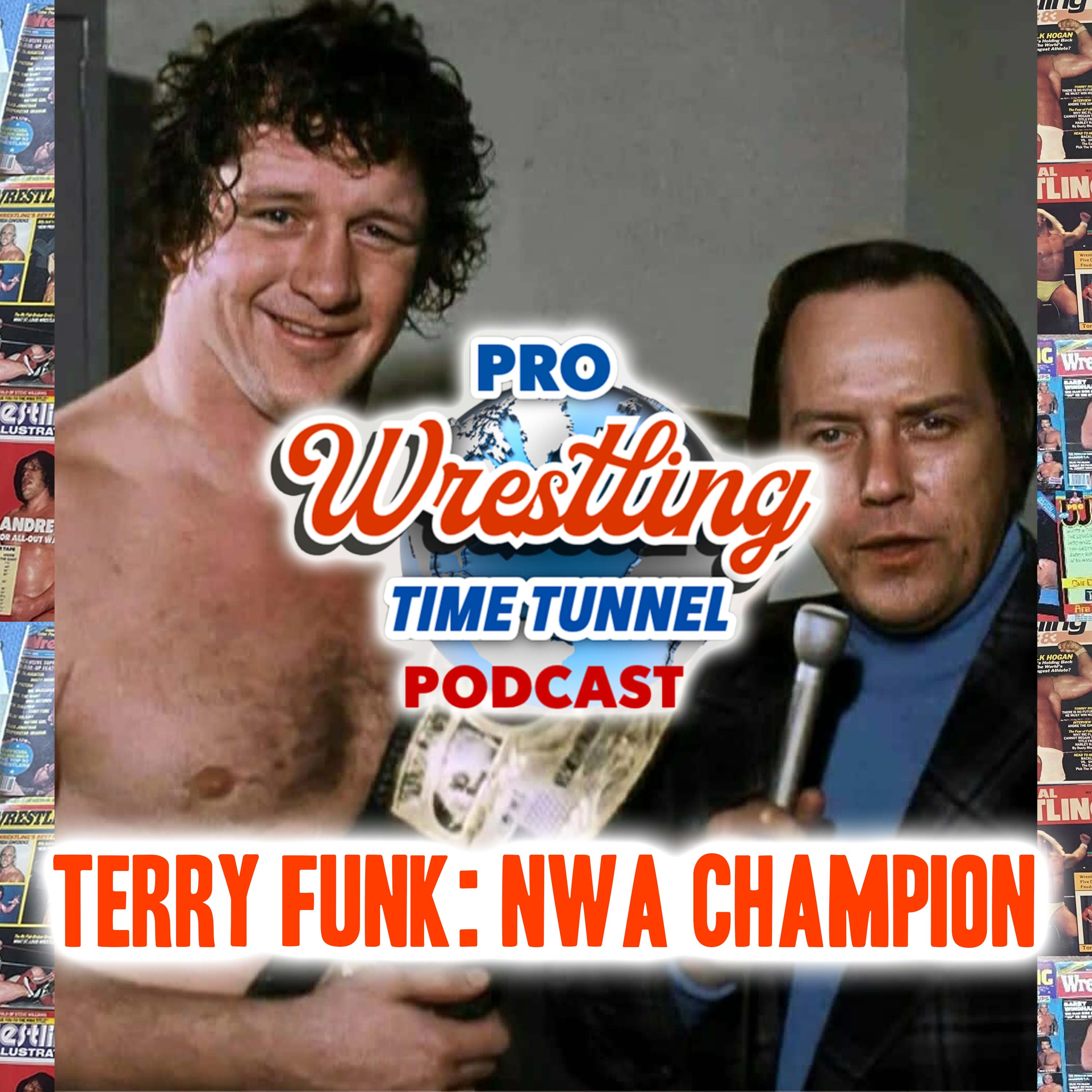
He was a photographer in several of the towns where the Florida promotion was running. And he was on hand that historic night in Miami, Dec. 10, 1975, at the convention center to take photographs of the new champion, Terry Funk, when he defeated Jack Briscoe for the NWA World title. And Howard and I are going to welcome Don DeLeon to the Richards Ranch tonight. We're going to find out what that night was like, what the atmosphere was like, what he was told about taking photos and a whole lot more. And Don was a huge fan as well. And he's got a lot of great stories, he's got a great firsthand account, what it was like to be in the convention center that night. That's all today. Let's don't delay any longer. Let's get right to it. Here's my conversation with Howard baum and Don DeLeon at the Richards Ranch this week here at the Pro Wrestling Time Tunnel. Hey again, everybody. Welcome back to the Richard's Ranch. And tonight we've got a special show for you as we're covering the championship wrestling from Florida territory in the final months of 1975. And here, as always, to take a tour through the Sunshine State. With me is our resident expert and analyst, Howard Baum. Hello, Howard.
[00:07:22] Speaker A: Imagine that. So thrilled. Hello, Tony. Hello to our very special guest that we're going to introduce in a second.
And hello to the wrestling world. To close out to the year 50 years ago, almost to the day that I started going to the matches at the Miami Beach Convention Center. And when this airs, it will have been one week to the day that Terry funk won the NWA World Heavyweight Championship, December 10, 1975, at the Miami Beach Convention center. In a day that will live in infamy for many, many reasons, including those very close and personal to all of us that are on the show today.
[00:08:03] Speaker C: That's right. And our special guest tonight was actually there in attendance at the Miami Beach Convention Center. Why don't you introduce our special friend tonight, Howard?
[00:08:14] Speaker A: Okay. Well, this is truly a special occasion.
What a treat and a feast for Florida wrestling fans. I believe this is this man's podcast debut. You can correct me if I'm Wrong. But when I was just a little shaver coming up around 75, 76, I used to peruse wrestling world and I would see these photos, these great photos that had a different style to them than the after mags and the other photographers that I had been perusing and. And they were from this man named Don deleon.
The legendary Don deleon. And he was there the night Terry Funk won the belt. He was there on his knees on the outside of the ring at the Miami Beach Convention center. During the 70s, during the greatest era that there ever was, the mid-70s, 74 to 76, got to photograph people that I would chew my left arm off for. And without any further ado, I want to get into talking to Mr. Don Deleon, Miami wrestling photographer, legendary.
[00:09:18] Speaker B: Thank you very much, Howard. It's a pleasure to be on the show and to discuss things that happened in 1975. You know, you and I were both so blessed to be able to have these childhood memories and get to do things that nobody else got to do back then. And as we look back 50 years later, we really begin to appreciate how fortunate we really were. And it is a pleasure to be here on the show with you guys. Thank you.
[00:09:45] Speaker C: Yeah, I mean, gosh, I'm so glad that tonight I'm going to get to live vicariously through the two of you, because I never got to go to a show in Miami at the convention center, but gosh, I've studied it a lot, read a lot about it, seen a lot of photographs and things like that. So I'm excited to hear all the great details about the things that would go on there in Miami.
[00:10:13] Speaker A: Well, we're certainly going to lay some stuff on you, including our own photos, videos, clippings and everything. This is going to be an extravaganza from 75. And not to tip off the future, but 76 is really going to pop the cork open for everybody in the new year. Very exciting times.
75, Don. And see if you agree with me on this, it's kind of the end of the old George McCreary, Okishakina.
These guys that were creaking around. That was the old school, 65 to 70, 70 to 73 type of guys that you would still see booked. And there's these ancient names that you really appreciate seeing, but that was the style of wrestling in those days, the beer barreled guys and all these, you know, the typical stereotype of the guys that were pretty much the same as they were in 1965, these big burly guys and they Would go through their routines.
And then on the main, the main events, 74, 75, you had the Gary Hart army versus Dusty and that whole thing and everything that that entailed and that was all the top heels and Dusty was all you needed on the baby face side. So I want to know from Don, I don't even know where to begin because he was a little bit before me.
I was ringside in 82. Don was ringside when like 75 you started?
[00:11:37] Speaker B: Yeah, I actually started in 75. Bill Apter came down from New York and I met him on West Palm Beach.
That's where his father, Nate Apter lived and also took pictures in West Palm Beach. So I met them there. And then I asked Bill if there was a possibility that he week if he could get me into taking pictures at ringside in Miami, because as you know, it was very difficult. There was only one guy at the time that was doing it and that was Paul Bowman. And Bill Apter came down, he talked to Frank Freeman and Chris Dundee, and the next thing I knew, I was taking pictures at ringside and I also had access to go into the dressing rooms, which I don't think any other 15 year old kid in the world ever did in Miami. Miami was a very tough place to get access to the wrestlers because there was a lot of security back there and it was very difficult. So I was just so blessed to get that opportunity in my life and really didn't realize how blessed I was until, you know, a few years ago. I look back and say, wow, you know, we did things that, you know, normal kids our age could never do. It was a blessing.
[00:12:41] Speaker A: Well, I'm really impressed because it took a lot for me to get in and, you know, that's pretty miraculous. How old were you at the time?
[00:12:50] Speaker B: In 75, I was, I just turned 16.
[00:12:56] Speaker A: Yeah, that must be the golden age, because I was 16, 82 when I, when I got ringside and I used to bug and bug Duke, Duke Tanaka, Duke Kiyomuka, and I was already published. I was already already in the wrestling news that every photographer uses as a stepping stone. And I was already published. I was already talking to the boys.
I mean, I shouldn't be calling the boys when I'm a 16 year old, which I was not. But you know, in hindsight, I'm talking to the boys, they're all posing for me, I'm getting them published and everything.
And Duke is like, nope, nope, not gonna hear it.
We knew Chris Dundee a little. He's like, no way.
And we had a certain pseudo mafia connection. I don't know if you guys know this guy Sal. He was probably around in your day, front row, on the heel side, always smoking the big stogie, Always dressed the same shirt on top of his shirt with the gold chains.
And he was like a. Either a gangster or a gangster wannabe. Talked a lot about being in the mob, which leads to you thinking that he's really wasn't. But he was our ticket hookup, and he got me and my dad front row seats when we could not break the third row barrier. Couldn't do better than second or third row. One day we're waiting on line at will call before the matches because we had a hookup with Chris Dundee. We're waiting for our tickets, second or third row usually. And we hear this voice from behind as if from heaven, this raspy angel smoking a cigar goes, hey, you guys want to sit front row from now on? And that was it. We were in good with Sal. Now I'm in the front row shooting. And for all intents and purposes, it was as good, if not better than shooting ringside.
One thing led to another. He put the word in with Duke. Now I was in, no problem. Now I set up a gimmick table. I go in through the back, get one of those big tables, roll it to the front like my other hero, Ruth Omen. The great Ruth Omen, now known as Ruth Thompson, in her 90s, still going strong. Inexplicably, incredibly, one of the legends of Miami photography. She also sat in the front row religiously from the early 70s on. Legendary photographers, photographer, many magazine coverage to her credit. So here I was, living the dream. I felt like Henry Hill in Goodfellas. My dad would pull me up to the back, the wrestler's entrance, bring the big table up, set my photos out, and then backstage access. I didn't even ponder. But I would hang out in that. In the pseudo backstage area, like where the two dressing rooms came together, and you could mill about in back, you know, where all the famous photos that you see are taken, either against this pearlized marble brown wall or this green tile wall. And a lot of you aficionados especially who have gotten gong and weekly fight magazines over the years, you will see those iconic backgrounds in the photos that everybody took for the Japanese magazines, because that was the place to pose for Japan.
And I think this would be a lovely time to just take a little teeny tribute to the very limited amount of people who have been on their knees outside the ring. It's a stupid way of putting it. I can't always be good folks. Of being in that rarefied air of being the ringside photographer at the Miami Beach Convention Center. As far as I'm aware, you got two of them right here. Howard Bound, 1982 to 1984. Don Deleon, 75 to 77, I would say more or less the legendary Paul Bauman. He was there before the building even was built. He was. He came with the promotion. Legendary photographer for everybody, including the after magazines, Fifth Street Gym. He was a tremendous boxing photographer as he was a wrestling photographer.
And he was just part of it. He was part of the wrestling ecosystem. He was there from the beginning to the end.
And I wanted his job something terrible. I thought I was going to be his successor. And he outlived me taking pictures in the promotion. But that's another story for another day.
Then you have Brian Berkowitz.
He shot for a couple of years, I want to say, in the late 70s. He was a tremendous photographer.
And of course, the great Raul Gomez de Molina Jr. Who now is a gigantic star on Univision as one half of El Gordo and La Flaka. And one hint he's not La Flaca, and that's it. Those are the only people who have ever shot ringside at the Miami Beach Convention center that I am aware of in the history of championship wrestling from Florida on a regular basis.
[00:17:49] Speaker C: Wow.
[00:17:50] Speaker A: If I'm not mistaken.
[00:17:53] Speaker C: Can you.
Can you think of anybody else? Don't.
[00:17:58] Speaker B: No.
[00:17:58] Speaker C: That.
[00:17:59] Speaker B: That was really it. There were times where there were people from the Miami Herald that took pictures or people from the Miami News, but. Or. Or Bill Apter would come down every once in a while. But, yeah, that's really it.
[00:18:09] Speaker C: What was the first night that you took photos there, Don?
[00:18:14] Speaker B: The very. The very first night.
I had made a deal with Frank Freeman because Frank says, hey, look, I don't want you up there all night. And I said, listen, I only want to go up there for the main events.
So basically I was just going up there when Dusty Rhodes was wrestling, or Terry Funk or Bill Watts or Harley Race or Joe Leduc. You know, at that time, you had a lot of guys that, you know, could make the COVID or the inside of the magazines. I really wasn't interested in taking pictures of anybody else. But it was a surreal feeling, you know, when you're. When you're there taking pictures under the bottom rope, I mean, you can hear these wrestlers talking to each other, discussing their next moves. And I had never heard that before. You Know, being a fan, you know, listening to them, talking to each other the whole time and looking at them and they're looking at me and it was just very, very surreal.
[00:19:06] Speaker A: Yeah.
How did you feel when you had to go from wherever you were and step into that rail, into that blue guard rail in front of all the people, 5,000 people, and everyone's in the ring and here you come, 16 year old kid getting into that guard rail. How did you feel it?
[00:19:26] Speaker B: It was actually a scary feeling because, you know these, I weighed 130 pounds soaking wet. And you know, these guys, you know, they, they get thrown out, out of the ropes and they could land right on you. I'll never forget I took pictures of Harley Race and Terry Funk in a cage match in the Miami Beach Convention Center. So I'm ringside and they put the cage down. Then I realized that there's only like 2ft of space between me and the outside of the cage. And Harley Race throws Terry Funk outside the ring on the left side. And then he climbs out the right side and they're coming together and I'm right in the middle and Harley, get under the ring, kid. And I went right under the ring and crawled all the way to the other side and I was scared to death, to be honest with you.
[00:20:11] Speaker A: Holy crap, that's tremendous.
Do you remember, do you remember the.
[00:20:16] Speaker C: First photo you took?
[00:20:19] Speaker B: The first photo I ever took? I remember the first photo that I ever took that was published in Bill Afters magazines. Yeah, I took a picture in West Palm Beach. It was, I think in early 1974, a Buddy Roberts, he was bleeding in the dressing room with Sir Oliver Humperdink and Jerry Brown. They just wrestled, defended their Florida tag team titles. They told me before the match to meet him back in the dressing room and they'd pose for me and, and I went back there and I was just taking pictures of Humperdinck because he was all bloody. And then I looked at Buddy Roberts, I go, wow, you're bleeding too. And he goes, yeah, man, they dropped me too. So I took one picture of him and that, that picture, you know, made the magazine. And you know, as soon as I showed that to the wrestlers, they, they just believed in me and they trusted me. Once they started seeing their pictures in the magazines, I, I also developed all my own negatives and all my prints and in the bathroom of my mother's house.
So what would happen is I'd go home after the wrestling matches. I would do my negatives in the little canister and the Canister with the deck tall developer. I would do all my prints for six or seven hours. Then the next night I'd go to Fort Lauderdale or West Palm or wherever the matches were and start giving the pictures to the wrestlers. And once you start doing that, you build a relationship with them where they pursue you and, and they want to pose for you because you're giving them the pictures, they're seeing themselves in the magazines and they're like, hey, this kid can do something for my career.
[00:21:45] Speaker C: Yeah.
[00:21:46] Speaker B: And it was a win, win situation for all of us.
[00:21:51] Speaker A: That's how it worked. That was the trick. That's all it took.
It was, you had to be determined to get that spot, to be in the position to do it. And by the grace of God, we were.
And you know, it's, it's, it's funny the impositions that were put on you by Frank Freeman, who is a very fascinating behind the scenes power broker in Miami that I was not well aware of until recently. I thought he was just the ring announcer. I had no idea that he was really part of the whole machinery. He was very powerful and I had no idea.
But he was a classic ring announcer. He was like our Jimmy Lennon. He was great. It's a perfect voice, perfect demeanor, countenance to him.
It's funny the impositions that were put on us as kids because I wonder how and when these decisions were made, because I feel like if I was 18 and I had the wherewithal, I was 16 and my dad was bringing me, but I feel like if I was 18 and I had the wherewithal, I could say to Duke, hey, yeah, I'm getting published. Can I come up to the Bayfront? You know, I was in the Japanese magazines for a little. Hooked me up with Weekly Fight and Gong. I was getting published by 1982 and to me it was enough to get to the matches once a week and shoot Miami. But if I was a few years older, I think I would have been partying with these guys. I was friends with, you know, the great Bruce Owens, the timekeeper at the Bell. He's a little later than your time, but he was in my time. He's the guy who broke me in at ringside and he told me how to conduct myself at ringside and what to do and everything.
And if I was a few years older, I would have gone to the Bayfront and everything. But as it was, I felt that my credentials were so tenuous as it was, because I remember one time, Abdul the Butcher was to Work Blackjack Mulligan. And Bruce told me, hey, Duke said, you gotta. You gotta stay outside the guardrail for this one. Because apparently they were gonna go nuts outside the ring.
Which worked out. These pictures ended up in weekly Fight magazine, the ones that I took because forcing me to back up a little gave it a whole different perspective. And it showed all the brawling, which if I was ringside, I would have been a victim. I would have been a part of it. They would have been taking pictures of me for the magazine.
So it was just funny. Like they wouldn't have said that to Paul Bauman, but they assumed that we couldn't do certain.
Which I guess is on one hand intelligent, but on the other hand makes no sense, because if we can do this, we can do that.
And so, I don't know.
Speaking of being.
Having a scary moment, my first night shooting, which was in September of 1982, and my friend Bruce Owens told me, just, you know, if they're fighting outside the ring, just go up to the apron. Just put your belly up to the apron. They're going to go behind you and everything. Unless it's Terry Funko Abdullah, that's like a known given, right?
And.
And I didn't have a chance to. And here comes only the second biggest wrestler in the world, Big John Stud.
And I saw like his, his, his skin molecules from 0.35 inches away. I couldn't. I'm like, oh, my God, I'm in the corner of the guardrail. John Stud is working around Bass and he has no idea I'm here and I'm like six inches behind him. And I see the hairs coming out of his pores and on his back. I see his mottled skin and I'm only up to like halfway of his back. And he's Big John Stunt. I'm like, oh, my God, this is how it ends my first night.
Luckily, he just. He went forward instead of backward because that would have been it. I would have been in the way. I would have been blackballed. That would have been out on my first night.
[00:25:31] Speaker C: So, Donald, you talked about being at ringside for the first time and being just under the rope and you're hearing the spots being called and things like that. What was it like the first night you went back in the locker room?
[00:25:46] Speaker B: It was. It was also so real, you know, because nobody was allowed anywhere in the dressing rooms in the Miami beach auditorium, Paul.
Nobody, absolutely nobody was allowed back there. And sometimes they would take me in there and I would take pictures of Them bleeding and stuff like that. And I was very lucky because most of my pictures like that were in the heels dressing room where Eddie Graham wasn't. Because Eddie Graham was a very tough kayfabe guy and he would not allow photographers in the dressing room on the baby face side. So I always hung out during, near, during the, the heels dressing room because they, they used to love doing it. But going inside of there, it was surreal. I always wonder what it looked like in there and it didn't look very nice, to be honest with you. It wasn't luxurious the way these dressing rooms look now.
Yeah, but yeah, it was, it was a, a great feeling to be able to go in there as a 16 year old kid.
[00:26:45] Speaker C: So in a lot of auditoriums in that kayfabe era era, baby faces and heels came out from opposite sides of the building. Is that the way it was in.
[00:26:55] Speaker B: Miami 100 of the time? 100% of the time.
[00:26:59] Speaker C: Because psychologically for the fans, and I think, you know, fans now don't understand that. But back in those days, especially if you had a new wrestler, it psychologically helped the audience understand who this person was, depending on which side of the building they came from. Right. If they came out of that side, like, oh, it must be a good guy. Right? If he came from that side, he's like, oh, he must be a bad guy. Which we didn't know baby face and heel back in those days. But you just knew if they came from one side of the building, the other. You kind of already were introduced to the character just based on which side of the building they came from.
So what was your first kind of shocking moment back in the locker room?
[00:27:46] Speaker B: Oh, for me, the first shocking moment was when I met Abdullah the butcher in West Palm Beach. I think he was wrestling Jerry Briscoe. I introduced myself to him outside the building. I said, hello, my name is Don deleon, I work for the wrestler and inside wrestling magazine. And he goes, hi, Don, pleasure to meet you. You can call me Larry.
And I go, wow, that was that strange because I was scared to death of that guy. And he was just, he was just a normal, normal guy. And then he says, he says, what do you want for me? And I said, I said, do you have a belt with you so I can take a picture you with a belt? He says, I don't have one, but I can get one.
I go, what? He goes, yeah, I'll get one. Give me 15 minutes.
In West Palm beach, the heel and the baby face dressing room, they were on different sides but they met in the back.
So he went over and got Cyclone Negro Central America's belt. And he posed for me where they have this white curtain in the back where both the baby face and the heels go in there and pose. And then he tells me, he says, listen, you're going to be taking pictures under the ropes. And I said, yes. He said, when the match is over, I'm going to be bloody. And I want you to stand right in front of me, three feet in front of me, and I want you to take as many pictures as you can.
So the match is over, I'm taking the pictures of them. And you know, back then we use these double A batteries for our, for our flash. And this was at the end of the night. And I'm waiting like 15 seconds between flashes. And after I took like three pictures, he. He lunged at me and I, I started running and he chased me around the ring three times. And I was scared to death. I was shitting in my pants. I'm not lying to you. I ran into the heels dressing room, he was right behind me. And as soon as he came in, he goes, thank you for being part of the show. And I said, you son of a gun. I shit in my pants.
[00:29:31] Speaker A: Oh, my God.
[00:29:33] Speaker B: I was generally scared out of my wits. Imagine Abdullah the Butcher. This guy, he's about 6 foot tall, probably 380 pounds, he looks like a nightmare.
And he's chasing me around the ring, bloody.
[00:29:47] Speaker C: Wow.
[00:29:48] Speaker A: Oh, my God.
[00:29:49] Speaker B: I was scared. I'll be honest with you.
[00:29:51] Speaker A: Oh, my God. You know, that was 75. That was the real Abdul the Butcher, right? I would have crapped my pants too. That was. I saw him as a fan during that era and that was as real as it ever got in professional wrestling.
And I'll tell you, it's so funny because I have a parallel story, and I feel like that skit where the girl gets abducted by an alien and her experience is completely different because me, when I met Abdul the first time, it was 1982, it was a pretty loaded card and Raul knew that I was shooting for Japan. And it didn't grease the entry or anything. He just said, go, Abdul is waiting for you. Go take some pictures. I am a half a mark, not smartened up in any way. 18, 1982. And I go back there and it empty hallway, Abdul the Butcher waiting for me. I am not smartened up.
I have not been smartened up. And as far as I'm concerned, he's the same literal maniac that he was in the Magazines when I was a kid.
All these headlines are flashing in my face. I'm eating chicken, I'm killing. And there was a report of him beating up a fan that night in the parking lot.
And here I am with Abdullah in his red pants, and he's like, okay. Not a word was exchanged. He gave me a few poses, the fist, the wide eyes. This one of them out of three was in focus because I was like, literally petrified. And I slowly backed myself out of the building and that was it. And I don't think I met him ever, until 20 years later at a fan fest. And I realized what a nice guy and a normal guy he was and all that, which in a way I kind of prefer because I even. I was that way with Kamala, too. I like to remain half a mark sometimes just to preserve the fun of it, you know.
[00:31:44] Speaker C: So, yeah, Don, did you. Speaking of heels that didn't talk, did you interact much with the Mongolian Stomper?
[00:31:55] Speaker B: Well, I took pictures of him and Bearcat, right. With the Southern Heavyweight Championship and. And then another time, but I never talked to him. I just talked to Bearcat. I. I really didn't have a relationship with him, believe it or not. Better relationship with Pac Song, who couldn't speak a word of English. But every time he saw me, he would come and pose for me with the Florida belt or with a Southern belt.
He was super nice. Always.
[00:32:18] Speaker C: Yeah, awesome.
Well, Terry is. And of course, we don't know this as fans back in those days because there's no Internet. There's. The wrestling magazines are three and four months behind on news. So we. We don't really know what's going on around in all the different territories. Terry has been up in the Carolinas. He had the. Won the US Title tournament up there, and then he dropped the title to Paul Jones to set up his return matches for Paul Jones when he wins the title out in Amarillo. He dropped the international title to the Super Destroyer so he can come back and have a program with him in St. Louis. He wins the Battle Royal and his last elimination person is Pat o'. Connor. So he can come back and have a match with Pat O' Connor the first week of January in St. Louis.
Was there any indication at all that Terry was going to win the title in Miami?
[00:33:19] Speaker B: For me, yes, because when I got to the matches, the first thing Frank Freeman came up to me and said, listen, we have our film crew here today. You're not going to be allowed at ringside unless you take your flash off and I said, well, I.
At the time, the only way to do that was to push your. Your film like ASA 400. You go to 1600, but with my camera, it would be too grainy. And he says. He says, yeah, you're not going to be able to be ringside, but you can be in the back and you can take pictures when the match is over. So literally three hours before the program even started, he basically told me that the title was going to change hands. He didn't tell me in those words, but basically from what he was talking to me, I knew it was going to change hands.
[00:34:01] Speaker A: Wow.
[00:34:01] Speaker C: Yeah. In those days, if there was a camera, a television camera, something like that was going to happen.
But the match, the card was advertised as Dory Funk Jr.
And Jack Briscoe because they had heated up the Briscoes and the Funk feud again in. In Florida the month or so beforehand.
And Dorie Jr. And jacket had so many matches.
How was the crowd that night, did that draw?
Were there a lot of people there to see Dorie Jr. And Jack for the title in the main event based on the fact they had wrestled so many times before?
[00:34:41] Speaker B: Well, you know, whenever they had a world title match, championship prices were in effect, which meant a $5 ringside ticket was now $6. At least that's the price that it was back then. The champion would get that dollar from every person, an extra dollar to sit there. So there were five or six thousand people that would go to those matches whenever there was a world title match. That means Jack would get five or six thousand dollars above what he's normally getting paid. So, yeah, it was. There were a lot of people there.
It was a very. I mean, Gordon solely was there, too. I mean, when you see Gordon Soley in the film crew, you know something's going to happen, you know.
[00:35:23] Speaker C: Yeah. It's just not a regular house show.
[00:35:26] Speaker B: No.
[00:35:27] Speaker C: What was the atmosphere in Miami like, Howard?
[00:35:33] Speaker A: It was just funky. Especially in the mid-70s, it was just funky as I'll get out.
I took pictures in 1979 when I was 13, and it looks like something out of 42nd Street. I can't wait for all my books and everything to come out so you guys could see this stuff. Because everything has that funky, funky sepia tone. Everyone's walking around with all these cool clothes and booing the heels and just the whole. You see the crowd back then and it's like old concert footage. It's just the same thing. It's like society in general was just so damn funky back Then, and Miami is such a melting pot as it always was.
And, you know, you had, like elderly World War II era Jews in the. In the front couple rows, all the way up to, like, Haitians and immigrants of all sorts, all the way up in the rafters and everything in between, from the floor to the rafters. And it was just, you know, watching them come to the ring and go back was at the excitement. Because our favorite, Terry Funk, man, my favorite was he would. He would start a fight with the audience every time on the way out, and I would just love that to death. And like, he wasn't afraid of anybody, could be the biggest guy. And he would do that routine that we've all seen, and he would stop in the. He would stop in the alley and just say, come on, come on. Get right up in the guy's face. No one ever called him on it. He'd get by the ring and start shaking the rail and everything and dared half the crowd and crawl into the crowd. Basically.
Nobody ever called him on it. You know, that was just such good times. So, Don, what was the.
The setup?
I started going right after the auditorium days. So was that. That was like part of the same building as the conventional, or did they change dressing rooms and everything by then?
[00:37:29] Speaker B: Well, the Miami Beach Auditorium and the Miami Beach Convention hall and Miami Beach Convention hall north were three completely different buildings. They were completely different.
You know, the Miami Beach Auditorium was where they used to have the concerts and the orchestras and things like that. I think it switched to the Convention Center. I think somewhere in the 75 era, it was going back and forth. And then after 75, it was completely out of Miami Beach Auditorium.
But it was. It was a really nice setup there at the auditorium because it was like very small, so people were closer to the ring.
And I remember back there in 73 and 74, during the cave Fab era with the great Malenko and people like that, there were people that came there with knives and bottles and really wanted to attack them after the matches. I mean, literally, they believed 100% that this was real.
And even in 75, the crowd, 99% of the people that went to the matches, they really believed that it was real.
[00:38:30] Speaker A: Oh, it was so wild. Forget it. I mean, it was like 5,000 feral people. And I mean, have you. You could talk about a Hogan pop, whatever, that's all manufactured in 1980s Flimslam, but tell me that you've ever seen more. More excitement out of a crowd, a bigger pop than Dusty Rhodes laying the elbow on anybody in the 70s. Superstar Graham, Ernie Ladd, Pac Song, Missouri Mahler, the Assassin, Gary Hart, Dick Slater, Bob Roop, King Curtis, Ox Baker.
I don't care who you are. The Butcher, the Sheik, on and on and on and on.
[00:39:06] Speaker C: Boom.
[00:39:06] Speaker A: And it would be like the place. Like the walls were shaking, right? You know, I never heard a crowd in unison pop like that for anyone anytime since, including Hogan or anything else.
It's so hard to explain to the kids. Like, how could you possibly explain going to a Led Zeppelin concert or seeing Dusty Rhodes and Superstar Graham?
How can you possibly explain that to a modern human being, you know?
[00:39:33] Speaker C: Yeah, it's hard, Don. You took pictures of West Palm and you took pictures Miami. Did you ever take pictures at Fort Lauderdale?
[00:39:43] Speaker B: Sure. I used to go to Fort Lauderdale a lot. Now, remember back then, I'm like 15 or 16 years old. I have a 72 Ford Pinto. I'm living at home with my parents. My parents don't go to the wrestling matches with me, so I couldn't go every single week. You know, I was a kid on my own income. And, you know, Howard will tell you, taking pictures and selling them to the magazines, you don't get rich. You don't make a lot of money. Back then, it was $5 for every black and white picture they use in the magazine and $35 for a front cover. That's it. That barely covers your expenses. I didn't do it to make money. I did it because I genuinely love doing it. I love photography. I loved wrestling.
I. I would have done it for free.
[00:40:29] Speaker C: So I was going to ask, what was the difference in the crowd between Miami and Fort Lauderdale?
[00:40:37] Speaker A: Huh?
[00:40:37] Speaker B: Well, go ahead, Howard.
[00:40:40] Speaker A: No, that's a good question, because I never went to Fort Lauderdale back in the day.
[00:40:44] Speaker B: Okay, yeah, Fort Lauderdale. It was in the Armory. It was a very, very, very, very small venue. Maybe 2,000 people went there. They had green ring ropes that looked like somebody's hose in their garden.
[00:40:58] Speaker C: But because my Miami was on Wednesday night and Fort Lauderdale was on Friday night in those days.
[00:41:04] Speaker B: Yes, yes. And when I went to school in Tallahassee, it was also on Friday night. And let me tell you, you have the most redneck people you've ever seen. When Dusty Rhodes wrestled Ernie Ladd in Tallahassee and he. He turned heel on Dusty Rhodes, I'm telling you that the police had to get him out of there. People wanted to kill him. And I mean kill him. They love Dusty Road so much. And for Ernie Ladd to turn on him the way he did. Oh, my God. He had to have 15 police escorts to get out of there that night. Those people wanted to kill him. They were rednecks. They were drinking beer the whole time. They were very rowdy.
Completely different than Miami, Tallahassee and Fort Lauderdale. These people were just not as sophisticated. I mean, that's the only word that I can think of. They really got into it. They really got angry. They really wanted to hurt the bad guys. Where in Miami it wasn't quite that level.
[00:42:02] Speaker C: So Fort Lauderdale was a hotter crowd then for.
For the Heat and the Heels.
[00:42:10] Speaker B: Yeah, but, you know, they. They kind of had to split between Tallahassee and Fort Lauderdale. They get half of them in just like West Palm in Orlando. They get half of them there. Half of them, yeah. Place. We were lucky in Miami. There wasn't really another venue going on Wednesday night. So we got. We got all. All the good wrestlers there.
[00:42:28] Speaker C: Right. Miami got everybody on Wednesday night. Jacksonville got everybody on Thursday night. And then the Friday night was a split night. All the other nights of the week were split.
Tampa was Fort Myers on Tuesday night.
[00:42:43] Speaker A: Did they.
On Friday nights, they would work a. A little building on State Road 84, like a war Memorial Auditorium. And I never went. It wasn't on my radar. It was actually 10 minutes from my house, whereas the convention hall was 30 minutes, and they didn't have a full card. It was like four or five matches. It was a throwback to the old days, but the top two or three matches would be a sellout in any building. I mean, you would have King Curtis and Dusty, and it was a smaller building. It was an armory. It was a National Guard armory, if I'm not mistaken. And it was a really small building. And I bet the vibe in there was great. I have friends there.
My friend Handsome John Massandrea used to go in there and help him set up the ring and stuff like that. It was on par with a high school spot show, but they did it every Friday, which I didn't know until I got way older in life and missed out on all of that, which was right down the street from me.
But we also had the War Memorial Auditorium, which back in the day, when they weren't using the convention hall, they would run there as well. I don't remember if it was either or, but they definitely ran War memorial auditorium in Fort Lauderdale a lot. And when PWF made their attempted comeback in 1989, they resurrected that and started running that again, which was great.
So this is a historical wrestling building, the War Memorial In Fort Lauderdale, they just redid it in such a way that they'll never be wrestling there again. But, hey, there's never going to be wrestling anywhere again. So there you go.
[00:44:11] Speaker C: So, Donald, you were not going to be able to be at ringside for the mat. Where were you during the Terry and Briscoe match?
[00:44:21] Speaker B: I was actually probably about.
I was just standing around the ring because I just wanted to watch it. And then when the match was over, I just went. Went to the back.
Terry was the first one that came through the door, and I never seen a guy in my life so genuinely happy to win that title. He had the biggest smile on his face. I asked him to pose for me. I took two pictures of him.
Then I walked with him to go down there to a. Gordon solely was there. Jerry Prater was there, and the whole film crew was there. And they. They did. They filmed their segments where, you know, they introduced him as the new world champion. And they said that, you know, his first match is going to be against Jack Briscoe in Tampa. And he goes, what are you talking about, Tampa?
If I'm going to fight Briscoe, it's going to be in Texas. It's not going to be in Tampa. You know, so they already started their angle.
[00:45:12] Speaker C: Yeah, yeah, so. So he.
I've often wondered about that. I'm so glad that you were there, and you can relate that to us, because Terry was.
He had had a rough two years.
You know, his dad had passed away in 73.
That was a very traumatic thing for him. He suffered from shortness of breath. He thought he was actually having heart attacks at times, really were anxiety attacks. But, you know, he convinced himself it was a heart attack.
And he'd been on the outs with his college sweetheart. They had gotten a divorce. He was financially having some difficult times.
So winning that title was a really, really big deal for him. And it was probably the first really good thing that happened to him in quite some time.
[00:46:07] Speaker B: Yeah, he was. He was really ecstatic. He was on cloud nine. I never seen a wrestler that was that sincerely, genuinely happy after a match. And, I mean, all by himself. There were no cameras there. It was just him and me walking back, and he was on CL9. He was so happy. I never seen that before. I mean, certain guys like Jack Briscoe, Harley Race, Terry Funk, these are three guys that had NWA in their blood. I mean, I never met three guys that gave so much to the business as those three guys. And Dusty Rhodes, that's a little different. I mean, you Know, he had that personality, he had that charisma, but these guys really lived and breathed NWA Professional wrestling. And, and that was his life. And I was so happy for him too.
[00:46:54] Speaker C: Yeah, it was a. It was sort of.
It's like his personal family life and the business were so intertwined. It was just like you say, it was just his whole, his whole life. And, and Briscoe was that way. Dory Jr. Was that way. Harley spent all of his early years in Amarillo and got his first booking job out there in Amarillo. And they used him as the mailman to take the title from Dory Jr. Over to Jack. And all those guys were extremely loyal to Sam Mushnick and Eddie, who also had strong ties to Amarillo. So you're right, it was a very deeply personal thing.
[00:47:41] Speaker B: Yeah. Especially since he was the brother of Dory that was world champion for at least what, three years. And he was always almost like Jerry Briscoe. I mean, kind of looked down as the, the younger brother that didn't achieve as much as the other one. So for him to get that title was really important for him to, to validate him.
[00:48:02] Speaker C: And I'm sure if he were here with us right now, I'm sure he would tell us that his thoughts were with his dad when he, when he accomplished that, because Senior was all about that. You know, Senior had been the world Junior heavyweight champion and he wanted Junior to get the title so bad. And then Junior had his run, and then as his run was ending, Dory Sr. Of course died. But I know he had that in mind for Terry also. So, you know, I'm sure Terry was thinking of, of his father and that was another reason he was so, so happy.
What other questions do you have, Howard, for the. About.
[00:48:44] Speaker A: Well, by the way, for the listening audience, two of the things that were just referenced here, the backstage press conference that Don is referencing. And Don should put those photo photos up. They're magnificent of Terry posing and talking to Gordon and all that. Of course, that video is up there on the YouTube, as is the Ernie led, Dusty Rhodes stuff from Tallahassee. And the thing about the fans up north, which I've never really experienced, I went to Tampa later in life, like the 90s, but it wasn't the 70s. I'm sure it was way different. And they say the fans up north are a lot more rednecky. And your buildings like Orlando, Tallahassee.
When I went to Jacksonville later in life, it was, it was like a different. You know, I could see where it's a Lot more rougher, more dangerous.
I just wanted to inject that apropos. Nothing. But I. I should. Like, you know what? Miami beach was wild. But you didn't feel like you were in danger.
I don't know, you know, because the end, you can attest to this, Don, at the end of every night, it would end the same way. Dusty Rhodes making a comeback on whoever it was.
And everybody that was at ringside was standing on their chairs, and everybody that wasn't at ringside was rushing ringside. And everybody that was in the bleachers was now standing on the floor. And all you heard was boom, boom. And you're trying to balance on your chair, in my case, trying to take pictures. And pandemonium is going on. Literally. Not just the wrestling bullshit, pandemonium. Pandemonium was going on. There might be a Haitian pulling on my leg. There might be a guy pushed it into me. I'm, you know, the whole place was going nuts. And the minute was. It was over. And the lights come on and Frank Freeman says, we'll see you next week. Everyone mills out.
Everyone's excited and buzzed. No one kills anyone. Nothing ever happened. But it was wild how it starts so boringly. The building is half filled, people are trickling in. The curtain jerkers are going through the motions. 10 to 15 minute time limit, blah, blah. Okay.
Everything gets a little more intense as the night goes on. All of a sudden, people are going ape halfway through the card, and they do not let up. And it just gets more and more and more until the end.
And that's how they get.
[00:51:04] Speaker C: Yeah. You know, the other thing, just to add on to that, about Terry being happy, I've talked to Jerry several times about Jack on that night and on. On the interview, on the Post interview.
He looks so sad and so dejected and so down that he's lost the title and everything. And Jerry said he couldn't have been more happy. Yeah, he was so happy to get that title off of him and move on.
The two and a half years of travel nonstop and around the world and all of that. He was really, really happy to give it to Terry by that point.
[00:51:45] Speaker A: And, you know, I don't know where I heard it could have very well been from you. You're so.
You're such a wallflower or you do one or two shows a year, so it's hard to keep up with your stuff. But I heard that Jack was not treated with the level of respect that he might have gotten were he another champion by his mentor, Eddie Graham, because I think because Eddie Graham put him in that spot, he felt free to shortchange him and overwork him and not give him some of the perks that the champion was really entitled to. And I think that frustration might have led to him really wanting to get rid of that thing and the 900 days of travel a year and all that stuff, you know, on top of it.
And you might have something to add to that, because I'm sure you're probably the person I heard it from. But by the same token, Terry Funk couldn't wait to get rid of the belt for slightly different yet personal reasons, because there was a rift with his sweet Vicky, who I have met, and she is a female Terry Funk. She was great.
And they were like. They were like Johnny Cash and June Carter Cash. The two of them were so perfect together. And I got to be around the both of them a lot.
And he wanted to relinquish that belt so he could go back and be with Vicki because there was a gulf in their relationship at that time, and they were separated. And I think that is so great, having known them a little bit and seeing the professional side of it and knowing that Terry Funk walked away from the belt to be with Vicky. And then here they were when I was hanging out with them, 2020 and in Vegas. You know, it's a beautiful thing.
[00:53:26] Speaker C: And just like the title, he got her, too. He.
He pursued her, and she ended up living with one of Terry's. Terry had a boyhood friend and his boyfriend friend, and his wife ended up with Terry's wife and daughters. After the other marriage didn't work out.
[00:53:51] Speaker A: Oh, no.
[00:53:52] Speaker C: And so they. They were living with them, and Terry was going over there after he lost the title and he had some time be back in Amarillo. He was going over there and visiting all the time. Yeah, they just sort of fell in love all over again.
[00:54:07] Speaker B: Good.
[00:54:08] Speaker C: Well, good. You know, and you. You saw.
[00:54:10] Speaker A: I don't know who this other one. I don't know who this other guy was to give Terry Funk a run for his money, but, yeah, she was like a hot. She was like a big high school cheerleader. Cheerleader and stuff. They were like high school sweethearts and stuff, right?
[00:54:22] Speaker C: Yeah.
The other guy was a rodeo cowboy.
Oh, professional. Professional rodeo cowboy.
[00:54:31] Speaker A: Oh, okay. So it's like that Robert Mitchum movie that I can't think of the name of. Do you know it?
[00:54:35] Speaker C: Because I can't think of it either.
[00:54:37] Speaker A: Oh, it's like this one. Oh, God damn it. The one opportunity to use my Vast Robert Mitchum knowledge. So he's a. He's like a rodeo guy, and he comes and takes this guy's girl and Robert Mitchum comes back together. But. So I guess Terry. Terry Funks the Robert Mitchum in this scenario. But, yeah, I think that's great. And I would have hated for it to work out any other way.
That's all I got to say on that.
[00:55:04] Speaker C: Yeah. Well, you have anything else for Donald? We'll let him go on with his evening.
[00:55:09] Speaker A: We're going to get into the IWA a little this year. I don't know where we are on time and everything, but I want to know from Don's perspective, because in 75, I was just a kid. What do you remember about the iwa? Eddie Einhorn's IWA Coming down. They ran a couple of shows in Florida during 1975. They ran the Miami Marine Stadium. A couple of weeks later, they ran the Miami Highlight front, on both of which were NWA arenas. They also ran another big show, which I thought. Which I think let them know that it wasn't going to happen in this market. And I can't remember, the name of the building was an outdoor park. Right. It was a. Like a Latin name of a guy, not Roberto Clemente, but it was. It was a big outdoor arena. And they just. As a kid, I didn't know that they came down here.
But in hindsight.
[00:56:07] Speaker C: It.
[00:56:07] Speaker A: The problem with encroaching on another area in a. In a town like Florida, in a. In a territory like Florida, is that there's so much goodwill built in. Like, that's our wrestling. And even though the IWA had great international stars, Ernie Ladd, Bulldog Brower Mill Masqueras, international star attractions and everything.
[00:56:28] Speaker C: Ivan Koloff.
[00:56:30] Speaker A: Yeah. And they had a fully respectable.
[00:56:35] Speaker B: State.
[00:56:35] Speaker A: Of the art program for its time. Absolutely. Nice roster, nice TV production. But you can't come into Eddie Graham's Florida and expect to take an audience away from Dusty Rhodes. I don't care who you are, because to this day, when Dusty's not here, or when another promotion comes, or when anybody goes to Memphis, you say, who's your Lawler? Who's your Rhodes? You can't.
You need your baby face in that group.
We're relying on Mil Mascaris as their top baby face, which I guess on paper, objectively, if you're going to do that, why not? What Einhorn did was the Vince McMahon theory years and years before Vince did it, which was pay these guys a guaranteed contract regardless of what they draw, regardless of the houses. And they were running all over the place, much to my surprise. And they were in business longer than I had realized. They went through some different personnel changes, but I saw that they ran everywhere from Jersey City to Ohio, where they were based, to Virginia, which is where they ended up when feds took over from them.
And so you take that, which is a finally a fine, respectable, Midwest centric promotion, you bring it down to Florida. And I could have told you that they didn't have a chance, even as a kid. Because what I would have thought to myself was, I'm going to go to that show to take pictures.
But they're not going to last because you can't beat Eddie Graham and Dusty Rhodes in their own backyard.
And so what I was curious about.
Now you're a Hispanic gentleman, right? Done.
[00:58:15] Speaker B: No, just the last name. No.
[00:58:17] Speaker A: Okay, so what are you?
I'm a gringo.
[00:58:20] Speaker B: I'm a gringo married to a Venezuelan.
[00:58:22] Speaker A: So you're like this last guy all this time? Oh, my God. No, no.
[00:58:27] Speaker B: Never, Never.
[00:58:29] Speaker A: Holy Jesus. Well, that. That destroys my entire premise. But I was going to say, as a Latin individual, I know that, you know, you can't really appeal to the Cubans with Mil Mascaras.
Right. And I mean, this is the mistake that I think a lot of promotions made throughout the 70s still blew my mind. Don, I can't believe you're like a Cuban center or something. I'm like, he's from Miami, Don DeLeon. I'm like, oh, my God.
[00:58:56] Speaker B: The big problem with the IWA is they came down. They. They started on a Tuesday night in the Miami Marine Stadium. I think they only drew like 700 people. And Mil Mascaras was fighting Eric the Red at the time. Whoever heard of Eric the Red? Nobody. I mean, they had heard of Mil Mascaras. And luckily I was from Miami. I could speak Spanish. And I spoke to him and he posed for some pictures. But you got to remember they had TV taping with Gordon solely every single week.
They had wrestling every single night. People fell in love with Dusty Rhodes. People fell in love with Jack Briscoe.
They only knew.
[00:59:41] Speaker C: And Eddie Graham before Jack.
[00:59:44] Speaker B: Yes.
They only knew Mil Masqueras from the wrestling magazine and all the other guys they hadn't never seen before. So they felt nothing for them.
[00:59:54] Speaker A: They felt nothing.
[00:59:55] Speaker B: And it was very unsuccessful. The two times I went was just to get pictures of Mask or as. They didn't even draw maybe five or six hundred people. That was.
Was a big flop.
[01:00:07] Speaker A: Yeah. In my research, I saw that they ran a show And Eddie Graham decided to do an old fashioned batten down the hatches show. Moved the typical Miami Wednesday night to Tuesday night to combat these guys at the Miami Beach Convention center special Tuesday night this week, Einhorn iwa, according to my research, did about a thousand, which seems about right because that was a small venue anyway. The Miami Marine Stadium. You could not cram a million people. For the people who don't know this was on a barge. You. It was literally on a floating barge in front of. They would have powerboat races and everything there. It was on the water and it was not a huge building to begin with.
Reports go anywhere from 700 to 1200. Let's give them a thousand and be and be magnanimous. Same night. According to the Miami Herald, Jack Briscoe against.
Oh, I forgot who he was working. Maybe race. It drew no Dory, it drew 4400, which was good for that time because if you look at a lot of the. You think, oh, they drew 5,000 a week. Conventional, really drew 3,500 a week on average, which I was kind of surprised to see going through the records. But in my mind it was always 5,000 and sometimes it was, but for the most part there were low to mid 3, sometimes 4. Miami. So they killed it and they ran them right out of town, which this nine year old boy could have advised them the same because how are you going to come down against Dusty and Dusty's town?
[01:01:51] Speaker C: Yeah.
And for all the modern fans, we might have just a couple that watch and listen to this show. This squash your competitor stuff's been going on in wrestling for years. It didn't start with Vince McMahon, so.
[01:02:08] Speaker A: Oh, of course, yeah, Eddie, I mean.
[01:02:10] Speaker C: Eddie just moved over and squashed any opportunity they had to sell additional tickets was gone the minute he moved his show to the same night.
[01:02:21] Speaker A: Yeah, yeah.
[01:02:24] Speaker C: Don, did you have other friends that were wrestling fans?
[01:02:28] Speaker B: Sure, absolutely.
Bob Brown. I sold my. I sold all my pictures to him in 1980 and my negatives and my programs and my posters and my clippings. When I went to college, I got rid of all my stuff. Alex Jimenez, Ricky Marcos, Bill Casara, you know, we all hang out together. We all took pictures back in the early 70s with the Polaroid pop out, the Kodak Instamatics, you know, that's how we all started. We all started that way. And then when we met Ruth Ohman, when she took these beautiful three and a half by five color pictures, everybody aspired to be like her.
[01:03:06] Speaker A: Yeah.
Oh my God.
Let me just say something I had two heroes when I went to the Miami Beach Convention Center. The first was Ruth Ohman, because when you walk in, you see her with her own ad hoc gimmick table set up, and then you walk into the building and you see this white haired gentleman shooting, and that's Paul Bauman. And I said, I want to do what those two people are doing at nine years old. Because Ruth Oman had this display of posed photos from the back that she took of superstar Graham and Dusty Rhodes. And I said, if that's the way that you meet superstar Graham and Dusty Rhodes, I am going to become a photographer and sell my pictures out here for the people and go backstage and take poses and. Which is exactly what I did. Except unfortunately, it was not Don's era anymore. It was my era then. Instead of Dusty, it was Barry Windham, which was great, and Kevin Sullivan, who was cool. But it wasn't, it wasn't the stuff he shot. Man, I would give my left arm.
Oh, my God. That's when the greats really roamed the earth. That's the difference between seeing Led Zeppelin and Green Day.
I'm not complaining. I got there and I did it. But, man, Don's era, the 70s, come on.
[01:04:18] Speaker B: I think the greatest picture I ever took, I got lucky when superstar Billy Graham was in a tag team match and Harley Race was defending against Jack Briscoe, the NWA World title. And Superstar had the couple security guys to get me from ringside to go back there because he wanted to pose for me. And I saw Harley like 100ft away, all the way down there by the dressing room. And I said, superstar, let's get Harley over here. Let's get a couple pictures. He goes, good idea. He calls Harley, he comes over. I took three pictures. I never got to print them.
They were all ectochrome.
So I sent them into Apter. The originals.
The originals, I never even kept them. I just sent them to Bill Apter. And then a couple months later, I'm in college and I see, wow, I got the picture on the front cover. I got the picture on the inside. And how blessed was that?
[01:05:13] Speaker A: I know that one. Is that the one is Superstar in the green.
[01:05:16] Speaker B: Yes. Yes. Yeah, he's. He's wearing the green and he's legendary.
Yeah. And he's pointing at. He pointing at Harley. And Harley's making a fist. The best picture was the one on the inside where they're fist to fist in black and white. Because that was a color picture, that was actually a cover picture. That's the one I thought should make the front cover. But yeah, geez, to be able. Blessed to be able to get that because Superstar became my friend. I met him in Tallahassee a few weeks earlier than that, and he told me, he said, hey, I'm going to be winning the world title in about three months, so when I come back to Miami, I need you to take pictures of me. I mean, that's how cool it was as a kid.
[01:05:54] Speaker A: My word, man, you got treated a lot better than I did.
You got a lot more out of it than I did, with much bigger and better names, I'll tell you.
[01:06:03] Speaker C: That's.
[01:06:04] Speaker B: I was, I was blessed. Very blessed.
[01:06:06] Speaker C: Wow.
So you were. You got to go back to the heel dressing room. We talked about Mongolian Stomper for, for a lot of 75, Bob Roop was the main heel.
Did you interact with Bob much?
[01:06:21] Speaker B: You're talking to me.
[01:06:22] Speaker C: Yeah, yeah, yeah. Don.
[01:06:23] Speaker B: No, no. Bob Roop was fantastic. He, he always posed. He, he never, never said no to taking a picture. The only guy I ever had a problem taking a picture of was Dick Slater. He's the only one ever. Dick Slater was the only one that would never smile for me.
Nope. I had him with Johnny Weaver and Johnny's asking him a smile, he wouldn't smile.
That's the only guy I ever had a problem with.
[01:06:47] Speaker A: You know, I don't think he's physically capable of smiling. Dick Slater. I was around him and he's cool in his own way, but he's a.
Let me just say that from what I know in real life, deeply troubled guy, blah, blah, blah. But he was one of my favorites growing up. No question about it. I've been around him. He was cool to me.
But yeah, deeply troubled guy right there. Dickie Slater, but one of the all time greats. I loved him.
[01:07:11] Speaker C: So did you get it? Did you interact with the Terry Funk when he came back with the title to Miami in 76?
[01:07:20] Speaker B: Yeah, every. Every time Terry came, he would pose with the belt. He was a super nice guy. I really never met a really bad guy ever. As a photographer, Slater might have been the only one that wouldn't smile. He didn't like the pose. For whatever reason, every once in a while, Dusty Rhodes would be in a bad mood, and for whatever reason, he was either in a fantastic mood or he wasn't, you know, and I always knew when he wasn't, I wouldn't bother him.
But, you know, they were moody, too.
[01:07:49] Speaker C: Oh, sure, yeah.
[01:07:52] Speaker A: See anything, Dusty? Do anything cool? You ever do anything cool around you say anything cool, show his human side.
[01:07:59] Speaker B: Just, just shooting a birdie at the camera.
[01:08:02] Speaker A: Yeah.
[01:08:05] Speaker C: Did you save the photo?
[01:08:08] Speaker B: Actually, there, there is one around.
There is one around. But, you know, I actually took pictures one night of Harley Race got in a fight with a fan in West Palm Beach. When the match was over, he was going back to the dressing room, this guy hit him. He invited him to come in the ring. Harley Race went in the ring, the fan went in the ring. I went over there, took some pictures. Harley Race beat the living crap out of the guy. He beat the living crap out of him. He came up to me and he goes, you don't ever show anyone those pictures, kid.
[01:08:40] Speaker A: Ah.
[01:08:42] Speaker B: Yeah.
[01:08:43] Speaker C: Wow.
[01:08:44] Speaker A: Wow.
[01:08:46] Speaker B: I mean, there was real stuff that happened back then. Real stuff. You don't see that anymore. Some of these wrestlers were really tough. Bob Roop was that way too.
If somebody gave him a hard time, he'd invite him in the ring. They can't fight him outside the ring, but if they come in the ring, they're allowed to fight him.
[01:09:04] Speaker C: Yeah, you enter into the domain, I, you know, think about the IWA just a little bit. You know, Eddie Einhorn was a really brilliant guy.
And I think a lot of times, a lot of guys can be very successful at business.
I'm interested in you guys thoughts about this because you were such Florida fans and you saw so much of the business business there, just because you're a business savant, let's say. And I think Eddie Einhorn was, I mean, he, he syndicated the NCAA basketball tournament when he was in college.
I mean, that was how he first got his first entrepreneurial success.
Being the first, being the first person to syndicate the NCAA basketball tournament on radio. Huh?
Of course, he goes on to own the White Sox and he founds a TVS television network and all that. But I think it takes a special dude to be successful running a wrestling business.
Like Eddie Graham was a interesting, interesting fella. Dorie Funk Senior was an interesting fella. Jim Barnett was an interesting fella. They weren't just business guys. They had something that was a little bit different.
It's almost like Vince McMahon from the WWF, great success wrestling. All of his other businesses failed.
So, I mean, what's your thoughts about that? I mean, what was the extra dimension or the different dimension about Eddie Graham that caused him to be successful?
[01:10:48] Speaker B: For me, he hired Gordon solely.
He hired Gordon solely, and Gordon solely was the most believable television commentator that I have ever watched on tv. And Gordon solely made people fall in love with wrestling. It was a perfect marriage between Eddie Graham, old school kayfabe and Gordon Sully that could articulate everything going on and make it seem. That was all believable and make it seem real. I'm telling you that that was the matchup, that was the gold for Championship wrestling from Florida.
[01:11:25] Speaker A: Yeah, Howard and I don't think any.
[01:11:26] Speaker C: Howard and I have talked about that a lot. That Gordon could have been on Wide World of Sports.
[01:11:31] Speaker A: Yeah, that was a great answer. I wasn't expecting that, but that was a great answer.
[01:11:35] Speaker C: Yeah.
[01:11:36] Speaker A: And one thing I have to say is I think these guys are from a different breed. You hear the stories of how Stu Hart came up and you hear the stories of how Eddie Graham came up and these guys were like foraging off the land. You. These guys came up hard. Scrabble. They came up tough. Eddie Graham, an air conditioner fell on his head. He almost lost an eye, lost his vision. He didn't even bat an eye. No pun intended. And these guys are extra, extra tough. There was a story about Eddie Graham and I don't remember who it was. Maybe Johnny Valentine or a guy like that. They were out boating one day. It was told by one of the wrestlers, kids. Oh, so Johnny just. Johnny Valentine just hauls off and punches Eddie Graham as hard as he can in the eye. Might not have all the names right, but whatever, that's what these guys did for fun.
And if you want to talk about corporate versus a wrestling person, it's, it's a feel for it. It's like being a.
Well, it's like being a carny or it's like being an antique dealer. It's, it's like being a gypsy. It's like, it's a specific skill. You can't just be good at business and say you're going to do wrestling because you have to be a wrestling fan first to even know what lurks in the heart of the fans.
[01:12:49] Speaker C: Well, you know, you know what the proof of that is, is that as brilliant as Eddie Einhorn was, you at 9 years old knew it wasn't going to work. Yeah, and that's because he was brilliant and had all these business successes, but yet he didn't get that.
[01:13:08] Speaker A: And I could have told you unequivocally back then, I, he could have saved a lot of money asking this nine year old like, hey, listen, this is Dusty's town, go start your own. I mean, you know, I don't know, maybe syndication would have worked because syndication was huge in those days. Get it syndicated, be on the weekends do what Vince did. But to try and come into towns, it, it certainly wasn't going to work here and it wasn't going to work Memphis. Maybe if the town had a weaker, you know, they were based in between Sheik's territory and, and, and the Carolinas right there in the Midwest.
Take Ohio or whatever. But. And it seemed to be a good product for that area, that middle of the country type. And they had a perfectly respectable product. I really like their vibe. I like their beat up ring.
Ring announcer looked like an ad for Jingus formal wear. As I've said before, the Jack, Jack Reynolds. I really like Tex McKenzie. Goofy as he was. He was endearing in a way. I guess I, I have no quarrel with them because you can't look at them and say that's a.
You, you can't laugh at it and say it was bad. It was, it was a good promotion.
You know, don't come to Florida. But.
[01:14:31] Speaker C: Okay.
Well I just got one more question for you, Don.
Who were some of the other people that were the regulars at the Miami Beach Convention center or the auditorium or the other building that came there and they were working just like you were like did you know the people that were selling the gimmicks and working the concessions and all those regular people? Did you have relationships with them too?
[01:15:00] Speaker B: They didn't have concessions back then. They, they didn't have people selling pictures or, or things like that. I remember Bruce Owens. Bruce was driving the wrestlers to and from the arena. You know I, I knew Bruce backstage just that he would drive wrestlers to and from the airport and I guess about a year after I left Eddie Graham gave him a break and then he became the ring announcer, then he became the referee and you know that establish his career. But really back then no, they, there was no selling pictures. Ruth would sell her pictures by herself before the matches for 35 cents and that was really it. But we did have some interesting characters that, that would come to wrestling.
You had Ernest Borgnine, he was coming to the matches every once in a while. And then you had the, the guy from the Honeymooners, Jackie Gleason. Jackie Gleason would, would come there too. Muhammad Ali showed up a couple of times.
You know they had some interesting people that would show up there that it was pretty interesting.
[01:16:09] Speaker C: Awesome.
[01:16:11] Speaker A: Jackie Gleason almost got punched out by Harley Race. They were supposed to be in the ring doing some kind of a thing, introducing him or something. And Jackie Gleason got a little carried away.
I don't quite remember what it was But Harley didn't do anything to him, but he let him know who was the boss. You guys can look it up. I. I don't proclaim to be a.
[01:16:29] Speaker C: Historian, but something happened there during that match that. The. The NWA title match. Sonny Myers was the referee for the match, and he got his nose broken.
[01:16:40] Speaker A: Yeah.
[01:16:41] Speaker C: Did you get a photo of Sonny's broken nose, Don?
[01:16:45] Speaker B: No, I really wasn't interested in that. I wanted to get Terry with the belt, you know, I mean, right on the count of three, as. As you know, Terry went to pop to get up. He accidentally hit Sonny right in the nose and literally broke his nose. I mean, Sonny was backstage, but, you know, Sonny was real old school. He. He didn't even, like, make it a big deal. He was just sitting back there bleeding and had something on it and just went about his business, and it wasn't about him.
You know, those guys, taking a bump like that was nothing for these guys.
[01:17:17] Speaker C: Right? Yeah. Sonny came from the old tough days for sure.
Well, all right. Howard, you got anything else for Don before we wrap up our show tonight?
[01:17:26] Speaker A: I don't think so. I think that was quite spectacular. Don didn't take my job away.
[01:17:33] Speaker C: No, but I think we have. I think we have Don back sometime for sure.
[01:17:37] Speaker A: Yeah.
Spectacular.
[01:17:39] Speaker C: Hey, I'm all inclusive as we get in next year. Of course, we'll be getting into 1976, and we're going to really get into Howard's wheelhouse and talk. A lot of interesting things going on in championship wrestling from Florida. Don, I can't tell you how much I appreciate you spending your time with us tonight. We really appreciate it.
[01:18:00] Speaker B: Well, when. When Howard reached out to me, I was really excited because, you know, coming from Howard, you know, Howard's a great guy.
[01:18:07] Speaker C: He's.
[01:18:07] Speaker B: He's a legend down there after me. And, you know, I looked up to him and, you know, the other people down there the same way, you know, they. They looked up to me. We're both blessed that we both went through an error, were able to do things that nobody else was able to do, and now we can look back and say, wow, you know, we. We really did that when nobody else could, and we had the best memories as kids, and that's priceless. Nobody can ever take that away from us.
[01:18:34] Speaker C: And. And you've got to be our age and have lived to even understand it, because it's never. It's never coming back, right?
Never.
All right, Howard, any closing thoughts?
[01:18:49] Speaker A: Hey, well, we could try and redo my poster plug from last time, so I don't know if we have the capabilities to chiron it in, but I'll send you guys the necessary stuff.
Special to offer Usher in the new year is the world famous Hardway art promo poster, 16 by 20, heavy stock, lovingly put together by myself, containing all my personally taken Miami beach convention center pictures. And I've done it for you, the wrestling fan. Now, this is gonna air a little too late for you guys to get it for Christmas. But you know what they say, January 10th is the new Christmas, so don't be afraid. And it will be there by January 10th, the new Christmas, I guarantee it. So hopefully we have our act together and we can promote that little piece of business. $35, signed, sealed and delivered. More beautiful in person that you could even imagine. Owned by some of the biggest stars in the wrestling world. Now, let me just say this, this is probably my last opinion, this is probably my last appearance.
Having the traditional meltdown at the end of the show is that I'm famous for. Probably my last appearance of the year.
So I would just like to thank Tony and I would like to thank the wrestling public for giving me this forum. I cannot wait until we start delving into 1976, easily one of my favorite years in the history of myself as a wrestling fan. I want to thank all of you. I hope you all have a wondrous holiday.
And that's so long from the Sunshine State for me.
[01:20:29] Speaker C: Wow, what a great time we had at the Richard's ranch here at the pro wrestling time tunnel. I always enjoy Howard Baum every time he's on the show and we talk about Florida wrestling. And I got to make a brand new friend this week. Don deleon, the photographer who took so many great photos. We showed you some during the show and we definitely got to have Don back on the show sometime next year because he took a lot of great photographs in the year of 1976 for Championship Wrestling from Florida.
So it's good to have Don here and to make another great friend. He was so excited. He's. He's given me messages a couple of times just making sure he knew when the show was going to drop today. And he's excited about it. So we were very excited about having Don here and he's so appreciative of what we're doing here at the pro wrestling at the time tunnel. So I hope you enjoyed the show today. Okay, let's tell you a little bit about my social media channels and then I'll tell you about what's coming up Next week and we'll get on out of here. Okay. So you can follow me.
You can come join our Facebook group. It's the Pro Wrestling Time Tunnel Facebook group. And you come and you apply to become a member. We're adding 25 and 30 people a week into the Facebook group. We're up over 2,500 members now and it's growing like crazy. Thank you so much for everybody who's joined that. And if you're interested in your own Facebook and you like pro wrestling history, you probably want to come over and join us and be part of our community there. You can also tune in and watch our video broadcast of our podcast. You can watch it in video form on our YouTube channel. It's the Pro Wrestling Time Tunnel YouTube. Or you can search for my name, Tony Richards. And probably where I get the most activity of people following me and we have a lot of great conversations. Interaction is on my X feed, formerly known as Twitter. And you can follow me at Tony Richards 4. And of course, as I told you at the beginning of the show, our hub of activity where everything happens. With the Time Tunnel, we have our substack channel and you can come over and join us and become a free subscriber or a premium subscriber. You can get the Daily Chronicle, which is the history newsletter, and you can see the content. We are posting audio versions and video versions of the podcast at the Pro Wrestling Time Tunnel substack channel. And you can download us in audio form. If you just want to listen and you don't want to look at our wonderful faces in the video, you can download it anywhere. You get podcasts, you can do it at Apple podcasts, you can do it at Spotify, you can do it at Podcast Addiction Podcast, Pocket Cast and so many others. Just check and search for the Pro Wrestling Time Tunnel history podcast.
And you can also try searching for my name and that will come up as well. That's for the audio version coming up next week. It's Christmas. It's almost time for Santa to shimmy down the chimney and bring you all wonderful, great guests and wonderful podcast wrestling history.
And he's got a great gift of a show for you next week because we've got.
We've got great Steve Giannarelli. Let's start there. Steve Giannarelli is going to be here and we're going to talk about the year of 75 and Bruno's WWW world title year of 75. He had so many great challengers and so many Great matches in 1975 and Steve and I are going to discuss those. George Shire is going to be here, and we're going to talk about the AWA world title. Why did Vern hold the title so long? He held it from 1968 all the way until 1975, and George has got insight into that, about why that happened and how that happened and all about it. Plus the year of 1975 where Verne defended the title and the other angles and matches he was setting up to go on after he dropped the title, which he did in November to Nick Bockwinkle, who becomes the new AWA World Heavyweight champion. And the. The conversation around that match alone in Chicago that night in November with George is amazing, and you don't want to miss that.
Jerry Oates is going to be here.
Jerry Oates had the first match after Terry Funk beat Jack Briscoe December 10th in Miami. December 11th. The next night in Kansas City, the first opponent for Terry defending the title was Jerry Oates.
Did Jerry Oates and Terry Funk talk before the match? What did they say to each other? How did the match go? What did they talk about after the match? And they also wrestled another time that week in Des Moines, Iowa. And Terry Funk rode back to Kansas City from Des Moines with Jerry and Ted Oates. What was that car ride like? We're going to talk about that all in next week's show. And a very special surprise guest next week.
It's going to be a big show, folks, and it's going to be a longer show than we normally do, but it's Christmas and it's the extra bonus gift show for you, so we want to give you a big show. It's probably going to be three or four hours long, but it's going to be chock full of great stories, great conversation, and great topics around the three world titles of the three major organizations in North America in 1975. That's our big Christmas super show coming up next week.
Well, that's it for this week. I can't wait for next week. It's going to be Christmas. It's going to be the big Christmas super show. Don't forget to catch me on Stories with Briscoe and Bradshaw. I'm doing the Roy Welch Family Legacy. And episode number five is going to come out this week, and we're going to be Talking about the 1960s and all the great expansion and empire of the. You won't believe all the things a Welch family member was involved in and all of the ownership they had of the pro wrestling business. How many wrestlers they had working for them, how many towns they were running in the three and four different offices they were affiliated with or owned. It's going to be amazing. Episode number five, Stories with Briscoe and Bradshaw, with me and Jerry and John talking about the Roy Welch family legacy on Stories with Briscoe and Bradshaw. Okay, I think that's it. I think I've told you everything I had to say. I really appreciate you so much again for being involved with us here and supporting our pro wrestling history efforts here as we cover the Territory era. We're working on a lot of great things here and I'll have more news for you on that coming up in a future podcast. Thank you so much. I just want to appreciate you and as I always like to tell you, if you want to be a bet, if you want to always mess this up, if you want better neighbors, be a better neighbor. This is the Pro Wrestling Time Tunnel show your home for the history of territory wrestling. So long everybody from the Richards Ranch and Western Kentucky. Bye bye everybody.
[01:28:14] Speaker B: Thanks for tuning in to the Pro Wrestling Time Tunnel podcast.
[01:28:18] Speaker A: Tune in for another great episode next week, interviewing wrestlers, referees and media personalities that have made the sport of professional wrestling great. We'll release a new episode soon.
[01:28:31] Speaker B: Don't you dare miss it.