Episode Transcript
[00:00:02] Speaker A: Time for the Pro Wrestling Time Tunnel podcast.
[00:00:05] Speaker B: We've got lots and lots of things to talk about and to do today,
[00:00:08] Speaker A: covering the territories from the 1940s to the 1990s.
[00:00:13] Speaker C: It's the best thing going today,
[00:00:18] Speaker A: interviewing wrestlers, referees, authors and other media personalities that have made the sport of professional wrestling great.
[00:00:27] Speaker C: The cream.
[00:00:27] Speaker B: Yeah, the cream of the crop.
[00:00:30] Speaker A: And now, here's your host, Tony Richards.
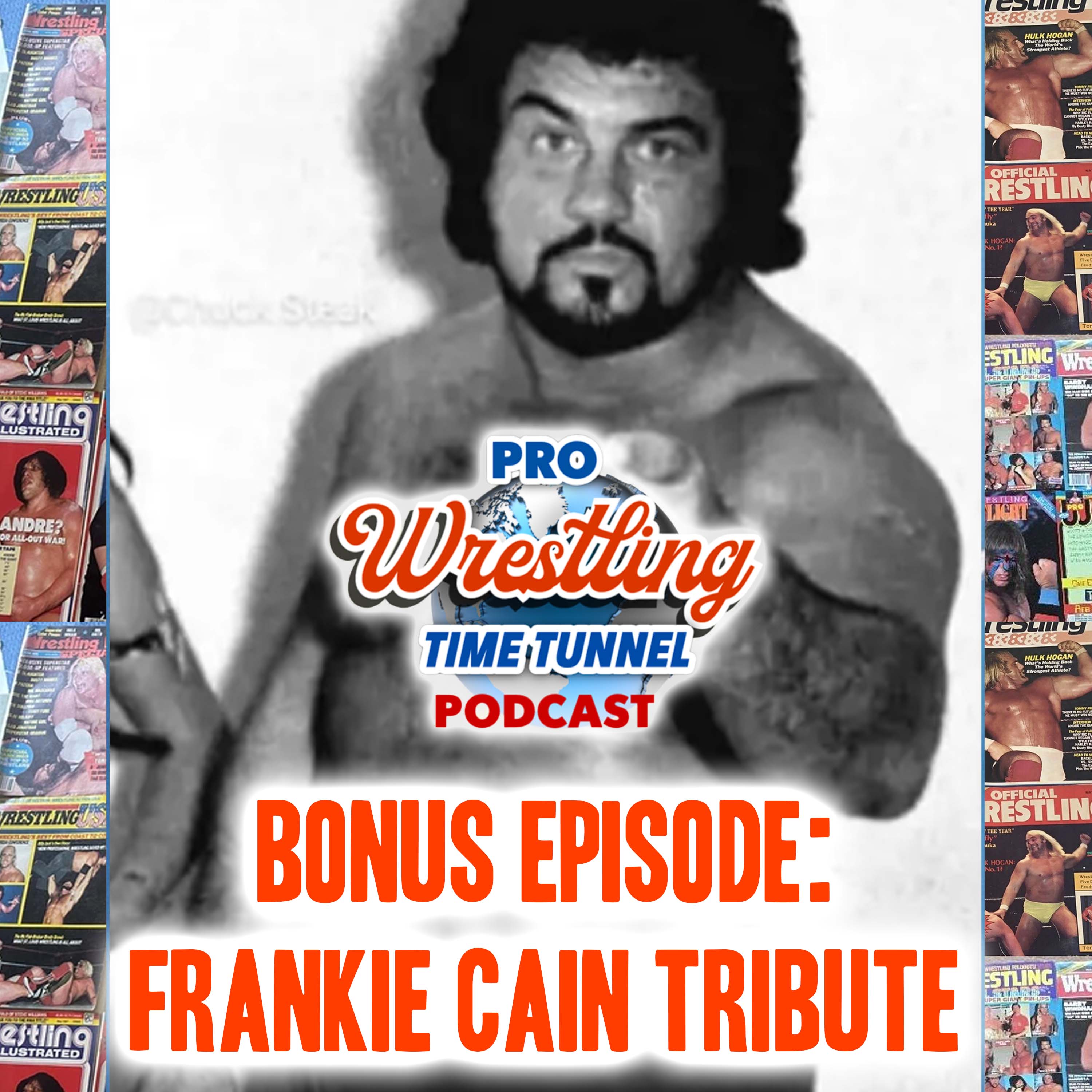
[00:00:33] Speaker C: Hey, everybody. Welcome to another edition of the Pro Wrestling Time Tunnel History Show. I'm Tony Richards, your host, coming to you from the Richards ranch in Western Kentucky. Thank you so much for joining me today. This is another special bonus episode in the month of February in 2026, and this is the second bonus episode that we've offered because unfortunately, there's just a lot of things going on. You know, I had planned on doing that bonus episode on the death of Gino Hernandez, which happened in February 1986, 40 years ago. And Lizzie Flanagan has been a friend of mine for quite some time now, and she's a dynamic young historian and author. And I don't know if you've noticed or not, but most of us historians are a little long in the tooth and we've been around quite some time and we go back quite a ways. But Lizzie's one of those people whose interest in wrestling started this century, not the previous one.
And so I'm just happy to help her and befriend her and support her work.
And she's written the book about Gino Hernandez and the biography of his life and career called I am your champion. And I hope you enjoyed that bonus episode that we had here last week. Today is a little bit more somber occasion because the, the loss is so fresh, and that is the loss of Frankie Kane, who wrestled. Most people are familiar with his run as the great Mephisto later in the video era of the territory system. But he goes back years and years and years back to Columbus, Ohio, and Al Haft and working as a smoker, which was a shoot fighter in the ring. He worked the carnivals, he worked the boxing matches. He was friends with Cowboy Latrell, he was down in Florida. He was friends with Roy Welch in Dyersburg, Tennessee, and he worked for Roy and booked a lot of the towns that are very close by, within driving range here of myself in the Tennessee Territory and Tennessee. And Frankie promoted and worked in a lot of shows. And Roy Welch would give him towns to promote and book, like Paducah, Kentucky, or Carruthersville or Poplar Bluff, Missouri, or small towns in Tennessee that were part of the Welch territory back in the early 1940s.
And he booked a lot of towns and territories, and not only that, but he worked under a mask as one of the original Mast infernos with manager JC Dykes.
He goes back in pro wrestling. He's over 90 years old, Frankie, and he goes back to the days of Jim Landos.
And so just a fantastic life. And we are fortunate that Scott Thiel of Crowbar Press, who's going to be joining me here at the Richards Ranch in just a few moments, has written two books which were basically conversations between Scott and Frankie. The first book is the blue one. It's Raising Cain From Jimmy ault to Kid McCoy with Frankie Kane and Scott Teal.
And then the second one covers the second half. And I love this book because it goes back to those things that I talked about, the carnivals, the smokers, the boxing, the Columbus, Ohio wrestling office and all of that great stuff. And then the second half of Frankie's life is in the red book, Raising Cain, which just came out about a year ago.
From the Inferno to the great Mephisto, and you can see him as the Masked Inferno on this side and the Great Mephisto over here. There's some great matches in Houston, in the Houston Coliseum out there that you can watch again by Frankie Kane and Scott Thiel and I. There is a stack of books.
There's about seven or eight books that are in a stack. I have a little reading cubby sort of off my kitchen here at the Richards Ranch in the. In the bunk house, and I keep about seven or eight books in that stack that when I get ready for bed at night, I like to turn all the televisions off and all the computers off and just sit and quietly read.
And I've got a nice easy chair in there and a nice reading light. And these two books are in there, and I'll just grab one of them and just read portions of them, not even complete chapters, just parts of these conversations that Scott and Frankie were having.
That just gives you tremendous insight into professional wrestling over all of these years and all these progressions of decades forward through the Territory era. And we wouldn't have that if it weren't for Scott and if it weren't for Frankie, who lived and worked through that entire time.
And I'm just thrilled that we're going to have an opportunity to honor Frankie today.
And Scott Teal, who is very close friends with Frankie, he's going to tell the story about how they met.
And I just like to sit and pick Scott's brain about his relationship with Frankie and give him the opportunity to use this platform, the Pro Wrestling Time Tunnel History show, to honor his great friend, Frankie Kane. So let's go to that conversation now with Scott Thiel at the Richards Ranch. Hello again, everybody. Welcome to another edition of the Pro Wrestling Time Tunnel. I'm your host, Tony Richards, coming to you live from the Richards Ranch in Western Kentucky. And today, Today I have a special guest on the program from Crowbar Press down in Nashville, Tennessee. My good friend Scott Teal is here. And we're going to pay a special homage and tribute today to a really good friend of Scott's that we lost from the wrestling business lately, Frankie Kane. And first of all, Scott, as I welcome you onto our program, let me extend my condolences to you for the. The loss of your friend.
Most of us look at it and we, we hate it because he gave so much to us in the business. But, I mean, this is a guy that you knew very, very closely.
[00:07:43] Speaker B: Yes, absolutely. This is. I've lost so many, you know, hundreds of guys that I knew, knew well, you know, through my years in the business. But this one has probably hit me harder than any so far. It really has.
[00:07:54] Speaker C: I'm sorry, Frankie.
[00:07:56] Speaker B: Than just about anybody.
[00:07:57] Speaker C: You and Bobby Simmons. You know, I always talk to Bobby. He's done so many funerals, you know, so many friends in the business that he's known or whatever.
[00:08:07] Speaker B: So one hit him the hardest. Charlie Smith. Oh, my gosh, he talked to Charlie every single day, every single morning. They talked to each other on the
[00:08:15] Speaker C: phone and rode a lot of miles together.
[00:08:17] Speaker B: Oh, yes, they did, absolutely. Many years.
[00:08:21] Speaker C: You and Frankie spent a lot of time together. And in a lot of the time that you spent together, you talked about his life and his career.
And you've documented that in two different books. This first one, called Raising Cain, is the story of his early life growing up in Ohio and getting into the. Breaking into the business and working the carnivals and things like that. And then the one you released last year was part two about his days as he transformed into the Inferno tag team and then the Great Mephisto years and things like that. And as you can see, I got markers.
And you think I took the college course on Frankie Kane because I've got underlines and markings and highlights and doing the Welch series that I just did with Briscoe and Bradshaw. There was just so many little details in both of these books that were so handy that a lot of people didn't know about the Welch family. And Frankie was very close to Roy, so there was some good stuff in there that I was able to use.
[00:09:27] Speaker B: Frankie. It's not just Frankie's story. It's just what you just said. You know, Frankie had so many connections with so many of the. The absolute legends throughout his life. Even when he was a kid, you know, he. He had times where he spent. That he spent with Buddy Rogers, Jack Pfeffer.
That, to me, I was just fascinated. I sat there trying to. You know, when I'd interview him, I'd sit there, and I was just fascinated by the stories he would tell about these guys, because he talked about him. Here he was this kid, you know, probably younger than 18, and he talked about those guys just like. It was just like he was. They were sitting there right next to him. You know, he knew him really well, and he. He told me a lot of things about them that made me realize he. He was going right down the line. You know, he. He was being legitimate about what he was telling me. He wasn't just making up stories.
[00:10:16] Speaker C: Yeah. And you were involved with publishing another book, too, the Don Fargo story.
And I've been in depth in that, too, for research as well. And the thing is, those two guys broke in at a time that was so unique at the business that we just don't know a lot about.
And those three books, the two on Frankie and the one on Don, really give you insight into what the business was like back in those days.
[00:10:45] Speaker B: Absolutely. And we've lost so many of the guys now. There's so few that are still with us.
Fact, I really can't think of anybody that would have the knowledge that Fargo and Frankie had. You know, most of them are gone now. And that's why I felt it was so important all these years to talk to these guys and interview as many of these guys as I could. Because once they're gone, we lose all those stories.
And it was mainly because of the nature of the business. You know, those stories were not recorded. They weren't written down. They'd never told anybody. The wrestlers never told anybody except other wrestlers those stories.
So anything we have from those days, it had to come directly from them. And sadly, because of the nature of the business, being kayfabe and secretive, the. A lot of the stuff that I wish we had now has been lost. I think of so many guys now that I wish I had talked to before they passed away, but bygones be bygones, you know, those opportunities are gone now.
[00:11:46] Speaker C: Treasure what we have. Yeah, I'm so fascinated by the.
By the days where he worked the. At shows and the carnivals and, you know, you're told pretty much by the owner that you can't lose. You know, you got to pick these guys out of a crowd and you got to beat them, you know, because I don't want to give up the prize money. So what was some of the stuff that he told you about his early days that you thought was so interesting?
[00:12:15] Speaker B: Really, the main thing, it was hanging around with the. With the wrestlers back from that time. You know, he and a couple friends when. When they were probably, I'd say eight, nine years old, they would hang around the wrestling office.
And he told a hilarious story one time about Anton Leone getting. I think he was getting on the elevator or something. It's been so long since I've. I've looked at that story, but. And Leone chasing them off, calling them names because they were sort of ragging him a little bit.
But that. That's the kind of thing I love. Be. And be honest with you, to me, the most interesting part of Frankie's story is not the wrestling. It's all the things that he went through when he was a kid living on the streets, you know, protecting the prostitutes, running the.
[00:13:00] Speaker C: Running the scams just to survive.
[00:13:03] Speaker B: Yes, and that's funny, too, because he told me the story about them going into a store and two of the guys would start wrestling like they're fighting each other.
So the owner of the store or whoever is running the cashier, they'd run over to where they are to break them apart. In the meantime, Frankie or one of his friends, they're grabbing all kinds of stuff and running out the front door with them, because while they, you know, why they're there, the attention of the person in charge was distracted. And I went into the newspapers and I looked, looked up. I can't remember what I typed up, but I typed up something like boys in store stealing or something like that. And I actually found an article that talked about that, about how two boys got on there, distracted the cashier by wrestling on the floor, and then some other kids ran out with all kinds of merchandise. And it was Frank, Frankie, he narrated it exactly as that article said. And I thought that was amazing that I happened. Just happened to find that, you know, just by a little bit of searching.
[00:14:02] Speaker C: Yeah, that's fascinating. He learned how to distract the referee early on, you know.
[00:14:07] Speaker B: Yeah, that's true.
[00:14:08] Speaker C: Learn how to work everybody and tractor, referee. He had it down at nine years old, you know.
[00:14:13] Speaker B: That's right. That's right.
[00:14:15] Speaker C: But I mean, you know, it's difficult sometimes for people to relate because they've never been in that position where you don't really have a steady place to live, you don't have any money, you don't have anything to eat, and you, you have to rely on your creativity to figure out how to get by, you know?
[00:14:35] Speaker B: Yes. Yeah. When I first Frankie was first telling me these stories, I wasn't real, real sure about putting some of them into the book about him stealing stuff and stealing fruit and vegetables to eat or and breaking into warehouses so they had a place to sleep. But the more I thought about it is exactly what you just said. You know, he was living on the streets and it was a day to day thing for them just to get a meal, just to get enough food to eat and everything he did, he. Frank, knowing Frankie as I do now, he is not a, never has been a thief just to steal things or to better himself. He was a thief because he want, he needed to eat, he needed, was just trying to make it, you know, stay alive.
[00:15:20] Speaker C: Most of us wake up in the morning with all these challenges and problems, but typically they're not, what am I going to eat today?
[00:15:26] Speaker B: That's right.
[00:15:27] Speaker C: Or where am I going to sleep tonight? We don't usually have to deal with that kind of stuff. And that's on the lowest level of safety and survival, you know.
[00:15:36] Speaker B: Yes.
[00:15:36] Speaker C: Motivates you to figure out how to get those things. Where did you first meet Frankie?
[00:15:43] Speaker B: I first met Frankie when I'd been out of the business for several years and I can't remember the year, it was probably 86 maybe, but a guy named Don Rowlett called me one day and at the time I was one of the few people in this area that had a computer wrestling people anyways, that had a computer. And Don called me and he asked me, he said he was going to be putting on a fan convention in Nashville and he wanted to know if I'd help him. Somebody told him I had a computer and he wanted to know if I'd help him do some publicity, some flyers and things.
So I agreed to do that. I thought that was really cool. He's bringing in guys from all over the country.
And so I produced the flyers. But at the same time, that's exactly when I came up with the idea of whatever my Whatever Happened to newsletter.
Because I started talking with some of these guys, I thought, you know, people don't know what's happened. These guys disappeared off the face of the earth.
Fans don't know where they are.
So I, I put the newsletter together. Well, at that convention, he brought Frankie Kane in. And I don't. Can't even tell you how he got a hold of Frankie because Frankie has always been very secretive. He never wanted to, you know, talk to a lot of people. In fact, he wouldn't share his story with anybody except me for a long time. He talked to a couple people later on. Steve Johnson, Rock Rims. But for the most part, you know, he wouldn't. He would not share his story with anybody except me. But anyways, that's where I met Frankie, was at that fan convention.
[00:17:16] Speaker C: Wow. And. And then how did you guys keep your relationship going then? Did you hear from him after that or what? What precipitated you turning out to have in a really close relationship?
[00:17:28] Speaker B: Well, after that, I don't know that I really talked to him that often after that. Maybe a few times. But when I started going to the Gulf Coast Wrestlers reunion in Mobile, he showed up probably the third year that I was going there.
And we spent a lot of time, one of those nights in a restaurant talking.
And that's where come up with the idea. I actually did a Whatever Happened to magazine. It was about. I don't remember how big it was. It was probably says 60, 70 pages. And it was his the Story of Mephisto, you know. But he did not share a lot of the stuff about his childhood that he did later on for the books.
[00:18:08] Speaker C: Yeah.
[00:18:09] Speaker B: And that was really the genesis of how the books actually came about. And I waited, I'd say, 15 years before we actually got started on an actual book.
[00:18:20] Speaker C: That's one of the things that I hate about some of those things going away, like the Gulf coast reunion and the Tennessee thing that you've done before, is that it puts those guys in a mindset of being nostalgic and. Yeah, that's when, you know, after experiencing that and standing around the boys and talking to the boys and everything, they, you know, they, they feel like they want to relive and talk about that stuff, you know.
[00:18:44] Speaker B: Yeah, a lot of those guys that. It's like I said, they disappeared. And for the most part, they were forgotten by the fans. The fans moved on. It was Hulk Hogan, all these guys. And the old timers were forgotten. So when they had an opportunity, here they go, come to the reunion. And then I'm putting out this newsletter. Well, the newsletter was just a gold mine for them because that. It gave them an opportunity once again to hear from some of the fans because in the newsletter, I not only published a little bit of their story, and they weren't long, but maybe three, four, five pages. Some were longer than that.
But I also published their address and their phone number. You know, I, I don't know that I'd even think about doing that these days, but I got permission from everybody and they all said, sure, publish my address and phone number.
And they got mess. All kinds of letters in the mail from fans. And I'm not talking about like today they get letters from the fans in the mail and they want a picture or something.
[00:19:39] Speaker C: Oh, sure.
[00:19:40] Speaker B: Then they turn around and sell it on ebay. Back then, the fans simply wanted to tell them.
In fact, most of the letters that they sent was simply to tell them how much they appreciated them for what they had done during the wrestling career, how, what they meant to these fans. You know, when you, when we were fans back then, it was awesome to watch those guys in the ring and then to have an opportunity to write to one of them and thank them for all the enjoyment they gave them during their years in the ring. That meant a lot to the fans. But more than that, it meant a lot to the wrestlers. I had more than.
I can't tell you how many wrestlers who told me they were so excited to get letters from fans because they just hadn't heard from anybody in, in the years. Everybody had forgotten them. And I would imagine most of the people close to them, they didn't know who they were either because they didn't share the. Their stories. For the most part, they didn't want to tell their stories to anybody because they knew the fans would start asking them about wrestling being, quote, fake and all that stuff. So they just went about their everyday, ordinary lives as whatever, you know, occupation they were doing at the time.
[00:20:49] Speaker C: And it was their habit to not talk about kayfabe, I mean, not talk about the business. And a lot of those guys from that time that I've talked to, they're still a little uncomfortable about, you know, talking about it, you know.
[00:21:03] Speaker B: Yeah, when I first started that whatever happened to newsletter, I had a few of them that were sort of, you know, that they were. They. They give me a little bit of inside information, but of course I knew it, knew all the information, but I, I wanted to be careful what I printed because back then you didn't just. They didn't just come out and tell you the story like they do today nowadays. They tell you everything.
But back then they didn't. And with some of the guys, it took me a Little while to crack, you know, to get to a point where they would actually really open up with me and tell all the nuts and bolts of what happened during those times.
[00:21:41] Speaker C: I mean, one of those you've reprinted in one of the volumes. I can't remember which one it is out of the three, but in your wrestling archive book, you got a interview with Jackie Fargo, who didn't do interviews at all. And we're just fortunate to have the one you did.
[00:21:58] Speaker B: Yes, yes. That's the only time Jackie has actually opened up, and he did not open up even with me, all that much. And I knew Jackie really well from the set, you know, the mid-70s through the. Through 1980.
He was very reserved. Did not want to break kayfabe, but he opened up enough with me that it made it an interesting interview. And I wish I could have got him to open up like I did with Don. You know, Don just opened up completely. You know, he told me everything. Every question I asked, he answered. He answered in.
[00:22:31] Speaker C: In full. How long was it before you got to meet and be close to Frankie's wife?
[00:22:39] Speaker B: I'd say I met Frankie's wife.
Well, I had talked to her quite a bit. You know, when I was talking Frankie on the phone, I'd talk to her quite often.
I don't think I actually met her, I'd say, until.
It may have been the. When we published the first book. I can't remember if I met her. No, it was before that, because I went down there a few times to talk with Frankie, and I don't think she ever. She. I take that back. She came to the reunion in Mobile one time.
[00:23:08] Speaker C: That excerpt at the beginning of book two by his daughter is still one of my favorite pieces to read.
[00:23:14] Speaker B: Oh, yeah.
[00:23:15] Speaker C: Where she has the memories of. Of him and her coming into the kitchen and he's working on his gimmick, and she doesn't even recognize him. You know, I love that I reread that from time to time just because I enjoy that piece of literature so much.
[00:23:31] Speaker B: Yes. Yeah, that's. That. That.
[00:23:33] Speaker C: That.
[00:23:33] Speaker B: That was an amazing story. April really did a good job of sharing that. And. And it's true. He was working on his character, his Mephisto character. And that right there is just the best example. Those guys were not actually what I call care characters. They were exactly what they were. Frankie was into the spiritual aspect of things. He loved reading books, or not reading books, but studying things about, you know, spiritual things. Not. I'm not talking about Bible spiritual things, but I'm Talking about mysticism, I guess that's the best word there.
[00:24:08] Speaker C: Yeah, sure.
[00:24:09] Speaker B: He loved that. So when he got into that character, he was into that character. And I tell people all the time, Sputnik Monroe, he was not a character.
[00:24:18] Speaker C: Right. None of those guys were.
[00:24:20] Speaker B: He was Sputnik Monroe and he, he was the character. Well, he wasn't portraying a character. He was the character. And that's the difference between the old Gu Horizon today. The guys in the old days, they, in the ring, they pretty much portrayed exactly the way they were, you know, outside of the ring, in, in real life. And it wasn't something they made up. You know, they give all these guys these gimmicks today, but has nothing to do with the way they really are.
[00:24:47] Speaker C: Yeah, they, the, the old guys, they took it right up to the line of realism and then maybe added a little bit on top of it, you know.
[00:24:54] Speaker B: Yes, that's right.
[00:24:56] Speaker C: Which was. Made it a lot more authentic, especially in their interviews and in their, their programs with each other because, you know, it's difficult to figure out what to work and what's a shoot because it was so close to real.
[00:25:11] Speaker B: Yeah.
[00:25:13] Speaker C: So how did, how did it come about that Frankie agreed then to write these two books?
[00:25:19] Speaker B: Well, we just developed such a relationship through when it went. When I did that. Whatever happened to book, we, we got closer and closer, talk, talked more and more. I mean, we talked all the time.
And I can't remember, I think it
[00:25:33] Speaker C: might have been in a shoot video where he's talking to somebody and he goes, well, just contact Scott Teal. He got my story.
[00:25:42] Speaker B: Yes, that's right. That was my shooting with the Legends video that I did. Yeah.
[00:25:46] Speaker C: Is that what it was?
[00:25:47] Speaker B: Okay, yeah. Yes, that's probably, probably where it was anyway. But anyway, yes, he, he started after we did that little booklet, that 60, 70 page booklet. Whatever happened to booklet? He just.
I contact him and in my Whatever Happened to newsletter that came out, you know, on an irregular basis, monthly or whatever, I had columns by different wrestlers. Like Dick Steinborn had a column, I think it was called the way I remember it, different wrestlers had columns. And because they had great stories, so we, we took those stories and gave. Put, Put column. Well, Frankie, I thought, you know, he's told me so many stories, I've recorded so many. So what Frankie and I decided to do is every time I was going to put out an issue, he would call and we'd. He. I'd record five, six stories and we, we'd put that. Every issue of Whatever Happened to, at that point, would have a column I called Mephisto's Musings, and so. And it would just feature two, three stories that he told. Funny things happened on the road, in the ring, things he remembered about other wrestlers.
So that's really how it all that got started. As far as the book goes.
After a couple few years, I. We just. I called him and we just decided, why don't we take all the stuff we've written so far.
Let me expand on it. Let me dig into what you've told me already and just expand on that material and we'll have enough for a book. Well, as a. If you've ever talked with Frankie, man, he will talk.
He had the best memory, I think, any wrestler I ever interviewed.
[00:27:29] Speaker C: Well, you can just tell by watching him on video that he's just sitting there telling you just like anybody else would tell you. He's not thinking and creating while he's telling you. He's just recounting what happened. Yeah, he sounds just so authentic when he tells the story that, you know, you got to believe him.
[00:27:48] Speaker B: Yes. Yeah, he's authentic is exactly what you said he told. He just told the story as he remembered it. He wasn't trying to come up ways to embellish it.
My rule there. There are stories Frankie told that I would go, that's hard to believe.
Well, my rule was when. Whenever anybody told me stories, especially the ones that I thought might be. Be a little bit embellished, I always waited. I'd wait a year or so and I'd call back and I'd ask him about that particular. So I say, tell me the story about Buddy Rogers.
And I'd let them tell to me, a lot of the guys, they tell the story differently. They'd be different, got different people in the story, it would go a different way. Frankie, it was always the same. And as I said in my obit on him, it wasn't the same words, but the story was exactly the same. The people were the same, the sequence of events was the same things that happened. And if you're lying and making up stuff as you talk, you're not going to tell it the same way a year later.
[00:29:00] Speaker C: Yeah, that's right. Yeah. The thing that bothers me so much about the word fake when people use that, is that the predetermined outcome is basically what we're talking about. There's everything else about the business is not fake. And these guys would do so much to themselves and give up so much of their bodies to get their Character over or their gimmick over or whatever. And I think about Frankie wearing that prosthetic boot for so long when in the Infernos where he was the Club Foot Inferno and he had the loaded boot and it was a built up boot and over time how much damage that did to his hip and to his ankle and all that to where they finally started switching off and giving the boot to each other. And finally Rocky started wearing it because Frankie couldn't wear it anymore because his dang hip had worn out. I mean that's just commitment to me, to the business. That's things that people just don't realize.
[00:30:03] Speaker B: Absolutely, yeah. That wearing that boot like it, is it through their hip out because they're constantly walking and you know, when they, when they do something in the ring, walking across the ring, jumping in the ring, every time they hit, it would hit, let's say if they had the boot on their right foot, it would jar their right hip much more than the left because that boot was thicker and. Yeah, you know, you mentioned the Club Club Foot Inferno. That's one of the things that's sort of a question at times because Frankie was pretty much known as.
What did they call him?
They had the Club Foot Inferno and they had another name for the other one, Fire or the Flame.
I can't remember what the name was, but for the most part Frankie was the Fire Inferno because he threw the fire. In fact, he had a way of throwing that fire that nobody else had.
Everybody else used that flash paper. Frankie had a special gimmick he used and he explained it. I wish I'd gotten him to see if he actually had the device he used. But what he had, you could actually throw that flame. It would go all the way across the ring.
[00:31:13] Speaker C: Oh my.
[00:31:14] Speaker B: Where it wasn't just flash paper. You're sitting there with a match and lighting it and sort of.
[00:31:18] Speaker C: And of course we got no film or video of that at all.
[00:31:21] Speaker B: I know, isn't that a shame?
[00:31:23] Speaker C: Yeah, or photos, you know, I mean, because you, you wouldn't be expecting it.
[00:31:28] Speaker B: Right.
[00:31:28] Speaker C: So you didn't know when to take the picture, you know.
[00:31:31] Speaker B: Yes, that's true.
There's times in the, in the newspapers when it lists Club Foot Inferno wrestled so and so you can't always be really sure which one it was.
[00:31:42] Speaker C: Oh, right, yeah, sure, you know, because
[00:31:44] Speaker B: you don't know if it was Frank using the boot or, or the other one or Rocky.
[00:31:48] Speaker C: Yeah, Rocky Smith.
[00:31:49] Speaker B: Yes.
[00:31:50] Speaker C: Yeah. And then they went through a period where they were Dante, Dante and Mephisto
[00:31:56] Speaker B: and that was Bobby Hart.
[00:31:58] Speaker C: Yeah.
Lorenzo Parindi's longtime partner.
[00:32:03] Speaker B: Yes.
[00:32:04] Speaker C: How.
I had another question and it ran off from me.
What. What was the thing about Frankie that you thought was the thing that made him? I mean, he's got a reputation when people who know a little bit about the old wrestling, they know who the more good bookers are. And he. And he had a reputation as being a pretty good booker, but he never really got a large opportunity with that.
What made him. I mean, because you read through those interviews you do with him and the way he psychologically analyzes the business and talks about the way he'll talk about this is the way they did it. Here's what they should have done, and you can just tell, man, he's got a vibe for it that other people just don't have.
[00:32:56] Speaker B: Absolutely. Yeah. Yeah. You ask anybody from his era. They say Frankie Chicane had one of the sharpest minds in the wrestling business when it came to booking and when it came to in ring performance. He knew exactly what to do in the ring at one time. He always says people think that all he did was use that boot or throw the fire to get. To get heat. He didn't do that. He only did that when it was absolutely necessary. When they got to a point where they were likely to get beat by the baby faces, then he would use it, which that would bring a lot of heat from the fans, but he didn't use it, you know, on a regular basis. But yes, he was one of the smartest minds in the business. And as you said, you can tell reading the books, the things he said, things he used to tell Buddy Rogers. I mean, here's Buddy Rogers and he's a little kid riding with Buddy. Not little Kid, but probably 12 years old riding with Rogers, and he's telling Rogers stuff, and Rogers is looking at him at the corner of his eye as he's driving thing. How does this little kid know this stuff? Because he was. In fact, he told Rogers a few things that Rogers, you probably remember that in the first book, may have been second one, he told Rogers something. You should do this. Well, that night when Rogers was wrestling Billy Darnell, what did Rogers do? He did it exactly what Frankie told him.
[00:34:16] Speaker C: Yeah. And the other thing I think was fascinated by him because I'm just partial to these. These small towns that Roy Welch set up to be the first kind of Tennessee Loop, Carruthersville, Missouri, and Kennett, Missouri, and my hometown of Paducah and, you know, Ripley, Tennessee and Union City. And after Roy and Nick got the bigger towns to run, Roy would bring Frankie in to kind of keep that old loop going, you know, in some of those towns. And he would actually go in and do everything in the town. He'd be the town promoter, he'd be the booker, he'd work in the ring. He'd do all those things to get the town up and going. And I always found that fascinating about him, too.
[00:34:57] Speaker B: Yeah, you know, it's. Again, we're back to the what a shame it is that so much of the business was kayfabe, not ashamed, because that's the way it was back then. But even so, Frankie doesn't get the credit because he did. He ran a lot of those towns. And in fact, even when he was the Infernos or he was Mephisto, if he wasn't booking the towns, if he wasn't booking the territory, he was booking himself, he would tell the promoters, this is what I'm going to do. The promoters would try and tell him what to do. And a lot of times he'd say no. He says that wouldn't get over that. People won't believe it. So he was booking his own matches. When he'd get in there, he knew what to do and when to do it.
[00:35:39] Speaker C: Yeah, of course, I wasn't there at all, but just reading Frankie's perspective, he felt like Nick was a little bit afraid of him because he. He was really good at what he was doing. And Nick kind of always thought Roy was going to replace him at some point. Of course, he never did. And that was probably Nick just feeling insecure. But that just tells you how good Frankie was, you know?
[00:36:02] Speaker B: Absolutely.
[00:36:03] Speaker C: Yeah, he made Nick a little bit nervous, you know.
[00:36:06] Speaker B: Right. He made Nick a lot of money, but. But again, he did make Nick nervous. And I. And part of that may go back to the Mephisto and Dante. Well, I take that back. It was before that even, you know, when he was booking the small towns for Roy, way back before the Mephisto and Dante thing, where he knocked Nick into the shower.
[00:36:27] Speaker C: What do you think it was about Frankie that that sort of endeared him to Roy?
[00:36:32] Speaker B: Sort of what?
[00:36:33] Speaker C: You know, Roy was fond of him. It seemed like. Like, it seemed like Roy liked having him around. It seemed like he liked bringing him in. And, you know, when Roy would get somebody, even family members started into the business, he'd start them out in Dyersburg and he'd run them around that old Tennessee loop, you know, and that was kind of what he gave Frankie to Do a lot of times. And so that kind of just I, my perception was he always did that with people he liked, you know, that he wanted in the business with him. So what was it about Frankie, you think that Roy Welch like so much?
[00:37:08] Speaker B: I think first of all, Frankie is a very likable person. You know, he, in his interviews as Mephisto, he's always, it wasn't, he didn't scream, he didn't holler, he was sort of soft spoken. But he made his point and the people believed what he was saying. And, and even, even when he's around me or around anybody else, he's just very likable. He's friendly. He's always just, I don't know what, what word I'm looking for. He's just, just a nice person. It just comes across as being nice.
[00:37:38] Speaker C: That's kind of hard to believe that guy could be a heel, huh?
[00:37:41] Speaker B: Is exactly right. Of course, we used to say the heels, when I was in the business, the heels were usually nicer than the baby faces. The baby faces, A lot of times they believe their own stuff. They believe their prayer, the press, everything. That was the, all the promotion about them, the heels, they were just everyday, everyday guys.
[00:37:59] Speaker C: You know, I always, I always wondered if Roy saw some of himself in Frankie, could be like kind of a pioneering guy. Like, I could set this boy out here and he can go make those towns go, you know, like, sort of like, like I used to do, you know, it's kind of the way I was kind of thinking about it when I was reading the book, that Roy kind of saw some of himself in Frankie and he liked the way he, you know, he originally went in there and pioneered all those towns and kind of did all the stuff Frankie was doing. And I think when Frankie would go in there and make those towns go, I think Roy was almost like a proud dad, you know, you took the
[00:38:36] Speaker B: words right out of my mouth. Roy Welch pioneered the territory, the Tennessee, Kentucky territory. He'd go, well, Florida. He pioneered Florida before Cowboy Luttrell even got in there.
[00:38:47] Speaker C: Right.
[00:38:48] Speaker B: He'd go into towns and he knew what to do to get sounds running. You know, Frankie was the exact same way. And that's probably why Roy liked him. Roy knew he could send Frankie to, to Bowling Green, Kentucky or wherever. And he knew Frankie would do the job. He didn't have to sit there and worry about it. Whether that everything was being done, the guys were being taken, guys were being given the finishes correctly, the matches, whatever had to be done there at the Shows he didn't worry about that because he knew Frankie was going to take care of it.
[00:39:17] Speaker C: And you mentioned another guy that Frankie was around a lot. He spent a lot of time around Cowboy Luttrell.
They rode around together in Luttrell's car and did a lot of stuff down there in the early, early days of the Florida territory.
[00:39:32] Speaker B: That's right. That's right. That. That's something that amazes me because growing up in Florida, when I first started watching pro wrestling, Cowboy Lutcher was the promoter.
And now to hear Frankie telling these stories about riding around with Luttrell and talking to him about this and that, that's really interesting to me. You know, you always go back to your early. To your roots, your earliest days, and that's. Luttrell was there in my. During the days when I was first getting started and hanging around the business.
[00:40:01] Speaker C: And it doesn't really say so in your book, but I also feel like they might have bonded over boxing.
[00:40:08] Speaker B: Oh, yeah.
[00:40:08] Speaker C: Because Luttrell was a boxer and Frankie did a lot of boxing in his younger days, for sure. That's what's so interesting. One of the things interesting about the first book is all the stuff that Frankie did in the boxing industry and all the things you might have sometimes suspected about boxing might be true, according to Frank, Frankie.
[00:40:28] Speaker B: But you know what really fascinated me about the thing you just said, that all the stuff about boxing may be true. You know, we've. We've heard all our lives, these guys, you know, that they, yeah, they probably have regular fights when they're getting started, but when they get in the big leagues, they're going to take a dive, you know, they're going to fall, you know, fall down.
The difference between Frankie's day and this day, if two boxers today, or even in the past 30, 40 years, if they got in there, both the boxers knew what was going to happen.
I mean, in matches that were pre. Predetermined, okay, they both knew it. So they were working together. They didn't have to worry about one of the other guy killing him, you know, But Frankie, he was working the guy because he's going to put this guy over the guy's guy. They're trying to build this guy's reputation, so they want to give him win. So they send Frankie in to let. To fight the guy. Well, in the meantime, Frankie is trying not to hurt the guy, and the guy's trying to kill Frankie.
So you have to be double tough to do that because you're, you know, you're not going in there to kill the guy, and yet the guy's going after you. You got to make sure that you protect yourself, but at the same time make it look like a real fight. And then when the opportune moment comes, when the guy sort of lands a punch that looks like it really landed, that's when you go to the canvas. That amazes me more than anything Frankie did. It really does. That shows how tough he was.
[00:41:58] Speaker C: Did you and Frankie ever work with For Nick at the same time?
[00:42:03] Speaker B: No. No, I didn't even come up here until 75 and Frankie came in for Jarrett.
I'm wanting to say whenever I think it was. I can't remember when it was. It was probably before he went to San Francisco.
He just worked for Short a couple times in, in the Memphis territory, but it wasn't for Nick.
So I never really never had an opportunity to meet him. First time I saw Frankie was in Tampa, Florida. I went to Fort Homer, Hester Lee Armory.
And that night it was a main event with a guy named. A new mysterious wrestler coming in named Mr. Smith.
And I didn't know who he was. I didn't know he was one of the Infernos.
But he called himself Mr. Smith. And two weeks later, he revealed his identity and as, as the Great Mephisto. Now, when he came in as Mr. Fist, Mr. Smith, he didn't wear a mask, but he was just Mr. Smith. And I never, never put two and two together that Mr. Smith was the same guy that had wrestled in Florida as Mephisto, because I did see him wrestle in Florida as Mephisto. He had Sir Roger Mitchell as his, as his manager, and Bobby Hart was his partner. But I never knew Mr. Smith or Great Mephisto had been under the hood as, as the Great Mephisto, you know, so this shows what those guys could do. They could wrestle in the area for a long time, come back under without a mask, and still the fans had, were none the wiser.
[00:43:35] Speaker C: And for. I don't want to give away all the things because you guys need to get these books and read them if.
[00:43:40] Speaker B: Oh, that's no big deal.
[00:43:41] Speaker C: If you're, if you're. I, I just, I'm just want to encourage people to. These are fantastic books to read, especially if you like classic pro wrestling.
But Frankie based that name off of one of, of a wrestler he saw in his early days working for Al Haft, and he said he was the greatest wrestler he ever saw, right?
[00:44:00] Speaker B: Yes. Yeah. The guy, Julius Warnick was his name, and he wrestled most of the time, just as Mephisto sometimes. He did call himself the Great Mephisto.
Pretty much kept his wrestling career around Ohio, up in Michigan, up in that area. But he did, he did get around the United States and other places, the guy, according to Frankie. And Frankie, you know, talks about him a lot in the book. But the original Mephisto was quite the worker. Not only worker, but he was a good shooter, too. He could take care of himself.
And from what I've seen, he wore long red tights and the upper. The singlet on the top.
And something else I was going to say about him. Oh, he had his problems. He ended up being an alcoholic.
And I can't remember if Frank told me he ever had talked to him very much. I know he did meet him and talk to him a few times, but I can't remember if Frank said he had an opportunity, really, to sit down with him very, very much.
The guy was a big name.
[00:45:03] Speaker C: It just amazed me in the book because Frankie was saying, you know, he did things I'd never seen before and haven't seen since.
[00:45:12] Speaker B: Yeah.
[00:45:12] Speaker C: So you just, in your mind, you're thinking, gee, what did it look like? You know, what was the guy doing? You know, But. But he just said he was the best he had ever seen. And he took that name later on, basically to pay homage to the guy, I suppose.
[00:45:26] Speaker B: Did you ever think how cool it would be to have films of the guys way back then?
[00:45:31] Speaker C: Amazing.
[00:45:31] Speaker B: I mean, some of these small venues, you know, like Mephisto, some of the places he wrestled in Ohio for Al Haft or.
Or up in Michigan for Burt Ruby.
[00:45:41] Speaker C: Oh, yeah.
[00:45:42] Speaker B: My goodness, how wonderful that would be to have. Have actual film of those guys. But sadly, there's hardly anything from back in the, you know, 30s and 40s, almost nothing.
[00:45:53] Speaker C: When you think about Frankie and think about all the time you spent together and your relationship with him, what's your favorite memory of him?
Who?
[00:46:01] Speaker B: That's a good question. You should have sent me that one ahead time so I had time to think.
[00:46:05] Speaker C: I just thought of it, Scott.
[00:46:09] Speaker B: I don't know.
Just the thing that comes to my mind when I talk about Frankie is just how.
What a great memory he had.
Just how he was able. Just talk for hours. And I mean, we. We did 80, 90, 100 hours worth of interview work over the period of time. Maybe even more than that.
[00:46:28] Speaker C: Well, to talk about the book again, like, especially the second book. I think the second book, it just goes in time periods like this, when I just opened it up to page 23, San Francisco, June 17th of May 3rd, 1973. And then you go to another time period, and he just goes from time period to time period and time period and tells you about every one of them that he spent time in. And to your point, I mean, that's just amazing he was able to do that.
[00:46:59] Speaker B: How do you remember stuff happening?
[00:47:01] Speaker C: I can't, you know.
[00:47:02] Speaker B: Yeah, you're 1958, 1959. He tells me stories and I'm like, wow, how does he remember all this? So I go into the newspaper archives online and I look up, he may have told me about a match he had with the guy named Marco Polo. So I go online and I look up Tampa, type in Marco Polo. There it is. Frankie can't. Or actually time. It was a schoolboy Martin. Schoolboy Martin against.
I just. Oh, Marco Polo. And it's the exact match he talked about. Danny McShane was there at the exact same time, and Frankie told me about him. And I'm matching all this stuff up and I'm thinking, I can't remember what I did last week.
[00:47:40] Speaker C: Right.
[00:47:41] Speaker B: You know, it's not that I'm old, it's just we don't. We. We just don't think about it, you know, I can't tell you what I did last week.
[00:47:47] Speaker C: No, I mean, people friends of mine will say, you remember in 1987 when we went to so and so? And I'm like, no, no, I can't.
So, I mean, I give grace to those, to a lot of the guys, because, you know, fans expect them to remember everything.
[00:48:04] Speaker B: Right.
[00:48:05] Speaker C: Very few of them can, you know, and I think sometimes they feel pressured to remember. And that's where some of the augmentation of the story comes in, you know, because they feel. They feel obligated to tell the story or tell the memory, even if it's not exactly right. You know what I mean?
[00:48:24] Speaker B: And, yeah, Frank.
[00:48:25] Speaker C: Frankie doesn't have that. I mean, he. He doesn't. Isn't that way. I mean, he pretty much can document his life to you, you know, and
[00:48:32] Speaker B: that's a good point. I really had never thought about that. But a lot of the guys that. They don't remember a lot or they don't. They don't have the ability to tell the story. I mean, I talked to main event guys that I think, man, this guy, he was in Madison Square Garden wrestling Bruno Sammartino. He's going to have great stories. Well, then I talk with him and he can barely remember anything.
Frankie didn't have to make up things because he remembered stuff. He remembered things as they happened and not just small, not just events, but he remembered details about events. He remembers details about matches. It's like the match with that he. And when he was the Infernos and they wrestled Gene and Lars Anderson, and here the Andersons were out in the ring getting all the fans all worked up, trying to get all the heat. So when Frankie and his partner came out, they would, the fans would start to cheer him because they're going out there against the Andersons who got the fans all worked up, right? Well, Frankie hung around in the dressing room for the longest time acting like he had a broken shoelace until the fans had screamed all they could scream and they were tired of screaming. Well, when they came out here, they had JC on their shoulders and the fans went live. It absolutely hated them. So the, the Andersons wound up as the baby faces. But that's the kind of detail that he remembered. He remembers stuff like that. You know, I never have to pull anything out of him. He knew he remembered things.
[00:50:01] Speaker C: When's the last time you talked with him?
[00:50:04] Speaker B: I'd say a month before he passed away. He was having. It may have been even a little longer than that.
He just had a lot of health problems. He fought, he had fallen several times. And I talk with Chris every once in a while and she'd say, he's laid up in bed or he's in the hospital. He was in and out of the hospital a lot.
So, yeah, I'd say a month or two.
[00:50:31] Speaker C: Frank, was Frankie proud of his career?
[00:50:34] Speaker B: Oh, very proud of his career. I mean, I take. Let me qualify that he wasn't boastful about what he did, but he loved his. What, his life. He loved his life. And that's part of the things he told in his store. When he told stories, he talked about how much he loved what he did.
But again, he was not boastful. In fact, he downplayed his ability a lot of time because he would say, you know, these guys, I don't know how they, you know, the fans really took to me at times, he says, because I was such a small guy and he was, he was short, you know, I don't know what his height was.5, 8, maybe, maybe not even that. But he was short. But I told him, I said, frank, you have said that so many times that you were too. You were short, so how can you really make yourself look good against these Giants? I said, but when you were Mephisto, I saw you live in Tampa the First time I saw you were Mr. Smith. But I never, never one time thought, that guy's really short.
And it's because of the way he handled himself he did in the ring. It made the people believe that it was almost like a Jack the Giant Killer type thing, you know?
[00:51:46] Speaker C: Well, I was on a, I was on a show last night talking Memphis wrestling with Randy Hales and Michael St. John and those guys, and we were watching the Fullers against Bill Dundee and George Barnes and Johnny Gray and, and we're sitting there going, you don't even notice how small Bill Dundee and Johnny Gray are and how tall the Fullers are. Like they're working so well. You don't, it's not, not. It doesn't stick out to you.
[00:52:15] Speaker B: Absolutely. You don't even think about it. It doesn't, you know, it doesn't make any difference.
[00:52:19] Speaker C: Frankie was. When they was wearing those body suits and everything. Same thing with the Ernesto and Hamilton. I mean, you just didn't pay any attention to that. They just look menacing.
[00:52:29] Speaker B: Yes. Oh, yeah. The Infernos were scary.
Well, the Assassins, be honest, I think the Assassins were scarier than the Infernos, but again, that's because the Assassins were so much bigger.
[00:52:40] Speaker C: Right, right.
What do you think? I mean, this would be a hard one to answer, but I just got to ask you, what do you think Frankie's contribution is to the business?
[00:52:50] Speaker B: Oh, wow.
I guess the easiest way to say it would be the books because there is so much history in those books.
[00:53:01] Speaker C: It's the one I appreciate the most about him, that he was willing to sit down and, and take all this stuff out of his head and put it down and.
[00:53:09] Speaker B: Absolutely.
[00:53:10] Speaker C: You were there to document it. I mean, I'm, I am very, very. I treasure these books. I mean, I, they got so much stuff in it that I've been curious about for so long.
And in those, while we don't have extensive history, I mean, it's really, really deep what he provided.
[00:53:27] Speaker B: Yes. And he not only. He details stories about other wrestlers that we didn't know, he talks about the promoters, things we didn't realize, like the Columbus Wrestling office there on North High Street.
You know, I would have never thought about, you know, the things he talked about the office, how there was a secret floor between the second and third floors and that's where the ring was, that's where the boy, the wrestlers trained.
I would never thought that. And then he. But he not only shares the history, the stories about the boys, but he shares things about the workings of the business. How, you know, what do you do when you get in the ring when you're a heel? What's the best way to get the people to hate you? It's not to scream at the fans, which a lot of guys did. They'd walk, they go outside the ring and. And they'd look at some guy, he says, your wife is sleeping with 20 other guys, you know, you're not enough for. They'd insult the fans, you know. But Frankie didn't do that.
[00:54:18] Speaker C: He.
[00:54:19] Speaker B: He made his. Got his heat by doing things in the ring, by doing things through, you know, his moods and the holds he put on the wrestlers and the counters he did. He didn't have to just insult people to get, to get heat. That was more kind of heat, which
[00:54:34] Speaker C: was more in the style of an old 1930s, 1940s Tennessee Heel.
[00:54:38] Speaker B: Yes.
[00:54:40] Speaker C: They didn't have television, they didn't have interviews to do that kind of stuff. So they had to do everything very visibly in the ring in front of 3,000 people or so, you know, or less. And they had to more or less be very good pantomime type people because they had to be able to see what they were doing and they had to be able to use things that people could relate to.
[00:55:06] Speaker B: Yes. Yeah. And if they did a promo or an interview, it was from the ring. They just, they'd get the microphone in the ring and they'd start saying what they're going to do the guy the next week. You know, that's. That's all they had. They didn't have the, like you said, the tv, you know, to do that way back then.
[00:55:21] Speaker C: Yeah. Talk to Kevin McCann here a while back about his rowdy Red Roberts book. And we're talking about Red and talking about him using Lye soap, you know, as a. As a heel tactic because every woman in the arena used it, you know, So, I mean, it was relatable, you know.
[00:55:39] Speaker B: Yeah.
[00:55:40] Speaker C: And they knew what would happen if you got it in your eyes, you know, and met Red Roberts.
[00:55:46] Speaker B: I never had an opportunity. I think he was probably dead before I came up here. But what a wiry looking guy he was.
[00:55:53] Speaker C: Oh, yeah.
[00:55:54] Speaker B: Old school, wiry, country bumpkin type looking guy. But.
[00:55:58] Speaker C: Oh, but I, But I think about Frankie being a heel like you were describing. I think about him being in that style, in the style of a Pat Malone, you know, not necessarily in the style of later ones where it was mostly, I'm just going to be a jerk to you.
[00:56:14] Speaker B: Right, right. Frankie was a student of the wrestling game when he was a kid, and I think that's why he learned so much, because he studied. He watched those guys and studied every single thing they did. But the best thing about it is, after he watched them, he'd think it would give him ideas for, I could do that in the ring, that would be good, but I'll improve it by doing this. And he had.
[00:56:37] Speaker C: He.
[00:56:38] Speaker B: His mind was so sharp, he could think of things that would improve on what other. The other guys did. He didn't copy guys, but he might take one of their moves or something and say, that doesn't look quite right, but I can do this and make it really more effective and really pull the fans in to what I'm doing. Then, you know, then what I could, if I just did it that normal way.
[00:57:00] Speaker C: Well, Scott, I just want to tell you how much I appreciate you, first of all, for everything that you've done with Crowbar Press and all the wonderful things that we have today. All the things I have on my bookshelf because of you. I thank you for these two books on Frankie Kane and I. I appreciate you spending some time with me today to. To talk about him and remember him and help pay tribute to him.
[00:57:23] Speaker B: Well, I appreciate you. I appreciate all you're doing for. To keep this, the history of the business alive. You're talking to a lot of guys now, which I've sort of slowed down and doing a lot of that now, talking to guys personally. But you're doing that, you're preserving some of the stor that I didn't get to some of the guys stories that I didn't get to. And. And I'm glad you're doing that because like I said earlier, these guys aren't gonna be here forever. And when they're gone, the stories are gone.
[00:57:49] Speaker C: That's exactly right. Scott Thiel, everybody. Scott, thanks again, man.
[00:57:53] Speaker B: Thank you, Tony. It's good to be with you.
[00:57:55] Speaker C: Well, there you have it. I hope you enjoyed that conversation with myself and Scott Teal here at the Richards Ranch, paying tribute to a true pioneer and influential figure during the territory era of professional wrestling.
And rest in peace. And thank you so much for all you gave to the business and all you gave to us, the fans.
Frankie Kane, the great Mephisto. And I hope you've enjoyed this special tribute to Frankie in this bonus episode of the Pro Wrestling Time Tunnel History Show.
And just a quick reminder, we're in the middle of our 1985 territory review, and we've been going through the existing territories in 1985, 40 years ago and talking about the national expansion years. Wrestling is changing. It's the first year of the disintegration era of my seven Stages of the territory era model. And the territory system begins to crumble and fall apart starting in 1985 and will be completely disintegrated by 1995.
And so we've gone through most of the territories and we have two more episodes of that series coming up. The next one will drop this Wednesday on February 24th, 25th, February 25th. And my special guest co host will be Greg Klein. You've heard him. He's part of our pro wrestling Time Tunnel family here where he usually works with me on the 1970s Texas episodes in the Dallas territory. And he'll be doing a review with me of Mid South Wrestling in 1985, that tremendous run coming off the great year in 1984 and the wrestle Rock event, the Ted Dibiase, Ric Flair and Dick Murdoch angle in November of that year, which was one of the I never got enough of that. I remember tape trading back in the day and getting that in a tape trade and just being blown away by that entire angle and match and Dibiase coming out of the locker room. Bill Watts first of all coming on and giving the warning about Dibiase. He's been injured from the brain buster on the concrete floor, but they are going to continue the match. But if you have young children, please consider not letting them watch it. And then Dibiase comes out doing the 1776 deal with his head wrapped and bandaged and blood leaking through and he has the match with flair.
We could do an entire show just on that one angle and match that took place in November of 85 in Mid South Wrestling. But it's a fun show and I think you'll enjoy it. It'll drop this Wednesday morning, 5:00am Central Time, 6:00am Eastern, 4:00am, 3:00am Pacific Time. And then the next week we'll have the Portland Wrestling show with my friends Mike, Frank Culbertson and Mike Rogers.
My brain went into neutral there on Mike's last name. I almost said Mike Graham, Mike Rogers and Frank Culbertson will be here and we'll go through Portland Wrestling in 1985 and that'll wrap up our 1985 review series.
And then we'll start the 1976 Territory Review Series coming up in March and April of this year. And that'll run for several weeks as we review all the territories. And there were a lot more of them in 1976 than they were in 1985. Thanks for joining me today.
If you like what we do here, please join in. Become a member of one of our groups in the Pro Wrestling Time Tunnel community.
Hit the like button on all our content. Share it with friends you know are Pro Wrestling history enthusiasts like you are and like I am. And this is just a a whole lot of fun going through the history of Territory wrestling and that's what the Pro Wrestling Time Tunnel is all about. It's your home for the history of territory wrestling.
So thank you so much for joining me. Also on the show coming up Wednesday, I'm going to be talking about how our show has grown so much in the last few months and cover some of the great areas of the world that are listening to the Pro Wrestling Time Tunnel. So I may give you a shout out on Wednesday. So don't forget to check that out Wednesday morning here where you download the Pro Wrestling Time Tunnel History Show. It's available wherever you get your audio podcast. You can also get it on video on our YouTube channel and at the home of the Pro Wrestling Time Tunnel on our Substack channel where I publish wrestling history content and research that I'm doing every single day. And you can sign up there as a subscriber for free. If you want to support the work I do, I would be greatly thankful to you for doing that. It's just $5 a month or if you want to save 10 bucks, it's $50 a year for an annual subscription. And then you'll get all the content that I post, including my Evolution of Pro Wrestling series and other stories that I'm covering and telling about the various figures and historic cards and great things that happened throughout the years in the Territory era. Thanks so much for joining me today. I hope you enjoyed this tribute to Frankie Cain and my conversation with Scott Thiel.
I will be back on Wednesday with the 1985 Mid South Wrestling Show. Until then, I'm your friend and host Tony Richards, reminding you that if you want better neighbors, you be the one that starts it. You be a better neighbor. Let's support each other where we can. Thanks everybody from the Richards Ranch in Western Kentucky. So long from the Bluegrass State.
[01:04:25] Speaker A: Thanks for tuning in to the Pro Wrestling Time Tunnel podcast.
Tune in for another great episode next week interviewing wrestlers, referees and media personalities that have made the sport of professional wrestling great. We'll release a new episode soon. Don't you dare miss it.