[00:00:02] Speaker A: Time for the Pro Wrestling Time Tunnel podcast.
[00:00:05] Speaker B: We've got lots and lots of things to talk about and to do today, covering the territories from the 1940s to the 1990s.
[00:00:13] Speaker C: It's the best thing going today.
[00:00:18] Speaker A: Interviewing wrestlers, referees, authors and other media
[00:00:22] Speaker B: personalities that have made the sport of professional wrestling great.
[00:00:27] Speaker A: The cream, yeah, the cream of the crop. And now here's your host, Tony Richards.
[00:00:33] Speaker C: Well, hey there, everybody. Welcome to another edition of the Pro Wrestling Time Tunnel. I'm your host, Tony Richards, coming to you live from Western Kentucky on the Richards Ranch. Thank you for joining me again this week. I got an interesting show coming up for you today and I, I had just a lot of fun doing it and I hope you're going to enjoy it as well. And we'll get to that in just a minute. I'll tell you all about it. I want to remind you that the audio version of our podcast is now available on all the major platforms where you download your podcast. I think we have several of our previous shows that are now available going back almost to show number 18 or so, and we're constantly adding the original 15, 16, 17 shows when Dominic has time.
Dominic D' Angelo is our producer and he has to convert those over so we can put those on our, on our system that shoots it out to all the platforms.
And so he's been really, really busy boy here lately, and I haven't pushed him to get any of our archives in there. But we'll add more as we go and we'll eventually get all the previous episodes up and distributed out to you.
Podcasts are available. Apple Podcast, of course, one of the most popular platforms, Spotify, Podcast, Addict, Pocket Cast and many, many others. You can still see all our shows. Every one of them is still available on our substack channel, Pro Wrestling Time Tunnel, and the video version. We have the audio and video version on substack and the video version of all our shows are available on our YouTube channel, the Pro Wrestling Time Tunnel. So scoot on over there where we upload a new clip of our show in the library almost every single day. We keep that thing updated and flowing for all our subscribers at YouTube. And while you're there, if you go by and check it out, go ahead and like and subscribe our channel. We'd really appreciate the support. The SEC tournaments getting started today.
This show comes out on Wednesday and the SEC tournament starts on Wednesday just down the road just south of the Richards Ranch, across the state line in good old Music City, usa. Nashville, Tennessee, Florida is probably the favorite to win the tournament this year. The Gators have got a really fantastic team this year, coached by Todd golden, who's proven himself. I mean, they're the. They're the defending national champions, and so you can bet they will be on their game because they want a repeat. Now they can get knocked out of the SEC tournament and still go on and win the NCAA tournament. But, you know, it's good to keep momentum. You know, I was telling one of my clients this week, many of you may know that I'm an executive coach and advisor to executive teams. And so I deal with a lot of business leaders.
And I was telling them this week how when you have momentum going, the worst thing you can do is allow that momentum to come to a stop.
If you can keep the momentum going, somehow that is much easier to continue on with your success than if you let the momentum slow to a crawl or even stop. Because we know it takes five times something's own weight to. To dislodge it and to move it forward. So you got to put all that energy back into trying to create momentum again. And I don't know that one loss in the SEC tournament would kill the momentum going into the big tournament. Been several examples where the champion lost the conference tournament and won the big dance, but, you know, I'm sure they want to keep that going. Alabama and Arkansas are two other by teams. And, you know, I'm a huge John Calipari fan. You know, I just love the guy. I think he's fantastic. I hate that he's not a coach at Kentucky anymore, but, I mean, he's just showing why he's a true hall of Famer. He just got 900 wins here the other day, and the only one of two coaches to ever win that prestigious hall of Fame award that he and Mike Krzyzewski, I think, are the only two to ever win that Naismith Award. But, you know, Missouri, I lived in Columbia, Missouri for over 25 years, and Missouri might be a dark horse in that tournament this week, so the Tigers could be a team to watch. I don't think my Wildcats have much of a chance. I mean, we just have played so inconsistently all year.
I know Coach Pope is trying his best. I just don't know that he's the coach for Kentucky. I mean, it's. It's a big seat, and you have to be a big coach to sit in that seat. You have to have a big personality. You have to have a big brand. Everything about you has to be big because you have to match or be bigger than the program. And there's not many coaches out there that can be bigger than a program like Kentucky. And he's just not quite there yet. It might have been a little too soon for him to take on a job of that size, but I hope your team does well this week in the SEC tournament in Nashville. Also, I want to tell you, I hope You've enjoyed our 1985 Territory Review Series.
We reviewed many territories in 1985. We went back in the Time tunnel and talked about all of those as technology was changing the pro wrestling business. And there were some territories that were evolving faster and more diligent about making changes with the changing technology.
And of course, the national expansion because of cable television was on. And we tried to do our best with that series as far as documenting what was going on in the year 1985 and all the remaining territories around the United States.
Also, some very exciting news.
We just passed 500 subscribers on the Pro Wrestling Time Tunnel substack.
So just a ton of appreciation and thank you for your interest in my work in preserving the history of the territory era of pro wrestling. I can't tell you how much it means to me and how much I appreciate your support.
We have a certain percentage of those subscribers that are paid, they are contributing financially to the work that we do. It's just $5 a month, $50 a year. You can save $10 a year if you go with an annual subscription. And we got a large percentage of those 500 that are doing that and they're supporting us with their finances. But hey, if you're just a, if you're a subscriber, I appreciate you coming over, getting involved with what we're doing, reading the Daily Chronicle, reading the special features this week, our paid subscribers, those that are investing the $5 or $50 a year, they got a special piece on the history of the NWA Missouri state heavyweight championship title.
And there was a tournament in 1950 that was it wasn't the original first Missouri title, but it was the first National Wrestling Alliance Missouri title. And then there was another resurgence of that title in 1972 in St. Louis with the St. Louis Wrestling Club with Sam Mushnick. We tell that whole story in that feature piece that comes out on Thursday afternoon in our Evolution of Pro Wrestling series for our paid subscribers. Everybody else gets the Daily Chronicle. We had some great features this week. The life and career of Sandy Scott.
Coming up this week, the life and career of George Tragos. The life and career. Now this is going to be important for you West Texas wrestling fans. And I know there's a lot of you out there because you're anticipating my Dory Funk Senior book coming out at some point. And I appreciate we've had a lot of resurgence of people asking when's that going to be available?
Very soon. I'm just about finished with the writing and then I want to get that over to an editor. So we're making progress on it. But Thursday in the Daily Chronicle, it's the life and career of Dorie Denton.
And Dory Denton is one of the fathers. He's actually the third father of Amarillo wrestling.
You had. Cal Farley was the first. Dutch Mantel was the second. Dory Denton was the third. Dorie Denton restarted wrestling in Amarillo in 1946 after it had been dark. Amarillo was dark. That means there was no wrestling being held there for five years. The original Dutch mantel died in 1941. Dory Denton came in and started promoting matches in Amarillo, and he built the Amarillo territory. He was the designer and architect of the original 18 City Market in that whole area. And I tell that whole story in Thursday's Daily Chronicle, the life and career of Dory Denton for all you Funk fans. All right, so thanks Everybody, for the 500 subscribers. I really appreciate we're well over that now, but I wanted to wait until today in the Daily Chronicle. We had a special thank you piece that came out in the newsletter and also I wanted to do it here on the podcast and let you all know how much I appreciate you believing in me and having faith in me and enjoying the work that I'm doing. I'm having a ball doing it. And I really want you to know that it spurs me on when you support me like that. It makes me want to do even more to help preserve the history of territory wrestling. And finally, I want to mention before we get to today's show, I had some work done on my house the other day, and I've got a guy that helps me do that. His name's Travis Alcock and he lives here in Western Kentucky, and he and his wife have a company called the Grizzly Up Soap Company.
And when he was here the other day and he was working and he brought another friend with him and they were doing some work here at the house where I'm still putting some finishing touches on things.
And Travis told me about this Kentucky bourbon soap that he and his wife make from scratch for their soap company, and he gave me a bar of it. Just gave me one, said, here, try, try this. And of course, being from Kentucky, growing up here, I mean, I was raised on Kentucky bourbon, man. Racehorses, basketball and bourbon. That, that, that's the three things, right? Horses, bourbon and basketball. Those are. And maybe you want to throw tobacco in there too, you know, as one of the things that we have here.
More tobacco on over into the eastern part of the state. It's more horses and farming over in the western part where I live.
But anyway, Kentucky bourbon soap, man, I got in the shower and I lathered up with that stuff.
[00:12:07] Speaker B: I love it.
[00:12:08] Speaker C: It's got my bathroom smelling fantastic. It's got me smelling fantastic. So you want to go online and check out the Grizzly Up Soap Company. They got all kinds of different fragrances and smells and kinds of soap. Travis Alcock and his wife. And I'm going to get more information about this, like their phone number and you can probably search for them. If you search for Grizzly Up Soap Co. In western Kentucky, it's going to give you in the search results everything you need to click on to go check out what they have. But I mean, it's an amazing product. I called, I sent him a text the other night afterwards and I'm like, hey, I love that Kentucky Bourbon soap and I want you to bring me some more next time you come down here to help me do some stuff. So Grizzly Up Soap Company. Go and check them out. Okay. Today's program, as you all may or may not know, Brian R. Solomon is somebody that I very much admire. When I started out in the historian category and I started putting myself out there as someone who wanted to be a storyteller, who wanted to be a person who researched and helped preserve pro wrestling history. I reached out to several people who were already doing that and have been doing that for years.
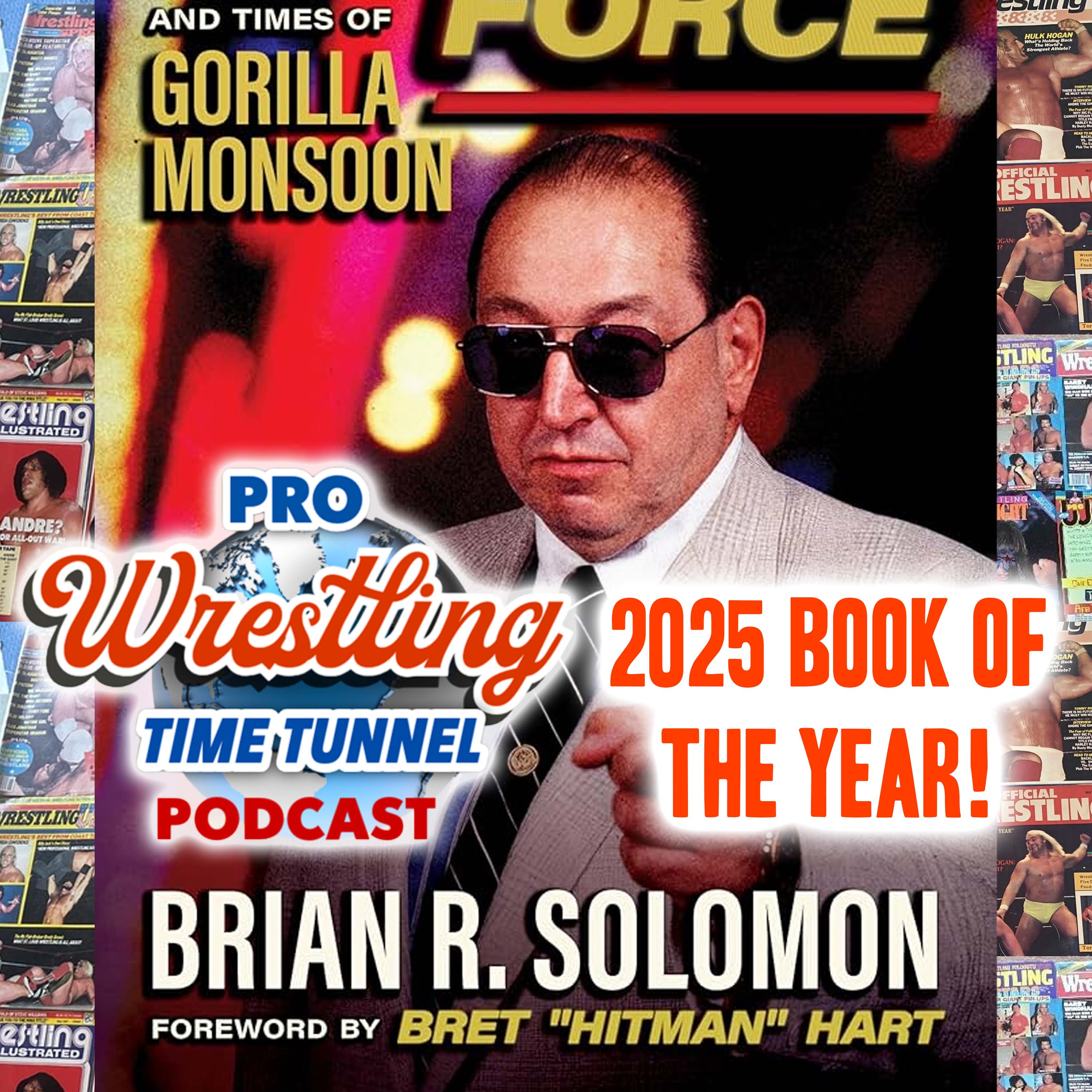
And you could probably name a bunch of them. I'm not going to tell you who they are, but I had a list of people that I sent emails out to and I had a list of about 12 questions that I wanted to ask them. And I figure if I've got these people giving me the answers to these 12 questions, that's going to give me a leg up on doing this little career side thing that I want to do that's turned into a major thing. And Brian was one of the people who got back with me immediately. And he was so open and he was so gracious and generous with his time and his knowledge. And he told me, you know, a lot of things that were really Simple. It was more of a confirmation of what I already believed more than any new revelations. But I just so appreciated his welcoming heart and his welcoming spirit. Of course, he's written a couple of great wrestling books. He's written the Blood and Fire on the Sheik and the Irresistible Force now with Gretel Montoon, who, it's just won the Observer Wrestling Observer Book of the year award for 2025.
And he is the only two time winner of that award.
And so I wanted to do something for him, so I invited him to come on the program, to come over to the Richards ranch and have a talk with me about the book again. He's already been on before and he was, you know, he smelled a little rat because he's like, what are we going to talk about that we haven't already talked about with the book I've already been on, you know, and I said, oh, you know, we'll, we'll think of something. It'll just be great to talk. And I want to congratulate you on the award, which was true, I really did. But little be known to him. I invited three people that I know he's friends with, that he highly respects, and they highly respect him. And they showed up for the first pro wrestling podcast surprise party.
And so we're having a surprise party for Brian R. Solomon today. I want to get on with the program. This will be a unique thing. Just another crazy oddball idea from me. And let's get on with it right now as I welcome Brian R. Solomon to the Richards Ranch. And then I will bring in the special surprise guests. Let's go to that show. Hello, everybody. Welcome to another edition of the pro wrestling Time Tunnel podcast. And today I am joined by the magnificent author of two great wrestling history books. And actually, he's got more than two, but he's really well known for the two that won the Wrestling Observer Awards in the last couple of years. My good friend, Brian R. Solomon. Brian, welcome to the program today.
[00:16:09] Speaker B: Hi, Tony. I'm glad to be back. Like I always tell you, anytime you want me here, it's my pleasure.
[00:16:13] Speaker C: Yeah, you bet. And I, I want to promote your podcast. It's called Shut up and Wrestle. And I've got a couple questions for you about it before we get into the awards, but you're up over 200 episodes now. And how long have you been doing the Shut up and Wrestle show?
[00:16:30] Speaker B: It's about four years, pretty much almost exactly. I started February 2022.
[00:16:35] Speaker C: Now, the first question I have is the kid that comes on to introduce the show every week.
You may have told people this story, but I. I haven't heard it and I don't know the answer. So who. Who is the child?
[00:16:49] Speaker B: It's my son, Peter. And he's actually done two different versions because he's gotten so much bigger. When I started, I. I think I started having him do that, or I recorded him one time, but I started including it, I want to say, in the second episode. I just thought it needs something a little extra when I start. It just needs something. And I thought, wouldn't that be cute? And he was little. He was like not even five years old. And a while back, about a year or a year and a half ago, he said to me, dad, I don't sound like that anymore. Could we do a new one? And so we did a new one. And now he sounds like a little tougher and more. More serious. And I hope to continue doing it and keep updating it.
[00:17:32] Speaker C: Now, now, the. The. That's the open now in the clo. There's something interesting about the clothes also. And who is the person that you say good night to every time?
[00:17:43] Speaker B: Well, I've. I've spoken about him a lot on the show, but I haven't really said his name a lot. But it's my grandfather. My grandfather's name was Tony Celica, and I actually did a whole show dedicated to him. But normally I don't. I talk about him, but I don't mention him by name. And the thing about it is, I mean, it's been a long, so long ago now. I don't know how many people recall this, but Jimmy Durante had a catchphrase that he would end all of his radio shows and all of his appearances with. He would say, good night, Mrs. Calabash. Good night, Mrs. Calabash, wherever you are.
[00:18:16] Speaker C: Right.
[00:18:17] Speaker B: And he never said who Mrs. Calabash was. There was always a rumor that it was his first wife who had died.
And he would say that he changed the name. He would say it as a way of. Of honoring her without insulting his current wife. That was the. That was the rumor. But I don't know if that's true. But I just thought my grandfather loved Jimmy Duranty very, very much. And I thought that he would appreciate that send off in his honor. So that's why I do it.
[00:18:45] Speaker C: I've had the. The honor of being on your show one time before. We talked about Dory Funk Senior and the Funk family a little bit, and you're doing a series on the NWA World Champions.
And you started back with Orville Brown, right? Yes. And now you're almost to me. I'm coming back to do Dorie Funk Jr. Here pretty soon.
[00:19:09] Speaker B: That's right. I just did the Gene Kinisky episode, which was Stephen Verrier, who is the biographer of Kinisky. And so since I've been doing it chronologically, Dory Funk is next.
[00:19:21] Speaker C: Well, that's fantastic. I really appreciate you inviting me coming on. I, I've got a special affinity for all of those champions from, from Kaniski to, to Flair.
Those were the, the champions that I became familiar with. And I, as a fan, I became a fan in 72 and Kaniski was still in a lot of magazines and still very active. When I was buying magazines, I was telling somebody the other day, if you were to walk into my bedroom when I was a nine year old, you'd get four, you'd see four stacks in the floor. There'd be a stack of records, there'd be a stack of wrestling magazines, there'd be a stack of comic books and a stack of baseball cards and baseball magazines.
[00:20:08] Speaker B: Well, it sounds like we were the same person then.
[00:20:11] Speaker C: Yeah, and I was so. And we didn't have movies on any kind of media then or I would have had television shows and movies in stacks as well. But I had some science fiction magazines and some things like that. And so Dory Funk Jr. Was the champion when I first became a fan.
And I became really interested in the Funk family when Terry became champion because I saw him in the magazines. But I knew that I probably wasn't going to be able to see him in person because I wasn't going to be able to have my own transportation and ability to drive right. Until later on. But we're going to talk about your books for a little bit here. So you won for Blood and Fire, you won the Observer Book of the Year award the first time and now you've won it the second time.
And this is for your Gorilla Monsoon book, Irresistible Force. So tell me a little bit about the feelings you had when you found out you won the award for the second time.
[00:21:12] Speaker B: I was very surprised, honestly, this time, because I feel like the last time. Well, there were many great books that came out last year.
[00:21:20] Speaker C: There really were.
[00:21:21] Speaker B: And I thought, like, for example, Keith Greenberg did this big, beautiful coffee table book on aew.
And not only is Keith very good, but I also know, honestly, frankly, AEW is very popular with observer readers. So I thought, I mean, they swept aew, swept most of the observer awards. The big ones. And so I thought, well, Keith's probably gonna. That book's probably gonna win. And then there was. There was a book about the nwo. There was.
There was a big one that came out. One of the. A wrestler who had a book. I can't remember if it was Soraya or somebody.
[00:21:53] Speaker C: Right at the end of the year, Natty's book came out.
[00:21:56] Speaker B: Natty's book, right. And so I did not see it as a lock also, because the. The chic book got talked a lot more. Got talked up a lot more in the observer newsletter and by Dave online than the gorilla book. And I just think that's probably because he was very familiar with the chic as a kid in California. And so I thought, well, if Dave's not talking about it too much, then his readers, it's not going to be on their radar. So the fact that it won, I was just blown away. I was driving. Excuse me. I was driving with my son. We were going somewhere, and I got a message on my phone that a friend of mine who congratulated me. That's how I found out. I had no idea it was actually Joe Puccio, who's Bob Smith's co host on the Outdated Wrestling Hour. He's like, congratulations. And I said, oh, my God, I won it.
And as I've said, and just to clarify, this is the first time that anybody has won it twice as a solo author. And the reason I say solo authors, because Brian Alvarez won it three times. But two of the three times he was the co author, and two of those three times also, it was the same book. It was a reissue, a second edition of the same book. So I didn't want to steal all the thunder, but I think it's pretty cool to win it two times for a solo effort. I just. I'm amazed.
[00:23:15] Speaker C: It's awesome. And I. I wanted to invite you over to the Richards ranch today to celebrate you winning the award for the second time. But I also invited you here because I wanted you to be in the presence of some of your friends.
And so today we're going to have the first podcast surprise party in history.
And so some of your friends are going to be coming into the ranch here because they want to give you.
They want to give you congratulations as well.
And here they all come.
[00:23:48] Speaker B: I. I feel like this is your life.
[00:23:51] Speaker C: Yes.
[00:23:52] Speaker B: Well, I.
[00:23:53] Speaker C: If I.
[00:23:53] Speaker B: Do you recognize this voice, Brian?
[00:23:56] Speaker C: If I was a little more savvy in production and could have had a little more time, I would have put something like that together. But I just gathered up some of your close friends who I know you have an affinity for, and they have a great, deep feeling for you and wanted them to come on and join me today and congratulate you on the book. And of course, I'm talking about Bob Smith from the Outdated Wrestling Hour, George Shire from the George Shire Time Machine, and of course, Steve Giannarelli from the Stick to Wrestling podcast. And they're all holding up Brian Solomon books. So.
[00:24:34] Speaker B: Wow, thank you. I'm. I'm. It's hard to tell when I'm blushing, but I'm blushing.
I'm. I'm. I'm very honored, guys. This is really something else. Thank you, guys. Wow. Everybody made the time to do this. I can't believe it. Thank you. Thank you.
[00:24:47] Speaker D: Well, 50 bucks is 50 bucks.
[00:24:51] Speaker A: Hey, I got more than you.
Tony paid me better.
[00:24:55] Speaker B: A little paola. Nothing wrong with that.
[00:24:58] Speaker A: That's right, Brian.
[00:25:00] Speaker B: Thank you, guys.
[00:25:00] Speaker A: I am going to tell you, man, I wouldn't have missed it when Tony put out the call because you're a guy four years and you've got a double main event here, Pete and gorilla. I know, and I know, I know how hard it is to do a book. I know the task that's involved with it. I know that frustration and everything.
And to do two of them and main events both, and then to get this award, you are the man of the hour. Too sweet to be sour, but wow,
[00:25:29] Speaker B: thank you so much. And I. I actually squeezed in a non wrestling book in between those two books, so I. I realized that. So that's also why I'm not writing anything right now. I'm just letting myself breathe, not doing anything. But wow, that's. Thank you so much. That's great. Steve, you're gonna hurt your arm there. How long are you gonna hold that up for? Thank you.
[00:25:51] Speaker C: Oh, Steve, we can't hear you. Steve.
[00:25:55] Speaker B: Maybe he can't hear us either.
[00:25:57] Speaker C: I don't know.
[00:26:00] Speaker B: Steve, you're muted.
[00:26:02] Speaker C: Well, he's. His microphone's not on for some reason.
[00:26:05] Speaker B: Okay.
[00:26:06] Speaker C: All right, Bob, I'll let you go ahead and give your thoughts to Brian here at our Brian Solomon surprise party on the Time Tunnel show.
[00:26:15] Speaker D: You know, this is why you shouldn't have had me. All I can think of is jokes, so I'm gonna stop trying to be funny for a minute. But no, Brian Br and I have gotten to know each other really well the last, what do you say, three years or so? Brian, we've actually seen each other socially on several occasions.
[00:26:28] Speaker B: Yeah, well, we're lucky to live close enough to each other to be able to do that. I always say it's too bad that everybody's so far apart. You know, that's the upside and the downside of the Internet. You get to meet like minded people and you get to realize that they're too far away to ever meet.
[00:26:45] Speaker D: Well, Brian, I got a question for you. In all seriousness, as a comedian,
[00:26:50] Speaker A: we
[00:26:51] Speaker D: talked about this before the Guerrilla Monsoon book came out, right? And while you're in the writing process at that point and you thought as you were writing it, it was the best thing you had ever done, and that includes the Chic book. Looking back now with a little more time, do you still feel that way? Do you feel it's on a par with the Chic book? Because to me they're on a par. I think one's as good as the other and they're both books of the year. So that's basically all I have to say about that.
[00:27:17] Speaker B: Well, I didn't go in thinking that. I really thought, okay, this book is. Not to say it's a compromise, but I thought, okay, this is somebody who's better known to younger fans, so, you know, it's an easier sell. You don't have to explain who he is. With the chic more, especially if you're under 40 or 50, you kind of have to say, okay, here's who this guy was. And I thought, well, okay, this person's a little more well known. It's probably not going to be as interesting of a story because you know, the chic story has a lot of drama and in it and things like that. And as I was writing it and I just started realizing it was going to be bigger than I thought it was going to cover more than I thought. I didn't. I started thinking, okay, there's a lot more to this than I realized. And that's when I started thinking that forever, for whatever it's worth, I thought, I think this is actually going to surpass the chic book. And I stand by that. I really do. I think it's.
I feel like part of it is too, because it's like an epic story that also tells the story of WWE or at least 40 years of, of WWE history too. So, you know. Yeah, I, I think so. If you had to hold, you know, hold me to it and say what I thought, I, I think that's probably my best book so far.
[00:28:35] Speaker C: And there were so many more, it seemed like to me there was so much more background Information about Gorilla and his wife and family. And there was a story about Joey and all of those things that brought you more into the story.
You know, some of the chic stuff, I know you. You kind of had to dig out secondhand and use anecdotal stuff. But with the Gorilla story, I mean, I really felt like you did a great job of pulling me in. And I felt like I knew Gorilla, you know, when I read the book.
[00:29:09] Speaker B: Yeah, that's the other thing that distinguished the two of them. Where I have to say, if I didn't have Gorilla's family involved, I don't know if I would say what I said. Because having them is what really put it over the top because there was a lot less guesswork. There was also the confidence of knowing that I have these people behind my, you know, by my side and being able to have the level of accuracy. Whereas with the Chic book, I don't. You know, it didn't bother me that I didn't have the family involved. Because in a way, the more I told the story, the more I researched it, the more I realized why they may not want to be involved. Because in order to tell the story accurately, there was a lot of stuff in there that I can understand that a family wouldn't necessarily want out there but that I felt were essential to the story.
Whereas with Gorilla, there was nothing like that, honestly. And I guess that's the benefit of having somebody who maybe had a less dramatic life because you get more cooperation. Because like. Like Valerie told me from the beginning, she. When they didn't totally know who I was, Valerie, his daughter, said, listen, this is what I'm going to tell you right off the gate because I don't want you thinking that you're gonna dig anything up. She goes, okay, look, he smoked, he gambled, and he. And he ate way too much. And he was married once before. She said, that's the only stuff you're ever going to find. That's all there is. And that's all there is to it. And she was 100% right. That was it. And that's how once I. We were able to see eye to eye on that. They were amazing. I mean, I had the ability. I mean, she's gone now, unfortunately. I could just pick up a phone and call Maureen Morella just with a random question in my head, because, God bless her. I mean, she was home in her apartment. She had nothing going on, watching her TV shows, and she turned the volume down and answer whatever question I had. So it was a Blessing that's really
[00:31:10] Speaker C: an advantage I had in researching the Funk family, too, was Terry's daughters being so cooperative and guiding me to people I never would have found who were family friends that had so many stories and so much background information. So having access to his family was great. Steve, does your audio work yet?
[00:31:32] Speaker E: I think it might work. Can you hear me?
[00:31:34] Speaker C: Yes, we can.
[00:31:35] Speaker A: We can hear you now.
[00:31:36] Speaker C: Welcome to the party.
[00:31:38] Speaker E: Eureka. And congratulations. Brian and George, it's so good to be here with you. And Bob, of course, and Tony.
I actually have a question for you fellows. Not so much Brian, but for George and for Tony and Bob.
Did you ever envision a day when we would have such a sophisticated book like this?
Such a. I mean, I'm a huge baseball fan. I know some of you guys are, too. And there's been tons of great baseball biographies and great histories of the game.
To me, this book on Monsoon and the book on the Sheik were so unparalleled. I mean, I can't even think of a baseball book that was so in depth and so take you back to a time and a place. Did you guys, in your. In your long history of being fans or participants, did you ever envision books like the sophisticated books being written about major players in wrestling?
[00:32:32] Speaker C: George?
[00:32:33] Speaker A: Well, I'll answer first. And Bob, by the way, it's good to see you. And Steve as well. It's been a long, long time, pals. You know, you bring up a good point, Steve. And I'm thinking that Brian will agree with this and Tony as well.
When we were younger, I don't think any of us ever felt we were going to see the slew of wrestling or wrestler books. There are a lot of wrestling books. There have been a ton of wrestler books that, you know, would come down the pike like they have in the last 20 years, or give or take. And you're right, it's hard to fathom that we would see a book as detailed as Brian. Yours is, and definitely the sheiks as well.
I would have never dreamed that. And then, you know, like Brian, you brought up an interesting point about the younger audiences. Who's going to buy it? What. What audience is going to it appeal to? You know, each of your books probably has a different audience. Definitely the sheiks, the older audience, you know, guys 100 years old like me.
But it's true, you know, when I did my Minnesota book, that was the first question that came out of the publisher's mouth is who's going to buy the book? And you really have to, you have to try to target that audience. And then you put all this work into it. And I think all of us that have done any type of writing at all, you realize that there is this special feeling inside of you that you gave something of yourself, but you did it for yourself, bottom line. And Whether it's sold 1 copy or 1 million copies, you're just so thankful that you had an opportunity to do it.
And so I have been blessed over the last 20 years now to have a bookshelf that keeps growing of all these incredible books. And there's been some, some ugly ones in there, I don't ever name them. But I tell you what, I've got literally dozens upon dozens upon dozens of great wrestling books. And I think it's the research that goes into it and the dedication that I can tell you the five of us have. You know, I live and breathe this stuff every moment of every day.
And I feel so blessed that God has given me this opportunity to enjoy something that as an 8 year old kid turned me on and to have all these friends in the business and everything. So yeah, it is a, it is just a blessing.
And that's all I can say at this time on it. Bob, I'd love to hear your thoughts on it.
[00:35:08] Speaker D: Well, George, you know, you kind of broke the seal on all this kind of thing with your book on Minnesota and the awa. You really did. Because if you go back as far as I do, late 70s, early 80s, when I started to be an adult, there was one wrestling book you could buy, Roberta Morgan Main Event. If anybody remembers that book, that big book, and it's really a fan book, it's like, it's like a book written by a fan saying how great everything was, which really wasn't an insider book in any way.
And I think part of the change and why these books are so successful now is the change in the wrestling fans mindset over the decades in that when Roberta Marta's, when Roberta Morgan's book came out, that was the perfect book for its time. But, but now fans want to know the insider stuff. They want to know the backgrounds, they want to know the real names, they want to know go down the list. They want to know everything they can get their hands on. And I think the fact that fans want to know everything they can about wrestling really, really helps in this regard. Maybe they do want to know a little bit of history. Maybe we're lambasting younger fans for some of their mores, but in fact, maybe younger fans are buying These books too. It's a situation where. And secondly, I just want to say they're doggone good books by any standard. They just happen to be about professional wrestling.
[00:36:26] Speaker A: Let me, let me follow up on that. You know, when you talk about what was available 25 or 30 years ago, I can go back 50 years right about this time period and tell you that there was a book called Whatever Happened to Gorgeous George?
[00:36:40] Speaker D: Yeah, yeah.
[00:36:41] Speaker A: And it was Joe Jairs, I believe I've got the book.
It's Joe Jairs, right? Yeah.
[00:36:47] Speaker C: Brother Frank Jerus Son, I think.
[00:36:49] Speaker A: Frank Jer Sons. Yep. And this, this book came out in 1974. 75. And I can tell you the first thing I thought of when, when the book was announced.
It was kind of like that surprise. We were just trying to relish on that. Would you ever fathom there'd be a wrestling book or a wrestler book?
And my wife went over to Walden Books, she was going to surprise me for Christmas. She goes in and says, I'm looking for the Life and Times of Gorgeous George. We had no computers in those days. They told her, there's no such book.
And she felt, you know, like, I can't get him this book. Well, it was Whatever happened to Gorgeous George? And for the time, if you go look back at that book, it though was like on the Edge of Breaking Kayfabe. It was something different, but it was the along then there was a drought before any such books came out. And when I think over the years, all the wrestlers that now have agreed to do books either by themselves, self published, or have dedicated people research their careers and all the events of their lives and share their stories as they want it told.
It frustrates me that we don't even have more than we do.
I spent about 10 years, and I'm not lying, I spent about 10 years trying to get Nick Bockwinkle to sit down and do a book. And he kept telling me, we're going to do it, we're going to do it.
And Nick and I would talk on the phone. Well, Nick passed and his book never came to be.
If I wanted to, I have a lot of material, I could put a book together.
That part I haven't dealt with yet. And then other big names like Larry Hanig. Larry and I met in 2012.
We sat at his house and we went over what we were going to do about a book. And I told Larry what he needed to do for me and with me while we went on this journey. And I could never get him to finally, just sit down and make notes, carry a notebook, carry a recorder. And Irene, his wife, God bless her, she told me one time, she says, you know, maybe you just need to let Larry be for a bit, and it's got to be on his time. And I said, I totally understand.
Well, Larry passed in 2017, and so we've lost so much. And then.
I know I'm getting long winded on this, but I want to share one more.
Ten, 12 years ago, Vern Gagna. I was after Vern when he was still coherent, sadly, he got his dementia and Alzheimer's. I was after Greg after Vern was unable to do it. And Greg and I were close friends.
And I told Greg, I said, greg, we need to do a book. Greg wouldn't break Kayfabe, the guy hung onto it for so long. And I finally told him, bob, when my Minnesota book came out, Greg called me and says, you blew the whistle. I said, no, Greg, it's over. You gotta understand, people want to hear this now.
And finally, I had given up the hope of doing a Verne book, and I talked Greg into working with Brian Ferguson and Greg, or Greg. Brian and I, we sat for many hours at Greg's home and videotaped conversation or videoed conversations. And Brian did such a good work on it, I said, I just don't want to. And you do it. And he come out with a good result. But it was fighting with the family, too, about what they want in it, Greg's sisters, et cetera, etc. And so it's not an easy task to take this on. And Brian, I know you're going to relate to this. When you said you worked with Gorilla's family, they gave you the. The upfront. You know, this is what you're going to find. But a lot of these wrestlers, you can't do that with. They've got dirt in their family. They got stuff they don't want out there. And I'm a believer that I don't want a National Enquirer book. That's just me.
I want to tell their story in and out of the ring. But as much as they want to share, and I don't want it to turn into some. Some negative thing. So we've been blessed that we've got people, and I guess I feel proud that I can call myself one of you guys, and we've got others that aren't here that are in that group. We care about this business and we care about these wrestlers, and we care that what they did should be told. And Once they leave us.
Scott Thiel and I talk about this all the time, or not recently, but we've talked about it a number of times.
If we could just get them all to sit down and share the story, oh, what a library we'd have.
So I hope that answers your. Your question, Steve. It's.
It's frustrating, but yet I feel blessed that we've got the hundreds of books out that we have had.
[00:41:48] Speaker C: Yeah, I just had Scott on so we could pay tribute to Frankie Cain.
[00:41:53] Speaker A: Yes.
[00:41:54] Speaker C: And there were, you know, two books that Scott published by Frankie and which are basically just their conversations with each other about Frankie's career that are just treasures of so many things that we would never know about the wrestling business. So many insights into the Al Haft office in Columbus, Ohio, and the history of the smoker fights and the boxing works and about a lot of offices and territories that we just wouldn't have any idea of some of the stuff that happened if it weren't for Frankie and his amazing. I mean, Frankie Kane was over 90 when he died. I mean, he went back to Jim Londos.
[00:42:36] Speaker A: Yes.
[00:42:36] Speaker B: Yeah.
[00:42:37] Speaker C: And just an amazing record of professional wrestling. Brian, did you. Did you. To piggyback On Steve's question, 20 years ago, did you imagine that you'd be part of the generation that would be putting these kinds of books out?
[00:42:52] Speaker B: Well, it's funny because when a lot of this was happening, I was working for wwe because the. The Foley book is kind of the one that blew it open.
The have a Nice Day, which I think was 1999.
And the reason being, of course, that that was the one that proved that there was a market, there was an audience for this book. Right. I don't think anyone realized that it was going to sell like it did. Became a legit New York Times bestseller. I mean, on top of it, first of all, imagine a wrestling book. Second of all, imagine a wrestling book that's a New York Times, you know, whatever Happened to Gorgeous George? I I'm pretty sure was not a New York Times bestseller.
And, you know, and so that's what started it. And while I was there, I think one of the first ones I remember coming out not long after that was Gary Michael Cappetta's book Body Slam. And then they, you know, they started coming out of the woodwork. Even during the years that I worked there, we would see Terry Funk, Harley Race, all these people, Dusty Rhodes putting books out. And I think Mike Mooneyham wrote his
[00:43:56] Speaker C: WWF book in there somewhere around that time.
[00:44:00] Speaker B: Yeah. And there Was even, you know, more behind the scenes stuff like Shauna sales book, Sex, lies and headlocks, which started getting stories out there. I believe that book was the first time that the infamous ole Anderson, Vince McMahon gorilla monsoon story was ever really publicly told. The one that I tell, you know, for the hundredth time in my book. But I try to give a different spin on it, but, you know, no, I, I did not think this. And I think one of the things that's such a great benefit because we talk about these younger fans and how, you know, how much of an interest is there. I feel like there's never been a time more than today. And it's partly because of the books, partly because of the Internet and social media where you've had so many people interested in learning about the history of wrestling before their own personal wrestling fandom. I see it all the time. You get people in their 20s and 30s talking about the territories. I mean, you know, they have no idea, they have no memory of the territories. I barely do myself and I'm 50, you know, and that would have never happened before. All this stuff being online and being so available and accessible, it makes people interested to learn more, which is what happened to me. But it happened, it was a lot harder. It happened because of wrestling magazines and asking people questions. And it wasn't as easy and now it's so much easier for people.
[00:45:32] Speaker A: One of the things I was going to add on, Tony, you had mentioned Scott Thiel and I just wanted to point out we mentioned the Whatever happened to Gorgeous George?
Scott Thiel did an excellent follow up to that book, I'm sure you guys are aware of, and picked out a lot more stuff that, you know, the original book didn't have. So if you don't have that one added to your library as well. But you know, Brian, again, you bring up such a great point that it's, it's, it's so easy today to do it. And here's the thing that I still see, though.
There are a lot of fans out there that want to know this stuff and they say, well, why don't they have a book? Why don't you do a book on this guy? Why doesn't that guy have a book? And the thing is, for every fan that will buy a book, there are 10 fans that don't. But yet they claim they want a book.
[00:46:23] Speaker B: Yes, we've all, we've all learned that the hard way, right?
[00:46:27] Speaker A: I mean, it's really sad. Well, what did you think of this book? Why don't you know, why don't you. And I always say, well, why don't you go buy the book, support the author, you know, give the guy a break. He put a lot of work into this, this.
And everybody wants to get a book, but nobody, a lot of times, wants to pay for it.
[00:46:44] Speaker C: So, George, a lot of times, and I blow the lid off on this, but a lot of times historians don't even buy each other's books.
And we should be, we should be the first and foremost people buying, buying each other's books.
[00:47:01] Speaker A: Well, and I can tell you, I totally agree with that. And especially my theory has always been, especially if you know the person, why wouldn't you support them? I mean, Brian, you know, I reached out to you right away, I think, when your book was just coming out. I said, get me on the waiting list. And you autographed it to me with your little.
What did you put in there? Will you stop?
[00:47:24] Speaker B: Will you stop?
[00:47:25] Speaker A: Yeah, will you stop? And I chuckled when I opened it up. It was great. And I mean, I reached out to you when you did your, your sheetbook and you put in there, you, you made it personal. You said, one of the keepers of the flame of old school wrestling, George.
I mean, but yes, I have went out, Brian.
Scott Teal will tell you I bought a number of his books and so many other authors. I reach out to him right away. I want to be on the list. I will support you. And I never, and I don't know about other historians that we're called, but I never felt that I'm entitled to a book because we're friends or who's friends. I want to pay you for it, and I have. I've always done that if I've gotten some free, but I never expected.
[00:48:16] Speaker C: Go ahead, Bob.
[00:48:18] Speaker D: Yeah, I'm, I'm not blowing smoke at myself, but if an author appears on my podcast, I'm buying the book, period. End of story. Ian Douglas keeps trying to give me the books or send me galleys. I don't do that. I, Brian sent me a galley before the last book came out. I went out and bought it afterwards when I saw him at one of his book signings. It's. If we don't support each other, who's going to support this mission?
[00:48:38] Speaker C: That's right.
[00:48:39] Speaker D: I really think that's a big point.
[00:48:43] Speaker A: Just let me say this. Jimmy Brunzel, he did a book called Matlands. He self published it himself, I don't know, 10 years ago now.
[00:48:51] Speaker C: It's sitting in my bar this morning.
[00:48:54] Speaker A: Okay. Well, Jim was at my house. We talked about it. I gave him a lot of pictures and things for it. He talked to me about some of the. He did something that no other author has ever done. Everything he put into his. His book is about road stories and everything he put in there. I would get emails from Jimmy on a regular basis. He says, what do you think of this story? Is this too racy or is this too much or should I not share this?
I would. I would give him my honest opinion. And I told him, I said, jim, you're doing good. Keep it up. And when the book was done, he come over to my house, stood upstairs and he said, I got a copy of the book for. I said, jim, I'll only take it if you let me pay you for it. You know, you're not going to pay me. We've been friends for 50 years. I said, well, Jim, I'll give you. I think it was 20 bucks. Or 20, I don't remember. 20 bucks. I think I said, jim, no, seriously, take the 20 bucks. I said, take your wife out for a hamburger. I don't care.
[00:49:49] Speaker C: I have a stack of books by the bed that I read some of before I go to bed. And then I've got a stack by the coffee pot that I read in the morning. That Jim Brunzell book. I usually read a story with my coffee out of that one.
[00:50:03] Speaker A: His is an easy read. You can read a couple of pages. You don't have to like, you get into these books, man, I can't put it down. Hello, can I have more hours in the day?
[00:50:14] Speaker B: Well, one of the biggest honors for me, and he said this offhand, I think when, when Dave Meltzer had me on his show, I think it was that time he mentioned that he will randomly pick up the book and just start reading it. And he talked to me about how he'll do it while he's cooking dinner.
And I'm just picturing in my head as you know, I never would imagine a day a Dave Meltzer, who is, you know, the most preeminent wrestling journalist of all time, is just casually reading my book while he's cooking dinner. I mean, just a visual in my head.
[00:50:55] Speaker A: Well, at least I just cherish it. At least he didn't tell you he was on the throne. You know, I don't want to hear that.
[00:51:02] Speaker B: Well, Bobby Heenan probably would have said that if he was alive.
[00:51:05] Speaker A: Yeah, he read it on the throne.
[00:51:06] Speaker B: Yes.
[00:51:07] Speaker C: You know, before we went on Today and Brian and I were just talking before we Came in to do the show.
There's also the multimedia aspect now out there that is so, so important. Bob mentioned his podcast. I have authors on my podcast to talk about their books and things of that nature. But the thing I like about your books, Brian, the two we're talking about, and this comes from an old broadcasting guy, is the fact that you did your own audio for your book. You read the book in the audio version, and that's something that I enjoy as well. If I'm going somewhere or. I just took a road trip here a couple of days ago, and I listened to maybe an hour of the Blood and Fire book again, and I think that's really important. Why did you think it was important that you were the. The narrator?
[00:51:58] Speaker B: Well, you know, for the. For this one, they actually were not going to have me do it at first because we used a different audiobook company than the last time. Just, you know, it's just a matter of whoever makes the best bid. So they. They make a bid to ECW Press, they pick the best bid, and it just happened to be a different company. And they have a policy because they're. I think it's because they're based out in. In Hollywood, where they have a stable of, you know, contracted actors and people that. That's what they do. And so I had to fight for that one one, and I was very adamant. Look, in the end, you win. You're gonna do. You're gonna do what you want to do. I mean, that's part of the deal. But I'm just imploring you, imploring you to let me do it, because there's so much jargon, there's so much history. There's so much.
So many names and things. So many things that I know.
[00:52:52] Speaker C: One of my pet peeves is, yes, and the guy that reads the book does not know how to say the person's name.
And it's a name that every fan knows. Knows.
[00:53:02] Speaker B: Right.
[00:53:02] Speaker C: But the guy reading the book doesn't know.
[00:53:04] Speaker B: There have been books that have been ruined by that. You know, I remember a book I was listening to where they kept talking about Razor Raymond.
[00:53:11] Speaker C: You know, that sounds like a breakfast dish.
[00:53:14] Speaker B: Right? Right. Or some. Some Asian lunch dish or something. But it's just. And that's one of the things I said. I said, guys, look. Because that's when they said to me, okay, well, we'll. We'll think about it, and could you send us a demo? Which I did, and all that stuff. And, you know, do you have any experience? I Said, I'm a teacher. I do a lot of public speaking. I have a podcast. You know, I talk all the time. And I did my last book, you could listen to that. But then they said, well, we. We're not so sure. And could you send us a list of all the names and words in the book that you think the narrator will need to know how to pronounce?
[00:53:51] Speaker C: And I said, you're just to let me do the book.
[00:53:54] Speaker B: That's what I said. I said, guys, you're talking about hundreds of names and I'm gonna have to go through the book. And I did it. I did it for them. I said, I'm gonna have to go through this book. It's gonna take me days.
Why not just have me do it?
And they finally caved in and let me. Well, you know the other thing I said to you guys, and I don't know, you know, this seems like common sense to me, but I also said, I'm not saying this to be egotistical. I'm saying it as fact. From what I know and what I hear from people as readers of wrestling books, not just my book. I said, if, if you have someone else do this, everybody who buys it is going to be saying, why the hell did they not have the author do this? Why didn't they have Brian do this himself? I'm not saying it for my ego. It's a fact. I just know that that would happen. And I think that they listened to reason on that too. And so I'm so glad they let me do it.
[00:54:49] Speaker C: Thank goodness.
[00:54:51] Speaker B: Even though they wouldn't let me, they would not let me sing. So. So get this. There's a, there's a clip. And it has nothing to do with my vocal abilities, which are terrible, but there's a, there's a bit in the book where gorilla sings. Gino Morella sings a song in Italian in the ring.
[00:55:06] Speaker C: Yeah.
[00:55:06] Speaker B: And I sang it. I sang the few bits of it just for people that may recognize it. And they said to me, you know, we're not so sure because of copyright laws and this, that and the other. I said, listen, guys, I picked this song for that reason. It is a 120 year old Neapolitan folk song. I guarantee you nobody is going to be filing a lawsuit against you. The grandchildren of the guys that wrote this song are dead. And they still were too chicken. They had. I had to speak it instead of singing it for that reason.
[00:55:40] Speaker C: Yeah, go ahead.
[00:55:41] Speaker D: I just want to say wrestling people need to read wrestling books. Nobody else can handle it. Nobody else would know it, you know, if Brian didn't read it. They need to find a wrestling person to read it. And I'm glad Brian read it. But the fact is, wrestling is its own animal. Nobody else can handle it but wrestling people. That's all I have to say.
[00:55:59] Speaker C: That's right.
[00:55:59] Speaker A: And, you know, I want to allude on that because when I did my Minnesota book, it was done through the Minnesota Historical Society, and these people were non wrestling people. I mean, they don't know wrestling from a donut.
And they admitted this, but time and time and time again, we would have to have conversations about they don't want to do this or we shouldn't do that, or why are we doing this or we can't do that. And I had more. I couldn't be more frustrated. And it's the old story. So much ended up on the cutting room floor. There were always concessions, but then the bottom line is they'd say, well, you're the. You're the one that knows what you're talking about, about. And they do this story. Well, you know, when we want to update the book, you know, you decide you don't want to do it, we'll get somebody to do it. I said, over my dead body.
You know, so.
[00:56:50] Speaker B: Well, see, for me, at the end of the day, I knew that if given the choice between not doing it at all, I would have let them do it just because, you know, I like to get royalties. But.
But in the end, I said, please, please, I'm begging you, please let me do this. I even said, it will sell more. I said, bottom line, it will sell more. If you could say narrated by the author. There are people who will not buy it if I'm not the voice doing. I'm just telling you.
And thankfully, they trusted me.
[00:57:24] Speaker C: I'm always disappointed anytime I buy a book. If I know that the person could have and should have read the audio version and they don't, I'm disappointed.
So I'm so glad that they came to their senses and let you do that. Steve, you have any other thoughts?
[00:57:43] Speaker E: I wanted to tell Brian and you guys this.
You know, John McAdam and I are doing his podcast this week, and we're focusing on March of 1986. And one of the things that we're going to be discussing is it was the first ever Slammy Awards, which actually aired on. On March 1st in 1986 on MTV. And the reason I'm bringing this up to Brian right now is as part of that show, which Vince McMahon hosted with Gorilla Monsoon. They did a sight gag at the beginning of the show or near the beginning of the show where Brian knows what this is.
[00:58:20] Speaker B: Yes. He's not in the book, but. Yeah, yeah, yeah, yeah.
[00:58:24] Speaker E: So basically it's a sight gag where Gino supposedly left his fly on Don and maybe the brim of his shirt is tucking out from his fly and Vince says, hey, by the way, nudges. I'm like, hey, you gotta zip up your pants. And. And the reason I bring this up, Brian, is it's like maybe that was Vince's way of, of needling Gino and maybe that was his way of trying to take him down a peg. You know, it wasn't Vince with his fly open, you know.
[00:58:51] Speaker B: Yeah, I think it was just, you know, Gino was a good sport about things like that and he would do. Obviously everybody has their limits and their, and their lines of what they will and won't do, but I, I think he was okay with that. I didn't even bother to mention it in the book. But yeah, it's, it's weird because that is not even a typical. They don't, they didn't usually do a lot together, you know, one or the other.
[00:59:16] Speaker C: And.
[00:59:17] Speaker B: Because when Gorilla would be doing the play by play, it was because Vince wanted to be backstage kind of running things. And so for Vince to be out there, typically he didn't need Gorilla because if Vince was out there, Gorilla would be in the back running things.
[00:59:28] Speaker D: Right.
[00:59:28] Speaker B: So I wonder, you know, I didn't really look into that, but I wonder if maybe you would have thought that Vincent, Jesse would have been the no brainer for that. And I'm wondering if maybe Jesse was making a movie or something, you know, that would have. Because that was also right before Bobby Heenan was really doing it. So I have a feeling that that maybe was not the original plan, you know, to have the two of them,
[00:59:50] Speaker E: but, but it's, it's. I'm sorry, Tony. I was gonna, I was gonna say it's, it's interesting that, you know, Gorilla was always treated with such respect, always in the past, especially as the commentator. And around the same time, I know that there was a dis. There was a, actually a conversation behind the scenes between Jesse and Bruno where Jesse was telling Bruno, and this is when the drug testing was coming into the company and Jesse apparently told Bruno, they want you to do a drug test. You're the living legend. You never picked up a drug in your entire life. And apparently Bruno was quite Impressed that Jesse could figure that out, that, you know, he was completely legit and he shouldn't be taking a drug test. But it's just funny how like these, these icons of the 60s and the 70s, now they're dealing with people from the 80s and it's a whole different ball game. You know, wrestling has changed so much.
[01:00:42] Speaker B: Well, Gorilla was very, very about things like that. He actually was very straight laced.
He was, he was a very light drinker. You know, he might have a beer or two watching a football game. He was not a heavy drinker. And also because of his generation, you know, this was a generational thing. He was born in the 30s and, you know, he had absolutely zero tolerance for drugs. Even what today we would consider, you know, relatively harmless recreational drugs. I mean, so you almost have to wonder what it was like for him having to, having to bite his, his lip through all the stuff that was going on in the wwf, you know, just mountains of cocaine coming through the place. Maureen told me this, this story which was so amazing and kind of charming in a way, and it lets you know that how he was. She said that they went to the movies once, Maureen and Gino, and there was a guy in the back row of the movie theater smoking a joint.
And Gorilla was so annoyed and by the whole thing that he made them go home. Not only did he make him go home, he was almost ready to go back there and talk to the guy. Maureen was like, don't do that. Don't do. He was going to go back there and straighten the guy out. And Gino said, you know what, let's just go home. He was just discussing. And they left. So that's how straight laced he was about these kind of things. So, so. But those guys, they had to deal with a lot of stuff from the younger generation. Obviously neither one of those guys had touched steroids. I mean, with Gorilla, it was painfully obvious that he had never touched steroids. And they had to, they had to just put up with it. But the difference was, I think Gorilla had a much better time kind of being diplomatic and dealing with it than Bruno did. In the end, you know, you bring
[01:02:26] Speaker A: up a good point about the drugs and the different things, how the culture changed and stuff from generations.
I remember when Kurt Hennigan passed away and of course at the time there was a lot of stories going around, a lot of covering up, but it ended up being that it was a cocaine overdose, etc. And you know, Nick Bockwinkle and I were talking about that at the time. Nick was very, very. He was angry. He said, you know, this generation. And this would have been Kurt's generation now. And you got to remember that Nick was good friends with Larry Hennig forever.
And he said, you know, this generation, they think to get ahead, they do these crazy things, he said. And he went back into his story about, you know, when I was wrestling. He said, I was lucky if I had a beer or two. I didn't agree with it. And he said, we. I went back to the hotel room and. And we didn't think about popping pills or doing anything like they're doing today. And he says, look what it's done to the business.
And, of course, that was around the time when we had lost so many wrestlers. You know, basically, it's always the heart attack or the heart blew up or whatever the deal was. But we know drugs were involved, and Nick was very upset about that. And Kurt, I mean, what a tremendous talent, and to have to end it the way it did, you know, And Larry took that so hard. He couldn't understand why Kurt did this. And it. It really ate it. Larry Hennig.
[01:03:56] Speaker D: Yeah.
[01:03:58] Speaker A: Different generation.
[01:03:59] Speaker C: I want to throw one more thing out. It ties back into Brian reading his books on the audio version. And it also has to do with the credibility.
There's no one on this podcast surprise party for Brian today that doesn't really put the time, effort, and work into the material that they put out there.
The credibility of people is so, so important in doing these things, to make sure that you do everything you possibly can to get the factual story. And we live in this multimedia generation, as I was talking about before.
And it bothers me when I get a YouTube video that's obviously AI produced and has an AI voice and has pulled from the Internet all this misinformation about things.
It bothers me because if I'm not paying attention, you know how YouTube will just go to the next video so I could be in another room after I've had on a video, video that I wanted to watch. And then all of a sudden, I hear this video from the other room coming that's obviously been AI produced, and I've already heard six things that are wrong in it. And I'm rushing to the remote to try to turn it off because I know the algorithm is going to think I like this kind of thing. And then all of a sudden, my whole YouTube feed is going to be full of it.
But I saw a video the other day that was built around this entire narrative about how Jack Briscoe was such a shooter with the NWA title that they had to get Harley Race to wrestle him so that they could get the title off of Jack.
And I thought there's nothing about that that's true at all.
[01:05:55] Speaker E: No.
[01:05:56] Speaker B: And it was inaccurate in multiple ways.
[01:05:59] Speaker C: In multiple ways. And so I'm interested in you guys thoughts about this.
[01:06:04] Speaker A: Well, I know, Tony, Tony, what's scary about what you just said is the whole AI thing because I think all five of us here can take it as a compliment if somebody says, well, Brian put this in his book, or Brian said this, or Brian offered this fact, or Bob, you did this, said that, we take it as the highest compliment, that somebody will give you that credibility and it's worth something.
And then to have to sit there and listen to us and I know exactly what you're talking about. And God help you, you listen to it more than two minutes because like you say, you're going to be bombarded with more of them.
And it's, it's scary to me that we are, we've entered an era where fake. I used. I tell my wife, I said I lived in a generation when only wrestling was fake. Now the whole world is fake and wrestling's real.
[01:06:55] Speaker B: Yeah, I, I have zero tolerance for that stuff. Stuff because, you know, I'm a writer and I'm an author and I create stuff. And so to me, especially as a writer, more than anything else, and I take it very personally. I take it as a personal affront. I have very strong feelings about it. I understand the need, I understand the usefulness of it, of artificial intelligence as an assistant, technology as a. But when it, when it's involved in anything, what they call generative anything, where it's creating something that is absolutely something that is. Is the antithesis of anything that it even means to be human. I mean, I have deeply.
I'm really upset on a deep level by how widely it's being adopted. I don't tolerate it. In the Facebook group that I run for the show, anybody that posted, it's immediately gone. And if they keep posting stuff like that, they'll be gone.
[01:07:57] Speaker C: I do the same thing. I, I can't stand it.
[01:07:59] Speaker B: And if I'm having. The worst thing to me is if I'm having a conversation with someone online or a debate about something and they will put something towards me that they got from. They'll say to me, well, I asked chat GPT. And that immediately is almost like a conversation ender or on Twitter, they'll go grok, what is this? And to me, that's the end. I don't even bother responding because I don't even understand the level of mentality of somebody that would assume that that
[01:08:32] Speaker C: was
[01:08:35] Speaker B: something you could 100% trust. I mean, why would you assume that? But they'll put it out there like they're dropping the gauntlet, like they're, they're dropping the mic. This is, this will end everything. And I'm going, well, you ask this piece of software a question and it gave you an answer that's based on a search aggregation of God knows what. Why would you assume that that was the last word on this subject? Do you not have the ability to think critically in any way? And it just, it causes me to lose respect for people. It's really across the board, horrible.
[01:09:09] Speaker C: I walked into this little bar that I love here in my area that I've kind of adopted as when I go out to lunch, I don't often do it, but when I go out to lunch, I go to this little place and go in there and eat at the bar and talk sports with the bartender and stuff like that. And the questions that people were asking, their phone at the bar, down at the other end of the bar, the things that they were asking it, I just looked at them like, who in the world are you? Where did you come from? And, and I know you're not going anywhere, but.
But it's crazy. Bob, what do you think?
[01:09:50] Speaker D: Well, you know, here's the deal. This goes back 25 years for me, and Brian can vouch because he had to do a job like SEO writing.
[01:09:56] Speaker B: Oh, God, I don't want to think about this anymore.
[01:09:59] Speaker D: Search engine optimization, writing. In other words, you're not writing the facts and figures. You're writing it in such a way that somebody will click a link or go somewhere else to make money. Yes, I refused to do that when I had a job over her. Now we've got AI on top of it all, and, you know, people are repeating stuff they've heard on AI videos and stuff like that. Here's the problem. The truth gets buried in all this stuff for reasons that Brian talked about before. It's just not accurate and it doesn't care to be accurate.
You know, and what really bugs me more than anything else, I'm a professional writer and editor. My skills are passe. If somebody is looking for somebody who just wants to write and edit with, you know, accuracy, syntax and style, it doesn't mean anything anymore. It really doesn't. Not, not in the workplaces. Read a newspaper These days, where, where did all the standards go? Well, well, I'm off myself.
[01:10:54] Speaker B: Everything, everything that I was taught, you know, coming up of what you're supposed to do is the antithesis of what we see now. I mean, literally the opposite. Like I, I, this is why I don't do this kind of work anymore. You know, I found myself working in places where they were literally saying to me, quantity over quality, which was the exact opposite of how I was taught, you know, quality over quantity. At the SEO stuff. I did it, it was a nightmare. And just, you know, kind of trying to spam Google, you're trying to somehow trick Google into, you know, having your stuff come up first. And Bob, like you talk about, I started with WWE with this quaint title that was called Copy Editor, which meant that I read other people's articles to make sure that there were no mistakes in them. And that was the only job that I had.
I would defy you to find any major publication that has somebody dedicated to just that one role. Today you don't. And you even get them telling people to proofread their own stuff, which is the number one cardinal rule of what you're not supposed to do because you'll never catch all your own mistakes.
And yeah, you're right, you find mistakes everywhere now.
[01:12:04] Speaker C: Yeah, and I make mistakes. I, I mean, I hit the wrong key sometimes.
[01:12:08] Speaker B: That's why you need somebody else. It can't just be you.
[01:12:10] Speaker C: Yeah, I mean, I hit the wrong key on a social media post or something and then, you know, here comes the flood of people to tell me, I, you know, I, I put 60 years ago instead of 40 or 50, you know, those kinds of things. Go ahead, Bob.
[01:12:24] Speaker D: I mean, I read the sports pages these days and I know a guy's a left handed batter, the sportswriter, it's a right handed batter. Where are the copy editors? Where, where's the fact checkers?
[01:12:32] Speaker C: Fact check?
[01:12:32] Speaker D: They don't exist anymore.
Don't even use the word ombudsman. Right.
[01:12:37] Speaker C: The reason I brought over, the reason I brought it up is that I know intimately the work and the, and the amount of digging that everybody on the show today does as far as putting information out in whatever form, we tend to publish it. And that's why I think you develop a little bit of a voice of credibility. And I think that voice of credibility is better served on your own work, like your book.
And I think it means a lot more when people know that Brian wrote the book and Brian is telling me the book on the audiobook the one
[01:13:15] Speaker A: more thing I'd like to touch on that AI and Google and whatever else is out there today.
You know, I guess maybe one of my. I realized that all five of us and a lot of others out there like us, we do take it very seriously. We do research it. We have researched it. We have it at our fingertips. We don't have to go and ask some AI machine something. But what really drives me right up the wall is when somebody does this and then they say, well, I researched it and I'm a historian, you know, I want to throw up all over them.
And I mean, that's being polite.
[01:13:50] Speaker C: I really, I hardly ever respond critically or in a negative fashion to somebody.
[01:13:55] Speaker A: You can't.
[01:13:56] Speaker C: Normally, there's no.
[01:13:58] Speaker B: Well, they're not even asking. They're not even questioning where it's coming from. They'll just do us some kind of a, a surface type of search and not even look into where did this come from. That's right up there with when someone will try to prove their point to me by showing me just a graphic, just an infographic that says words on it. And, and this is their research. Like, it will just say. It'll just be an infographic that says 40 of this is that and this number of this. And I'll say to the guy, you know, I could just make that right now in five seconds on my computer, like with Canva or with Photoshop, like, where did this come from? And they don't even understand the question that I'm asking them.
[01:14:42] Speaker C: Yeah, yeah, but I, I hardly ever respond negatively. But a few days ago, I was on X and I was going back and forth in a friendly conversation with another historian, and the. This other guy pipes in and he goes, that guy I've heard of, but I've never heard of you.
And I said, well, that puts us on equal ground because I never heard of you either.
Very rare that I would do something like that. But it just, like, I don't understand how, why you'd say certain things.
[01:15:14] Speaker A: I just had a conversation with a guy last night, coincidentally enough, in, in DMs, PMs, whatever they're called on Facebook. I was talking to this guy and he's writing articles for a paper. He was picking my brain for the last couple months, and he got into that very same thing. He says, loves to get in the face of these people, people that, you know, are throwing this stuff out at him. And I came back to him and I said, you know, if you've been around as long as I have. You realize you're wasting your time because they're not understanding what you're telling them. And even though you're insulting them and they don't get it, I said you'd be better off spending your time doing something more constructive because it's not worth it anymore. There are some people I just delete and say, you know what? I'm not going to tell you to you.
[01:16:03] Speaker B: Most of the time, they're not even. They're not even looking into it. They're just shooting from the hip. They're not even thinking, yeah,
[01:16:12] Speaker C: you're fine. It's your party, man.
[01:16:17] Speaker A: That's right, man. I love your books.
[01:16:19] Speaker C: I. Let's go around the room and give you guys an opportunity to wish your final, final thoughts on Brian here. Steve, let's go start with you.
[01:16:29] Speaker E: Well, I feel. I feel Brian is definitely a kindred spirit. Brian will admit this, that I'm probably the only person in the world that nags him when his podcast comes out maybe two hours later than it normally does.
[01:16:40] Speaker B: That's true.
[01:16:42] Speaker C: You are Mr. Podcast schedule.
[01:16:46] Speaker E: But he. But he and I are on the Arcadian Vanguard Podcast Network together. And I will say that I think Brian's podcast is so unbelievably good.
I mean, the books are good. We've already talked about the books, but his. His podcast really kind of channels the old Brian last 605 super podcast. I mean, it's only an hour in length, but he finds a person that you maybe aren't expecting isn't going to be any good or you don't really know much about, but by the time the hour is over with, you love this person, you've learned a lot, you've laughed a bit. And I think Brian is just as great as an author. He is. He's a supremely good podcaster as well.
[01:17:29] Speaker C: That's where. George.
[01:17:30] Speaker B: Thank you, Steve.
[01:17:31] Speaker A: Well, and I think to follow up on what Steve just said regarding, you know, the books are one thing, but the podcasts are another. And I think we could all agree that there are some really fantastic podcasts out there, and then there are some that stink up your living room. And I mean, and I don't say that ever to insult somebody, because it's not. I don't want to hurt people's feelings, but some of them are done by people who I do a podcast. Well, good for you. But it stinks.
And I mean, it's. What you mentioned. Brian Last. Well, I would expect nothing better from Brian Last than greatness, because, like, you said his 600 five years ago. And. And he picks out people that are going to do a good job, that can do a good job, that can put a sentence together, can be professional, and to have the facts to back up what they're telling you. And I don't want to be on podcasts that. Where somebody's just trying to be funny or they're trying to put on a comedy show when we're talking wrestling history. I mean, there's nothing wrong with a little humor there here and there. But overall, I want a quality podcast just like I want a quality book.
And to lead this to Brian, I again feel extremely honored that Tony asked me to be part of this. I feel like I'm in an elite group, and sometimes you pinch yourself and say, am I worthy? But you have set the bar real high. I pointed out two wrestling books in four years, and so fantastically researched and done.
It's not easy. You have to set goals for yourself and deadlines and things that don't happen that should happen. And there are times when you go to bed and say, what the hell am I even doing this for? I know you've got all those feelings.
[01:19:21] Speaker B: Yeah, my wife has said that to me a few times, too.
[01:19:23] Speaker A: Exactly. And then you realize that sometimes it plays on your character. You get so frustrated with the publisher or the editors.
Yes, I've been down that road a few times. And so I feel your pain, but the gain is what it's all about. And I really. I'm very. I was happy when I heard that Dave Meltzer was honoring you this second time around. You've got that. No one else has had that. So you're up there, man. And like I said, two main events, two books that I. Personally, if you ask me, my greatest books on my shelves, I've got a lot of them, and yours are in that list.
[01:20:02] Speaker B: Thank you.
[01:20:02] Speaker A: And then I got a lot of them that I use in the fireplace in a heart.
God bless you. And I really appreciate your talents. I appreciate when you've had me on your shows. And I just say the same to Bob and Steve. You guys have had me around the corner with you a couple times. I loved. If we could just all sit around close and have coffee every Saturday morning, man, that would be a treat.
We live closer, so I. I'm. I'm blessed just to be here. Thank you, Tony.
[01:20:32] Speaker C: And you're welcome.
[01:20:33] Speaker A: Congratulations, Brian.
[01:20:35] Speaker B: There should be a wrestling historian. Friars Club. That would be the greatest thing ever, wouldn't it?
We'd all have jackets we have to wear fezzes.
That's the Shriners. But.
[01:20:48] Speaker D: But here's the problem. The Friars Club closed.
[01:20:51] Speaker B: I know, that's depressing.
[01:20:52] Speaker A: Then there's an opening for us.
[01:20:54] Speaker B: Yeah, that's why we got to start the Fry. The Friar Ferguson's Club.
[01:20:58] Speaker A: The Friars. The Friars 2 Club, yeah.
[01:21:01] Speaker C: What was that club Jackie Gleason and Art Carney were in? Were they?
[01:21:05] Speaker B: Oh, oh, the raccoons. Yeah.
[01:21:07] Speaker A: Well, that was Fred and Barney. They were the Royal Order of Buffalo.
[01:21:11] Speaker C: Of Water.
[01:21:11] Speaker B: Right.
[01:21:12] Speaker A: Water buffalo.
[01:21:13] Speaker C: So the Honeymooners had one too, didn't they?
[01:21:15] Speaker B: They did, yeah.
[01:21:16] Speaker A: The raccoon something.
[01:21:18] Speaker C: Yeah, they swish their tails and did the thing.
All right, Bob, your turn.
[01:21:25] Speaker D: I don't know what to say other than it's been a wonderful three or four years getting to know Brian Solomon.
Brian remains to this day because I've had a long career in sports writing. I won awards for articles. He did a Mike Tyson back in the day, stuff like that. I never got nervous contacting a guest before I contacted Brian Solomon. And I'll tell you why.
I had acquired the Chic book. I bought the Chic book, and I'm thinking, this is the greatest book I ever read. That's what I'm thinking in my mind's eye.
Should I contact him? Should I get a hold of him? Who do I contact to get a hold of him? Because it's like he's going to look at me like this old kayfabe PWI writer from. From when Methuselah was a young boy. You know, it's like, well, what do you do? So I did contact him, and he graciously said, sure, I'd love to come on your show. And ever since then, something just clicked between us and Brian. We're friends, and that's the best part about all this.
We have gotten together socially on several occasions.
It's just been a wonderful trip around the. Around the sun with you, Brian. I'll tell you what, he's got a great family, great life.
He's so busy. I don't know how you keep up with them all, man. But as far as the new book goes, I don't think there's a person sitting here right now that didn't know it was going to be the book of the year for the minute we wrote it, or, excuse me, for the minute we read was right there, you know, for the intro. All the way through, we knew this was going to be the book of the year, and it couldn't go to a better author. And A better guy, and I'll leave it at that.
[01:22:52] Speaker B: Thank you. Bob, I don't know what to say. I've been reading your articles from when I was in high school, sorry to say, but I'm.
[01:22:58] Speaker D: No, that's all right.
[01:22:59] Speaker B: I'm just blown away. Thank you.
[01:23:02] Speaker C: Very seldom do I get through a book in one week.
Usually it takes me quite. I'm doing other things, writing almost every day and doing a lot of things like that, doing this podcast and being on other people's shows, as well as other stuff that I've got going on.
And I read the Irresistible Force, I think in three nights, I just laid into the night, stayed up, and just didn't want to put it down. I mean, it was just.
Just as everyone has said here, Brian, and I've told you this privately. I mean, it's a phenomenal piece of work, and you should be very, very proud of it, as I'm sure you are. And you've got, you know, validation from other sources to show for it. So congratulations on that. I hope I. I hope I surprised you today by inviting some of your. Some of your. I mean, it's amazing.
[01:23:56] Speaker B: I.
[01:23:56] Speaker C: When I listen to podcasts, I listen very intently, and I listened for not just the content, but the relationships. And everyone that I invited here today, I could tell you have a tight bond with. And so I wanted to invite them here because I know they had things they wanted to say to you, and I hope you've. I hope you're not upset with me for leading you a little bit astray by not telling you what I was going to do, but I. I really felt like it would be a great thing for you.
[01:24:29] Speaker B: No, not at all. I'm. I'm flattered. I can't believe it. I really, honestly would have never expected it. Nobody has ever done anything like this for me. I feel like the Seinfeld episode where George Costanza walks into his apartment and it's the set of the Merv Griffin show, and he had no idea. That's kind of like, what it.
I mean, I'm just. I'm blown away that you would think to do it and that all you guys would agree to do it. And, you know, I'm. I'm humbled. I'm. That's just all I'll say. I'm very.
[01:24:56] Speaker C: I said something to Steve about it first. I emailed him. I said, I'm thinking about having the very first podcast surprise party. Like, what do you think about that? And Steve, who's a IG generator, all his own. When he said he thought it was a good idea, I thought, okay, I got to do this then. So I, I'm glad that you enjoyed it. I appreciate you being on here at the Richard's ranch with me and our mutual friends George and Bob and Steve. And thank you guys for coming to honor Brian and celebrate his success today.
[01:25:30] Speaker A: Sure.
[01:25:32] Speaker E: Honored to be here.
[01:25:33] Speaker D: Ditto. It's been a great time and great few years.
[01:25:38] Speaker C: Thank you, Brian.
[01:25:40] Speaker B: Thank you.
[01:25:41] Speaker C: All right, everybody, I hope you enjoyed the show today. What a surprise party. I'm still cleaning up around here. I got confetti on the floor, floor, popcorn everywhere, spilled soda. But man, what a great time we had today. Bob Smith, Steve Giannarelli and George Shire all on the same show to congratulate and surprise Brian R. Solomon over his Wrestling Observer Book of the Year award. And I'm so glad that we could do it here on the Pro Wrestling Time Tunnel History show. Thanks so much for coming by and being part of the celebration. I know Brian appreciates it. I appreciate it. Let me tell you about all the great places that you can get great territory wrestling history. From the Pro Wrestling Time Tunnel. You can come join our Facebook group, the Pro Wrestling Time Tunnel Facebook group. If you're not a member today, that thing's growing by leaps and bounds. You can fill out our little form. We want to know what your territory was. We want to know what your favorite territory was. We want to know who your favorite wrestlers were and all of that to give us a. A little bit of an idea of the flavor of our membership in the group. And you hit submit and we approve you and you come in. We do a special greeting for everybody late in the evening on Saturday night. We, we welcome everybody that's joined in the previous week to our Facebook group and we want that to be you this week. YouTube. I already mentioned at the beginning of the show, the Pro Wrestling Time Tunnel YouTube channel.
Please like and subscribe to our channel and our videos there. You can also come by Substack where I write every single day about pro wrestling history and in the territory era, covering the years 1925 to 1995 when the last territory was sputtering and on fumes. And it's a wrestling history enthusiast supported entity. So you support my work by taking out a free subscription or you take out a paid subscription. $5 a month or even less if you sign up for a year. That's the Pro Wrestling time
[email protected] and you can follow me on Twitter. Formerly Twitter, now x onyrichards4 thanks a lot for joining me here and we will see you back here again next week. Don't forget, coming up very soon, we are going to be starting our 1976 Territory Review Series and we've got a lot of great shows lined up for that. And next week we are going to have the Pro Wrestling Time Tunnel Mailbag and you can send in your questions and all of those platforms I just named all have posts that you can add to the post and write your question. And we will answer that here. Next week. Steve Giannarelli is going to be back here. He's going to be my Ed McMahon. I'm going to be Johnny Carson. He's going to reach into the hermetically sealed mayonnaise jar and pull out all the questions that you've sent in and I'm going to answer those right here on the Pro Wrestling Time Tunnel History Show. If you have a question for us, don't forget to post it in the Facebook group on the X post that I have pinned to my profile or at substack for the Pro Wrestling Time Tunnel. We have a chat feature in there for our subscribers that I have posted a place for questions so you can put them there.
So I'm excited next week and Steve's going to have some questions for me, too, and some of them are going to be about me. Nothing about wrestling, but just questions that Steve has about me and my past career and my past life and all of those kinds of things. So it should be a fun day. The Mailbag Edition. It'll be the first Q and A mailbag show we've done this year and we'll do it here next week on the Pro Wrestling Time Tunnel History Show. Until then, I'm your friend and your host, Tony Richards, reminding you that if you want better neighbors, start with yourself and be a better neighbor. Let's support each other where we can. What do you say? Thanks, everybody from the Richards Ranch in Western Kentucky. So long everybody from the Bluegrass State.
[01:29:46] Speaker A: Thanks for tuning in to the Pro Wrestling Time Tunnel podcast.
[01:29:50] Speaker D: Tune in for another great episode next
[01:29:52] Speaker A: week, interviewing wrestlers, referees and media personalities that have made the sport of professional wrestling great. We'll release a new episode soon. Don't you dare miss it.