Episode Transcript
[00:00:02] Speaker A: Time for the Pro Wrestling Time Tunnel podcast.
[00:00:05] Speaker B: We've got lots and lots of things to talk about and to do today.
[00:00:08] Speaker A: Covering the territories from the 1940s to the 1990s.
[00:00:13] Speaker B: It's the best thing going today.
[00:00:18] Speaker A: Interviewing wrestlers, referees, authors and other media personalities that have made the sport of professional wrestling great. The cream, yeah, the cream of the crop. And now here's your host, Tony Richards.
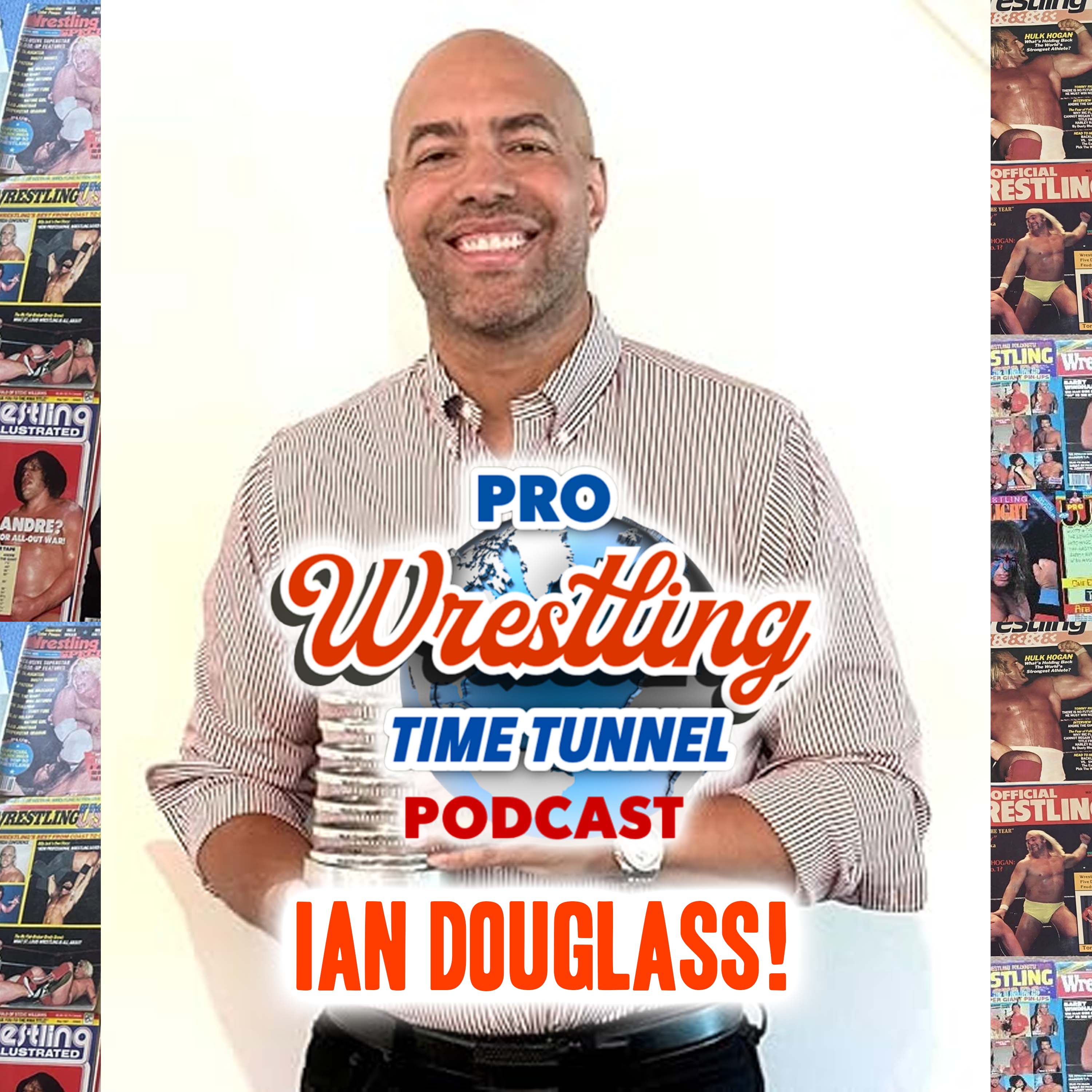
[00:00:34] Speaker B: The sound of the bell means it's time to get this party started. Hey, everybody. Welcome to another edition of the Pro Wrestling Time Tunnel History Show. I'm your host, Tony Richards, and curator of territory wrestling history at the Pro Wrestling Time Tunnel. I'm so glad you made the decision to join us today. We got a great show inviting my special guest over to the ranch today, Ian Douglas, who I will get into a little bit more about here in, in just a few minutes. First of all, sad news from the weekend.
Dennis Condrey passing away. And I can't tell you how much impact it had for me because Dennis started in Tennessee about the time that I became a fan. And around 9 or 10 years old and 70, I became a fan of 72. Dennis started in 73 and just was one of those guys who by, by all accounts, I never really spent a lot of time around Dennis, but I did have friendships and relationship with a lot of people who were very close to him and Dennis. I told Ron Fuller the other day when we were talking about Dennis, I said, you know, Dennis had one of those faces that he just looked pissed off all the time. And it's kind of interesting now.
I used a couple of recent, more recent photos in my tribute to Dennis toward the end of the story, when I was starting to wrap up the story and talk about Dennis's post wrestling life.
And I used a couple of recent pictures of him and he's smiling in both of them and he just looks happy and just full of joy.
And that's not the look he gave most of the time.
Most of the time he looked like he would just kick your ass, like he just pissed off at the world and you give him any excuse possible and he would just whoop your ass right there and then. And he just looked badass all the time.
And I grew up with that watching him first as a partner with Joe Turner who trained him. And then of course, the most famous run when I was a wrestling fan from about 12 to about 16, the tag team partnership with Phil Hickerson when they were the bicentennial kings in 1976. I'm going to Tell you, man, they were the hottest thing going, the most hated team.
And they were just so arrogant.
I was formally in a relationship with a girl from Jackson, Tennessee back in the 80s. And so I spent a lot of time in Jackson and had an opportunity to meet Phil.
And just those two guys, they were just phenomenal as a tag team. And it's just so unfortunate that so many people are unaware of that because of the influence of the videotape era and also because of the midnight expresses run on wtbs. I mean, that's, that's what most people associate Dennis with. But I'm here to tell you, that tag team with Hickerson, they were, they were, they were great. And when they were in programs with Jerry Jarrett and Tojo Yamamoto and Tommy Rich and the Gibson brothers, oh my God, when Phil Hickerson and Dennis Condrey, I saw I don't know how many matches in Evansville, Indiana at the Coliseum. Phil Hickerson and Dennis Condrey against Ricky and Robert Gibson.
Just fantastic. And I probably told you this before, but I, I got a chance to spend some time with Robert Gibson at the St. Louis hall of Fame last year and I just told him, I said, man, I just want you to know that a lot of people don't remember your brother Ricky Gibson, but I do. And you guys provided me with a couple of years of just great wrestling. And I just want to thank you for it and tell you how great I thought Ricky was. But that four man combination, I mean, it was a preview to what would happen with Condrey and Eaton with the Rock and Roll Express.
But Dennis Condrey and Phil Hickerson against Ricky and Robert Gibson, that was a phenomenal match that went through all the stipulations, you know, no dq, lumberjack, all that stuff, and just, just great. And so I wrote a feature piece, rip the life and career of Dennis Condrey. It came out Monday morning and I've gotten so much great feedback from everybody. Thank you so much for taking the time to read it. It was my heartfelt tribute to a wrestler that I grew up with. And really he was one of the wrestlers in that whole Tennessee style that shaped my whole concept of what pro wrestling is.
And just everything was logical, everything made sense. He just was so foundationally and fundamentally sound in working that style that the Welches invented and proliferated throughout the Tennessee territory.
And it's just, it's sad that our community has lost such a great guy in Dennis Condrey. And as I said in the Article. I got a chance to go to some of the great American Bashes in 1986. I went to the one in Memphis, I went to the one in Charlotte the next night.
I went to the one later on in the month in Greensboro where Dusty won the NWA title.
And so I got, I got to see him quite a bit. I went to they, they came to Lexington a time or two in cooperation with Jarrett.
And so I saw them a lot and just a phenomenal team. And Cornet, you know, gosh, one of the best talkers of all time. And Jimmy was so much of a wrestling savant and studied the Tennessee style so much. And he of course, is a meticulous record keeper and note taker and keeping track of all those great angles and matches in the Tennessee mold and was able to talk about. And Dennis knew how to do them all. And Dennis was the spot caller for the heel team and Bobby could do them all with a lot of excellence with the high flying, high spots of the time. And Dennis was the ground attack, the tough minded, beat your ass heel. And Dennis, he coordinated all that stuff in the ring with the Rocket Roll Express. It was all coming from Dennis's calls and he just was, he was just phenomenal. I can't say enough about him. And we're really going to miss him. And our prayers are, we're in prayer for Teresa and Dennis's children and the whole family during this tough time of transition, of doing without a wonderful husband and a great guy. And for everybody who was, you know, really close friends with Dennis. We pray for you too, that you would have peace and comfort during this transition of life without him.
And so I hope you get a chance to read my tribute and you get a chance to go back in the years to come and that generations in the years to come will look at Dennis's work and enjoy it and be influenced by it because he was, he was great. I want to thank you too for the great feedback I've gotten on the mailbag show. Our first mailbag show last week of the. Of the year in 2026. We did it last week. I did it with Steve Giannarelli. We had some wonderful questions from members of our community from across all the social media platforms.
And we really, Steve and I talked about it later. I mean, we didn't. You know, when you're doing a show like that and you're in the flow, you don't really think about it. You know, it's good, but you don't really think about, you're just you know, moving along.
But after I went back and watched it this weekend and listened to it again and got so much feedback from everybody, I'm really proud of that mailbag show and I'm looking forward to doing the next one for sure.
We're going to be starting our 1976 Territory Review Series.
We've already completed our 1985 Territory Review Series. This year. We're going to be starting up with 1976.
I've got some great shows lined up that we're going to that are going to be coming to you. Howard Baum and I are going to be doing 1976 Florida. And we have. I'm hoping, I think I've got confirmation on it. And I'm excited that Steve Kern is going to be joining us for a trip back to 1976, which was a great year for Steve in Florida. We're going to be talking to Jerry Oates, who he and Ted lost the loser leaves town match in the Central States, and they went back to their home state of Georgia. They were in Georgia for a few months, but then they won the Georgia tag team titles and got a nice Babyface tag team champion run there. And I'm interested in talking to Jerry about Georgia and about their time there with Jim Barnett.
There's an interesting family dynamic, and if you haven't heard that before, Jerry and I will probably discuss it again. And Jerry will go over all his thoughts about the Georgia Territory during this time. And I think you're going to like it and you're going to want to hear it. Mike George will be back and we will be talking about Central States because when Jerry and Ted left, Mike got a great singles run. He got a great push with Ed Wiskowski, who ended up being Colonel De Beers. And we talked about him a lot in the Portland 1985 episode, if you didn't catch that. But Ed Wiscoski, who is from St. Joseph, Missouri, Mike Jordan is also from St. Joseph. They knew each other. They trained together to break into the business together with Gus Karras and all the people there. And so I'm looking forward to talking to Mike about his program with Ed Wiskoski in Central States. I'm going to get Herb Simmons back on here because his big Fan fest is coming up In May in St. Louis, the first part of May. He's got some tremendous people lined up for the Fan Fest. He's also doing another hall of Fame, I think, and I want to talk to him about that. Darla Staggs will also be on that show we'll be talking about St. Louis Wrestling Club 1976.
We just got a lot of stuff coming up and I hope you will be here to enjoy it with us as we go around the territories.
And I've been invited to go down to Dyersburg, Tennessee and there's a, there's a wrestler down there who runs a wrestling promotion in Dyersburg. They run in Dyersburg and they run in Ripley.
And of course Dyersburg was the home base of the Welch's for so long.
And this fella heard my series with Briscoe and Bradshaw on Roy Welch and family.
And they are still continuing the tradition there in Dyersburg they have wrestling every Saturday night in a building they call the Herb Welch Wrestleplex.
And I'm going to be, I've been invited to be down there on April 18th. Now you might want to circle that on your calendar if you live in this Tennessee Valley area here where we live in Kentucky, Tennessee, Arkansas, Alabama, Missouri to make a trip down to Dyersburg, which sits on the Mississippi River. And there's now there didn't used to be, but there's now a great bridge over to Kennett, Missouri from Dyersburg. But anyway, I'm going to be in Dyersburg and they're going to enter induct me into their special hall of champions down there in recognition of the Roy Welch Legacy series that I did. And I want to try to get that, that young man on the show with us. And I want to talk about what they're doing in Dyersburg and this event on April 18th. And I'm coming down and we want to get the word out there so they can have a nice house for that night. And so we'll get him in here and get him on the show maybe next week or the week after.
Plenty of time to sell some tickets to this wrestling show in Dyersburg, Tennessee coming up on April 18th. All right, let's get to today's show. I'm going to be talking today to Ian Douglas. This episode is called the Wrestling World of Ian Douglas. I mean, he has created a virtual world where he has it's a lot like what I've tried to do with the Time Tunnel, just this wrestling history center with so much great history about the business and about people in the business. And he's done it through writing a series of about 10 books. I mean, he's written a book on Dan Severn, he's written a book on Bugsy McGraw, he's written a book on Hornswoggle, he's written a book on Brian Blair.
And then besides that, he's Steve Kern. He's got two books, the Kern Chronicles on Steve Kern. And then besides that, he's written a history on the wrestling in the Bahamas, the unofficial history of pro wrestling's unofficial territory from 1960 to 2020.
And that won the Pro Wrestling Authors hall of Fame Commissioner's Choice Award award. I mean, that's a fantastic book and I talk about it a lot here in my visit with Ian. But the Decided Novelty, the Essential Guide to Black Pro Wrestling History, 1880-1950.
I mean, this is an amazing, very in depth, deep dive into these early black wrestlers like Jack Claiborne and others, Jim Mitchell.
And it won a best of the best award from the Pro Wrestling Torch. And it's a, it's, it's like a metropolitan phone book. I mean, it's a big thick book.
I enjoyed it thoroughly. I had to go really slow and it's a big book because I was just digesting all this great history that Ian was documenting about these fantastic black wrestlers. And then he's got a new book out, Highland Games and Hippodromes, which is the history, the amazing influence and history of Scottish wrestlers on the pioneer era of American pro wrestling.
And I just got that. Somebody sent that to me for my birthday, which is coming up next, this coming weekend, and someone sent that to me as a birthday present and I can't wait to get into it. So it's amazing. I mean, Ian, I mean, I've gotten accolades for the amount of content that I manufacture and put out on a daily basis, but the amount of content that this guy has done documenting pro wrestling history and these amazing books that he's written is extensive and exhaustive. I mean, he is a fantastic content factory of putting out. And in the talk we have today, we talk about whether or not he's done or does he have another book?
Possibly. And I am betting on the fact that Ian's wife and I believe he ain't quitting. He's got more books to come.
You can follow Ian on X. I want to say this before we get in there, and I may forget it, but at Stream Glass is his Twitter and X handle. And he also has a website, ian douglas.net where he promotes all the stuff that he does. He's a phenomenal guy. He's very, very humble. And I want to mention this too because he didn't want me to mention it during the show.
I mean, this is what a great guy is and how humble he is and how Low key. He is. He's so forthright and well spoken, but yet he's got a very humble heart and a nice bit of humility about his spirit. But we're getting hall of Fame rings in Waterloo this year. I'm getting the Jim Melby award in Waterloo at the Trago Stairs hall of Fame in July.
And so everyone who's getting an award is also up to get a Hall of Fame ring. And the hall is asking people to sponsor those to help cover the cost for the rings. Right. And Ian sponsored my ring. He sponsored my Trago Stairs 2026 hall of Fame ring that I'm gonna get in July sponsored by Ian Douglas. And even though he didn't want me to mention it during the show, I'm gonna mention it here because I'm proud of it and I'm appreciative of it and I love the guy for it. I mean, that's an extremely wonderful gesture on his part and I'm extremely thankful for it. All right, let's go to the Richards ranch now and let's welcome in our special guest, Ian Douglas. I hope you enjoy our visit today.
Welcome back, everybody, to the Pro Wrestling Time Tunnel History show. This is your host, Tony Richards, coming to you from the Richards ranch. And tonight I have a very special guest that I've been wanting to have on for six months. And we've just now been able to negotiate the time frame and figure out a way. He's been super busy. His family is growing. The book library of things that he's written is growing. Everything around this guy is growing.
Ian Douglas is on the show with me tonight. Ian, welcome aboard, man.
[00:18:34] Speaker A: Pleasure to be here, Tony. Everything but my muscles are growing.
Devote a little more time to that. But, yeah, thank you for that intro.
[00:18:41] Speaker B: Absolutely.
[00:18:42] Speaker A: A pleasure to finally be on with you.
[00:18:44] Speaker B: I'm so glad that you're here today. How are you?
[00:18:48] Speaker A: I'm in, I'm in.
I'm in great health.
I had a total shoulder replacement surgery nine months ago and was just able to get back in the gym six to eight weeks ago and finally able to string together full body weight, pull ups in sets of 10 to 12 again for the first time in almost a year. So, yes, I am in, in excellent health relative to how I was and relative to how things could be.
Sometimes shoulder replacement doesn't go all that well. So, yeah, I'm in. I'm engaged. Thanks.
[00:19:30] Speaker B: Probably five or six years ago, I had a rotator cuff repaired and just going through that rehab, I can't imagine Doing the total replacement, probably.
[00:19:42] Speaker A: Probably very similar.
And it's one of those things that you don't really have respect for until you go through it. And, you know, suddenly you're dealing with a disparity in muscle strength and endurance that just seems bizarre that, you know, both. Both arms go up holding the same weight, and this one just immediately plummets because it can't sustain it.
[00:20:03] Speaker B: So, man, right after the surgery me, he said, now it's going to feel like you're not going to be able to do very much, but if you continue the rehab and you keep. Continue to do what we tell you to do, you're eventually it's going to get stronger. And I remember having to grip my wrist with my other hand and just try to put it on the desk to move the mouse, because I just didn't have it after the surgery. But he told me, he said, you're probably going to want to quit the rehab and you'll think you've done enough, but if you don't complete it all the way through, that's as much as your shoulder is going to be able to do. Then if you can raise your shoulder up and your hand above your head, then. And you quit the rehab, that's where your shoulder will be for the rest of your life. You won't be able to raise it all the way up.
And so I did what he told me to do, and I promised myself whatever he tells me I'm doing it because he's right. I mean, you have the. You have. When you have an option to not do it all, you have a tendency to go, oh, I've done enough. I'm. I feel good and I'm going to quit. And so glad I went through with it all.
[00:21:16] Speaker A: Do you feel like your range of motion has been completely restored?
[00:21:19] Speaker B: Oh, my gosh. Yeah. My.
My right shoulder feels better than my left.
You know, the old one, you know, feels bad now compared to this how good the right one feels. So, yeah, I have. I've completely healed on that part of it.
[00:21:38] Speaker A: Well, there you go. That's a tremendous endorsement for having the surgery done. So anybody who's been holding off on getting it done, there's a light at the end of the tunnel, and things can be better on the back end.
[00:21:49] Speaker B: I had just had some surgery yesterday to trim a bone back from. It was pressing in on a nerve, and the. The doctor went in with a laser and cut the bone back away from the nerve. And.
And I mean, that's. That's going well today. The day after, too, as well. It's still hot in there, and I still got a lot of soreness. But I mean, just so much great things going on in the medical part of our technology that so many great things that can be helpful to us that we have access to that we haven't had before.
[00:22:26] Speaker A: Yeah. The one thing that all of this has taught me is that every. Every action film where a guy takes a bullet to the shoulder and then he's fine, 40 seconds later, like, oh, it was in and out. I can move it just fine.
Total nonsense.
[00:22:40] Speaker B: That's right.
That's a lot of fiction, bro. A lot of fiction.
[00:22:45] Speaker A: When a guy who knows what he's doing cuts into you and is very, very carefully and gingerly moving things around to do the. The minimum damage that he can.
And I still can't move the thing for three months and need to keep it strapped to an ice machine. Yeah. Those movies are garbage.
[00:23:03] Speaker B: Yeah. And that was one thing that happened with my shoulder, too, was a lot of ice.
And I learned that you got to. You got to keep it on there.
The. The effects of not doing it are not pleasant. So.
[00:23:16] Speaker A: Yeah.
[00:23:17] Speaker B: So you grew up in Michigan and from Southfield, and.
Yeah. And you. You went to school at the University of Michigan and you got, like, a whole wall full of degrees. You know, you got the Media Arts School of Journalism award. You got an mba. I mean, you got all this education.
What. What were you going to do?
[00:23:46] Speaker A: You mentioned all that stuff. That's all insecurity I got.
You know, I need to.
Oh, I need this skill set. You know, the best way to do that is. Is to get another degree. Oh, I. Or I need to learn this thing. Like, how am I going to do it? I should get another degree and learn it. And you. You end up. Not that that doesn't come with value. I mean, when I tell people I went to the University of Michigan and Northwestern University and other schools in a business setting and that that means a lot to some people. But, you know, along the way, you learn along the way in the process of forking over tens of thousands of dollars, like you're learning from people who just had an interest and picked up the skill. And in the process of doing it, I didn't have to shell out all that money to do it. So the degrees are nice, but you end up feeling sorry that you were the guy who threw money at the problem.
[00:24:43] Speaker B: Yeah.
[00:24:43] Speaker A: Instead of actually just endeavoring to learn it and do it on your own. Now.
[00:24:48] Speaker B: Okay, now can I say something about that?
[00:24:50] Speaker A: Yes.
[00:24:51] Speaker B: Like what I always was, you know, back in my days as a CEO when we were talking about hiring people, to me, and I certainly don't want to downplay anyone's hard work in their education, but to me, all of that work that you did to gain those degrees, I understand where you were coming from from a psychological standpoint, but. But to me, it demonstrates discipline and it demonstrates a will to work for what you want to achieve.
As far as whether someone can technically perform or not, I don't know that it proves that, but it does prove that you do have some discipline in your life and you do want to have the desire to achieve something, and you possess that. To me, there's a lot of proof. When someone goes through that much education, I think there's still performance that has to happen to show that you technically are able to perform.
But I get that from that, and that's showing up. I mean, you've written 10 books on professional wrestling. I mean, you have to have some discipline and you have to have a will and desire to have achieved that.
[00:26:08] Speaker A: Well, first of all, thank you. I love your interpretation more than mine.
[00:26:13] Speaker B: Well, I understand yours as well.
[00:26:16] Speaker A: Yeah. Now your question as to what I wanted to do, I wanted to be a report a television reporter initially. But the odd thing is that if you'd asked me back then what I really, really, truly wanted to do, it would have had something to do with professional wrestling. But I had no idea how to make that happen or even what that role would be. If you look at what I did when I was at Northwestern, just as an example, and I know this drove some of my classmates nuts. And they said, well, what is, what is he doing?
I know it drove some of my, I know it drove some of my instructors nuts when they said, well, he's, he, he's at the prestigious Medill School of Journalism and he's. And he's sort of, and he's sort of sullying the brand a bit by, by doing all of this wrestling related stuff. But in our second quarter, where we are all working out of Northwestern's downtown newsroom in downtown Chicago, right in the Loop, we are given beats and we're, we have to go out and report for the Medill News Service as print journalists. And the Medill News Service stuff is, is sent out on the wire and it can be picked up by whatever news publication is in the area. Yeah, Chicago South Town, Northwest Indiana Times, Chicago Tribune, Chicago Defender, whomever.
And I was given the Entertainment Beat. And I remember going to our Editor Joe and asking him, hey, and by the way, this is business. This is business entertainment. And I said, hey, could business entertainment. Would. Would pro wrestling fall into the category of entertainment? And he said, well, yes, I suppose it could. And I said, great. So if I could figure out a way to attend Sam Dicero's Windy City Pro wrestling show and. And develop a business angle out of that, could I then enter that, put that up on the Medill news service wire? He said, well, yes, I suppose you could. Is it great? So I contacted Sam Dicero and attended one of his shows and got to see Larry Zabisco and A.J. styles, who was visiting Christopher Daniels and Abyss because he was bringing in a bunch of TNA guys to help out at the time and met some of the other indie guys who wrestled there, like Acid Jazz and Steve Boz.
And so what wound up happening is I got. And they had their urban wrestling league.
So I did publish a story about, wrote and got published a story, a story about Sam De Cero's show that I attended.
But they the. Or the urban league stuff. My editor actually said, hey, this is interesting. If they have an urban league, you could just go in and interview the. The black wrestlers on their roster and the Chicago Defender would probably pick it up.
And I did. And they did. And so as a Medill news Service Northwestern University writer, I got Windy City pro wrestling content published in the Chicago Defender.
And then when we did the.
The Quarter on video journalism in Chicago before we went off to D.C.
my Medill reports special, they. My classmate Kate Ekman also picked me to anchor her segment of the show, which I appreciated. But the story I got, the story I got to cover for that was on Acid Jazz, the indie. The indie pro wrestler in Chicago who was also an elementary school teacher. Wow. I followed him around to the school grounds to cover that stuff and then followed him around to a few of his shows and got footage of him wrestling, interviewed a few of his peers in wrestling and interviewed his.
I think the principal. I think it was the principal of the school where he was a teacher and did it from a whole Dr. Jekyll, Mr. Hyde Angle. And again, I know I had classmates who were covering serious politics, like Dave. Dave Keating was one of my classmates and he's been a correspondent over in Europe forever at this point. Jenna Moyer, who I think has produced however many. Been a producer on however many seasons of the Bachelor.
Hannah Choi, who's the editor for one of the top food magazines in the country.
I mean, tons. I could. I honestly could go on and on, of course. Yeah, in the quarter, in the quarter ahead of mine. I don't know why I'm blanking on her name right now, but she's a five time Emmy award winner who has their own special series on missing women.
Five time national Emmy award winner. So, you know, Medill turns out, churns out a ton of top tier journalists and here I am covering pro wrestling in the midst of all that. And I came out and got a job at NBC News in Flint, Michigan right away as a reporter and video editor.
[00:32:23] Speaker B: W e Y I Right.
[00:32:25] Speaker A: W e Y I and the station was in a period of, was in a period of turmoil at the time.
The news director who brought me in got fired two or three weeks after I was brought in and I spent the next, it was five or, I spent the next five or six months in a, in a sort, in a sort of holding pattern like we're gonna, we're going to keep you on and you can continue editing for us and you continue reporting for us. But my, I was working without a contract that was in a very precarious position.
And I had an offer from rival station WNEM in the market, and I had an offer from a news station in the Virgin Islands that I'd been a correspondent respondent for while at Northwestern. While we were in the Washington D.C. portion of the program, the news director who'd been fired resurfaced at CBS in El Paso, Texas. And he offered me a job to head down to El Paso to work for him there. So I had multiple options. But I also received an offer to come in as one of the staffers of Michigan State. Michigan State House Rep. Andy Dillon, right before he became the speaker of the House.
[00:33:49] Speaker B: Well, I was going to ask that. I'm like, how did you transition from being in the media to all of a sudden working in the government?
[00:33:59] Speaker A: I had, before I left to go to Northwestern, I worked for Consumers Energy in the Public affairs department of Consumers Energy.
And because of a few very kind executives there, Cliff Lawrence and Dave Mengebeer, I made contact with some, some very highly respected State of Michigan lobbyists.
And when my contract, when I was working at WEYI without a contract and wasn't entirely sure what, where I would end up, I mentioned to one of the lobbyists, Tom Hoisington is his name. I mentioned to him, you know, I could use a job that has a little more certainty connected to it with respect to where I will be ending up.
And he said, okay, I'm going to talk to a few People. And the next thing I knew, I was getting a call from Andy Dillon, who wanted me to meet with him at an. In a diner in Redford Township, Michigan and have a conversation about working for him. And that's what I wound up doing.
[00:35:09] Speaker B: Wow.
And, you know, we haven't even mentioned your athletic career.
I mean, you were quite, you were quite, you were quite a swimmer, man.
[00:35:21] Speaker A: No, I wasn't. No, I wasn't.
So here's what happened. No, no, no, no, no.
Let me correct that straight out of the gate. So here's, here's what happened. I, I was an, an okay swimmer in high school. At my high school, I was excellent at most high schools. I would be very good at an elite high school. I would be considered just an average guy on an elite program.
And so I put up state qualifying times that would have gotten me, had me finishing last place at almost any state championship event but state championship meet, but I put up state qualifying times. So I was not in the top, top tier. But most people would say, okay, he's, he's all right.
Now what happened is I stayed in shape after I left high school. And so if you stay in shape and you maintain your high school times when you were on the state, the border of state qualification, in the state state championship qualification, the state of Michigan, if you maintain that and other people get out of shape or they start to drop off and then you, and then you get into US Master swimming and you're swimming in your age group, well, suddenly you're by swimming the exact same times you were in high school. You're beating some guys who were Division 2 and Division 3 MCA swimmers when you're competing against them in the same meets. Now, if you put me in a pool with an average D1 swimmer, I don't care how out of shape they may have gotten, they're probably going to crush me because, because there are levels to this.
My wife was an All American at Northwestern. She swam at the Bahamas with. She swam on the Bahamian national team for a long time.
And I remember training very hard to try to qualify for the World Championship Master swimming meet in 50 fly.
I invited her to swim at a meet with me and she was very reluctant. She didn't want to do it. She hadn't raced or trained in seven or eight years.
I swam.
I qualified in my event by 2, 10 of a second.
She swam 53 for the first time in eight years without training and qualified by like 4, 5 seconds.
[00:38:16] Speaker B: Oh, wow.
[00:38:17] Speaker A: She's, she's really, I mean, But, I mean, she. And she would say, look, I'm a lot slower, but that's. Than I was. And maybe she was. But that just goes to show you, like, the levels of talent that are involved in this.
[00:38:31] Speaker B: Sure, absolutely.
[00:38:32] Speaker A: Yeah.
[00:38:33] Speaker B: What about your public service? I mean, you.
You're volunteer firefighter. Is that true?
[00:38:39] Speaker A: Former. At this point.
My.
[00:38:41] Speaker B: How. How long did you do that, though?
[00:38:45] Speaker A: Two and a half years. Like, it. It overlapped three different years. It was about two and a half years for the. For the Bahama Fire Department. It looks like Bahama.
It kills me to say behemoth for. For obvious reasons, but, yeah, the Bahama Volunteer Fire Department, just north of where I'm living in. In Durham County, North Carolina.
And, yeah, that was.
That was a thing where I just said, you know, I. I've been training all this time, just usually working out an average of five days a week for decades, just because.
And I mean, I initially went back to master swimming because I figured I'm doing all of this training, I might as well apply it to something competitive again and just see how I do as opposed to training just for the sake of being strong or looking okay and being in shape. And there's value to that, too, of course.
[00:39:46] Speaker B: Personal health.
[00:39:48] Speaker A: Exactly. But I just wanted to see how I would do and. And it worked out. And then, you know, there was the.
The piece of my conscience that said, no, you're not. You're not going to be strong forever. And maybe you want to attempt to use some of it, some of it in the service of other people while you can. And so that's why I looked into being a volunteer firefighter.
[00:40:10] Speaker B: Well, you started writing in 2016, right? Or at least that's when your first book came out.
[00:40:17] Speaker A: First book came out in 2016.
[00:40:19] Speaker B: Yeah. And a lot of your books are collaborative biographies.
And the one thing that's a little bit different between the work that I'm doing and the work you do is that most of the people I'm writing about have passed on, but a lot of the people you write about, at least in the biography, I mean, they're still with us and going strong.
What do you find satisfying about that? I mean, I've heard you talk in other interviews about, you know, you tell the guy, you know, just give me this many days and, you know, a couple times a week or whatever. And that just seems very interesting to me, mainly because I've never done it. But how do you find that process to be?
[00:41:03] Speaker A: Yeah. So what you're referring to is. Is what I Told Severn.
That's what I told Dan Severn in my.
[00:41:10] Speaker B: And that was your first book, right? Yes.
[00:41:12] Speaker A: And my approach now is somewhat different. And I'm. Okay, I'm always on. I'm always on the Dan Severn apology tour. And it's not that he has. It's not that he has me on the tour.
[00:41:24] Speaker B: Yeah.
[00:41:25] Speaker A: That a lot of people want to write a book because they consider it a major achievement. And it is. It is definitely an achievement to write a book. And I think the problem with taking.
Approaching book writing with that much alacrity is that you can get caught up in the idea of, okay, I. I've begun the process, and I need to conclude this stage of the process as fast as possible so that I can get onto the next stage so that I can hurry up and get this published. And then I can check that box for having been an author. A published author.
[00:42:12] Speaker B: Yeah.
[00:42:13] Speaker A: And, you know, and then not necessarily reap the rewards or benefits of that because they aren't.
They usually aren't that significant or that substantial, but to. To feel that sense of achievement for having done it. And invariably what I found, I mean, what I learned quickly after getting severance book published is you start saying, okay, great, it. It's published. Okay, I'm an author. But now this.
A co author in. In that case. But yeah, now there's this sense of regret that, man, if I hadn't been in such a hurry and if I'd only given this more time, there was so much more that we could have fleshed out about his life and given people a better sense of who he really was.
And that's why the next time around and when I was dealing with. When I was dealing with Dylan Postel, Hornswoggle, I started writing in 2016.
We didn't turn in any sort of draft until well into 2017.
I started working with Bugsy McGraw, and I think it was January of 2018, and we took almost the entire year. I started working with Steve Kern in 2021.
It was 2021. Or. Yeah, it was 2021.
And we did interviews every Wednesday for, I think, an entire year to get what we needed for. For both of his books.
[00:43:56] Speaker B: Yeah.
[00:43:57] Speaker A: And I've learned that if you're just patient and you don't force the issue, then eventually all of the essential components that need to be included in the story will come out and the project will simply be better.
[00:44:15] Speaker B: Well, I mean, that was exactly what I was asking. Like, I.
Sounds like you learned from the Severn book that you still needed. So much time with the subject, the, the person you're co. Doing the biography with. You still needed a significant amount of time with them. You just learned to be patient and stretch the time out to get more of the information that you really wanted to get to. Right?
[00:44:43] Speaker A: Yeah, absolutely. And, and things happen in people's lives over the course of that time.
Some of them are, some of them are good, some of them are tragic and in for it. For example, in the case of Brian Blair, Weed wrapped on his book and then Paul Orndorff passed away. Well, Paul Orndorff meant everything to Brian Blair. Paul was playing foot was a star player for the University of Tampa football team. When Brian was selling concessions in the stands there, he, he adored Paul Orndorff and he'd all he'd been writing previously about the deterioration of Paul and how that had just ravaged Brian's heart and mind to see that happen.
So I mean, to have Orndorff pass away, that just added another dimension to the conclusion of the book. And he got to speak more about what it meant to serve in the. As the president of the Cauliflower Alley Club because those are the sorts of things that he's intent on, that he's intent on resolving and those sorts of tragedies preventing those from happening. And so we wrote that conclusion and then Brian's eldest son got murdered.
[00:46:18] Speaker B: Oh my.
[00:46:19] Speaker A: And we had to, obviously we had to address that in the conclusion of the book.
And so then we've got the second conclusion where he's talking about his faith and how he believes he will see his eldest son again eventually.
So I mean those, those are the sorts of life events that can really shape the message of the book and help people get a three dimensional view of the subject.
And you, you have to allow those sorts of things to play out.
Mike Rotunda book I'm presently working on.
[00:47:01] Speaker B: Holy gracious.
[00:47:04] Speaker A: You get.
We were done. And then his son Wyndham passes away tragically.
[00:47:14] Speaker B: I cannot imagine.
[00:47:16] Speaker A: And then he's inducted into the WWE hall of Fame and then he has a stroke. I mean, he has. I'm sorry, he has a heart attack.
[00:47:29] Speaker B: Yeah.
[00:47:29] Speaker A: And I mean, I had to keep my mouth shut. I knew things weren't nearly as dire as Barry Windham suggested they were in his interview with Apter. But. And I had people messaging me saying, oh, so unfortunate. I'm saying, you know what, I'm just gonna shut up because I have it from a reliable source that things aren't the way they sound at the moment. And that fortunately turned out to be true. But I mean, now that, I mean,
[00:48:00] Speaker B: I think that happens a lot more than people realize with folks like you and me and others who we have to editorialize ourselves. Like, we know a lot of times a lot of stuff that is not appropriate for us to talk about at
[00:48:15] Speaker A: the time, not fit for public consumption.
[00:48:18] Speaker B: And we, we have to discipline ourselves to make sure that we don't do that.
And good for you, you know, for being able to know the difference and know how to properly address those things.
[00:48:32] Speaker A: Well, thank you.
[00:48:34] Speaker B: Well, I just think it's a responsibility we have and it's, it's good to see someone, you know, living up to it.
[00:48:40] Speaker A: Well, you don't.
I mean, when it comes to, when it comes to certain issues, and I just mean in general, the world isn't begging to hear my opinion on everything, which is why I generally keep my mouth shut.
[00:48:54] Speaker B: The world, There is a human need in some people that they actually think it is.
[00:49:00] Speaker A: Right.
[00:49:01] Speaker B: They think the world is waiting to hear their thoughts on everything. And you know, they end up with information out there that maybe shouldn't be, maybe not even true, you know?
[00:49:13] Speaker A: Right, exactly. And if I spout off in, in ignorance, then I'm just going to muddy the waters even further. So I'll just.
[00:49:22] Speaker B: Did your, did your education and training and journalism help with that?
[00:49:30] Speaker A: No, not, I mean, not really.
[00:49:33] Speaker B: Is it more just in our human thing?
[00:49:36] Speaker A: Oh, it was more. I mean, once bitten, twice shy. You learn like, you learn, you live and learn and you can learn over time. That. Man, I, I really should have shut up. I didn't need to share that. I didn't need to say that I'm, I'm paying the consequences for things that, I mean for, for wounds that are self inflicted because I didn't need to say that. And now I've colored people's impression of me and I got to live with it. And you know what? There's, there's a lot of wisdom in just, in just staying silent or just
[00:50:12] Speaker B: constantly being on the high road, you know?
[00:50:16] Speaker A: Yeah.
[00:50:16] Speaker B: I think Steve Kern is a very interesting individual. He's going to be coming up on the show here pretty soon.
[00:50:23] Speaker A: I love so much and he knows it.
[00:50:25] Speaker B: Yeah. And you know, we're, we're doing a 1976 series and we're going to be talking about Florida and we're going to have Steve on to discuss that and some other things.
But I mean, go ahead.
[00:50:38] Speaker A: Are you going to talk about Bob Roop?
[00:50:40] Speaker B: Yeah.
[00:50:40] Speaker A: Maybe talk with Steve.
[00:50:41] Speaker B: Yeah, yeah, you bet. And so I'm going back through your writings to just refresh my memory. I've read the books before, but I'm going back through them now just to refresh my memory in order to talk to him. But he. He's another one. Like you talked about Brian Blair and his faith. I mean, Steve's another one that has had sort of a spiritual revolution in the last couple of time in his life where, I mean, he's just so sincere, you know, about the way he feels about it.
[00:51:12] Speaker A: Yeah, he is. And that was.
I need to be careful of. I need to be careful about.
[00:51:23] Speaker B: Let me. Let me tell you why I say that, because. Because in the wrestling world, everybody tends to think everything's a work.
And there have been people that have come to a different place in their spiritual lives where people will be like, oh, he's just working. You know, he's just working for speaking engagement, this, that, and the other. I can tell in talking and listening and watching interviews that Steve Kern is not working, you know, that he is authentic about it.
That's why I bring it up.
[00:51:58] Speaker A: He is. And there are. I'll just. The backstory of the writing process with him. I mean, there are. There are questions that I asked not to be.
Not to be nosy, not. Not because I was prying, but there are questions that I asked him because I figured, okay, from experience working with other people.
Like, these are things that wrestlers like to be asked. These are things that wrestlers want to address.
And Steve told me straight up, there's no need for me to go there.
If. If I go there, I. I'm going to come off like a hypocrite, because these are things that, if I take my Christian faith seriously, I. I wouldn't be proud of, and I'm not proud of.
And I don't want anyone to hear me talking about these things now and get the wrong impression, as though.
As though I'm. I remain proud of some of my behaviors from the past. So. Right.
Only the items that are essential to tell the story of my life in. In that.
In those aspects of my life and things that I did will include those. But like anything else, like, I'm. I'm not going to tell a bunch of wild stories just for the sake of telling wild stories, because.
[00:53:39] Speaker B: Right.
[00:53:40] Speaker A: Because yeah, there are some of those, but I'm not proud that they happened. And I don't need my grandchildren reading these things and thinking, oh, well, Grandpa's proud of these things I did, so I should do the same thing. He doesn't want that. So. Yes.
[00:53:54] Speaker B: Yeah.
[00:53:54] Speaker A: Steve is 100% sincere in everything that he says with respect to his faith.
[00:53:59] Speaker B: That's fantastic. I do think there is redeeming value in some of the things because those are things that people are going through at the moment.
And if they can see someone who has brought themselves out of those things and can live a so called a better life, that I think there is some encouragement in that for people who may.
May not know that there is a different way about living.
And so having the contrast between the two, I think does have value at times.
[00:54:33] Speaker A: I totally agree with you there. His concern is that some people might not be able to make the distinction between things that he did and things that he's excited about having done.
And unless he could communicate that he did these things with great retroactive regret, then he, he'd prefer not to address them at all.
[00:55:00] Speaker B: Tell me about Bugsy McGraw. I mean he.
That was an amazing coup that you got by getting Rocky Johnson to do the forward to that book.
Not long after that he passed. I mean you. That was a very fortuitous thing.
[00:55:18] Speaker A: That was a coup for multiple reasons about Bugsy McGraw.
It's, it's, it's difficult to say which book is the most important to me, but as far as my development is Concerned, the Bugsy McGraw book was the most important because that was an opportunity for me to take total control of the process.
And so I, I didn't have an editor telling me what to do.
I was responsible for, I was responsible for selecting the photos and doing the layout of the photos in the book, titling the chapters and, and everything else. So I learned, I certainly learned more from that project than I did from any other project.
And Bugsy was great to work with.
The only reason I get that project in the first place, this has happened multiple times. But the only reason I get that project in the first place is because Bugsy goes to Kenny Casanova, Kenny Bevin, who's written a bunch of books. Kamalas, Brutus, Beefcakes.
[00:56:33] Speaker B: Absolutely. Yeah.
[00:56:34] Speaker A: No, Kenny Taboos several Vaders. Several.
[00:56:38] Speaker B: Yeah. And very talented.
[00:56:40] Speaker A: Yeah. And, and I mean Ken, Kenny's. And Kenny's a real go getter. He's a real DIY person. And he said, okay, do you, do you want Bugsy McGraws? I said, yes. And he said, great, I'm not going to help you. I'm going to give you advice on how to do these things and you can do it yourself. I said, wonderful, let's go.
And so he hands that project to me. And I, hopefully I made it what it needed to be. But then I love, I love the book. Oh, well, thank you.
[00:57:14] Speaker B: I absolutely love it. I love the whole story is particularly about him leaving San Francisco and going to the WWW F and not proceeding as he thought he thought he was gonna get a program with Bruno, and he, he didn't get it. And I love that whole Bono.
Yeah. But I, I, that whole section of the book was so insightful into the way wrestling was at that time.
I, I just, I dug it, man.
[00:57:44] Speaker A: Yeah. Well, thank you.
All credit goes to him. I'm just telling his story. But with, as far as Rocky Johnson getting him, that was a coup for multiple reasons. Is that because, I mean, look, it's the relationships that you establish along the way. This is, I mean, this can go in several directions. But this is another reason why I encourage people just to take writing projects if they're assigned to you, even if you don't know everything you need to know about the subject matter going into it. Because there are plenty of things that you can learn along the way and, and plenty of people you will meet in the process of researching the book, writing the book, promoting the book, discussing the book.
And so, for example, I asked Bugsy who he wanted to do the forward and the afterward. And he said, oh, to do the afterward, I think you should probably get Brian Blair.
And I said, okay, great.
Do you have Brian's number? Sure. Here it is. He gives me Brian Blair's number. So now I talked to Brian. Brian Blair knows who I am, first of all. Second of all, Bugsy says, I don't have Rocky's number. I don't think I have Rocky's number, but you can get it from Brian. So I get Brian on the phone and say, well, Brian, by the way, I'm also working on this book about the history of pro wrestling in the Bahamas. Do you have any recollections of working there? And he had several. So then. And, oh, by the way, I'm trying to get in touch with Steve Kern because he ran his own shows there. Can you get me in touch with him? Him? And Brian, of course, said, can I ever. That's my best friend.
And also, Bugsy told me you could get me in touch with Rocky Johnson. And he said, yeah, no problem.
Here's his number, and I'll text him and let him know that you'll be calling.
And so I got Rocky and was also able. While I had Rocky on the phone, I was able to get Rocky's recollections of working in the Bahamas too, which is fantastic for multiple reasons, not least of which is, like you said, he passed away just a few months after that.
[01:00:13] Speaker B: Oh, yeah.
[01:00:14] Speaker A: So that was.
[01:00:17] Speaker B: It's just interesting. And I don't know because I've never really been involved with any other sports or any other areas of entertainment as far as the things that I'm doing today.
But pro wrestling is one of those connective tissue type environments where you end up in these different places because people are interconnected over different time periods. And then you're just kind of scooting along on the pathway going, oh, you should talk to so and so. Well, can you set that up for me? Yeah, here's a phone number. Or here, I'll tell them to call you. And then all of a sudden that person leads to another 10 people. And that's just interesting the way that that works. Yeah.
[01:00:59] Speaker A: And I don't get my job working for the Ringer or Men's Health if I don't write the Bugsy McGraw book because Oliver Bateman reads it.
And Oliver Bateman is the best writer I know, period.
[01:01:13] Speaker B: He does the work, by the way,
[01:01:16] Speaker A: and he'll tell you, Oliver Bateman does the work.
[01:01:19] Speaker B: That's right.
[01:01:20] Speaker A: Darn right. And Oliver is posting on Twitter about some of Bugsy's feats of strength in the book. And I start weighing in and. And we start debating them because we both have a training background, like, oh, well, maybe, maybe they were partial reps because that's quite a lot of weight to put up if you were going full extension on the arms, etc. Etc.
And next thing you know, Oliver and I are best friends. And we, to this day, I mean, we, we. We literally bother each other every single day about something.
And he said, hey, you have an interest in fitness. My former editor at Mel magazine is looking for a fitness editor and writer. Do you want the job? I mean, I got the job solely on Oliver's recommendation. I hadn't even really written anything in fitness before and got the job simply from Oliver's recommendation and because I had been writing for Mel for a few months when Oliver recommended me to Men's Health. Men's Health said, yeah, sure, he can, he can cover this.
And from there I got writing.
I got writing positions with Bar Band and Transparent Labs and others and ultimately the Ringer. And that's all from Oliver. And that relationship doesn't happen if I don't write the Bugsy McGraw book. And that's one I very easily could have said.
I don't know, I don't know enough about Bugsy. Sorry. Find somebody else.
[01:02:58] Speaker B: Or, or you could have said. The thing that I hear a lot is I don't know if anybody today even remembers Bugsy. So I don't even know if that many people would want to read it, you know, So I don't know if we should write it. And I totally disagree with that. I think. I think if you have a passion for something and you have an opportunity to contribute to the canon, I think you should. And that book was in the finalist for the Wrestling Observer Book of the Year, as was the Brian Blair book a couple of years later.
[01:03:30] Speaker A: Yeah. And.
[01:03:31] Speaker B: And those are all things that are getting you more recognition and more people are understanding and knowing who Ian Douglas is.
[01:03:39] Speaker A: Yeah. And I mean, those are all.
I need to be careful when I talk about that award because that's.
First of all, it's huge that those books made it onto the list, especially because these are all indie titles. Like, to some extent, they almost don't belong there because when the observer in, in the Observer Awards, it's, it's not like they have a panel of 20 judges who are, who are obligated to read every wrestling book released during a year and then they vote. It's observer subscribers.
I would guess the average wrestling fan doesn't even read a book about wrestling during the year. The average fan. Right.
[01:04:32] Speaker B: Sure.
[01:04:33] Speaker A: Not, not, though. Not wrestling. Not wrestling fans who regularly read. I mean, the average fan doesn't even read a book.
[01:04:41] Speaker B: And so they're, they're not interested in history. They're only interested in their current product.
[01:04:47] Speaker A: Exactly. So when the Observer. And it's not like the observer presents them with a list like here are. Here were the books released this year. Which one? Yeah, of course, the best.
It's. It's a write in. What was the book of the year? Well, if you were really. If you had a release by a major publisher and you sold a bunch of books, then you have a New York Times bestseller about Vince McMahon and how it led to the rise of Trump. And that finishes, I think, top three. A lot of people panned that book, but it's automatically going to be top three because it sold that many copies. And that's. And that's just the way it is.
So with, with that being said, the fact that any of my books have ever even grazed that list is a huge blessing.
[01:05:36] Speaker B: Absolutely. I mean, that means they were significant to some people who decided you should be on the list. And I think that's, that's Wonderful. And I think it's something to.
Something to be excited about. Even though if it had been released by a major publisher publishing house, it would have had more PR attached to it and those kinds of things. But, I mean, probably every book I'm. Well, I won't say every book I'm ever going to write, but the next two or three books that I've been working on will probably be independently published. And mainly that's because I kind of want to control it.
[01:06:15] Speaker A: Yes, you took. You took the words right out of my mouth because I want to control the story.
[01:06:21] Speaker B: I want to control how it's told. I've made promises to certain people that have given me information that this will be and this won't be, and I can't always do that if I've got to answer to someone else.
[01:06:34] Speaker A: Yeah, well, the.
It's. It's almost galling is too strong of a word. But if you have an interest in a. In a pro wrestling. In pro wrestling or an adjacent topic and you really want to write about it and you send the idea to a major publisher or a literary agent and you'll get the feedback, like, we don't. We don't think we'll get enough purchasers to make it worth our while.
And you know what, can you link this to contemporary events? Which is why you end up with, I think, like, the NWO and the rise of Donald Trump and like whatever, every. Everything in wrestling in the last 20 years apparently led to the rise of Donald Trump. Now.
[01:07:20] Speaker B: Well, well, my brother Steve Horn or Tim Hornbaker is a perfect example. Like, I'm kind of surprised that he got ECW to publish the History of the National Wrestling alliance book because that's something that has been gone for almost 50 years now and that a lot of current book buyers wouldn't necessarily be interested in. But to his credit, he did, and some of his others, like the Death of the Territories was a big seller. But when he got ready to write the Buddy Rogers book, which I would consider to be historically significant, he independently published it because he wanted to make sure the book was done the way he wanted to do it.
[01:08:04] Speaker A: Yeah, exactly. And a lot of times that's.
I mean, that's the most important thing. And I also.
I mean, from previous experience working with a publisher, sometimes there's a. There's the case where you submit the manuscript the way you want the story told after you've already had to negotiate as about whether or not it's even a worthwhile topic, and then they want A series of changes made, and it could take three or four years for the finished product to finally see the light of day.
Whereas, like, with a decided novelty, for example, that took me a year and a half, I think, to write.
And when it was done, I've got my own cover artist. I've done the layout myself. I got the ISBN.
When it's done, I can put the book out immediately and have the satisfaction of knowing that I released the book and it's available for whomever is interested in the subject matter. And.
[01:09:15] Speaker B: And Jerry Briscoe and I had a contest of who was going to finish it first.
I did.
[01:09:23] Speaker A: Okay.
[01:09:23] Speaker B: I did.
But, yeah, we. We were joking with each other. We'd text each other and tweet each other and talk about where are you? You know, where are you? How far into it are you? You know, because it is a. It is a major work and it's quite extensive, and you have to be somewhat. Really wanting to know these things, you know, because there's just so much information there. And I want to talk about the. Where we are in the world of Ian Douglas in the last three books that. Sure. Released. Because I get the sense that each one of these last three that have been put out are very deeply personal to you. Not that the other biographies weren't, but the history of the wrestling in the Bahamas, the history of black pro wrestling, and the history of Scottish wrestling, they just seem, like real.
Like they were really important to you.
[01:10:18] Speaker A: Yeah.
So, I mean, the Bahamas.
I'll start at the end and then work my way backwards.
[01:10:26] Speaker B: All right, man.
[01:10:27] Speaker A: Because we. Because we've talked about my time at North. We talked about my time at Northwestern a little bit now, if you, you know, I've been asked who my inspirations were before in terms of writing about pro wrestling.
And so when I was in the computer lab at the University of Michigan and I was reading stuff online, the names that were popping up or.
Or people who were producing material that I was reading regularly. It was Dave Oliver.
It was. I'm sorry, it was Dave Meltzer. It was Greg Oliver. It was the team of Death Valley driver who informed a lot of my wrestling viewing decisions over during that period of time.
And it also. I was seeing Scott Teal's name a whole lot. And back then I was thinking, man, it would be.
It would be so cool to do what any of those guys are doing. Like, this stuff is great. And I also.
I also wanted to be. I also wanted to be a reporter, but I wanted to do things that were similar to what they were doing.
So if you'd asked me when I was at Northwestern, if you said there is a guy who has won a. Who has been a reporter for.
For NBC News for an NBC News affiliate.
He's won a Webby Award, and he has written a book about the history of pro wrestling in the Bahamas. He wrote a. An extensive book on the history of black pro wrestling, primarily in the US and he also wrote a book about, really, Scottish culture and its influence during the pioneer era of professional wrestling.
[01:12:33] Speaker B: Yes.
[01:12:34] Speaker A: There's a guy like that, and I would have said, I don't need to know anything else about that guy to know that that's my hero right here. I want to be just like that guy. Yeah.
[01:12:45] Speaker B: So essentially, you're writing about things that you're very interested in.
[01:12:50] Speaker A: Yeah, well, that's. That's exactly it. So it's like the funk book.
[01:12:56] Speaker B: I mean, I'm just really eat up with learning about Texas wrestling history and the backstory. I mean, I understand, you know, about Terry and Dory Jr. I want to know how they got. How it got there.
[01:13:11] Speaker A: Right.
[01:13:11] Speaker B: I want to know about the dad. I want to know about the granddad. I want to know about, you know, what was going on in Texas that caused this legacy kind of thing to happen. Like, those are all things that spring straight out of something that I would enjoy reading. Right.
[01:13:26] Speaker A: I was about to ask, did you also want to know about what went on in Hammond, Indiana?
[01:13:30] Speaker B: Yeah, absolutely.
[01:13:31] Speaker A: Yeah. Yeah.
[01:13:32] Speaker B: And, you know, all that stuff, because these are all things that I would want to know and I would be interested in reading, which I think is the. It's the genesis of how a lot of these projects get done. Like, you're.
You said, you know, if they. You saw this guy had written these three books, it'd be like, I'd love that guy. Well, I mean, it's because that inspiration came out of stuff that you were interested in, right?
[01:13:57] Speaker A: Yeah. And I think if most people, like. Not that this is not to say that I'm my hero. Let's. I'm not going.
[01:14:05] Speaker B: Yeah, yeah, I understand.
[01:14:06] Speaker A: But I think if. If most people follow that path, especially writers of. I'm writing the things that I'm. I'm interested in, that I'm. I'm writing about the things that I'm most interested in. And I don't. I don't care about sales figures. I don't care about anything else. This is. I'm writing the books I would want to read. I think you can reach a place of very deep personal satisfaction with yourself and your own contributions.
[01:14:37] Speaker B: Well, it's like the, the multi series that I've done with John and Jerry about Jim Barnett or about Roy Welch. It's, I would love to listen to those things or watch those things. I mean, so why not me?
[01:14:51] Speaker A: Exactly, exactly.
And okay, so in order.
And it's, it's stupid that I ever thought this way, but for some reason in my head it was like, man, somebody someday is going to write a book about the history of pro wrestling in the Bahamas and I'm going to be so angry if they do. If they can get it done before I can.
[01:15:20] Speaker B: That's how I first heard of you. Yeah. Is I went online and I thought the Bahamas. I wonder if anybody's ever written a book about the Bahamas. And there you were.
[01:15:31] Speaker A: There you go.
Yeah, it would have really annoyed me if someone else had written that first. And, and I also.
There's a lot that has been written about the Bahamas. There's a lot that's been said about the Bahamas.
And I mean a lot of it is at the level of, of myth. And I think some of it is driven by people who they, they exaggerate the stories to get themselves over a little bit more.
Like, oh, I was, oh, I was here and, and this thing happened and, and this went on. And so many of the stories are second and third hand. Like there, there have been people who've commented about the Bahamas like, like this, this thing happened. And I saw it firsthand and I'm, and I'm doing the research, but I also happen to know a lot of Bahamians. Right.
I know people who were there and I'm like, wait a minute, when this thing happened, you were 14 years old in a high school and you were nowhere near the Bahamas. So you didn't know, you've heard it maybe second or third hand from somebody else. Like there's the story about. I'll give you an ex, I mean a lesser example, but there's the story about, Kevin Sullivan told me about Haku, Ming King Taga getting a piece like the, some of the concrete is loose at Nassau Stadium and you can tear chunks out of it and you can throw them at people. That, that is the thing. And how a large chunk of concrete hit Haku in the head and he, and he staggered away and.
[01:17:17] Speaker B: Right.
[01:17:18] Speaker A: And Kevin Sullivan told me that story and I believe Kevin Sullivan. Well then I interviewed Black Bart and Black Bart's telling me, man, I was standing right there when a huge piece of concrete got Ripped out. And it hit Kevin Sullivan in the head and he staggered back to the locker room, swear to God. And I'm like, that didn't happen.
You're. Because you've heard the story told two or three times. He got the names mixed up, people. Yeah, you got the names mixed up. So I just wanted.
I also feel that in a lot of the tellings of the story, the humanity of the Bahamian people got lost. Like, they're, they're treated like a bunch of rabid animals. They're all broke. There was very little money that they could spend. And so I took the time to explain, like, no, it's. They may not have been making as much as some places, but the Bahamian dollar is on par with the US dollar. And they were spending more money, period, than for then the money that a ticket cost for any other show anywhere in the wrestling world at the time, except at Madison Square Garden.
[01:18:33] Speaker B: Yeah.
[01:18:35] Speaker A: So, I mean, they might have been.
They might have been saving their money so that every two weeks they could splurge and go to the wrestling events because it was the hottest ticket in town.
So just, just details like that. I wanted to make sure that the story was explained fairly and it wasn't just a bunch of anecdotes about riots.
So that was the, The Bahamas history book.
[01:19:02] Speaker B: What I love about that book.
And it's all, it's, you know, I.
Not to make it sound like I'm bragging on myself or whatever, but I, I love it on Substack when my pro wrestling history sub stack crosses over and gets ranked into mainstream sports.
Like, I love that because that's telling me that it's reaching across into people who are curious about this history, but they aren't necessarily fans of the modern product or whatever. They're just really, maybe even thinking about their childhood or whatever. But the Bahamian book, I mean, it got up there not just on wrestling books, but it was Caribbean history. It was being. Yeah, it was being listed on Amazon's Caribbean history and it was number one there for a while. And I just was so proud of that for you.
[01:19:53] Speaker A: Well, thank you.
I was proud of that for me too.
I know my mom was proud because, I mean, the Bahamas, everybody, everybody knows everybody.
And especially once you start thinking in terms of individual islands. Nassau, New Providence Island, I, I've been there several times.
[01:20:19] Speaker B: I love it. Yeah, it's a. I love the people. I was, I went down there in the late 80s when I was doing a morning radio show and we broadcast the, our show there from satellite and we did it from a local radio operation.
There was a lady there who. I still have her picture up on my wall showing me basically running the console for me while I'm doing what I'm doing now, talking. She just ran the equipment for me and everything because she was just. Just a treasure. I mean, these people are just great.
[01:20:54] Speaker A: Yeah.
I mean, in terms of the whole small world thing, the.
My. My Uncle David, who I mentioned in the intro to the book, is the one who took me to see pro wrestling. Did. To see Dusty Rhodes vs. Fred Ottman Wrestling show I ever went to in person.
Uncle David worked for Shell Gasoline in the Bahamas. The. The owner of Shell Gasoline was Wenzel Lightbourn, who my uncle brought me.
He picked us up from the airport and he brought me there to meet. Who brought us there to meet while he finished up some work and then he took us to his house.
Well, Wenzel Lightborn is the grandfather of my wife.
I met him when I was 10 years old. I met my wife when I was 30 and. And had no idea that my uncle worked for. For her father until.
Until several years later and I met the full family.
That's just to get a sense of how small the island is and how interconnected the families are. And everybody knows everybody.
But when we talked about the Caribbean history list. Well, on the Bahamas history list, when you typed in Bahamas history during that time, I mean, the top selling books in Bahamas history were Michael Creighton.
[01:22:19] Speaker B: Michael Crichton.
[01:22:20] Speaker A: No, no, not Crichton. Creighton.
[01:22:23] Speaker B: Okay.
[01:22:23] Speaker A: Wrote about the. The history. The first Bahamas history book. That was my wife's. My wife, that was my mom's teacher at Government High School in the Bahamas when she was a little girl.
[01:22:35] Speaker B: Amazing.
[01:22:36] Speaker A: And the number two was a book by Gail Saunders, and Gail Saunders was a classmate of my mother's at Government High School in the Bahamas. So to have my book temporarily supplant theirs as the top sellers in Bahamian history.
[01:22:55] Speaker B: What a thrill.
[01:22:57] Speaker A: Very proud.
[01:22:57] Speaker B: Yeah. What a thrill.
[01:22:59] Speaker A: Yeah.
[01:23:00] Speaker B: Fantastic. Now a decided novelty.
[01:23:04] Speaker A: Oh, yeah, let's go.
[01:23:05] Speaker B: The book that Jerry and I read, the contest over.
This is. So you. You interviewed like what, 40 or 50 people for the Bahamas book? Who do you have to talk to about the decided novelty?
[01:23:19] Speaker A: No one. I have a lot of.
[01:23:22] Speaker B: Now you're getting into my. Now you're getting into my territory where there's not very many people to talk to about these things, you know?
[01:23:28] Speaker A: Yeah, I, I have to. I have a lot of articles to consult, but I honestly, it's In a lot of ways that stuff is more fun because you're reading the descriptions of shows and events that a lot of people that, I mean, I can't even say people have forgotten about. No one's alive who viewed them at all.
And so you feel like, fortunately for
[01:23:54] Speaker B: us, there was a newspaper coverage which we haven't had in 40 years, so we've lost that documentation.
Yeah, but. But we're fortunate that the newspapers were the primary media back then and they did carry some stuff.
[01:24:10] Speaker A: Yeah.
[01:24:11] Speaker B: And.
[01:24:11] Speaker A: And it's.
There's a lot of fun in imagining the events or picturing the events, even if you can't. Even if you can't view them directly.
And. Yeah, that was just.
That was just a case where it was subject matter that I. I really wanted to know about.
I get annoyed in, in general and annoyed with myself too because it seemed like every February all of a sudden people are coming out of the woodwork with their Black History Month pieces and,
[01:24:46] Speaker B: you know, rather than it just being history.
[01:24:49] Speaker A: Right. But more, more to the point that Bobo Brazil Bearcat. Right.
Sailor Art Thomas, Junkyard dog.
[01:25:04] Speaker B: Ernie Ladd.
[01:25:04] Speaker A: Or no, I was about. Yes, Ernie Ladd and Rock, like Rocky Johnson.
We start more or less.
We start more or less at 1960.
[01:25:17] Speaker B: Right.
[01:25:18] Speaker A: And. Or in Bobo Brazil's case, when they really start covering him like 56, 57.
And it's. It's almost as if, like the stuff hasn't really been researched. But you know what? If it mattered, WWE would have told us at some point. So we'll just start the clock in 57 and say that nothing before that mattered and Bobo Brazil did everything. Okay, that's it. Nothing more to see here.
They said, wait a minute. That's. That's simply not true.
[01:25:51] Speaker B: That can't be true. Right. That just can't be true.
[01:25:54] Speaker A: And then like, you'd see like.
[01:25:57] Speaker B: And, and everybody we just named were male.
[01:26:01] Speaker A: Right, Exactly.
[01:26:02] Speaker B: And there were a lot of female pioneers as well.
[01:26:05] Speaker A: Absolutely. And so we get.
You get this like 70 plus years of history almost erased for the sake of this.
Like, it's, it's a hackneyed narrative where we start to see the same names and same short articles every Black History Month.
And you know, occasionally someone will say, oh, well, Celie Samara, I did a little bit of reading. Here's an article. So he was the first to do this. It's like, okay, but I'd like to see some surrounding context for that to know what was going on.
Or. Oh, here's, here's Tiger Flowers and it's, he's isolated to New York for this period of time and then we never see him again. Like, can someone put in more than a day on Tiger Flowers to try to really figure out who this guy was? So I just went through and I said I'm going to give myself a year and I'm going to figure out who the critical figures were and then I'm going to follow their careers from start to finish as best I can and really try to pin down who was the first to do what.
And I mean if you, if since you read a decided novelty, you know, I went chronologically and I jumped around a lot, but I wanted to show like for instance, the headbutting progression.
You really got the original Rufus Jones, who was Tiger Flowers, who I never
[01:27:54] Speaker B: really knew existed until I read your book.
[01:27:57] Speaker A: Great.
See,
[01:28:00] Speaker B: it opened up a whole new world for me.
[01:28:02] Speaker A: Yeah, he makes it this like this battering ram, head butting, start of the match to the finish of the match style.
The term cocoa butt is invented for him, is created for him when he's wrestling in Ontario and the style gets adopted. Like Jack Claiborne played with it a bit when he was in, in Buffalo in Canada.
And Jim Mitchell picks it up because he's saddled with this gimmick as an Indian wrestler and he's wrestling under a mask and the mask is said to give him his head butting strength. But then he takes the mask off and starts using and now he's clearly black, but he's still using the head butting. And then Clayborne goes to Hawaii and now he's using the jumping headbutt mixed with his drop kicks in a fashion that's very, if you look at the video, it's Carlos Cologne, right, 20 to 30 years earlier.
And then Celie Samara who wrestles with Clayborne in that setting, comes back east, starts wrestling in New York and New York State and Canada and he starts headbutting too. So the guys that I described as like the four Kings of wrestling from, for the, the Four Kings of black wrestling for the era, within a, a two year period of time, all of a sudden all of them are headbutting and all of their matches and it becomes this expectation of black wrestlers going forward, like just, just that sort of thing.
It, it was very rewarding for me to figure that out and get it down on paper so that people can understand it wasn't just a case of, you know what, Bobo Brazil started doing it and, and Bearcat, right, picked it up occasionally and the second all the
[01:30:06] Speaker B: wrestlers that we were familiar with the, the pattern and prototype had been set before.
[01:30:12] Speaker A: Yeah. The second Reginald Siki started doing athletics and jumping headbutts. So, so he should get the credit for that. It's like, wait a second, he was born like years after Jack Claiborne debuted and didn't debut until Clayborne's career like took us a drastic downturn.
So it's time to.
Well, it's, it was important for me to put the stuff in its proper context. Like Jim Mitchell. Jim Mitchell.
Him getting a reign as the champion of Sandusky, Ohio might seem like nothing until you realized nobody had no black wrestler had gotten an opportunity to be a champion anywhere in the Midwest that they knew was a black wrestler. I mean, we can talk about Clarence Bolden, but that they could identify as a black wrestler. No black wrestlers had gotten that opportunity until Jim Mitchell got to do it in Sandusky. And then years, a decade, more than a decade later, he's in New England and he gets to team with Jim Kelly and win the, the tag team. The, the AWA Tag Team championship. If you want to call it a world tag team title or a US Tag team title, yeah, that's great. But then it's immediately abandoned and we never hear about it again.
[01:31:38] Speaker B: And most, a lot of those guys were relegated to winning their title.
[01:31:43] Speaker A: Yeah.
[01:31:44] Speaker B: You know, they were regulated to winning their race oriented title title.
[01:31:50] Speaker A: Yeah.
[01:31:51] Speaker B: Rather than a main, what would be known as a mainstream overall title.
[01:31:55] Speaker A: Yes. And I'm glad you mentioned that because you get. Clayborne has his phenomenal run in Hawaii where he's the champion for almost a full calendar year. He, he takes a great photo with the Ring Magazine championship belt in Hawaii. Then he goes back to Los Angeles and you're. And folks, if they were familiar with that, are probably thinking, okay, he's going to be an even bigger deal in Los Angeles than he'd been before. They print the photo of him with the Ring Magazine belt. They cut his wife out of the photo and then they say, yep, there he is with the Negro World Championship belt and, and bury the fact that he'd been a dominant black champion on an island deeper into the Pacific. So it was just. And start referring to him as the black Antonina Roko when he'd been wrestling for well over a decade before Roka started his career.
[01:32:53] Speaker B: I just think it's a, it's a significant book in the history canon and I highly suggest if you are a serious fan of pro wrestling history, it's a Must read. I mean, you've got to spend some time with this material to really understand the impact and significance that these folks played in the overall wrestling business. I think I can't stare at high enough. I mean, I just think it's a. It's a very important book for people who are serious about this stuff to read.
[01:33:32] Speaker A: Oh, thank you so much for that.
[01:33:35] Speaker B: Well, I'm just speaking from the impact it had on me. I mean, I, I'm so glad that I read it. I mean, I. When I finished it, I'm like, man, I'm really glad.
Excuse me. I'm really glad that I didn't get in a rush and didn't scan and didn't hurry through and just really took my time to, to absorb everything this book has to offer because it's rich with some detail that every serious history fan should know.
[01:34:06] Speaker A: Well, I, I appreciate that because the material was very important to me. And again, any.
If for any writers, I would encourage them to always focus on the material that's most important to them. And don't.
I mean, look, money, we all need money.
Money is nice. But I wouldn't chase subjects that, you know, are more likely to get picked up by, by an editor or a mainstream press. I think you'll be more satisfied with yourself and the time that you put in if you pursue topics that are of the utmost interest to yourself.
[01:34:48] Speaker B: And I couldn't agree more with that. And as my grandfather always used to say, money isn't everything, but it comes in handy.
[01:34:55] Speaker A: It sure does.
As a guy with a newborn and a toddler. Sure does.
[01:35:01] Speaker B: All right, so Scottish history. So where does that fit in with your pantheon of passions?
[01:35:08] Speaker A: Oh, man.
[01:35:10] Speaker B: And it's called Highland Games and Hippodromes.
[01:35:13] Speaker A: Highland Games and Hippodromes. You know, and sometimes you're.
Sometimes I can always say I. Some people call it being lucky, I call it being blessed.
I've been very fortunate.
I was very fortunate when writing that book because that, that was a case where I just challenged myself and said, I have only so many months. Like, first of all, I'm laid up after shoulder replacement of surgery, so I can't work out.
So now I have an extra hour of the day that, that ordinarily would go to working out that I'm not going to be using.
And I have a. I have another child on the way.
And I'm thinking in terms. I'm thinking in terms of me being shut down forever like this. When, when this second child is born, I will have negative time on My hands. I will never have the freedom that I have now.
I had no idea how much freedom I had before I had, before I had the first child, but once I have two, I'll never have the time I have now to write a book. So is there anything else that you really, really want to write about or you would be disappointed with yourself if you didn't make some sort of concerted effort to cover a subject?
And I said, well, maybe Scottish wrestling, but I don't even know if there's anything there now. Where the passion comes from is my father is of Scottish descent, last name Douglas. The real last names McDougal.
Descended from a POW of the Battle of Dunbar in 1650, put to work in the Saugus Iron Works in Massachusetts as an indentured servant, and last name changed from McDougall to Douglas. They like, my family, has always enjoyed being Scottish on that side. They liked, liked it so much, in fact, that they named me Ian.
They gave me the most Scottish name they could think of. And then, you know, my cousin, my cousin, as if, you know, just to drive the point home even more, my cousin who was born four months before me, they named him Scott, you know, just to, you know, just to really drive the Scottishness home.
[01:37:43] Speaker B: That's right.
[01:37:44] Speaker A: And yeah, and so, you know what? This would, my, my dad would probably enjoy this.
Members of my family would probably enjoy this if I could put together, if I could just put a book together that made some sort of sense. And so as I'm, as I'm digging through the, as I'm digging through the characters, digging through the, the, the players.
I started with Donald Denny and Duncan Ross because I, I found it very interesting that the greatest Highland Games competitor of all time also dabbled heavily in professional wrestling. That's talking about Donald Denny.
But then Duncan Ross, who's sort of his North American equivalent, was so heavy into pro wrestling that he's, you know, he's competing at a Highland Games event one week one day, and he's doing professional wrestling the next and becomes such a massive draw. And he's making so much money from both of these ventures that he moves into Cleveland and kind of puts together one of the first multi state wrestling territories built around himself, I found, I found that to be phenomenal. But then as I start to see names coming up repeatedly, and one of the names that came up was, was Duncan McMillan, who was Donald Denny's partner opponent at Highland Games events, but also wrestling opponent out west.
And McMillan is also present when Duncan Ross goes out west to California and starts faking Highland Games records to kind of boost his profile out there. But then Duncan McMillan heads out, heads to the Midwest and is the right hand man of Evan Lewis.
Evan, the original strangler, right as like right before Evan Lewis wins that version of, I mean, we call it the American Championship now, in most places in the Midwest, it was defended as the World Heavyweight championship, period. Yeah, he's, he's his right hand man and leverages that position into crowning himself the five Styles Wrestling Champion of the World and touring alongside Lewis.
Then he leaves, comes back, he's at Lewis's side, but then he transitions over to being the right hand man of Martin Burns.
Burns, yeah. And is sort of, I mean it's, it's very easy to envision him as the guy who's sort of orchestrating or manipulating the title change from Evan Lewis to Martin burns, while Duncan McMillan is right there really developing his chops as a wrestling promoter, which he became, and maintaining his position as the right hand man of the World Heavyweight champion.
Then you get the overlap with Dan McLeod, who came out of the same, really came out of the same San Francisco Highlands Games environment that Duncan McMillan came out of.
He makes, he makes his way to the Midwest and he's like right there. Usually positioned as an antagonist of farmer Burns, but McLeod is the guy who finds and recruits Frank Gotch and brings him into the camp of Duncan McMillan and Farmer Burns, right as they're having their.
Right as they're having their fallout with Khalil Adali, the second terrible Turk, who they'd been positioning as the real world heavyweight champion that McLeod almost takes a back seat to during that period of time that he's being promoted. And Frank Gotch takes the place of Halila Dolly as the right, as the heavyweight, the catches, catch can heavyweight in the trio of Martin burns and Duncan McMillan and now Frank Gotch. So you've got Scottish fingerprints all over that era in a lot of ways that most people would never have envisioned. And all of these guys come out of a Highland Games background and they're
[01:42:30] Speaker B: all laying the blueprint for what we're going to see in what would eventually become territorial wrestling. I mean, these guys are putting together these mini circuits and they're putting together these town loops and shows and figuring out how to book matches and how to create angles and all of these things that are going to be so prevalent later on.
I'm not finished with the book at all, but I'm, I'm just knee deep into it and it's just fascinating. These things are fascinating to me. Like, where did this stuff come from?
You know?
[01:43:08] Speaker A: Yeah, it's fascinating to me as I'm researching it because I'm discovering things that I never imagined I'd find.
[01:43:15] Speaker B: And so many people I talk to, when I asked them, what are you really interested in? They're like, well, I'd really like to know when it moved from being legitimately competitive to worked.
And there's a lot of that in your book.
Yeah, you know, there's a lot of that where they're figuring out how to. And that's the Hippodrome term. Right. Is a work to match and they're figuring out how to go from these Highland games style grappling contest to making it a Hippodrome match with the same kind of enthusiasm and excitement. But we're going to hedge our bets on what people really want to come out of this. So we can draw money.
[01:43:55] Speaker A: Yeah, well, not, not only draw money, that you learned that the primary driver of all of this was manipulation of the gambling community. Community.
[01:44:04] Speaker B: Yeah, absolutely.
[01:44:05] Speaker A: Each of these towns that it was.
[01:44:08] Speaker B: And that's another form of drawing money. I mean, they're putting the competitive bets down on who's going to win these matches.
[01:44:15] Speaker A: Yeah. And one of my, one of my favorite segments, and I don't mean in terms of what I wrote about, I just mean in terms of what I learned when Colonel McLaughlin of Detroit is wrestling against Duncan Ross and they're wrestling in Cleveland. But you learn that the gambling houses in Detroit were taking a ton of action on the match and you realize, you know, they could have, they could have easily just sent word on the result back in Detroit and folks would have, I. They would have been far less suspicious that this person had any connection to what was going on because they're separated by hundreds of miles. So it wasn't just about manipulating the gambling in the town you were wrestling in, because there were parlors in cities hundreds of miles away that were taking action on this. And if you were aware of that and could manipulate things in your favor, you could make a financial killing.
[01:45:15] Speaker B: I mean, do you, do you find it as interesting as I do that we've come full circle and that people are placing large bets on the manipulated sport that's out today? I mean, there's an amazing amount of sports betting going on around WrestleMania and you know, all the, every big pay per view has a betting line and matches have betting lines. And we've come all the way back to that in modern times.
[01:45:47] Speaker A: Yeah, I mean, that's fascinating. But you also learn that, I mean, there's.
It's been said that there's nothing new under the sun and everything has a season.
That. And as long as, as long as there's a competition, there are some people who are going to be willing to wager on it. And as long as people are willing to wager money, people, other people are going to try to figure out how to slant the playing field in their favor to try to make as much money as possible.
[01:46:23] Speaker B: Man, listen, thank you so much for investing the time today. I, this visit was all I had hoped for and more. And I, I admire your work very much. And I, after spending this time with you and getting to know you a lot better, I admire you even more. And so I'm so grateful that you decided to do this today and let our audience in on the guy who's putting out this amazing amount of product and all this great, you know, stuff that, you know, after some of your current biographies, after these, these guys eventually, one day will pass on. I mean, we will have these books forever.
And you, you're doing a wonderful amount of work and thank you for contributing.
[01:47:09] Speaker A: Thank you for having me on the show. And I hope you enjoy that. I hope you enjoy the next one as much as you enjoyed the latter two. And given, given what you have an interest in it in, I, I think you will.
[01:47:24] Speaker B: I think I will, too. I think I will, too. So what do you got coming up?
[01:47:30] Speaker A: All right, I don't usually do this, but, but, but this time I will.
I am presently knee deep in a book about the Turkish invasion of pro wrestling from really 1898 to 1901.
[01:47:51] Speaker B: I think John Bradshaw Layfield is going to throw things in the air.
[01:47:56] Speaker A: John Bradshaw Layfield is writing the forward to the book.
[01:47:59] Speaker B: I figured, I mean, you're right. You're speaking his love language, man, talking about the terrible Turk.
[01:48:06] Speaker A: It was funny when I was on his show, he mentioned, he mentioned that I was like, man, little does he know, this, this is, this is already in progress. So hopefully in, in two to three months, you'll, you'll have another one to read.
[01:48:18] Speaker B: All right, man, that sounds great. Well, I, and, and you're fairly young guy and you take care of yourself and you're healthy and you got a family there to growing family to support. So I'm sure we have a lot
[01:48:31] Speaker A: more to look forward to from you and I. Look, I, I told myself a decided novelty was the last one. It wasn't.
I told myself Highland Games And Hippodromes was the last one. It's not. My. My wife is laughing at me at this point saying, like, I knew you weren't done. But I. This. This might be a case. I honestly can't think of anything else I want to write about. So this one might be it. When Rotunda's. When this comes out in Rotunda's book comes out, I might be done.
[01:49:01] Speaker B: Yeah, well, you might be, but the muse always seems to find you, you know, certain people.
[01:49:07] Speaker A: And never say never.
[01:49:08] Speaker B: Never say never, brother. You know, these wrestlers that have their retirement match, they should know better, you
[01:49:14] Speaker A: know, which means I should know better. To Ian Douglas, everybody.
[01:49:19] Speaker B: Thank you, man, for coming by.
[01:49:21] Speaker A: Thank you so much, Tony.
[01:49:22] Speaker B: Appreciate you.
[01:49:23] Speaker A: Appreciate you.
[01:49:26] Speaker B: Well, I hope you enjoyed my special guest today, Ian Douglas coming by for a visit at the Richards Ranch here on the Pro Wrestling Time Tunnel history show. And my gosh, if there's any author out there that has done his part to help us document pro wrestling history and all kinds of areas and spaces, it's Ian Douglas. My goodness. I mean, his. His library of books, which are on my shelf right over here, are invaluable. And I urge you to. To go out and pick up one of his amazing works. I tell you, you'll enjoy it. Whether it's one of his biographies or whether or not it's one of his specific history topical books, you're gonna. You're gonna love it. You really are. And I hope today gave you some insight into the guy who is, has done and will continue to do all this great, amazing work.
It's.
Excuse me, it's springtime and I have the itching and scratching and stuff in my throat.
I'm gonna tell you a little bit about where you can get some great territory wrestling history from the Pro Wrestling Time Tunnel, because after all, we are your home for territory era wrestling history.
And you can come by and join our Facebook group. We had another, gosh, 25 or 30 people added this past weekend to the Facebook group. We typically add 30 to 40 people every single week that are coming into the Pro Wrestling Time Tunnel Facebook. Come on by and fill out the little questionnaire. We get you approved pretty quickly. Once you've applied, you can check out our YouTube channel, where most of our shows are located. We got a great archive of our shows in the podcast past. We're constantly updating that with the old shows. I think there's 18 or so shows from the beginning of the program that we haven't put in yet, but we've Got a great archive there for over the last eight months or so of the program. Plus a lot of great clips and shorts that you can enjoy. And we update that YouTube channel pretty much every single day, the Pro Wrestling Time Tunnel YouTube channel. You can follow me on X, join almost 19,000 people who are following my wrestling stream that I get up in the morning, I think about some stuff and put it out there on X. And I usually put out a few things in the afternoon and evening that are just things that I like and things that I enjoy and that sometimes it's history based about cards in history on this date in history.
Sometimes it's a rip salute, sometimes it's a happy birthday, sometimes it's just a photo from from pro wrestling in the Territory era that I think is cool and I want to share it with you.
That's at the symbol Tony Richards 4. The number 4 Tony Richards 4 is my X feed. And you can come to Substack where I publish all my writing and I do the Daily Chronicle every single day, which is a daily history newsletter that usually features some great content. And I put that out every morning at 5am Central Time and so you can get that into your mailbox. And again, we just shared my tribute piece to lover boy Dennis Condrey. And we also, if you want to be a paid subscriber, it's just $5 a month or $50 for a year where you can save some money if you sign up for an annual subscription. And I write some interesting pieces for that that goes out to our people who are helping us and helping me preserve wrestling history. With a little modest financial donation, I just published my top 30 tag teams from 1975, number 30 through number 21. We got such great feedback on the top 100 countdown of 75 on New Year's. I thought we'd augment it and add in some tag teams from 1975. And so the first of three pieces on that was published last week. I also published an extensive feature on the car accident. March 14, 1976, Danny Hodge had a terrible car accident near Monroe, Louisiana. And I go into detail about the accident. I go into detail about Hodge at that time. He just won the NWA World Junior Heavyweight title a few days before from Hiro Matsuda. And I go into the extensive physical rehab that he had to do after the car accident happened so that he could function again.
And he turned with his whole body like he couldn't turn his neck anymore. He turned with his whole body for all the years of his life. After. I think you would enjoy that piece on the car accident that retired Danny Hodge. That's for our our paid subscribers. And so come on by there. We'd love to have you participate and get my research and my writing that comes out daily on the sub stack. Thanks a lot for joining us today. I hope you enjoyed the wrestling world of Ian Douglas. We'll be back here again next week with another special show.
And again, we're going to start up our 1976 Territory Review Series here very soon.
Our show drops on Wednesday morning at 5am Central, 6am Eastern, 4am Mountain and 3am Pacific, and I hope you'll join us wherever you get your podcasts or on our Facebook group or on YouTube or on Substack. Until next week, here on the Pro Wrestling Time Tunnel History Show, I'm your friend and your host and wrestling enthusiast Tony Richards, reminding you if you want better neighbors, just be a better neighbor. In these days and in these times, it's important for us to support each other where we can. Thanks everybody from the Richards Ranch in Western Kentucky. So long from the Bluegrass State.
[01:55:46] Speaker A: Thanks for tuning in to the Pro Wrestling Time Tunnel podcast. Tune in for another great episode next week, interviewing wrestlers, referees and media personality that have made the sport of professional wrestling great. We'll release a new episode soon. Don't you dare miss it.