Episode Transcript
[00:00:02] Speaker A: Time for the Pro Wrestling Time Tunnel Podcast.
[00:00:05] Speaker B: We've got lots and lots of things to talk about and to do today,
[00:00:08] Speaker A: covering the territories from the 1940s to the 1990s.
[00:00:13] Speaker B: It's the best thing going today.
[00:00:18] Speaker A: Interviewing wrestlers, referees, authors and other media personalities that have made the sport of professional wrestling great.
[00:00:27] Speaker C: The cream, yeah, the cream of the crop.
[00:00:30] Speaker A: And now, here's your host, Tony Richards.
[00:00:34] Speaker C: Hello again, everybody. Welcome to another edition of the Pro Wrestling Time Tunnel History Podcast. We talk about the history of territory wrestling around here. I'm live here at the Richards Ranch and want to welcome you into what I think is going to be a really good show today.
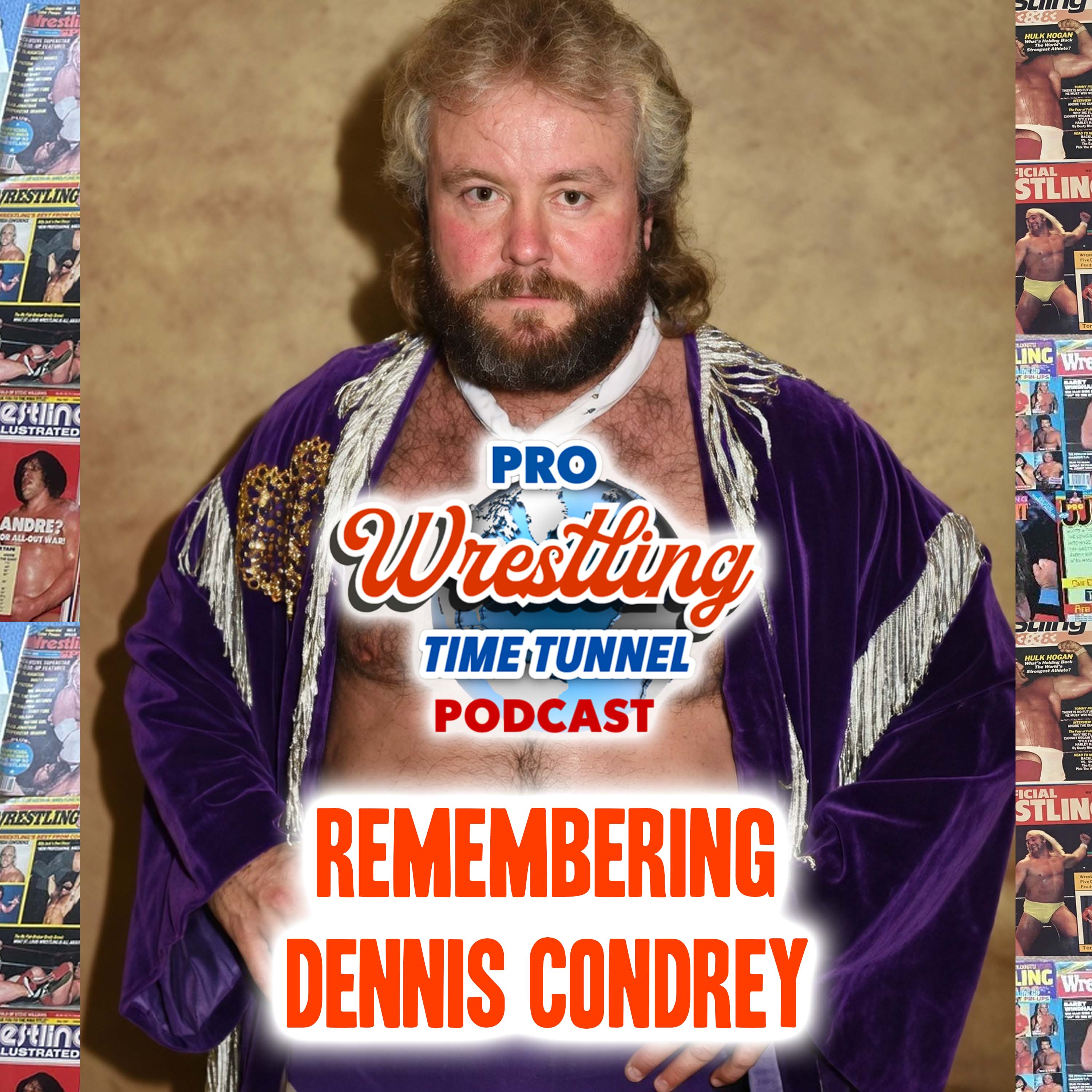
And it's going to be a longer show than we normally put out because I've got four outstanding guests and I'm not going to do the normal information stuff about what I've got going or where you can find me or anything. We'll do that at the end of the show because I want to get right into it because I've got so many great people here. And we're going to do a Dennis Condrey show today.
And many of you have read the feature I did on Dennis's life and career from our sub stack. And I want to thank you very much for all the kind words and great feedback I've gotten from that.
I mentioned this on some. I've done so many people's shows lately, I can't remember if I done it on my show or if I'd done it on another show or whatever. But anyway, the point is that Saturday after Dennis passed on Friday the 20th, that next day I the 21st, I was thinking that I should do something.
And I wanted to. I thought, okay, I want to put out something on Dennis's career. And I spent most of the morning thinking about it, processing my emotions because think, and this might be this way for you, too. I mean, thinking about Dennis brings me back to the 70s. It brings me back to the 80s at a really great time in my life. When I was a teenager and when I was in my 20s, Dennis's time in Jim Crockett Promotions and Mid south wrestling. And a lot of shows are going to talk about that. They're going to focus in on the Mid south time and they're going to focus on the Jim Crockett time because that was the most widely distributed parts of Dennis career.
And I had an advantage growing up here in the Tennessee territory and seeing Dennis in the 1970s in his tag teams with Phil Hickerson and in his tag Teams with people like Dr. D, David Schultz.
And when he. And then when he was wrestling as a single. And I got to see Bobby Eaton when he was wrestling, both for Nick Goulis as a single and then later for Jerry Jarrett as a single.
[00:03:12] Speaker D: Single.
[00:03:13] Speaker C: And I got to see Jim Cornett when he first started coming out on television and it looked like he had just stepped off of a yacht or something. He had on the yacht sailing outfit with the captain's hat, you know, and they were trying to find a way. I mean, it's obviously that Jim had talent and that Jim, you know, could, could talk. It was just a matter of maturing and being comfortable and learning how to get into and form his character, which was very well established and formed by the time he got to Jim Crockett. And he did such a great job there. I mean, Dusty really relied on him to go out on television and do segments that would not only fill time on the show, but actually get stuff over and sell tickets and draw fans to the shows. So all of that is going to be covered by a lot of people because that's what mainly is on videotape and what people have been able to watch over and over and over again.
So today on the show I'm going to focus more on Dennis's early stages of his career. And I've got some people here today that were around then and can add to that information.
So we're going to kick it off with Greg Anthony. Greg Anthony is a one of these young modern promoters that when I was doing the Welch Series on the Stories with Briscoe and Bradshaw show, I got reached out to a lot of these promoters, reached out from Owensboro, Kentucky, from Hayti, Missouri, from Western Kentucky, and all these in West Tennessee. And Greg Anthony is one of those guys who reached out and he's invited me to come down to one of their bigger shows of the year. They wrestle every Saturday night in a building that they have named the Herb Welch Wrestleplex.
And they have a Hall of Champions there and they have a ceremony. It's kind of like their West Tennessee Wrestling hall of Fame. And Greg has very generously and wonderfully asked me to come down on April 18th because he wants to induct me into their hall of Champions. And that's something I'm look for looking forward to. And that's something we're going to talk about in this first segment of our Dennis Condrey tribute here on the Pro Wrestling Time Tunnel History Show. So let's get to my visit with Greg Anthony from Dyersburg, Tennessee. Hey, everybody. Welcome back to another episode of the Pro Wrestling Time Tunnel. I'm your host, Tony Richards, coming to you live from the Richards ranch in Western Kentucky.
And I am pleased as punch to be welcoming our guest here. We're going to have several people on this show doing some reflections on the late, great Dennis Condre. But I also wanted to work this guy in right here at the top of the show because he. He's Greg Anthony, by the way, coming from us to us from down in western Tennessee. And he caught my Welch series on Briscoe and Bradshaw.
And I get a message from this guy. I don't know who he is, but on Facebook, I get a DM from Greg Anthony talking about the Welch series and all, and then come to find out he's got some great things going down there in Dyersburg and Ripley and some of those wonderful Welch towns. And so I want to get him on the show today. Greg, how you doing, brother?
[00:06:49] Speaker A: And I'm blessed. How you guys doing?
[00:06:51] Speaker C: We're good. We're good.
[00:06:53] Speaker D: So
[00:06:55] Speaker C: you talk a little bit about the Welches, and you named your building the Herb Welch Wrestleplex, Is that right?
[00:07:05] Speaker A: Absolutely.
In Dyersburg, you know. Well, I was originally born in southern Illinois, and, you know, in southern Illinois, when I was growing up, you know, we had wwf, we had World Class, and we had Crockett.
[00:07:21] Speaker C: Right.
[00:07:22] Speaker A: And what year was that, man?
Early. I was born 81.
[00:07:27] Speaker B: Okay.
[00:07:27] Speaker A: So like early 80s and stuff like that. And we moved to Tennessee in 88, and I was six years old. Six, seven years old. And first thing.
Sorry, I don't know why my video keeps it. Anyway, first thing. First thing happened, I'm. I'm. I'm flipping through the channels on a Saturday morning, and the first thing I see is. Is Lawler and Dundee, and I'm like, oh, what is this? This is new wrestling. I was already a wrestling fan, you know, but what is this? So then I was introduced to. To Memphis wrestling and all that good stuff. And as I grew up in Dyersburg and stuff like that, when I talk to people of a certain age, the first name they always mentioned was Herb Welch. You know what I mean? Herb trained guys out in Millsfield, and he had the statues out in front of his house and all that kind of stuff.
[00:08:10] Speaker D: Yeah.
[00:08:11] Speaker A: And it just. It just was one of those things where it was like. I mean, I was really fascinated with what he had created here in lasting Legacy like that, because by the time I got wrestling, he had already passed away. Because he passed away in the late 90s, and I started in 2000, so it was right. Right in that same area.
But, yeah, everyone I talked to would talk about him, and they would talk about Rowdy Red Roberts and guys like that. So when it came time when I was going to start our own company, I was actually, you know, in Alabama, and I thought. I already thought about naming it the Herb Welch recipe. And I just happened to be on the show with Roy Lee and Robert and Terror and Jimmy golden and all those guys.
[00:08:55] Speaker D: Yeah.
[00:08:56] Speaker A: And I just. They didn't know me from Adam. And I went over to him and I asked him, I said. I said, hey, my name is Greg Anthony. I'm starting to. I'm starting a wrestling company in Dyersburg, Tennessee. Would you mind if I name my building the herd Welsh Wrestlingplex? And without almost hesitation, they said, yes, absolutely. We don't. We would love for you to do that. Like, you know, and to me, that was. That was just so gracious of them just to be like that towards me, you know, I mean, just because I was a wrestler from Diaspora, you know, I mean, and I want to name it after Herb. And they thought that was coolest thing ever.
[00:09:28] Speaker C: Yeah, I. For those who haven't heard the series or you don't know much about Tennessee wrestling history, Herb was. Roy was the oldest then Jack, then Herb.
And Herb was the real workhorse of the. Of the family. And then Lester came along as a. Really a lot younger than the other three, and Lester was a workhorse, too. But Roy and Herb made such a name for themselves in this territory for tag team. They brought tag team wrestling into the Tennessee territory in 1946.
And while Roy, sort of due to injury and also due to the fact that he was basically running the thing and buying up territory and licensing in states, he slowly faded into background. And Herb really emerged as the powerful singles wrestler in the 50s and in the 60s.
And so Dyersburg was the town that they.
That Roy moved south and settled in.
And he had a dairy farm out in Yorkville. And Herb then started doing the same thing. He started buying property and land and a farm. Where was Herb's farm located? Was it located in another town besides Dyersburg?
[00:10:46] Speaker A: No, it was Mills Field highway is what it was. So they always called that area Millsville, but it was. It's still Dyersburg. Still Dyer County.
[00:10:53] Speaker D: Yeah.
[00:10:54] Speaker A: And.
[00:10:54] Speaker C: And he had a barn out there that he trained a lot of guys, David Schultz and others. Sorry to interrupt. You go ahead.
[00:11:02] Speaker A: And Coco and a bunch of guys, right? Yeah, yeah. And then Like, I had a buddy that, you know, I went to high school with that, that lived out in that area too. And he said that her was the sweetest, nicest man ever. He said they would go to his house and like, if he didn't have, like, he would give all the kids like the little push up pops. Yeah, right. And he said if he didn't have any, he'd tell him, I'll go down to the store and tell him to charge it to my account.
[00:11:28] Speaker C: Ones that had orange sherbert in them.
[00:11:30] Speaker A: Yeah, yeah, yeah, right. And I thought that was the coolest thing ever too. Just so many nice stories of people in, in the area that, that new Herb and, and you know, loved him and I don't think they even really understand how influential he was in professional wrestling.
[00:11:46] Speaker C: Well, he, he, he had taken a lot of photos of a lot of his shoot holes and David Schultz published a little booklet on them and well, put it out quite some time ago. And I, I've got a couple here on my shelf somewhere. I sent them as a Christmas present to Layfield and Briscoe and told them, you know, I'm trying to learn this stuff so you guys can't push me around anymore, you know, but you might
[00:12:14] Speaker A: want to learn how to poke someone in the eye with Briscoe.
[00:12:16] Speaker C: Yeah, they, they loved it. I mean, they loved that little book,
[00:12:20] Speaker A: you know, and I, I actually, I have a, I have that copy too, but I actually have an original copy from the 60s they got.
[00:12:27] Speaker C: Oh my gosh, man.
[00:12:29] Speaker A: Yeah, because one of the, the post office guys here in town who was a, who he was a Postman for like 30 years or something like that, he was cleaning out his, that his parents have passed away and he found a copy of it and he sent it to me with a little note, you know, saying, hey man, I know you're the wrestling guy. This is, this is for you. And like, so I have, I have the one that Schultz had released on Amazon and all that kind, and I have an original too.
[00:12:55] Speaker C: Oh my gosh. I got asked on a mailbag show here a week or so ago what my treasure would be in collectibles. And I don't really have that many of that, but that might go on my list if trying to find another copy of that, that would be something I would love to have. I got, I've got a little memorabilia room here in the other part of the bunkhouse that I'm, I'm fixing up that. I've got a lot of things in there of My career and different things. And I'm putting in some wrestling stuff. I got, I've got the.
Well, actually I'm going to put that up here where I do the podcast. I've got a NWA crown jewel title belt that's as close as you can get to the original with a signature from Dori Funk Jr. On it. And I wanted that for so long and I finally got that. But this might be the new holy grail I got to put on there. And I don't know if you ever take it out of the house, but when I come down in April, if you have it with you, I'd love to see it.
[00:13:56] Speaker A: Yeah, absolutely. I'll definitely bring or take or if
[00:14:00] Speaker C: you don't want to take it out of the house, which would be me, like, I ain't taking this no where. I'm leaving it here. It's like the Raiders of the Lost Ark Cave, you know, put it booby traps up everywhere where nobody could get it. But what I was going to say is if you don't, you can take photos of it. I'd love, I'd love to see it.
[00:14:18] Speaker A: I'll bring. Even if I forget what, I live three minutes away from my wrestling. Boom. So I'll come back and get it for you.
[00:14:24] Speaker C: So what causes you. So you got down there and you started hearing about the Welch's and Herb primarily.
So you decided to start promoting wrestling shows down there. And you guys have wrestling every Saturday night in Dyersburg at the Herb Welch Wrestleplex building that you have now. How did all that get started?
[00:14:43] Speaker A: Well, I still, like I said, I started wrestling in 2000 and like I just, I've always loved wrestling. I've always had a decent mind for wrestling. People put me a part of the creative process of wrestling very early in my career. Probably a lot early than you should have been done.
But a lot of people, they saw what I was doing in my matches and that evolved into, hey, what would you do?
The wrestlers would ask me, hey, what would you do in this match? And then I would start telling them. And then, then before long, bookers are asking me how what would you do with this guy? Or what would you do with that guy? And I just always had a knack for that kind of stuff.
And so I did that. I wanted to pay my dues. I did that for, you know, this is like I said 2000. And then in 2014 is when we started progressing Mid South. We were actually NWA Mid south originally. That's a whole nother story. But so yeah, the whole thing was.
Unfortunately in our area things had gotten really bad. There was a lot of shows and they had alcohol and they had drugs and they had.
[00:15:46] Speaker C: Same thing happened here at Kentucky. And they were extremely violent and bloody.
[00:15:51] Speaker A: Yeah, violent, cussing, vulgarity. There was guys messing with underage girls, you know, just, just a bad reput reputation overall. And then in the city knew it. That was the problem too. So I would go to Walmart and like someone asked, hey, what are you doing nowadays? I'm professional wrestler. And they would kind of really, you know, and that kind of, that broke my heart because I love professional wrestling, you know, I mean, and it broke my heart that it had that kind of reputation. So much in fact that I really didn't wrestle in Dyersburg for like seven or eight years. You know, I mean, I just kind of went out and I was a part of traditional championship wrestling. TCW.
You know, we were available in 50 million homes. one point I went off and kind of did all that kind of stuff and did stuff with the NWA outside.
So I decided I'm gonna start a family friendly company, you know, I mean, so that's, that's where it was born out of, is the fact that we needed something.
I tell people all the time, you can bring your 7 year old granddaughter or you can bring your 70 year old mother to our show and you're, you're probably not gonna hear anything out of the way.
[00:16:49] Speaker C: And you, and you, you experienced a life transformation as well where you got heavy into your spirituality, Christianity specifically. Was that, was that part of your thought when you started or did that come later?
[00:17:04] Speaker A: That came later because like in 2014, my faith really was. I wasn't a, you know, like I tell everybody, I wasn't a drunkard and I wasn't doing drugs and I wasn't doing bad stuff, but I was not where I needed to be in my faith. I thought I was too smart to believe in God and boy, was I wrong.
[00:17:19] Speaker C: Well, that's a common attitude.
[00:17:21] Speaker A: Yeah. And what happened was I, I was wrestling and I started having chest pains, like severe chest pains. And you know, I was 35 years old at the time. When you're 35 years old, you don't think you have a heart condition.
[00:17:35] Speaker C: Oh no. You're 10 foot tall and bulletproof.
[00:17:37] Speaker A: Yeah, I still thought I was 10 foot tall and bulletproof and I just couldn't figure out what it was. And they end up, long story short, they end up doing a scan on me and basically my, I was born with no Right. Arteries in my heart.
[00:17:49] Speaker C: Really?
[00:17:50] Speaker A: Yeah. So I just have left. So my. My arteries wrap all the way around my heart to my other side. Which.
[00:17:55] Speaker C: When did you find that out?
[00:17:57] Speaker A: So this was. This was a 2017.
[00:18:00] Speaker C: So you didn't know that your whole life until this?
[00:18:02] Speaker A: No, no, it was. It was. Until that happened, I didn't know. And what happened was I got two 70 blockages in my heart and a 90 blockage of my widowmaker.
[00:18:11] Speaker C: Oh, my God.
[00:18:12] Speaker A: And I was wrestling 30 minutes a night with these blockages, man.
[00:18:16] Speaker C: You were flirting with disaster.
[00:18:18] Speaker A: Well, that's why I tell everybody I was a breath away from a heart attack, and God saved me.
[00:18:21] Speaker B: Yeah.
[00:18:22] Speaker A: Because what would happen was I would wrestle and I would start getting chest pains, and then I would grab a hold, and then I would let it kind of subside a little bit, and then I would go back to wrestling.
[00:18:32] Speaker C: Yeah, get. And I.
[00:18:32] Speaker A: Get your.
[00:18:33] Speaker C: Get your bearings back and let your body adjust and. Yeah.
[00:18:36] Speaker A: Yeah. So.
And the week that I found out, the week that I had the scan, they're like, okay, the doctor will call you with the results. And I was like, listen, you know, I'm not an intramural softball player. I'm a professional wrestler. I do this for a living. So if you don't tell me something's wrong, I'm gonna go wrestle this weekend.
And I actually was scheduled to wrestle Miyamoto from Japan. He was coming into Ripley on Friday night. I was scheduled to wrestle Miyamoto on Friday night. And then I was scheduled to wrestle Tim Storm for the NWA World's Heavyweight Championship on Saturday.
[00:19:06] Speaker C: Gosh, man.
[00:19:08] Speaker A: So, but on the way to the show Friday, on the way to Ripley, my doctor called me, and he was like, don't wrestle. He's like, you have.
You have two 70 blockages and a 90 blockage in Watermaker. If you wrestle, there's possibility you may die. And it just, you know, hit me. Hit me like a freight train. You know what I mean?
[00:19:28] Speaker C: How fortunate are you?
[00:19:30] Speaker A: Yes.
[00:19:31] Speaker C: That the. That the Lord was looking out after you and wanted to.
Wanted to put you in a place where you needed to get yourself fixed up.
[00:19:40] Speaker A: And then. And then what happened was, you know, of course, when you're like that, and we tell this all the time, is when you're. When you're at the bottom, there's nowhere to look but up. And that's what happened. I was 35 years old. I had all these heart issues. I had two small children. My children were 9 and 7 at this point.
Right. And, like, I had two small kids and a wife and the whole deal. And it's like, this is it. I could, I could be done. You know, I mean, and I just started praying. I start praying to God, please help me. Whatever, whatever it is you can do, do it. And sure enough, you know, I felt.
I felt the power of prayer because it got posted on Melter Post about it and a bunch of other people posted about it. So a lot of people were praying for me and stuff like that. I felt the power of prayer wash over me like warm water almost. And I felt the presence of God after I got out of surgery.
[00:20:32] Speaker B: Wow.
[00:20:33] Speaker C: Wow.
[00:20:33] Speaker A: So, like it?
[00:20:34] Speaker C: Yeah, that, so that, so that, all that, that experience caused you to want to integrate that into your program and into your shows right now. How did you, how did you get the building and, and all that?
[00:20:50] Speaker A: So I used to be. My day job. I don't have a day job anymore. But originally I had a.
I was a GM at a floor covering store. Carpet, hardwood and all that kind of stuff. And there's this guy that owned a bunch of buildings in town named Dennis Miller that would come in and we would joke around. He was just a good old boy, you know, I mean, just a good old guy. Just. He was always getting stuff for his rental properties and stuff like that. And he, he liked wrestling, but he wasn't a huge wrestling fan. But he liked me, you know, and sure enough, you know, we talked about me renting a building at some point. So he, he let me rent a building probably for about half of what it was normally worth.
[00:21:26] Speaker C: Well, you know, that's how a lot of things get started. You got a good friend and you're just kind of joking. When are you going to run a wrestling show? You ought to run a wrestling show. And then all of a sudden, next thing you know, you're running wrestling show, right?
[00:21:38] Speaker A: So, yeah, that's kind of what happened. Like, he, he let me rent that and that the rest was history because he ended up passing away from cancer a couple years after that. But his family still runs the business, obviously, and I still have a pretty good relationship with them.
[00:21:50] Speaker C: So, you know, I had a client in Columbia back, you know, when I lived up there and I had my, you know, I still have my coaching practice, but I had a client and I'm coaching him. And he had been, he had a signs shop.
He made signs for people fairly successfully. And he had been to Bible school to be a pastor or whatever. And in our meetings it just started going along and I'm like, when are you going to start a church?
Like, when are you going to start a church? And I kept after him till he started the church. And it's still going today, like 20 some years later. So a lot of times it's just you need a friend to poke you and push you a little bit in the direction that you need to go.
[00:22:31] Speaker A: Well, that's kind of what happened with me, too. Like, I was in the beginning when I became a Christian and I was running the wrestling show, I was just a Christian running a wrestling show.
And then I had another heart scare a couple years after that. Like in 2022, where they basically, they said, hey, listen, we think you're blocked. Another main arbiter again. If. If you're blocked this time, we're gonna have to do open heart surgery. We can't stench you like we did before. We're gonna have to crack you open and do whatever.
So I went, I prayed, same thing. I went and prayed for about three weeks, as hard as I could. Lord, just let it not be there. You know, I mean, that kind of thing. So, because they had done the scan, the 4D scan, and saw that it was there.
So I went in for the heart calf, and sure enough, the doctor's doing all the stuff and he stops and he just kind of starts pulling away equipment and he goes, we didn't find anything. He said, not only is the blockage not there, that the scan said was there, but you're supposed to have stenosis in your veins around your other stents, and none of it's there either.
He said, we can't explain. I said, well, I can, doc. You believe in God?
And he said, I do. And I said, well, this is a miracle. And I told him about me praying for the last couple of weeks about it.
[00:23:40] Speaker C: Now, now this.
Now, your audience that comes to your shows, you run Dyersburg on Saturday night, you run Ripley on Friday night. Right. Every week. So your audience that comes to shows, tell me a little bit about them. Like what about. How old are they? What do they. Have they told you that they. Like what? Have they told you that they don't. Like what. What do you know about the people that are coming and buying you tickets and enjoying your shows?
[00:24:06] Speaker A: Man, we. We just have a really good group of. Of loyal fans that come. You know, it's. It's kind of like anything else. We have a group of loyal fans that come pretty much every week. Yeah, yeah, we have people that kind of come in and out.
[00:24:16] Speaker C: Yeah, that's with anything you do you have a core, you know, you have a core. Core audience or core group of customers?
[00:24:24] Speaker A: Our core group is, is older. You know, I mean, they're old school wrestling fans. You know, I mean, and they just, they like.
And this is a testament that kind of how we run it is. You know, they like the good guys and they hate the bad guys.
[00:24:37] Speaker C: So they're more like a territory fan.
[00:24:40] Speaker A: Yes, absolutely.
[00:24:41] Speaker C: Okay.
[00:24:42] Speaker A: And that's kind of the way we've, we've always tried to set it up is, you know, we want.
I. I don't like heel marks. You know, I mean, like, to me, it's, it's the.
For me, it's like, if you know what's going on professional wrestling and you're. You're still working against the product, then you're not smart. You're the dumbest guy in the room.
[00:25:00] Speaker C: Right, Right.
[00:25:01] Speaker A: Yeah. I mean, so. And we've had some heel marks come through and I've made a point to do things to them in the show to, to get them back on track. And I think they, they either they took heed to it or they left.
[00:25:12] Speaker C: So anyway, well, man, I'm looking forward to being there. I.
And the other thing, I think so different about a territory fan versus a modern fan, and to each their own. I'm not criticizing, but it seems like territory fans came to enjoy the show.
They didn't come to be part of the show.
[00:25:32] Speaker A: That's a very good analogy. Yes. That's. That's perfect. And a lot of our people, like I said, they come and they don't do.
[00:25:38] Speaker C: Your. Your people that come to your shows, they don't do the chance, right? They don't do the. They don't do the this is awesome or anything like that.
[00:25:46] Speaker A: No, no, we don't.
[00:25:47] Speaker C: They just, they just yay and boo where they're supposed to, right?
[00:25:51] Speaker A: Pretty much, yeah. Yeah, we don't have a lot of that and we don't have UF'd up or any of. Any stupid stuff like that. Like, none of that stuff happens. It's like we just. We're so old school. Like, you know, there was a point where we didn't have a super kick on our show, like for 10 months.
You know, I mean, we were all excited because it was, you know, because you watch wrestling nowadays and every, every other move is some kind of kick, you know, I mean, I posted on
[00:26:15] Speaker C: my Twitter account yesterday or day before, I was doing a lot of ICW stuff for no particular reason because they had a.
Their promotion was Here when I was a teenage wrestling fan and I was talking about Savage and Garvin, and I said, you know, I saw them once or twice a week, plus the Jarrett show on Wednesday night in Evansville. And I was getting all these replies from these younger fans going, man, you went to wrestling three times a week. I'm like, dude, in my small area and community, it's very agricultural, and there wasn't anything else to do.
I mean, back then. Now you got sports teams, pro sports teams in Memphis and Nashville. We didn't have that back then.
We had basketball and we had summertime, some baseball. The Cardinals were a big deal, but that was four hours away.
And we had wrestling, you know, and that was it. And that was our thing to do.
Me and my high school buddies, we used to go a couple times a week. We'd go to the show on Friday night in Paducah and then a spot show wherever else it was. And we just had the time of our lives going to. Going to wrestling shows.
[00:27:28] Speaker A: Yeah, I know. It's. It's. It's amazing. Like. Like I said, I. I worked in Paducah when I first started for Tony Fogg. Yeah. I mean, like, and just, you know, going all these different times and meeting all the guys that, you know, because
[00:27:39] Speaker C: I. Tony was going. Tony was going to shows in Paducah at the same time. I was right. Because he's this. He's the same age as I am.
[00:27:46] Speaker A: Yeah. Yeah.
[00:27:47] Speaker C: So he, you know, he got involved with icw, I think, first, and then he went to work for Jarrett and. Great performer. I mean, he just was that guy. You just. You like to hate him and you never wanted him to win because his d. He got on one of those losing streaks, you know, but. But. Heck of a nice guy.
[00:28:07] Speaker A: Yeah, he was a great utility guy. I mean, you need.
Not everyone can be Jerry Lawler. Not everyone can be Dundee, you know, I mean, like.
[00:28:14] Speaker C: But. But, like, it's. It's that way in every sport. You know, there's only one Michael Jordan. And then you got, you know, your Ron Harpers and your, you know, your Dennis Rodmans and this. Everybody has a spot.
[00:28:26] Speaker A: You know, I was just telling my students that last night. Like, there's so much talent in some of these companies. Like, and to the fans eyes, like, you're not a success unless you're world champion. I just don't. I don't agree with that assessment. Like, I think you can have an amazing career and do good work and still be a guy that's. That's working underneath, you know what I mean?
[00:28:45] Speaker C: Well, you'll be always be happier if you have your expectations in line.
[00:28:50] Speaker A: Yeah.
[00:28:51] Speaker C: You know what you're capable of. And if you really apply yourself and you get some good hands of the cards that are dealt to you and you take advantage of those and you do the best you can, you have a good attitude that to me is being successful.
And you know, every now and then you exceed your own expectations because something comes along that you weren't expecting. You know, when I, when I was doing this stuff and I was doing this show, I never really expected to get in a relationship with Jerry Briscoe and John Bradshaw Layfield. You know, it just was something that happened and it exponentially accelerated what I was doing.
But I was just happy that I got the opportunity and wanted to do the best I could. And I think that's an attitude that's sometimes missing. People don't think about wrestling this way, but when you're putting on a card, you can tell me if I'm right or wrong about this. When you're putting on a card, everybody's on like one big team and you know what your place is on the card and what you're supposed to do. And if you do it, you're contributing to the success of the whole team.
It's not as much individual as people may perceive.
[00:30:02] Speaker A: Yeah, that's what I, I've stressed to my guys very much is like, you know, they'll come up with an idea sometimes. Like that's a fantastic idea. The problem is we're doing something similar over here. They don't, they don't see the whole picture. They see their match, I see the whole picture. I book, I'm, I'm a long term booker. Like I know what we're doing going to October. You know, I mean, like then my, my assistant booker, he's more detail oriented within the week, you know, that kind of thing. So he knows where we need to go sometimes that week. So it's, it's, it's, it's a good balance.
[00:30:35] Speaker C: You got, you got a big show coming up on April 18th and you reached out to me to come down, be a part of it and I'm excited. It's a couple hour drive south for me from where I live here in Western Kentucky and I'm coming down. And you, what's the name of the, you're having a special show that night. What's the name of it?
[00:30:54] Speaker A: This is, this is Ultra Brawl.
[00:30:56] Speaker C: Ultra Brawl, okay.
[00:30:58] Speaker A: Ultra Brawl is one of Our. Probably our second biggest event of the year. So it's a. It's a. It's a big deal. We. We have a good time and like I said, this is going to be our. I think this is going to be our 12th ultra brawl.
So it's a. It's good. We usually have a. I don't know how much of a fan of ladder matches you are, but, I mean, it's
[00:31:17] Speaker C: wrestling, you know, and we have a
[00:31:19] Speaker A: meal ticket ladder match, which. Our meal ticket is basically like our money in the bank.
[00:31:23] Speaker C: Yeah, yeah.
[00:31:23] Speaker A: So we have a meal ticket where it's a lunchbox and it hangs.
[00:31:28] Speaker C: That's a cool. That's a cool idea because there's something there for, you know, because modern fans are really into it and, you know, WWE puts that on every year, that money in the bank, and that's a way to localize it and make it sense in a territory kind of way. I think that's awesome. So. And then you. You told me you're inducting me into your. Essentially your particular hall of fame down there, right?
[00:31:52] Speaker A: Yeah, the Pro Wrestling Mid south hall of Champions. So it's a big deal for us. You know, there's a lot of. The first inductee was Beautiful Bobby, who was, you know, me, he and I tagged for two years and like, you talk about when you get opportunities and stuff like that. I had that opportunity and I. I made the most of it. Bobby was one of my favorite wrestlers growing up and ended up being my tag partner. And we inducted him into the hall of Champions first. And since then we've inducted a ton of people. Sputnik and Jackie, Fargo and Tojo. And just everybody that's been inducted has either been there or their families have been there to induct.
[00:32:25] Speaker C: Man, I'm super humbled and excited and thrilled that you have invited me down, down for that. I can't wait.
[00:32:37] Speaker D: Yeah.
[00:32:38] Speaker C: Yeah. So let's talk just a little bit about Dennis Condrey.
How'd you feel when you heard that Dennis had passed?
[00:32:46] Speaker A: Man, it was like everything. It was just a punch in the gut, you know, I mean, like, Dennis was. Of course, I was closer to Bobby, but Bobby actually introduced me to Dennis because I had wrestled Bobby in a singles match on. On Thanksgiving night in like 2004 maybe. And then they were tagging in Mississippi. Robert Gibson and Ken Wayne were running a television down to Mississippi in the Midnight Express were on it. And of course, Bobby knew me, obviously from working and like introduced me to Dennis and he was just. He Was so cool to me. Even then he just met me, you know, and was so cool. And I've ran into him, you know, a bunch over the years since then, and he just. Every time he sees me, he remembers that I tagged with Bobby. He remembers, you know, that kind of stuff. And he was just. He treated me like one of the boys, you know, I mean, and that's really.
That's. That's the cool thing. For a guy like me that grew up watching a lot of these guys, when you get treated like you know,
[00:33:43] Speaker C: one of them, what's your most vivid memory of being around Dennis?
[00:33:48] Speaker A: So it's actually this last time, I think you were there, Were you there in St. Louis with us?
[00:33:53] Speaker B: Yeah.
[00:33:54] Speaker A: Yeah. So it was okay, you know, where Dennis was, and Schultz was right next to him.
[00:33:58] Speaker C: Right.
[00:33:59] Speaker A: Well, Schultz.
[00:34:00] Speaker C: I've talked about meeting David Schultz there and. Which I was always scared of David.
And so I apprehensively kind of saddled up to him to introduce myself.
[00:34:12] Speaker A: Yeah. So I had actually for. I booked Schultz for somebody else, one of my buddies. So I was doing all the communication with him. I was texting them, and it's this date. It's this much money. It's this that, you know, I was doing all the stuff with him. Right. So we. We had a pretty good relationship, you know. So when I. This is the first time I'd actually seen him in person. So, like, I came up saying, hey, this. I'm Greg Anthony from Dyersburg. He goes, who?
I go, you know, Greg Anthony from Dyersburg is. I don't know no Greg Anthony from. I was like, yeah, I booked you for this guy. And we start going through this. It was almost like, you know, Abbott and Costello, you know, going on, and we're arguing back and forth, and he's. I don't know you. You know, I showed him his number on my phone and everything, and like, he's still. He's still. Whatever. So I was like, okay, whatever. You know, I. I mose it along well. But a little bit later, Dennis pulled me aside, goes, you know, he's just having fun with you, right?
I say, yeah, yeah, I know. But Dennis was. Wanted me to make sure that I knew that he wasn't being and serious. And, you know, I'm still in the club, I guess.
[00:35:09] Speaker C: What's the one thing that you learned or that affected you about Dennis's work?
[00:35:18] Speaker A: And this is something that's not just Dennis, but this is what I. I learned as a kid that I was attracted to and I didn't I didn't understand exactly what it was when I was a kid. The seamless Southern heel, you know, I mean, and what a better description of Dennis Condre is there than the seamless Southern heel.
So the Flares and the Tullys and the Arns and the Dennis Condris and the Bobby Eaton's, Ted DiBiase, you know, that whole, you know, group of guys like that, that's what I was really attracted to, like, that style of work. And like, that's what I patterned because I was healed for 15 years before, you know, this whole Dyersburg.
Dyersburg guy thing. But, you know, that's. That's who I patterned a lot of my stuff after was that just that even though it may have been planned, it didn't look planned. And if. Even if it was planned, it was still a little ugly, you know, so it still looked legitimate, you know, I mean, and that they were all masters of that. Dennis, especially.
[00:36:15] Speaker C: Yeah, that's great. That's great. Well, man, I appreciate you coming by today and talking with me. How do people get tickets for the show?
[00:36:25] Speaker A: Man, you come to the door. That's how we do it.
[00:36:27] Speaker C: At the door.
[00:36:28] Speaker A: Okay, at the door.
[00:36:29] Speaker D: All right.
[00:36:29] Speaker A: 1827St. John Avenue in Dyersburg, Tennessee, every Saturday night. And then Ripley, we're at 207 South Washington street every Friday in Ripley.
[00:36:38] Speaker C: And what's the building in Ripley?
[00:36:40] Speaker A: It's the Power Pro arena because Randy Hales ran it many, many years ago and they never changed the name.
[00:36:48] Speaker C: So when I did that Welch series, I heard from so many guys. I heard from you. I heard from a young guy up in Union City that is trying to get. They lost their building. They were. I don't know if they found one or yet or not, but they were.
[00:37:02] Speaker A: They're working with us a little bit now, Gunner.
They're working with us. And like, we're actually have a joint show coming up at a baseball park here in Diaspora in the next month or so.
[00:37:12] Speaker C: I love it. I heard from a guy over in Hayti, Missouri, over there, that running. And so all of these towns that made up the original Tennessee loop out of that Dyersburg booking office, it is just a thrill for me that wrestling is still going on there.
And I appreciate you so much for doing it and I can't wait to be a part of it on April 18th. And we have a lot of people, of course, who in this area. Kentucky, Missouri, Illinois, Tennessee, Arkansas, Mississippi.
Because I do talk a lot about Southern wrestling and specifically talk a lot about Tennessee wrestling. So We've got a large amount of listeners for this show in that area and I want all of them to come out on, on April 18 to the Ultra Brawl show and enjoy the, the hall of Champions ceremony as well. So anything else in closing you want to say about Dennis or the show or anything?
[00:38:13] Speaker A: Man, I just, like we always say, all glory to God. You know, I wouldn't be here without it. And, you know, he's made such a difference in our life and just, just our company in general, you know, I mean, we're doing everything we do. I, I used to be a very me, me, me person, you know what I mean? Like, I did this, I'm this, I'm this talented. But no, it's because God gave me the talent to do these things that I'm able to do it.
[00:38:36] Speaker C: So it's, it's a great, it's a great thing when.
And I, I've dealt with this so much in coaching high level performers where it's, it's beautiful to see an unhealthy ego now, you know, and I tell people all the time, there's no getting rid of your ego. If you want to be successful, you have to have a certain amount of presence about you. You have to have a certain amount of confidence and belief in yourself. But there's a difference between an unhealthy ego and a healthy one. And it sounds like you have successfully made that transition with the help of some spiritual guidance. And that's so amazing. And I want to. You're going to come back on the show, I can tell you that. We're going to have you back more. I can't wait to be there on April 18th to visit with you and talk more wrestling and meet a lot of your fans. And it's going to be. I'll get there early and probably stay late because I'm into it. And I want to see you guys, I want to see you guys. All your dreams come true, man.
[00:39:34] Speaker A: I appreciate that.
[00:39:36] Speaker C: Greg, Anthony, everybody. And so Saturday night in Dyersburg, Friday night and Ripley every single week. And please come down for ultra brawl on April 18th. And we can't wait to see you there. Thank you, brother.
[00:39:47] Speaker A: Thank you.
[00:39:49] Speaker C: I don't know about you, but, I mean, it does my heart good to see live local wrestling still happening in today's wrestling world and in today's wrestling community. I know my friend James Beard down in Texas, they've got some great things going down there with wrestling. And as I said before, here in Western Kentucky, they put on some fantastic Shows in Owensboro.
There's a young man down here in Union City, Tennessee, the hometown of Coco Ware.
They are right now looking for a building and they're doing, as we mentioned in the segment with Greg Anthony, they're doing a thing together here pretty soon and Ripley, Tennessee, and Dyersburg, Tennessee.
And I want you to, if you're watching, I want to urge you to go out and support these folks.
They're running these good, wonderful shows that we all kind of grew up with and we all loved. And I want to encourage you to support live local wrestling whenever possible. Of course, coming up here pretty soon on the show, I'm going to have my friend Herb Simmons, and we're going to be talking about the St. Louis hall of Fame and Fan Fest 4 that he's having up in the St. Louis area. So a lot of live local wrestling happening. Okay, go into the next guest. It's going to take just a minute for me to explain my relationship to this guy.
When I was looking to get into broadcasting in the mid-70s, when I kind of decided that was something that would be a great thing to do.
And I, toward the end of, I was influenced by so many great people here that were very talented. One of those guys is somebody you've probably never heard of named Brian Sargent.
And Brian Sargent worked on WKYX, which was the big top 40am station here.
And Brian left and went to work in Nashville, and he went to work for the guy that I'm about to introduce, Michael St. John.
And when I was an aspiring young person who wanted to get into broadcasting, I used to try to twist and turn my radio so that and Nashville is a little over 100 miles down the road from the ranch here. And I used to twist and turn my radio around to try to get the Signal in for kicks104 in Nashville, which formed my idea of what a radio station that was programmed. Well, now, for you who may not be familiar with the term programmed, there used to be a position, I guess there still is, in the radio group called the program director.
And the program director hired the talent.
And the program director is very much like the booker in pro wrestling. He assembles or she assembles the talent for the station, figures out where they should be and what, shift the morning show, the midday, the afternoon, the evening. They also are the overseer of the music and or talk programming that's on that station.
Michael St. John was the program director of Kicks 104.
All right. And I got into the broadcasting business at the age of 15 at a local Little AM station about 10 miles up the road from me. And I worked there from the time I was 15 till I was 18. I graduated high school and I went to work in Paducah.
And so to make a long story short, by the time I was in my mid to early 20s, I was an executive.
Well, when I was around 30, I moved to Missouri and became the vice president of programming for a group of radio stations based out of Cape Girardeau, Missouri. And one of those stations was in St. Louis, Missouri. And Michael St. John was the program director there. And we established a relationship because essentially all the program directors in the group reported to the vice president of programming, which was me.
And so Michael, I had also seen on one of my wrestling programs. He was an announcer on the television show for Nick Goulis in the late 70s, and then filled in sometimes for Lance Russell on Memphis Television for Jerry Jarrett. So, I mean, this guy was, he was a legend to me.
And so we have stayed in contact and we have reconnected here lately. And I'm going to have him back on the show here to talk more about his experiences in wrestling. But today we're going to talk specifically about Dennis Condrey because Michael did the television when Dennis was wrestling for Nick Goulis and so thought it'd be kind of fun to have Michael on the show today and talk about his remembrances of Dennis Condrey. So let's go to that conversation at the Ranch now with my good friend Michael St. John.
Welcome back to the Pro Wrestling Time Tunnel, everybody. This is Tony Richards and tonight here at the Richards Ranch, I am privileged to welcome my long term friend. I mean, we go back a long way, not just in wrestling, but in the media business as well. We worked for the same company back in the 90s and I was a fan of his long time before he even knew who I was. And that is Michael St. John joining me tonight. Michael, how are you, bro?
[00:45:17] Speaker E: Hey, I'm honored to be with you, Tony, as always, love to be on the Wrestling Time Tunnel. We do such a fabulous job and it's always a pleasure. It's like always great talking to you, always great seeing you. We reminisce. It seems like we reminisce before we get to really do this on tv, but I love this. Thank you, sir.
[00:45:33] Speaker C: Absolutely. Well, we, we lost somebody recently that I know you were very closely acquainted with and I loved him as a, as a wrestling observer for sure, but that's Dennis Condrey and you worked for the Nick Goulas promotion. You also worked for Jerry Jarrett. You did some television and were around the office and did a lot. When did you first meet Dennis?
[00:46:00] Speaker E: You know, I really. I was thinking about that the other day when I heard he passed. By the way, 28 miles from where I'm sitting right now. I'm in Arab Alabama. He was in Huntsville.
And you know, I was thinking about that last night. I started doing commentary for Nick in February of 77 and I met Dennis and Phil Hickerson, I believe shortly thereafter he came to the territory and you know, the consummate professional tag team wrestler. I really don't remember him in many singles matches, but I remember him in a lot of tag team matches.
And he was trained by Joe Turner, who was his brother in law who worked for Nick, you know, in the 60s and 70s and ended up promoting wrestling right here in Marshall county up until last October when he passed and had lived in Lebanon. And Joe was a. I got a
[00:46:55] Speaker C: chance to meet Joe and Bill Bowman both. Yes, several, several times. And I love being around those guys. I mean they were just hilarious people and had so many great stories.
[00:47:07] Speaker E: Oh man.
[00:47:08] Speaker C: And, and it was a storybook and, and they had picked up all those.
I'd written quite a bit about it in my feature piece on Dennis that I'd put out the Monday after his passing. And I talked about how Joe and Bill were such students of real old time tag team wrestling and they, you know, imparted all that to Dennis who then we got to see glimpses of that as the wrestling business evolved. But Dennis was definitely trained by, by some guys who were really good at what they did.
[00:47:40] Speaker E: Indeed. And by the way, people have not read the piece you did on Dennis. I commented I got an opportunity to read it and what a great read. I mean historically correct and just spelled it out perfectly. But you know, the thing about it, in bringing up the fact of Joe and in Bowman teaching, teaching Dennis, it created. Dennis had a great feel for the ring. I don't know if you and I always talked about this, that he, from the time he left the dressing room door to the time he got in the ring to the time he got back into the dressing room, he never broke character. I mean he was who you saw and in the locker room he was a very friendly guy. I mean, in fact I, I think I made mention on another show that when he and Hickers, when I've met him in Hickerson, I, I really got more to talk to Dennis and got to know Dennis more than Phil, more so because Phil's a good old country boy and they talk country and hunting and all that stuff, and I'm just not that that made up.
[00:48:45] Speaker D: And.
[00:48:46] Speaker E: And Dennis just had a. Dennis was great because Dennis had an opinion about everything and everybody, and. And I always liked talking with him. And he was just one hell of a great guy and a great guy to know and partner.
[00:49:00] Speaker C: I had a really serious relationship with a girl from Jackson, Tennessee, and spent some time down there, and Phil owned a bar down there, and they were friends from the girl that I was seeing. Their families and Phil knew each other, and so I got to spend time around him and the stories again.
I mean, Phil Hickerson was a storyteller, and it didn't matter whether it really happened or not. It was just. I was so engrossed in it, and I. I just. I feel so robbed that so much of their work together is not available anymore that we don't have it to watch. Because today's people who are just starting to learn about wrestling history really don't understand how great they really were, you
[00:49:46] Speaker E: know, and back in the territory days. And you've talked about it before on this show, and the fact of the matter is that the promoters didn't either want to spend money, the extra videotapes that we're sending to the towns, or they just didn't want to make an arc. I mean, we. How many things were recorded over and over and over. And I know even Jerry, you know, up until the. The mid-80s, into the 85, 86 era, didn't keep stuff. I mean, they, you know, well, I.
[00:50:12] Speaker C: The. The group I was managing, we had a couple of television stations and we ran Jarrett's show. And invariably, I mean, if we didn't send a tape back, I mean, they were on the phone like, hey, we got to have our tape back. And I'm thinking you only got like six or seven of these things, you
[00:50:29] Speaker E: know, and that's true.
[00:50:30] Speaker C: Yeah.
[00:50:31] Speaker E: And. But that it's. It's sad that you're right. We lost so much of that. And I. I really. And I really put the credit to people like yourself and to. To Jimmy and to.
[00:50:42] Speaker B: To
[00:50:44] Speaker E: all the folks now that are doing right up here in Huntsville. We. We have a guy that has made a career out of, you know, these kind of shows and so forth, and I really appreciate it from someone that was in the business you rewrite or not rewriting, but reliving the history so that the young people can learn, because so much of it just did not get saved. And that's in every territory. I mean, Sam Munchnick, there's a. Not as much in the St. Louis territory on video that you would think.
[00:51:12] Speaker C: No, Herb Simmons has whatever what there is, and we don't. He doesn't even know what shape they're in, but wow, you know, he's. He's got quite a bit of that. That stuff that's still around and, you know, to me.
And that's one of the reasons Michael and I've talked about this pretty extensively. It's why I don't really criticize the modern product, because I don't want fans of today's wrestling to think I'm a cranky old guy that doesn't like their wrestling because, you know, that might cause them to go, well, why do I want to listen to him for? He didn't even like the wrestling I like, you know, and I. I would rather not do that and have them be interested in our era and get, you know, and I. Somebody paid me a great compliment the other day. They said, you're like the great uncle. Like, I like to come over to your house and hear the stories about the good days, you know.
[00:52:11] Speaker E: Well, getting back to Dennis, though, I mean, like I said, he was. He was a genuine person. And.
And just. And. And really, when the new boys would come into town, he would be the first to talk to talk to him and gravitate him. And if they were doing something that. That Nick didn't like or that Jerry didn't like, and he would sort of, you know, let him know. And the great thing about Dennis is, A, he always had an opinion. Okay. And B, always bitched about his payoffs. And. And C, he was a river. And in the first degree. I told the story the other night.
[00:52:43] Speaker C: You did? I heard this and I want to hear it again.
[00:52:45] Speaker E: Well, I. I was in. I was in Chattanooga. Harry Thornton had had a heart attack and couldn't do TV for. For many, many weeks. And Nick Gulas would drive me to Chattanooga every Saturday to do 12 do channel 12 television, live from the studios of WDEFTV, channel 12 on Market street in Chattanooga. And on this particular Saturday, they were running a show that night at the auditorium downtown. And the main event, I'll never forget, was the Free Birds against. Well, they were the pre Free Birds, Terry Gordy and. And Michael. And Pretty Boy Michael Hayes against George Goulis and. And Bobby Eaton the Jetset. And it was a wild match. Well, it was in 78 and the movie Saturday Night Fever. Had become a big thing. Well, you know who had a white suit a la John Travolta right here wearing it on tv.
[00:53:46] Speaker C: Are there any family albums with photos of you and that, God forbid.
[00:53:51] Speaker E: But there are. I just. And, and, and quite frankly, my daughter has quite a few of them. And I'm sure when I'm gone you're going to see some wild stuff. But, but the fact of the matter is it was a big card and Dennis Condrey and, and Dennis Condrey and Hickerson were on the card.
And after the mat it was a wild melee for the main event. Everybody, it was a four way every. Everybody got juice and, and I'll never forget Terry Gordy had the long blonde hair and Eaton had him up against the turnbuckle and they were right above me. We had the table against the ring at the Memorial Auditorium in Chattanoog. And I looked up, and about the time I looked up, pretty boy Michael Hayes does this with a hair. Well, he's got blood and sweat and everything going.
And I just got a rain shower of blood drops. I mean, literally just right down on the me. Didn't matter. The white suit mattered.
So anyway, at the end of the match, Nick was just livid that they would mess up my suit. And he grabs me and he says, take your pants off. He says, give me that jacket. And he throws one of the wrestlers out of the shower and throws the jacket in the shower and the pants in the shower and turns cold water on it. And so I'm sitting there, well, I had a change of clothes because I didn't obviously ride down there and back in a suit and tie. So I'm changing my clothes. I wore tennis shoes number one, because they're comfortable. But number two, if you had to get out of the way at a wrestling match, if you had street shoes on or dress shoes on, you're liable to slip and break something, right? So I wore tennis shoes all the time. I got, I got laughed at. I know a bunch for it, but that's okay. So anyway, I've changed my clothes and I'm changing my clothes out. I go back in the room where the shower is and I go to put my shoes on. My shoes are gone.
My shoes are gone. And by that time there's only maybe one other wrestler in the ring, maybe Joel. Of course George and Nick are there and they're getting ready to go and Nick's getting the thing and wringing it out and putting in a bag so I can take it home and he said, take it to the cleaners first thing. And this is Monday morning. Whatever. So I'm looking for my shoes. I can't find my shoes. My shoes are gone.
Where'd you take them off? I took them over here. Well, where are they? You know, and, and he's going. And so I ended up going back to Nashville in my sock feet.
And I got to Nick's house and picked up my car to drive back home to Hendersonville. And I had to drive home in sock feet. I got home, I've lost a pair of shoes. Well, the following Wednesday night, we tape wrestling for the bicycle. It. The, the show on Wednesday night. Fairgrounds was taped and then they'd send it to the other town. So the angle that shot this week would run that Saturday boat, the Revolution. Peter. The, the live show would be the following week, right? So anyway, I show up at TV and I'm back in the locker room. I'm taking notes. Matches are that he's run down the car and I'm taking notes. And Kadri comes over. He said, boy, he said, did you lose a pair of shoes in Chattanooga? And I went, well, I couldn't find my shoes. He said, man, I found this pair of shoes that holds up my, my tennis shoes.
I found this pair of shoes.
[00:56:59] Speaker C: He just found him.
[00:57:00] Speaker E: He found them. And he said, I've been asking the boys all week. I asked him in, in Birmingham and I asked, yeah, yesterday. He said, and I found these shoes and nobody's claiming them.
[00:57:11] Speaker A: They.
[00:57:11] Speaker E: Somebody said, they're yours, they're mine. Well, he was ribbing me. And of course, after he gives me my shoes back, the whole locker room, they're laughing and, and he got you, he got you kind of thing. But he was a great ripper. But when my wife heard the, the story and she laughed and she said, well, at least that was, that was the kind of pranks people used to run where nobody got hurt. It was just maybe an inconvenience, but it was funny. And he did that many a times. And that was just typical Dennis Gondrey.
[00:57:41] Speaker C: You know, I'm going to ask you about a team that I just made casual mention of in my, my piece because, I mean, there were so many great things to write about Dennis and about his accomplishments.
But about that same time, Dennis teamed up with Chris Colt. Do you remember that team at all?
[00:58:00] Speaker E: I do. And it was short lived. I know Chris was in and out of the territory fairly quickly, but two guys that could go, I mean, Chris Cote could go, and Dennis Dennis had enough old school in him that he learned from the Masters, if you would. Learned about the masters from the Masters. But he also took it into a new vein in. In. In that, you know, he was that rough, tough country boy. I mean, he. He was built, but he didn't have the bodybuilder physique. And you just looked at him and said fans would look at him and say, I hate that guy. I mean, you know, rule breaker, whatever. I hate that guy. And so he. He took it to his own. He made it his own thing, but took it to the next level. And I think whether he was with Chris Gold or whether he was Phil Hickson or later with Bobby and Jimmy and Jimmy Cornet, I mean, it was lightning in a bottle.
[00:58:54] Speaker C: I mean, it's kind of hard for fans today to put themselves in this mindset, but back then when. And Dennis had this look where you. You looked at him, and it's like, I don't want to hang out with that guy.
[00:59:07] Speaker E: Yeah, yeah, exactly.
[00:59:08] Speaker C: Whereas now you're like, oh, I want to be with the cool heels, you know, that. That was not the. That was not the way things were back then. And Dennis had that.
And it was nicest guy, but just looked like, I don't like him. I don't want to hang out with him. Right. And the beard helped him, you know.
[00:59:25] Speaker E: Exactly. But bandana.
[00:59:27] Speaker D: Yeah.
[00:59:28] Speaker E: That little sarcasm. He always had sarcasm. If you listen to his promos, it always was full of sarcasm. And even the lover boy.
[00:59:36] Speaker C: Yes. And my gosh, David Schultz, that team. I mean. I mean, I've had plenty of opportunities to be around David. And that's David.
Yeah, David always is David, you know, and not. Not. You're like, I don't want to make him mad, so I don't want to be around him very much, because I know I'll say something liable to, you know, upset him, and he's liable to look at you like he's gonna get you just to rib you.
[01:00:01] Speaker E: You know, I loved working with David Schultz, and I got to work with him a couple of times on front end of the. Early in my period of time of doing this. And then later on after he had done the WWE thing, and you talk about the perfect heel character.
[01:00:18] Speaker C: Oh, my God.
[01:00:18] Speaker E: If you want to look it up in the dictionary, there's Dr. David Schultz. I mean, he was. And could talk the promo and had the look. And you're right. I mean, you.
[01:00:28] Speaker B: You would.
[01:00:29] Speaker E: You would look at him, and he'd give you that look. And is he Going to slap me like he did Stossel. I mean, that was.
[01:00:34] Speaker C: Well, I. I talked about it on the Welch thing that we did on Briscoe and Bradshaw, about how if you knew Herb Welch or anything about Herb Welch and knew that Herb Welch trained David Schultz, you would not be surprised that he would slap David John Stossel.
[01:00:49] Speaker D: That's right.
[01:00:50] Speaker C: Because, I mean, they were just, this is our business, and we're going to make you think twice about it not being on the level.
[01:00:58] Speaker E: That's right.
[01:00:59] Speaker C: David was very on the level. It was hard to tell when David was working and not working. He just was himself, you know?
[01:01:05] Speaker E: Exactly. And the practicality of that is they were. They. They. And I admire the people for that era. They protected the business from their own kin.
[01:01:15] Speaker C: Absolutely.
[01:01:16] Speaker E: I mean, you know, I had a great opportunity to develop a friendship with the Chic and. And, you know, And. And the stories of then having Thanksgiving dinner and Bobo Brazil would be at his house and eating in another room because the Sheik.
[01:01:30] Speaker C: Wouldn't anybody see him together. Exactly.
[01:01:34] Speaker E: In front of his family.
[01:01:35] Speaker C: Yeah.
[01:01:36] Speaker E: So.
[01:01:36] Speaker C: But, yeah, I got another one for you. I mean, it. Was there anybody that looked like somebody you wouldn't want to hang out with then? Randy Rose.
[01:01:44] Speaker E: Oh, yeah. Oh, yeah.
[01:01:45] Speaker C: I mean, like, I don't like that guy, and I don't want to hang out with him, you know, but again,
[01:01:50] Speaker E: that was that heel Persona. And. And if we're missing that in. In new wrestling or current wrestling, 21st century wrestling, I call it. If we're missing that, there's not a lot of people that still maintain the heel Persona. I. You know, personally, I think the guy in from Minnesota that comes on and
[01:02:11] Speaker C: off on the W. Brock Lesnar.
[01:02:13] Speaker E: Lesnar. I think Lesnar may be the best heel look of all the wrestlers out there in this day and time. Yeah. And when I see him and I've never met him, I know Cornette trained him, you know, in OVW with Danny, and. And they did a, you know, a fabulous job, and they've got some stories, too. But, you know, he's one of these guys that even when I meet him, I. If I ever get a chance to meet him, I don't think I'm going to trust him. It's just one of those things.
[01:02:37] Speaker C: And to that point, he's one of my favorite guys to watch.
[01:02:40] Speaker E: Me, too.
I agree.
[01:02:42] Speaker C: And. And the guy can work with anybody. I mean, they put him in there with a guy that's half his size, but. And Brock can work with him in a Way where it looks like the guy's actually giving him a good go, you know.
[01:02:55] Speaker E: I agree, I agree. I couldn't agree more. And, and I love watching him work for that simple reason.
Sometimes he's a little, a little off on a cell. I mean he could sell a little deeper, but other than that there's no, there's no downside to Brock Lesnar in my mind.
[01:03:11] Speaker C: I love him. And, and I this past Monday night on Raw, they did an angle with Roman Reigns and CM Punk where I just thought, man, that's an old style deal right there. I, I, I could sit through all of this other stuff to see that, like that 10 minutes was, was awesome.
[01:03:28] Speaker E: You know, when I was in St. Louis with Zimmer and before that at Hot 97, Randy was a teacher, was a, a teacher of physical education at one of the Catholic schools this met or I forget which one he was at, but he was a, he was actually, yeah, Randy Orton.
[01:03:48] Speaker C: Oh, Randy Orton, okay.
[01:03:49] Speaker E: Yeah, yeah, he was actually a phys ed teacher at one of those schools and ran into him one day and, and, and was introduced to him and he looked like his dad in many ways and Randy's dad. When I first, my first ever TV match I ever did at the Cook Convention center in Memphis in the first match was Bob Orton Jr. And he got tossed out of the ring into the table onto my lap.
[01:04:13] Speaker B: Yeah.
[01:04:13] Speaker E: And he took the mic and he went like this. He turns his head and he goes, we do this sometimes, kid. And roll back in the ring. I'll never forget that. That was my first introduction. But, but yeah, and I, and I like, and being the, we're talking to current wrestling, I like CM Punk because I think he's that, you know, that attitude era type of individual that comes off as an, even when he's a
[01:04:37] Speaker C: baby face, you can tell he's gone back. And he studied the masters like we talked about before and he's taken things and I was just having this conversation just not a little bit ago with Steve Kern where he was talking about when he was training guys, he used to tell them, go find five things from five different old school wrestlers that you can take and inter integrate into what you do.
And he said hardly anybody would ever do it. I said, man, if they did, that would be revolutionary. I mean, because some of that stuff hasn't been seen in so long, it would be brand new now.
[01:05:14] Speaker E: Oh, absolutely, absolutely. And being that so many of those tapes and that video doesn't exist, I mean people are going to think that the new character has invented it.
[01:05:24] Speaker C: Yes.
[01:05:24] Speaker E: Which takes it to an either. Higher level.
[01:05:27] Speaker C: Yeah, absolutely.
[01:05:30] Speaker E: Mj, what's the guy MJR with mjf? I. He has some certain qualities about him. I think that could be developed further. But I think he's got a little of that. That old school fire in him, and I like that, too.
[01:05:46] Speaker C: He does. And he's a tremendous talker. I mean, he's, He's. He's really good.
How'd you find out that Dennis had passed?
[01:05:55] Speaker E: Arval Hutto called me. Arval lives here in Huntsville. And he.
[01:05:59] Speaker C: And I tell everybody. Tell everybody who Arville is.
[01:06:02] Speaker E: Arville is the man that trained Bobby Eaton. He was a he. And. Excuse me. And Arville. This is not a shot at Arville because he's a great guy, but he was a ham and egger for Nick Goulas.
I mean, he and. And a couple other boys from here in North Alabama would come up to Tennessee to do TV on Saturday or on Wednesday just to do tv. But Arville could work. And.
And then wrestling was, at that time was a sidelight. And he trained Bobby. And I. I forget. Marvel told me he trained. I think Sailor Moran trained Arville or had a hand in training Arville and Sailor Morgan Moran goes back to the old school days of Herb Welch, and
[01:06:46] Speaker C: he actually goes back to the original Dutch Mantel in West Texas.
[01:06:50] Speaker E: Oh, really?
[01:06:51] Speaker B: Okay.
[01:06:52] Speaker C: Was trained out there the same time Roy Welch was.
And so when Roy Welch came east and settled down in Tennessee, Pat Malone, who also was trained, he was trained there and so was Sailor. And they all gravitated this way.
[01:07:10] Speaker E: Gotcha. I met Sailor Moran when I was programming at Kicks 104. He was running a used car lot in Lebanon, Tennessee. And I just started doing commentary for Nick and was over in Lebanon for an event, and he came by and introduced himself and had a handshake that would kill you. I mean, when he gripped your hand, get ready.
But nice guy, but a tough customer. And. And I heard that he trained a lot of kids in the gravel, if you would.
[01:07:40] Speaker D: You bet.
[01:07:41] Speaker C: So Arville calls you. Like, what does he say?
[01:07:44] Speaker E: He said, we lost Dennis. He said, we lost Dennis yesterday. This was last Saturday, and. And hit it hit home. My stepson had been at a Comic Con two years ago and ran into Dennis, not knowing that Dennis and I had any kind of history and all. And he talked to. They were talking and whatever, and Dennis gay or Dennis got. Got my business card Ryan gave him. He said, my dad owns the fund 927 and he gave me. He went, your dad's Michael St. John? He said, I don't Michael St. John. And he's. Then they got to talking, and he took a picture, he took a Polaroid, gave it to Ryan, and he brought it home. He said, you know this guy. I'm like, oh, my gosh. Yes. So that was. And that was the first I'd learned that Dennis was l. Living in Huntsville because he had been living in Florence.
[01:08:41] Speaker C: Right.
[01:08:41] Speaker E: Which is where he was from.
[01:08:43] Speaker C: Yeah. Yeah. Well, shoot, man.
This. I was just really, really taken aback, and I spent most of Saturday morning just processing it.
And then I thought, you know, I'm going to get to work on something here for. For. And it was a little bit like.
It was a little bit like. I mean, I write every day, but I imagine it was Be like, you're gonna go to a big show at the Mid South Coliseum, you know, it's. Versus a spot show where it's like, okay, I gotta put my working shoes on. And for whatever reason, man, I hit a vein when I was working on that piece about Dennis, and I. I just had it in my head, like, I just want to make him proud, you know?
[01:09:28] Speaker E: You got it.
[01:09:29] Speaker C: Yeah. It was. When I finished with. I knew that it was it. I knew that it was good, and I knew that it was going to help people understand a whole lot about Dennis's career before the video era.
[01:09:41] Speaker E: Absolutely. Well, again, I. I got to tell you, folks, if you're watching this, please find this. If you haven't read it, it is great reading. It's great reading. It'll take you about 10, 12, 14 minutes to do it, but it's great reading. From top to bottom.
[01:09:55] Speaker C: Do you. Did you know Teresa?
[01:09:57] Speaker E: I had met her, yes. I had met her. I didn't know her well. I had met her the time, actually, I think I had met her when they did a little service for. For Bobby. When Bobby passed, I think was when I.
[01:10:10] Speaker C: Well, listening to Jimmy, I mean, it seems. I mean, it sounds like that she was about to retire and they were about to spend their days together. She was only a few days away from retiring when Dennis had his accident. So, I mean, that's just heartbreaking.
[01:10:26] Speaker E: It is, it is. And he was again, I mean, even after he.
He retired out of the ring and whatever, he. I understand. And in talking to Arville and some other folks, that he was helpful, that he was always. If people called on him, he was. And that would be typical Dennis, that he would. Would help him out, whether with advice or, you know, taking a.
Looking at a tape or helping the guys along. But that was typical Dennis.
[01:10:51] Speaker C: Yeah, he. I mean, I, I suppose he talked with the Dex Harwood quite often about their matches and giving them feedback and.
Which, I mean, man, how lucky can you be? Like, the. One of the greatest tag team wrestlers of all time is helping you every week tell you what you could do different or do better or improve on. I mean, that's. That's a real gift to have somebody in your life like that.
[01:11:13] Speaker E: Amen. And, and the thing about Dennis, Dennis was the first wrestler I ever worked with that had a real gimmick on his knee. He had an. He worked with a knee brace and he had a bad knee and he would. Yeah, he would work with that. That knee brace on and he had. I think it had a. I don't know if it was playing football or baseball. He played another sport, I think, in high school or something, and he got hurt and. But would warrior that. That, that brace and then put that cover over the top of it. And it was normally where the kneecap was open, you know, and exposed. And then. And then that made him look a little bit more Heelish as well, because somewhere in the match he'd, you know, rub somebody's head against it or bring a knee lift and hit them with the. Make it. Make it good. Make it look good with the. With the brace on.
[01:11:58] Speaker C: Well, you're on Tuesday nights on Talking Memphis Wrestling is the name of the show. It's Randy Hales production, and you're on there with Chris Ellis and Pat Trammel, and you guys are on YouTube and all Randy's social media. Where is there, Is there other places you can get it, too? I usually watch it on YouTube.
[01:12:20] Speaker E: Well, it's on YouTube and it's also on Facebook. And not Facebook, but Twitter.
There's a feed on Twitter, whatever that feed is.
[01:12:28] Speaker C: Yeah, it's a great show. I mean, if you. If you're at all interested in Memphis wrestling, I mean, these. These guys were in it, Involved in it, big fans of it. They have a great show every single week.
You. The show you guys did on tag teams the other night was just phenomenal.
[01:12:45] Speaker E: And I like that show, too.
[01:12:46] Speaker C: I brought. I brought the ratings down one week.
[01:12:49] Speaker E: No, no, no, no.
[01:12:51] Speaker C: They had me on to talk about the Welches. And so I encourage you, if you haven't checked out that show on Tuesday nights, to check that out. You guys do a great job with it.
[01:13:02] Speaker E: Well, it's my pleasure and my honor to be a part of it, it's Randy's deal, and I'm just honored that he would let a Alabama boy be a part of it. A guy that's getting long in the tooth and gray in the head and, and all that stuff. I'll be 75 this year. And if the good Lord gives me the breath and the earth to, to stand on, thank him every morning that I've got another day.
[01:13:24] Speaker C: You got a lot of Runway left, my friend.
[01:13:26] Speaker E: Oh, God bless you.
I appreciate that and I pray that everybody. You know, I will say one thing. Since the 4th of December, I have been to 8.
Well, if they have a funeral for, for Dennis, it'll be nine funerals. And my daddy used to say. My dad worked for the Huntsville Times for 43 years and, and he used to say, you know, you're getting old when you go to more funerals and weddings. Well, I'm certainly reached that point, but.
[01:13:52] Speaker C: Good proverb there.
And unfortunately I am at that point myself where, you know, a lot of my broadcasting buddies passed away and I've done.
We were just talking about somebody before we went on here, somebody that we both have known and that worked for you and that you did his funeral. And I've, I've done a lot of those recently.
And so, you know, it just makes you stop and think and, you know, thinking about Dennis and his passing just makes you want to appreciate, you know, what you're, what you're doing and, and taking every day in and being self aware about, you know, being grateful.
[01:14:30] Speaker E: Amen. And then that's the. Grateful is a great word. And I'm grateful to being, you know, and have the opportunity to talk to people like you on shows like this and, and in other shows. Only because. Not for my ego, really, I, I appreciate people calling me, but, but it really.
[01:14:45] Speaker C: I know you, man. You ain't got a. You, You're. You're the one of the more human, humble people that I know so well.
[01:14:52] Speaker E: And, and I just, I love important in. And it's not wisdom, but important information that may be taken as wisdom or taken as, as something that maybe somebody can, can live their life through. A long time ago, I, I made a commitment to myself and I was lucky. I got to go to Vanderbilt University and graduate from there before it became too expensive or, or become. Became a foreign college. But I, I made up. I did a year of divinity there, divinity school there, and I made up my mind that, that every day, if you can, to be open and to have a personality when you walk in and say hello Say hello to everybody. It doesn't matter if they, you know, where the, what walk of life it is.
[01:15:42] Speaker C: That's right.
[01:15:43] Speaker E: If you can make a person smile or laugh that day by having an interaction with them, that might be the only time they smile or laugh all
[01:15:53] Speaker C: day long or it felt significant at all.
[01:15:56] Speaker E: Yes. And I just, that's. And that's a goal of mine. I do it. And there's some days I don't accomplish my goal, but there are more days that I do and I feel good about it and hopefully they feel good about it. So if I can make a person smile or laugh or feel like you say, feel good about themselves, I've done my job.
[01:16:16] Speaker C: You bet. And listen, I'm going to have you back because there's a whole bunch of stuff I want to talk to you about. I just wanted tonight to be a little bit about just Dennis and tap into your memories and things about, about him and have a couple people on that knew him and, or, or were around back then or were fans of his.
And so I really appreciate you taking the time to do it, Brother Tony.
[01:16:40] Speaker E: It's a real honor. It's a real honor being with you. I, again, I say you do a fabulous job. Thank you. What you do for our industry and our business and our sport and continued success. And if there's any way I could ever help you, you know my number and yeah, man, just give me a call, bro.
[01:16:54] Speaker C: We'll have you back on.
I'm gonna, every time I see you, I'm gonna say, come to Waterloo.
[01:16:59] Speaker E: Oh, hey, I'm still working. I want to do the, you know, I'm pushing to do the show. I want to, to do that on and Pat's wanting to do it and coaches want to do it. So now it's just getting Randy out of his comfort zone and getting him up.
[01:17:15] Speaker C: Randy can do it from his house,
[01:17:16] Speaker E: I mean, but I definitely want to come. I definitely want to come for two reasons. Number one, honoring the Welch family, obviously, but also, also with Jeff. And I was honored to do Jeff's first ever TV match and become, you know, long time been friends and fans of, of the Jarretts and just to
[01:17:35] Speaker C: be there selfishly, I'd love it if you were there for me too, you know.
[01:17:39] Speaker E: Oh, well, thank you. I.
We'll drink a Coca Cola for that.
[01:17:43] Speaker C: Ron and I were talking the other day and we were laughing. It's going to be a Tennessee, Kentucky, Waterloo celebration that, you know, going to be a lot of, a lot of Tennessee and a lot of Kentucky in that, that weekend. So.
[01:17:54] Speaker E: Well, and, and it's a bucket list of mine. And while. And I would drive up there for sure. Bucket list to go to Field of Dreams.
[01:18:00] Speaker C: So we might as well mix in a bunch of Alabama with it, too.
[01:18:04] Speaker E: Yeah, absolutely. Absolutely. Thank you.
God bless you, Tony. God bless you. Appreciate you, sir.
[01:18:11] Speaker C: Well, I hope you enjoyed that conversation with my friend Michael St. John.
And as I said previously, we are going to have Michael back on the show and talk.
I want to talk to him about the television that he did for Nick Goulis and talk about his experiences of doing television for Jerry Jarrett.
I want to explore that and other stuff as far as pro wrestling is concerned. And it was so good to visit with Michael. I always have a good time when we, when we connect and we talk about what we consider to be the good old days in our pro wrestling fandom. Okay, now my next guest is the co host with me of the pro wrestling Time Tunnel shows that we do on Tennessee wrestling. And coming up very soon, we're going to be talking about the year 1976. Our 1976 Territory Review Series is going to be starting here really soon.
And you know Tim Deals, who has written all kinds of books, specific, in depth, very meticulous books. His, his book on the Tennessee Athletic Commission is just revelatory about the business of pro wrestling in the state of Tennessee. And he's written the book on wrestling in Chattanooga where he originally grew up and was a fan there. And as with Michael St. John and I, he was in the broadcasting business for a little while in Jackson, Tennessee. And he's just a good guy and a great friend of mine and has such great memories and information to add to the conversation about Tennessee wrestling. So I'm happy to welcome in over to the ranch for a conversation about the life and career of Dennis Condrey in the Tennessee territory in the 1970s.
My really good friend, Tim Deals.
And welcome back to the Time Tunnel, everybody. I'm excited because to get Tim Deals on with me. He's our regular Tennessee historian and he's got all kinds of things going on. He's got kitchen cabinets being, countertops being put in and kitchen cabinets being put in. I went through all that last year, man.
[01:20:30] Speaker D: Yeah, no fun if you, if I, I won't move the camera around to show you the chaos around me, but.
[01:20:38] Speaker C: Well, that's what I did. I didn't want anybody to see anything that was going on on the rest of the house. I could just hear it sometimes.
[01:20:44] Speaker D: But yeah, at the last minute I moved a box that was sticking over here.
You know, people are going to look and be distracted by that, and I didn't want that.
[01:20:53] Speaker C: Well, I appreciate you taking a few minutes because I heard from several people, first of all, I heard from several people going, are you going to do a Dennis Condrey show? Because I, I'd written that feature that came out on Monday after he passed and.
Thank you. I got a lot of great comments on that. And I thought about, I thought about. I'm like, yeah, I want to do it because we're probably going to cover some things that other people aren't going to cover very much.
They're, they're probably going to focus in on the Mid south stuff and the Crockett stuff. And, you know, they're, they're right.
Phil Hickerson and Dennis Condrey are right in the wheelhouse where you and I are going to cover 1970, 76. So in our shows coming up later this year, we're going to be talking about that a lot. But today, you know, then people ask you, are you and Tim gonna do something? So thank you for. Thanks, thanks for doing this.
[01:21:44] Speaker D: I'll send my dad a check.
[01:21:46] Speaker C: Our, your dad and the. And our other four or five listeners wanted you to be on here with me to talk about this. So.
[01:21:54] Speaker D: Well, that's, that's good. We'll. The check in the middle, y'.
[01:21:56] Speaker B: All.
[01:21:56] Speaker C: Dennis Condrey was pretty much in Tennessee. He went to Oklahoma with Joe Turner. I think he broke in in Carolina, going to Gene Anderson School, and then he worked out with Joe Turner. Did you see Joe and Bill? Very much. Bill Bowman and Joe Turner?
[01:22:13] Speaker D: I did, and I saw them as Joe Turner and Bill Bowman, and I saw him as Joe and Bill Sky.
[01:22:20] Speaker C: Right.
[01:22:20] Speaker D: Well, yeah, and I can remember, I think seeing Joe and Bill sky and going, those guys look kind of like a little bit like Joe Turner, Bill Bowman. Yeah. You know, and, you know, the difference was heel and face. I mean, generally, Joe and Bill sky were faces and cowboy.
[01:22:37] Speaker C: And for the. Yeah, I was going to say for those of you who don't know, they worked cowboy gimmick with hats and jeans and boots and pretty distinctive look at the time.
[01:22:47] Speaker A: Yeah.
[01:22:47] Speaker C: And they.
Dennis worked with Joe Turner in Leroy McGurk's Oklahoma Territory under a mask as Dante and Mephisto.
[01:22:57] Speaker D: Right.
[01:22:57] Speaker C: And then Dennis came back to Tennessee and I don't know, he knocked around a little bit in 74, 75. And then at the end of 75, I think that's when somebody. I don't know who it was specifically that put him and Phil Hickerson together, it might have been Jarrett.
[01:23:15] Speaker B: It.
[01:23:16] Speaker D: Yeah, I. I don't know.
[01:23:18] Speaker C: Whoever it could have been, Nick, I. I don't really know, but it was. It was when the Tennessee territory was still intact.
[01:23:25] Speaker D: And, you know, for Dennis, putting him with Phil Hickerson at the time, you know, Dennis, you know, we can talk about McGurk. He was under a mask. So, you know, and he, I'm sure headlines some matches out there.
[01:23:40] Speaker C: They were there for about 11 weeks, I think.
[01:23:42] Speaker D: Yeah. But being on top after that, you know, he kind of floated to the mid card and lower card when he came in for goodness, Welch in 74.
And when they actually paired him with Phil Hickerson, this was really the rise to the top for him and where he first went there and then stayed there.
[01:24:04] Speaker C: And for a lot of our fans who, who aren't familiar with the way booking was done in the Territory era, you could take a guy who was fairly green and put them with an experienced partner under a mask in their first year or two and put them in the main event and people would buy it, you know, Whereas if they took the mask off and they'd only been in the business a year or two, they kind of had to start at the bottom and work their way up then.
[01:24:30] Speaker D: Yeah. Bobby Eaton, one of his first forays into. Into the business was as one of the Brown Bombers, I believe, with Arval Huto, his friend from Huntsville. And, you know, they never worked really toward the top, but they work consistently for nick gois in 70. I guess. 77. Yeah, beginning in 77. And. And that, you know, getting that kind of experience then under the mask where you don't. Where people won't know you necessarily being young, how valuable is that for when you do take the mask off and then become whoever you are going to become?
Yeah, you know, they don't do it that way now. And that's why we talk about it and go, what happened?
[01:25:15] Speaker C: Well, Joe and Joe Turner and Bill Bowman had been one of the versions of the interns back in the late 60s and had learned all those old Southern tactics team heel tricks. And Joe had passed those along to Dennis while they worked in Oklahoma. And then when he did get paired up, I mean, Phil Hickerson had been in a tag team with Al Green called the Sherman Tanks.
And if you ever saw those two guys, they look like Sherman Tank. They look like little fire plugs, you know.
[01:25:47] Speaker A: Yeah.
[01:25:47] Speaker D: Phil look like a. A little version Of Al. I mean, I mean, they were both big, but they look maybe like brothers separated by about 20 years.
[01:25:57] Speaker C: And there's not a whole lot out there.
There's stuff out there that you get in the latter parts of Phil's career where he comes out when Sting and the Ultimate Warrior are in Memphis and he comes out and confronts them. I mean, that's a good slice though, of what he was like back in the 70s in an interview with. I mean, he was just very aggressive and assertive and very loud. And he came across like a redneck hillbilly from Jackson, Tennessee.
[01:26:27] Speaker D: Yeah, I think I've said this on more than one occasion with you. He was like a small town bully. I mean, he came across, he came across as someone who married into your family, who just mouthed all the time. And you were like, oh my gosh, we're going to the family reunion. And I got to hear feel all day. Right.
[01:26:48] Speaker C: People have asked me, like, what's the difference between Southern wrestling and northern. The northern style? And I said, well, to me, Southern wrestling is like a Saturday night at any honky tonk in the South. Like if you go into a honky tonk, you know, out on the edge of town where there's a gravel parking lot and a bunch of jacked up pickups in the parking lot, and you walk in there and there's either a band behind chicken wire or, or, or a jukebox playing and there's pool tables. Then you would find dudes like Dennis Condrey and Phil Hickerson. They, they would be in there and as soon as you walked in, you'd hear them.
[01:27:26] Speaker D: Yes.
[01:27:27] Speaker C: And when the, and when the, about 1am when the fight broke out, it'd be because of them.
[01:27:32] Speaker D: Yes, they were, you're right in the middle of it, or instigated and step back, one or the other.
[01:27:37] Speaker C: I mean, when they were the 76, when they were the Bicentennial Kings, when they came out to do interviews, I remember I was 13 and I would just be locked on the television going, I hate those guys, you know, because they were just arrogant, assertive and loud.
[01:27:55] Speaker D: Yes. And you know, they come along at a time, 76, when the territory in some part has turned away from being such a huge tag team territory that it had been from the late 50s into the early 70s because Lawler has become the, the main star, even though 75, he was in and out.
But the Southern title became more prominent then and they had moved, and they
[01:28:21] Speaker C: had moved slowly toward Tommy Rich and Bill Dundee with, with Lawler. I mean, it was starting to look like it would really look like five years from now. I mean, they. Exactly the seeds of it.
[01:28:34] Speaker D: Yeah. And, you know, you, you had those tag teams.
You know, I won't go too far back in the, in the 60s, but at the end of the 60s, into the 70s, they had the Interns and the Von Brauners and the Greens and they headlined so many of those matches.
Well, the Interns were successful and they traveled. The Von Brauners, they were a little upset with some things going on with them and saw Wine Groff and they left.
And the Greens were kind of in and out at that point as well. And so you, you have some makeshift tag teams that come along and work for a little while, but then you have Hickerson and Condrey come together.
By the way, the year before, you had Barnes and Dundee for a few months, who were a hot tag team. And I would say Hickerson and Condre, when they got together, were just as hot as Barnes and Dundee, but stayed longer.
[01:29:25] Speaker C: Right, right. Yeah, I, I remember that year so vividly because we had again, like I said, I was 13. We had never. And it's just a personal memory that I connect to this. I'd never been on a family trip before. My family didn't take a lot of vacations when I was a kid and my dad decided my mom had a brand new 1976 Monte Carlo car and we were going to put some miles. We're going to put some miles on it. And I had an aunt that lived in Phoenix.
And so my dad decided we were going to take a two week driving trip out west.
And I just remember being so upset that I was going to miss wrestling for two whole weeks while these, these dudes were really hot and they were just starting to get hooked up with Jackie Fargo.
[01:30:17] Speaker D: Yeah.
[01:30:17] Speaker C: And I went out, we went out. I had injured my knee for the first time and I was walking kind of with a crutch, but I was just mad. I'm like, oh man, I'm going to miss, I'm going, these Bicentennial kings are going to get their comeuppance and I'm going to miss it, you know.
[01:30:34] Speaker A: Right.
[01:30:35] Speaker C: And come to find out, when I got back, they were still, you know, it was still going.
[01:30:40] Speaker D: Yeah, they just moved the chess pieces around. Fargo with somebody else as a tag partner maybe. And Fargo was really huge in getting them over.
He and Hickerson, of course, were just brawlers.
So when you got those two guys in the ring, you know, it was a Pier 6 brawl. Dennis of course was more of the matt wrestler. He really had some skills on the mat. A little bit taller than Phil, probably more than. A little bit taller than Phil, but a little more rangy. And one of the great things I remember about Dennis even seeing him back then, but more so in the later 70s and into the early 80s where those fans who saw him in the mid-80s, in Mid south and in Crockett, some of those moves that he did then that were just he would do in every match or nearly every match he was doing back then and they were new, right. A power slam or some kind of move off the middle rope or top rope. This was new to the territory. He was an innovator in a lot of ways in the goodest territory at that time.
And I would say, you know, there's a general mayor of folks like, of people like Bob Orton Jr. And Dick Slater, that kind of generation, which Dennis is part of, who were also in on, on innovating, being innovative in the ring in that way. And so we think of Hickerson and Conjury Frank brawlers and they were. But Dennis had some mat skills to go along with that. That mixed in with the team that made them interesting. Yeah, not just a pair of brawlers.
[01:32:17] Speaker C: I mean think, think about this. And I've been thinking about this all week since Dennis passed and I've been reflecting back on his career. But imagine being in the business for three years.
You broke in, you were a boy from Florence Alabama and you watched Roy Welch and Nick Goulas promotion come to your town almost every week at the National Guard Armory.
And you fell in love with it just like we all did. Dennis was just like all of us. He was, you know, wrestling came to his town and that was the thing to do in Florence, Alabama that night was to go to the armory. And he went to the armory and he saw all of these people including Jackie and Roughhouse Fargo.
[01:33:00] Speaker D: Oh yeah.
[01:33:01] Speaker C: And now he's been in the business for three years. His brother in law has got him in the business and he's teaming up with Phil Hickerson who had already had some success and he's standing there getting calls in the ring from Phil Hickerson, Jackie Fargo and Roughhouse Fargo. Can you imagine what he's thinking? I mean he's like, man, I have made it. You know, I mean not, not thinking or knowing what's about to come in the future. I mean just being there for three years.
[01:33:32] Speaker D: Years, just three years. And he didn't miss A beat. I mean, you know, if he hadn't been any good at it, you know, would that tag team have lasted?
[01:33:39] Speaker C: We wouldn't have seen him again. I mean, we would have seen him in prelims. You know, he would have been under
[01:33:44] Speaker D: a mask again, maybe, you know, but, you know, he held his own early on, and like you said, three years into this, and he said he would
[01:33:52] Speaker C: have been Pat Hutchinson or something, you know.
[01:33:54] Speaker B: Yeah, yeah, yeah.
[01:33:57] Speaker D: He.
[01:33:58] Speaker C: Yeah, but. But he's incredibly intelligent, and he's listening and watching and he's heard these things. Obviously, they're the heels, you know, and Jackie and Roughhouse have been heels back in their early, younger days. So they know these things that could be done. And they probably called a few things that they had done before as heels on their baby face comebacks and stuff. Stuff that people accepted because they were Jackie and Rough House Fargo, you know,
[01:34:29] Speaker D: they knew that audience. They. Here's another thing that. That those of us who, you know, been around forever and, you know, okay, Boomer, you know, that's what gets said to us, I guess, still is.
[01:34:43] Speaker C: I take it as a compliment. I'm like, thank you.
[01:34:45] Speaker D: Yeah, really? What? They worked every night.
How valuable is that, too? And it's not done today. The business is different today. I. I get that you have to do things differently, and maybe it might be safer in some ways, but getting in that ring night after night with that type of talent, you hone your skill. And that's where you see when he's in Mid south and when he's with Crockett, how smooth that is with Dennis and Bobby.
And even really before then, when he was with Randy Rose and Norvell Austin, you know, it was just. I don't know any other way to say, but they were just smooth in the ring.
[01:35:29] Speaker C: They were. And I watched interview with Dennis here the other night, and he. He was talking about later on, after he'd gotten out of the business, and he and Dick Murdoch started training guys in Colorado.
And he said that the biggest thing was these guys had to do it every day. Like, they had to come to practice, let's call it. And they needed to work like he. And he said. The biggest drawback was they didn't work in front of people like that.
That's a big advantage if you can work in front of people and with a lot of repetitions. But if that can't happen, it's just good to get in the ring and do it.
[01:36:09] Speaker D: It right. And, you know, it's. As we said, it's not done that way today.
I don't watch the product today. Very little of it.
I mean, you know, I'll sound old here by saying this, but to me, whatever would come along today can't compare with what I know and what I saw.
Well, our bias that was good or bad.
[01:36:33] Speaker C: Yeah. Our biases got formed so young.
[01:36:36] Speaker D: Yeah.
[01:36:37] Speaker C: You know, the foundation of what we thought wrestling is.
[01:36:41] Speaker D: Yeah.
[01:36:42] Speaker C: Got formed very young. And that happens with everybody. I mean, I was thinking about that the other day. Guys that were born in 19, 78, 79, 80, when they saw WCW, 91, 92, 93, that's what they thought wrestling was.
[01:36:56] Speaker D: Yeah, they got the NWO shirt, baby. Right now.
[01:36:59] Speaker C: Yeah. Or. Or even before that, you know, the, the stuff before. I mean, in that kind of dry period between 90 and 96, you know, but, but to them, that was at the 9, 10, 11, 12 year old age. That's, that's the foundation of what they compare everything to.
[01:37:19] Speaker D: Yeah, yeah. I wanted to throw in this at some point. Not to, not to, not to get us going in a different direction. One of the. We. You and I have talked before in previous shows about the pile driver being a banned move in Tennessee. So it was over, you know, when it was used. Rarely, but when it was used, it was. It meant something. You know, somebody's going to get hurt or could get hurt from this dangerous. And I remember, I remember Hickerson and Condre used to do a stuff pile driver behind the referee's back. And it always looks so devastating.
You know, Dennis might come off the, the, off the ropes and slam the guy's legs into the mat, you know, or legs down, and Phil would drop the guy on his head. Or, you know, it was just that stuff pile driver. I can remember seeing them doing that and going, oh, no, somebody's going to get hurt.
[01:38:13] Speaker C: Yeah, I saw him do that in Evansville, Indiana one night. And everybody went nuts.
I mean, they went nuts like, hey, referee, hey, they're about to pile drive that guy that you're supposed to disqualify
[01:38:26] Speaker D: them, you know, in the poor referee.
[01:38:29] Speaker C: He was over there, you know, doing something with Roughhouse or Jackie or whoever. I can't even remember who they were wrestling that night. But he was over there checking on somebody. And while he was over there checking on them to see if they could continue raising their hand or whatever to see if they had any life in them. Dennis and, and Phil were over here stuffing a dude. And the. And everybody at ringside, because my neighbor had ringside seats, beach so we always sit like in the third row.
And that play, I still remember that place was going crazy when they did that.
[01:39:01] Speaker D: Yeah, yeah, I, I can remember, you know, watching it and just going, you know, somebody's going to get. And usually that somebody would get hurt. You know, it was an angle to set stuff up. But it's one of those tricks that you were talking about earlier that's learned early on by Dennis with Joe Turner, that distraction thing that goes on. And when the reference referees turn the hills, have to take advantage of it and it brings, you know, the frenzy of the fans up.
[01:39:27] Speaker C: And a lot of times those referees weren't working.
I mean, they, they were, they were trying to as hard as possible to be a legitimate referee.
[01:39:36] Speaker D: Yeah.
[01:39:36] Speaker C: So it wasn't like it was planned that you need to stand over there with your back turned for this much time. It just happened.
[01:39:44] Speaker D: Yeah.
[01:39:45] Speaker C: And they had, they had to take advantage of it immediately when the opportunity happened. Not like, okay, well, in 13 minutes in, we're going to do the spot where the referee gets distracted. And you know what I'm saying? It was more feel and you had to work improv. You had to work at it because you might get caught.
And a lot of promotions told their referees to disqualify them that if that wasn't even the plan finish. Go ahead. If you catch a guy doing something, we've got to hold the integrity of what we've got going.
[01:40:22] Speaker D: Yes, yes. Yeah.
[01:40:24] Speaker C: So go ahead and disqualify them. Or if a guy doesn't get his shoulders up, count him.
[01:40:28] Speaker D: Count him out.
[01:40:29] Speaker A: Yeah.
[01:40:29] Speaker C: You know, count, count him out of the ring or count his shoulders down. Give them the fall. And they're, and they're like, hey, well, you wait a minute. We supposed to win? Well, you didn't get your shoulder up.
[01:40:38] Speaker D: That's right.
[01:40:39] Speaker C: And just the hesitancy of not counting three on somebody when it's obvious that would blow it, that could kill a town.
[01:40:49] Speaker D: Yes.
[01:40:49] Speaker C: Back in those days.
[01:40:50] Speaker D: And it became more prominent in the early 80s and you know, I mean, you could recognize it more when they would do that and it hurt, you
[01:40:58] Speaker C: know, but yeah, it, it, it was part of kill it, not killing the business. But it lost credibility when.
[01:41:05] Speaker D: Yes.
[01:41:06] Speaker C: People could tell, you know, you had those old time referees that were so good at it.
I mean, they could have been a basketball referee or a baseball umpire. I mean, they were out there just doing what you would do in an athletic event.
[01:41:21] Speaker D: Yeah, yeah, absolutely.
[01:41:24] Speaker C: So one of the things I wanted to mention was the, was The Dennis Condre, David Schultz tag team.
[01:41:31] Speaker D: Oh, yeah, yeah. Good.
[01:41:32] Speaker C: And talk about another two guys that really kind of fit together.
[01:41:36] Speaker D: They did, yeah.
[01:41:37] Speaker C: As far as the look and everything. And they did the original birthday cake angle.
[01:41:42] Speaker D: They did in, in with the git. Was it the Gibsons?
[01:41:45] Speaker C: It was with Jimmy Valiant.
[01:41:47] Speaker D: Valley. That's right. Jimmy Valiant. Maybe Steve Regal.
[01:41:49] Speaker C: Yeah, Steve. Steve O.
Steve Regal. That's right. Steve Regal.
[01:41:53] Speaker A: Yep.
[01:41:54] Speaker D: Yeah, that's right. I forgot about that. Yeah, yeah, I look, I looked at some of their stuff from, from 1980, but I don't know that I made it that far, but yeah, yeah.
[01:42:02] Speaker C: Dennis Condrey and, and David Chilton. They're all dressed up and they're out there celebrating with Lance.
[01:42:09] Speaker D: They were celebrating maybe their one year anniversary as a team or.
[01:42:13] Speaker C: And they had their suits on with the tag team belts on over them.
[01:42:18] Speaker D: Yes.
I could walk down the street that way.
[01:42:22] Speaker C: Yeah, like you walk through Walmart.
[01:42:24] Speaker D: Yes.
[01:42:25] Speaker C: Yeah. Blue Light Special at Kmart. And you got your suit and your wrestling title on.
[01:42:31] Speaker D: Party favors, please.
[01:42:32] Speaker C: But man, that angle is so.
I mean, it's, it's like you had believability to it. I mean, it wasn't like it was obvious. I mean, now it's hard to put yourself in a place where you don't know what's going to happen, but at the time you thought, well, there's just these arrogant guys out there celebrating with the party.
[01:42:53] Speaker D: You know, what's going on here?
[01:42:55] Speaker C: Yeah, yeah, yeah, it was, it was. I remember seeing it for the first time. First time. And, and, and then here comes Valiant and those guys were so mad. Dennis had birthday cake dripping off of his hair and all that. You know, the.
[01:43:09] Speaker D: Schultz had the gigantic afro.
[01:43:10] Speaker C: Oh, big Afro.
[01:43:11] Speaker D: Yeah, yeah, yeah, yeah. They were, they were a good team. They were, they were very, you know, I don't know how old they would have been at that time. I'm guessing Maybe past their mid-20s, maybe. But they were very, they seemed to be very in tune with everything that was going on at the time.
I mean, they, they look maybe a little bit like hippies, but they were very mod and very. I can remember one time, it was
[01:43:43] Speaker C: during the disco era.
[01:43:45] Speaker D: I can remember one time and I think it was Condri and Schultz that.
And I, you know, I'd have to go back and we'd have to track down when the song was famous, but there was a Neil diamond song, Money Don't Sing and Dance. And I can't think of the lyrics, but I think Dennis was singing that Song one time, you know, in an interview and I'm going, you know, they were bringing in modern day or current day. Yeah. Things at that time. So then with the giant hair and they're.
[01:44:15] Speaker B: They're.
[01:44:16] Speaker D: Their dress. Outside of showing up, you know, to get their face smashed in tuxedos. But, you know, they were very modern looking at the time.
[01:44:24] Speaker C: And it's, you know, I mean, most anybody who's followed me for any amount of time or watched our shows or anything, they know I have an agenda. And my agenda is to make sure that everybody knows where all this stuff came from. Yeah. And Roy Welch and the Welch brothers and Pat Malone and people like that. They came up with all this stuff.
And it evolved over the years. The 40s, the 50s, the 60s. Roy Welch mentored Jerry Jarrett and schooled him in all of these things.
Then Jerry Jarrett mentors Bill Dundee and teaches him all these things. Mentors him, mentors Lawler, mentors Dutch Mantell.
And then Dundee gets his first booking job with Bill Watts. And that birthday cake angle is a great example of something that was booked in the Tennessee territory. I guess it was Jarrett by that time.
I think that happened in the Jarrett because Lance was the announcer, but Bill was around and was in the middle and knows all that. And they take it to Mid south and do the birthday cake angle in Mid south television.
I was telling somebody the other day, I. Go ahead, Tim. What were you gonna say?
[01:45:40] Speaker D: I was just gonna say out of that, out of that year where the midnights are so big in Mid south, that might be the most remembered part of their stay there is that birthday cake angle.
[01:45:50] Speaker C: And watch. Laughing.
[01:45:52] Speaker D: Yeah. Oh, yeah, that. And that was the best part, wasn't it? Is watch just laughing. And you know, literally the icing on the cake.
[01:46:00] Speaker C: Boy Pierce and going up and down in his chair, laughing, you know.
[01:46:04] Speaker D: Yes.
And you know, to your point, this was. This had never. This type of thing had never really been seen there.
[01:46:13] Speaker C: It was.
It was an interesting stew because McGurk had been a smaller guy territory. He had the world junior heavyweight championship there.
And he featured smaller, tougher guys like Danny Hodge and Hero Matsuda and the Jack Briscoe and people like that under 220. I mean, Jack got up over that later on. But then Bill had gotten away from that for a while and people had kind of been re educated to the bigger guys.
So it was perfect timing to bring in the smaller, faster guys with the Tennessee Angles.
[01:46:57] Speaker D: Yes.
[01:46:58] Speaker C: I remember getting a phone call from somebody that I was trading tapes with in Mid South.
And he called and he goes, man, you're. And this is when you didn't know what was going on anywhere else except what you could see on your tv. And he goes, man, you're not going to believe this. I couldn't wait to call you. He said, dennis Condrey and Bobby Eaton are a team here, and Jim Cornette is their manager. And I think they're going to be up against this young kid named Magnum, T.A. and Mr. Wrestling Number Two. And I'm like, when are you going to send me that tape?
Because I was excited because those guys were all disparate parts in Tennessee.
[01:47:42] Speaker D: Yes.
[01:47:43] Speaker C: Dennis had been on top, like with Schultz and with Hickerson. Bobby had been on top a little bit as a single, mostly for Nick and a little bit for Jerry. And Cornet was just on television maybe once every four weeks. I mean, he was, he was the second manager under Jimmy Hart.
And you just knew, you knew, oh, he had it. You knew he had it.
[01:48:07] Speaker D: You just knew. This guy's gonna be something.
[01:48:09] Speaker C: Yeah. And I remember getting that tape and I'm like, dude, they're doing these Tennessee angles and these Tennessee things now. I didn't know Bill Dundee was even there.
[01:48:20] Speaker D: Right.
He didn't work in ring for a long time.
[01:48:23] Speaker C: No. He was a booker behind the scenes. And I didn't have an observer or I didn't have a torch or I didn't have the Internet or any of those things. So I didn't know Bill Dundee was back there. I thought Bill Watts got religion.
[01:48:37] Speaker D: Yeah.
[01:48:38] Speaker C: And started booking Tennessee angles.
[01:48:40] Speaker D: Yeah.
[01:48:41] Speaker C: Because, you know, it was known around everywhere else as Tennessee bullshit, you know, but, but his territory was on its butt. And I didn't know he had been into Tennessee and talked to Jarrett and that they had worked out. I mean, it was only later that I thought, hey, these guys have moved over here. And that guy had gone over there. Like, I didn't know. They made a big talent trade.
[01:49:04] Speaker D: Yeah. And news, as you said, news trickled out so slow, you didn't know until three or four months later at the earliest. Then you might, you might see it in, in a newsstand magazine.
[01:49:17] Speaker C: Well, six. Six months later.
[01:49:19] Speaker D: Yes. Yeah. Six months later. And there were, there were a few newsletters around then, but they weren't really truly inside. They were more results.
[01:49:27] Speaker C: But I didn't, I didn't get the ones from there. I didn't either, you know, So I, I, it was, it was reflecting back on it. It was a really interesting time. It's really kind of Hard to relay it unless you were there. Yeah, but. But I remember getting that tape and just like what you would call now binging.
You know, I just sat and binged on those three or four tapes he sent me and I sent him what I had. From here or. Yeah, from here.
And yeah, it was just.
I don't know, it was. It was good to think back on that. And I sure, sure am sorry that our community has lost it us.
[01:50:05] Speaker D: Yes, absolutely. He was super talented so many ways and. And I met him briefly one time at a. At a convention in Nashville, actually. Mark James from Memphis wrestling history was there and Cornet and Bobby were all there. Got my picture made with the Midnight Express and somebody looked at it and said, man, Stan Lane's really let himself go. And you know, and I'm like, yeah, he has, but. But, you know, talked with him a little bit then about Chattanooga and of course, you know, he had the. He had. Had the throat cancer and hard for him to communicate then, but he was super nice guy and as was Bobby.
[01:50:51] Speaker C: And I know there are people out there who. They prefer the sec, second iteration of Lane and Eaton. Yeah, I.
I think because Stan Lane and Steve Kern had been here as the Fantastic one or the Fabulous Ones. Getting my team's messed up. The Fabulous Ones. And they were always. Stan Lane was always a baby face. He'd never been a heel.
And so seeing him in the Midnight Express, I had a hard time buying into it as much because Dennis had always pretty much been a heel here.
[01:51:24] Speaker D: Yeah.
[01:51:24] Speaker C: And so it wasn't. It wasn't. And seeing them go together to Mid south made sense to me. But then when Dennis left and then all of a sudden Lane shows up on TBS and they're together. They were a great team, don't get me wrong.
[01:51:39] Speaker B: Right.
[01:51:40] Speaker C: I just think if you're from Tennessee territory and you had seen Stan Lane so much with Steve Kern, it was a little harder to buy into. Heel them.
[01:51:51] Speaker D: Yeah, I, I hadn't really thought about it that way, but I think you're. That's a good, A good reason for explanation for it. You know, we talk about the Midnight Express and Dennis is also an innovator in, in this way.
I guess you always had tagged. You know, you had the way tag teams were in the 60s and 70s. You know, you had mass tag teams. Those were your guys who work together. You never really had a unit unless they had a mask, you know, and. And then we see the Free Birds do their thing in Georgia, but you see the Midnight Express really take it to the different level in, in the, in Southeastern or. Yeah, it's still southeastern at that point, particularly with Norvell and Dennis and Randy Rose.
And so it's innovative in that way where they took that three man team and really used it to its advantage and took it to, you know, took it to Memphis as well and worked there as well. But Midnight Express name had been around for a while and you know, part of that three man team was, was a good little heat getter and, and
[01:53:04] Speaker C: if you, and if to our listeners and watchers, if you haven't gone to YouTube, go find 1982 Midnight Express in Memphis and find the Midnight Express versus Ricky Morton and Eddie Gilbert.
And they're young, fresh faced guys and Randy Rose and Dennis Condrey just beat the living stuffing out of them on television. In the match. Tommy Gilbert comes running out on the set. They're not even trying to pin him. They're not even trying to pin him. And Lance goes, oh, I know, Tommy, we can get Eddie out here and stop this. I don't know why Calhoun, Calhoun is not, Calhoun's not dq. And them, you know, they're not even trying to pin the young man, you know. And then Norvell's running around the ring with a whistle.
He's blowing a whistle. And then they get their confrontation at the desk. Tommy Gilbert and Norvell get face to face and, and Dennis and Randy come out and then it's Dennis, Randy and Norvell and Tommy Gilbert and it's just, just, it's a heat explosion.
[01:54:14] Speaker D: Yeah, you know, that's another one. I never, I never made it that far in our time leading up this to look, now I'm going to have to go back and watch it.
[01:54:22] Speaker C: Oh my gosh. Yeah, I remember seeing that. Well, I didn't see it live, I saw it on Evansville. But, but yeah, I remember being so mad at those guys because they, because I felt so much empathy and that's what a baby face supposed to do. And that's old time Tennessee baby face. You get the stuff and beat up out of you. And Ricky Morton became a super expert at that.
And Eddie Gilbert was just getting pummeled in there and Lance is on there screaming, oh for God's sakes, pin the boy. You know, pin him, you know, and you get Tommy.
[01:54:56] Speaker D: The dad becomes really personal when the dad's out there going, you got to stop this. That's my baby boy in there.
[01:55:04] Speaker C: And he said, I'm not biased. I know I'm the kid's Daddy. But you know, this ain't right. You know, I know I'm partial, but, you know, these guys are. They should be disqualified, you know, and,
[01:55:16] Speaker D: you know, there was somebody watching that who was like, all that stuff's fake, but that's going on. And you see. And you make that connection with Tommy and Eddie being father, son, and then they're zoomed into this. What's going to happen? Yeah, yeah. Somebody's got to stop this.
[01:55:32] Speaker C: Yeah. You know, why? You know, why don't somebody come help them?
You know why? You know, where's the other. Where's. Where's the good guys? You know, why aren't they running in the ring to help them?
[01:55:43] Speaker D: You know, and like you said, meanwhile, Norville is just as annoying as he could be with blowing that whistle.
[01:55:49] Speaker C: Oh, my gosh.
[01:55:50] Speaker D: I can remember just wanting to go, and I'm a huge Norville Austin fan. I love Norvell Austin, but. And I wanted to shove that whistle down his throat.
[01:55:59] Speaker C: Yeah.
[01:55:59] Speaker D: Because it was so constant.
[01:56:01] Speaker C: Yeah. And who did he get that from? Was that J.C. dykes that had the whistle?
[01:56:06] Speaker D: Maybe J.C. dykes or Saul Weingrath maybe did it at one time.
[01:56:09] Speaker C: Or one of those guys had a whistle.
[01:56:13] Speaker D: Yeah.
[01:56:14] Speaker C: Might have been. Might have been jc, But I want
[01:56:18] Speaker D: to say it might have been jc and he was supposedly sending messages.
[01:56:22] Speaker C: Yeah, yeah, yeah.
[01:56:23] Speaker D: Through the whistle to his team on what to do next.
[01:56:25] Speaker C: Yeah, but it's. But it. But it'll drive you crazy.
You don't have any trouble suspending your disbelief when you watch it, I promise.
And you're right about connecting with Tommy and being the dad.
And you start thinking in your mind, like I said, you start thinking, well, are all the big baby faces scared of them?
Like, they're so mean that nobody will come out from the dressing room? Or have they already left to go to the matches tonight? How come you know that nobody's coming in.
[01:56:58] Speaker D: Yeah.
[01:56:58] Speaker C: And nobody does.
[01:57:00] Speaker D: No, no, because. Because it just makes it even better
[01:57:03] Speaker C: when they signed the match, because Jarrett was driving that old heat up. You know, it's a. It's a great example of Tennessee wrestling.
[01:57:13] Speaker D: It is. Yeah, absolutely. You know, one of the other things, when I was looking over Dennis's time in Tennessee and into, you know, he. He spent a little bit of time in Georgia in 1980 before he went to Southeastern in Alabama.
But. And we talk about this a lot, about how sometimes Nick Gulas, when he was on. On the downside of his promotion, the talent that was there, you know, there was a lot of really Young, good talent that got a lot of exposure there. And Dennis was. Worked with so many of those guys, right. As you said, Ricky Morton, Robert Gibson. Hey, right there. Bobby Eaton, right there, you got the midnights and rock and roll. Huge business in the 80s. Hey. They were working each other in the late 70s for Nick.
[01:58:08] Speaker C: Eddie Gilbert, Audie Gilbert. Eddie Gilbert.
[01:58:10] Speaker D: Eddie Gilbert. Yeah, I had a whole list of folks. I don't know what I did with it.
Prince, Prince Tonga was Haku or Ming as we know him.
Sugar Bear Harris came through. He was.
Later became Kamala. But a lot of those young guys, Tommy Rich, you know, Dennis worked with him often.
I don't know, just, just a lot of those young guys from that time frame who went on to be something bigger later on. But that time frame of 76 through 79 and into 80, when they were all working against each other, you know, they're stepping in a ring in Topeka, Kansas, in, you know, 1985 or 86, you know, somewhere, you know, looking at each other, going, well, here we go again.
But, but, but they knew each other well enough to where it was going to be a really good match.
[01:59:06] Speaker C: And, and to your point about Norvell Austin, to add to the believability of it, a lot of people in Memphis knew where Norville grew up.
Like, he grew up there in a really bad part of Memphis.
And that added to his, like. Well, he was. Norville Austin was the original junkyard dog.
[01:59:26] Speaker D: Yes, yes, he was called Junkyard dog. Yeah. Ron Fuller, I believe.
[01:59:32] Speaker C: Right. And he, and he was from that really rough part of town and most people knew it and they're like, I don't know about some of these other guys, but that Norville Austin, you know, he's from, he's from a, you know, down there in that X, Y, Z part of town, you know, so I, I think there's something to Norvale and
[01:59:50] Speaker D: you connect him, you know, early in his career with Sputnik and, and everybody remember what Sputnik was. He was a mean one too, when he needed to be.
[01:59:59] Speaker C: And I hate to, I hate to hear it, but I've heard Norville's not doing very well. And so we wanna, we want to send all of our good thoughts and prayers out to Norville and his family and.
[02:00:10] Speaker D: Absolutely, that's one of the hardest things about being a fan of, of these guys who were so big in the 60s, 70s and 80s is, is we've seen so many of them pass on.
It's sad.
It's a part of your Part of, of your memory, you know, going away. I mean, you still have them, but just knowing that they're not there is sad. Even if you didn't know them or had never met them.
You think about the family, but you think about the family of, of brothers, those guys who traveled the road together, and you think about how that's vanishing before our eyes. Those guys are leaving us. And, and that's why what you do is so important, is to capture these stories and these memories.
You know, we may not have a lot of the, the backstage stories, but we got the memories, and you put them out there and maybe somebody does have some of those stories. That's why we do some of these things.
Starting memories up and for us to learn more.
[02:01:15] Speaker C: Yeah, that's what we do, Tim, you and I together here covering Tennessee. Anyway. And do you have any parting thoughts about Dennis?
[02:01:25] Speaker D: Wow.
Always.
You know, I guess I always have to go back to his team with Phil Hickerson.
[02:01:34] Speaker C: Yeah.
[02:01:34] Speaker D: And like you said, you know, I, I was 76. I was 12.
And, you know, you believed everything that happened on that, on the TV show. And, and they were bad news. I mean, they were fun to watch. The Hickerson, like we said, was, was a loud mouth. But in the ring, thinking back and, and seeing the look, the knowing Dennis's career and watching it evolve through the years, I really did grow to have an appreciation of how good he was in the ring within the context of Tennessee wrestling being known as brawling. He was good in the ring, you know, and I, I always will remember.
And it was either Fargo or Tojo or somebody had those nicknames for Phil and Dennis. I mean, you know, here they are, they're the top tag team in the area. How are you going to knock them off? Well, you're going to call them a name, right? The Septic Tank and the Pekingese Dog.
[02:02:35] Speaker C: That's right.
[02:02:36] Speaker D: And you look at Dennis, who had the, who had the mustache and beard, and you go, he does look like a Pekingese dog.
[02:02:42] Speaker C: Narrow eyes.
[02:02:44] Speaker D: Yeah, exactly. In the hair, the layered hair that came down to the shoulders.
You know, I sometimes have thought about that and wondered, you know, if they're driving down the road and going, God, I wish he hadn't called me a pig. And he's all these people barking at me, you know, and.
[02:03:01] Speaker C: But they're sitting there going, what can we do this week on television? What can we say about those guys? You know, what would really kind of drive them a little bit crazy, you know, And a lot of times it Was like that. It was one upsmanship in the interviews, you know.
[02:03:17] Speaker D: Oh, absolutely.
[02:03:18] Speaker C: Which up the game for everybody, you know. Everybody was trying to do better than they did last time.
[02:03:22] Speaker D: Yeah, well, you know, my memories of Dennis and, and I, I was not. I didn't follow the business as much in the mid-80s. I kind of had to catch up on that. You know, I was young, in college trying to work and yeah, just a whole lot of other things going on. The business had changed and I didn't really enjoy it as much. I do appreciate those times his work work with Cornet and Eaton as, as the Midnight Express. I wish in 89 WCW wouldn't have dropped the ball with the originals against the Midnights. Man. Man, that would have been so, so good. It could have played out so many different ways and been so satisfying, especially with the way it started.
But most of my memories of Dennis will probably always be that 76 to 80 time frame. He, him and Hickerson just top of the tag team, top of the stack of tag teams in the area we didn't even talk about. They spent about nine or 10 months in Knoxville working for Ron Fuller. In 78, another.
This is a lot of those guys they ended up working with in continental and Southeastern, particularly Southeastern. Robert Fuller, Jimmy golden, you know those guys, Ron and Ron Fuller, they had a great run there.
To me they never needed a manager, even though they had a two or three. But when you paired them with Ron Wright, that was gold. That was absolute gold.
And you know, they had that run there. And then I think of his team, as you said, with David Schultz, I thought they were a great tag team. I do remember when they worked for Nick, they had a brief program, Dennison and David with Ricky and Robert Gibson. This is on the eastern end. This is on Nick's end. And I, I can remember being excited about that because I, you know, they had some, some good heat between them. Well, they turn it around a few months later and work that for, for Jerry Jarrett and it was great too. And their time in Memphis, those early, those early few months of 1980, they're very, very good. Very entertaining. As you said, the cake angle. And then even in between working for Nick and, and working in for Jarrett, they spent a little bit of time as, after Florid sold the Knoxville promotion, they worked a few months there in that kind of, in between time as things were kind of unsettled or, or trying to get settled in there.
[02:05:56] Speaker C: Phil got hurt, I think. Think yes, I think Phil got injured. That's how Dennis ended up being a single.
[02:06:03] Speaker D: Yeah. And, you know, there. There's some early tapes in 79 of him with Don Carson in there. For a while he seemed to flounder.
[02:06:10] Speaker C: What another great guy to learn from.
[02:06:12] Speaker D: Oh, yeah, yeah, absolutely. And I think they were tag champs for maybe a month or so. And. And then you get Robert Ford coming in and booking and some shuffling happened and. And then Dennis went to work for Nick for a big part of that year and held the Mid America title, got a world title match against Harley Race in Chattanooga and.
[02:06:31] Speaker C: And, you know, as fans, as we look back now and we make, and you and I are going to be talking about this in our shows, it's going to be building and boiling up to the Jarrett Gula split.
[02:06:43] Speaker D: Yes.
[02:06:43] Speaker C: Dennis was one of those guys that didn't even pay any attention to that.
He didn't even know years later that they even. He thought it was a work.
[02:06:53] Speaker A: Yeah.
[02:06:53] Speaker C: He thought Jarrett and Nick was working everybody so they could move the talent back and forth.
[02:06:59] Speaker D: Yeah.
[02:06:59] Speaker C: He didn't. He didn't make as big a deal about it as we all have in history context.
[02:07:06] Speaker D: In some ways, that really is what I ended up happening.
It is bounced back and forth, including Dennis.
[02:07:11] Speaker C: It is.
[02:07:12] Speaker D: Yeah.
[02:07:13] Speaker C: It really was just another extension of what had been the original territory. And guys were going back and forth. They kept doing that.
Just working for two different companies instead of one.
[02:07:23] Speaker D: Yeah, that. That was one of the amazing things I looked at when I was looking at this, how in 1979, 1980, he worked for everybody. He worked for the. The Knoxville promotion, whoever was running it. Jim Barnett, you know, at that point, I think was. It was not quite fully Georgia yet. He would come down and work for Nick. He would go work for Jarrett. I think there's a series a week or two where him and Schultz come in maybe around Christmas and work or December, early June, and you know, and then a few nights later, he's working for Nick and, you know, it was almost like he was like, yeah, I'll just go where you need me.
[02:08:01] Speaker B: Yeah.
[02:08:02] Speaker D: And what a great guy to have.
[02:08:04] Speaker C: Yeah.
[02:08:05] Speaker D: I mean, because guaranteed you got him on the card, you're going to have a good match. Entertainment.
[02:08:10] Speaker C: And guys, just one more time before we go, let me emphasize to you that when we were watching these things, we had a lot of other things to do as kids.
We had friends, we could play baseball, we could do all these things. Wrestling was. It was like an appointment.
[02:08:26] Speaker D: Yeah.
[02:08:27] Speaker C: Like you said. Okay. From 1 o' clock to 2 o'. Clock. I'm not doing anything because if I don't see the wrestling show, I won't see it.
[02:08:33] Speaker D: Yeah, I won't know what happened.
[02:08:35] Speaker C: I won't see it. Because we didn't have recordings, we didn't have another replay of it. We didn't have on demand.
All the things today that make it so easy to watch wrestling didn't exist if it was like a bus that was coming through town and if you missed the bus, you had to wait till the next bus came.
[02:08:54] Speaker D: Oh, hey, let me tell you this, this story. I'll try to make it quick.
[02:08:58] Speaker C: All right.
[02:08:59] Speaker D: This was in maybe 77, so I would have been what, 13 maybe.
I was torn because our church was going to go bowling on a Saturday afternoon.
[02:09:15] Speaker C: Oh no.
[02:09:15] Speaker D: Saturday afternoon.
[02:09:17] Speaker C: Oh no. Oh no.
[02:09:18] Speaker D: And the in it, we were taking a vehicles and it was like a 45 minute drive away. I mean it wasn't like it was 10 minutes away, it was 45 minutes away. And I knew how long it was going to take. I knew how long we were going to be there approximately and how long it would take to get back. And I'm calculating in my little teenage brain and I no good at math. Anyway, we're not going to be here.
[02:09:43] Speaker C: Somebody's probably going to want to stop somewhere or something.
[02:09:47] Speaker D: Yeah, yeah, somebody's got to stop and
[02:09:49] Speaker C: pee along the way and, or somebody's going to say, why don't we eat while we're, you know, and we're like, oh my God, no, I'm not going to be back until Monday.
[02:09:57] Speaker D: You know, and so my, for some reason my mother was not going on this trip.
And I asked her, I said, can you watch the wrestling show and take notes?
[02:10:09] Speaker C: Really? I mean, because that's what would have been something I would have done.
[02:10:13] Speaker D: Yeah. And she did, she took notes. And I can remember, I can remember coming home and reading them and laughing. Who do you mean? You know, who was this?
[02:10:22] Speaker C: You know, a short fat guy? Yeah, yeah.
[02:10:25] Speaker D: And, and so it was something like Tojo came in fussing at somebody, you know, and, and I, I treasure that now. My mother's passed and I treasure that now.
And I say it with a smile, but you're exactly right. It was appointment TV. You, you knew at 1:00 on Saturday or 11:00 clock on the Saturday or whatever time it was, you, you got that TV Guide and you found out to make sure when it was going to be on or that it was even still going to be on. And then you were like, okay, 3:30, I got to be there Saturday.
[02:10:55] Speaker C: That's right. Sorry, fellas, I got to go. I'm sorry that the ball game is tied and all that, but I got to get home. I got it.
[02:11:01] Speaker D: I don't care if I'm third at that. No, I'm gone.
[02:11:04] Speaker C: Tim, thanks for spending a little bit of time with me to talk about Dennis.
[02:11:07] Speaker D: Absolutely, Tony. I hate, I hate that it's a. That's that occasion, but I'm, I'm glad to do it. And Dennis, thanks for the memories, my friend.
[02:11:15] Speaker C: You bet. And we're going to be talking about Dennis a lot this, this year, so we're going to cover 1976 and we'll have a show on that coming up here in a few weeks. And thanks, Tim. Enjoy the rest of your time with their construction man.
[02:11:29] Speaker D: Yeah, thank you. I appreciate that.
[02:11:32] Speaker C: Well, I hope you enjoyed that conversation with Tim Deals as we went back to the 1970s and talked and discussed Dennis's career.
Getting involved with the Gulas Welch Wrestling Company and coming into the territory, getting paired up with Phil Hickerson as the Bicentennial King and also wrestling with Dr. D. David Schultz.
And I just, I hope that we are providing a really good little retrospective here today about the life and career of Dennis Condrey. And as you can tell already from the three guests I've had so far, he really affected and touched the lives of the people that he was around and made such a great contribution to the canon of the history of professional wrestling. And that's what we're kind of talking about today.
And I've saved this guy to be our main event. And the guy who's going to blow off this episode as we built it up here, the guy who owned the Southeastern wrestling territory that Dennis came to work in in 1978, he and Phil Hickerson, and then down in the Pensacola territory, the old Gulf coast territory that he, he bought and ran and had Dennis and Randy Rose first team up there together.
And then the explosive buildup and angle with Norvell Austin to create the original three man Midnight Express team.
And so Ron Fuller just has an amazing history in the wrestling business. And I wanted him to, he wanted to come on today and talk about Dennis Condrey. And he's got so many great things to say about Dennis as an employee and as a performer and as a man.
And so I'm happy to welcome in once again here to the Pro Wrestling Time Tunnel History show for a conversation about Dennis Condrey, my friend Ron Fuller.
Hey, everybody, welcome back to The Pro Wrestling time Tunnel. I'm Tony Richards, and I'm excited that Ron Fuller has set aside a little time to talk to me about the late, great Dennis Condrey. Ron, thanks for making some time for me today.
[02:13:59] Speaker B: Oh, man, it's my pleasure, always.
I learn a whole lot when I get on here with you, man.
[02:14:05] Speaker C: Well, you and I talked the next day after Dennis passed away. I was writing an article about Dennis and in tribute to him, and I had some questions for you. And then I got to thinking later on, I'm like, you know, we should just have a show and talk a little about it, because you were so instrumental in Dennis pathway to where he would eventually go.
So what. What are your immediate memories of Dennis?
[02:14:33] Speaker B: Well, Dennis was a great guy for. For the. Just to get things rolling.
What a super guy. I never had a bad, bad incident of any kind with Dennis as long as he worked for me. And we go way back into about 1975.
He started coming in, and I went in 1974, left Florida. I started my own Southeastern company in Knoxville. And he came in somewhere in late 1975.
[02:15:08] Speaker C: Yeah, that year you were the Southern champion. You were working back and forth between the Memphis Inn and your own Knoxville. And I was going to ask you if you came across Dennis while that was happening.
[02:15:22] Speaker B: He was really young. Obviously, he was just getting started.
And, you know, I had a lot of young guys in the territory because I was young myself at that point.
[02:15:32] Speaker C: Exciting times.
[02:15:34] Speaker B: Oh, yeah, really, really was, you know, and really lucky to get talent like that.
So, you know, he. He was in and out of that territory, I would say, two or three times from 1975 to about 1970, 78.
[02:15:57] Speaker C: And, well, they had put him and Phil Hickerson together, I think, in 76. And then they kind of worked all around and needed to go, you know, someplace else and that. You were right next door. So they came over.
[02:16:13] Speaker B: I had bought. I had gone to Pensacola and bought that.
The old Gulf coast territory.
My dad started down there from the Fields Brothers.
And so I was going back and forth and doing tv. We just. We did our TV out of Knoxville and we brought in extra talent, and at that point, we brought in Phil and. And.
And Dennis, and we had Ron Wright. We put Ron Wright managing. So.
[02:16:45] Speaker C: Wow, that was automatic combustion right there, man.
[02:16:48] Speaker B: There you go. They had heat right away. So, you know, and we were kind of thinking about taking them down south to Pensacola, and they might have much wanted to stay up there in the north, you know, in that Tennessee area.
So we Left them there. And obviously it gave Ron Wright a good team to. To be kind of involved with. And so who did.
[02:17:11] Speaker C: Who'd they work with then? With Ron as their man? Who they. Who'd you put them with in Knox?
[02:17:16] Speaker B: Oh, geez, man. It didn't make any difference, right? I mean, it was such a great team, you know, and I was only there for.
I was there.
We opened that territory down there in Pensacola in March, on my birthday, March 3, 1978.
And so I went back down there. I spent the. I spent all night Rest in 1978 down south in that territory. Me and Bob Armstrong trying to get that territory kicked off. Off. And it was dead. So we had a real problem with it. But Field and Phil and Dennis, they carried the load, man. And in Knoxville, they were the. They were the team.
And, you know, with Ron Wright, gosh, they got all kinds of heat and they had a great year. Had a great summer that year.
[02:18:10] Speaker C: One of wrestling. One of wrestling. Underrated as a. As a talker, but one of wrestling's greatest talkers. Ron Wright. I mean.
[02:18:18] Speaker B: Yeah. Oh, yeah.
[02:18:20] Speaker C: I mean, Dennis. Dennis and Phil were already real assertive and arrogant. Come across as arrogant. Loudmouth. He. I've told people before, if you. If you walked into a honky tonk in the south on a Saturday night and there was a gravel parking lot and a bunch of jacked up pickups and a pool table and maybe a jukebox in there, immediately the guys that you would hear would be guys that sounded like Phil and Dennis. Yeah, yeah. I mean, I mean, they're the epitome of Southern redneck, you know, and when
[02:18:56] Speaker B: you add Ron right to that crazy man, I mean, that just jacks it up and even more so. So I never had to worry about how business was there in 1978, because, wow, you know, we had a great guy. If you had a tag team like that, you. You're well on your way. And so business was really great through 78 there. And we were really struggling down there and on the south end because mobile territory had basically died.
[02:19:27] Speaker D: Yeah.
[02:19:28] Speaker B: So, you know, we had to get that thing rolling. And so it was great to have a tag team like that up north that. And didn't have to worry about those guys and what they were going to do and how they were going to handle business.
[02:19:40] Speaker C: And then I guess Phil got hurt and then so Dennis, like, became a single. And did he come down to Alabama then while he was a single? I mean, did he meet Randy Rose down there in Pensacola or how'd that happen?
[02:19:55] Speaker B: Yeah.
What actually happened is I got some dates here and I want to look at them over here just to make sure I've got get the right dates here. But actually on November 16, 1980, was the very first time that Dennis came got to Southeastern down there on the Gulf coast, and he wrestled as a singer.
We brought him in as a single guy and he.
Well, his very first match was with Stan Frazier. I don't know if you know anything.
[02:20:28] Speaker C: Pascagoula cowboys.
[02:20:30] Speaker B: Oh, I'm telling you, no matter what, a great way to get started, Dan and territory.
[02:20:35] Speaker C: Well, your dad broke in. Your dad broke staying in. That's one of the great. The one of the greatest stories I've ever heard is Stan Frazier wanted to get in the wrestling business and he. He saw Charlie Carr over there and thought he could beat him, you know?
[02:20:49] Speaker B: Yeah, yeah. Well, my dad told me of that. That happened on more than one occasion. My dad used to say, if they had anybody in the crowd who was making a lot of noise and wanted to wrestle a wrestler, daddy go out and get him, because he was the promoter most of the time he'd go and get him and he'd bring them in the dressing room, in the baby face dressing room most of the time, and he would say, okay, to the guy that's making all the noise. He'd say, okay, you can pick your. Pick your man, pick who you think you can be, right? And Charlie Carr always got the deal. And I mean, Charlie always got the deal and wow.
And they picked the worst guy could have in the dressing room. I mean, because Charlie was an old shooter and so.
[02:21:38] Speaker C: So, yeah, so Stan got bruised up a little bit, but he stayed in the business. So when, when Dennis came down there in, in. In November of 1980, how were your crowds then?
[02:21:49] Speaker B: Well, we had turned that territory around. I mean, we went in there in 78, and it was pretty much dead. In fact, we had to give the money back in several of the towns in the first. First two or three weeks because there wasn't enough people there to even run the matches.
So. But by the end of 1978, me and Bob were working together and we had a great, great, great crew down there. And by summertime, we went in there in March, it was dead. By August, we were selling out. We went from dead to selling out the entire territory every night. It just caught on fire. It was big, you know, and they had. They hadn't seen the kind of stuff that we were doing.
So we, we really got that thing kicked off Good. So when Dennis came, territory was already in good shape.
[02:22:41] Speaker C: And then Randy.
Where'd you get Randy then?
[02:22:45] Speaker B: Randy was already there. Randy had been there quite a while. He had been there a whole lot of 1979.
He was in there. And he was also always a single by himself.
And so when.
When Dennis came in, Dennis had worked at first night with.
With the big boy out of Mississippi. And then, you know, they came to me and they talked, you know, Randy said, you know, Ron, I. I'd like to. I'd like to be a team. I'd like to have a team and a partner. And he says, I know Dennis has had a lot of partners, and he's a. He's a good tag match guy. And, you know, he's. So he said, you know, would you give us a shot? You know, give us a shot at cnn, see if we can get it done? Yeah. And so I said, yeah, yeah. I said, yeah, I'll give you a shot, you know, because we had had a lot of different tag teams through there in the first couple of years.
[02:23:45] Speaker C: And so that's the thing. I mean, that's the thing that you want to hear as a promoter, is one of your guys has got bus an idea that could potentially help everybody, help you grow your business, help them get over. I mean, this guy's thinking, right? So, I mean, you want to hear that. You want to hear your guys?
Yeah.
[02:24:04] Speaker B: And then I always love that, and I always encourage guys when I had new talent that didn't know me, know how we did business, I said, listen, you got ideas, man. You got something you want to try.
I mean, come to me, talk to me about it. If I like it, we'll do it, you know? And so Randy was like, you know, Ron, I think, you know, Dennis, he's. He's had a lot of great partners, and he knew what had happened in 78 up there in Knoxville. And he said, you know, give it. Would you give us a shot?
So. So let me give my other date here. I mean, on December 7, 1980, now he. On the. On November 16, he wrestled his first matches single there with Frazier. And then on December 7, 1980, they had their first tag match together, Conjuring Rose, and it was against Brad Armstrong. And this is kind of prophetic in a way.
The other guy was Norvell Austin.
[02:25:05] Speaker C: Oh, wow. Yeah. Norville's a baby face. And Brad, of course, is Bob Armstrong son. He's a young, fresh face, baby face that everybody knows. He's from the Armstrong blood, you know, so you got the potential for an awesome little deal there year.
[02:25:26] Speaker B: Yeah. So, you know, and then we kept Norvell as a baby face for quite a bit of that, of that year. And actually they didn't get to where they were the midnight express until 1983.
And they started the year off January 2nd, second day of 1983.
[02:25:49] Speaker D: They.
[02:25:50] Speaker B: They had already. They talked. We talked about it, and me and Bob had talked about, you know, we liked the team. Rose and Connery were a darn good team, but they had. During that time, the sheep herders had come through there, too.
That kind of pushed them back. Back a little bit because the sheep herders were, wow, this was the. Jonathan Boyd and Luke Williams that, that. That doubled that tandem was.
Was a darn. He talk about.
[02:26:21] Speaker C: He liked it. They liked it rough.
[02:26:25] Speaker B: Oh, man. Horrible. And then Ox Baker was with them all. We had a darned crew that was unreal. And they were on the bottom. They were doing that thing as a tag team still, and. And they did the right thing. They came and talked to me and Bob and they said, you know, we don't think this is a good time for us. And we see what's going on and you got a heck of a heel team and they're doing good and, you know, and maybe we can come back and do this again sometime.
[02:26:55] Speaker C: Now, I don't know if you remember or not. You probably do, but I had read somewhere or heard Dennis say that when they were working in Pensacola that he and Randy Rose both had Corvettes. Is that. Is that right? How long did they work for you before they ended up driving Corvettes?
[02:27:15] Speaker B: They were. It wasn't long, actually. I mean, we had a. A Corvette tournament. We had a Corvette tournament pretty quick when we first opened the territory.
Birmingham. We opened to Birmingham in 1980, and I'd say within a month we had this first Corvette tournament. And those guys had been in the territory a little bit. They were getting over and so.
And they were making money and. And, you know, they. And they came to me and said, what are you going to do with that Corvette? You know, And I said, well, you know, what's your idea? What do you think? Right. You know, so I let you guys mostly come up with their own plan, and if I liked it, I jumped on it. If I didn't, I'd. I'd kind of.
[02:27:59] Speaker C: Well, have another idea.
[02:28:01] Speaker B: Yeah, there you go. So anyway, I liked it, his idea, you know, and Dennis wanted it. He didn't have a. He never had a Corvette, and, boy, he won that Tournament and. Wow.
He was just. He was big dog man in Pensacola. I mean, he was.
[02:28:19] Speaker C: He said that it was probably the most fun as far as just fun. It was probably the most fun he had in his career. That he and Randy Rose. The longest trip pretty much was Mobile.
And they'd go. They'd go. They'd wrestle in Mobile. They'd get in that Corvette or those Corvettes or whatever, and they'd race back to Pensacola to the bars that night. And he said, well, you got. We're on the midnight express. We got to get back. Get back to Pensacola by midnight.
[02:28:47] Speaker B: And those guys were really good at that partying, man, because a Flair would come in. When Flair would come in, Flair thought he was a partier. And sometimes they would leave him in the dust. You know, he stepped in. Flair had the big carried out, right.
[02:29:04] Speaker C: So he stepped in with the professionals. When he got those guys, yeah, those
[02:29:09] Speaker B: guys were really into it. So.
[02:29:13] Speaker C: So you and Bob, did you guys come up with the turn then on north?
[02:29:17] Speaker B: Yeah, you know, once. Once they left the. They both left the territory for a bit there when these sheep herders were in there.
And then when they came back, before they came back, me and Bob, you know, we rode together all the time. We were best. Best of friends and only lived a mile apart from.
And so we got to talking about, you know, well, we can bring them back in here, but, you know, we need a little something else. We're missing something, you know, maybe we can add a little something to make this thing even better.
And so that's where one of the nights going up and down the road, we were doing that every night.
We got to talking about it, and we said, you know, what about a three man danger, you know, and. And I don't know.
You know, we never.
We never let a lot of people know what we were doing in our territory. Especially after that 1978 episode I'd had. And, you know, I had lost. I lost control of Knoxville.
[02:30:22] Speaker C: Well, you got a lot of that from your grandfather, too. That was kind of.
[02:30:25] Speaker B: Yeah.
Things he didn't want to be in. My dad used to tell me all the time, especially once I started drawing, he said, man, you could. He said, don't shine too bright a light, son. You know?
[02:30:41] Speaker C: That's right. Somebody asked me the other day, somebody asked me the other day, they said, why didn't the. The Gulas Welch? Why didn't they get a lot of magazine coverage? I said, well, first of all, they didn't think they needed it because being in the magazine didn't help him sell tickets in Tennessee. And second of all, Roy didn't want anybody to know too much about what was going on. He just liked keeping it in the family.
[02:31:04] Speaker B: You know, my dad did the same thing all the. When he went to Phoenix, when he went in Atlanta, I mean, whatever territory went in, he's kind of like, whoa, whoa, whoa, let's keep this. You know, I know we're selling out, but nobody needs to know about it,
[02:31:20] Speaker C: you know, so I know Roy used to say things like, well, nobody in Los Angeles gonna buy a ticket. Like it don't matter, like I don't need to, you know, and they had their television and they had their programs in the arenas. That's all they cared about.
[02:31:33] Speaker B: That's it. That's it. So we're, we're up and down the road and we talked one night that came up and, you know, so why don't we have a three man team now? I think the Three Birds had already done this, I believe, but, and, but we didn't know.
I mean, we weren't, we weren't aware of it.
[02:31:53] Speaker C: Yeah, yeah. I mean, you, back then, I mean, you didn't know what was going on in Louisiana. I mean, no, back in those days, you know, communication was just a phone call. And if you didn't talk to somebody on the phone, you didn't know what was going on from one territory to the other.
You know, you didn't know what was going on in, in Louisiana. You were immersed in what you were doing in your territory. It's not like it is today where, I mean, you know what's going on all over the world at a second's notice. I mean, a lot of times you didn't know things for months after they happen.
[02:32:27] Speaker B: So, you know, that's exactly what things, how things were. And you know, so we talked about, you know, letting them incorporate, you know, I said, you know, let's put Norvell, who was always a good heel too, and he was a heel at that point. Now this is 1983. We've gone basically from them being there in 1980, you know, and leaving in 82, coming back in 83.
And so Norville is, goes in with them. And then we, we brought those guys in and talked to them about it and wow, it was like, like, you know, talk about lighting faces up, you know, because when you have good talent and you have guys that really love the business and you sit them down and start talking to them about angles and things that you can, you're going to do with them.
Wow.
You know, you, if it's good, you're going to get some really, really good feedback. And Ron, can you move your phone
[02:33:32] Speaker C: down just a little bit? Can you move your phone down just a little?
[02:33:37] Speaker B: Mean the sound.
[02:33:38] Speaker C: No, no, the camera. Just. Can you tilt it down just a little bit? Where? There you go. There you go.
[02:33:45] Speaker D: Yep.
[02:33:46] Speaker C: Well, that's another, that's another thing that your family was always really known for. Your, your grandfather and your father and you was getting your guys excited about doing an angle or doing a match or even doing a finish. You know, I've, I've heard people say, you know, when Buddy Fuller would explain in a finish to me, I was excited about losing the match, about how exciting it was going to be and what it was going to lead to and how we were going to draw people in with it and all of that stuff, you know.
[02:34:17] Speaker B: Oh, if you can get your talent excited, that's, that's a big part of their. Your success. I always thought that was. And you know, and you're right. My grandfather did it, I saw my father do it, you know, and I had a good idea of how to do it. And so Bob and I presented them with this idea and wow, they saw it and you know, they, they just said, oh, geez, man, this is unreal.
[02:34:41] Speaker C: You know, so let me ask you. So let me go to do this.
[02:34:45] Speaker B: That was, that was the deal. You really going to do this?
Yes, sir. What do you mean?
[02:34:50] Speaker C: So it's one of those, it was one of those classic angles from in Southeastern where Norville and Brad Armstrong are the baby faces and Conjuring Rose are the heels.
And Norvell was under a mask, right?
[02:35:06] Speaker B: Yeah, for a while there, yes, he
[02:35:08] Speaker C: was under a mask. And then he turned on Brad and unmasked to be Norvell Austin. And then all three of those dudes beat the stew out of Brad.
And how hot was that crowd?
[02:35:23] Speaker B: Oh, geez, you were. You imagine that. I mean, you explained it very well. That's exactly what happened. And wow, the last thing that people thought was going to happen was that. And then when they come back to the next TV and they start bragging about we're not going to be just a normal team, we're going to do it this way. Whereas me, three of us, you're never going to know which two you're going to be. Rousing husband. And, and we're incorporating, you know, we, we're making a business out of this and we're, we're going to be the very best team that's ever been. And we need to incorporate, make sure that we don't get cheated by the promoters and, and the fans or whatever. And you know, they, they had their, they had their, they had their interview down and ready to go and, and it was great.
[02:36:12] Speaker C: Classic, classic, classic stuff. Midnight Express Incorporated.
[02:36:16] Speaker B: Midnight Express Incorporated and, and we ran for a solid year there. Pretty much entire year of 83 just selling out. Wow.
[02:36:28] Speaker C: And I'm trying to remember, I'm trying to remember. Was Charlie your announcer then? Charlie Platt?
[02:36:32] Speaker B: Yeah. Oh yeah. Charlie was always the announcer. Charlie had. We brought Gordon in our first year, 1978. When we went there in 1978, we brought, we used Gordon for about four months and then he got the job in Atlanta and he, he couldn't make our TV and go to Atlanta too on the same day.
So we started out with Charlie and Gordon and then we, we had a guy named Rick Stewart. Young kid. Yes, really, really good.
[02:37:02] Speaker C: He was a young blond headed kid.
[02:37:04] Speaker B: Stepped in and he really, really turned.
[02:37:10] Speaker C: I remember very well when they came up to Tennessee after being down there. And of course it was back in the time when you didn't know what was going on in the other territories and when they showed up on television in Tennessee, Norvell had a whistle and he ran around the ring with a whistle and Condrian rose of beating up people and they were Midnight Express and it just looked like, like ain't nobody can beat these guys, you know. And I'm sure that's the way it was in your territory when they, when they did the angle, I'm sure the fans started thinking who in the world is going to come help Brad? You know.
[02:37:45] Speaker B: Yeah. And it was a natural thing. I mean, wow, great situation. You had Bob obviously first Bob's going to step in. But by that time Scott was just getting started.
It wasn't long till Steve came along. I mean the Armstrong clan just turned out to be.
Wow. So it was a beautiful thing, you know. And then you know, my brother and my cousin Jimmy and I was a heel and a heel manager and you know, it just.
We always seem to have a great situation in our territory in which if we just had the Fullers against the Armstrongs, that was, that was enough to sell out. You know, we didn't really need the rest of the card sometimes.
[02:38:35] Speaker C: Right.
[02:38:35] Speaker B: But you know, as it was a really great thing and you know, conjuring Dennis was like I said, I never had a crossword with Dennis. He was, he was all business, especially Business minded so far as how he was being taken care of. You know, you knew he was paying attention and, and he, and on occasion he might come in and say, hey, he thought about this. I love this. Getting those ideas. When you add your talent so into your territory that they came and, and offered up the ideas sometimes that they were great, some of them were great. He's like, son of a gun.
[02:39:20] Speaker C: Dennis had a brother in law named Joe Turner, who I'm sure you know.
And so Joe was working up in the Carolinas and Dennis went over there to get in the business and went to Gene Anderson's school in the Carolinas and then started working a little bit with Joe around.
Do you have any memories of Joe Turner and Bill Bowman?
[02:39:41] Speaker B: Very little.
You know, I never.
They worked a lot of words might work Knoxville a couple of times for me, but I really didn't have a relationship with him. I didn't know him very.
[02:39:54] Speaker C: They worked a lot for your family, Bill Golden? They worked a lot for him up in central Alabama, quite a bit.
What about, Let me ask you about Norville Austin. What's your favorite? I've heard recently that Norville is not doing very well. Very well. And we want to send our, we want to send our thoughts and prayers.
Norville and his family. Wasn't he the original junkyard dog, Norville?
[02:40:19] Speaker B: Oh, yeah, darn right. Long time before Sylvester Ritter became junkyard dog. In fact, Junk Sylvester Ritter came through the territory in Knoxville. It was about, gosh, probably 1976 maybe.
And on his way to, to. In fact, I'm. I called, I called the.
I called Watts out there and I told Bill, you know, and Sylvester was a baby face for me. And I called Bill, I said, bill, I got this guy, he'd be great for you. I think he'd really be a star for you. And that's how Bill find out about that, about Sylvester. And the reason I didn't keep Sylvester is because Norvell was so over and he was calling himself the junkyard dog and he had his thing really going.
And you know, I didn't have. I got these, these black guys and they're really, really great. And. But I only need, you know, I can't have them doing the same thing. So I called up Bill and I said, you know, I think I got a guy you can use. And Bill used to call me all the time after that and he'd go, Ron, yeah. Wow.
Well, you really turned me on to somebody.
[02:41:42] Speaker C: He eventually brought Norvell in too. He brought him in Coco Ware. But, you know, Norvell is one of those guys. It's kind of been forgotten but. And has been very underrated. But he sold a lot of tickets and did a lot of great things for the rest the of wrestling business. And we, we send our thoughts and prayers out to his family.
[02:42:01] Speaker B: Oh, yeah, for darn sure. I tried to get in touch with him several times and he had. I might have been his sister or some of them, one of his family members. And she just never would believe that I was Ron Fuller, you know, and no, no, you know, Ron Fuller's this Ron Fuller. You ain't Ron Footer. And I was like, no phone. I want to talk to Norvale, you know. Oh, no, she wouldn't put me through to Norville, but he was going to ask me maybe for a story about Norville.
[02:42:31] Speaker C: Yeah, yeah, yeah, yeah.
[02:42:33] Speaker B: Okay. Norville. I had a. In 1966, I bought myself my first Cadillac in Knoxville off the showroom floor. And. And it was a beauty, man. Blue and it had a black top. It was a beautiful, beautiful car.
And oh, Norville, first time he saw it, he was like, oh, God, that's the most beautiful Cadillac I've ever seen.
And he said, he said, you know, how much did it cost? And he was asking me, you know, about this and about that. And he says, I tell you what, Ron, he goes, I'm gonna be around this territory a long time. He says, if you ever decide to get rid of that Cadillac, he said, I want a shot at getting that Cadillac.
So I told him, okay, you know, well, I'll do that, man, you know, and, and it. And actually we went into Pensacola. So years later, about three years later, I got rid of. Ready to get rid of the Cadillac. And we had moved already into Pensacola territory down there. Norvale was in the territory. And, And I, I went to him one day and I said, norvell, you still interested in that? You go, yes, sir, Ron, you know, and I, I sold it to him probably for $2,000 less than what it was worth because, you know, I. I could. Didn't cost me a whole lot. And, and I, I loved him. Norville was such a great guy.
[02:44:02] Speaker C: Yeah.
[02:44:02] Speaker B: So. And then, So I remember then riding down the road one day and I had. I went and bought myself a new Cadillac, a different Cadillac. And.
And I pull up at a stoplight and there, I look over there and there's my Cadillac. I said, son of a gun, that's my old Cadillac. But there's nobody driving it. You know, I'm what in the heck?
How can it, how can this happen? Right? And so the light turns, turned green and. And the Cadillac just sat there, right? There was nobody behind me either. And I honked the horn, you know, and all of a sudden I see him come raising up. The seat comes up and you know, I couldn't see his head or any sign of him. Right. I don't know how he was driving.
[02:44:55] Speaker C: He had the seat laid back over
[02:44:56] Speaker B: there at me and he went, you
[02:45:00] Speaker C: know, he was cruising, man. He had the seat laid back.
Oh, man, I love to see people. I love to see people enjoying life.
[02:45:10] Speaker B: Oh yeah, yeah.
[02:45:13] Speaker C: Probably the best. One of the best. One of the best.
[02:45:15] Speaker B: Another one.
[02:45:16] Speaker C: Probably one of the best times.
[02:45:18] Speaker B: This is a Norville and spudding Monroe story. Okay?
[02:45:23] Speaker C: Yeah.
[02:45:24] Speaker B: This actually happened in Memphis tv.
No, me and Rob went to Memphis TV and it was snowing and I went to stay with him. Rob, I was going to work the territory, this territory up here in Nashville for two weeks. And first Saturday came and we got in the car, Nashville, it was dark. You had to leave the dark to get to Memphis in time to work the tv.
And we got there and it was snowing. It had been snowing all day or whatever, all night that night and there was snow all over the ground. And you know, and it turns out and had an hour and a half TV show. It turns out that the only people that could get to the TV station and showed up was me and Rob and Sputnik and Norvell.
And so they came.
[02:46:15] Speaker C: Guess what you guys are going to do. Guess what you guys do.
[02:46:19] Speaker B: Yeah. So.
[02:46:19] Speaker C: Yeah.
[02:46:20] Speaker B: And then, you know, Lance came and told me the story. He says, Ron, I don't know how to tell you on this, but he goes, you, you two are the only baby faces here. And he only got two heels over there. And we got hour and a half show. I mean, so we're gonna have two out, three fall match. And so we, we did the whole hour and a half, you know, so.
And I look kept looking at Rob as my first tryment there out of the Florida territories. And I was like, is this for real, Rob? I mean, does this happen? Oh no, this don't normally happen. You know, it ain't like this always.
Anyway, we got to the end of the show and, and it show was kind of. We. We didn't quite get long enough to get the finish. You know, the whole, we didn't get the whole hour and a half in maybe had five minutes or seven minutes or something and they expiration of time at that time. Yep. And so they. They, Me and Rob went out, we did a long interview, as long as we could talk, you know, and then we got off and we left and we went back into. Out of the. Out of the studio. And there was a dressing room on the far side of the building. And then we were out there standing there. I was walking the hallway.
I was mad. I was like, this is ridiculous. And.
And so the referee comes running out there, and he goes past my. Our dressing room, and he goes to Norville and his Pudnick's dressing room.
And.
And what had happened is Lance was still running short of time, you know, so he still had four or five minutes here. And so he talks to the referee, and the referee's right there. He says, go. And he says that on the air. He says, go back there and get. Get Monroe and Austin and have them come back here.
And so referee rent running out.
And so he comes back, and I'm walking the hallways, and there's a lady sitting at the.
The little desk there that, you know, that she's. She's just running the operation. Somebody calls and that type of stuff, and she's filing her fingernails, you know, and I'm walking back and forth, so I keep seeing her. And then all of a sudden, the guy.
The guy comes running past me back into the studio, and he goes to Lance and he says.
He says Monroe and that. And he uses the N word on Memphis tv, you know, just right. Blurts right out of his Monroe and that blank is done. Gone, right? And when he does that, that I'm still walking the hallway. And the girl goes, oh, my God, the switchboard lit up, right? And so I was like, my goodness gracious. So of all things, if all the. The bad things that could happen, man, it was like, how do you get any worse than that?
[02:49:23] Speaker C: Goes bad to worse, man. Bad to worse.
[02:49:26] Speaker B: Oh, boy.
[02:49:27] Speaker C: Did you guys have Norvale?
[02:49:29] Speaker B: Norvale, man, he was involved in that, too. And what Sputnik used to do with Norville is he would just say, run, Norval, run.
And he'd get the tag in, and then he'd get outside and he'd say, run, Norville, run. So me and Rob chased Norville for an hour and a half on that TV day.
[02:49:50] Speaker C: Wow.
[02:49:51] Speaker B: Crazy.
[02:49:52] Speaker C: Y' all have to go to Chattanooga or Birmingham after that?
[02:49:55] Speaker B: Oh, yeah, exactly. It sure did. We went to Chattanooga and. And I couldn't. And it was my first Saturday there. I didn't know that you had to go from one side of the State to the other to do these TVs.
[02:50:08] Speaker C: Another live television at like 4 or 5 o'.
[02:50:10] Speaker E: Clock.
[02:50:10] Speaker B: Another live TV. And, you know, I got there and I said, first thing I said is, how many is everybody here? Right?
[02:50:19] Speaker C: Yeah, yeah.
[02:50:21] Speaker B: This whole show or not, you know. And so that was a. That was a great little, little deal there, man. Getting used to that Tennessee territory was pretty darn difficult. And Rob didn't tell me about the whole deal. He just said when we got in the car there in Memphis and we started driving back toward Nashville, and I was like, yeah, I guess we probably went to Jackson, Tennessee or so before I got into asking him, you know, where. Where are we going? And, you know, and he says, well, we're going to. To Chattanooga.
Wait, wait, wait, Rob. Yeah. I mean, we're not even to. To Nashville and you're. We're going to Chattanooga. And he goes, yeah, yeah, we got tv.
Another tv. I asked him, right, you know, because I wasn't. Florida just had one tv, right? I said, another tv. And he goes, yeah, yeah, yeah. And he says, he says, so we get there and we get dressed and we go in the ring and we come out of the ring and I say, you know, I'm taking my shoes off, man. I've already wrestled two hours now, right? You know, And I was like, I'm shaking my head and.
And he says, hurry up, hurry up, up. I said, what? And he says, hurry up. I said, where are we going now, man? And he says, well, if we hurry, we can have dinner before we go to wrestle the house show in Chattanooga here, right?
I said, wait a minute, wait a minute. I said, We've worked two TVs, and we're about to go work a show, a house show, right? And he says, yeah, yeah, that was
[02:52:12] Speaker C: just normal to him, you know, I
[02:52:14] Speaker B: was shaking my head, you know, Rob, what's the matter with you, man? Why are you working a territory like this? And he goes, we're lucky. I said, well, how can you be lucky? And he said, we could have Birmingham TV at midnight.
[02:52:30] Speaker C: That's right.
Now, speaking, speaking of Florida, though, I mean, not to get too far off track, but you. You worked in Tampa on Tuesday night, then you had television Wednesday morning, Then did you go to Miami?
[02:52:43] Speaker B: Go to Miami.
[02:52:44] Speaker C: I mean, that's a trip.
[02:52:45] Speaker B: That's a four hour. It's a four hour trip. You go and you get out there, you barely got enough time to get you a meal you want to eat before you get in the car, because you ain't going to be able to eat once you get to the matches.
[02:52:58] Speaker C: Right.
[02:52:58] Speaker B: You know, so you.
Yeah.
[02:53:03] Speaker C: And then after Miami, you had to get up and go to Jacksonville then. Yeah.
[02:53:06] Speaker B: Oh, yeah. Next day you got Jacksonville. Next day you got another trip to Fort Lauderdale or Tallahassee. Another four hours. Either one was four hours from Tampa.
[02:53:16] Speaker C: Did you ever stay over in. Jack. Did you ever stay over in Jacksonville and go to Tallahassee?
[02:53:21] Speaker B: Oh, yeah.
[02:53:22] Speaker C: That wasn't too bad. Right.
[02:53:24] Speaker B: It got to where I figured out, you know, we got to stay. And there was always some heels that would do that. I.
They would stay in Jacksonville and go later in the day, hey, hang out by the pool or whatever. But that wasn't an ideal situation either. That Florida territory.
[02:53:40] Speaker C: Yeah.
[02:53:41] Speaker B: That's why I had such great success. I wanted to go back and thank Eddie and thank everybody for what you've done here, because now I can get guys to work for me for a lot less money to keep from having to run up and down the highway like you do in here.
[02:53:59] Speaker C: Yeah, both of your. Both of yours were short trips. Yeah. And guys always talk about that even into today, about how much that is why they love working there, especially Pensacola. I mean, you had the weather, you know, but both Knoxville.
Yeah, Knoxville and Pensacola, both. I mean, that was just the ideal loop. I mean, you were home like. Well, Dennis was saying, you know, we're on the midnight express. Express. We're back in Pensacola in the bar by midnight. So.
[02:54:27] Speaker B: Yeah, yeah, I think everybody would got the name.
[02:54:32] Speaker C: I bet that was where it was kicked around for sure.
Well, listen, you got any other final memories of Dennis? I mean, it's just, you know, just.
[02:54:42] Speaker B: He was a great guy. He was a great guy, and he was the perfect. He was the consummate wrestler.
You know, he had the talent, he had the attitude.
He had no problems. He was never a problem in any way whatsoever.
He never had to worry about him not being there or whatever it was.
[02:55:07] Speaker C: And, I mean, he was the kind of guy that he was going to hold up his end of whatever deal you had, and he expected you to hold up yours. I mean, he was a businessman, and
[02:55:16] Speaker B: he went on to become part of some of the greatest tag teams, and it was not necessarily the other guy's ability that made that happen. Yeah, Dennis was an absolutely phenomenal tag wrestler, and he taught guys how to
[02:55:36] Speaker C: do it and ended up giving back by training guys. At the end of his career, he and Dick Murdoch had a thing out in Colorado. They trained some guys. And then Dennis went to work for. For Vince training guys and.
Yeah, just a lot of that old good Southern wrestling knowledge got passed on to some people, you know.
[02:55:57] Speaker B: Yeah, yeah, he was just.
He was one of the best wrestlers I ever had in my territory.
I enjoyed him. I enjoyed the relationship.
[02:56:09] Speaker C: Well, we just. We want to send our best wishes out to his wife, Teresa, who, yes, absolutely, go on without, you know, without Dennis, and appreciate everything Dennis did for the business, for sure. And I appreciate you spending a little bit of time with me today.
You were so instrumental in Dennis's career and provide. Well, you were in a lot of guys, but Dennis really pivoted off of the things that he did for you and on to greater success.
But he did a lot of good stuff there for you both in Knoxville with Hickerson and in Pensacola with Randy Rose. And it started.
It started off something that would continue on to be one of the greatest tag teams of all time.
[02:56:50] Speaker B: There you go. In fact, I look one time here, probably a couple of years ago, I was looking to see how long that name, Midnight Express was around, and I think that was probably the longest running name of a tag team in the history of the business. My bet so went from 1983 all the way. This was. Gosh, this was around 2, 20, 20, you know, there was still Midnight expresses out there.
[02:57:21] Speaker C: Well, Dennis and Bobby came back and worked as the Midnight Express in the 2000s. Yeah, yeah.
[02:57:28] Speaker B: I mean, yeah, it just. It just went on and on and on.
[02:57:32] Speaker C: Well, thanks for coming and sharing with us today. And you and I are going to be together this summer in Waterloo, Iowa. Your family is going to be inducted into the Tregostez hall of Fame. And Roy Lee, you're going to be
[02:57:45] Speaker B: inducted to my man.
[02:57:46] Speaker C: I am, Yes. I am going to be right there
[02:57:50] Speaker B: to the Historian hall of Fame.
[02:57:52] Speaker C: That's right. We're going to inject a lot of Tennessee and a lot of Kentucky into the hall of Fame this year. There you go. Roy Lee Welch is coming with you, I think, and. Yeah, I want to spend. I want to spend some time with Roy Lee. I got a lot of questions I'd like to ask him, so.
[02:58:08] Speaker B: He's a great guy.
[02:58:09] Speaker C: I'm looking forward to spending a lot of time with you guys and. And then later on this year, we're going to do some southeastern 1976 together. So we got a lot of. A lot of good stuff coming up. But thank you, Ron. I appreciate you, man.
[02:58:22] Speaker B: Well, thank you very much. I'm always a pleasure to be with you, man.
[02:58:27] Speaker C: Well, that's our show today. And I hope you enjoyed that visit with Ron Fuller. I tried to. I tried to think about people from every aspect of Dennis's contribution to wrestling. Everybody from a young ambitious promoter who's trying to carry the tradition forward down in Dyersburg, Tennessee, who got a lot of help and a lot of advice from Dennis on his performance and about shows and how to produce them. And I also got Michael St. John, who was a co worker along with Dennis and was on television and was around him quite a bit. I was quite a rib that was pulled on Michael by Dennis. And then Tim Deals, who's an historian and a fan like myself, who grew up, up at the same time around the Chattanooga area.
I grew up on the other end of the Tennessee territory in the Western Kentucky area. But Tim watched him every single week on television as a fan, just like I did, and grew up with him. And Dennis made the contribution into our lives in that way. And a promoter in Ron Fuller, who was trying to sell tickets and trying to draw fans into the shows in order to be able to make a living for his family and the family of his performers. And Dennis contributed greatly to that, along with ideas and creative stuff to come up with ways to be more enjoyable and more entertaining for the fans. So I tried to get people who were involved in every aspect of Dennis's career up to going out to Mid south and to Jim Crockett. And I hope that today's show has been a nice addition to the other shows that are out there who are paying tribute to lover boy Dennis Condrey. And I hope you get a chance to listen to every single one of them because they're all talking about the way that they were affected by the great Dennis Condrey. And I am one of those people as well. No sales today, no pushing anything, no hyping. We got plenty of time to do that and we'll do that on shows coming up.
And we just want to end with a thought about gratitude. You know, we have to live every day in the moment and being thankful and grateful that we're alive and that we have another day here on the earth to be with the people that we love and to enjoy the sport and entertainment of pro wrestling that we really enjoy and that we really like. We cannot manage the day.
This is something that I try to get across to my clients all the time that I coach. You cannot manage time.
There is no way. Time management is a lie.
It's a flawed concept. You cannot manage time. You can't grab 15 minutes, throw it in the freezer and pull it out some other day and have 15 minutes more.
You have to manage yourself.
It's self management that's important, not time management. And I say that because the days are going by, we have no control over them. We can only hope to manage ourselves in a way where we can invest the best amount of whatever we have to focus on and do into that day before it's gone. And when a day is gone, it's gone. They're very expensive.
There's a limited quantity of them. No one ever knows how many of them exactly that we have. But if you're alive today and you have one, we have to make sure that we make the most out of it and invest ourselves into it the best way that we know how. And we've invested some of ourselves into this show and you've invested some of your time today into listening to these great perspectives on the life and career of a great performer, Dennis Condrey, in one of the greatest tag teams of all time, the Midnight Express.
I appreciate you and I thank you and I'm in gratitude for you doing that with us today. Thank you for everything that you do and supporting this show and supporting the things that I do to record territory wrestling history. And I hope that you tell people around you today how much you care about them and how much you love them, because tomorrow is never guaranteed. As I said, no sales, no hype. We'll be back here again next week with another edition of of the Pro Wrestling Time Tunnel History Show. Thank you, everybody. So long from the Bluegrass State. And thank you, Dennis Condrey.
[03:02:58] Speaker E: Thanks for tuning in to the Pro
[03:03:00] Speaker A: Wrestling Time Tunnel podcast. Tune in for another great episode next week, interviewing wrestlers, referees and media personalities that have made the sport of professional wrestling great. We'll release a good new episode soon. Don't you dare miss it.