Episode Transcript
[00:00:02] Speaker A: Time for the Pro Wrestling Time Tunnel Podcast. We've got lots and lots of things to talk about and to do today.
[00:00:08] Speaker B: Covering the territories from the 1940s to the 1990s.
[00:00:13] Speaker C: It's the best thing going today.
Interviewing wrestlers, referees, authors and other media
[00:00:22] Speaker A: personalities that have made the sport of professional wrestling great.
[00:00:27] Speaker C: The cream, yeah, the cream of the crop.
[00:00:30] Speaker B: And now, here's your host, Tony Richards.
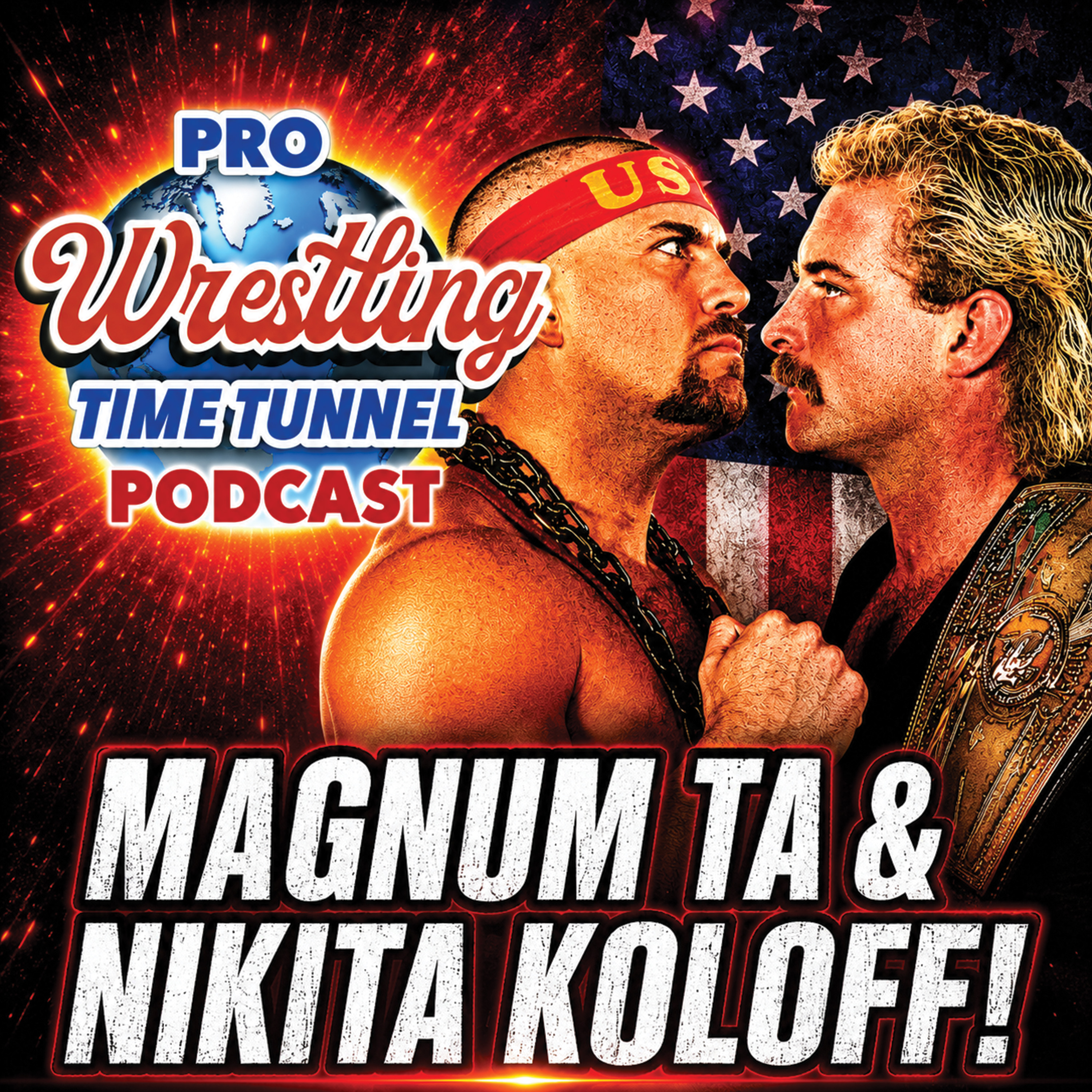
Hello, everybody. Welcome to another edition of the Pro Wrestling Time Tunnel History Show. I'm your host, Tony Richards, coming to you live from Western Kentucky. And the Richards ranch boy today, two guys who were in 1986 a couple of the biggest stars in professional wrestling. Magnum, TA Terry Allen and the Russian Nightmare, Nikita Koloff.
Were on a collision course for the United States heavyweight title in Jim Crockett Promotions. A year prior, in 1985, Crockett had gone on WTBS and had given them.
Crockett had been a long successful territory. As you know, if you've heard our 1975 show and our 1976 show this year. I mean, going back to 1935, when Jim Crockett Sr. First established Jim Crockett Promotions as not just a wrestling company, but as a total entertainment company with a lot of different entertainment options in the Carolinas and in the state of Virginia.
And by 1986, they had survived a lot of the disintegration of the territory era and were one of the last territories not only still standing, but extremely financially healthy.
And part of that was being able to purchase the contract for the WTBS time slot from Vince McMahon, which gave them more exposure as the cable distribution was erasing the limitations of the territory boundaries that had been put there by the television signals that were in play at the time.
And that made these guys who were on WTBS at 6:05 every Saturday night, these huge mega stars, not just in wrestling, but really starting as wrestling was becoming part of the mainstream culture with some of the things that the WWF was doing. And Crockett was clearly right there with them as far as, as wrestling goes, especially for Southern fans who were not that thrilled with the homogenized national oriented wrestling product. Who still wanted that?
Well, frankly, the violent nature of Southern wrestling and this Best of Seven series that Nikita and Magnum engaged in was very violent in 1986.
There were some Russian chain matches involved before they got into the Best of seven. We'll tell the whole story today with Nikita and Magnum on the show. And I am extremely happy to have them here to talk about it. And it's all because there's a new book coming out here this summer about the Best of Seven, written by my good friend Bill Murdoch, who also wrote the Jack Briscoe biography. And I've been talking to Bill for several weeks or several months actually about this book. It's being published by my friend Scott Thiel at Crowbar Press. And it's a book you're going to want to get because it's going to tell a whole lot more than we can tell here in this little over an hour that we're going to be able to spend together with these two guys here on episode number 66. It's a. It's going to be a great day. And the show is being brought to you by the Grizzly Up Soap Company. Travis and Chasity are setting up every weekend at the downtown Farmers Market in Murray, Kentucky. They're going to be there again this weekend with all their regular great soap products and their wonderful baked bread and all the other things that you'll find at their booth and the things that you will find in their in store locations and Hopkinsville, Kentucky and online at grizzly up soapco.com I got a great message from Rick Whitmore who wrote me a nice note and said, tony, I feel like I know you, but we haven't been able to meet. Your podcasts are great.
And I'm in St. Louis, Missouri. I wasn't able to get to the Herb Simmons Fan Fest event, but I really wanted to get there because I wanted to meet you. But I am supporting the show because I just bought four soaps from the Grizzly Up Soap Company because I want to support them because they're nice enough to support you and be a sponsor on your show. Rick, thank you so much for that. Thank you for buying some soap from Travis and Chastity and thank you so much for supporting us here at the Pro Wrestling Time Tunnel History Show.
And if you get a chance, go over to Grizzly Up Soap Company and see what they have there. Or if you're here in Western Kentucky or West Tennessee, Southern Illinois, Southeast Missouri, and you can get down to Murray, Kentucky and go down there to the downtown farmers market. You'll find them there at their booth and you can see all their stuff. They're live in person. Or if you're listening to our show worldwide, as many of you do, go to Grizzly Up Soap Co. And buy some soap because it's fantastic. I use it myself and it always keeps me smelling fresh and clean. The Grizzly Up Soap Company. You're going to love it. All right, let's go to today's show here at the Richards Ranch, as I welcome in my special guests, Magnum TA and the Russian Nightmare, Nikita Koloff. I'm sitting here with two fantastic legends from Jim Crockett Promotions and in all of pro wrestling in general.
And it's a fantastic anniversary.
1986 was such a fantastic year for me as a wrestling fan, and we'll get into that and talk more about that. But I want to introduce my guest today.
Magnum TA Is here with us. Good morning, Magnum.
[00:06:55] Speaker A: Good morning.
[00:06:56] Speaker B: And Nikita Koloff, the Russian Nightmare, who's been on the Koloff family tour this year, Nikita the Reunion Tour.
[00:07:04] Speaker C: Hey, Tony, Good to see you. Thanks for having us on today.
[00:07:07] Speaker B: You bet. It was nice seeing you in St. Louis recently at her Simmons event.
I want to go back.
[00:07:14] Speaker C: Herb does a great job there, doesn't he?
[00:07:16] Speaker B: He does. He does. It's a special, special event with the St. Louis hall of Fame. I want to go back to the year before, in 1985, because that's the year that the both of you are really, really coming to prominence.
March 23, 1985. Probably one of the biggest matches in your career so far. Magnum, you beat Wahoo McDaniel for the United States heavyweight title. That title, which is going to be a focus today, and I just so happen to have one right here.
Yep, that's the title belt that you guys were fighting over.
The original title belt was. Had some red on it, but over the years, it was in so many rough matches and got jostled around so much, all the red got peeled off of it. So this is the classic look that everybody remembers.
[00:08:16] Speaker A: They have me to thank for that because I got some nail polish remover and took all little specks off of it.
[00:08:21] Speaker B: Yeah, it was peeling, right?
[00:08:23] Speaker A: Oh, it looked like a. Yeah, like a junkyard dog. It was all speckled up. So. So I made it into the big silver belt.
[00:08:31] Speaker B: Yeah. And. And so such a classic look to this. It's the silver version of the world title at the time, the 10 pounds of gold.
And so you beat Wahoo McDaniel for this. And I've seen that match umpteen times. What was that like?
You grew up in the territory. You obviously saw Wahoo, who had so many great matches with Johnny Valentine for the United States title. Now you're in the ring with him, and you're going to go over in that match and take the US Title. What kind of feelings and thoughts did you have at the time?
[00:09:07] Speaker A: For me, I, I felt the significance of it at the time because Wahoo was to your point, I, I had watched him, you know, years earlier in those battles with, with you know, Johnny and, and uh, you know, he was just such a, a staple for what the U S title meant and uh, and so reverbered in the, in the, in the Carolinas and, and uh, Jim Crockett Promotions.
So you know, we were inside of a cage, Charlotte, North Carolina, sold out. Mom and dad came in, watch the match and yeah, it was a, it was a milestone in my, my career. I had held championships in mid south, but to be this close back to, in my own, you know, home stomping grounds and to be, you know, put in a championship match of that caliber and go and going over was you know, truly like I think I had the last, that was the last big single main event match of Wahoo's career. And he certainly passed the torch and did the favor right in the middle of the ring with a belly to belly suplex and just a, you know, rough, rugged man's man kind of champion. And I was glad to share the ring with him.
[00:10:26] Speaker B: Now the week before March 18, 1985, Nikita along with uncle Ivan Koloff beat Dusty Rhodes and Manny Fernandez for the NWA World Tag Team Championship. So both of you are, have significant events and of course I know Nikita, you've told the story many times about how your friendship with Ivan was and how close you guys were and even got closer and you helped Ivan in his spiritual life before he passed away. What was that like? I mean you're, you're beating one of the legends in Dusty Roads for the Tag Team Championship and you've been in the business for about a year, right?
[00:11:14] Speaker C: Yeah, let's see. So March of 85, let's let me do the math.
Nine months.
So not even a year.
Nine months in the business. And so to step in the ring with a legend like the American Dream, Dusty Rhodes was, you know, to use a very overused word. But it's appropriate, surreal to think back on to know that I was that young in my career. Of course I had as you mentioned, the legendary Russian bear in my corner to, to glean from and learn from. And, and I did. I was on a real crash course those first few months with Don Kernodle and Ivan Koloff as the World Tag champs.
And then to come back around and win that for Manny Fernandez and Dusty Rose was nothing but a highlight for my career.
[00:12:08] Speaker B: And then the next month through May, you guys are working a program and I think it was either in April or May. You did the clothesline on David Crockett which set up both of. Well set up your singles match. Nikita in the ring with the NWA World Heavyweight Champion Ric Flair at the stadium in Charlotte for the very first Great American Bash. I was at that card. What an electric crowd that was.
[00:12:41] Speaker C: You told you must have been like three or four years old then, right?
[00:12:45] Speaker B: I was in 1985. I was 20, 23, 22.
[00:12:50] Speaker C: 22. I was close. I was close. Yeah.
And yeah, so again a meteoric career. Right. So not nine months in the World Tag Team Champion and somewhere in there you probably know Tony, but somewhere in there won the world six man championship as well. So heading into that first ever Great American Bash as Ivan, as we promoted it and built it was, you know, I'm going to take the world title for Flair and we're going to take all the gold back to Moscow.
[00:13:24] Speaker B: Yeah, I thought and Dusty certainly is talked about today with a lot of reverence and brilliance as a, as a pro wrestling booker. But I thought, thought bringing Barry Darr in as Crusher Khrushchev gave you guys so much flexibility and it was a. And you were able to showcase you as a single then a lot easier with Crusher there to team with Ivan on occasion. And then you guys work together as a six man team as you mentioned.
[00:13:52] Speaker C: Yeah, we were able to, you know, we kind of bend the rules, you might say and, and were able to interchange whether it was like, like Crusher and I made it, made a tour to Japan for example, here back to the States. It could have been Crusher and Ivan, Nikita and Ivan, you know, in any combination. So really built, I feel a really great storyline and as you mentioned and then gave me the opportunity to even pursue, you know, some, some singles matches as well.
[00:14:26] Speaker B: You bet. And then so Magnum you at that very first bash in Charlotte you had Kamala and that was kind of a cold match, right? I mean Kamala wasn't working in the territory at the time.
[00:14:40] Speaker A: No, I had, I'd worked with Kamala when I was in Mid south and, and he was on his way I think to New York and so I had actually flown into back to Mid south, shot an angle with him, you know, just some little deal to, to have some spice about it and you know, him coming after the, the U.S. not, yeah, I was coming after the U S title and anyway, so it was as far as the fans go, yeah, it was kind of a cold match, but he was such an intimidating looking guy that you know, Dusty thought it would be a, it would be good for the spectacle of what we were trying to promote there. And we only worked that one time for the title deal. But it was exciting.
[00:15:29] Speaker B: I always thought it was really smart too, of all your TV matches being so fast and getting the Billy to Billy over so strong on television and then to see you try to get your arms around Kamala and put the belly to belly suplex on him, that was, that was, I don't want to say it was on the same level of a Hogan slamming Andre, but it was a very impressive thing to see.
[00:15:54] Speaker A: Well, he was about 385, so it was, it wasn't a, it wasn't insignificant, to be sure.
And the funny thing was, you know, because he was on his way to New York, they didn't want to be. He didn't want to do the job in the middle of the rig. So they worked the dq, but Dusty had had us do the belly to belly afterwards, which that's the only thing anybody remembered anyway.
[00:16:17] Speaker B: That's right.
[00:16:18] Speaker A: So we still got the pop, we got the deal and, you know, went on about our business. But Kamala was great to work with, great professional.
He really doesn't get the credit to move as well as he did. Is as huge of a man as he was. I mean, you know, he was very, very agile to be that huge in the.
[00:16:38] Speaker B: Also in July, we don't want to forget that the Russian team, Ivan, Nikita Crusher, you guys are feuding with the Road warriors in steel cage and Russian chain matches. And that actually was voted like the big match of the year by the fans.
What was it like working with Joe and Hawkins?
[00:17:04] Speaker C: Well, definitely intense at times.
We matched up pretty well, obviously, in terms of, of size and, and, and made, made the, the competition more, if you want to say, more believable and in the sense of people, the fans, thinking that there's a team that can give the Road warriors kind of, you know, what's the word I'm looking for?
You know, a, a, A match, you know, a competition. And so, and you know, those chain matches, cade matches and they, they were, let me say, they were easy to work with. Very, you know, very.
Because we all got along really, really well. And so was it hard to put a match together and all be on the same page?
[00:17:53] Speaker B: I just thought, man, these big Russians and the Road Warriors, I'm not sure the cage is going to hold those guys.
I mean, it was, I mean, it's hard to describe to fans now just what the atmosphere was Kayfabe was still very, very strong. And you didn't get as much inside information back then as you do now. And so, my gosh, that whole Mid Atlantic territory was catching on fire.
And just about the time Magnum is on this meteoric rise, his whole run gets interrupted by that nasty Tully Blanchard who figures out a way to steal the US title from him. And that perfect 10 baby doll is involved dressing up as a police officer and all hitting you with quarters and all kinds of stuff like that. I mean, this territory is hot, right?
[00:18:49] Speaker A: Oh, it was cooking and, and you know, we. Charlotte was just that old, you know, it's called the Bojangles Coliseum now. But go back, you know, we were running that thing once a month and selling out, you know, every time we, we went there, no matter what.
And so yeah, I'd want the title from Wahoo in a sellout. And I'm going to sell out defending it. And you know, I get knocked out cold with the, you know, roll of quarters that Baby Doll comes down and slips the Tully. And you know, we, we just, everything we did was so much fun. And you got. And it was so well received. It wasn't like pulling teeth ever, you know, whether all the matches on the card, if you were sitting in the back and weren't even watching and just listening to the pops and to the people, you know, you knew. You know, you knew that the stage was being set. You were going to go out there and have a great match with whoever you're working with. Because the fans were some of the best fans on earth.
[00:19:49] Speaker B: And that spring Crockett had bought the contract for WTBs.
So that gave your team all this exposure beyond the syndication that was just running in the Mid Atlantic territory. Now you're being seen. And that's when I first started watching it because I was living in Western Kentucky. And all of a sudden I was so depressed after Black Saturday in 1984 when I turned on my Georgia wrestling and there's Vince McMahon. So I had to, you know, mess around with that for a year. I was so used to watching Tennessee Wrestling in Memphis and then Georgia on cable. And then I got Black Saturday with Vince saying the WWF was going to be on there. And then In April of 85, you know, here comes the Crockett crew, which I had limited exposure. Only through tape trading had I seen a whole lot of Jim Crockett promotions. But man, I was hooked right away. And they're doing angles with you and Flair on tbs. And to the average fan who's watching the show, it's not evident that you are also working with Flair in house show matches. Nikita's working with him in house show matches and we get the match with Flair at the bash and then we've, you know, got more with you involved with the Four Horsemen and Dusty's involved. What Dusty was so good at involving several different crossovers in. I mean, would you guys agree with that? I mean, so many different combinations of guys were working together.
[00:21:24] Speaker A: Oh, I do. I mean, it was masterful and, and it had the ability to elevate everybody.
Every, everybody was there. It wasn't like, it wasn't like the old Florida days with Dusty where, you know, they just came in, got a heel hot. Dusty went around, beat him everywhere and then the guy was gone. And on the next thing, when the things that were being done with Crockett and with Dusty were to, to get more heat on the heels, to elevate the baby faces, to make people want to come to the arenas, to see the, see the problem solution in the building. Because we never gave them, we never gave them anything but teases on, on television.
You know, in terms of the main event matchups and whatnot. You know, it goes back to your point of the, the short matches. He wanted, he wanted you to have to come to the arena, you know, to see me compete in a 20, 30 minute contest with a main event, you know, wrestler. And we weren't giving that away for free on television. It just, you had to pay to come see those main event matchups. It was a great philosophy, worked, you know, brilliantly back in the day.
[00:22:40] Speaker B: Right.
[00:22:41] Speaker A: And of course, you know, television, you know, just the whole shift and change and everything that took place in the, in the late 80s, in the end of the 90s, you know, change that whole formula. But I, you know, even goes back to. Do you remember the first wrestling special? Yeah. They had on tbs? It was, you know, kind of an extravaganza. And we, we gave him, we gave him some main event matches and whatnot. And he wouldn't even, he wouldn't let me wrestle on that. Anybody wanted to be involved in it and had me be a, a host. You know, I did some vignettes and some things and, and it wasn't even called a matches. It was just doing some hosting work. So, you know, Dusty was definitely kind of that Cecil B. DeMille's kind of star maker magic going on inside his heads. And he had a vision for me and a vision obviously for Nikita and for, you know, where he wanted the Whole, the whole business model as a whole to, to go over the next five years.
And it was, I had the privilege of traveling with him exclusively for, for many, many years. And you know, I heard these things come out of his mouth and it was, was, you know, he truly just had this, you know, different set of lenses that he viewed the whole wrestling landscape on than anybody else I've ever met.
I mean, I was with him in Florida before when I was working Florida Championship Wrestling when he, you know, came up with the whole Starcade concept.
And I mean, so he was envisioning the big mega show long before Vincent, you know, ever thought about WrestleMania. You know, Stargate Starcade is the grandfather of them all, you bet. And would have, you know, in a different world, you know, would have been our WrestleMania if we kept, you know, evolving the way we were going.
[00:24:37] Speaker B: I remember that so vividly. And that Thanksgiving I Starcade 85 will forever be my favorite Starcade.
And you had that legendary cage match that you've talked about so much over the years with Tully, the I quit match where Tilly says he never said I quit. And you had the chair leg pointed at his eye. Just so much drama. And you guys were working, I mean, both of you worked really, really snug. I mean it was, there was a lot of impact always in all of your matches. Nikita and Ivan lost the World Tag Team Championship to the Rock and Roll Express. And I wanted to mention that too. Over that summer, you had this huge influx. As if you didn't have a dynamic superstar roster already, you got this huge influx of talent. Rock and Roll Express, Midnight Express, Terry Taylor, Buddy Landell, all these guys were coming in and that Starcade 85 was just, it's an overused word, but it was a loaded card for sure.
[00:25:40] Speaker C: It was. And you know, a couple things come to mind as Terry was talking and, and as we're discussing, you know, back in the day, the words, the word suspense comes to mind. You know, Terry's talking about, you know, the short matches on television and going off air by, oh gosh, we're out of time. You know, you gotta, you know, to hook the fan into the TV show next week or as Terry said alluded to get him down to the building to buy a ticket at, at the building. And so, you know, building that suspense. And I would just ditto what Terry said about, about Dusty's brilliance in creating storylines and, and the, the five year plus vision and, and taking the time to build a story was, was all, all a part of the suspense. All. All a part of the. Of the drama, of attracting. Attracting the fans in.
I just thought of something you were mentioning earlier. I'll just throw a little side note out there.
[00:26:42] Speaker B: Yeah.
[00:26:43] Speaker C: Something else that Terry and I have in common is. Is beating Wahoo McDaniel. We had. We had had, you know, obviously, the discussions over the US Title today, but there was also, at the time, Crockett had a national heavyweight title that he wanted to phase out and just combine those two into the US Title. And so I had the privilege of. Of beating Wahoo in the Omni in Atlanta in a unification match.
[00:27:13] Speaker B: That's right.
[00:27:14] Speaker C: For the US Title. And then, not to get ahead of ourselves.
[00:27:16] Speaker B: That's all right.
[00:27:17] Speaker C: But I just. It just kind of hit me as Magna was talking about, you know, beating Wahoo for the US Title and then Wahoo and I having that unification match to eliminate the national heavyweight title, merge those into one. So we've got that in common as well.
[00:27:34] Speaker B: And that was very emotional, too, because the national title had a huge history behind it as well. As a matter of fact, it's the old Georgia heavyweight title, which had so many great champions. And then when they started focusing more on Ohio and West Virginia and the old chic territory, they. They changed it because they were on TBS to the national title. And there were so many Georgia wrestling fans who I'm sure shed a tear when that unification took place and the old national title went away. But, my gosh, there was no way that you, as a wrestling fan at the time was. Would know who's going to win this thing. I mean, it was. It was very, very exciting. I remember.
[00:28:22] Speaker C: Yes, sir.
[00:28:23] Speaker B: You guys go. 1986 is the best year financially that Crockett ever had in its history. Probably did over $22 million in revenue. And you guys are going into this year.
I mean, as we said. And that's why I like to talk about 1985 just a smidge, because it really set the stage and lit the fuse for what happens in 1986. And it plants the seeds for this historic program we're about to talk about, which is the best of seven series for the US Title. You guys actually started doing matches as early as March of 86.
You were doing some Russian chain matches around the horn.
To the best of my memory.
[00:29:11] Speaker A: Yeah, I'm not sure about my memory on that. I do remember that. I remember having a lot of respect for the chain, because the chain, the chain and velocity are not your friend. And if you have too much slack in a chain and you Move it with great velocity. That end comes around and hits you and it. And it was not. It was. There's no prop to it. Yeah, it was a heavy duty ass chain Nikita used. And you know, my hats off to everybody that, you know, that went through that baptism by fire because that, that Shane made it humbled everybody.
[00:29:54] Speaker C: The wrath. Let me just interject Tony, real quick. The rest.
[00:29:56] Speaker A: Yeah, go ahead.
[00:29:57] Speaker C: The wrath of the chain. Because. So a couple, couple thoughts on that. It's a. Terry's point.
Once I retired, I made trips to the dental office to repair chips in my teeth. Like legit like chips. Because that it was a real chain and those real links, as Terry was saying, did some damage. If you weren't is even as, as careful as you tried to be, it didn't matter, man, they flew all over the place. And so I had a number of chipped teeth from the chain, whether it's because it was wrapped around in my mouth or, or just, you know, just accidentally hit with it. And, and, and I'll never forget, in fact, the intensity of it. I, I was rushing a Russian chain match against Sting in Chicago and I had wrapped it around his neck, threw him over the top rope, which is one of my favorite moves. And, and I look down and I look at the fans, I'm thinking, wow, he's really selling this. That's pretty amazing. Only later to find out he, he didn't get his fingers quick enough in between the chain and his neck. And he said, I was probably 30 seconds from passing out. I'm like, wow, I just thought you really selling it really good. You know, and he's like, man, so, so, yeah, so the chain was pretty, pretty intense. Whether it was, whether it was Magnum, the Road Warriors, Sting or anybody else in a Russian chain match, it was pretty intense.
[00:31:23] Speaker B: Well, one of the things I wanted to just do real quick before we get into the guts of the program is you both had these Veterans of the 1970s who were a couple of the biggest draws ever.
Ivan on the heel side, former WWF champion who beat Bruno in Madison Square Garden.
And you got Dusty on the baby face side. And these two guys are mentoring you both and they're coaching you and they're talking to you. I mean, Magnum, you mentioned riding all the time with Dusty and of course, Nikita, I'm sure you rode with Ivan.
What sorts of things to the best of your memory, what sorts of things are they telling you about your performance, about your match?
Did they ever give you thoughts after your match?
Did they give you thoughts going into you know, this crazy program you're about to do. Do you remember any words of wisdom that they were talking to you about back then?
[00:32:28] Speaker A: Well, I don't think I ever.
Their critiques and things that I got about matches were early on from people like Eddie Graham and Bill Watts and Grizzly Smith and Bill Dundee who was a booker in Mid South.
Most of my coaching, mentoring type conversations all came prior to coming there.
Dusty's mentoring into me was in how you create a superstar and, and the vision of things bigger, bigger than wrestling and I mean the toolbox that was made available to the WWE with all the Hollywood connections and the mainstream media connections and whatnot.
And he had somebody in our office doing that. He would been trying to get us on the Tonight show and us on Entertainment Tonight and, and because he realized that there was a way bigger medium than just what we were, what we were about to do. But he was talking about making mainstream movies to me, wasn't talking to me about angles and wrestling. You know, I mean he knew, he knew that the, you know, the world title was something that I wanted to accomplish and he wanted to see me accomplish. But I mean he was talking to me about Hollywood and in way outside the box type things. So like the, the angles and the things were just like little tidbits of things that would come out of a conversation going down the road about what about if we did this or you know, talk about, you know, the James boys lynching Jim Cornett and, and about ripping his head off with the, you know, with the rope and you know, thing, you know, just like little spontaneous things. But the bigger vision for him with me wasn't about the, the day to day things because he was, he was very happy with what I did, what, what I was doing in terms of performance. It was where we're going next. And next was not the next big arena show for him with me it was, it was the broader, you know, the broader world. I mean he'd already, he'd written a screenplay and with me starring in it and had this vision of this movie and this deal and all this stuff and you know, he, he was already on to way bigger things which, which great to have somebody dreaming like that, but also if you don't have the support team taking care of the meat potatoes of what takes care of the business. To your point, you know, the greatest arena business ever took place in 86 and that shouldn't have been the case.
I mean even though I crashed and burned with all the talent and all the things they had, they should have done more money in 87 and 88 and 89, moving right along with momentum and didn't have all the mechanisms in place to capture it because the promotion was very one dimensional. It was, it had raised from a mom and pop, you know, very successful promotion from Jim Crockett senior and all the things that they had done. But as they're moving into this new era of wrestling, they needed those outside influences that they didn't seem to have.
You know, anybody, anybody on the inside thinking about that.
[00:36:08] Speaker B: I just, I just looked at it the other day because I was going to write a piece about it for my newsletter. But I think Crockett did 22 million in 86 and WWF did 77 million.
To your point of having the support structure and the bones to support what they were doing in the wrestling business with all these other things of making albums and making movies and cartoons and all of that kind of stuff. Little did Dusty know how spot on he was that today here we are 40 years later and the biggest wrestling company in the world is owned by a Hollywood talent agency.
[00:36:47] Speaker C: He was, yeah, it was, you know, it's as Terry said, the infrastructure just really, really what wasn't there.
[00:36:53] Speaker B: Yeah.
[00:36:53] Speaker C: And because it was a mom and pop trying to, trying to grow the business just on my end. I'll just address your question on my end. Yeah, because I was, I was, you know, obviously again newer to the business. Terry was already, you know, had a lot of experience under his belt as he just mentioned some legendary names.
So for me, Ivan was instrumental again. Him, really, him and Don Coronodo both at the meteoric rise in my career. And that in that we would get to arenas, couple three months, for a couple, three months early. Couple three hours, two, three hours early. And they would bump and thump all over the ring, teach me the mechanics. And then I'd sit in their corner every night, literally and watch their world tag match in their corner. And then on the drive home every night we talked about the old school psychology of wrestling and why they did what they did when they did it, how to draw the fan in.
And so that was instrumental for, for, for me learning on a very short curve, if you will, to lead into these series of matches the best of seven eventually with Magnum that I know we're going to be talking about here in a minute.
[00:38:10] Speaker B: So what a blessing to have that for both of you to be able to ride with those guys and get all of that feedback and all that great, great coaching. So in May of 86 May of 86.
How did, how did, by the way, how did Dusty communicate to you guys that you were going to be doing this best of seven,
[00:38:36] Speaker C: Barry?
[00:38:37] Speaker A: I don't remember to be quite honest.
[00:38:40] Speaker B: I, I mean it was probably part of just a free flow conversation about everything.
[00:38:44] Speaker A: I mean, I mean I, I mean I knew, I knew that we were building Nikita as the monster, you know, heel for the Company and, and you know, that, that I knew where that direction was and I likewise knew what my direction was. So it was kind of a, you know, I don't remember the day that he said, you know, we're going to do this best of seven series.
I mean Dusty was this huge sports fan. So I mean it wasn't even, it wasn't even like he'd come up with some kind of, you know, off the wall thing. I mean he talked, him and Flair talked more trash about basketball then you can imagine the jousting back and forth
[00:39:31] Speaker B: between and, and some of it came across on television.
[00:39:34] Speaker A: Oh yeah, yeah. I mean, you know, I mean Dusty was died in the wool Boston Celtics and Blair was a LA Lakers man. And, and oh gosh, it was, I mean those two were so entertaining on a good, on a regular day, but
[00:39:50] Speaker C: wouldn't it outside of the wrestling ring they were entertaining. That's right.
Tony, I, I'll interject.
[00:39:57] Speaker B: How you find out.
[00:39:59] Speaker C: Yeah, I'll interject real quick. My, my best guess, I'm just gonna say my best guess is again going back to Dusty's brilliance as he sees how hot a baby face Magnum is becoming and how much heat I'm drawing as a heel that at some point I'm sure in his mind it only made sense to put the two of us together. And then because he was such a big fan, I mean even right now as we're recording this show, right. Last night I think was the first, first game of seven of the Stanley cup, right? And go go Carolina Hurricanes and little plug for Hurricanes. But, and then I think tonight, right, the NBA as we again, as we record the show, the NBA kicks off the best of seven. And so you think about it, you know, seven game World Series, seven game NBA, seven game NHL.
Well, why not create a seven match series for the US heavyweight title and make it hopefully legendary and memorable. And Here we are 40 years later talking about it.
[00:41:10] Speaker B: You bet. I mean it's a, it's a fantastic concept. There were so many stories going on. Magnum mentioned the, the baby doll angle with the James boys and all of that playing out in the Bash you had flair defending the title against a different person. He had a hot little thing going with Ricky Morton, but he was wrestling a different guy every night in the Bash. You both got title shots. I'll get to Nikita's here in just a second.
But definitely the centerpiece was this Best of Seven series. I mean, to me, it was very evident as a fan, that was the primary thing going in to the Bash. And you kicked it off with this press conference angle. And that's really your mom in the angle, right, Magnum?
[00:41:55] Speaker A: Oh, yeah, my mom. And who wasn't smartened up. And we didn't let her know anything about it. And God bless her, she. She sold it like an auctioneer. And it's been very, very, very much talked about. It was. My mom and dad both passed away now, but, boy, I tell you, that was a family conversation for many years.
[00:42:16] Speaker B: I bet it was. And, Nikita, you got to go across the table in the. In the press conference, right, Magnum?
[00:42:22] Speaker C: Well, he.
[00:42:22] Speaker B: Well, he goes across the table to you.
[00:42:24] Speaker C: He leaps across the table. And for the fans, for your viewers, go back and watch that. Maybe have never seen that.
Pay attention to her facial expressions, because those were not manufactured. Those are, like, legitimate, real, like, oh, my gosh, these guys are going to kill my baby boy.
Yeah. So, yeah, that's. But that just set the tone, set the stage.
[00:42:51] Speaker B: And then, Magnum, you got to go to Kansas City because you're summoned to the office of the president of the National Wrestling Alliance. And that's Bob Geigel at the time, and he's going to reprimand you. But that didn't turn out so well for Bob.
[00:43:08] Speaker A: No. And. And that was probably one of my favorite parts in the whole thing because I. I like that edgy being in that kind of edgy atmosphere. And, you know, again, he was, you know, he was a man with the most stroke in the NWA at the time. Time. He was a president.
[00:43:27] Speaker B: Yeah.
[00:43:28] Speaker A: So for him to. To be, you know, gonna admonish me and. And. And tell me I've, you know, conducted myself poorly as a representative of the U.S. heavyweight title and blah, blah, blah, and then get the chance to knock him on his duff.
[00:43:44] Speaker B: Reprimand this. I think you said.
[00:43:46] Speaker A: Yeah, reprimand this.
[00:43:48] Speaker C: Well, and I think the words were unbecoming of a ch. I think the actual quote was very unbecoming of a champion behavior.
[00:43:59] Speaker A: Yeah. So, anyway, I enjoyed that. That was a lot of fun.
[00:44:03] Speaker B: And. And as a shoot, I mean, Bob was not the most dynamic interview ever, but Bob was a legit for A shoot. He was a tough son of a gun boy. He, he was a amateur champion NCAA out of Iowa. He, he got schooled in the business in West Texas with Doc Sarpolos and Dorie Funk Sr.
And then came into the Kansas City Territory as a partner. But Bob went back a ways and was very, very tough, tough fella. So when you laid into his neck there, that was pretty impressive.
[00:44:42] Speaker A: Well, I told him that Bill Watts had taught me how to throw a punch. I really didn't have to say a whole lot after that.
He knew it wasn't going to be. He wasn't going to worry about where it came from to sell it.
So, no, he told me to do what I need to do and I did.
And, you know, yeah, he sold it great. And, and you know, you know, that set the stage for everything we're going to do.
[00:45:09] Speaker B: So then Bob holds up the title, he declares the title is held up.
And then we find out there's going to be this best of seven that's going to be conducted over the course of the Great American Bash. And it actually goes a little bit beyond the Bash. But it's pretty, pretty interesting how Dusty lays it out. He has Nikita go up three to nothing right off the bat.
I mean, that just, that made, that made it hot
[00:45:42] Speaker A: again. It was the movie. I mean, he's looking at, you know, he's painting this picture and, and, and knows that, you know, the drama is going to be, you know, he wanted the John Wayne character fighting from the bottom up, you know, coming to overcome insurmountable odds.
And, and I mean, we, I mean, we obviously knew where we were going with it. That wasn't even a question. But to get the mileage out of it and keep the fans on the speed of pitch, the drama that was painted between the US and the USSR and the Cold War time, it couldn't have been really any hotter the way it was portrayed because you got this monster in Nikita representing the Soviet Union and the people were. This had made it just real for them. I mean, it was a real contest of the American spirit and everything that was right against everything that was wrong and, you know, just, you know, they were sucked in.
So, yeah, every time I went down, you know, the gas. But then that, that, that fight back in those next three, three matches was even more spectacular.
[00:47:03] Speaker B: I always think those are the best wrestling programs and angles where they're. 90% of it is true and then the last 10% of it is, is working.
But you get the truth so strong into something like that. And for fans now that were born in the 90s or after, they don't understand how hot it was between the United States and the USSR at the time.
And.
[00:47:31] Speaker C: Well, that.
Yeah, sorry, go ahead.
[00:47:34] Speaker B: And I was just gonna say. And I bet that made it difficult sometimes for you to be out outside of wrestling in the public, right, Nikita?
[00:47:42] Speaker C: Well. Well, the believability of what you just described, of the Cold War era and. And the suspense that we talked about before it was called sports entertainment really set the stage for what. What was about to happen.
And really, when you look at. When you go back to look at Magnum's character, so he had the look he's been. He's destined to become a world champion.
His style of work, I'll just use this word, was believable.
And so the chemistry between the two of us, because of how I was being built and my style of work, you know, we've used the term earlier snug, because we both agreed we wanted to bring across that. That believability.
And so the interesting thing for the fan is here's this guy that's destined to become a world champion that now has fallen behind in the series three to nothing. And now he's got a really, as he said from the bottom up, the word that came to mind was underdog. Now, all of a sudden, he went maybe from the. A favorite of taking the US Title or keeping the US Title or getting the US Title back to now becoming the underdog and having to claw and fight his way back to. To regain that title. So it just. I mean, it couldn't have been, in my estimation, and I don't want to speak for Terry, but I don't think it could have been more perfect. Tony.
[00:49:14] Speaker B: Yeah, you guys kicked off the bash on July 1st in Philadelphia at Veterans Stadium. You draw a huge crowd there, and Nikita goes up one nothing.
Then you go. The next match in the series is July 9th in Cincinnati Riverfront Stadium, Coliseum.
And I'm sure this is one of the first ventures outside the regular JCP territory Loop. Going out to Cincinnati, Ohio, and Nikita goes up to nothing. Then you go to Roanoke, Virginia, which I've heard you guys say this was a. This was a tough crowd because this is close to Magnum's hometown and where he grew up. On July 11, Nikita wins that one, and he goes up three nothing.
And that sets the stage for you guys to go to Greensboro, which has traditionally been the biggest town in the JCP Territory Loop on July 26th. And this is also the night Dusty wins the NWA title from Ric Flair. Like I say, there's just so much going on in the Bash. And not only does Dusty win the NWA title, but earlier in the card, Magnum wins his first match in the best of seven. So now we got Magnum one and Nikita three.
And you guys remember Greensboro? Well,
[00:50:43] Speaker A: I don't remember as specifically as I do the final match because again, the key tonight, so many matches and, and they, and they were all at the same level of intensity.
The, you know, the, the fans were so electric and, and so into it that they kind of just all blur together. To me, I, I remember the final match really, really well, but I don't remember. I can't, I can't pick one out of all, all of those and tell you I can remember anything definitive out of, you know, really any of them.
[00:51:17] Speaker C: Then I would say I, I'll just interject and say that, that like Terry, I mean, because of how many matches we had against each other, you know, and, and I feel all electrifying. I, I would just comment on the Greensboro arena, the Greensboro Coliseum, the Greensboro crowd, because anytime I, I can reflect back and think about whether it was Ivan and I wrestling the Rock and Roll Express or Magnum and I for that US Belt as part of the best of seven and many other matches that we had in Greensboro, to Terry's point, that the crowd there was, was just always electrifying. So I would just imagine not remembering the specifics that, that they were, they were on their feet more than they were seated.
[00:52:05] Speaker B: I've interviewed several fans who were regular attendees in Greensboro, and there's so many hot matches and memories there. Such a legend.
August 2nd, you're at this baseball park in Atlanta and Magnum pulls up again, two to three. Now that's match number five. And then you're kind of in the post Great American Bash. For the final two matches, you go to Asheville, North Carolina, another regular good Crockett town, where Magnum ties it up three to three.
And then you get to home.
Charlotte, North Carolina, the place where the office has always been, where the promotion and the booking office has been based since 1935. Charlotte, North Carolina. August 17th. And here we go for the showdown. Take me there and tell me about the last match.
[00:53:03] Speaker A: Well, again, Charlotte was the magic spot, you know, for it didn't matter if you were changing titles in Charlotte was always an event, whether you're winning it or losing it. And the fans there, you know, just, you know, in their wildest imagination. I don't believe there's anybody that Thought after I'd come back from being down three, you know, and, and even evened it up that there was any way in the world, you know, they were going to wake up the next day to Nikita being the United States heavyweight champion.
So I knew that it was going to be heat, but I really, it was hard to.
And, and I've been in that building with so many, you know, he type matches with, with, with Wahoo and, and with Tully. But this one was, was special because we had a real battle and we both had hit each other with our best shots and, and it was, you know, coming down to, you know, who was going to win the war of attrition basically. And Dusty had, you know, this, you know, obviously, you know, dream finish put together with outside interference and utilizing Ivan and Crusher and the chain. And you know, he wasn't going to let me go down without being, you know, screwed, blued and tattooed, you know, in every which way imaginable. But the timing of all of it was, it was just perfect, you know, from referee being in the right position at the right time to miss me getting, you know, hit with the chain.
Never, you know, seeing the, you know, the chain even in the ring. Yeah, it was, it was just perfect, perfect timing. And we, and we had, you know, plenty of time for the match. But believe this, this one we went through the whole television time for, right? And so that, you know, this was, all eyes were on this. This was like the wide world of sports, you know, back in the day. And, and they, and they got it all on the show. There was no, no monkey business at the end. We left them with serious, serious heat. And you know, it again just took everybody's breath away.
[00:55:18] Speaker B: I remember thinking at the time, like the first time I saw the, the television show, I thought, well, there's no way they're going to show this whole thing. We're going to get to the, we got to go, you know, and.
[00:55:29] Speaker C: Right.
[00:55:29] Speaker B: And we never did.
So that was very, very awesome.
[00:55:34] Speaker C: Yeah, that was a very, you know, looking back on it, thinking back on it now, what a special moment in time. And I believe, I think we've talked, Terry and I have talked about it as well as others.
I think we talked about on the Briscoe Bradshaw show that, that, that was very historical. I think Briscoe actually said or confirmed very historical for, for Crockett Promotions, Mid Atlantic Championship Wrestling to dedicate an entire one hour TV show to one match.
[00:56:06] Speaker B: That's right.
[00:56:07] Speaker C: And in its entirety.
And obviously even when they went to Station breaks. You know, we, we're still wrestling like we're not, you know, we're not sitting over the corner, you know, puffing on a cigarette. We're were still in the ring H. Having the match. And so that, that said, what an incred. What an incredible thinking back display of belief and trust with Jimmy Crockett and Dusty Rhods.
What an incredible honor for Terry and I to, to have that opportunity and then for it to, to, for the end result, to achieve the end result of what we were hoping for and looking for.
And again 40 years later talking about it.
[00:56:54] Speaker B: Nikita, if you could go back to your 1986 self before this whole series started and you had to give yourself one piece of advice, what would it be?
[00:57:06] Speaker C: That's a great question.
Don't know. I've never been asked that before.
Again, I don't, I don't, I don't know Tony, honestly that I change anything from, from what I did be only because I say that, because of the opportunity I was given and then the people I was surrounded with like Magnum, like Dusty, like Ivan, like Ricky Steamboat, like Ric Flair, like the Rock and Roll Express, like Rick Rude. I mean I can just go through a list of guys that, that were instrumental in my career being as successful as short lived as it was as, as being as success for being successful. So I don't, I can't honestly say I, I changed the thing. Tony, for real.
[00:57:53] Speaker B: This is back in the kayfabe area. You guys were in separate dressing rooms. It was very, very. No, no. To ever have any contact with each other outside of the wrestling ring.
Did your respect for each other grow as the series went on?
[00:58:11] Speaker A: Well, I respected the fact that for two, two different sets of perception I'm sure. But I realized what accomplished it. It was for Nick to even be in the position he was in the very, very short period of time that he had.
So you know, I, I too, you know, I broke into the business without any formal training. One session in a ring, I was in it, you know, learn the ropes as I, as I go.
But I had been, I had been, let's see, year two and a half.
I've been four years of solid ring time, almost five by the time Nick and I are in this position. When I say, and back then working full time meant you're talking, you know, 330 plus matches a year.
So you know, I mean I literally had, I had more matches in, in five years than people do today with 20 year careers.
[00:59:17] Speaker B: Yeah.
[00:59:19] Speaker A: Just because of, think of things being where they were.
So my level of respect for what he had accomplished was never in question, period. Because he had the same level of commitment that I had. He just didn't have the sheer number of hours in the ring to be in all kind of different circumstances with timing and everything else. But because we both came from that same thought process, stylization, what he had ingrained in him by, you know, by Ivan and Kernodle and, you know, the people that had instilled the good building blocks in him. It wasn't like. It wasn't like trying to work with somebody that had a bunch of bad habits because he hadn't had time to establish a bunch of bad habits because he just been having people pouring good things into him.
[01:00:08] Speaker B: Right. Well, this is, this is also back in the time where it's not like today where you have one of these big events every month. I mean, back then, you know, we had the Great American Bash and then we had Starcade. And so after, they would add more later on, but in 86, that's, that's what we had. And so you're coming off this really hot, hot run for the best of seven. Nikita's got the US Title. You go into a Magnum, you go into a little program with Jimmy Garvin after this.
It's talked about by fans a lot. I always believed that you guys were going to be in starcade 86 in a cage for the US title. Do you.
Did Dusty ever talk about that in advance?
[01:00:55] Speaker A: I was going straight to the world title.
I was never. We weren't going to revisit that.
[01:01:00] Speaker B: You guys weren't going back together.
[01:01:02] Speaker A: The point was to elevate Nick because, because they, they had already the died.
[01:01:09] Speaker B: Been cast.
[01:01:09] Speaker A: The decision had been made.
The NWA committee has agreed on it and they were gonna, they were gonna give me a run with the title and see where it went.
So it, it would, we would undoubtedly have met again, you know, maybe him as a US Champ and me as a world champ. Yeah, or, or, or, you know, Jimmy Garvin and I, you know, with your world title, Mix Tully. Tully with. I, you know, of course, flare with rematches and everything else. Yes, but, but the, the whole dynamic of the world title had changed.
So, you know, the reason they call Rick the 60 Minute man was because Rick had to go work all over the entire world with whoever's champion that he was at in whatever territory and typically go 60 minutes because they didn't want their champion to, to, you know, go out there and put over the world champion and then not be able to draw money after he left.
So, you know, he did had to do the, the dance with, with everybody that was out there and, and drew great money and had fantastic performances. But that was the way it was structured. As Jimmy Crockett had become in a position of power, had, had it evolved the way they were evolving, it wouldn't have been the NWA dictating where I went, who I fought, who I did what with.
It would have been Crockett booking me.
[01:02:33] Speaker B: Right.
[01:02:33] Speaker A: And Crockett was taking over the world.
So I would have inevitably, you know, I wouldn't have been going out on the crazy schedules Rick had to New Zealand and, and here and there and you know, everywhere imaginable defending that title because it would been part of the footprint of whatever Jimmy, you know, wanted to do.
And, and consequently there was enough. We were so deep in our roster that there was countless people, you know, that I could have worked with and, and it wasn't, you know, they hadn't had like, you know, the baby face champion kind of thing. But that was also why I was that edgy baby face thing kind of before the era. I love the thing with Bob Goggle, you know, I was kind of that edgy baby face but attitude before the era, you know, so to speak. And you know, we could have done some real creative things. I know you the, the guy that really missed out two people. So Jimmy Garvin is one of the most amazing talents ever been in the business. I mean and, and as far as to work with, piece of cake. But on the mic he can get heat like, like nobody's business. Yeah. And he'd worked a huge program in, in Texas with a Bon Eric's and, and drawn huge money out there. And I got no doubt that Garvin and Jimmy and I could have, could have had some huge main event business if things that, you know, continued. The program we were in was kind of a segue for me.
[01:04:13] Speaker C: Yeah.
[01:04:13] Speaker A: What was to come next? But it was in no way to diminish what he was capable of bringing in terms of, of what he could have done, you know, and made in that category. And then Tully, you know, sitting there in the singles, Tully never got that, you know, single spotlight on him like he did when him and I were battling for the US Title. In his whole career he got, you know, great accolades for tag team work and being part of the Four Horsemen. But Tully Blanchard, you talk about a heel that they in a heat seeking flipping missile, you know, tell his world champ would have been a Monster. But he, but he couldn't get it out of his own way sometimes in his head because, you know, the Baby Doll thing wasn't something he completely embraced. He like working with JJ but. But some of the best he totally ever had was with Baby Doll. Pulling her shenanigans from the outside and doing the things they did and then him, you know, just being that ring general that he was. But you know, I think, you know, certainly Nikita and I, neither one got to run with the world title. But you know, in retrospect, the guy that another guy that really didn't get to show his due was, was Tully.
[01:05:29] Speaker B: Yeah, I know we're running close on time. There's one question I really wanted to ask you.
Most of the criticism about Dusty's booking comes after all of this. It usually comes toward like the middle of 87 on. And I firmly believe it's because most of his plans got blown up. When you had your terrible accident, how did your accident. Because you guys were very, very close friends. How did your accident personally affect Dusty? Did he go into a little bit of a depression or anything like that? Because you were injured and probably weren't coming back, did that affect him?
[01:06:13] Speaker A: Well, we were best friends and you know, I'm Cody's godfather.
[01:06:19] Speaker B: Yeah.
[01:06:19] Speaker A: And our families were close and yeah, he had it all built around me and he didn't have a plan B.
He came to the hospital and talked to me about turning Nikita baby face and you know, bringing him into, you know, form the superpowers.
And you know, I could, I could see the hurt in his eyes.
[01:06:42] Speaker B: Yeah.
[01:06:42] Speaker A: Because he, it wasn't just, it wasn't just business. I mean, we were, the, the whole reason we came up with the James boys was back in the day when we were just friends. Our nicknames were Frank and Jesse James Desk. He was this big western buff and loved all the historical little, you know, you know, stories from the old west days. And so, you know, we were Frank and Jesse before we were Dusty and Magnum. And yeah, didn't stop him, but it certainly took away from his vision and his flow and where, you know, where he saw things going and, and, and, and you know, he was pivoting and you know, making moves. You know, back in the day before people knew what all that meant. I mean, he had to do that. But inside his heart, I mean, I've listened to his interviews and things that I didn't even know he talked about and it had to impact him.
[01:07:42] Speaker B: You bet. I always had a lot of empathy for him because you can see he's trying to piece it together after.
And he had this vision he wanted to do, but now he can't. So now he's trying to rearrange the pieces. Nikita, have you guys ever gotten together and watched any of these matches together?
[01:08:07] Speaker C: No, I can't. I can't. No, I can't say we've sat down and done that. Of course we've seen. I'm sure Terry has, but, you know, I've seen, seen highlights here, there. And of course, the fans are the best, you know, at commenting. You know, when they, when they do see old cliffs come up or just most recently on social media, posting the, in fact, they just this past week posting the, the contract signing. And it's fun to see the, the fans commenting on it as well. And, and I, I'm excited. You know, we're, we're here talking today about the best of seven, the, the 40 years. I do want to mention, I know we are getting close on time, but I do want to mention for your viewers to keep their eyes open, William Murdoch, good friend of mine who, who helped write one of Briscoe's books, he helped me with my life story, Nikita, a tale of the Ring of Redemption.
He put together for Terry and I a commemorative book.
And in that book, because Bill is like you, a wrestling historian, he is, we, we give all the history of the US Heavyweight title and, and many of the big names that ward over the years. And as we speak, it's at the printer right now. So we are hopeful we should have that out this summer. The, the commemorative best of Seven book and then kind of match by match, walking through all of our memories and on what we had on those matches. And then Terry and I are going to do a couple, a couple of guys together, the Gathering in Charlotte, Wrestlecade in Winston Salem this year.
And we'll have, we'll have a T shirt, the Post poster, and maybe even some action figures. You know, maybe a couple of surprises along the way as well.
So I encourage your viewers to, you know, just kind of keep their eyes open for, for what's getting ready to come. We'll do a virtual, I think as well, so anybody anywhere will be able to get some autograph, autograph things of commemorating the 40th anniversary.
[01:10:05] Speaker B: Yeah. Bill is a very close friend of mine. I'm certainly going to do my part to promote the book and push it out to all of my readers and viewers and watchers and listeners and everybody in my community, for sure. And there's already there's already excitement about it. There's so many people that have already mentioned to me how thrilled they are. I haven't told anybody that you. I wanted this to kind of be a surprise that you guys are going to be on, although now that you've done Jerry and John show, people probably expect you to be on here with me. I also wanted to mention a while ago you were given some props and flowers to Jimmy Garvin. I'm really honored that I'm in the same hall of Fame class as Jimmy this year in Waterloo. He certainly deserves the honor. He's getting the Jack Briscoe Award this year. So he's getting, he's getting the big NWA Red belt, which is the Jack Briscoe Award at Tragos and thes hall of Fame in Waterloo. So I'm looking forward to seeing him there this year. And just one of the many fantastic people that are going in the hall of Fame this year.
[01:11:07] Speaker C: And let me, let me say too, if, I'm sure, I'm sure your viewers, you've mentioned it before, but mentioning that hall of Fame for, for the avid wrestling fan out there, if you've never been to Waterloo, if you've never been to the Dan Gable Museum and the hall of Fame there, whether it's in July when, when Tony's being inducted, it's an incredible weekend. By the way, it is every year that these guys put together. But even outside of the special weekend, if you're an avid wrestling fan, you need to make a, a stop in Waterloo, Iowa, and spend a day or two at the, the museum in the hall of Fame. You won't be disappointed.
[01:11:46] Speaker B: I can't thank you too enough for spending some time with me. I hope you'll come back sometime. We got plenty of other things we can talk about, but the Best of Seven is going to be a great, fantastic book written by the great historian Bill Murdoch. And it's going to tell the story of Nikita Koloff and Magnum TA in the historic 1986 Great American Bash and the best of seven for the US heavyweight title. And so thank you, fellas. I appreciate you.
[01:12:18] Speaker C: Thank you, Tony. Thank you, Terry.
[01:12:20] Speaker A: It's been my pleasure, guys.
[01:12:21] Speaker B: Wow. Enjoyed that tremendously. And as I mentioned in the show, I can't remember how much of a detail I put into it, but I went to see several of their matches and I was at the first Great American bash in 85 with Nikita's match against Flair. And then I was at a couple of the best of seven series for the Great American Bash in 1986.
And these guys, they were putting everything they had and all of the Crockett guys back in that era. I mean, they were working hard with each other. And I don't really, it doesn't compute sometimes when people talk about the nature of wrestling being real or the F word, because if you would have been at those matches and been anywhere around the ring and you could hear and see the impact that was happening with the way these guys were working back in those days, I mean, goodness gracious, man.
That wraps up episode 66 today here at the Pro Wrestling Time Tunnel History Show. Great conversation with Nikita and Magnum about the Best of Seven series. And don't forget that book is coming out and I'm going to be showing the book cover here. So follow me on my social media channels either in our Facebook Pro Wrestling Time Tunnel group or on Twitter x onyrichards4 or of course at my substack Tony Richards4. And I'm going to be showing that book cover for the best of seven, the 40th anniversary of that tremendous series in 1986 for the NWA United States Heavyweight title title. The book is written by Bill Murdoch and really appreciate Bill for working with me and letting me promote his book and allowing me to have these two great guys on as guests today. If you enjoyed today's show, take a moment to subscribe on your favorite podcasting platform.
Leave us a five star rating. Share it with your wrestling friends or maybe someone that you think might be interested in wrestling.
Be sure hit the like button, hit the follow button, hit the subscribe button. And please give us a five star rating because that helps other people discover the fastest growing podcasting show about wrestling history on the Internet today, the Pro Wrestling Time Tunnel History show coming to you from the Pro Wrestling Time Tunnel, your home for the history of territory era wrestling.
Well, we'll be back here again next week and I've got several shows that I've got several to pick from. We've just had so many different fantastic guests. One of the things that we're going to have here before we get to Waterloo in Iowa, my good friend James Beard is going to be here and we're going to talk about his winning the Impact Award at this year's Trago Estes hall of Fame in Waterloo. And we got some other cool, cool guests and cool shows coming up. We will continue with our 1976 series. We're going to be going back to the Tennessee territory. We're going to be going back to the Dallas, Texas territory. My friend Greg Klein is going to be here, who also has a new book out about the Texas wrestling wars of the 1950s. Lots of great stuff coming up here on the Time Tunnel History Show. Come along and take this ride with us back through the Time Tunnel as we go back every single week to some of the greatest moments in in the history of professional wrestling. Thank you, everybody. This is Tony Richards saying, if you want better neighbors, be a better neighbor. So long from the Richards ranch and so long everybody from the Bluegrass State.
Thanks for tuning in to the Pro Wrestling Time Tunnel podcast. Tune in for another great episode next
[01:16:14] Speaker A: week, interviewing wrestlers, referees, and media personality
[01:16:18] Speaker B: personalities that have made the sport of professional wrestling great. We'll release a new episode soon. Don't you dare miss it.