Episode Transcript
[00:00:02] Speaker A: Time for the Pro Wrestling Time Tunnel podcast.
[00:00:05] Speaker B: We've got lots and lots of things to talk about and to do today.
[00:00:08] Speaker A: Covering the territories from the 1940s to the 1990s.
[00:00:13] Speaker B: It's the best thing going today.
[00:00:18] Speaker A: Interviewing wrestlers, referees, authors and other media personalities that have made the sport of professional wrestling great.
[00:00:27] Speaker B: The cream, yeah, the cream of the crop.
[00:00:30] Speaker A: And now here's your host, Tony Richards.
[00:00:35] Speaker C: Well, hello everybody. Welcome to another edition of the Pro Wrestling Time Tunnel History Show. Coming to you live from the Richards ranch in Western Kentucky. I'm your host, Tony Richards. For another trip back in the Time Tunnel to the territory days of professional wrestling. You know, here at the Pro Wrestling Time Tunnel, we only specialize in the territory era.
The 70 plus years that the territories were. The seeds were planted. In the 1920s, they began to sprout and grow. In the 1930s, they began to branch out in the 1940s. And then in the 1950s, television really solidified the geographic boundaries that would come to be known as territories.
In the 1960s, we had a powerful, powerful period of growth. We're going to talk more about that today with my guest, George shire. In the 1970s, we began to see fragmentation, the splitting apart, the closing down of some particular parts of the country, particularly in Texas and California, the Gulf coast area. And then in the 1980s, we entered into the period of disintegration, so that by the mid-90s, the territories were all but obliterated. They were all but gone. It was primarily due to the innovation of technology and television and the ability for fans to see nationwide broadcasts and those geographic lines that had been so strong when television first came out in the late forties and early fifties and wrestling promoters began to syndicate their television shows around their particular markets in their geographic territory.
That is what created the territory lines. And then satellite uplink and cable television is what completely obliterated those boundaries so that wrestling could be seen across the country, or at least in large swaths of the country, much bigger than the small 250 to 400 mile territory area that had been before. And so that's what we're all about is covering that whole story.
The story of how the seeds were planted and then the story of how the geographic lines were completely disintegrated. That's what we cover here. We're your home for the history of the territory era in professional wrestling. And today on today's show, we're going to talk a lot about that particular era with two great guests on the show today. This is our second Tragos thes Hall of Fame show addition number two. And of course this weekend in Waterloo, Iowa, the Tragos Thes hall of Fame weekend will take place starting on Thursday afternoon, continuing all day Friday and all day Saturday.
And I hope you're making plans to come be with us at the Trago Estes hall of Fame and in Waterloo. Let me just tell you that if you love territory wrestling, if I haven't made it clear yet that if you love territory wrestling history like we do, please subscribe to the Pro Wrestling Time Tunnel. There's two or three ways you can do that, but right now here on the History show, make sure that on the podcast application where you're listening or watching our show right now that you hit the bell or the follow button or the subscribe button or the like button, whatever button they've got there to make sure that you're then subscribed in. Every show we do, you get an alert or a warning that it's dropped. We drop every Wednesday morning at 5am Central Time, 6am Eastern and we dive into the history of territory wrestling. If you're listening on Apple or Spotify, please follow our show. And if I could ask for one more favor, if you could do me a really big favor, please drop a five star review for us. There's usually a five star rating that you can push on your application and that helps more fans discover our territory deep dives. If you're a video watcher of our show on YouTube, please subscribe to our YouTube channel. It's Tony Richards Pro Wrestling Time Tunnel YouTube channel or we also publish at our home base on substack@tony richards4substack.com okay, that's that piece of business. We're brought to you by the Grizzly Up Soap Company. If you're going to step into the ring like some of the old school legends we talk about here on the show and you, you need to smell like you belong there.
Smell fresh and clean. Grizzly Oak Soap Company is located right here in Western Kentucky in Hopkinsville. It's family owned. It's small batch. It's handcrafted goat milk soaps made for real people who do real things. Whether you're out on the ranch and you're working around like I am, or lately I've been clearing brush and trees.
I've got some mulch coming in for my trees. I'm going to install some lighting around the base of some of my trees. It's going to look beautiful. I've got some painting to do outside. I've got some, some rails that walk up to the front of my house. My front door needs to be painted, my mailbox needs to be painted. There's just a whole lot of things that I need to do around the ranch. And at the end of the day of working here, I don't smell that great. But when I get into the shower with Totally savage or fierce with grit or maybe Arctic Breeze and you know, my two favorites, loaded weapon, Kentucky Bourbon. Not only do I come out of the shower smelling fresh and clean and these bars with their all natural ingredients, long lasting scent and all of that make my whole bathroom smell wonderful.
I've had people come over to the bunkhouse and they walk down the hall and they're like, man, your bathroom smells good. Well, it's Grizzly oak soap that's making it happen.
Their motto says it best, if you're gonna be a bear, be a grizzly and smell good while you do it. Shop the full lineup at Grizzly Up Soap Company.com It's Grizzly Up Soap Company Grizzly Up Soapco.com or swing by their storefront at 200 East 9th street in Hopkinsville, Kentucky. Grizzly O Grizzly Up. Come on, Tony, get your mouth in order. Grizzly Up Soap company.
Get clean, get savage and be a grizzly with Grizzly. Grizzly up soap. I don't know why I'm stumbling over that. Grizzly Up Soap.
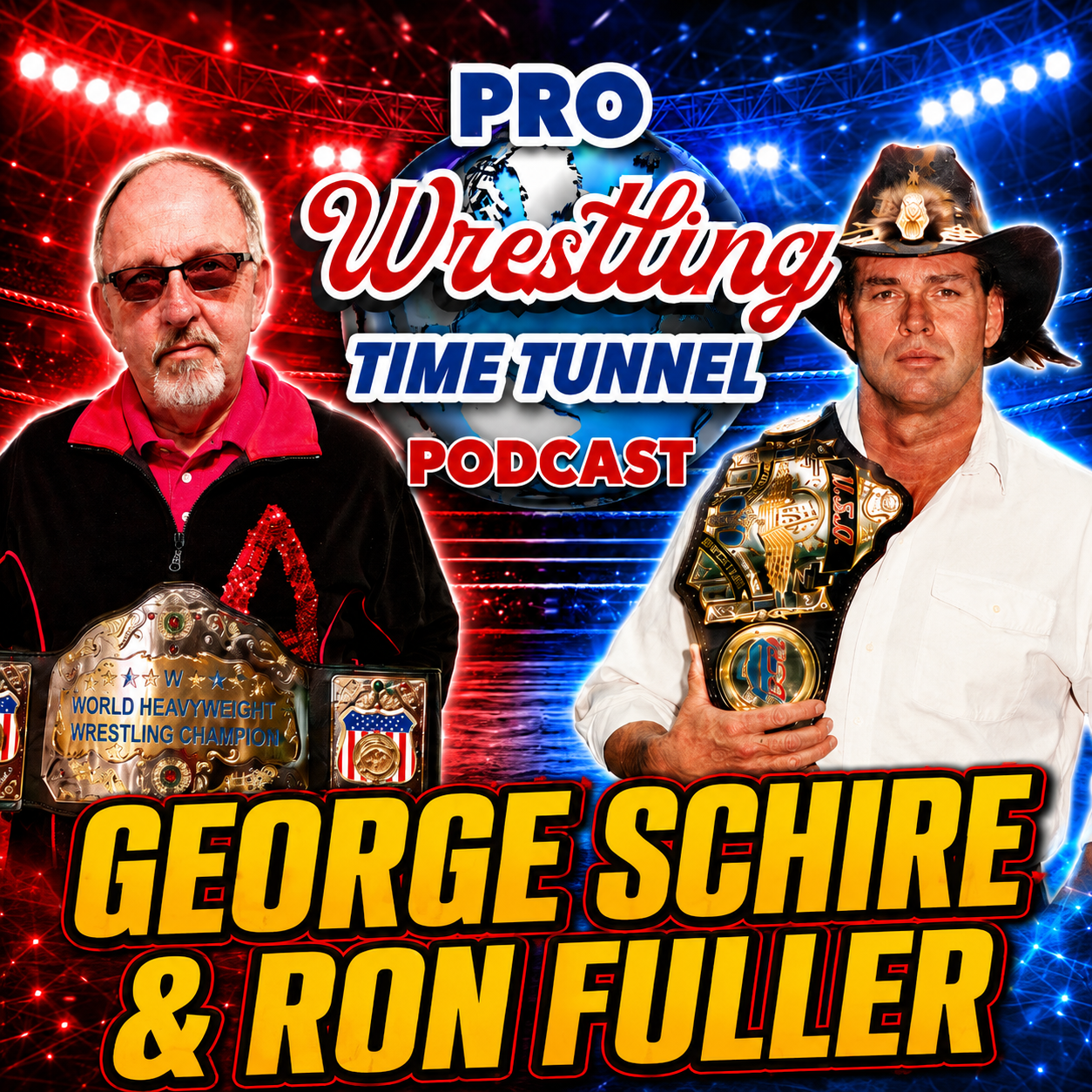
All right, today I have two special guests. My first guest is Ron Fuller of the famous Welch legacy. And as you know, I did 11 episodes of the Welch Legacy about the Roy Welch first family on Stories with Briscoe and Bradshaw. And through those 11 episodes, also the announcement came down that the Welch family would be inducted in the Trago Stairs hall of Fame this weekend. They're receiving the Lou Thes award for their contribution to professional wrestling. And Ron Fuller is part of the third generation of the Welch family. And today we're going to wrap a couple of things into one. We're going to do our 1976 review of the year in Southeastern Championship wrestling, which he was the owner of in Knoxville, Tennessee. So we're going to get a 76 review in and we're going to talk about some of his family members, the four Welch brothers, Roy, Lester, Herb and Jack. We're going to talk about some of the other family members that came from that second generation with Buddy Fuller. And also we're going to talk about the golden family. We're going to talk about the Fields family, the entire group of Family members that worked in professional wrestling from the 1920s all the way through the 1990s and even on up till today. We're going to talk about the Goldens. We're going to talk about all of them today with Ron Fuller and I can't wait to get to it. So let's go to the Richards ranch now and my special visit with today's first guest, Ron Fuller.
The Lou Thes Award is an award that recognizes individuals for professional wrestling industry that use their wrestling skills and platform in the realm of public service.
It's presented to people who have been very impactful in the history of the pro wrestling business. Jim Ross has won it before, Trish Stratus, Magnum TA, John Bradshaw, Layfield and others. This year it's being presented to a family dynasty and been long overlooked in my estimation. As most people who follow me know, I'm very enthusiastically researching the family and talking about it. It's my goal to get the Welch family in every hall of Fame that there is out there because I think they should be in every one. And it's a, it's one of the few multi generation wrestling dynasties that goes as deep in generations as it has. And I have one of the family members here, guy who's going to receive the award in a Waterloo this weekend. As a matter of fact, Ron Fuller is joining me today. Ron, how are you today, man?
[00:10:19] Speaker B: I'm doing great. Tony, always good to see you, man.
[00:10:23] Speaker C: You bet, brother. I am so excited about this weekend.
[00:10:27] Speaker B: Yeah, me too, me too, man.
It's a long time coming. I guess a good way of putting it.
[00:10:34] Speaker C: Well, it's funny how when you're so close to it, you just think everybody knows about the Welch family, you know. But after we did that Briscoe and Bradshaw series, I had so many people reach out to me going, oh, I didn't know, you know, that they were so influential and I mean the most powerful family ever in professional wrestling history. I think we'd be safe to say starting back in the 19.
Well, if you go all the way back to your great grandfather, Big Ed Welch, you go back to the 19, the zero zeros, 1900s back in Salazar, Oklahoma.
And what's your thoughts about getting this prestigious Lutheran Award and your family going in the hall of Fame?
[00:11:22] Speaker B: Oh man, I'm really psyched about it, man. You know, I didn't expect it and I just happened to tune in and saw about the third guest of the, of the, the series that you were doing with Jerry and them and wow, I was like Son of a gun, man, this guy knows his stuff. And you know, this is really, really good, you know, because a lot of times people talk about the Welch family and ain't always good. Yeah. So, you know, so I just, I just got really, really into it and wow, it's. I get the same thing you do. I get people to say, boy, I watch that. I've watched that. And some of them say, I've watched it three times now. You know, don't know. I don't know how they can do that. But some people, I guess can, can get involved, highly involved in wrestling, man,
[00:12:20] Speaker C: it's a, well, it's, it's, it's so detailed and there's so many things. I mean, not just from my perspective, but from Jerry's perspective. And Roy Welch is John Bradshaw, Layfield's favorite wrestler of all time.
And so from their perspective, everybody's adding so much stuff that what a lot of people tell me is every time they watch it, they hear something different that they didn't hear before.
So, you know, it's almost like you got to go back and watch it a couple of times just to get the full, full impact of it.
You, you were start. You started promoting your territory in 1974.
You bought it from John Cazana in Knoxville. It was called the Southeastern Championship Wrestling In October of 74, I believe, and you moved on up to Knoxville. You'd been in the wrestling business five or six years at that point. I think you debuted in 69, is that right?
[00:13:20] Speaker B: Yeah, actually 70.
My last year in college in 70 and May of 70 when I got out of college.
[00:13:29] Speaker C: So from started in 7070 to 74, you worked for Eddie Graham in Florida and also made a lot of frequent trips up to St. Louis for Sam Mushnick as all the stars of the nwa. I mean, if you, if you were anybody at all in the National Wrestling alliance, you worked in St. Louis and you got an opportunity to work up there several times.
And then I guess you started promoting down in West Palm beach for Eddie.
[00:13:58] Speaker B: Right, right, right.
Actually, I went to St. Louis and I wouldn't. I had a guy that put together all my history of all my matches, every one. And I went back and looked the other day I went to St. Louis, 40, oh my gosh, over a two year period.
So TVs, that's accounting the TVs, you know, go in there on Friday, stay over on Saturday, work the TV on Sunday and fly back to Florida Sunday night. But yeah, so, yeah, go ahead, Ron.
[00:14:36] Speaker C: I was just Going to say your, your grandfather Roy Welch was one of the first guys to join. Beyond the original six members of the National Wrestling Alliance. He, he was one of the first additional members that joined.
And Sam Mushnick was always had a close relationship with the Welch family. As a matter of fact, I was always thought it was interesting. I was just telling Herb Simmons, I was in St. Louis a couple of weeks ago for the St. Louis hall of Fame ceremony and I was telling Herb, well, or Herb Simmons that it was always interesting to me that you were always billed from Dyersburg, Tennessee when you went to St. Louis. And I, I think that was because of Sam's fondness for Roy and the Welch family.
[00:15:23] Speaker B: Yeah, had to be his first time. He had to introduce me.
I was like, I wanted to turn around say where dad come from, you know.
So yeah, that Sam was really close with Roy obviously and the whole family.
Sam, Sam's a heck of a story in himself.
[00:15:42] Speaker C: You bet you. And I'm going to get around to telling that story with Jerry and John here one of these days. It's on our list anyway.
So you started promoting the town of West Palm beach in Florida for Eddie and you kind of got the promoters bug, which it was in your blood and in your family anyway.
Long, long line of that sort of thing.
And then you decided that you discovered on a trip to the Smoky Mountains, I think on vacation that you discovered this little promotion up there and you decided you could do something with it. You met John Cazana and ended up buying it from, from him.
And you started promoting up there in October of 74. So by 76, you're about a year and three months into this.
How was, how were things going for you by the time 76 rolled around in Southeastern?
[00:16:39] Speaker B: It was very difficult for me to get started.
You know, I thought I knew what I was getting into, but I had no idea. You know, when you so known in the territory and found out right away that there was a.
There was a connection to the Nashville office and they were having to.
That I was going to have to pay 10% booking fee. I had no idea when I bought the territory that it was a 10% booking fee involved.
And so I found out so many different things right off the bat that made it difficult for me. My granddad and I had a great conversation. I told him, I said hey, I didn't know anything about this booking fee. And he said, well son, he goes, you know, that's, that's been the deal with them for many, many years. Long as They've been there, you know. And I said, well, you know, do.
I'm thinking that I might go a different direction. And he says, he. And he was always pretty, pretty, pretty up front with me, you know. And he said, well, well, he says, I tell you what, he says, if you want to go your own route, you want to get your own talent, you want to run your own show, he said, I won't charge you nothing. Said, we'll back off and we'll let you do your thing over there.
And really, when he was telling me all this, I'm. Can I see his face through the phone? And he's probably about to giggle, right? He's about to laugh because he knows what I'm going to get into when I do this.
So anyway, I said, well, I think, Granddad, I believe that's what I want to try. Let me try and see if I can do this by myself.
And so he said, good luck to you.
[00:18:34] Speaker C: I'm sure there was a certain amount of pride, too.
Got you on the phone there. And so much of what you were saying, the words probably echoed back to years ago when he started, you know, he started running guys off, you know, back in the 30s and, and trying to get each of his towns going. So, so he probably knew what you were in for, but he probably also knew you didn't know what you didn't know.
[00:18:59] Speaker B: So, yeah, that's it. I think that's probably most of it right there. More than skid, don't know nothing.
[00:19:07] Speaker C: You got, you got some of some. You got some stars in there in 76. One of them is Professor Toro Tanaka, who was a major heel in almost every Southern territory there in the mid-70s.
[00:19:21] Speaker B: And.
[00:19:21] Speaker C: But you also got some guys there that's, that's local legends.
On January 25th of 1976, Ron Wright captured the Southeastern heavyweight championship there. And for his fifth time, which he would go on to hold that title several, several more times.
Tell us a little bit about Ron Wright for maybe some of our listeners that are not as familiar with him.
[00:19:46] Speaker B: He's the greatest character I ever had. I've ever around in wrestling. I mean, and I've been around a who lot of them. And Ron Ryan, he's. He's just right there at the top of it. He was a crazy dude.
He owned himself an airplane. That scared the heck out of me. First time I won one, I'm the first time I saw his plane. He called me up, he said, yvonne, you going up to West Virginia? You know, And I said, yeah, yeah, I'm. I'm. I'm booked there. And he says, how about you stop off here and go with me, you know? And I said, because I have to go through there. He lived in Kingsport, so I said, okay, I'll drop off. And he says, now, and you come off the airport there. And I said, whoa, whoa, whoa, whoa. The what? He said that thereport, right? And I said, but did they fly from there to. And he says, no. He says, I'm gonna fly us.
I was like, whoa.
I wanted to back out right away, but.
Oh. And I'm telling you, I had some. Some flight stories with him that were just. Oh, absolutely ridiculous.
[00:20:56] Speaker C: Okay, I gotta ask you, so what. Where were you the most scared? Were you the most scared with Ron Wright or Eddie Graham flying or.
[00:21:05] Speaker B: Eddie who?
[00:21:06] Speaker C: Eddie Graham. Didn't you fly with Eddie Graham?
[00:21:08] Speaker B: Oh, yeah, Eddie. I've been flew. Oh, Eddie was. Eddie was a piece of cake compared to Ron. Right, okay.
[00:21:14] Speaker C: Well, I. I've heard some stories about Eddie's flying from time to time.
[00:21:18] Speaker B: Oh, yeah, Eddie. Ed would. To me, the times I was on with Eddie, I never had. I never had any questions much, but, boy, Ron Wright was a man.
Flew out flying into Bluefield. A story I just started to tell there. Flying into Bluefield. Yeah, we left there and it was getting dark and. And he's. We got about halfway to Bluefield and. And then the fog came in. Couldn't see the ends of the wings, you know, and it's all foggy. And he says, I said, you. You. You verified you fight flight? Verified you've gone through your.
Well, Ron, he says, I. I'm in this. I'm in the last part of it. He said, I know most of it. And I said, well, you know, where do we.
I got to looking around and I looked at the altimeter, and we're about 5,000ft. And then.
And there was. He had a map. He handed me a map. He said, I better. You might need to help me a bit, though. And he handed me a map, you know, and. And then he says. He says, you know, he. He looked around and he said, wow. He goes, you know, Ron, he goes, I don't know all of it that I'm supposed to know, you know, And.
And I said, well, Ron, I said, I'm looking at the map and it says there's a 6,000foot mountain right in this area here, and we're flying at 5,000ft.
And I said, and you can't see the end of the wings out Here. And I said, you know, and it was already dark. And so he says.
I said, how do you know where we are? And he says, we're in the valley, Ron.
How do you know we're in a valley, Ron?
We're in the valley. We got to be in the valley.
We'd hit the mountain, right?
Oh, man, we had a lot of. A lot of. I had a lot of trips with him that we just. He was a character, man, beyond anybody I ever knew.
[00:23:22] Speaker C: I guess there's another guy that worked for you from time to time, too, Ronnie Garvin, who used to fly. Did you fly with Ronnie?
[00:23:31] Speaker B: I flew with Ronnie a couple of times. Ronnie was a good pilot. Yeah, Ronnie was hell of a pilot. Well, Ron Wright was actually a hell of a pilot. I mean, I flew with him probably 10 times, and we never crashed. So I have to give him credit for being fairly good at what he was doing. But he had trouble.
[00:23:49] Speaker C: He had trouble getting out of town one time, didn't he?
Didn't he get out to the airport and his plane.
[00:23:56] Speaker B: Yeah, yeah. Harlan, Kentucky.
[00:23:58] Speaker C: That's a. That's a heel there.
[00:24:00] Speaker B: Yeah, yeah. Oh, boy. And Harlan, Kentucky, and those Kentucky towns, man, especially down there in that part of the country, in the mountains, they were dangerous as heck. And he flew his plane in there. Yeah. And then he. And the next day, after the matches, we worked in Harlan that night, had a riot. And 30 seconds into the match, my dad was there, and he couldn't get in the ring on the riot. He never got to work, and he wouldn't. He asked me for a long time. I want to wrestle Marlin, Kentucky. I got him booked, and I got him in the ring last match, and 30 seconds in, we have a ride. And so Ron, right, the next night, whatever town, and he said, Ron, he goes, I had a bad night, you know. I said, what do you mean after that matches? He says, I went down there. I done. He chopped my plane down. He said, I know where she was. And I looked down there on the end of the Runway, and she was gone.
And that's. What do you mean, she was gone? He said, my plane was gone. He said, and then I looked and I saw some smoke coming up. He said, I walked down there and he looked over. He said, I looked over the edge of mountain and there she was, just a burning up.
He said, dad, we had some heat except my plane off the mountain.
You're crazy, dude.
[00:25:25] Speaker C: You're changing the. I mean, as you would do, because you're trying to create excitement. In the territory, you know, still fairly new since you've taken over. And I'm sure what you're trying to do is you're trying to encourage fans that you don't want to miss a card. If you do, you might miss something. So you're changing the title quite a bit. Another guy from down there in Tennessee who worked a lot of southern territories was Don Carson, and Don beat Ron Wright for the title on February 13th. What memories do you have of Don Carlos Carson?
[00:25:59] Speaker B: Oh, my gosh. Don Carson is one of those characters too, man. Wow.
Everybody loved Don Carson. You had to love him, though. He was a great guy. And, and just I, I love to have Don Carson in my territory because he was, he was great. My dressing room and I found out early on, running companies, if you've got a dressing room that's happy and you guys are all happy and, and ready to go to the ring and ready to really work, work their butts off, you need a guy like Don Carson that just keeps that dressing room roaring. And so, yeah, Don and Don and a great worker too. He not only was that he could work either baby face or heel didn't make any difference.
[00:26:49] Speaker C: Now, did you, did you employ that same philosophy in your hockey team? Did you have guys on your hockey team that were good locker room guys?
[00:26:59] Speaker B: I had a coach that basically he was, he was the prime guy and.
[00:27:04] Speaker C: Oh, he's the guy that scared all the other owners, right?
[00:27:07] Speaker B: Yeah, yeah. He's the guy that when I told him, I, I was looked, I spent two months looking for a hockey for a coach and, you know, and then I finally found this guy and, you know, where the he was from? He was from Calgary, Canada.
And, and the first time I met him, we sat down. He didn't know anything about me and I didn't know anything about him. And he said, you know, where, where you do. What did you do? And you know, and I said, I've been a wrestler for a lot of years. And he said, I hope you darn. He goes, I love wrestling. And, and he said, he said, I, I, I like that guy. There's a guy there. And he wrestled it and you know, and he kept, kept trying to remember his name, you know, and I said, stomper. And he goes, oh, yeah, Mongolian stomper, right? You know, so, so I had gone and hired the guy that was a big wrestling fan out of, out of Stu Hart's country up there.
[00:28:12] Speaker C: Yeah.
[00:28:13] Speaker B: And he was just as crazy as some of the other as rosters were. I mean, he kept that thing rolling. His. He really, really had those guys going and he had him doing things that, you know, nobody else would have let. Let their players do.
[00:28:29] Speaker C: I just remember when you went back to talk to the owners about your coaching hire, they kind of freaked out and said, oh, my gosh, not that guy.
[00:28:39] Speaker B: Yeah, because, you know, he had played, he had played in the National Hockey League and he was a goon.
I mean, he was only. They sent him in there to fight and, you know, and so it was perfect for me.
[00:28:51] Speaker C: Every time you tell that story, I just, I laugh out loud, man, because they were saying, oh, you're not going to bring any of that wrestling type stuff in here into the hockey league, are you? And you're like, oh, no, I'm not going to do that. And then when they found out who your coach was, they just lost it.
[00:29:09] Speaker B: Oh, yeah, they, they, they weren't happy about it. Nobody was happy about it.
[00:29:15] Speaker C: Do you remember when you first met Don Carson?
[00:29:18] Speaker B: Oh, I met Don Carson as a kid.
Don used to.
Wow. He goes probably back early days in the 50s with mobile. With the Mobile territory.
[00:29:30] Speaker C: Yeah, he had a great tag team with Dick Dunn, the Red Shadow. Dick Dunn was the Red Shadow. Don Carson and the Red Shadow, they
[00:29:38] Speaker B: were top workers in Memphis. I was in Australia with them. They were the tag team champions in Australia.
[00:29:44] Speaker C: Wow.
[00:29:45] Speaker B: Parson and Dud.
And so, yeah, he, he, he was a. Don was a real character. And, and like I said, he just kept dressing rooms just really, you know, he, he was this constant. I got one for you real quick. I hope I haven't told you this one, but my dad came to me one time about the same time period, 1976 or so. And he says to. He says, I had the town kind of going at that point, you know, and that kind of built it to where I was in the Coliseum and doing big crowds and, And I had this big world championship show coming. And my dad came to me and he said, would you do me a personal favor? And I said, yeah, yeah, of course I will. What is it? And he says, would you put George Goulis on the opening match of this world championship card you got coming?
And I was like, oh, I wanted to say, dad, how to do anything for you. But I mean, George was not. George was not exactly. And so everybody in the dressing room, I had to go around and tell all the boys that, look, hey, look, guys, I told him story. My promised my dad I would do as a favor for him with the neck that I would put George on This card. Oh, the whole. All the boys. Oh, my God, Ron, you. You're serious? You're gonna let George Goulet start to match. It matches at that night and this big card. Yeah, guys, I'm going to do that. So I told everybody, I said, do me a favor. I said, please be nice to him. You know, I have to kiss his butt, but it. Be cordial to him. Be sure be nice to him. Right? Yeah. And, you know, so George shows up and he goes around the dressing room like normally when you don't, you're not in territory, you go introduce yourself and you, You, You. You make. Make everybody feel comfortable. And so he went around all the guys, and I was listening, you know, I wasn't open. I. I wasn't actually following him around, you know, and. But I was listening. And when he got to Don, everybody had been nice to him.
And he slapped Don on the back and he said, how you doing, Don?
And he says.
They turned around, looked at him, says, we're eating here.
Eating here, George. That's what. How I'm doing. We're eating good here, George.
I'm not starving over there.
[00:32:25] Speaker C: Right, right.
[00:32:27] Speaker B: Oh, I could drop my head, like, oh, my goodness.
[00:32:32] Speaker C: Well, just. Just a little bit more background on that. I mean, isn't the right. And this. I just remember this from my research and all, but 76 is about the time. Somewhere around in there is about the time your dad moved back to Tennessee to take care of your grandfather and to watch after his part of the promotion with Nick. Right. So that probably was part of that, I guess.
[00:32:55] Speaker B: Yeah. Oh, yeah, yeah. And, you know, he was there with. He was around Nick a lot, quite a bit because he's trying to, you know, take care of Roy. So Roy's responsibilities, too.
[00:33:05] Speaker C: Yeah, Right, right.
[00:33:07] Speaker B: You know, I understood it when he asked me, you know. You know, I didn't really like the idea. You know, I knew what was going to happen with the crew that I had.
[00:33:17] Speaker C: Yeah.
[00:33:17] Speaker B: And you were talking about the 76 prior to 76 and 75. In order to get to where we were at the point we were in 76. I had.
I had Dale. Dale Lewis. Dale Lewis, the old, old shooter, right?
[00:33:37] Speaker C: Yeah, you bet.
[00:33:37] Speaker B: I had. Dale Lewis came and moved to Knoxville to help me out. He stayed there and he worked all my cards in Knoxville, and then he worked Nashville the rest of the week. And I had.
Wow. I had just some of the greatest workers man, in. In the history of the sport. Danny Hodge. Danny spent. Danny was there every weekend.
So I had These shooters and stuff, man, and my crews and you know, and that's what I wanted to do. I wanted to put, give my, give them a lot of wrestling because they'd never gotten a lot of wrestling in that territory. It was Kazana and it was Ron Wright. Ron Wright wouldn't do any real wrestling. And so, you know, by the time we got to 76, that, that those boys being there and in that territory. And then like you said, we get Tanaka and Tanaka is a big star. I mean, you know, and, and actually Tanaka worked a lot for me, quite a bit. He loved Knoxville, he fell in love with Knoxville and he just wanted to stay. And my gosh, you got a guy like that, he can stay long as he wants, right?
[00:34:47] Speaker C: Oh, you're one of the top heels in the whole wrestling business.
[00:34:50] Speaker B: Hell yeah. I mean, how do you get this guy, a lot of guys, how do you get Tanaka to live there?
That. He just likes it, man. He likes the city and he likes the countryside and you know, so, and it was really lucky. I benefited a lot from having, having a territory that had close shots so that you were home every night before midnight and, and, and made big money on it for every Friday, you bet.
[00:35:18] Speaker C: And, and, and you're building to, I don't know, guess you're quite there yet. But you're building toward being able to move to the Coliseum every now and then, right?
[00:35:27] Speaker B: Oh yeah. So we went there and as soon as I got involved, as soon as I got to early 1975, I'd only been there three months. I had a show in the Coliseum, I took it to the Coliseum. We didn't have half a crowd, it was half full, but it was me and Jack Briscoe wrestling for the world title. And so, you know, it took a while to build it, but yeah, eventually it wasn't big enough.
That's what happened to us about. By 1977 or so, we set the all time record there for attendance and for a sporting event in that building. Still the record record. 60 something years later, nobody's ever broke that record. And then we just. The building wasn't big enough. After 1977, 78 on into early 79, we were just kicking butt. But 76 was a key year for us.
And, and as I, as I remember Don Carson did, uh, Dick Dunn talked about Dig Dunn just a second ago. Dick Dunn and Tarzan Baxter were my tag team champions. Wearing masks, superstars, two great workers. Wow. I mean, you know, I was like, I really was lucky. I was lucky. I had a lot of guys. And I had relationships. I had been in Australia with Dick Dunn and Don Carson, and I had been around all these guys growing up as kids, lots of them. And I just had. They were fans. They. This. They. They wanted to help me, you know, and I got more help from. From great, great rosters. I got talent that I should have had no chance to get.
[00:37:22] Speaker C: Well, you. We're going to talk about them a little bit more here in just a little bit. But your cousins the Fields Boys down in the Gulf coast territory. I think Baxter worked down there as the wrestling pro for years.
[00:37:37] Speaker B: Yeah, with the mask White. My white outfit.
Dick.
[00:37:41] Speaker C: Dick was. He worked a lot of mass gimmicks.
[00:37:45] Speaker B: Yeah, my dad trained cars in Baxter.
[00:37:48] Speaker C: Oh, yeah, yeah.
[00:37:49] Speaker B: In the 50s.
Yeah.
[00:37:52] Speaker C: You'd mentioned your hockey coach favorite wrestler was Mongolian Stomper. You're actually in a program with him in the spring of 76.
Yeah, y' all got a southeastern heavyweight title versus the TV trophy program. And I mean, you got some. Some good things going here. It's just, you know, like anything else any other business, it just takes time and. And, you know, consistency.
You finally, finally got a good television station. And this is, like you say, this is a pivotal year for you.
[00:38:26] Speaker B: Yeah, it was a real pivotal year for me. I got baby faces that came there and wanted to stay. Bob Armstrong. And Bob Armstrong could be one of the greatest workers ever. You could go anywhere in the world and wrestle on top. He. He loved Knoxville. He was like Tanaka. I mean, it was like stalker was, you know, And I mean, they just. They loved that part of the country and. And they felt comfortable there.
They made good money.
I ended up about, in that time period of 76, realizing that if I wanted to keep good talent, that there were certain guys in the crew that needed to make the money to stay.
And so I had started. You mentioned Ronnie Garvin. Ronnie Garvin, when he came there.
And I had started in Florida working with Ronnie Garvin at. We were married for three years and I mean, Eddie liked watching us work and he just booked us constantly against each other, every town, everywhere. And anyway, he came there and. And I knew what kind of money needed to make, so I put guys on guarantees.
Stopper had a guarantee, Ronnie had a guarantee. Bob Armstrong had a guarantee, Tanaka had a guarantee.
I mean, it was.
It was. It was the smartest thing I ever did.
I mean, I could have let them stay there and get not quite enough money to stay and be happy and content and end up leaving after two months and losing them by giving them a little bit of extra clout. No one knew what they were going to make and they knew they were tripping. All their trips were going to be short.
They knew that Knoxville was going to be a sellout. And, you know, and so it just helped me, help me make that happen about 1976. That was one of the things I did that had a lot to do with that being successful that early.
[00:40:31] Speaker C: Well, you had several guys in there that were, you mentioned good wrestlers that summer. You had. Bob Armstrong was with the Great Mephisto in a program. Was that Frankie Kane?
[00:40:45] Speaker B: Frankie Kane, Yep, yep. Great Mephisto, Frankie Kane.
Louis Toilette was there.
[00:40:52] Speaker C: You had a guy, you had a guy you probably met In Florida, George McCreary.
[00:40:57] Speaker B: Yeah. George McCrary.
[00:40:59] Speaker C: George.
[00:41:00] Speaker B: Fantastic opening match caresser.
[00:41:02] Speaker C: Yeah.
[00:41:03] Speaker B: And, you know, that's what I wanted and I wanted to teach him.
They had been there and had seen all this fighting and, you know, gouging and blood and all that, you know, and that's why I love to have. And having guys like Lewis and Hodge there, had all that wrestling background. I knew they were going to do a whole lot of wrestling. And George McCrary was a great little damateur. And I stuck him on the first card every night. And I told whoever he worked, I said, you let him, you follow him.
I said, you know, no eye gouging. No, I want to see some wrestling. You're going to learn something.
[00:41:43] Speaker C: There are, there are those guys back in this time period where the National Wrestling alliance, the opening match, you were going to have a. You were going to go through and it was going to be a wrestling match. And George McCreary is one of those guys that I think you could just put his picture beside the. This, this is the epitome of a great opening match wrestler.
[00:42:05] Speaker B: That's what he was. That's what he was. And he, he did not mind it at all.
He didn't want to be a main eventer. I don't think he would have worked the main event if I'd booked him married and go, what did you put me in that for?
[00:42:17] Speaker C: Right.
[00:42:18] Speaker B: You know, he liked that spot he was in. And I made a point of letting him know that that's what I wanted. You are here because you're a wrestler and you're going to go out and lead the matches.
[00:42:32] Speaker C: You know, that's, that's just something that, I mean, there's a whole lot of things I don't understand about today's product, but the, the one thing I don't understand is guys come out there going a thousand miles an hour right up the first match. You know, I just don't. It doesn't compute because I just come from the same era. You come from right. Where.
[00:42:52] Speaker B: And my granddad and my dad.
[00:42:54] Speaker C: Yeah. Where you got to establish. You got to establish something and go
[00:42:58] Speaker B: out there and establish some resting, man. I mean, when, when all else fails. Take a hold. Yeah, take a hold. And there's settle down and, and go a different direction and, you know, and nowadays, like you say, the first match, they, they have five false finishes and, you know, I mean, it's just over the top rope and all the fruits and flying and, you know, so. And when the next match comes, it's the same thing. And it's the same thing.
[00:43:27] Speaker C: And it's, you know, by the time the main event gets there, I'm wore out.
[00:43:32] Speaker B: Yeah, yeah. And you've seen it all. You know, I've seen that. Oh, I saw that finish in the first match.
[00:43:38] Speaker C: Right.
[00:43:38] Speaker B: You know, that falls finish reading. You know, I mean, it's just like.
So it was a story. It was a story that had to be told from the very opening bell until the main event.
[00:43:50] Speaker C: And, you know, one of the things that I think would have been hard for you. You tell me if it was or not. But I mean, you've got a, You've got to keep a fairly. You mentioned the things that you were doing for those guys that you had there that you wanted to keep satisfied or whatever, but you can't keep a bunch of guys. I mean, you, you're not running that many towns.
So I'm, I'm thinking, you know, having your tag teams, which I know was important to you, but you had to be real selective about them because you couldn't keep, you know, you couldn't keep what, 15 guys,
[00:44:26] Speaker B: three tag teams.
[00:44:27] Speaker C: Right, right, right. That's what I'm thinking.
[00:44:29] Speaker B: I had the smallest territory in the country.
My. My was absolutely smallest territory in the country. I mean, it was, it was 150 miles to the north and set 150 miles wide, and Knoxville was right there in the center of it. And that was it. You had Tuesday night. The only other town you ran weekly was Johnson City and Kingsport. Tri Cities up there.
[00:44:54] Speaker C: Yeah.
[00:44:54] Speaker B: And the other nights were. In every one of them was spot shows, schools, little small towns. But wow, we were packing those gyms. My gosh. Boy, we used to put people. We had go football stadiums in the summertime.
[00:45:09] Speaker C: Wow.
[00:45:10] Speaker B: Couldn't put them all in the gyms. The gyms. Would I. Would you pull up there an hour before starting time? And the people would be standing out of line and. And I'd go into the building and the building's already packed. We'd turn away 3,000. We put 3,000 in a big gym and we turn away another 3,000 that couldn't get in there.
You know, it was. It was just really, really a hot territory. And what you have, like, you have
[00:45:40] Speaker C: 12 to 14 guys.
[00:45:42] Speaker B: Yeah, yeah. Had a 14 man crew.
[00:45:45] Speaker C: Yeah.
[00:45:47] Speaker B: Sometimes you pump it.
Later on in the 77, I pump it to 16, I might put two more people on the crew. But I never had those 20 man crews. And none of that. I very rarely had any of that cover stuff.
[00:46:02] Speaker C: Well, one of the things I really wanted, two things I want to get to before we get into your family and the hall of fame. In 76, you know, the Funks were doing a deal where it was almost like a reverse, because when Dori Funk Jr. Had the title, it was Terry that was going around that you had to beat to get in with Dori Funk Jr. Well, now it's reversed.
You got to beat Dorie Funk Jr. To get a match with Terry, who's the NWA champion at this time.
And you've got a Texas Death match with him. And you guys run this at the baseball stadium.
[00:46:36] Speaker B: Yes, we won the baseball stadium for it.
[00:46:39] Speaker C: And it rained that day, right?
[00:46:42] Speaker B: And it rained. Oh, God, it rained. It rained. It rained so bad that I don't know if the people in the stands could see the rain, you know.
But, you know, we went out there and worked anyway, you know, and it was one of those deals that. You're exactly right.
Then the year before that where I was going to work with Junior, Terry came in. I did some stuff with Terry. Had to be Terry. I had to go through Terry to get to talk to Junior. And now Terry won the belt. And Junior came two or three times for me, put me over in the Texas Death Match in a drive and rainstorm.
[00:47:19] Speaker C: So not only did he put you over, but he put you over in their match.
The Texas Death Match.
[00:47:25] Speaker B: Yes. And their type of match. Yes. I mean, it was like they.
I love the gun. I love those guys. I love the Funks. They were all business. They were.
Wow.
[00:47:36] Speaker C: That. That's the one thing I've always heard about Dory when he was the champion. Dory Jr. Is he always.
He had to maintain the credibility of the title, but he always did what was best for business in the. In the territory. Whatever territory he was working, he did the best. What was going to do the best for business.
[00:47:56] Speaker B: He made you look like, like, like a champion.
[00:48:00] Speaker C: Yeah, he might have been one of the.
[00:48:02] Speaker B: More than him.
[00:48:04] Speaker C: And that's one of the things I think was so great about Dory Jr. As the champion is he, he made you look like you could beat him.
[00:48:11] Speaker B: Yeah, yeah. It was a match from beginning to end and it was a wrestling match, right?
You, he, he loved the forearms. He didn't want to throw the punches. Those upper forearm was, was the forearms. And it was a totally different match than you had with anybody else. And I think that was one of the big things about Junior. He had his own style and, and you were going to get a lot of wrestling and, and people were going to go walking away talking about it, believing, say, wow, that was great. That was really something.
[00:48:47] Speaker C: And because your territory is smaller, you probably only got the NWA champion once a year, right?
[00:48:54] Speaker B: Yeah, maybe two times.
[00:48:56] Speaker C: Maybe.
[00:48:56] Speaker B: As it went on though, boy, it began to increase our reputation, the reputation of the territory got around.
And by 1976, late in 76, going into 77, and I had a conversation, in fact, I didn't have the conversation.
The champion I think went back and he talked to, to Sam about it and he said, you know, I, I like that town, I like that territory. I know Harley did that for me. And Harley, first time I, Harley ever worked for me and I paid him off in thousand dollar bills and hundred dollar bills, what it was. And, and so I started counting out the hundred dollar bills. He put his hand out there and I was counting out the hundred dollar bills and, and when I got up to about 20, you know, the old story, you probably heard the story about the guy, the promoter that used to pay his talent that way. He paid his talent every night and he would stand in front of him, they put their hand out there and he would, he would be putting the money in their hand and they were looking at their hand. Right. You know, not him. And he's looking at them. Right. And as soon as he saw an inkling of a smile, any reaction, that
[00:50:20] Speaker C: was the end of, the end of the payoff.
[00:50:21] Speaker B: You didn't go any further, right? He didn't need to, you know, so yeah, I end up getting them. Oh, I was getting four times, maybe four times a year before, before I left the southeastern where we went before we had the war.
[00:50:37] Speaker C: And that, I mean that was an accomplishment to get the champion that, I mean a lot of the bigger territories, that was about the most they Ever got him was four times.
[00:50:47] Speaker B: Yeah. Yeah. And. And the. And the champions always loved.
[00:50:51] Speaker C: Yeah.
[00:50:52] Speaker B: I mean, every one of them always just, you know, they were so thankful and, you know, they just.
I was just lucky. I was blessed. I was blessed to have. I don't know whether it was for respect maybe for back as far as Roy from some of those old guys, you know, that they had so much, you know, they treated me differently, I think, than most promoters.
And so.
And then being a part of this, Roy and my dad and all the things that they accomplished and they did and. And all the wrestlers that they knew, I mean, that I knew, you know, I grew up watching kids. Those wrestlers would show up at the house.
[00:51:36] Speaker C: Yeah.
[00:51:37] Speaker B: All the stars, you know, even the heels we lived on farm, you know, they wouldn't be driving up and making it known they were there, but they would park in the back of the house. And dad had made him on the back part of. I get to meet and see all kinds of stars and. And I kind of like grew up with them, so it made it easy for me.
[00:52:00] Speaker C: Toward the end of 76. We mentioned his name earlier, but, I mean, this is going to be one of your cornerstone stars.
And you actually, after he wins the title in October, Ronnie Garvin, you keep the title on him for most of the rest of the year.
He would eventually become known as Mr. Knoxville.
But, you know, Ronnie really, he found a home there with you as well there at the end of 76.
[00:52:24] Speaker B: He sure did. And Ronnie was always, I thought, a great worker. Even when I started in Florida down there as a green guy. Like I said, first time Eddie put saw me work with Ronnie, it was like, wow, Eddie. I knew when I got booked for all so many times after that I'd be on the card against Ronnie. I knew that that was Eddie, and Eddie saw something there that was really good.
And so when I went to Knoxville, one of my first promises to myself is, I'm going to get Ronnie Garvin in my territory.
And I was able to do that. And then I had to give him a little bit of a guarantee, but that it was worth every penny of it.
[00:53:15] Speaker C: He, you know, back in these days, and you're kind of an exception because you've been in the business now this is your seventh year in the business most of the time back in this era, you didn't really. Weren't really that good in the ring until you hit about your fifth or sixth year. And then Ronnie's just hitting his 10th year in the business right here.
So he's. He's a veteran at this point and really knows how to work for you in this particular situation.
[00:53:44] Speaker B: And he. He knew.
He wanted it to be good. He wanted the territory to be good.
And. And I think that was critical. Stomper wanted the territory to be good.
Bob Armstrong wanted it to be good.
The important people, they got their heart and soul in it, like I did. You know, they. They got to be a part of their life. And then they. They knew that sooner or later, they got to go and take a little break, but they can always come back.
[00:54:19] Speaker C: So whose idea was it, Ron, to repeat the old Paul Jones angle of throwing the title off the bridge?
[00:54:28] Speaker B: Well, that was my idea, because I loved that. I. I never thought about that until Paul Jones did that. The Gandhi. Gandhi Bridge here in Tampa. Yeah. You know, and I saw the reaction. I saw the thing that the crowd on the.
They blocked the whole highway, you know, and it was like.
And then I said, you know, I just. I put it in the back of my mind. It's one of those things that you register back here. Someday I'm gonna do that. And.
[00:54:58] Speaker C: Yeah.
[00:54:58] Speaker B: You know, and then Ronnie was the perfect guy. You know, he was a nasty heel we had. It was a nasty, dirty belt that had been there for years and years, you know, and wanted to resonate and throw it in the trash can. Why the heck not do exactly that? Let him go down. Say, I'm going to take this dirty belt down to the Candy Bridge over here in Knoxville, and I'm going to throw it in the Tennessee River. By gosh, it's a piece of junk, right? And.
[00:55:30] Speaker C: And of course, your fans in Knoxville have never seen this before.
[00:55:33] Speaker B: Oh, no. Nobody. Nobody had ever done that type of angle up there in that part of the country. And while the police couldn't. Couldn't. They couldn't get control of the crowd. They just closed off the bridge. They just shut it down, you know, and they did quit trying because.
[00:55:50] Speaker C: Did you tell them you were going to do it or no?
[00:55:53] Speaker B: Oh, no, no. I didn't really register, you know, And. And, you know, I had Ronnie say it on tv. You know, he made the whole interview. It's this crummy belt, and I'm sick of it. And why has anybody got this? I'm throwing this sucker off the bridge. And, you know, so.
But, you know that. It just. Wow. It was unbelievable. It's kind of like the Paul Jones deal. I mean, they were just thousands of people on the bridge. The bridge shut down so they could watch him throw that into the river and there was boats down there trying to catch the belt down in the water. So, you know, it was a. It was one of those great, great little angles that people never forget.
[00:56:38] Speaker C: So this, this weekend in Waterloo, your family is being inducted into the Trago Estes hall of Fame. And it's. You're receiving the Luthez Award.
And let's just go back to your grandfather. I mean, your great grandfather, Big Ed was a wrestler and of course he was Roy's dad. But as far as territory wrestling is concerned, your grandfather was one of the architects of territory wrestling. Starting all the way back into the early 30s, starting the Tennessee territory out of the little west Tennessee town of Dyersburg.
He would.
He would become the booker for the promoter in Nashville in 1937.
And eventually in 1940, he and Nick Goulis would take over Nashville by using junior heavyweights there.
But just a tremendous innovator in. In the business of pro wrestling. I mean, he was. He was inventing it as he went along. There was no real blueprint for this stuff. And he was doing it on such a large scale for the times with limited transportation, the roads in many cases. I remember reading a couple of stories.
They were secondhand stories because Roy didn't really talk that much about his history or about the territory. But he did tell close friends and, and people like George Harris and people like that who were interviewed in later days by Scott Thiel, talk about where they crossed the Mississippi river over to Missouri on a ferry boat and had to go that way to make towns and things of that nature and ended up pretty much exiting the state of Florida because it was just too far.
I was looking at his match record back in the.
Back in the 40s when he was trying to bring Florida in and he would have to. It would take three days. He wouldn't have a match for three days. So I could ascertain he was on his way there. And then he would have. Then he would have a week or two weeks worth of matches and then he didn't have a match for three days. I'm like, oh, okay, he's on his way home. He's on his way home then. So talk about your grandfather a little bit.
[00:59:09] Speaker B: Oh, Jace, man, I may. Did. I gotta get. Since you brought that up, I'm. I made. I made to show myself crossed into ferry, the Missouri, the Mississippi river, over into Missouri.
[00:59:23] Speaker C: Yeah.
[00:59:24] Speaker B: Work down in Missouri a couple of times and, and all that. They went through some horrible things as far as roads and highways and Stuff like that were concerned. My granddad was, was wild. He was a. He was a character beyond belief.
Now he, he, he had it, hadn't he had his. He owned a dairy besides his wrestling company.
He owned a dairy that started out, I remember as a little boy, probably 7 or 8 years old, they were milking 12 cows. He had 12 cows in one little small barn.
And by the time he ended up in the 70s, he had, it was probably the biggest dairy in the South. He milked a thousand cows a day.
And my grandmother actually helped him build that terror that he built the territories and she built the farm and the dairy. Yeah, but granddad was crazy. He would drive the 100 miles an hour. He had a Cadillac, always had a Cadillac. It was the level Cadillacs. And we lived, he lived on his farm was down a dirt road probably a half a mile from where he turned out of his driveway before you got to asphalt.
And when I used to ride with him to Memphis and he would tell me stories and stuff all the way there and back.
And we would drive down the driveway and we turn onto the dirt road and before we got to the asphalt, which is a half a mile away, he'd be doing 100 miles an hour if, if not more. And he had one of those things on his Cadillac where when you went to certain, above a certain speed, the alarm went off with a little button back in the day. And so when he turned on to the asphalt now he's going to really crack her up, right? And he would be. I'd get, I'd hear it. He would.
Many times it would go off and I'd look over there because you could see what the, what the speed was. And it'd be 120, 125.
I mean, you know, big old car, man, just rolling down the road, nobody on the road. Drive right down the middle of the road because you only had two lane highway. So he used to land down the middle of road when somebody came over the hill. He'd get on his and back in the middle of the road and he just would be like crazy. I can remember he must have.
He used to, I guess, take care of the governors. He was smart about his operation and he knew that he connected politically or he wasn't going to be going business. That's why he didn't have much opposition. And so he would go to all these governors and he'd give them big, big contributions to the campaign. Here we go. He take a little bit and he was always forking over that money and so in return, you know, some of them would give him these cards, little cards, deals, right?
[01:02:42] Speaker C: You know, like a get out of jail free card.
[01:02:45] Speaker B: There you go. And basically, he's. This guy's a big wheel, right?
[01:02:50] Speaker C: Right.
[01:02:50] Speaker B: You know, so.
And I remember a lot of times he'd get stopped, you know, because he's going 220 miles an hour. He'd come over hill and cops say, cop can't try to catch him. He don't slow down. He just keeps on going until they get up close enough. He's like, okay, he takes care of business. So he pulled over to the side, and then the cop would come to the window and he would just leave it up. He would not put it down and stop and knock on the window.
And he'd put it down and he'd say. And the cop would say, do you know how fast you're going? And.
And he would say.
And he'd say, yeah, just a second. And he would open up the little thing between his two front seats and. And he would reach down there and he would file through the cards. Mississippi, Tennessee. What state of mind, whatever state he was in. Right. You'd have to find the card. And then he wouldn't even say anything. He would just say. He'd reach over there and he'd hand him the card.
And. And I watched it many, many times. And that policeman or whoever was he, he would read through that and he would look in there and he'd look back at the card and he'd look in there again like, good God, who is this guy? You know, and then, you know, some of them would say, who are you? You know, and my name's Roy Welch. And, you know, and, you know, so. And so the governor, you know, the
[01:04:14] Speaker C: card says it all, man. The cards.
[01:04:16] Speaker B: Yeah, the card says it all. Is this legit? You mean, am I looking at something legit here? Right? And then he'd put the cards back and put the cards back in their place, and he would. And the cop would be going back to his car, and he'd already be 100 miles an hour. He didn't even. Didn't even pick that. He wasn't even nice enough to let the cop get in his car and maybe go first.
[01:04:38] Speaker C: Certainly is.
[01:04:39] Speaker B: Go right back to it.
[01:04:40] Speaker C: I mean, he's the only.
He's the only booking office owner that I know of that ever missed an NWA convention.
And the reason he missed it, I mean, I've got the letters to Sam Muchnick's office from the Nashville Office saying, we can't come to the NWA meeting because we got to go to the gubernatorial inauguration. And Tennessee, in Tennessee and in Alabama, they went to both of those the same week that the NWA convention in September. I mean, you just, you didn't miss. You didn't miss the NWA convention, But they knew that that was more important to their business.
[01:05:23] Speaker B: Yeah, that's pretty. Pretty bad. Pretty bad that it's more important than.
[01:05:27] Speaker C: Well, well, the thing is, is. And this. A lot of people don't understand this. And. And they were like, why didn't. Why weren't they covered more in magazines and things like that? I'm like, well, they didn't think it was important.
They thought that their local programs that they had printed up for the arena was all the publicity they needed. And the live television shows that they were doing in all their markets.
What was a magazine being published out of New York. How is that going to help?
Yeah, sure.
[01:05:57] Speaker B: For me. Second. Yeah, I got my batteries running low. Can I go and hook them? Hook me up here and we can pick it up.
[01:06:06] Speaker C: And it was a philosophy that was picked up by the Fields in Gulf coast and others. What was a magazine in New York? What good was that going to do them? I mean, it wasn't going to help them with their audience or with their crowds or whatever. So they weren't really that interested in getting publicity from magazines and such. They. They had their arena programs, they had their television show. That was all they really needed. Right?
[01:06:30] Speaker B: Yeah, well, and they were doing. They were doing something. They were always doing something other than just a strict little amateur wrestling match. You know, you had your angles and they had. They were getting guys over. They work in the angles. And, you know, my dad told me way, way back, you know, you know, I asked him, I said, you know, I stayed at all these wrestling magazines. Why not? Why don't you there? And he goes, we don't need them. Yeah, we don't know. What good are they going to do us? You know, I said, look at the crowd.
[01:07:04] Speaker C: Well, we were talking. We were talking a little bit ago about, about Dale Lewis, and we were Talking about George McCrary and educating your audience on wrestling.
I mean, your granddad was trained by a shooter. The original Dutch Mantel.
He always had shooters around him. Sailor Moran, the original Green Shadow. Pat Malone, Charlie Carr.
Charlie Carr, Danny Duc.
Yeah. And back in those days, and this is something that I don't think the, you know, if you don't know your history, you really don't know this. But the way baby faces got over in the 40s and 50s and 60s was you took ass kicking.
I mean, the baby faces got beat up and I'm sure we don't really have evidence of it because people didn't know anything about head injuries and things of that nature. But I'm sure it contributed to your granddad's illnesses later in his life.
[01:08:03] Speaker B: Yeah. I mean, no telling how many hard ways I would think about that. You know, my dad did. My dad did two of them. I know of two big time. I'm sure not telling how many. Did one in Mobile with Mario Galanto and he did another one in Atlanta with Mario Galanto and you know, I mean, and Roy, you know, there's good. There's got it. Somebody's got to bleed, right? I mean, you know.
[01:08:32] Speaker C: Well, all of them, you know, took. Took terrible, terrible beatings. I've got several photos of Roy, you know, when he was in a pretty bad way.
[01:08:42] Speaker B: Yeah.
[01:08:43] Speaker C: I was talking on the Briscoe and Bradshaw show the other day because we're doing the wrestling history of Texas and we were talking about how it started in the carnivals and athletic shows and your dad in 1959, little did people know that the two guys in the main event at that Russwood park show, Billy Wicks and Sputnik Monroe, were both old carnival wrestlers and two of the roughest, toughest shooters. I mean, that people are coming there, think they're going to a professional wrestling match. But those two dudes. And only your dad would book that, you know, where two tough, legitimate tough dudes where the match probably was 95% shoot.
Talking about the hard ways and all. I mean, that just ran in your family.
[01:09:34] Speaker B: Yeah. And. And there was hard ways in that match.
[01:09:37] Speaker C: Yeah.
[01:09:37] Speaker B: You know, the one you're mentioned in there, you know, and then when you do the big shows and they had the big blow offs, it was.
It was time, you know, and this is it. You got it. And you. If you're ever going to do it, this is the night you're going to do it. Right. So, yeah, I mean, there were a tough bunch of. Tough bunch of guys, man, that.
That gave their heart and soul for their business.
[01:10:04] Speaker C: You mentioned that, that match in Atlanta with Galinto. I mean, that was a match that even your dad brought in. Rocky Marciano. Was it that referee that match?
[01:10:14] Speaker B: Yep, Marciano refereed the match and. And he got involved in the finish, which was. Should have been. Right. I mean, people came to see him, you know, and they didn't expect that.
But toward the end, you know, Galento got out of line and.
And so in Ed Spider Galinto. So dad even threw in a. Galinto had a manager for which was not. Not normally done. You know, all of a sudden, here's Algalinto Spiders down there and in his corner to match and. And. And Marciano ends up knocking out both of them or it's over.
[01:10:54] Speaker C: Well, there again, I mean, this whole award at Waterloo this weekend is for your whole family. And your dad is one of the people, I think, much like Roy, who just doesn't get the credit that he should get as far as what he did in the wrestling business. I mean, the, the two years he was in Memphis, the years he was in Arizona, many people don't even know about that.
The. The years he was in Georgia. My goodness, did they draw money in Georgia. From 1966 through about 1972, when he and Lester swapped interests, he went to Florida. Your dad went to Florida then and helped Eddie Graham draw money.
Came back to Tennessee to look after your granddad's interests. I mean, your dad was later on partners with Jerry Jarrett in the Jarrett Welch Wrestling Company that a lot of people don't realize that he was a partner in that breakup with Nick. And he just did a whole lot in the wrestling business. Ron.
[01:11:54] Speaker B: Oh, my. This and. And had some of the biggest events
[01:11:58] Speaker C: knew how to promote wrestling.
[01:11:59] Speaker B: Biggest, biggest crowds ever in all those markets. Every one of them mobile.
Biggest ever Loud Memorial.
[01:12:10] Speaker C: Atlanta was in Pond Atlanta. It was in the Ponce de Leon. Baseball.
[01:12:14] Speaker B: There you go. Stadium. Biggest ever in Atlanta. Biggest ever in Phoenix.
[01:12:19] Speaker C: Yep.
[01:12:20] Speaker B: You know, Memphis. Biggest ever in Memphis. Russwood Park.
[01:12:25] Speaker C: We don't even know how many people were there.
[01:12:28] Speaker B: Yeah, yeah, there was. I was there and I got to see it. And my dad never let us go. And we took us and let us watch that match that night and wow, it was. There must have been 10,000 people on the field standing, you know, because the. Every. All the bleachers were filled and all the ringside was full. Your dad was like to carry Billy Wicks with his car. Picked up his Cadillac and carried him out of the stadium out on Commercial Avenue out there. Wow. I was like. As a kid, I watched that.
This is amazing. Look at this. They're carrying him out here in the car.
[01:13:05] Speaker C: Your dad was an interesting fellow because he was a main event star, big time babyface star, and he was loved by people.
But he didn't like being in the public eye. He didn't like being on camera on television.
He didn't like doing interviews.
He was very much like Roy. He very much liked behind the scenes, but he was such a genius promoter, and we don't have a whole lot about it because he didn't. He didn't put himself out there that much.
[01:13:40] Speaker B: Yeah, he didn't.
[01:13:41] Speaker C: He never.
[01:13:42] Speaker B: He never pushed himself. He never pushed himself.
[01:13:45] Speaker C: Right.
[01:13:45] Speaker B: You know, and. And a lot of times, when he went into his new territories and changed territories, he didn't go in as a wrestler.
He went in as. As a. As an owner.
[01:13:56] Speaker C: Yeah.
[01:13:57] Speaker B: Promoter. The promoter of it several times, because he had to.
[01:14:02] Speaker C: Several times in the Gulf coast territory, he made somebody else the promoter for a short time while he went in the main event.
And because the commission had to. You had to do that. You had to. You couldn't wrestle and be a promoter.
So he would. He would get somebody else in the promoter position. He'd do the main event match, draw a bunch of money, and then go back to being a promoter again.
[01:14:26] Speaker B: Big up.
He had it figured. He had it figured. He had a way he wanted to do it, and. And he never failed when he wanted to have a big one, it was always a big one. The biggest ever, probably the.
[01:14:39] Speaker C: Probably of your uncles, the. Well, Lester, too. Herb and Lester were the wrestling workhorses, really, that. That worked a lot, you know. I mean, Herb held that Southern junior heavyweight title for decades.
Tell me a little bit about your uncles Herb and Lester.
[01:14:57] Speaker B: Oh, geez.
[01:14:59] Speaker C: By the way, your Aunt Lucille. Your Aunt Lucille just turned 100.
[01:15:04] Speaker B: Yeah, that's pretty crazy, isn't it? And. And I talked to Rory about it. I said, well, man, how do you. How do you take care of her? And he goes, I don't have to take care of her. I said, well, what do you. How does she do? How does she. You got to take her grocery store. No, she drives under. Drives herself to the grocery store.
[01:15:22] Speaker C: You're talking about Roy lee, right?
[01:15:26] Speaker B: She's 100 years old, Roy.
How can she do that? He says, I don't know, you know, but just amazing. Still going. So.
[01:15:34] Speaker C: Yeah. Somebody was telling me the other day that she has not lost a step.
[01:15:39] Speaker B: Yeah, yeah. That's crazy. I mean, you know, mine's just there. I mean, wow. I was like, wow, she's just a pretty. Pretty amazing little deal there now. So.
[01:15:50] Speaker C: So I bet she had some. Would have some stories.
[01:15:53] Speaker B: Oh, yeah, for darn sure. Lester was a great wrestler. Lester was a great wrestler. Lester could fly a plane. Lester was a pilot, and he was a bona fide pilot. No telling how many thousands and thousands of miles. Lester flew plane.
[01:16:11] Speaker C: Well, he used to fly the main event guys around all the televisions on Saturday, right?
[01:16:16] Speaker B: Yeah, had to. Before there was live shows. They were all live shows. And he would fly the main eventers from one city to the next to the next TV station and.
And then in Florida, he was running the. When I went to Florida, he was running the Bahamas and Puerto Rico, San Juan.
[01:16:35] Speaker C: I know my dad. My dad knew Lester because my dad was very involved in the American Quarter Horse association. And so was Lester. He was a. He was a big horse guy.
So they knew each other through. Through that.
[01:16:51] Speaker B: Oh, Lester's a big horse guy too, man.
[01:16:53] Speaker C: Yeah, they. They knew each other through that AQHA association.
[01:16:57] Speaker B: That's crazy. That's crazy. You know Lester talked dead into buying a rodeo. Yeah, the whole thing by the whole rodeo. Dad said, hey, let's get us a couple bulls.
No, let's just buy the whole rodeo. Right?
[01:17:10] Speaker C: That was one of the proudest moments of my whole life, by the way, that I found out that Roy and Lester and Herb had a rodeo and you didn't know about it.
That made me so proud that I found something that you didn't.
[01:17:24] Speaker B: Yeah, I never knew it, but your
[01:17:25] Speaker C: dad had one and you knew about your dad's rodeo.
[01:17:28] Speaker B: Oh, yeah, yeah, it was right there. We lived on the farm where the rodeo arena was then. Yeah, it was crazy.
Lester was great roster and so much of business. He was like business, just like dad was. Well, he won the Florida championship. There was. He was the very first Florida champion.
And he wrestles Putney Monroe in Jacksonville.
And.
And Monroe hard waiting. Both eyes.
Both eyes. And.
But Sputnik told me this story. He said, lester's toughest son of gun I ever saw. And he says, he said, I hit him. I busted him on right iron. And instead he didn't. Wasn't happy with it. It wasn't enough blood. And he says, bust this other way. I bust my other eye. And he busted. He said, I busted that.
And then he said.
And then he said, he said he was at all bloody down to his tights. And.
And he said. And I didn't know. I didn't want. I didn't want to. Want to headlock him because he was so bloody. I was just get the blood all over my arms. And you know, and he says, I grabbed an ankle. And he said. And I took him down. And he said, he said, he looked up at me, he's bleeding and he's got all this blood running down his face. And he screamed at me, said, because the crowd's going nuts. And he said. He screamed at me, said, break it.
Break it, he said. He says, I look at him, he's got two busted eyes, and I got. And he wants a broken ankle.
He goes, my goodness, that person. What kind of wrestler is this? Right? So, I mean, Lester was a tough old son of a gun, too.
[01:19:09] Speaker C: You know, not long ago, I went down to Dyersburg.
They still have wrestling there every Saturday night. And they have it in the building.
They have it in the building. The Herb Welch Wrestleplex.
[01:19:21] Speaker B: Right?
[01:19:21] Speaker C: And I met the mayor of Dyersburg, that. He came by that night and said hello, and he wants me to come back to Dyersburg because he wants to take me around and show me a bunch of stuff, which I really want to do because I'd love to go out to the farm and I bring all this up because Herb used to train guys. I mean, he was a big. Before there was wrestling trainers. Herb was a wrestling trainer.
[01:19:47] Speaker B: Yeah. Yes. And. And he trained some of the best. He trained some of the best. I mean, in fact, I don't. I don't know how many people know this, but I know he trained David Schultz.
[01:20:00] Speaker C: He did.
[01:20:01] Speaker B: He trained Wayne Ferris.
[01:20:04] Speaker C: He did.
[01:20:04] Speaker B: Who's. Who is related to. To the Lawler.
[01:20:08] Speaker C: Yeah, cousins.
[01:20:09] Speaker B: Yeah, the Lawler. The Honky Tonk Man. He trained the Honky Talk man. He trained Coco Beware.
[01:20:15] Speaker C: He did. He trained Randy Collins.
[01:20:17] Speaker B: They're all hall of Famers. Yeah, they're all three.
[01:20:21] Speaker C: One of the Moondogs, Randy Collie training him.
[01:20:24] Speaker B: Yeah. I mean, and.
And wow, I can't imagine what it was like to deal. To deal with him. I had a guy that wrote me a little story here one time, sent me a guy from over in. In that same area in Dyersburg, and he was a story about Herb. And he said, ron, I don't know if you ever heard this story, he said, but I had a friend of mine that wanted to train to be a roster with her.
And so he said.
He said, I. He said. I said, well, how'd that go? And he said, well, he said the first time the guy went there, he said, he got in the ring with Herb and. And Herb just said, you know, just. He said, just go on and hit me any way you can. Do anything you want to to me right now, and then we'll start to teach you something, right? And they said. He said the guy. Guy didn't really want too much, you know, but he, you know, Herb said, come on, Come on. And so he said the guy took a couple of big swings, and then he took a run at him from across the ring. And Herb had his ring in the barn, and there was all dirt on it, obviously wooden, concrete, dirt.
Outside the. When he went outside the ring, and he said, Herb grabbed a guy. Guy was running at him. He just stepped aside, grabbed him by the back of the head, shot him between the first and the second rope and the top rope and out onto the floor, out onto the dirt. The guy hit on his belly. He said, my buddy was big and fat, and he said he hit on his belly and said when he got up, he had dirt all over. All over his belly. And so he said. He said he got up and he said he. He looked up there and Herb. And Herb says. He says, all right. He says, now, you know, he goes, I'm the biggest. I'm the tallest hog at the trough, and come on back in here and we'll see what you. We can do. Do something otherwise. And he said, my buddy turned around, said, hell, no, I'm gone.
I.
[01:22:37] Speaker C: When I went down to Dyersburg, I just sat the bench there. I wouldn't pay any attention or whatever. And there was an older guy there, he must have been almost 90.
And he started talking to me, and he had seen the Briscoe Bradshaw series on the. Well, your family.
[01:22:53] Speaker B: Yeah.
[01:22:54] Speaker C: And he goes, oh, I knew her really well. He said. He tried to get me to be a wrestler. He said, I went out there for about a week, and I told him this, not for me.
It didn't take him. It didn't take him long to call him out, I bet.
[01:23:10] Speaker B: Oh, no, no, no. He was hard on him, Schultz, and I was great. Friends and chills, words, my territory. He's another guy that has great talent, and I was really lucky to get him. And, you know, Herbert. Herbert took care of him. The first workout. Schultz said when he got out of the ring to go home, he said, von, I got it. He said, I had to struggle to get out there and get in my car.
And then he said, I drove home, and he said when I got home, he said, I had to blow the horn.
I just blow the horn, and I was there. I said, well, why'd you do that? And he said, because I couldn't get out of my car. My head. My wife had to come and help me get out of the car to get to the house.
[01:23:55] Speaker C: I bet Herb was right up there with some of the old football coaches, like Bear Bryant and Adolph Rupp, and people like that.
Put you through your paces.
Did you know your Uncle Jack very well?
[01:24:08] Speaker B: Jack? No. I married. I met Jack a few times. Jack just showed up every once in a while. I think he was like that for everybody in the family.
[01:24:16] Speaker C: He was hardest one for me to research.
[01:24:19] Speaker B: He was. He. He was just out of nowhere. He would show up and then he'd hang around for a couple hours and he'd gone to be gone for a couple, three years, and he'd show up again, you know, and he had a wife. I think he trained his wife well.
[01:24:35] Speaker C: He used to promote Poplar Bluff, Missouri, and he promote Blytheville, Arkansas, and some places like that for stretches. Not. Not for long periods of time. But he was the hardest one to find out much about.
[01:24:47] Speaker B: Yeah. Yeah. I mean, he was not. I don't think he was right to be a ruster somehow. He just didn't fit into that mold like Herb. And there were only.
[01:25:00] Speaker C: There were only a handful of four man matches where all four of them were in the ring at the same time, you know.
[01:25:06] Speaker B: Yeah.
[01:25:08] Speaker C: The Goldens.
So Jimmy Golden's dad, Bill golden, married your aunt, right? Married your Royce.
Yeah. Ruby.
And I was really proud of what I was able to tell about Bill because I learned a whole lot from Jimmy about his dad that I don't think anybody had ever heard before about his World War II service. And he promoted the guy.
[01:25:38] Speaker B: He had a. He had such a horrible.
[01:25:41] Speaker C: Yeah. He was in the Battle of the Bulge.
[01:25:43] Speaker B: Yes. He was the. It's seen so many horrible things. Yeah. That it affected him the rest of his life.
[01:25:51] Speaker C: Yeah.
[01:25:52] Speaker B: Really.
[01:25:52] Speaker C: Yeah. And he turned to drinking to compensate and cope with.
[01:25:57] Speaker B: He was a wonderful guy.
[01:25:59] Speaker C: Oh, my gosh. And a brilliant promoter. He drew some amazing crowds in Louisiana.
He drew crowds in central Alabama. He was. He was a good wrestling promoter.
[01:26:12] Speaker B: Good promoter. Good learn.
[01:26:13] Speaker C: Learned how to promote under your grandfather Roy in Dyersburg.
Started out in the business in Dyersburg. He was another one that didn't. Didn't really want to be in the ring, but really took to the booking side of things and the promotion side. And of course, his brother placed for
[01:26:32] Speaker B: most all of them.
[01:26:33] Speaker C: Yeah.
[01:26:33] Speaker B: You know.
[01:26:33] Speaker C: Oh, yeah.
[01:26:34] Speaker B: He kind of found a place that a fit, you know, if he ain't ready to be a wrestler, maybe be a referee. Referee. How about you try this? And, you know, he wanted to include as many people as he could. I think he wanted.
[01:26:52] Speaker C: He did.
[01:26:52] Speaker B: Especially family members, you know, I'm gonna find a spot for you. I'll find something for you, Bill.
[01:26:58] Speaker C: Bill married Roy's daughter. And so Jimmy is your cousin and thank. A lot of fans are real familiar with Jimmy Golden.
But even Bill's brother Phil was in the business for a while as a. As a promoter. And then. And then Roy's sister married Speedy Hatfield and they had three sons who were in the wrestling business. And they used the fields. They shortened the Hatfield down to field. And Speedy was.
Speedy was quite a referee in business.
Yeah. Very well respected.
[01:27:35] Speaker B: Worked out perfect. And that. I got some feels. I got a little field story.
[01:27:40] Speaker C: Let's have it.
[01:27:41] Speaker B: Okay.
This was probably 19, late 50s, 58, maybe 1958.
My dad had bought a farm and he bought a piece of property. It was just trees and, you know, and he. 300 acres. And then he. He wanted to clear it. He wanted to. He wanted to get rid of all the trees. And so he bought himself a bulldozer. You know, learn how to write, drive a. Drive a bulldozer. Learn how to handle a bulldozer.
And then after he had. We had knocked down all the trees and piled them up and burned the trash.
We had a couple of stumps from these huge oak trees that he couldn't get rid of his dozer. Couldn't push them over, Turn them over. Yeah. And so he. He.
He was as goofy as he was. You know, he. He went and bought cases of dynamite.
Okay. And then caps. The caps to put into the dynamite. Okay. And then we would dynamite those stumps and. Wow. Talk about dangerous, right? Oh, sure.
[01:28:58] Speaker C: Yeah.
[01:28:58] Speaker B: The actual stick of dynamite won't. Not dangerous, but the caps are pretty darn dangerous and kill you if you drop them or whatever. Yeah. And so the Fields boys came to visit one day and dad had not shown the deal. So we had horses. We had a big ranch there. So we all got on horses. And dad let me go with him so I could carry the caps.
[01:29:25] Speaker C: The most dangerous thing.
[01:29:27] Speaker B: The most dangerous thing. He took the dynamite, put it on the back of his horse, and then he took. He handed me the cap.
So. So we go out to the stump, a big stump, and. And all three of them, they're all just. They're crazy guys, just like all wrestlers. They're little nuts and maybe more than most. And so the dad's trying to explain to him, you know, we walk over and we got. And he takes the dozer. When he couldn't get the big stump, he would take the dozer and he'd go around the tree with it.
[01:30:01] Speaker C: It.
[01:30:01] Speaker B: Until he cut a big deep hole where you had to get down into the hole and then down Deep into the roots of the tree to explode them from underneath and blow them out. And so they.
We went out and got off the horses and we went into the. All went down in the hole. And dad's explaining to him what. How this works. And, you know, and they're just talking themselves and, you know, and they're not paying much attention in that, you know, and I'm hearing the story, and I'd heard it before, you know. Well, you take the cap here, and he showed him how to cramp it onto the fuse. Then you. And then you put this into the dynamite. And. And then. And normally we put one stick of dynamite into a tree, and then he took three sticks because he wanted to do it. He wanted to get their attention. Yeah. So he took three sticks of dynamite. I watched him put the three sticks in and put the blend in. And then.
And then he said to them all, he said, and he's trying to get their attention. There it is. They're just not. They, you know, not listen. And he goes, now, you know, this thing's going to blow and it's going to go. It's going to be pretty big, you know, so. And this year, this fuse here, it's. It's. It's pretty short, you know, I'd say 30 seconds, maybe 45, you know, and. And then he lighted and he liked it. And boy, when he did, I was already gone. I said, oh, no, that's a short fuse, man. It's a lot shorter than that, right? So.
So I started out there and he crawled out of there and he was running right with me. And we're running like crazy and that. And I turned around and I look and they're fighting each other, throwing each other back in the hole.
They're not even running to get away from it, and they're just throwing in and laughing and playing in there, right? And the old man hollers at a man and he stops and he goes, it's gonna blow.
And then they all hit and hit the ground running. And when that stunt. When that dynamite went off, it blew a stump. It blew a stump as big as a car. Wow. 300ft in the air, this, you know, And. And it blew all of them a flip. Turned all of them a flip, you know, and just. And so they were goofy as. All good out, man. Like. Like all Welch's, I guess they had all that in them.
[01:32:34] Speaker C: Well, I just think it's amazing. I mean, the. There was not a bigger baby face than Roy Welch. There was not a bigger baby face than Buddy Fuller. There was not a bigger baby face than Lee Field in the southern territories. I mean, it just. And then you and your brother and Jimmy just.
I don't know, you got. There's something about you. I don't know what it is, but it's. It's definitely there. And I'm. I'm just super thrilled. And I've talked to you about this many times, but I'm just really thrilled about this weekend. I'm really happy your family's getting this recognition. It's long overdue. I don't care about that. I'm just glad we're doing it now. And we're doing it at what I consider to be the most prestigious wrestling hall of fame out there, which is the Trego says Hall of Fame, which has professional and amateur.
And Jerry Briscoe has brought so much. I mean, I'm not just saying it because he's my close friend, but he has worked so hard and has done such a great job bringing such prestige to that hall of Fame. And this is one. And this is one of the ways he's done it. There's making sure that people get recognized that should be recognized.
[01:33:48] Speaker B: Yeah. And he's bringing in a lot. There's a lot in this group.
[01:33:51] Speaker C: Oh, yeah.
[01:33:53] Speaker B: Well, another family getting inducted other than me, too.
[01:33:57] Speaker C: Not. Not connected by blood, but definitely connected by association. The Jarrett family and Jeff Jarrett will be inducted by.
And so it's Kentucky, Tennessee, Alabama family reunion here.
So we're excited about it.
[01:34:16] Speaker B: Yeah, I am, too, man. Looking forward to it.
[01:34:18] Speaker C: And there's going to be a session. Bo James, my friend Bo, historian, is going to be doing a session with you and talking about your family.
And so we will. We'll be. For those who don't know as much about your family, we'll be educating them, and we'll definitely be honoring you. And I'm so glad Roy Lee is going to be there, and he's going to be doing my session with me, and it's. It's going to be a good weekend. I can't wait to see you.
[01:34:45] Speaker B: Say, about time to shake your hand, man.
[01:34:47] Speaker C: Yeah.
Instead doing this virtual stuff. Yeah.
[01:34:51] Speaker B: Yeah.
[01:34:52] Speaker C: All right, man. Well, listen, thanks a bunch. I appreciate you spending some time with me today, and I'll see you this weekend in Waterloo.
[01:34:58] Speaker B: All right. Thanks, man.
[01:35:00] Speaker C: Well, I hope you enjoyed that visit with Welch family member Ron Fuller. Quite a life in professional wrestling. We did our 1976 review of the Southeastern wrestling territory. We talked about the Lou Thes Award winners, the Welch family who are going into the Pro Wrestling hall of Fame in Waterloo, Iowa. The Trago says Hall of Fame as a family group.
And Ron will be there to receive that and to speak a few words about his family and should be a wonderful, wonderful thing. I am so excited about the Welch's getting their recognition, their recognition for all that they've done to establish the sport of professional wrestling. I mean, right here in my home area, the Welch name and the goulash name are synonymous with pro wrestling because I mean, from the, from the 20s and 30s and 40s, 50s, 60s, 70s, 80s on up through Jarrett Promotions, it's just, it's a revered name around here, around these four or five state parts in western Kentucky and western Tennessee and southern Indiana, southern Illinois, southeast Missouri, northwest Arkansas.
So many shows, so many wrestlers, so many great angles and storylines throughout the years. And so I'm excited about the Welch family going in. You know, I was thinking 40 years ago in 1986, around this time, I remember on July 3rd, one of my friends here in, in my hometown of Lola, Kentucky, where the Richards Ranch is located, one of my friends, Bobby Williams, I talked him into going with me on a little Great American Bash tour.
And so we spent the 4th of July in Memphis, Tennessee, when Jim Crockett Promotions brought the Great American Bash to Memphis to the Liberty Bowl. And the special music act as part of that show was Waylon Jennings.
And so Bobby is my friend and we ran a lot, round a lot together. They owned a ranch and a farm just down the road here.
And I had a 1983 Mustang that would run like a crazy horse.
And we drove that Mustang to Memphis on July 3rd. We stayed at the Peabody Hotel in Memphis. I was in the broadcasting business at the time. I was in management of the company I was working for. I had a lot of connections in the music business and I had talked a record, you know, you get, you call, they would call you every week and pitch music to you and try to get you to play their artist's music on your radio station. And I had this guy calling me and he was always asking me if I needed anything or if I wanted anything. And I hardly ever took anything from these music people because there's certain regulations and you can get in big trouble for, for it was back in the old days was called Payola, where people on the air would get cash money for playing certain songs or giving some songs more airplay than others. And they'd get a little cash under the table for that.
And highly illegal.
The broadcasting business is federally regulated.
And so anyway, I hardly ever took anything and I think the statute of limitations is way past on this. But anyway, I told this guy, I said, I'm going to Memphis to an event and I need a hotel room for a couple of days. And he's like, sure, baby. Whatever you need, man, I'll get it to you. You know. So this guy put us in the Peabody Hotel for July 5th or July 3rd and 4th. Yep, July 3rd and 4th. We drove my Mustang down i55, we went over to Missouri, got on i55, drove down through Arkansas, went to Memphis and went to the Great American Bash at the Liberty bowl on July 4, 1986. The main event was Ric Flair defending the NWA world title against Nikita Koloff, Dusty and Magnum. And Baby Doll had a six man cage match with the Road warriors. And Baby the Road. No, Dusty, Magnum, Baby Doll against Jim Cornett in the Midnight Express.
There was a Wahoo McDaniel, Jimmy Garvin Strat match, which I mentioned to Jimmy last week.
It was a great card. There were only like maybe 12 or 1300 people.
I mean, it's in this huge stadium there in Memphis and hardly anybody at all. We were sitting second row ringside. I remember Dusty and Magnum coming down the, the aisle and I was sitting on the end and I reached out and, and touched Dusty Roads and I reached out and touched Magnum and I was afraid to touch Baby Doll, but I reached out and touched them. They went, they went right by me. And you know, even though, and I want to say this, even though there were just a little over a thousand people there, you would have thought there were 10,000 people there. I mean, the work and the show and the amount of intensity. I remember Black Bart had wrestled in one of the matches. And then after the match he was sitting over in the dugout in his regular street clothes and had his hair pulled back in a ponytail and he had turned over a bucket and he was sitting on a bucket and chewing some tobacco. And I went over and talked to, talked to Bart, but that's a 40 year ago memory. And then I went, I came back here to Kentucky, dropped Bobby off, and then I drove to Charlotte.
The next day, July 5th, we drove back. Well, Waylon Jennings played at the, at the Bash in Memphis. And I remember that's how I got Bobby to go with me, was he was a huge Whalen fan, so was I. And so we wanted to see Waylon and the wrestling. I wanted to see the wrestling, Bobby wanted to see Waylon. So he went with me. I drove him back here, dropped him off, Then I drove to Charlotte, North Carolina to see the Great American Bash there, which the main event was the cage match with Ric Flair defending the NWA title against Ricky Morton.
And great, great show Tully Blanchard and Ronnie Garvin in a tape fist match with JJ Tillen. And they did the whole gimmick at the beginning where Garvin knocks him out before the bell ever rings and Dylan gets the bucket of water and tries to revive him. Just a great, great year for wrestling and a great, great memory for me. I can't believe it's been 40 years since 1986.
And then a couple weeks later I drove to Greensboro to be there for the NWA title change, where Dusty won the title from Flair and Dusty's third NWA title. And that that crowd in Greensboro was crazy. So there was this crowd in Charlotte was as well, the crowd in Memphis. We were allowed small bunch that we made as much noise as about 12 or 1300 people could make. But in that large stadium.
But it was still a great show, even though there were not many people there in Memphis, Tennessee, for the Crockett guys, you know, the previous year they had almost sold out the Mid South Coliseum with a combination of Crockett guys and Jarrett guys. In the 85 bash on tour thing, they did one in Memphis, they did one in Lexington, Kentucky and had a sellout. But then when Crockett tried to go in on their own in Memphis, I was one of the 12 or 1300 people there. I mean, it just didn't work.
Memphis was not interested in seeing a Jim Crockett only card.
But in Charlotte and in Greensboro, my gosh, it was rabid and crazy. All right, so I want to also talk about this weekend at Trago's Fez hall of Fame. I'm doing a special session, the greatest wars in professional wrestling.
And my guests are going to be Greg Klein, who has a brand new book out, the Texas Wrestling wars of the 1950s.
And we're going to talk about the wrestling war of the 50s as part of this session. And then my other guest is going to be Roy Lee Welch from the Welch family. And we're going to talk about the Georgia wrestling war from 1972 to 1974.
And in 1972, Buddy Fuller, who was partners with Ray Gunkle, he traded his shares with his uncle Lester. Lester was in championship wrestling from Florida and he was a shareholder down in Florida. And so they swapped.
And I want to hear about this from Roy Lee, because this is the wildest and craziest thing I've ever heard. They swapped everything.
They swapped their farms, their ranches, they swapped, I think they might have swapped vehicles and they swapped their share, their ownership shares. Lester got the shares in Georgia and and Buddy Fuller got the shares in Florida and they relocated and crisscrossed.
And that was about the time that the, the war broke out and Ann Gunkle took all the wrestlers except two and started the All South Wrestling. And the NWA office had two wrestlers in it in November of 1972. And they brought in Bill Watts to be the booker and started bringing in the NWA talent. And so we're going to talk about all of that at my session. And Roy Lee Welch was one of the admin people in the office and I want to talk to him about it. And I'm excited about this. This should be a good session and we're going to take questions and answers from our people who come to watch the session.
So probably about 20 minutes on the Texas War, about 20 minutes on the Atlanta, Georgia War, and about 20 minutes worth of Q and A, I'm hoping in this hour. So if you're coming this weekend, I hope you'll come. It's at 2:30 in the afternoon.
Trego says weekend at the convention building and we'll be there from 2:30 to 3:30 talking about the greatest wrestling wars in wrestling history. All right, so now my guest is George Shire. We got some discussion today about the Pat O' Connor and Buddy Rogers 1961 match in Chicago, Illinois. I wrote two pieces on it last week for the Daily Chronicle and for the Evolution of Wrestling series for my paid subscribers talking about the impact of this match and how it changed professional wrestling.
And I also am going to talk about George, about how I feel about the greatest 10 year period in the Territory era was 1965 to 1975. That 10 year period was the most prosperous, strongest and best period during the territory days. And I want to talk to George about that. I want to talk to him about the award that I'm getting this weekend, the James C. Melby Award.
George was best friends with James Melby. They were instrumental in establishing this award in the hall of Fame. And I want to talk to George about all of this stuff. So let's go to that visit at the Richards Ranch right now and my dear, dear close personal friend George Shire. And I also am going to throw George off with a little curveball surprise during the interview. So be sure and watch for that as well. Let's go to that right now. Here's my talk with George Shire. Always a pleasure to welcome back to the program my good, close personal friend and frequent analyst here on the show, George Shire.
George, how you doing today?
[01:47:15] Speaker A: Tony, I am doing absolutely great. I am excited about our show today and everything you just said, close personal friend. I mean, you and I met briefly in person, but we're going to fix that this coming week.
[01:47:29] Speaker C: Almost a year ago.
[01:47:30] Speaker A: A year ago. Yeah, yeah. And I bumped into you by accident.
[01:47:34] Speaker C: Yeah. This, this weekend will be an exact year or close thereof of meeting at last year's Trago Says. And I, I was so honored you drove down for the show. Just, just kind of to see me and say hello and I got to meet you and your lovely wife and, and you guys are going to be with me this weekend at the, at the Trago says Hall of Fame weekend. And I'm, I'm excited, man.
[01:48:00] Speaker A: That's an honor for me, my friend.
[01:48:02] Speaker B: Seriously, a couple of things I want
[01:48:04] Speaker C: to talk about today, one of which is the award, the Melby award that I'll be getting. And the other is we just passed the 65th on June 30th. It was 1961. It's 65 years ago that the Pat O' Connor Buddy Rogers record breaking gate was set at Comiskey park in Chicago.
And I know you had been a fan at that point for just a couple of years, right?
[01:48:34] Speaker A: Yeah, yeah, about two or three years.
[01:48:36] Speaker C: Two or three years. So I know you were aware of it because magazines were plastered all over the place with that story. I've got the wrestling, I think I've got the wrestling news and maybe wrestling as you like it and a couple others that put out special issues about this match.
What do you remember about the o' Connor and Rodgers match?
[01:49:01] Speaker A: Well, I think you touched on a couple of things already, Tony. You know, first of all, I think it received all the attention. It did more mainstream attention than a lot of other previous title changes, et cetera, took place. But this one I think was big because first of all, it was a historic attendance taking place in an outdoor ballpark, Comiskey park in Chicago. And they had like 38,600 plus people there, which for wrestling. And there are pictures available. In fact, one of the pictures, if any fan wants to look, is on the back of the wrestling review photo album with Buddy Rogers on the COVID A beautiful shot of Buddy on the COVID The back cover cover is a color shot and I mean it's a full shot of the Comiskey ballpark with the ring on home plate. And it is full. That stadium was full. There was no doubt that the 38,000 plus that they announced was accurate. And it also was monumental because it was one of the biggest gates at the time.
Gross receipts were like 140, 141. 142,000.
[01:50:13] Speaker C: 42,000, yeah.
[01:50:14] Speaker A: I think, yeah. And I mean and put that in $1961. That was huge.
So definitely mainstream. And then the other thing was, and I think you and I are going to touch on this, it was monumental because in a roundabout kind of way this was, this was going to start kind of a clash between the traditional NWA and the east coast promotion.
[01:50:45] Speaker C: Yeah, right.
[01:50:46] Speaker A: The card was promoted by Fred Kohler, who was the main, main guy in Chicago at that point and instrumental in wrestling. A phenomenal promoter.
[01:50:54] Speaker C: And, and he actually had been the president of the NWA for a little while when this happened. And one of the brief times that Sam Mushnick was not the president.
[01:51:05] Speaker A: Right. And then we should point out that the other promoter, the co promoter was Vince McMahon Sr. Who if during the broadcast here I mentioned, say Daddy Vince, that's what I always call him. So it's not, it's not a derogatory. It's just that he's senior. But Vince Sr. Was the co promoter. And I think, long story short, Tony, I think we could admit that that was the influx of what was going to be, we're going to be looking at for the next couple of years. With Pat o' Connor losing and Buddy Rogers becoming the new champion. It was almost like the NWA lost hold on their champion.
[01:51:46] Speaker C: Well, it was the first time a heel had been exactly. Had been the NWA champion. They always went for the real pure wrestlers.
Yeah, I know in, in 1955 when the Dumont put on a studio wrestling show in New York City, Lou Thes went to a 60 minute time limit draw on television in New York City with Pat o'. Connor. I think o' Connor had been in the business about four years. They were obviously already thinking of him on that level of being the champion at some point.
And so, and so Thes, I think really liked o' Connor and wanted to really elevate him. And so they went to a draw that took up the whole hour long studio television show in New York with, with Thes and o'. Connor.
They still never really drew that well in New York. The NWA champion didn't. But they were really trying. They were really trying.
[01:52:50] Speaker A: Well and when you mentioned about. They were probably already looking at O' Connor in 1955.
I should point out that Vernon Gagne also wrestled against Pat o' Connor around that same time period. And they not only teamed together or teamed together, but they also wrestled each other a few times.
And I think it's safe to say when you said that he was a pure champion, we know that the formula for the NWA champion was usually a popular wrestler, but he had to be somebody that could go into a town and not play a heel, but be the subtle heel against possibly the local territories. Number one guy, that is the babyface.
[01:53:31] Speaker C: And he had to be a wrestler, you know, somebody who wrestled at a very high level. Which was. Which was a change with Rogers.
[01:53:40] Speaker A: Oh, yeah.
[01:53:41] Speaker C: Because he was a more of a performer. He was not as much of a pure wrestler. And of course, as I mentioned, he was a heel, which was not. Not what the NWA champion ever had been before, which was.
[01:53:54] Speaker A: Which was the problem when you say he was more of a performer. Because we know that Lou Thes was always very vocal about the fact that he didn't want the title or appreciate that the title was on, as he called it, a performer versus a wrestler. And I know it's probably jumping ahead just a bit, but when it came time for Buddy to lose the title, of which McMahon, etc. They didn't want this.
And Lou says was going to win it. And he basically, he. This has been out there for years.
He said to Buddy, we're going to do this tonight, and we can do it the easy way or we can do it the hard way.
Meaning basically, Buddy, you're going down and don't play games.
And Lou was the guy that would have made it happen if he didn't want it to happen.
[01:54:46] Speaker C: We know that in a car ride from Louisville, Kentucky to Evansville, Indiana, back in the.
I guess it was in the late 40s or early 50s, Buddy Rogers said some very derogatory things about Ed Strangler Lewis.
And Lou Thes never forgot that because Strangler Lewis was Thes hero and he was the guy who had trained Lou.
And so that's where his disrespect for Buddy really started.
And thieves and Rogers had sort of been on this parallel track.
Fez was the Texas champion in 36. Rogers was the Texas champion, I think, a year or two after that.
And Fez had been the successor to Tom Pax as a promoter in St. Louis. Roger Rogers is the guy that helped Munchkick win the war in St. Louis when he came in.
And eventually Fez sold out his booking office to Mushnik's booking office, the Mississippi Valley Sports club and the St. Louis Wrestling Club essentially merged.
And I think. So there were just several things between Lou and Buddy that were not.
That were not on the. On the good side of things.
[01:56:05] Speaker A: Well, and you know, the thing about Buddy Rogers is. Yes, we agree, he was a performer. He could draw money. He could. He was great on the mic. He loved to hate him just with his arrogance.
And he. So he was. He was good in that respect.
But I went back and I started looking at Buddy Rogers one loss record. And I do have.
With any one loss record, it's probably 90% finished because there's always some result out there from Podunk someplace. But I've got Buddy's record. And if I look at it, when I did look at it through the NWA Championship years, I think a lot of the ribs started right there because if you look at the defenses, the title defenses, it is really overloaded with a lot of. Of east coast title defenses.
[01:56:56] Speaker B: Oh, yeah.
[01:56:57] Speaker A: Being. Being Philadelphia, New York city, Atlantic City, New Jersey, etc. Up and down, you could throw Toronto in there on the East Coast.
[01:57:06] Speaker C: But which we should. We should remind fans that there was no www. F.
Right.
That Northeast corridor was an NWA territory.
[01:57:18] Speaker A: Right. It was an NWA territory. And Vince Senior, I'm going to try to call him Vince Senior. He was. He was a member of the National Wrestling alliance and he actually was doing a lot of the booking for Buddy Rogers.
[01:57:36] Speaker B: Yes.
[01:57:36] Speaker A: You know, Buddy was his guy and showman or nothing, I mean, he liked him.
[01:57:41] Speaker C: Well, I think that was another bone of contention. I think Toots. Right, Toots Mott was actually doing a lot of booking of Buddy and Toots and Lou had heat going back years.
[01:57:52] Speaker A: Yeah. Oh, yeah, way back.
And so I think as you go through the two years or what, it was 63 when Lou finally took the title from Buddy. So he had it for a couple years. But the problem was is that it got harder and harder for Mutchnik or any other promoter to actually solidify dates for Buddy because it was always Daddy Vince that was behind the scenes pulling the plug.
And that's where it came in, where they went to Louis. And that was the old policeman story at that point. I think, you know, Lou was the guy they went to more often than not for 20 years.
And they basically went to him and said, we want the title back.
[01:58:34] Speaker C: So let me. And let me just throw this in. And then I got a question for you. So the other little layer of political intrigue that was going on is that in 1958, Doc Sarpolos had maneuvered Dori Funk Sr. Into the NWA World Junior Heavyweight title for just a couple of months.
That was typically on Danny Hodge or on Savoldi or one of those guys. But he got a run for senior, thinking that he would be able to get the world title for senior.
And it was getting close to that turn there. And as a matter of fact, when Kohler stepped out and left the presidency, Doc Sarpolos became president of the National Wrestling Alliance.
And I always thought that. And Sarpolis had been instrumental, of course, because he controlled the Texas title. And he's the one that put the title on Rogers and was so instrumental in Rogers success in Texas. But he was not happy with the Buddy Rogers choice.
He wanted the title on Funk Senior. And that led to heat in Texas
[01:59:43] Speaker A: for years in the Amarillo territory, which. I know you are a historian, Buffon, you know, and you mentioned Doc Sarpolis. I never pronounce his name right. Apologize. Sarpolis.
But, you know, he.
When Buddy was champion, he went with a different guy. He. He refused to recognize Buddy in Amarillo, and he actually recognized Gene Kinisky.
[02:00:09] Speaker C: Yeah, they created their own title.
[02:00:11] Speaker A: Yeah, yeah, yeah. So.
And I think that points out what we want to say about how it changed wrestling, because Buddy was one of those guys where he seemed to have controversy surrounding him.
He could draw money, but it went with a price, if you want to say that. And people had a lot of dealings with him, good or bad, that it just. You get to the point where you say, I don't want to deal with this anymore.
[02:00:38] Speaker C: Well, he liked using his own guys, you know, he traveled with his own little group of guys that if you booked Buddy, you pretty much had to book another five guys, you know.
[02:00:48] Speaker A: Right. And, you know, I think there were promoters that were always quick to do something if they could.
I actually pulled this out before our show today.
I've got the programs from. There's that incident that took place on November 29th of 1962, when Buddy Rogers, they put quotations on it, broke his ankle in Montreal with. Against Killer Kowalski. But Buddy legitimately didn't wrestle for several, several, several weeks.
And Morris Siegel, the Houston promoter at the time, actually in his programs, announced, I don't know if this can show up here, but he announced that they are recognizing Killer Kowalski as the new world champion, that he defeated Buddy Rogers in Montreal.
And for the next several weeks, Kowalski is not only defending the title, but then at the end of the year, they actually had Killer Kowalski defend and they listed as the NWA World title against Luth as.
And then eventually when Buddy came back, you know, things were worked out. But Morris Siegel was looking for a way to not use Buddy and Pillar Kowalski was a good choice.
[02:02:11] Speaker C: One of the things I was going to say too is that I'm often asked, you know, what was, what were, what were the best years of the territories.
And it's, it's always a little jarring to people, But I think 1965 to 1975 were the biggest years. That 10 year period of time from 65 to 75.
And I think this 1961 match at Comiskey park sort of was ushering in that, that stretch of time you had more territories at any than at any other time in the territory era, history. During that 10 year period from 65 to 75 and after 75, after Sam Mushnick stepped down as the president, things started fragmenting and offices started closing and the champions started getting booked different. And I know that people think they've seen everything on video of the territories, but you're actually seeing the slow death of the territories when you watch video back during the time when you were a young fan and you've got all the programs from that, you know, most of the programs from that stretch of time from 60, I mean, would you agree with that, that that would have been the strongest time for the territories?
[02:03:38] Speaker A: I don't think you're at all wrong with that. And I do agree. You know, the thing is, when you look at what happened, things started to really fall apart. I think in 57 when we had the Luthez Carpentier situation where there was the break off of some of the promoters recognizing Carpentier. And you know, Tony, we know that the NWA went along with that for a while and then they decided, well, we're not going to recognize Carpentier. And he didn't even show up in their listings. But he had a legitimate claim.
[02:04:11] Speaker C: I think that was exasperated by the wrong choice of Hutton also.
[02:04:16] Speaker A: Well, that's probably true. We've never argued that even though Lou Thes campaigned heavily for Dick Hutton, who on the surface was a hell of a good wrestler. You know, you want a worker and a guy that could shoot. Dick was the guy, but he was as boring as watching your grass grow. He just was.
[02:04:34] Speaker C: The problem was that now the biggest instrument for promotion was television.
[02:04:39] Speaker A: Yes.
[02:04:39] Speaker C: And Dick, if Dick had been champion pre television, I think he would have had a great run.
But, but, but having to be charismatic on television, that was not Dick. And I Just think that promoters came to sort of lose confidence in the title and lose confidence in the NWA through the choice of Hutton. Then you have on top of that, the Carpentier break off. I think that you're right. I think that really damaged things.
[02:05:09] Speaker A: So that, that starts to fragment in 57. Although there was a little bit pre break in 1955 out in San Francisco when Leo Nomellini technically beat thes for the NWA title. And that wasn't recognized either. But if you look at 57, 58, 59, things were changing. We know that Vern Gagne broke off and he was there in 1960. So the AWA is on board. We know that in 63, and this is probably more discussion we can have, but that's when the.
The start of what was going to become the WWW F.
And then in 64, we had the Bruisers group, the Indianapolis group, a smaller promotion, but certainly could lay claim to a world title. And we had the west coast version at that time.
[02:06:00] Speaker C: Well, I think you're right.
I think you're right, because who did McMahon name as his first champion?
[02:06:07] Speaker A: Buddy Rogers.
[02:06:08] Speaker C: Buddy Rogers, yeah. Well, then, of course, he set about the whole thing of, well, you know, Buddy still has the NWA kind of on him and he's got that stink on him. So I'm going to create my own new super champion, which was. Which was Bruno. But you're right, I mean, that, that, that whole controversy over who was going to control and book the champion.
I think McMahon got a little taste of doing that with Buddy, and that's when he decided, I'm going to do my own thing.
[02:06:41] Speaker A: Now, you know, one of the things that we've heard through the years, you know, about the Bruno and Buddy Rogers match, I don't know where I've ever been on this, if I take it all in as fact or not, but the stories, of course, that Buddy had had some heart issues and had been in the hospital and had done that 17.
What was that nanosecond match that he had with Bruno to lose the title, that he had come in out of the hospital, etc. You know, and again, I don't know if that's true. I just know it's been the story told forever.
And Buddy was done. Bruno, and you know, Bruno, they started grooming him, if you want to get serious about it, they started grooming him about 1960, right where the strongman and he. And you know, we all know that he went over so well in that, that part of the country that I don't think there was anybody at that time that could have done what Bruno did for the Worldwide Wrestling Federation.
[02:07:39] Speaker C: Do you remember if there was, of course, days.
It's hard for a lot of people to imagine this. Not for you and I, because we grew up in this time period. But you only pretty much had network television at the time. Do you remember if there was very much television coverage of the Chicago match?
[02:08:00] Speaker A: No, I don't recall anything, Tony. And if, again, by that time in 63 or 61. Yeah, 61. Yeah. I would have just been shy of my 10th birthday by a few months, so I'd have been nine years old.
[02:08:14] Speaker C: But, I mean, think about how enthusiastically positive the whole country was at that time. I mean, when Kennedy got elected president, it was like it was a golden era in the United States.
And you have these two fantastic athletes in o' Connor and Rogers, meeting Rogers, the flamboyant Strutton heel, and o' Connor the, you know, the New Zealander who could really wrestle. And this hype that they built up around this entire extravaganza in Chicago was just for the time, they did a fabulous job of promoting. As a matter of fact, in one of those stories I written in the last week in the Chronicle, I had a photocopy of the Chicago newspaper that said they may draw 59,000.
That came out about a week before the match.
[02:09:07] Speaker A: Well, you know, we know that in 1959. That was when Verne kind of officially withdrew from the NWA in late 59. But I could tell you that Vern Gagne, he was an advocate for Pat o' Connor as well. They were friends outside the ring. And I told you, they had wrestled, they had teamed.
[02:09:28] Speaker C: Honestly, George, I can't remember anybody ever saying one bad thing about Pat o'. Connor.
[02:09:33] Speaker A: No. And Vern was always positive with him. And the other thing was, as I noticed in one of the things that you'd written this week and you'd mentioned Pat o' Connor getting some training or getting a lot of his training from Butch Levy.
[02:09:46] Speaker C: Yep.
[02:09:47] Speaker A: Here in Minnesota, I would point out to you that it was also Joe Passantak was involved.
[02:09:54] Speaker C: Right.
[02:09:54] Speaker A: With. He's the one of the guys that takes. Can take credit for bringing Vern into the business. But Joe and Butch Levy, they were the two guys. And it was Tony Stecker, the then our Twin Cities promoter, when Pat o' Connor broke in. It was Tony Stecker that brought him here from New Zealand.
So he was kind of a Minneapolis guy. Pat o' Connor was. And he got a huge push. If you look at Twin City programs during the 50s and it was NWA territory in those years.
Most of those years thes was the NWA champ. But o' Connor got a lot of push in the Twin Cities and that had to do with Tony Stecker, Vern Gagne, etc. So he had his back.
Absolutely.
[02:10:42] Speaker C: I'm glad you brought that up. Let me ask you this question. Did you ever talk to Vern? Because I know you had conversations with him. Did you ever talk to him about the. The angle that they ran where they challenged Pat for the title, but they knew Pat wasn't going to show up and Vern was going to get the. I mean, do you ever talk to Vern about doing that? I mean, he thought so much of o', Connor, but he sort of positioned him as a no show for that match for the title, you know, and,
[02:11:14] Speaker A: you know, that's a topic that we have that personally have talked about so much over the years. But yes, the whole thing with Vern on that, Tony, is when Verne and Wally Carbo pulled away from the nwa, they basically pulled away as early as the fall of 1959. But O' Connor was the recognized NWA champion.
And I can tell you 100% from what Verne stated was that fictitious challenge that the eight that the Wally Carbo and other promoters, as they described it, they were going to issue this challenge to the NWA and to its champion, Pat O'. Connor.
And it basically, as we've talked, was a three month challenge, 90 days.
But I can tell you 100% that before that challenge was ever issued, and it was, I guess we have to say it was a TV and a program, a wrestling paper program challenge, because that's where we heard about it and read about it.
And there was, you know, Sam Muchnick, etc, they had already given up Minneapolis. There was no intent. It wasn't even a real challenge. It was for, for drama.
And you know, when you look back at it, it was a lot better than proclaiming that Vern Gagne won the title in Rio de Janeiro and came back, you know, like these fictitious phantom matches.
They legitimately built him up to become the champion. And yes, in a way, he was bearing.
Burying his friend Pat o'. Connor.
[02:12:56] Speaker C: Well, that was what I was wondering.
[02:12:58] Speaker A: Pat was okay, but they were okay with this. This was a. This was a wrestling story.
[02:13:03] Speaker C: Did they talk about it at all,
[02:13:04] Speaker A: do you know, Vernon, Pat?
[02:13:06] Speaker C: Yeah.
[02:13:07] Speaker A: Oh, I'm sure they did. I don't know for a fact, but I'm sure they did. Pat had no animosity in fact, after.
[02:13:15] Speaker C: I just can't imagine them not talking about it. Like, I can't imagine Verne not going to Pat and say, hey, as part of this whole deal with us breaking away from the nwa, we're going to do this challenge, we're going to use the ear title. And I just can't imagine them being such close friends and him not saying something.
[02:13:33] Speaker A: Well, and let me show you, they were close friends, because after Vern got the title in 1960, if you flash forward to later in 61 or 62.
Well, actually, it was a little bit later than that. 63.
But Pat O' Connor was in and out of the Twin Cities. He'd come in and work hard, and Verne had him always on top. I mean, they were.
This was only a storyline. And the one thing I've always looked at is I thought that was a genius storyline because it gave legitimacy to Vern Gagne getting the title.
And later on, I could probably dig out one of the programs where it says that Pat claimed he wasn't aware of the booking challenge as he was busy traveling around and defending the title. And he wasn't aware. And so the whole storyline is.
It made. I think it made it seem real, at least in my way of looking at it.
The champion and Sam Muchnick didn't. And I've got a photo and I've never published this because I don't want people making copies of it. I've. I'm really selfish here, but I have an 8 by 10 glossy from the Minneapolis Wrestling Club and I will share it with you sometime.
[02:14:56] Speaker B: Okay.
[02:14:57] Speaker A: But it is basically when Vern is naming himself as champion, Wally Carbo is in the middle, and Sam Muchnick is presenting him with the AWA belt.
There you go.
[02:15:17] Speaker B: Yeah.
[02:15:18] Speaker C: Wow.
[02:15:19] Speaker A: With the blessings of the nwa.
It was. The whole thing was a work. And I just think it was a good way because we flash forward to when you mentioned when Daddy Vince put Buddy Rogers as the WWWF champion.
[02:15:37] Speaker C: Yeah.
[02:15:38] Speaker A: Didn't they say that Buddy had won the title in Rio de Janeiro or something like that?
[02:15:43] Speaker C: Was usually where they win them. Yeah.
[02:15:45] Speaker A: And see, I look at those and you try to find a result for that. There is none because there was no match.
[02:15:50] Speaker C: It didn't happen.
[02:15:52] Speaker A: So in the case of Vern and Pat at the time, I think this was a way to do it where none of them really got hurt and they could remain friends. And Vern was still a member of the National Wrestling alliance right up to the end. He went to their annual meetings and he wrestled, you know, in St. Louis. Well, I think his guys worked in St. Louis.
[02:16:14] Speaker C: So the more I've studied it and the more I've read the correspondence and the stuff around the consent decree and all of that, I can't help but think that Sam thought this was a good thing.
I think he thought Minneapolis breaking off to do its own thing was a good thing for the NWA and for the, you know, taking some heat off.
[02:16:39] Speaker A: Well, and you know, a couple years earlier, our friend Hornbaker, he talked about this really well in his Unholy alliance book. But there was heat on the National Wrestling alliance just a few years earlier for actually being a monopoly back in those days and, well, you know, monopolizing the business. So this was a way for them to take the heat off there too.
[02:17:04] Speaker C: Well, I was on another show here a couple of weeks ago and the topic of Tom Ernesto came up.
And we were talking about Tom Ernesto. And I said, and you know, Tom was a witness for the government in the DOJ investigation of the National Wrestling Alliance. And they're like, no, we didn't know that. And I said, oh, yeah, he was, he was.
What was his. Tony Martin, I think.
[02:17:28] Speaker A: Tony Martin. I just posted a picture on your page of him in Texas.
[02:17:33] Speaker C: So he wrestled as Tony Martin also in the Crockett territory.
And he would drive Mr. Crockett. And there were several meetings and discussions that he was privy to that came out in this testimony.
And Mr. Crockett did some things to ensure.
Lower his risk, let's say, for business invasion in the Crockett territory. He.
He did a few things. And I think all promoters did a few things back in those days.
[02:18:06] Speaker A: Well, and you know, when you said earlier that between 65, 64, 65 and through 1975, and you feel that's probably the best territory time.
[02:18:16] Speaker C: Best 10 year period, I think best 10 year period.
[02:18:18] Speaker A: And I couldn't agree with you more because that was when I want to say we really had the most peace in the business where each of the individual territories and if you looked at the magazines back then for what they were worth in their publishing at the time, because a lot of that was all kayfabe and made up. But in their ratings or rankings, it was always the WWA in California and Bruisers Indianapolis WWA and the Triwf and the NWA and then Vernon awa and there was peace and cohesiveness between all these promoters. And you know, Tony, they really did, during that 10 year period, maybe 10 or 12 years, they did work together, people don't realize that. That, you know.
[02:19:10] Speaker C: Well, I think. I think that. I think that period of 1955 to 1965 really put the fear of God into them. I really think they thought they were going to lose the business.
I think they thought the government was really going to break up this wrestling thing.
[02:19:26] Speaker A: Right. And by. By working together and being friendly with one another, exchanging talent from time to time, it made the business. As we look back on, at least I do it is probably the best 10 or 12 years of the territorial time.
[02:19:43] Speaker C: Yeah. And we don't have a whole lot of tape on it.
[02:19:46] Speaker A: Oh, hell.
[02:19:47] Speaker C: Thankfully we do have the 61 match.
We do have it. We have all falls, which I still look at that going, this might be the perfect pro wrestling match. This o' Connor and Rogers match. I mean, it had everything.
You know, you had a submission by the champion in the first fall.
[02:20:07] Speaker A: Yeah.
[02:20:07] Speaker C: And then you had the champion come back and win the second fall. And then in the third fall, it's anybody's ball game. And.
And you watch it today.
If you've seen it before, it doesn't have the same effect. But if you go a couple of years and you haven't seen it and you watch it again.
I watched it again before I wrote my piece the other night. I was on the edge of my seat and I know what's going to happen.
[02:20:31] Speaker A: Right.
[02:20:32] Speaker B: Right.
[02:20:33] Speaker A: Well. And see, you and I are old breed on that. Because we could sit down and watch that type of a match. Two out of three falls and we're going to be glued to our screen the whole time on pins and needles, even if we have seen it 10 times.
But the.
I don't think fans today have that attention span.
[02:20:53] Speaker C: One of the things that struck me and it catches me every time I'm not watching for it and then all of a sudden it's on my screen is the hesitancy of the ring announcer to announce that Rogers won the first fall.
Like, he keeps looking at the. He keeps looking at the timekeeper at ringside going, are you sure he won the.
And I'm just like, man, they were kayfabe to the end. I loved it. I loved it.
[02:21:20] Speaker A: And it's quite possible they didn't know.
[02:21:22] Speaker C: I'm sure they didn't know.
[02:21:24] Speaker A: You know, that's the other side of it. The announcer probably really, in those days, he was probably not brought into the.
[02:21:31] Speaker C: To the circle and the interview at ringside with Wild Red Barry and the kangaroos. And they don't know anything that's going on I mean, they're totally in the. They don't know who to say they think is going to win. I mean, you can tell by their comments they're not rehearsed or they hadn't really thought about it, you know, because they don't.
They kept the finish from everybody there.
[02:21:53] Speaker A: You talk about the magic of kayfabe era when a lot of people weren't in it, only those involved.
[02:22:01] Speaker C: Right.
[02:22:02] Speaker A: And that, that put the realism.
[02:22:03] Speaker C: Sometimes not even the referee.
[02:22:05] Speaker A: No, sometimes no.
I mean, later on we know that referees a lot of times could carry the finish to a match or you know, have the finish for the, for the boys in the ring. But I mean, a lot of times
[02:22:18] Speaker C: the, A lot of times the boys got the finish when they came to the ring.
[02:22:22] Speaker A: Yep.
[02:22:23] Speaker B: Yeah.
[02:22:23] Speaker C: When the referee came over to check them.
[02:22:27] Speaker A: Yeah. And that's one of the things I've learned over the years when I talk with, when I've talked with wrestlers, when we talk about their interviews back in the day or what was going on. I've had many of them say, Tony, gee, I didn't know until the night of the match that this was going to happen or this was what we were going to do, you know, and they'll even throw in sometimes that, you know, we were working, we wanted to get paid and that was my job. And so, hey, I just. We just did it, man.
[02:22:52] Speaker C: So one of the. I mean, I was just thinking about this just this morning, but it's one of my favorite stories of all time.
The NWA title changed hands in Miami in December in 75, and Terry Funk beat Jack Briscoe.
And. And Jerry Oates is supposed to have a match with Briscoe the next night in Kansas City.
And in those days Jack was a babyface champion. So he went to the babyface dressing room.
Jerry Oates is getting nervous, like, where's Briscoe? Like, he's not here. I'm supposed to be in the main event with him.
And then about halfway through the card, somebody comes in and goes, well, Jack's not going to be here tonight. And Briscoe goes, or Oates says. Really? Why? He goes. Well, he lost it to Terry. Terry Funk's in the heel dressing room. You've got a match with him.
[02:23:42] Speaker A: Yeah.
And let's point something out for fans that don't know this. In those days it was actually spread by word that the new champion would immediately take over the old champions booking.
[02:23:57] Speaker C: Yes.
[02:23:57] Speaker A: So if there were a month's worth of bookings out there, well, that now was On Terry Funk, you know, that's
[02:24:04] Speaker C: the way it worked and it was good. And I think back then they had really attended Harley to be the next champion because the next night was booked in Kansas City and I think Harley was going to go home for that week, but Terry had to pick up his bookings and he was not in the same dressing room as Jerry, of course, because he was a heel. And Jerry finds out two matches before the world title match that he's not even facing the guy he thought he was going to face.
[02:24:30] Speaker A: Which again adds so much realism to.
[02:24:33] Speaker C: I love, I love it. I wish it was still this way.
[02:24:35] Speaker A: Oh, man. You know, just the way you say that, it just makes, it makes it real.
I was going to ask you this, and this is a tad off topic, but since we mentioned Briscoe Funk.
[02:24:47] Speaker C: Yeah.
[02:24:49] Speaker A: You talk with Gerald Briscoe a lot.
[02:24:51] Speaker B: Yeah.
[02:24:52] Speaker A: Have you ever discussed with him the rivalry between him and, and Jack and Dory and Terry?
[02:24:59] Speaker C: Oh, yeah.
[02:24:59] Speaker A: And so did he ever give you a take on the whole Harley Dory match on the tractor accident and it took place?
[02:25:07] Speaker C: Oh, yeah. And I interviewed him for over a couple of hours for my book.
[02:25:12] Speaker A: Okay.
[02:25:14] Speaker C: You know, I think what really upset the Briscoe's the most was that it wasn't necessarily the delay or anything, but what really upset them was that in those days if you were going to be getting the title, you went around to all the territories or you got the title and you got beat.
[02:25:37] Speaker A: Yeah.
[02:25:38] Speaker C: And so Jack had done that. He had gone around to all the territories, he had done all the jobs, he had put all the local challengers over. That would be his first challengers. When he got the title, then he didn't get it, Harley got it.
And that, that really, really bothered them. I mean that, that's, that's what added heat to it, I think.
I think they were kind of upset because Eddie was upset because he and Dory Sr. Were really good friends and Eddie knew it was all bs. I mean, he, he knew it was a work, he knew that the pickup truck accident was a work.
And, and, and that was frustrating because there wasn't anything he could do about it. It, you know.
[02:26:20] Speaker A: Right.
[02:26:22] Speaker C: But yeah, I mean they were very frustrated, but it didn't, it didn't preclude their friendship at all.
[02:26:28] Speaker A: Right.
[02:26:29] Speaker C: They stayed friends for years. Still are friends.
[02:26:32] Speaker A: Well, and the reason, it's funny that you mentioned that the way you did, because I had a chance with Jack a few years before he passed. He was at Cauliflower Alley and I Sat with him about two hours one night up at the bar. We had a couple beers together and Jack was very open and talked about that. And he mentioned that very same thing that you just said about. He had went around.
And I knew this because I had seen results and things with, you know, I was already working on results and stuff. And he says, I went around and I put people over and with the anticipation or the.
That I was going to be the champion. And then it didn't happen.
[02:27:13] Speaker C: Yeah, he was building his first round of matches. I mean, right. He comes back with the title. Everybody like, well, our guy beat him
[02:27:21] Speaker A: last time and that's beautiful. Promoting. Yeah, I mean, that's. That's, you know, the champion comes in and your guy has already scored a win over him. I mean, that sells tickets right there.
[02:27:33] Speaker C: And of course, Bosh was all mad because he had been promised a title change and.
And, you know, just. There was just a whole. Everybody involved with it was upset.
[02:27:45] Speaker A: Although I will tell you that when Jack did get the title from Harley in July of 73, and it was in Houston, you mentioned Paul Bosch.
That was choreographed. I mean, I think even a blind person could have figured out that Jack was going to get the title that night from Harley because they had put together this beautiful souvenir album and all the advertising and the papers and TV and everything.
That one was really heavily promoted to take it from Harley.
[02:28:13] Speaker C: Well, of course, Harley is no longer with us, so can't talk to him about it. But I did talk to his former wife and she told me that Mr. Barnett had called just a couple of days before and worked out a deal with Harley to do the mailman thing, to carry it from one place to the one person to the other.
But. But I mean, Harley and the Funks had a long standing. I mean, there was just so many relationships that were involved there.
Geigel had been a star in the West Texas territory, was.
Was a champion with the Funks.
Harley had basically broken in down there. Yes, he did. Taken Happy Humphrey around. He was. When Dory Jr. Won the title in 1969, Papa Funk wanted to travel.
So they hired Harley to be one of their first bookers that they ever had in West Texas so that Daddy Funk could. Could go with Junior.
[02:29:16] Speaker A: And now you're doing the Daddy thing. Papa Funk, Daddy Funk.
[02:29:20] Speaker C: What's easier to say than senior, you know?
[02:29:22] Speaker A: Yeah, exactly.
[02:29:23] Speaker C: And sometimes, sometimes I get my juniors and seniors messed up, so it's easy, right?
[02:29:28] Speaker A: That's why I always say Daddy, Daddy Vince, because it's Clarifies it. So. But, you know, I think we've been talking about Buddy Rogers and I just think, you know, one of the other things we talked about, there was controversy during that two or three year run for Buddy.
You know, we know the famous locker room story with Carl Gotch and Dr. Bill Miller. You know, they had. They had some issues and Buddy missed matches, whether he canceled them on his own or they canceled them or whatever, but he did not wrestle the night that he was scheduled on that card.
I think he was.
I think he was scheduled against Johnny Barron, which was kind of a friend of his in a way, over the years. And they never wrestled. That locker room incident took place. And the story goes that Dr. Bill and Carl Gotcha and I beat him up a little bit, so.
[02:30:29] Speaker C: Roughed him up. Yeah.
[02:30:30] Speaker A: Yeah.
Well, I think, yeah, Buddy had his. He had his detractors, but a hell of a draw.
[02:30:37] Speaker C: I mean, well, he. Like I say, he, he. You know, it's not that we didn't have blonde heels before.
[02:30:46] Speaker A: Right.
[02:30:47] Speaker C: But by putting the title on one that was. That was very much a departure for the National Wrestling Alliance.
[02:30:55] Speaker A: And I think we can end with this on the Buddy thing because we had touched on it briefly. I think one of the things that became a real contention towards the end of Buddy's run is that.
And again, I pointed this out by looking at results.
The NWA was getting less and less of their city dates and there were more and more east coast oriented dates. And that was. That had to be the daddy. Vintage, immense influence. And I think that's where they finally decided, you know what, we're going to get a hold of Lou and we're going to do business.
And I think that's what happened.
[02:31:31] Speaker C: And. And McMahon senior tried to make a Fez and Sammartino match.
[02:31:38] Speaker A: Yes.
[02:31:39] Speaker C: Because he. Yeah, I still think he coveted that NWA title.
I think he. I think he wanted it, which was weird.
[02:31:48] Speaker A: In, in the 70s, they actually backed out of the NWA for a number of years.
[02:31:53] Speaker C: Yeah, they sure did.
[02:31:55] Speaker A: I mean, they, they were recognizing, or.
Well, actually they were recognizing the NWA champion. I correct myself here. And they did not call Pedro Morales the world champion.
[02:32:07] Speaker C: They didn't even call Bruno the world champions.
[02:32:09] Speaker A: Right.
[02:32:10] Speaker C: There were some Madison Square Garden programs that had Jack's picture in them as the world champion.
[02:32:18] Speaker A: Yeah.
[02:32:19] Speaker C: All right, so listen, this weekend in Waterloo, it's one of the biggest honors I've ever.
And I've had some things happen to me in my life. I've been very blessed to have a lot of Things happen. But this is, this is very special to me. And it's the James C. Melby Award. And it recognizes excellence in professional wrestling journalism, writing or historical preservation. And it highlights individuals who've advanced the sport through accurate documentation or high standards or preserving wrestling history in some way. And it's named after a very close friend of yours, James C. Melby. And you were very nice to send me three books that you have authored and put together on the AWA records of the 60s and 70s.
And every one of the books you sent me to your credit has a handwritten note on the end. And you sent all three of them at the same time, but you sent a note in every one of them. And in the 1975-79 book, I think it is in the introduction you document how you and Mr. Melby met and your trips that you took together. And he was the.
He had the publications like the Wrestling News, the Wrestling Review, Wrestling Monthly, under the same publishing as Kaiser. And he also edited Vern Gagne's Pro Wrestling Report for a while and he had a couple of books out.
Tell us about your friendship and the story of you and James Melby.
[02:34:02] Speaker A: I want to start by saying that you getting this award and you've just listed all of the criteria and everything that leads up to you being recognized and honored with this great prize.
It is extremely important for me because I did know Jim so well and the award is named after him and you know, Tony, it's named after him for a reason.
Some people have heard this story. But you know, I met Jim when I was 17 years old back in 1968 and Jim was 19. We were both kids, we lived in the same city and we started going to the Twin Cities matches together. We had both been fans since about 1960.
So we had about the same tenor of following the AWA at that point in time.
And Jim introduced me to something that up to that point I hadn't even thought of as being important and that was compiling wrestlers and territories results.
And I remember Jim and I had a discussion, you know, why is this important?
And he told me, he said, you know, you look at a wrestler's one loss record and. And it tells you the story of his career.
You can see when he started in the business, he was putting others over in openers on cards and then he'd go to a territory and he'd moved up in the card. And then before you know it, he's had some years in tenor in the business and he's winning in territories. It Told you when he was a heel and when he was a baby and when he was in tag team matches and when he feuded with his partner and whether, you know, it started me with my adrenaline going, and Jim and I used to share results.
He started with. You're familiar with these recipe boxes?
[02:36:00] Speaker C: Yeah, sure.
[02:36:00] Speaker A: The index cards in them.
[02:36:02] Speaker C: As a matter of fact, I keep a lot of my wrestling data in one.
[02:36:07] Speaker A: Yep. Well, we still have some of those here, but Jim had those and he had index cards in him. And he did. He'd have index cards and then he'd put them into shoeboxes and you take the length of a shoebox and he'd start lining them up and he would give the results of entire cards. Now you gotta think about this, that back in 1968, 69, 70, 71, I got news for you, Tony.
Not only did the promoters not want people like us to know this stuff was going on and that we could research this stuff, but it wasn't out there for the average soul.
And Jim said to me one time, really early, he says, and let me point something out, Jim never drove a car. He did not have a license by his own choice.
So anywhere we did things, if he asked me, do you want to do this or do that? It meant I was driving. And that was part of the deal. But. But I never had a problem with it. He said to me one time in 1969, it was in the summer, and we now knowing each other for, I don't know, six, eight months.
And he said, you want to, you want to spend Saturday over at the library?
And I'm like, what?
He says, well, we can go through these newspapers and they got microfiche machines there. And he says, okay, this was all news to me, you know, this is cool.
And we started going through newspapers. We went to the St. Paul Public Library, which at the time was downtown St. Paul. It was a huge place. It was the main library.
And we went into these rooms and we were asking for newspapers. And Jim and I spent about this one Saturday, I swear we got there at like 9:30 in the morning, and we were there till 5. They kicked us out. But that was just the start.
And Jim was a. Was a maniac about this. He wanted to find results, he wanted to find cards, wrestling matches in cities.
And like I say, promoters didn't want us to know those things. So that's where I got the bug. And I feel I always learned it from the master.
[02:38:16] Speaker C: Yeah.
[02:38:16] Speaker A: And throughout his, his life he would chronicle these results. He taught Me the reason for doing life. Results records. Records on wrestlers. And if you were to walk in this room, you see right behind me, and right in front of me is a row of file cabinets, and I've got over about 75 results books that I've done on wrestlers. And I learned that from Jim. He was the master. He really was. And so he was working for Norman Keatser at the time, who, as you alluded to, had Pro Wrestling Enterprises. That was the company that put out the wrestling news.
And Jim and I, we used to take the programs to the Twin Cities matches, and then we'd collect the money for them when we got done, and we'd give them to Norman. We'd drive down to Mankato and visit with Norman Keatser, who's just a hoot of a guy.
On a side note, he's going through some health issues and he's up in the years. And I always pray for him that he does well. He's a caring character.
I could write a book on our adventures with. With Norman, but Jim and Jim and I did this religiously and he. He was always a stickler on that. If it isn't right, you don't print it. If it isn't right, you don't write it. If it isn't right, you don't say it. And on wrestling. And so I feel very honored that I. I grew up around him for the next 30 plus years.
And I was excited when back, I want to say, and I don't know the date exactly, but I want to say it was the early 2000s. Would have been maybe 2003 or 4.
Mike Chapman in water. The George Tragos Luthes Museum was in Newton, Iowa, at the time.
And Mike Chapman was the head guru of the museum. And he created in Jim Melby's honor, he said, we have to have a way to honor the historians, the. The people that work hard.
[02:40:30] Speaker C: And according to my records, 2006 was.
[02:40:35] Speaker A: Okay. That. That would be. That would be correct. And Jim actually got the first.
[02:40:40] Speaker C: Yeah. So. Award 20 years ago this year.
[02:40:43] Speaker B: Yeah.
[02:40:44] Speaker A: Yeah. Wow. Jim got the first James Melby Award.
[02:40:48] Speaker B: And Mike Chapman.
[02:40:49] Speaker A: Created by Mike Chapman.
[02:40:51] Speaker C: Yeah, Mike Chapman. The 2007.
[02:40:54] Speaker A: Yeah.
And so that's the long story of it. And then unfortunately, in 07, we lost Jim. He passed away.
He had struggled for most of his adult life since about age 20 when I. Shortly after I met him, he had had just severe diabetes.
And towards the end of his life, he had lost both of his legs, much of his eyesight, and When I got the news that he passed away, it was, it was, I pointed out to you in a previous conversation that only a week earlier, him and I had talked on the phone like we usually did, and we were going to get together on the following. A week from that Saturday, and he had passed away right before that. And on the Saturday we were to get together, I had to, I didn't have to. I volunteered to do the eulogy at his memorial service, which there were about 300 of his close friends and family there.
And I paid homage to a guy who I truly loved.
And to this day, I, I, I'm blessed. And so that all leads up to the importance of the award that you, Tony, are getting.
You need to take it as the honor it is. And I know you're excited beyond it, but you deserve it. You know, everything I've seen you do just in the last couple years, my God, I get tired just watching you work and, and I, I could totally feel the excitement that you have. And I think that's why I'm going to be there.
I told you immediately when I heard the news that I'm coming to Waterloo, and I'm going to be there to hold your hand and shake it and congratulate you in person, because I know, I know in my heart that Jim Melby, if you had an opportunity to meet him, you would have loved the guy and he would be so proud of you getting the award in his name. Trust me, he would have loved it.
[02:42:56] Speaker C: That means a lot to me. I mean, when I look at the names of the people that have won the award before Mike Chapman, we mentioned Greg Oliver, Steve Johnson, Mike Mooneyham, J. Michael Kenyon, Scott Teal, Bill Apter, George Napolitano, Larry Matazik, Wade Keller, Dave Meltzer, Scott Williams, Koji Miyamoto, Mark James, Dick Bourne. Dick Bourne just sent me. Dick Bourne wrote the books on the title belts, the NWA, 10 pounds of gold. And I had asked him a couple of years ago, I said, dick, I've got this in paperback. Like, do you ever plan on publishing this in hardcover? And he wrote me back and said, no, I don't have any plans to do that at this time. Well, a few months ago, I get a box, and it's from Dick, Dick Bourne from Mid Atlantic Gateway.
And it's a hardcover version of the ten pounds of Gold book.
[02:44:03] Speaker A: Wow.
[02:44:03] Speaker C: And he sent me an email, private email, and he said, I hope you will never sell this on ebay or let this go, because this is the only one that's Ever going to be printed.
Awesome. He wrote me a nice note in the. And I assured him. I'm like, I don't buy things to sell them.
If I buy.
If I buy them or if I acquire them in some way, I. I don't. I don't put them up for auction. That's.
[02:44:31] Speaker B: Yeah.
[02:44:32] Speaker C: And I don't begrudge people who do. That's just not my thing. I. I want it in my own little collection.
And so that was very nice of Dick to do. And then another couple of guys here, Tom Burke, who I just think the world of Al Getz.
And then one of my closest friends in this whole thing is Tim Hornbaker, who was very, very nice to me.
And we're setting. I told this story last week or the week before on the show. I can't remember. But we're setting there last year at the Trago Stez weekend when Tim won the.
The Melby Award. And every.
Every year they do a special poster with all the award winners and all of that. And they send the poster around and you have to sign a million of them, you know, so I'm. I'm holding the posters and feeding Tim the posters, and he said, somebody will be doing this for you next year.
And I just looked at him and I'm like, no, like, maybe five years from now, or maybe even 10 years, or maybe never. Tim, he goes, well, I think you'll be doing this next year.
And so I just.
It was prophetic in a way, and so surprising to me that I would be receiving it. But it. But it is one of the biggest honors of my entire life, and I am so, so excited. And. And as I was telling you at one point, when I decided to go down this path of being whatever a historian is, I guess there's all different kinds of definitions.
[02:46:14] Speaker A: Very much so.
[02:46:14] Speaker C: I kind of think I'm more of a storyteller than a historian. But one of the first things I did was I got this list of people that had won this award, and I. Of the ones that I knew and I had contacts with, I formulated a list of 10 to 15 questions, and I emailed that list of questions out to all of them. And I'm like, here's what I need to know about this historian thing.
And they all, pretty much everybody responded and answered my 10 to 15 questions. And it provided a nice base.
I knew what I was getting into. In other words, because. Because they did such a great job of answering my questions and looking at that list of things that they all said. I said, I'm going to be different.
I'm going to be a different kind of historian.
Like I say, I'm more of a storyteller than a historian.
I want to try to figure out a way to communicate these ideas. Besides, and there's nothing.
I'm an author myself, and I like to write, obviously, and I think writing books is important, but I just thought in today's day and time, it was more important to me to have a show, to have a podcast.
And I just didn't see very many historians that had podcasts. I mean, Cornet comes to mind, but outside of him, I can't really think of too many.
And that's when I came up with the idea for the Time Tunnel, you know, and having this hub where this information could be published.
And I really thought before I put a book out, I got to establish myself, you know, I mean, people are going to pick this book up and go, who's this guy? But if I can establish myself through the pro wrestling Time Tunnel and through the podcast, by the time I get my first book written, I'll have somewhat of a basis, you know, of people who kind of know not knowing I was going to win this award, which, like I say, it's just a huge blessing. George.
[02:48:25] Speaker A: Well, and, you know, the thing is, I think when you talk about being a storyteller, the one thing I've learned, Tony, is that over the years, and I've been around, I don't know how many decades it is now with wrestling, but I've learned that, yeah, the books are fine, but wrestling fans, by their nature, yeah, there's a small audience for certain books, and the books will sell, sometimes depending on the wrestler or the territory, but it is not as lucrative as most people would think.
And so, sort of like you, I have enjoyed being, and I don't know, you use the word storyteller. And I think I. I might be in the same mode that I'm telling stories, I'm sharing history when I go on podcasts.
I had a chance a few years ago to go Brian last. You know who he is, of course, yes. Arcadian Vanguard. Yeah, Brian and I talked at length, and he wanted me to do an AWA podcast on his Vanguard network.
And now this was right around 2020 during COVID and I had way too many things on my plate in that couple years there, and I said, no, I'm not interested. I said, I do enjoy going on, on podcasts, and I will share tons of stuff, but I don't want to be in charge of a podcast at this point, and so that's where that's at.
But you've taken the bull by the horns and started a network of podcasts, and you've always got a.
You've got a long laundry list of some great talents that you bring on your show. Many of them are mutual friends of both of ours and guys that I respect totally, just as you do.
And I think that's where all of us are at this point in time, where I think we can get our word and our stories out there much better by doing podcasts than we can by putting it into a book that only a few will buy, and it'll end up on a shelf or attic somewhere.
[02:50:24] Speaker C: You definitely fit in the storyteller category, because here's how I define it, and I even have it on my website.
I think a storyteller is somebody who takes a certain viewpoint in a window to an era and communicates what it was like in that era.
Like, they're able to take the listener or the person who's involved or interested in the story. They're able to take them there and describe what it was like and what the situation was with a great deal of accuracy.
And that's. That's what I enjoy doing primarily on those years, as we mentioned earlier, those years that don't have a lot of video.
Right. You know, but. But we still.
And these are some of the most prime years of pro wrestling history.
[02:51:17] Speaker A: Oh, absolutely.
[02:51:18] Speaker C: I mean, these mid-60s and late-60s and early-70s. I mean, these are just some prime real estate for pro wrestling history that we need to make sure that don't get lost.
I started thinking, I want to try to find as many people as I can and interview them or have them on the show or whatever, because you don't know what tomorrow's going to bring.
[02:51:41] Speaker A: Exactly.
[02:51:41] Speaker C: And so as much as this is, we can get recorded through audio and video and other means. Books are great, like you said, and we need to make sure that's a part of it, but that's not all of it.
[02:51:55] Speaker A: Well, and I think if. I was really glad when you and I first hooked up together, because I think we share the same backgrounds in a lot of ways. Tony, I know you're a radio person.
I've got a radio background that I'm proud of. I love presenting in front of groups. I do wrestling. I do wrestling podcasts all the time, as you know. But I also do local presentations here at our historical society and at the libraries. Always have a good audience of 30, 40, 50 people that show up and are interested in the stories, talking about their favorites.
[02:52:31] Speaker B: And.
[02:52:32] Speaker C: Well, I mean, Minneapolis is always.
Minneapolis has always been a prime wrestling city.
I mean, that whole territory has just been. Minneapolis and St. Paul both have a storied history of.
Of pro wrestling. And I'm glad you didn't do that podcast with Brian, because it gives me the opportunity to do one with you sometime. So.
Well, we can.
[02:52:58] Speaker A: I do a lot of podcasts, and I enjoy them. There are some that I've done that I've done a one only, and I move on because it really wasn't where I wanted to be. But all of them that I'm on, yours included, man, I.
I think you and I could sit and talk for years, not hours, years, and not come up for air. So. But, you know, seriously, just getting back to the award that you're going to get, Tony, I can imagine the butterflies you have in your stomach, and you're like a little kid on Christmas morning waiting for that moment you can open up your present.
And I get it. And I am so.
I just am so happy for you. I sincerely mean. I'm going to tell you that in person again when we see each other in four or five days here, but they made a good choice. They made a good choice.
[02:53:50] Speaker C: You and your beautiful wife are going to be at my table.
[02:53:54] Speaker A: Absolutely.
[02:53:54] Speaker C: And each of the award winners get their own table, and they get to, you know, choose the people that sit with them. And so, along with some other folks that are involved here in the show and the podcast and stuff, and I'm going to spring this on you, and I'm going to do it right here in front of everybody.
But I was wondering if you would induct me.
If you would.
If you'd introduce me and induct me at the dinner,
[02:54:26] Speaker A: it would be an honor.
[02:54:27] Speaker C: Good.
[02:54:29] Speaker A: Oh, my God, yes, Absolutely.
[02:54:33] Speaker C: Well, I'd really appreciate that, George, if you'd do that.
[02:54:40] Speaker A: I would do it. And you just made me think of Jim again, how he's important.
[02:54:49] Speaker C: Well, I made my decision on that when I read your story about him, when you sent me the books and I read the story about your relationship with him. I'm like, how can I not have George do it? I mean, he's been a supporter of mine since day one. He always puts me over.
He always supports me. He reads everything I do and write.
And he was friends with the guy whose name is on the award. I mean, how can I not have him introduce me and induct Me into the hall of Fame. And you were part of the original award. You were part of the original hall of Fame. And. And I just.
[02:55:30] Speaker A: I was there. I was there in 99 when the Newton, Iowa, Museum opened up. I was there with Jim. We drove down together.
[02:55:38] Speaker C: Yes.
[02:55:39] Speaker A: And. Boy. Yeah. Tony, I. I'm honored. And. Yes. Yes, I accept.
[02:55:44] Speaker C: Wonderful.
[02:55:45] Speaker A: I. Absolutely.
I'm going to say selfishly that someday I'm going to do this for you, and then I'm going to hope someday maybe you'll be able to. To do it for me, if that ever happens.
[02:55:58] Speaker C: I hope so.
[02:55:59] Speaker A: Wow. But no, I. Oh, my God. I'm. It'll be my honor, Tony.
[02:56:03] Speaker C: Okay.
[02:56:03] Speaker A: Man, it'll.
You're making me tear up. Thank you.
[02:56:08] Speaker C: Well, I'll have to be. I'll.
[02:56:11] Speaker B: I'll.
[02:56:12] Speaker C: I will that night, I'm sure.
So I'll have to have a handkerchief supply.
[02:56:18] Speaker A: As a side note, you know how important this is to me. I worked in a bank for 30 years, okay. In my banking career. And, of course, I had to have a suit and tie on every single day of my career. And when I retired, I took all my ties the day after I retired and I snipped them. I did. I only kept, I think, one, but I snipped about 25 ties. And it was my Declaration of Independence because I was never a Thai person. But that was my job, and I respected it. Now I still do.
[02:56:48] Speaker C: I wore them because I had to.
[02:56:51] Speaker A: Well, exactly. I had to. And I did it because I wanted to in the profession I was in. I felt it was the way it should be back in those days. And I went out here about a week and a half ago and I made sure that I had a suit ready to come to the banquet. And I've got my tie I picked out, and so I. Now I get to present you. I'll be happy.
[02:57:12] Speaker C: Oh, man, that's another.
That's another thing.
I'm responsible for George putting on a
[02:57:18] Speaker A: tie and do it with honor.
I'm honored. Absolutely, my friend. Oh, my God.
[02:57:24] Speaker C: Well, listen, thanks for coming on and talking about the award, and thank you for all your support, and I'm excited about this weekend. And thanks for spending a little time with me today on the show.
[02:57:36] Speaker A: Tony, Friendships are so important to me. I can't tell you it take me forever to tell you what friendships mean to me. I always. I've said this. They're God's greatest blessing. And you're one of them that have come along. That though we haven't had that Chance to connect, really in person. We're going to. And I love you, man. I really do.
[02:57:57] Speaker C: Thank you.
[02:57:58] Speaker A: So I'm looking forward to it. Thank you.
[02:58:03] Speaker C: Well, I hope you enjoyed that visit. It was just like sitting and listening to George Shire and I have coffee one morning.
And that conversation is just like the telephone and zoom calls that we do. We talk at least once or twice a week. And so you get to sit in on what one of our conversations sounds like. And I did throw him a little bit of a surprise curveball there. And you could tell how touched and moved George was about that. And I am so excited to have him be the one who indexed me and introduces me at the hall of Fame in Waterloo this coming weekend. And so thanks to George and thanks to Ron Fuller for both stopping by the Pro Wrestling Time Tunnel History show this week.
Before I forget, next week, another 1976 year in review, we're going to hit the first part. The Tennessee territory was so huge, so large and had so much going on, it takes at least two shows to cover the whole year. And we'll get show number one going next week as Tim Deals, a very popular analyst and co host for this show. He's a Tennessee wrestling historian, lives down near Chattanooga, Tennessee. He grew up in North Georgia, and he grew up about the same time period as me, and he grew up on the eastern end of the territory. I. I grew up on the western end of the territory, and between the two of us, we got great memories about the whole territory. And we're going to talk about that.
It's going to be exciting because 1976, the seeds of the breakup are starting to be planted between Jerry Jarrett and Nick Goulis, and we're going to work our way toward that breakup in 1977.
We're going to talk about the UWA and the involvement of the people in the UWA, a former NWA world champion being one of them.
And they run in, in Nashville and some of the towns around there.
And we're going to talk about how the Tennessee Athletic Commission handled that and what the politics were and what the situation circumstances were. Tim, of course, is a great knowledgeable person on the Tennessee Athletic Commission. And so we're going to talk about all of that stuff here next week. Tennessee Territory, 1976, here on the Pro Wrestling Time Tunnel History Show. I think that's it. This is going to be one of the biggest weekends of my life.
And I can't tell you how honored and excited that I am that I'm being recognized for the preservation of wrestling history in journalism through my words here at the Pro Wrestling Time Tunnel. If you haven't been over to our Substack page, our website, that is where the majority of my recording of wrestling history takes place. It's Tony richards4substack.com and just gone through and organized a lot of our content. So now we've got some new navigation buttons on it and some new links to some of the history pieces and a special section if you're a Premium subscriber for $5 a month or $50 a year if you want to save $10 on an annual subscription.
So my premium subscribers financially support the history work that I do at that five dollar a month rate. And so there's a special section now called the Vault.
And the Vault contains all our premium content. So if you're interested in what additional kind of material you would get if you became a premium subscriber and financially invested in the private Pro Wrestling Time Tunnel, you'll see there's a whole bunch of content that's extra that are is available to our paid subscribers and we do the free content to all our subscribers. It doesn't cost you anything to sign up. You'll get an email every single day, I'll tell you that because the the Daily Chronicle, my Pro Wrestling History of the Territory Era newsletter, comes out every morning at 5:00am Central, 6:00am Eastern Time with a birthday list and a Rest in peace tribute to the wrestlers and people who involved in the business who passed on. And we have special biographical sketches and features.
We have the seven Stages of the Territory Era series. We have the flashback 197026 series that we do on Sundays. And there's just a whole lot of good stuff that doesn't cost you anything except your email address. And you're going to get emails that come to your inbox. And that's at the Pro Wrestling Time tunnel. It's Tony richardsford.substack.com and I hope you'll come by there, become a member of our family and subscribe. And if you feel so inclined and you're interested in my work to the level that you want to contribute $5 a month or $50 a year, become a premium subscriber. Thank you and please and God bless you. All right, well, that's our show for today. I hope you've enjoyed it. I hope I get to see you this weekend. If we've never met and we don't know each other. Listen, just come up to me, just stick out your hand, say hey Tony, I'M so and so from so and so.
And I'd love to meet you this way. Weekend I really would. And forgive me if I don't have a whole lot of time to visit. There will be a lot going on. They've got our schedule chock full for the people who are being honored this weekend. But there's other times, you know, at the bar and during lunch and other times where I do have some time and I'd love to meet you. So come up, introduce yourself. And I'd like to meet you this weekend in Waterloo, Iowa at the Trago Stays hall of Fame weekend, Thursday through Sunday.
And if you, if you can, if you're coming, love to see at the dinner on Friday night for the hall of Fame inductions.
Saturday afternoon at 2:30 for my history session, we've got the big softball game between JBL and Medusa's teams. It's going to be a great weekend and I hope you can come there to Trago says Professional Wrestling hall of Fame, the Dan Gable Museum in Waterloo, Iowa.
My episode number four is coming out this week of the History of Texas Wrestling on Stories with Briscoe and Bradshaw. It's my fourth big pro wrestling history series with Jerry Briscoe and John Bradshaw Layfield, and I hope you're following along with that as well. Episode four drops this week where we're talking about the beginnings of Amarillo wrestling and California Farley and the original Dutch Mantel. We're talking about the big masked mystery of 1935 that pretty much started the entire lucha libre culture in Mexico that came out of an angle and some series of matches that were done in Amarillo. We're going to talk about Daniel Boone Savage in Houston. We're going to talk about the first tag team match that took place in Houston. We're going to talk about the Texas heavyweight title and a whole lot more this week on episode four of the History of Texas Wrestling. All right, until we see each other again next time here on the Pro Wrestling Time Tunnel History show, live from the Richards Ranch in Western Kentucky. Don't you forget, if you want better neighbors, be a better neighbor.
Thanks, everybody. I'm Tony Richards. See you next week here on the Pro Wrestling Time Tunnel History Show. So long from the Bluegrass State.
[03:05:37] Speaker A: Thanks for tuning in to the Pro Wrestling Time Tunnel podcast.
Tune in for another great episode next week, interviewing wrestlers, referees and media personalities that have made the sport of professional wrestling great. We'll release a new episode soon. Don't you dare miss it.