Episode Transcript
[00:00:02] Speaker A: Time for the Pro Wrestling Time Tunnel podcast.
[00:00:05] Speaker B: We've got lots and lots of things to talk about and to do today,
[00:00:08] Speaker A: covering the territories from the 1940s to the 1990s.
[00:00:13] Speaker C: It's the best thing going today.
[00:00:18] Speaker A: Interviewing wrestlers, referees, authors, and other media personalities that have made the sport of professional wrestling great.
[00:00:27] Speaker C: The cream. Yeah, the cream of the crop.
[00:00:30] Speaker A: And now, here's your host, Tony Richards.
[00:00:34] Speaker D: Hello again, everybody. Welcome to another edition of the Pro Wrestling Time Tunnel, coming to you live from the Richards ranch in Western Kentucky. And yes, I am your host, Tony Richards. And joining me for today's episode here at the beginning at. Anyway, we got a lot of guests today, a lot of outstanding wrestling history coming your way, as we always do, every single week. But to kick off our show this week, Steve Giannarelli. Hey, Steve. How are you, man?
[00:01:01] Speaker E: Hey, Tony. Thanks for the invite. It's unfortunate the purpose of me being here, but I'm still happy to be here with you.
[00:01:08] Speaker C: Yeah.
[00:01:09] Speaker D: I wrote a post the other day when we lost Dolly Parton, and I put a post on my Facebook, my private, regular, public Facebook. Not the Pro Wrestling Time Tunnel Facebook, but just my Tony Richards Facebook, as I often do when we lose movie people or music people or sports people, if. Particularly if I've had some connection with them or some kind of relationship with them. And we lost Dolly last week, and she really did. I did have a connection with her more just like everybody else, more than a person. I did meet her a couple of times. And, you know, one thing I always remember about somebody, Steve, when I meet somebody and they remember you and they remember your name when it's been like a fair amount of time in between, that always impresses me when somebody meets as many people as she would do. We had an athletic director at the University of Missouri, and before I ever moved up to Columbia, of course, we were involved with them as a sports affiliate or whatever. And every time I'd see that guy, he goes, oh, hey, Tony, how you doing? Just. Just like we were best friends, right? And that's the way Dolly was. And she was very personable and very, of course, very talented. We're going to talk about her life and career here a little bit on the show this week. What was. What was your thoughts? Were you a Dolly Parton fan?
[00:02:42] Speaker E: I mean, if you identify yourself as not being a Dolly Parton fan, I think you must not be a member of the human ra.
I mean, there was something about her that kind of reached across every demographic, and it was just something so incredibly likable about her and, and she was around for this incredibly long amount of time. I mean, the first time I had seen her was in the 70s and I was like probably a preteen kid at the time.
And now here she died at age 80. And I'm in my early 60s now and, and she was, she was always relev. She was always important, she was always vital and she did so much. So I was a fan, not, not as, not as into it as you, as far as the music, but I just, I just found her captivating in every way imaginable.
[00:03:39] Speaker D: Well, I, I was started off because my parents were fans of the Porter Wagner show.
[00:03:46] Speaker E: Okay.
[00:03:47] Speaker D: And my grandparents were as well.
We should mention that Dolly was born in a one room cabin in a place called Locust Ridge, Tennessee, which is right near Seaverville, where a lot of people go to now because that's where Dollywood is located. She wrote her first song. And this is, you know, the east Tennessee Smoky Mountain area.
Right before they were building that big national park there that everybody goes to when they. At least everybody around here in my neck of the woods, a lot of people take their vacation and they go to the Smoky Mountains park and they go to.
Now Gatlinburg has been built up to be a lot like Branson, Missouri. It's, you know, been built up to have touristy things and things that you can do and places you can stay and stuff like that. But when Dolly was born there in the 50s, I mean this was a, a really backwoods, you know. Well, we've heard all these stories about wrestling in that area, you know, and how crazy and wild the wrestling was in the East Tennessee hills. And so when she was born there in the 50s, one room log cabin her family lived in. She wrote her first song at age five.
She appeared on local radio and television as just a child.
And she had a career that lasted six decades as a singer, songwriter, she was an actress, she was a businesswoman, she was a philanthropist.
She sold over 100 million records, had 25 number one country singles.
That's a record, by the way.
She released 49 studio albums and wrote more than 3,000 songs.
And in my Facebook post I had a picture of me and her songbook, which is really not really a songbook, it's more like a lyrics book. It's Dolly Parton song My Life in Lyrics. And I don't know, I've had this five or six years maybe.
And it's every lyric of every song she's ever written in this. I have One of these for Paul McCartney too. There's just some people who, I don't know the words to the songs. Just speak to me. And a lot of the times it's because they're so simple and so easy to understand and so full of emotion. She started doing this at five years old.
And so to me that's just kind of crazy. She was born January 19, 1946, as we mentioned, in Locust Ridge, Tennessee.
1951, she wrote her first song. 1953, she made her own guitar.
[00:06:46] Speaker C: She.
[00:06:47] Speaker D: She had old mandolin and bass strings and she made a. A body for it out of the wood that she had. She made her homemade guitar in 1953. 1956, she became a regular performer on a local television program in Knoxville.
1957, she recorded her first single with her uncle Bill Owens, which was released in 1959.
It did not chart, by the way. 1959, she made her grand Old Opry debut in Nashville at 13.
And she was introduced by the man in black, Johnny Cash.
[00:07:29] Speaker B: Wow.
[00:07:30] Speaker D: 1962, she signed with Mercury Records and put out a song that failed to do anything.
1964, she graduated from high school. She was the first person in her family to ever graduate high school.
And she moved to Nashville the next day after high school graduation.
And while she was at a laundromat doing clothes, she met her future husband, Carl Thomas Dean.
And 1965, she signed with Monument Records.
And I'm trying to remember, Foster is the guy's last name that was the founder of Monument and he just had a little record company called Monument Records there in Nashville and he signed so many great people.
And she co wrote several hits for other people while she was there. Her big breakthrough though came, as I mentioned, my parents were huge Porter Wagner fans. So 1967 she released an album called hello, I'm Dolly. And her first big chart single, Dumb Blonde came out and she joined the Porter Wagner show as a co host and a duet partner. Now the reason I remember this and the reason it resonates with me still today is that as a kid I was what, five years old in 1967. But I remember my parents talking. She replaced a lady named sweet little Norma Jean.
And Norma Jean was the person on the, on the show before.
And the audience and the fans and everybody just loved Norma Jean.
Well, when Norma Jean left the show, Dolly came on and replaced her. You can imagine how hard that was because everybody wanted Norma Jean back.
[00:09:24] Speaker E: Sure.
[00:09:25] Speaker D: They didn't want this young blonde, teenage, obviously very pretty, good looking lady. They, you know, and it even circulated for a while, just around people that somehow Dolly and Porter had something going on. And that's, that's why she was on the show.
And 1968, she released a song that was at the time, a huge.
How would I want to put this? It was a big culture breaking song. It was called Just because I'm a woman.
And it was, it was all this stuff in the lyrics about, you know, are you saying that to me just because I'm a woman? Or is, can I not do this just because I'm a woman? And it was all this stuff about the things that women couldn't do back in the 60s, which was major cultural stuff back then. When that got played on the radio, it was almost like the song that Loretta Lynn came out about the pill, the birth control pill. That was a huge, you know, culture shifting kind of song.
[00:10:37] Speaker C: Sure.
[00:10:38] Speaker B: She.
[00:10:38] Speaker D: She became a member of the Grand O opry in just a year, in 1969.
In 1970, she had her first number three country hit. And 1971, she had her first number one hit. And she had her landmark album, coat of many colors.
And then 1972, she had big albums called Touch your woman, My Tennessee mountain home bubbling over. Then 1974, she has a huge breakthrough year with the song Jolene.
[00:11:11] Speaker E: Right.
[00:11:12] Speaker D: And that guitar part in Jolene that kicks off the Jolene song. Goodness gracious, that's. That will get in your head.
And, you know, there's some songs, you can hear them, Steve. And then that's what you sing all day long until you hear another song. You know, it just kind of stays. Is that just me or does that happen to you too?
[00:11:37] Speaker E: No, it does happen. In fact, you go through this timeline. I wanted to add that in 1977, she had this major, major hit.
It was it called here you come again.
[00:11:50] Speaker D: Here you come again? Yes.
[00:11:52] Speaker E: So I. I was in a WWWF show in 1978. I think it was the following year.
I remember it might have been Greg Valentine or it was somebody Backlin.
So we're at the show, it's intermission, intermission of the show. They turn the lights back on and people are getting popcorn, they're going to the restroom, what have you. And they turned on the local country station, WKOP in Binghamton, and that song played. It played from beginning to end.
And I mean, here it is, 50 plus years later, I remember it. And it's just like there was something about that song that it crossed through to.
It was a pop song, but it had some country in it, it was just so delightful and it's a song that still resonates today and it seems so appropriate for the. That wrestling crowd, kind of, kind of a blue collar crowd and lots of couples and families and it just seems so nice. So I just wanted to add.
[00:12:56] Speaker D: Yeah, that was her first million selling song, really, and her first platinum album.
Yeah, from the album New Harvest and.
Well, Here We Come Again was the first album, the first million seller platinum album. And before that she had New Harvest, first gathering. She left the Porter Wagner show in 1974, which she also had another big song that probably is the most loved and played song that she ever wrote or recorded. And of course it was made famous in the 90s by Whitney Houston called I Will Always Love you, which she wrote, which just fueled the flames of that. Her and Porter had had an affair, but she was just speaking in the terms of. He gave her the big break and gave her the big chance to be on his show and he was not. He had her under personal contract for the show and he didn't want her to leave, obviously because he was coming down to the end of his career and he could see Dolly's big contribution to the show. And his show did survive another two or three years, but did falter after that. And eventually it was the highest, most syndicated show on television in the 60s and early 70s.
Syndicated out of Nashville, Tennessee. So as you mentioned, 1977, she has the Here youe Come Again song. She is named Entertainer of the year in 1978. 1980, she does another thing.
1980, she decides to be in movies and she stars with Lily Tomlin and Jane Fonda in the big hit nine to Five, in which she writes the soundtrack song.
Did you go to see 9 to 5?
[00:14:51] Speaker E: No, but that's a, that's a movie that really.
I mean, it really crossed across all demographics of pop culture. I, I think I've seen parts of it before and I know Dabney Coleman is the. Is the nasty boss who harasses her.
And, and I know on the Jim Cornette show they were paying homage to her too.
They did acknowledge that she actually was so meticulous in such a quick study.
She knew the entire script of the movie. She knew every character's lines beyond her own.
And, and for her first real appearance in movies, she just nailed it and was just, you know, bound to bigger things beyond just being an awesome singer and awesome country performer.
[00:15:39] Speaker D: Yeah, absolutely.
My first year in radio is 1978.
And of course I remember all of these songs because I Played them on the radio. But 1982, no, let's see. 1981, 1981, she wins a Grammy for nine to five.
And she also wins the Academy of Country Music's Female Vocalist of the year.
1982, she stars in another movie, this time with Burt Reynolds called the Best Little Whorehouse in Texas.
Never forget Dolly appearing in that movie in that lingerie outfit. Goodness sakes alive.
1983, she records a song written by the Bee Gees with Kenny Rogers duet called Islands in the Stream, very popular on adult contemporary radio at the time and a huge hit hit. Number one on the Billboard Hot 100. 1984, she's in a movie with Sylvester Stallone called Rhinestone.
And she does a couple more albums, the Great Pretender. And she does her first Christmas album, Once Upon a Christmas, which included the big hit. And I remember she had recorded the song in 1982, because I remember having to work that Christmas because I was one of the younger guys in radio at the time. And if you're, you know, you don't have tenure or status, you get to work all the holiday days. And I remember that year, it was huge. Hard Candy Christmas was her big Christmas song.
1986, she opens Dollywood, Pigeon Forge, Tennessee, on May 3, 1986, near her hometown, becoming a major business and tourism success.
And she was also in 1986, inducted into the Nashville Songwriters hall of Fame.
And guess what? Rca, who is our music label, drops her.
After all of that, they drop her and she signs with Columbia Records.
1987, she does a collaborative album. And this is where I will throw in. I have often.
And maybe we'll do a segment on some of these things sometime. But I've put out lists for years, Steve, on my social media, and I put out my list of top five female vocalists of all time.
And three of those five are on this one album.
Emmylou Harris, Linda Ronstadt and Dolly Parton released the album Trio, which won a Grammy for Best Country Performance by a duo or group.
Are you going to ask me who the other two people on the list are?
[00:18:44] Speaker E: Well, I will ask you that, but I will say that you. You.
When you mentioned that, it brought me back to last week and when all this Dolly stuff was hitting the Internet, all of a sudden it just popped up on my feed. David Letterman is introducing the three of them, Dolly and Linda and Emmy Lou Harris. And he's saying that if this is what. This is what heaven would sound like with the three of them singing. And I said, who are the other two?
[00:19:13] Speaker D: Well, I'll just go down the list and they haven't ever changed in probably the.
I don't know how long social media has been around, but, gosh, what, 15 years maybe.
Number five is Emmylou Harris.
Number four is Dolly Parton. Number three is no Joan Osborne.
Number two is Gladys Knight, and number one is Linda Ronstadt.
[00:19:46] Speaker C: Very good.
[00:19:47] Speaker D: I love those. Those female singers. Fantastic. I mean, Joan Osborne, goodness gracious, what a voice. Gladys Knight, I mean, Steve, I don't care where I am or what I'm doing. If it just so happens that Midnight Train to Georgia comes on.
[00:20:04] Speaker E: Right.
[00:20:05] Speaker D: I'm cranking it. I'm cranking.
And some of those other songs that Gladys Knight did. Oh, my gosh.
1988, she founds the Dollywood foundation to help support education of kids in Seaver county, her home county.
1989, she releases White Limousine and has a big hit called why'd you come in here looking like that?
1990, she releases another Christmas album, Home for Christmas.
1991, she releases the album Eagle when she Flies, which has a duet with Ricky Van Shelton called Rockin Years, which hits number one on the country charts.
1992, Whitney Houston's cover of her song I will always love you becomes a global phenomenon from the film with Kevin Costner called the Bodyguard. The bodyguard, that's right.
1993, she releases slow Dancing with the Moon and releases another collaborative album, Honky Tonk Angels, this time with Loretta Lynn and Tammy Wynette, two legends of country music. 1994, she releases her autobiography, I remember reading this when it came out, Dolly My Life, Another Unfinished business.
She also released a live album called heart songs.
1995, this is another thing that she did that I think she is very well known for. She releases Dolly Parton's Imagination Library, which mails free books out every month to children from birth to age 5, starting in her home county of Seaver county as a tribute to her father. And it later expands nationally and internationally, distributing hundreds of millions of books.
1996, she releases album called Treasures. 1998, an album Hungry Again. 1999, she is inducted into the Country Music hall of Fame and releases a bluegrass album called the Grass is Blue.
And gosh, I love that record.
She does trio number two with Emmylou and Linda again with a album called Precious Memories.
She releases albums in 2001-2002-2003-2004, she receives the Library of Congress Living Legend Medal.
2005, she records the album those Were the Days, a National Medal of Arts and an Oscar nomination. For her traveling through, she gets the Kennedy Center Honors. In 2006, she appears on the show Hannah Montana.
She releases an album. In 2008 and 2009, there is a Broadway musical that is done based on 9 to 5, which receives a nomination for a Tony Award.
We should do those here on the show.
We should award Tony Awards.
[00:23:23] Speaker E: I think the Tonys, of course. Yes.
[00:23:29] Speaker D: Gosh. More and more albums from 2011 to 2017. In 2020, she donates to COVID 19 vaccine research.
She gives money to the drug company Moderna and releases another album and does a television Christmas special.
In her last five years, she does a lot more music. She's 2002, I didn't know this. I guess I just missed this.
2022, she was inducted into the Rock and Roll hall of Fame. Do you remember that?
[00:24:07] Speaker E: I. I guess I would have imagined that she'd be in, but definitely well deserved.
[00:24:12] Speaker D: I probably heard it at the time, but just kind of.
Just kind of missed it. 2003, she did an album called Rock Star, which featured collaborations with Paul McCartney, Ringo Starr, Stevie Nicks, Miley Cyrus and others.
She really just had no music lane, did she?
[00:24:31] Speaker C: No, no.
[00:24:33] Speaker E: And I would say, I think out of your acknowledging on this timeline, there was, I think, one major thing that you missed on the timeline, the movie Steel Magnolias. I don't think you mentioned that.
[00:24:46] Speaker D: No, I did not.
I did not. Is that one of your.
Is that big in the Giannarelli household?
[00:24:53] Speaker E: Maybe in the Mrs. G side of the house? Yes. But. But that. That. That movie, I know, is one of those movies from the past 30, 40 years that has really resonated. It was really an impactful movie that's kind of an evergreen that continues to play today, and people still love it. So.
[00:25:11] Speaker D: I used to have a girlfriend, and believe it or not, but I used to have a girlfriend. And I would say, man, you like that movie? Like, it's so sad.
And she said, well, I only watch it to that part.
[00:25:27] Speaker E: Okay?
[00:25:28] Speaker D: She goes, it's funny until it gets to that part. And then I don't watch that part. I just watch it up to that part.
Let's see, 2025, which a lot of people have been saying this was a major contributing factor to her health and overall attitude and outlook in 2025. Her husband, Carl Dean, who she met back in that Nashville laundromat, died March 3, 2025. They were married 58 years.
And then after that, we start hearing about her health issues.
She postpones and canceled a Las Vegas residency Those are huge these days. The Eagles have been doing one now for last couple of years, but she released a tribute song during that period. And then this year, in June, just recently in June, she made her public appearance for the last time at the opening of Dolly's Tennessee and Travel Stop.
And she passed away just a few days ago, Aug. 25, 2026, at the age of 80 in Nashville after a brief battle with cancer, surrounded by her loved ones and family at the cancer center at Vanderbilt.
And they had a private family service for her. But gosh almighty, Steve, what a life.
[00:27:02] Speaker E: You know, the beautiful thing for artists is that your music will live forever. Your music will impact future generations.
But even bigger than that, in my opinion, here's this lovely, sweet woman who came from being poor, from not having any resources.
Through her talent and her ability and her hard work and her effort, she becomes this phenomenal person that everybody adores. And she's kind of the envy of everyone.
But however she did it, she became this philanthropist and had the wherewithal to say, I want young people to benefit. I want to educate young people. I want to make books available for people who won't have books otherwise. And you're a historian, and I'm a wannabe histor.
When I get a wrestling book or a book, I get so excited, I get so motivated. I want to learn.
I'm older now, but I have that hunger to learn. I can just imagine these little children who are getting their first books and they're getting so motivated, and eventually that's going to lead them to wanting to seek a certain occupation and make something of themselves. And I think Dolly probably impacted so many lives that she would never imagine the number.
But the people she impacted and helped beyond bringing all the love and the joy of her music to the gazillions of people worldwide.
[00:28:34] Speaker D: Yeah, gosh, you said it all right there. I mean, I was just sitting here reflecting on, you know, I've. I've never lost the appreciation, never lost the appreciation for music, artists and their talent and what they are able to do with their recordings. Because for years, I made a living from that.
[00:28:59] Speaker E: Right.
[00:29:00] Speaker D: You know, with. Without music, without artists, without recordings, radio would just be people talking.
[00:29:09] Speaker C: Right.
[00:29:10] Speaker D: And, you know, and sometimes that's good, you know, a little that we do a lot of that on this show, and we, you know, try to entertain people. But music adds so much that, you know, for years, I programmed radio stations and was in charge of music for several radio stations, and it was using and leveraging their talent and their Abilities and their songwriting ability, their recording ability, their musicianship, leveraging all of that to create entertainment for people and getting paid from it.
And I just appreciate everything Dolly did.
She combined those roots from East Tennessee with cosmopolitan New York, and she was a businesswoman who created jobs, countless jobs in an area that's probably depressed economically otherwise.
But. But she saw, like, the Smoky Mountain national park bringing people there.
And so as long as they're coming there, they need to be entertained. So she built Dollywood, which then also was a positive for people living there, because it created jobs for people.
[00:30:29] Speaker E: Sure.
[00:30:29] Speaker D: So an amazing thing. And I love your thoughts about her book contributions and about affecting kids
[00:30:39] Speaker B: and
[00:30:39] Speaker E: just the way she talked to people. And not that she was really a political person, but just. Just her philosophy of life, of not judging people, just letting people be who they are. You know, we have so many different, you know, ways of living. And. And she embraced everything. She never said, oh, this group is bad, or, that group is bad. She just was really so loving and so open, and I think she was just the best example of. Of a human being. I mean, we should all be like Dolly Parton if we could, if that was possible.
[00:31:14] Speaker D: Well, thank you, Steve, for joining me here. We kick off the show. This was just our little section of the show to pay homage to and tribute to Dolly Parton, run down her life. And like Steve said, he's a historian. He's not a wannabe one, but he is one, and he's a historian in a way that's different from what you normally think of, in the fact that he does so many documentations through media, through audio and video and those kinds of things. And to me, you know, we're making and recording history here every time we get on this show. And so everybody who does one of these things with me is a historian in that way.
And I love learning about people's lives.
And I'm fascinated by. You know, I can.
I remember Warren Buffett saying, if I can learn something from somebody's life by reading a book about them, I don't have to live there 80 years.
And Dolly certainly lived 80 years of quality life where she really contributed to the world, and the world loved her back.
[00:32:25] Speaker E: Yes. Yes. And may she rest in peace. And whatever the cancer, whatever was suffering her is gone. And I hope she's, you know, happy, at peace with herself. And I'm sure she is knowing that her music will be playing forever and that she helps so many children and so many people in need.
[00:32:46] Speaker D: Well, thank you, Steve. I appreciate you Joining me to open the show, we are going to go to Howard Baum and Bruce Owens. So Steve, thank you, man.
[00:32:57] Speaker E: Thanks, Tony.
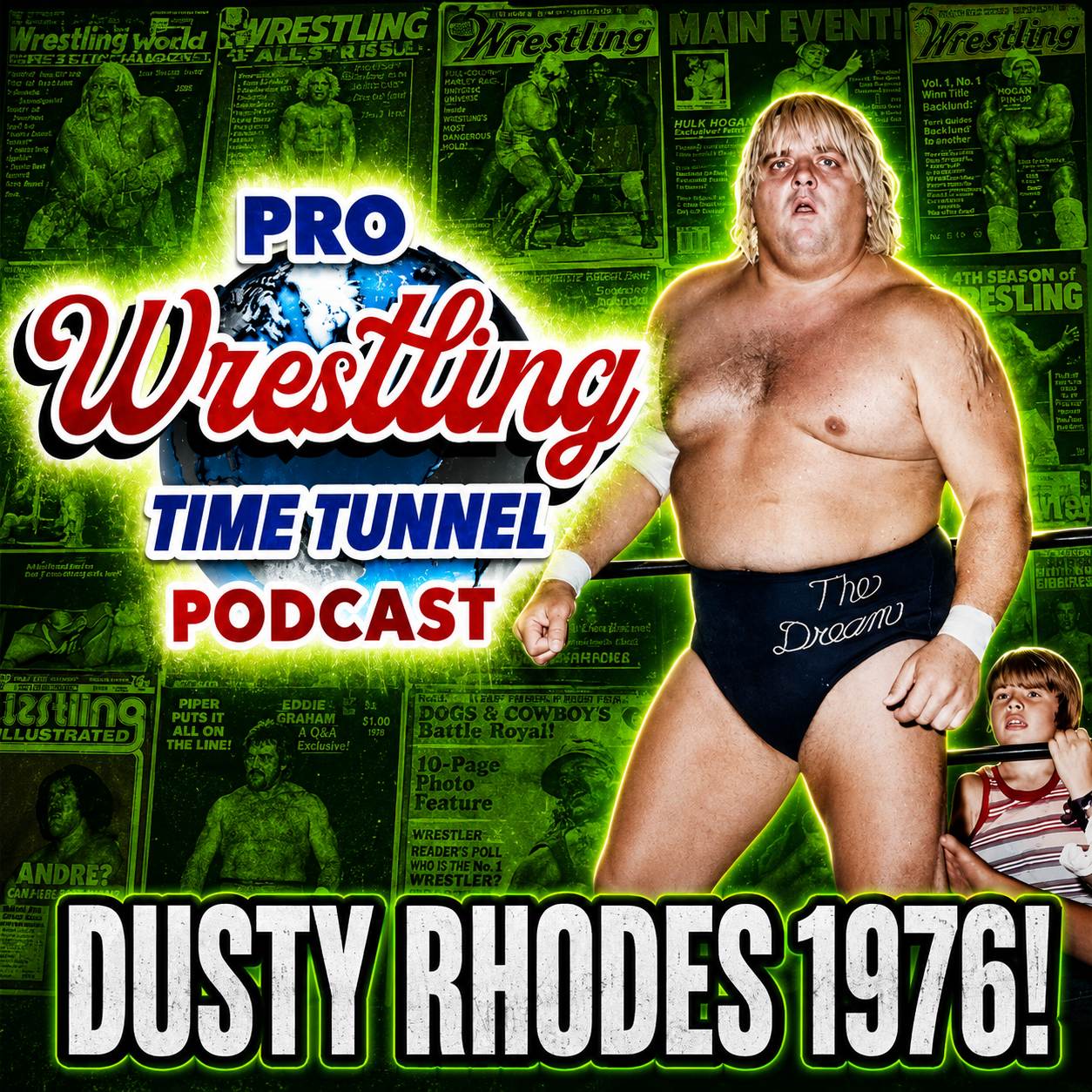
[00:32:59] Speaker D: All right, let's go to championship wrestling from Florida, 1976. We're going to talk about the year of the American dream, Dusty Rhodes. And of course, Bruce Owens also worked with Dory Funk Jr. In the Florida territory when he was a referee there. And Dory Jr. Was the booker there. So he's got some stories about Dorie Funk Jr. We're going to talk about the dream. Of course, Bruce also rode in the car with the dream several times. So we're going to talk about the dreams 1976 and more here on the Pro Wrestling Time Tunnel History Show. Well, we're going to be going down to the state of Florida, but we're going to kind of be all over because we got a couple of different topics today.
But joining me again is our regular Florida analyst, Howard Baum. Howard, how you doing, man?
[00:33:46] Speaker A: Star Wrestling World, excited to be here. Sorry for the bunkhouse attire, but I got stuck at my friend's house today due to some inclement weather.
But hey, enjoy the gun show, baby.
[00:33:58] Speaker D: Howard has. Howard hasn't been back in a while because he's got the one other wing over there he's been working on.
[00:34:07] Speaker A: I am back in more ways than one. Guys, I can't wait to get into this. This is going to be a spectacular show as Tony is just about to tell you.
[00:34:14] Speaker D: Wonderful. And Bruce Owens back with us again. He was with us earlier when we did 1985 Florida and today we've got some sad things to talk about, but we also want to celebrate them and then want to talk about Dusty in 1976. But I'll just kind of kick it off by saying, you know, the, the 20 year period from 1955 to 1975 I consider to be the strongest years of the territory era. But then the 65 to 75 is really the cream of the crop.
75 to 80 is an amazing afterlude to that. After 80, you know, it gets a little shaky. But in that, in the middle of all of that, we had an NWA world champion and Dory Funk Jr that was transitioning that 50s and mid-60s into what would be what Gordon called when he called the championship match between kinisky and funk Jr. He said this is a picture of today's fine young athlete, which I thought, man, was he really speaking prophetically because we had Funk Jr and then also he was speaking locally because in 69 we had Jack Briscoe who was ascending, and he was bridging a gap in Florida for the territory as well.
So, Bruce, I kind of feel like you got to experience like, this prime time because, you know, I always wish I would have been born about five years earlier.
[00:35:46] Speaker C: Well, I wish I was born 20 years earlier than I could have seen some of those other years, but. Yeah, but, you know, 75, I got it kind of 73 to 80, you know, it was booming. Yeah. And again, like you said, the 80s started, you know, tapering down towards the end and stuff. But the 73 to 80, you know, Harley Race, Roger Kirby, the Funks, the Briscoes, these guys, it was really an exciting time. But you pointed out that, you know, and we spoke about this a little bit in the last episode.
You can't keep getting everybody to come and see Eddie Graham.
[00:36:27] Speaker B: Right.
[00:36:28] Speaker C: You know, you can bleach the blonde hair, but. But the guy's older. And a lot of our guys, Coach John Heath, Don Curtis, all these guys, you know, you can get the older people to come, but if all you have is an older audience, then you're going to lose all the youth and stuff. And that was the model. I mean, Eddie was smart enough to know he put a lot of young people on. He took the Briscoes, but, you know, Dorie Funk was the next guy. And of course, Jack, you could look at either Dorian, Jack, and know it was just when they were going to be world champions.
[00:37:01] Speaker D: I had the most awesome experience in Waterloo, sitting talking to Roy Lee Welch.
And Roy Lee Welch and I were sitting there, and sitting across the table from us is Jimmy Garvin. And Roy Lee Welch says, is that Jimmy Garvin? I said, yep, that's Jimmy Garvin. He goes, hey. He goes, I want to meet him again. He said, the first time I ever saw him, he was like 10 years old, and he was in Coach John Heath's wrestling camp.
And so listening to those two guys talk about those mid-60s, it was just a great, great experience.
[00:37:40] Speaker C: Yeah, Jimmy, actually, Jimmy's daughter just moved down to Miami, and so she's settling in. She's in the photography business. And her daughter's going to school and everything. She's almost 50. But of course, Jimmy, it's like his little daughter, so he wanted to make sure anything happens. I told her, I'm available 24 hours and everything, but he's going to be down here in the couple weeks once she settles in. But like she was telling Bruce, I'm almost 50, but my dad's going to put you through this. But when I broke in, you know, Jimmy and I are pretty much same age.
Jimmy always treated me like gold. And, you know, you're going back then when we're both 18, 19 years old in that range, you know, Eddie's running the business. It's strict kayfabe. And I remember, like, Jimmy looking to me, like, are you smart? And I'm looking like, you got to be smart. But then at the same time, you know, Eddie didn't want wrestlers, kids to be smart to the business, you know, so it was always, like, testing out to see who's gonna say they're smarter, you know, and stuff. But Jimmy's a tremendous athlete. And, you know, after wrestling, he got into, you know, flying for netjets.
And one of the favorite guys that, like, flight was.
God, I'm blank for the. He's a billionaire.
[00:39:03] Speaker D: Oh, Warren Buffett.
[00:39:04] Speaker C: Warren Buffett. Warren Buffett is the guy that would drop him $1,000 tip and tell him, get a sandwich.
But Jimmy was one of his favorite pilots.
[00:39:14] Speaker D: Hey, the sad thing that we want to talk about is the. Of course, we had the passing of Dory Funk Jr here just a little bit ago, and I know both of you guys saw him, and I know Bruce, you worked with him some.
Let's just. I just want to go down this memory lane a little bit and tell me a little bit about some of your experiences with Dory Funk Jr.
Well,
[00:39:38] Speaker C: Dory, what I could say is you could never read him because, you know, he had that poker face and stuff.
But when he was booking and everything, he commanded, you know, and keep in mind, he's booking at a younger age, but he got the same respect from the boys.
Like, Eddie Graham was there.
Or he could command the respect of, like, a guy like luthes.
I mean, you know, I've seen different bookers over the time and the co bookers, and the locker room's kind of a lot of fun, and there's nothing wrong with that. But when junior was in, like, you know, when I'm giving finishes, I'm giving finishes. Nobody's speaking, you know, other, you know, bookers. People be talking and everything. Junior says, I'm going over finishes. I mean, you just listen. Shut up.
But a genuine person, you know, I don't think you could say anything bad about junior because he was just a fair person, and he didn't have to be firm. I. I think it came from the respect that he had that, you know, he was second generation. But dory funk senior had Given so many people work and, you know, here's Junior helping some of those same people or the next generation, but well respected, just easygoing. I mean, he was fair. He didn't have to sit there and let's give a comparison, Be like a Bill Watts, you know, screaming and yelling to get his point. Junior talked to you and you knew, you know, that was your job. Go out and do it.
[00:41:21] Speaker D: And I always thought it was great that, you know, Eddie went back so far with Amarillo, back to the 50s, and he and Funk were. Funk Senior were close friends. And the pickup truck accident didn't completely destroy their friendship. And the. Junior still had a place in Florida after his run was over, even though it didn't go like Eddie wanted. You know, Eddie wanted Jack to win the title from Junior, but it didn't go that way. But it still didn't disturb their friendship to the point where Junior didn't have a place. I always thought that was a good thing.
[00:42:00] Speaker C: Do you think the accident was real?
[00:42:04] Speaker D: Well, here's. Here's the thing, and I tell this story a lot. I don't know that I'm the first one to discover it, but I'm the one that's probably had the megaphone to talk about it a lot. And that is the fact that in 1965, there was a handicap match booked in St. Louis. Munchnick and Pat O' Connor had booked a handicap match with Dick the Bruiser against Senior. And Junior and Bruiser was supposed to go over.
Well, Senior didn't make it to the match because he had a pickup truck on the accident on the ranch.
So the fact that there would be two pickup truck accidents at ranches where people didn't show up for important matches tells me that it might have been. Might have been some.
Some pro wrestling stuff going on there.
[00:42:52] Speaker C: Well, really, the pickup truck was the finish.
[00:42:55] Speaker D: Yeah, well, it's always so funny, you know, because even. And here's what I genuinely believe. I genuinely believe that Funk Senior instructed Junior and Terry to. As long as you live, you don't never. Don't ever give up the pickup truck accident, you know, because of course, because even after he's gone and passed away in later years, you know, Jerry Briscoe would. Would tell me that he would. He would ask Terry. He goes, I, come on, Terry, it's just me and you. Like, come on, just tell me. Like, really, it was a work, wasn't it? And Terry goes, well, Junior was always a terrible driver, you know, So, yeah, so I. I just, you know, I Think it was one of those things like you were just talking about. It's like one of those things where you're looking at each other like you, you know, it didn't. You know, it really. It was a work. Right. And the other person really never owns up to it or whatever.
[00:43:53] Speaker C: Yeah, yeah, Just keep nodding your head
[00:43:55] Speaker D: and believing there's just too many people involved, you know. Geigel went back to the early, late, late 40s, early 50s with Amarillo territory even before. Before Senior got there, I think.
And Harley was driving Happy Humphrey around, and he went through there and made friends and got his first booking job as soon as Junior won the title. Funk Senior wanted to travel with Junior, you know, and be part of the angles and stuff like that. So they brought Harley in to be the first kind of outside booker that they had. And that was when Iron Mike Dibiase passed away just six weeks after Harley started as the booker.
And so there were just so many close connections involved. Geigel, Race, the Funks. I mean, it all worked out. Everybody. No, no one got hurt by it, but I. You know, and as a matter of fact, it might have made the return matches even better because, you know, they promoted it as, you know, Briscoe never beat Junior, and Junior was always trying to get his title back, which kind of made the. Made the feud after he lost the title as good as it was when he had the title.
[00:45:08] Speaker C: Yeah, definitely. So.
But I guess, you know, it's a hell of a finish. And maybe nowadays it can be used because it hasn't been used for so long. You know, the young kids, they. They've never heard that first story, so we could pull it off, you know.
[00:45:23] Speaker D: Well, it had that great match in Florida where Junior and Jack. Junior's got the title, you know, and Funk seniors at ringside, and Jack's got Junior in the figure 4, which was the big mentor move that Eddie had passed on to Jack, you know, and Jack's got him in the figure four. And Juniors, you know, just about to give up. Just about to give up. And the ring announcers counting it down, you know, 10, nine, eight. And at about four seconds, funk senior rings the ring bell. You know, he got so excited, you know, and so, so freaked out. He rung the ring bell, which ended the match. But they don't restart the match. They just come back next week with 90 minutes. Yeah, you know, a 90 minute time limit. So just. Just some great stuff.
[00:46:08] Speaker C: Yeah, they also did Jack and Dori and they. It was 90 minutes in Miami beach at the auditorium, and that was called, like Golden Circle seats. And they built that up on tv where you swore, the title's gonna change this night with Jack and. And a lot of money, those guys to make.
[00:46:28] Speaker D: Oh, my gosh, almost every match they had. You. You didn't know. You know, it reminds me, and I've told this story a couple times on podcasts lately, but it's just such a great one where on the all in the family television show where Archie Bunker's watching wrestling and one of his friends comes in and goes, you're watching that pro wrestling. And Archie goes, yeah, I like it. And the guy goes, well, you know, those two guys know who's going to win. And Archie goes, yeah, but I don't.
I mean, that's pro wrestling, man.
[00:46:59] Speaker C: That's great.
Oh, God, that's good.
[00:47:02] Speaker D: I mean, that's. That's the way you felt with every Dory Jr. And Jack match, right? You didn't know. I mean, that was just awesome.
[00:47:10] Speaker C: Hey, I'll tell you something, is so obviously back in the day, Jack would come and. And I told you stories before where I'd go and count the seats to see what was being sold, you know, at the arenas and, you know, because sometimes there were promoters with two sets of tickets and, yeah, this and that. And so I remember one night, Jack was watching me like, I'm counting for the crowd and I'm out there and, you know, Jack was the champion, so he's already got it in his head. And I'm counting, counting, and he goes to me, what's taking you so long? And says, I'm counting the people. He says, why don't you just count the empty seats?
[00:47:51] Speaker D: That would have been easier, you know, and.
[00:47:54] Speaker C: And. But Jack used to watch me in different things back when they were worried about the towns and was a promoter of turning in the right money. And Jack would see me counting and never said anything. And then one day finally took pity on me and. Bruce, why don't you just count the empty seats?
[00:48:12] Speaker D: Howard, Howard, your. Your fandom came in right at the end of Jack's run.
So how did you. How did you perceive Dory Jr. As a fan as you were, because you didn't experience his championship run.
[00:48:28] Speaker E: Right?
[00:48:28] Speaker A: I came in, right. Coincidentally, 51 years ago to the day. August 13, 1975. Wow, 51 years ago to the day. What, Another full circle moment brought to you by Tony Richards.
And yeah, you know, Dory was not really on my radar as a Florida wrestling fan up until, like 1979, because no, that's untrue. Okay, so first match I ever saw was Briscoe and Rocky Johnson.
And then you're hearing about all the great classics. And that was in 75. August of 75.
All right, December 10, 1975. Terry Funk, of course, beats Jack Briscoe. I wanted to go see Jack against Dory because as you guys just got done saying that, what the magazine said, this is the greatest match of the last 40 years. This is the state of the art. And I was psyched as a young wrestling scholar to see Jack Brisco and Dorie Funk Jr. I didn't. I wasn't even thinking about a title change. It just looked like a decent card and I wanted to see that match.
Of course, Terry won the belt. We couldn't get seats. And it was the only time I ever couldn't go to the convention hall. But then Dory didn't come back to the Miami area, to the Florida until 79, when he started teaming with Terry. And they were feuding with Dusty and all kinds of things happened. And Dory was here from 79 through 80 and then started booking in 81. And throughout that era, he was ubiquitous. But Dory was not really around. 75, 76, 77, 78.
[00:50:04] Speaker D: Yeah, he was. He was in Japan a lot after Terry won the. Or when Terry won the title from in those late 70s, they were. They were both actually in Japan quite a bit together.
[00:50:15] Speaker A: Yeah. Because Terry was not around that much either. 77, 78. The hillside was kind of uninspiring to me and I actually stopped going as much during those years because I wasn't as inspired.
76, which we're going to get into during this episode, contains such a plethora of classic faces and heels and I mean faces both literally and metaphorically.
And 77, 78, you had Sato Seido, Koloff Patterson, Pedro Morales, Lars Anderson. And I wasn't really a giant fan of any of those guys, so I kind of.
We had some guys that I did like during that era. Duncan Cox, Kern Briscoe was around, but 77, 78 was kind of a drop off for me.
And I think a lot of fans will agree that 76 was spectacular. 79, 80 were spectacular. And so that's where we are. But as far as story funk, he really didn't come around that much.
[00:51:13] Speaker D: How did, how did he work with you, Bruce, when he was the booker?
[00:51:18] Speaker C: Well, back then I was an announcer, but a lot of times it was depending on different buildings and set up some of the finishes and stuff, you know, that's why back in the day, like the referees sometimes were like, they were going over the rules with the guys. No punches, this, that and everything. Ref really wasn't saying anything. He was letting the guys talk over the finish.
So, you know, it's something you don't see anymore. The guys don't get searched or anything and stuff. But that was the reason in the old days, days because dressing rooms were separate or if the guys wanted to change something the last minute.
But, you know, Dory was. Dory just wanted to know the building was set up right, everything was in place. The guys that were watching the box office, if they weren't our people, there was somebody up there watching. And sometimes it was as simple as being up there, making sure. Back in those days, they tore the tickets.
So what you had to watch for, people come in. If the ushers didn't tear the tickets, now they just go down and the lobbies are so big, they go over to somebody, hand them back the tickets, and people keep coming in.
So, you know, there's a lot of focus on making sure the money was coming in. And back then, totally a cash business.
[00:52:37] Speaker D: Howard, what, what's your best memory of seeing Dorie?
[00:52:43] Speaker A: I have to say I like when Dory got down and dirty, and I like to see him juice, I like to see him brawl.
He could turn it up a notch. I mean, he was always just very, very standard issue to me. He had an average body, an average look, but he could just go and go at a certain pace, you know what I mean?
He was a ring general. He knew where he was, he knew what he was doing.
Not the most exciting to watch in my experience in the late 70s, really, after his championship run, as far as I saw, especially as the 80s began, however, when he wanted to turn it up and when he was involved in a bunkhouse match with Dusty or some kind of a stipulation match and the blood would start flowing, it would get good. And I remember he had some decent feuds with Sweet brown sugar around 1981.
A lot of action and he was almost.
He almost gave you more action than you realized you were seeing because he was in constant motion. Except it just looked so plotting at the time. So, I mean, it was always a long, grueling, hard fought match that got turned up at the end. But it was kind of a journey that you went on watching it because there was a lot of.
All of his matches were kind of a draw in a way, because they were all long.
So you, you Know you were in for a full, well rounded match with him.
[00:54:12] Speaker C: Howard did. Did you kind of feel a little bit like I did back then? And even when I was working some, like, it was almost better to see Junior in a tag match because, you know, then you might expect something might happen versus Watson. It was very methodical in his matches and repetitive.
[00:54:34] Speaker A: Yeah, yeah. Like, what was cool is if he came down. I remember specifically, like, when he came down to team with Terry against Andre the Giant and Dusty Rhodes in a bunkhouse match.
And they came as they were. Andre had this big. This big wig on and everything. You must remember that one classic match, Bloodbath. Sir Oliver Humperdinck got involved. Frenchie Bernard, the referee got involved.
And I remember when Dory brought David Von Erich in as a heel, 1981, Dory was great in that role because it was like a Texas thing. It was like an older guy, younger guy thing. And it was.
It suited him because Von Erich was kind of like a really intense, young punk Texas heel and gave Dory some of that much needed antagonism that he was kind of lacking, I might say. He can't be. Don't. Don't get me wrong, Dory carried a lot of gravitas.
It's just he was not the most exciting wrestler that you would see during that.
[00:55:36] Speaker D: During that time and from 1969 to 1973, when he was a champion, that was a real strength for the champion to be able to be malleable to whoever he was wrestling. So that was what was going through my mind when you said, well, he had an average body and he did the average. And I'm like, yeah, that would be what you'd want if you were going to wrestle from A to Z. Every heel or every guy around the country, you want somebody who can match up with almost anybody. And Dory, always. His main strength as a champion, I always thought was he always looked like he could get beat at any time.
[00:56:12] Speaker C: Yeah, he looked like they looked like the guy that could get beat. Like, in other words, if you were a betting man, I'll bet on a Jack Briscoe over a Dory funk and says, too.
[00:56:23] Speaker D: And that's why I've always thought that Dory was a better champion because he looked like he was going to get beat and your local guy was going to become the champion every time he wrestled a guy.
[00:56:36] Speaker C: Well, that's why they. They took him around all over the world and around the US and got him beat.
[00:56:42] Speaker D: Yeah.
[00:56:42] Speaker C: You know.
[00:56:43] Speaker D: Right.
[00:56:43] Speaker C: And then once he got the belt now everyone thinks their local hero is going to go ahead and beat Dory. Because the last time they got met, they did.
[00:56:51] Speaker A: So, you know, it's interesting.
[00:56:53] Speaker D: Go ahead.
[00:56:53] Speaker A: I'm sorry, Tony, but go ahead. It's kind of like an existential void. Because in a way, Dory Funk is so plain that you can almost project onto him.
Because can you think of anyone more just straight down the middle, average? If the aliens came down and wanted a human, there's a guy, you could see what he looks like. There's no hair on his head. This is how he moves, you know, like, this is a guy that's that
[00:57:17] Speaker C: no hair on his head stuff.
[00:57:20] Speaker A: You do yours on purpose story didn't have a choice. Yeah, but he was just very average to me. And it was kind of like a void. Like, let's see somebody more exciting step into this void and let. And yet you couldn't. The void would not relent. You couldn't beat the void. Even as dull as it looked, you couldn't overcome it. So it was kind of a mysterious force in its own way.
[00:57:44] Speaker D: Dory Funk Jr. To me, Dory was the perfect. Like if you took half of Fez and half a Kaninsky and you put them together, there you go. Like Kininsky was an energizer bunny. But he was just so strong and powerful, right. He was just in constant motion. Fez was the pure technician, you know, and if they took half of each guy and put them together, I thought Dory was just that. He was the perfect mixture of a great technician that just was in motion all the time.
[00:58:14] Speaker C: You know, I. I spoke about last time, though.
You know, back in the day, there's only a couple, maybe four TV channels. But when Dory came to wrestle in Miami, the legit news was interviewing him when he flew in and they were at the gate and we talked about. I think it was Frank Bosch or whoever was a PR guy back at the time in Miami. But you know what? It was on the 6 o' clock and the 11 o' clock news.
Because Dory Funk is the world champion meant that much. Also, keep in mind, back then, athletes were generally. There weren't these six foot five ball players and stuff.
You know, Dory was six foot something.
Most people were like five, eight to five, ten, you know, and Dory came in with the cowboy hat on, gave him an extra 4 inches. And you know, when they're interviewing him at the airport, you know, people are realizing who he is.
And it wasn't just one time he was on there Many of the times he came in and wrestled him and Briscoe or whoever else he wrestled, but especially on Briscoe, because even the sports world thought the title's going to change.
[00:59:30] Speaker D: So Eddie was the. Well, Eddie and Funk Senior both. But it was probably a little bit more Eddie's creation. The Funk and Briscoe feud.
Yeah, and it had natural heat to it because when Jack broke in in 65, right after he won the national championship, one of the early territories he went to was Amarillo.
And they were putting Junior over him in like 60 seconds. You know, they'd give him the big television build up the NCAA champion. And of course, they're doing that to. To really project onto Junior how he's this awesome amateur athlete, right, because he just beat the NCAA champion in less than a minute, you know, which didn't set well with Jack, but he put up with it because he was a rookie and it was early in his career, but I don't think he ever let it go.
But also, at the same time, on the other end of that spectrum, in his book that he wrote with Bill Murdoch, Jack Briscoe was asked, what was the greatest moment in your wrestling career? And he said, the night Dory Funk Jr. Won the world title.
So, wow. That, he said, opened the door for guys like me. The more athletic, the more technical, younger youth. The youth and all of that. And then, of course, Eddie saw this, right, he saw that. So he just naturally played on that. And the Briscoe Funk feud played in every major city in America almost, except New York.
What was it like being in Florida in the middle of a Funk and Briscoe feud?
[01:01:07] Speaker C: Oh, it was lightning, you know, nothing compared to it. You got to think about before we were, you know, going back in the six 50s, 60s and real early 70s, it was about guys that are wrestling and, you know, Louis Toledge, O Scarpa, strong bow, Eddie Curtis, Lester. Well, the great Lester Welch or one of the 20 of them.
You know, people were in their 40s and 50s wrestling, and, you know, all of a sudden, you know, it was more, the baby face is going to win. That's what sent him home happy. But I think that recipe would have worn out quick as we got into the 80s and improved it. Like, you needed the Ordens, the Grams, the Briscoes, the Funks. You know, youth. Like, they're not going to watch a bunch of old stuff. It's, how are you going to go and take a bunch of young kids and, you know, this is your hero and they look like, you know, older than your father.
You know, these, These kids are 10 years old, their father's 30. And you have Eddie Graham, who gave me everything. I'm forever grateful to the Graham family.
But you know, how do you tell a 10 year old this is your hero and he looks way older than your child, than his father.
[01:02:32] Speaker D: And it's interesting how Funk Senior played into that because his part of the feud that he would contribute to would be that in the, for the first time ever an NWA champion had two people you had to go through before you could get to him.
So he would bring Terry in and go, well, I've got this younger boy. If you can beat him, well then you might get a contract with Junior. Well then they'd beat Terry, right? And then he'd go, well, I'll tell you what, you might have beat my little younger son, but you ain't going to beat me. If you can beat me, then you can get a match with Junior. Then you'd have another match where Senior would get beat because he was that 40 something year old guy you're talking about, which everybody had been used to as a wrestler. Then you'd get the championship match, which that had never been done for the NWA title before, anything like that.
[01:03:20] Speaker C: And then also, you know, the world champions weren't going the ring with a manager or in the case Dory Funk
[01:03:27] Speaker D: Senior, no, no, no, you know, and
[01:03:30] Speaker C: seniors there, you know, as soon as he comes out. And one of the things they did sometimes in Florida was Junior would go to the ring and you know, everybody's in their moment clapping for Briscoe. And then here comes Senior carrying a chair, is going to sit down in the corner.
[01:03:50] Speaker D: Yeah.
[01:03:50] Speaker C: And now the crowd just hushes because they just thought they got asked, you know, but it was the greatest thing, you know, the ring introduction or popping for Briscoe. And then here comes Senior with the cowboy hat on and sits down in the corner, you know, and of course the referees telling them, don't move, you stay there, this, that. And you know, it's a minute in the match and Senior standing up, banging on the mat, you know.
[01:04:17] Speaker D: Yeah, it's, it's amazing. The hour long draw in Japan where juniors wrestling Baba or Noki, one of them, I can't remember which, but I've watched it. But I mainly watched the match to watch Senior because he's running around the ring post side to side and the Japanese fans who normally don't react to hardly anything are just going nuts because they think he's about to do something. He's really not doing anything except running around the ring post. But they think he's going to do something.
[01:04:48] Speaker C: And knowing him, he was having the time of his life, you know. Oh yeah, Senior. I had a few dealings with Senior when he was in. And one thing about him was I told Howard the story was crazy. When I was young, you know, they were the heels and he, he sent me to go get coffee and a hot dog, which I did for everybody, you know, but you know, it was equivalent of like him giving me a fifty dollar tip back then. It was so far back, couldn't even calculate the money. But he told me, no, just keep this, I'll lose it, you know. And I was sitting there going like, wow. Like. And I told him, told Howard I hung onto the money for a while because it was like I got this money from Dorie Funk Senior. And of course I figured no one's going to believe the story, so I might as well spend it, you know.
[01:05:35] Speaker D: Of course. And then Eddie.
[01:05:36] Speaker B: Eddie.
[01:05:36] Speaker D: That's awesome. So Eddie's part of it was booking the Briscoes, right? So he's, he's got Jerry mixed in with it and he's got Jack mixed in with it. And then when you got all five of those guys mixed in, I mean the programs were just amazing that they, there was a, there was a match with those guys. Matter of fact, I got a poster of one of the star big Thanksgiving shows at Greensboro. But pre Starcade, it always had a Briscoe or a Funk somehow. And a lot of times had tag matches.
So Jim Crockett Senior would bring those five guys in to main event, his territories when they weren't regulars in the territory.
Howard, by the time that you saw him, I mean, Funk had already lost the title, Jack had already lost the title. But that Briscoe and Funk feud never really ended, did it?
[01:06:26] Speaker C: No.
[01:06:27] Speaker A: And it was booked in Florida and in Mid Atlantic to ever diminishing returns because both guys were older and the stakes were less.
Excuse me.
[01:06:37] Speaker C: That's a good way of putting it.
[01:06:39] Speaker A: Yeah. Because now, yeah, I mean, the luster's kind of off. Jack Briscoe never really lost a step. Although really realistically, everybody loses a step.
[01:06:50] Speaker D: I can't imagine what it. I can't imagine what it would have been like. But some of the best entertaining wrestling you'll ever see is when Jack and Jerry go heel in Mid Atlantic.
[01:06:59] Speaker C: Oh God.
[01:07:00] Speaker A: Oh, for sure.
[01:07:02] Speaker D: I mean, I can't imagine what that would have been like in Florida.
[01:07:05] Speaker A: Yeah, Jerry had.
And I thought he had very little. I know every baby face, their goal was to be as boring as possible.
But Jerry showed so much more personality as a heel than a baby face,
[01:07:18] Speaker D: you know, and they were doing that stuff, and unfortunately, we don't have any video of it, but they were doing that stuff. When they went to Amarillo, Jerry went out there and won the Western States title for about three months and went around the loop as a heel, which you can kind of see what that would have been like when you watch the Crockett stuff. I mean, he's pretty awesome.
[01:07:39] Speaker A: Yeah, Jerry. Jerry was a great heel. And Jack had, like, this sneer to him. You know, he didn't say much, and he was like, yeah, we'll see. You know, in that Briscoe voice, when you meet Jack Briscoe, you know it, because that was a man. He had a voice. There's just people like that that they don't make anymore. Evel Knievel, Jack Briscoe, Eddie Graham. People that just are human monuments to masculinity and things that. I mean, and this is the 70s. There was nothing to build these guys up. They were legit.
These guys were legit heroes. These. These guys, you know. And one more thing about Eddie Graham looking old or whatever. When I was a kid, I didn't mind that because you take an Evil Knievel, I didn't think Evil Knievel looks 40 or Eddie Graham looks 50. I thought, these are these guys who are on another level than the average man. And whatever you tell me they can do, they can do.
In 79, they were portraying Eddie Graham as being a little weaker. He had feuds with Eddie Graham. He had feuds with, sorry, Killer Khan, Bad Leroy Brown. And he came out kind of on the losing end of these feuds.
[01:08:47] Speaker C: Like, the.
[01:08:48] Speaker A: The gist of it was, okay, I'm an old man. I put up a good fight, but they kind of kicked my ass. And I'm gonna bring in Dusty or whoever. And so he knew his role, but he was still using himself. But I didn't object to him because I think when you have a legendary figure, you should be allowed to coast on your name and your reputation. Because in wrestling, guys used to work till they were in their 50s anyway.
[01:09:11] Speaker D: Well, it's kind of brilliant, really, because he could sell more tickets in Miami or the Bayfront, but he didn't have to carry the territory.
[01:09:19] Speaker A: Correct. And like you guys were saying, if you look at any Florida card, like 1975, the middle of the card might look like George McCreary, Mike, George, Tio, Tio, whatever. But you get into like, 76.
Harley was out, Assassin came in, and we're going to discuss some of this 76 later in the show. But this is when the card started to look like the top two main events were established veterans in either championship matches or stipulation matches, probably the third from top two.
And then the middle of the card was populated by Orton, Rupe Slater, Jerry Briscoe, Mike Graham Kern.
And so you had the cream of the crop of young talent bolstering the top three main events, which would have been Assassin, Dusty King, Curtis, Harley, Race, you name it. So that was just, you know, I defy anybody to beat Florida during.
[01:10:18] Speaker C: During that period.
[01:10:20] Speaker B: And.
[01:10:20] Speaker A: And another plus to working in Florida for all these guys is that in addition to having time to work out, they're always laying on the beach. So they looked extra fit and athletic because the Florida guys look so cool, because they just like these. They look like these cool athletes that you want to emulate.
You know, they just had this cool look to them. Like these guys are tan and muscular and they're having this. This crazy thing they do for a living. So, yeah, that's what appealed to me.
[01:10:47] Speaker C: It was different when. When the guys came down from up north.
I never thought of it like that. But you could remember when the guys came down from up north and they're in a match with the Florida guys. You know, they all got tans and these guys are white like toilet paper.
[01:11:03] Speaker D: You know, everybody but Tony Guerrero. Yeah, I just saw Tony in Waterloo. Man, does he look good?
Yeah, he still looks good.
[01:11:12] Speaker C: He's gonna look good forever.
[01:11:14] Speaker D: You know, he's got the jeans.
[01:11:17] Speaker A: You know, we gotta get his hair secrets. He bottled his Tony Guerrea hair tonic,
[01:11:20] Speaker C: and now you're talking.
I missed that one.
[01:11:25] Speaker D: Well, any final thoughts on. On Junior? I mean, it's a. You know, he's 85 years old. He had a wonderful life, had a fantastic, amazing career. He. He stayed relevant in the wrestling business by the guys he trained and the guys, you know, having his place in Ocala and, you know, putting guys in the business and all that. I mean, he. He had a pretty outstanding run, I
[01:11:50] Speaker C: think, you know, looking back, like I said, there's not a bad word about him. He. He was. As a booker and everything. He was just fair, you know, he didn't have to do, like Bill Watson. I love Bill. He helped me, too.
But Dory, probably the fact he was world champion, like, you know, he's not telling you to do anything he hasn't done or couldn't do.
And when he was here with David, I remember David saying, like, it was so much fun because he didn't have to mess with the fans because the fans hated him and everything. And David. David was a lot. A lot of fun to be around.
And I also like, to Howard's point earlier, I think that with David, it kind of. It's kind of like taking a young puppy with an older dog. All of a sudden, the older dog doesn't look as old because you got both dogs when you're looking at them, you know, and. Yeah, and it gave a shine to Dory because Dory, you know, the thing was to get Von Erich over as a heel. But Dory only inserted himself when he had to, like in spots of the match, which basically left most of the shine. That the person that won, the person that cheated it was David.
[01:13:07] Speaker D: You know, you mentioned that it reminded me, and I read Meltzer's piece on Dory in the observer, and it's something I realized quite a while ago, but it's not something that people think about. But Dave did say something about it in his piece that, you know, Fritz always got criticized for the way he booked the Von Erich boys in Dallas and about. He put, I mean, good gosh, Terry and Dory got the same thing, except they got it in amarillo in the 60s when we don't have the video, you know, to see that and review it and talk about it. But I mean, Junior got put over in his first rookie year like crazy. I mean, he's going to draws with thes and Ganya and. And he's beaten everybody but the sheik. You know, the original sheik is the guy that handed him his first loss, like late in the year, his rookie year. But I mean, they. Both those guys got amazing pushes because of their dad.
[01:14:04] Speaker C: But you know what? At the same time, it worked.
[01:14:07] Speaker D: Oh, yeah, absolutely.
[01:14:08] Speaker C: You know, it's.
[01:14:09] Speaker D: I don't mind stuff like that. I just think, you know, people have a tendency to, you know, look at the McMahons or they look at the Crockets or they look at the Von Erics, they're like. Or the Grams, you know, and say, well, they just, you know, it's just because, well, you know, it's a family business. You know, wrestling has always been a family business.
[01:14:28] Speaker B: Yeah.
[01:14:28] Speaker C: I mean, if back in the day you beat up Mike Graham, now you're going to get coroner Sullivan, and then when it really needs help, what happens? Eddie puts the Tights on and comes to the six man or the four man tag.
[01:14:42] Speaker D: And you don't. And you don't see many of those matches where there's a lot of counting the empty seats.
[01:14:48] Speaker C: Yeah, exactly.
[01:14:50] Speaker D: So the proofs in the pudding in bars, I'm concerned it worked.
So Dusty, let's switch gears to Dusty here. It's kind of the focus of 76. We'll hit a few other things, but 74, he makes the turn. He makes a big turn and goes baby face. And he's an immediate smash.
Eddie's and Watts handle that just brilliantly.
75, he's gone a lot out of Florida. He's. He goes back to the awa. He's in it. It's amazing. He's in a tag team with superstar Billy Graham.
They're a tag team in the AWA. And then 6 mans with Andre as their partner, which later, later Dusty and Graham would have a legendary series in Madison Square garden. But in 70, late 75, he comes back to Florida.
In 76 is also the first year he starts going to Georgia a little bit more and he wins the Georgia title from the spoiler, but he only holds it for a week and the spoiler goes back over, gets the title back. But in Florida, we get the beginnings. Of course, Terry's the world champion now and we get really, really heavy focus on Terry and Dusty for the world title.
What sort of memories do you have about that, Bruce?
[01:16:07] Speaker C: Well, one of the things that's important about that time frame, I don't know if you noticed, but now Dusty's on a bunch of magazine covers.
[01:16:16] Speaker D: Yes.
And I should also note that TBS doesn't go on satellite till the end of 76. So Dusty's kind of already a media star through magazines before the satellite ever hits. A lot of people get that backward. They think it's the satellite that makes him first. But actually he's on magazines way before the satellite.
[01:16:38] Speaker A: Definitely. And that was true of a lot of the guys back then because not to take a little detour, but that's how guys got over back in the day.
And that was the only way that guys got over back in the day is the magazines. Some exotic talent would come in, he'd be like, oh, my God, I got to see this guy.
[01:16:53] Speaker D: Go ahead, Bruce.
[01:16:55] Speaker A: Go on, you guys.
[01:16:56] Speaker C: Yeah, so Dusty. But, but I mean, that was all of a sudden the drawing power. You know, before, think about it. Some of the magazines had three or four guys on the COVID Now you got magazines with a little spot of this And a little spot of that. But three quarters of the page or two thirds of the page is Dusty.
One, it sold the magazines. And two, Dusty was that over. All over. Like you say, he went to Georgia, was in there, Pop shot into the Carolinas for Crockett. And Dusty going wherever he wanted. Because Dusty could say, I want this, that a lot of it. You know, Eddie gave the blessing because if you saw Dusty every week, after a while, what can you do? You run out of gimmick matches and everything.
So Eddie was always fine with letting Dusty out for short periods.
[01:17:46] Speaker D: It helped to get other guys over to. If you get Dusty out.
You know, I always have thought Jody Hamilton was underrated as a book.
I always thought he deserved a lot more credit than what he's gotten. And this year is one of the years that I say that now when you got Eddie Graham looking over your shoulder and you're not going to wreck the boat because he's back there to take the wheel at any time. You know, that wasn't his style, but you always knew he was back there. But here's what I think the conundrum is.
You've got this superstar babyface talent that's just emerging in Dusty and he's selling a ton of tickets and you're putting him with a guy that's not supposed to lose. The NWA champion did not lose in those days.
So now you're in this conundrum where you can't do a lot of DQ finishes in 76. That would come much later, to our chagrin. But what are you going to do there? Because I know in 76, early on, I mean, I think Terry, they went to a no contest in Miami, but Terry beat him clean in Jacksonville. So what?
[01:18:52] Speaker C: Count ounce.
[01:18:53] Speaker D: Yeah.
[01:18:53] Speaker C: Countdowns, referee bumps.
Any. Any way you could do it.
[01:18:58] Speaker D: But now I will also throw in that Mushnick's gone, he's retired. He was the real stickler for the champion going over all the time. And Eddie is, In August of 76, he's going to take over the presidency of the NWA. You got Fritz at the beginning of the year. So you do have more leeway than you used to have. Yeah.
[01:19:18] Speaker C: One of the things when they would do those type of finishes, then those guys wouldn't be back.
You know, like you're not going to put them up again for a return match for a long time and. Because you just can't screw the people out of the money like that and get them to come back and stuff. But, you know, Dusty was fantastic at even if he lost that type of match, Dusty would climb back in the ring and raise his hands and everybody would pop.
[01:19:48] Speaker A: Yeah.
[01:19:49] Speaker C: And still go home happy.
[01:19:52] Speaker A: Tony, you couldn't turn the fans off to Dusty Rhodes if you lit the flag on fire in the middle of the ring. In the middle of the seventies in Florida, nobody in the business has ever been hotter, except maybe Bruno.
If we're talking territory, era. But I've never seen anything hotter than Dusty just walking to the ring. Have you, Bruce?
[01:20:14] Speaker C: Anywhere, no Dusty go anywhere. If you, you know, back in the day, Dusty row with me and stuff like that. But you get out of building, trying to get in the car, trying to leave, and the fans were there. There was a couple hundred fans every night after the matches, just hoping to touch, see, get a picture, do whatever, you know. And I hauled a lot of the guys and rode with them here and there, but nothing was as exciting is Dusty. And not to get off subject too much, but when Ernie Ladd turned on Dusty, you know, that was the night there was almost a riot. The police were coming. They called extra police to come to the convention center because the crowd was on fire. That, you know, Dusty was so loved and. And, you know, what a great seller. But I can tell you in Florida, and keep in mind we never, ever had a hero like Dusty.
It just wasn't there. Again, another young guy, the guy that wasn't in shape like the people's champion, like the people related to him.
[01:21:26] Speaker D: Right.
[01:21:26] Speaker C: Nothing like. Nothing like Dusty's charisma.
[01:21:30] Speaker D: He's more like the guy down at the bar.
[01:21:32] Speaker B: Yep.
[01:21:33] Speaker A: And, well, but he's.
He was.
Nobody ever thought of him as fat. Ever. It wasn't even.
It wasn't even a subconscious thought. It was just that he was this force of nature.
[01:21:47] Speaker C: He was Dusty Roads, Bionic elbow.
[01:21:50] Speaker A: I mean, have you ever heard pops like you heard in the Convention Hall?
[01:21:54] Speaker C: No.
[01:21:54] Speaker A: 5,000 people in unison. I mean, I've never experienced anything like it. And I'm not indulging in exaggeration. It was just pandemonium.
[01:22:04] Speaker D: The other thing that Florida had, I think, as an advantage as a territory is you had. You could. You could run that match in Orlando, but then next week you could run it in West Palm, or you could run it in Tampa, or you could run it in Fort Myers, or you could run it in Fort Lauderdale, or you could run it in Tallahassee, or you could go to Lakeland on the Saturday, or you could go to Sarasota on a Saturday. I mean, it had a lot of different.
[01:22:30] Speaker A: You Know, Towns, all these guys were so hot that you could run any combination of the top six, seven guys
[01:22:39] Speaker B: and have a ball.
[01:22:40] Speaker A: Because in 76, you're talking assassin King Curtis, Dusty Rhodes, Missouri Mahler, all the young guys coming up, Orton's group.
And you just couldn't go wrong with any of that. And as far as Dusty finally winning the belt, do you know, oddly enough, I. I'd be very. I wouldn't be surprised if you know this, Tony. But do you know what Dusty Rhodes is first NWA World Heavyweight Championship was and where.
You know what I'm trying to say? Who is he challenging for his first NWA World Heavyweight Championship?
[01:23:17] Speaker D: Right, right.
[01:23:19] Speaker A: Dory Funk Jr. 1970 in Amarillo. And it was a two out of three match. That was a draw somehow, or he beat him, but it was a two out of three fall match.
Dory Bunk, Dusty Dory beat Dusty. So Dusty was getting title matches as early as 1970. Yeah, probably because he just went up
[01:23:37] Speaker D: there, up north, played sports there. He was a former West Texas baseball player.
[01:23:44] Speaker A: But that's when he left and came back. Right.
[01:23:49] Speaker D: That's kind of funny, too. The Funks wouldn't break Dusty in.
[01:23:53] Speaker A: Right.
And he went away. But he went away and got some seasoning. He went to. He went up north and he went to Oklahoma.
[01:23:59] Speaker D: Maybe I went up to Pittsburgh or somewhere up in the Northeast. But anyway, when he came back to Amarillo to tell him he'd broken into the business, Terry told all the boys in the locker room, like, kayfabe. This dude, like, I don't know, you know, I don't know if he's really smart or not, you know?
[01:24:15] Speaker E: Yeah.
[01:24:15] Speaker D: Of course. Terry tells. Terry tells a famous story about working for Terry's wife's dad's gas station, you know, and pumping gas.
[01:24:24] Speaker A: There he goes. I sure would like to have a car like that one day, you know?
[01:24:29] Speaker E: Right.
[01:24:29] Speaker D: I love that.
[01:24:30] Speaker A: Terry Funk used to bring his. His car in for Dusty to, you know, change the gas.
[01:24:35] Speaker D: Yeah. And here they are.
[01:24:36] Speaker B: So.
[01:24:37] Speaker D: In 76.
[01:24:38] Speaker A: But how does Dusty get a world title match in 1970? I mean, he couldn't have been that far along at all.
[01:24:44] Speaker D: Oh, I think he. I think he was doing pretty. He. I think he had a fairly good first run in Dallas in 70. Wow. Yeah, he. Yeah, he. That was where he really kind of started identifying with people because, I mean, he wouldn't be in the tag team with Murdoch for another year. You know, he actually was already in the tag team with Murdoch.
[01:25:08] Speaker A: I was kind of thinking he was a little later Than that, but I guess not. Yeah.
As far as, you know, giving the fans some satisfaction.
Dusty had been chasing the NWA title in Florida since Jack Briscoe in 1974.
They had a heated feud.
They had a heated feud with Terry Funk in 1976 over the belt. And then from 77 to 79 Harley race same thing. And he's like, I'm going to win the belt. I'm going to bring the belt back. And he never did. That's why they gave him the one week Tommy Rich run in 1979.
He had it blasted five matches and three of them were title defenses.
And then he lost it back to race in 1979. And I think they did that for the same reason that they did that with Tommy Rich in Georgia, but with the additional aspect of your guy, Dusty Rhodes has been chasing the world championship and promising you to bring it home forever. You've got to put a ring on it now or, you know, get off the planet.
[01:26:12] Speaker D: That's why Jerry Jarrett went to the awa, because he couldn't get that for Lawler, which if there's anybody that fits in that group, it would be Jerry Lawler that should have fit in there with and Rhodes as well.
This is what I was talking about earlier. So they had a no contest in Miami in January for the title. Dusty lost to Terry in Jacksonville. And then in February they come back in West Palm and give Dusty a win over Terry Funk in a non title match.
So they were always like. And some of it, I'm sure, was to keep Dusty fired up, you know, like get his wings back.
[01:26:50] Speaker A: You know, I was at the Miami one. Great as you would think it is, you people can all let your imagination run. 1976. Dusty Rhodes and Terry Funk. It was effing great. Absolutely.
[01:27:01] Speaker D: Do you know the other guy that Dusty beat in February?
Frank Goodish.
As Frank Goodish, because he doesn't become Bruisey Brody till later on in 70.
[01:27:15] Speaker A: Oh, in Florida.
[01:27:16] Speaker D: Yes.
[01:27:17] Speaker A: Yeah, yeah, yeah, yeah.
I mean, Goodish was not even Bruiser Brody back then. If you. There's a great quality YouTube show on YouTube right now of a 76 Florida show completely intact. And it'll show you. I mean, anyone who cares about what we're talking about here today has probably already seen it, but it's the full 76 roster on display, you know, and Terry Funk was afraid of Dusty, so he, he took, he put out a $10,000 bounty on Dusty's head. So Dusty could not wrestle Funk for the title. And so the Missouri Mauler managed by Rock Hunter, decided to take him up on the offer and the best they could do was paralyze half of his face.
And I don't know the true story about that. I've heard that he was injured the night before in Tampa and then he showed up Dusty at the TV tapings in Wednesday with a half paralyzed face. Or he had an early morning dentist appointment and he just worked it into the gimmick. But he did an interview with a half paralyzed face. And then Terry Funk came out and said to the Missouri Mahler, he's like, hey, he just has a paralyzed face. He could still wrestle. And Missouri Mahler's like, you want me to finish the.
[01:28:27] Speaker D: Stop, stop the chat, junior. Stop the chat.
[01:28:31] Speaker A: And so they had heat. Now I thought Funk was going to work Missouri Mahler now.
[01:28:35] Speaker C: So yeah, hey, that was, that was Dusty doing it himself. No, hey, Dusty convinced and Gordon solely convinced everybody.
He's paralyzed. You go back and watch that and you can see there's not a thing wrong with him and that sometimes when he talks the mouth is all moving.
But you think about it, Dusty's magnitude and drawing him. So I had to switch to a charger.
[01:29:06] Speaker D: Hey, man, he, he worked me.
[01:29:08] Speaker C: I was convinced and people believed it. You know, you got Gordon selling it and Dusty there and he's got it came in with his hat on and everything and you know, looking like, you know, this happened, that happened. But go back and watch it and just forget know that it's a work, right? And you'll start seeing it fall apart. But I can tell you people came to me and is Dusty. Did he have a stroke? This. That said they don't know yet.
[01:29:42] Speaker D: You've seen everything about it. You saw that he had Bell's palsy. You've seen all kinds of stuff about it, you know.
But you're saying, Bruce, it was a total work, right?
[01:29:51] Speaker C: Oh, the whole thing was a work, yeah.
[01:29:53] Speaker D: Well, I traded, I traded for that tape in like 1985 and I swear to God, I sat there and watched it a million times and I was worked the whole time.
[01:30:02] Speaker A: Oh my God. Yeah, that was, that was. I. I never would have thought. I thought it was either a dentist appointment or I didn't think he got hurt, but I thought it was probably a dentist appointment because he did a really good job.
[01:30:12] Speaker C: No, I mean we're doing that at nine o'clock in the morning.
[01:30:16] Speaker B: But that's hard, man.
[01:30:17] Speaker A: Try to do. I mean, that's pretty hard. He did a good job, but go
[01:30:21] Speaker C: back and watch it and, like, you gotta sit there and just say, it's all the work. It's like the pickup truck. Okay, but watch it and you'll see little parts where everything's okay. But Gordon's driving that whole thing, you know, And Dusty's got little short answers because if he talks too long, it doesn't work.
[01:30:45] Speaker E: Yeah, right.
[01:30:47] Speaker C: But it was good, though.
[01:30:49] Speaker D: Okay, I know what I'm doing. We get off here, right?
[01:30:51] Speaker A: Yeah, me too.
[01:30:53] Speaker D: I'm gonna go watch it when we get off here.
So it. So this whole booking thing is brilliant by Jody.
They.
They have a feud over the Southern title. And Rhodes in May wins the Southern title From Jody around May 4th and West Palm, I think.
And he continues with the Funk feud. He's also in a feud with Pac Song.
Howard mentioned Missouri Mahler, and then he lost the title back in June to the Assassin. And they just keep this, you know, Southern title hot feud going because that's, you know, what's drawing money in the territory with Terry just coming in, you know, a week, a month or, you know, every other month or something like that.
What are your thoughts? What were your thoughts about Jody?
[01:31:42] Speaker C: Bruce, fantastic booker. And I'm gonna jump for a second and tell you a real quick story.
[01:31:49] Speaker D: Okay, good.
[01:31:50] Speaker C: Okay.
So back, I'm driving some of the guys and Howard, you'll put this together.
You get out of the Miami beach auditorium and you go down to 17th street and Alton. There's a Shell gas station, a liquor store, and a sandwich stop that would be open, Italian, like pizzas, hot sandwiches and everything. And we would always stop.
So on this particular night, when Jody leaves the arena, he's not wearing an Assassin match. He's got a ski mask on.
So we get out, and like, anybody
[01:32:25] Speaker D: would know him, right?
[01:32:28] Speaker C: So we get out.
Somebody goes to the sandwich store to get the sandwiches.
I drive five doors down, drop Jody off to get the liquor. It's his turn to buy the beer.
[01:32:41] Speaker A: Oh, my God.
[01:32:42] Speaker C: Goes in. He's going in the store. And they go, hey, he's got the hood on.
And they're like, effort. Let them go. And then they go, bruce, move the car down the street and across the street. Turn it around so it ain't like a minute or so later. And this is back in those days, the. The burglar alarms would just go. Doing like that. And here comes Jody running out with the mask in his hand looking for the car, which is now moved across the street with the lights out. And Jody's running down the street, and whoever I Can't remember. Was in the car, starts hitting the horn, and he runs over.
And the gist of it was, they said, you know, of course, we could have got him killed and everything. You know, we're not thinking like that.
And they said, what happened if he would have got shot or something, was in the car? Said, just tell him he worked the main event in Miami. Eddie didn't pay him enough, and he had to rob a liquor store leaving town.
[01:33:45] Speaker D: Oh, my God.
Gee, of course, we've seen Jody in later years without the mask. And I swear to God, if somebody would have told me, hey, that's the assassin with us, I would have gone, nah, that ain't him. That ain't the assassin.
[01:33:59] Speaker C: No. You know, such a good demeanor. And again, kind of like dory funk when he was booking, he had all the respect of. Of the locker room because Jody was very good in posturing people so that everybody succeeded on the card. You know, early in promoting, in the earlier years, in the 50s, 60s, and maybe real early 70s, you know, a lot of times it was about getting the main event over.
[01:34:26] Speaker D: Right.
[01:34:26] Speaker C: And it was like the earlier matches were just waiting to see the main event. The difference was Jody was trying to make every match, like, steal the show.
[01:34:36] Speaker D: Well, Eddie was an innovator in that, too, because I think Florida was kind of the first territory that had longer cards.
[01:34:44] Speaker B: Yes.
[01:34:45] Speaker D: I mean, you had three matches on a card up until the late 60s. In most every territory except Florida, we would have five or six matches. Five or six, which got longer and longer. Longer.
[01:34:56] Speaker C: But. But Jody was a dream to work for, you know, And I. I think, again, everyone will say Jody was fair. I mean, you can't have everybody at the top, and you can't have everybody on the card. But in Florida, when he was booking, everybody made enough money to work, whether they were working seven days a week or five days. And keep in mind, sometimes we did double shots on the weekend and tv. So really there was nine shows at least a week.
[01:35:30] Speaker D: Well, both of those guys, Ernesto and Jody, I mean, they were legends. They were legends. I mean, they drew tremendous money in the 1960s and early 70s under the mask. And so I would imagine the boys had a lot of respect for that as well.
[01:35:46] Speaker C: Well, you imagine, you know, Kenneth John Kennedy was, you know, Americana type of thing at the time. And then you have these two guys coming out as the Assassins.
I mean, hot recipe for disaster, or, you know, obviously the people love to hate them.
[01:36:04] Speaker E: Hot.
[01:36:05] Speaker D: Very hot.
[01:36:06] Speaker C: Yeah, they were lightning hot their whole career.
[01:36:09] Speaker A: I'm Sorry, Tony, but there's one guy I've always been fascinated with. Did you ever meet the Missouri Mahler, Bruce?
[01:36:14] Speaker C: Oh, God, yeah.
What a blast. I mean I've never met him entire time in my life where he wasn't wearing black, you know.
[01:36:25] Speaker E: Right.
[01:36:25] Speaker C: And Larry was just, he was sporadic, you know, like he, he'd be in the car, he wouldn't say a lot, but when he said something, it was either meaningful or really funny.
A bit opinionated, but factual.
He liked to watch the news and then talk about it in the car.
And a lot of the guys do you think like, God, he knows all this stuff that's going on and all he ever did was watch the news.
[01:36:58] Speaker D: And of course the guy we've been talking about, Jody Hamilton, who was the assassin, and Larry Hamilton, the Missouri Mauler, were brothers.
Was the older brother and by 1976 he's a reliable mid upper card guy, but in the 1960s he was the main event. He'll.
[01:37:16] Speaker C: Oh God.
I mean, you know, and again his matches, blood bats, bounty matches, you know, interference, everything. And you know, I think he was best when they put him like in a stable of guys, you know. And then some of the great feuds from Miami where they had a big population of the crowd was black, you know, him against T Bolt Patterson.
[01:37:40] Speaker A: Oh yeah, remember that? Oh my God.
[01:37:44] Speaker D: You know, who is also in Florida at the beginning of 76 for.
[01:37:48] Speaker A: Oh yeah.
[01:37:51] Speaker D: All right.
[01:37:52] Speaker C: Hell of a guy.
[01:37:53] Speaker D: In July, Dusty loses to Bob Orton Jr. To set up title program. On July 27th in Tampa, a no DQ match. Special referee is Don Curtis. Dusty beats Bob Orton Jr. To win the Florida title.
I can't remember. It's his third or fourth reign, depends on how many, how you count.
August, he defeated, defended the Florida title against Jody. So they've, they've already run the Southern title throw, now they're going to run the Florida title through between them.
Larry's part of that feud as well and he has a hot program in August with Ray Stevens. Do you guys remember that?
[01:38:34] Speaker A: Oh yeah.
[01:38:35] Speaker D: Remember Ray Stevens.
[01:38:37] Speaker A: You know, I know in hindsight as a, as a historian, you put a lot of emphasis on the different belts, but at the time it was kind of like you could interchange the Southern title, the tag titles or the Florida title because it, every personality was over so much that if Steve Kern was Florida champion or Southern title or if Dick Slater was Southern champion or whatever, there'd be built in heat with everybody because the belt was not really. Yeah, it was a title match, but the Very fact that it's Slater and Dusty, it's a built in feud. I mean, every match was a built in feud because all the personalities were so strong to begin with.
It was like a Marvel Universe thing before the Marvel Universe because you had all these guys that had their identities and powers fighting each other. So the titles, although they were important and they were the coin of the realm back then, were not the be all end all because it was just the very fact of these two guys coming together is what is.
And if it was a title change, all the better.
[01:39:42] Speaker D: You know, Florida was kind of unique territory where that was the case.
But a lot of those titles are created like the southern title was.
So you'd have a main event in the B Showtown.
[01:39:55] Speaker A: Well, it was championship wrestling, mind you, it was championship wrestling. They're fighting for a title.
[01:40:00] Speaker D: So if you had more than one, if you had more than one singles title like that.
[01:40:03] Speaker E: Right.
[01:40:04] Speaker D: Usually because you had two towns to run and you needed a title match in two towns.
[01:40:10] Speaker A: But you know, if you were in the last three or four matches, you were over no matter what combination you were working in. No question about it. In 76, everybody was so super over. It was ridic.
[01:40:21] Speaker C: Yeah, a good point would be that it. You could have been third from the bottom this week and in the main event the next.
[01:40:28] Speaker A: Yeah, look at the names on some of those early cards. I mean, it's like if you add three years to it, it would look like a super card.
I mean, it's just name, name, name all the way down to the bottom.
[01:40:40] Speaker D: And really that is a connection to the old days because when you had three matches on a card, they were all strong matches because you only had three.
It became a little bit more difficult when you started having five and six matches. But you know, Eddie was good and his bookers were good at keeping guys over.
[01:40:59] Speaker C: Imagine that. Tony, you could take the whole card to a town in two different cars.
[01:41:06] Speaker D: You know, that's it. The baby faces and heels, you know,
[01:41:10] Speaker A: I thought it was so, so unsatisfying. And I've got to be wrong about this, but when you see these cards from like 1942, Tupelo, and it's like two matches and the guys that are in the main event were working each other in the first match.
[01:41:25] Speaker D: Yep. Well, yeah, and you'd have six guys, you know, you'd have two, two singles matches in a tag match and all the guys. And a referee. Oh yeah. Because he'd never seen anything else.
[01:41:38] Speaker A: Yeah.
Wow, that's crazy.
[01:41:40] Speaker D: Imagine How.
[01:41:41] Speaker A: Imagine how simple it must have been to just, like, draw with two matches and like, the same two guys come out under hoods for the main event.
[01:41:48] Speaker D: You didn't.
You'd never seen anything else, and you didn't have television, so.
[01:41:53] Speaker C: Right.
[01:41:54] Speaker D: You know, these guys were just. It was word of mouth, you know, your neighbor, like, oh, my gosh, you wouldn't believe what we saw last week. Week. And then, you know, you'd invite your other guy to go with you, and that's how they drew.
[01:42:06] Speaker A: I wouldn't want to be alive back then. But that ought to be a fascinating time. You know, just like these guys roll in. What's going on here? They're fighting at the carnival.
[01:42:14] Speaker D: It's something, you know, not to take a left turn here. But Tom Dowd, you know, is a very famous music producer and engineer.
And. And so many times he would tell guys, because guys would go, I don't know if I like the way that sounded or whatever. And Tom Dowd would say, put your headphones on and act as if you never heard it before.
And then tell me what it sounds like. And they would go, okay, I like it the way it is. And Tom's like, okay, I thought so. Like, he had already heard it that way, right? And so. So many times when we're looking back at this stuff, it's almost like we got to take. Take out all the stuff we've seen and think about what people were seeing then, you know.
[01:43:00] Speaker A: Well, that's the really hard part, because you got. I've tried to do that, put myself in the state of mind. Like, why are they going nuts for the Beatles? This is like nothing to me. And they're going out of their gourds. But you. You would have to be in that situation at that time, because everything starts out with nothing. It's like evolution, you know? And then the first thing that happens, it's like, oh, my God, he's walking. Like, whoever saw this before?
[01:43:25] Speaker D: So it's like. It's like, why I can just sit there like a little kid and camp out campfire and say, tell me another one, Uncle Jerry. You know, tell me what it was like, you know, because without context, and if you weren't there, you don't know. And that's another reason why we do this show is I want modern fans and people who never had the opportunity to see some of this stuff to be able to be able to at least get some context of what it was really like.
And it's easy and it's. And it's easier when you don't have videotape.
Yeah, it's easier for us to say a lot of things about 76 Florida, because we have a limited amount of videotape there, and we can paint the picture. And, you know, Bruce was there and you were watching, and that. That helps us paint the picture for people.
[01:44:12] Speaker A: Yeah. And I forgot what I was gonna say now, but I had something very wise, but I lost it somehow, but go ahead.
[01:44:22] Speaker D: So by the end of the year, November, Dusty's defending the Florida title against Bob rupe, Bob Orton Jr. And the amazing Ox Baker.
[01:44:33] Speaker A: Oh, yeah.
[01:44:34] Speaker D: November 22nd, West Palm beach superstar Billy Graham defeats Dusty Rhodes for the Florida heavyweight championship.
And Dusty teams up with Joe Leduc against superstar Billy Graham and Ox Baker. And a steel cage win over Ox Baker blows off the feud. It's the best Ox Baker could still move back then.
[01:44:57] Speaker A: Ox was so over with me, I was scared of him. Looking at his photo in the program, they had a full page 8 by 10 of him in the program. Like, oh, my God, this guy is scary as hell. And his voice, his interviews back then, when you talk about Ox and Superstar, they also brought in Sailor Art Thomas during this era. And I remember it was Joe Duke and Sailor Art Thomas against Superstar Graham and he Oxen Superstar against Seller Thomas and Joe Leduc. And the ring announcer, Frank Freeman from Miami. The first time I've ever heard a ring announcer go into business for himself and add an editorial comment.
And he said to the crowd before the match, ladies and gentlemen, have you ever seen four finer specimens than this? And it was, you know, Sailor, Art and Leduc against Superstar and Ox. And it was just.
You looked. It looked like you were watching a monster movie. Like all four of them were humongous and so over. It was just off the chain.
[01:46:02] Speaker D: I can't. I would imagine. I know I have. I would admit to. To sitting and thinking about what it might be like to ride around with Dusty Roads, but you mentioned you drove him some and rode with him some. Bruce, what was it like riding with just Virgil Runnels?
[01:46:19] Speaker C: Oh, God.
Dusty was Dusty on and off. So sometimes he had the rest, the regular voice. And then sometime, like when he's storytelling, it goes into Dusty, not. Not Virgil, you know.
[01:46:36] Speaker E: Yeah.
[01:46:37] Speaker C: And the lisp comes out, you know. And I would remember him always, you know, turning around to the back seat to tell the joke, you know.
[01:46:48] Speaker E: And
[01:46:50] Speaker C: who was it? It was Tony Charles one time says, dusty, I can hear you and understand the joke without turning around, because Dusty's Gimmick with the lisp was his gimmick. But he's spitting.
So when he's turning around, you know, Tony's in the back seat getting hit a little bit, and he's like, hey, I can hear you. Just tell the joke.
Dusty was good.
He paid me good, treated me good. One thing about when you're like, then I'm 165 pounds, you go with Dusty to eat. And Dusty's making the big money. The last thing he's not going to do is feed his driver, you know, and he always fed me. Well, took care of me and everything.
But, you know, and. But I can tell you, if the house was down and he was on it, and this would be a lot of times in West Palm, boy, he was a silent ride home.
Yeah. Because Dusty was always, you know, you're paying me because I'm bringing in the house.
Well, Dusty, you're on top. And there was no house.
And that's going to be an Eddie conversation.
[01:48:10] Speaker D: Yeah.
You know, and Dusty feels like he failed then.
And, you know, you've heard so many different things. Sorry, Howard. Go ahead.
[01:48:21] Speaker A: No, no, I saw that very up close in person. When Dusty came back and tried to start the PWF in 1989.
[01:48:29] Speaker C: I worked.
[01:48:30] Speaker A: I know you were. You were totally there. Bruce. Bruce was working for them. And I was shooting ringside and, you know, there were a lot of bad houses.
And you saw Dusty, Dusty Rhodes come in and work in front of 500 people, maybe at the War Memorial or wherever.
And I remember there was one match, it's detailed in Howard Brody's book. And it was the final blow off. It was like the last chance to make this happen.
And it was the Night center in 1989, and they were running their biggest show.
It was their last chance to make it in Miami. And it was Dusty and Funk on top in a bunkhouse match, which was one of the greatest matches of all time.
Footage of this did not even exist until recently when Bob Cook himself, who shot it, unearthed it, put it on YouTube. So go look it up.
Dusty and Funk in Miami at the night center in 89. Go look it up from Bob Cook.
And that card was the death knell of pwf. That was the end. The next day, Terry Funk went to WCW and attacked Ric Flair and started that feud the very next day. And Dusty went to WWF and donned the polka dots very shortly after that.
And his last hurrah was at the Knight Center, a giant building which held maybe 5 to 7,000, I think yeah, attendance maybe 800.
It was an embarrassing crowd. And I know that my friend and your friend Howard Brody did a lot of last minute advance work. He got Dusty on WIOD radio, which was very popular at the time.
He got all this last minute media and he.
I know he increased sales, but it was just so poorly promoted in the wrong venue and really in the wrong time because WWF was so strong back then that. And I recall that after the show, Dusty saw Howard, didn't thank him, blew him off and left the building. And I thought, well, that's just because Dusty was ashamed.
You know, Howard did all this work. And it's not about thanking Howard. It's like I blew it. Like I couldn't even draw in Miami.
[01:50:43] Speaker C: Yeah, it was, you know, Howard did a big blitz on Media radio, everything he could and just, just nothing happened. I mean, the ship had already sailed. You know, obviously I lived in Miami and I did some of the PWF shows.
He treated me okay, but like, I'm going from town to town and I'm seeing the same failure. And, you know, I'm gonna work because I love the business. And also I had aerospace at the time and everything.
But I'm like, you know, guys are coming in, like using the Nasty Boys, the Bubble Gum Kid, Scott hall, come in for a bit and it just.
Here's what it was. Like Howard said WWF was already taken off. The ship had sailed.
You know, it wasn't regional wrestling anymore. It was either WCW or wwf. The territories were dead. No different than Texas anywhere else. The ship had sailed.
[01:51:48] Speaker D: Right.
[01:51:48] Speaker C: And to the point. Dusty had.
I can't remember the guy's name. He was an investor and stuff, so.
[01:51:57] Speaker A: Randy Roberts. Really? Randy Roberts, really nice guy.
[01:52:00] Speaker C: Was that the guy with the black hair?
[01:52:02] Speaker A: Oh, he had gray hair, I think.
[01:52:05] Speaker C: Okay.
Blackest credit here.
[01:52:08] Speaker A: Yeah.
[01:52:08] Speaker C: Okay, trying to remember back, but yeah, he was the money guy.
And of course, Dusty's got to say, hey, we got to hit the towns. We've got to let them know the territories back again. And that did. After that, every time we went around the loop, it got smaller.
[01:52:26] Speaker A: Mm.
[01:52:27] Speaker C: You know, and I did it because I love the business, had fun with Dusty. He always treated me good. Everything, you know, I'm not gonna say, hey, this ain't worth working and anything.
I'm gonna take it to the end with them. But that night was like. I almost wish it didn't happen for one reason, but I wish it happened on another. I wish it hadn't happened because Dusty, you know, was. They were scalping tickets for Dusty in Miami.
And now you can't give tickets away.
The only plus of it was the match with the. I Quit match with Terry and Dusty.
But what a. What a hell of a nasty way to go down. Like, it's like, you know, you had the pop and. And what'd you do? You went and got thrown. Threw yourself down the stairs. I was with him that night, so. So I know why he left. And again, I just said before he even brought it up that if the. The house shows were down or anything and Dusty was on it, because Dusty was. You got this because of me, baby. You know that, man. It was silent. And I remember that night was silent. There were a couple words. You want to stop for beer? No. Do you want to stop for food? No.
[01:53:43] Speaker A: Oh, yeah. I remember. Howard told me all about that. And I also remember listening to Bob Roop talk. Talk about how Dusty would stand over him naked in the dressing room and say, you gotta hang with us or you're not gonna make it. You're in the big time now.
So, you know, karma comes for everybody.
[01:54:02] Speaker D: Yeah.
[01:54:03] Speaker C: Dusty like to walk around in his boots and T shirt with his pecker flapping.
[01:54:08] Speaker A: Yeah, that's what we hear.
[01:54:09] Speaker C: Eric Embry, also, I was never around
[01:54:13] Speaker D: Dusty, but, I mean, I've studied him and researched him enough to know that probably the wisest thing he should have done is he probably should have just given his wallet to somebody he trusted.
[01:54:25] Speaker C: I thought you were gonna say put on his tights.
[01:54:27] Speaker D: No, no. Just take my wallet and all my money and keep it safe.
Because I can't imagine the amount of money that dude made from 1976 to 1989. I mean, goodness gracious.
[01:54:41] Speaker C: But unfortunately, he went through his money.
[01:54:44] Speaker D: That's what I'm saying. I think he should have given it to somebody else to guard it.
[01:54:47] Speaker C: And Michelle was working to the end.
You know, I know somebody that's a good Dusty friend. And Lenham, you know, didn't lend him. Gave him his platinum card and probably $40,000. But the hard part was, even after it was over financially, Dusty still tried to be Dusty.
[01:55:13] Speaker D: Right.
[01:55:14] Speaker C: Kind of like Rick to this day, Rick is always Rick. Rick is gonna die as Rick.
[01:55:19] Speaker D: Yeah.
[01:55:20] Speaker C: But Dusty kept hoping for that next this, that, next that. It didn't happen until the performance center.
[01:55:27] Speaker D: Yeah, yeah. I mean, he came back and tried to do Turnbuckle Entertainment, just like Turnbuckle Memories, just like he had done down in Florida that you guys are talking about.
[01:55:36] Speaker C: Let's move. Let's move. The Bad show North, Right.
[01:55:39] Speaker D: But how could you not?
[01:55:42] Speaker A: And guys, I'm sorry, but PWF was a great little promotion. It was kind of like when a hospice patient has a last minute rally and you think they're going to live again and all of a sudden they look good again, like, oh, this is great. And the next day they're dead.
[01:55:55] Speaker D: Well, that's how I got to. That's how I got to meet Gordon is I ran the show in Kentucky on the television up there because they thought they were going to expand out of Florida at some point.
What's that, Gordon?
[01:56:10] Speaker C: Solely.
[01:56:11] Speaker D: Yeah, yeah, yeah.
[01:56:13] Speaker C: I used to gem of a guy.
[01:56:15] Speaker D: Oh my gosh, I used to talk to him every week on the phone, you know, for the, for the weeks that the promotion was alive and Gordon was handling the television and the syndication and that kind of stuff. And so I called him up one day, I said, hey, is there any chance I could get your tape up here? I'm running like eight hours of wrestling back to back on Saturday Night and I'd like to run. He goes, oh yeah, we'll get it up to you, you know, and we'd talk and he was enthused. He thought it was going to come back too.
[01:56:44] Speaker A: Yeah. And there was some acrimony between him and Dusty regarding that promotion too. I remember Gordon telling me himself specifically because of the way Dusty pulled out of it.
I guess he expected him to give it, you know, more of a shot.
[01:57:01] Speaker D: Things don't work out partners. Yeah, that gets dicey.
[01:57:05] Speaker A: When that happened, Dusty said I.
Something like, I should have saved my damn money. Something like that. And then he had to go wear the polka dots.
[01:57:13] Speaker D: Yeah. And made that work.
Yeah, it made that work.
[01:57:17] Speaker A: Dusty was a force of nature. Nobody should ever say anything bad about Dusty because he was a force of nature. If you think he wasn't athletic and big and muscular and deserved everything he got, you're wrong.
[01:57:27] Speaker D: Well, most of the people who say bad things about Dusty never met Dusty.
[01:57:32] Speaker C: Yeah, it's amazing, isn't it? And I mean, you know, you can say this or that about Dusty, but. Or let's just take. Harley's a burly guy, Dusty was burly and got a little bigger. But those guys could go 60, 90 minutes. I couldn't, you know.
[01:57:48] Speaker D: Well, Jerry's told me, Jerry Briscoe's told me that when Dusty first started thinking he might be able to actually win the title at some point there in the mid-70s, that he, he wanted to be taught how to go 60 minutes like he wanted to and he was so proud when he went 60 minutes for the first time.
And he just never, he never forgot how to do that and was able to do that. And for a guy his size, even when he got into his late 30s, I mean, that was, that was something.
[01:58:19] Speaker C: Hey, as Dory Funk Jr. Or Jack Briscoe would say, for 15 minutes, right?
[01:58:25] Speaker D: That's it, man. Four 15 minute matches.
[01:58:28] Speaker C: Something to remember Dory by today.
[01:58:30] Speaker D: You bet, man.
[01:58:31] Speaker A: That's a great life lesson, by the way. If you ever have something big to attack, just think of it as take it one bite at a time. You know, an hour is really just four, 15 minutes.
[01:58:40] Speaker D: That's it. Well, fellas, thank you so much for joining me again.
[01:58:45] Speaker C: Hey, that hour went by and thank you for your contribution to wrestling. It means a lot.
[01:58:50] Speaker D: You bet, man. I appreciate y' all and I will see you again soon.
[01:58:54] Speaker C: All right?
All right. On the Richard's Ranch LLC down in
[01:58:59] Speaker D: South Florida, Sick extension office.
[01:59:03] Speaker C: There you go.
[01:59:07] Speaker D: Well, everybody, hope you enjoyed that visit with my friends Bruce Owens and Howard Baum as we went back to Florida, 1976, and talked about the year of the American Dream, Dusty Rhodes and his quest for the NWA title. That very first big program with Terry Funk, who was the NWA World Heavyweight champion and shows up in almost every show that we do this year because we're talking about 76. And Terry went around, of course, all the territories defending the title at least once. And he was in Florida a lot that year and wrestled Kern, wrestled Bob Roop, and of course he wrestled the American Dream, Dusty Rhodes. And then that that feud also spilled over to Atlanta, Georgia as they were preparing to uplink the television to satellite there at the end of 76. And Dusty would be a huge star on the satellite WTCG that would become WTBS in Atlanta. So hope you enjoyed that. I did. And I love the Dory Funk Jr. Stories as well. And the Dory Funk Jr. Memories that Bruce and Howard both provided. Okay, after a long night of territory stories, don't walk out of here smelling like the dressing room. This week's sponsor, Grizzly Up Soap Co. The family owned store in Hopkinsville, Kentucky, making all their small batch goat milk soaps built for real skin and real life. They've got some heavy hitters out right now. Fierce with Grit, Live Wire with Grit, Activated Charcoal, Tobacco and Bay Leaf. And of course the all time favorites, Kentucky Bourbon and Loaded Weapon. I use them myself. I love them and I always smell so good using Grizzly Up Soap. They have all natural ingredients, long Lasting scents and they're tough enough for the grind and clean enough for the, for the whole den.
And the line still slaps.
Very true. If you're gonna be a bear, be a grizzly and smell good while you do it. Shop online grizzly up soapco.com or stop by the store. 200 East 9th street in Hopkinsville, Kentucky. It's the Grizzly Up Soap Company. Get clean and stay grizzly.
Grizzly Ope. Grizzly Up Soap Company.
I don't know, my mouth doesn't want to make those shapes and do those sounds. Grizzly Up Soap Company.
You got that? Grizzly Up Soap Company or the store is at 200 East 9th Street, Hopkinsville, Kentucky. Here in good old western Kentucky in the Bluegrass State where we generate this live pro wrestling time tunnel program. And we're not done. We're going to hear the story. And you'll remember when we did Tennessee 1976 Part 2 A couple of weeks ago, I told you we were going to talk about Big Tussie and I had forgotten to do that. And so I've got Tim Deals here and we're going to talk about the story of Big Tussie in the uwa.
We're going to recap some cards that took place in 76 between the UWA and Nick Goulis and the Tennessee territory, particularly in Nashville. But let's go to that now. Let's welcome in my good friend Tennessee wrestling historian Tim Deals.
All right everybody. Well, this is one of those times once again where one of my mess ups turns out to be a good thing. So I was supposed to bring up in our last show we did about Tennessee 1976 with Tim.
Well, I was supposed to bring up Big Tussie and somehow or another it just slipped my mind. And we went right off the show and as soon as I hit stop, I thought, oh no, we didn't talk about Big Tussie. And then I thought, well, no big deal, we'll just have Tim back on again, you know, so it's our show, we can do anything we want to.
[02:03:22] Speaker B: That's right.
[02:03:23] Speaker D: So Tim Deals is back again, Tennessee wrestling historian and of course, course with a big time specialty in the Tennessee Athletic Commission.
And so you had some interesting information about Big Tessie. Now if you don't know who Big Tessie is, go to YouTube, right Tim?
[02:03:42] Speaker B: Yes, yes, go to YouTube and probably Universal Wrestling Association 1976 or UWA 1976. And there's three, four clips of the UWA there and there's one of an
[02:03:57] Speaker D: Interview with Big Tussie and whose idea, I wonder, was it to do this?
And she's got a. One of those. And for those of you who weren't around back then, which a lot of you weren't, it was a big deal to get a either of a sweatshirt or a T shirt with stenciled letters and you would go to the local sporting goods store and you'd tell them what you wanted and they'd stencil a lot of times because the pro ballplayers had their names on their uniforms. It made you feel big time. I remember getting my name stenciled on the back of my shirt with a number on it. And I thought I was really something back then. And one of the distinguishing characteristics about this character is her name is stenciled on the front of her shirt, Big Tussie. So you won't miss her.
[02:04:53] Speaker B: You won't miss her. And if you lived in Nashville that time, you already knew her probably because of some, some things that we'll talk about today. But she was definitely a character.
[02:05:04] Speaker D: And if you didn't get this, haven't seen either of our Tennessee shows for this year on 1976, definitely go back and watch those. But just real quick, there was an outlaw group, outlaw meaning a group outside the National Wrestling alliance that started up and it was, interestingly enough, headed up by a former six time NWA World champion, Lou Thes, and also a music booking agency in Nashville, Buddy Lee Attractions.
And it also had an investor which was a Nashville musician that had at least two or three guys in the wrestling business with the same name, Danny Davis. But this Danny Davis was with the Nashville Brass and 19.
They started putting it together at the end of 75, but it pretty much only lasted in 76, right, Tim?
[02:05:58] Speaker B: That's right.
We see February of 76, we see some movement, some actual shows, I believe, maybe even if you go back, I went and looked at this a day or two ago, you might see some ads in the national newspaper about, about it in January.
But really you don't actually see anything from a fan perspective about it as far as any kind of ring action or anything until February, very end of February in Nashville. And it lasted until about mid August.
So a big part of the, a big part of the year, you know,
[02:06:37] Speaker D: roughly six months I think we talked about to lose. Wife Charlie says was listed as the promoter on some of the shows they only promoted. I mean, Nashville was the main town that they promoted in and they only promoted in maybe 10 towns total. And some of those were Just one time only.
But Nashville was the big deal because that was Roy Welch and Nick Goulis initial big hub and where their booking office was located for over 40 years.
And so it was.
And they, they had had competition before and matter of fact, they started out being the competition.
They got on top in Nashville by promoting junior heavyweights and the guy across town was a heavyweight promoter and fans just gravitated to the smaller, more action packed. And it was really the seeds of what Southern wrestling would become.
And so Herb Welch held the Southern junior heavyweight title perennially. I mean, he was on and off for 30 years and that was just their home base. And one of the things I hate, and I might have told you this in the past, Tim, but I hate that Nashville has lost a lot of its wrestling identity.
Memphis is of course the strong identifier for Tennessee wrestling, but Nashville is really the town where it all started and was so much the main town for the territory for years until the mid-50s.
And then Memphis got going with that Sputnik Monroe and Billy Wicks matchup in early 60 61. And then the 60s were, I mean, on and off, hot and cold. It really wasn't until Jerry Jarrett took the book in 1970 that Memphis really got going. And then they moved to the Mid South Coliseum.
But in Nashville they were pretty much there steady from 1940 until 1977 until the split happened. So this is, I think this is curious that this happens right before the split happens. And I think I posited to you last time, like, I wonder if Jerry Jarrett is looking at this and he's looking at the possibilities of, well, maybe a competitor could take on us. Us at the time.
[02:09:16] Speaker B: Yeah.
[02:09:17] Speaker D: What do you think?
[02:09:18] Speaker B: I think that's probably a good, a good thought.
You know, Jerry had to have been very frustrated at having, I think in a number of things, I mean, sometimes it might have been a generational thing. You know, let's, we're going to do things a different way and that you get the other generation going, oh no you're not. We've done it this way forever and it works. Might have been some of that, but I think at the heart of it is probably a businessman and, and we know Jerry Jarrett to be a pretty savvy businessman.
And I, you know, he, he's not going to do anything at that time. He wasn't going to do anything. And I don't think he ever really truly did anything on a whim.
It was thought through very well.
[02:10:07] Speaker D: Thought through.
[02:10:08] Speaker C: Through.
[02:10:08] Speaker B: Well, yeah. And he, you know, he weighed the pros and the cons of it, I think, and, and then said let's, let's go forward with it. And, and it could well be that seeing somebody else come in and, and kind of challenge what's there.
He could have been, what if I do that?
[02:10:30] Speaker D: And it's unfortunate, it's unfortunate that the, the, let's just say generation one towns are starting to falter a little. Birmingham, Chattanooga, Nashville, they're all starting to falter a little while Jerry's towns of the Memphis's and the Louisvilles and the Evansvilles and the Lexington, Kentucky, they're really charging hard at this time. And so he probably is sitting there thinking, well, my towns are basically supporting and floating the whole thing and Nick doesn't want to change.
He keeps doing the same things in his towns and they keep faltering.
I'm, I'm with you. I think he probably was frustrated about that.
[02:11:19] Speaker B: Yeah. I mean, you know, and we can say a generational thing too, but it could, it's a business thing too. I mean, as, and you would think as a businessman that Nick Goodlis also understood this because things were different in 1975 than they were in 1955. I mean, you know, you had, you had to adapt and change and at some point do you just say, I'm not changing anymore or I don't see the value of this or what have you. And I think with Memphis, you know, Memphis, we say Memphis, it's always called an innovator because we had the music videos and, and we had the camera at ringside and those things too.
I think, and I think I've said this before, I really do think that those were ideas from a younger, from the younger generation who saw the value of let's record some of this stuff and show it back. Whereas, you know, Nick Gullis and some of his generation were probably going, no, we, we can't give anything away from
[02:12:26] Speaker D: the house show because that's selling tickets.
[02:12:29] Speaker B: Yeah, that's what makes our money. And you do begin to see other things that can make money for pro wrestling coming into, for in the 70s.
[02:12:38] Speaker D: Well, I think Christine Jarrett is in a unique situation because, and as we said last time, she wasn't so sure about going over when the split happened. And it sounds like we're going to talk about the split today, but we're just kind of setting the scene for 1976. We're going to get to all that, a future show. But she's sitting there thinking this on one side. I got My son, and he's had some of these ideas in the past, and they've always seemed to work. He seems to have a good head for. For doing this stuff, even though maybe I can't really see going out and doing this. He does.
Then, on the other hand, she's got. This is my.
The guy who gave me a chance, you know, the guy that came by the shoe store and let me sell tickets and let me sell programs and let me sell things at the shows and put me in charge of the finances and the books and let me run the office. And I wouldn't be in this business if it weren't for Nick. And so I just imagine she was very torn.
[02:13:49] Speaker B: Yes, I. I would think so, too. What. What a position to be in, you know? Wow.
[02:13:55] Speaker D: So Big Tussie.
[02:13:57] Speaker B: All right, all right. You want to talk about Big Tessie? So how do I set this? So you would. You would turn on your tv, watching the UWA TV show one sometime probably in May, and there would be an interview on there with a woman named Big Tessie, Young black lady, probably, maybe. Maybe five feet tall, maybe not, and probably 300 pounds.
[02:14:31] Speaker C: And
[02:14:33] Speaker B: if you were visiting Nashville or whatever, you would go, where did she come from?
Right.
And. And we're kind of asking that now, where did she come from? And she's doing an interview because she's gotten. She's going to be involved in the Saul Wine Groff Islanders feud with Dr. Ken Ramey and the Mask interns, which was one of the big programs the UWA ran from the very beginning. It was like the first angle forward, and here we are if they ran it in February, I believe, or March, and here we are in May, and. And it's been part of the program that's going on.
But for us to talk about Big Tussie Jackson, I want us to go back a few years and so we can get an understanding of how she ended up in Nashville in 1976.
[02:15:22] Speaker D: All right.
[02:15:23] Speaker B: And so she was originally from Nashville.
And the first.
Maybe the first. You always hate saying the first and then finding out later that wasn't the first.
[02:15:35] Speaker D: We find something farther back.
[02:15:36] Speaker B: Yeah, but one of the times that Big Tussie was brought to the attention of people in Nashville was in October 1969.
And there was a traffic stop on 16th Avenue north and Joe Johnston Avenue.
And the driver was, I believe, 25 years old at the time, and her name was Carrie Lee Hyde Jackson. Jackson.
But she lived in John Henry Hale's home Homes neighborhood. And there she was known as Big Tussie.
And so she hasn't. She's given a traffic ticket. And she says, I'm not going to sign this traffic ticket.
And so police decide, well, we're going to arrest you, and tell her, you're going to arrest you. Well, she refuses, and she lays down in the street.
And so now the police have this issue of a woman laying down in the street, refusing arrest. What are we going to do? Well, we're going to try to arrest her. Well, she's not going to go quietly either.
She hasn't so far. And so she's not. Anyway, was. This goes on, as you can well imagine, a crowd gathers, and so a crowd's gathering. Crowds gathering, and police begin to sense we might be outnumbered here.
And so they back off, and they come back later with a warrant. Later in the day in the warrant, again, there's a struggle, but this time, three officers take her in and rest her.
[02:17:07] Speaker D: Oh, man, she's still there.
Yeah, they found them.
[02:17:10] Speaker B: They found her.
[02:17:11] Speaker D: Yeah. Okay.
[02:17:12] Speaker B: And so she goes to court.
She's found guilty of assaulting three officers.
And this.
This was made known through Nashville media. Okay, so you did have tv, radio, newspapers at the time.
No social media, of course. But this. This hit the. The local news media, and as you could imagine, there were some people who would read this and go, what in the world? It took three cops to bring in one poor little woman? Right.
And so I'm sure the Nashville police took a little bit of heat, a little bit of ridicule for this.
So in her, she was known as tough, talking, no nonsense, physically intimidating. I mean, her size would make her intimidating.
And so she was known in her neighborhood as Big Tussie. But after this event, you know, people outside her neighborhood, if you said Big Tussie, they would probably know her at this point.
[02:18:21] Speaker D: Yeah.
[02:18:22] Speaker B: So Nashville has a. A type of government that's called metro.
And metro government means the county and the city are one government, as opposed to two separate entities that it had been. So in 1970, making sure I get my date right, 1971, she's going to use what little. The little fame that she's gained, good or bad, to run for a Metro council seat.
She's gotten out there, you, you know, come vote for Big Tussie. Well, she does not win.
[02:18:52] Speaker D: Not a bad idea.
[02:18:53] Speaker B: Not a bad idea, though. You know, she can get out there
[02:18:56] Speaker D: and got to give it a try. I mean, she's got some name recognition and name recognition, and in her mind, she's probably semi famous.
So whether or not she actually was or not, that's different. But she's probably thinking more and more people are becoming aware of her.
I mean, you know, you're walking around the neighborhood, everybody's saying your name, right? And then everybody's probably saying, you know, what you ought to do, you know, and people always have ideas for you, you know.
[02:19:26] Speaker B: Well, and I always love this, too. In communities, everybody knows your name or it's a small world.
[02:19:32] Speaker D: Yeah.
[02:19:32] Speaker B: And, you know, you know everybody, like in our neighborhood. Oh, yeah. You know, I've never met them, but I know I know their names. You know, you got to be the same way here. And particularly in a neighborhood that was inner city where you're closer to one another. Everybody knew everybody, probably, oh, I was
[02:19:49] Speaker D: at the grocery store the other day getting groceries, which I invariably run into people. And for those of you who don't know, I moved back here where I grew up about a year ago, and I ran into somebody the other day, and they're like, well, there's Tony, you know, and, hey, how you doing? This, that, and the other way.
I haven't seen you in a long time. And I said, well, you know, I was gone for 30 years. And they're like, I never knew you was gone.
[02:20:14] Speaker B: Yeah, yeah.
These things made my hometown, you know, if I. When I went back and go back sometimes. Well, where are you living now? You live. How long you live there?
[02:20:24] Speaker E: Right?
[02:20:24] Speaker D: Yeah. Didn't know that.
[02:20:25] Speaker A: Know that.
[02:20:25] Speaker D: We didn't know that.
[02:20:26] Speaker A: That's right. So.
[02:20:27] Speaker B: So. So in 1971, big testy runs for this Metro council seat, loses.
And so we've. We kind of fall out of.
She kind of falls out of the spotlight in 1973. Her husband Henry, they've been married since 68. Henry dies.
So Big Tussie is left with a daughter, a stepdaughter, and two stepsons.
And it's either 73 or 74.
She has family in the Cleveland, Ohio area, and so she moves there.
So we've got Big Tussie Jackson, Carrie Lee Hyde Jackson, who is from Nashville, but at 73, 74, she has moved.
[02:21:11] Speaker D: Now take her whole family there.
[02:21:14] Speaker B: Well, we're going to get to that.
[02:21:16] Speaker D: Okay, sorry.
[02:21:16] Speaker B: That's part of the next part of the story because the story changes and shifts dramatically here for some of the family.
[02:21:24] Speaker D: All right.
[02:21:25] Speaker B: And in 1976, it was April, 1:00am in the morning, and near where this traffic stop happened, actually, near 16th Avenue north and Joe Johnston Avenue, there's an empty lot there, and there's Two little girls over there. And one of them has, is holding a smaller girl wrapped up in a sheet.
And so there's a Tennessee State University student who's passing by at the time, and he sees these two little girls in the parking lot and he stops to help and he notices they're bloody, they're in bad physical condition.
The oldest girl is begging him, don't call the police because they'll return us to where we've been and we don't want to go back there.
Thank goodness. The student got them help. He took them to a local hospital.
And there, medical personnel found out that they were covered with sores, cuts, scars, and they were both malnourished.
[02:22:38] Speaker D: Oh, my.
[02:22:39] Speaker B: The oldest girl they thought was about 10 years old, she had part of an ear missing.
Both arms were broken on her. She was holding this other little girl. How she could do that with broken arms is amazing.
The younger girl was said to be about three. She had a missing toe.
[02:23:03] Speaker D: Oh, no.
[02:23:04] Speaker B: And a three inch infected spot on her hip.
[02:23:10] Speaker D: And so police, this family has been through it. God.
[02:23:13] Speaker B: Yes, yes. This is, this is a horrible incident. And it's going to be an incident that gets a lot of attention in Nashville at this time, as you can well imagine, and as it should have. Yeah. At this time for these, for these children.
So police, they, a few hours later, arrest a man named James Barry Kennedy. He's 64 years old, and they charge him with child abuse. Abuse.
And, you know, family members had stories about maybe some of the abuse that they believe he had wreaked on these, these children. He denied the allegations. He had a wife who was named Maggie. She was age 54, so there was a 10 year age difference in them. She was in a wheelchair. She, I believe she had a, an amputated leg. So she was in a wheelchair.
And she said that the mother of these children in either 73 or 74, dropped these children off to her house and said, I'm gonna go wash some clothes. I'll be back and pick the kids up later. And then the mother, neighbor came, never came back.
[02:24:18] Speaker D: Yeah.
[02:24:18] Speaker B: So that's the story that they were told. And when they tracked down who the mother was, now you know the rest of the stories. Old Paul Harvey used to say, yeah, mother was Carrie Lee Jackson, also known as Big Tussie.
And so now there's a search on for Big Tussie and they find her in Cleveland, Ohio.
She's not happy to see police as
[02:24:45] Speaker D: she's planning on disappearing.
[02:24:47] Speaker B: Yes. And so she tells them this Family. The Kennedys wanted her to leave the children with. With them, and that's why the children are there.
[02:25:02] Speaker D: So now say to none of us have any idea how we'd behave in that kind of situation.
[02:25:08] Speaker B: Oh, no, no.
[02:25:10] Speaker D: I mean, there's no reason to pass judgment on her because we've never been through that. And, you know, that destitute and that desperate, you know, what would you do? You don't know what you would do.
So, you know, God bless her.
[02:25:27] Speaker B: Yes, Abs, absolutely. And because of what's going on, and they have found Big Tussie. So let's bring her back to Nashville. So they have to file extradition charges because a child abandonment was what they were looking at to charge her with.
And.
But in Ohio, they're telling.
Police. Are telling the police in Tennessee. Well, we've got her for some. Some investigational welfare fraud here.
So there has to be some haggling back and forth about, you know, getting her from Ohio to Tennessee.
In April of 76, April 21, this is a few weeks after these children have been located, she does come back to Nashville. She's got one of her sons with her who was 15.
His name was Roy. And she comes back to face these charges of child abandonment. Okay, not the child abuse charges. That's a separate thing. But they're saying because you left these children in their hands, you abandoned your children.
She comes to Nashville, she visits her children, and then she turns herself in.
And this becomes as. As we see in today's world. World, you know, a court case or any kind of situation where we think justice needs to prevail, it becomes a big story. Right.
[02:26:56] Speaker D: So. So somehow these guys, Lou and Buddy Lee and Ken Ramey and these guys that are in charge of the stories that are going to be told on uwa, somehow they see this.
[02:27:11] Speaker B: Yeah.
[02:27:11] Speaker D: And decide they're gonna showcase this woman.
[02:27:15] Speaker B: Right. Yeah. So it gets. I don't say gets better.
[02:27:21] Speaker D: It gets deeper, I guess.
[02:27:22] Speaker B: Deeper. They have a little more reason to go, oh, maybe this will work. Because when she comes to town, it's a big media case. Right.
[02:27:31] Speaker D: Right.
[02:27:31] Speaker B: So there's going to be plenty of reporters.
[02:27:33] Speaker D: And by this time, people have had five years of hearing about this lady in Nashville.
[02:27:38] Speaker B: Yeah.
[02:27:39] Speaker D: Different times, different stories.
[02:27:41] Speaker B: All of a sudden, she's back in the. In this, in the news. And it, you know. You know, somebody made that reference in 1969. This happened with this woman. Here she is back again.
You know, she was not happy with police then. You can imagine what she'll be now. You know, that.
[02:27:59] Speaker D: And I don't know about nowadays, Tim, because I don't really watch that much local television for news, but back in those days, it seemed like almost every town had a couple of those people that were always showing up from time to time, and they'd be like, oh, there's that person back on television again. What are they up to now? You know, And I would imagine that that was kind of the space that she occupied in people's minds in Nashville at the time.
[02:28:26] Speaker B: Yeah, and it was local, too. I mean, yeah, of course, this is part of us. This is part of our community and what's going on in our community. So.
So when she goes to the, to her court appearance, she tries to cover her head. She doesn't want to be seen. She's yelling back at reporters who are, of course, trying to crush in to get a picture, get a comment, what have you.
She spent a little bit of time in metro jail because she couldn't make the 500 bond.
However, as investigations tend to go, police talk sometimes with people who may be connected to the case. And so they begin to talk to Big Tussie and say, you know, you've got these child abandonment charges against you. If you're willing to testify against the Kennedys, we'll just drop those child abandonment charges charges. And so that's what happens. They make a deal with Big Tussie to. To drop the child abandonment charges so that she'll testify against the Kennedys.
Now, I, you know, should I say these or not? I mean, the, the injuries we found out were even worse with the children. A spinal cord injury. Oh, my God. The children paralyzed for life.
The other child had hand injuries, was so severe that they made her hands appear to be someone that of someone who was 30 or 40 years older.
You know, we. That's so hard to fathom and, and to. To think about these children. Though Mr. Kennedy had left the house, Mrs. Kennedy was in a wheelchair. These two girls saw an opportunity to leave and they did. And that's how they escaped and how they got out of this.
And as we said earlier, you know, it was big testing. Says I left the, the children with the Kennedys because they wanted them to stay.
The Kennedys say, well, she dropped the kids off, said she was going to do laundry. She never came back. And that's how the kids ended up here.
[02:30:32] Speaker D: She basically abandoned them.
[02:30:34] Speaker B: Yeah. And so I don't, you know, we ever found out the truth of really what happened there. But those, that, those are the two sides of the Story.
[02:30:43] Speaker D: Yeah.
[02:30:45] Speaker B: And so you can imagine the.
The. The play in the newspapers and the media that this happened, because if you're a part of this community in Nashville at the time, I would be just shamed, and I would be stunned, and I'd be mad as whatever.
[02:31:05] Speaker D: Yeah, sure.
[02:31:06] Speaker B: These poor children had to go through this, and let's get some justice for these poor children.
And so, you know, all it takes is a little bit to gin up some. Some controversy and to keep it.
The story in the news and to keep you interested in. In hearing about it.
[02:31:22] Speaker D: And, you know, the other thing, too, Tim, is this is the exact polar opposite of the image of Nashville.
[02:31:28] Speaker B: Yes.
[02:31:29] Speaker D: You know, Nashville is a glitzy, glamorous town. It's where the stars live. You know, it's.
[02:31:35] Speaker B: And it's a welcoming town. Yeah.
They want you to come.
[02:31:39] Speaker D: Right. And this is just a year or two after the opening of Opryland. I mean, they have really put the Music City USA brand out there.
And so this. This is the polar opposite of everything you would think about with, you know, fried chicken and waffles, you know, in Nashville.
[02:32:01] Speaker B: Yeah. Mini Pearl and Roy Acuff and Johnny Cash.
[02:32:05] Speaker D: Y', all. Y'. All. Y' all come to see us when you can.
[02:32:08] Speaker B: Yeah, exactly. Exactly.
So eventually, there's a trial in June of 1976, and so there's testifying. The student who found the girls testifies.
A doctor testified about all this. Big Tussie took the stand, and she talked about how she and Mrs. Kennedy had always gotten along. She even considered Mrs. Kennedy a mother figure, but she never. She says she never got along with Mr. Kennedy, and so she mostly behaved during the trial is. Is the big take from the media during the trial. She. She did okay. Now, the. The Kennedys were found guilty of abusing two children.
So there was some time served and a sentence of. And I. I wince when I say this. Six months in jail, you know, but that. That was the way the law was written, and that's the way the punishment was meted out. At the time, the maximum sentence for such charges was 11 months and 29 days. So, you know.
You know, I don't want to get into a debate about that, but that. It. It is what. It. What it was. So.
[02:33:23] Speaker D: Right. Right.
[02:33:25] Speaker B: So now.
[02:33:27] Speaker D: But this is just a big media splash in town with this trial and her testimony and the. The resulting judgment and all those things.
[02:33:37] Speaker B: And so, as you know, at least from watching trials on tv, maybe never having been part of one, but we know enough about them to Know that a trial doesn't just happen one day. You don't just show up. And what it had. There's a number of things that have to take place for the trial to happen. And so there were a number of things that took place beginning in April and May that led to June and the trial. And in some of those things, Big Tussie had to show up, right? She had to show up for these things and to.
To face one of these things. And one of the things that she had to show up for was these abandonment chartered as being dropped. She had to show up for that. And so when she did, of course the media was there and they showed up. And she does not want the media around. And so she pushes them, she slugs at them, you know, tries to get them out of the way. And this makes a splash in the newspapers as well.
[02:34:31] Speaker D: Is any of that on video out there?
[02:34:33] Speaker B: I was going to say I would love to see some videotape of that. I mean, we have it in newspaper. Newspaper, but I don't know. Yeah, some of the folks that she went after were TV reporters.
[02:34:42] Speaker D: Yeah, we think so.
[02:34:43] Speaker B: Somebody's got it on the reel in their basement going, hey, you're not gonna believe what happened to me in 76. Yeah, but I've never seen any of that. But anyway, this kind of behavior in May led to something happening in mid May. And mid May is when we bring in the UWA into the life of Big Tussie Jackson. So they have the. A big announcement and they announced that Big Tussie, this well known figure in Nashville, all of a sudden is going to be working their wrestling card on May 18th. And so they have a little bit of announcement there and have her on the show.
And with the announcement they have Buddy Lee and Saul Weingroff. And Saul says, I'm going to be her trainer.
And of course, Saul had been in the business for many years and that, you know, was a legitimate reason. He says, I'm going to make her the Muhammad Ali of professional wrestling, of women, female wrestlers. I'm going to take her to the top she can. She's being.
She'd been beating people up for no money, so she might as well get paid for it. That's kind of the sentiment of it. And Buddy Lee, of course, had been a female wrestling promoter, you know, with Lillian Ellison as Moolah, and then later he married Rita Cortez. But he was involved in female wrestling promotion, rational promotion, general for years. And so, hey.
[02:36:15] Speaker D: And also, I would say too, Cora Combs was working for the uwa.
[02:36:20] Speaker B: Yes.
[02:36:21] Speaker D: Who had been a long time.
Ulis Welch wrestler.
[02:36:26] Speaker B: Yes. And so, I mean, she wasn't mentioned here, but that hadn't been somebody that maybe if they had gone far enough in her being able to get in the ring and work with, she could have worked with. You know, Cora didn't mind putting a mask on.
[02:36:40] Speaker E: Right.
[02:36:40] Speaker D: Yeah, she did with her daughter. I. I've saw them wrestle each other at the Paducah National Guard Armory Show.
Cora was Lady Satan.
[02:36:49] Speaker B: Yes.
[02:36:49] Speaker D: And wrestled Debbie, her daughter, many times.
[02:36:53] Speaker A: Yeah.
[02:36:53] Speaker D: But Cora was. I mean, for those of you who know a little bit about female wrestling, you might say, well, Cora Combs wasn't in the top 10 of all time. Well, she was in the South.
[02:37:04] Speaker B: Yes.
[02:37:04] Speaker D: I mean, she was a big name being booked out of Nashville and she never really affiliated with an office other than Goulas Welch. She stayed pretty independent.
[02:37:14] Speaker B: Yeah. And, you know, there are a number of people we could say that about. Right. When people go, they only work there, they didn't have to work anywhere. Right. You know, and maybe there were other things that obligated them not to go somewhere, and so we're going to penalize them for that, you know.
[02:37:31] Speaker D: Yeah, well, there were. There were three different places to work in Tennessee alone.
[02:37:35] Speaker B: Yeah.
[02:37:36] Speaker D: I mean, you could have gone over to Knoxville and worked, or you could have worked either end of the Tennessee territory.
[02:37:41] Speaker B: Yeah.
[02:37:42] Speaker A: Yeah.
[02:37:42] Speaker D: And a lot of wrestlers did that for their whole career.
[02:37:45] Speaker B: For their whole career. Yeah. Absolutely.
[02:37:46] Speaker D: Until the Midnight Express came along. That's pretty much what Dennis Condrey did.
[02:37:50] Speaker B: Yes.
[02:37:51] Speaker D: And some others, Bobby Eaton. A lot of guys just worked back and forth in Tennessee.
[02:37:58] Speaker B: Yep. With few exceptions, a guy like Don Green.
[02:38:01] Speaker D: So she doesn't appear on the May 18 card though, right?
[02:38:04] Speaker B: I believe she does now. Not in ring, because what they, what they said was the match she was going to be involved with was the spoiler and Cowboy Parker working against Luis Martinez and Lorenzo Parenti. And they were. And the spoiler and Parker were managed by Al Costello and they were going to put Costello in one of those small cages at ringside and Big Tussie was going to show up and guard the cage.
So at least you're getting an appearance by her here, you know, not necessarily in the ring, but they're, I guess, getting their money's worth out of her already by having her on this show.
[02:38:47] Speaker D: Does she ever actually make an in ring appearance?
[02:38:50] Speaker B: You know, not that I found.
Not that I found that they didn't have her back the following week and they insert her in the feud between Weingaroff and Raimi. And so they're having a boxing match between Saul and. And Raimi. And Saul's islanders are going to be at ringside with Tussie, and Raimi's interns are going to be at ringside.
[02:39:14] Speaker D: Well. And some people might be watching right now or listening and saying, well, what's the big deal then if she never really will listen? If you go watch the television and see her and you see Saul Weingroth is. Saul was interviewing her, I think. Saul.
[02:39:30] Speaker B: Yes.
[02:39:31] Speaker D: And you go and see their interviews with her, you'll see why we are talking about this.
[02:39:39] Speaker B: Yeah.
[02:39:40] Speaker D: Plus all the other background that you probably didn't know and I didn't even know about because, Jesse, it's fast.
[02:39:45] Speaker B: I mean, because it's a local thing, and that's not. That's not anything new in pro wrestling. Right. I mean, no pro wrestling would. Would use someone local to bring out a crowd if it would help. And. And, you know, at this point, outside of a country music star that was hitting it big or something at that point. Who's in the. Who's in the media? Who's in the news media?
[02:40:07] Speaker D: Oh, my gosh. There was always a gimmick done where a wrestler would get a baby face. Usually would get. And this is one of the rare instances where outside of Mr. Wrestling number two or one, you'd have a masked babyface wrestler, but you'd have a deal where the babyface gets horribly wronged in some way, and they'd come back as Mr. Paducah or they'd come back as Mr. Owensboro, you know, and there'd be your local hero, guy under a mask with the gimmick of the town. And that was done to sell tickets.
[02:40:38] Speaker B: Yeah, yeah. And even beyond that, even some smaller towns, and I've seen this in maybe some clips from Columbia, Tennessee, or some of these other towns, they might have the sheriff.
[02:40:52] Speaker D: Yes.
[02:40:53] Speaker B: Be the referee or, you know, I mean.
[02:40:55] Speaker D: Oh, that was done in Texas all the time.
[02:40:58] Speaker B: Somebody recognizable that the fans would go, well, he's not in the. This. He's not in the wrestling. What's he doing there?
[02:41:03] Speaker D: Oh, yeah. I was just talking about this the other day when I was talking about west Texas in 1966, and I was talking about Abilene. And they had a card in Abilene where the sheriff and a neighbor nearby town come in to be the special referee for a big grudge blow off of some kind.
[02:41:24] Speaker B: Yeah, yeah. And so this is And I was thinking about how Jerry Jarrett would often
[02:41:34] Speaker C: use
[02:41:36] Speaker B: things in culture at the time to insert into professional wrestling. And one of the things, I mean, this is just off the top of my head, the Boy George craze in the 80s. Well, he had Boy Tony.
[02:41:50] Speaker D: Tony Tony Falk. Yeah, yeah.
[02:41:52] Speaker B: Just tapping into.
Into the consciousness of the community at the time, whether it was something that was popular culture or whether it was something a little more hardcore as this is, it's something that pro wrestling does all the time.
[02:42:09] Speaker D: It would cost a lot of money today to have him come out to Karma Chameleon, but.
But he did it back then every week on television in Memphis. When he come out on television, it was Karma Chameleon by the Culture Club, and Boy Tony be out there in his Boy George gimmick.
[02:42:26] Speaker B: And, you know, and everybody knew what it was to take over on.
[02:42:30] Speaker D: Yeah. And then they turned right around and did the, you know, where he couldn't win, you know, deal.
[02:42:35] Speaker B: But this is a great gimmick and Tony Fox, a great guy and. And very underrated.
[02:42:40] Speaker D: And we should have him on sometime.
[02:42:43] Speaker B: He. He did so many things in the business.
[02:42:46] Speaker D: So what. What. So what happens to Big Tussie? Does. Is there an end to her story or do. Well, what happens to her?
[02:42:52] Speaker B: So, as you know, I've delved into the Tennessee Athletic Commission files. And so the as happens sometimes, and she made this show on May 18, as happens sometimes, people would appear on a show or a card without a license.
It was just bound to happen.
And so the application for her license, first is a wrestler, second as a manager. Two separate applications were brought before the commission on May 23rd. So this is five days after the May 18th show.
And at that point they go, we're not going to do anything about these right now.
So.
Okay, but they. But she still appears, apparently, on the May 25 show. I've seen her advertised on a couple of shows out there outside Nashville. So that makes me wonder that there was probably some publicity outside Nashville about this case and about her.
And there were some. Was some a little more after she got in pro wrestling.
Then on June 27, a whole month later, the commission is saying, we're going to refund the money for these applications. And so her applications, I guess, in since were denied at that point. And now Big Tussie was willing to talk to the media about this. Right. And she said, hey, the uwa, she don't know. She didn't understand, didn't know why they had asked. She says that UWA asked The commission to withdraw the applications. That's. That was her saying, saying this.
But she also said, look, they were going to pay me a hundred and fifty dollars for every appearance. And I've not been paid, unfortunately. And this is also professional wrestling at its worst. Sometimes. There was no written contract.
And so, you know, and, and who knows the sides of the story as well? This is her side. There could have been a different.
[02:44:50] Speaker D: Well, yeah, I mean, back in these days, that was everybody. I mean, it was like, you know, if you get over and it works out great. If it don't, well, then, see you later, you know.
[02:44:59] Speaker B: Yeah.
You didn't, you didn't have anything on paper and, and ink.
[02:45:04] Speaker D: I wonder, I wonder how long it was. If you watch the television, you'll get what I'm saying. But I wonder how long it was before they're like, you know, I don't think this is gonna. Yeah, I don't think this is gonna work.
[02:45:17] Speaker B: Like, I don't know. And, and you wonder, with her personality, from what we see portrayed in the media, was she difficult to get along with or to, you know, to deal with from time to time?
[02:45:32] Speaker D: Well, she had to be, right?
[02:45:33] Speaker B: I mean, I mean, that was kind of her.
[02:45:35] Speaker D: These are going to whoop three police officers. I mean.
[02:45:38] Speaker B: Yeah. So she made headlines again.
And this is. But after she had been in ring, so to speak, or in the business, there was a Nashville motel on Murfreesboro Road that called and said, hey, she's broken two beds in a chair just by lying on them and just by sitting on them. And so they end up moving her around a little bit in the, in there. But they're put out by the fact that she's here and she's breaking our, our furniture.
So that gets a little play in the, in the, in local media. Also, JET magazine had a little bit of a piece on, on the Jew in the July 1 issue. And she's actually holding Saul Weingroth in her arms.
[02:46:32] Speaker D: Oh, my gosh.
[02:46:33] Speaker B: Yeah. June 1st, 1976. And she's going to become the Muhammad Ali of lady wrestling.
That was the phrase then. So in July, you know, that was a magazine. July 1st was probably six weeks earlier.
[02:46:47] Speaker D: Well, you know, they, they were also in ring wrestling.
There was a June 1976 Ring Wrestling magazine article about UWA. They, they, they go back and look at that. Yeah, they had, so they had two. I didn't know about jet, but they had two national syndicated magazines that were talking about them.
[02:47:08] Speaker B: Yes. And jet, specifically to the African American audience. If I'm. If I'm not mistaken, Jet Magazine was specifically targeted.
[02:47:18] Speaker D: Oh, yeah, JET was for African American culture all around. That and Ring Wrestling.
In that article they were talking about. Oh, yeah, we're going to expand in Kentucky, Alabama, Mississippi, Arkansas, West Virginia. I mean, they were talking like they were going to go super regional, you know.
[02:47:36] Speaker B: Yeah, I've got that somewhere. How have I missed that? I'll have to go back and look at that.
[02:47:42] Speaker D: Yeah, it talks about Eric the Red and Rip Honk and, well, our good friend Pez Whatley and the Samoans, who were the Islanders back then.
And the biggest famous tag team they had, of course, were the interns with Dr. Ramey. But, yeah. Yeah, they were in ring wrestling, 1976, June.
[02:48:06] Speaker B: Okay, well, I'll go back and look at that now.
Let's kind of wrap up Big Tessy, I guess. Sure. Tell the.
The remainder of her story. So at this point, she was not involved in pro wrestling any longer that we know of. So there was a window, just a few weeks.
[02:48:24] Speaker D: I mean, can you imagine that, though, that all of your friends and everybody probably went out and bought a Jet Magazine?
[02:48:32] Speaker B: Yeah.
[02:48:33] Speaker D: Because you're in it.
[02:48:34] Speaker A: Yeah.
[02:48:35] Speaker D: Like, look, I know this person. Like, they're. They live in my neighborhood, you know, They're. They're famous.
[02:48:41] Speaker B: Yeah. Yeah.
[02:48:42] Speaker D: And then all of a sudden, it just kind of like, wilts and dies.
[02:48:46] Speaker B: And she's going to be more famous.
I mean, you know, she's going to take off. I mean, she's got something going on here. Yeah, yeah, yeah. So, well, it ended, you know, real quick. And the real reason why, who knows?
You know, the Uwa.
If we look at the end of May.
[02:49:07] Speaker D: Well, I mean, if you watch the television, you can figure out why it ended. I mean, it just wasn't gonna work.
[02:49:12] Speaker B: Yeah.
[02:49:13] Speaker D: I mean, she didn't show a whole lot of improvement or aptitude, let's say.
[02:49:21] Speaker B: Yeah.
And, you know, was she on a sinking ship already?
You know, I mean, you know, we're.
You know, they're. They're going to be gone in two and a half months anyway, you know, how far along was that?
I don't know. You know, were they. If she says she was making 150 a night, you know, what were the other guys making? You know, you can get into all sorts of stuff like that, but Big Tussie never got that kind of recognition again in professional wrestling.
[02:49:54] Speaker D: And really, it's too bad because there were some stars made who couldn't talk and couldn't work.
[02:49:58] Speaker B: Yeah.
[02:49:59] Speaker D: So I Mean, it probably could have been worked around, I suppose, but they. Not the way they started it.
[02:50:05] Speaker B: Yeah. She could have been a special attraction, like a troubleshooting.
[02:50:10] Speaker D: Yeah.
[02:50:11] Speaker B: Referee or second or a manager or something that comes in to bring in
[02:50:17] Speaker D: on the blow off.
[02:50:18] Speaker B: Yeah, yeah, she could have done that. I mean, you had all sorts of people that made a living doing that.
[02:50:23] Speaker D: That's what I'm saying. You had a lot of people that couldn't work and couldn't talk, you know, that came in for just the one
[02:50:29] Speaker B: big deal that had something going for them, maybe physical size or. Which she had a physical appearance of some sort.
Yeah. That could have worked in the right
[02:50:41] Speaker D: circumstances, I think, which if you watch her on television, watch the interview, you can see she does have.
I mean, she looks like she could be in a pro wrestling show.
[02:50:51] Speaker B: Yeah.
[02:50:52] Speaker D: I mean, with her physical appearance, I mean.
[02:50:54] Speaker B: Yes.
[02:50:54] Speaker D: You know, she looks like she could have walked right off the midway, you know, I mean.
[02:50:58] Speaker B: Yeah.
[02:50:59] Speaker D: Part of the variety of humans you would see in a show.
[02:51:03] Speaker B: Yes, yes. And, you know, and even to.
To a degree, maybe walked out of the audience. She's kind of one of us there.
[02:51:11] Speaker D: You could have done that gimmick, too.
[02:51:13] Speaker B: Oh, yeah. And they, you know, they. They did that quite often. Every few years. They would reprise that. That type of thing. So, Big Tussie, let's wrap up what. What went on with her, which, Tim,
[02:51:24] Speaker D: that really would have been a better way to introduce her, really, on television. If. If she has all this history of being.
With all these disturbances, like the cops being called and all that. She should have just caused a disturbance in the studio. Like a shoot.
[02:51:40] Speaker B: Yeah, Just. Just run some kind of angle where the referee missed something.
[02:51:44] Speaker C: Yeah.
[02:51:44] Speaker B: And he's got to, you know, this is.
[02:51:47] Speaker D: Comes out of the crowd and.
[02:51:48] Speaker B: And then I'll be. I'll be the referee this coming Tuesday.
[02:51:52] Speaker D: Throws all the security people around and like she did the cops and all that could have been a little bit better, you know?
[02:51:58] Speaker B: Yeah, I agree. I think it probably was handled maybe up front from the get go.
It could have been handled very differently. It could have been a success.
[02:52:08] Speaker D: I agree.
[02:52:09] Speaker B: Everybody had been on board for it.
[02:52:11] Speaker D: Y. Yeah.
[02:52:12] Speaker B: So. So Big Tussy did try to gain custody of the two children that failed.
She bounced back for years sometimes. In Cleveland, she actually worked as a security guard, so she got on the other side of the badge, so to speak, for a time.
She owned a bar in Nashville at one time called Big Bone and Big Tussies.
[02:52:33] Speaker D: Wow.
[02:52:35] Speaker B: She lived in South Carolina with Her daughter for a while. She came back to Nashville in, in fall of 83 to visit and she had warrants waiting on her.
[02:52:45] Speaker D: I don't know that she probably challenged tootsies at all, but. No, no, not interesting name for a bar, though.
[02:52:53] Speaker B: It was on Buchanan Street. I'm not sure where Buchanan street is.
[02:52:56] Speaker D: Far, a little far away from Printer's Alley.
[02:52:59] Speaker B: Yeah, it's not Lower, Lower Broadway for sure.
She. She had some arrest warrants waiting on her in 83. Including the fact that or the allegation. Not the fact, the allegation that that bar she owned had illegal hard liquor.
So I don't know what happened out of that. We don't really know. She did live in Nashville for a time, worked as a volunteer court officer at the Metro.
[02:53:27] Speaker D: Came over to the Good, good guys.
[02:53:29] Speaker B: Yeah. So I, and you know, Saul Weingroff was. Worked for the sheriff's office office. So that might have still been a connection for her there.
But Big Tussie passed away in November 2005.
[02:53:42] Speaker D: Oh my.
[02:53:42] Speaker B: When she lived in Cleveland, Ohio. And there's a, there's a piece or two about her in the Nashville, Tennessee. And you can look up from that time frame and where it talked about a lot of people who knew her and she was remembered as, as a nice lady, you know, memorable.
Memorable for sure, but also caring and carry. And one of the words that kept coming back was charismatic. And she did, certainly from the little that we see of her on tv, had a certain charisma and charm about her.
[02:54:14] Speaker D: Well, she certainly made an impression and you know, these things in the late 60s and mid-70s. And then when she passes away, people are still talking about her and getting features written about her, you know, 40 years later. That's, that's pretty good.
[02:54:29] Speaker B: Yeah. Here we are talking about her now.
[02:54:31] Speaker D: Yeah.
[02:54:31] Speaker B: Right.
[02:54:32] Speaker D: Well, rest in peace, Big Tussie.
[02:54:34] Speaker B: Amen.
[02:54:36] Speaker D: All right, so what else about the UWA you want to talk about today?
[02:54:40] Speaker B: Well, you want to kind of. Let's kind of recap the uwa. It kind of, kind of put a button on it, I guess, as we could say, so that we can move forward in our, our look at, at, at Tennessee and the next big thing that's going to happen, which will, which will be the split with Nick Goulis and Jerry Jarrett. And I thought one of the things that we might, might do is we might kind of look at.
Compare the cards that the UWA held in Nashville against the cards Nick Google's held in Nashville at the same time the UWA Ran their shows on Tuesday nights, which as you and I talked about before, used to be the night that ran in Nashville at. In times past they used to run shows on Tuesday, but at this point, Nick ran his shows on Wednesday at the fairgrounds.
[02:55:37] Speaker D: And, and folks too, Nick Gulas used to be the, the Gulas Welch promotion used to be so big they sometimes ran Nashville twice in a week.
[02:55:48] Speaker B: Yes.
[02:55:48] Speaker D: They would run a what, a Tuesday and a Saturday, Tim? Was that what it was?
[02:55:52] Speaker B: Yeah, yeah, yeah. There was a time in the 60s, 66, 67 maybe in there.
[02:55:59] Speaker D: Yeah. They went out to the fairgrounds and then they still held some shows at the Hippodrome.
[02:56:04] Speaker B: Yeah. And. And like you said, they, they ran twice a week. That's, you know, it's, that's pretty amazing. And that's. You know, when you talk about a wrestling war, one of the things that I think about is, oh man, it's a wrestling war. But there's two shows, right. You're getting twice as much wrestling. But if you're a ticket buying, you might have to make a choice, right? You know, I mean, what would, what would a night out at the wrestling show cause cost you in 1976?
Probably your high end ticket was 4 bucks. Maybe you want to.
[02:56:44] Speaker D: You probably spend 20 bucks.
[02:56:46] Speaker B: 20 bucks, you know, between
[02:56:49] Speaker D: hot dog, popcorn, you know, maybe a photo,
[02:56:54] Speaker B: maybe parking.
[02:56:55] Speaker D: Yeah.
[02:56:57] Speaker B: Although I think most of the fairgrounds parking was free, but some folks used local mass transit to get there, you
[02:57:09] Speaker D: know, so I had that number pretty quick because I remember that my budget usually was around 20 bucks to go to wrestling show, you know.
[02:57:16] Speaker B: Yeah, you could spend. Could you do that twice a week?
[02:57:19] Speaker D: No. Well, no. And that's why I had to think about did I want to go see Pafo or do I want to go see Jarrett? You know.
[02:57:24] Speaker B: Exactly. And so that, you know, the idea of a wrestling where you think, well, we might have two shows here, but are they sustainable? Because are you really bringing in new fans? Are you just splitting the current base of what you have?
And that's generally the case, Right. Almost always the case. You're not bringing in new fans, you're splitting the existing Fans.
[02:57:50] Speaker D: Unless the TV's real hot.
[02:57:52] Speaker B: Yeah.
[02:57:53] Speaker D: I mean, if the television's real hot like it was during the Monday night war, you might grow the total.
But in most cases, wrestling. There's only so many wrestling fans in a town.
[02:58:05] Speaker B: And in this time frame in the 70s, you didn't have the national TV, you had local TV.
And you know, the good or bad example of this is Knoxville in 1979 and 1980 when that split happened because it literally split it into.
[02:58:23] Speaker C: Right.
[02:58:23] Speaker B: And. And then burned the town down.
[02:58:26] Speaker A: Yeah.
[02:58:27] Speaker D: I remember Jeff Walton saying in Los Angeles, of course they ran the Olympic Auditorium there in the 60s and 70s. And he said we always thought in Los Angeles this second biggest market in the United States. But there were probably about 10,000 wrestling fans.
[02:58:44] Speaker B: Yeah.
[02:58:45] Speaker D: And that would be a real good night at the Olympic. You know, if the card was good it would be their Mid South Coliseum, you know.
But he said that was about the universe of wrestling fans was probably about 10,000.
[02:58:59] Speaker B: Yeah.
[02:58:59] Speaker D: And we might draw half of that or we might draw all of that, but we wouldn't draw a lot more than that.
[02:59:06] Speaker B: Right. Same folks. Yeah. And that's, I mean that's why people bought the ringside tickets, you know, ahead of time. Right. They. Oh yeah, they were going to be there. This was.
[02:59:17] Speaker D: And anybody who would have been going to shows back then, you would have known a lot of the people at the show if you went very often because they were the same people.
[02:59:26] Speaker B: Right. Week after week. Literally week after week.
So let's compare a few things and kind of show you who worked for each other at this time.
February 29th I believe was when the UWA ran a show. They didn't run another show until March 21st in Nashville.
So in the. In the time frame after their June or June, their February show and their late March show, here's what Nick Goul has brought to town.
March 3, Jerry Lawler who didn't always wrestling in Nashville a lot at this time. They bring in Lawler teaming with David Schultz and they take on Tommy Rich and Bill Dundee.
You have Jackie Rough House and Randy Fargo against the Bounty Hunters and Jim Kent.
Mula was supposed to appear but she was injured. They replaced her with Tony Rose. She took on Vicky Williams Special attraction ladies match there that you would normally see on a week to week show more than likely. And then they also brought in Bobo Brazil and Bobo I believe was billed as US Champion and he works against Phil Hickerson and that's just four of the matches. So right off the get go I think Nick is like, I'm not putting up with this. I'm going to load some shows up front and we'll see if they can match it. Now that's March 3, March 10, the dominoes against Jackie Fargo, Randy Fargo. You have Hickerson and Condrey against Charlie Cook and Frankie Lane. That was Charlie Cook and Frankie Lane were kind of a mid level Tag team at this point, team teamed a good bit. And again, you see the dominoes that we talked about in a previous show working on top against the Fargos. And I love this.
You know, I always love newspaper results that list an attendance figure or a gate figure. Whether or not they're true or not, I don't know because who wrote, who wrote the results? Was it somebody from the newspaper? Was it a fan? Was it the promoter? And I got a great feeling that Nick Gulas wrote these results because you'll see this phrase throughout his shows at this point. Capacity crowd. Yeah, we don't get a number, but we get a capacity crowd. So that is saying basically we've got a full house here.
[03:01:53] Speaker D: Yeah.
[03:01:54] Speaker B: March 17, Hickerson Condre against Cook and Lane.
[03:01:57] Speaker D: I was going to say that too. On that March 10th show you got.
I think this is one of the early appearances of Don kernodle.
[03:02:05] Speaker B: Yes.
[03:02:06] Speaker D: On March 10th there.
[03:02:08] Speaker B: Yes. And Don comes in and has a tag team with Randy Fargo that's pretty successful. And they work Hickerson and Conrey. I think they may work them here in, in Nashville some. I. I remember seeing them on Chattanooga TV at this time and Good, good. Tank team. I'm Don Coronado is one of my under, under the radar guys. He was very talented. I agree different ways and I really wish he had gained more fame for his ability.
March 17, Hickerson Conduit, Charlie Cook, Frankie Lane. And then you get the bounty hunters against Jackie Fargo and Dick the Bruiser.
[03:02:46] Speaker D: Wow.
[03:02:47] Speaker B: You know, so here you've seen already, Nick bring in Bobo Brazil and now Dick the Bruiser.
Now we get to the following week, which would have been the week the UWA ran. And I said March 25th. It might have been March 23rd. I've got the 20.
[03:03:08] Speaker D: I got the 24th.
[03:03:09] Speaker B: Is it 24?
[03:03:10] Speaker D: Well, I got the 24th for Nick and yeah, the 25th for UWA.
[03:03:16] Speaker B: Okay, so maybe they did run a show on Thursday.
[03:03:19] Speaker D: That was a Thursday show for the
[03:03:21] Speaker B: uwa and then they revert to Tuesday nights. Okay, so I did have the date. Right. But I didn't catch the day.
But they the u. Let's talk Nick first, since it's chronologically that way. On the 24th, this is a Nick Goa special Battle of the Brutes, the bounty hunters and Phil Hickerson and Dennis Condrey. And if you're a fan who is a fan of the fan favorites, you love these matches because they're going to beat each other to death. It's like your two favorite or your two least favorite college football teams playing. And you hope a meteor strikes, you know, so nobody wins. You know, it's kind of that way with, with the Battle of the Brutes. You hope both teams beat each other up and they're incapacitated and, and can't cause trouble for your fan favorites. So yeah, Nick, Nick. Love running those Battle the Brutes matches every now and then. And he ran one on the 24th.
And in the UWA you had the interns against Fred Curry and Luis Martinez and Tommy Siegler. And I don't remember if he was called Rick Sanchez here or Chic Sanchez.
Chic Sanchez was Rick Sanchez who worked for a number of years for Nick Gulas.
Never more than mid level, but he turned this type of gimmick into Abdul Zatar that worked a number of territories in the, in the 70s.
[03:04:48] Speaker D: And then I've got, oh no, this is May. Sorry, I've got a May.
Yeah, March, March 25th. I'm with you now. I see the card you just did.
[03:04:58] Speaker B: Okay, and now March. There was also, there was one other card in, in Nashville for Nick in March, and that was the 31st, and that was, I lost it there. Hickerson and Condri and the Bounty Hunters again, the Dominoes were on the card against Lane and Cook. And he brings in Ernie Ladd.
[03:05:21] Speaker D: Yeah.
[03:05:21] Speaker B: In a handicap match.
And I don't know, I, I, Ernie Ladd is also one of my favorites. It's just one of those sweet spots where, man, you can watch her. I could watch Ernie Ladd all day, you know, bad knees and all. But I wonder, Ernie went where the money was when I thought, I wonder, if the UWA had offered Ernie money to come work for them, would he have? And I'd say he probably would have.
[03:05:47] Speaker D: He probably would. He did do that. He was, he did that with the IWA when they were trying to run. He, he usually worked with the outlaw guy. If the outlaw guy could pay to pay.
[03:05:59] Speaker B: Yeah, yeah, he, he, he, his color was green.
[03:06:04] Speaker D: Now the thing is, I think interesting about Nick and it's really kind of insignificant because it's a mid card deal, but during March, it seems like he had a mixed tag on every card. In March, he had a male female tag team against a male female tag team. And they were all different people.
[03:06:22] Speaker B: Yeah.
[03:06:22] Speaker D: And then in this particular one, it's a male and female midget person against a heel person and a male person. Yeah, it's Princess, Little Dove. And Dennis hall defeated the Medic in Diamond Lil.
[03:06:41] Speaker B: Yeah, yeah. He used, you know, you could call them special attractions. I, I guess Nick used those, peppered those throughout the year.
[03:06:52] Speaker D: He did, yeah.
[03:06:53] Speaker B: He used them a good deal.
The next UWA card that I have, and I may have missed one, is, is April 6th and that would see the spoil. That would see the round robin tournament for the tag titles.
The spoiler, Cowboy Ray Parker. The Islanders were all part of this.
Nashville on the 7th with Nick Hickerson and conjured Randy Fargo, Haystack Calhoun. So we've got another quote unquote special attraction coming in and that show Nick listed, or it's listed in newspapers near capacity.
So hey, you're missing out if you're not getting to these shows because everybody's coming.
[03:07:38] Speaker D: All right, so do you think at this point in April, do you think Nick is concerned?
[03:07:46] Speaker B: I, I think he is a little bit. I think it probably when you progress through, I think maybe in May, he's kind of like, I don't think they're going to make it.
[03:07:57] Speaker D: Yeah.
[03:07:58] Speaker B: And maybe it's just, maybe he did and, and it's just one of those.
Maybe if I just put the gas, the foot on the pedal a little bit harder, you know, because some of these cards, when you do look at them, you're going, that was the draw, you know, in retrospect, the 14th, he has Andre in. Andre the Giant. So he was still concerned. Then the newspaper ad had the magazine cover of Lee Majors and Andre or Andre is Bigfoot. Right. You know, which was a big deal when he was on the Six Million Dollar Man TV show.
Ernie Ladd, Dick the Bruiser on, on the 14th as well. And this is, this is pure Nick Golis. The results say an all time record breaking crowd. Oh yeah, and Nick had to have written that. So that's the 14th.
[03:08:55] Speaker D: The others were just capacity.
[03:08:57] Speaker B: Yes.
[03:08:57] Speaker D: This is an all time record breaking and we probably didn't have one more person in there.
[03:09:02] Speaker B: Yeah, and they may have for that card. I mean with Andre on in town. They probably did because you know, Andre drew the Drew folks in.
[03:09:10] Speaker D: He did. But Tim, would you have booked him with Randy Fargo?
[03:09:14] Speaker B: No, but I think the deal, I think the deal is Jackie had been injured by Hickerson and Condrey and Andre was the surprise partner or the partner that's going to come in to avenge Jackie.
[03:09:29] Speaker D: But no, I, but I mean, again
[03:09:33] Speaker B: understood the Randy Fargo push other than he was, you know, related to Jackie.
[03:09:37] Speaker D: Well, you had Andre and Randy Fargo against the Bicentennial Kings on top, but right underneath that you got Dick The Bruiser and Ernie Ladd.
[03:09:45] Speaker B: Yeah, yeah, big time, right? I mean.
[03:09:48] Speaker D: Oh my gosh.
[03:09:49] Speaker B: Yeah, that's Indianapolis show, maybe. Well, I started Detroit show, but, you
[03:09:57] Speaker D: know, with, yeah, with Dick the Bruiser. It would have been Indianapolis.
[03:10:01] Speaker B: Yeah, it would have been Indianapolis. And you know, Dick the Bruiser worked Nashville quite a bit in the 60s.
[03:10:07] Speaker D: He did and so, and so did Ernie. I mean, so they're very familiar with him.
[03:10:12] Speaker B: So Dick the Bruiser was not just somebody brand new.
[03:10:18] Speaker D: And I think it's about this time around here. I can't remember, we covered it in our first 76 show we did this year, but I believe Ernie lost A loser leaves town in Memphis match.
[03:10:30] Speaker B: I think so.
[03:10:31] Speaker D: Which in these days you could lose and still appear in another town.
[03:10:35] Speaker B: Oh, yeah, yeah, easily. Yeah.
[03:10:37] Speaker D: Because you didn't go back to Memphis, but you could be in Nashville or Evansville or Louisville.
[03:10:43] Speaker B: So, you know, I, I think we're getting the sense and, and you know, maybe going through every one of these is, is, is, is not the, the greatest thing to do, but I think you're getting the sense of who has the stronger card. From week to week, it's Nick.
And we don't necessarily see attendance figures listed other than all time record breaking crowd capacity crowd from Nick.
And, and I wonder really how many people were there or if it was a psychological thing of Nick putting that in the paper for the opposition to know. But they had to know how many people they drew. They, they had a spy over there, you know, and, or if it's just for the fans to go, man, they're, they're, I got to go see this. Something's happening down there. But we do get an attendance figure on the April 13 UWA show.
Now they're running their cards at the National Guard Armory on Citco Avenue.
And that show had the interns in the Islanders, which was your big setup right from the get go, this promotion. So they have a card there, a match there on that night, and they have Eric the Red, some of the regulars, Bruce Swayze, Mike Boyette, Pez Watley.
650 people.
And I don't know how big the armory was there.
It probably held, you know, more than that. I don't.
[03:12:11] Speaker D: Probably would have held 2500 or 3000.
[03:12:13] Speaker B: Yeah, at least. So you're looking at maybe if it's, if it's that case, a third full.
[03:12:19] Speaker D: Now the other thing to think about here too is you, you're not going to be able to keep a roster of guys and just run Nashville So they're trying to run other places, and it's sort of interesting to me the other places they choose to run. Like, not only do they choose to compete with Nick in Nashville, but they also choose to compete with him in Chattanooga.
[03:12:44] Speaker B: Yeah. And they were kind of hit and miss. I mean, they. I don't know that they were consistently every week in Chattanooga. It didn't seem like they did a
[03:12:52] Speaker D: television taping there on April 28th.
Then they ran May 5th.
May 10th, May 17th. That's every week. May 24th, June4, June 11th.
[03:13:11] Speaker B: Oh, yeah. Okay.
[03:13:13] Speaker D: June 25th. They missed a couple weeks. But the thing about it is, is they're trying to pay guys.
You know, I mean, they're trying to put together enough of a show schedule to get guys paid, and they might break even or maybe lose a little bit on these shows, but at least they're paying guys because they're running.
They're running Jackson once or twice. They run Owensboro a couple times in Kentucky.
They run Murfreesboro, Tennessee, which is essentially just outside Nashville.
Clarksville. They even run Kingsport once.
[03:13:55] Speaker B: Yeah.
[03:13:56] Speaker D: So, you know, part of this is not just the fact that they're trying to get a foothold in Nashville, but to keep some of these guys. I mean, they've got some names over there, and so they got to run some shows in order to be able to hand that guy the, you know, 150 or 200 bucks or whatever it is for the night.
[03:14:17] Speaker B: Yeah, yeah. And you. You begin to see some of those guys fade out in time. Pez Whatley being one of them. I think by June or July is gone, and I think he went from here to Amarillo at. At this point. But you do. I mean, you know, you do have to give it to some of these guys that stuck around. Ray Parker and the spoiler it was probably Frank Morrell under the mask. It's interesting.
I looked up in wrestling data Frank Morrell for this year, and they had him listed as a spoiler for both promotions.
[03:14:56] Speaker D: Oh, yeah, I'm sure that's true.
[03:14:58] Speaker B: You know, and so I'm like, well, which one was he?
[03:15:01] Speaker D: And he was the kind of guy that got along with everybody.
[03:15:04] Speaker B: Yeah, he was. And. But, you know, some of that's probably contradicted. I didn't. I didn't look at that very long. Long.
[03:15:10] Speaker C: Yeah.
[03:15:10] Speaker B: I have to go back and look. But Tommy. Tommy Siegel was another guy who, you know, I think injuries got the better of his career, but he was a guy that had a lot going for him, and he would have made one of those great southern baby faces. He was out of South Carolina, you know, he had kind of an all shucks type, Bob Armstrong feel about him.
Kind of good looking guy. And he. He was good in the ring. Good in singles action or tag team action.
[03:15:41] Speaker D: He worked a lot for Crockett.
[03:15:43] Speaker B: Yeah, and.
Yeah, well, then that goes to show you have a solid background. I mean, if you're going to work for Crockett during this, the 70s, you know, crocky didn't put somebody out there. Didn't know what they were doing.
[03:15:54] Speaker D: Right.
[03:15:54] Speaker B: And so Siegler is another one of those guys that here, I think kind of flies under the radar. And I wonder if Seagler might have been the guy not knocking Pez Whatley at all. Because I think that was a solid choice to be your UWA champion. But when Pez was gone, maybe Siegler would have been the guy. Yeah, maybe they. They leave it. End up leaving it with Ray Parker.
Interesting enough, Ray Parker and Ken Dillinger came to Tennessee as a tag team a year before. And Ken Dillinger is working for Nick at this time. And Ray Parker's working for. For Luther's.
[03:16:31] Speaker D: Yeah. And. And Cowboy Parker and Dillinger had been a tag team for Crockett too.
So there were some Crockett guys who were coming here and going back and forth. Of course, it wasn't a problem for them because he wasn't running against them.
But I think this gives you a pretty interesting look at what it was like and what they.
I think what we're talking about is this is going to open up the possibility.
I mean, before it was just the Gulas Welch empire was impenetrable.
Like nobody could even think about running against them.
And so this shows that at least there was a.
Somewhat of an attempt to do it. And there was.
And probably somebody like a Jerry Jarrett could look at it and go, you know, if they would have done these four or five things different, it might have been different, you know, And I just wonder if that didn't go into his thinking because Jerry was a thinker. And of course, when we come back on our next show, we will be going into 77. And the split happens pretty early on in 77.
[03:17:43] Speaker B: You know, early in. In this show we talked, or I talked.
Seemed like I talked all, all over you then, Tony.
[03:17:52] Speaker D: Oh, you're fine, man.
[03:17:54] Speaker B: But we, we talked about the generational thing.
Right. And, and, and I do believe in Tennessee at this time with Jerry Jarrett and Ron Fuller, you do have a younger generation who are, who are becoming successful and prominent in the wrestling business and have different ideas. But even with the UWA before we, you know, close it off, you had Luther as you had Saw Wingro and Buddy Lee, and they were all older guard too, right?
[03:18:23] Speaker D: You know, you bring that up about Ron Fuller. You know, he's told me a couple of times that Buddy Fuller, his dad and Eddie Graham tried to buy Knoxville from him.
And they, they, they would say, oh, you know, you're not going to be able to make it. Why don't you just sell it to us? And, you know, you just come in and work and be a performer. And, and Ron is like, no, no, I've got my ideas. Yeah, like, I've got different ideas than you guys have.
Talking about the generational thing and I want to do my ideas. And it turns out they were pretty good ideas.
[03:18:58] Speaker B: Yeah. I mean, Ron Fuller built a territory out of no territory, right? I mean, when the Kazana family ran Knoxville for years, and then they would run a show on Saturday night in Morristown or some nearby town, and they did that for years and they supplemented it with talent from Nick Googlis.
So, you know, Nick guys came over and you had enough at some point in the late 60s for Ron Wright, Don Wright and Wadi Caldwell to get involved in Knoxville. They mostly worked up in the even further northern north east part of Tennessee.
But, you know, that's for him to come in there and to wean himself off Nick Googlis and to say, we're going to cut a territory here that's never existed here, that was a pretty bold move. And I think he's even said he didn't really realize how much hard work it was at that time.
[03:19:57] Speaker D: Well, they, they didn't think he could do it, you know, and. But then after they saw he was going to do it, then that's when they wanted to buy it, you know, and they were like. And then Ron goes, and you don't even want to give me very much for it. Like, you know, he's like, they were basically trying to take it from me, you know, he just said, I just told him, no, I'm not interested. I've got ideas I want to do so in Knoxville.
[03:20:23] Speaker B: When we, when we get to see the Tennessee Athletic Commission records week to week of what each city was drawing, how many people they were drawing, and how much money they were drawing, Memphis was the top drawing city in, in Tennessee, sure. You had an 11,000-seat arena. Knoxville Coliseum was pretty big, too. They didn't Always run the Coliseum. But Memphis, I'm guessing 7, 7,000, 7, 500 would be a weekly average.
[03:20:51] Speaker E: Yeah.
[03:20:52] Speaker B: At some point between 77 and 80.
And in that same time frame, the number two city in the state of Tennessee was Knoxville. And they were drawn about 3, 000 fans per week.
And consistently doing it, you know, there were very few variations of that. Every now and then you have a
[03:21:13] Speaker D: bigger crowd because as you got closer.
Because. Sorry, Tim. Because as you got closer to 1980, Chattanooga really fell off, didn't it?
[03:21:22] Speaker B: Yes, it did. It still remained. Nick's. Probably Nick's biggest city, attendance wise. But it did. And, you know, there. There could be reasons for that. You know, the talent base dropped some for sure.
Harry Thornton was getting older.
[03:21:39] Speaker D: But nobody ever drew real well in Chattanooga after that, did they?
[03:21:43] Speaker B: Well, you know, the. In 75, the NBC affiliate in Chattanooga begins showing the syndicated Georgia Georgia Show.
And so for.
So for five years, fans here got to see, if you didn't have cable, just had local television, you got to see the Nick Gula show. And an independent TV station here might show, maybe show Memphis every now and then or whatever. But you had that NBC affiliate that. That ran the Georgia show for years.
And so When Nick ended in 80 here, Jerry Jarrett took over, Chattanooga ran after a couple months and just said, you can't do it. And the Georgia promotion came in at that point and ran, you know, until the national expansion at that point.
But, yeah, you know, and they. They ran weekly, and they did okay, but not, not, not like the glory days.
[03:22:40] Speaker D: Right, Right. Yeah. All right, well, that's our look at the UWA and Nick Goulis in 1976 and the Tennessee Territory and Tim and I and Big Tussie. Yeah, that was interesting.
I mean, gosh, my.
[03:22:57] Speaker C: That.
[03:22:57] Speaker D: That got my heart a little bit, you know, I mean, I felt so bad for those children, and it's a terrible, terrible situation that we should all just be grateful for that we've never been in.
[03:23:09] Speaker B: Yes. And let me say, I don't know, whatever happened to the children? The last that I could find out about them, they were with a family that was looking to adopt them.
And let's hope that that happened for those kids and that it was a good family for them from that point forward.
[03:23:26] Speaker D: Yeah, that's right. All right, Tim. Thank you, man.
[03:23:30] Speaker B: Absolutely. Thank you, Tony.
[03:23:32] Speaker D: All right. Wonderful visit with Tim Deals. Boy, that Big Tussie story. Something else, huh?
We've saluted the lives of two women here today on the show. Dolly Parton at the Beginning of the show and then the pro wrestling character there in the UWA that turned out to be a beloved lady in the Nashville community before her life was over, Big Tussie. And we went back there to 76 and looked at some competing cards in Nashville, what the UWA was putting on and what Nick Goulas was putting on in the Tennessee promotion.
And we are down to the end of 76 and we will be coming back here in 2027 and we're doing 1977. That's the year that the big split happens. The Tennessee territory is divided.
Jerry Jarrett goes out on his own. Nick Goulas continues on with his part of the promotion. And there will be some interesting shows coming up here on the Pro Wrestling Time Tunnel that you don't want to miss.
Okay, well, if you want the full time Pro Wrestling Time Tunnel experience, then you need to subscribe to the free daily Chronicle newsletter that I write every single day. It's the only territory era daily newsletter that I know of that's out there. And so you can go to my substack and you can now type in pro wrestlingtimetunnel.com prolet pro wrestling time tunnel.com and that will take you directly to my Pro Wrestling Time Tunnel website.
And there you can sign up for the Daily Chronicle. And if you'd like to support my work as a pro wrestling historian and you like what we do here on the show and in the newsletter and the other things that we do, you can become a premium paid subscriber. Subscriber and you can get exclusives like my new Family Tradition series.
We, we put out a lot of Tracking the World Champions series lately. We did one on Whipper Billy Watson in 1956 in August. We did one on Terry Funk in August of 76. We did one in Nick Bockwinkle, the AWA champion, in August of 76. And those come out every single month. We do a Tracking the World Championship Series. We do an Evolution of Pro Wrestling series. All of those additional series, Family Tradition, Evolution of Pro Wrestling, Tracking the World Champions, they all come with a premium paid subscription of just $5 a month. And that supports the research and helps us keep the Pro Wrestling Time Tunnel going. And we would appreciate it if you would do that. I mean, we appreciate every one of our subscribers.
The premium paid ones do help us offset some of the costs that we have here on the Time Tunnel. If you're listening to our show on Apple Podcasts or on Spotify, it would help if you also left a quick 5 star review and also if they ask for feedback on the show, we would appreciate that as well. Those five star reviews really help independent history shows like ours get in front of more pro wrestling fans and it helps people find the Pro Wrestling Time Tunnel History show the more reviews that you give us. So if you like us and you subscribe and you hit the button and you become a regular recipient of our show, I certainly would appreciate it.
And you can also do us a favor and share this episode if you've got a fellow pro wrestling territory fan. It's the best way to grow our little corner of wrestling history here is through the wonderful people in our community at the Pro Wrestling Time Tunnel. We sure do appreciate you. Okay, we'll be back again next week with another big show here for Labor Day weekend next weekend. Can you believe it? Summer is coming down to an end. Hopefully we're going to get a break in some of this hot weather. We're going to get some cool fall weather coming in. Fall is my favorite time of the year. How about you? The leaves are falling, the temperatures are falling. Everything's falling in the fall.
And we will be back here again next week with another big show. Hey, if you want better neighbors, start with yourself and be a better neighbor. So long, everybody. This is Tony Richards saying have a great week. And coming to you live from the Richards Ranch in Western Kentucky. So long everybody from the Bluegrass State.
Thanks for tuning in to the Pro
[03:28:17] Speaker A: Wrestling Time Tunnel podcast. Tune in for another great episode next week, interviewing wrestlers, referees and media personalities that have made the sport of professional wrestling great. We'll release a new episode soon. Don't you dare miss it.