Episode Transcript
[00:00:02] Speaker A: Time for the Pro Wrestling Time Tunnel podcast.
[00:00:05] Speaker B: We've got lots and lots of things to talk about and to do today.
[00:00:08] Speaker A: Covering the territories from the 1940s to the 1990s. It's the best thing going today.
Interviewing wrestlers, referees, authors and other media personalities that have made the sport of professional wrestling great. The cream, yeah, the cream of the crop. And now, here's your host, Tony Richards.
[00:00:34] Speaker C: Well, hello everybody. Welcome to another edition of the Pro Wrestling Time Tunnel History show. Coming to you live from the Richards ranch in Western Kentucky. I am your host, Tony Richards, and welcome to episode 86 of our show. Man, you guys supported us so much on our Wrestling observer hall of Fame hall of Fame show last week.
It was our second annual show. It was bigger and better than the first year we did it. We added on a couple of more analysts and historians to help us evaluate more of the categories and it just turned out great. And I really appreciate all of you and your downloads, your listens, your thumbs up, all the great things that you do to show your appreciation for our show.
I really, really appreciate that. Today we got a big show for you. Before I tell you about that, though, I just did an update, just a little 15 minute update to our YouTube channel yesterday where I talked about California wild man Jack Armstrong, who was a wrestler from the 70s, 80s and some of the 90s who recently passed away, I think just two days ago on the 25th.
And I did a little mini bio and mini obituary. It's over on our Pro Wrestling Time Tunnel YouTube channel. So go over and check that out. I also talked about the recent passing of Donny Iris, who had the big songs, Aliyah and also Love Is Like a Rock. Both of those were big hits from my radio days.
And then just right before I got ready to go on here and record this for you, I found out Susan St. James passed away at the age of 80, I believe on Monday.
So the 26th of October.
And gosh, Susan St. James, I used to watch her and Rock Hudson on the NBC.
NBC had this anthology series, I think they would call it, and one week they'd have McLeod and one week they'd have Night Gallery, and one week they'd have McMillan and wife. And I think eventually McMillan and wife spun off and became its own series. Maybe McLeod did too with Dennis Weaver. But Susan St. James was a 1970s heartthrob. Of course, she was also involved in some WWF stuff in the 80s.
But we just lost Susan St. James and another, another personality from the pop culture world of my childhood. And rest in peace and prayers and comfort for the family and friends of Susan St. James.
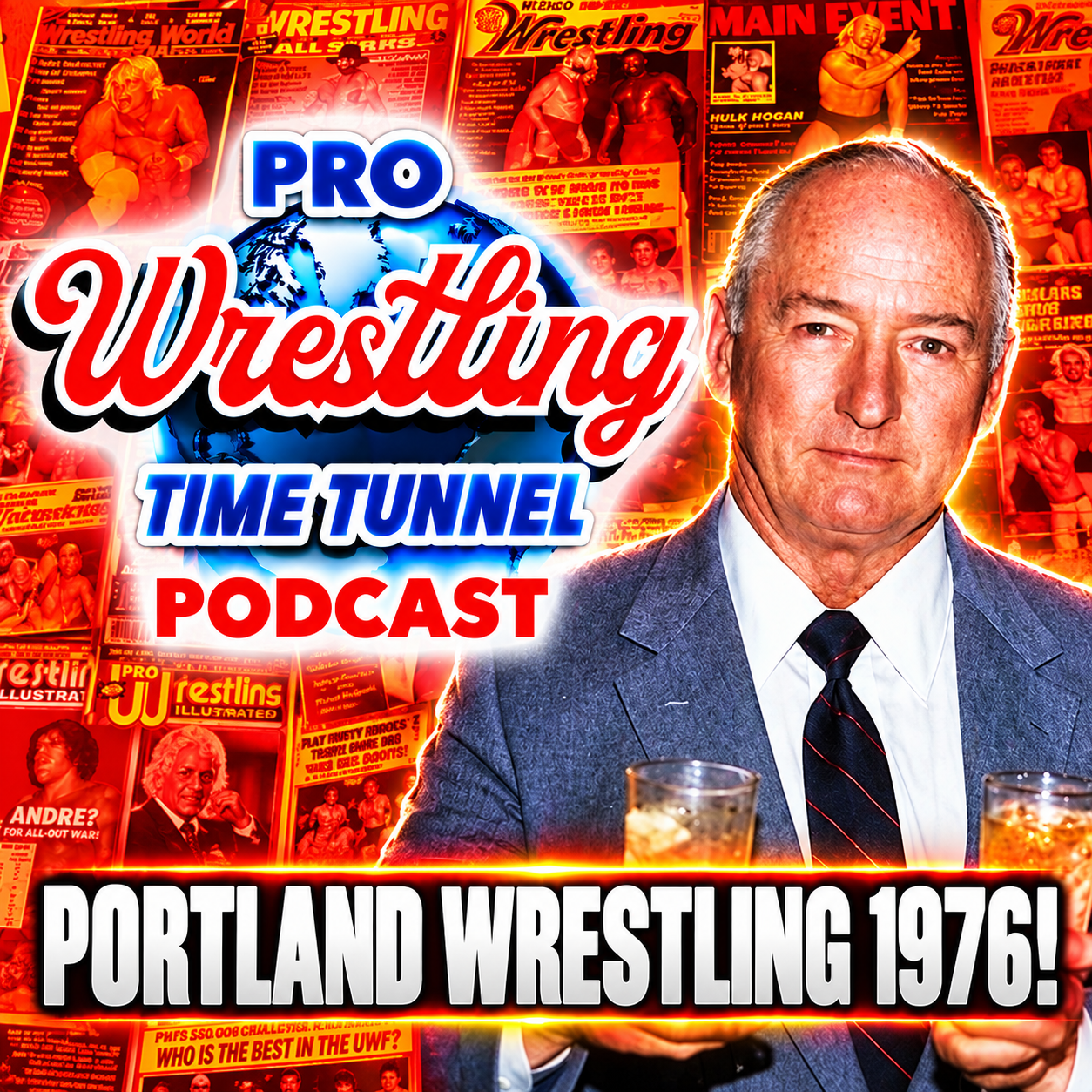
Okay, we got a packed show today, so I'm not going to take up a whole lot of time. Like I said, I wanted to say something about Donnie Iris and I wanted to say something about wild man Jack Armstrong. So I did that in a little update over on our YouTube channel. So you can check that out over there. Today we're going to the Pacific Northwest and we're going to talk about the 1976 territory of Portland wrestling. Don Owen and Elton Owen and all those Owens up there in the, in the Pacific Northwest. And Mike Rogers and Frank Culbertson are here, the two Portland experts, very good friends of mine who've written dozen books on Portland wrestling and are going to share their knowledge of the history of the territory with us here today. And then Steve Varier is coming up immediately on the heels of that. When we finish Portland, we're going to hop across the sound, I think that's what they call it up there, the sound. We're going to hop across the sound to British Columbia to the Vancouver territory, which is still going strong in 1976.
Gene Kinisky and Sandor Kovacs are the partners there of that territory. And Steve Varier will be here, the author of the Gene Kinisky biography, the George Gordienko biography.
And also he was he also wrote a book on wrestling in the Pacific Northwest about the whole history of wrestling up there. Just fascinating book. I really enjoyed. And Steve, he's going to be here to talk about the Vancouver territory. Then we're going to go right into our latest mailbag segment. Thank you to everybody who posted on our Facebook group your questions and comments and thoughts. And Steve Giannarelli is going to be here with me and we're going to answer those in our mailbag today. It's going to be a huge show. So let's not waste any more time. Let's get right to it and head to Portland, Oregon and the Portland Territory in 1976. Well, welcome everyone to the Richards Ranch here at the Pro Wrestling Time Tunnel. I'm your host Tony Richards and tonight I've got a couple of special guys that we always talk to about the Pacific Northwest territory of Portland, Oregon. And you can go back in our archives and see our shows on 1975 and 1985. And so this year we're up to 1976. And of course, I'm talking about historian Mike Rogers and his ever faithful cohort Frank Culbertson here with us tonight Mike, how are you, man?
[00:06:18] Speaker A: I'm doing good. Thanks for having us on.
[00:06:20] Speaker C: You bet. Hey, Frank.
[00:06:22] Speaker D: Hey. It's always great to be on your show and talk.
Any sort of wrestling is always good to talk about.
[00:06:28] Speaker C: Well, I love to listen to you guys shows. I can't keep up with them all. There's a whole bunch of them. But I just know that when I open my podcast app, here comes, you know, a new show from you guys and I really like them. There's some long ones and some short ones and some middle sized ones and I listen to them all. Why don't you run down all those things that you guys do for shows?
[00:06:53] Speaker B: Wow.
[00:06:53] Speaker D: Well, we just finished our first year of doing Ring around the Northwest or Ringside in Row City and so we're pretty excited about that. We've had some great guests on. We've had the Grappler, Ed Moretti, Rocky Della Sera, and then we just started talking about Portland month by month, starting in the Portland sports arena era in 1968.
[00:07:17] Speaker C: Cool.
[00:07:17] Speaker D: As Don Owen started moving on. So that's our long podcast and then we've done a series of short podcasts, a series working through the encyclopedia Portland Wrestlers by historian Mike Rogers, available on Amazon.
And those are usually seven to 15 minutes.
The, the last one that we started on is called Cream of the Crop and it's for the very top guys in Portland. And those have turned out to be about 15 to 25 minutes because they're a little bit more detailed to go into an individual. But those are available on Spotify, Apple Podcasts and YouTube. So we're continuing to go forward. Mike's books, you know, are a great source of information and always stuff for me to ask him about.
And Mike's never out of stories, are you, Mike?
[00:08:05] Speaker A: No. Seem to. Seem to have that never ending supply
[00:08:08] Speaker C: of stories Now I gotta get me a girl. You. You guys got a girl on the show that we sometimes hear her and sometimes we don't, but we always hear the reference to her about spinning the wheel and making the deal and all these kinds of things. What's her? Lisa. Is that her name?
[00:08:25] Speaker D: Yeah, Lisa Hughes. And she came to. I've known her since 2001 when she was the weather girl at WB32. I started doing Portland wrestling at. Before that she was in Los Angeles doing some television and some movies.
And so she and I have got along really good. She liked Portland wrestling when she was growing up before she moved to la.
And she's a lot of fun. She keeps us in line and Threatens Mike all the time to put different holds on them. She's learning them and a couple of them been a little, I've seen Mike almost tap out. But Lisa's a lot of fun on the show.
[00:09:03] Speaker C: Yeah, I need, every time I listen to your show, I'm like, I need a girl. I mean, she's a, she's a hoot.
So you also have a book on Hawaii.
[00:09:16] Speaker A: Yeah, that was so much fun. I always loved seeing the results. You know, as I was growing up in the mid-70s, seeing the results of Hawaii, they just, the cards just look so jam packed and so just dream matches on the cards.
When I was in college, way, way back when we did interlibrary alone and I found out the, the colleges that would have the Hawaii paper that they were willing to loan it to other colleges. So I would get the, you know, about three months worth of the Hawaii paper and I'd go through and find the results, you know, and I just kept doing that and that's how I got at least a few years of results from Hawaii. But yeah, I just, I just love the territory. I had a lot of help with, especially with the early part of the book.
Steve Ogilvy, just a great, great source and really, really helped me out. And there was some things that I found out really early that had to do with more history rather than wrestling. You know, right around the Pearl harbor time in Hawaii and how the promoters and everything had to like, they, they couldn't have wrestling, but they do other things, other forms of entertainment, like dances at the barracks and then they double book the venue and have something they'd call a derby, which, near as I can figure out was something like vaudeville, you know, that, that type of entertainment, they do that in the afternoon and then the early evening they had, they were up against a curfew, an early curfew, but they'd have a dance as well. So it was amazing how the promoters hustled and just had to find other ways to make their money. During, during that time period, for any
[00:11:17] Speaker C: Kentuckians who were on vacation, if they would have showed up there, they would have thought they were going to a horse race. If they were going to see and
[00:11:26] Speaker D: I'll throw it, I'll throw in there. Mike left out one important detail. The name of the book is. Oh yeah, the History of Hawaii Wrestling and Rock Rims, gave us some great information. Bill Francis, who Mike has known for a long time, gave us a lot of great information as well. And, and it's available on Amazon and It's another giant book, like the encyclopedia. It's not a regular sized book that you normally buy. It's. It's heavy. Jim Cornette called it a phone book.
[00:11:53] Speaker C: Yeah.
[00:11:53] Speaker D: And that's. That's really the size. It's about 3 pounds.
[00:11:57] Speaker C: It's on the end of one of my shelves, holding up everything.
Yeah, but.
[00:12:01] Speaker D: But it was great when Mike mentioned Pearl harbor and how Pearl harbor changed wrestling, actually, and giving us the evil Orientals, as they called them at the time, with Fuji and Sasaki type guys that would come out of that, where we had the Germans prior to that.
And so that really affected wrestling and gave us a different wrestling gimmick.
[00:12:22] Speaker C: Well, we had one of those guys here in Tennessee, Harold Watanabe, Tojo Yamamoto.
[00:12:28] Speaker A: Sure.
[00:12:29] Speaker C: As a Hawaiian, I enjoyed the heck out of that book. As a matter of fact, I still, you know, I have some books that I will.
At bedtime, I try to get away from all screens, all television, computers, and try not to scroll on my phone or anything. So about 30 minutes before bedtime, I'll get a book. And I go to that book quite a bit. I just wrote a piece on Nick Bockwinkle and his AWA, September 1976. You brought up Bill Francis. And Bill Francis got a couple of title shots in September of 76 in the AWA. And I went and found a photo, family photo of Ed and Russ and Bill.
So I'm fascinated by Ed's promotion there in Hawaii during the 60s and that little war he had with Roy Shire and all of that stuff. It's all in the book, folks.
[00:13:24] Speaker E: Yeah.
[00:13:25] Speaker D: And it's really interesting to see how much of Portland and Hawaii overlapped. And part of that, I think, is because of Francis and his relationship with Don Owen and that. But there was a lot of things that were almost tested in Hawaii and then brought to Portland or tested in Portland and then taken to Hawaii. But in 76, 77, 78, some of the crew that came over that was from Hawaii, Piper and Martel and Rose, the sheep herders, those are really some big connections that happened between Hawaii and Portland. And as you mentioned, they're all in the book.
[00:13:56] Speaker C: Yeah, they are. Fantastic book. And thank you guys for writing it and recording that information about one of the territories, that there's just not a lot out there about them, you know. So appreciate you guys doing that. All right, let's talk Portland Wrestling in 1976. Mike, we. Let's talk about the end of 75 and going into 76. What was going on in the territory at the time.
[00:14:21] Speaker A: Well, at the time, we have Dutch Savage and Jimmy Snuka. They're the baby faces, and they've been around for a few years now.
Still at this time period, they've had a variety of heels. I don't believe that you could call them stale, even though they've been around a good three, at least three, four years.
On the heel side, you've got Bull Ramos and Jesse Ventura. Ventura has come into the area.
He's really green.
The part that I love in hindsight is they don't even let him talk.
Bull Ramis does all the interviews. Ventura just poses behind him. They literally don't let him say a word. And then, you know, years later, he becomes one of the greatest guys on the mic ever.
[00:15:07] Speaker C: Yeah, you know, we just lost Jerry Oates here a few weeks back, and Jerry and I had become really close friends. He was a regular here on the show. And, you know, Jesse came down. Kansas City was his first territory, I believe.
And Jerry said it was just so funny that he can think back to Jesse riding in the backseat, not saying a word and just being so humble and just. Just want to be so anxious to want to learn and all that. And then Jerry came up. Did they win the tag titles or something together?
[00:15:39] Speaker A: Yes.
[00:15:40] Speaker C: Yeah.
[00:15:40] Speaker A: Yes.
[00:15:41] Speaker C: And Jerry said he was just a different guy. Like, he just got different confidence or something when he got to Portland.
[00:15:49] Speaker A: So, yeah, Jesse Ventura and Bill Ramis are on the heel side.
Really strong, strong tag team. The Kangaroos are going to come in shortly. They're not right at the turn of the year. They're not here. In the preliminaries, we have Jeff Ports, Johnny Eagle, Manny Cruz, better known as Jose Gonzalez.
Fritz Von Schneider, who was in Los Angeles doing gimmick as the Aussie.
Ricky Hunter, Tony Bourne, Maddie Suzuki, a lot of guys who ended up homesteading. Ricky Hunter and Tony Bourne, of course. Maddie Suzuki, Haru Sasaki.
So the main eventers are really, really in good shape. The undercard is not one of the strongest times.
[00:16:41] Speaker C: That's Savage.
I've been doing 1966 West Texas, just a few segments on my show, and he was. They were really pushing him as a his. I don't know if it was like his first big heel push, but they were really pushing him in West Texas, and it was so cool to go back and see him so early on in his career back there. So, I mean, he eventually became just a regular fixture in Portland.
[00:17:10] Speaker A: Right.
[00:17:11] Speaker C: Just a. Quite a. Quite. Quite a fella.
[00:17:14] Speaker D: Well, part of Dutch, I think. This year was really important to him. He had some great feuds, you know, with the Kangaroos, with Johnny Boyd.
He had Ripper Collins a couple of years before, was a big feud. But if you ask fans in Portland who was Dutch Savage's biggest rival, they will all tell you it's Bull Ramos. And so Ramos and Savage, they will hook up. This is really the last year where they really have a really big feud.
But I think you can't underestimate how big Dutch Savage and Bull Ramos were to each other. As far as Dutch, when him and Bull started having their strap matches and their coal miner glove matches in 72, January, February, 72, that really elevated Dutch to a different level in the fan's eyes here in Portland.
[00:18:04] Speaker C: Did Bull use the Apache moniker when he was there or did he just use Bull Ramos?
[00:18:10] Speaker D: No, he was Apache Bull.
[00:18:12] Speaker C: Yeah, I always thought that was cool.
That's a cool gimmick. I don't know, though, that I have ever. To be honest with you, I don't remember that I have ever seen an Apache Bull Ramos interview.
What kind of talker was he?
[00:18:29] Speaker A: We just played one of his interviews and it brought back a lot of memories.
He was in what we heard in the interview just recently. Yeah, he was more solid than I remember and very, very intense.
He was a very good interview.
[00:18:50] Speaker C: I just remember, you know, every time I see a photo of him, I think there's a guy who doesn't have to do an interview. Man, I mean, he just looks like just clear out of his way. You know, he just looks like he'd rather kill you than look at you. You know, he's just got a resting, mean face kind of thing going.
[00:19:08] Speaker A: And when he came in, he was pushed harder than anybody I've ever really seen pushed in Portland because they literally said, we don't have anyone that's tough enough in this territory to face him. And they just threw the whole territory under the bus.
[00:19:25] Speaker C: Yeah.
[00:19:25] Speaker A: And then they said, we've got to bring in Lonnie Maine to. To meet him on his debut, which, you know, really elevated Ramos, and then they could bring the territory back, you know, in later weeks as. As especially Dutch Savage to face him.
[00:19:42] Speaker C: So I always think it's interesting, Portland, because typically, I think you guys have told me, before, until like the late mid-80s to late 80s, there really wasn't a booker. Like, the guys kind of came up with their own programs and stuff like that.
So if there's a situation where the entire territory is being positioned around Bull Ramos, who is that Kass that does. That is whose idea does that become so that the whole territory. We don't have a guy that can face him kind of thing. Who would be the person who would say, we're going to do this with this guy?
[00:20:18] Speaker A: I would think. I would think it would have to be Don Owen because even though he didn't book week to week, I think I've heard guys say they would bounce their ideas off of him and he didn't really have too much of a dissenting vote. He would usually go along with what they said.
And I think, I think it was really a different time where everybody would work together to make money and, and really got your. Because, you know, getting to know Dutch Savage just a little bit, there was a huge ego there. And to have him continuously do jobs for Bull Ramos, that had to have just been more on let's work together, let's make money and, you know, I'll have my day somewhere down the road. And he did.
[00:21:14] Speaker C: And they would have a relatively small crew at any given time, right? I mean, somewhere between 12 and 14 guys maybe.
[00:21:21] Speaker A: Usually always 12. Always 12. And then on Tuesday nights they'd bring in in a couple extra guys.
[00:21:27] Speaker D: So sometimes when they, when they go to Salem or Eugene, it would only be eight guys or smaller spot show. They'd even do six and do matches like that. You mentioned Don Owen and I think Mike really has come to under to help me understand how smart Don Owen really was. He kind of came off as goofy sometimes and would mispronounce names, but he knew what he wanted in wrestling. Mike always says he was. He wanted action wrestling. And so you won't think of Paul Ramos as what you would see in AEW today as action is flying around the ring. But he was always active in the ring. Whether it was just pacing around. It wasn't just people talk about headlocks of 15 minutes of the old days, and that really was never happening anyway. But Bull Ramos was an action wrestler. You were not going to take your eyes off of him. So Don knew what he wanted and was able to bring those guys in. And then he listened to guys like Red Bastine who would suggest people such as Buddy Rose in this time period. So he was really smart that way. And you mentioned Bull Ramos and you know, he really wasn't a Native American. He was born in Texas, but he came across really well that and he came across as really mean, as you said. But as Mike interviewed him, one of the nicest guys you'd ever meet.
[00:22:45] Speaker C: Well, I've Heard that. You know, that's the thing. You know, I've heard he's a nice, nice fella and everybody liked him and all, but just if you look at him in. In kayfabe wrestling, he just looks meaner than a black snake, you know?
[00:22:58] Speaker A: Oh, yeah, yeah.
[00:22:59] Speaker C: When I interviewed and I was just going to throw in real quick, like, as someone who studies wrestling and studies all the different styles and territories and all, there's just a lot of different ways to do it. There's no one way. And I think the way Portland was was just, you know, it was an interesting different way than what a lot of other territories were that had the weekly booker from, you know, that would lay out all the matches and all the television and all. And Don was more like a overall conceptual guy who just kind of knew what he wanted and everybody got together to work it out to be kind of what he wanted. And, yeah, it's kind of hard to. Kind of hard to wrap my mind around, but definitely worked for Portland Wrestling. Go ahead, Mike. Sorry, I didn't mean to cut you off.
[00:23:44] Speaker A: No. When I had a chance to interview Bull, he was just the nicest guy. And I'm finishing up my interview with him and. And he's like, come on, ask me some more. You know, he was in. Really enjoying the time, and I had. I had earmarked like two hours, and then I had to. Had to take my dog to the vet, and we went well beyond the time, you know, and he's just like, well, be sure and call me back again. And that, you know, I really enjoyed this time, and unfortunately I didn't. And he passed shortly after. But such a. Such a. I really enjoyed talking to him and just a nice, nice man.
[00:24:27] Speaker C: Don't you hate that, you know, when that happens? Because you think, oh, man, I meant to talk to him about this and I meant to talk to him about that. And, you know, we just lost Jerry Oates not long ago, like I mentioned. And I was thinking, boy, I can't wait to talk to him about 1977 and Oklahoma and Bill Watts and all of that. And then we just never got to. Because he passed away.
And when we know that's why, you know, we have to do our jobs like we do, because we lose these guys all the time, and we're down to not a whole lot of territory guys left. So we've got to spend time, Spend time with them and extract as many stories as we can. That's why I love being on Briscoe and Bradshaw, because any Significant event in wrestling. It almost seems like Jerry was there, you know, or he knows what happened or whatever. And he just told us a story this last week that I'd never heard before. And I'm just like, man, I'm just so glad that we're recording these shows with. With him. All right, so January, we. What we got Jimmy Snuka as the Pacific Northwest champion.
[00:25:31] Speaker A: Right, Right. And Jesse Ventura beats him for the title January 17th.
That elevates Ventura. We always joke we know what Don Owens favorite hold was. Go ahead, Frank. What was his favorite hold?
[00:25:48] Speaker D: It was the full nelson, because every
[00:25:51] Speaker A: wrestler, almost every wrestler who needed a finishing hole got the full nelson, if they were built at all. So Bull Ramos had it, Jesse Ventura had it, Jimmy Snuka had it. You know, that's the three. Three guys of. Of that are in the main events right here in this time period. And there was so many others, Billy Jackson, so many others that use the full nelson. And so we laughed because it was obviously Don Owens favorite hold.
[00:26:21] Speaker C: Haven't seen a full Nelson in 25 years, probably.
[00:26:24] Speaker E: Yeah,
[00:26:27] Speaker D: when they. When they put it on and they ragged all, the guy that was just. You knew it was over at that time.
[00:26:33] Speaker C: Yeah. Now, was he the body here yet, or was he the Great Ventura? What was Jesse going by at this point?
[00:26:41] Speaker A: A little of both. They. They build him in the paper as the Great Ventura, but I. I think they also referred him to him as the body as well.
[00:26:50] Speaker C: Yeah. Okay.
[00:26:53] Speaker A: We had. In late January, Keith Franks came in. Adrian Adonis still in preliminaries at this time. Randy Morse and Bill Francis also come back in.
The Kangaroos come back in February. The Royal Kangaroos, Johnny Boyd, Norman Charles, they had been really hot in 1975, and they had the bounty hunter matches, which is a series of matches that the sponsors of Portland Wrestling had put on because Ruse had wrecked Tom Peterson's one of his television sets.
He was up in the crow's nest doing a live advertisement, and he had a tv. And. And the kangaroos came up and. And wrecked his television set. And that infuriated the sponsors so much that they put up money to have special wrestlers come in to try to beat them. And.
[00:27:50] Speaker C: And has that ever happened before in any territory that you know of?
The sponsor puts a baddie bounty on somebody?
[00:27:59] Speaker A: Yeah, I don't know. I. I like it.
[00:28:01] Speaker C: I do too. It's very unique.
[00:28:05] Speaker A: So we had some good teams come in. You could always kind of pick out who the. The weak link of the team was. We had Lonnie Main and Raul Mata.
Then we had Dory Funk Jr. And Chief Big Heart.
And then they had Lonnie Maine and Dory Funk Jr. Team up since they were the stronger members of their tag team. And they actually got two. Two bounty hunter matches. And then the bounty hunter matches started to lose their steam just a little bit.
[00:28:38] Speaker C: What was the bounty?
Was it a cash prize?
[00:28:41] Speaker A: I think it was a cash prize. I don't recall exactly what it was, but it was just the idea to bring somebody in to get those darn kangaroos.
[00:28:51] Speaker C: You've got a $5,000 bounty on your head. Well, who put it on me? Johnny Eagles or. Or Dutch Raymond or Bull Ramos? No. Fred's television down at 500 South 6th
[00:29:04] Speaker D: street and it's funny because at the end of December 75, the team that actually beat the Kangaroos for the in the bounty hunter match was Savage and Snuka, and they beat him in Seattle, which was the only bounty hunter match that wasn't in Portland. And yet, even though they beat him and then the Kangaroos take off, as Mike said, and will finally return in February, they still had two more bounty hunter matches in 76, which doesn't make any sense when you've already beat them for the bounty. Why are you having. And I think that one of them was Don Leo. Jonathan was in two of them with Tammy Samoa, who eventually became Coco Samoa, and Bouncy Smith, who is a great story of an African American wrestler who just got over, because when Don Owens announced him, he just started bouncing and the fans loved it. So I tried to get Mike to bounce around on this podcast, but he won't do it.
[00:30:01] Speaker E: No.
[00:30:02] Speaker C: No, he won't. You know, you're not going to get to call the match when Mike's there.
Yeah. You know, it's kind of interesting when you only have 12 guys on the roster. I mean, when you have a tag team, I mean, that's. That takes up four out of the 12 spots. So it's interesting how they were able to mix and match some of their different tag teams around to make. Make those things work. I mean, the Kangaroos are pretty much. You look at them as a tag team, but if you look at Savage and who was he teaming with at the time?
[00:30:34] Speaker A: Jimmy Snow.
[00:30:35] Speaker C: You look at them, they look like two single wrestlers and a tag team, you know? Right.
[00:30:40] Speaker A: Yeah. Yeah. Also, Don Owen had a really, really good working relationship with the Vancouver office.
Don Owen actually had points in the Vancouver office. So some of their talent would, you know, they'd exchange talent and so you had guys like kinjay Shabuya during 76, he's working in Vancouver, but he would come down, not really to get in too many main events, but just to spruce up the card a little bit.
[00:31:08] Speaker C: Another name that I see here that probably was in that too is Eric Froelich. He probably was a guy that went back and forth too. Right, right.
[00:31:16] Speaker A: Eric Froelich wrestled a lot in Portland. He was always in preliminaries, but always, I thought always looked great.
He was definitely an action wrestler that Don Owen would have liked, I bet.
[00:31:32] Speaker C: What was Elton?
Don Owens brother Elton. He probably liked Johnny Eagles because he was a British shooter guy. I mean, I've always heard he was legitimately tough.
[00:31:44] Speaker A: Yeah, I think so. He spent some time in Wigan training and everything and, and they build him as the Houdini of wrestling. The, you know, man of a thousand holds. And he would always use. He reminds me of Zack Sabre Jr. Now, just the leverage and the, and the different holds and, and you know, he, he mixed in a little bit of comedy and escaping of holds.
You know, he would do it just kind of real easily, seemingly easily. And the, the wrestler, whoever his opponent, whoever had a hold would just kind of be befuddled, you know, and there, there'd be just that really, really quick element of comedy.
Portland didn't use a lot of comedy, but just, just quick moments.
[00:32:34] Speaker D: And he formed a great tag team with Jeff Ports. So they had the English thing going and Ports was of course a great wrestler as well.
And then you mentioned Vancouver guys. At the end of the year, you'll see Sika and Offa come down a couple of times and they don't get championship matches. They're really just mid level tag team guys here. But in Vancouver they were very successful and I understand they went on to have a pretty good career.
[00:33:00] Speaker C: Okay, so what does this take us then?
[00:33:04] Speaker A: We're, let's see.
Eagles and Ports feuded with the Kangaroos.
They had a lot of matches called London Rules matches, which was just rounds. The only. That was the only difference. Instead of different falls, they had a round system.
So then in the summer, the Kangaroos started feuding with Bull Ramos and Jesse Ventura and they swapped the tag titles around a little bit and they had some unbelievable matches. I still can remember the television match that they had right at that time. I think all four were bloody.
Just one of those wild, wild out of control matches.
Terry Funk comes in to defend the NWA Championship. He comes in twice during the year.
The first time he defends it against Jesse Ventura and Bull Ramos. And he comes back later in the year to. To go to a draw with Jimmy Snuka.
So some interesting matches with him, you know, coming in to defend the title.
[00:34:13] Speaker C: Yeah, Kangaroos in June, they beat Jesse and Apache for the. The titles, and then they won them back in like three days or something.
[00:34:26] Speaker E: Right.
[00:34:27] Speaker A: The Saturday night was televised, and it was just. That was the brawl that I just mentioned. And the Kangaroos win the title. They come right back on the Tuesday night. You know, Tuesday night was. Saturday night was regular. There was wrestling in Portland every Saturday night. It was televised. But they would always have. Or not always, but maybe once a month on Tuesday, they would have a Tuesday special. And that would be for the bigger matches like when Bull Raymond or when the world champion comes in or whatever special feud is going on. So they had that match Saturday, they come right back on Tuesday. And Ramos and Ventura win the tag titles back from the Kangaroos.
[00:35:08] Speaker C: Did they have dark matches on the Saturday night card?
[00:35:12] Speaker A: What they did was the first hour and a half was filmed for Portland, and then the last hour was filmed for the Seattle area.
[00:35:22] Speaker C: Okay.
[00:35:23] Speaker A: And so usually every match that happened was filmed for one area or the other.
[00:35:30] Speaker C: And then we've got Ventura, see. Is it Ventura and Savage that just keep swapping the belt back and forth, forth right through most.
[00:35:39] Speaker A: Yes.
Yeah.
[00:35:41] Speaker D: You know what's pretty interesting about the Northwest title? Last time, when we were on about talking about 1975, there were only. I think it was five title defenses. Most of them were tag team championships, but in 76, there was 16 title defenses. So they had kind of flipped the switch from. From the tag team championships to the singles titles. And that really was helping get Jesse over. And at the end of the year, after Bull turns face, Jesse and Bull have like seven matches in about six weeks.
I want to mention the Ramos Ventura Kangaroo matches. So those Portland did, as Mike has pointed out a lot of times, heel versus heel Don Owen loved a heel versus heel feud. Portland did. Didn't always have super strong baby faces, but they always had really strong heels.
And so it was a battle royal in May with Andre coming in, and the last five were Ramos, Ventura and the Kangaroos and Andre. And so everybody thinks you're going to gang up to get Andre out.
[00:36:46] Speaker C: Right?
[00:36:47] Speaker D: That makes sense. But instead, Ramos and Ventura threw the Kangaroos out. And then, of course, Andre eliminated Ramos and Ventura. And then the Kangaroos come back with their boomerangs, which they. When they debuted in Portland, they used their wooden boomerangs. And I'm like 12 at the time. They just use the boomerangs over and bloodied everybody up with these wooden boomerangs and they brought those back in and bloodied up Ramos and Ventura. So that was the start of that heel feud that was so strong.
[00:37:17] Speaker C: In August, there's a boxing match in Eugene.
Savage scored a fifth round knockout over Jesse Ventura in a boxing match at Willamette High. Do you guys remember anything about that?
[00:37:34] Speaker A: I don't since it was in Eugene. Didn't get a chance to see that.
Yeah, I don't know. I don't know. Or can't remember any special details of that one.
[00:37:46] Speaker C: Speaking of Vancouver and the working relationship, Gene Kinisky was on a Seattle card also in August, J. Youngblood started to show up.
Right. In August.
The Baby Face tag team of Savage and Snuka was.
They were on top during, during that summer month of August.
[00:38:07] Speaker A: Right. And Jay Youngblood's really early in his career right here. He gets a, he gets a, a run, but he'll come back, you know, in a few years from now, from this point and really be the lead baby face in the territory.
But in August, a wrestler comes in that literally changes the look of Portland wrestling. And. And that's Buddy rose. He debuts August 21, 1976.
And this is, this has to be the value of Red Bastine, because Buddy Rose, Paul Pershman had been in Texas just previous to this, and there was nothing special about him. You know, he was in the preliminaries, he hadn't reached main event.
And Buddy Rose gets a debut in. In a main event with a big push coming in. And we have to pinpoint that to Red Bastine and how much Don Owen must have trusted Red Bastine to. And Red must have said, this guy can carry your territory. You know, give it, give him a shot.
So Buddy Rose debuts teaming with Jesse Ventura. They beat Dutch Savage and Jimmy Snuka. This is a really.
Inventor, and I think Buddy Rose called him the new generation of wrestlers. Which leaves Bull Ramis kind of out out outside of their little nude tag team. And they teamed up a time or two as six person.
But very, very quickly, Ventura and Ramus split up.
[00:39:55] Speaker C: You know, speaking of how much trust, Vern Gagne trusted Paul Pershman. He put him in the title change match with Nick Bockwegel in the awa. He refereed that match.
[00:40:08] Speaker E: Right.
[00:40:09] Speaker C: And then after that title change match, shortly after he went to Texas. And so he was developing a reputation among the booker and promoter type guys, you know, early on And I agree with you. He must have said to Don, hey, you ought to really use this guy. He would be great in a smaller territory, you know, that's really more focused on a smaller roster. He would really stick out.
[00:40:34] Speaker A: Yeah.
[00:40:34] Speaker D: And he's so, he's so different. We've talked about him on the podcast as being the smarmy type heel, the chicken heel. Portland didn't have chicken heels. All of our heels were very big, you know, Rasputin, Killer Brooks, all those type of guys. But Buddy Rose and Ed Wiskowski comes in right around this time as well. Buddy Rose was completely different and he really influenced the territory the next 13 years, but he was way different than anything we had ever seen. You still want. You wanted to slap him just because he was so obnoxious, especially in his interviews. But he was. And he wasn't never in great shape. He wasn't, of course, the blow away diet guy that would become later. But he was very athletic. He was a great softball player. He could ice skate really, really well and could take tremendous bumps in the ring and outside.
[00:41:31] Speaker C: Yeah. Light on his feet, big guy. Light on his feet.
What about the professor, Dale Lewis? He shows up. Is he another guy that bounces back and forth between the two offices?
[00:41:42] Speaker A: Dale Lewis had kind of homesteaded. He had a really good run in 73, and by now he's, he's getting ready to retire.
He actually took a job in like a mobile home
[00:42:01] Speaker C: sales.
[00:42:02] Speaker A: And he would have interviews or, excuse me, commercials for his, his business that he was working at. And they were plugged into Portland Wrestling. So you saw that he was kind of getting out of wrestling at this time and into a new, new venture.
Dale Lewis was a great wrestler, a great pro wrestler.
He had, he had some charisma, a good look to him.
Even though he was, he was even in 73, he was starting to get a little bit older, but he really, really had some, some good times. 76, he's past his prime. He goes to a lot of draws. He gets into a few main events, but he's past his prime here.
[00:42:54] Speaker E: He.
[00:42:56] Speaker C: I think Portland wrestling must be. You guys must do a show sometime on sponsor tie ins.
I mean, we got bounty matches being sponsored. We got Dale Lewis selling mobile homes. I mean, we got all kinds. The sponsors are part of the show. Man, this is cool.
[00:43:11] Speaker A: Oh my gosh, Frank, do you remember Dutch Savage had a. He would do a commercial for an insurance company and it was right during this time because he'd show up on this commercial and he'd have a Jesse Ventura doll and you know, he would like voodoo the doll, you know, and while he's, while he's in the middle of having a commercial for some sort of insurance company.
[00:43:38] Speaker D: And Tony Bourne was famous for Cinderella Realty.
He was very well known for that. His face was on the business card. And everybody in Portland knew Tony Bourne was Cinderella Realty. That's where Mike, Mike went to interview Tony Bourne. He went into his office at the
[00:43:54] Speaker C: real estate place, I think October in Portland. On the 25th, Rose gets his first Pacific Northwest championship in that, that right?
[00:44:10] Speaker A: Yes. Ventura and Rose win the tag titles. They beat Savage and Snuka.
So yeah, they, they do become champions, you know, and we, we mentioned, you mentioned Jerry Oates and we mentioned Jimmy Snuka and Dutch Savage.
Dutch Savage and Jimmy Snuka were the only Babyface singles champions from about 1973 to 1977.
And Jerry Oates was the next Baby Face champion besides Savage and Snuka for that, you know, four or five year run.
So they, they really dominated the baby face side. You know, during those, those three, four, five years.
[00:44:55] Speaker C: I never got to ask Jerry about Don Owen. That was one of the things that, that, you know, I never, never got to talk to him about because we were always talking about what was going on right at the time that was correlated to, you know, we talked about 74, 75, 76. And he didn't get to Portland until later on. And so I wish now that was one of the things I would have gotten to talk to him about, because I would have, because Jerry the nicest guy on earth, you know.
[00:45:22] Speaker A: Sure.
[00:45:23] Speaker C: And I was just kind of curious about what his thoughts about Don Owen were.
[00:45:27] Speaker A: Well, the one really I had a chance to interview Jerry one time and it's, it's in one of the books. But the really interesting thing, his story of how he came. Don Owen reached out to Harley Race and probably the connection for Kansas City. And I know Jerry spent time in Kansas City, but Don wanted Jerry Oates. Most of the time it's wrestlers inquiring to the promoters if they have spots available. But Don wanted Jerry Oats in his territory. So he reaches out to Harley Race and the connections are made and then Jerry comes into the area in 77.
[00:46:07] Speaker C: Yeah, he was in the city for almost two years. I mean, he was there almost into 73 through the first part of 76.
[00:46:15] Speaker D: Yeah, you mentioned.
[00:46:17] Speaker C: And everybody liked him. You know, he, every year he went, guys put him over and they, they gave him, usually gave him their singles Title, whatever the regional title was. Go ahead.
[00:46:27] Speaker D: Yeah, he was a very good wrestler. You mentioned Buddy Rosen Ventura winning the tag titles after. Buddy's only been here about two months.
But Buddy doesn't win the singles title for three years, and yet he ends up winning it the second most times to rip Oliver.
But Buddy, it took him 60 tries.
He had 60 different championship matches that he lost.
And yet he could still become the top heel, you would think if you kept losing. But Buddy was so good at keeping his heat, and he would lose and get more heat. And that's one of the geniuses of Buddy, everybody that you talk to. And Buddy had issues. We all know about those issues, but he had a mind for the business. And right about this time, when you talk about people sorting through with not an official booker, because Piper's about to come in next year in the 78, and that really changes with Rose and Piper and the mindset that they had, the ideas that they had, really took the territory to a different level for a couple of years.
[00:47:32] Speaker C: Were there other town promoters that worked in the. The state, that worked with the Portland office.
[00:47:43] Speaker A: So throughout the time, people like Tony Bourne would get a town like.
[00:47:48] Speaker C: I know that's what I was going to ask was any of the boys ever do promotion?
[00:47:52] Speaker A: Yeah, Tony Bourne, I know, had Seaside, Oregon for a while, and that was a monthly. Monthly town.
I know.
I've heard Bill Savage, who goes back into the earlier 60s, talk about he. He promoted a town for a short while and he'd. He'd get it built up and then the promoters would take it back once it was built up.
Sandy Barr, of course, had Salem. Sometimes Sandy would get another town or two.
Elton had Eugene.
So.
And then as the time period we are in right now, 76 and maybe a little bit beyond.
Dutch Savage had all of Washington. So all the spot shows in Washington were savages.
[00:48:42] Speaker C: I mean, these guys all seem very enterprising. I mean, they're involved with the mobile home places, they're involved with the, you know, so I would have thought they probably promoted some towns.
[00:48:51] Speaker A: Yeah, yeah, definitely.
[00:48:53] Speaker C: Did they run many shows in Washington?
[00:48:56] Speaker A: Yeah, probably about half of the territory was in Washington.
There was some really good towns. Chehalis, Centralia.
We make a note that whenever the world champion comes into. Into town for, you know, the four or five days, Centralia was usually one of the towns that got the. Got to see the world's champion.
[00:49:21] Speaker C: And would those be run on like Mondays and Wednesdays then?
[00:49:24] Speaker A: Yeah, usually. Usually a Wednesday, if I remember right, for those Towns.
[00:49:29] Speaker C: Yeah, because Tuesday, Thursday, Friday, Saturday were taken. Right, right. Regular, regular towns.
[00:49:36] Speaker A: Right.
[00:49:36] Speaker D: And at this time frame, they would. In Chehalis, Mike talked about what a great town it was. They'd run at the high school or at the junior high. So you saw a Harley race or you saw Ric Flair wrestling at the junior high defending the NWA World Championship, which just blows my mind that we could at this time period.
That's where you would see these guys. They would tour to your local high school.
[00:49:59] Speaker C: Oh, yeah, yeah, yeah. It's, it's. I don't think modern fans can, can relate, you know, and it's funny, when I think back about it, it's kind of interesting to the smaller, the, the size towns that the guys would go to just, you know, to keep getting paid, you know, I mean, promoters would run these small towns just to keep guys have a, have a source of income for them, you know. Yeah, they weren't making a lot on the town, but they were making enough to pay guys, you know.
[00:50:29] Speaker A: So I had a chance to see Ric Flair wrestle Tom Pritchard in Malala, Oregon, which is a small town, even for the Oregon Territory. I don't know, I don't know how, how Malala got so lucky, but I always, I talked to Tom about that match and it was one of the, it was the only match, or maybe he had one more against Flair for the title. So he remembers that night.
[00:50:54] Speaker C: He was just talking. I just had him on this past week or so. We were doing a farewell to Bill Dundee and Dr. Tom was on and he was talking about leaving Portland and going down to Mid south, but he mentioned his time in Portland just a couple of days ago.
November, the tag titles flip again.
They. They're flipping these tag titles around quite a bit.
November 5th, right? November 5th is a tag title change. Savage and Snooka beat Ventura and Buddy Rose.
[00:51:30] Speaker A: Yes.
So, yeah, Savage and Snooka held the tag titles probably like six different times through the years.
And that seems like a little early to make that tag title switch.
But Buddy didn't mind losing because like we mentioned before, he knew that he could always get his heat back.
Savage, we mentioned how to Ego, it seems like a little too early to, to end the Rose Ventura tag titles, but you know, it's, it's.
There were some good minds in the, in the thinking for sure.
[00:52:11] Speaker C: To you all's memory, thinking back to this, how big of a spectacle was Jesse Ventura and Buddy Rose together as a, as a cocky duo?
[00:52:23] Speaker A: They were, they were a memorable tag team. Memorable In. In several different ways, Rose proclaimed them as the new generation.
You know, Bull Ramis had been such a part of so much in the past. And the Kangaroos, we were kind of stale with, with Ramos and the Kangaroos. So it was good to see two completely different people, different wrestlers getting to be in the. In the tag title scene.
And Buddy, you know, Ventura was, you know, the muscle of the group and Rose was the. The voice. And it was. It was something new. And I think that's what made them more memorable.
[00:53:11] Speaker D: And I think also the part when Buddy started allowing Jesse to talk, that was things that fans hadn't seen. So Jesse had been here for.
Since October the year before, but he hadn't said very many words. So here you've got the guy with the great body and all of a sudden he is able to talk. And he wasn't great yet, but he was good, but it was something different. And so that kind of gave him a different shine, if you will, for what happened. And Bull Ramos is now a face. He, you know, he wasn't a great face in Portland and didn't work out very well, but he teamed with Dutch Savage, he teamed with Jimmy Stuka, which fans couldn't believe ever happen.
But it worked for a couple of matches. And then, you know, Bull, this was really, for me, the end of his really great time in Portland. He would come back and have a great run or a good run with the Iron Chic in a couple of years, but for him, he was pretty old at this time and a little bit slower for me.
[00:54:20] Speaker C: I. I might have asked you guys this before. If I did, I want to just ask you again, but how was Thanksgiving treated in Portland? It was there a big Thanksgiving show.
[00:54:31] Speaker A: Usually the Thanksgiving shows would be held in Salem. Salem was always the Thursday night show. Yeah.
[00:54:38] Speaker D: And
[00:54:40] Speaker A: over the years, Salem had some fantastic matches. They had an Andre, Don Leo, Jonathan match one Thanksgiving, and they would usually always really, really beef up, beef up their cards and have some very, very strong cards on Thanksgiving.
[00:54:57] Speaker C: I was just doing some research and writing about Gene Kinisky and Don Leo Jonathan's rivalry when Kiniski was the NWA champion. I would have loved to have seen those matches. Oh, yeah, Don Leo was quite a performer, as was. As was Gene. Well, you know, Georgia, obviously, big Thanksgiving there. They'd have a Thanksgiving show in Columbus, turn right around and have a big one in Atlanta. But this is what you guys do on Christmas. A big show in Portland and a big show in Seattle on the same Christmas Day.
[00:55:32] Speaker A: Yes, Seattle had Seattle had the benefit of getting the wrestlers from the Vancouver office and the Portland office. So you had some interesting matchups. I know.
I think during this year we had a Don Leo Jonathan Bull Ramos strap match in Seattle and that would have been an. That would have been an incredible match three years earlier. I'm sure it was still a good match in 1976.
[00:56:01] Speaker C: Was, was the partnership with Vancouver lucrative for Don Owen?
You mentioned he had points in it, and so they're. They're sharing Seattle. Was that, was that a lucrative deal for him?
[00:56:17] Speaker A: I imagine that it was, but I don't.
Don was definitely the silent partner for sure.
[00:56:24] Speaker D: He.
[00:56:27] Speaker A: I don't think it was too well known that he had points in Vancouver and he never, it never really came up. I'm sure that he and Kaninsky and Kovacs work together just fine
[00:56:43] Speaker D: until the Vancouver office changed right now.
[00:56:47] Speaker C: Tomco. Right.
[00:56:48] Speaker A: Yeah.
[00:56:49] Speaker D: Then it was not profitable.
[00:56:51] Speaker C: No, no.
[00:56:52] Speaker E: Right.
[00:56:53] Speaker C: Yeah. Steve Vario, he does the Vancouver on our show. And I, I don't want to get to the El Tom Co years by the way. He's already described them to me.
[00:57:06] Speaker D: You know, Mike mentioned that Thursdays in Salem was always the Hawaii. There was the Thanksgiving shows in Salem. I was just looking at Hawaii that you've talked about.
[00:57:17] Speaker C: Yeah.
[00:57:18] Speaker D: And Hawaii never did any Thanksgiving shows because Ed Francis's regular night was Wednesday.
So he didn't have to change anything. He always had that great card on Wednesday. He could promote it as the big night. And then culturally in Hawaii, you know, became a State in 59. So they didn't have the big celebrations that the United States had had for a long time. Culturally, it was more of a family day of getting together.
So he just kept running his regular Wednesdays and did really well. And, you know, until Hawaii kind of fell apart.
[00:57:52] Speaker C: Did they have a big shows, Frank? And what, what, what. Do you remember what their big shows were or did they never get into that kind of thing it.
[00:58:02] Speaker D: In Hawaii for Thanksgiving or any big.
[00:58:05] Speaker C: What were their big shows that. Did they have an annual big show that they would do in Hawaii every year or a couple of big shows they did every year or did they just run their Wednesday nights every week?
[00:58:16] Speaker A: Sages. I'm sorry.
[00:58:18] Speaker D: No, go ahead. Mike was going to. I, I know what Mike's going to say because he's going to say that he learned that it was the regular guys that made the money and not bringing the special guys in. Isn't that right, Mike?
[00:58:32] Speaker A: That was definitely part of it. I had a chance to interview Ed Francis And Lord Blairs. And it all depended on who was coming over from Japan or heading to Japan.
And to be honest with you, almost every card was unbelievable. But we touch on Hawaii and gosh, do you remember that card that we talked about that was just so unbelievable? It was like King Curtis versus Dory Funk. But every single match was like a dream match.
And so every, you know, there wasn't really one card that was any more special than the other. They all truly were very, very good.
[00:59:22] Speaker C: Well, that's what I was asking. Like, I mean, it seemed like to me that Hawaii just ran great Wednesday night cards every week.
[00:59:30] Speaker A: Yeah.
[00:59:30] Speaker C: And they never really got into that special spectacular era, you know, where, you
[00:59:35] Speaker A: know, but they're not.
[00:59:37] Speaker C: And it's a little bit like, A little bit like a Houston or something where, you know, every card was, you know, six or seven matches deep. And they were, all the matches were great.
[00:59:49] Speaker A: And it was so interesting when I'm, when I'm talking to Blairs and asking him about, you know, these dream cards and these dream matches. And just like Frank said, he, he wanted me to really understand that it was the King Curtis's, the Sam Steamboats, the Ripper Collins, Jim Hades, the Johnny Barens. Those were the guys that were drawing the money. And it didn't matter if Giant Baba or Wilbur Snyder or Bruno came in for the night.
[01:00:19] Speaker C: Yeah.
[01:00:19] Speaker A: Because it was those other guys that was drawing the money. The other guys were just frosting on the cake.
[01:00:25] Speaker C: Yeah. Window dressing. Actually, St. Louis is what I was thinking of. It was more like a St. Louis had held two cards a month, but they were just phenomenal, spectacular cards every single month. And yeah, as I was going through your book, I just, it struck me that they had some phenomenal, just regular weekly cards there.
[01:00:44] Speaker A: Yeah.
[01:00:45] Speaker C: But, but in 76, they're not running in Hawaii, are they?
[01:00:49] Speaker E: No.
[01:00:49] Speaker A: There was a strange dark period there where there was no wrestling in Hawaii. And it was kind of the in between of Peter. My villa took over.
I've lost the New Zealand promoter's name.
But there was no.
I'm not coming up with it.
[01:01:15] Speaker C: Oh, Steve.
[01:01:18] Speaker A: Yes.
[01:01:19] Speaker C: That guy.
[01:01:20] Speaker A: Yes.
[01:01:21] Speaker C: Yeah.
[01:01:23] Speaker A: And there was a little.
[01:01:25] Speaker C: We only have old guys on the show here.
Our nouns are the first to go. Everybody. So we. Steve Ricard. Steve.
[01:01:35] Speaker A: Yes. Steve Ricardo. We researched this part really, really hard because we really wanted to understand how, how did the promotion go from Ed Francis to Steve Ricard to Peter Mavia. And what we came up with was Steve Ricard just seemed like he needed to get out of Town because the promotion was now Peter Mavias.
[01:01:57] Speaker E: I see.
[01:02:00] Speaker D: Let's just say that. Let's just say that we studied it really hard because we also didn't want to get sued.
[01:02:10] Speaker C: I understand. We got to get this one right, folks.
December 28th in Portland, Ramos beat Ventura by disqualification. And tough Tony Bourne, that we mentioned earlier is a special referee.
So a great way to end the year in Portland, huh?
[01:02:28] Speaker A: And then I really like this window of time right in through here for the preliminaries.
I don't see him right here. But we had Sergeant LaBeouf a little earlier, who wrestled in Portland as Ivan Zarnoff and then was probably best well known as one of the Lumberjacks. Pierre, the lumberjack in the WWWF also became one of the Legionnaires in Indianapolis. Yeah, just. I always found him really interesting wrestler. He. He was here. I mentioned, in 73 as Ivan Zarnoff, came back as Sergeant LaBeouf, and he was just jacked when he came back.
[01:03:09] Speaker E: Yeah.
[01:03:10] Speaker A: You know, he had changed so much that he could get away with having a new name despite being here just three years earlier.
[01:03:19] Speaker C: Yeah, he was done. For Vargo's replacement for the Legionnaires in wwa. In. Yeah, for Bruiser.
[01:03:26] Speaker B: Yeah.
[01:03:27] Speaker A: We've got the Vachon brothers, Butcher Vashon and John Vashon. I'm not.
I think that was Neil Gway, who had come up from LA when LA would always close down a couple weeks during Christmas. And so you'd have. Every now and then, you'd have some wrestlers come up during the Christmas holidays to get some extra bookings. But you have the Sean brothers wrestling the Seek and Offa during this time period. They had a little feud.
You've got Rocky Montero coming back into the area just a. You have Dr. X, who is Frank Monte.
Kind of an interesting new mix of undercard wrestlers that spruced up the card a little bit.
[01:04:15] Speaker D: Well, it's funny when you mentioned Rocky Montero in Portland. He's a preliminary guy. Mike. How over was he in Hawaii?
[01:04:24] Speaker A: Yeah. I don't know what was happening there. He was. He was beating Billy White Wolf in Indian Death matches. He was winning every match around. It was. It was. We joked he must have had some pictures on somebody going to a draw with Carl.
[01:04:39] Speaker D: Gotcha.
[01:04:40] Speaker C: Oh, my gosh.
[01:04:42] Speaker E: Yeah.
[01:04:42] Speaker C: Yeah. Well, no, I don't know what he had, but he had something so interesting this year, man. We got Ventura, Savage. Ventura back to Savage, back to Ventura on the heavyweight side. And then the tag title. Savage and Snuka And Ventura and Ramos trade the titles quite a bit. The kangaroos get mixed in in the summer. Ventura and Ramos win the titles back. Then it goes back to Savage and Snuka, and there goes the Ventura and Rose, and then back to Savage and Snuka by the end of the year. So, man, they're really rotating these titles around among these guys.
[01:05:21] Speaker A: Yeah, they really are. That's. That's a little unusual because most of the time, the tag titles you'd be watching about every three months was pretty normal for a tag title change. So, yeah, they. They did swap them around a little more often during this year.
[01:05:38] Speaker C: Do you know why.
Why that was, or.
[01:05:42] Speaker A: Yeah, I'm. There isn't any reason that stands out.
[01:05:46] Speaker C: I mean, the promotion was still drawing well. They weren't trying to get more tickets sold by doing that, were they? Or was it just the guys were just having fun or.
[01:05:57] Speaker A: Well, I'll bet that at this time. I'll bet the guys were having fun. I bet.
You know, Rose is probably finding his. His voice here. You know, maybe he's not speaking out, you know, because Savage. To be honest, Savage was a really intimidating person. And so if Rose came into the area, he's probably hasn't found his voice yet.
[01:06:22] Speaker C: Not to. Not to spoil anything and definitely want people to go and listen to your shows, and we will list those again before we get finished. But the greatest Pacific Northwest heavyweight champion of all time is.
[01:06:38] Speaker D: Well, I had it. I had. We had a show, and Lisa had to separate us. I'm telling you, she's a tough lady. Let me tell you.
[01:06:47] Speaker C: I tell you, that's when I said, I got to get a girl.
[01:06:49] Speaker D: We were coming to blows, and she stepped in and stopped it. But she raked my eyes. It was terrible. She poked Mike in the eyes. It was terrible. Terrible. So I had Buddy Rose, just because of the number of times that he won the championship. The title defenses that he had was 42, I think, and 60 times. So he was on top a whole bunch.
And a lot of people would have said, rip, Oliver, because Rip had the most titles that he won. He won the most. The title the most times.
But I had him as second. But Mike, of course, he came up with the wrong answer, didn't you, Mike?
[01:07:29] Speaker A: And I can't remember who I came up with.
[01:07:31] Speaker D: He came up with Bull Ramos.
[01:07:33] Speaker C: Yes, that's right.
[01:07:34] Speaker A: Yeah.
[01:07:34] Speaker D: Because Ramos actually held the title for, like, a year straight, lost it, and then won it back for, like, six months in a row.
[01:07:42] Speaker A: Yeah.
[01:07:43] Speaker C: Very enjoyable show. Which one was that? On which one of your shows did you guys do that show on?
Was that Ringside and Rose City or
[01:07:51] Speaker D: it was Ringside and Rose City. Absolutely.
[01:07:53] Speaker E: Yeah.
[01:07:53] Speaker C: Yeah. And so tell everybody about all the shows that you guys do and when they come out and all that stuff.
[01:08:00] Speaker D: Well, we do Ringside in Row City. New episodes drop every Thursday and that is the hour to an hour and 45 minute show where we talk about monthly results in Portland. And when we talk about Portland, we also talk about Eugene, Salem. We pick up the spot shows so we can see see what the booking strategies were from town to town. We also, on those episodes where we're talking about specific months in Portland, we also look at Hawaii that same month to see what was happening there.
And other than that, we do on Ringside and Rose City we do interviews. We do specialty things like the greatest heavyweight champion. We cover the greatest mask wrestler of all time. The greatest wrestler in Portland, which we all know is Stan Stasiak because he said hi to me when I was 7 years old.
[01:08:48] Speaker C: Lots of fun.
[01:08:49] Speaker D: 1965. And then we do. Oh, we do right now it is cream of the crop, which is the top wrestlers in the territory, which is from the encyclopedia, Portland Wrestlers. And so that's a 17 to 25 minute show every week. And then we, we have about six other.
Six other series before that where we talk about one match wonders. We talk about guys who came in and went on to bigger things elsewhere as a lot of wrestlers did Portland, good training ground. And so those are all available. So we appreciate everybody listening to it. And Mike does a great job. You know, he's. His books are such a great fountain of information. And he's got six books. He's got, oh yeah, the history of Portland Wrestling. I mean, oh yeah, the history of Hawaiian Wrestling. Yeah, he's. He's got Katie bar the door, the history of Portland Wrestling. He's got three encyclopedia or a three excitement in the air volumes of Northwest wrestlers, which are interviews Mike did when he did bring around the northwest for 30 years, doing every monthly a bulletin covering Portland wrestling. And then Mike, there's one more, isn't there?
[01:10:00] Speaker A: Yeah, there's one more that I did.
Stories about my teaching career and it's called Books, Balls and squirrel paws. All right, that was a lot of fun to do, too.
[01:10:11] Speaker C: Well, you guys do a great job. Those shows are a lot of fun. We need those shows for every territory. I mean, the way you guys cover Portland is just so much fun and I enjoy them. And thank you so much for doing all that that's, it's great stuff.
[01:10:27] Speaker D: Appreciate it.
[01:10:28] Speaker C: All right, so 1976, final word. Frank. What? How does 76 stand out to you?
[01:10:34] Speaker D: Well, 1976 was the year I graduated from high school, so it's always a big year for me.
[01:10:39] Speaker C: Bicentennial.
[01:10:41] Speaker D: Bicentennial gas wars.
So we don't want to talk about the price of gas nowadays, but 1976 was a, I think, a big year. I think Buddy Rose changed things so much.
Jimmy Snuka was still come still. Even though he was still fairly young in his career, he was still developing and coming into a great wrestler. He would never be a top interviewer because you couldn't understand what he said, but he was great. And so Portland was doing really well at this time. They had. When the sports arena opened. The first year for the first eight months was a really dangerous time because crowds were really, really small.
Where Don had been running about 3, 500 people at the old armory, the sports arena, they were doing about 15 to 1800 until Luthez and Luther Lindsay had a 2 out of 3 fall, which was a standing room only match. And then Rip Kirby comes in and really takes the territory to a new level.
And from then on, from through this time, 76, really through about 80, when Martell takes off after he had been here with Piper, it kind of slows down. We still have the sheep herders, but 76 to me is one of the prime years. 70 to 76 are my favorite years.
[01:12:04] Speaker C: Awesome. Mike, how do you wrap up 76? What's your last take on it?
[01:12:10] Speaker A: Yeah, I, you know, you can't talk about 76 without mentioning Buddy Rose, you know, coming in and just fitting in.
Jesse Ventura, you know, that tag team was a very good tag team.
Bull Ramis kind of gets his last, last little hurrah in there, turns baby face. But it was a little bit too late. That turn should have done taken place much earlier and it would have been more effective. A Dutch Savage Bull Ramos tag team in their prime would have been fantastic.
[01:12:43] Speaker C: Oh, yeah.
Well, listen, you guys, we appreciate you so much for coming on and giving us the rundown of 1976 in Portland wrestling. Keep up the great work that you're doing on the podcast and thanks for all the stuff that you've done for pro wrestling history. Appreciate you.
[01:13:01] Speaker A: Thank you so much.
[01:13:01] Speaker D: Thanks, Tony.
[01:13:02] Speaker C: Talk to you soon. The Pro Wrestling Time Tunnel history show rolls on with our Canadian 1976 episode. And we're moving across the vast Great White north to the British Columbia section of Canada. And here to help Me once again with the Vancouver 1976 territory is my good friend and fellow historian Steve Verrier, who has graciously made time during a trip to Japan to be with us. Hey, Steve, how are you?
[01:13:33] Speaker B: I'm doing pretty well, Tony, thank you. And it's always a pleasure to be on here with you.
[01:13:38] Speaker C: What's the climate like in Japan this time of the year?
[01:13:43] Speaker B: Well, 90s muggy.
I had a bit of rain yesterday and I actually enjoyed that because cool things off briefly, but this is not the best time of year to be here, but it's the time when I'm most free, so I'll take it.
[01:14:01] Speaker C: And also right here at the top of this particular section of our show, I wanted to thank you so much for coming to Waterloo this year on your trip and being there at the dinner the night of the induction, and I even got to sit next to you. So I want to. I really appreciate you. You spending some time there.
[01:14:25] Speaker B: Well, I appreciate that. I wasn't going to miss it. It was just my second time in Waterloo.
But I think I lucked out when I was placed at the table next to you and some of our other friends there.
[01:14:38] Speaker C: Yeah, we had a good table and you were very much added to it. And I've had a couple of people say they enjoyed meeting you, so I'm glad you were able to be there.
[01:14:50] Speaker B: Well, thank you. I was so happy to be there.
[01:14:53] Speaker C: All right, let's. You. You. One of the things that you've written is you were a collaborator on the book with Richard Vycheck on Remind Me again. I've totally.
[01:15:11] Speaker B: Wilbur Snyder.
[01:15:12] Speaker C: Wilbur Snyder. And you also wrote the Gene Kanisky biography and also a book about the Pacific Northwest. And I'm just really happy to be able to communicate with you on these things because you've spent a lot of time studying them. And of course, Kaninsky was very involved with the Vancouver territory. He was a partner there, right?
[01:15:36] Speaker B: He was, yes. He was a big star there from the late 50s. But early on, he seemed to be involved as more than a wrestler. I mean, the owners of the promotion at that time, particularly Rod Fenton, had a lot of history with Kinisky and valued his input. So Kiniski helped to lay out matches. Definitely.
He was a big voice there. And as you mentioned, eventually he had an opportunity to buy into the promotion.
He did that. And, you know, people think of Kinisky as a product of Central Alberta, the small town where he grew up, and later Edmonton. But. But really, I'd say Vancouver is where he Made his mark and, and left his greatest legacy.
He was a big part of not only the wrestling in that area, but the community. And, and he's well remembered to this day.
[01:16:36] Speaker C: Well, I know you were very close to his family, interviewed his sons for your book. Was the promotion financially lucrative for them?
[01:16:48] Speaker B: It was during its good days, and by good days, I would say up to the point where a new owner came into the picture. I mean, I don't want to denigrate anybody, but Kiniski was very comfortable with his ownership position.
He was partnered with Sandor Kovacs. And one person who is not always readily associated with Vancouver, but who really played, I think a pretty key part, was the Portland promoter, Don Owen. Don Owen was actually a co owner with Kiniski and Sandor Kovacs, and the three of them had a pretty solid and pretty lucrative operation, I would say. But you could make the argument that things started to unravel slightly in the late 70s and then that whole process accelerated through the 80s. But it was a pretty good, strong little promotion during the time. Continue. Nisky was one of the owners.
[01:17:56] Speaker C: So it's still in really good shape here in 1976, right?
[01:18:00] Speaker B: Oh, yes.
Now, it was never the hugest money territory, as many people are aware, but it was very solid.
There was not a huge population base outside Vancouver, but the promotion would travel to Seattle and other points in Washington and Victoria, Chilliwack, Prince George and so forth were pretty solid markets, but. But smaller ones. I mean, Vancouver was the, the big money territory. But I, I think what really made the promotion stand out and one thing that a lot of people who are not Canadian probably may not be aware of is that if Canada had a national wrestling promotion during that Kinisky era, it was his promotion in Vancouver because of the, the TV penetration the promotion had for many, many years.
You know, I grew up in Ontario.
We watched All Star Wrestling from Vancouver. That's really the first promotion I became very familiar with through the program. It was weeks late in getting to other parts of Canada, but it was the national promotion. It was not a big money promotion, but its visibility was just amazing for that era and it did make money besides that. So it overall, I think was just a huge success and, you know, really part of the Canadian cultural landscape for, for a good decade or even more, I think.
[01:19:36] Speaker C: I think when people look back or try to think back on Canadian wrestling, they don't think that they think of Stu Hart's Stampede Wrestling, but, but we didn't live in Canada, so I'm glad to hear you. You know, give us more insight into what the actual situation was. So Vancouver was thought of more as the Canadian promotion across the board.
[01:20:03] Speaker B: Well, it had greater TV penetration. I grew up in Ontario, as I said, and from the time I first noticed wrestling in probably the late 60s, all star wrestling was, you know, it was televised across the country. Stampede Wrestling followed that pattern a little later. I don't think it had the same penetration, but it was televised in.
In a number of markets across Canada. But it was All Star Wrestling that led the way. And, you know, when I'm thinking of big promotions in my childhood, just because of that TV presence, I think of All Star Wrestling first, even before Toronto or Montreal wrestling because, you know, they were huge locally.
They had a lot more people to sell tickets to.
But All Star Wrestling, I mean, if you traveled across Canada, you could pretty much come count on being able to watch All Star Wrestling almost anywhere you went.
[01:21:11] Speaker C: Well, the year kicks off in 76, with Kaninsky losing the. The. The singles title was the.
The Pacific Coast Heavyweight Championship. And he lost that in January, the fifth in Vancouver to another big guy. The. These two must have had some fantastic battles in the ring. Gene Koninsky loses the title to Don Leo Jonathan there in Vancouver. And Don Leo was also a huge star in Canada, right?
[01:21:46] Speaker B: Oh, he was. I would say he's the only one from the west coast who was on the level of Kinisky. I mean, those two stand out, and they stood out to me when I was a very young fellow, tuned into the TV show. I mean, Don Leo was just an amazing athlete of his day. He was huge. He was agile, he was smart, he connected with the fans.
He could play the bad guy, as he did in the east coast in the United States, and he could play the good guy as he did in a lot of places. I mean, he. He was amazing. I mean, I. I would go so far as to say he was probably one of my childhood heroes. And I say that as someone who, you know, I, I don't say I'm one to mark out, but, you know, when I, you know, got to spend some time at Don Leo's house a little bit in later years, I mean, you know, that, that was great. I mean, I. I couldn't imagine. Yeah, he was just an amazing athlete. And he. And Kinisky, you know, when I did the Kininsky book, you know, I think I pointed out there were three opponents who stood above all others in terms of Kiniski's career. Of course, one was Whipper Billy Watson in Toronto and in fact across Canada.
One was Luthez, who faced off with Kinisky for many, many years and dropped the title to him at one point.
The other was Don Leo, Jonathan. I mean, their careers were just linked and you know, I had no idea they were very, very good friends. But you know, I would say those two were almost pillars of the community in Vancouver for, for many, many years. And certainly the greatest wrestlers among those who settled in that part of Canada, or in Kinisky's case, northern Washington, basically a suburb of Vancouver.
Yeah, they had great matches. They stood out even to a very young fan at that time. And yes, those two were in their mid-40s by the time, you know, we get to the year we're talking about today, 76. But they were still in many ways on top of their game. And I think if you had to choose two wrestlers from this particular year even who stood above all others, those are the two. And Jonathan won the title. He held it for a couple of months, but just an amazing presence, a great champion. And right up there with Kinisky.
[01:24:31] Speaker C: I think the tag team champions are Dean Higuchi or as he is known in other territories at this time, Dean Ho and George Wells are, they're the Pacific coast tag team champions. This is also title that Kinisky is always very, very involved in. He's usually involved in both the tag, the tag team scene and also the single scene. And so the previous champions had been Kanytsky and Siegfried Steinky and they lost to Higuchi and Wells. But then In February, on February 9th in Vancouver, almost a month after Kaninsky lost the singles championship, he and Stanky regain the tag team titles from Higuchi and George Wells.
Do you remember why or do you know why he went by Higuchi and not Dean Ho in the Canadian West?
[01:25:27] Speaker B: Yeah, I think his given name was Higuchi.
So, you know, I, I think when he was wrestling in the United States, I, I guess, you know, sometimes promoters suggest you change your name. I think that was probably the case in later years. He did wrestle in Vancouver as Dean Hope it in his early years. I, I think it's because he actually was Higuchi that he wrestled under that name. But you mentioned George Wells, Tony. And he's, you know, I, I remember him as a, you know, very good young athlete, but you know, he was one of those, you know, even in 76, he was still playing Canadian professional football.
He was an all star level football player, I believe he was.
Well, he played at times for the Hamilton Tiger Cats. I Know, he played for the Toronto Argonauts and he was actually, actually a teammate of Angelo moscas on the 1972 Gray cup winning team in Hamilton. So he was a very accomplished football player and he wrestled for a number of off seasons in Canada and, and in other places. But yeah, I remember him as a kind of a fresh face, a good athlete and somebody who did connect with fans. And he wasn't in Vancouver a long time but he certainly was a key guy in 76.
[01:27:07] Speaker C: The Kaninsky stiking heel the Kaninsky's wrestling gene Kaninsky and Stike are wrestling as heels and they're pretty dominant in the tag team division. A lot of the 75 programs that they had carried over into the new year. And then when we get to March, Kenji Shibuya, which is also another name from the west coast of the United States and also in Western Canada, beat Don Geo Don Leo Jonathan on March 8th in Vancouver to win the Pacific coast heavyweight championship. So many of the title changes, like a lot of territories, let's say Tennessee, Memphis was the hub that a lot of things revolved around and in West Texas, Amarillo was so here. Vancouver is definitely where the big show on Monday night takes place. And most of the title changes happen, right?
[01:28:10] Speaker B: Yeah, I mean the heart of, you know, the weekly loop was, was definitely Monday night usually at the PNE Gardens, the Pacific National Exhibition Gardens. And yeah, that, that was the Monday base before the TV on Tuesday to set up the next week's big show. But yeah, I remember Kenji Shibuya from that time. He was very accomplished, a big star in California.
I think he held the Pacific coast title for four months in 76 and he certainly made an impact.
You know, he maybe doesn't get his due to.
I mean he was a great, great wrestler and you know, one of several top level heavyweight champions in Vancouver in 76. I mean I looked at the list of champions and they were all good. I mean there was nobody positioned as champion who should not have been there. And Shibuya I think really, you know, anchored a successful four months during his reign.
[01:29:26] Speaker C: Do you Tuesday was television day, usually at Burnaby. Yes, so. So when they'd go to Burnaby, they'd shoot a new television show on Tuesday.
When would that show then air in Vancouver?
The coming weekend?
[01:29:44] Speaker B: Yeah, I believe that's the case. I mean again, I was situated 2,500 miles away in southern Ontario, but I think normally the weekend it certainly wasn't broadcast live.
But it's interesting. I mean, I've Been to that studio.
It is now the studio of Global TV in Vancouver. In fact, I'll be there.
Global TV is doing a. Planning a show on Gene Kinisky. I mean, a program, not just a story.
And so I will be there probably in late August to play some role in that. So when I go to that studio, you know, and I think back, you know, this is, you know, almost a bit of a shrine to wrestling from that earlier era.
But Tuesday was the night and I think the broadcasts were on the weekend. And as far as I know, they were not repeated. I mean, just, just one time. But they were always aimed at building the, the next Monday night's show. And angles were what you would call mild. You know, you didn't have too many people, you know, smashing their opponents with hammers or anything like that. You know, it was subtle, but it was always clear what they were building to the. The following Monday. And it was effective. I mean, for that market, it seemed to work very well.
[01:31:18] Speaker C: So Shibuya was your classic Japanese or Asian type heel gimmick.
A lot of karate chops, a lot of rule breaking, made him a strong top heel champion. One person that he's challenging here who did have a little bit more of a career than I think he gets credit for, he was made famous in the beyond the Mat TV documentary. But Dennis Stamp is working in the Vancouver territory here. And Dennis had worked his way up the Pacific coast. He had been in NWA Hollywood in Los Angeles and 75. And now he's up here in the Pacific coast and came out of the West Texas Amarillo territory as a, as a wrestler and has a little bit more of a career than he's given credit for.
[01:32:12] Speaker B: Yeah, I agree. And in Vancouver he was, you know, a young, clean wrestler.
You know, he was not a main eventer, but I, I think at one point he did hold the tag team championship.
Not in 76, but yeah, he, he was a good mid card guy. And I, I remember talking to Dennis a number of years ago about Kinski.
He was not, he said the, the happiest camper during that area era.
You know, he thought he wasn't paid to the extent he could have been. I mean, a lot of wrestlers felt that.
But one of the wrestlers from 76 is somebody who seemed to play a big role in making things tolerable for Dennis, and that is Keith Franks, who later became Adrian Adonis. They were good friends, at least at one point.
So I remember Dennis Stamp. I don't remember every wrestler from that era, but I do Remember him? He put on good performances. He took his craft seriously. And yeah, he was, I think, a good contributor to the success of the promotion in 76.
[01:33:31] Speaker C: Sadly, many of these wrestlers have passed on. Of course, Dennis is. And Keith Franks. Adrian Adonis has Dean Ho. Dean Higuchi's rivalry with Shibuya is intensified during March, moving into April.
April 12, and Vancouver. Don Leo, Jonathan and Jimmy Schnuka defeated Kaninsky and Shabuya for the Canadian tag team titles. So once again, Don Leo Jonathan's name is worked into the top of the cards but through the tag team championship. So he and Kaninsky seem to be weaving themselves in and out of the top of the card of the cards with both singles and tag championships.
[01:34:17] Speaker B: Yes, well, Don Leo wasn't doing a lot of traveling at that time.
[01:34:21] Speaker C: He.
[01:34:22] Speaker B: He had a business in Vancouver. It was an underwater exploration kind of business.
I mean, he was solidly at home.
Kiniski pretty much the same. I mean, he did a little traveling, but he preferred to be home.
So, you know, they were still drawing fans. People knew they were dependable and they trusted each other.
Yeah, I. I don't think they would be long out of the title picture. And again, even though they were in their mid-40s, they were still pretty much the cream of the crop in. In Vancouver and I would say deserving champions.
[01:35:08] Speaker C: And Snooka was. Snuka was just starting to make a name for himself, having been in Roy Shire's territory in San Francisco and would not really make a bigger splash until he came east in the United States to Jim Crockett Promotions and Georgia, and then of course, work his way up to the big cage match with Morocco in the wwf. But here he is a wrestler who is known and is starting to make his name known at the top of the cards through much of the western part of the coast of the United States and Canada.
[01:35:50] Speaker D: Yeah.
[01:35:52] Speaker C: So Don Leo, Jonathan and Snooka team started creating a.
And Snuka is a baby face here, as is Don Leo, capable of challenging all of the established heels and working with the tag team titles. Now, a guy who. I don't know why I'm drawn to this guy, but I'd like to learn a lot more about him. I just haven't had a lot of time to dive into his life and career. But. John Quinn and Kenji Shibuya defeated Don Leo, Jonathan and Jimmy Snuka May 17 in Vancouver for the Canadian tag team titles. What do you remember about John Quinn, Steve?
[01:36:36] Speaker B: I remember him very well. I mean, he was a big guy.
You know, 290 range, rugged.
I remember his match as well. I mean he was not what you would call a sophisticated wrestler, that he was dependable, hard hitting.
He won many of his matches with something as simple as a, an elbow drop and not, no, not the type with all of the silly, you know, gestures associated with a wrestler of a later era. I mean he was just solid, hard hitting, believable, communicated well early in his career. He was a pretty big star in the U. S. Northeast. He did wrestle San Martino.
[01:37:28] Speaker C: He did.
[01:37:29] Speaker B: And I, I talked to John Quinn a number of years ago. Again, unfortunately he's one who's passed on in the last, in the past several years. But like Kinisky, Quinn apparently was on the radar of American military recruiters for some reason. I mean, Kinisky got a draft notice even though he was Canadian. And John Quinn said that he was told that, you know, he was expected to report. And he told me his reaction was to look for the best place to go in Canada. He was a, a Canadian from Hamilton and, and he said it was because of Kinisky that he made the decision to go to Vancouver to wrestle.
You know, I remember I only talked to John Quinn once, but he was determined to go to the West Coast.
Kiniski was kind of a hero of his and he was glad to work there for a number of years. He did also wrestle in, in Alberta for Stampede Wrestling for a time and he also did fairly well in, in the UK wrestling for a time later in his career. But in 76, you know, he was still a fairly young wrestler and he looked good and I think it was a very solid choice for champion. And again, I remember his, his matches and his presence very well and he, he came across as a top guy and I think he could have done that in many other territories, but I guess he was hesitant to, he was comfortable. He's one of those guys who gravitated to Vancouver and just pretty much wanted to stay there.
[01:39:20] Speaker C: He did, he wrestled a lot in Canada. He, he had a nickname of the Kentucky Butcher at one point.
The Higuchi Shibuya feud culminated in May and a loser leaves town match over the Pacific coast title and involved at least one documented couple of matches.
Shibuya defeated Dean Higuchi and Higuchi was forced out of the territory for a little bit of a time. So you know, they, they did some classic territory era booking here in these days.
[01:39:57] Speaker B: Absolutely. Yes.
Yeah, Higuchi went to Georgia afterward. I mean he spent much of 76 in Georgia, did very well, but you know, in those days, well, lose or leave town, you don't know where that person is going. You don't know why. I mean, now you can search that in a minute, but then you just lost.
[01:40:23] Speaker C: You lost track of them. Say, well, they had to leave town.
[01:40:26] Speaker E: Yeah.
[01:40:26] Speaker B: And, and often there was the assumption, okay, maybe they went to Japan, but in this case, Dean Higuchi went to, to Georgia. I don't think he won a title there, but he was in the upper part of the card and did very, very well. But yeah, that loser leave town business is, uh, just the, the reason for, you know, showing up somewhere else.
[01:40:58] Speaker C: The Shibuya title defenses continued into June. Also, the John Quinn Shibuya tag team wrestled a lot in June in feuds, including Don Leo, Jonathan and of course other members of the.
The George Wells and Higuchi group and the heel contingent filled the cards into July.
John Tolos comes into the territory.
Not necessarily known that much for being a wrestler in Vancouver was Tolos.
[01:41:33] Speaker E: Right?
[01:41:33] Speaker C: I mean, he, he was big.
He was big in Texas, he was big in, in Los Angeles, but I don't remember him being big in Vancouver.
[01:41:43] Speaker B: Well, he, he was. I mean, I started watching in the 60s, and I think John Tolus's history in Vancouver went back to the days when he teamed with his brother Chris. I think
[01:41:58] Speaker C: they were a fabulous tag team.
[01:42:00] Speaker B: Oh, they were great, yes.
Not only in terms of the wrestling, but in terms of how they projected themselves, the way they talked, they were fantastic. And, and also products of Hamilton, as was John Quinn. But John Tullis, I think his history in Vancouver went back at least to the mid-60s.
And I remember in the early days when I started watching, I mean, the names that stood out to me at that time were John Tolus, Bob Brown, Kiniski Jonathan, Dutch Savage.
So Tolus was in that mix. He was often in and out of the territory. But when he came back in 76, you know, he came back as a fellow. You fans didn't know this in Vancouver, but as a fellow who was a major draw in Southern California particularly.
He was in his mid-40s by that time, but he knew how to connect with fans. He had a lot of experience as a heel and a baby face, you know, he did both and he was pretty good at both. Better as a heel, I would say. But yeah, in 76, people remembered him. Maybe they noticed that he wasn't quite the athlete he had been in previous years, but he still had something. And you know, when I looked at the list of, of champions in 76 and saw his Name. Yeah, he definitely belonged there.
He was familiar to fans and his run with the title wasn't a long one in 76. But when he came back people always responded.
They were glad to see him.
[01:43:40] Speaker C: He, he won the title from Shibuya on July 12.
The Pacific Coast Heavyweight Championship. And another thing is that Terry Funk, the NWA World Heavyweight Champion is making his first appearance as champion in the Vancouver territory. Of course, Vancouver and Kiniski who had also been a world Heavyweight champion for the National Wrestling alliance were NWA members.
And Funk comes in for a week.
And one main we haven't mentioned yet, but who did get a title match during that week is Apache Bull Ramos.
What was Ramos doing around this time in Vancouver?
[01:44:24] Speaker B: Well, you know, I remember seeing him and I think, I mean Don Owen was a co owner promotion and and some of his wrestlers from, from Portland would show up. I mean at one point during the year Jay Youngblood, a very young Jay Youngblood came up the Royal Kangaroos.
You know, there weren't as many who came up as, as would come up later from Portland but, but a number of the portman Portland wrestlers did and yeah, Bull was one of them and you know, he was in that tradition of you know, big ornery, hard hitting wrestlers and
[01:45:12] Speaker C: quite, quite often they would co promote Seattle. Right? They.
[01:45:16] Speaker B: Yes.
[01:45:17] Speaker C: And so that's, that's the town that Ramos got the title shot was in Seattle at the Seattle Center Arena.
[01:45:25] Speaker A: Yeah.
[01:45:25] Speaker B: And and again he was, he was well known, you know, in the Pacific Northwest, less so in Vancouver, but he was on Vancouver television a little bit and he would be a natural choice, I know that.
Well, Tolus had a, a shot at Funk I think in Nanaimo during that.
[01:45:48] Speaker C: Yeah, I was going to ask you how to say the name of that town.
[01:45:51] Speaker B: It's Nanaimo.
[01:45:55] Speaker C: I think that was, that was the Thursday. I think that was the last night Funk was in town.
[01:46:03] Speaker B: I believe that is right, the 24th. Yes.
[01:46:07] Speaker C: Yeah, I know that he was in for Vancouver on Monday then. I believe they did. He did a show in Portland. Funk went to Portland on Tuesday, then Seattle on Wednesday.
[01:46:17] Speaker B: Victoria and then he wrestled Kinisky in Victoria. Yeah, Quinn in Vancouver.
And yeah, those, those matches, you know they did good business.
Most of those venues, you know, were rather small, you know, Nanaimo, Victoria.
[01:46:37] Speaker C: But, but you would think the Vancouver was the big money town on Monday night. That kind of dictated the if it was a good week or a bad week for a wrestler and Kaniski doesn't get the shot in Vancouver. It's Quinn who Gets the match.
[01:46:55] Speaker B: Yeah, Quinn.
Let's see. Yeah, Quinn. I think they were building up to Quinn regaining the Pacific coast title at that time. I mean, he was clearly a top guy. You've got to pick out, you know, four or five, six guys to, to. To get shots. You know, I think he would be a very good choice to be on that list. But it, it was big. You know, whenever the NWA champion came to Vancouver, and in those days, they would build up the arrival of the champion in a very simple way there. I mean, they would show his photograph and give some idea of, you know, what an important event was coming to town. And yeah, they did very good business. And the Funks, other Funks, had significant history in Vancouver, so there was a lot of interest in that name as well. And, you know, some people were saying, well, Terry's even better than his brother. And, you know, people were anxious to see him.
[01:48:11] Speaker C: And, well, Kaninsky had been champion for three years in the late mid. From mid to late 60s. And so all of that NWA connection was very strong. Was Victoria the second number two town in the territory?
[01:48:30] Speaker B: It was, yes.
[01:48:32] Speaker C: Because that is the night Kaninsky got a shot, is Victoria.
[01:48:36] Speaker B: Yeah, you know, I've been to that arena. I mean, in later years I went. And it's, you know, much smaller.
But, you know, Victoria, I mean, on Vancouver island, you are isolated in a sense. I mean, you're, you're like a, A mini Vancouver out on the island. And the wrestling was a, you know, a serious weekly event.
You know, All Star Wrestling drew well when it came to.
To Victoria, and it was a weekly town. And I'm sure they sold out for those.
For the funk match.
[01:49:15] Speaker C: Well, as you say, John Quinn did win the Pacific coast heavyweight title, beating John Tolos on August 9th in, on the Monday night in Vancouver, of course. And Quinn solidified his status as the top heel singles champion in the territory. Moving into September, you had Quinn defending the title and the Canadian tag title still held by Quinn Shabuya. At the start of the month, Kurt Von Hess became more prominent in the heel ranks. Coming up here on the show in a week or two, I'm going to be interviewing his daughter, Paige Sutherland here on the show. Just a delightful lady. And you remember Kurt Von Hess in the territory, Steve?
[01:50:03] Speaker B: I do.
I remember him more for his appearances in Detroit in that area. I mean, again, I, I grew up in southern Ontario and we got the Detroit wrestling on television, but yeah, I, I remember him well. You know, he was in that.
Well, in that tradition of bald German heel Wrestlers.
And, you know, he was stanky when he was in the territory, was, you know, he had a little humor to him. You know, he was not so much the, you know, the scary, scary guy. I mean, he was a solid wrestler, but, you know, he seemed, you know, a little more tongue in cheek and, you know, he could.
[01:50:53] Speaker C: Steinky broke in here in Paducah for Phil golden.
It's about 30 miles here from the ranch. And I remember him when he just started in his career here I should look up so I could be more specific and factual about it. But after wrestling, he became a very, very successful football coach.
So, I mean, his career, I don't know that it lasted a lot longer past 76, I wouldn't have to look, but I was always fascinated at how when he left the wrestling business, he was very successful in football.
[01:51:34] Speaker B: Yeah, I know that he gravitated to Staguin, Texas and he was also a tennis coach at Texas. That's right, Texas Lutheran University. I mean, a small, a small college maybe half an hour outside San Antonio. But yeah, I mean, I remember when I was doing previous research, I went to that school's website and, you know, Mr. Lehman, the tennis coach, you know, it's, it's, you know, when you, when you, you know, come across people like, you know, Tito Santana or Steinke who get into education and do not seem, I mean, they seem to be just regular teachers at their institutions. But yeah, Steinke was a, you know, kind of a funny guy at times. And Von Hess was more of that serious, you know, German wrestler who instilled, you know, maybe a bit more fear or concern on the part of fans. So, you know, he was, yeah, he was a good strong wrestler in, in All Star Wrestling.
And, and interestingly, I mentioned Detroit when Von Hess was in Detroit, when one of his partners, as I'm sure you know, was billed as Carl Von Schatz, who in real life was John Anson, who was another key wrestler in Vancouver.
No longer as a German in 76.
I mean, John Anson was a big, young, strong wrestler who also made an impact. He teamed with Jonathan in 76 and he's actually living in the Dominican Republic now, but he was a, a good solid wrestler of that era and also one of the, one of the mainstays in Vancouver for a time in 76.
[01:53:38] Speaker C: We earlier in the show, Wes Maidment was covering Ontario and he was talking about 76. The sheik had really sort of hit the scale kids and was on his way down as far as popularity and all is, is that the Way you saw the chic from where you were living there in Ontario at the time?
[01:54:00] Speaker B: Well, I would say yeah, certainly the decline was, was in progress.
I mean, the Sheik was quite involved in Toronto as well as in Detroit. And I think people just got a little tired of the repetition. The chic himself in the main events, you know, short main events, often very predictable, you know, by, by that point. I mean, you mentioned Jimmy Snuka. You know, when people watched Snuka at that time, they were amazed. And when they saw the Sheik, you know, they saw an older fellow who maybe was a little too reluctant to step aside. And you know, in Detroit and in Toronto, I think there was a bit of a decline at that time and people were ready for something new. So in Ontario there, there was opposition to the Toronto wrestling and John Anson was wrestling for that opposition. And I remember talking to him at the time in London, Ontario when he was performing there. And you know, he also was very vocal with regard to what was going on in, in the Sheik's world of wrestling.
[01:55:19] Speaker C: You mentioned John Ansom. He and Don Leo Jonathan won the tag team titles in October, beating Quinn and Shabuya for the Canadian tag team titles October 28th in Vancouver. John Quinn and Kurt Von Hess then defeated Handsome Ansom and Don Leo to regain the tag title. So they're passing the tag titles around here a little bit in October and the tag division was seeing a lot of rapid exchanges during that time, you know, trying to, I'm sure getting ready for the next big run through the quarter and changing things up and you know, bookers will. And I'm sure Kaninsky is the one doing the booking here. I don't know for sure, but I would think he probably was right.
[01:56:07] Speaker B: Well, Kinski was very involved. Yeah, Don Owen I think was not involved in that hands on manner. He came up to Vancouver at times.
He was I think to a large degree a sounding board. I mean, Kinisky respected Owen and certainly valued his input. But, but Kiniski and Sandor Koufax were kind of laying the path.
[01:56:31] Speaker C: And yeah, my understanding is Owen wasn't really even that involved in the Portland booking. He kind of let the boys do it. Just everybody kind of booked their own programs. You know, he kind of told him who I'd be working with, who. But the guys would come up with their own programs and finishes and gimmicks and things of that nature. It seems like Vancouver was maybe a little more organized and that might have been the Konitsky and Kovacs. Influence.
[01:56:58] Speaker B: Influence, Yeah, I would say that's the case. Yeah. I mean, Kaniski certainly was. Was very hands on and. And also by 76, and Kovacs was, I think, looking for a way out.
You know, he would not stay involved in the promotion too much longer. We talked about that transition to new ownership.
[01:57:20] Speaker C: Yeah.
[01:57:21] Speaker B: In 77, Kaniski stayed on, but. But Kovacs was, I think, getting less and less involved and looking for his escape route.
Kiniski was very much involved in laying the foundation and the direction for the promotion.
[01:57:38] Speaker C: By the time we get to the end of the year in December, we're almost back where we started. Don Leo Jonathan defeated John Quinn Dec. 13 in Vancouver to regain the Pacific Coast Heavyweight Championship. So the same guy we started the year with? The same guy we're ending the year with.
[01:57:57] Speaker B: Yes. Well, I mean, you could not have done better. I mean, again, Don Leo was. Was certainly up in years a little
[01:58:04] Speaker C: bit, but still one of the prem. One of the more premier.
[01:58:08] Speaker E: Yeah.
[01:58:09] Speaker C: Big men in the business.
[01:58:11] Speaker B: Yeah, he was. His matches were good.
He was solid in every regard, and he was a hometown guy, you know, at that point.
You know, I. I know we don't want to get into the next year, but it's probably no surprise to whom Don Leo would drop that title in early 77.
I mean, Jonathan and Kiniski in the ring were. Were the foundation of the promotion the entire year, I would say. And it's not surprising that. That Don Leo regained the title in. In December.
[01:58:45] Speaker C: Almost every wrestling territory, I mean, if West Texas it was the Funks and Dick Murdoch, and in Oklahoma it was Bill Watts.
In Florida it was the Grahams or Briscoe or. I mean, every territory had their wrestlers that. In Tennessee it was Lawler and Dundee, you know, I mean, so every territory. And so in Vancouver it was Don Leo, Jonathan, Gene Kaniski. They rotated in and out of the top with other guys, I mean, and, you know, they were both very much quality wrestlers.
Don Leo Jonathan could have more than likely been a world champion during his tenure as a wrestler. He certainly was a sizable man who could move really, really well. I mean, he. He was not a lumbering giant.
He was very athletic and very quick and moved and was very agile around the ring and just a fantastic, fantastic worker.
[01:59:49] Speaker E: Yes,
[01:59:53] Speaker B: I'm sure everybody remembers him.
You may be aware that Kiniski is in the British Columbia Sports hall of Fame. And I would say Don Leo is equally worthy. I mean, he chose to stay in that area.
He, you know, the center of his Life was not wrestling during much of the time he was in Vancouver.
He had his underwater exploration business.
You know, he was very happy living a fairly simple life in Vancouver. You know, he didn't do a great deal of traveling at that point though. He could have.
But yeah, he was a, a solid wrestler.
You know, you. You ask any wrestler familiar with that era and he will say that Don Leo was absolutely one of the top guys and absolutely could have been a world champion. But in those days, you know, world champions did not have two month reigns for the most part. They were there for two, three, four years. So, you know, the number of people who get that opportunity is limited. But yeah, he would have been great.
[02:01:00] Speaker C: Well, they had other wrestlers they were working in and out of the rotation. John Quinn, John Tolos.
They were switching talent back and forth with Don Owen. They had Terry Funk coming in with the title. So they had a lot of different wrestlers in the mix. It wasn't like they had the same 12 guys all the time in the territory without any mixture. They had a lot of guys in it, Kirk Von Hess and Stinky and they had Snuka and George Wells and Dean Ho. I mean, so they had a lot of different types of faces and heels to work in and out of the small territory. And I'm sure it was a very, it was a very small, closely held, but very well run wrestling operation during these days.
[02:01:50] Speaker B: Yes. And one team we haven't mentioned is the Samoans. I mean, they had wrestled previously in Vancouver.
I think they were in and out of the territory in 76, but you know, they fans reacted to them much as they reacted to somebody like Snuka. I mean, the, the Samoans were considered kind of spectacular and, you know, one of a kind.
In 76.
I think they wrestled a lot of singles matches against some of the other top singles guys. They did very well. But, you know, fans really took to the, the Samoans, even though they were not so new anymore in 76.
One wrestler also.
[02:02:40] Speaker C: Go ahead, Steve.
[02:02:41] Speaker B: Yeah, one wrestler also who really stands out in terms of Vancouver in 76 and for a long time before that is Eric for Frolick.
[02:02:51] Speaker C: Yes.
[02:02:52] Speaker B: You know, he was not at the title level in Vancouver, but you know, he was one of those guys who would kind of test the new wrestlers coming in, try to get something out of them.
His opinion was, was very well respected. He was a very good athlete. He, he did travel over the.
Other guys like, Or whoever was coming in.
So he was a very key guy. And another in that vein, let me ask you, at least to some degree.
[02:03:50] Speaker C: Let me ask you about Eric Frohlick. Wasn't he a dancer?
[02:03:56] Speaker B: I think he was a gymnast. I don't think he was a dancer, for example. I think he was a legitimate gymnast.
[02:04:03] Speaker C: That's right. Knee gymnast. Yeah.
[02:04:05] Speaker B: And again, you watch his matches now and no, he doesn't do what some of the, the new fellows do, but he was very solid and what he did made sense.
He was great. And I was going to mention one other preliminary guy who was a solid wrestler, and that was an older fellow at that time named Jack Bentz.
Jack Bentz was a.
Another guy who could deliver a great match against these big names coming into the territory.
I think he had some success wrestling in the UK over the course of his career, but it's, it's not until you go back and consider what he did that you realize how good he was. And he did not draw any attention to himself as a preliminary wrestler in Vancouver. But you know, looking back now, I can see he, he really played a big role in, in that promotion and he was there for many years.
[02:05:13] Speaker C: Well, overall, 76 is a fairly decent year for the Vancouver territory.
As we mentioned, they had consistent local stars. They had stipulation matches, the loser leaves town match. They had lumberjack matches and other kinds of matches. They were very strong on the BCTV network throughout British Columbia. And Steve tells us their show was distributed even though they didn't run across the country of Canada. The show was seen across the country.
And so I'm sure they didn't have any trouble getting the talent that they wanted. They had certainly had a good crew here in 76. So any, any other thoughts on the year of 76 for Vancouver, Steve?
[02:06:01] Speaker B: Well, just in connection with, with what you said, some of the Vancouver wrestlers were able to parlay their visibility through being on All Star Wrestling to opportunities in other parts of Canada.
You know, if you look at the results of some shows, you'll see that, you know, some of the, the Vancouver wrestlers, you know, appeared in Toronto or wherever and, and they could do that, you know, on the basis of just the familiarity that people would have with them because of their, their role on All Star Wrestling and the fact they were being televised across most of the country.
[02:06:45] Speaker C: And it was a short trip territory. Right. I mean, it wasn't too far to travel and it was beautiful there for most of the year too. So it was a place guys like to go.
[02:06:57] Speaker B: Yeah, you know, the northern trips were probably less easy, you know, to places like Prince George.
But yeah, that Vancouver, Victoria, Chilliwack, Seattle Circuit.
[02:07:13] Speaker E: It.
[02:07:13] Speaker B: It was pretty easy and, you know, they did well. And I think it's. It's a place a lot of people wanted to go to. It was not a step down in any way, and an easy trip from Portland for those who wanted to make it.
Yeah, I think it was a very good place to work. And a lot of people, again, I think were, were drawn there by the presence of guys like Kunisky and Don Leo, Jonathan. I mean, who could be a, A better teacher than either of those?
[02:07:48] Speaker C: I mean, we're, we're 60 years away from Kaninsky's first year as NWA champion in 1966. And, you know, I just feel I want to keep his name out there. I posted a post about him on X the other day, formerly Twitter, and I said, you know, Gene Kaniski, Canada's greatest athlete. And I had so much feedback of people. Like, I thought that was so and so, or I thought that was somebody else or.
And they were not familiar with Kininski calling himself that. And that really surprised me. But I guess as the years go on, you know, people, you know, younger generations are not familiar with the great champion Kaninsky. And so that's why guys like you and me have got to keep his name out there, because he was very significant to the wrestling business.
[02:08:40] Speaker B: Interesting. When I did the Kinisky book and I discussed titles with my publisher, you know, I suggested something including Kinisky's nickname as Canada's greatest athlete. And, and publisher's reaction was, wait, wait, there was another wrestler, you know, obviously Mike Sharp, who, You know, I gave up the fight as far as that went.
[02:09:08] Speaker C: And I think it was Mike Sharp that people were saying on Twitter. They were saying, well, I thought that was Mike Sharp. And I was like, well, yeah, well,
[02:09:18] Speaker B: he tried it and apparently it stuck in some minds because he was the last one.
[02:09:24] Speaker C: I think Mike Sharp has become famous for other reasons also, and I think that's just been part of it.
But that was definitely Kaniski's handle though, right?
[02:09:35] Speaker B: Yeah. And, and again, as far as the word athlete is concerned, I mean, I grew up watching Kinisky, seeing a larger than life character who was a.
He was athletic, he was a solid performer, and for a few years, arguably the. The top wrestler in the world.
But, you know, when I worked on that book, I came to realize, well, you know, he was a great athlete. I mean, he was a pro football player, he was offered an opportunity in the NFL.
He was, you know, he was an amateur wrestling champion.
In a U. S. State and a Canadian province.
I mean, he was a, you know, he may not have been quite the athlete that an Earl mccready or a George Gordienko was, but he was a great athlete. I mean, he was, he was right up there. So Canada's greatest athlete. Well, it, it may not be so far fetched.
[02:10:45] Speaker C: Well, Steve, listen, thank you for checking in with us here from your trip to Japan and I hope it's a good morning for you over there. It's evening here in the United States at the Richards ranch in western Kentucky and it's morning in Tokyo.
[02:11:00] Speaker B: Yeah, well, it's a very good morning so far and I have you to thank for that.
[02:11:04] Speaker C: It's morning the next day, so we know tomorrow's going to be a good day. Steve.
[02:11:08] Speaker B: Sorry, I'm a time traveler.
[02:11:11] Speaker C: Well, man, listen, thanks again for coming to Waterloo. Thanks again for being at my table and thank you for spending some time here talking about vancouver territory in 1976.
[02:11:22] Speaker B: Okay, well, thank you, Tony. It's always a pleasure.
[02:11:25] Speaker C: Now it's time for one of what's become one of my favorite segments that we do here on the pro wrestling time tone history show along with my cohort Steve gennarelli. We open your cards and letters and your questions that you've posted in various places, including our Facebook group and some that came to me on x and some in our sub stack. And we, we got some good questions today, Steve.
[02:11:57] Speaker E: Yeah, I'm, I'm not surprised, but they just get better and better with each episode. And thank you for having me back. I always enjoy doing this with you. It's always a lot of fun.
[02:12:07] Speaker C: Yeah. And we got the reason we get good questions because we got good people, you know, we got great, great people that are involved in our Facebook page and in all the different areas that we, that we do. And so when you have good, good fans who are knowledgeable, they ask good questions, so.
[02:12:29] Speaker E: Well, that is very true. And would you like me to start and get going here?
[02:12:33] Speaker C: You're in charge, so whenever you're ready.
[02:12:37] Speaker E: All right, let's do this.
So we have a gentleman named Larry King asking, would you have booked Terry and Ric Flair versus Gary Hartzman following the I quit match?
[02:12:54] Speaker C: Probably because I was frustrated that they just sort of dropped Terry after that. They, they put him in as a commentator, which didn't make any sense to me at all. But a lot of things under the Jim Hurd WCW didn't make sense to me. But you know, you got the hottest heel all year Long in the, in the, in the, I guess, territory. Wasn't really a territory by then, but then, of course, the hottest heel becomes the biggest baby face, too. And so after Terry said, I quit, that would have been the perfect time to turn him to be Rick's partner. And then Gary could have moved to the front and with his, with his cast of heels, Muda and some of the other people, that's what I would have. I would have booked that.
[02:13:54] Speaker E: Yeah. Would have given our old friend Dick Slater something to do.
[02:13:57] Speaker C: Yeah.
The actual decision to treat it like I quit wrestling, I didn't think was the right one. And moving Funk into the commentary role, I mean, they had the best commentators in wrestling. Lance Russell was there. Gordon Solely was there. Bob Carle was there, plus Tony Schiavone and Jim Ross. I mean, why. Why would you want Funk to be a commentator?
[02:14:27] Speaker E: Right, right. I, I mean, you know, looking back on it, I, I think, just like you said, I think it was a missed opportunity that he.
They could have gone that route and had him be a wrestling baby face.
But I, I will say, even though it was kind of bizarre to see him as a baby face after all the, you know, harsh things he had been doing, you know, the plastic bag and all the stuff he had done, I, I enjoyed Baby Face Terry Funk, for what it was worth, I enjoyed Funk's grill and seeing him on the shows and just his presence, you know, his presence added so much to the program.
But, yeah, it would have been cool to see him as a baby face in there since he'd never really done it on the national scene.
[02:15:15] Speaker C: Well, you could have done the deal where Ric Flair is being constantly attacked by Gary Hart and his heels, and then Flair goes to get, you know, the one wrestler that he knows could stand by his side against these, you know, terrible, terrible heel wrestlers. And, you know, the one guy I know that's tougher than. As tough as me or tougher than me is Terry Funk, you know, and so they could have done that deal, I guess.
[02:15:46] Speaker E: Yeah, yeah, that's a good scenario.
See, what else do we have here?
We have a question from Scotty Leach, who is a great guy who listens to your program and he listens to stick to wrestling as well. He's asking what was going on in wrestling the first year you started watching. What drew you in and kept you watching? For me, it was 1986, JYD versus Terry and Dory Funk, Savage versus Tito, Hulk and Orndorff. And if you have time, what year made you go away For a while.
When was it just too much for the man? For yourself?
For me, Katie Vick and McMahon's Kiss My Ass Club. Thanks, guys. Love the show and the interactions.
[02:16:32] Speaker C: Well, it was 1972 for me, and I just happened to be turning the channels and all of a sudden came across Jackie Fargo.
It was Jackie Fargo and Al Green.
That whole angle and that whole thing.
And I couldn't believe what I was seeing on television.
It was just. It was just exciting and crazy and just. I couldn't wait to watch it again next week.
And then I've told this story a lot, but 1990, RoboCop and the Four Horsemen. Being afraid of RoboCop, I'm just like, I can't take that. This anymore.
I mean, I've been a wrestling fan since 1972. I've been through all the Jackie Fargo, Jerry Lawler, Dusty rhodes, all the 1970s stuff, all the 1980s stuff. And then all of a sudden, going into 1990, you know, the. The biggest heel faction in the history of WTBs, probably the four Horsemen, and they're all peeing down both legs because of RoboCop.
I couldn't take it.
I said, let me ask you this, Tony.
[02:17:50] Speaker E: I don't remember anybody asking you this before.
So you watched wrestling that first time. You got, you know, caught up in it. I know you eventually were buying the magazines. You're getting into wrestling.
Did your. Did your mom and dad, did they.
Did they kind of support you with this? Like the way they support you with. Get your comic books or your baseball magazines? Or did they feel like wrestling was this kind of beneath you? Or what do they think about it?
[02:18:18] Speaker C: No, no, they, they, they were fine with it. I mean, my grandfathers were really big wrestling fans.
My dad, not so much.
I remember trying to explain Randy Savage to my grandfather.
Who, Who?
Randy Savage of the ICW days. Right. And I was like, working at his store, my grandfather's store. I was working at his store.
And wrestling would be Friday nights, which meant I'd get in late and I'd come walking in all sleepy and everything on Saturday morning to work at the store, which the store opened at 7am and my grandfather would be like, well, you're looking awful sleepy. You been to wrestling again last night? And I'm like, yeah.
He goes, well, who's the big. Who's the big deal now? And I'm like, well, Randy Savage. And I tried to explain it and all that. And he's like, well, he doesn't sound like any Luthers to me.
[02:19:14] Speaker E: You know, had your grandfather remembered Whiskers Savage, perhaps?
[02:19:19] Speaker C: No, no. Roy and Herb Welch were his favorite tag team of all time.
He was a big Welch guy. He loved the Welches.
But, yeah, so he, he, he understood. You know, they. Both my grandfathers understood. My parents were kind of apathetic. It didn't really matter to them.
They, they just thought, yeah, he, he likes watching it. So, I mean, they didn't, they didn't have a.
And I think this is true for most of people who lived in the South. We never looked down on wrestling.
You know, we never thought wrestling was beneath us or whatever. I mean, we thought it. We thought it was for us, you know.
[02:20:07] Speaker E: Right, right, right.
[02:20:09] Speaker C: So, yeah, no, they didn't have that attitude at all.
[02:20:13] Speaker E: Yeah, I'll say for myself. I discovered it in 1976.
It was just all kind of just.
I wasn't supposed to. I wasn't looking for wrestling. It just kind of found me.
My brother and I were watching a hockey game. The hockey game ended. We were playing probably turn hockey and the night went on and, you know, it's midnight. All of a sudden wrestling is on and, you know, it's on the background and, And I'm watching this. They were hyping this big MSG match with superstar Billy Graham and Ivan Koloff and all the managers were there, Albano and the Wizard.
And then Bruno came out and, you know, Bruno brought this great sense of realism and authenticness and. And these larger than life heels made it like a comic book come to life. And so I was just drawn in and hooked into it. And, you know, within a few days, I was buying the magazines. I was, you know, looking at TV guy. I just want to kind of see this again. And. Yeah, and, and, you know, the rest is history for me as far as, like, when did that. When did I lose interest?
I guess I would say, I mean, my interest in the 90s and even the early 2000s really kind of was on a. It just kind of was up and down and all over the place. Sometimes I was into it, sometimes I wasn't. But I would always watch the weekly shows just to catch up with it.
But I would say probably around 2006, the year that I met Erica, my wife of 20 years, or 18 years now.
Yeah, I guess maybe being with her and things to do, going out on dates and doing things together, wrestling was no longer that important.
And it was also really, in my opinion, a down period in wrestling that wasn't as exciting as it used to be. So I didn't mind kind of putting wrestling on the back burner.
[02:22:11] Speaker C: How did your parents look at it?
[02:22:16] Speaker E: Well, my dad. My dad was heavily involved in sports. I mean, he.
He had been doing these excursions to Yankee Stadium, and he was really tied in with the Yankees and a huge baseball guy. I mean, just. Just huge. Like a baseball lifer kind of a guy.
He.
[02:22:35] Speaker B: He.
[02:22:35] Speaker E: Like, when I told him I was into wrestling, I think the first thing he ever said was Pedro Martinez. So he remembered that Pedro Martinez, the old, like NWF wrestling, they had come there to Binghamton and. Yeah, and. And he knew about Bruno and he knew about all the, you know, the people and what have you. And. And he was supportive. And he took me to my first, probably six or seven shows I ever went to. And he loved watching the people. I mean, he. He couldn't care much about what happened in the ring, but he loved watching the people. And he would just freak out about that. And.
And my mom was very supportive, too. She.
I'm sure many a time she would dig into her purse finding change so I could get another wrestling magazine. And I could tell that, you know, when Bob Backlin became champion, she really kind of liked him, I guess, because of his probably his really good build and everything. But she seemed to be a Backlin fan, I guess.
[02:23:29] Speaker C: You said something a few minutes ago that really triggered a big memory for me, but you mentioned TV Guide.
Yeah, I used to. I used to go to the post office. We had a post office box at the post office here in our little town back then.
Box five. That was our box. And I would go to the. I would go to that post office box to my most anticipated thing that would be in there would be TV Guide. And I would scour that thing for the movies that were going to be on, for the. The cartoons that were going to be on, for the wrestling I'm going to be on. I mean, the TV Guide was my little bible that came every week that I just. I mean, I just went through it, you know, from beginning to end every
[02:24:15] Speaker E: week, you know, for the people that are listening to this that maybe can't relate to that.
I was just like, Tony. I mean, every Tuesday, the TV guy would come out in the store, the grocery store store, the drugstore, whatever. And as a kid, I would toss it in my mom's shopping cart or I would find some change and buy it myself, whatever.
And I would be like, Tony. I would go through every day there. You would read every day to see, you know, as a kid, I mean, I'M sure what I was looking for was not only wrestling and baseball, but I was probably looking for like. Like maybe, maybe they'll start running lost in space reruns on some channel. Yeah, I gotta. I gotta find these weird shows that I like from the past. And like you say, they run old movies you may have read about in famous monsters of filmland. And you never saw them before. Now you want to see them.
[02:25:09] Speaker D: But it was.
[02:25:10] Speaker E: Those were happy times there, Tony.
[02:25:12] Speaker C: Oh, yeah, well, we had a subscription, you know, so it came to the post office box. And I. I went to the Friday nights on Channel 12, which was our CBS affiliate.
They would typically run some kind of science fiction movie or some kind of horror movie or something like that. And I. Then I would look for what was going to be on the Saturday game of the week.
[02:25:36] Speaker B: Right.
[02:25:37] Speaker C: Because I was a big St. Louis Cardinals fan. And the only way you could see the Cardinals is if they were on network television back then.
And they. They weren't on there very often because they rotated around teams. But I would go and look and see who was going to be on the game of the week. And I had my regular things I was looking for, but I. I scoured the whole thing.
[02:25:58] Speaker E: Right.
[02:25:58] Speaker A: Same.
[02:25:59] Speaker E: Same here. And, you know, it's funny, and this is such, I guess, such a generational thing that only people of our age would. Would remember.
But like this time of year, like when, you know, that first week of September would roll around and they'd have the fall TV preview guide and we give. It'll be extra thick. And they give you all these previews of every new show and. And you go through those and scour them and almost make like a mental list of what. Which of these shows am I going to watch? Which ones am I going to try to ignore? And there they all were.
[02:26:34] Speaker C: You bet. You bet. All right, what else we got?
[02:26:38] Speaker E: All right, let's see what we have here.
Okay, this one is a short question, but it's an important question.
Stgo. Mel Stitgomel is asking. In 1987, what is the main reason Randy Savage turned baby face?
[02:27:06] Speaker C: I wondered when Randy savage went to the WWF as a heel in what was 1985, maybe?
[02:27:13] Speaker E: That's right. That's right.
[02:27:15] Speaker C: I thought, I wonder how long it'll be before they turn him baby face. Because even when he was the most dastardly heel here in icw and then he went to Memphis territory, I mean, they eventually had to turn him baby face because people were cheering him.
And even here when he was A heel.
People still liked him and people still cheered him even though he was a heel. And even though they wanted to see Ronnie Garvin beat him for the ICW world title, they still, it was almost like when Lawler was a heel. We're not supposed to like him, but we do type thing. And they were already cheering randy in the WWF by 87.
And so was just one of those things where I think the fans, the fans turned him because, you know, probably, I mean, I've seen it happen a million times where it's like, hey, the fans are starting to cheer this guy. You know, it's kind of like Dusty and 74 in Florida where he was a heel and Eddie Graham is like, hey, they're starting to cheer for this guy. Let's, let's just, you know, let, let the, let the natural progression take place. And then when we turn him, it's going to be a big pop.
And I think that's kind of what happened here. I think Honky Tonk man and Hart foundation with the guitar shot and shoving, shoving Elizabeth bringing out Hogan and all of that. I mean, just a big organic crowd reaction, I think.
Yeah, I think he just had to stop booking him against faces at that point.
[02:28:59] Speaker B: Yeah.
[02:29:00] Speaker E: And I would, I would compare it in a way, I would kind of compare it to Roddy Piper in the sense of, you know, Roddy Piper had been their number one heel for a long time.
And then in 86 they made this decision, hey, we're gonna, you know, he went away for a few months and they, when he came back, he becomes a baby face.
And, and I, I think they did that because they knew that, well, Piper had been this hot, hot heel with lots of heat and there's nothing we can do to make him more hotter than he is. And you know, him being away, the heat kind of cooled off anyhow. But with Savage, I mean, he had been this nefarious heel. He had hurt Steamboat, you know, crushed his larynx and all this stuff.
And, and again, you're not going to make him a worse heel than that. I mean, people were starting to cheer for him. Like Tony said, he was wrestling Hogan periodically in 87.
And then the thing that Tony mentioned with, he was wrestling Honky Tonk a lot on the house shows. And then when they did that big angle with Honky Tonk and the Hart foundation and Elizabeth got shoved down and that, that was the, that was the ultimate crescendo as far as making him a full blown good guy. And of course we know what happened after that?
[02:30:15] Speaker C: Yeah, I. I mean, I just like the question about. Excuse me. The question about funk earlier with flair.
I think when a heel gets so hot and you've done everything you do with them, the next thing is going to be a baby face turn, because. That's right.
It's kind of funny the way this psychology works. But when a heel has done everything and has really made the crowd mad at him, the next thing they want to do is they want to see him redeemed. Right.
They want to see them change their evil ways and.
[02:30:50] Speaker E: Right.
[02:30:51] Speaker C: Be a good guy, you know? And so I think it's just a natural progression. And like I say, you know, it took two and a half years almost, but I knew at some point Randy said, going to be a baby face in the wwf. I mean, he was just one of those guys that, you know, even though he was bad, people still liked him.
[02:31:11] Speaker E: Yeah, his ability was just so impressive, you had to kind of root for him.
But I have another question for us. This is from Jason Monday, another great guy.
He says, why, in your opinion, wasn't Wahoo ever given at least a short run as a world champ? Have either of you heard any evidence or reasons why? To me, he seems to have been capable of being at least a traditional world champion, especially in the 1970s. He had an athletic background. He could wrestle, he could brawl, which means he could wrestle as a heel if he had to. He sold tickets, maybe his interviews. What's your opinion? Also, both of you, keep up with great work on the podcast and all the others. Thanks.
[02:31:57] Speaker C: There's a. There's a rumor that Paul Bosch brought his name up at an NWA meeting and he was shot down, like, almost immediately on Wahoo. I think.
I don't think Wahoo quite had the skill set from a wrestling standpoint to be the NWA World champion. And I think.
I think as the years have gone on and gone by, I don't think that many people really relate to what an NWA World champion had to be back in those days.
But Wahoo, Jason mentioned his interviews. I mean, yeah, I don't know that he could go into every single territory and keep that travel schedule and build. I mean, Wahoo was big in certain areas of the country. Right? He was big in Texas, he was big in the Carolinas.
He did some work in Georgia, some work in Florida, but I don't know, he just does not fit the NWA World title mold.
Mostly. I'm not. I don't know that he could work with anybody and, you know, have to Go into the ring with people that were less than his technical skill set and then bring them up to a bigger match. I mean, if you watch a lot of Wahoo matches, they're pretty simple in the ways that he does things. You know, he's got the chop and then he's got the.
He's got the chop and then he's got the. Well, he's got the chop and I mean, you know.
[02:33:45] Speaker D: I mean.
[02:33:45] Speaker C: Or he'll, you know, put on a headlock and, you know, you know, otherwise he'll pretty much carries the match. And that's what you have to do if you're the champion.
And Wahoo is one of those beloved characters. But I just don't think that the NWA world title would have been something for him.
[02:34:07] Speaker E: When I read the question, the first thing that came to my mind is, to me, Wahoo, along with so many greats, Pampero, Furpo, George Steele, there are so many.
They were great attractions.
I don't think Wahoo was considered even somebody in the conversation. I think they thought of him as a, you know, an attraction. A guy who is box office, a guy who doesn't need a title. Do you think that's part of it, Tony?
[02:34:39] Speaker C: Yeah, probably.
You know, I just.
I just don't know if he.
Wahoo was not a guy who enjoyed the politics of the business.
[02:34:52] Speaker E: Right, right.
[02:34:53] Speaker C: And I think that had something to do with it as well. I mean, he reminds me a little bit of Gene Kanitzki, who, when he was the champion, who just didn't put up with a lot of bs, you know?
[02:35:05] Speaker B: Right, right.
[02:35:06] Speaker C: I think Wahoo would have struggled with that with all the different promoters and all of that kind of stuff. But, I mean, he was elite as a regional champion. I mean, he was. Oh, yeah, he was elite as the US Champion in Crockett or the Florida champion in Florida or whatever, but just that. That. And he was great being a challenger. You know, he had some great matches with Flair, he had some great matches with Harley.
But to carry the title was an entire different deal.
[02:35:43] Speaker E: I think a lot of fans would be surprised to know that even as late as, like, 1985, I think Wahoo was Flair's number one opponent as far as the number of matches he wrestled that year. I mean, it just shows you he was just an extremely popular guy. And. And to Tony's point about, you know, could he have worked with promoters like, when he was in. He was in New York in the late 60s, you know, when he was well known up there from his New York Jet run.
Apparently he got into a argument with, I think it was Phil Zacko who became one of the owners of minority owners of the World Wrestling Federation or Worldwide Wrestling Federation. And it was an argument about a payoff and Wahoo got mad and I think he slammed or shoved all the money down and maybe shoved him down and that's why he never really came back to New York other than one off angle with the Talker and chief J. Strongbach in the 90s. That was about it.
[02:36:46] Speaker C: Well, when I think about him having to go to Portland or I think about him having to go to Los Angeles or San Francisco, or I think about him having to go to Calgary for Stu Hart or Vancouver, it. Something doesn't compute. Right?
[02:37:02] Speaker E: Right.
[02:37:03] Speaker C: I can't see that happening.
Or even Japan.
I mean, I don't think Wahoo worked Japan very much. And so going to Japan, I just don't, I don't, I don't see it.
[02:37:17] Speaker E: Well, let me, let me kiss with another question here.
[02:37:21] Speaker C: And again, I love Wahoo, but you know, I'm. I'm not going to agree with many choices on the NWA champion other than the ones that were the NWA champion because it was just such a. It was such a high standard and a wide and varied skill set that a person needed to carry that title.
[02:37:44] Speaker E: Absolutely.
[02:37:45] Speaker C: Let me say that, Let me say this. Wahoo could have been maybe an AWA champion.
Yes, that, that I could see that
[02:37:56] Speaker E: because he would have been in box office.
[02:37:58] Speaker C: Yeah, he did go up there to the AWA for a while and did pretty well. So I could maybe see that. And maybe they should have put something like that on him.
[02:38:11] Speaker E: Now this is a question that I'm going to really leave in your hands, Tony. This is beyond me.
This is from Jeff Doss. He asked was there ever a meeting about making a legit NWA World Tag Team Championship with traveling champions? It seemed like every area had their own version. And why was that?
What three teams would you suggest as the first few world champs in the 55 to 65 period? And that's from Jeff Dawes.
[02:38:40] Speaker C: Well, I just wrote about this not long ago in my newsletter.
The NWA only, the board only really had the world title and the World Junior title. Now, they did also have a world Light Heavyweight title championship and World Middleweight championship and things like that, but those were strictly Mexican titles. There was never a board endorsed NWA World Tag Team Championship. And he's right.
Various promoters were able to use that on their own and San Francisco promoted theirs as a World Tag Team Championship.
There were actually a couple in Tennessee had a world tag team championship in the 60s for Florida had a world championship tag team championship in the 60s. Eddie Graham and Sam Steamboat were the NWA World Tag Team champions for quite some time.
I just think just they didn't want to mess with the logistics of having to, you know, manage and book another traveling champion.
And I think they were just giving their territories the flexibility to do that on their own. I, you know, a lot of territories basically, and I think it was smart of the territories who use the geographic specific tag team champ, like the Florida tag team titles, the Georgia tag team titles, the Southern tag team Time, I think those were, I love those titles like because it meant to the fans of that area it was their championship right.
Now. What was the other part of question? What, what, who would have been good for that? Or.
[02:40:34] Speaker E: Yeah, he was asking like from say 55 to 65, could you name three teams that would have been good for that?
[02:40:41] Speaker C: Well, probably the Du Sick, the Riot Squad from Nebraska. They would have been Johnny Valentine and somebody.
[02:40:55] Speaker E: Right, right.
[02:40:57] Speaker C: And Chris and John Tolos would have been. Oh yes, the Tolos brothers would have been a good technical, brawling tag team that could work both sides of the country and travel and relate to fans if they had to do a traveling deal.
[02:41:19] Speaker E: Very good. And that was a good, good answer on your part here.
[02:41:23] Speaker C: Tag team wrestling really started, I mean in the south, the tag team wrestling started in the 40s, but I mean it, by the time the 60s rolled around, it was really, really popular.
[02:41:36] Speaker E: Yes, it was. Yes.
Well, this one, this one is one I can definitely add some my two cents to. Okay, this is from Buzz Anderson. He says, tony, I don't have anything against Dave Meltzer, but I didn't become aware of him until I found Internet wrestling websites in 1997. Why does he carry so much weight in the wrestling industry? His star ratings enraged people. His hall of Fame inspires hours of long discussion videos on YouTube. And while I respect Dave for the years he's been reporting on the wrestling industry and I do value his experience, I just don't understand why people are so passionate about one man and his opinions.
[02:42:20] Speaker C: Well, he, he mentioned two, two things there in his comments that are reasons why Dave is either respected or caused people to be upset. And that is his longevity.
There were newsletters before the observer, but the observer was really the first recognized newsletter that wasn't regional, that really covered all of wrestling.
He was one of the only consistent, detailed national reporters through the whole territory collapse and the rise of the national expansion star ratings kind of became a shared language because almost nobody else was publishing consistent match evaluations at that scale or at that time.
The observer hall of Fame gained authority the same way. It was the earliest serious multi decade balloted list.
Passion, whether it's positive or negative, I think comes from the that centrality that people argue about him because his opinions still function as a reference point. I always think it's funny when people go, I just don't care about that Dave Meltzer. It was almost like the people. When I used to fly on a plane, people would talk about Rush Limbaugh and they would say, I won't listen to that Rush Limbaugh. I don't really want to hear him talking this, that and the other. Did you hear what he said yesterday?
That's almost the way they are about Dave. You know, it's like, I can't stand that Dave Meltzer. I don't want to hear anything from him. Well, just yesterday he said, blah, blah, blah. So I, you know, what are your thoughts, Steve?
[02:44:16] Speaker E: Well, it's like, you know, you and I are from the same era. Like, you found wrestling in 72, I found wrestling in 76. And both of us were out there buying magazines and we would have bought books, but there were no books, with rare exceptions. And we're just hungry and hungry and dying for some kind of real information that we could sink our teeth into so that we could enjoy or understand this thing that we love so much and try to, you know, learn more about it. Because it was such a mystery. The whole business was this big mystery.
So I discovered The observer in 80. 87. I don't know, maybe you discovered in 86.
[02:44:54] Speaker C: Maybe.
Yeah, something like that. 85.
The way I discovered it was through tape trading.
Guys mentioned to me like, oh, do you get the Observer? I'm like, I don't know what the observer is. And they're like, oh, it's this newsletter that you can get from this guy in California. And there are pages in there at the end of the observer with people who have things to trade or they have things to sell. And that's the way you can really expand your network, you know. And that's how I found Steve Minari in St. Louis and all these different people, because they were back there in the back pages of the. He doesn't do that anymore. But back then, in the early days, he did. He published all these different people. And I'm like, oh, Jeff Bowdrin, you know, and this person and that person.
And yeah, it's hard to explain to people what it was like back then. I mean, now you throw around these terms just like people have always known about what a Broadway is or what getting Juice is or this, that and the other. We didn't know that stuff before we got the observer.
Right? I mean, we learned about it because Dave wrote about it like it was an open business, but it wasn't an open, open business.
[02:46:14] Speaker E: And I mean, I mean, for our person asking the question, I mean, this is going to sound weird, but, but because people like you and I and John McAdam and others, like, we would read the observer not, not just once or twice, but maybe three or four times. And after a while when I'm, when I was reading his reviews of matches and things and I read his thing so much that I could get in sync with him, like I would watch the same pay per view and I would rate this matches and I would have an idea. Well, you know, this is, this is what Meltzer would give three stars to, or this is what Meltzer would give three and a quarter stars to. And so you're, you're ranking the matches, but you're trying to do it the way that Dave is doing it. And, and you know, so after a while you feel like you've understood, understood this, this hidden language.
And that's why I think for a lot of these people now, like years later, Dave has readjusted his way of thinking.
And he said recently, and I'm quoting Jim Cornette, I guess that some of those old matches that were four stars back in the day, maybe they wouldn't be four star matches today. And now he's giving six stars and five and a half and more than six stars to these matches that are, you know, definitely have some reputable,
[02:47:38] Speaker D: they're
[02:47:38] Speaker E: not, they're maybe not the best matches, but, you know, but he's entitled to his opinion. And, but I, I guess what Tony and I are trying to say is, is that there before Dave Meltzer, there wasn't anybody doing this thing. There wasn't anybody paying attention to wrestling other than fan bulletins and newsletters giving you results. He was the first person to be like a historian and tell you the behind the scenes and, and give you historical things like the kind of things that Tony does with his, his, his daily releases. Dave was doing that, you know, 30, 40 years ago on a weekly or monthly basis.
[02:48:16] Speaker C: So, yeah, and, and you know, today there are so many different wrestling news outlets and people covering wrestling and talking about wrestling and all that is probably Reduced Dave's impact somewhat.
That's what I was saying earlier is the longevity of the long as long. I mean, when he was reporting on the steroid issue, WWF and all, I mean, I was, even though I wasn't watching wrestling as much, I was still reading the observer because I was fascinated about the behind the scenes stuff that he would write about. And you know, I, I just, I just think he's, he's one of the people that I would say is the reason why we all do this now.
[02:49:05] Speaker E: Absolutely, absolutely. And, and for those that don't know, back in the 80s, like the end of the 80s when these terrible things started to happen, like the murderer of Bruiser Brody, Dave Meltzer was on, I think Entertainment Tonight or one of those shows, you know, when we had more and more wrestling deaths, the New York Times would, would interview Dave Meltzer when, when they had the steroids scandal on the Donahue show. Dave Meltzer was right there because he was considered the leading authority on pro wrestling. So.
[02:49:36] Speaker C: Right.
[02:49:36] Speaker E: You know, a lot has changed. It's like 40 years later since the time that Tony and I discovered the observer and we were learning about the business. But because Dave is still active and this is still his thing, this is how he makes his money, it's still a big deal. The observer and Dave Meltzer are still a big deal in the year 2026.
[02:49:56] Speaker C: But, but like our friend that sent this question in, I think he said he didn't know about Dave until 1997.
[02:50:04] Speaker E: Right. That's right.
[02:50:05] Speaker C: Well, the, the wrestling environment and all that. And I mean there he's, I think he said through Internet websites or something that we're talking, I mean, gosh, there wasn't any Internet back when we were found Dave. There wasn't any.
Yeah, I mean that was a completely different stage of Dave's career. I think by 1997, I mean, in the mid-80s, I, we talked about TV Guide earlier and going to the Mailbox. I mean, gosh, when the Observer, I'd look for it, come to the Mailbox, I'd be excited and I'd be disappointed if it didn't come on Friday and then it came on Saturday. And I'm like, oh my gosh, my Observer's not here. What's the deal with my Observer? You know?
[02:50:51] Speaker E: Yeah, that would make her break my weekend. If it was there on a Saturday, I'd have a great weekend. If it wasn't, I'd be. Have to wait till Monday.
Till Monday.
[02:50:59] Speaker C: Yeah.
[02:50:59] Speaker E: Yes.
[02:50:59] Speaker C: And I guess it's hard for people to relate to that if you weren't there, you know, at the time and living at the time. But, you know, I like Dave. He's. I mean, he's been very nice to me. He's been very good to me. He's been very supportive.
He, he asked me to be a voter in the hall of fame and he sent me a nice note on my award. And, you know, I got nothing against Dave. I mean, I, I think he, I think he gets himself into trouble sometimes on Twitter because he, he, he goes overboard at times. And I think he gets. I, if I were coach, if I were Dave's executive coach, I'd say don't read all that stuff. Like, don't, don't get pulled into those silly arguments, you know, that people pull you into there. You don't have to answer them. You know, you're, you're Dave, you know, you. But I think he does get pulled into silly things. And then he, he kind of looks bad at times because his, the way he responds to people. But I, you know, that's, that's his deal. I, I don't. I said the other day, and I'll say it again, I can. And Jim Cornett and he have had a fallen out in the last couple of years. And I think the fact that Jim is, is talks about Dave and criticizes Dave, called all the cult of Cornet people did not like Dave. And I think that, you know, is part of it too. And I, I can live in a world where I'm friends with both of those guys and I don't have to be on one side or the other. I just like both of them. I just, I just got Jim's new books yesterday. The, the books that he did of his photography, and I'm excited to go through those. But I like Jim and I like Dave both. And I think they're both gifts to the rest the of wrestling business.
[02:52:57] Speaker E: Yeah, I, I think it's unfortunate that a lot of the people, other people that have had, you know, excellent careers in wrestling. I mean, there's people like Eric Bischoff, there's people like Bruce Pritchard, and a lot of those, A lot of people like them, they bad mouth Meltzer over the years, never giving him any credibility, calling him a hack, you know, saying all these negative things.
And you know, again, without Dave, I mean, there had never been anyone documenting the history of the wrestling business.
[02:53:29] Speaker C: Yes.
[02:53:29] Speaker E: You know, when someone in wrestling dies and Dave has an obituary within like a day or two and he covers everything just the way you do, Tony. He covers everything with minutiae and has every detail.
I mean, he can do that because he has this great body of work, and he's put the time in, he's done the research, and, I mean, these guys that act like he's a nothing or a nobody. He had connections with all the promotions back in the 80s.
[02:53:55] Speaker B: He.
[02:53:55] Speaker E: He would talk to Bill Watts on the phone. He. He had all these people in his Rolodex back then. I'm sure it was a paper Rolodex. And he. He knew. He knew. He knew where the bodies were buried. He knew all the stories. And I'm sure neither one of us would be here today if it wasn't for Dave Meltzer.
[02:54:13] Speaker C: I used to love.
I can't remember exactly when it was, but he would write these long history issues, you know, the history of wrestling here or there or whatever. And those were. I love those, you know, because there wasn't any other place to see that or get that back then.
[02:54:35] Speaker E: Yeah, actually, a lot of those great essays that you're referring to where he did almost like histories of certain territories and things, a lot of those are on the Internet, if you go to Google and look for Dave Meltzer, Wrestling Observer. And a lot of those documents are available.
I don't know who posted them, but they're out there if you look hard enough.
[02:54:57] Speaker C: Yeah, those were excellent.
[02:54:59] Speaker E: Oh, yeah.
Well, let's see what else we have here in our questions.
All right, we have a good question from our mutual friend Joey Harris, who's had both of us on his great podcast.
Joey said.
He said. Steve and Tony, you each get two picks to automatically go into the observer hall of Fame. Who do you pick? And you. You go first, Tony.
[02:55:25] Speaker C: So does he mean people that aren't in or people that are in or just.
[02:55:30] Speaker E: I think he means people. Two people who are not in at this time. But who would you put in?
[02:55:34] Speaker C: Oh, well, that's easy. Roy Welch and June Buyers.
[02:55:42] Speaker E: There we go.
[02:55:43] Speaker C: The Texas Tornado.
[02:55:46] Speaker E: And. And my answer to that question, because you and I are good friends, I will also go with Rory Welsh, because I know this is something that means a lot to you, and I will also go with the grand wizard, who I think has really been kind of a forgotten character in wrestling history, and I would love to see him kind of put rightfully into the observer hall of Fame to get the announcement he deserves.
[02:56:12] Speaker C: Great.
Now, if we're just talking about anybody, I. You know, Terry Funk and Nick Bockwinkle. But if somebody. But that's not in. That's B. Roy and June.
[02:56:26] Speaker E: Absolutely.
Now our good friend Mark Matsuo, who is the king of the wrestling magazines, he says he is, he says, name as many overrated and underrated matches as you would like and name your favorite foreign menaces. And thanks for all that you both do. Mark Matsuo.
[02:56:52] Speaker C: Gosh, I, I don't know. I guess a lot of those overrated. A lot of those heavily hyped 1980s title matches that are more famous for the finish or the, the crowd than the actual work in the ring.
Underrated, I'd say a lot of Mid south matches, JCP house show matches that never made tape or were better than the better, better than maybe what was on television.
I mean that would have, you know, I always thought that Florida or Mid south or Jim Crockett, like. And you always think about territories you didn't grow up in, you know, like, what would it have been like to grow up in those territories, you know, which is why I like talking to Bruce Owens and Howard Baum and people like that. Who, who grew up in. Are you, you know, who grew up in the wwf? Like, what was it like to grow up in a territory like that? And then I'm sure there are people be like, oh my gosh, Tennessee. It would have been great to grow up there, you know, But I always think about that. Like, I always think about, man, there were some great matches in a lot of towns and house shows that we just never, never saw and never will see.
[02:58:19] Speaker E: Yeah, yeah. I really don't have any specific examples, but I mean, I mean, if I could go back in time, if I could go to these different territories, I mean, I would love to spent time in Florida in the 70s going to Memphis at any point really.
I think Memphis has got to be kind of like the standout area for just, you know, great wrestling and great, just entertaining wrestling at any, any point from during the territory era.
[02:58:53] Speaker C: Of course, favorite Foreign Menaces. Was that part two of that question?
[02:58:59] Speaker E: Yeah, I, I was, I would say in retrospect, I, I really appreciate the Iron Chic. I, I think doing what he did, especially in 1984 at the height of the hostage situation, I'm sure that would have been. Been not the most pleasant experience. But, you know, he was such a tough guy and, and he had, you know, that great series of matches with Sergeant Slaughter at that time. And I think, you know, I think him being around the Iron Sheik Khosrow, Missouri was such a great choice to be the guy that Hogan beat to become the WWF champion and kind of kick off the expansion era of wrestling.
[02:59:38] Speaker C: I don't remember exactly if it was 1980 or 1981, but when he was here in Tennessee, God, did he have heat. I mean, when he was, when he would come out on television and do that club gimmick where he's, you know, rotating those clubs over his head. Yeah, yeah, yeah. Oh, my gosh, did that get heat.
And of course, that was during the hostage thing too.
[03:00:05] Speaker B: Right.
[03:00:06] Speaker C: And the fact that he was from Iran, I mean, he, he had, he, he had people wanting to kill him. Yeah, I think.
And I've thought about this question a little bit.
I'm going to give credit to somebody I don't think gets enough credit. I will say my favorite foreign menace is Ivan Koloff.
I don't think he gets enough credit for his work.
And I thought he was just fantastic. Of course, he was big during the whole communist era of the 70s and 80s.
They said that when he beat Bruno in the Garden, the heat was so hot, it was quiet, you know.
[03:00:52] Speaker E: Right, right.
[03:00:52] Speaker C: That there's. Silence fell over the. The Garden. I mean, he was an amazing heel and loved being a heel.
And I've gotten to know his granddaughter over the years, Melanie, and she said that he, if somebody came up to him at the grocery store and said, boy, did I hate you, he'd get the biggest kick out of that. Like, oh, yeah, I was awesome. You know, I would say Ivan Koloff, maybe.
[03:01:26] Speaker E: Yeah. When you, when you said his name, that was actually on the tip of my tongues too. I mean, he, he was so big, really, when you think about it, wherever he worked. I mean, I remember him from New York, obviously, and he wrestled Bruno and Backlin and everybody up there. And he was huge in the Carolinas. He was huge in Florida. He was a major opponent for Dusty as well. And I remember, I'll give you a funny aside here. In 1983, I guess I was 18 or 19 years old and my brother, who was always a little bit bigger than me, we wanted to go out in the backyard and it was probably like November, December, and it was just the two of us, and he wanted to play a game of one on one football.
So the idea is you're lining up with the ball and you're going to try to go around the other guy, you're going to try to score.
So it's basically two guys about the same size, like pounding each other.
And fortunately I had gotten a little bit bigger, put a little bit of extra weight on or Whatever. And I. I envisioned that I was Ivan Koloff and he would, you know, pounce into me and I would kind of stoically stand there like Ivan Koloff, and he would bounce off of me. And. And, you know, I think he probably beat me more times than I beat him, but. But Ivan Koloff was an inspiration when I was game all those years ago.
[03:02:53] Speaker C: That's awesome. I love that mem. I love that memory. That's cool.
[03:02:57] Speaker A: Thanks.
[03:03:00] Speaker E: Well, let me hit you with another question here.
So we have the great Dusty Hansen. He said, Tony, you mentioned the, the shows in your area that you frequented. Did you ever make it to any Mid South Coliseum events?
[03:03:20] Speaker C: Some, but you kind of got to know the geography of the territory, so.
And a little bit about the territory.
It was always closer for me to go to either Wednesday night in Evansville or Tuesday night to Nashville.
And if there was a big, big program in the territory, I would catch it in Nashville.
And also, I didn't get my driver's license until 1978, so I wasn't exactly free and mobile. But when Terry Funk came, I was just telling this story to somebody. Just the other day when Terry funk came in 1981, I said, I'm going to Memphis. Memphis is like, Nashville's an hour and a half. Memphis is like three hours away.
So it took a little bit of extra effort to go to Memphis to the Mid South Coliseum. But I did make some shows there. Terry Funk and Jerry Lawler, which is still the best match I've ever seen live, I think I said. I told the story on Bob Smith show, I guess, which is going to be coming up soon. He asked me the best match I ever saw live. And Terry Funk and Jerry Lawler, which. You can see that match on YouTube.
Jerry Lawler's wearing white with the. With the single strap, and Terry Funk is bloody and crazy and yelling pig and all kinds of crazy stuff, but the crowd is hot and going crazy. That's. That's the best Mid South Coliseum match I ever saw. But I did go there maybe, I don't know, probably 10 times.
[03:05:05] Speaker E: I. I hope that over the years when we. We look back on wrestling, maybe, and you know, you and I will be long gone, but 50, 100 years from now, I hope, I hope Jerry Lawler's legend only increases and gets bigger and better, because I think people look at him as this great guy. He was in the Andy Kaufman angle. He was a WWF announcer. He did all this crazy stuff with Jim Ross, but he was one of the greatest baby faces of all time and one of the greatest heels of all time in Memphis. And his wrestling was so great. I mean, for him to last that long in that territory, to mean so much and even had his own TV show at the height of his popularity. Yeah, I mean I, I don't think he gets nearly enough credit for what he did all those years.
[03:05:52] Speaker C: I, I loved him more as a heel, I have to be honest. I, I thought he was so great as a heel. He's great as a baby face too. But his heel interviews were fantastic.
Oh yeah, they coming out and saying, hey, Banana knows the Lance Russell.
[03:06:11] Speaker E: Love it, Love it.
So here's another great buddy of mine, Keith Okey is asking, he says, what was the reason of the title unification match between Bob Backlin and Nick Bockwinkle taking place in Toronto? Did Vince Sr. Or Verne not want to risk an outsider getting over and weakening their champion?
[03:06:36] Speaker C: No, I think it was just, I was talking to George Shire yesterday and I knew we were going to get this question so I asked him just to see if he knew anything about it.
And you know, it was like a lot of those title unification matches that took place back around that time, you know, like Flair and Backland and Harley and Superstar Graham and all of that, where it was going to have an inconclusive finish.
[03:07:06] Speaker E: Right.
[03:07:07] Speaker C: I think that Toronto match ended in a double count out, but you know, it was just smart inter inter promotional booking.
They got a great gate. Toronto was one of those longtime famous wrestling cities.
I think Vince Senior would have liked to have promoted there more.
It was an NWA city for years. So I think having a WWF versus AWA champion was kind of a coup for them. I think it was more about the town than it was the match. Does that make sense?
[03:07:47] Speaker E: Right? You're absolutely right. I mean, I mean the way I remember it back from those days from getting the newsstand magazines, I mean Frank Tunney was still the promoter and he, at that time he was booking all, all the stars of the nwa, the AWA and the wwf.
So they were all coming in. I mean the chic in 76 had headlined a lot of the shows. Bruno headlined a number of shows in 76.
Now you're having Backlin against Bachwinkle, which is an outstanding match. And like you said, this was in that late 70s, early 80s time frame, these kind of unique one off matches, battle of the Champions happened a number of, of times and, and yeah, it was like kissing your sister. Nothing ever really happened, but it was like definitely box office Definitely a marquee event on your box office. Marquee.
[03:08:44] Speaker C: You said something there that, that remind me to like. I think he was. I think Frank Tunney was pretty much tired of the Sheik's booking. I think the. She booked Toronto for years.
I think he wanted to, like, revitalize things after he kind of got rid of the Sheik as the booker. And so this was probably a way for him to re. Energize the fans. You know, after years of the Sheik and somebody, you know, now all of a sudden you got a title unification match on top. That. That would have been something. That would have been cool.
[03:09:24] Speaker E: Yeah. And I would say in this time frame, I'd say Toronto, Houston, St. Louis and Madison Square Garden. Those would be the places you could go to see the most unique mashups, interesting mashups. And Amanda, just to go back in time to revisit those days, I count me in.
[03:09:47] Speaker C: Yeah, the Omni in Atlanta, those big shows where you could see people from other federations and things like that that you wouldn't normally see. Yeah, good point.
[03:10:03] Speaker E: All right, let's see what else we have here.
Jen's Genki asks Tony and Steve, did you follow wrestling in Europe in the 70s, 80s or 90s?
And, and did. And also asking if the newsletters or fanzines influenced your following in the wrestling.
Who is the best European wrestler ever to compete in the territories in the usa?
[03:10:37] Speaker C: I know very little about European wrestling. That's why I had Alan Blackstock on our Wrestling observer hall of Fame show.
Somebody who really knows these wrestlers in these categories and he did such a fantastic job.
And he, and he educates me on European wrestling every single day.
And Jen's also just recently put me in contact with another guy that I'm going to have on the show at some point.
I'd say one of the best European wrestlers to ever compete in the territories was Billy Robinson.
You know, he was, he was somebody who could actually wrestle. I guess I could name off a couple of different people, but Billy Robinson would been probably my favorite.
Les Thornton, who was the NWA World Junior Heavyweight title.
I guess later on in the 80s, Chris, I, Chris Adams might have been one, but Robinson is, you know, probably at the top of any kind of list I would have for pure wrestling ability from Europe.
[03:11:50] Speaker E: Yeah, yeah. I mean, he wrestled in the territories and I think his work in the United States is not really thought about much, but I mean, the legendary Carl Gotch did wrestle in different territories like wwwf.
You know, there were other European people That come through. But yeah, you mentioned a lot of the biggest names. Tony Charles would be another guy who had some really good wrestling chops.
[03:12:21] Speaker C: I know Jerry Jarrett, when he decided he was going to have a world heavyweight championship in the Memphis territory, the guy he put the title on was Billy Robinson.
Yeah, had that big gaudy world title belt, which.
That's one of the great photos out there is Billy Robinson wearing that big world heavyweight title.
Jared, I guess wanted to make sure everybody realized it was a world title built because you can't hardly look away from the thing.
[03:12:57] Speaker E: So I have another question here. We're getting down to the final few.
[03:13:00] Speaker C: All right.
[03:13:01] Speaker E: Tim Weber is asking for fans just starting earlier and they're reading or studying.
He was asking should you read whatever interests you or skip around, read by a time period, read by a territory to territory, or do you have five or ten must read wrestling books?
[03:13:23] Speaker C: Yeah. Tim just became a $5 a month supporter of the pro wrestling Time Tunnel. So thank you, Tim. Appreciate that subscription and the fact that you are getting the Daily Chronicle now and you're getting my premium work that I do, you have a pretty good start on wrestling history, that's for sure. There'll be a lot of wrestling history in your email box, I think. I think as far as where to start studying the history, I would start with whatever interests you like, whatever you find interesting or fascinating, I would start there.
Gosh, wrestling books.
Tim Hornbaker's book on the. Any Tim Hornbaker book.
I would say there were probably five Tim Hornbaker books right there. For five books,
[03:14:22] Speaker D: Brian.
[03:14:22] Speaker E: And I'll just add this in, you know, gotta mention our good friend Brian Solomon.
[03:14:27] Speaker C: I was gonna say Brian Solomon.
[03:14:29] Speaker E: I would say his books on the Sheik and Monsoon were outstanding. And both of those not only were about those two specific men, but if you read the books, there's so much history of the NWA in there on the Chic book. And there's so much. It's like a living history of the WWF on the Monsoon book and one book I've never owned, but I'm asking Mrs. G to get this for me for Christmas is Brian Salvin's pro wrestling faq, which from everything I've heard about it, might be exactly what I've been looking for as far as a book that tries to do a lot of encapsulating the history of wrestling. And so I'm looking forward to that.
[03:15:10] Speaker C: We talked about Dave Meltzer earlier.
He sells these books that are like years.
If you go back to his 1985 and 1984 books which contain all the Observers from that year.
I think those are excellent as well.
[03:15:34] Speaker E: Oh yeah, and I'll add this too. And we should have mentioned this when we were talking about the Adventure observer earlier on in the show.
I enjoyed reading the, the, the, the fans questions in the back of the observer as much as I enjoyed the observer itself. Just hearing what other fans opinions were, what other fans had to say. It meant so much to me because I had a feeling like I was really knowing what did other wrestling fans think and feel during this time that we were living in.
[03:16:05] Speaker C: You can find, I mean if you're interested in specific territories, you can find almost.
There's almost on every territory there's at least one book that documents at least part of the history.
So like I say, I'd start with what you're interested in. If you're interested in a specific territory, I'm sure you can find a book about that territory.
[03:16:34] Speaker E: Absolutely. And let me see what we have left or we don't have too many left.
Paul Norton Good is asking if for some reason Bob Orton Jr. Stayed with the NWA. Who else could you see assuming the role Roddy Piper's bodyguard in the mid-1984 WWF?
Let me see, he says if he was more reliable and could be kept in check. How about Buzz Sawyer? I, I don't think that's possible. So he's out?
[03:17:07] Speaker C: Yeah, yeah, I don't, I don't, I don't know that that's a realistic alternative.
I don't know,
[03:17:18] Speaker E: I don't thought about it. I, I thought about that. I mean, I had some weird ideas come into my head.
Iron Mike Sharp, this huge guy that could just stood there like this and in the background.
[03:17:29] Speaker C: That would have been a good visual.
[03:17:31] Speaker E: Yeah, absolutely. And you know, eventually he could, you know, get the beat down and get turned into a good guy perhaps.
And another guy I thought of is. Yeah, I was trying to think a guy similar to a Bob Orton, maybe a Dick Slater. It was, you know, Slater and Orton were a big thing in the NWA at the time. Maybe Slater could have been kind of like a bounty hunter for Piper. I know in the, in the preliminaries for wwf we had this huge guy up there called Dave Barbee. He was another big bodybuilder guy. He could have just stood there in the background like.
And who knows? But those are just some ideas I have.
[03:18:09] Speaker C: You know, I ran across a six man, six man title match the other day from World Class, which was the Von Erich Brothers against the Sharp brothers.
And, yeah, Iron Mike Sharp and his two brothers on one side. And I was just amazed at how much bigger Mike was than his brother. I mean, he was. He's just a huge individual and would have been very imposing standing behind Piper. I love that option.
[03:18:43] Speaker E: I'll tell you one funny anecdote here that you mentioned. Mike Sharp. So one time, me and my buddy Dave, we were going to the matches in Binghamton, and it happened to be one of those TV tapings. And they had tractor trailers and trucks and ring trucks and cars, police cars, everything, barricades. So we're walking, we're trying to get into the building, and we see this little, little car like a VW Bug or a Pinto or something, going around and around in circles. And it was Mike Sharp in the VW Bug. And you can just imagine this huge cat, like six foot seven and, like, arms out to here. And this VW Bug, like, he's. It was the hilarious thing you'd ever see. It was crazy. Wow.
[03:19:26] Speaker C: He was a big dude.
[03:19:28] Speaker E: All he wanted to do was park his car and get in the building. That was tough for him.
All right, let me. I think we're down to our final question or two questions.
Another buddy of mine here, Rick Whitmore, he says.
He says I've been in a wrestling fan since the mid-70s, before cable TV. Other than my home area, I didn't get to. To see much, but I love the magazines. But if you could go back in the late 70s territories, he thinks he would prefer Mid south or Florida.
Where. Where would you go? If you could go back to the late 70s,
[03:20:08] Speaker C: I would say so. So Tennessee's out because I was here during the late 70s. But another territory, I would say the sentimental favorite would be Florida under Eddie Graham in the late 70s. I would have loved to have been there.
Late 70s Crockett would have been fantastic. I would have loved to have been there.
Watts was not really cooking with the Oklahoma territory yet, so that wouldn't have been.
I wouldn't have chosen that. But I'd say late 70s Florida or late 70s Crockett.
[03:20:52] Speaker E: I think I'm inspired by that other question we had about the Backlin Bachwinkle match in Toronto.
I would like to.
[03:21:01] Speaker B: If I could.
[03:21:02] Speaker E: I would like to go to Toronto, Houston, St. Louis, any one of those three, because they're also historical and just. Just to be in the milieu, just to get the feel what it was like in those historic areas.
[03:21:16] Speaker C: Well, there. There's another one. Like St. Louis was three hours away from where I live now and which is where I lived when I was growing up.
So it wasn't easy to get there for wrestling. And not having my driver's license, I didn't. But once I got my driver's license, I went to St. Louis for a couple of shows.
Late 70s, early 80s.
But I mean, it took some effort to get there.
[03:21:45] Speaker E: So now that we get you on the spot, Tony, off the top of your head, like any memories of seeing wrestling for the first time in St. Louis?
[03:21:54] Speaker C: Yeah, I was just so fascinated. I just kept looking around thinking, oh my gosh, this is such a historic place and such a historic building. And I was just taking it all in and the fans were all so great.
You know, I remember specifically one lady who was sitting by me as she said, I don't think I've ever seen you here before. I said, no, this is my first time. Oh, I've been coming since 1958 or something like that.
So I just remember the fans being so nice and so welcoming and sort of like a family type atmosphere there that people had been coming there for years.
I think I'm trying to remember what the main event was, but I can't think of it off top of my head.
[03:22:45] Speaker E: Did you happen to be on a show where Lord Alfred Hayes. Russell.
[03:22:49] Speaker C: No, he wasn't there.
[03:22:50] Speaker E: Okay. No, it was just curious what that was like. Yeah.
[03:22:54] Speaker C: No, I'll tell you what. Lord Alfred Hayes was a great wrestler.
Yeah, I would have loved to have seen him.
[03:23:01] Speaker E: Very unique.
Well, our final question, which, which we
[03:23:07] Speaker C: should say, that's somebody we should have said about European wrestlers.
[03:23:11] Speaker E: I thought about it. I didn't mention him only because I think people remember him more as a manager or personality. But yeah, he, he had a different moveset for sure. Very European style moveset.
But our final question was from Clark Hogue and he was asking as far as the career trajectory for Jim Duggan, how would things have worked out for Jim Duggan had he gone to Jim Crockett Promotions in 1987 instead of the World Wrestling Federation in 87?
[03:23:41] Speaker C: I think he would have been middle upper card babyface.
Maybe a US or television title contender could have been a tag team partner for somebody like Magnum or some patriotic character.
You know, they. They could have continued to use him out in the western part of the territory that they had gotten from Watts because he was really over there.
I don't think. I don't.
[03:24:16] Speaker A: He.
[03:24:16] Speaker C: He wouldn't have reached the same national cartoon fame that he got in the wwf. That's for sure he wouldn't have.
[03:24:23] Speaker E: Yeah, I think, I think for his, for his bank book, his checkbook, going to New York was the best thing for him. And yeah, I. And we also saw like how poorly Dusty and Crockett, you know, mismanaged getting all that great talent from uwf. Yeah, sure, Sting, eventually they, you know, you know, made him, you know, a future superstar. But to see, you know, Steve Williams and a lot of the other talent not treated as effectively as they should have been treated.
I'm sure Duggan would have been in that same boat kind of.
[03:24:57] Speaker C: Yeah, I mean, it depends on your viewpoint of Jim Duggan. You know, I'm sure if you grew up in the midst of south territory, it probably made you sick at your stomach to see what they did to Jim Duggan when he went to the wwf.
But for Jim Duggan it was pretty good. And I don't think he would have gotten a better deal if he would have stayed because he would have stayed that same character. He was in Mid south and that would have been his, his deal. And they would like I say, they would have used him mid to upper card babyface, but he wouldn't have, he wouldn't have gotten all the other advantages he got by going to the wwf.
[03:25:38] Speaker E: Yeah, and I think unfortunately, you know, when Vince would get like a new town, like a Jim Duggan, I think he knew that like, hey, this guy's a commodity. We can, we can get so much out of him. We can use him to be a draw. We can use him to bring in revenue.
It seems like with Jim Crockett Promotions, when they were still up and running, you know, there was so much behind the scenes drama like, you know, Dusty would bring in guys, but then maybe because he was afraid they were going to overshadow him in the long run, they may get de pushed or. And I think that's why Steamboat left when George Scott asked him to come to New York.
[03:26:19] Speaker C: They wouldn't have given him the two by four, I can tell you that. Right, so.
[03:26:23] Speaker E: Right.
[03:26:24] Speaker C: I think it was better. I think it was. I think Jim made the right decision for Jim.
[03:26:28] Speaker E: I think so.
Well, we're out of questions, Tony, but any final words from you?
[03:26:33] Speaker C: I don't really have any final words. There's some really good questions. Thanks everybody for sending those in. And we'll have another mailbag show coming up soon.
I've got something really special for our next mailbag show.
We're going to talk about Andre the Giant.
So next time, next time on the mailbag. If you have any Andre the Giant questions, make sure you send those in or put those on the Facebook page. We'll put a post up about it here pretty soon. And we're going to have Chris Owens here who knows more about Andre the Giant than anybody I know.
And so it'll be me and Steve and Chris answering your Andre the Giant questions on our next mailbag.
[03:27:21] Speaker E: Looking forward to that. That's very cool.
[03:27:23] Speaker C: Yeah, I am too. I am too. Well, Steve, what was the most interesting memory that came to mind when we were doing the questions this week?
[03:27:35] Speaker E: I mean, just, just the memories that stirred not only about TV Guide and stuff like that and getting the observer back on Saturday, but, but I enjoyed just, you know, dreaming about what, what it must have been like going to those shows in Toronto or Houston or St. Louis.
And that was very exciting for me to imagine that.
[03:27:55] Speaker C: Me too. Me too. And I, I don't know, I got a warm and fuzzy when I was thinking about the TV Guide. So.
[03:28:02] Speaker E: Yeah, I mean, like, I, I know like today's kids are on their phones all the time and they're all engaged in whatever kids are involved in today, but for you and I getting that fall issue TV Guide, that was such a big deal for us kids, it's
[03:28:18] Speaker C: like if you were waiting for a new app or a new game and you're waiting to download it. That's what we were going through with TV Guide in the mail.
[03:28:27] Speaker E: That's right, we were.
[03:28:28] Speaker C: We were waiting for the TV Guide to download to our regular mailbox.
[03:28:32] Speaker E: So same thing with the Observer. We were waiting for the observer every Friday or Saturday or Monday. And that made our week complete when we could get all the wrestling dirt and news right at our fingertips.
[03:28:46] Speaker C: Steve, thank you so much for doing this again. And I know that people like it when you're on the show and so thank you so much for being my compadre here in the mailbag.
[03:28:55] Speaker E: Thanks, Tony. I look forward to the next time. We'll do it again.
[03:28:58] Speaker C: Well, that's our show for this week and another wrap on the Pro Wrestling Time Tunnel History Show. We started our journey in the Pacific Northwest and reviewing the year of 1976 in Portland Wrestling. The great long term NWA promoter, Don Owen. And then we moved over across the sound to British Columbia to Vancouver Pro Wrestling for the year of 1976. The Gene Kinisky Sandor Kovacs territory that Steve Varia helped us with. And of course Mike Rogers and Frank Culbertson helped us with Portland. Another great team here this week. And I can't leave out my good friend Steve Giannarelli, who came in to bring it all home for the big finish with our mailbag segment here at the end of the show. And thank you.
And I said it during the show, but I'll say it again, we got some great intelligent listeners and viewers and fans who participate in our show here and great wrestling minds who are not happy with just cursory everyday wrestling knowledge. You like to go deep and you like to go in way back. I mean, most of our shows here deal with the 1970s, some of the 1960s, and even earlier than that sometimes.
But our listeners really like to, to get into the nuts and bolts of things. And I really enjoy that and enjoy doing these shows for you where we dig into some of these things and find out a lot of things about maybe wrestlers and prior to the video era or prior to the Big Crockett or WWF expansion that you didn't really know about them or you didn't know that they were doing that gimmick or that part of their career or whatever. I just, it's just a lot of fun.
All right now, if you haven't hit subscribe on our YouTube channel, I just recently saw some analytics on our YouTube channel where over 50% of you are watching our videos and you're watching our show, but you're not subscribed, hit that subscribe button for me. It's a little thing on your part, but it's a big, big thing to us. It really helps us get noticed by other wrestling fans and people who are fans of the Territory era who may not know that our show or our content is out there.
So if you subscribe that, that helps us find other subscribers and other fans for the show. If you listen on audio and you're listening on Apple or on Spotify, then leave us a five star review, hit the follow button, make sure you're following and subscribe to our show.
And then in the five star review box, give us a five star review because that helps us also reach out and get noticed by other people who may be looking for a show like ours, but they don't know where to look and they don't know how to find us. And you doing that, you hitting those reviews, hitting those follows and those subscribe buttons does more for our show than you could ever imagine. If you're into reading about territory history, you will want to subscribe to the program Pro Wrestling Time Tunnel and you can do that at our substack channel. It's absolutely free to get the Daily Chronicle every single day, Sunday through Saturday.
If you want to contribute to my historian work of the territories, you can become a $5 level subscriber. You can pay for that on an annual basis. If you want to save a little money, you can do a $50 a year subscription. We've had quite a few of those lately and we just went over 800 subscribers to the Pro Wrestling Time Tunnel at Substack.
It's an amazing amount of growth in almost two years of having the Pro Wrestling Time Tunnel on Substack. And that's all due to you. It's all due to your enthusiasm, your willingness to subscribe, your willingness to invest your hard earned money into what I'm doing here with this territory, Wrestling History. And I want to thank you for it. You can find out more about it and participate yourself@pro wrestlingtimetunnel.com all right, we'll be back here again with another show next week. We're going to be going to New Japan Pro Wrestling in 1976. We're going to have Fumi Saito here. Bobby Simmons is going to come and join us. We're going to Georgia 1976 and a whole lot more here on the show next week, the Pro Wrestling Time Tunnel History Show. Remember what I always tell you, if you want better neighbors, be a better neighbor. That's it for the Pro Wrestling Time Tunnel History Show. I'm your host, Tony Richards saying so long, everybody. See you next week and goodbye from the Bluegrass State.
[03:33:59] Speaker A: Thanks for tuning in to the Pro Wrestling Time Tunnel podcast.
Tune in for another great episode next week, interviewing wrestlers, referees and media personalities that have made the sport of professional wrestling great.
[03:34:13] Speaker D: We'll release a new episode soon.
[03:34:15] Speaker A: Don't you dare miss it.