Episode Transcript
[00:00:02] Speaker A: Time for the Pro Wrestling Time Tunnel podcast.
[00:00:05] Speaker B: We've got lots and lots of things to talk about and to do today.
[00:00:08] Speaker A: Covering the territories from the 1940s to the 1990s. It's the best thing going today, interviewing wrestlers, referees, authors and other media personalities that have made the sport of professional wrestling great. The cream, yeah, the cream of the crop. And now here's your host, Tony Richards.
Well, hello again, everybody. Welcome to another edition of the Pro Wrestling Time Tunnel History show. And today we've got a special bonus episode. I love dropping these bonus episodes every now and then because, you know, we usually operate in series and I don't want to interrupt that series on our regular Wednesday drop day for the show.
So from time to time and to deliver extra value to our supporters in the Pro Wrestling Time Tunnel community, we do an extra show. And you know what's going to be cool is in February we're going to be doing two bonus episodes. And today is the first of those.
Let me tell you about some things that are coming up. Like I mentioned, our 1985 Territory Review Series, which is the current series we're doing now on the regular rotation of the Time Tunnel History Show. And this week, last week we had Ron Fuller to talk about Continental championship wrestling in 1985. This week, this Wednesday is going to be our regular drop day for the show. And Jamie Ward is going to be here. He's going to be talking about Jim Crockett Promotions, which 1985 was a tremendous year for Jim Crockett. And Jamie and I are going to be discussing that and covering that. The week after that we have Mid South Wrestling, the Bill Watts Organization based in Tulsa, Oklahoma. And Greg Klein will be here to go through the year of 1985 in Mid South Wrestling with us. And then after that we'll have our final show on the 1985 Territory Review when we will cover Portland wrestling with historian Mike Rogers and Frank Culbertson. They'll be here. So we got three more weeks of 1985 to cover in our 1985 Territory Series and then we will start our 1976 Territory Series. And man, do we have some great shows lined up for that. Also, I want to tell you that I will be doing another Q and A mailbag coming up here really soon.
So you can start getting your questions in now. You can post them on any of my social media channels. You can send them to me by direct message on the social media channels and get those in because I love doing that Q and A mailbag section. If we have enough. We'll do a whole show on Q and A.
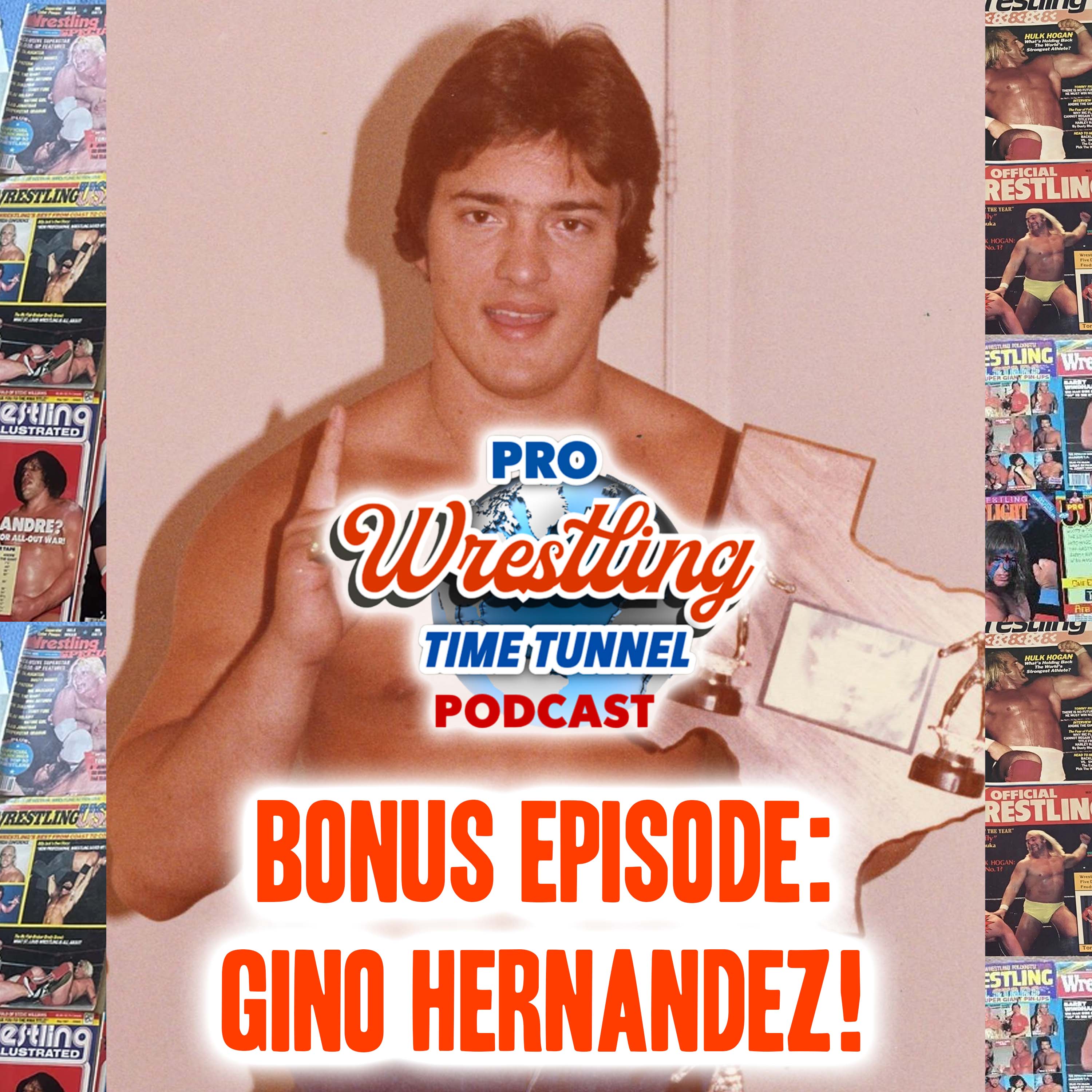
So get in your favorite questions and we will try to see if we can't drum up some answers around here. Okay. Today's bonus episode is round. When I looked at 1986 and I looked at covering, you know how we do it here at the Time Tunnel, we go back 40 years to 1986, we go back 50 years to 1976, we go back 60 years to 66, 70 years to 56, so on and so forth. But as I was looking at 1986 and some of the events that I wanted to make sure to post on social media or maybe write a piece about it for the Daily Chronicle newsletter, I found and remembered that this February is the 40th anniversary of the death of Gino Hernandez, the handsome half breed.
And I've developed a relationship with a young lady who is a young great historian who's come on the scene in the last couple of years. Her name is Lizzie Flanagan, and she's written a book about Gino Hernandez life and career called I Am youm Champion.
And she's one of the two or three people that I know very well who's researched very heavily the life of Gino Hernandez.
And so we're going to have Lizzie here today, and we're going to go back in time 40 years to February 1986 and talk about the death of Gino Hernandez.
Once we have that conversation, I'll be back at the end of today's program and I'll tell you about our second big bonus episode that's coming up here very soon in the Pro Wrestling Time Tunnel History Show. Right now, let's go to Lizzie Flanagan here at the Richards Ranch in Western Kentucky. Hello again, everybody. Welcome to another edition of the Pro Wrestling Time Tunnel History Show. This is Tony Richards, your host, coming to you live from the Richards Ranch in Western Kentucky. And my guest today is the wonderful, the fabulous, my friend and also in my group of wrestling historians that I talk with and converse with from time to time, the wonderful Lizzie Flanagan. Lizzy, welcome to the program.
[00:05:12] Speaker B: Well, thank you for having me.
[00:05:14] Speaker A: And we're going to be discussing this is a special bonus episode that we're going to release in February because it's the 40th anniversary of the death of Gino Hernandez.
And Lizzie's book has just been out for just a little while. It's available. It's called I Am youm Champion.
And she is Gino Hernandez's biographer. So what better person could I possibly get to discuss this milestone of Gino being, being gone. And I, you know, I'm finding more and more of these people that it's just unfortunate. I mean, I was a big fan at the time when Gino was at his peak and just such a tragic loss. What, what got you in interested in the life of Gino Hernandez?
[00:06:07] Speaker B: My dad was a big Von Erichs fan. While they were wrestling. He was able, we live in Philadelphia, but he was able to watch WCCW through their syndicated show.
So then from there he started keeping up. And then when I was born in 2000, he wasn't really watching wrestling anymore, but he would talk to me about the wrestling that he grew up with.
So you mentioned the Von Erichs and Gino. And then he showed me some of the matches that he could find on YouTube. And one of the first matches he ever showed me was the hair versus hair match.
And I was like very young at the time and I remember thinking it was the strangest thing ever, like getting like freaked out because I was like, why are these men agreeing to have their head shaved? Like, this is scary. Like, I, I really did not like it.
He also showed me Magnum TA versus Tolly Blanchard. I quit match. I don't know why he did that because.
But now it's one of my favorite matches of all time. But at the moment, I did not like it.
[00:07:13] Speaker A: Pretty traumatic for a young person. Right?
[00:07:15] Speaker B: But also he. This is the Philadelphia he was used to. Ecw.
[00:07:19] Speaker A: So in Philadelphia, that we should mention too, that's another project you're working on, where you're working and researching and documenting the history of wrestling in Philadelphia going back to the 20s, going back to Fabiani and all those wonderful promoters back then. And that's going to be something you're going to be coming out with soon. So Philadelphia is known as a town where, you know, violent wrestling was pretty much the norm.
[00:07:51] Speaker B: Yeah, oh yeah, definitely.
Which, that's actually kind of a connection between Texas, like old school Texas wrestling and Philly is like the, the bloodthirstiness of it all.
[00:08:04] Speaker A: Very snug. Very snug.
[00:08:06] Speaker B: Yeah. I know one of the magazines I cite and when I talk about Houston, Wrestling calls Texas the blood wrestling capital of the world.
Like, I, I put that. I think that's actually one of the chapter titles because I just, I love that phrase so much.
[00:08:22] Speaker A: Well, you know, Doc Sarpolis and Morris Siegel got the feeling that people were starting to.
And, and it's not so much the whole real versus fake thing, but fans were starting to lose confidence in the Wrestling they were presenting. So they came up with blading, they came up with chair shots. They came up with the stuff that nowadays is pretty much you tune into wrestling expecting to see it, but back then it was very novel and it brought a level of authenticity to it.
Where fans would leave the City Auditorium in Houston and they'd say, well, I don't know if they knew what the ending was going to be or not, but I can tell you what, they were smacking each other with those chairs, you know, so it, you know, spread from there. The Texas style wrestling, where it was, you know, more violent than it was presented in other states. For sure.
[00:09:25] Speaker B: Yeah, yeah. No, the blood in Texas predates Phillies.
Philly at that time was mostly, I think, under the influence of Jack Pfeffer, who had a very unique brand of wrestling. But it was not necessarily bloody.
[00:09:41] Speaker A: Yeah, no, it was more carnival extravaganza type, you know, come see the weird folks, you know, or the. The slightly variation of the name of the person you thought you were going to see. Or.
[00:09:58] Speaker B: I would have been so mad.
Bruno San Martino.
[00:10:02] Speaker A: Yeah. Or Brummy Rogers or.
So one of the great things about the way I go about things is I'm very time based. So, you know, I go back 50 years, 60 years, 70 years or whatever. So last year, since it was 20, 25, you know, 1975 was a year I focused on and that was Geno's rookie year.
And it was a great year to go through and study and document and remind people of things that happened because we had so many great debuts. We had Tully debuted that year. Ted DiBiase debuted that year.
A lot of great people that would go on to become favorites once video came in.
What do you know about Gino's early life? Getting in the business? He break in in Detroit.
[00:10:53] Speaker B: He actually had his first match on his 18th birthday. Well, okay, wait. First official match on his 18th birthday. Before then he was wrestling a little bit in Mexico because you had to be 18 to get a wrestling license in Texas.
But he. As soon as his stepfather passed away, he wanted to start wrestling immediately, but Babash and his mother convinced him to at least graduate high school. He didn't end up going to college, but he did stay in high school.
And then he was working in Houston. Wrestling as a second. So he would carry. We actually, I have some pictures from Tom Pritchard of Gino holding some jackets from wrestlers.
[00:11:35] Speaker A: Interesting. Yeah, I was just researching the other day about the second.
Yeah, the role of the second in wrestling, which is long Gone away. But back then it was a way to get involved in the business.
You could get licensed to be a second, which was. I mean, they even had a uniform for it. I mean, I think you had to wear white pants and a white shirt or black. It varied from state to state, but that's pretty cool. I didn't know he broke in as a second.
[00:12:07] Speaker B: Yeah, he was pop. Ash called him an aide de camp, which I thought was cute.
[00:12:14] Speaker A: Paul's always got to present it in a sophisticated manner, you know?
[00:12:17] Speaker B: Yes.
[00:12:19] Speaker A: So, yeah, his dad passed away in 72 and so was he a second from 72 to 75? Or do you.
[00:12:27] Speaker B: Yeah, he would help sell tickets. He would leave school early on Fridays to go over to 1919, Caroline and Pierce, Paul Botch's office, help sell tickets. And then him and the Tom Prichard would sell like, photographs and like, posters.
And then he became like a formal second.
He also helped giving, like, time cues for Paul Bosch on, like, Commentary.
He had a few, like, odd jobs that just helped him get to know the business.
[00:13:03] Speaker A: His real name is Charles Wolf.
[00:13:05] Speaker B: Yes.
[00:13:06] Speaker A: Did he always work under the kayfabe name or did he work under his real name? How did that work?
[00:13:13] Speaker B: He actually, as far as I know, he never ever went by Charles Wolf in his life. He was Charles Aguirre.
So he went by his mother's name. Like, I found old yearbooks from Geno's high school and he's in there listed as Charles Aguirre.
[00:13:29] Speaker A: Really?
[00:13:30] Speaker B: Yeah.
Even I meant I didn't put this in the book because I couldn't like, verify it. But I had some people who went to high school with Gino talking to me, saying that he only ever went by Charles Acquire. And he acted up a little bit in school, which I don't have trouble believing.
[00:13:46] Speaker A: Did they charge? Did they shorten that to Charlie or did they call him Charles?
[00:13:51] Speaker B: No.
[00:13:55] Speaker A: I mean, he looks like a Chaz. Now that you've said that, you know, because know he's got. He's a good looking man.
Yeah.
[00:14:02] Speaker B: But yeah, the name just feels so like, even like his mom.
If you watch the Dark side of the Ring episode, you notice she calls him Gino.
On his gravestone, there's no Charles Wolf. It only says Gino.
Gino Hernandez.
[00:14:17] Speaker A: That's interesting.
[00:14:19] Speaker B: Yeah. Which he gets the name Hernandez from his stepfather.
So that like, that makes sense that he also. Because a lot of times if you look at magazines or newspapers written during his career, they'll say that he is Luis Hernandez's son. And also A note on. He says Louis. Patrice says Louis.
I've heard some commentators say Louise.
So I say Louis because that's what Patrice says. But the pronunciation of his stepfather's name.
[00:14:49] Speaker A: Well, I contacted you the other day because it was the day that in history that his father. Do you know, I mean, he died fairly young. Like, I think you told me, because I had trouble finding out, you know, how old he was, and you told me he was 33, I think.
[00:15:06] Speaker B: Yeah.
[00:15:07] Speaker A: What. What. You know much about the circumstances about his father passing away? Because it wasn't too long between the anniversary of his dad dying and his death. So did. Were they connected in any way or.
[00:15:21] Speaker B: No, I think it's just one of those weird coincidences. Like, even, like today's Carrie von Eric's birthday. Like, so like, some dates are just close.
No, he. His stepfather died while on tour in Japan.
There is some initial confusion because people thought he might have died during a match, but I think it was. He died of a heart attack before he could have his first bench.
But I. I've, weirdly enough, I was talking to Brian Solomon and Guerrilla Monsoon might have also been in Japan at that time.
Yeah, that was. It was one of those weird connecting moments in wrestling history.
Yeah, he was pretty young.
I don't know if the 33 number is correct, but that's what Japanese news are saying.
[00:16:11] Speaker A: The only reason it's in the neighborhood, though, I mean, he was in his early 30s for sure.
[00:16:16] Speaker B: Yeah.
Yeah.
I do think he was having some health problems because I remember according to this was either in Bosch or Berkoltz book, he had retired for a little bit and then wanted to come back out of retirement.
So, yeah, I.
The Gary Hart also mentioned that he would use pills and drink from time to time. So I'm sure that was not good for his body.
[00:16:49] Speaker A: So how did he get hooked up with the chic Ed Farhead?
[00:16:53] Speaker B: Oh, yes, that was some of Paul Bosch's work. The sheik visited Texas for a little bit and then, like, went through Houston and was scouting. So then Paul Bash was like, well, I have someone.
And, yeah, Gino was a really good fit for Detroit.
[00:17:15] Speaker A: And Paul was a mentor to Gino. Right. I mean, he looked at him as a guide, and of course, he obviously wanted to be in the business. And Paul had oodles and oodles of experience in the business and had a lot of connections and all.
Is that why people started the rumor or started the narrative that Paul was somehow his father?
[00:17:41] Speaker B: Yes, there's a few reasons.
The one Is, I'm sure Gino got preferential treatment, which I think Gary Hart lays it out that Paul Bosch felt guilty over the circumstances of Gino's stepfather's death.
[00:18:01] Speaker A: Why did he feel guilty for it?
[00:18:04] Speaker B: If you take into account that he had retired and then came back to work for Paul Bosch and Bosch sent him to Japan, I think Paul thought.
[00:18:12] Speaker A: He knew that his physical condition was not good for him to come back to wrestling, but he provided a way for him to do it.
[00:18:20] Speaker B: Yeah, yeah, yeah. If you, like, read between the lines there.
[00:18:24] Speaker A: Yeah, yeah, yeah, that makes sense.
[00:18:25] Speaker B: Yeah.
[00:18:26] Speaker A: And so Paul then, because he is this overarching character in Gino's life.
Tell a friend, tell a phone, tell a wrestler. Then people started saying things like that, and it just kind of has grown over time.
[00:18:43] Speaker B: Yes.
Tom Pritchard also has a theory that one of the Papa Ash had a mistress who had striking red hair similar to Patrice.
So some people might have gotten them mixed up and thought, yeah. That Patrice was. Yeah.
But, yeah, I don't. That's. This is something I talk about in the book. I don't think that Gino was biologically Papa's kid. I, like.
I think it's one of those things that wrestling, like, the rumors just kind of took off, and then.
[00:19:17] Speaker A: Well, it doesn't just happen at wrestling. It happens everywhere. You know, somehow the boss is an illegitimate son that is rising in the company, you know?
[00:19:26] Speaker B: Yeah, yeah. I mean, that's what happened, you know?
Yeah. No, I talk a lot.
[00:19:33] Speaker A: People said that about Jerry Jarrett for years and Roy Welch and, you know, I recently put the mathematical formula out there that there's no way that could have been.
Yeah. You know, but I mean, you know, it's just part of the inner.
You know, the most popular sport in business is boss watching and making up things about the boss, you know, So I could see very easily how that could have happened.
[00:19:59] Speaker B: Yeah.
Yeah. No, I. They had a father and son type relationship, but not.
[00:20:05] Speaker A: And I think that's great.
[00:20:07] Speaker B: Yeah.
[00:20:08] Speaker A: Good for Gino, you know, that he had somebody. I mean, obviously it turned out very tragically, but at least for those years there.
And it wasn't like.
It wasn't like Gino wasn't good at what he did.
You know, it wasn't like. I mean, I watched because I knew I was going to be talking to you today. I just went back and watched a few matches. I went watch the Gino Hernandez and Chavo Guerrero match in Houston for the International Junior title or whatever, and, good God, there's heat Yep. I mean, so much heat and the people are going crazy. And Bosch is doing commentary at ringside and he's yelling at people to get back. And the security guards are trying to calm the fans down because Gino had snookered Chavo, you know, at the end and had, you know, and then. And had jumped him in the corner and beat him down after he lost the title. And then he was running around the ring with the title and Tiger Conway Jr. Has to run in and make the save. And the crowd is just going nuts, you know, and it's like this guy earned his place, you know, it wasn't that. I mean, Paul may have given him a leg up, but everybody needs a helping hands, you know, Know, at times.
[00:21:30] Speaker B: Yeah.
[00:21:31] Speaker A: So it wasn't like he was just put out there at the good graces of Paul Bosch. I mean, he more than earned his spot is what I'm trying to say.
[00:21:39] Speaker B: Yeah, no, definitely. Yeah. Wrestling has seen a lot of Nepo babies.
I think Gino even like he, when he was in Detroit, even though that was for such a short amount of time, the fans really took to him there.
[00:21:53] Speaker A: Well, and he's watching the greatest heel in heat inciting heel of all time.
You know, he's watching the chic in these main events every night, creating the reaction that he was getting in that match in Houston.
[00:22:07] Speaker B: Yeah.
[00:22:08] Speaker A: Where the fans are just going nuts and wanting to kill this guy, you know, so he, he picked up a lot of tricks of the trade, I'm sure. From Farhat.
[00:22:17] Speaker B: Oh, definitely. Also his stepfather, having so many friends in the business definitely helped him. Like, one of the Lewis's tag team partners was Jose Lothario, who was another mentor to Gino.
He was. Before Gino turned 18 and could legally wrestle in Texas, Lothario was taking him down to Mexico and Gino was wrestling down there.
We don't have any footage of those matches, but that's why, like, when he debuts in Texas, a lot of the, like magazines will say, like, he wrestles like someone much older than he is. I'm like, yes, because he has a few years of experience already. Even though this is his rookie year.
[00:22:59] Speaker A: I know in Detroit, he got paired up with Don Kent and another great heel. You know, Gino was a fresh face baby face in Detroit and Don Kent was a good old time heel who knew how to get he and how to get crowd reaction. So, you know, starting out working with a guy like that gives you a lot of.
A lot of things to work with.
[00:23:25] Speaker B: Yeah, yeah, no, definitely. Yeah. Then he Lost the US Title to the Sheik. So he got to work in there.
[00:23:32] Speaker A: Everybody lost the US Title to the.
[00:23:34] Speaker B: Chic at some point, but he lost his. The first title he ever held. He lost to the Sheik.
[00:23:39] Speaker A: Yeah.
[00:23:40] Speaker B: He was 19 years old.
Yeah.
[00:23:43] Speaker A: And that, you know, that elevated him.
Just the fact that he was in the ring with the Sheik, the perennial US Title holder, and he's in there as the champion. I mean, that's, that's putting your, that's, that's, that's moving you up the ladder. Did he go to the WWF for a little bit?
[00:24:04] Speaker B: He had, I believe, one match there against Johnny.
[00:24:07] Speaker A: Okay.
[00:24:09] Speaker B: Yeah, he, Johnny Rod was kind of like the gatekeeper of wwf. So he was like in with like Bruno, like the inner circle.
But he did. He.
It was, I guess I would call him a good hand in the, on the card.
Yeah, he wrestled Gino and I don't believe Gino made the best impression or he, it's either he didn't make a good impression or he just didn't like New York. But he never went back to New York.
Yeah, he.
There's only ever one match. I believe there's a picture of him in Madison Square Garden.
But even. Yeah, the Von Eric's boy, Von Erich boys went up to Madison Square Garden in the late 70s, but they, you know, wasn't their priority where this, you.
[00:24:58] Speaker A: Know, I mean, that's a, that's a cultural shift.
You know, anyone who spent any time at all in New York and anybody who spent any time in Texas, I mean, that's a, there's a bit of a, end of a spectrum thing going on there.
He was very close to. Also correct me if I'm wrong, but he was very connected to Jose Lothario, which is a name that is not really well remembered today, but was one of the biggest baby faces ever in the state of Texas.
Years and years. Sold a lot of tickets in the Sam Houston Coliseum, but it was. Who was his actual guy who trained him? Was that Jose or did he just have a bunch of guys that worked with him early on, I would say.
[00:25:44] Speaker B: Lothario was the main in ring trainer because he had Paul Bosh and he had Gary Hart.
But. And when it comes to like his in ring style, I would say Lothario.
[00:25:57] Speaker A: Well, I could see where Jose would be, you know, great as far as the ring stuff and Gary Hart would be great at the healing.
[00:26:04] Speaker B: Yeah, no, he had like, he had the best learning tree you could ever sit under, like Paul Bosch for the business side. Gary Hart for the psychology side, Lothario for the wrestling side. He had, he had the best mentors.
[00:26:17] Speaker A: You could want, and that turned into a program.
[00:26:21] Speaker B: Yes. The heel turn was actually against Lothario.
[00:26:25] Speaker A: All right, well take us through that a little bit. Tell us a little bit about that.
[00:26:28] Speaker B: This is actually Gino's first hair match was against Jose Lothario.
[00:26:32] Speaker A: And what years are we talking about, Lizzie?
[00:26:34] Speaker B: This is 78.
[00:26:36] Speaker A: Okay, so he'd been in the business three years.
[00:26:39] Speaker B: Yep.
[00:26:39] Speaker A: As far as in ring, he's started out as a second in 72, then in 75, he made his in ring debut.
And so he's now in 1978 and he's in a program with the biggest baby face in. In could be in Texas history. You know, I mean, that's, that's, that's moving at a fast rate.
[00:27:01] Speaker B: Yeah. And he's, and he's knocking it out of the park too. Like he had that steel cage Texas death match with Lothario and like they're both bloody. This is after the hair match, I believe.
[00:27:13] Speaker A: So did they say. I'm sorry to stop you. I'm just curious here.
So.
So on screen they were presenting it as Jose was his mentor.
[00:27:23] Speaker B: Yes.
[00:27:24] Speaker A: Right. Then how did they execute the turn?
[00:27:28] Speaker B: See, this is the annoying. We don't have footage of that exact moment, but we have the aftermath of.
[00:27:35] Speaker A: Well, best, Best, as you know.
[00:27:37] Speaker B: Yes.
Gino allegedly broke his arm, I believe.
[00:27:45] Speaker A: And then Jose.
[00:27:46] Speaker B: Yeah.
And then we have the hair match and Gino loses that.
And then they go to San Antonio for a match too.
So there's a promo of Gino wearing. He wears a mask with a wig on top of it.
And he insults Lothario. He speaks in Spanish and says, you're old and fat and bald.
And I'm like, and I'm better than you.
It's. It's the funniest thing because what. And he also, he wore the mask with a wig on it a few times in San Antonio because people in the crowd started coming to the shows with their own mask and wig on top of it, and it looked ridiculous.
[00:28:30] Speaker A: And we should also mention, and this is probably just me being a big Texas historian type guy, we should also mention that Amarillo and Fort Worth and Dallas are different types of demographic makeups than El Paso, San Antonio and Corpus and Houston, and Latin American and Spanish wrestlers are a necessity in those southern Texas towns. So in San Antonio, when you've got Jose Lothario, who was a much bigger draw in those San Antonio, Corpus and Houston Markets and you've got this young Gino Hernandez and they're speaking Spanish on television and going against each other. That's a huge. Got a huge appeal to that audience, I guess I should say.
[00:29:21] Speaker B: Yes, no, definitely. That was Gino when he was in like Houston and he was a baby face. He was like son of a Mexican wrestler. He like took a lot of pride in his Mexican heritage. Even though, like it. I like. So I counted as a serotonin because he was raised by Lewis.
Even though when he, when he starts calling himself the handsome half breed, it's like, not really, but.
[00:29:46] Speaker A: But it's a gimmick. I mean, and it's a gimmick that works.
[00:29:50] Speaker B: Yes.
[00:29:51] Speaker A: And then for the audience, for sure.
[00:29:53] Speaker B: Yes. Oh, and also he. I don't know, he passed when he turned heel, he all of a sudden hates Mexico.
He says a lot of really crazy things.
A lot of calling Lothario 30 Mexican and just like a lot of stuff like that.
But because the population of the audience was so Hispanic that it was like the baby faces were mostly like Mexican and then the heels would insult Mexico.
So it's funny that he just like flipped like.
Yeah, it was. It's very interesting.
[00:30:33] Speaker A: Yeah. It's a psychological move that I could do some heal things to call to cause you to reject me, but the first he'll think I'm going to do is reject you. Oh yeah, I'm going to, I'm going to call myself out from this thing that I've always embraced and I'm not going to be like you anymore. As a matter of fact, I don't even like you. And so that, I mean, that going to cause all kinds of friction because on the other side of the ring they got their biggest hero, you know, not, you know, I guess it's come close between El Santo and Mil Masques and Jose, but I mean he's right up there on the Mount Rushmore of Spanish wrestlers in South Texas, that's for sure.
[00:31:17] Speaker B: Yeah, yeah, no, definitely.
And Gino is really good at making them angry.
[00:31:22] Speaker A: Yeah, well, I mean, that's what it takes. Well, that's what it took to be a heel in those days, you know, people weren't supposed to like you at all.
[00:31:32] Speaker B: Yeah, no, go ahead. Oh, no. It's talking to my friends about 80s wrestling. I like, I always feel like the need to like preface. Like he doesn't actually mean this.
Like, I remember when Ironclaw, Iron Claw came out, they didn't show. Fritz had the Nazi gimmick.
They just Showed that he was, like, imposing. Like the black and white, like, prologue esque scene.
I thought that that was funny that they didn't include that. But then I realized that would probably be like, a lot of modern audiences, especially if you don't watch any wrestling, they would probably take that as, like, oh, their dad is a Nazi.
[00:32:17] Speaker A: Like, I struggle with that.
[00:32:20] Speaker B: Yeah.
[00:32:20] Speaker A: And Greg Klein and I were having this discussion the other day. I'm like, we have to. We owe it to the history to present it the way it was.
[00:32:33] Speaker B: Yeah.
[00:32:33] Speaker A: And we have to be authentic.
Even if some of those words are not politically correct today. Those words were the words that were used.
[00:32:44] Speaker B: Yeah. No, you shouldn't.
[00:32:46] Speaker A: And even if we don't necessarily have to accentuate them, just show the newspaper ad, it's printed right there. You know what I mean? And so we have to keep those things authentic. We don't, you know, we don't need to change it.
Although pro wrestling is notorious for changing its backstory, but we, as historians, we try to be as historically accurate as possible.
[00:33:13] Speaker B: Yeah, Yeah. I think it's just one of those things that gets, like, lost in translation.
[00:33:19] Speaker A: Like, difficult when you're not talking to other historians.
[00:33:23] Speaker B: Yeah. Oh, definitely.
Especially because I think I don't want to talk politics, but I think politics now are. It's very charged, and it feels very like everyone's in flight or fight.
So I almost get the, like, touchiness. But, like, you have to kind of take a moment and be like, wait, Fritz just imagined the most evil person he could, and that person was a Nazi, and that's why he chose that gimmick. It's not like I remember watching the.
[00:33:51] Speaker A: Times were that the Japanese and the Nazis were the most hated ethnic groups at the time because of the post World War II time period. And it went on a little longer than it probably should have. I mean, they're still doing those Gimmicks in the 70s when, you know, 20 years probably was the expiration date, you know, but, you know, they, you know, well, they turned Tojo Yamamoto, baby face. I mean, so. And he turned him back and back and back and back and many, many times. But. But understanding the context of the time period helps you understand why those heels were such hated people.
Because of the recent history.
[00:34:40] Speaker B: Yeah. No, definitely.
Yeah.
Watching, like, Bruno and Waldo Von Erich, like, you get the, like, I imagine I'm Italian. Like, most.
Like most white people in New Jersey, I'm Italian.
And I can imagine the, like, pride that you would feel seeing this, like, Italian, strong Italian boy beat the out of a Nazi. Like, yes.
[00:35:07] Speaker A: This is.
[00:35:07] Speaker B: This is, like, cathartic, Right?
Yeah. Like, I get it. It's just that nowadays, I think with how wrestling blends reality and fiction, some people take the wrong bits from fiction and put it into reality.
[00:35:23] Speaker A: Now also, I mean, so Gino gets his head shaved in this match.
Somehow or another.
Somehow or another, though, he always had a connection with the Blanchard family.
[00:35:34] Speaker B: Yes.
[00:35:36] Speaker A: And he ends up back there. So what was the time frame? So the hair match and the feud with lothario is in 78. Then when does he go in there in San Antonio and start working with Joe and Tully and those guys?
[00:35:52] Speaker B: So that is late 81.
[00:35:54] Speaker A: Okay.
[00:35:55] Speaker B: It coincides with when Houston left the NWA or I shouldn't say left the NWA because Paul Bosch was never officially in the NWA, but he officially, like, severed ties.
[00:36:07] Speaker A: And I don't want to skip over that. Big. There was a big David on Eric feud in there, too, somewhere. And you're the expert, not me. I'm just wandering around here a little bit. But.
So which one should we talk about first? The David Von Erich or the Blanchard tag team?
[00:36:24] Speaker B: We'll talk about David first.
[00:36:25] Speaker A: Okay. Because that really. That really put him on the map, right? I mean, that. Both of them.
[00:36:31] Speaker B: Yes. No. And it's such an interesting feud because I love watching that match.
It's on YouTube. It's one of the matches of Geno's early career that you can find, like, really easily.
But you can see, like, their early, like, formation. Like, they're not, like.
You can tell they're not as confident, and they haven't, like, fully developed their Personas. But Gino's a lot farther along than David is.
[00:36:58] Speaker A: Oh, that's interesting.
[00:37:00] Speaker B: Yeah. Like, it's just very, like.
It's so. It's so fun. They, like, get so up in each other's faces.
[00:37:09] Speaker A: But. But I mean, really, David's what, three, four years into his career at that point, and Gino is now almost six years into his career. So he. He's a couple of years accelerated. He's accelerated anyway. I mean, he, you know, again, going back to that from the time he started, and three years later, he's in this main event program with the Sheik, and he's in his main event, a program with Jose Lothario. He always was a little bit advanced, it seems like.
And in 81, David was a very promising wrestler who had not quite yet, like you say, has not quite yet developed. But putting those two together was pretty magic, right?
[00:37:56] Speaker B: Yeah. No, and they Parallel each other in a lot of ways because they're both second generation wrestlers.
Both, I think, had a knack for working heel. Even though David at this point hadn't done that yet. He wouldn't do that until like 82 in Florida.
[00:38:13] Speaker A: Yeah.
[00:38:15] Speaker B: Yeah. And they both like, they both grew up in the business and you can.
[00:38:17] Speaker A: Tell what did that feud revolve around? How did, how did it develop? How did it start?
[00:38:24] Speaker B: And I believe it was the Texas Heavyweight championship, which, shoot, it was. Gino and Lewis both held it. And then Fritz and David both held it too.
[00:38:35] Speaker A: Oh, that's interesting.
[00:38:37] Speaker B: Yeah. They become the first father son pairs to ever both hold that belt.
[00:38:42] Speaker A: I like it.
[00:38:43] Speaker B: I don't know if they ever mentioned that specifically, but it is. I like, some magazines at the time were bringing it up. I don't know.
[00:38:49] Speaker A: I'm gonna, I'm gonna go find some of that now.
[00:38:51] Speaker B: I know, right? It wouldn't be. Yeah, it's an interesting thing.
That's what I mean when they say, like when I say that they parallel each other.
Yeah, it was. And there was also some, some beef between Houston and Dallas. So this was mostly behind the scenes.
[00:39:07] Speaker A: Yeah. Because Dallas had been the booking office and, and Paul had broken away and was working with different offices for the talent that he was getting. And you know, of course, Fritz owned the booking office in Dallas, so that, you know, was probably the behind the scenes.
[00:39:26] Speaker B: Yeah. Oh, yeah. Pablo was not happy. He was not happy with Fritz, but he mostly took this out on Gary Hart, which is why Gary Hart. A lot of the book, like a lot of the early part of the book is about the tension between Gary Hart and Paul Bosh.
[00:39:42] Speaker A: I see. Well, I've always thought about it this way. You know, Paul is the nicest, lovable man as a promoter, but he didn't get along with anybody, you know, I mean, he didn't get along with Blanchard, he didn't get along with Watts, he didn't get along with Crockett. He didn't get along with Vince. He didn't get along with Fritz. He didn't get along with anybody.
[00:40:07] Speaker B: No, he could, he could be a little petty. I think Pabash is a, like a very admirable man.
Like, I read his book Forest in Hell, like Roads and it's, it's amazing. Like, not even as like in terms of books written by wrestlers, just like in terms of like war history books. Like, it's amazing.
[00:40:29] Speaker A: Well, it's a very pivotal time in the war.
[00:40:32] Speaker B: Yeah.
And he comes out of the war like, very decorated. Like he wins the quad and the. I don't know how you pronounce that. I don't quite.
It's the French Cross of War. I don't know how you pronounce it in English.
[00:40:47] Speaker A: I mean, that was one of the things that I found out doing the Welch series for Briscoe and Bradshaw was that Jimmy Golden's father, Bill golden was in Patton's army also in the same kind of thing. Paul was in those battles.
[00:41:04] Speaker B: Yeah.
I believe Paul Bosch's infantry division also won a medal. Like this distinguished unit.
They were in the Battle of the Bulge, which is like one of the deadliest battles in World War II.
Yeah. No, it's very interesting. So like I. And also he wrote poetry and his poetry is very good.
I always get nervous when I hear that someone I like writes poems because I'm worried I'm going to get like secondhand embarrassment. But his poetry is very good. Yeah.
[00:41:37] Speaker A: So.
So David and Gino, they trade the Texas title back and forth a time or two. And so then there's. So then Gino leaves. Was it world class at that time? I can't remember when the name change.
[00:41:52] Speaker B: Happened, but yes, I believe at this point it was still big time wrestling.
[00:41:56] Speaker A: Okay, and so Gino leaves there, then he goes to San Antonio, right?
[00:42:02] Speaker B: Yeah. Yes, because he follows at this point he follows Paul Bosch, who is working with San Antonio now because he cuts off the NWA in Houston. No, in Dallas.
[00:42:12] Speaker A: In Dallas, yeah. And he's getting his talent from Blanchard then.
[00:42:15] Speaker B: Yes.
Which is. We get some interesting matchups. Like he's able to work obviously with totally Blanchard, but then like meal mascaras and like even like junkyard dog and like talent that he wouldn't have been able to go up against if he stayed in Dallas his whole career.
[00:42:34] Speaker A: Do you like the Tully Geno tag team?
[00:42:38] Speaker B: I do. I know I was talking about this, I think with Greg Klein, but it is like, it's interesting that they are also like very similar in terms of like second generation wrestlers who were kind of like prodigies and both like started out Babyface, but really like hit their stride as heels and like they were both so good at getting people to hate them. I think them pairing up is like, like, oh, with a thing out of someone's nightmares. It's beautiful.
[00:43:14] Speaker A: I know Tully was. I mean, even today I've. I've seen some of his interviews where I almost think that that was his favorite tag team. Like even better than he and Arn, you know, that he, he really thought that he and Geno were very, very good.
[00:43:35] Speaker B: He's very much, like, out of his shell. Like, I'll say. Like, I think I'm used to Tully being with Arn, and, like, maybe it's just because he's older, too, but, like, I just think Tully, when he's with Geno, like, he's just very, like, very, like, lively. Like, I don't know how to describe it.
[00:43:53] Speaker A: I mean, they were very. I mean, it for a shoot. They were very cocky individuals.
[00:43:59] Speaker B: Oh, yeah.
[00:44:00] Speaker A: I mean, both of them. I mean, they both thought a lot of themselves. And that's part of what gets projected in the character. Right. Is, you know, you got to come from. You have to believe it before you can get someone else to believe it. And they didn't have any trouble believing a lot of the gimmick.
[00:44:17] Speaker B: Yeah, no, definitely. I mean, even. Yeah. Gino saying, like, I'm the most handsome man. It's like, okay, sure. Like.
[00:44:26] Speaker A: And I'm sure Tully's thinking to himself, he just thinks he is, like, yeah.
[00:44:29] Speaker B: Oh, he's like, I'm the handsome one.
[00:44:33] Speaker A: So. So how did that tag team. Like, where did that come to a climax or a conclusion?
[00:44:41] Speaker B: So they end up holding the Southwest tag team championships, which side note, very interesting title design. If you've seen them, it's like, yeah, the cow belt. Like, pelt. It's. Yeah.
[00:44:55] Speaker A: Oh, I'm a. I'm a belt mark. I've seen. I see as many of those photos as I can. I know.
[00:45:01] Speaker B: They're so. They're so cool.
[00:45:03] Speaker A: And one of these days, when I get my act together, you're going to see some of them in the background here and not just blank walls.
[00:45:11] Speaker B: So I love. I replicate. The belts are like. That would be a cool thing to collect if they weren't, like, hundreds of dollars each. But anyway, yes, they hold the Southwest tag team.
[00:45:25] Speaker A: Well, we just got to sell more I am your champion books.
[00:45:28] Speaker B: Yes. Okay, everyone buy my book so she.
[00:45:30] Speaker A: Can get herself a nice decoration.
[00:45:33] Speaker B: Yes.
That's going to go towards student loans.
[00:45:37] Speaker A: Honestly, whatever you need. Let's just sell more books.
[00:45:44] Speaker B: Yes. Okay. So then Gino also.
Oh, he's also working in Georgia at this point.
Gary Hart managed to get him connected to Georgia Championship Wrestling. And this is a big deal because they had that superstation, so getting a lot of television exposure.
He met Roddy Piper at this point, too, which. That's a very funny. When they interact, it's, like, so funny because you can tell that they're. They're all over Each other.
And, like, Roddy is, like, praising Gino so much. He goes like, this is youth. This is scientific wrestling. And it's like. Is it, like, comes up and, like, blows a kiss to the camera and then it's like, shut up. It's like. It's so funny.
[00:46:26] Speaker A: That's awesome.
[00:46:27] Speaker B: Yeah, but, like, that's another pairing. If they. If Gino did end up, like. Some people think if he had lived longer, he would have gone to wwf, which is, like, questionable to me, but, like, that would have been really fun to see those two, like, in the ring together.
[00:46:42] Speaker A: Well, he was young. He was young enough for sure, that. I mean, in those days, everybody ended up there, you know, at some point.
That had worked the last part of the territory era, and, you know, had not quite gotten to 40.
It only makes sense. I mean, you know, Carrie ended up there. You know, Flair and Dusty, they all ended up there at some point. So, I mean, I'm sure he would have ended up there at some point. I mean, just. He was a great performer.
[00:47:12] Speaker B: Yeah. It's the only thing that I think might have kept him from that is that he wanted to be an actor.
[00:47:20] Speaker A: And that probably would have been another reason to go there.
[00:47:22] Speaker B: Yeah.
Yeah, he does. He takes a brief. I'm jumping ahead a little bit. He takes a brief break from wrestling between his end of his run in San Antonio and the beginning of his run in Dallas because he tries to explore his acting options and nothing really pans out. So we get him back in wrestling, which I guess it's like, happy for wrestling fans that we got more Geno.
[00:47:49] Speaker A: Yeah.
[00:47:49] Speaker B: But. Yeah, but I think that was still on his mind. He did have those Hollywood connections, too.
He had a lot of Hollywood friends in Houston. He also. And he dated Farrah Fawcett, which is a shoot.
[00:48:03] Speaker A: He did actually date another Texan.
[00:48:06] Speaker B: Yes.
I don't know how committed either of them were to the relationship, but they were fond of each other.
Yeah.
Yeah.
[00:48:14] Speaker A: It sounds like it would fit the image that he would be projecting, right, to have a Farrah Fawcett girlfriend.
[00:48:21] Speaker B: Yeah, no, literally, one of the Roddy Piper interviews he does, he brings out a binder of pictures. Oh, my faucet. And then he kisses the pictures of Farrah. And then Roddy goes, oh, isn't that sweet? Like.
[00:48:36] Speaker A: So that. That feud that I was talking about that I'd watched the other night with Chavo Guerrero, that was in 82. And then we find. We, you know, we get to the world class years in probably the years that he is most known for, which were the, I guess, 1984, where they're looking for someone to put with him.
And Nicola Roberts, who lives in Lubbock, Texas, and is the daughter of a longtime wrestler and promoter there. Nick Roberts decides that.
So this might be a good way for me to get in the business is to go down there and hook up with Gino as his valet or whatever. Is that kind of how that happened?
[00:49:22] Speaker B: More or less.
I talked to Nicola a lot while writing this book, and she's amazing, and I can't say enough nice things about her.
[00:49:30] Speaker A: Oh, yeah, yeah. In St. Louis, at the St. Louis hall of Fame, I had these.
I found these vintage magazines that had this great photo where her mother, Lorraine Johnson, and Penny Banner, were tag team partners and they had been put in jail for inciting a riot in Amarillo.
These two female wrestlers got the crowd in Amarillo so fired up that, you know, that was against the law.
And so I presented those magazines to her, and she was just a sweetheart.
[00:50:03] Speaker B: Yeah, she's so nice. She. We would talk, like, we talked about Gino a lot, and then conversation would just go on to, like, pets and, like, we would send each other pictures. She is a gimmick, which is such a cute name for a dog, for a wrestler.
[00:50:18] Speaker A: Part of what I really loved about that night, giving her those magazines is she was looking at her magazine, that magazine of her mom in there, and she goes, oh, my God, look at her boots. Those are such cool wrestling boots. And I'm like, oh, I've given her something that she like. So I was happy with that.
[00:50:36] Speaker B: Yeah, she's very sweet. Actually, my boyfriend met her too.
He was working backstage for a wrestling convention, I believe, at the 2300, and he met Nicola and said, like, oh, I'm Lizzie Flanagan's boyfriend. And she was like. Like, I'm sorry. Yes, he was.
[00:50:57] Speaker A: So in your opinion, how did that combination work?
[00:51:00] Speaker B: Yeah, it was interesting. It was. She really wanted to get into the wrestling business, so she ended up calling wccw. Like, she looked through her dad's phone book and saw. Found their number. And then David Manning.
Yeah, I think they're.
I think he definitely needed her. Mostly because of Sunshine, who is really popular at that time and was friend of the Von Erichs and Chris Adams.
So that was, I think, mostly for someone to fight Sunshine.
Like. Yeah, yeah.
[00:51:38] Speaker A: They're looking for a counterbalance in the. In the feud.
[00:51:42] Speaker B: Yeah, I know she is. It's. It's funny to see how different, like, Baby Doll and the Lady Giant Andrea.
[00:51:51] Speaker A: Right, right.
Definitely a transformation there.
[00:51:55] Speaker B: Yeah.
[00:51:57] Speaker A: So was that kind of.
Unfortunately, he passes away in 86. So what was his best time there? From 84 to 86 in world class, he lost another hair match.
[00:52:13] Speaker B: Yeah.
[00:52:14] Speaker A: I mean, he was really good at getting his head shaved.
[00:52:17] Speaker B: He got his head shaved at least three times that I know of. He had really good genes, so he could grow his hair back very quickly. Yeah, yeah. He lost, I believe. Like, I think there's another hair match to Lothario that, like, because he had a blonde phase when he. He went by just gorgeous Gino, blonde, and it looks atrocious.
And Nicola actually said, like, yeah, he didn't, like. Like, it didn't have the effect he wanted.
So I think he just had a hair match and just got rid of it and that was it.
Which is a very. That's really funny to me. I. My sister's friends who are like, wrestlers now, I'll hear, like, I want to get a haircut. I should just do a hair match and get rid of it. It's like, okay, like, it's funny to see the, like, how their brains work.
Yeah. Because I can definitely see Gino being like, I don't like this hair anymore. Let's do a hair match.
[00:53:11] Speaker A: Like, so did you. Did you like the Chris Adams and Gino pair?
[00:53:15] Speaker B: I do.
I think Gino is very helpful in getting Chris to actually turn heel because I think the fans were reluctant to actually boo him because you can see after he turns heel, they're still cheering because he was like, so popular among the Dallas fans that, like, I think they kind of needed Gino to pull them along.
[00:53:40] Speaker A: Yeah.
[00:53:42] Speaker B: Yeah. Like, even after, like, he like, rocks Kevin with the chair to the head, and they're still like, they're still kind of like, okay, like, I mean, at.
[00:53:53] Speaker A: This point, I mean, world class championship wrestling has blown up. I mean, there's so much difference in. When he was in the David Von erich feud in 1981 to we're here, you know, 1985, the Cotton bowl, you know, and the hair versus hair match against Carrie was carrying Kevin or. Yes, carrying Gavin. I mean, this has got to be.
I mean, he's got to be thinking, I'm on top of the world here, you know, at this time.
[00:54:23] Speaker B: Yeah, definitely. And this is the switch from big time wrestling to world class.
With that it comes a lot of production overhaul and like, a lot of things that kind of set the standard even for wrestling today. Started in wccw.
Like, wrestling and wrestling and television originally worked out Very well because it could be filmed from one hard cam. You could just see the ring.
And in like, the very primitive days of television, that was like, ideal.
But then then eventually you get like two cameras that you switch between. And then WCCW was like, what if we had like, 10 cameras?
And then you start to get close up shots of the wrestler's faces and it's like. It takes it to like a whole new level of presentation.
So that's why. That's why you had someone in Philadelphia watching it. And then eventually that guy grows up and has a kid and then I'm into like, you know, like, it was. Yeah, it was really like, ahead of its time.
Especially in terms of just like the, like, the characters too, because WCCW is when you started to get those, like, out of the ring vignettes. Like, you would have, like, the interviews with David at his farm and like, just like the things like that, that you got to know the wrestlers as characters and, like, people.
So, yeah, Gino really thrived in that kind of environment because he had the, like, really big personality.
[00:55:53] Speaker A: Right.
You. You talked about his relationship with Farrah Fawcett, and I'm sure he had a lot of girlfriends.
Did. Was he ever married?
[00:56:04] Speaker B: He was married. He was married and then divorced and then remarried and then divorced again. And this was all within the span of two years.
But he had two. He had. He had a daughter, so. Yeah, and they're on. They're in Dark side of the Ring.
Yeah. It is one of the recurring themes with Gino.
[00:56:26] Speaker A: Were his wives in Dark side of the Ring?
[00:56:29] Speaker B: Yes. Yeah, it was just one wife named Janice, but yeah, she's.
[00:56:35] Speaker A: Oh, I thought you said he got married twice.
[00:56:38] Speaker B: He did. He married the same woman twice.
[00:56:40] Speaker A: Oh, yeah. Well, that. There you go. That makes mathematical sense then.
Okay.
[00:56:46] Speaker B: Yeah, I should have specified that.
[00:56:48] Speaker A: Oh, that's okay.
[00:56:49] Speaker B: That's just.
[00:56:50] Speaker A: I'm a little slow. I didn't.
[00:56:52] Speaker B: Well, isn't it interesting? Yeah.
But yeah, she would in Dark side of the Ring talk about how she just wasn't comfortable with the lifestyle he was leading. And I don't blame her.
This is when he started to really get into the party life and making some connections that you would not want to be around your infant daughter, I would say.
Yeah.
[00:57:19] Speaker A: So he has two children or.
[00:57:21] Speaker B: I think he is. Yes. I wasn't able to get in touch with that side of the family.
I talked with Gino's mother a little bit, but yeah, I couldn't. I even. I couldn't get in touch With Yvonne Erics either. And that's one of my biggest. Like with this book. Yeah.
But on like, luckily, Kevin has talked a lot about Gino over the last four decades. So I feel like he, his viewpoint.
[00:57:49] Speaker A: Is pretty much had everything you would have learned if you would have talked to them. Probably.
[00:57:54] Speaker B: Yeah, I did. I think Kevin Von Eric interviews are so funny because he'll just like bring up a story, I don't know where you're like, okay, like the one time he talked about him and his brothers breaking into someone else's farm and then the farmer shoots them with rock salt and it's like, okay, why? This is an interesting thing to have happened to you.
[00:58:16] Speaker A: Right.
[00:58:18] Speaker B: Yeah. That's also, that's the cultural shift for me because I'm, I'm from Philly and I cannot imagine half of the things Kevin talks about Texas. I'm like, what?
[00:58:29] Speaker A: So February 4, 1986 would have been 40 years ago, just a few days back.
That's the day that they discovered him.
Do they say that was also the day passed or do they know what the time frame was from the time he passed to the time they discovered him or How'd that go, Lizzie?
[00:58:54] Speaker B: Yes. So he, his official day of death is listed as February 2nd. So he was not found for a few days, which there's some very gross descriptors of death that I, of course.
[00:59:12] Speaker A: I mean, you know, someone's. Someone's passed away for a few days and left unattended. There's going to be some stuff.
[00:59:19] Speaker B: Yeah, yeah, yeah. No, he, he, his day of death is assist, like four days before his body was found on the 6th.
Yeah, he, yeah, they thought they knew something was up because he had missed some bookings.
Like I believe he was booked to wrestle in Oklahoma and he missed it. And it was very unlike Gino to miss bookings.
See, that's. Yeah. And then you had David Manning sent another world class referee, Rick Hazard, to Gino's apartment to look and he had to like climb over the fence and get to the back of his condo and look in. And then they saw his body on the floor.
[01:00:01] Speaker A: Yeah. It's weird how some people can have various dependencies and addictions and can't function, while others can be highly functional. And so the way I've always understood it was he had these habits and he did these things, but he didn't miss work and he was there, didn't miss bookings and didn't. No show and those kinds of things, which he was a highly functioning sort of human Being with where that was concerned.
[01:00:33] Speaker B: Yeah, I.
With this book, I did a lot of research into drug culture in the 80s and specifically cocaine usage, because it got especially popular among wrestlers in Texas because of the long drives they had to make, because the Von Erichs were driving from, like, San Antonio, Houston, Dallas, and like, that's like several hours apart.
[01:00:59] Speaker A: And by then, they had taken over the old West Texas territory.
So when the funk sold to Murdoch and Mulligan in the late 70s and they were out of business by 81.
So Fritz and his office, Paul pulling away on the other side of Texas, well, he just sort of annexed the Lubbock and Amarillo and Abilene and those places, which. That's a big drive. I mean, making that loop.
[01:01:30] Speaker B: And you think about the times of day they had to drive. It was normally, like, after the show, it would over, and they're beat up and they're sore and they're exhausted.
So a lot of them did become reliant on those. Cocaine and painkillers were the two big ones.
The Von Erichs were caught up in that as well, especially with painkillers.
Carrie would get really reliant on those, especially after the amputation of his foot, which this had. I didn't get really into that because it happens after Gino passed, but it was like that kind of culture, which is always prevalent.
[01:02:10] Speaker A: Well, listen, I.
I did a lot of. It's one of the reasons I have a dysfunctional back and a dysfunctional hip is all the miles I traveled in business, in a vehicle, several hundred miles a week.
And I. And I just remember going from you town to town, hotel to hotel.
And I just remember thinking about how it must look very glamorous, because it did to me. When I first started traveling for work, it looked like, oh, this is kind of cool. I'm going to drive around from town to town and stay in a different place every night and all that. It gets old pretty fast.
And I totally understand why. Music performers who even travel on nice, luxurious buses, that's still not like being in your house and being in your own bed.
Wrestlers that drive from town to town, I mean, I. I can completely understand how you would fall into those temptations of needing those stimulants to keep you just the energy going, especially in something as physically demanding. I mean, I wasn't. I wasn't driving from Cape Girardeau to Joplin to get beat up.
Yeah, I was just going to work, you know, and then going then from there to Lawrence, Kansas, or there to Columbia, Missouri, and There wasn't any physicality involved in it. You add that in on it. Plus sleeping in a Motel 6 bed. Not the down Motel 6, but just in a. Sometimes the.
The Alamo Hotel or something cheap, you know, and you're on that bed and not your regular bed, and then you're in a different bed the next night. I mean, I can see how, you know, alcohol or some stimulant like speed or cocaine would be something that would be. Temptation to just keep you going.
[01:04:06] Speaker B: Yeah, no, definitely. Especially when you consider the snug style of Texas wrestling.
Like, it was not uncommon to, like, work through. Like.
Like Kevin broke his orbital bone in a match against great Kabuki.
And just like, injuries like that that, like, they just kind of pile up and you're like. It's like trying to drive a car that's breaking down. Like, it's. It's just gets impossible, you know, I've.
[01:04:32] Speaker A: Been watching Gary Hart's sons lately. Have you seen them doing their show on YouTube?
I've enjoyed it. They. They do a pretty good job. They do. It's pretty short. They usually take a quarter question or two from people and this, that, and the other. But I wanted to ask you about this, and I don't want to give away too much of what's in your book, because we definitely want people to buy your book, but is it true that Gary Hart was trying to get Gino to get off that stuff before all this happened?
[01:05:03] Speaker B: Yes. Yeah. Gary Hart is another father figure to Gino. And you can see, like, in interviews he's done after, like, even like 10 years after Juno's death, you can see how heartbroken he is over the loss of Gino.
He really wanted Gino to break that habit.
And he would just tell him, like, you're never gonna. Like, you don't beat cocaine like, you. Cocaine beats you. Like, you're gonna, like, outgrow it, essentially. You need to. You need to fight the addiction now. And Gina was just kind of.
We just kind of brush him off.
Yeah, it was like, very. It's very tough to see how, like, devastated. Like, I heard there's. I forget which documentary this is in, but Gary Hart said once that he, like, he keeps pictures or he. He would keep pictures of all the wrestlers he worked with, but he could never keep a picture of Gino because it made him too upset to look at him. So. Yeah.
[01:06:12] Speaker A: Gosh, that's tough.
[01:06:15] Speaker B: Yeah.
Yeah.
[01:06:17] Speaker A: I'm sure you go into all the different stuff around all of this in. In your book, and I. You know, I want to encourage people to get it.
I am your champion by Lizzie Flanagan the life of Gina Hernandez.
So I don't want to go through all the different possibilities and all the different rumors and all that different people have said, because I'm sure, like I said, it's all in your book.
But just. I mean, you spent so much time. And I know this from doing this myself. You spend so much time studying a person's life that even though, like. Even though I never met Dorie Funk Sr. I feel like I know him because I spent so much time studying his life. And I'm sure that's the same way with you. What would you say about Gino Hernandez?
[01:07:08] Speaker B: I mean, he.
Oh, he is very, like, duplicitous isn't the right word. He's a very layered person.
Like, every wrestler kind of leads a double life to some extent, but for him, it's a double life within a double life within a double life.
So he's like. He's very layered.
So it's hard to really pinpoint exactly, like, who Gino was because he presented so many different faces to the world.
[01:07:39] Speaker A: Do you think that the woman that he married twice. I'm fascinated with this now that I didn't catch on to this the first time around, but. Do you think she knew him?
[01:07:49] Speaker B: I think so. I think.
I think there was a sweet side of Geno that he didn't let a lot of people in on. I know Mark Lawrence said something very like. That really stuck with me about Gino, that he thought there is just a lonely side to him.
And, like, he remembered going to a baseball game.
Shoot, I'm forgetting whatever the. The Houston team is as. Yeah, I don't even think they were the Astros at that point, but whatever.
And he saw Gino there by himself, and he thought that that was very, like, interesting because Gino, like, presents himself as this very, like, outgoing, flamboyant.
[01:08:29] Speaker A: It might have been the Rangers.
[01:08:30] Speaker B: It might. I think it was the Rangers.
[01:08:32] Speaker A: That's the team in Dallas or Arlington.
[01:08:34] Speaker B: That makes more sense.
Yeah, but he thought that that was very odd that, like, Gino would just be by himself at, like, an outing like that.
So. And he talked to Gino and said, like, next time you go to a baseball game, like, tell me and I'll, like, we'll go together. And Gino was, like, a little taken aback. Said, like, yes, like, I would like that. And. But I think this was a few weeks or maybe a month or so before Gino passed. So they Never got to go to that baseball game. But it's just a very, like.
[01:09:04] Speaker A: That's very insightful because on the outside, like you said, there's all these layers and this gimmick that he is presenting is. Is anything but lonely.
[01:09:15] Speaker B: Yes. Yeah.
Even, like the way that Nicola talks about him, like, she. You can tell she has a lot of respect for him.
She did tell me she had a little bit of a crush.
Who can blame her? But just like, there's this very kind hearted person underneath all of the, like, all the heel work and all the party lifestyle and all the, like, everything. There's like, just.
Yeah, I got. I also don't want to give away too much of the book, but there's like, I think Gino at his core was someone who wanted to make his dad proud, so. Yeah, yeah, yeah, it's cool.
[01:09:57] Speaker A: All right. Well, unfortunate passing of Gino Hernandez, a career cut off, way, way too short. 28. Is that right?
[01:10:07] Speaker B: 28.
[01:10:08] Speaker A: 28 years old.
[01:10:09] Speaker B: 29. But he would have turned 29 in August. He was 28 when he died.
[01:10:13] Speaker A: Yeah, 28 years old. And one of the.
One of the biggest drawing heels in pro wrestling at the time. In 1985. 86. 84. Those, those three prime years in there in world class. He definitely was. I mean, of course, you can't take away anything from the Von Erichs and there were other contributors that was an outstanding roster in world class at the time, but Gino and Chris, they. They lit a fuse to that place, too.
What would your. What would your closing thoughts be that you would want everybody to know about your book?
[01:10:53] Speaker B: I think one of the themes in it is that I talk about Gino and the Von Erich curse and how people tend to make spectacles out of the lives of these men. These young men in their 20s who were thrust into this, like, rock star lifestyle that they were never prepared for.
And I think I want people to remember that there are humans underneath all that curse talk.
[01:11:22] Speaker A: Sure.
Yeah. They're not. Not computers.
They're humans with real, real lives and real feelings. And so I look forward to reading the book. And Lizzie Flanagan, I am your champion. That's the book about Gino Hernandez. She's also working on a history about wrestling in Philadelphia.
That's a current project that she's been working on. I've heard her discuss that on other podcasts, which, by the way, I'm so excited I finally got you to come on my show.
I listened to all these different shows. They're like, this week we're Having Lizzie Flanagan, I'm like, what?
Why is she there? Why isn't she here? We talk all the time, you know, so I'm glad you finally came this week. And I also want to mention that you have a website where you publish some of your writing called under the ironclawordpress.com and there's some excellent pieces there. And that's the thing, you know, not everything can go in a book.
So we need to have places where we want people to know stuff. But it's a lot of times the editors and different people want you to trim the book down and, yeah, you got to take stuff out. So it's a nice way to put that stuff still out there and appreciate you putting in the time and effort to preserve wrestling history. And I hope you and your dad, who I think I would really like, I hope you guys can come to Waterloo.
[01:12:56] Speaker B: Yes.
[01:12:57] Speaker A: For the Trago Says hall of Fame in July.
I think you would really, really enjoy it and I would really be excited for you guys to be there.
[01:13:08] Speaker B: Yeah, definitely. I think my dad's already getting. He's already getting excited for it. We just need to, like, officially, like, buy the plane tickets and everything.
[01:13:16] Speaker A: Yeah, good. All right, well, listen, thanks for coming by. Appreciate you taking us through some of the life and giving us a little sneak peek into your book. And everybody go to Amazon, is that. Where else do they get the book, Lizzie?
[01:13:32] Speaker B: Get Amazon, Barnes and Noble.
And you can go to the publisher's website, McFarland Books and purchase it there.
McFarland runs sales. Sometimes I don't believe they have one going currently, but I always post whatever there is one on my Twitter and.
[01:13:48] Speaker A: I appreciate McFarlane because they publish wrestling content. So.
Yeah. All right, well, thanks for coming by.
[01:13:56] Speaker B: Thank you for having me.
[01:13:58] Speaker A: Well, I hope you enjoyed that conversation with Lizzie Flanagan about one of the most promising wrestlers that we had in the business back in 1986. He was so young and had so much ahead of him in the business of pro wrestling. And just in life, I mean. I mean, he married the same woman twice. It must have been true love. He had a child and a whole lot more in his life to live for. And unfortunately, his life ended sometimes under very suspicious and interesting and controversial circumstances, some say. And so he will always be remembered here at the Pro Wrestling Time Tunnel for his contributions to us, the fans and to the business.
Gino Hernandez, such a. Such a great performer, even. You could even say he was a great performer, you know, in the career that he had before his untimely death. So I hope you enjoyed that today.
Okay. Let me tell you about a couple of things. One is I was on the show talking Memphis wrestling with Randy Hales and my buddy Michael St. John and my buddy Pat Trammel. And I just met Randy, so I could say he's my buddy now.
But we did a show last Tuesday night and you can find it in YouTube Talking Memphis Wrestling. It's. It's the latest episode and they do that every Tuesday night. They broadcast it on Facebook, on X, on Instagram, on YouTube. I mean, just about. I need to find out how they do all that great stuff. But we had a two hour show and I was focused on quite a bit in the show and we talked about the Tennessee territory under Roy Welch and Nick Goulis because it was based on my series that I did for Briscoe and Bradshaw and the Roy Welch Legacy. And so there's some other inside stuff there about that series that if you loved that series, you'll love. This two hour show I did with these guys because I answered their questions.
They all watched the series and had some questions they wanted to ask me and I thought it turned out really, really great. So if you're looking for some additional podcast material to listen to, you might want to check out Talking Memphis Wrestling in YouTube and bumps and Thumps with Brian Ferguson. I was just on with him and Brian goes into and asked me a lot about my earlier life and how I got into wrestling and how I got into broadcasting and how I got into consulting and all of that stuff.
[01:16:30] Speaker B: Stuff.
[01:16:31] Speaker A: And so, not that I'm that interesting a fella, but if you are interested in more of how I got to be me, you can check out those two shows and you can find out more.
I want to invite you to subscribe to the only daily history wrestling newsletter that I know of and that's mine at the. At the Substack Pro Wrestling Time Tunnel. If you've not visited substack.com if you, if you, if you like media, if you like reading, Substack is this wonderful combination of writing and listening and reading. They have the multimedia stuff down at Substack and we got our base there, Pro Wrestling Time Tunnel on Substack. And I put out a daily wrestling history newsletter covering the Territory era called the Daily Chronicle.
And it requires you to subscribe. All the previous 300 issues are on the website there as well as if you'd like to support the work that I do as a historian, you can subscribe to the paid content and I usually put out A couple of paid content pieces a week and that's $5 a month. Or if you want to save 10 bucks, it's $50 for an annual subscription. And then you can get access to all the stuff that I research and publish there in substack on the Pro Wrestling Time Tunnel. Our Facebook group is growing like crazy. We're adding 35 or 40 people a week. You can come over and join that. We've got a little questionnaire that you fill out so we can learn more about you and then we bring you into the group. We got a lot of fantastic, wonderful wrestling history fans and historians in there and some great content and conversation.
And you can follow me on X, it's my largest and most in depth social media channel at Tony Richards 4. So you can follow me there. Okay. Now I mentioned this week, coming up in just two days on the regular drop for the Pro Wrestling Time Tunnel history Show, we continue with our 1985 Territory series.
And we have another first time co host on the show.
Our family of people is growing and growing and growing. So we have another first time person, Jamie Ward, who you probably are very familiar with. He's been on a lot of wrestling podcasts. He's on several on a regular basis. And he's going to be here and we're going to discuss Jim Crockett Promotions in 1985. And we got another bonus episode for February coming up.
And I'm very, very excited about this because I wanted to pay tribute to Frankie Kane.
Frankie Kane, who a lot of wrestling fans know as the Great Mephisto. He was the Mephisto character that was of Middle east descent and had this spiritual thing going on with the prayer rug and with his female attendant and all that.
He was also a manager in Georgia Championship Wrestling, but he, he was a wrestler in a lot of territories. And a booker is great Mephisto, but he's near and dear to my heart for being Mephisto in Dante and Mephisto the Infernos.
And that was one of the fantastic tag teams from my home territory, the Tennessee territory in the 60s and 70s. And so the guy that's coming on is probably a guy who knew Frankie Kane as well as anybody else. And it's my friend Scott Thiel, who's written two books on the life and career of Frankie Kane. And Scott's going to be here with me and we're going to pay tribute and discuss the career and the life of the great Frankie Kane. Jimmy Alt here on the Pro Wrestling Time Tunnel in our next bonus episode coming up real soon here in February. All right. That's all I got for you today. I hope you had a great Valentine's Day with that someone special in your life and that you treated them wonderfully and bought them a box of candy and took them out to dinner and maybe gave them some flowers.
Or if you're one of our female listeners, you did the appropriate thing with the appropriate gift for your significant other. But at any rate, I hope you had a wonderful Valentine's Day with that person that you hold significant and special in your life. Okay, I'm going to say goodbye now. And until our next regular episode here on the Pro Wrestling Time Tunnel History Show, I'm your friend and the host of this crazy show, Tony Richards, reminding you, if you want better neighbors, you got to be a better neighbor. We got to support each other where we can. Thanks, everybody from the Richards ranch in Western Kentucky. So long from the Bluegrass State.
Thanks for tuning in to the Pro Wrestling Time Tunnel podcast.
Tune in for another great episode next week, interviewing wrestlers, referees and media personalities that have made the sport of professional wrestling great. We'll release a new episode soon. Don't you dare miss it.