Episode Transcript
[00:00:02] Speaker A: Time for the Pro Wrestling Time Tunnel Podcast.
[00:00:05] Speaker B: We've got lots and lots of things to talk about and to do today.
[00:00:08] Speaker A: Covering the territories from the 1940s to the 1990s.
[00:00:13] Speaker B: It's the best thing going today.
[00:00:18] Speaker A: Interviewing wrestlers, referees, authors and other media personalities that have made the sport of professional wrestling great.
[00:00:27] Speaker B: The cream, yeah, the cream of the crop.
[00:00:30] Speaker A: And now, here's your host, Tony Richards.
[00:00:35] Speaker C: Well, hey, everybody. Welcome to another edition of the Pro Wrestling Time Tunnel History Podcast. I am your host, Tony Richards, coming to you live from the Richards ranch in Western Kentucky, saying salutations and greetings and hello and Buena Vista and all that stuff to you from me. Welcome back to another program.
And today we've got a fantastic show lined up as we continue our series on the existing territories in 1985. It's our Territory Review 1985 series where we have looked at the WWF, we've looked at championship wrestling from Florida, we've looked at the Memphis territory, we've looked at world class, we've looked at the awa. And today we're going down to Alabama, Florida and a piece of Tennessee and a whole lot more to talk about Continental Championship Wrestling and the old Continental territory that was still thriving in 1985, like many of the other territories that we've looked at in this series. And I've got a brand new co host today for this show that I'll introduce in just a second. I hope everything's been going well for you and I hope you enjoyed the super bowl. And man, that was the fastest super bowl on record for the first three quarters or so. And then bam, bam, bam. I mean, the Seahawks just started breaking the game wide open. But I, for the first two and a half quarters, I was thinking, man, this must be the fastest game on record because it was three downs and out and, you know, possession changing just about every series. I thought, well, they're getting a lot of their super bowl commercials in in this. And before I knew it, it was halftime.
But I hope you were happy with the outcome and the, and the game and all that. And I also hope that it's warmed up a little bit where you are.
We've gotten back up into the 40s and 50s here, but man, it was a bitter cold February that came in and we were down below zero several nights here. And finally we still got a little snow because it was the hardest snow I've ever seen. It was like snow concrete because there was some sleet and ice and it was so cold. And so you could drive your vehicle along top of the snow and not even make tracks. But it's slowly but surely melting just in time for us to get some more snow coming along here pretty soon. You know, you could never get comfortable with anything in life because change is a constant.
If it's a sunny day, you can. I can guarantee you it's going to rain soon. And if it's raining, it can't last forever. It's going to. It's going to be sunshine again before you know it. Everything has its cycles and circles and seasons. And so, same way with pro wrestling. And we cover a lot of that with our research here at the Pro Wrestling Time Tunnel through our various series and the various years that we cover.
And today is no exception. Before we get to today's show, though, I want to tell you, we recently, for those of you who may not know, I moved back here to Kentucky last summer.
One of my mom's friends had this little piece of property here in this house that was adjacent to my family ranch, the Richards Ranch, here in Lola, Kentucky, just south of the Ohio river and the Illinois border in western Kentucky.
And she passed away, and her family sold me the property and the house that her and her husband lived in for years and years.
And so I have done a remodel here and fixed up this place for myself. I moved down here. I lived in Columbia, Missouri for almost 27 years, and I moved on back down here to Kentucky. I'm a Kentucky citizen once again. I've always been a Kentucky native. I was born and raised here, moved away in 1992 and came back last year. One of the reasons I came back is because my father passed away three years ago. And my mom, who's just turning 82 years old today, February 11, 2026, she just turned 82. She and my dad were married for 61 years.
And then the 18 years previous to that, 17 or 18 years, can't remember. I think 17 when she got married to my dad, she had lived with her parents, so she never lived alone until the last three years or so.
And so I had the opportunity to move down here and live across the horse pasture from my mom. And we've had some great experiences since. I've done that. I had a little Christmas party here at my place, invited some of her friends over.
I told somebody, I was laughing the other day. I was telling somebody, I'm like, well, I didn't have to really think about the party's going to go late. Everybody's going to be going crazy and wild. Because when most of the people you're inviting to the party are in their 70s and 80s. You don't have to worry about the party going late into the night. And everybody was pretty much partied out by about 9:00 clock that night.
So one of my mom's best friends was over here. She's my neighbor over here on the north side of the ranch. She comes by from time to time. Her husband comes by. He was my dad's best friend and they come by for various things. And so she came by the other day and she said, has your mother ever had a surprise birthday party?
And I said, gloria, I doubt if my mother has ever even had a birthday party, let alone a surprise one.
So when she heard that, Gloria started putting together this elaborate plan.
And this last Saturday night, we had a surprise birthday party for my mother and we had it in the barn that my neighbors have over here.
And so the guy who picked my mom up to go out to eat that night, he told her that they were going to go over here. That Kenneth, that's Gloria's husband, wanted to show him something. So he said, I'm just going to make a quick stop over here, see Kenneth for a minute. He said he's got something to show me and it's down at his barn.
And he said, why don't you just walk in with me? Well, when my mom walked in, we all jumped up and yelled, surprise.
And that just made my mom's year in 2026. I mean, there's nothing else happens to her this year which things will.
But she was so thrilled and happy that all of her friends showed up and it was a surprise and there were gifts and food and fun and frivolity and I am proud of that. That was one of the most unique and wonderful things that I have done since I've lived back here and put some joy into my mom's life and help her in her later years here in Kentucky. So happy birthday to my mom today.
82 years old and still, man, I'm telling you, she's 20 something years older than me.
And if I can get around and be as sound minded as she is and get around and be as mobile as she is 20 some years from now when I'm her age, that will be a blessing. But she doesn't slow down, man. She full of energy and sharp as attack still.
So, hello from the Richards ranch. Let me tell you about a couple things I got going on. I've been a guest on some podcasts lately and I want to tell you about them in case you want to check them out. I hope you do. I was a guest on Bumps and Thumps with Brian Ferguson, and That's episode number 159. Brian is president of the WFIA organization.
That is a legendary fan organization that was in play back in the day. That's sort of legendary. The people that have been a part of that over the years and they have revived that organization and they brought it back into existence.
And so Brian is the president. And so we talk a little bit about wfia. He also talks to me about my hall of Fame award, the Jim Melby Award for Tregos says this year in Waterloo and how I became a wrestling fan and a lot about my history and the. With the Wrestling association with the wrestling and the other things I've been involved with. And I'm really proud of that show.
Brian is a great guy. He wrote the book about Vern Gagne and we've had him on this show before. An excellent book about one of the greatest wrestlers and promoters of all time.
And check that out. Bumps and Thumps, episode 159 with Brian Ferguson. I was on last night, February 10th, a Tuesday night, talking Memphis Wrestling, Randy Hale's program. And I was on there with Randy, who I hadn't known before, and Pat Trammell, who I kind of knew through the X app, used to be Twitter, and Michael St. John, who I'm very old friends with and who we worked together back at Zimmer Broadcasting. Michael was one of our program directors at our St. Louis station, our top 40St. Louis station, and just a heck of a guy. And I had idolized Michael for years before I got in the broadcasting business. He used to program A station called Kicks 104 in Nashville, actually licensed to Gallatin, Tennessee. And just a fantastic guy. And of course, he was the television commentator on Gulas Wrestling and also on Memphis Wrestling later on. Just a great guy. We had a wonderful time talking about the Briscoe Bradshaw series and some of the other things that I've been researching that have to do with Tennessee Wrestling and just a lot of thought of fun on Talking Memphis wrestling. That's the February 10th episode. Check that out. And then tomorrow night, which by the time you hear this, will. Will have been done.
But on February 12th, I'm on the Twisted Turnbuckle Show. It used to be classic wrestling with the wfia and they just rebranded and changed their name to the Twisted Turnbuckle show. Chris DeCarlo, Benny Scala. We're going to have our special guest, Melody Koloff, who I've just recently met, is just a sweetheart of a girl, and that is Ivan Koloff's granddaughter and Neil Koloff. And they are doing the Koloff family tour this year and that's going to be a whole lot of fun as they go around to the different wrestling conventions. The Koloff family on tour this year. I also want to tell you about a bonus episode you're going to get coming up Monday on President's Day, we are going to release a bonus episode, me and Lizzie Flanagan. Lizzie is one of the exciting young historians that's out there on the scene today.
And Lizzie has written the book I Am youm Champion, which is the biography of Gino Hernandez. And since this month, February is the 40th anniversary of the death of Gino Hernandez, the handsome half breed, I thought we should do a bonus episode talking about that and talking about Gino's life and his career, Lizzie and the book and all of that stuff. And it's all in that bonus episode coming out on President's Day, February 16th. Lizzie Flanagan will be here. We will be discussing the life and career of Gino hernandez on the 40th anniversary of his passing. So here on our show this week, we're going back episode 46. We are in the middle of our 1985 Territory Review Series and we're going to Continental Championship Wrestling today. My good friend Ron Fuller will be here, who was one of the partnership owners along with his brother Robert, along with Jimmy golden, along with Bob Armstrong. And they did some major changes in 1985, including changing the brand from Southwest Championship Wrestling to Continental Championship Wrestling. And they did that at the beginning of 1985 to give off more of a national vibe as that was what was the trend going on. Everybody wanted to be presented as a national wrestling product. So I'll talk to Ron about that and a whole lot more that's on the show coming up right now. Let's go with my conversation at the Richards Ranch this week with ron Fuller in 1985 Continental Championship Wrestling.
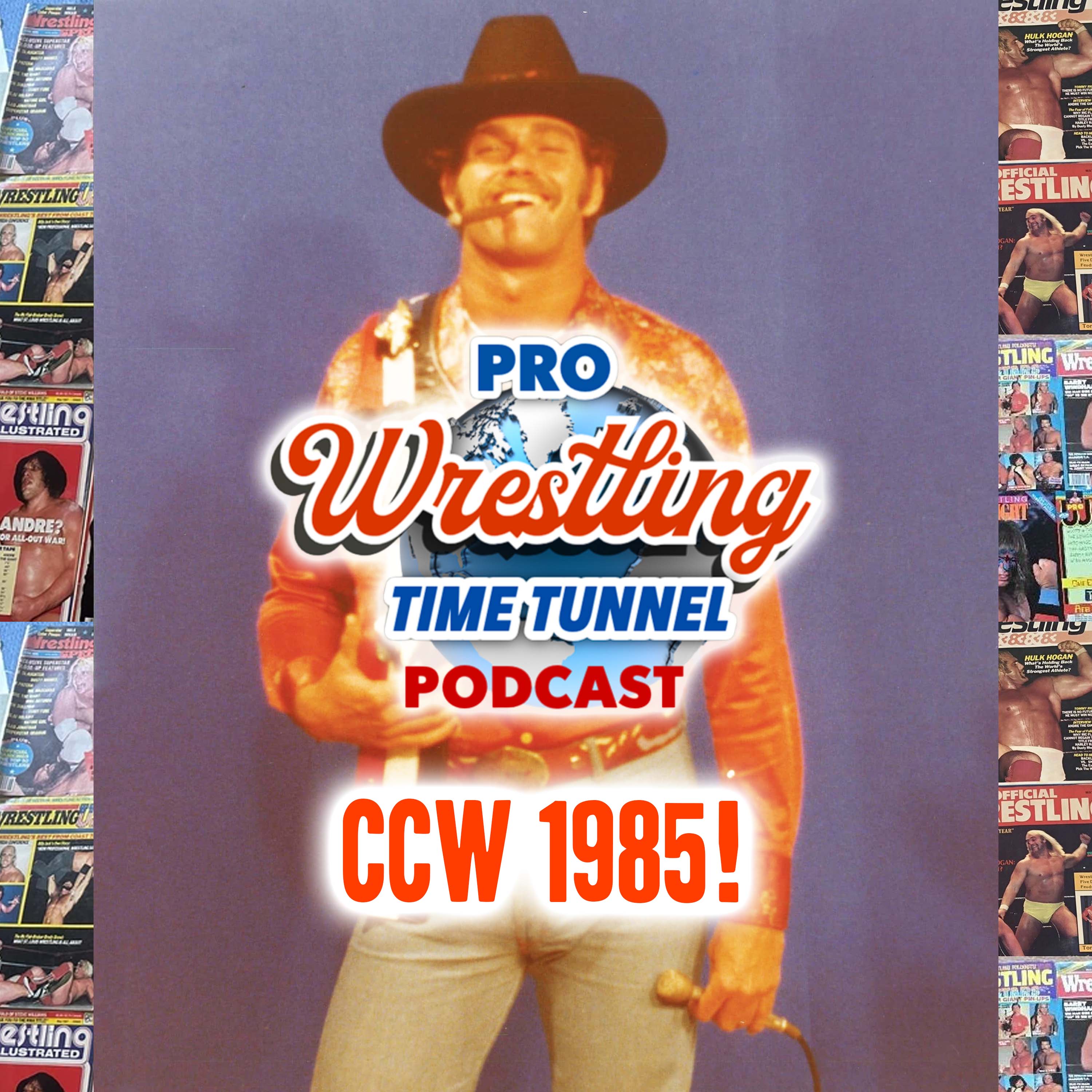
Hello again, everybody. Welcome to another edition of the Pro Wrestling Time Tunnel Podcast, your home for the history of territory wrestling. I'm your host, Tony Richards, coming to you live from the Richards Ranch here in the Bluegrass State. And today my special guest on the show is the Tennessee stud Ron Fuller, and he's here and we're going to talk about his territory from 1985 Continental Championship Wrestling. Ron, welcome to the program here.
[00:14:00] Speaker B: Oh, thank you very much, Tony. I appreciate it. I Mean, we're getting to be old buddies at this point, man. You've been quite a bit of time together and, you know, so I'm glad to be with you today, man.
[00:14:12] Speaker C: All right, that's cool. We just finished up a 10 part episode series on your family on the Stories with Briscoe and Bradshaw podcast and we're getting such great feedback from everybody on that. And you are on episode 9 and 10 and wrapping up kind of the story of your family and professional wrestling going all the way back to the 1920s. Just a. Yeah, just a great legacy.
[00:14:38] Speaker B: Yeah, we're, we're about the oldest and.
[00:14:41] Speaker C: The largest and I've been advocating for a couple years, along with several other people that your family, Roy and Roy Welch and your whole family should be in every pro wrestling hall of fame there is because of your impact and your influence on the sport. And finally we got somebody recognizing that this year at the Trago Says hall of Fame in Waterloo, Iowa, which in my estimation is the best hall of Fame out there.
And they're going to be inducting your whole family in the hall of Fame and you're going to be there to receive it. So we're excited about that.
[00:15:17] Speaker B: Yeah, I'm looking forward to it. And I think you got a big honor there too.
[00:15:21] Speaker C: I don't, I don't know what this.
I don't know what to say, man. I'm just speechless. But yeah, I'm going to be the Jim Melby Award winner this year and inducted into the hall of Fame there with you and Jerry Jarrett's son. Jeff Jarrett's gonna be going in the hall of Fame. It's going to be the Tennessee Territory Wrestling show there at the hall of Fame.
[00:15:45] Speaker B: Tennessee and Kentucky. There you are, Kentucky. So we're going to be two states that well represented there for sure. And, and it's some, it's an honor that you deserve. That's, that's for sure, Tony.
[00:15:57] Speaker C: Thank you, Ron. I appreciate it.
[00:15:58] Speaker B: I don't think this, this series would have happened it had not been for you.
[00:16:04] Speaker C: Yeah, well, thank you.
[00:16:05] Speaker B: Because you're the guy that has all the facts. And then, you know, and wow. I just, I only jumped on at about the fourth or fifth episode, found out about it and was like, wow, this guy's great. Where did he find all this stuff? You know, thank you. And it just, it would have never happened had you not been involved.
It couldn't have happened like it has. And, you know, I just, I'm just hoping. I really appreciate it.
[00:16:38] Speaker C: Thank you. Sir, I'm just. I'm hoping that it will raise the awareness.
You know, a lot of the hall of Fame voters are younger, and they weren't exposed to those days, and so they don't know the history. So hopefully this series and then everything you've done with your podcast, over 400 episodes on the stud cast, that's going to raise the awareness and educate people about the impact and influence that your family have had. And so this will be the first hall of Fame, but it won't be the last. I'm hoping so.
[00:17:12] Speaker B: Yeah. Well, same for you.
[00:17:16] Speaker C: Let's go back to 1985. On my show here, we've been analyzing and discussing all the remaining territories.
Around 1980, about half the territories went out of business.
And so we're down to the remaining ones. We got Don Owen out in Portland, we got the Crocketts, we got Bill Watts out in Oklahoma and Louisiana. We got Fritz Von Erich in Texas and Jerry Jarrett in Tennessee, and that's about it. And of course, we have your territory, which is based in Pensacola and Birmingham and that whole region down there.
And Vince McMahon has started his national expansion. He and his dad came to the 1983 NWA Convention, and his dad, shortly before his death, told everybody he was selling his territory to his son, and he was probably going to do things a little bit different, and gosh almighty, he sure did.
And so you're a territory owner here. You were there, you were going through it. What was on your mind when this was happening?
[00:18:20] Speaker B: Well, I kind of.
I saw it coming.
You know, I figured that, you know, Vince's dead, Junior's dead. You know, I had wrestled for him, Madison Square Garden, wrestle for him in Philadelphia back in 1973.
And, you know, at this point, he was, he was getting up there in years, and, and it made sense. I saw, you know, Vince Jr.
Doing some of the commentary for, for senior shows, and he was being. He was being groomed for the job, so to speak. And, you know, and it, and it was going to happen. I mean, but I had no idea how, how he was going to change the business so big, so big time.
Certainly had no idea that he was going to attack everybody, basically, and use it such horrible, horrible ways that he, he managed to get some wrestlers from other people. It's just, I think it's, it's a, it's a. It was a terrible thing. And so, yeah, I recognized that it was going to happen. And, and I, I started to change my territory.
I had gone from my first territory was in Knoxville went there 1974, 1978.
We did so well that I decided that, hey, you know, I kind of got the formula here, I think. And when we made a big success out of it in Knoxville, nobody had ever drawn crowds like we did there. And so, you know, I said to myself, I said, you know, you need another territory, why don't you do it again someplace else at the same time, have two territories once, right? So, and, and then I had the, the Fields family down there who was part of the Welch family themselves, and they were not doing well and I had the feeling that they were probably ready to try to get out of it. They had been there for 20 years after my, my dad sold it to them. And so I went down, I got in touch with them, with, went to. Lee spent a week with, with here, one of his right hand men, Rocky Maguire.
And so traveling around, seeing the territories, meeting the TV people, meeting the building people, getting a feel for the territory. Only thing I didn't get a feel for is how bad a shape it was in because he didn't, it wasn't even running at that point, you know, so Rocky was just taking me to meet these different people.
I never could see a crowd because the whole time I was there, I was there for about five days.
They never ran a match. The territory was kind of dead and it had. They didn't even stop running.
So I got involved with it and it just, it was tough.
[00:21:32] Speaker C: You know, you started running your television in there for a couple of months and then I think you told us on the Briscoe Bradshaw show that when you first went in and started doing live events, you had to give the money back to the fans because you didn't have enough people there to wrestle.
[00:21:49] Speaker B: That bad. It was that bad. I mean, you know, we, we went into towns like Montgomery and even Mobile, Pensacola. I mean, we tried to run them all in the first week we went there and we gave the money back in about four or five of the towns. The only town I think we ran in was Dothan. We had enough people and it probably didn't have 200 people, but it looked a lot better than the 20 or 30 that was, that had bought tickets in the other cities.
And boy, you talk about a shock, right? I mean, you, I had no idea it was in that bad of shape, so. But we, we dealt with it and we.
[00:22:31] Speaker C: But you, you ended up selling Knoxville to Jim Barnett and that gave you the opportunity and also gave you and your partners. We ought to mention that too. You guys just had one focus then, which was that Gulf coast area. And once you had a singular focus and you really started honing in, you guys had it humming.
[00:22:53] Speaker B: Oh yeah, yeah, we got it in about six months time. We kicked it off from being handing the money back to selling out most of those big cities that hadn't had not well, note that it had been years since they'd sold out, I assume. And so, you know, we, we really cranked it up and wow, it just, it was really, really, it turned out to be a tremendous territory. Knoxville was just a one city territory. Basically.
Knoxville was the major city. And we ran five, five spot shows every week.
Some in Kentucky, some of them in Tennessee.
And you know, luckily we were, the business was good. So everywhere we went, whatever the gyms would hold, we just went to high schools.
Whatever the number of people the gyms would hold, that's what we'd pack in there sometime. We'd squeeze it.
You know, a lot of those smaller cities didn't have any, you know, fire department. The guys came around to check and see how full the building was and wow, we filled the buildings, I'm telling you, man, to the rafters. And it was crazy how many people we got in some of those buildings. I had no idea. But we just, we had one town territory. It was crazy. I mean, I don't guess there was any place in the country other than that where we were that was doing the business with a one town territory. Well, so when we went down there on the Gulf coast, we had, all of a sudden we had five major markets, right. And it was a totally different ball game. It's a lot easier when you can do it with big cities and having to run around and be in small gym nations and some great buildings too.
[00:24:41] Speaker C: You had parts of three states you could run too. You had the Florida Panhandle, you had the Alabama, pretty much the whole state once you bought Birmingham and you had a little piece of Mississippi there that you could run. So yeah, you had a lot more to deal with.
Yeah, and you knew that. I mean when your dad went down there, he had those big lad stadium shows and so you knew the area was hot for wrestling. They just hadn't had anything in a while that had got them excited.
[00:25:14] Speaker B: Yeah, they, you know, they've been there, the fields, boy, this had been there for 20 years and you know, you, they'd lost their, their drive and you know, they didn't, they didn't so much care for it. And I think a big part of that was Lee was kind of the. The one of the main brother. And Lee changed his.
Changed his direction in the sports from wrestling to stock car racing.
[00:25:40] Speaker C: Yeah, he owned a racetrack. Yeah, yeah.
[00:25:43] Speaker B: Once he got that racetrack, he didn't care about wrestling anymore. I got a racetrack here. I'm trying to fill this, the track every week, you know, so.
So it was, it was.
And I think you talked. I'm sure. Yeah. I know you talked about Barnett going in there and taking a look at it and trying to make a run at it, and he, he saw it being really, really bad and.
And he walked away from it. So I walked in and basically spent all about you.
[00:26:17] Speaker C: Yeah, he knew. He knew that just in a couple of months, TBS was going to go up on satellite, and so he was going to expand all across that whole Gulf coast territory from, you know, and of course, he was partnered with Eddie too. So they were going to have Florida, Georgia, Alabama, Mississippi, all the way to Louisiana. But when he went in there and looked at it, he thought that's going to take too much time and too much investment.
[00:26:44] Speaker B: Yeah. And. And he'd been there. He'd been in that business for a long time. Man.
Wow. And been to Australia and all those different places and.
[00:26:54] Speaker C: But I mean, you went through that same thing that Lee went through. I mean, once you kind of got.
You ran your course with wrestling, then hockey got your attention, you know, and you had the hockey team. So I think that's kind of what happened to Lee. He got into the race cars and, and, and it was going good and that was rekindling his fire and all that. I mean, that can happen. You get to a point.
[00:27:18] Speaker B: I know. You know, and I did. You're right. I mean, hockey kind of did the same thing with me. I just accidentally got into that. And I'm sure Lee accidentally got into sports car racing.
[00:27:29] Speaker C: Yeah.
[00:27:30] Speaker B: I can remember, though, years ago when I was a kid that Lee and my dad, they used to do something with the sports card tracks and. And Lee evidently had a much bigger draw to it than my dad did. But, you know, they, they had looked at that business, I think, for a long time before they went in it. Unlike me with hockey, I, I just basically went to one game and said, I can do this. I mean, where do we. Where do we go? Where do we go to get on, man, to get a league, to get a team.
[00:28:08] Speaker C: So you. You ended up 84, really, really strong.
But with all this change going on with Vince, you kind of felt like your territory needed a different name, and so you'd Been Southeastern Championship Wrestling, both up in Knoxville and down at the Gulf coast, too.
And so tell me a little bit about the brand change and the name change and what your thoughts were there.
[00:28:32] Speaker B: Well, you know, I thought that. I knew that Vince was going to go national. I think he already had the CBS or one of the national networks, usa.
He had that show, and then he. He also had tbs.
[00:28:48] Speaker C: Yeah.
[00:28:49] Speaker B: So, I mean, you know, he. He was in a position then to where he was going to be able to run the whole deal. And, you know, so.
And in order to compete, I realized that, you know, he's got a national program here, basically, and, and we need to start. My partners and I talked to him, I said, we need to, if we're going to compete here and if we're going to survive, because I think he's going to come after us, he's coming after everybody else. He'll come after us.
I said, you know, I think we need to maybe beat him to the. Beat him to the gun and said, let's, let's move. Let's change the name of our company to give it a national appearance.
Let's. Let's create a new company called Continental rather than Southeastern. That kept us from being just in the regional, as a regional deal. Now we're potentially in that national product. So everybody knew they wouldn't know when they watch the TV that you're not just like Vince and going all across the country. Country.
So.
So we, we did that, you know.
[00:29:58] Speaker C: And if you decide to get outside your territory, then if you did go into another market with your television show, it would be more palatable for that audience rather than Southeastern, right?
[00:30:11] Speaker B: Yes, yes, yes. And, you know, and then they give us an opportunity because some of the territories were going down like flies. I mean, they were closing up and Vince is taking them over, you know, and we had the potential to throw our TVs into these major markets, you.
[00:30:30] Speaker C: Know, and the other thing that Vince had done, too, that just kind of broke my heart. But he had. He had hired wrestling, too, and he was having wrestling to do jobs to his guys and going into the Southern markets with that. And, and I just. That just. That made my stomach turn over.
[00:30:50] Speaker B: No respect. He had no respect.
His father did. His father had respect for the Southern wrestlers. And there was a time in Florida Territory in 1970s, the early 1970s, when I was down there, that Vince let.
Eddie Graham and my father were running that area. Terry Doe, Florida territory. He let him put their TV on in New York.
[00:31:17] Speaker C: Yeah, well, that's How Dusty got Madison Square Garden is because the Florida television was running up there, otherwise they wouldn't have known who Dusty was, you know.
[00:31:29] Speaker B: Yeah, of course. So, you know, and. And Vince Senior, you know, he was smart enough to realize that, hey, these guys down south, they got something going. They got a great style.
Vince Senior loved those big old monster guys. Monsoon and the guys like that, but, you know, they couldn't. They couldn't compete with the Southern style of wrestling. Well, he.
[00:31:50] Speaker C: In 73, he signed Andre and started booking Andre out to everybody. So, yeah, he loved. He loved the big guys, all right.
[00:31:59] Speaker B: Oh, yeah, yeah, he loved the big guys. And, you know, so.
So I went and worked for him in Madison Square Garden, worked for him in Philadelphia, and they started bringing guys out of the Florida territory because they had the tv. You know, TV was right there and trusted Eddie. He knew Eddie wasn't going to try to steal his territory.
[00:32:21] Speaker C: Right.
[00:32:22] Speaker B: Steal his company in some ways.
[00:32:25] Speaker C: New York there for a stretch in the 1970s was a whole lot like St. Louis.
You had a big mixture of guys in there on every show. You never really knew who was going to be there, but you knew it was going to be a star, you know.
[00:32:38] Speaker B: Right, right. So. So we don't end this discussion with my partners. You know, I said, we need to get a national name. And I said, we need to get the big production trucks. We don't need to do shows in the TV station anymore. I said, you, we got 100 people, maybe 150 at the max on the bleachers. And I said, how much more impactful would it be to be doing it in major. One of our major markets, like Birmingham, for instance, where you have 7,000 people there doing a live TV show?
And so, you know, didn't take for long for them. They never even thought about it at all, you know, but they went, wow, you serious? And I said, yeah, we got to compete because they're coming for us. He's going to come for us. And, you know, so. So that's what we did. We found ourselves a production company and five cameras. And while did it up big time, I got the Gordon solely who was.
[00:33:42] Speaker C: I was going to bring that up Next because in 84, when Vince got TBS, Gordon was gone.
And he was the legendary announcer that everybody saw on satellite from Georgia, and he was gone. And you picked him up and brought him in as your lead commentator. I thought that was awesome.
[00:34:03] Speaker B: So, yeah, he had made an audience. He had built an audience for himself, and he was, in my opinion, the greatest. He was better than anybody Vince could get. You know, he was.
[00:34:17] Speaker C: And he had a. He had a national reputation.
So if you. If you had decided to take your television show in other markets, people would have already known who Gordon solely was.
[00:34:27] Speaker B: You know, so we're ahead of the game. I said, we'll get ahead of the game. We'll get Gordon solely. And I had had a great relationship with Gordon. I'd been down. Went to Florida as a young guy and started out down there. Gordon really pushed me big time when I first went to Florida.
He pushed the fact that I was from the University, been to the University of Miami, played basketball there. I was a Florida product for him, and he jumped on that when I went down there, and he. He really pushed me big time just simply because he played basketball for the University of Miami. Here we are in Florida. Right? So.
So that, that, that helped me a heck of a lot, too, and had a great relationship with Gordon and a.
[00:35:14] Speaker C: Lot of this, a lot of his. When you were wrestling during your match, you know, he would talk about Buddy and the fact that you were Buddy's son and the fact that you had been to the University of Miami, and he. He was just so good at providing all that background to get a guy.
[00:35:30] Speaker B: Over, you know, and he, you know, and. And he. He liked me. I mean, we just, you know, we hit it off real big time.
Only did that for me later on as. As Time Goes by. And I got out of it, I sold out Continental.
I started a USA television program.
I hired him and brought him into Knoxville to do the usa, the little USA show for just that little regional there there.
So, you know, Gordon spent a lot of time. Spent a lot of time on Gordon. He was a great, great, great, great guy.
[00:36:07] Speaker C: Talk a little bit about. Then you started changing up your roster a little bit, too.
You brought in Adrian Street. Who else did you. You bring in that year of 85?
[00:36:18] Speaker B: Oh, we brought in all kinds of different guys. We. We brought in the Lord Humongous. We brought in a Lord Humongous.
[00:36:26] Speaker C: That was Mike. Yeah, Jeff.
[00:36:29] Speaker B: Jeff Van Camp. That was our Lord Humongous day. Well, he wasn't the only Lord Humongous. He had actually been working for up in the. Up in Indianapolis for. For a Bruiser.
[00:36:44] Speaker C: Bruiser.
[00:36:45] Speaker B: Yeah, he'd been working for Bruiser as the Lord Humongous. And so I saw a big piece of film of him, and I said, they're here. We got to have this guy. He's good.
So, yeah, we brought in all kinds of different guys a Little quick story about Adrian Street. Yeah, Adrian street was, wow, what a phenomenal character he was for wrestling. And.
And he was a heck of a shooter, a big time shooter. I mean, he was legit.
And I remember he sent me a tape from England and he. And I got it. I took it into my studio in Dothan. This is when we were still. Right about the time we were about to go into this. This big company and, and doing the TV out of Birmingham. And I took it into the Dothan studio and I took it upstairs and they put it on a reel for me. I wanted to see it. And as soon as that reel started going, all the people in the studio, all the guys up there started.
They just started coming to this screen and like, really, like, taking a. And they were, like, looking at each other. And then, you know, I mean, Adri was. He was a tremendous showman, but he was at the same time a fantastic shooter. And he put a lot of shooting into his Shoot moves into his matches.
And I. And I watched it with him and every one of them, they started buzzing to each other, was about five minutes long, about two, three minutes into it, they were like, see, back here they're talking to each other, right? And then finally got to the end of the deal. Charlie Platt was my commentator. He was up there watching it too.
And I said, what do you think? And the whole group of them said, yes, yes, Ron, yes.
Take that guy.
Right, right.
They answered the question. I, I knew right away I loved the part. If he hadn't been such a great wrestler and if he hadn't showed those moves that, that he, you know, he didn't have to do that. His style to me, turned out to be legit. This guy made. He's a great actor and he. He's got all the gimmicks you can possibly have. He sings his own songs over the top.
And, you know, I saw that, yeah, I was like a nobody brainer. I said, we gotta have this guy.
[00:39:30] Speaker C: Well, not only did you bring in guys like that, but I'm going to be on a podcast coming up here in a couple of weeks, and this guy's going to be on the show that you basically created down there. Wendell Cooley.
Yeah, Wildcat. Wendell Cooley.
[00:39:44] Speaker B: Wildcat. Wendell Cooley, yes, sir.
[00:39:46] Speaker C: You developed him down there, didn't you?
[00:39:48] Speaker B: Oh, yeah, yeah. He was. Little town Milton, just outside of Pensacola.
A big fan. And, you know, I saw him work. I saw him work out and, you know, I, I was, I was right. Then I said, I got. I Can't remember when I put up, send somebody in to train him. I said, this guy's got it, you know, and we're gonna. We're gonna make a star out of him.
And so, you know, and we, we.
[00:40:16] Speaker C: Bob Armstrong was going to have a whole crop of guys for you, you know, with his sons all coming to.
[00:40:22] Speaker B: Oh, yeah, yeah, man. There I had, I had. I had not just one Armstrong, I had four Armstrongs.
[00:40:28] Speaker C: Yeah.
[00:40:29] Speaker B: No, and. And Brad was just phenomenal. Gosh, Brad was just.
I thought he was one of the greatest wrestlers.
And so, yeah, we had a big great crew.
We brought in some different type of characters. Adrian street, obviously, Big Lord, Hugh Mungus.
And during that time frame, Arne Anderson was. Was becoming.
He was, he was getting. He was getting there, you know, and, and so.
And I had just formed my stud stable late 1984, after Bob and I had the altercations and, and he had messed up his face and all that stuff and then came back.
And so then I. I surrounded myself with the guys and I left Adrian do his own thing. I didn't. There certainly didn't want to touch his thing. He had Ms. Linda. He had a. He had his. He knew his gimmick and he did it very well.
But then I took guys like Lord Humongous, who was very good, and, you know, I did the talking for him and, you know that. And it worked out well.
[00:41:52] Speaker C: Another legendary guy, a legendary heel that you had working for you, Jody Hamilton, but he wasn't working as the assassin, he worked as the Flame. The Flame kind of created another new.
[00:42:04] Speaker B: Character, you know, Another new character. One of my. One of my stud stable, you know, so. And. And Jody Hamilton was one of the greatest. Absolutely one of the greatest of all time.
And so, you know, I had a great staple, man. It was, it was. It was cranked and it was right there, 1985, you know, and I said to these. And I'm talking to these guys and I said, I got this and look who we got. And, and. And I'm doing the gimmick. I'm. I'm the stud stable and going to be the greatest manager of all time.
And. And so.
And they said, yeah, let's do it. I mean, what. Why would we need to do it? We gotta do it, you know, so that's what we did.
[00:42:52] Speaker C: One of my favorite angles, it was a continuation of the story with Bob Armstrong. And Bob had hurt his face and he came back and turned Baby Face, and he begged you to let him be your partner. And all and then you turned heel on him and formed stud stable. But I love the angle where Bob has to get a partner then.
And so he looks around, looks around. And finally your brother Robert is going to be his partner. And so we're going to get this big cage match with you and Jimmy against Bob Armstrong and Robert. And I just watched that again the other day. I mean, just. I mean, just an amazing story.
[00:43:32] Speaker B: Yeah, I mean, it just. It just worked so wonderfully. And that was right there at the beginning of Continental.
It was within the first month of forming Continental that we came to this cage match.
And, you know, and the fact that Rob had never been a heel before him and Bob Armstrong had been the Georgia Tag Team Championship over a couple of years during the course of time in Georgia. And so, you know, it made sense for George, for Bob to take it, you know, say, hey, this, this will really get him, you know, and.
And all along then we turned on him and it was a great. It was just a. It worked out really wonderfully.
[00:44:14] Speaker C: And I mean, it's just so much. I mean, the crowd popped and popped in a heat type of way where Bob tags Robert in and you think, oh, my gosh, we're going to see a brother versus a brother here. And then Robert turns on Bob and finally puts him. Puts Bob in the fuller leg lock. And they got the three of you guys and Bob in a cage and you're whooping up on him and the crowd's going on him.
[00:44:42] Speaker B: Rob's got the leg, breaking his leg.
[00:44:44] Speaker C: And we're stalking, Gordon's doing the call and it's just a great deal, man, just.
[00:44:50] Speaker B: And the boys come and then the sons come and they try to get over into the cage. They can't get in the cage. Me and Jimmy are knocking them off the cage and Rob is just cracking that leg, you know. Wow, that building was going nuts. I mean, nobody expected that. That was the last thing anybody expected to see. And then Bob, you know, they all demanded him on the stretcher, got him out there beside the ring and the boys are all around him and he's bleeding and he's got a leg that's messed up. And. And so they hauled him, they hauled him out of there and wow, the boys then. Then it was perfect setup. Now we got me, Rob and Jimmy. He's got three sons. And here they came. The sons are going to get even for their daddy.
And, you know, Bob's can't come back. He's gone. It was a loser leave. He can never come Back, you know. And so then later on, when he did come back, wow, it was pretty amazing.
One of those situations in which we were kind of doing the same thing to the family again. We had the three boys and we had them down, and we were really kicking the heck out of them. Had one of them out on the floor unconscious and. And out of nowhere, man, here came Bob. He had that big old B on the front of his mask and. And wow, you know, and everybody recognized that body. There's no way everybody didn't know instantly who it was.
And when he came in, he threw us. He beat the heck out of us.
And then I remember the.
The. The comment, the. The ringside guy handled the ringside, the announcing.
He got in the ring and. And Bob.
He went straight to Bob and he said, who are you? That's all he said is who are you?
And Bob, Rob looked around the crowd. He just looked at the crowd and they started coming up, man. He said.
He said, you can call me the Bullet.
That's all he said.
I had a roof went off the place and, you know, and then we had a. You know, that was 1985.
[00:47:16] Speaker C: Yeah.
[00:47:16] Speaker B: So, you know, we're in the middle of a time when Fence is kicking everybody's butt, man. He's. He's putting people out of business and they're all running scared and. And we're. We're on top of cloud nine and our business is booming. And, you know, and we worked that angle and, wow, that just.
It just.
It got bigger and bigger. In 1985, you know, we were talking.
[00:47:42] Speaker C: About Adrian street, and there's so many great British wrestlers that have that shooting background. There's a guy that I want to ask you about that worked for you a little bit here that I know you worked with a lot. And he doesn't get talked about very much today, but he was the world junior heavyweight champion. Les Thornton.
[00:48:02] Speaker B: Yeah.
[00:48:02] Speaker C: What was your thoughts about Les Paul?
[00:48:05] Speaker B: Les Thornton worked for me a lot. I use less Thornton almost like in. In the 19, early 1980s, 81, 82.
He was almost part of the crew.
I brought him in so often, and I had Tony Charles.
[00:48:22] Speaker C: Yeah, another. Another one. Yeah, another.
[00:48:24] Speaker B: Another great shooter. You talk about wrestling matches, Tony Charles and Les Thornton.
[00:48:29] Speaker C: Yeah.
[00:48:30] Speaker B: Wow.
You know, I. I went as a. Just like a mark. I would.
As soon as that match started, I would run to the. Run to take you to get me a room. I gotta see this.
You know, it was one of those. It was the kind of matches that built your territory.
[00:48:48] Speaker C: Yeah.
[00:48:49] Speaker B: You Know, if people watched that and. And they were all just like, wow. And because they did things totally different than we did as American wrestlers. And they had these clips, flies, and then these bumps that they. They could give you. And so a lot of.
[00:49:07] Speaker C: A lot of chain wrestling, you know.
[00:49:10] Speaker B: Lots of chain wrestling. I mean, they did. It was just great matches. And then, which was really wonderful.
I had Jerry Stubbs. Jerry Stubbs was becoming a great wrestler, and he was really working out big time. He was putting on a whole lot of weight. He was a junior heavyweight originally, and he was working quite a bit with Les Thornton. I brought Thornton in. In fact, Thornton put him over twice for his. His world junior championship stubs. And so, you know, he was working with these young guys. Brad. Brad Edgeant, Brad Armstrong and Les Thorne. Had some unbelievable matches. I mean, so, you know, we had all these young guys, and there was this last two with. You just really had it. Yeah, I loved him. I was like. I used him. Like I said, he was. He was part of the crew, basically, you know, so.
Yeah, and. And I. I was. I even did a lot of that in Knoxville. I wanted to have wrestling be what people came to see.
You know, I didn't want him to come to see the blood. I didn't want them to come to see all the other stuff. I wanted to have at least one really good wrestling match on every card in which fans saw wrestling.
And so lest Thorn fit that bill, and so did Tony Charles.
Tony. When Les wasn't there. Tony. Tony. Tony came to Pensacola.
He worked for me in Knoxville for a couple of years, and he went and worked other territories. He came for me in Pensacola.
I kept him there for about two years. I sent him out of the territory. He bought himself a home.
He made a home in Pensacola. He lived in Pensacola, basically, I think the rest of his life. He didn't work always in the territory, but. But he was a Pensacola guy. Same thing with Adrian Street. Did exactly the same thing. Adrian street came, worked for me, worked for me with the Continental and then stayed there.
[00:51:20] Speaker C: He bought it there for the rest of his life, didn't he?
[00:51:23] Speaker B: Yeah, the rest of his life. Well, he went back in the last three years of his life, home.
[00:51:28] Speaker C: Oh, okay.
[00:51:29] Speaker B: And, you know, he went back home for the last three years of his life. He used to talk to him quite a bit after he got back home, but he. He was in Pensacola for 20 years.
So in all this.
[00:51:44] Speaker C: Later on in the year, I mean, the way to turn a heel, Baby Face, is to have a hotter heel so you. You, Robert and Jimmy got turned to baby face because Kevin Sullivan and his crew came in and.
[00:51:59] Speaker B: Yeah.
[00:51:59] Speaker C: Man, were they hot.
[00:52:01] Speaker B: Oh, wow. That was unreal. Kevin was just great. Kevin. Kevin was. He was at the top of his game. He had just come out of Florida. He had had a great run in Florida down there as a.
As a Satanistic idiot. Right. I mean, he was.
He kind of brought a little bit of that to. To. To. To us in Continental. And he had the two headhunters, two New guinea head hunters, they were called. Right, right. And they, you know, supposedly, you know, and this is really true. They. They ate men. There were cannibals in New guinea, you know, and there may be still cannibals in New Guinea. I wouldn't doubt it. You know, it's a crazy country. And, you know, and he had the guys and they had the torches. They brought to the ring, the torches and they had the. The. The.
From the knee down, the big, like little leaves off of a coconut tree. I mean, it was like they darkened the building and, you know, when they played their music. And here they had come with the torches, tiki torches and this stuff.
[00:53:13] Speaker C: Did Kevin have Nancy with him at that time? Is she working?
[00:53:17] Speaker B: No, he didn't at that time. No, he had. She had gone.
She had gone with. With the. The guy out of Georgia is, you know, so.
[00:53:30] Speaker C: So just Kevin and the headhunters, Kevin.
[00:53:33] Speaker B: And the head hunters. Kevin and the two headhunters. Uh, and then we did some, you know, and like you said, we. We. They turned us baby face, you know, he came in there right away kind of for me, and I'm in here for Ron Fuller, you know, and he said he. He did this and he did that, and he done some horrible things to me. And he goes, I'm gonna get even now. I got my men. I'm going to take the Fuller family apart. I'm going to do what Armstrong couldn't do. You know, he'd do all that in a.
So.
So. And we work some finishes that were just amazing finishes.
[00:54:12] Speaker C: You guys did that deal where the knife. With the knife coming up through the ring.
[00:54:18] Speaker B: I don't think it's ever been done. I don't think it would. It had ever been done, and I don't know that it was ever done since. But yeah, we had. We had the two of us in the ring. We had me and Jimmy. I think it was me and me and Jimmy.
And let me think. I think Kevin. Kevin might have been there. Might have been all three of Kevin and them and me, Rob and Jimmy and so they. We had the match in about halfway through the middle of the match, which getting wild in there. A couple of us were already bleeding and.
And a big knife came up through the. The center of the ring.
Big. And then it started cutting across its way across the ring.
And then you got the plywood underneath. So he. The.
The. He had put his head under underneath the ring early in the afternoon.
Left him there for hours the entire night until he got to the main event and then screamed at him when it was came time. And he punched that big knife through there. He cut the mat from one side to the other. Then he pushed the plywood up out of the mat, came up out of the floor of the arena.
And now it's four on three.
And they beat the heck out of this man.
[00:55:40] Speaker C: Now there's three headhunters and Kevin.
[00:55:43] Speaker B: Three head owners and Kevin.
[00:55:45] Speaker C: Yeah.
[00:55:45] Speaker B: And you know, wow. And the crowd. It's amazing when you do something like that and you know, it gets over is when it goes silent.
And when that knife came up through the. Through the.
The mat, you know, I mean, they were. Crowd was really into it and they were right. Right in the middle of Big Spot. We're all beating the haircut of each other and Knight comes up and it just went silent. And then when it started creeping across the foot, the. The map still above, cutting the mat into it was fun.
[00:56:24] Speaker C: Yeah. Can you remember. Can you remember at all whose idea that was? I mean, that's just so.
[00:56:29] Speaker B: Oh, man. Rob. Me and Rob talked about. We. We. You know, Rob was a great booker. My brother was a great booker. And, you know, and I got to be a pretty darn good booker too, you know, so we would. And Bob Armstrong. Bob. Bob was a sharp guy. Bob wanted to be a part of that, you know.
And I remember. I think it was my idea. I've been thinking about what can we do that's never ever been done, you know, and then.
And we were riding together and. And I said, you know, guys, I told. Start telling them about it. And I said, what would happen if you'd have the knife coming? They tear the mat up and they. They come in.
[00:57:16] Speaker C: Back in these days, you know, fans who were back then might remember. But for fans who weren't back then, this is when the ring was lit. But everything else was dark. You know, the crowd was dark. Everything else was dark. So that knife coming up through the mat would have been seen. Fantastic.
[00:57:38] Speaker B: And we made the point of going and finding a knife that had A blade that was about, it was about at least a foot long, you know, because I wanted the impact of that big whole knife coming up through there. And when he shoved that thing up through there. Yeah, it didn't take them long to figure out. And then when it started moving across the ring and cutting the mat, you know, the crowd was like just dead silence. That's when you know you got them. You know, I mean that's, that's when you really know you got them. So we waited another one and beyond that, so we took that, that match and we, we figured out a way to, to even the score basically. So the, the Fullers and was going to even the score. And so we had a, another match, tag team match and this was with Kevin and the third headhunter. The third headhunter had already been gone. We'd gotten rid of the third guy. We beat him up big time and we got rid of him. So it was going to be Kevin and the two headhunters against me and Robert. Handicap match in the cage.
And so no Jimmy, right. And so, so, so when we went there and they rang the bell and the referee got in the ring and they gave us the rules and then they locked the cage and, and you know, the three of them there are against me and Rob. And as soon as they locked the cage door, the referee pulled off his mask and his hat and the referee was Jimmy Golden.
And we tore into their butts, man. It was three on three. And wow, what another big pop. I mean the fans went nuts. Like, God, that's Jimmy Golden.
I mean, and it was so much fun. I mean it was really fun to be able to, to out think fans, fans figure out what's coming next. No way were they ever able to figure out what's going to happen next. And, and that just brought, they bought tickets to find out what are they going to do next.
[00:59:59] Speaker C: Yeah, yeah, I, I think fans, as time has gone on, I think a lot of fans think Vince went national and then everything else just went away. But that's not how it happened. I mean, in 1985, you've got. Texas is still drawing well, they're still filling up the stadiums out there. Star Wars Florida did their first battle of the belts. They drew, you know, in tampa. They drew 7,8000 people for that. And your business is going really, really well here in 1980, 85. I mean, you're, you're sending your television show out. You've got a syndication network going over the next couple of years. You're going to be on 15 different television stations.
So you're still doing strong business here in 85.
[01:00:48] Speaker B: We're expanding. We were expanding in markets. We went into Mississippi, where we had not been long.
We. We were expanding our territory. We had. We had our TV show in Saudi Arabia and Qatar, you know, we have in the Middle east. And we had plans to go there. You know, I said, man, and they were paying.
They paid us $3,000 a week each country.
[01:01:17] Speaker C: Wow.
[01:01:17] Speaker B: Just. Just to watch the TV show, you know. And I said to McCrobing, Him, I said, sooner or later, they're going to want a live event, guys. Us, you know, you know, we're going to be going to the Middle East.
[01:01:30] Speaker C: Yeah.
[01:01:31] Speaker B: So, you know, we had plans to.
[01:01:33] Speaker C: Well, Fritz Von Erich had gone to Israel, you know, and there was a lot of demand over there for the pro wrestling from United States, for sure.
[01:01:43] Speaker B: Yeah. Yeah. So, you know, we. We were. We were very. Competing very well at that point. And, you know, like I said, there was a few other companies that were still doing it and doing fairly good, Fairly well at it, too.
So we had a great year, 1985, I think, too.
[01:02:03] Speaker C: You were able to. In your loop that you had going, you were able to keep the towns on their traditional nights that they had been on. Birmingham was on a Monday night. Mobile was a Tuesday night. Knoxville was always on a Friday night. Chattanooga a lot of times was on a Saturday night.
Pensacola had run on Sunday for years. So you were able to keep those same nights in your schedule that had been there all those years.
What were you drawing back then for each of those?
[01:02:34] Speaker B: Wow. We were drawn.
Birmingham was drawn six. Between six and 7,000 every Monday night.
Next night you go to mobile. It was 6 to 7,000 in mobile.
[01:02:48] Speaker C: And that Birmingham is where you were.
[01:02:49] Speaker B: Doing your television to Birmingham, where we were doing TV. We were doing television and we had 7,000 people. You can imagine what that was like, you know, the atmosphere on tv. There was no way to duplicate that in the television studio.
[01:03:07] Speaker C: Right.
[01:03:07] Speaker B: No way.
[01:03:10] Speaker C: Fan reactions and the. The pops and the energy that was there, and Gordon solely was there, and you guys were doing the. These great angles there. That Beltwell Auditorium was just a great.
[01:03:21] Speaker B: Wrestling building, and it was a super wrestling building. Like it was made for it. It was almost like it was made for. When we started talking about, where are we going to go, what big city want to take it to? I was like, guys, Birmingham, I mean, let's. Let's go to the house, man. Let's take it to the big boy, you know, And So, yeah, we, we had a heck of a product and we did, we did super business.
[01:03:48] Speaker C: Now, when you went back to Knoxville on the Fridays nights, you were drawing 6, 6, 500. What, what building were you running there?
[01:03:56] Speaker B: We were running in the Coliseum.
[01:03:58] Speaker C: Coliseum.
[01:04:00] Speaker B: Coliseum. It held about. It held about 6,000, but sometimes we'd put seven in it, you know, depending on the fire marshal was there or not.
You know, fire marshal wasn't there. We back her up and you know. But so, yeah, we've got.
[01:04:16] Speaker C: We were doing, I guess, the one town that did get knocked out of its traditional spots. Dothan. It had been a Friday night town for years. And yeah, you. But you had to run Knoxville on Friday. I mean, that was.
[01:04:29] Speaker B: Oh, yeah, yeah. And, and what happened is I actually had already changed Dothan to his Saturday.
Prior to that, we ran some Tallahassee. We ran Tallahassee for the Florida office in 1982 into 83 and split the profits with them. They were having a hard time drawing there and, you know, they had their own building.
So, you know, they made a deal with us.
[01:04:54] Speaker C: So we ran Tallahassee on Friday night. But that was before you got Knoxville back, right?
[01:04:59] Speaker B: Yeah, yeah, yeah, that's before we got Knoxville back. And. But then when we were still running Tallahassee on Friday night, we started.
I went to the guys and said, hey, look, you know, Dothan's always been a Friday night town. But I said, think about it, guys. I said, we run our television show. We record it in the afternoon, early afternoon, and it runs at 5 o'. Clock.
I said, I. I've been thinking about a long time. I said, have you ever thought about what happens when people watch that television show from 5 to 6 and your matches start two hours after that?
I said, I think it'll do better on a Saturday than it ever did on a Friday.
And they all thought of it and they said, hey, well, let's give it a shot.
[01:05:55] Speaker C: By 85, were you still running the Farm center?
[01:05:58] Speaker B: Oh, yeah, yeah, 85. We're still running in the Farm Center. Yeah. So we, we would go on Saturday, we'd go Saturdays into, Into there, into. So it became basically Knoxville a Friday night and Dothan on a Saturday night. Once we got that thing rolling and.
[01:06:18] Speaker C: For some reason you, you had the magic touch in, in two towns, Knoxville, after you sold it in 1980, nobody could make it go.
Barnett tried to make it go and couldn't. Flair and Mulligan tried to make it go and couldn't and it just kind of went dark there. For a while, nobody really could draw there. And then you got back in there and you made Knoxville draw. And then the other one was Chattanooga.
After Nick got out of Chattanooga, nobody, even Jerry Jarrett couldn't draw very well in Chattanooga. But you got. Barnett, tried to run Chattanooga, too, off of Atlanta TV and after about eight weeks, gave up on it. But you got in there and made it go. I mean, what was your. What was your secret formula for getting those towns going?
[01:07:06] Speaker B: Well, Knoxville was easy. Knoxville was easy because we had been there so long and that the crew that was going back up there in 1985 was the same crew that had been there in 1975 and 76 and 77. You had Bob Armstrong, you had the Fuller Boys, you had Jimmy golden, you had Tony Charles.
It just went on and on and on, you know, so Knoxville was easy. I always thought when we go back, I used to tell them, before we went back, we started running the show in there for four months before we ever went to have the first show.
And guys would say, what do you think we're doing? I said, I think we're going to sell out. I think we're going to sell it out.
And they said, nobody said, Brian. They said, they ain't. They can't put a thousand people in there.
Why are you thinking? I said, because it's all of us coming home, you know. I said, this is this. And that's what we're going to call it. We're going to call it the Tennessee Homecoming. The first one.
[01:08:17] Speaker C: That's brilliant.
[01:08:18] Speaker B: And, you know, and boom, we went back in there. It was. It was just. It was amazing, man. I pulled the curtain back that first night to see what the crowd looked like, and it looked just like it did when me and Harley was in there and 19. 1977, right.
It was like. It wasn't. It was full. It was like. Everybody was like, wow, what in the heck? How did you do this?
So it was easy.
Chattanooga is a different story, you know, Chattanooga. They didn't. They didn't know I had. You gone down there a few times and worked for Nick when he needed me, or he asked me to, but, you know, and Bob Armstrong had been down there on a few occasions. Rob had been there quite a bit because he used to work that territory some, right, Jimmy? You know, so they had a little taste of having that kind, that whole crew. But by the time they watched Adrian street stuff and they watched the humongous stuff, and they. And then they knew the other people, you know, I thought the same thing. They said, well, how you think we'll do, Ron? Everybody's crashing in there. And I said, I think we're going to do good, you know, I said, look who we got here that they've seen and they already know. And, and, and we got this other talent that's. That is great. And boy, we went in there and rocked it again. It was like. It was kind of easy, you know.
[01:09:56] Speaker C: That's great. That's great. Now tell me a little bit about. This is an amazing statistic here that you have about your business here with tickets and how many tickets you sold a week and how many tickets you sold that year in 1985.
[01:10:11] Speaker B: 1985, yeah, we.
And we were doing good. Gosh, we were already just kicking butt and filling most of our buildings up. Up.
But it just got better because we were working some good angles and we had Kevin and we had some different stuff.
And so we did.
We were doing 35,030. We were running seven nights a week. We. We didn't take any days off anymore.
And we ran Pensacola on Sunday. That was our Sunday town. And you had the major cities, you had the Birmingham, you had Mobile, you had Montgomery, you had Columbus, Mississippi, and Florence. There you go. Columbus, Mississippi, Florence, Alabama. We alternated back and forth between those two.
Knoxville on a Friday night, Dothan on a Saturday night, and Sunday in Pensacola. And so we were, we were doing about 35, 000 tickets sold per week.
And in 1985 we did 1.8 million tickets sold. Wow, almost 2 million tickets, man, in 1985.
Now that was. That was probably given Vince a run that's strong in some of his big New York and Philadelphia's and cities like that, you know, it.
That's. That was some big numbers back in those days.
[01:11:42] Speaker C: Yeah, wrestling was hot, you know, it was really. Wrestling as a business was really, really hot in 1985. And you guys had such a reputation there and people knew you and you were doing angles that were compelling and it was good Southern wrestling, you know, with hot heels and hot angles and great baby faces and so 1.8 million tickets that year in 1985. Just fantastic.
[01:12:10] Speaker B: A lot of people.
A lot of people.
And we continued that 86 on into 86. We didn't. We were still doing really, really good business in 1986 and well hung in there until about 1987. And I got, I got, I got the burnt burnout hit me, man, you know, and. And I guess that does to everybody who runs for 15 years, you know, it catches up to You. Yeah, of course.
[01:12:46] Speaker C: Well, Ron, I appreciate you joining me today for this trip back in continental championship wrestling, 1985, man, this is fantastic. I enjoyed go back and reliving this great year in Continental.
[01:13:00] Speaker B: Well, I appreciate it and I appreciate you being on. I really appreciate, Tony, what you've done, man, you have, you have turned it around.
I thought, you know, that, that I was going to go through my entire life and never see Roy get the, the, the accolades that he discerned, you know, and I thought, you know, we, our family, very big gosh, so many different members and, you know, I just felt like, you know, we never, we're never going to get what we deserve. And I really. After this last 10 episodes that you're just finishing up with, with Jerry and them. With Briscoe and Jerry and John. Yeah, yeah, that I think after these last 10 episodes, the response I get tells me that for the first time, people know about the Welch family, what went on. And I think that's all attributable to you.
[01:14:11] Speaker C: Well, two things.
[01:14:12] Speaker B: One, research.
[01:14:14] Speaker C: Roy came down to Paducah, Kentucky in 1933. That was the first town he wrestled in down here, south of Eng, Indiana.
And that's where he met up with Hot Gilliams. I mean, that's close to almost. I claim it as my hometown. I grew up in a small town here, about 20, 30 miles away. But I always went to wrestling in Paducah. And Roy and Herb Welch, both of my grandfathers, Roy and Herb, were their favorite tag team.
And so I grew up hearing about how all these bad guys were running rough, shot on everybody. But then Roy and Herb showed up, you know, and ran the guys out of town, you know, so, so they're, they're a big part of my growing up and you know, they affected my family. So I'm glad to be a part of making sure that your family's remembered for the contributions they made.
[01:15:05] Speaker B: You've done a great job, Tony.
[01:15:07] Speaker C: Thank you, Ron. I appreciate it.
You'll have to come on back and be on with me again sometime.
[01:15:13] Speaker B: Okay. Be glad to do it.
[01:15:15] Speaker C: Ron Fuller, the Tennessee stud. And that's a great trip back to 1985 and the thoughts and concepts about what was behind what was going on in Continental championship wrestling in 1985, right from the horse's mouth, or at least right from the studs mouth. Ron Fuller, who I have enjoyed getting to know in the last, gosh, several months, he was so instrumental in helping me when I was putting together the Roy Welch Legacy series with Briscoe and Bradshaw. I had several questions that Jimmy golden was able to answer for me and that Ron was able to answer for me. And, you know, it was the thrill of my life coming up with some research and some facts about the Welch family that even those guys didn't know. And so that was a real joy for me to be able to add that into their lives and their memories and their thoughts about their grandfather, Roy Welch, and then to have Ron here to continue on.
We kind of picked up this. This show will make more sense to you if you listen to the Roy Welch series, especially episode 10, where Ron's going through some of the 1980s and all of that. And we just kind of picked up from there. And so if we didn't go exactly line upon line upon line in 1985 as you had hoped, sorry about that. But hey, you know, we're just having conversations here. We're just talking about the overview of the year and what was going on and that kind of stuff. And so I've gotten feedback from some people about some things that might have happened in 1984, it might have happened in 1986, or it may be something we said happened didn't happen until November. And we had it at the. And you know, hey, guys, it's. It's fine. All right, it's fine. We're just going back and reliving this and taking an overview of it. And I'm so glad for your support and so glad for your listenership, and thank you so much for that. Okay, let me.
Let me promo a few things here before we get on out of here this week. Pro Wrestling Time Tunnel Facebook Group. We got a lot of things in our community, and the Facebook group is one of those that you can come and join us and ask to be a member and fill out our little membership app that comes up that gives you the group rules. Agree to the group rules. We ask you a couple questions. Who your favorite wrestler was, what your favorite promotion was, what were the years that you enjoyed wrestling and those kinds of things. It gives us information about the people that are in the group to kind of guide some of our decisions about some of the content we put in and things like that. It takes you two seconds to do it and then we will accept you into the group. And gosh, we're almost 2800 strong now, moving toward 3000. And we're just so appreciative, all the people who are in there, because we have some really. It's the Facebook group for serious minded wrestling fans. And pro wrestling history. We don't have a lot of Gaga, but we have a lot of good stuff.
We also have a YouTube channel that's growing like crazy. Tony Richards Pro Wrestling Time Tunnel So come on over there, subscribe to our channel. Like our videos. We post a video almost every single day in the YouTube channel. And so you will get something different and something new every single day. Sometimes it's clips of the current Pro Wrestling Time Tunnel history show that's out there.
Sometimes it's clips from past shows we've done. Sometimes it's clips from Briscoe and Bradshaw that I've done with those guys. So we, we put a lot of different content out, but at least you'll be assured that almost every single day you'll get a new video if you come over. And we also appreciate the likes and the thumbs up that you give us. You can follow me on x @tonyrichards 4. Lots of posts every day. A lot of programs and advertising and stories about past matches. You know, I follow a timeline. I'm in 1956, 66, 76 and 86 right now. And so those are the main time frames where you'll see postings by me. But it's at Tony Richards 4. And then please subscribe to my daily newsletter. I put out a daily newsletter about pro wrestling history and that's called the Daily Chronicle. And you can come to the Substack channel and look up Tony Richards Pro Wrestling Time Tunnel. You can subscribe and you'll get the Daily Chronicle for no charge every single day in your email box. Or if you're a member, you can read it directly off our site. You can actually disable the email and still be a member to read stuff on our site. If you'd rather do that and not have me fill up your email box because believe me, I will. I put out a lot of content, probably somewhere around nine to ten pieces of content every single week because you get the seven Daily Chronicles, which is a piece every single day. Then I will add one or two other things that are series that we are doing. We're doing the 31 great announcers from the Territory era series right now and we're up to number 10. I just put out one about Dick Lane from Los Angeles.
We also do the Evolution of pro wrestling series where we're going through the years and we have recapped every year on the fives, 25, 35, 45, 55, 65 and 75. So that means coming up we'll have 19, 85 coming out to go along with these podcasts really, really soon. And if you'd like to support my work, you can absolutely do that with a financial contribution. Just do a paid subscription, $5 a month. If you want to save a little bit on an annual subscription, it's only $50 a year. And that supports the work I do as a pro wrestling historian. And you get some great content out of that as some value as well. Thank you, everybody. Next week coming up here on the show, we're going to Jim Crockett Promotions.
And look at my schedule real quick. Yes, that's exactly what we're doing. We're going to Jim Crockett Promotions, 1985. Another new co host, Jamie Ward, will be here. You know him from the Other Ship podcast and some other shows that he, I think he told me the other day he's been on eight different podcasts. And so now he's going to be on ours. He gets to add ours to his list. Jamie Ward will be here. We're going to talk about Jim Crockett Promotions in 1985 right here on the Pro Wrestling Time Tunnel History Show.
Thanks, everybody. I'm your host and friend, Tony Richards, reminding you, if you want better neighbors, be a better neighbor. Let's support each other where we can. Thanks, everybody from the Richards ranch in Western Kentucky.
Happy, happy, happy week coming up for you. So long from the Bluegrass State.
[01:22:26] Speaker A: Thanks for tuning in to the Pro Wrestling Time Tunnel podcast.
Tune in for another great episode next week, interviewing wrestlers, referees and media personalities that have made the sport of professional wrestling great. We'll release a new episode soon. Don't you dare miss it.