Episode Transcript
[00:00:02] Speaker A: Time for the Pro Wrestling Time Tunnel podcast. We've got lots and lots of things to talk about and to do today covering the territories from the 1940s to the 1990s.
[00:00:13] Speaker B: It's the best thing going today.
[00:00:18] Speaker A: Interviewing wrestlers, referees, authors and other media personalities that have made the sport of professional wrestling great. The cream, yeah, the cream of the crop. And now here's your host, Tony Richards.
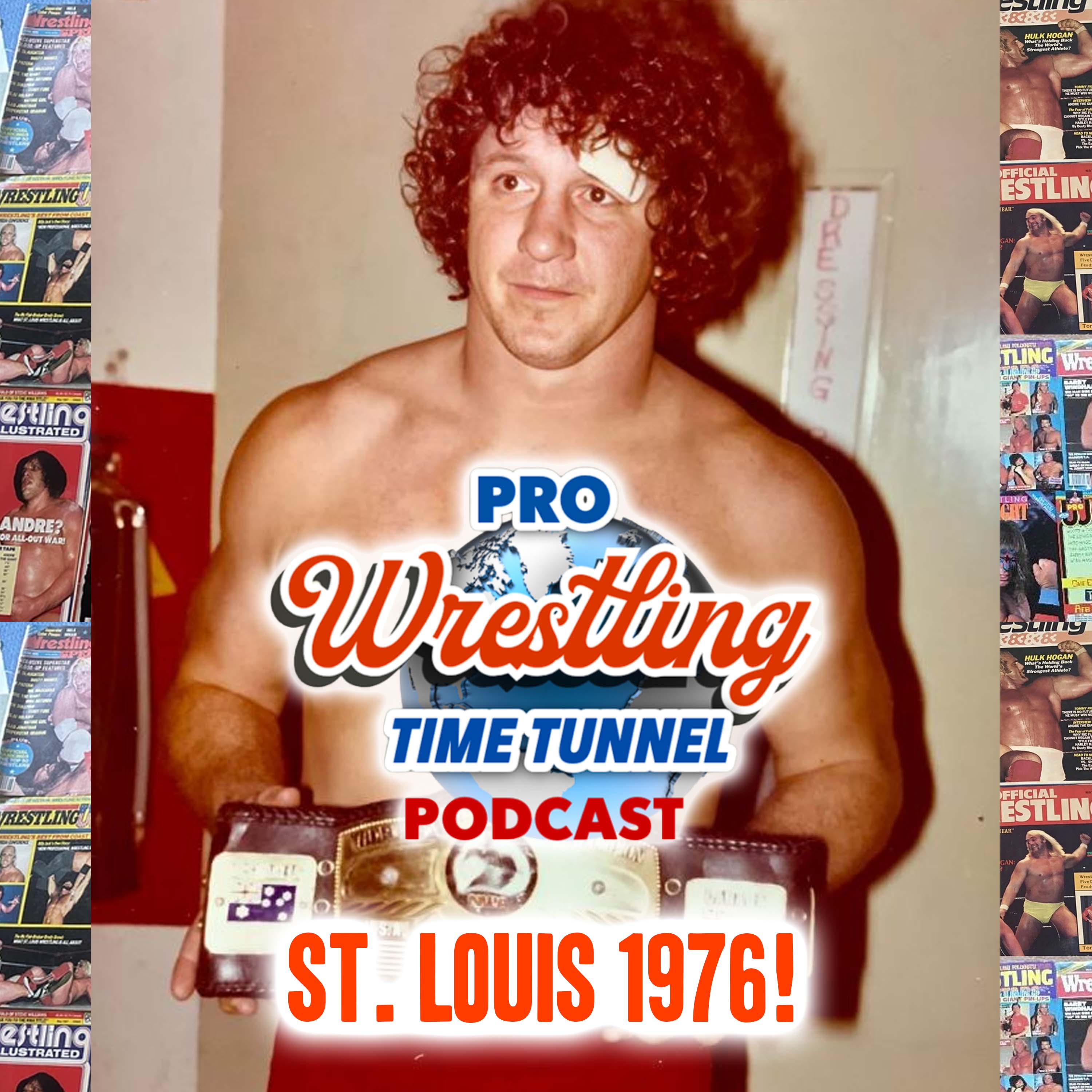
[00:00:35] Speaker B: Hey, everybody. Welcome back to the Pro Wrestling Time Tunnel for another exciting week of territory era pro wrestling history. I'm coming to you from the Richards Ranch in Western Kentucky, your host, Tony Richards. And we've got a lot of things to cover in today's show. I hope you came along this week. Ready for exciting ride down the time tunnel to 1976, because we're going to be going back 50 years to the year of 1976. And we're going to kick off our 1976 Territory Review show series of shows with St. Louis, which I have said in many things that I've been on, was on a show earlier this year where we were doing the top 10 wrestling cities and wrestling history in the United States.
And out of the four guys that were participating, I'm the only one that listed St. Louis as number one.
And most of that has to do with the fact that St. Louis goes all the way back to the beginnings of when the Gold Dust Trio was going around promoting wrestling and then Tom pax in the 1920s. And St. Louis was pretty steady in the pro wrestling territory era all the way through to the end, from the, from its very beginning, seeds that were planted in the 20s, all the way through the 90s, and even still today.
I mean, not too long ago, WWE was, WWE was in there and it was a big show in the St. Louis in the Gateway City.
And mainly the reason I rate it number one, is because it was the headquarters the National Wrestling alliance, which was the only until. Until the WWE. And even now in the WWE's form, it has competitors. When in the 19, late 1940s and 1950s, St. Louis had no competitors, the National Wrestling alliance did not have any competitors. It encompassed the whole country.
New York and the Northeast were NWA members. Minneapolis was an NWA member. So the entire country and parts of the world were all united under the NWA banner. And at the center of all of that was St. Louis, Missouri, because that's where Sam Muchnick lived and resided as president of the National Wrestling Lines. We've never had that before or and probably never will again, where one town controls the entire wrestling business. Over a decade or more.
And the WWE came along as the WWW F in the early 60s. The AWA came along in the early 60s and formed these extra splinter groups off of the National Wrestling Alliance.
And it was probably good because it provided evidence that the National Wrestling alliance was not a complete monopoly because it said, there are other people. And it wasn't that they necessarily thought that the AWA or the WWWF were competitors.
It was more the mindset that these other two federations or associations or alliances, whatever name you want to stick on it, they also serve the wrestling fan.
So it was almost like they're an outlet for wrestling fans to see wrestling and to see talent. We don't control it all. We don't have a monopoly because there's other outlets and other people who are serving the public.
Since the 90s, really, in the Monday Night wars, I think the entire mindset of the wrestling fan has been changed and modified into these wars.
And there were some battles in the territory days. I mean, you had the Georgia war, you had the Tennessee War. You had some little things that broke out. My friend Greg Klein just is getting ready to release a book about the 1950, 51, 52 Texas Wrestling War between Dallas and Houston's booking office.
And so there were those that lasted this short amount of times, but now we have.
It's almost like it's just about that. It's just about the tribalism of the fans picking sides because there's this war going on and it's just regular business. It's just like Pizza Hut and, you know, your other pizza. A place out there that's serving. Or McDonald's and Burger King. I mean, they both have fast food. They're both serving the same types of demographics and psychographics, but they're not fighting with each other. They're not at war. They're not the burger wars. You know what I mean?
So anyway, I just think of St. Louis as always being the most.
The most important city. Not only at the pinnacle of the wrestling business, which probably would have been 1960, but also as the most influential city for the entire length of the territory era. Now, of course, after the territory era ended, you know, obviously New York City then took over there because that's who the surviving wrestling provider was in. And they are the ones that won the Monday Night War. And Vince took over the WCW and all that in 2000. And then there was just another war. One consolidated wrestling company again, but for the length of time, over the entire history of pro wrestling and through the entire history of the Territory era. I still think St. Louis is the leading city and we're going to talk more about St. Louis as the show goes on. There's several other things I want to cover before we get to our first guest, and one of those is some unfortunate news. Well, several pieces of unfortunate news.
But one thing is for some reason, and those of you who are in the Pro Wrestling Time Tunnel Facebook group, you've probably already discovered this, that my Facebook and my Instagram accounts have been suspended.
I have no idea why.
I just lost access to get into my account and received the message that I had somehow or another with one of my postings violated terms of service or community standards in some way.
And I don't know exactly what that could have been since most of my posts are duplicated on other platforms that haven't cited me or given me a warning or giving me any kind of a problem. So I'm sure that the meta algorithm picked up something in one of my posts that maybe I was being too positive or something, but it picked up something and it sent me into loss of access.
And I've gone through the process that they've given me, which was I send in a selfie picture and I should hear back in 48 hours, something like that. And I, you know, I, I don't know. You know, anytime you're in business or you're trying to build something, I mean, I really put my heart and soul and blood and sweat into the Pro Wrestling Time Tunnel. But I know I've been doing this long enough, been around long enough, and been involved with so many business ventures and so many entrepreneurial things that I know that no matter what you do or how hard you try, you're going to have frustrating things that happen and you're going to have things like this happen and you're going to have interruptions of your plans and things of that nature. And so if you've tried to reach me on my Facebook or my Instagram or you've tried to go participate and have fun in the Time Tunnel Facebook Group, sorry about that.
And for all I know, it's still going. I can't see it, I don't know. But I would imagine it probably got shut down and blocked off because it's linked to my, you know, my Tony Richards speaker, author, coach page, my Clear Vision Development Group page, the Pro Wrestling Time Tunnel. All of these things that I have linked to my main account, I'm sure also have been shut down. So I'm sorry about that. And if we can get this Resolved. I was talking to one of my CEO clients this morning and I just happened to mention it because we were talking about how our days went. And I said, well, my day went really well. I had a really good day. I made a lot of progress on my Dori Funk Senior book, which makes me happy. I'm getting, you know, I'm working toward getting that finished and I'm making a lot of progress every single day on it.
And everything was great. And I sat down to have a glass of bourbon last night before bedtime and I thought, I'll open up my social media and see how everybody's doing or what's going on. And I couldn't get in.
And that happened right before I got ready to go to sleep. And so I just had to take a few deep breaths and brush it off and say, I just learned a long time ago that things that happen to you are 90% in how you handle them and how you process them and how you think about them.
So I just went and did the things it told me to do and I closed it and forgot about it. But I didn't forget about you. And I wanted you to know what was going on.
Just in case we don't have this resolved by the time you hear this show, but I'm hoping by the time the next week's show comes on, I'll be on here telling you that it's back and everything's fine.
But we will see.
They said I had 180 days to appeal. There was some other 120 day message, but the last message I got was we're going to get back to you in 48 hours. And the CEO guy that I was talking to said it happens to his daughter all the time.
And for reasons I won't say on here, it has to do with, it has to do with her photo.
And her photo looks too young to be on Facebook.
And so it thinks that she's underage using Facebook when she's actually in her 20s. And so the, the algorithm takes her thing down and she has to go through the same things that I'm going through to get her account. And that made me feel better to talk to somebody who actually this has happened to as well. And they're taking the same steps I was taking. And he said it always gets resolved. So another positive piece of news. So I'm hoping for that. All right, let's go on to some other things that are tough to talk about, but I want to talk about just a little. And one of Them is I want to pay tribute to Eric Westland.
And Eric Westland was probably the most knowledgeable ICW wrestling historian I've ever known.
And a group and a good, good friend. We connected with each other.
He had a, or still does have an ICW tribute Facebook group. And of course I grew up here in Kentucky. I was involved in ICW as a fan for the whole run.
Even after I got into the broadcasting and I got into my broadcasting career and I was in management, I was involved in doing some promotions with them and ticket giveaways and things like that in the Paducah and other markets where we had stuff where they also were running shows. And from 1978 to 1984, somewhere around in there, they ran in Paducah and other markets. And my high school buddies and I used to go to the matches every Friday night in Paducah at the National Guard Armory. And then later they went out to the JC Civic center and just had a great time. I mean, I had an opportunity to post a picture of, I think it was the day, the anniversary of the day Brenda Britton, who was married to hustler Rip Rogers for a little while and was his valet and it was the anniversary of her passing. And I posted on my ex social media feed that that was the very first female mud match my friends and I had ever seen. And we just thought Brenda Britton was just a knockout and she was very attractive back in those days. She was a tall, very well put together blonde and.
And when she got in there, and I can't even remember who she was wrestling in the mud match, but it was a mud match in Paducah. They brought the, you know, the boards in, they squared them off in the center of the ring and brought the tarp, the tarpaulin in and put it down so the mud, and brought the water in the mud. And then Brenda Britton got in there with hardly anything on. And my God, we just thought that was the most wonderful thing we'd ever seen. Just some of the ICW memories. But Eric and I talked every week.
And the sad thing about it was my birthday was on March 28, which was a Saturday.
And he sent me a long, wonderful message, talked about how much he appreciated me and about our friendship. And we had plans to do an ICW podcast down the road because in 2028 it would be the 50 year anniversary from the day ICW started that Angelo Poffo came back to Lexington, Kentucky and started promoting.
And so we were going to follow the ICW trajectory from 1978 through it would have been 2034 or whatever, whatever 1984, 50 years from back then was going to be, and where we're going to go week by week with ICW promotion. And we were looking so forward to that. And he was excited about doing that. And we were going to start doing some. Some prep and all that. And he did some great work for me on the Dorie Funk book. He gave me so much great West Texas information. I used to get programs from him. I don't know where he. What his sources were, but the guy had an amazing talent for procuring pro wrestling programs. And I've got all these 1940s and 1950s, 1960s and early 1970s programs from West Texas because of Eric Westland.
And so I got that message from him on my birthday on the 28th, on that Saturday. And then I opened up my social media on, I think, Monday, that next Monday, which would have been the 30th. And Eric passed in his sleep between Saturday night and Sunday morning. And in his message, he told me about.
He told me a lot of things that I'm not going to repeat here that he just. And he even asked me to keep it private, you know, and it was nothing big. It was just things between us, friends talking about future plans and things like that. Eric was a very private person.
And anyway, his retirement date was going to be on Friday, April 4, from his longtime career at the company that he worked at his whole life.
And he was looking forward to retiring. He was going to put a lot more energy into what he called the things he loved. And he talked about his family. He had just lost his mother a couple of days before he passed.
So this family has been hit with all kinds of, you know, tragedy here. Losing, you know, Eric's daughter lost her grandmother and then she lost her dad.
And she had reached out to me and asked me to speak at his memorial in Winchester, Kentucky, which is about a six and a half hour drive here from the ranch.
And I just recently had a procedure performed on my back.
And I was thinking I probably couldn't do it, but I called my surgeon anyway just to check in and say, is there any way I could drive the winchet? He goes, oh, no, it's too soon after your surgery. You don't need. Your whole surgery is because you've spent hours and hours and hours in vehicles, driving miles and miles and many, many miles and miles on airplanes, traveling all over the country.
You need to stretch, exercise, walk around, don't sit in any one place for very long and the amount of times you'd have to take a break and walk around your vehicle and stretch, it would be a 12 or 13 hour one way trip. And I just, I felt so bad that I couldn't be there. I shared the stream with everybody on my social media channels and I watched the memorial service. It was a beautiful service and some people said some wonderful things. I wrote a great thing for our group and for my X feed and everything about how I felt about Eric. And I'm going to miss him.
He was a good friend. We also lost Flying Fred Curry. The guys from the Territory days, you all the ones we have left, we've got to cherish them. I mean, we lost Dennis Condrey. I want to thank everybody for the wonderful support that you gave me by reading the piece that I did on Dennis and sharing it and telling people about it and giving me such great kind words about it and then watching our show or listening to our tribute show that we did three and something hours, three hours and something long.
But we just had some great people and some great stories about Dennis. Thank you for that. And then I put out Monday of this week, I put out my piece on Flying Fred and I talked to. I first learned about his passing from Tom Burke, who's a longtime wrestling historian who gave me some great quotes for my story. And then Bobby Fulton, who of the Fantasticks, member of the Flying Toehold Club. He had some great things and he made the announcement and Flying Fred Curry was such a foundational part of Bobby Fulton's entry into the wrestling business and he gave me an entire, Bobby gave me an entire story about it.
He was also on my friend Dave Dynasty's podcast and did a great job on there as well. And so Flying Fred Curry, one of the biggest baby faces of the territory era.
I didn't get the sheiks television and I didn't get the Ohio Wrestling this far south.
I know Jim Cornett got it in Louisville if he turned his antenna and held his mouth just right. He got Dick the Bruisers, Indianapolis and he got some of the Ohio and chic stuff, but we didn't get it down here. I'm about 300 miles to the southwest of Jim and the state of Kentucky and it didn't come down this far. The signals didn't and they didn't run television episodes down here. So I only saw him in the magazines. I mean I knew of Wild Bill Curry at the time and I knew of Flying Fred Curry and of course I knew they were big time names in the business, but I just didn't see them during their heyday. But only through stories from other people and some surviving research stuff that's out there have I learned about Flying Fred Curry. Being one of the pioneers of high spots in the style of the late 60s and early to mid-70s and being so over as a baby face and being an exceptional draw when he was on the card. But we lost Flying Fred Curry, which was, which was a real shame. And so we're losing more and more. Folks.
I mentioned last week on the show that I've heard Norville Austin is not doing very well. Someone said, and I have no idea if it's true, that he had to have some amputation done. And I hate that. And I, my heart and my prayers go out for the Norvell and his family as he's struggling right now. And I just, you know, is on my mind. And we've got, we got to honor these, these people that we have left, like Steve Kern, like Jerry Oates, and some of these guys that can still tell us of these stories about what it was like in the Territory era. Okay, we're going to talk about St. Louis wrestling today, and there's nobody that comes to mind first other than Herb Simmons. We got two guests on today, so they're going to be two segments. I'm going to visit with Herb, I'm going to come back, talk a little more St. Louis wrestling and introduce the second guest, Darla Staggs. And that's going to be our show today. And I'm really looking forward to it because these conversations were really, really good. I think you're really going to enjoy it. So let's get the show started and go to my conversation at the Ranch with Herb Simmons. Welcome back, everybody, to the Pro Wrestling Time Tunnel History Show. I'm Tony Richards coming to you live from the Richards ranch here in Western Kentucky. And today I am joined by my dear friend herb Simmons in St. Louis, Missouri, because we got the big annual fan fest coming up. This is Fan Fest 4, which will also include the St. Louis Wrestling hall of Fame. And we did a show on this last year, and I want to. Every year that Herb has a show, I want to do a show because I want to talk about it. Herb, how you doing, man?
[00:22:37] Speaker A: Well, man, I appreciate the invite. And before we get started, I want to congratulate being here with a Hall of Famer. I understand you're going to have the honors here in a few weeks, and I hope to get down there and, and see that happen with our good friend Greg Anthony. So congratulations on that.
[00:22:55] Speaker B: Yeah, I'm going to be going into the hall of Champions down in Dyersburg, Tennessee and I was so thrilled and honored to receive that honor and that invitation. And Greg was on with us here last week and it just seemed like a gem of a fellow.
[00:23:13] Speaker A: He's a great guy. Greg and I go way, way back and we know we exchange talent back and forth, which is kind of unheard of nowadays in our scale of business. But he is one of the promoters that I really respect and I think he respects me and there's a few other ones out there, so he's gonna. Congratulations. Yeah, congratulations. And I gotta tell you, your, your research and your history and what you're doing is what's helping keep those legacies and alive. And I really appreciate what you guys do.
[00:23:46] Speaker B: Thank you, Herb. That, that's Ultra Brawl that's in Dyersburg on April 18th and we want to invite everybody, come on out and join us. It's going to be a big wrestling show.
[00:23:55] Speaker A: They're gonna be there, Tony's gonna be there. Greg Anthony, the golden boy, come on out.
[00:24:01] Speaker B: And just as soon as we wind that up, we got to go to St. Louis because in May it's your big event, Fan Fest 4. And again, as you always do, it seems like you got a star studded lineup of people that are going to be at Fan Fest 4. And even as we're about to do this show, people are calling, wanting to want to come and be a part of it. So.
[00:24:23] Speaker A: Oh yeah, I've been on the phone, as I told you before, we went on the air with Shane Douglas and a great friend and hopefully if his schedule can work out, we'll be be adding him. And I'm still waiting on a confirmation for Al Snow and. But I mean, just, I mean, if we don't add any other one right now, I think we got a full house. And you know, this year it's over in Fairview Heights, Illinois at the Radisson Hotel and Conference center. And I brought the number four over here on the Illinois side because that's where I'm from. Nothing against St. Louis. I love St. Louis. St. Louis was a hub of wrestling for all the years that I can remember, as you well know. But I just wanted to share that feeling of, you know, this is our 67th year of memories of wrestling at the chase. So, you know, we're going to tie it all in together. And at May 8th and 9th, that's.
[00:25:15] Speaker B: That sounds Great. And I mean it's the metro area of St. Louis for sure, we call it. Yeah, and those folks are going to come up there to be a part of the St. Louis tradition, even if we're having it over in the, in the Illinois side. So who, who are you bringing in this year?
[00:25:36] Speaker A: Man? We got a, got a ton of them. You know, Mick Foley will be there on that Friday night doing his one man show and then a private meet and greet after that. That's going to start around 6 o' clock that evening. And you know, tickets are really going good for that. So if people haven't got their tickets, SICW.org is one stop shop.
And let me, and let me, let
[00:25:58] Speaker B: me tell you what I did last year and I had a great time and here's what I'd recommend. Get a full access, just, just get a ticket where you can get into everything because there's going to be, well,
[00:26:08] Speaker A: and it's, and I've had, I've had other promoters that run these fan fest because you know, this is only my fourth one but there's other promotions has been doing 7, 8, 9, 10, 12 of them and, and my hat's off to them. And they asked me, man, how can you keep the price so affordable? And that's. Well, you got to know your demographics and I do that pretty well here. And you know, I think if you buy the whole access pass, it's right, you know, either right at 100 or even a little less. And you know that, you know, now you have to come in and you like the meet and greet with Mick Foley that cost extra but you know, these guys set their prices but as far as to get in and have that full access pass and then you know, the boys and girls will be selling their, their goods, their autographs and photos and they'll sign whatever you bring. But you know, everything cost but, but to get in it, it's real affordable like you said, to come into the Mick Foley show and then Saturday at 10 o' clock those doors will open and you know, JBL is going to join us. The Power Pains, Demolition Buff Bagwell, you know, and the list just grows and grows.
I, I just, I, and believe it or not, you were part of this and I'm gonna blame you and Jerry Briscoe and John Bradshaw because if you remember a few months ago we started talking about doing it because I hadn't had plans on doing a Fan Fest 4 and you know, we were gonna have a thing where you were gonna come in and, and Jerry kind of got a double whammy with a book, another booking with him and Wes. So at that time I'd already secured the hotel, but I'm happy I did. I'm happy you're coming up. JBL is going.
Jerry, he said, well, if I can come in for Friday, I got being. And I think he said Philadelphia and Saturday. And I said, well, let's just skip it and if there's a Fan Fest 5, we'll regroup, you know, but, but again, so thank you for helping me twist my arm to do Fan Fest 4. And I know there's a lot of fans out there, tickets are going good and I just think that our, I've been to a few of these other events and I was one last weekend up in Indianapolis. I mean a thousand plus fans were there, if not more. I was just amazed at it.
And I like, I like ours because it's kind of a more laid back.
[00:28:31] Speaker B: It is.
[00:28:32] Speaker A: And you know, people get to come in.
[00:28:34] Speaker B: Yeah, I love the come in, come in. On Friday night you can go to Mick Foley show and then, you know, hit the bar and just enjoy yourself, you know. And then Saturday, you know, go to the, the hall where all the, everybody has their setup, walk around, visit with all the stars, talk with them, see what they have to offer photo wise or what you can get picture taken, you get an autograph, you can talk,
[00:29:02] Speaker A: tell stories, you know, and that's the thing about this. It's all at the hotel conference center. So you know, you don't have to run around town to one place to another.
And like you said, after the Friday night, a lot of the talent that will be in town will stop into the bar and you never know who you're going to be sitting there with, having a brusque with or, or just chewing the, chewing the fat, telling old stories. And I mean last year when we had JBL and Jerry and Haku and all of them sitting out in the hallway, people were just standing around listening to them tell stories and yeah, that's worth the price of a mission right there, you know.
[00:29:40] Speaker B: Well, I mean that's, that's the way it is when you go to this, if you've never been before, you walk in and when you walk in in that conference hall where everybody's got their setups going on, you walk in the door immediately to your right or to your left is going to be one of your heroes, right? And you walk, you can spend most of Saturday, take your time, walk around and see all that, you know, yeah,
[00:30:04] Speaker A: well, I don't know if you've saw it or heard it yet, but I made an arrangement with Teddy Long, the WWE legend, to be the general manager for the weekend and he's putting the match together. And so anytime you have Teddy Long and Mac Davis in the house, you know, Max always running around. They're interviewing people on their podcast. The road trip after hours, stuff like that, you never know who you're going to run into there.
The universal heartthrob Austin Idol is a new one this year coming in. Great guy Dennis is top notch and I'm really looking forward to it. He's promoting it every day for us.
But, you know, like I said, I was with Buff Bagwell last weekend. He's exc about coming in again. And you know, people like that that are real fan friendly, you know, it's not about, oh, I just want money. They'll sit and talk with you, they'll take the pictures, they'll do whatever you need. You bring the youngsters with you. They're taking group photos.
You know, Demolition going into the WWE hall of Fame is going to be with us. Ax and Smash and.
[00:31:11] Speaker B: Yeah, so the Koloffs are going to be there.
[00:31:15] Speaker A: Call off tour, Ricky and Robert the Rock and Roll Express. Kerry Morton is coming in with his father.
So you're not going to want to see, you're not going to want to.
You're going to not want for your people you grew up on. Because I think we've stacked it pretty good.
We've got Brian Idle coming in, you know, some of the newer talent out there, plus all the SICW talent will be there. The big Texan, Sean Vincent, Jason Bre
[00:31:47] Speaker B: Curtis, all the stars you see every Sunday Night on YouTube.
They're going to be there.
[00:31:53] Speaker A: Well, and what I like to say, Tony, is, you know, those are the future legends.
[00:31:58] Speaker B: Yeah.
[00:31:58] Speaker A: You know, I've got guys in my locker room. Superstar Steve Fender that was trained by Harley Race, a telecon trained by Harley Race, you know, so when you talk about SICW, 53 years strong, how much gas is left in the tank, we don't know. And we never know that. But it has been one heck of a journey. And I give my wife all the credit in the world for letting me do this because you know how it is. Happy wife, happy life.
[00:32:27] Speaker B: She's willing to get in an RV with you and go all the way to Las Vegas. I mean, this is my kind of woman, man. She's. She's a good human.
[00:32:36] Speaker A: And I'm going to Tell you, you know, in speaking of Las Vegas and I. I don't mean to interrupt our show, but the loss of Rich Engling. Yeah, really hit of us hard.
I just talk.
[00:32:47] Speaker B: Fine man. Fine man who gave a lot.
[00:32:51] Speaker A: He was actually going to be one of my special guest referee at Fan Fest. He really wanted to do that. And we had talked on, I think, Tuesday of that week, and I mean, no indication whatsoever, he called and, hey, you still want me to bring my gear, right? I said, well, yeah, Rich, you never leave home without it, you know. Yeah, he was really looking. And I worked real close with him through the. The cac and then this last weekend, I was in Indianapolis, like I said, Brian Blair was there, and, you know, they'd been friends for 40 years. So just for your viewers out there, if they. If they haven't saw it yet, Rich was a guy that him and I never. We. We had issues where we didn't see eye to eye. But at the end of the day, life is too short to hold any type of grudges. And there's one thing I knew about Rich was he was pro wrestling. And CAC grew and through. You know, he's kind of like a Jerry Briscoe, you know, I mean, you talk about guy who lives and breathes wrestling, it's Jerry Briscoe.
[00:33:46] Speaker B: Yeah. And, yeah, we are. We are mourning the loss of a great man of our wrestling community in Rich.
[00:33:53] Speaker A: Right? And then, you know, in that same week earlier, you know, a lover boy, Dennis Condrey, another one I talked to a couple of weeks ago, he was trying to help me twist the arm of Jim Cornett to sign on for Fan Fest. And, you know, him and Jimmy were good friends. And of course, it's hard to get Jimmy out of the house anymore, so. But Dennis was still trying to work on him.
[00:34:15] Speaker B: He's locked up in Louisville.
[00:34:17] Speaker A: He, yeah, great guy. I love him. And.
[00:34:20] Speaker B: But the thing is that Dennis, and this goes back to FanFest, you know, Dennis had come to realize. He didn't realize how much people wanted to meet him. You know, he didn't. He didn't realize until just recently, right
[00:34:34] Speaker A: before when I run him, I brought him into Fan Fest. He. In fact, when I called him the first time, Fan Fest 2, he was like, ah, nobody's gonna remember me. I said, come on, Dennis. And man, when he came in, he had a ball. And then I brought him in a couple other times for some private shows, and. And he finally admitted to him, he says, you know, this is pretty cool. He said, people Coming up and talking about matches that they remember. And I said, well, yeah, I told you they'd be there. It was like when Stan Hansen. Stan didn't get out for a long, long time until he did the book. And then we got him some shirts and then I got him into the Bruiser Brody Memorial. And now look at him.
He was in Iowa, Ohio with me a couple of weeks back and.
Great, great guy.
[00:35:18] Speaker B: Well, that's the thing about these, these stars of the Territory era.
They have remained special to fans, even if they. Even younger fans that never really were around then. They have seen them on video and seen them on YouTube. And that's the other thing about SICW. Your promotion is you run it like a promotion was run in the Territory days. And you, and you book it that way and you have continuing stories that are logical and make sense.
And I always say, support live local wrestling whenever you can. And guys, guys like Greg Anthony and guys like you that are still running shows and keeping guys working in the business and doing it in the tradition that was always great wrestling. That's why people want to come and see these people, is because it takes them back to a fun time.
[00:36:13] Speaker A: Well, and that's what I try to do with, like I said, the, the young guys in the locker rooms, they are our future legends. But it's really helped out them and the fans as well when you mix the, the legends with the new upcoming legends. And that's why I've always been known for that. I mean, you know, we got Baron von Raschke coming in for the fan fest. I mean, there's a guy that helped put St. Louis. I mean, I remember his first match in St. Louis against Pat O'.
[00:36:42] Speaker C: Connor.
[00:36:43] Speaker A: And he tells that story all the time. You know, he got lost and came out the wrong side of the curtain and, and the fans all thought it was a part of the show and, And Jim has always had a vision impairment.
[00:36:56] Speaker B: Yeah.
[00:36:56] Speaker A: Dating back that far. And he actually got turned around in the Keel Auditorium and came out on the opposite side of the ring. And the fans thought it was, you know, part of the show, but it was just. He got lost.
[00:37:08] Speaker B: Well, I was sit. I was sitting with Tim Hornbaker last year at Waterloo at the, at the matches that you were promoting.
And we looked down there and I said, look, the Baron has got a claw on a guy at ringside. You know, he's. Yes.
[00:37:21] Speaker A: And I mean, he was, he was so excited about that. In fact, I remember after we got that over with, he growled over at me. Said, thanks for making an old man feel young, you know, and that's what it's about. I mean, because I think back to the day when guys like the Baron and Kowalski and Kiniski traveling 2, 300 miles a night, going from town to town, they wasn't flying, you know, they, they get in the car and had to go and live in the car. Sometimes when they didn't have enough money to get a hotel room and, you know, Bruiser Brody eating sardines, you know, or canned beans, you know, I got to hear all of those stories. And so I think that's what. And then I, I encompass that with what Sam Much Nick always told me was, you treat the, the boys right and they'll treat you right. And for 53 years, I have had a journey with these guys. It's unbelievable. You know, everybody tells me, you know, Herb, you ought to write a book. And so I started about a year ago. But my problem is, Tony, one chapter led into 10 more.
[00:38:24] Speaker B: Of course.
[00:38:24] Speaker A: I mean, I. If I took 53 years and tried to put it all in a book, I'd have a 10,000 page book that nobody's gonna buy.
[00:38:34] Speaker B: Now, you know how Larry Matazek feel when he was, when he was trying to write his books, you know.
[00:38:39] Speaker A: Well, and the thing with Larry is he had sounding boards like me and his lovely wife Pat, to.
She was, you know, retired school teacher, so she got to do all the editing, I got to do all the proofreading to make sure that he was. Especially when he was comparing the old and the new, because he lived both of that.
[00:38:58] Speaker B: Yeah.
[00:38:59] Speaker A: And I've got the one chapter shy of being the last book he was writing. And that last chapter was going to be about the difference between Sam Much neck and Vince McMahon. And I told him when he started writing that, that he had to be careful because I knew what he thought about Sam and I really knew what he thought about Vince.
[00:39:20] Speaker B: Yeah.
[00:39:20] Speaker A: And I said, the fans will know that because you have made it publicly known that the 10 years that you were with Vince there was the 10 worst years of your life.
Even though Vince's idea was it was better having him inside being mad than outside being mad. So for the 10 years he worked for Vensa, he wasn't happy. But, you know, he got a paycheck, he did his job. But so I told him you had to be careful when you write that last chapter. You know, you can't be all because, you know, Sam was.
People don't know. Larry never had a job. His Whole life other than wrestling. Yeah, yeah, he had. Why take the back? He had one job, but he got fired because they wanted him to work on a Friday night that fell on the night of Keel Auditorium.
[00:39:58] Speaker B: I got to be at the Keel Man.
[00:40:00] Speaker A: That'd be Tequila. You know, when he was in school, the colleagues the same way. He had to make sure he got his work all done. So he'd get home on Friday nights because he didn't want to miss. And back before he had a driver's license, his father Edwin would take us to the office and sit in there, and we walked in one morning, there's Gene Kinisky sitting there, or Whipper Billy Watson. And. And he always told us, whatever you hear stays here. You go through all these files, whatever you want to see, they don't leave the office. And now I've got those files. So, I mean, I got the anti. Antitrust lawsuit degree when they were. The federal government was suing the nwa. I've got all of that.
[00:40:39] Speaker B: Yeah. I just had somebody the other day talking to me about that and saying, I wonder where all the Sam's stuff.
I know where it is, but Herb don't have time to go through it all so well.
[00:40:52] Speaker A: I mean, I joke and tell everybody when I leave this great earth, my wife will have the biggest bonfire ever, because she's not gonna know what to do.
[00:40:59] Speaker B: I'll be out there going, no, no, stop.
[00:41:02] Speaker A: Yeah, we'll.
[00:41:03] Speaker B: We'll. We'll get it. We'll get a truck. Don't. Don't burn it.
[00:41:07] Speaker A: Yeah. Back to some of the guys coming in. Doink the Clown is joining us. Yeah. You know Steve Lombardi, like you said, the Koloff family.
[00:41:17] Speaker B: I've done several podcasts with the Koloff family, and that Melanie Koloff is a delightful person. And I've met all the guys, all the Koloff fellas, and they're all great. And you should come back.
You should come meet him.
[00:41:32] Speaker A: Yeah, Neil's gonna be in action that night. He's gonna be in. In the ring and of course.
Yeah. And then Salvatore is going to be there.
We got the Brooklyn Brawler.
I mentioned, uh. I didn't mention Sonny from the Glow Girls. You know, she is a princess.
Anytime she's at our fan fest, she steals the show, and I'm glad she does. But Fidel Sierra is going to be there.
The American giant and gentleman that I'm bringing, uh, out. He hasn't been out on a lot of these, uh, things, but I span King Parsons. Oh, man, uh, is going to be there. And uh, you know, he was uh, big with uh, Fritz's operation down at the Sportatorium and he was originally from St. Louis, Missouri, Richmond Heights, Missouri. And so I'm really looking forward and happy that I was able to secure him to come to this Fan Fest because a lot of people remember, have mercy, you know, the Iceman.
Yeah, the Iceman will be there. And of course, like I said, Haku is going to be there. In fact, I just announced last week he is going to be receiving the lifetime achievement award at FanFest. So very well deserving. He's been a part of SICW for a long time now and he was in one storyline that we did that lasted for eight months and came down to six man tag match with him and the Barbarian and Telecon against my SICW All American team of Ron Powers. And I trained Gary Jackson and Danny Boy was my champion. All three of those had been my champions at one time or the other.
Yeah, they saved it. And then Ken Resnick, I just added Ken Resnick to the lineup.
[00:43:21] Speaker B: Former AWA announcer on television.
[00:43:24] Speaker A: Talk about a man who's got stories to tell. It's just unbelievable. Carlito is going to be there. I was just with him up in Indianapolis last week and a lot of these guys are being brought in by other vendors and I can't thank them enough because, you know, it's hard for one, one guy to try to do all of this. So sure, I've been fortunate to have some of these other vendors help out.
[00:43:45] Speaker B: But if, if you come in on Saturday on Fan Fest, you can meet all these people, meet all of them.
[00:43:51] Speaker A: Bill DeMotte is going to be there. You know what a great guy. Build him on is.
And, and of course my good, great friend for many, many years, cowboy Bob Orton Jr. Who we inducted into the hall of Fame last year and had the honor, and I say an honor to have Randy Orton come and do that. Induction was just, that was cloud nine for me because I had promoters from around the country call and say, how did you get Randy Orton to come and get in your ring and do that? I said, well, first of all, it's his dad, right?
Second of all, I, I helped contribute to his first match he had at South Broadway Athletic Club back when he was first starting out, before he got down at ovw.
And I always told him he owed me so and he paid up by coming and being able to do that made his dad proud as a peacock.
[00:44:39] Speaker B: It was one of the thrills of My life to spend time with Bob Jr. Last year I got. I got the time to sit down and talk with him about the ICW days and talk to him about how I used to come to the matches to see him. And he and Randy Savage were the top heels in the company. And it was. It was a big part of my wrestling fandom. And I got to thank him for that and spend time with him. That was awesome.
[00:45:04] Speaker A: And a few more guys before you move on. DLO Brown is going to be there. Great. Another great guy. Dan to be Severin, you know, former heavyweight champion Tommy Wildfire. Rich NWA champion.
[00:45:19] Speaker B: Yeah.
[00:45:19] Speaker A: Is going to be there. Doug Gilbert. Dangerous Doug Gilbert.
[00:45:22] Speaker B: They both have books. They both have books out, you guys.
[00:45:25] Speaker A: Yes, they do. And. And of course we.
This lady is next to my wife is. Is a princess. I'm talking about Barbara Goodish.
We can't have a Bruiser Brody Memorial without Barbara. And she shows every year and participates in the Bruiser Brody Memorial Battle Royal Presents the winner of that trophy. And you never know. She may get involved somehow. Each year it seems like somebody is wanted to come out and. And say something negative. And she's slapped a couple of people. She hit somebody with a chair one year. And so don't be surprised if you come on May 9th to that wrestling show and Barbara isn't somehow involved. She'll definitely be presenting the winner.
But I'm just looking at this here real quick. Of course all the local guys are going to be there.
Justin Race and Yvonne is mother.
[00:46:27] Speaker B: Beautiful, wonderful people.
Beautiful.
[00:46:29] Speaker A: I mean, Justin and I talk all the time. And Andrew Anderson, another name and of course a gentleman that I'm really like. I've never had the opportunity to meet him, but I've done a lot of research on him and he's. He's 80, I think just turned 86 years old. He's being inducted into the St. Louis hall of Fame. Johnny Rod so is going to be there. And I've. I've talked to him numerous times and he's looking forward to it. And of course, Carmine Dispirita.
You know, Carmine, another one will come in and steal the show. I'm going to try to get him sing a little karaoke because he does such a great job. And I just love Carmine and him and I go way, way back when he was promoting and you know, I burned.
I don't want to say earned. I inherited the name from a gentleman. We call him the Searcher.
Owns ACW Wrestling in Missouri. And he. He cloned me as The Godfather of Wrestling. Of course, when Carmine picked up on that, now everything he puts out there, it's a godfather that's awesome. That's all. All due to the Searcher, who is another great promoter that I work with, and his daughter has done a lot of work for me in the past and some of his talents. So, as I said, there are promoters out there that I like to work with. There's some that I don't and I won't, but that's the choice. I mean, I'll work with anybody, but, you know, you got to have the mentality of what the business. I've always said, in order to be in the business today, you got to know where it started.
[00:48:03] Speaker B: That's right.
[00:48:04] Speaker A: And what it took to do it. And I've just been fortunate to continue to build on that foundation that was built by all of these guys. And that's what I tell my locker room.
[00:48:13] Speaker B: So, Herb, last year you could go and you meet all the stars and the vendors and everything. And then Saturday afternoon you had the hall and hall of Fame ceremony is. And then you had the wrestling matches. Is that the schedule again this year? It's kind of the way.
[00:48:28] Speaker C: Yeah.
[00:48:28] Speaker A: The only other thing we've added in this year, I've got a gentleman in my locker room that is that little bitty pest that just, you know, it just kind of ticks at you all the time as it goes by the name of Big Nasty Glenn Williams, and he was a graduate of the Bob Orton Wrestling Ace Academy. And he is out there making a name for himself like a couple of the other ones. Strictly Brenda, Brandon Beretta, who is my champion now, who I wish he was the old Brandon Beretta that graduated from the Ace Academy because he was such a nice young man.
But now he's this big a hole. I mean, but he's out there.
I mean, there's no conceit in his family because he has it all. And, but, but Glenn Williams graduated and Joey Vanetti, we call him the Italian true Grit.
They graduated Lilith Khan, 6 foot 5Amazon.
[00:49:26] Speaker B: I love Lilith, man.
[00:49:27] Speaker A: Making a name for herself out there. She'll be on the card.
[00:49:30] Speaker B: In fact, I love to watch her work. She, she.
[00:49:32] Speaker A: Well, she's gonna have her work cut out for her on 9th at that wrestling match because she's going against Tootie Lynn, a young lady.
She's a smaller young lady, but I'm telling you, she's traveled all over the oriented.
And so Lilith is going to have to really be on her a game so we've already announced that match and you know, and so yeah, the, the only thing is Glendon Williams, he has a show that he buys time on, pays for it every Sunday night that's called Nasty Talk.
And it's, it's nothing vulgar or anything, it's just sometimes he gets a little eccentric.
[00:50:12] Speaker B: Just things he wants to say.
[00:50:15] Speaker A: Well, he brags about himself a lot there. Like I said, he has all the conceit ever in a family and but for the last couple of months he has been really nitpicking it. JBL now of all people.
Of all people.
[00:50:29] Speaker B: Don't mess, don't mess with my buddy.
[00:50:32] Speaker A: Well, and I think, and I think
[00:50:33] Speaker B: because he packs a clothesline everywhere he goes.
[00:50:37] Speaker A: Oh, I think Mac Davis said it best. He's tried telling Glenn Williams don't poke the bear and. But he for some reason is, has an ax to grind with. Of course he's, he's, he's been clobbered by Robert Gibson last year at the Fan Fest, I remember he got clobbered at the Missouri Athletic Club by Buff the Stuffed Bagwell.
So everybody build a mon up in Waterloo, Iowa last year and he got it up there. I, I think this guy just loves being beat up by the legends.
[00:51:09] Speaker B: Well, hey, just keep running your mouth about JBL is all I got to tell you because, well, yeah, he packs a clothesline everywhere he goes.
[00:51:17] Speaker A: Everywhere he goes. And so. But again, I've talked with John, you know, and when you talk about one of the greats of the business JBL is, is that, you know, he's retired. He, he wants to come in, he wants to meet the fans, he wants to sign autographs, take pictures.
[00:51:33] Speaker B: Really looking forward to it.
[00:51:34] Speaker A: He's, he's excited, he's looking forward to it. But then you got this, Glenn. So back to what the, the lineup. He will have a, a few minutes that Saturday because he's actually paying for it and I'm not going to turn it down. Sure there is some stipulations. You know, we're family oriented business basically.
I don't go in for all the foul language and all the cheapitas we called it back in the day.
But he, and you know, with Teddy Long being there, I can see there being a little microphone work back and forth. But yeah, the hall of Fame will be roughly there around five o' clock that evening. We're honoring Andre the Giant is being inducted.
Who should be in every hall of Fame out there.
[00:52:21] Speaker B: Fantastic.
[00:52:21] Speaker A: The eighth wonder of the world, our good friend Chris Owens, who Has the memor your collection of Andre the Giant. He will be there.
He's actually gonna take part in the induction because we still have our fingers crossed that Andre's daughter Robin may make the trip in. So I think that would be a plus.
Another induction is Spike Uber, the son in law of Dick the Bruiser.
Him and his lovely wife Michelle, uh, the daughter of, uh, Dick Dubruzer, will, uh, be there. We're inducting him into the hall of Fame. He did a lot of work for Larry and I back in the day, and when Dick and I finally patched up our differences and. But then they kind of went sire after I started booking Spike after he tried to blackball him. But that's a story for another day. But Spike has always been good to sicw and. And then Johnny Rods will join the class of 2026 into the hall of Fame.
[00:53:21] Speaker B: Well, that's an all star lineup, and it's my favorite part of the weekend. I. Last year, I was just sort of wandering around, taking a break and getting away from the crowd and everything. And I was just walking down the hallway, and these people were coming toward me, and they were obviously lost.
And so I said, can I help you? And they're like, yeah, we're looking for the wrestling convention. I said, okay, well, I'll take you down there.
Well, we get about halfway down there. And I said, you coming to see anybody in particular?
And they said, well, we're the family of Butch Reed.
[00:53:58] Speaker A: Yeah.
[00:53:58] Speaker B: And they said, do you remember him? I'm like, oh, my gosh, I remember him.
[00:54:03] Speaker A: He had a lot of family members there.
[00:54:05] Speaker B: They were carrying a photo of him, a large framed photo.
And when Butch Reed got inducted, they brought the photo in the ring and walked it around the ring. And it was emotional.
I got very emotional, emotional about it. And they were very emotional about it.
[00:54:21] Speaker A: Oh, yeah. Well. And I still keep in touch with the. The sister, you know, and that's what I say about wrestling. It creates friendships that last forever because life is short. And I had. When I. We decided to induct Bush in there, we reached out and I was able to get a hold of her and his one brother.
And the sister was just. Joyce was just that. That prince is also very accommodating. And, you know, she'd call me every other week. How many people am I limited to bring with us? You know, the entire family and friends are. Bring as many as you want.
[00:54:55] Speaker B: It was a bunch of folks.
[00:54:57] Speaker A: That's what it's about.
[00:54:58] Speaker B: Yeah.
[00:54:58] Speaker A: And she said, well, you Know, some of them can't afford tickets. I said, I ain't worried about you. Just tell them to come and be my guest. Because Butch done a lot of work for us. You know, one of his last matches was at SICW when I tagged him up with Cowboy Bob Orton Jr there. And he was always proud of that. Of course, he always liked the pork steak. So I took him to a place that he always loved, barbecue pork steaks. And so. But it was my honor to have them all come in. And like I said, Joyce is a sweet lady. And. But that's where you make friends at. When you come to a show, you. You may be sitting to your relation, you may be sitting to your. Next to your neighbor.
You know, I. I used to get a kick out of Sam much. Nick. He used to call some people closet fans. And I don't know if I ever told you that, but we'd be in a restaurant somewhere, and we'd be walking in, and somebody'd say, hey, Sam, how you doing? And him and Larry and I would stop and.
And guy say, are you still doing that fake wrestling stuff? And Sam said, well, you know, I'm. I don't know what else to do other than, you know, sports and journalism. He said, yeah, I'm still doing it. Okay. And we'd walk away and. And he said, hey, wait a minute. He'd say, hey, is Bob Brown still coming out? When the crowd starts barking, he covers his ears. And Sam says, yeah, I think he's got ear problems. And we go over and sit at our table, and he'd say, closet fan Bob Brown is covering his ears up. You know, but that's okay. Sam always said, you know, the fans was what kept wrestling alive, and without them, there. There is no wrestling. And, you know, we went through that during the COVID times, you know, when there were still organizations trying to run shows with no live audiences. We know how that didn't go over too well. You know, the guys went out there, but if you don't have that crowd energy, the guys are just going out there going through the motions.
[00:56:52] Speaker B: Well, it takes everything. I mean, it takes everything.
[00:56:55] Speaker A: You know, I've always said it's like making a cake. You got to have all the ingredients,
[00:56:59] Speaker B: all the elements, for sure.
[00:57:01] Speaker A: Gotta have it all there. And.
But. But I am excited.
[00:57:04] Speaker B: Then. Then after the hall of Fame, you have your card, right? You have the wrestling.
[00:57:08] Speaker A: Wrestling card. And like I said, we're kind of behind the eight ball on that. We just started recently announcing the entrances into the bruiser Brody. I think we've got 10 of them now that we've announced recently. Just yesterday, Flash Flanagan, he was the number 10 entrance into it. Flash, long time guy did a lot of work in Puerto Rico, Indianapolis, all over.
Was gave Randy Orton his first dark match when Randy, uh, went to wwe. Uh, so with Flash, he just got signed into the uh, hall of Fame. Congo Kong, uh, will be there. Uh, Jason Breeds entered it, Sean Vincent, like I said, we've got 10 of them now. We'll probably end up with somewhere around the neighborhood of 20 man battle royal and it will be a ring full. Big Texan is in it so far. And so my booker and I, I'm probably one of the few promoters that still have a booker, a legitimate booker that, that I allow him to put things together. And of course we have a meeting of the mind and we come to a mutual agreement on, on different things. And of course with Teddy Long being the acting general manager for the weekend, he's going to have about 99 to say about what's going on.
So.
[00:58:30] Speaker B: Well, like I said, you, you guys, you, you run it like it was supposed to run back in the day. And the way Sam showed us all how wrestling ought to be presented and we're looking forward to it. May 8th and 9th there at the Radisson Hotel.
[00:58:45] Speaker A: Yeah, hotel conference right off of Interstate 64 I think as of last week I checked. We got fans from two countries coming and about 27 states so far.
[00:58:58] Speaker B: It's a, it's a thing that people like to go to together as a family and. Yeah, that's, that's awesome. That's what, that's what we like. Okay. May 8th and 9th in Fairview Heights, Illinois at the.
[00:59:09] Speaker A: Yes sir.
[00:59:10] Speaker B: At the Raddest.
So I hope to see Everybody there for FanFest 4 for the St. Louis hall of Fame Bruiser Brody Memorial Battle Royale and the great SICW card and Mick Foley's one man show on Friday night. So lots of great stuff going on and so we're happy about it. Hey, I want to talk to you a little bit. And we were talking a little bit about how Sam used to do things and we don't have a whole lot of time left, but we'll talk just a little bit about 1976 in St. Louis.
Here's a great example. So Terry Funk won the Battle Royal at the end of 1975. Then he went to Miami and won the world title from Jack Briscoe. But the last two guys in the Battle Royal were Terry funk and Pat O'. Connor. So the first match that takes place in 1976 after Terry won the title was against Pat O'. Connor. And that's just the great way that Sam used to work with it, you know, and present things that made sense. And it was a continual story arc that just kept making sense and moving forward.
How did the fans in St. Louis, they had seven years of Dory Funk Jr. And Jack Briscoe as world champions. Terry's style was so much different.
How did the fans react to it? I knew, I know they knew Terry, he was big in St. Louis, but that World championship was always a lot to live up to.
[01:00:41] Speaker A: Well, and you had to live up to it because otherwise you didn't get a shot at it. Because that's what Sam believed. Sam believed that the person who wore that gold around their waist had to earn it. And you earned that by putting butts in the seats. And as you said, and I'm glad you recognize the difference between the styles of the Jack Briscoes and the Dory Funks to Terry Funks because you've been in the, in around the business long enough, it's obvious and, but I think what contributed, not only were they knowledgeable of Terry to a degree, the way Sam promoted made him just that much more enticing to the fans.
As we talked before going on air, if Sam would have just brought him in and did a one and done type situation or filtered emm here or there. But Sam taught us, you know, you book backwards in this business if you're truly wanting to be in the business the right way. Which means, and I've tried to explain that to some of the younger promoters that do want to talk about it.
I know where I want to be six months to a year from now with my locker room.
And that's if everybody stays healthy and everybody stays with us, which we usually don't have that problem. But so in order to get there, you have to start somewhere. And that's what Sam would do. So when that battle royal took place, the plans were already in place because Sam knew what was going to come back to St. Louis. And that's when the clock started ticking. So Sam said that that 76 ERA with Terry Funk, just look at the talent that Sam ran through to him.
[01:02:26] Speaker B: Oh my gosh. Yeah.
[01:02:27] Speaker A: And if you go back and look at the statistics of the attendance, you would see it increasing each and every month.
And that's when Sam would sit back and smile and say, the boys are doing the right. And the fans bought into it he
[01:02:43] Speaker B: had Pat O' Connor and Terry in the first event of 76.
Then they had another show where Bruno came in and the, the show dropped off quite a bit. But then, but then February, they came back with two out of three falls with Funk and Harley race.
I mean that was a main event classic.
[01:03:05] Speaker A: And one of the reasons why they talked about back then, because that, that kind of concerned Sam that the crowd dropped off. But, but Bruno wasn't that well established for the audience here.
And I think that's when Sam said, well, okay, now we got to step it up a notch here.
So then when he comes back with that next month, crowd goes back up and Sam's now saying, okay, now I know what I got to do. Right. And nothing against Bruno. Bruno is one of the all time greats that I can think of too.
[01:03:35] Speaker B: Right.
[01:03:35] Speaker A: But you, you got to put him in the right place and you gotta. I think if, if he'd have been built like Sam done with Terry, that that wouldn't have been a problem with attendance.
[01:03:46] Speaker B: Well, and, and to be fair about it, I don't think any NWA champion even says got over that great in New York.
The fans were just used to a
[01:03:58] Speaker A: different style and I think a lot of that was promotion didn't want him to get over because you know, this job is about taking somebody else's job.
The boys will tell you that when some new guy comes in a locker room, you may greet him and shake his hand, but you got to know. And they know that that individual is there possibly taking their. They're moving up the ladder. And, and so when, when the thesis and like you said went to the New York area. Yeah, they brought them in, but they didn't sell the tickets like the Brunos and people like that did there.
[01:04:31] Speaker B: No. And vice versa.
[01:04:32] Speaker A: That's what.
[01:04:32] Speaker B: It's linear.
[01:04:33] Speaker A: Vice versa.
[01:04:34] Speaker B: Vice versa.
[01:04:35] Speaker A: They were, you know, whoever. And it wasn't nothing against Terry. That match between Terry and, and Bruno was an outstanding match.
It just didn't have the promotional feel to it that a Harley and a Terry had.
[01:04:51] Speaker B: We talked about Andre the Giant going into the hall of Fame this year. He was in St. Louis in March of 76. It was hovering. The March, March 12 show hovered right around 10,000 people, which was about the amount Sam drew to the keel on Friday night, right around that.
[01:05:09] Speaker A: Yeah, sell out there was 12, 800 at Tequila. And you know, he was continuously between that 6 to 10, 10,000 every month. And again, sometimes it drop off, you know, you know, you, you may have a 3,4000 house. But then if you go back and look at that card, there was an explanation about it, there was a reason for it.
So you know, we'd always love to have a sellout every show, but that's not going to happen. You know, weather plays a factor.
You know, was the Cardinals in town, was the football Cardinal? You know, it's all, it all plays. You got to add it all together. But continuously he was at 6 to 10,000.
[01:05:49] Speaker B: The spring of 76 was another interesting thing where Bob Backlin break breaks out and Sam puts him over Harley Race for the Missouri title.
And so we know what happens because we have the luxury of looking back, but looking forward, this was the beginning of Bob being pushed for his New York run and eventually getting the WWWF title.
But, but to have Harley put him over for the Missouri title, that's serious business.
[01:06:24] Speaker A: Well, and, and I think if, and I'm sure Bob did, but if he didn't, he should have gave Harley tons and tons of credit because that's what started that.
Because as you know, that Missouri title was a stepping stone for bigger titles for that NWA title and for any other ones. And when Sam created that Missouri title, that's what it was. That was a stepping stone. It's kind of like what we use the central states title here that we use to kind of perpetuate our people, you know.
But Bob, yeah, he owed a lot of thank you to Harley Race.
[01:07:02] Speaker B: When I look back at the talent and the people that were in St. Louis, I mean I just wish, and I know you do too because we've talked about it many times how we would just love to go back because in the spring It's Dori Funk Jr. And Terry Funk against Jack Briscoe and Gene Kinisk ski in a main event tag match.
Just amazing, just amazing.
[01:07:28] Speaker A: And anybody that is getting into this business or recently, even if they got a few years under their belts, those are the type of matches they need to go on and look at and watch and look at the psychology that those four men did.
The one I always tell everybody they need to go look at is Pat o' Connor against nature boy Buddy Rogers at Kaminsky Park. You know, one of the largest crowds ever back then, 30,000 fans, not a lot of aerial acts, you know, it was just die hard psychology, basic wrestling.
And so many of them could learn from those type of matches and it's all at their fingertips right now on YouTube.
[01:08:12] Speaker B: And something happened in August that didn't happen in St. Louis very much. At least That I can remember. But there was a steel cage match with Terry defending the title against Gene Kinisky, and he beat Kinisky in the cage. I don't remember that many cage matches in St. Louis. Am I wrong about that?
[01:08:32] Speaker A: How many. How many gimmick matches do you ever remember in St. Louis?
[01:08:36] Speaker B: Not many. And there's still another one coming up. That kind of surprised me, too. That happened after that. But how many matches were there, Herb?
[01:08:45] Speaker A: Any? I don't know exactly how many, but. But you know, Sam's theory on that. It was like the females. You didn't see a lot of females. You didn't have females on every card. He used them as special attractions, kind of like the small people, you know, Lord Little Brook and his crew. His theory was if we use things like that all the time, then people get used to them and it doesn't mean anything. But if you go back and notice when he advertised Judy Martin or Joyce Grable coming in or Leilani Kai as a special attraction, ladies match tendance went up same way with the little people. When you put them on there, you knew you were going to draw more people. Sam's theory was, is he was. You know, and another thing, if you go back and look, how many times during a match did you see the guys get out of the ring?
[01:09:45] Speaker B: Not hardly any.
[01:09:46] Speaker A: How many times did you see him knock a referee down?
That was meant to be for that special moment.
If every match you go to, it happens, okay, the fans are expecting that. And I think that's kind of like what we try to do at sicw.
And I watch my crowd.
I even go back and watch the tapes every Sunday night, and I want to see how the studio audience even acts. But then when we film the house shows, I'm not seeing them sitting there with a phone in their hand.
If they are, they're taking pictures. They're not sitting there playing video games. They're sitting on the edge of their seats and they're into it. And that's what Sam's philosophy was. I want the fans to feel like they're inside that ring, or I want them like they're there at that tv.
So that's why he didn't do it.
Sheik's another prime example. I think if I remember correctly, he may have made one or two appearances in St. Louis, and Sam said, go, you know, that's not my style. And him, Ed was good friends. But, you know, and Ed respected that to a point. But anyway, he's out there throwing fire, you know, him and o' Connor had that match and it, it didn't go what it was supposed to, and he didn't come back to St. Louis.
[01:10:59] Speaker B: So in September, there's a lumberjack match.
So there's another unusual gimmick match between Bob Backlin and Harley Race, which led to the second or the next show in October, which was Terry Funk against Bob Backlund for the title. And that went 46 minutes, which, knowing both of those guys in their mid-30s, that would have been a fantastic match.
[01:11:26] Speaker A: They could have did an hour in 46 minutes. I'm telling you. You know, that was the other thing St. Louis was well known for, was those 60 minute broadways, you know, clean finishes, cleaning finishes. Yeah. Unless you're telling that story, you know, if you're telling the story, it could go 59 minutes and come up with a screwy finish to rebuild a rematch or a special match or something like that.
I, I gotta tell you, Sam, from what I got to sit and watch and listen to, and, boy, I was the biggest sponge that anybody could ever see. I soaked up every bit of that knowledge I could.
And that's what I try to use to this day. I mean, a real quick story. We did a, A remake of a match that sticks out in my mind.
Cowboy Bob Ellis and Nature Boy Buddy Rogers, they had a big feud going on back in the day. Sold out Keel Auditorium. But it started off on wrestling at the Chase. And it started off as a simple. Nobody could break the figure for Grapevine. Now, you've seen that other places, but the Nature Boy, but the original Nature Boy, unless you want to go back to the Gorgeous George era. But even then, Buddy Rogers had an error about him that was next to none. And they did this thing where, you know, two or three weeks on television, he's putting that figure four on. Nobody can break it. Here comes the cowboy. Beautiful Big Bob Ellis, you know, the big Cowboy.
I can break that. Well, next week on television right here.
And they don't do it in the ring, they do it outside in front of Joe Gary Giola's ring announcing table. And that's always stuck out in my mind. So we did that a couple years ago, and that night that we kind of did the blow off of that with our two local guys.
I had hacksaw Jim Duggan in as a guest, and I'll never forget, on the way I was taking you back to the hotel, he said, herb, all you're doing is repeating history.
And the fans to this day think that was the greatest angle that we shot over a two, three month period.
[01:13:35] Speaker B: Yeah.
[01:13:35] Speaker A: And all I did is I've got these little 3 by 5 index cards that they used to type up the matches and the finishes and I've got all of them. If you want to know how many matches Bob Ellis had or Dicta Bruiser had, I can tell you every match at wrestling at the Chase Keel Auditorium and what he won with the bulldog and headlock or the figure 4. And so periodically I'll pull them out and just say, hey, tell my booker we want to start this angle. And people just think I'm great. Well, and I'm not great. I'm just using what Sam taught me.
[01:14:04] Speaker B: As I've said many times, the business may have drifted one way or the other, but human beings haven't changed. The same things that human beings like, they like a story, they like the drama, they like, like conflict, they like all of these elements that if you put them into the way that you book your show, you're going to have fans.
[01:14:26] Speaker A: And well, and I, I catch a little heat now and then from some of the boys because I have a saying that wrestling back in the 30s, the oldest program I've got goes back to 1932.
Wrestling back in 1932 is the same as it is today.
A headlock's a headlock, a wrist locks a wrist lock, all these holds were done back in the day.
The only thing that has changed nowadays is people's ego.
And I tell these young guys, if you check that ego at the door, you're going to come in and you're going to get yourself over.
And a lot of guys say, well, I don't know what you're talking about. Well, it's, Tell me what's changed in the wrestling as far as the fundamentals of wrestling.
An arm drag is the same arm rig. Yeah, you may do it different than I do.
Color commentators kind of call it the same way. Oh, it's a headlock, it's a standing headlock, it's a collar and elbow lockup. That's what they used to say back in the day.
[01:15:23] Speaker B: Well, and it's. And I think the thing that maybe the newer performers don't understand is the business was built on giving before getting.
You had to give before you could receive, before you could get. And I think a lot of people come into the business just wanting to get.
And you're only going to get out of the business. What you put into it, what you give to, if you give to it, it will give back to you.
[01:15:54] Speaker A: It will give back to you. And I think about guys that, out of the Kansas City organization, the Roger Kirby's, Mike Georges and people like that, that back in the day, they called them jobbers and I never did like that word. I like to call them the enhancement workers because that's what they are. Those guys made the stars. Yeah.
Especially in that Kansas City, St. Louis area when they were out there. When they come to St. Louis, you take a Roger Kirby, I mean, he go in there, he'd go with anybody and give them a great match and make them look like they're the best.
And, and Roger came out of it
[01:16:30] Speaker B: looking good and Mike came out of it good. Just because you lost the match doesn't mean you weren't elevated.
[01:16:38] Speaker A: You know, sometimes losing is a good thing. And you know, Barry Horowitz, how many matches is Barry Horowitz won? You know, and, and he'll tell you, hey, I went out there and patted myself on the back and got paid for it.
[01:16:52] Speaker B: And if, and if that, that other guy, if he doesn't give to you, then he doesn't really beat anybody.
[01:16:59] Speaker A: So, so give and take.
[01:17:01] Speaker B: Yeah. And it's more give, more give than
[01:17:05] Speaker A: take, like I said, you know, and that brings up the other, the topic of, you know, everybody knows what wrestling is. Everybody knows supposedly the curtain is pulled back and all that. And I, I don't disagree. I, I, I believe in what I want to believe. I always tell everybody, if I want to believe John Wayne shot the bad guy or had the big Indian war fight, that's my belief. It's no different than going to a show on a weekend and taking in the new movie that was just released. If you know what the end of that movie is, you don't, you're, why go see it, you know? And I tell everybody, just because the toothpaste is out of the tube don't mean we have to keep squeezing the tube, right? And so I want people. And when I stand there at the end of the door at the night of I got a show this coming Saturday, I stand there at the end when the fans are leaving, I'm shaking hands, thanking them, and they're telling me, man, we thought we had this figured out. And you pulled a rabbit out of your hat, you know, that's when, you know you got them hooked.
[01:18:04] Speaker B: Well, when I, well, when you, when you walk into a movie, I mean, you understand and know that the movie is an entertainment production, production. But when you sit down and that movie starts, you, you go to a different place.
And you should if you want to enjoy it.
[01:18:24] Speaker C: Right?
[01:18:25] Speaker B: That's what people do. And that's, you know, that's, that's the way it's supposed to work.
[01:18:30] Speaker A: Why go pay a ticket if you don't want to be entertained? You know, it just doesn't make sense. So like I said, my fans are, I'm.
I've been to a lot of wrestling shows that I get invited to go to.
There's nothing like wrestling fans. I'm going to tell you.
[01:18:49] Speaker B: And if you've, if you've never been to SICW show or you've never been to Fan Fest, you're going to meet people and make friends and that's what we want you to do. It's May 8th and May 9th in Southern Illinois. They're just outside St. Louis in the metro, Fairview Heights And Herb, I'm looking forward to seeing you there, man.
[01:19:11] Speaker A: I am too. You know, Tony, what we ought to do one time is I've got all of those programs dating back to the 50s and hardbound books. I'll get one out and show you. In fact, if I remember, I'll try to bring one to the Fan Fest.
[01:19:25] Speaker B: Oh, man.
[01:19:26] Speaker A: And they're all, and they're all in Hardbound books and they're like brand new each year.
One book May cover like 55 through 56.
But it's, it's the programs that they, they sent out and used to sell at the pro at the. But you could sit there and have a, a full show.
[01:19:46] Speaker B: I'm gonna text you and remind you.
Yeah, bring one of those because yeah,
[01:19:51] Speaker A: I'd like, I take them out on display. I've got, I think there's up to, I think I got. There's 14, maybe 14 books.
And like I said, my, my boss on my day job found some of them. I got some of them from Larry Madison, but I've got everything. The oldest I got, I think goes back to 1954. It starts and then up all the way to about 1983. Awesome. And it's just, yeah, it's just kind of like what you did here through 1976. It's each show, each card had the main events and the co features had the lineups in them and the little write ups on them and everything. So it's, I get them out periodically. You pick one up and say I want to go through 1981 and, and just refresh my memory and say, man, I was there then. I remember that happening, you know, so no, it's a pleasure. Any Time. I'm looking forward to seeing you in a couple of weeks.
[01:20:42] Speaker B: When you see it, see you down in Dyersburg. Yep.
[01:20:47] Speaker A: Yeah.
[01:20:47] Speaker B: See you down in Dyersburg on April 18th and then see you up in Fairview Heights on May 8th and 9th
[01:20:53] Speaker A: and then, yes, sir.
[01:20:54] Speaker B: Maybe you'll see again in Waterloo.
[01:20:56] Speaker A: So, yep, I'm, I'm planning on coming there. I'm not doing the show there this year. My good friend Troy Peterson is booking the show there this year. He'd been there for 14 and he took last year off and him and Jerry asked if I would substitute. I said, hey, if I'm going to pitch it for anybody, it's going to be for Jerry Briscoe.
[01:21:13] Speaker B: But I'm looking forward to seeing you at all those places.
Thank you, Herb.
[01:21:18] Speaker A: Take care. Bye.
[01:21:18] Speaker C: Bye.
[01:21:20] Speaker B: A really amazing event coming up in St. Louis, just outside of St. Louis, in Fairview Heights, Illinois, May 8th and 9th. Herb Simmons and Southern Illinois Championship Wrestling present FanFest 4, along with the St. Louis hall of Fame and the Bruiser Brody and Andre the Giant Memorial and all the great stuff that goes Larry Mattisk Memorial, all the great stuff. And Cactus Jack, Mick Foley gonna be there to do his one man show on Friday night. Jbl, my friend's gonna be there.
I'm gonna be there. It's gonna be a wonderful time. And I hope you enjoyed that visit with Herb today. And talking about St. Louis wrestling overall and the great stuff that's coming up, plus the people that are going in the St. Louis hall of Fame this year. Can you believe Andre the Giant wasn't in before? I mean, that's how selective these guys in St. Louis are. And they only put in, you know, two or three guys or girls or ladies or whatever. They put in two or three wrestlers every year.
And you know, so I mean, when you're hall of Fame is, is going along and you just now get to Andre the Giant, I mean, you can tell he's very meticulous about who goes in to that, that prestigious hall and so hope you can join us there. Herb was great. That was a wonderful segment and I appreciate Herb Simmons for taking the time to come on now. We got Darla Staggs still to come in the show. Before we get there, I want to talk about St. Louis in 1976 a little bit more in detail here. As before, we go to Darla and the key thing.
Well, there are a couple of key things that went on in 76 at the St. Louis Wrestling Club and the television show Wrestling at the Chase and One of those was the fact that Terry Funk was the new NWA champion. And, and we talked about that a little bit. We're going to talk about it a little bit more with Darla. But you know, that first match of the year, I think people have, as time has gone on, they've forgotten what a big time wrestler in the Midwest and in St. Louis in particular, that Pat O' Connor was.
And so Pat O' Connor and Terry Funk are down to the last two participants in this battle royal at the end of 1975.
And Terry Funk wins the Battle Royal. He goes to Miami, Florida. He defeats Jack Briscoe for the NWA World title. And because they were the last two guys in the Battle Royal, they come back in January of 76 at the very first Keel Auditorium show with Terry Funk as the NWA champion defending against Pat o' Connor in a two out of three false matches. Pat o' Connor won the first fall.
But then Terry Funk, the move, the spinning toehold in those days was so over.
The way that match ended was Terry put the spinning spinning toehold on Pat o' Connor and Pat o' Connor couldn't continue.
So Terry won the match even though o' Connor won the first fault. Now think about the finish there. O' Connor won the first fall. He's a house of fire. He is the baby face in St. Louis. He is so over Funk is the champion. O' Connor wins the first fall. So that everybody in the Keel Auditorium thinks this former NWA champion from just 10 years before, who drew the more. More most people at Comiskey park against Buddy Rogers, that Pat O', Connor, who's also the booker in St. Louis by the way, for Mr. Munchkin.
But he has defeated Terry in the first fall. He's off to a start. They've watched Pat O' Connor for years, put people in the O' Connor role. There were fans there that probably saw the wrestling at the Chase show where Joe Garagiola asked Pat o' Connor to demonstrate it on him. And he rolls up Joe Garagiola live on the air in the O' Connor roll that Pat O' Connor and people are going wild. These 10,290 fans in the Keel Auditorium are going crazy over Pat o' Connor beating the world champion in the first fall.
And then Terry coming back and getting the advantage on Pat with the spinning toe hole and putting Pat out of the match.
And the referee stops the match because o' Connor can't continue.
And there's no submission, there's no pinfall and o' Connor has won one fall, but he lost the match because. Because he can't continue the match. That is tremendous booking. That is an amazing, amazing way to do a match, especially with these people involved.
Then in February, Terry comes back and beats Harley Race, who had defeated his brother Dorie Funk Jr. For the NWA title briefly in 73. But they go two out of three falls in the next month. In February, they draw almost 10,000 people, 9,132.
Meanwhile, on the undercard, there's a tag team match. Dorie Funk Jr. Pat O' Connor and Sailor Art Thomas defeated Giant Baba Jumbo Ceruta and Dick Murdoch. Talk about that, that, that undercard match.
And then at the second, they ran two times a month. They ran the first of the month and the last of the month. On February 27, they drew 7,173 people with no title involved, but Jack Briscoe and Dorie Funk Jr. On top, which was the premier match in the 1970s. They had done that match so many times in St. Louis and it still drew almost a little over 7,000 people to the keel to watch Briscoe beat Funk Jr. With Pat O', Connor, Rufus R. Jones defeating Harley Race and Black Jack Lanzo, who substituted for Dick Murdoch by disqualification.
And on television, the build for Harley Race is continuing. Harley is getting a bit of a push here versus the baby faces on the St. Louis cards. In March, Harley Race, who's the Missouri champion, beats one of the.
One of the most effective heels in the Midwest. He doesn't really have that reputation, but he really was in Kansas City.
Also was a big heel out in Amarillo, Texas. Lord Alfred Hayes and Harley Race and Lord Alfred Hayes went at it for the Missouri title. In the main event at the keel, they draw 9,600 people.
Andre the Giant is on the card. He wins a handicap match over a couple of Guy Tank Patton and. And somebody else, I can't remember.
And then in April, we've got the second big story that's going to be told over the summer here. And that's the rise of Bob Backlin.
And the story's been told before that Vince McMahon Sr. Had a talk with Eddie Graham and he told Eddie Graham he wanted a Jack Briscoe clone, someone like Jack Briscoe. He liked the way Jack wrestled. He liked the image of Jack, the all American guy, the college athlete, the pure wrestler, the big baby face. He wanted that for his next champion after Superstar Graham's, which in 1976. Superstar Graham is being set up to take the title from Bruno and McMahon Sr. Has already decided that title reign for Superstar. Graham's only got a year on it, so he's going to have to have the next guy ready for Superstar to drop the title to in 12 months.
And so he asked Eddie Graham who he would recommend. And Eddie said, I think you should take Steve Kern, because Steve has this great reputation. His dad was a. Was a prisoner of war. And we're going to tell that story in depth next week here or, well, in two weeks here on the show as Steve is going to be our guest here. We're going to do Florida 76. But anyway, Eddie says you ought to take Steve Kern.
And McMahon said, I don't know, I kind of like Backland.
And so in Florida, which we're going to talk about when Steve is here In Florida during 76, they put Steve Kern and Bob Backlin together as a tag team in the Florida tag team title battle with Bob Orton Jr. And Bob Orton Jr. And Bob Roop.
And off of that Orton senior and junior tag team feud with Bob Backlin, Steve Kern, came the singles program between Bob Roop and Steve Kern. And it had to do with Roop insulting Steve's father, the decorated military war hero that basically bleeds red, white and blue.
Steve has sent me a copy of his dad's book, and this week I just started reading it. It, my God, what an American man that Steve Kern's father was.
But.
But in that process, Mushnick is also taking Backlin because McMahon Sr. Has decided he's going to go with Backlin.
So Mushnick and McMahon Sr. Are very close friends. And so Mushnick starts to put the push on Backlink and he has him beat Harley for the NWA Missouri heavyweight title in April. So now the second biggest title, I guess it could be argued that the world junior heavyweight title was still an important title in the NWA, but as far as St. Louis was concerned, the Missouri title was the next stepping stone to the world title. And they've just put this on Bob Macklin in April of 1976.
He comes back in May and beats Lord Alfred Hayes, who's still a main event wrestler here. They only draw 4,680 people.
Then they come back in late May at the keel. They draw 7,600 people. Jack Briscoe and Gene Kiniski defeated the Funk Brothers, Terry and Dorie Funk, with the special referee of Pat o'. Connor.
So they're still weaving in this o' Connor thread between this. This match where you've got Briscoe And Dorie Funk Jr. You've got Gene Kinisky mixed in, former NWA champion, you got the current NWA champion, Terry Funk, and you've got this little deal between Terry Funk and Pat o' Connor going on. A former NWA Champion, and o' Connor is officiating the match.
I would give a lot of money to be in the Time Tunnel to go back and sit at that.
That match on May 21, 1976 at the Keel Auditorium.
That, that, that is an amazing tag team match there. And the storylines and the threads that are interwoven into that story are just fantastic. The Funk family versus the Briscoe family, the Kaninsky Angle, the Pat o' Connor angle, the nwa. You know you've got four NWA or, yeah, five NWA World Champions in the ring at the same time.
Briscoe, Kaniski, Terry and Dory and Pat o' Connor all in the ring at the same time for the same match.
Pretty amazing. June 76, Terry Funk takes on Gene Kaniski and they go to a draw. And the special referee for that match is Vern Gagne because it ended up with a chair shot and a disqualification.
So a wild finish in St. Louis with the use of a chair, which did not happen all that often in the Keel Auditorium. And on the underneath, Killer Carl Krupp, not the best worker in the world, but still visually one of my favorite heels of all time.
Bob Backlund defeated Killer Carl on the undercard there.
And in late June, the second June show, on the 25th, they did the closed circuit television broadcast of Muhammad Ali and Antonio Inoki, plus the Andre the Giant and Chuck Wepner match. And they drew 3,000 people to watch television in the Kiel Auditorium instead of live wrestling in the building. They watched the Muhammad Ali, Antonio Inoki bout in the keel and drew 3,000.
July of 76, they didn't run that much. Sam was notorious for or a famous or whatever for taking off summers because he was a huge St. Louis Cardinals fan. So they mainly ran television and they did television tapings with Pat o', Connor, Bob Macklin and just furthering the storylines. So no show in July. In August they come back after the break.
So their last thing they sold tickets to was the closed circuit. At the end of June, they drew 3,000. They didn't run shows at the Keel in July, they come back, first show in August and draw right shade a frog hair. Less than 10,000. 9,996people came to the keel on 13 August to see Terry Funk defend the title. Against Gene Kinisky 2 out of 3 falls in a chain link fence match. And I mentioned that with the, my talk with Herb, you didn't see cage matches in St. Louis. Very, very, very, very rare with Bob Backlin and Ox Baker. And Ox Baker was a, was a.
Sam didn't run a lot of gimmick wrestlers in St. Louis, but he did run Ox Baker and he was over.
And Bob Backlin beat him on the undercard. 27 August at the keel, the crowd fell off again. You know, might have been the Backland and Baker match because I'm sure the Funk Kaninsky match was great and they were in a cage, but they only drew 4,785. Harley race beat Bob Backlin two in the two out of three fall match. But Backlin kept the Missouri title because Pat o', Connor, who was the special referee, disqualified the wrestlers. And so the title couldn't change on a, on a DQ. In September, 10 September, they drew 5262. The fall was typically a weak time for wrestling in St. Louis for whatever reason, but when the leaves started turning, people didn't come out to wrestling as much. In St. Louis they drew 5262 people. Bob Backlin defended the Missouri title against Harley Race in a lumberjack match, another gimmick match, and again that wasn't done in St. Louis a lot.
And then believe it or not, September 24, they only drew 3,540 people. Jack Briscoe beat Pat O' Connor in two out of three falls, which was a good match and would have drawn on top. But in the fall it didn't do as well and they didn't crack. 4,000 people came back in October of 76 at the keel. On the 8th, NWA World Heavyweight Champion Terry Funk beat Bob Backlin, who's the number one challenger holding the Missouri title. One fall in a 60 minute time limit. Then they drew only 4200 people. On the 22nd, bruiser Dick the Bruiser beat Lord Alfred Hayes on top. And Harley race double DQ match. Both wrestlers disqualified. Against Dorie Funk Jr.
November of 76. People are starting to come back now.
Kids are back in school. The holiday season has started. November, usually a pretty good, pretty good wrestling month for most of the territories in the NWA. But on 5 November, they drew 6979 for superstar Billy Graham, who won a battle royal and a tag team elimination match on top. Then on the 26th, fixed right at Thanksgiving time, they got back to their normal I mean 9, 10,000 was normal. A little bit like the Memphis Mid South Coliseum, you know, somewhere between 8,500 and 11,000 people. Somewhere in that range was considered to be pretty normal.
So somewhere between, you know, 8, 8510, 5 was normal. For the keel, they drew 9238 people. Terry Funk defending the NWA world title. Two out of three falls with Harley Race and Jack Briscoe beat Bob Backlin to win the NWA Missouri Heavyweight championship. So evidently they have seen everything from Bob Backlin wearing a top title in a main city like St. Louis that they needed to see.
So for whatever, for the future plans in the wwf, it's time to move on. Bob can go back to Florida and we will work with them down there and get him ready for what's coming up in, you know, 1978. But Jack beat Bob there for the Missouri title and it was the second big Missouri title change of the year.
That didn't happen very often, but it positioned Briscoe now to be back in charge in St. Louis as the Missouri champion, which the Missouri champion was the NWA World champion. Came in and left, came in and left. But the Missouri champion was pretty much on every show.
So Jack, who's now had his time off in the early part of 76 and has rested, is now just pretty much going to come in to St. Louis and go back and forth between St. Louis and Florida. A big change from the three year schedule he had going around the world and not ever having a day off for three and a half years. He, he's now, you know, going to have, you know, a lot easier schedule and pretty good money coming into St. Louis defending the Missouri title. A strong Thanksgiving week. Then in December, it caps the year off on December 10th at the Keel 4351.
Jack Briscoe defends the Missouri title against a return match with Bob. Bob Backlin. And you can tell they're finished with Bob Backlin at this point because Jack beat him too. Straight falls and Backlin was. The story was that Baclin was injured for the reason why he was not quite up to himself.
Dick the Bruiser beat Black Jack Lanza and Bobby Duncomb won the battle royal.
And that pretty much closed out the year. With Jack Briscoe solidifying the Missouri title and Bob Backlin transitioning, he's proven everything he need to prove. They've seen everything they need to see in a prominent position in a market like St. Louis and a title like the Missouri title, I think that's, you know, They've, they've pretty much run their straw man on, on Bob Backlin and he's, he's passed it right.
So the, you know, the, the lower fall attendance is typical for St. Louis and dropping off a little bit around December and Christmas. And so them closing down the early December with December 10th until the first part of January, that was typical St. Louis wrestling. So overall it was a pretty successful stable year for Sam Mushnick. St. Louis Wrestling Club funks defenses and the Missouri title hot potato there with Harley Race to Bob Backlin to Jack Briscoe. That kept fans interested and kept things exciting.
They had some high profile superstar Billy Graham came in, Bruno came in and they had the consistent every week television show wrestling at the Chase to keep everything moving along storyline and interest wise. Crowds pretty strong here still in 76 and the booking was pretty balanced. I went through that excellent piece of booking at the first of the year and with the one tag team match with the six the current NWA champions and the five former champions in the ring at the same time, the, the feuds and the rivalries were all hot. They all made sense. Everything was logical. You had some gimmick stuff that you didn't normally see. But overall 76 was pretty awesome year for wrestling in St. Louis. Let's talk some more about it and let's talk about it with somebody who was there in 1976 and is going to talk about what that was like and what the atmosphere was like and what it was like to go to the Keel Auditorium every single week and also go to the television studio and see the tapings for wrestling at the Chase. And that is super fan Darla Staggs, who's a prominent person in the Cauliflower Alley Club. She's such a loyal person. She comes to Waterloo every year. She comes to the St. Louis event every year and she does some amazing work for the wrestlers in the wrestling community through the Cauliflower Hourly Club. And we're going to talk about all that right now as we go back to the ranch with my guest, Darla Staggs. Hello again everybody. Welcome to another edition of the Pro Wrestling Time Tunnel History Podcast. I'm your host, Tony Richards, coming to you live from Western Kentucky at the Richards Ranch. And today I'm so excited because I've got another special friend and guest joining me, Darla Staggs, who is involved in so many things that I can't keep up with them all. So we're going to ask her about that. Darla, welcome to the show.
[01:43:41] Speaker C: Today Hi Tony. Thanks for inviting me. I'm looking forward to our conversation and I'm just so honored that you would ask me to be on your show.
[01:43:51] Speaker B: Well, you and Barbara Goodish were so welcoming to me. I think I just kind of walked up to you in St. Louis at Herb's event and I was kind of new at going to the wrestling conventions and shows and stuff like that.
I'm like, there looks like two welcoming young ladies right there that I can talk to. And you guys were super friendly and welcoming and nice and we had a great conversation and I've since seen you a few more times since then and I've been telling you I was going to have you on the show for a while and so I'm glad we finally got a chance to have you It.
[01:44:25] Speaker C: Me too. I'm so excited.
[01:44:28] Speaker B: So tell everybody a little bit. You're, you're involved in the Cauliflower Alley that does so many great things. So what, what's your role there?
[01:44:37] Speaker C: I am. I since 2020 I have been the benevolent director and what we do is we're at 501c3 non profit organization and we assist people that have been in the wrestling business.
They have to have been in the business for at least three years full time and you know, they get down hard on times and need some assistance and we're available to help them out. So what happens is, is on our website it's cauliflower alley club.org There is a form out there, it's a benevolent application and they would fill that out and then it's emailed to me and then I go over it and I get in touch with them and see exactly what their needs are. We, for IRS purposes, we don't send out personal checks. There has to be a bill submitted that we can help with. And then I get all of my findings together and I email that to the board and the board votes on it and we take it from there. I also, I believe it was 21 or 22 I was elected to the executive board. So I'm also on the executive board as their secretary. So I get to handle all of our records and keep everything in a safe place. And I enjoy it.
I love being able to help people. Even though it's not my money.
It's very rewarding when you find out that these people are in such dire need and you have such a great organization that can help out and I just want to throw in there. I'm so excited because it, I haven't had anybody use it Yet. But you know, a lot of our stuff is still old school and we just this week got up, people would have to go out and fill out this form and then they'd have to save it to their computer, email it to me, or they'd have to get it printed, snail mail it, it. Well, now we have it up and running and I don't even think Brian's aware yet. You can actually, because a lot of people don't even have a computer. You can actually go out now and do it on your phone and type everything in from your phone. And at the end of it you hit submit and it goes directly to me. So I'm pretty excited that people are going to be able to start using that. It'll be a lot light, user friendly farm.
[01:47:33] Speaker B: Yeah, a lot, lot, lot easier. I've told people for years, you know, that money is neither good nor bad. It just depends on whose hands it's in.
[01:47:42] Speaker C: Right.
[01:47:42] Speaker B: And it's obviously in really good hands with you guys as you're trying to take care of people that back in the day, I mean, and it just, in any form of life, it doesn't have to be pro wrestling. But when you're, you know, 25 and 35, you don't think about those things. I mean, you're, you're, you're pretty much 10 foot tall and bulletproof and you don't, you don't think about what's, you know, the toll, toll that's going to be taken on your body or what later on. And so I'm so glad, I'm so glad that there's an organization that's dedicated to helping the people who have given us so much, yes. So much entertainment and so much joy through the years. And so I commend you for the work that you do. That's fantastic.
[01:48:28] Speaker C: And for anyone that is not a member.
Membership for US residents is $35 a year. You can go right to our website.
Those annual dues, they do help with what we do.
And you get four news bulletins during the year. And that also gives you the opportunity to come to our reunion in Vegas because you do have to be a memory member. Of course there's an extra charge for that. But the reunions are a lot of fun. You get to meet and talk to legends. We have two banquets with awards each night. And you know, if you make it out there, make sure you come up and you say hi to me because I am always running around. They got me running from one end of the place to the Other working and, and doing stuff. And Barbara as well. So it's a. It's a very good organization.
[01:49:27] Speaker B: Well, I'm sure you, as you demonstrated, you get a lot of value for your membership and, and all of that, but you also get the good feeling to know that you're helping people.
[01:49:39] Speaker C: Right.
[01:49:39] Speaker B: So that's. That's probably the most important thing. And you guys always have a great lineup of people.
And the reputation of the Cauliflower Alley is so good. I have so many friends that will not miss it. I mean, they. They market on their calendar every year, and they're planning their vacation around it, and they're gonna go. And a lot of. My good friend Brian Solomon, he loves. Take his wife.
[01:50:03] Speaker C: Oh, I love Brian.
[01:50:05] Speaker B: Yeah. And every year, that's part of their annual couples trip, you know, Vegas.
[01:50:10] Speaker C: Yeah.
So, yeah, it's. It's a lot of fun and like I said, and. And we have different events going on out there that we raise money that goes into the benevolent Fund, that we're helping people as well.
[01:50:24] Speaker B: You bet. Yeah. That's fantastic. And so we will put that somewhere in the show notes, too, for anybody who wants to follow up on that and give you the information on that. So. So how did you get to be a wrestling fan?
[01:50:38] Speaker C: Well, my parents and both sets of my grandparents were big wrestling fans.
And I don't know if you've ever heard Herb Simmons tell the story or not, but my first match that I attended, I was six months old, auditorium, I saw Pat o' Connor beat Dick Hutton for the NWA title.
[01:51:04] Speaker B: Oh, I don't.
[01:51:05] Speaker C: I don't remember it. Just remember the stories from my mom.
[01:51:09] Speaker B: You were there, you were there, I was there.
[01:51:11] Speaker C: And my mom always told us that my dad had me in his arms, and when Pat won the belt, my dad took off with me and ran around the ring and brought me back to the seat. So. So I've been a wrestling fan my entire life. And then as a kid, my grandparents had season tickets to Keel Auditorium, so I always went with them.
And then as I got older and old enough to go on my own, I made a lot of friends over there that were fans. One was Juanita Wright, who went on to become Sapphire. She was my very best friend.
So then I was lucky and got season tickets and sat right in the front row from 1974 till the end of it. It.
[01:52:02] Speaker B: Wow.
[01:52:03] Speaker C: And I. I became friends with Sam Mushnick, who was amazing.
Larry Matic was one of my very best friends. And, yeah, that's how it is. And when I turned 16, I started going to wrestling at the Chase, because you had to be 16 and was able to meet a lot of the wrestlers and become friends with them. And that's how it is. Jack Briscoe. Jack Briscoe was the very first wrestler I ever met and became friends with.
[01:52:38] Speaker B: You just kind of got spoiled because Keel Auditorium was your regular arena.
[01:52:43] Speaker A: It was.
[01:52:44] Speaker B: And the quality of Wrestling in St. Louis, Sam always made sure that the standards there were high.
[01:52:52] Speaker C: Yes, he did. And I tell you what, I tried. I've traveled all over the United States for wrestling and none of them compare to St. Louis wrestling.
[01:53:03] Speaker B: Well, I'm glad you brought up Jack Briscoe because that's one of the things that I wanted to talk with you about.
So how did I know Jack was a favorite there? Jerry still is also. I mean, the Briscoe brothers were part of the wrestlers in St. Louis that were just highly regarded and highly, highly thought of.
[01:53:24] Speaker A: Of.
[01:53:25] Speaker B: I went to last year's hall of fame in St. Louis and I was sitting in a bar.
This guy just says, what's all these people doing here? I said, oh, it's a pro wrestling conference and we're having the hall of Fame ceremony tomorrow night. And he goes, oh, really? And he started naming off all these people. He goes, oh, I used to watch Harley Race and I used to watch Rufus Jones. And he just started naming all. He goes, I guess some of those have passed away. I said, yeah, but there's still other people that are going to be here. But you could just tell he was in town, he had moved away, but he had grown up in St. Louis and just had story after story after story.
[01:54:09] Speaker C: Isn't that amazing? It's crazy.
[01:54:11] Speaker B: And fans in St. Louis were just, they were indoctrinated into that, that kind of wrestling. So back to Jack Briscoe. So you started buying season tickets when he was the champion.
[01:54:25] Speaker C: I did.
[01:54:25] Speaker B: For yourself, yes. And so you obviously saw that some of those great matches between he and Dorie Funk Jr.
Oh my gosh, those,
[01:54:37] Speaker C: those are my all time favorite matches. I always tell everybody and you know, they could, they could go for an hour and it seemed like they could have even went longer.
And you know, it was, it was really odd because in St. Louis, Jack and Dory were both baby faces, but sometimes. So they would start out scientific and it was going real well. But then every once in a while Jack would, I wouldn't say really turn to into a heel because everybody still loved him, but he would get a little bit more aggressive. Which, you know, Dory never did. I never saw Dory hit anybody with, with his fist or anything. But those, those were my all time favorite matches.
[01:55:36] Speaker B: So did anyone have any. I mean, you might have because you had a personal relationship with Jack. But, but did anybody have any kind of indication that Jack's title reign was coming to an end?
[01:55:50] Speaker C: No. In fact, when Jack and Terry then wrestled in St. Louis after Jack lost to him, you know, I think the fans were still in shock that Terry had actually beat him because, you know, how long was Jack the champion? Was it two and a half years?
[01:56:13] Speaker A: Two and a half and a half years.
[01:56:15] Speaker B: Yeah.
[01:56:15] Speaker C: And we were, we were just so used to it because Jack was always, it seemed like he was always in St. Louis and Terry was completely different wrestler than his brother or Jack. I mean he, he was the heel. Eventually he became Baby Face. But, but I think fans were still in shock over Jack losing to him. I know I was.
But they still cheered for Jack and not Terry.
[01:56:49] Speaker B: Yeah, well, and, and also besides Dick the Bruiser, Terry kind of stretched the limits of what was even allowed in St. Louis.
[01:57:01] Speaker C: Yes, he did, he did, he did do that. And you know, usually Sam wouldn't have put up with that kind of stuff, but I think Terry style did draw in St. Louis. I mean there he had a lot, he had a pretty big fan, fan base and eventually I became a fan of his as well. I mean, he was another one I knew personally and I absolutely loved him. But yes, Sam did let him stretch the limits how he worked in St. Louis and you know, maybe it was because he had such a good reputation with Sam, because there were others that Sam would have never right. Allowed it.
[01:57:48] Speaker B: And in his thing and then Sam's thinking it probably was, yes, I don't normally go for this kind of thing, but if I only have one, that guy's going to be special. I'm not going to have five or six guys doing this. I'm only going to have one that does it.
[01:58:06] Speaker C: And even though Terry, you know, was I guess allowed to do some of the things he did in St. Louis, he, and of course he, he had a lot of blood matches, but he never did any of the barbed wire matches, those kind of really brutal things in St. Louis and you know, I think those actually came a little bit later on in his career.
[01:58:35] Speaker B: And the way they had, the way they had put, when Dory was the champion, the way they had put Dory's father, Dory Sr. And Terry as being the ones you had to kind of be to get a championship match kind of made. Kind of made Terry the outlaw, you know, too.
[01:58:57] Speaker C: I think Terry was kind of the outlaw,
[01:59:01] Speaker B: you know. I know at the end of 75, before the Miami title change, they had Terry win a Battle Royal in St. Louis. And the last two people in the Battle Royal were Terry and Pat O'. Connor.
And then Terry won the Battle Royal, then he went to Miami and he beat Jack down there. They had advertised it as being Jack and Dory Jr.
Then they said Dory Jr's plane was not going to arrive, so Terry was going to substitute and Terry won the title.
And so because Terry and Pat o' Connor were the last two in the Battle Royal, that was the very first main event for 76.
Was.
And we mentioned Pat earlier that you were there as a baby the night he beat Dick Hunton. I mean, Pat O' Connor was really beloved in St. Louis, wasn't he?
[01:59:51] Speaker C: Yes, he. Yes, he was.
Yes, he was.
He was very popular in St. Louis and, yeah, the fans loved him. And, you know, he.
He worked up until he was, I don't know, maybe in his 60s.
[02:00:09] Speaker B: I was just about to say 76 was 15 years after his title run.
[02:00:14] Speaker C: Yeah.
[02:00:14] Speaker B: And he was still booking, helping Sam do that. And also, I mean, he would be in one or two main events a year and still kept himself in good enough shape to. To be believable, which was the important thing.
[02:00:28] Speaker C: Yes, he was very believable.
[02:00:31] Speaker B: And so that first match in 76, do you remember that at all with Terry defending the title against Pat?
[02:00:37] Speaker C: I do not remember it, but I can tell you I was there because I never missed.
[02:00:43] Speaker B: Well, I.
What I was wondering, because you hit on it a little bit earlier, was I always thought Terry's title reign was a little unfair because we had seven years of Dorie Funk Jr. And Jack Briscoe. We had four years of Dorie and two and a half years of Jack. And it was just reversed in that seven years who was the champion.
But they wrestled. And every time you saw them, you saw a different match, and then you saw a very high quality match.
And not that Terry's matches were not high quality, they were just different.
So now Terry's coming in as the champion after we've had seven years of Junior and Jack.
How did. You said people back then, but how did people feel about that?
[02:01:31] Speaker C: Well, I don't. You just had.
I mean, he had a lot of people that cheered for him. I. You know, I never really talked to people about it, what they felt about it. I think in the beginning, everybody was shocked because it was so unexpected, especially since they weren't even really supposed to wrestle each other that night. But then, you know, as we're talking, I think about it, and him winning that Battle Royal in St. Louis, that was probably all leading up to what was going to happen in Miami.
[02:02:11] Speaker B: Yes. Yeah. Yeah. Because he had. He'd won the US Title in Charlotte. They had done an angle, and this is something that I want to talk to Barbara about sometime, because Frank was a big part of the angle in Amarillo.
He was still working as Frank Goodish, and he had injured Terry in a bear hug in Lubbock the night before they were supposed to wrestle in Amarillo. And then that Art Nelson was the Super Destroyer and he beat Terry for the. The international title in Amarillo. That was all part of setting him up for the world title, too.
But. But in all the different NWA markets, they were setting up Terry to win the title after they found out the committee was going to put the. Put the belt on him.
But they didn't have but maybe five weeks because Eddie Graham and Jim Barnett and Jim Crockett Jr. All wanted Harley.
And then Dory Jr. Lobbied for Terry, and he got another three votes for Terry. And Fritz Von Erich had to break the tie as the president, new president of the nwa, and he voted for Terry. So everybody was a little surprised, right, that it was Terry.
So it didn't. They weren't, like, exactly prepared for it.
So a lot. I've always been amazed at how quickly they put all that in motion, motion, you know, and coordinated it all.
[02:03:45] Speaker C: And then Terry, would he have it a year and a half or something?
[02:03:50] Speaker B: About 14 months.
[02:03:52] Speaker C: 14 months, yeah.
[02:03:53] Speaker B: So I was going to ask you about that, too. Like, how aware was the fan in St. Louis about Sam Mushnick and being the president of the nwa?
[02:04:04] Speaker C: What do you mean about how aware?
[02:04:07] Speaker B: Well, did they recognize it? Did they know he was not only their local promoter in St. Louis, but he was also president of the National Alliance?
[02:04:15] Speaker C: You know, I don't.
I don't think that all of the fans knew that.
Now, the fans like myself and Juanita that, you know, were kind of super fans. Yeah, we knew that.
And, you know, and that was. That was awesome to us, you know that, hey, Sam Mushnick is the president. I'm not even sure if just your typical wrestling fans knew that there was an NWA president or anything like that. I don't know if. I don't know if people knew that, and I don't really know if they Even cared that they were. They were just. Just wrestling fans that wanted to go and see good wrestling. And that was always provided to them in St. Louis.
[02:05:13] Speaker B: Because as you. As you look back on it now, I mean, it was. At least I do. I look back on it going, man, the entire wrestling world revolved around St. Louis.
[02:05:22] Speaker C: Yeah, it did. And, you know, back then, we didn't have Internet or anything. I think now with the Internet, more fans, even the older fans back then are aware of those things, because I.
I'm a Facebook addict, so I'm always on Facebook.
Facebook. And I'm a member of a lot of these groups. And I see people will, you know, they talk about it and tell you what, you never hear a bad word about St. Louis wrestling and Sam Mushnick.
[02:05:53] Speaker B: It's crazy because when I was doing in depth research for the Dory Funk book, the amount of pictures and the amount of times that I saw Sam Mushnick and Amarillo, and then when I did the series on Jim Barnett for Jerry and John Layfield, the amount of times that I saw Sam Muchnick involved, and then I just finished the Welch series on Roy Welch's family.
And the pictures that came up with Sam in Tennessee and in. In Nashville and in mem. I mean, that guy was everywhere.
[02:06:28] Speaker C: Yeah, he was in. You know, even though New York wasn't part of the nwa, he was very good friends with Vince Senior. I've seen pictures of Sam there with Vince Senior. I've seen pictures up in Canada.
He was like, everywhere. And.
[02:06:52] Speaker B: But I don't think, like, to your point, I. I'm not sure the average person in St. Louis, they just thought that he's our St. Louis guy.
[02:07:00] Speaker C: Right. And, you know, talking about him being the president, it was.
It was always kind of funny to us girls. There was a group of us that knew Sam, and, you know, Sam, you never saw Sam that he was not in a suit and tie and, I mean, dressed to the nines, even on a Friday night at a stinky old smoky wrestling building. And then, you know, after he was the president, Bob Geigel was, and oh, my gosh, they were so not alike. And it was. It was really weird for us to see Bob Geigel because even in the wintertime, he had flip flops on and a jeans and a shirt. He didn't even have his shirt tucked in. So it's like, man, how can we have an NWA president like Sam Mushnick? And then you switch over to Bob Geigel? Well, it's just bizarre.
[02:08:01] Speaker B: And to that too. I mean, obviously Fritz Von Erich was big in St. Louis and had been.
And then he took over then 76. So that was another thing that I.
I felt bad for Terry because Sam had everything just running like a fine top machine.
And he made sure that the pictures were out for the advertising and he approved all the ads and made sure the champion was always held in the highest regard. And just in the first few weeks of researching 76 to putting out newspaper ads on my social media and stuff, I mean, there are pictures where they took Jack Briscoe's body and stuck Terry's face on it because they didn't have a picture of Terry with the title.
There was a ad that ran in North Carolina, Terry Funk Jr. As the world champion, because they were so used to Dorie Funk Jr. You know, and the offices didn't have the same support for the champion that.
Because Fritz was operating everything from Dallas and he wasn't a big advertising and marketing fellow even in his own promotion at the time. And so a lot of that just. I felt bad for Terry because for beginning of time, the champion was just the first class presented. First class. It was all taken care of. It was all fine.
Sam went over everything with a fine tooth combination. And now all that was kind of changed because now Sam's just worried about St. Louis.
Yeah, but this fan in St. Louis, that didn't really matter to them because he was always over St. Louis. So St. Louis kept running the way it always had.
And, you know, in February, Terry defends the title in St. Louis against Harley Race, who had also had the title for a short period of time in 73.
Now, who did the St. Louis fans root for there?
[02:10:07] Speaker C: Well, I think probably Mo.
Most of the fans probably rooted for Harley Reese.
I mean, Harley, even though Harley was a big heel in St. Louis, he was. He was a. Another awesome wrestler. Not to say Terry wasn't, because to be honest with you, between the two of them, Terry was my favorite.
But I think Carly probably had the biggest, bigger fan base of the two of them in St. Louis.
[02:10:44] Speaker B: People knew that he was from Kansas City area and yeah, he was from Missouri City and.
[02:10:49] Speaker C: And I think that makes a difference too. Although, you know, in Kansas City, Harley was a baby face.
[02:10:56] Speaker B: Right.
[02:10:57] Speaker C: But not in St. Louis. And that always. That always was kind of weird to me too, when we would travel to different places and I'm like, wow, this is just really weird. But we got used to that also
[02:11:12] Speaker B: in that very first card, which was the day after New Year's Day In January of 76, it was Terry and Pat O' Connor in the main event, but also on that card, the AWA Championship was defended. Nick Bockwinkle had a match there which was a little unusual.
Did fans respond to that at all?
[02:11:33] Speaker C: Was that it. Was that a title match?
[02:11:36] Speaker B: Yeah, Joe Blanchard. Nick Bockwinkle defended against Joe Blanchard, and it went to a no contest.
[02:11:42] Speaker C: I mean, I remember nick coming to St. Louis, but I didn't remember there being a title.
My guess is your typical St. Louis fan, probably that didn't matter. Didn't matter.
Didn't realize it. But I will tell you this, to this day, I will always say Nick Bockwinkle was the classiest champion there ever was out of any promotion.
[02:12:14] Speaker B: And he was from St. Louis.
[02:12:16] Speaker C: Yes, he was.
[02:12:18] Speaker B: So that first card, I want to ask you about this, too, because I ran this by Herb last year when he was on my show, because the same thing happened.
So on January 2nd, that card with Terry and Pat O' Connor on top draws 10,290.
And then the next, because you had two shows a month. So in two weeks, on January 16th, you had Bruno in the main event against Dick Murdoch, and it drew 4800.
[02:12:49] Speaker C: So you want to know why I think that is?
[02:12:51] Speaker B: Well, just why did people not.
I mean, why did Bruno. Why couldn't he sell tickets in St. Louis? I guess is my question.
[02:13:01] Speaker C: I would. My guess would be because not your typical wrestling fan knew who Bruno was at that time.
You know, we had the wrestling magazine that was the only thing we saw other wrestlers in. And that would just be my guess that people didn't really know who he was or anything about him.
[02:13:28] Speaker B: So when Sam would bring in Giant Baba and Jumbo Ceruta and people like that, that. Did fans know them or respond to them at all?
[02:13:42] Speaker C: Yeah, I think they did. And I think probably, like I said, if they bought wrestling magazines, they knew where they. Who they were, but they were. They were people because they were coming from Japan.
I think you knew that that was something, somebody special.
And I think the fans were more receptive to that.
[02:14:07] Speaker B: I know he got over big time in the Kansas City territory. How did Lord Alfred Hayes do in St. Louis?
[02:14:13] Speaker C: Oh, my God, that's another one.
I love that guy.
You know, he.
[02:14:22] Speaker B: He was fantastic in the ring.
[02:14:25] Speaker C: Yeah, he was, but he didn't. I mean, he did for a while wrestle in St. Louis. Of course, I liked him better as a manager, but I don't think that.
I don't think Sam ever used him As a manager in St. Louis, he was. But I will tell you, the fans booed him like crazy. But. But I think he was over big time.
[02:14:52] Speaker B: But, oh, he. He knew how to be a heel.
[02:14:55] Speaker C: Oh, yeah, he did. But, yeah, I love that guy. He was. He was a good guy.
[02:15:02] Speaker B: So that, you know, that first show draws almost 11,000. Then the Bruno show draws 4800. Then the next month, Terry and Harley draw almost 10,000 again. So to me, it's just the difference in St. Louis being an NWA town, you know, and, yeah, you know, the. The Dories, the Pat o', Connors, the Sailor Art Thomas, the Dick, the Bruisers, the Terry Funks, the Harley Races.
[02:15:28] Speaker C: And, you know, we had consistency with them. We saw them all the time, so we knew who they were and we liked them. I, like I said, I think your typical wrestling fan in St. Louis probably had no clue who Bruno Sammartino was.
[02:15:45] Speaker B: Yeah.
So then at the end of February, February 27, 1976, no title match, but the main event is Jack Briscoe and Dorie Funk Jr.
And they go almost half an hour in that match. And obviously Drew and fans loved it because that was a classic match in St. Louis.
[02:16:08] Speaker C: It was. And I.
For people who never saw them to wrestle, they really need to go out on YouTube and look up some of their matches because they were just unbelievable together.
[02:16:24] Speaker B: And hardly any discussion, hardly. Hardly any communication between them. They just had this thing where they were just intuitive about knowing how to work together.
Something that we may never see again. But that was the Cadillac of matches in the 1970s, for sure.
[02:16:45] Speaker C: Absolutely. It was, you know, the one match I always wanted to see. I mean, I've seen it on YouTube, was Jack and Jerry against Terry and Dory. I never got to see that live. And I would have loved to. I, you know, I tell.
I've told Jerry more than once, man, I wish I could have seen the four of you work together.
[02:17:05] Speaker B: Yeah, yeah. Pretty. Pretty fantastic. And they would use that same match.
They would use it in Florida, and then they'd use it in Amarillo, and it'd be the same match with different commentary, but the Briscoes would be the baby faces in Florida and the Heels and Amarillo.
[02:17:23] Speaker C: Yeah.
[02:17:23] Speaker B: Funks would be the Heels in Florida and the baby faces Amarillo, and it'd be the same match. It's just a different announcer. You know, that's how good those guys were.
[02:17:32] Speaker C: Were. Absolutely.
[02:17:33] Speaker B: So who did you like to go see? Who was who? Whose matches were you a big fan of besides Briscoe? And Dory Jr.
[02:17:44] Speaker C: Believe it or not. And I didn't. I didn't.
More than not, I cheered for the baby faces. But the one heel that I really love to watch watch was Dick Murdoch.
I could watch him, no matter who he was in there against, he just made was like.
I don't want to say comedy, but some of the stuff he would do in the ring, it just.
He really could hold your attention and, you know, I guess some of the.
I don't really want to say comedy, but, you know, make you laugh and enjoy it. I enjoyed watching all of his matches.
I enjoyed, like you said, the Funks and the Briscoes when I was a younger girl.
And I don't remember a whole lot about him, but I. My favorites back then were Edward Carpentier.
[02:18:53] Speaker B: Yes.
[02:18:54] Speaker C: And John Paul Henning. Do you remember that name?
[02:18:58] Speaker B: I do, yes. Don't know about him, but.
But I know Eduardo Eduard Carpentier was still working up to 75. I mean, he was in a main event in one of the 75 cards.
[02:19:12] Speaker C: And then later, as I was older, of course, I loved Rick Martel when he came to town.
He was.
He was just very exciting in the ring and he was. I thought he was awesome. And I have to admit that I was a Hulkamaniac.
[02:19:34] Speaker B: Yeah. George Shire and I just talking the other day and we were. I asked him to rank Rick Martel. I thought he was very underrated as an AWA champion.
[02:19:44] Speaker C: I did, too.
[02:19:45] Speaker B: He was a really, really strong worker and sort of the. In the same vein of what an NWA champion would be. I mean, he. He had the looks and he was very competent in the ring and really strong. Babyface champion.
[02:20:00] Speaker C: Yes.
[02:20:01] Speaker B: So.
[02:20:01] Speaker C: And, you know, because Vern owned part of St. Louis, Sam did use some of those AWA guys. So.
[02:20:09] Speaker B: Yeah.
[02:20:09] Speaker C: I also enjoyed the Fly High Flyers. They were.
They've always been my favorite tag team and they always will be. Nobody can ever take that away from them. But, yeah, they had a lot of good talent up there in the awa, too, and we were fortunate to get to see those guys.
[02:20:27] Speaker B: So the Missouri title was defended quite a bit. I mean, did fans see that as just underneath the world title, the Missouri Championship? I know. Know Dory. Yeah. I think Dory Jr. Had it for quite some time and then Harley had it during this time frame in 76.
[02:20:48] Speaker C: I think the St. Louis fans, because it was so well promoted in St. Louis and the.
The top guys held that title. I think the St. Louis fans held that title in high regards to the nwa and it was very well received, I believe.
[02:21:10] Speaker B: I mean, Sam always kept it on. A very high profile person.
[02:21:14] Speaker C: Yes, he did.
[02:21:15] Speaker B: What about Andre? Did you see andre much in St. Louis?
[02:21:20] Speaker C: We saw Andre quite a. Not often, but yeah, quite a bit. I was, I was never a big fan of his, but I think when he was in St. Louis, he always drew.
[02:21:36] Speaker B: We're never going to be able to do it. It's something that's never going to be able to be repeated again because unfortunately, it's gone. But take me through what would take me through a night at the Keel.
What, what would you. Typically you got a season seat, so you know you're going to sit in the same place, right?
So what time do you get there? What do you do? What, what, what's a night at the Keel Auditorium like?
[02:22:04] Speaker C: So.
[02:22:05] Speaker B: Because we're never going to be able to experience it. I mean, it's gone. So.
[02:22:09] Speaker C: No.
So we were, we would get there, My friends and I, we would get there. We all met when we got there and we would meet out behind the Keel. They had a stage door entrance where the wrestlers all came in.
And so we would go early.
Shows started about 8:30.
My guess is we were probably there by 6 or 6:30 and it didn't matter how hot or how cold it was. And there were a lot of fans. We would stand out there and wait for the guys to get in and get pictures with them, get their autographs. Sam Mushnick always came in that way. And let me tell you, he. No matter how busy that man was, he would stop and talk to every fan that wanted to say something to him.
[02:23:02] Speaker B: Amazing.
[02:23:02] Speaker C: So. So we would stand out there and then we, you know, when we first started doing it, we would go in through the regular entrance. But as we stood out there and we got to know people that worked at Keel and took care of the stage entrance, we started getting to use the same door and elevator that the wrestlers did. And we thought we were hot stuff. So yeah, so we would go up, we'd get our seats, and then, you know, we would walk around and talk to the other people that we knew and met, get our sodas, beer, popcorn, and sit in our seats. And then.
[02:23:49] Speaker B: So about where in the arena would you see it have been for a season ticket holder?
[02:23:56] Speaker C: So my seat, of course, was right on the aisle that they walked down. Yeah, so I was right next to the corner of the ring in the first row and it was the aisle that they.
That they walked down. So, you know, we could reach out and pat them, whatever. And back then, they still, they didn't have the.
Oh. Like the guardrails around the ring like they do now.
So you could actually, when the wrestlers would get in the ring, you could actually go up to the ring, take photos and get Ida autographs. And the guys would actually stand there and do autographs before they rang the bell.
[02:24:48] Speaker B: Oh, wow.
[02:24:49] Speaker C: So that was kind of cool because you don't see that nowadays. They don't even do that at the independent shows that you go to.
[02:24:59] Speaker B: Yeah.
[02:25:00] Speaker C: So we would sit there and, you know, watch the matches, do our cheering.
Periodically after somebody's match, we would get up and go out in the hallway because we'd know they would maybe want a soda or a beer and they didn't want to walk to the concession stand. So we'd get it for them. And then there was intermission and the guys would even come out through the doors where the fans go out to get their stuff, their concessions or whatever. And they'd stand out there and talk to the fans, take pictures, get on, sign autographs. It was just, it was so different and it was exciting back then. And then after intermission, we'd go back to our seats and watch the matches till it was over with.
[02:25:56] Speaker B: Now what would happen if Sam had a show at the Checkerdome Dome or the arena? What would happen to your ticket then?
[02:26:04] Speaker C: Well, the Checker Dome was a little bit different. We still had our front row season seats, but it was set up so different that the guys really didn't come out and mingle. There was like nowhere farm to go because it was so much bigger. We did still stand outside. We knew the entrance way that, that they, they came in, but, you know, he didn't have shows there all the time, so we didn't get to know the people and, you know, get special privileges. But yeah, it was a little bit different. The seats, the seats for season ticket holders was basically taken care of the same way. It was just a little bit different on getting to talk to anybody.
[02:26:54] Speaker B: And other than the things that you mentioned, did you get any other benefits for having season ticket?
[02:27:02] Speaker C: No.
[02:27:04] Speaker B: Sam was just, I mean, he was, he was very grateful about his customers. And like you said, you know, stopping and talking and, and being nice to everybody. I mean, he, he, he was, he and some others. Paul Bosch comes to mind. People, yes, people I know just really appreciate the customer and the fan.
[02:27:26] Speaker C: I met Paul Bosch one time. We had a WFA WFIA convention in Houston. And Paul was wonderful. He rolled out the red carpet for Us. But, you know, going back to Sam, when he retired and they had his retire match at Keel, there was probably about four or five of us girls that hung around together, and we'd gotten to know Sam.
And so we had a plaque made up for him for his retirement, had our names on it. I don't remember what it said. Had his name on it. And of course, all of the big wig people that were there to pay respects to Sam and giving gifts, they got to get up in the ring. But we gave our gift to Larry to present to him, and Larry presented it to him in the ring. And Larry told us afterwards, probably a few months later, he said that he and Sam had been talking. And he said Sam told him that that was one of the. His favorite gifts that we. He had received because it was from his fans.
And I was like, oh, that's. That's pretty awesome.
[02:28:46] Speaker B: But you bet.
So after the matches, the next day on Saturday, that's when wrestling at the Chase would be, right?
[02:28:55] Speaker C: No, it was on Sunday.
[02:28:57] Speaker B: Oh, Sunday. So nothing on Saturday.
[02:29:00] Speaker C: Nothing. Nothing on Saturday.
The guys that came in from the Kansas City office tour, they would go back to Kansas City because they would have a show somewhere on Saturday night. And then some of those guys would have to drive back to St. Louis on Sunday.
Some of your bigger, bigger stars, like Dory, Jack, Harley, those guys, Sam would just keep them over for the weekend, and they'd stay at the Chase or whatever hotel they were using until Sunday. But then there were others that he just brought in for the Sunday TV taping. And they taped like three shows on that Sunday. So we were there all day long.
[02:29:58] Speaker A: Wow.
[02:29:58] Speaker C: And tickets were free and you had to mail in for them, you know, and it was a small studio, so they said, you know, if you don't get tickets for this one, you may get them for the next show or what have you. But amazing enough as it was, I don't know how it happened, whatever, but we always had tickets for.
For every show.
And the funny thing about that was, you know, the guys would get there, like BY, oh, say, 11:00am on Sunday morning. And they were there till maybe 4 or 4:30. So and being at the studio, there's nowhere for them to have vending machines or anything. So Juanita and I would, during one of the breaks before the next show, we would take orders and make a White Castle run and buy tons of belly bombers and bring them back to the guys.
So.
But the tv, The TV studios and what they did was, because it was small and they Taped three shows. They didn't want same people to be in the front row every time. So after the first taping, they would switch seats and move. Everybody would rotate around the building so that they were in different seats.
[02:31:27] Speaker B: And who was. I mean, did you ever know who was kind of in charge of that? Who was kind of running the show for the tv, doing that kind of stuff?
[02:31:37] Speaker C: You mean running it like with the moving the.
[02:31:40] Speaker B: Yeah, who. Who would say, okay, we got to rotate the audience. Now, would that be Larry or.
[02:31:46] Speaker C: No, there was a guy that worked for the station. He was one of the cameramen and kind of their go to guy. His name was Ollie Hofstetler, and he was the guy that always did that. Super nice man. Very friendly.
[02:32:03] Speaker B: So he was a KPLR employee.
[02:32:07] Speaker C: Yes.
[02:32:07] Speaker B: Gotcha.
[02:32:08] Speaker C: And because after the tapings, then Larry. And at that time, you know, Mickey Graggiola was the second guy, the ring announcer, actually.
So when the tapings ended, they would go upstairs with the guys and then, you know, they had to. They had to have three different suit coats that day. So they'd change and do whatever they were doing up there. Taking a break and coming.
[02:32:33] Speaker B: Because when the fans watch it on television, it looks like it's a different day with different people.
[02:32:40] Speaker A: Yeah.
[02:32:40] Speaker B: The announcers and the commentators have come back for a different television taping when actually they just stepped in the back and changed clothes.
[02:32:48] Speaker C: Right.
[02:32:48] Speaker B: Yeah. And so there were two shows in the Keeler auditorium a month, and then there was one TV taping that would take you to the next month.
[02:32:57] Speaker C: Correct.
[02:32:57] Speaker B: Right. I always wondered what those guys did in between. You know, they must just enjoyed them. I'm sure some Sam had something for him to do, or maybe they were. Maybe they just enjoyed a day off. I don't know.
[02:33:10] Speaker C: Yeah, I don't. I don't know. I know, you know, a couple times, some of the. One of the guys. I don't know if you remember Bobby Jaggers.
[02:33:18] Speaker B: Oh, yeah.
[02:33:19] Speaker C: But I remember it must have been summertime because Cardinals were playing baseball. And he had asked me in, Juanita, he said, sam's keeping me over for the weekend.
What do you got going on the next day? And we're like, oh, nothing really. Well, I want to go see the Cardinals play baseball. He said, if you girls take me, I'll buy your tickets. So we went to the game with him, and he says, now I ain't buying expensive seats.
So he bought the cheapest seats he could. And he said, but you just stay with me. Said by the time the first innings over with, we're gonna be down close.
Sure enough, he got us down close. And, you know, you can't even do that anymore at the stadium because they check your tickets, but back then, they didn't even check the tickets. So we ended up getting pretty good seats and didn't pay hardly any money for him.
[02:34:13] Speaker B: And that was back in the bottle cap Bush, right? Bottle cap, yeah. Bush, yeah.
[02:34:17] Speaker C: Yep.
[02:34:18] Speaker B: And so as people thinned out during the game, he just moved you up into.
[02:34:23] Speaker C: Yeah.
[02:34:24] Speaker B: Always a hustler, you know.
Probably started out. It started out in the bleachers and ended up.
[02:34:30] Speaker C: Yeah. Dugouts, you know, wrestlers were good hustlers, let me tell you.
[02:34:34] Speaker B: Ended up right behind the dugout by the time the game was.
[02:34:37] Speaker C: Yeah, that's.
[02:34:38] Speaker B: That's a great story. I love that.
[02:34:39] Speaker C: Yeah.
[02:34:40] Speaker B: All right, well, listen, what else. What. What else was really unique about St. Louis and keel Auditorium, that now that you've experienced against other stuff, you look back on it now going, boy, we really had it made, you know, back then.
I mean, you've said a lot, but is there anything else that comes to mind?
[02:35:02] Speaker C: No, I think that was just the whole experience of keel Auditorium and St. Louis Wrestling was very unique because, like I said, I've traveled to a lot of different places, and, I mean, I know part of it was because we got to know Sam and. And the people at the Keel and stuff, but nothing compared even came close.
[02:35:31] Speaker B: Yeah, such a classic matches. Always, you know, very, very good talent. And I know he used some of the Kansas City guys from time to time, but they, you know, back in the 70s, I mean, they had some fantastic rosters of wrestlers that. I know. I've talked to Jerry Oates several times about, you know, him getting to come over and work St. Louis because he was working Kansas City territory, and then he and his brother Ted get to come over and wrestle as a tag team a time or two.
[02:36:01] Speaker C: They were. They were pretty popular when they came to St. Louis, too.
[02:36:04] Speaker B: Yeah. Yeah. Well, that's wonderful. Well, listen, Darla, thank you so much for your time today and spending some time with me. I've been looking forward to. This won't be your last appearance. I. I'll think of some other things for us to talk about.
[02:36:18] Speaker C: Okay. So are you going to Herb show in May?
[02:36:22] Speaker B: I probably will. I haven't nailed that down quite yet, but, I mean, it's just a couple hours for me.
[02:36:29] Speaker C: Right.
[02:36:31] Speaker B: When I lived in Colombia, it was just a little over an hour. I mean, it was really easy. Now it's about three and a half hours.
[02:36:37] Speaker C: But I used to go to wrestling shows in Columbia.
[02:36:40] Speaker B: Yeah.
And so it was very close. And then now and I, I went to St. Louis probably 81, 82, 83. Some those years, once I'd gotten my driver's license and became mobile and was able to drive myself.
Most of you know, the people that I was riding to wrestling matches around here, we were going to the Tennessee wrestling matches and we were going to Evansville, Indiana, and then.
[02:37:05] Speaker C: I love those, I love those Tennessee wrestling matches too. Of course, you know, I'm good friends with the Gilbert family, so, yeah, I went to a lot of those shows down there. I love, I loved it.
[02:37:17] Speaker B: Well, I. I've told the story many times that when I first saw Terry Funk on the COVID of a wrestling magazine as the NWA champion, I just fell in love.
And I knew I wasn't going to get to see him because he wasn't going to be anywhere around. I could get. Get to by being less than driving age.
So when he and Lawler did their deal in 81, I went to every show. Terry. I went to Memphis, I went to Louisville, I went to.
[02:37:44] Speaker C: Wow.
[02:37:44] Speaker B: I drove to every show where they wrestled.
And that, that match at the Mid South Coliseum in 81, still my favorite match of all time.
[02:37:54] Speaker C: Cool.
[02:37:55] Speaker B: Just those guys really, really worked well together.
Well, I'll have you back because we'll have to come back maybe and right before the Cauliflower Alley reunion. And you'll have to come back and promote that.
[02:38:09] Speaker C: Okay. And if I don't see you in May, I'll definitely see you in July.
[02:38:13] Speaker B: I'm booked in for Waterloo. I'm pretty sure I got. I'm going to be there for sure. So.
[02:38:18] Speaker C: Cool.
[02:38:19] Speaker B: I look forward to seeing you there.
[02:38:21] Speaker C: All right, well, you take care and thanks for having me on the show. I enjoyed it.
[02:38:26] Speaker B: She's such a sweetheart and such a wonderful friend and a wonderful person who has basically given her entire life to the wrestling business. Darla Staggs, who started out going to the Keel Auditorium in a. You know, as a baby and grew up there every week and ate the popcorn, drank the soda, hung out with her friends, waited in the, in the alleyway for Sam and met the guys and did stuff with the guys and went to the wrestling at the Chase, and now has spent most of her adult life helping wrestlers and supporting people through her efforts at the Cauliflower Alley Club. And she. Not just that, but she, she supports people.
She sent me the nicest note when I won the award this year for the Trago Stez hall of Fame. The the hall of Fame award that I won and I am winning this year at the Waterloo, Iowa Conference, the James Melby Award. And she's just a wonderful, sweet person. And you're not going to find anybody that's going to say one negative thing about Darla Staggs.
She chairs that Benevolence Committee and does such a great job working with Brian Blair and those folks. And they do so much good work for the people that have entertained you and me all of these years. And they've given themselves to the wrestling business. Their bodies, their families have sacrificed, and they maybe have not had the best of luck in their later years. Or they need help, and they need assistance. Darla is at the tip of the spear in making that kind of help happen, and I respect her endlessly for that. And I'm very appreciative that she took her time today to come be with me and to be on our show and to share some of Those memories of St. Louis wrestling with you.
It's always great.
It's great to hear a story, and I can tell some stories about some things that I wasn't there, but I've researched it enough, read enough about it, talked to enough people that were there to put the pieces together to have pretty strong confidence that what I'm saying was what happened. But then that's all anecdotal.
It's all based on anecdotal evidence through the conversations and experience of others. But then there's experiential evidence that's provided by somebody like Darla Staggs, who was there, who lived it, who saw the Terry Funk title defenses in 1976, who. Who saw the Jack Briscoe and Dorie Funk Jr. Title defenses and saw the Harley races and the Pat o' Connors and the Lord Alfred Hayes. And it's just a different kind of feeling to a story when the person's telling you they were there and they experienced it. And I'm so glad to have both Herb and Darla on the show today. And I hope that you enjoyed our show today as we kick off our 1976 Six Series as we go around the Territories and talk about it.
Thank you so much for coming along with me through another trip in the Time Tunnel this week. I really appreciate it. And whether we're honoring Dennis Condrey and the Midnight Express legacy or we're Talking about the St. Louis hall of Fame, or we're digging into the territories in 1985, or we're now starting a our journey into 1976, which I think is so important because you can't go to YouTube and just pull up a video of 1976 and watch it because video wasn't proliferated into the culture and all that much back then. And so it's very, very limited the amount of actual footage we have. So we have to go through and do the very best we can using our storytelling skills and our research skills, along with some of the people that were there to bring you as close as we can to what happened in a year like 1976. We like to open our mailbag with your questions. We had a great mailbag show, one of our most listened to and watched episodes since we've been doing this program. And I hope today's episode brought you back some great memories and taught you some new things that maybe you didn't know about the territory era, wrestling and especially in St. Louis, Missouri. And if you enjoyed our show and you want more deep dive territory history like we're doing every single week, here's how you can help me.
All you need to do is hit that Follow or Subscribe button right now on Apple Podcasts, Spotify or whatever you're listening to or wherever you're watching. If you're watching watching us on our YouTube channel, hit the subscribe button and join our community there. I did a special video just for the YouTube people this week, so I try to try to give focus and attention to all the people in all of our communities. We have a great Facebook community. If I get my account back and we have a great following on X, we have a great substack group of people and Substack kind of is the hybrid of all the communities.
The subscribers come from all of our places and our YouTube channel and our X feed and the Facebook group and the people who are, you know, have the Substack app on their phone and they follow and they read my daily Chronicle newsletters or this, that and the other. But if you hit follow, subscribe and second, if you don't mind, if you wouldn't mind, if you really want to support my work and you really want to help me, leave me a five star rating and a short review on Apple Podcasts. Tell us your favorite memory, tell us what you like about the show, tell us what your favorite series has been or maybe your favorite episode, which wrestler you really maybe want me to cover next or territory you want me to do, or what you thought about today's episode because your reviews are the best way New listeners can find our show.
And we've got about 14 or 15 reviews so far. Every single one of them moves the needle forward, forward in our work and in our show. And I've been thinking about this. You know, when we hit 25 reviews, maybe I'll do a special bonus episode. Maybe we'll do another mailbag where we pull the best listener and viewer stories and questions that you've sent in together. We had such great response to that. Maybe we'll do another one of those as a bonus rather than replacing an episode. Maybe we'll just release two episodes that week when we hit 25 reviews from you.
And that would be awesome. That would be a great way to help us to leave us a five star review, hit like or subscribe. That all helps here for us. Thanks again for listening. I'll see you back here again next week at the Richards Ranch as we keep the time tunnel rolling. Next week we're going to talk about the WWE hall of Fame class that's going in. And there's some great wrestlers that were both territory wrestlers and, and whatever. Brian R. Solomon and Steve Giannarelli will both be here. Always a great show when those two guys join me. So, you know, if those two are going to be on, it's going to be a fantastic show and they're going to have some great viewpoints and some great comments about the hall of Fame class this year. Then coming up the week after that, we're going to do Championship Wrestling from Florida in 1976. Howard Baum and I are going to be talking to Steve Kern, who had the biggest feud in Florida going through the summer of 76. And that's going to be a lot of fun because we've already done that episode and I can tell you you're going to want to catch that one. And then coming up on April 29th.
So that'll be April 22nd for Florida 76. And April 29th we'll do Georgia 1976 with my friend Jerry Oates. Jerry's been moving. He's, he's moving his living quarters and so, so hopefully he'll have been moved here. And we'll do that show and we'll have it on here for you on April 29th. And if we get to 25 reviews, I will do the special bonus episode. So we'll get another EP in here in April. Till then, this is Tony Richards reminding you if you want better neighbors, just start the ball rolling. Be a better neighbor yourself. Right? Let's keep things positive. Okay? So long from the Richards Ranch and good morning. Goodbye everybody on the Time Tunnel from the Bluegrass State.
[02:47:09] Speaker A: Thanks for tuning in to the Pro Wrestling Time Tunnel podcast. Tune in for another great episode next week, interviewing wrestlers, referees and media personalities that have made the sport of professional wrestling great. We'll release a new episode soon. Don't you dare miss it.