Episode Transcript
[00:00:02] Speaker A: Time for the Pro Wrestling Time Tunnel Podcast.
[00:00:05] Speaker B: We've got lots and lots of things to talk about and to do today. Covering the territories from the 1940s to the 1990s. It's the best thing going today.
[00:00:18] Speaker A: Interviewing wrestlers, referees, authors and other media personalities that have made the sport of professional wrestling great. The cream, yeah, the cream of the crop.
[00:00:30] Speaker B: And now, here's your host, Tony Richards.
Hello everybody. Welcome to another edition of the Pro Wrestling Time Tunnel podcast. Coming to you live from Western Kentucky. I'm your host, Tony Richards. I'm joined today by our WWWF analyst, Steve Gennarelli. And we're gonna be taking a trip back in the Pro Wrestling Time Tunnel to the www.
How are you doing today, Steve?
[00:00:59] Speaker A: I'm good, Tony. Thank you for inviting me back. It's great to be back with you.
[00:01:03] Speaker B: Yeah, let me do a little promotional work here. We'll just. I want to use this for the show open this week right from the get go and tell you that all the audio version of our show is out there on all the major platforms where you get your podcasts. We now have 15 or 20 different distribution apps that our podcast goes out to. So no matter what app that you're getting the audio version of the show on, I would ask you to please hit like or subscribe. And if the little five star review option comes up, please give us a five star review. That's a way that you can help support what we do here and continue to help our show grow. You can also get our podcast at our Substack hub, our Facebook group and our YouTube channel. All available for you.
I write a daily wrestling history newsletter on the Territory Era professional wrestling. It's called the Daily Chronicle. It comes to your mailbox of Your email at 5am Every single morning, Sunday to Sunday and in every issue that's published. It contains my extensive research on the booking offices, the territories, the towns, the buildings and all the personalities that help build the Territory era of professional wrestling. On Sundays I write a three month review of the period in the territories for 1976. This past week was championship wrestling from Florida. April, May and June of 76. It goes with our show last week that Howard Baum and I did with Steve Turn and Mondays it's my seven stages of the Territory Era feature which for those of you struggling with the current state of wrestling, this would be good for you so that you can see how wrestling changed over its 70 or 80 year period of the Territory era every 10 years or so. And I cover April of 1976 this past week and also April 1986, this past Monday and then Thursday, Fridays and Saturdays, I do a biographical piece on one of the talents of the territory era. And also if you're a free subscriber, you can get my 31 greatest television announcers of the Territory era. We just did Bill Kirsten of the Central states, Kansas City area. I'm busy, Steve. I got, I got a lot going on, man.
[00:03:27] Speaker A: I think you're. I think if I was your life coach, I would say you, you gotta scale back, Tony. Really?
[00:03:33] Speaker B: Well, I haven't even gotten to the premium content yet. If you, if you want to support my work as a wrestling historian, you can do so for just $5 a month. And you can get the premium content, which includes the evolution of professional wrestling. Just wrote a piece last Friday about the evolution of the foreign heel in pro wrestling. The territory regional championship changes for the month of April 1926 through April 1986.
And we're launching a new series this week called Family Traditions, the greatest stories of the wrestling's greatest families. And our very first feature for that series will be on Bob Orton senior. The, the.
The patriarch of the famous Orton family. That no wrestling current commentator can figure out is another royal family in wrestling. But that's another story. So we're going to do www. F 1976. How, how, how early in 76 did you start watching? I know that was your first year as a fan.
[00:04:37] Speaker A: Yes, yes. I started watching in April.
And I think one of the reasons why this year resonates with me so much.
Can you imagine, like discovering wrestling and you find out that the three champions are Bruno Sammartino, Terry Funk and Nick Bockwinkle. Are you surprised? Why I'm still addicted 50 years later.
[00:05:00] Speaker B: Those are some pretty outstanding, pretty outstanding champions.
[00:05:05] Speaker A: I think so.
[00:05:07] Speaker B: So speaking of the championship, Bruno is in his second reign in 76, when his, his reign started after Stasiak. Is that right?
[00:05:19] Speaker A: Yeah, he won the belt back in December of 73.
So this is his third full year. Start of his third full year. And this is his final full year as champion. He'd be a champion for part of 77, but it's going to be a very, very interesting year. And of course he starts off that interesting year with probably his best remembered opponent from the second reign, superstar Billy Graham.
[00:05:48] Speaker B: You know, one of the things in writing, some of those features that I write, one of them was tracking the world champions. And one of the things I noticed, and of course everyone knows the NWA World Heavyweight Champion schedule is insane.
And the AWA World Championship back in the 60s, it was booked a little bit differently and continued to be different most of the AWA's life.
But Bruno's first reign in the WWW F in 1966, God, he was a workhorse. I mean, he was working way more than. I think. I think people are far more familiar and used to his second reign here in the 70s, where he didn't work as much due to wear and tear on the body and some of his physical limitations and ailments. But in the 60s, when he was a young super stud, I mean, he worked several, several title defenses, and when he wasn't in a title defense, he was in a tag match with the other major babyface and other major heel or two heels that he was working with.
[00:07:02] Speaker A: You're absolutely right, Tony. I mean, in those days, in the 60s, he was wrestling not only the big buildings like your Madison Square Gardens and your Boston Garden and your Pittsburgh Civic arena, but he's wrestling armories and, and this Grant and CYO building, probably a couple of high school gyms in there too, and smaller venues. And that's why his body, over all those years, by the end of the 60s, his body was breaking down.
It was just too much for one person to do. And, and he, he, he said in his interviews that he always loved that year or two when he was off from the championship and he went to St. Louis for Mushnik and he went to LA and he wrestled for Dick the Bruiser, and he did all these different things and he had the freedom of kind of booking himself to these other places.
And, and then supposedly, you know, the elder Vince McMahon and his son met Bruno at the Philadelphia airport because they had gotten caught. Kind of tired of Pedro Morales as champion. I think Pedro did really well at Madison Square Garden, but not so well in the other big buildings. So they wanted to put the belt back on Bruno, but Bruno said, well, you know, I'll work the big clubs for you, but I don't want to work all the smaller buildings. And, and that's how we get that really sweet deal. And, and like you said in a prior show, Sam Mushnick practically keeled over when he found the terms of that deal. So it was a good deal for Bruno.
[00:08:33] Speaker B: Well, the, the other thing I was just thinking about while you were talking about that in, in the early 70s with Morales, if, if the west coast territories had not been what they were and they would eventually go out of business by the end of the decade, in the early 80s, if they hadn't been what they were. The WWF could have drawn huge west coast crowds because morales during the 60s was huge in LA and on the west coast and even in some of the Arizona, West, Texas and Texas. He was the Texas champion.
He had a big following. Of course, there was a large Hispanic population in those. In those areas. So just timing was a little unfortunate for Pedro's reign, I guess, when I think about it like that.
[00:09:27] Speaker A: Yeah, he, he.
[00:09:29] Speaker B: I mean, he was confined to the Northeast.
[00:09:32] Speaker A: In retrospect, I think Pedro Morales did a fine job for them as the www have champion in the early 70s. He came back in the 80s and was a frequent Intercontinental champion and did really well with that, too. But that's a very good point you made.
You know, had his career been different or timing been different, he could have been a much bigger star on the west coast for a much longer period of time.
[00:09:55] Speaker B: Or if.
Or if McMahon would have brought him back as another championship run in 1980, perhaps when, you know. But the borders were all still being respected, even when the territories back then were going out of business. But if, If Vince Sr. I guess this is a big if, if, if. But if Vince Sr. Would have had Vince Jr's mentality and gone in and tried to take up the vacuum that was left in California in 1980 and maybe done a. A Pedro run, I think they could have done pretty well out there.
[00:10:33] Speaker A: That's a very good call. But I mean, I mean, I think the one thing that hooker rides anything else was I think that the elder McMahon was so relieved and so satisfied to have Bob Backlin as his champion circa 1978 and beyond, because Bob Backlin was so pliable and so cooperative. He didn't make any demands like Bruno did. He didn't say things like, well, this preliminary guy should have got more money on the payoff. And. And Backlin just kind of went with the flow, did what he was told to do.
And I think that gave Vince McMahon in his final years kind of a peace of mind of, I can just run my show and not have anybody, you know, do a power play on me or ask for more than what they're getting.
[00:11:20] Speaker B: Well, he's exactly what he wanted, which was a Jack Briscoe clone and more cooperative than Jack.
So. And that ties into 1976, because on our previous two shows we've done so far, St. Louis and Florida, they both have done bookings in 1976 to prepare backland for what will eventually be his run. At the request of McMahon last week in Florida on our Florida show. We talked to Steve Kern, who actually was suggested by Eddie Graham to be that guy.
But McMahon Sr. Wanted backland. And so Eddie booked Kern and Backland together in a tag team and put them in this hottest feud besides the Dusty feud in Florida. To prepare Backlin for that, Mushnick put the Missouri title on backland in St. Louis. So I'm always amazed at the machinations that are going on, you know, with all these promoters. And I think about the cooperation and collaboration that was happening and gosh, if that could only happen in today's wrestling world, wouldn't that be something?
[00:12:31] Speaker A: I love that point, Tony. I'm like you, I'm completely fascinated by how these promoters cooperated and how they negotiated and how they just even asked like, what's your opinion?
What do you think I should do?
And apparently these fellows all had a really good relationship with each other. Eddie Graham with Vince Sr.
You know, Sam Mushnick as well. And there was so much cooperation going on.
I think that even though Steve Kern would have been a great choice as WW WF champion, I think Vince Senior got in his head. He liked the idea not only of a Briscoe clone, but the idea of the All American Boy.
And he saw Backlin. Backlin looks so much like an Opie Taylor, you know, this kind of red haired, freckle faced, younger guy and looked very all American. And they slapped that moniker on him, the All American Boy, which they used for a few years and it did sell tickets.
[00:13:37] Speaker B: You know, it's another phase or another component that's different about the territory era. And it came in during national expansion and it's still going on today in the global expansion.
This next large transition that we're experiencing right now in the wrestling business. If you're a current product fan, one of the things that's a different component of it that wasn't in play when we're talking about these things was M and A.
M and A came in because typically when companies are scaling and things are expanding nationally and then globally, there is a certain amount of merge and consolidation and acquisition that goes on.
And it started going on really with Vince and WWF and Crockett, with Kansas City, Florida, Georgia, those territories, and Vince with Canada and Toronto and Stampede and Outman. I know there are people talking to their radios right now or their podcast device going, yeah, but he went back on it. Well, I'm not saying how much integrity was in the deal. I'm just saying it was part of the deal and it was a component that was going on at the time that still going on today. I mean, the WWF doesn't cooperate or collaborate with anybody. They just buy them.
You know, they just. It's an M and A deal, right, Eventually.
And that's just part of this world that we live in today. That's different from the days where promoters all had their piece of the piece. They were trying to grow their piece of the pie as best they could and they were going to cooperate and collaborate with each other to try to help each other for the overall good of the wrestling business. Whereas today the overall attitude is I will buy you out and assimilate you into my machine. That will be what's best for the overall wrestling business.
[00:15:35] Speaker A: Yeah, yeah, that's, that's what's occurring.
I mean, Tony Khan is a giant on his own end, you know, with the, his product aew, you know.
[00:15:48] Speaker B: Well, he did it with Ring of Honor.
[00:15:50] Speaker A: Sure. Yeah, that's right. He did, he did buy them out. And, and, and of course with WWE and the Nick Khan and, and Triple H and all those people.
And like you said, I guess the Undertaker is doing a heck of a job being the booker for aaa.
I mean, it's amazing. It's amazing just how everything has changed. I'm like you. I kind of miss the old days of cooperation and groups, talking to each other, sharing talent and kind of doing it the old school way.
[00:16:25] Speaker B: Well, I think, I think the certain element of both could exist.
I try not to live in the either or like. Well, it could either has to be like the old days or it really has to be like today. I think it can be both and I think it can be both like the old days and with some advances and with up to date stuff. And I have no idea how good a book or the Undertaker is. I understand he's very good from people that I admire and trust their opinion.
I don't watch it or I don't have any.
I don't speak Spanish and sometimes I have a hard time watching product that I can't get the commentary, you know, or I don't have a translation device handy or something like that. But I'm happy for anybody who's doing well.
[00:17:12] Speaker A: Right.
[00:17:13] Speaker B: I mean, I was just thinking this morning while I was having my coffee, there's there's been this talk before about. Well, there's, there's corporate people and there's wrestling people and there's corporate business people on one side and there's wrestling people on one side and you're, you know, I think Paul Levesque might be the first success story in both.
I think. He's. He's a corporate businessman. He's a C level executive in this large corporation. And he comes from wrestling. He comes. And he has deep historical roots.
So I just, I don't know if that means anything to anybody but me, but it was sort of a revelation to me this morning. All of a sudden is. I'm really happy for him. Like, I think he might be the first guy to kind of bridge. Build a bridge across that, that valley, if so to speak.
[00:18:06] Speaker A: Right, right. Yeah. I mean, my only suggestion for him is don't let your ego get too big.
If you have to get CM Punk to be your booker, let him be the booker. You know, as John McAdam always says, a booker only has a shelf life so long. And I think Triple H may have hit that level of stagnation, I guess.
[00:18:27] Speaker B: I mean, I don't know that you have bookers anymore. I mean, he's got 25 people contributing ideas. You know, I think he's got the writing staff, which I would rather have ideas from the wrestlers than I'd have would the writing staff me, unless they're former wrestlers. But anywho, I mean, I, I don't think he's going to have that rule of shelf life like we used to have for bookers, because he doesn't have to do it all.
And I don't think one person could ever do it all. I mean, even in the waning days of Jim Crockett Promotions, Dusty shouldn't have been doing it all. I mean, it was just too much television. There were too many towns, there were too many wrestlers. When you've got to find the compelling angles and storylines for that bigger roster, I mean, you gotta have, you know, you gotta have some help. Okay, 1976. So let's talk about the three big towns besides New York City.
And then we'll get to what for each month here, we'll talk about the three big towns. We'll talk about Philadelphia, Boston and Pittsburgh. And then we'll talk about what was going on at msg, which was the crux of what most people remember about the WWWF when they remember back. But in Philadelphia, the key match was a tag team match between Tony Parisi and Louis Cerdan in Match and Gorilla Monsoon was also involved. And the heels were Spiros Arion, Crusher Blackwell, Ernie Ladd and Bobo Brazil. In the Boston Garden, Bruno and Gorilla Monsoon won a best two out of three falls match and Monsoon bladed and bled heavily in the first fall along with Tony Parisi, Louis Surdan retaining their tag team titles against Bugsy McGraw and Spiros Arion. And this is not the Bugsy McGraw that you remember from the video territory days, right. This is more of a Bugsy McGraw that just come off of that west coast run as the Beast.
[00:20:30] Speaker A: He was right, right, right. Yeah, he was the Brute on the west coast and he was this, this big, tall kind of a mid card heel. Not, not a. Not a big main event around the East Coast. But I think a name that really kind of stands out there. It's like a forgotten name from the WWF would be Crusher Blackwell. Because when people hear about Crusher Blackwell, they may think about him in Georgia with his different indie promotions he had or the big AWA run or NWA stops along the way.
But here he is, he's managed by Blassie for a short term run.
He would come back in 78 with the grand wizard by his side, but neither time did he really get the promotion behind him. He did have a one off match with Backlin in 78, but here he's. He's kind of like a Bugsy McGraw here. He's just kind of like mid card filler on these shows. He's not really being heavily promoted, I would say.
[00:21:34] Speaker B: Yeah, he's just a big huge tank of a guy. He also was in, later in the year 76, he was in Crockett Promotions. He couldn't get over. He couldn't get over there either, really.
Yeah, it was just a hard deal for him until like you say, he hits this run a couple of years later, I think maybe first in Georgia where he really starts. And it's funny, go all over the place to try to get your career going, but you end up getting it going, you know, 100 miles from your home.
[00:22:03] Speaker A: Right.
[00:22:04] Speaker B: But I mean, that's just the way life goes. They drew a little under 13,000 to the garden, Boston Garden there in January in Pittsburgh, they drew 7,000 for Bruno and superstar Billy Graham in a double disqualification, which is also the big match for MSG in January. So what do you remember about them starting up? I guess they kind of started it up in 75, right? At the end of 75.
[00:22:29] Speaker A: That's right, yeah. Yeah. The notable thing that happened was a Boston Garden card where it was a tag team match where Bruno and I think Denucci got beat by Ariane and Superstar and Superstar actually pinned Bruno in that match. So that told the Boston fans, hey, this is a guy to be taken seriously. And then they had that big match at MSG in January, Superstar against Bruno.
And Superstar wins on a count out. And the biggest thing that came out of that match was on the COVID of the wrestler that came out a couple of months later.
It had this unbelievably great cover and had a huge picture of those two on the COVID with no other pictures, which is those two, they're on the mat, they're like in a life and death struggle on the mat. And then in the big headline, ready? 22,000 people, you know, SOB is superstar Graham destroys Bruno. Now, the people like you and me that may have been there, we know that he didn't destroy him, it was just a cannot win. But the way that the after Mags took liberty and really added more drama and pathos to these feuds, it really sold a ton of magazines, I'm sure. And really add to added heat to
[00:23:48] Speaker B: that feud, another young wrestler that's on this card was Kevin Sullivan, who was there. And Kevin, I remember him telling stories about discovering the booking book and asking McMahon senior, how do you do this? Like what? What are you doing? Like what? What's going on here with this big book with all these pages? And I always thought that was a cool story.
Baron. Mikhail Secluna is on the card. Dominic Denucci and. And others. I don't remember Brian Solomon in his book this last year on Monsoon. I don't remember him talking about him blatant that much.
[00:24:28] Speaker A: But yeah, yeah, I mean, he did. I mean, I remember a card I went to in 79 in Binghamton, the year before Monsoon retired. He wrestled Bobby Duncombe and in the Geno, busted the agasher there in that match.
[00:24:43] Speaker B: Well, he may have talked about it in the book. I just don't remember him talking about it.
[00:24:46] Speaker A: No, I don't think he did talk about that. But to Brian's credit, he did actually interview Louis Serdan for the book, who we just mentioned in that tag team.
And he became a big promoter up in Canada.
And he's one of the few guys from that era that's still living today.
But. But, you know, I think for the fans in the Northeast, the tag team of Sir Dan and Parisi, or Parisi, Sir Dan really weren't looked or aren't looked back on too fondly. I mean, they were two guys that were kind of in Bruno's posse, if you will, and they just were never looked at as like really top level talent.
[00:25:26] Speaker B: And you may be wondering who we're talking about. He ended up being Gino Brito Right?
[00:25:31] Speaker A: That's right. Yeah.
[00:25:32] Speaker B: Let's crash Gino Brito later on in his career. In February in the Boston Garden, they draw almost 13,000 again, main event of Bruno Sammartino and Ivan Koloff and a double disqualification.
Parisi and Sir Dan or Brito against Superstar Graham and Ernie Ladd. And that's a disqualification finish as well. And Ivan Putzky is here against your boy. You just mentioned Crusher Blackwell, which.
Ivan's a very accomplished worker by this point.
I would be interested. There may be some tape out there of the Boston show of 76. I'd be interested in seeing that match because I wonder. I bet Ivan made him look good there.
[00:26:18] Speaker A: Yeah, that would be interesting to see. And Putsky, I think in this time frame, he still has kind of like the beer gut. He didn't really get in that chiseled bodybuilder look quite yet. He still looks kind of rough around the edges, but, yeah, that'd be interesting to see. Put Ski against Jerry Blackwell or Crusher Blackwell. That was the kind of a match that they would have in my town, Binghamton, as we were definitely a, B, B or C level town, and that would have been the main event there, but here in Boston is just like a supplementary match, so.
[00:26:52] Speaker B: Yeah, well, I got that wrong. It's not Ivan Koloff. It was Ivan Putschy.
[00:26:57] Speaker A: Okay.
[00:26:58] Speaker B: Put Ski. So I don't know if that would have been a very good match at all.
[00:27:01] Speaker A: Okay, okay.
[00:27:03] Speaker B: I was thinking it was. I saw Ivan and I transposed it. It's Bruno and Ivan Koloff were in the main event for that particular card in Philadelphia.
Bruno defeated Ivan Koloff. It must be Ivan's month here to get some title matches with Bruno and Ivan Koloff. Disqualification, Parisian, Sir Dan versus Graham and Ernie Ladd. I mean, the four biggest heels in the WWF at this point are Superstar Graham, Ernie Ladd, Ivan Koloff, and Spiros Ariane. I think in Pittsburgh on the 20th, Ivan Put ski was highlighted versus superstar Billy Graham. So they're. They're pushing Putzky. And some of this may be from Texas because Putzky was really being put over in Texas in 75 and 76, and so had Superstar Billy Graham.
So they had had a program down there. So they were very familiar with working with each other in Madison.
[00:28:05] Speaker A: Some great shows with Greg Klein talking about the Texas scene in 1975, and. And you did mention Billy Graham a lot on those shows. And I know he teamed up with John Tolos and they held the Texas tag team titles in 75 and, and kudos to you and Greg Kleinbus. Love that information. I had no clue about. I mean, I could have looked it up, maybe in a book, but to hear it from you guys, it really added to my wrestling repertoire, knowledge base.
[00:28:34] Speaker B: Thank you, man.
Well, they did the arm wrestling gimmick, you know, Ivan Putzky and Superstar Graham, which probably will be seen again at some point.
Let's see. So in Madison Square Garden, it's Bruno and Superstar Graham in the big return match. And this one gets stopped for blood after Bruno punched a gash in Billy Graham's forehead.
What do you remember about this match?
[00:29:02] Speaker A: You know, the first match that they had, Bruno was just wearing his, you
[00:29:07] Speaker B: know,
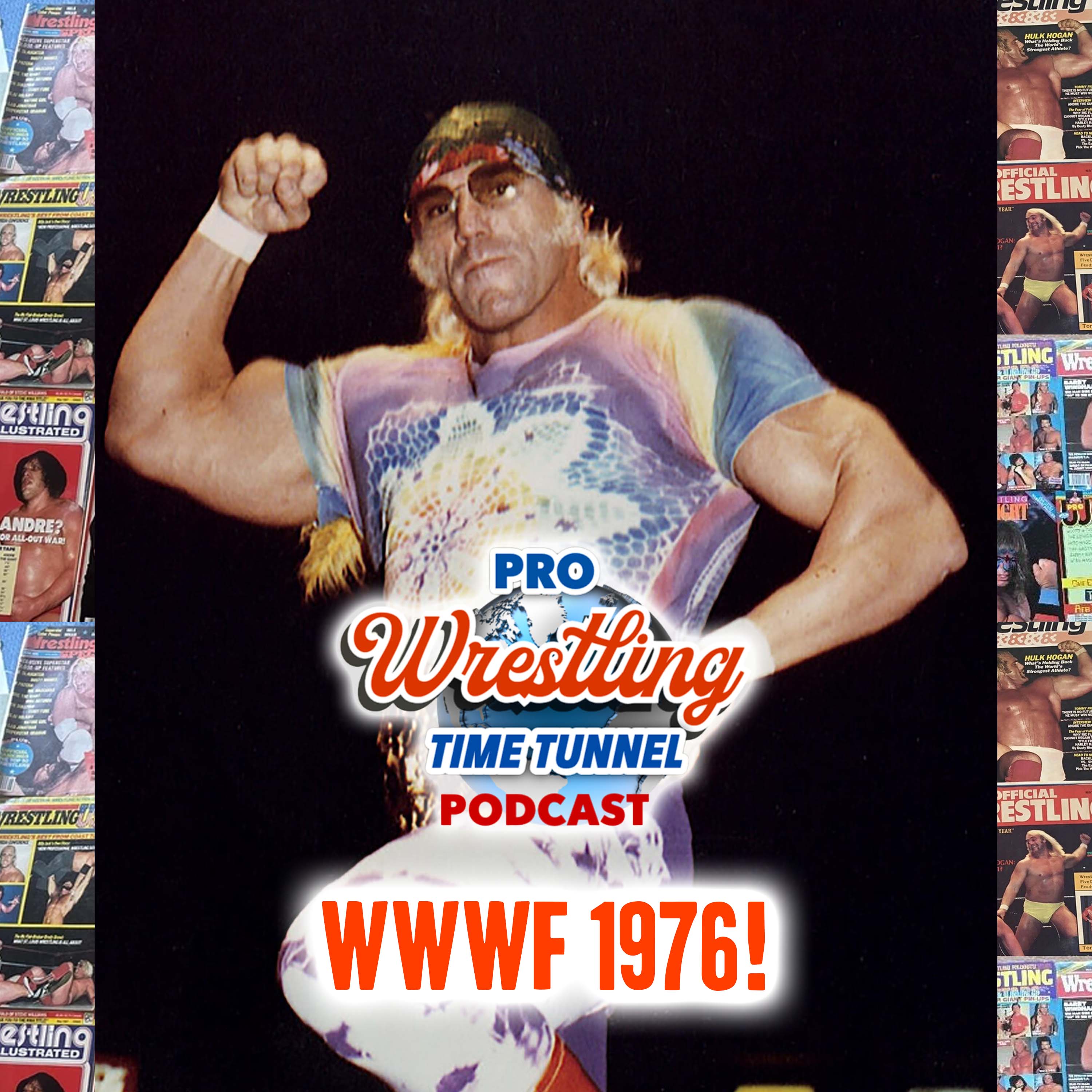
[00:29:09] Speaker A: blue trunks and the Superstar was wearing those long, kind of bright yellow and bluish tie dye trunks.
And it was perfect for the magazine. So it was like nothing we'd ever seen before. He was definitely the, the coolest looking wrestler that was out there with that incredible build, the tan, the, you know, outfits that nobody else wore in wrestling. Now in the rematch, Bruno's wearing his, like, blue trunks again. We have very conservative looking wrestler against Superstar. This time, Superstar is wearing these long black trunks. So there's no color, there's no panache. But yeah, Billy got all bloody and when the, when the referee raised Bruno's hand, Bruno was jumping up and down. He was really happy to get the win and, and he was going to move on to another opponent. But, you know, the way these feuds went, I mean, you know, something that they just finished at Madison Square Garden would then go to Philadelphia and Pittsburgh and these other places in the months to come. And it's just like how you were mentioning, like, he's wrestling Koloff in Philly. And those matches had been Madison Square Garden a few months earlier. So like any other promotion, they were just in this big cycle of making sure that every city got to see these important matches.
[00:30:31] Speaker B: Well, you know, I'm a, I'm a regular. Of course, you and I have talked about it this a little bit before and especially on our hall of Fame shows and stuff, trying to get the grand wizard in the observer hall of Fame, but listening to you and Bob Smith, I get this northern, and sometimes Solomon, I get this northern education. You know, I'm not as familiar with the Northeast as I am with the Southern territories, although I am. I'm learning more and more all the time.
But, but you got some of the best talkers in wrestling. I mean, you got Billy Graham, you got Ernie Ladd you got Ivan Koloff, you got Spiros Arion. What the heck are these manager guys doing?
I mean these guys can talk them into the building without any help at all, you know.
[00:31:15] Speaker A: Yeah, that's a, that's a great question. And I think that part of the, part of the long term success of the WWWF and later the WWF with Backlin and even with Hogan, the fact that you had these three heel managers, you know, the Unholy Trio or the Three Wise Men, however you want to call it, but Albano, Blassie and the wizard, they were your mainstays, the promotions and really they were kind of your, the major heat getters. It was almost like they would bring in a new guy. Like the way Superstar would come in with grand wizard and it wasn't so much Super Superstar getting the heat, it was more like the wizard or Albano and then, then they're, they're charged. Like Superstar, he would just go in the ring and he pose and, and the grand wizard would struggle to pull off his T shirt or something and, and they would just get heat that way. But it seems like I think of what the elder Vince McMahon's strategy was.
We have these three heat getters in Albano, Blassi and the wizard and as long as we keep getting new heels to come in and rotate, we'll be just fine. And, and, but, but you make a good point. Like where other promotions, the actual heel wrestlers were working their best to get the heat here it was almost the reverse where the managers were doing more of the legwork in that regard.
[00:32:41] Speaker B: Well, the, you know, Tennessee evolved in the early years before the Jerry Jarrett split in 77.
Sam Bass was the major manager in the Tennessee territory. And then you also had some others like Sir Clements and Jimmy Kent and some others, but usually they were with guys who didn't talk much.
They were put with guys who didn't, weren't great on interviews and the manager was getting the heat on the interviews and selling the tickets.
And then in the Jimmy Hart years, the major heels just got put with him, no matter if they could talk or not. But still, in the other southern territories, mostly the guys who couldn't talk were put with the manager who could talk. And then the other aspect that I think is just so juxtaposed between northern style and southern style is that the managers didn't go to ringside in the north and in the south, it's like the manager doesn't go to ringside. Well, what do you need them for then? You Know, because they're supposed to get heat at ringside, you know, that's what they're supposed to do, you know. But it's just a difference in the way it was presented. And McMahon Sr. Had his formula and it worked for him and he was not a man who liked to change it. He kept it the same.
[00:34:02] Speaker A: Well, also, and this is something Bob and I had talked about recently, it's like his biggest fear, McMahon Sr's biggest fear was another riot at the Garden. So I know he knew that he had to be a component in the cards, but he didn't want to have an agitating manager there at ringside that was going to cause a riot or something.
So in that regard, those MSG cards were a lot more conservative than say, the average wrestling building somewhere else in the country where the idea was to get heat and have the fans come back, whether it was next week or next month.
[00:34:39] Speaker B: While we're talking about it and while I. This show is not really geared toward or nor we have much interest in covering modern product. However, there was just some talk and I. We. One of the things I do like to talk about on this show is wrestling psychology.
[00:34:57] Speaker A: Sure.
[00:34:58] Speaker B: And so the couple of things, One, did you and Bob Smith recently talk about this? Or was this you and me and Brian or it could have been both, where we were talking about referees.
[00:35:10] Speaker A: About referees, yeah.
[00:35:12] Speaker B: Was that on the WrestleMania show we did on this show?
[00:35:15] Speaker A: Yes. Yeah, that was on the one that we did with Brian and we were saying like, you know, why have a no holds barred match when it seems like today every match is a no holds match.
[00:35:25] Speaker B: So that's another thing that the referee role evolved. Like it wasn't that the referee was just all strictly by the rules and didn't.
They did make somewhat of a entrance into matches. I think of Tommy Young especially like. Like Tommy Young pushing the world champion down.
Like, I didn't. I never thought that was wise. I never thought that was a good move.
[00:35:53] Speaker A: I thought, John McAdam hates that spot, by the way.
[00:35:56] Speaker B: I just think that's that I never liked it back in the day and I don't like it now. And the other thing Tommy Young used to do, and I'm not down on Tommy Young, he's still one of the best referees of all time.
[00:36:06] Speaker A: Sure.
[00:36:07] Speaker B: We're just talking about psychology and we're talking about moves. One of the things Tommy Young used to do is Dusty Rhodes would get Ric Flair in a figure four leg lock and Flair could reach the ropes behind his head and he could Touch them and Tommy Young would kick his hands away from the ropes instead of calling for the break.
[00:36:27] Speaker A: Yeah. Why did he do that?
[00:36:29] Speaker B: I don't know.
That doesn't make sense in the logic of what a referee is supposed to do and enforcing the rules. It was almost like instead of the baby face wrestler getting the comeuppance on the heel, the referee was getting it. And I don't, I don't think that's right. It doesn't make any logical sense.
[00:36:49] Speaker A: It's not, it's not like Tommy Young was just trying to get like the fans on his side for whatever reason.
[00:36:54] Speaker B: No, he wasn't. He wasn't. He wasn't looking for a Tommy Young pop from the crowd or anything. I think the wrestlers called the Spot.
[00:37:02] Speaker A: Sure.
[00:37:03] Speaker B: One of them, you know, Flair or Dusty or somebody called the Spot and said, hey, Tommy, kick my. Let's do that thing where you kick my hands away from the ropes. That'll, that'll get a crowd pop.
But, but I think it cheapened the referee position is what.
[00:37:16] Speaker A: I agree with that.
[00:37:18] Speaker B: The other thing is, and I heard this a lot on WrestleMania this past week, is Cody working as a heel when he's a baby face.
Now, I don't know how many Dusty Rhodes matches that people in our audience have seen or the people who are making these comments, right? But if you go back and watch Dusty matches, when Dusty gets fed up with the heel, he does some things that could be considered heel, like to, to the other opponent, but he never turned. And Cody and Randy Orton are both so over as baby faces. I think they could do anything heelish in the ring and never. It never even be a turn or anywhere near a turn.
[00:38:03] Speaker A: That's a great point because.
[00:38:04] Speaker B: Because I don't think the fans are going to turn on either one of them.
[00:38:07] Speaker A: You know, you're right. They. They've transcended being a super baby face or a super heel. They're. They're above somewhere in another realm somewhere. But, but you're right, there's nothing that they could do that would make the audience hate them. And it's almost like trying to turn Cena last year, the fans just wouldn't buy in with now.
[00:38:25] Speaker B: One of the reasons I think we're going back to circling all the way back to a street where we started a little bit ago is Jerry Blackwell couldn't get over. I think he should have been a heel.
Like, I think a guy that big and that intimidating with that kind of size should have been like a monster. Like, he should have been a guy who, not wrestling with Ivan Putzky, he should have been wrestling with smaller guys that he would be dominating.
[00:38:54] Speaker A: Right.
[00:38:55] Speaker B: I think he could have gotten over as, but maybe the WWW is sitting there thinking, we got six big heels in the company, we don't need another one. I don't, I don't know.
[00:39:04] Speaker A: But you know, I think that the, I think that the strategy back in those days was, you know, because Bruno was so big and it seemed like the opponents that they brought in for him were either like real known names like a Koloff or Bernie Ladd or, or Bruno did his own scouting and like later on this year, like his friend Mike Peducius recommended this young guy named Stan Hansen. And I think maybe similar to that recommendation, they found out about this young guy, Bruiser Brody and he'd be coming in later this year.
So. But the guys like, like say Bugsy McGraw or Jerry Blackwell, I think that they were more like, you're going to be mid card filler but you know, maybe if you catch on, maybe we'll do something more with you. But that never really happened.
[00:39:55] Speaker B: Speaking of, you mentioned Stan Hansen. He's working house shows here and he's got an elbow pad gimmick, the loaded elbow pad. And just one more thought on Blackwell. You know, he was athletic as a big guy. He could do things athletically that most guys that were that big and fat couldn't do.
And he could work just as well as say Ernie Ladd. ERNIE Ladd was 6 foot 9 and very athletic. Back in these days especially.
I'm not talking about the Mid south wrestling in 1984 where his knees are bad and all of that. I'm talking about 1976 where he could go.
I just think Blackwell could have, could have gotten over better if he would have been a little bit more athletic. Monster heel. So Hansen came back when he came
[00:40:45] Speaker A: back in 78, you're right. I mean he was doing very impressive stuff. He was drop kicking a 400 pound guy who could drop kick.
[00:40:53] Speaker B: Oh, he did cartwheels everybody, all that stuff.
[00:40:56] Speaker A: And then he wrestled back when they had a good match, the Spectrum in Philadelphia and back when.
But that was it. They never really pushed him beyond that. And then he never really came back after that.
[00:41:09] Speaker B: In the Boston Garden In March of 76, Ivan Koloff beat brutal Sammartino by count out. They did a lot of count out finishes back in these days. You don't see those hardly anymore in wrestling, but they did some back then when the babyface needed to lose. And the heel needed a win.
And Ivan still had a lot of heel heat, even going back to that big win he got in Madison Square Garden. I think, I think every time Ivan Koloff wrestled Bruno, Sammartino fans thought he could win.
[00:41:40] Speaker A: Yes. Yeah. I mean, the fans always remember the 1971 loss.
And you have to give the magazines a lot of credit because if you watch the WWF TV show, they never told you about things from the past or what had happened years ago, but the magazine certainly put it first and foremost that, hey, this is the guy that beat Bruno. He's dangerous. And, and I think one of the reasons why they wanted to do a cannot finish here, they, they did in. I think it was in April in Boston. They did the first and only Russian chain match. Bruno against Koloff in a Russian chain match. And it never happened again after that. But, but we'll probably talk about that in our next episode that covers the second quarter of the year.
[00:42:26] Speaker B: Superstar Billy Graham in the. At the Spectrum beat Gorilla Monsoon, who was injuring, who was injured from the blood stoppage match.
And so Gorilla takes takes the fall, or does the fall for Superstar there, while in March at.
At Madison Square Garden. Let's see, that is the retirement of the US Championship where they, they abandoned and retired around the first part of the month in March. They retired the. It was held by Bobo Brazil and it had been a very sparsely used title. The best I remember. You would know better than me.
[00:43:11] Speaker A: Yeah, yeah. I mean, they, they wanted a blue moon. Like I think he even wrestled the Brody maybe later this year.
And they maybe, maybe even call Bobo US Champion, but he didn't really wear a belt or anything, but there used to be one.
The time, at the time, I almost felt like it was some kind of a reference to him being the US Champion in Detroit maybe.
[00:43:35] Speaker B: Well, there used to be a US title belt for the WWF. I remember because it looked like the Phillips 66 logo on the nameplate on the front. And there were several US titles. Crockett had one, San Francisco had one.
Detroit, of course, had one. The Sheik perennially kept that around his waist a lot, although other people like Mark Lewin and Don Kent wore it as well. Bobo Brazil probably, probably wore it the second most after the Chic.
So Billy Graham and Ivan Koloff kept putting pressure on Bruno and also on the tag team titles. The Executioners, which was the mass team of Killer Kowalski and Big John Stud, believe it or not, managed by Lou Albano, ramped up as a new threat in the Undercards. So we got this massed Executioner team that are starting to work their way up the pyramid in the Boston Gardens.
We got Bruno and Koloff count out finish matches and tag team defenses by Parisi and Sir Dan. And also Ivan Putzky has moved to Bugsy McGraw in his single matches and Ernie Ladd, Baron McClellan secluded. Those usual suspects are all on there. They were doing TV angles with Gorilla Monsoon commenting on potential threats like Stan Hansen's elbow pad. So they're really gearing up for Stan Hansen to be even though Superstar Graham is going to be the overall challenger for most of the year.
If what happened in April, which we know Stan Hansen breaks Bruno's neck, but if that wouldn't have happened, what do you think the plan for Hanson was at that point?
[00:45:25] Speaker A: No, that's a great question.
I looked at the Billy Graham record book which is online and it turns out that during this run that they had together From December of 75 till the injury, Bruno and Superstar only wrestled 11 times. I'm not counting the tag matches that they have. Is there a lot more tag matches but just the singles matches?
Now had had the injury not happened, there would have been a lot more defenses against Graham, Koloff and Ladd.
I think Arian was pretty much done by then, but they it would also open up the door a couple guys we haven't mentioned yet. Scandor Akbar was in as a wrestler. He would have gotten a couple of defenses. Probably he he probably wouldn't have made msg, but he probably would have wrestled Bruno at Nassau Coliseum.
Louis Cyr, the Canadian, also known as Jills the Fish Poison, he was in briefly in early 76. He may have gotten a title bout or two even later in the year Torquemada was was in for a run. I don't know if he would have gotten a title match, but maybe he would have been more of a kind of a mid card guy.
[00:46:42] Speaker B: A couple things that we're probably not going to get to today, but I want to just want to tell our listeners and our viewers that we will cover and we will get to. We probably aren't going to get to the Ali Anoki thing in this particular show, but we will and we will cover the entire Stan Hansen thing because he comes back. Bruno comes back at Shea Stadium against Stan Hansen in June.
But leading up to that I want to spend a little bit of time and I've got tons and tons of research on Stan Hansen for the Dory Funk Senior book, but just I want to talk a little Bit about Stan Hansen, and this is really a breakout moment for, for him because he started out in Amarillo with the Funks, and then after that he went to Oklahoma and worked for Leroy McGurk and a tag team with the fellow you just mentioned a few minutes ago, Bruiser Brody, under his other real name, Frank Goodish.
And they were, I can only imagine, because they, they were a tag team in Japan later on and really, really dominant. I mean, they're in their rookie year as a tag team in Oklahoma, and they put the US Tag team titles on them. I can only imagine what these dudes look like in 1975 in Oklahoma rings.
The way Hanson looked when he got to Madison Square Garden. He's. He's huge. He's got long.
I posted a photo of him the other day that I'd never seen before, of the blond hair and blonde goatee look that he had back then.
[00:48:20] Speaker A: Yeah, I can tell you this. I mean, those early shows, I was watching wrestling, and this is probably the month or so before the injury to Bruno.
I'm watching these TV matches, and Stan Hansen is just annihilating these TV job guys with his lariat.
He's wrestling guys like Johnny Rivera, who was a smaller guy, probably weighed like 220 pounds.
[00:48:45] Speaker B: And I think that Stan Hansen working, I, I mean, I, I mean, I just think that's the way he worked, you know.
[00:48:52] Speaker A: Oh, yeah, yeah. But he, he was, you know, he was a green guy, you know, and I know John McCabe and I, we had reviewed a match of his from Florida. He wrestled Florida, too.
And Brody was down there, too, in Florida. But just those squash matches, he was so dominating and so vicious and annihilated these guys.
And, you know, eventually they did a TV angle where Stan Hansen is wrestling Bruno's best buddy, which was Dominic Denucci. And at first it's a good competitive match, but before you know it, he hits Denucci with the lariat, and Denucci is just, like, out on his feet, just staggering. He loses the match, I think, on a count out, but he just has to be held back to the dressing room. You could tell he was really hurt and, and so he was handsome, was over like a million bucks. I mean, I know supposedly the story is, is that, you know, Graham and Koloff and Ladd all were really angry with Stan when the injury happened because it cost him a lot of money on those rematches with Bruno. But you're right, I mean, it. The, the injury to Bruno really made Stan Hansen into this big thing. All of a sudden, and. And as we know from his career hall of Fame career that happened subsequently, he really deserved a lot of credit.
[00:50:20] Speaker B: Well, back up a little bit. I loved all that great analysis on Stan. Come coming into WWF. Let's back up to 1968.
Okay, 1968, Hansen comes to West Texas in Canyon, Texas, West Texas State, for an official visit, and the legendary Coach Kerbal is there as the coach of the West Texas State Buffaloes. Terry Funk has just completed all of his eligibility, can't. Can't play any more football, and has broken into the wrestling business in 1965, 1966.
And the reason that Stan Hansen, who was a big linebacker, the reason he. He was from New Mexico, and the reason he chose West Texas State as a senior from Las Cruces, New Mexico, was because the year before, in the 1967 season, fifteen players from West Texas were selected to play pro football.
[00:51:25] Speaker A: Wow.
[00:51:25] Speaker B: And while he played there at West Texas State, Hanson did get his education. He got a bachelor's degree, he got a teaching certificate, and he went back to New Mexico to teach school.
But the first month, he only made $477, and that was enough to make him want to leave teaching right there.
Dorie Senior and Terry Funk had offered him a opportunity to become a wrestler.
And so after he got a couple more of those $477 paychecks, and also a chance meeting by Hansen's father with Dorie Funk Senior, where Dorie Funk Sr. Asked him how Stan doing, or I think he called him Stanley. How's Stanley doing?
And he said, well, he's down there in New Mexico teaching, but I don't think he's very happy. And. And Funk Senior goes, man, with his size and with his aggressiveness on the football team here in West Texas State, that dude ought to be a wrestler.
And Hansen's father's a little reluctant because of the way people thought about the wrestling business back in those days. But he does mention it to Stan, and Stan goes, really? He. He really asked about me.
And so it. It's enough to pique his interest, and he decides to go up to Amarillo and visit with Terry about it. So he drives up to Terry Funk's house, and he sits and he talks to Terry. And Terry's very, very patient, much more patient than Terry's wrestling Persona would lead you to believe he could be. But he was very patient and listened to Stan talk. And Stan told him, he said, I really want to do something. I know I'm not going to play Pro football, but I would like to do something post college in athletics of some kind. And Terry goes, well, you know, why don't you, why don't you give this wrestling a try? We can get you started here, you know, within our, in our territory and in our booking office and we've got a lot of connections and we could get you booked out to some other offices and territories and such. And so finally Terry decides I need to take him over to Dad's house. So he drives Stan over to Dory Funk Sr's house.
And Dorie Funk Sr. Sits and listens to a whole lot of the same story that Stan tells. And Senior asks him, so how much money are you making teaching school?
And Hanson goes, I make about $477 a month. And the conversation goes on and takes another twist and a turn or something.
And Stan goes, well, I tell you what, Mr. Funk, if I were to do this wrestling thing, how much money do you think I'd make in the business? And he said, oh, you'd probably make about 380.
He goes, $380 a month? He goes, no, a night. He goes, oh, I'm in.
I, I'll, I want you to start training me right away.
So I, you know, I think the combination of Stan's legendary bad eyesight and the fact that he's just a rough, assertive defensive linebacker, and the fact that that's basically how they wrestled in West Texas, that's how the Stan Hansen wrestling style just evolved.
That very tough, shoot oriented, you know, destroying jobbers kind of style. I think that all went back to his training and I don't know that he ever got away from it, you know, his whole career.
[00:55:10] Speaker A: Well, Brody was another West Texas State guy and, and they did end up teaming a little bit in the WWF near the end of their run there.
And I think I had posted this in your group in the pro wrestling time tunnel. But there's a great speech that Stan Hansen made at one of those WWF hall of Fame deals where he talks about, he talks about his entire career. And the guy is such a credit to wrestling. I mean, he's such a first class guy.
He's just a great businessman. He, he, you know, acknowledges his mistakes. He, you know, takes credit for what he should take credit for. I mean, just a fantastic guy. And you know what really breaks my heart and this is again going back to WrestleMania last week. There was a window there where you had all these great people like the Pat Pattersons and the Red Bastines and the Funk Brothers or even back in the day when Dorie Sr. Was still alive.
You know, Vince did what he did and he took over the world of wrestling and he, you know, out survived, outmaneuvered everybody else. But if he had had the wherewithal to, to get all these minds like, like Dory, and he did use Dory a little bit. I know Dory helped train Kurt Angle and some people, but like the Red Bastines, the, the Pat Pattersons, I mean, Pat Parson was with Vince almost until the very end of his life. But what did they do to take all that knowledge and move it on to future generations? It's almost like, okay, well, he's, he died and his untrained, all that, all the information that was in his head is gone.
I wish that they had created some kind of a better school than what they have right now to, to teach the guys the psychology of wrestling and all that old school stuff that is missing from today's wrestling.
[00:57:05] Speaker B: I could be wrong and it might just be me, my positive self or my optimistic self looking on the positive sides of things. And I know this happens with guys and ladies who are in a role like Vince's.
I really think that by the time the 80s were over and the 90s were starting and by the time Vince had basically, like you say, outmaneuvered and we had made the total conversion from the territory era to the national expansion era, and we basically had two companies, I really think Vince thought he'd go back and reestablish something like that. I really think it was probably in the back of his mind going, yeah, the territories are gone. I don't have a talent feeder system. And he did go down to Memphis and use it in the 90s a little bit for that.
And I think, I think he thought, and I think that eventually is what became fcw, what Steve Kern was tasked with doing.
I think that germ of an idea was probably in his head back then, but I think getting distracted with the world bodybuilding thing and with football and all of these other things, I think it sort of fell through the cracks. But I really think he probably did have those intentions. You know, even when the WWE Network launched, he did have those shows where he had the panel of old territory guys telling stories and doing those things.
I don't think he was a guy who completely denied where he came from.
[00:58:55] Speaker A: Right.
[00:58:58] Speaker B: And I think he did probably have intentions of going back and going, we are going to need. And he probably did think of it as a minor league. You know, we're probably going to have to have some kind of feeder minor league system to continue to develop talent, because these guys aren't going to come here fully ready to go. Even though some of the guys in the 90s did do that, they did come to the WWF not ready to go. But they developed and they got better and they survived it. But I, I think he did probably intend to do that. Just, it was just down the food chain too far.
[00:59:33] Speaker A: I mean, he did have obw, he had Jim Cornett and Danny Davis and the people that were doing stuff like that. But it just seems to me that, that he had other veteran people who could have played a role in teaching and mentoring wrestlers more than they really did.
[00:59:54] Speaker B: Sometimes corporate executives have a tendency to over manage and overextend and overreach. And I think that's probably what happened in the VW situation, where they should have left them alone and let them do what they do and, and then accepted the fruit of what they could produce instead of messing with it and, and tinkering with it and, and doing stuff with it. You know what I mean? But that's, that's, that's a disease that exists in corporate America. The overextended executive reach.
So in April, this all kind of comes to fruition because Hansen makes his Madison Square Garden debut. I remember him talking about it in a shoot interview, saying this was probably the biggest thrill of his life, that he would be asked to come. And not only would he be asked to come to New York, which is what people called it back in those days, or come to New York, but also be considered to be in a program with Bruno Sammartino, the legend of the wwwf.
[01:00:58] Speaker A: Yeah, I mean, I was, I was fortunate enough to be watching that night. It was on hbo, was on live tv, it was a Monday night, and I had seen all those TV matches that led up to this match.
And so they're wrestling and it's a great, great match. I mean, Bruno's hitting Hanson with all these arm drags and it's just your standard great championship match. And then there's this, unfortunately, a botched body slamming. Supposedly Stan was sweaty and they're moving really fast and he's slamming Bruno, but, you know, he basically throws Bruno on his head rather than dropping him on his back.
And Bruno is stunned and it looks like he's, you know, having a concussion. And, and they, they, they were, you know, he, Bruno, I guess, had a brief pause there, but then they got him up and they got him, got him to take the lariat, as they wanted to sell the lariat. And. And then the match stopped due to blood. But, I mean, I, I'm a kid. I'm watching. I must have been like 12 or 13 years old, and I'm watching up in my brother's room. My brother had a tv and, and my father's watching the New York news downstairs. He's watching the, the Channel 5 news from New York. And I'm saying, dad, dad, they're. I'm sure they're going to cut it and talk about Bruno's injury right now in the news. And, you know, I didn't realize back then that wrestling was not really thought of along the same lines and say the Yankees game or legitimate sports. But yeah, they never really covered it.
[01:02:29] Speaker B: But, yeah, I, I would have thought I would have. As big as Bruno was and as big as the Madison Square Garden was at that time, I would have thought that same thing if I'd been you.
[01:02:39] Speaker A: I mean, I will tell you this because I was an avid sports fan at the time, and I would read the New York Post or the New York Daily News voraciously and, and once in a while, they did have a blurb about wrestling. I mean, I mean, they did do the recaps of the MSG shows. They would tell you, they give you like a big boldened paragraph of what happened. But, but I remember once in a time, one of the sports writers, we had a column and talked about, like, all kinds of potpourri in the Sporting Worlds. He mentioned, like, he just threw in this, just said, like, well, I heard Bruno San Martino might be retiring soon or something like that. But so he was mentioned from time to time. And he did come up and, you know, when Rocca died the following year in 77, that made the COVID of the New York Post. That was the big headline there. Rocket dead at 50. It was him doing the split on the COVID of the newspaper. So New York realized that wrestling was a big, big deal and they did cover it appropriately.
[01:03:40] Speaker B: I mean, superstar Billy Graham, we've talked about it. I mean, he was the premier person that was overarching at the top the first part of the year.
And then Hanson comes in, and then superstar Billy Graham would be the person who would take the, the title from Bruno later on and have a run as champion. But, but I kind of think this was the defining angle of the year.
[01:04:05] Speaker A: It was, it was, it was without question with Hansen.
It was, it definitely was. And, and you know, again, I'm a brand new fan of this I've only been watching for a month or two months, and I see this angle or this injury. And then over the next few months, Bruno's not even on the TV because he's usually there to hype MSG or type the next big event, but he's not there because he's in the hospital.
And that added more intrigue and more mystery to this thing, and it made it a lot more exciting and interesting because you had no idea where was this going.
[01:04:40] Speaker B: And there might be people watching or listening right now who might be saying, tony, it wasn't an angle, it was a shoot. Well, back in these days in wrestling booking, you took shoots and took them as angles. If you could do something with them, you didn't just say, oh, well, we didn't plan that. So that's not part of the program. Oftentimes when shoot things happen, those were the best angles that they do something with because they didn't have to fake Bruno being out. He was really out. He was really in the hospital.
And I remember Hansen talking about going and visiting him with trepidation and both knees knocking together, going, oh, my God, I'm sorry. And he's like, bruno is going to be mad at me. I've. I've taken his livelihood away. He's laid up in the hospital. And he said that Bruno was so gracious about it and so nice about it and said, hey, these things happen. You know, it ain't ballet or whatever the catchphrase of the day was back then, as you know, things happen, accidents happen. You know, I know it would. I know you didn't mean to. You know, it's just something that happened and something for us to deal with, which turned in to a massive stadium show.
[01:05:51] Speaker A: Right, right. Yeah. And along this time, about this time, the TV starts to hype this idea of this match between Antonio Inoki and Muhammad Ali, and they were going to do it at Shea Stadium, and. And they didn't announce that Bruno Hansen as being a part of that right away because, again, they weren't sure Bruno would be ready. But when they did add that on, it became, you know, the thing everybody was talking about. You know, Bruno was going to come back, and everybody was excited.
But, yeah, that was another thing of mystery this year, the adding of the Enoki Ali thing, and we'll get to that later on, probably in our next episode. But that was another thing made you wonder, what is this all about? It added more intrigue into wrestling.
[01:06:34] Speaker B: Well, the other thing I wanted to mention, too, and I Don't know that I've ever read it anywhere or anything because Hanson's always taken the.
He's always taken the tenseness of it out of it by talking about how nice Bruno was about it.
But I do think there was some panic about this because Bruno's neck is broken. And the reason I say that is because they had a Show scheduled for May 2nd at the Maple Leaf Gardens in Toronto and they just canceled the
[01:07:05] Speaker A: show because same thing in Pittsburgh. They canceled one of the Pittsburgh shows too.
[01:07:10] Speaker B: Yeah. And they had more than enough roster to run a show.
But that's how much weight Bruno had was. Well, we can't do the main event without Bruno and Bruno's not going to be around. So let's just not have a show this month. I should mention also too, leading up to that, that angle and injury and everything with Hanson happened on April 26 at Madison Square Garden. Previously in April and WWF was not known that much for gimmick matches. There were more in Bruno's reigns than I thought because I was amazed he did the stuff with Duncan and Arion and those in 75. But in April of 76 at the Spectrum it was Bruno and Ivan Koloff in a steel cage match and it drew almost 15,000 people.
And in Philadelphia at the Civic arena, it was Bruno and superstar Billy Graham in a Texas death match which was supposed to be revenge after the earlier disqualification and count out matches. So they were on a roll with all these challengers and Hanson I think was probably just going to be another top level challenger and the focus was still going to be on superstar Billy Graham. But after Bruno broke his neck, I think it almost put Hansen in the number one spot there for a little bit.
[01:08:31] Speaker A: Oh, it did because the following month they, they did Hansen against Pussy because puts you as the next like toughest, like the number two baby face. And they had a really good wild match there.
But. But yeah, it did throw their entire schedule off kilter because in all these other non MSG cities it was supposed to be, you know, Bruno against Graham and Bruno against Koloff. And so they had to change everything up. And it was just.
I'm sure Vince Senior was a very upset person regarding this.
[01:09:06] Speaker B: Yeah, and they kept their big drawing going in Philadelphia at the Spectrum 14,000 on May 15 for a superstar Billy Graham defeating Gorilla Monsoon by blood stoppage. Monsoon blading and bleeding again. And the Executioners are in matches with Pat Barrett and Kevin Sullivan. There's a young tag team at Pat Barrett's, not young at that point. But Kevin is but a young white Meet Babyface tag team. And Stan Hansen wrestles Haystacks Calhoun at the Philadelphia Spectrum.
And you mentioned MSG for May and so put Ski and superstar Billy Graham are doing those arm wrestling stipulation things that I was talking about earlier from Texas. And that takes us. Oh, and by the way, the Executioners win the WWF World tag Team titles.
That's over.
Who did they beat? Sir Dan and Parisi in a two out of three.
[01:10:11] Speaker A: They were a very imposing team. I mean, these two huge guys. I mean, Killer Kowalski's voice was much like a guy that would host a horror movie, chiller theater or something. He was very scratchy and scary voice. And John Stud was this huge, massively huge and impressive.
So they were a very imposing team.
[01:10:34] Speaker B: Well, that takes us up to June of 76. I think we'll stop there. We'll come back and our next time that Steve and I are together to talk about the WWW F in 76, we'll go over the Ali and Anoki, what some people would call debacle. But we will go over that. Which was also somewhat disappointing out in the NWA territories as well because I wrote about it in last week's Chronicle where Roy Shire was very disappointed because he. He ran two or three live matches and the closed circuit and was one of the first failures at the Cal palace in San Francisco.
But we'll talk about all that. How it came to be. Vince Senior Vince Jr's involvement in that, about the match and all the twists and turns in that and the big Shea Stadium showdown as Bruno comes back from his injury to face Stan Hansen.
And that is quite a card for us to go over and then cover the rest of 76. So this first half of 76, Steve, what are your overall thoughts about it again?
[01:11:39] Speaker A: I mean, this is the first wrestling. I mean, other than seeing some IWA a year or two earlier, this is the first wrestling I can really remember.
And guys like Stan Hansen and then later Bruiser Brody. When I watched them wrestle, I never doubted the authenticity of wrestling. I mean, I knew what everybody was telling me. Oh, that. Don't watch that wrestling. It's fake, it's phony. But when I watched Stan Hansen wrestle, I knew it was real. Same with Brody.
Bruno was always authentic to me. I always believed in his matches too.
And it was just such a happy time to be a fan. I mean, superstar Billy Graham was larger than life.
He was just like somebody came right in off of Marvel Comics. I mean, such a great talker. So spectacular looking.
And.
And then later, later on in the year, you'd see Ken Pitera arrive, and Ken Patera was almost as good as superstar Billy Graham. I mean, it turned out he was a much better worker in the ring, but he wasn't as spectacular as this comic book character as, say, superstar Billy Graham was.
[01:12:44] Speaker B: Before we wrap up today, you just sparked a thought with me when you said phony, and I forget the other word you used.
But when you go back to the days in the 1920s when the gold Dust Trio started coming up with angles and they started coming up with ways to work matches in order to draw bigger crowds and have bigger side bets, because they thought that in this. They were having wrestling matches in the 1900s and 1910s that were going two and three hours long, you know, and it was just guys out there just holding a hold for 45 minutes, you know, and, and, and all that. And I. They were trying to figure out, how do we make this somewhat more of a spectacle and more entertaining? Because this shoot stuff won't be able to hold a crowd's attention. It won't be able to draw.
But in. But with that in mind, are you surprised how well MMA still does?
Because it is shoot wrestling and shoot jiu jitsu and martial arts and all these things, and oftentimes it is over very quickly.
You might go to a match that's highly anticipated. It might last less than a minute.
Are you surprised that it's as huge as it is?
[01:14:11] Speaker A: I guess I'm not surprised, just from the sense of.
I remember in the early 90s, when I was subscribing to the observer and Dave started to cover that stuff, and I never really got into that. That wasn't my thing.
And shortly thereafter, because he was putting so much of that into the Observer, I stopped subscribing to the Observer. But I guess it appeals to a certain audience. It doesn't appeal to me, but it appeals to a certain audience. And they know or they think it's legit, so they buy into it and they like it, but it's not for me.
[01:14:43] Speaker B: I remember that, too. And that's when the Gracies were really big and he was doing lots of long things about, and that I was intrigued by them, but I wasn't as intrigued about the sport, I suppose.
But I don't know. That's something I think about from time to time, that the whole reason pro wrestling was invented was to continue to be able to draw crowds, to be fascinated by it, which is why they protected the business so fiercely for so long with kayfabe.
And then I wonder sometimes when I see mma. Well, was it all just for. Not like should we have just wrestled? And you know, because of the way that. And. And it could be a difference in human psychology now versus back then. I don't know. Just these are things I think about. I was curious what you thought.
All right, so we'll be back next time you see Steve and I. Well, I shouldn't say that because he's liable to be back at any time, but the next time you see us back here talking about the WWW F in 1976, we're going to be talking about the second half of the year, including those things we talked about. And thank you so much, Steve. I really appreciate you spending some time with me today. I love this because this is not what I grew up with. And you, your comments and analysis are very fascinating to me and I always learn a whole lot.
[01:16:08] Speaker A: Oh, thank you, Tony. I really appreciate that kind comment. And I always like, like doing your show because I learned so much. And like you always say I'm just one of many contributors to the show and each person adds something different. So it's just part nice to be a part of this great group.
[01:16:25] Speaker B: Yeah, yeah. It's a nice family.
Todd Goss, who is with us based on your recommendation, you introduced me to him and we're going to be doing Jim Crockett Promotions in 1976 coming up and he's doing. He's going to do a fantastic job. Thank you so much.
Thank you so much. And I introduced him to the family and welcomed him into the family and everything and I think he's going to be an outstanding contributor.
He doesn't, he doesn't always think he's going to be, but I try to convince him that he is a great contribut and he does a fantastic wealth of knowledge. I mean, the guy just puts me
[01:17:05] Speaker A: to shame, that's for sure.
[01:17:06] Speaker B: So don't forget to come over and join our Facebook group, Pro Wrestling Time Tunnel. You can also follow me on x at Tony Richards 4, where we have a ongoing stream of wrestling dialogue 24 hours a day, seven days a week. You can also find us on our YouTube channel. And above all, come to my substrate stack and subscribe to get my published research in the Daily Chronicle or become a premium subscriber and get some of our special pieces. We'd love to have you in the Pro Wrestling Time Tunnel family in some way, shape or form. Thank you, Steve. Appreciate you, man.
[01:17:42] Speaker A: Thank you Tony.
[01:17:43] Speaker B: All right, thanks, everybody. Coming to you live from Western Kentucky and the Richards Ranch, this is Tony Richards reminding you, if you want better neighbors, be a better neighbor. So long from the Bluegrass State.
[01:17:56] Speaker A: Thanks for tuning in to the Pro
[01:17:57] Speaker B: Wrestling Time Tunnel podcast.
[01:18:00] Speaker A: Tune in for another great episode next week, interviewing wrestlers, referees, and media personalities that have made the sport of professional wrestling great. We'll release a new episode soon.
[01:18:12] Speaker B: Don't you dare miss it.